25 Poems for Christmas, vol. 3

This is the third installment of my annual “25 Poems for Christmas” series. Included too, on the front end, are poems for Advent, the four-week season of preparation, hope, and expectation leading up to Christmas.

[Read volume 1] [Read volume 2]

1. “Advent (III)” by W. H. Auden, from For the Time Being: Voiced by the Chorus, who cry out from “a dreadful wood / Of conscious evil,” this is the third section of part 1 of Auden’s book-length Christmas poem in nine parts, For the Time Being—“the only direct treatment of sacred subjects I shall ever attempt,” he said. He wrote the poem in 1941–42. He had originally conceived it as the libretto of an oratorio that Benjamin Britten would write the music for, but the text turned out to be too complex, and Britten abandoned the project. The final two lines of this section set us up for the seemingly impossible feat of divine incarnation: “Nothing can save us that is possible: / We who must die demand a miracle.”

Source: For the Time Being: A Christmas Oratorio (Princeton University Press, 2013)

2. “Advent” by R. A. (Robert Alan) Rife: Ten sensory metaphors for Advent, conveying its mood of anticipation.

Source: https://innerwoven.me/ (author’s website)

3. “O Orient Light” by James Ryman: Loosely influenced by the O Antiphons (a set of short chants used in medieval Advent liturgies), this Middle English lyric is by the fifteenth-century Franciscan friar James Ryman of Canterbury; it’s one of 166 sacred poems he published in a 1492 collection. Each stanza consists of one rhyme repeated six times, and the Latin refrain translates to “O Christ, king of the nations, / O life of the living.” The fourth stanza is a standout, connecting the salvation wrought by Christ to the healing properties of plants: “O Jesse root, most sweet and sote, / In rind and root most full of bote, / To us be bote, bound hand and foot, / O vita viventium.”

Source: Cambridge University Library, MS Ee. 1.12; compiled in The Early English Carols, ed. Richard Leighton Greene, 2nd ed., revised and enlarged (The Clarendon Press, 1977). Public Domain.
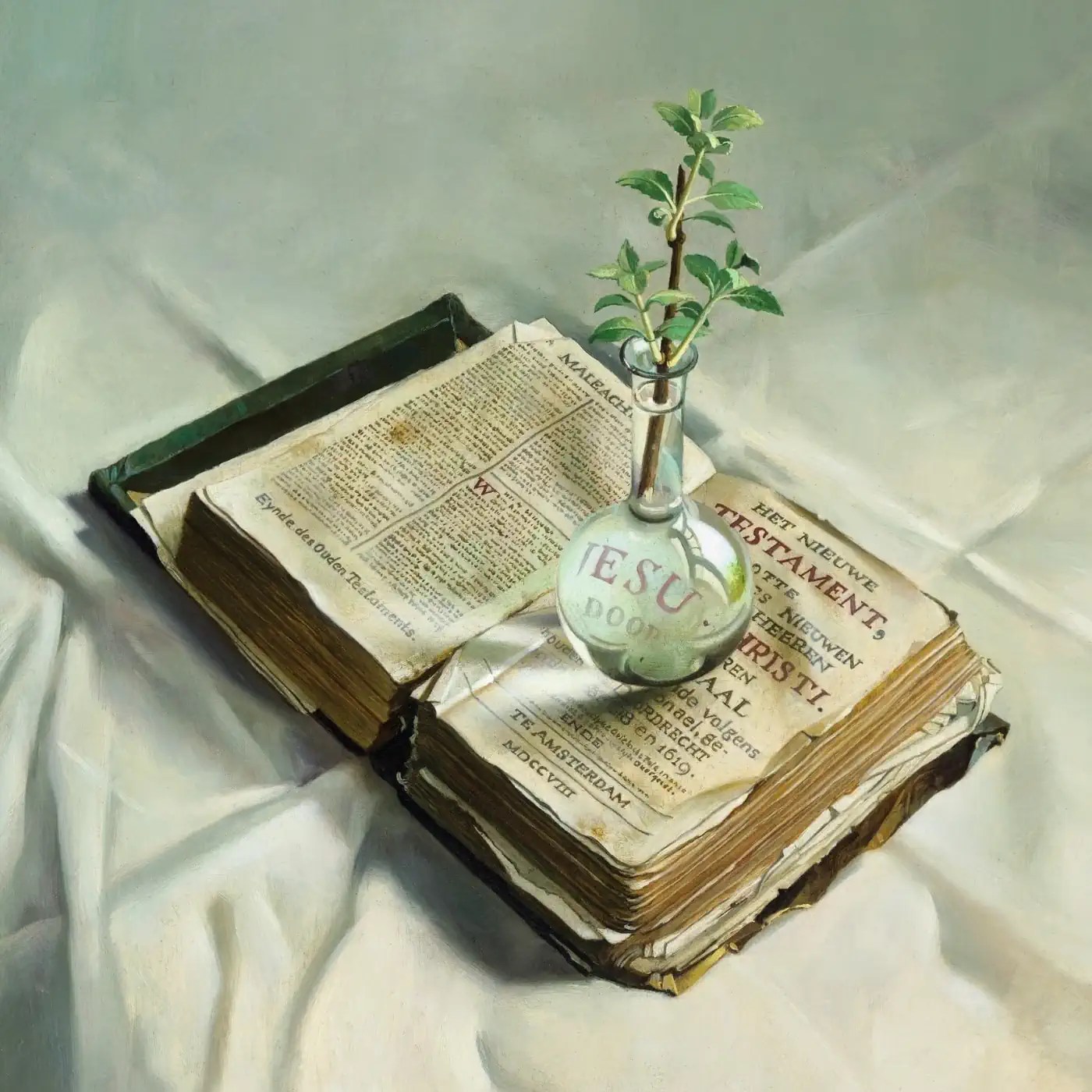
Helmantel, Henk_New Life II
Henk Helmantel (Dutch, 1945–), Nieuw Leven II (New Life II), 1999 (after the 1972 original that was stolen). Oil on canvas, 27 × 24 cm.

4. “Merger Poem” by Judy Chicago: “Merger Poem” is an aspiration that artist Judy Chicago wrote to accompany her 1979 monumental artwork The Dinner Party, a celebration of the richness of women’s heritage, expressed as place settings around a table, that is housed at the Brooklyn Museum. Her vision in the poem is not theistic, at least not explicitly so, but she uses the language of “Eden,” and her descriptions evoke passages from Isaiah about a future harmony, a merging of heaven and earth, in which justice and equity are achieved at last—not to mention the strong eschatological tones that feasting has in Christianity. Each line begins with “And then,” cumulatively generating a longing in the reader for “then” to arrive.

Source: The Dinner Party, exh. cat. (San Francisco Museum of Modern Art, 1979) | https://judychicago.com/

5. “truth” by Gwendolyn Brooks: “And if sun comes / How shall we greet him?” the speaker asks at the opening of this poem. The sun here represents truth, revelation, illumination, which we may seek with weeping and prayer but which can be dreadful when it actually comes. It’s often more comfortable to stay asleep in the dark than to confront the stark brightness of day. But oh, what we miss when we do! Gwendolyn Brooks uses the pronoun “him” for the sun, and it’s easy to read the poem Christologically: you can read it in the sense of any of Christ’s three comings—as a baby in Bethlehem, in personal, inner ways (he reveals himself, and seeks entrance, to human hearts), or as a king and judge at the end of time. Did you catch the reference to Revelation 3:20?

Source: Annie Allen (Harper & Row, 1949); compiled in Blacks (Third World Press, 1987)
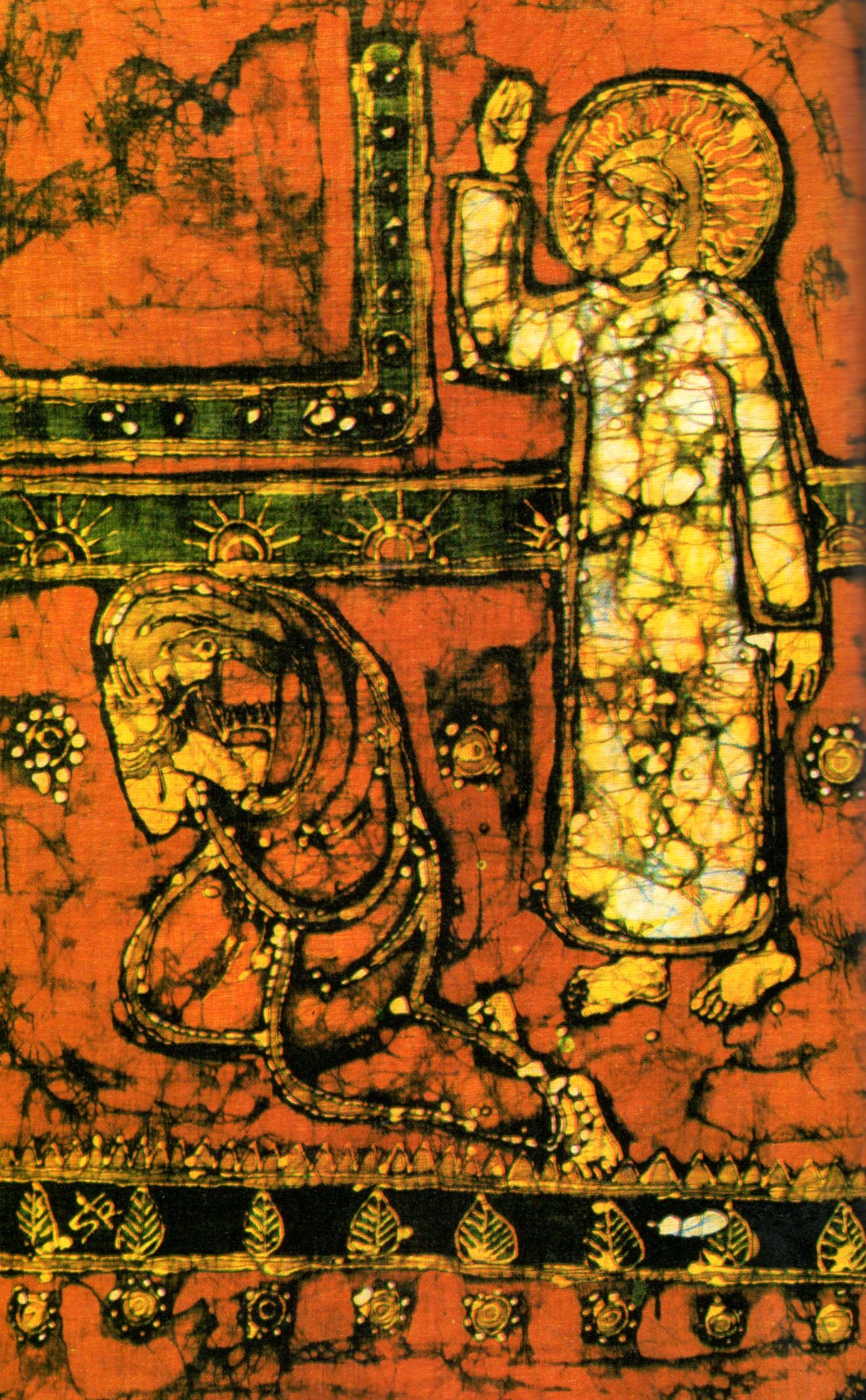
Raj, Solomon_Waiting for My Lord
P. Solomon Raj (Indian, 1921–2019), Waiting for My Lord, batik, published in Living Flame and Springing Fountain (ISPCK, 1993)

6. “Advent” by Mary Jo Salter: In this poem a mother and daughter are building a gingerbread house when a wintry gust tears a shutter on their actual house off its hinges, the shock of the thud causing, inside, a gingerbread wall to split. I think “house,” here, could be a metaphor for a faith structure; a house of belief. Shutters are doing a lot of work in the text: one falls off in a storm, and the daughter’s Advent calendar consists of twenty-five shutters, one opened each day until Christmas to reveal a Bible verse or narrative scene.

I’m not quite sure how to interpret the poem overall, but it seems to be addressing themes of (in)stability, brokenness and repair, the desire to believe versus the impulse to shut out belief, openness (“The house cannot be closed”), (dis)enchantment, the mother-child bond, and safety and danger (the Christmas story, like faith itself, characterized by both). I can’t decide if the “blank” in the final tercet sounds hopeful or bleak: does it connote possibility or lack? And is the mother suggesting in the final line (a repurposing of the final line from stanza 15) that what’s most real to her is not Mary and the baby Jesus but herself and her own child, right there in that moment?—or is she finding a point of kinship with Mother Mary in the love she feels for her offspring?

Source: Open Shutters (Knopf, 2003)

7. “Nativity” by Li-Young Lee: “What is the world?” asks a little boy in the darkness; and again as an adult. A poem of spiritual questing, Li-Young Lee’s “Nativity” deals with existential questions, ending with a tercet that evokes Isaac Watts’s famous carol line “Let every heart prepare him room.” Within us we must make a manger, a “safe place,” to receive the wild God.

Source: Book of My Nights (BOA Editions, 2001)

8. “Nazareth” by Drew Jackson: Ancient Nazareth, where Jesus grew up, was an insignificant village that many believed no good could come out of (see John 1:46). This poem by public theologian Drew Jackson accentuates Jesus’s origins there, his identity as a “southsider” (Nazareth is in southern Galilee). Today some urban neighborhoods on the “South Side” are disparaged, their residents dismissed as poor and lacking education and potential. God chose to incarnate in a rural neighborhood with a similar reputation, not simply dropping in and then leaving but, as the second person of the Trinity, being formed and nurtured in that environment. “Nazareth” is from Jackson’s debut poetry collection, in which he works his way through the first eight chapters of Luke’s Gospel, drawing out the theme of liberation and making contemporary connections.

Source: God Speaks Through Wombs: Poems on God’s Unexpected Coming (InterVarsity, 2021) | https://drewejackson.com/

9. “The Visitation” by Calvin B. LeCompte Jr.: The poet imagines the fields that Mary passes on her way to her cousin Elizabeth’s house joining in the Magnificat, praising the Savior in her womb.

Source: I Sing of a Maiden: The Mary Book of Verse, ed. Sister M. Thérèse (Macmillan, 1947)

10. “My Darling” by Alexandra Barylski: Mary and Joseph are cuddling in bed as she reflects on the divine interventions that brought and kept them together. The poem references the legend, originating in the second-century Protoevangelium of James and repeated in the seventh-century Gospel of Pseudo-Matthew, that Joseph was chosen to wed Mary when from his staff, submitted to the high priest along with those of other single men, there miraculously emerged a dove. Mary expresses appreciation for Joseph’s “visionary love,” patience, and courage in their relationship, his spiritual leadership and support.

Source: Reformed Journal, May 11, 2021
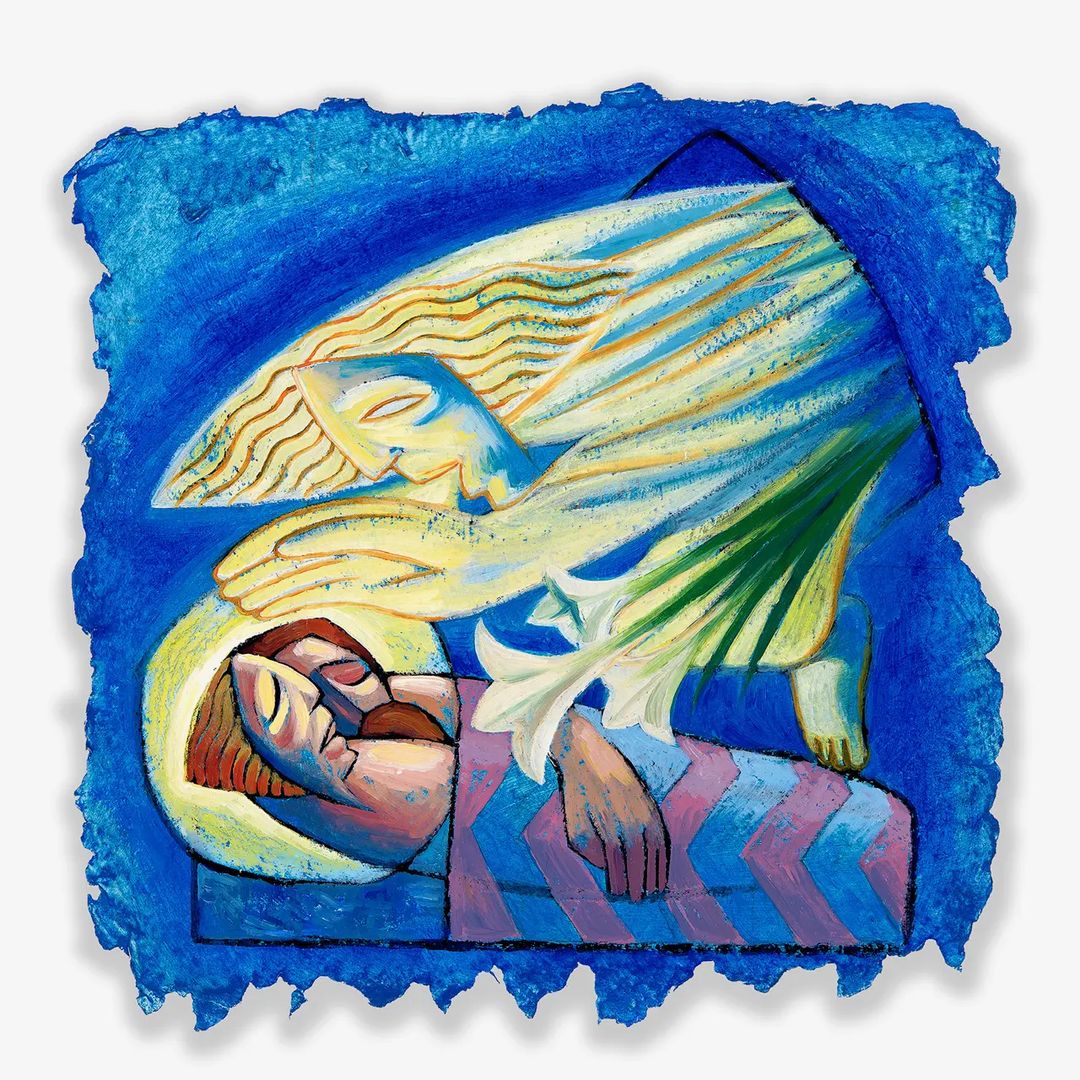
Mynheer, Nicholas_Annunciation
Nicholas Mynheer (British, 1958–), Annunciation, 2017. Oil on handmade paper, 20 × 20 cm.

11. “A Blessing for the New Baby” by Luci Shaw: The speakers of this poem give a lovely benediction over Christ—preincarnate and then embryonic in the first stanza, then out of the womb in the second and third.

Source: Accompanied by Angels: Poems of the Incarnation (Eerdmans, 2006) | https://lucishaw.com/

12. “Love’s Delights” by Meister Eckhart, rendered by Jon M. Sweeney and Mark S. Burrows: The medieval German mystic Meister Eckhart didn’t write poetry, but many of his sermons have a poetic quality to them, so contemporary poet Mark S. Burrows and writer Jon M. Sweeney, working from an English translation of the Middle High German by Frank Tobin, reworked select excerpts into verse. Adapted from a sermon Meister Eckhart preached on Isaiah 60:1, this poem meditates on the downward movement of love that raises up.

Source: Jon M. Sweeney and Mark S. Burrows, Meister Eckhart’s Book of the Heart: Meditations for the Restless Soul (Hampton Roads, 2017)

13. “Word Become Flesh” by Seth Wieck: Pregnancy, childbirth, and nursing take a toll on the body. Voiced by Mary, this poem highlights the bodily realities of Jesus’s first coming—Mary swollen, bruised, cracked, and bleeding. She was wounded for our transgressions, in the sense that she endured kicks to the ribs, postpartum hemorrhoids, etc., in order to bring forth our Savior, and by these wounds, because they gave life to Jesus, our healing was made possible. The last sentence is a zinger. Mary gives (physical) birth to Jesus, and he gives (spiritual) birth to her.

Source: Fathom, December 21, 2017 | https://www.sethwieck.com/

14. “Prince of Peace” by Brian Volck: The poet provides his own introduction to this poem on his website: “Octavian Augustus, first emperor of Rome, was known by many titles, including Divi Filius (Son of God) and Princeps Pacis (Prince of Peace). An inscription in Asia Minor states that Augustus’s birth ‘has been for the whole world the beginning of the gospel (εύαγγέλιον) concerning him.’ How strange, then, to use the same names for a contemporaneous but obscure Palestinian Jew, whose understanding of peace, politics, and power was so radically different. How strange to have so long diluted the scandal of the gospel (good news) with accommodations to an Augustan vision of a peace built on the use or threat of lethal violence. Here’s a Christmas poem calling attention to that contrast in a conscious act against forgetting.”

Source: Flesh Becomes Word (Dos Madres, 2013) | https://brianvolck.com/

15. “The Burning Babe” by Robert Southwell: Consisting of sixteen lines in iambic heptameter, this poem by the Jesuit martyr-saint Robert Southwell [previously] relates a mystical vision of the Christ child, who appears to the narrator on a cold winter’s night, enflamed and hovering in midair. The poem develops the metaphor of the love of Christ as a fiery furnace that both warms and purifies.

Source: St Peter’s Complaint, and Other Poems (London, 1595). Public Domain.
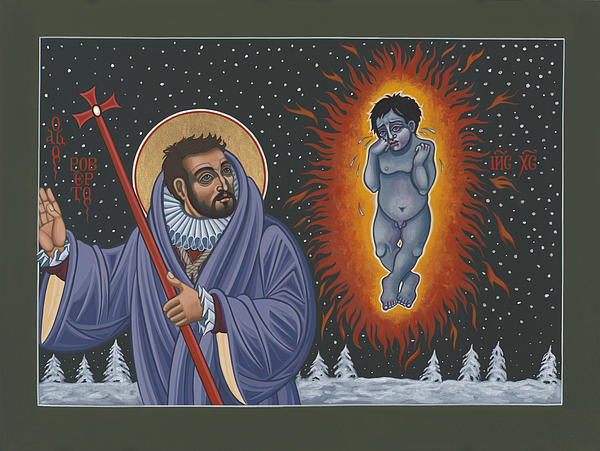
McNichols, William Hart_Robert Southwell and the Burning Babe
William Hart McNichols (American, 1949–), Holy Poet-Martyr St. Robert Southwell and the Burning Babe, 2015. Acrylic on wood. [purchase reproduction]

16. “Advent 1966” by Denise Levertov: This poem is shocking in its horror. Written in 1966, it picks up Southwell’s image of the Burning Babe and transposes it to the napalmed villages of Vietnam, where children were being physically (not symbolically or ethereally, as in Southwell’s poem) set on fire by chemical weapons deployed by the US military. Denise Levertov [previously], who was an antiwar activist as well as a poet, uses repetition to strong effect, conveying a sense of the seemingly relentless carnage (the war produced an estimated two million civilian casualties, more than half the total number). Though addressing a specific historical event, this elegy for the innocent provokes us to consider where similar atrocities are happening today.

Source: To Stay Alive (New Directions, 1971); compiled in Making Peace, ed. Peggy Rosenthal (New Directions, 2006)

17. “Christmas Eve” by Christina Rossetti: The Victorian poet Christina Rossetti [previously] opens this lyric with two paradoxes that characterize Christmas—bright darkness and chilly warmth—referencing the general mood of cheer and comfort that coexists with the bleak English midwinter. Why this mirth? Because “Christmas bringeth Jesus, / Brought for us so low.” Jesus was brought down from heaven in the Incarnation, but he would be brought lower still: his spirits sunken in Gethsemane, his body buried in a grave. The second stanza evokes a wedding: dressed in a bridal gown of gauzy snow, earth receives her heavenly Bridegroom.

Source: Time Flies: A Reading Diary (London, 1885); compiled in The Complete Poems (Penguin, 2001). Public Domain.

18. “Hill Christmas” by R. S. Thomas: In a poor rural Welsh village, parishioners make their way across snowy fields, weather-beaten, on Christmas to feed their bodies and souls with a snow-white bread loaf and crimson wine. In the celebration of the Eucharist, they hear love cry “in their heart’s manger.” Then they return to the day’s chores. I think the last line refers to a wayside crucifix.

Source: Laboratories of the Spirit (Macmillan, 1975); compiled in Collected Poems, 1945–1990 (Dent, 1993)

19. “back in the day” by Carl Winderl: In a practice known as “setting lambs on,” when a baby lamb dies in birth, sheep farmers will often take a live lamb (an orphan, or a twin or triplet from another ewe) and cover it in the skin of the deceased one so that, when the grieving mother smells the familiar scent of her deceased offspring, she accepts the lamb as her own. In Carl Winderl’s poem, Mother Mary reflects on that practice and has a premonition of a dead lamb.

Source: Christian Century, December 27, 2023

20. “Hymn 4 on the Nativity of Christ” by Ephrem the Syrian: St. Ephrem, a church father from the fourth century, wrote his theology in verse and is one of the most significant Early Christian hymnists. His Nativity hymns are my favorite; I’m particularly struck in Hymn IV by his meditation on how the Christ who suckles at Mary’s breast also gives suck to the whole world. “He is the Living Breast of living breath,” as Kathleen E. McVey translates the Syriac.

Source: Ephrem the Syrian: Hymns, trans. Kathleen E. McVey (Classics of Western Spirituality) (Paulist Press, 1989)
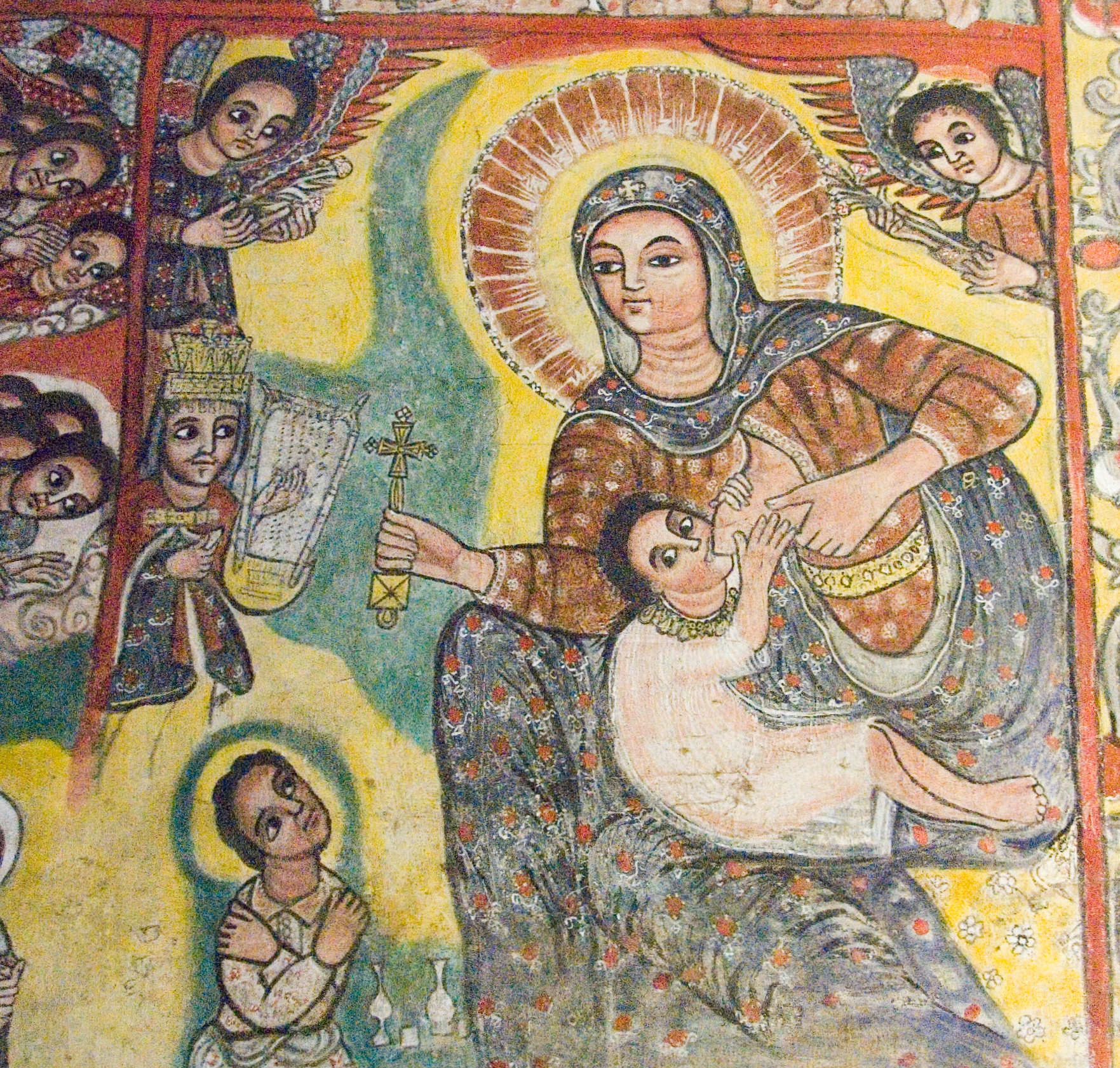
Maria lactans (Ethiopian)
Maria lactans, late 18th century. Fresco, Church of Narga Selassie, Dek Island, Lake Tana, Ethiopia. Photo: Alan Davey.

21. “Nativity” by Scott Cairns: This is the first in a pair of ekphrastic poems called “Two Icons,” in which the poet, who is Greek Orthodox, describes an icon from his home prayer corner. The first three stanzas engage in constructive wordplay: Jesus is wrapped in swaddling bands by his mother, and she is rapt—enraptured, wholly absorbed—by him. She holds him in her gaze and in her hands, and is beholden to him. Icons are about just that: beholding Christ and the sacred mysteries and deepening our affection for the One who holds us in affection. In Nativity icons our gaze is directed to “the core / where all the journeys meet, appalling crux and hallowed cave and womb,” where we are beckoned, like the magi, to bow before the incarnate God.

Source: Compass of Affection: Poems New and Selected (Paraclete, 2006)

22. “Star of the Nativity” by Joseph Brodsky: The Nobel Prize–winning Russian poet Joseph Brodsky was born into a Jewish family, but he was captivated by the story of Jesus’s birth and wrote many poems about it. The final stanza of this one gives us the unique perspective of the Star of Bethlehem, looking down—the Father’s beaming pride.

Source: Nativity Poems (Farrar, Straus and Giroux, 2001)

23. “Wise Women Also Came” by Jan Richardson: The Gospel of Matthew tells us that when Jesus was born, wise men came from the east to worship him. But wise women came too, Jan Richardson surmises. They came during Mary’s labor—midwives assisting with the birth. They came with lamps, fresh water, and blankets.

Source: Night Visions (Wanton Gospeller, 2010)
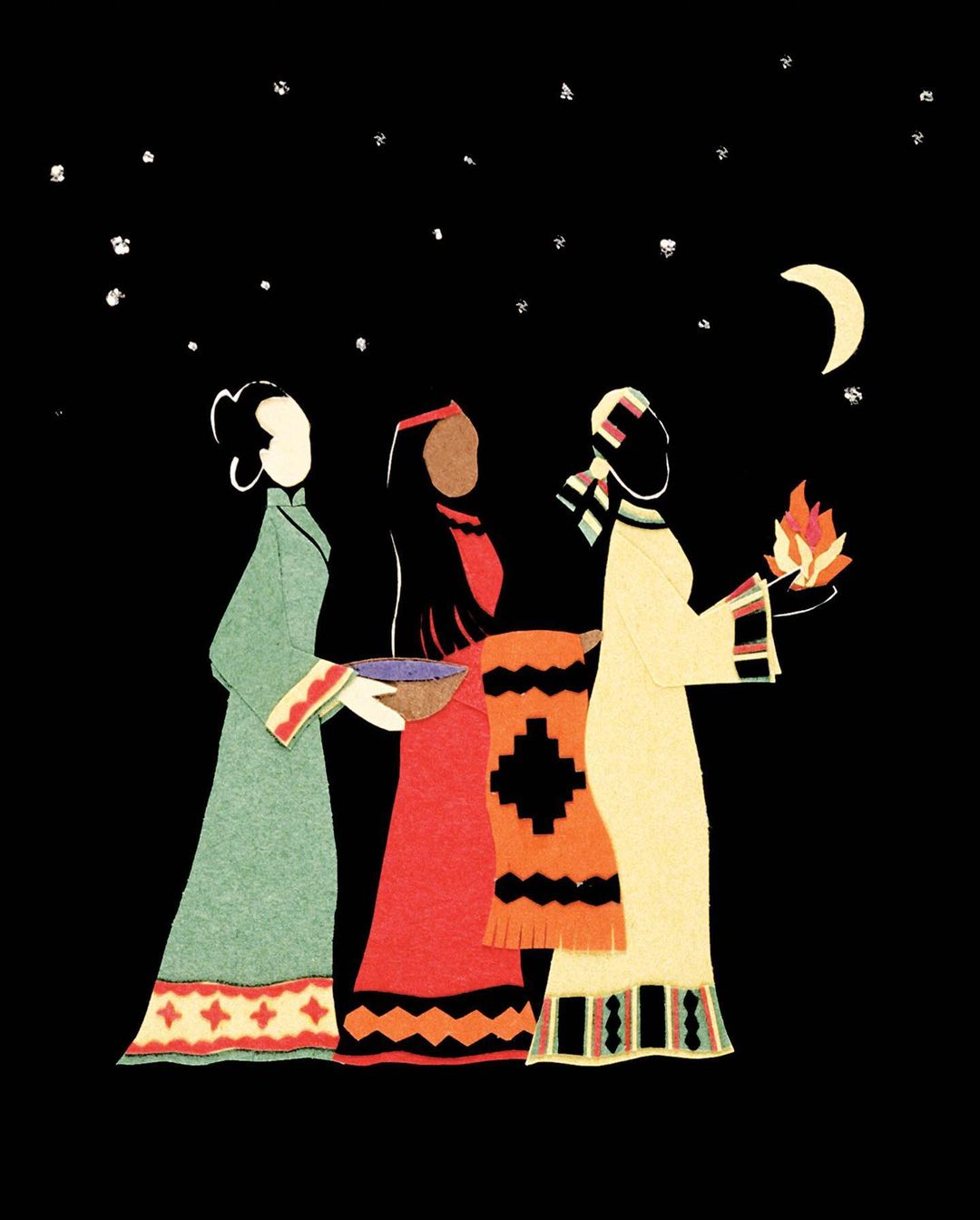
Richardson, Jan_Wise Women Also Came
Jan Richardson (American, 1967–), Wise Women Also Came, 1995. Collage. [purchase reproduction]

24. “Green River Christmas” by John Shea: Theologian and storyteller John Shea reflects on how, after experiencing something scary or unpleasant (like getting a shot or a teeth cleaning), mothers often give their child a treat. Christmas is a kind of supreme treat after the penitential season of Advent, during which we confronted the state of our spiritual health and remedied any shortfalls. Think, too, of the liturgy of (somber) confession and (sweet) pardon every Sunday at church, a prelude to the feast of bread and wine. At the Lord’s Table, we are fed—the gifts of God for the people of God. The Eucharist is the subtext of the final stanza, where Shea describes the presentation of Jesus in the temple forty days after his birth. There he is received by “the long-starved arms / of Simeon and Anna.” They had hungered for salvation, endured a long period of waiting; now they are filled.

Source: Seeing Haloes: Christmas Poems to Open the Heart (Liturgical Press, 2017)

25. “Taking Down the Tree” by Jane Kenyon: “Tick, tick, the desiccated needles drop.” This poem is about the passing of time—the death of another year—and the glumness that often sets in after the holidays are over, but it’s also about the storage of memories. In many households, Christmas ornaments are a multigenerational collection of memories. As with hanging them on the tree, taking them off and packing them away is a ritual that may prompt us to revisit certain past experiences or periods in our life. After we unplug the stringed lights and wrap up the baubles for safekeeping, then what? How will we inhabit the twelve months until next Christmas?

Source: Collected Poems (Graywolf, 2005)
“River” by Eugene McDaniels (song)

There’s a river somewhere
That flows through the lives of everyone
I know it flows through the valleys
And the mountains and the meadows of time
Yes, it do

There’s a star in the sky
That shines in the lives of everyone
You know it shines in the valleys
And the mountains and the meadows of time
Yes, it do

There’s a voice from the past
That speaks through the lives of everyone
You know it speaks through the valleys
And the mountains and the meadows of time
Yes, it do

There’s a smile in your eyes
That brightens the lives of everyone
It brightens the valleys
And the mountains and the meadows of time
Yes, it do

There is a short song of love
That sings through the lives of everyone
You know it sings through the valleys
And the mountains and the meadows of time
Yes, it do

There’s a river somewhere
That flows through the lives of everyone
I know it flows through the valleys
And the mountains and the meadows of time
Yes, it do

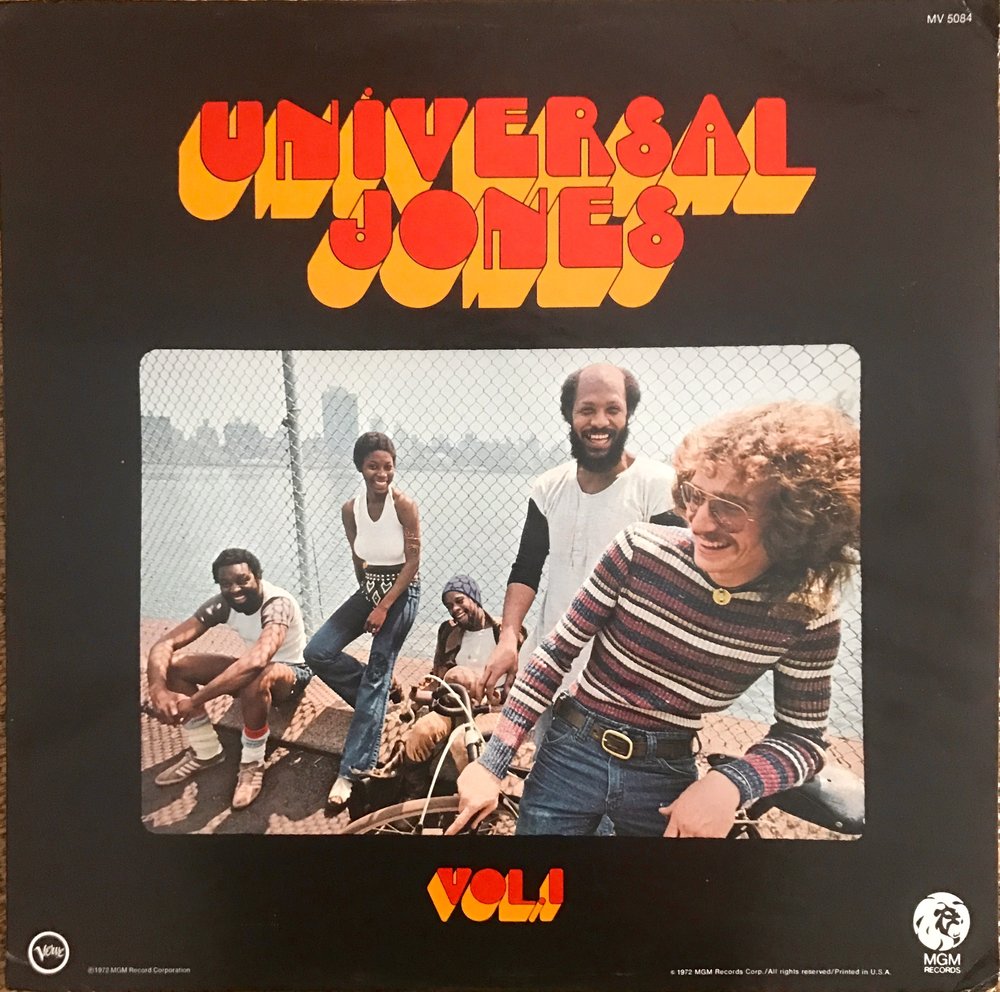
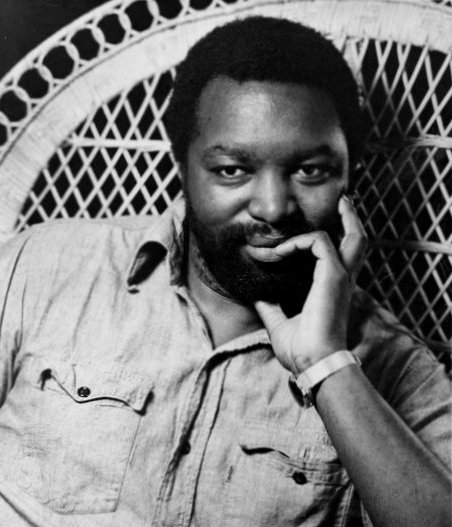
The folk-funk song “River” is by the American singer-songwriter and music producer Eugene McDaniels (1935–2011). He first recorded it with his band Universal Jones on a self-titled album (the group’s only output) in 1972, and he recorded it again, with a synth, on his solo album Natural Juices in 1975.

McDaniels grew up in Omaha, Nebraska, singing gospel music in church. He gained fame in the early 1960s as a clean-cut soul singer—he went by “Gene” at the time—and then surprised everyone in 1970 and 1971 with Outlaw and Headless Heroes of the Apocalypse, containing antiwar, antiestablishment songs performed in a much more experimental style. Universal Jones (1972) is innocuous by comparison, though it still embraces the counterculture. The genres of folk, rock, jazz, gospel, soul, funk, and even proto-rap—often creatively mixed—are all represented in McDaniels’s oeuvre.

Universal Jones cover
From left to right: Eugene McDaniels, Sister Charlotte, Leon Pendarvis, Maurice McKinley, Bob Woos

In the Bible, water connotes blessing, refreshment, life, hope, and abundance. “Flowing streams,” writes the Rev. J. Stafford Wright, “are parables of the flowing life of God.” Wright was referring in particular to one of Ezekiel’s visions, where an unnamed guide leads the prophet through a river that issues forth from the temple in Jerusalem (Ezek. 47:1–12). The guide says,

This water flows toward the eastern region and goes down into the Arabah, and when it enters the sea, the sea of stagnant waters, the water will become fresh. Wherever the river goes, every living creature that swarms will live, and there will be very many fish once these waters reach there. It will become fresh, and everything will live where the river goes.

He then goes on to describe the verdant trees on either side of the riverbank:

Their leaves will not wither nor their fruit fail, but they will bear fresh fruit every month, because the water for them flows from the sanctuary. Their fruit will be for food and their leaves for healing.

Sounds a lot like John’s eschatological vision in Revelation 22, where a river flows down from God’s throne, watering the tree of life, which is for the healing of nations. There are also similar passages in the Minor Prophets: “A fountain shall flow from the house of the LORD” (Joel 3:18); “And in that day it shall be that living waters shall flow from Jerusalem” (Zech. 14:8). God is understood as the source of these waters, which signify an invisible, spiritual reality.

(Related posts: https://artandtheology.org/2022/04/02/lent-28/; https://artandtheology.org/2022/12/11/advent-day-15-great-joy-river/)

When Jesus comes onto the scene, he talks about “rivers of living water” flowing out of the hearts of believers (John 7:38–39), “spring[s] of water welling up to eternal life” (John 4:13–14). God dwells in humanity, and thus the life God gives springs up from within us and vitalizes the wider world.

I don’t know whether McDaniels had any of these biblical texts in mind when he wrote “River.” But a river, a star, a voice, a song of love—these signal to me the Divine moving, shining, speaking, singing into the lives of humanity. Through the ups and downs of history, the ancient will has worked and is continuing to work, revealing itself to those who look, listen, and follow. Ecclesiastes 3:11 says that God has “set eternity in the human heart.” We possess a moral consciousness and spiritual yearning.

To me, “River” is about recognizing the blessing poured out on the world from the heart of God, about tuning in to the unseen truths embedded in the fabric of the universe. It speaks of God’s all-brightening smile (God’s pleasure in his creation), his whispers of our belovedness, and the river-flow of his goodness.

The song has been covered a handful of times over the years and across the globe, including by:

Further, in 1975 the California bluesman J. C. Burris adapted it both lyrically and musically and recorded it under the title “River of Life” on his album Blues Professor:

Bernice Johnson Reagon, a song leader and civil rights activist, uses Burris’s lyrics in her cover on River of Life: Harmony One (1986), overdubbing her voice singing multiple parts in an a cappella tour de force:

There’s a river somewhere
That flows through the life
Of everyone
And it flows through the mountains
And down through the meadow
Under the sun

There’s a star in the sky
That brightens up the life
Of everyone
They can see the life of happiness
Along with the future
Of the lonely one

Yes, it is

There’s a voice from the valley
That speaks to the mind
Of everyone
And it talks about the future
Along with the joy
Of the sorrowed one

Put a smile on your face
And brighten up the day
For everyone
And live your life of happiness
Along with the sick and lonely
And sorrowed one

Yes, it is

There’s a river somewhere
That flows through the life
Of everyone
And it flows from the mountain
Down through the meadow
Under the sun

There’s a sky full of diamonds
That brightens up the life
Of everyone
Then they can see the life of happiness
Along with the future
Of the lonely one

Yes, it is

The main revision by Burris comes at the end of each verse, where he mentions the lonely, the sick, and the sorrowful. They have a special place of belonging in God’s heart and plans. Jesus’s ministry was to such as these. Blessed are the poor and those who mourn, he said, for theirs is the kingdom of heaven.

Burris encourages us to come alongside those who are hurting with love and inclusion, and to look with them into God’s promised future, where the oppressed are liberated, the sick are healed, the silenced go out singing, and mourning is turned to dancing. Contra the cynicism of “the Preacher” who penned Ecclesiastes, there is something new under the sun! For those with eyes to see it, God is in the process of making all things new (Rev. 21:5).

Roundup: Four talks and an interview

Hi friends. I’m preparing for a trip to Bangalore, India, later this month, to meet an artist whose work I admire, Jyoti Sahi [previously]. I apologize for being slow to respond to emails lately, but I do appreciate each and every message I receive from my readers! I read them all and will try my best to respond just as soon as I get the chance. Please note: email is the best way to get in touch with me, as I’ve found that Facebook, Instagram, and Twitter messages tend to get buried under a slew of notifications and are harder for me to tag and track. Thank you again for your support of Art & Theology, and for all your questions, encouragements, personal introductions, invitations, and art recommendations.

In this roundup I want to share a few recorded lectures that I’ve listened to in the past month and have really enjoyed; I hope you will too. The first two are by art historians speaking to secular audiences at museums about the (Protestant) art of the Dutch Golden Age—which I saw a lot of this spring during my visit to the Netherlands! The second two are by Christian professors speaking at Christian academic institutions, from different angles, about prophetic art. And lastly, Biola University interviews Krista Tippett, one of my absolute favorite podcast hosts.

+++

“Dutch Art of the Golden Age, 1600–1675” by Dr. Eric Denker, National Gallery of Art, Washington, DC, July 14, 2019: In this hour-long lecture, Eric Denker discusses some of the highlights from the National Gallery of Art’s seventeenth-century Dutch art collection: paintings by Emanuel de Witte, Jan van der Heyden, Salomon van Ruysdael, Aelbert Cuyp, Ludolf Bakhuizen, Hendrick ter Brugghen (of the Utrecht Caravaggisti), Frans Hals, Johannes Cornelisz Verspronck, Judith Leyster, Thomas de Keyser, Rembrandt, Jan Steen, Pieter de Hooch, Willem Claesz Heda, Johannes Vermeer, Ambrosius Bosschaert, and Adriaen Coorte. These include scenes of everyday life (such as church and domestic interiors), landscapes, portraits, and still lifes.

https://youtu.be/u-Qoko2-Rfw

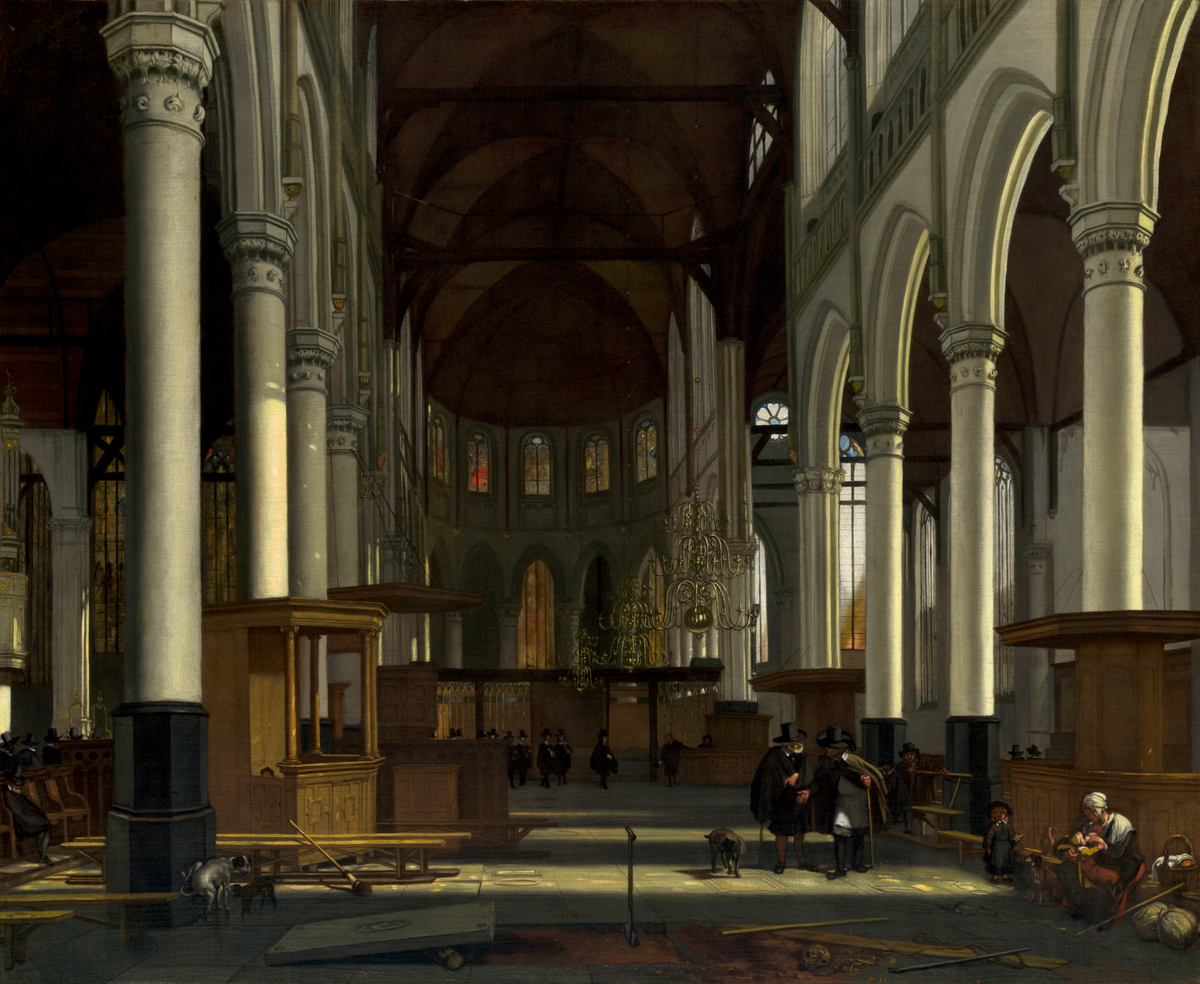
Interior of the Oude Kerk, Amsterdam by Emanuel de Witte
Emanuel de Witte (Dutch, ca. 1616–1691/92), The Interior of the Oude Kerk, Amsterdam, ca. 1660. Oil on canvas, 31 11/16 × 39 3/8 in. (80.5 × 100 cm). National Gallery of Art, Washington, DC.

I especially appreciated him pointing out details from de Witte’s Interior of the Oude Kerk, Amsterdam, which brings together death (a burial plot has just been dug up under the stone floor, with a skull visible in the upturned dirt heap) and life (a woman nursing her infant on a bench at the right). Unlike the French and Italian painting of the time, Denker says, in Dutch painting “there is nothing too vulgar . . . to portray. They felt that they inhabited God’s world, and that everything that existed in that world was necessarily of God’s making.” Hence the dog relieving himself on a column!

+++

“Food for Thought: Pieter Claesz. and Dutch Still Life” by Dr. John Walsh, Yale University Art Gallery, September 25, 2015: The Dutch coined the word “still life” (stilleven) to describe pictures of things that are incapable of movement or that lack a soul. In the Dutch conception, such paintings weren’t just for looking at but also for meditating on; the aim, in other words, was visual pleasure and moral edification. John Walsh outlines various categories: vanitas paintings, breakfast pieces, kitchen still lifes, pipe-smoking pieces, arrangements of food and wares on a table, fruit pieces, compositions of dead game and weapons, and flowers.

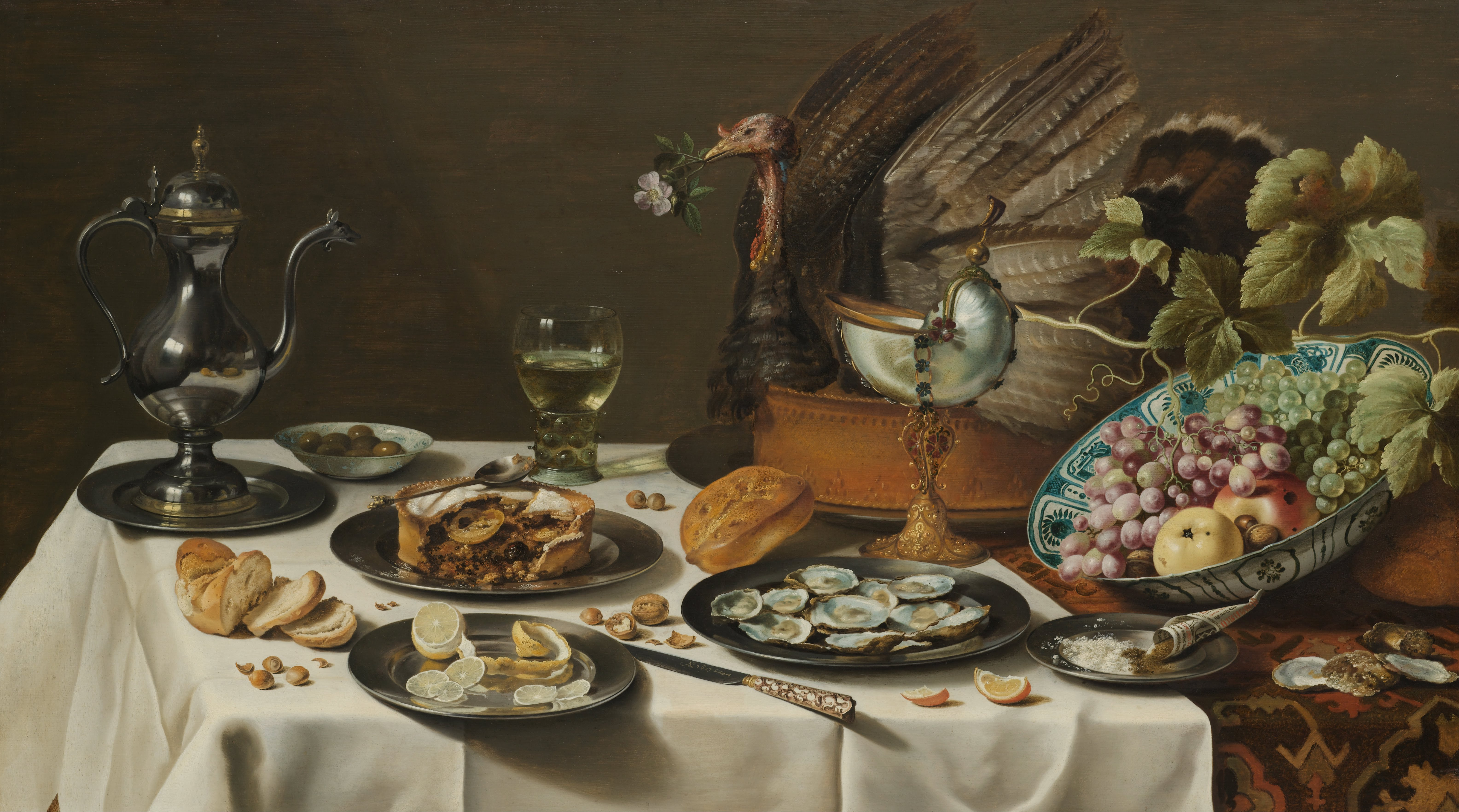
Walsh discusses many different paintings in detail, by many different artists (not just by the premier one in the lecture title), including a few examples of contemporaneous still lifes from Italy and Spain. He really made them come alive for me! The feasts of meats and cheeses, fruits and vegetables, for example, with all their subtle richness of texture and color, are a celebration of God’s goodness. In honor of Thanksgiving in a few weeks, here’s Pieter Claesz’s Still Life with a Turkey Pie:

Claesz, Pieter_Still Life with a Turkey Pie
Pieter Claesz (Dutch, 1597/98–1660), Still Life with a Turkey Pie, 1627. Oil on panel, 29 1/2 × 51 9/10 in. (75 × 132 cm). Rijksmuseum, Amsterdam.

+++

“Practicing the Prophetic: Liturgy, Formation, and Discernment for Public Life” by Dr. James K.A. Smith, Seattle Pacific University, October 16, 2019: James K.A. Smith has made a name for himself writing about worship, worldview, and cultural formation, through such books as You Are What You Love: The Spiritual Power of Habit and his Cultural Liturgies series. The first half of this talk, which starts at 6:15, is a good introduction to his work in that arena, as he discusses the liturgical nature of public life—how “the rhythms and rituals of public life aren’t just something we do; they are also doing something to us.” Cultural forces can de-form us, he says, in often insidious ways, such that we don’t even realize the deformation. Smith is all about getting us to take stock of what we’ve been conscripted to want, to love, to hope for; to perform a “liturgical analysis” on the social imaginary that we’ve absorbed through our culture’s images, stories, myths, rituals, practices, etc. And for a toolkit, he offers St. Augustine.

The second half of the talk (starting at about 33:40) is devoted to “the art of prophetic hope,” which “requires both the renewal of the Christian imagination and an outward offering of a Christian imagination for the sake of the world.” He continues: “What’s at stake in our liturgical formation is really a restorying of the imagination. It’s a restoring of the imagination because it’s a restorying of the imagination. And if Christianity has something to offer our neighbors, I think that will be most powerfully and prophetically embodied in the arts, which meet people on the register of the imagination.” I am always so compelled by Smith’s words; they’re all so quotable. But particularly germane to the Art & Theology project I have going here, and also to the upcoming Advent season, is what he says about a truly “Christian” art being that which holds together hurt and hope:

There is nothing more scandalous than Christian eschatology, I realize. And yet nothing speaks more directly to a hurtful and fearful world. This eschatological orientation, which is at the heart of the prophets, fuels art that is suspended between the already and the not yet. The unique imaginative capacity of the arts speaks to this ineffaceable human hunger for restoration even while honoring the heartbreak of our present pilgrimage. A Christian eschatology nourishes a distinct imagination that refuses to be constrained by the catalog of the currently available and instead imagines a world to come breaking into the present. Art that is infused with this eschatological imagination at once laments and hopes. In its lament, it honors our experience of brokenness, the heartbreak of the now. And in its hope, it gives voice to our longings. It neither wallows in romanticized tragedy nor escapes to sentimental naivete. Such eschatological art is like an embodied form of the Lord’s Prayer. Each such work is its own requiem, such that what Jan Swafford says of Mozart’s Requiem could be true of all such eschatological art. He says, “It’s full of death and hope, lacerating sorrow and uncanny beauty.”

I like this “uncanniness” metaphor. Uncanniness is an apt descriptor of such art that paints beauty with ashes, that can walk the soul through the valley of the shadow of death on the way to a feast in the wilderness. Such art stops us short in its uncanny, even paradoxical, ability to embody both hurt and hope.

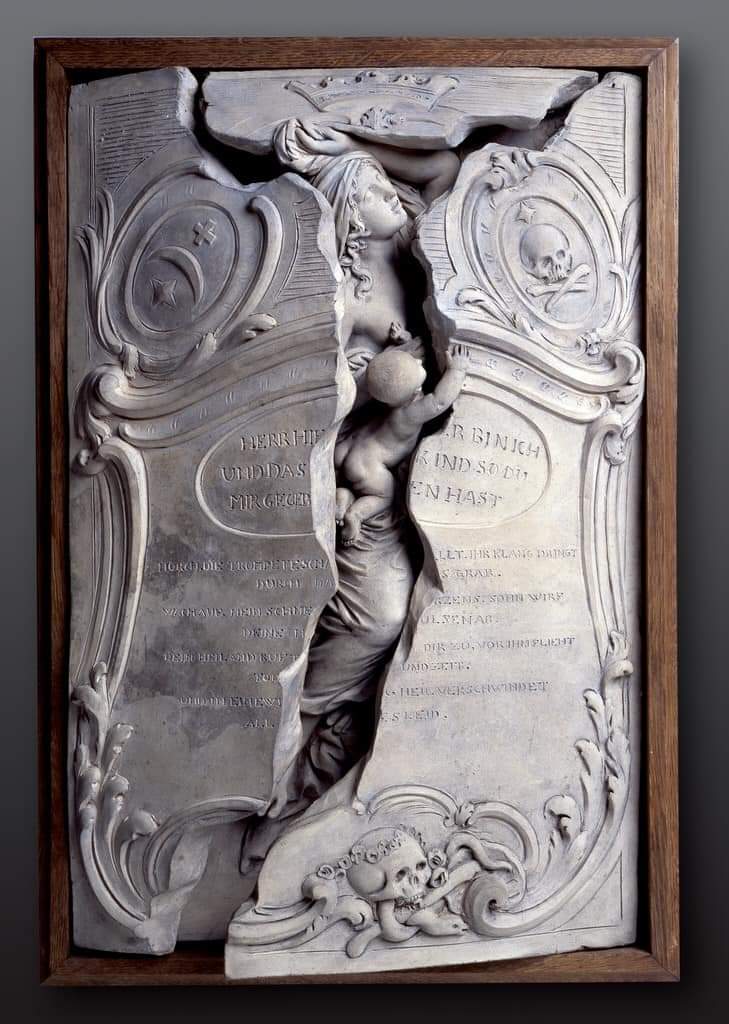
By way of example, he discusses the Tomb of Maria Magdalena Langhans (1723–1751), who died in childbirth, along with her baby, on Holy Saturday; the Memorial to Fallen Workers in Hamilton, Ontario; and Sugar and Spice by Letitia Huckaby [previously].

Nahl, Johann August_Tomb of Madame Langhans
Johann August Nahl (German, 1710–1781), Tomb of Mme. Maria Magdalena Langhans, 1751–53. Sandstone. (This is an 18th-century replica; the original is in the village church of Hindelbank in Bern, Switzerland.)

+++

“Turn and Face the Strange: Thoughts on Ergonomics and Artistry” by Jeffrey Overstreet, Sacrament & Story conference, Brehm Cascadia, Bellevue, Washington, April 5, 2019: “This is a presentation about the courage that artists must have in order to behold, and then bear witness to, new visions of beauty and truth,” says film critic and professor Jeffrey Overstreet [previously here and here]. He teaches his students at Seattle Pacific University (a Christian institution) to ask, like Miles Morales, “What’s up, danger?” To go outside the walls, to the wild edges, and be still, and then to report on that encounter. Films he discusses, whose characters (or director) “go to the edge of the water,” so to speak, include Babette’s Feast, The Secret of Kells, The Fits, Moonrise Kingdom, and 24 Frames.

+++

An Interview with Krista Tippett by Jonathan A. Anderson, Biola University presidential luncheon, La Mirada, California, February 22, 2017: Journalist Krista Tippett is the most talented interviewer I know—time after time initiating open, hospitable, genuinely mutual conversations with a range of subjects. (It’s no wonder she’s won a Peabody Award and a National Humanities Medal! The latter for “thoughtfully delving into the mysteries of human existence.”) Here Jonathan A. Anderson, the director of Biola University’s Center for Christianity, Culture, and the Arts, interviews her, and it’s so rich!

After graduating from Brown in 1983, Tippett became a foreign correspondent in divided Berlin. After years of that, she earned an MDiv from Yale. In 2003 she created the NPR show Speaking of Faith, which, despite initial skepticism from many corners, became wildly popular and evolved into On Being. Her upbringing was Christian, but she interviews people from all different faith traditions—poets, clergy, scientists, doctors, historians, activists, etc.—always opening with the question “What is your spiritual background?” The show’s tagline is “Pursuing deep thinking, social courage, moral imagination and joy, to renew inner life, outer life, and life together.” Again and again, On Being brightens my outlook, builds my compassion, and gives me hope and inspiration, and I’m so grateful to Tippett for creating that space.

In her interview at Biola, Tippett describes what it was like to discover theology as “one of humanity’s great disciplines,” as “carrying questions and virtues and substantive riches that should be able to find a way in public life true to their depth and their wisdom.” She discusses her desire to be true to the intellectual and spiritual content of faith—the latter almost absent in public talk; how she responds to the criticism of being “soft” on religious voices; and she gives tips for conversing with those you disagree with. When Anderson opened up the Biola project to critique by asking her the problems and possibilities with their approach to Christian liberal arts education, she had this beautiful response: “Whatever our particularity is, that is our gift to the world.” To immerse oneself fully in a particular religious tradition is not a narrowing but a deepening, she said; being deeply who you are and having convictions and seeking truth is not incompatible with living lovingly and peaceably in a pluralistic world!

Tippett is the author of Speaking of Faith: Why Religion Matters—and How to Talk About It (Penguin, 2008) and Becoming Wise: An Inquiry into the Mystery and Art of Living (Penguin, 2016). Her radio show / podcast, On Being, has a vast archive, and I only just became a listener two years ago, but here are some episodes that I remember particularly enjoying: