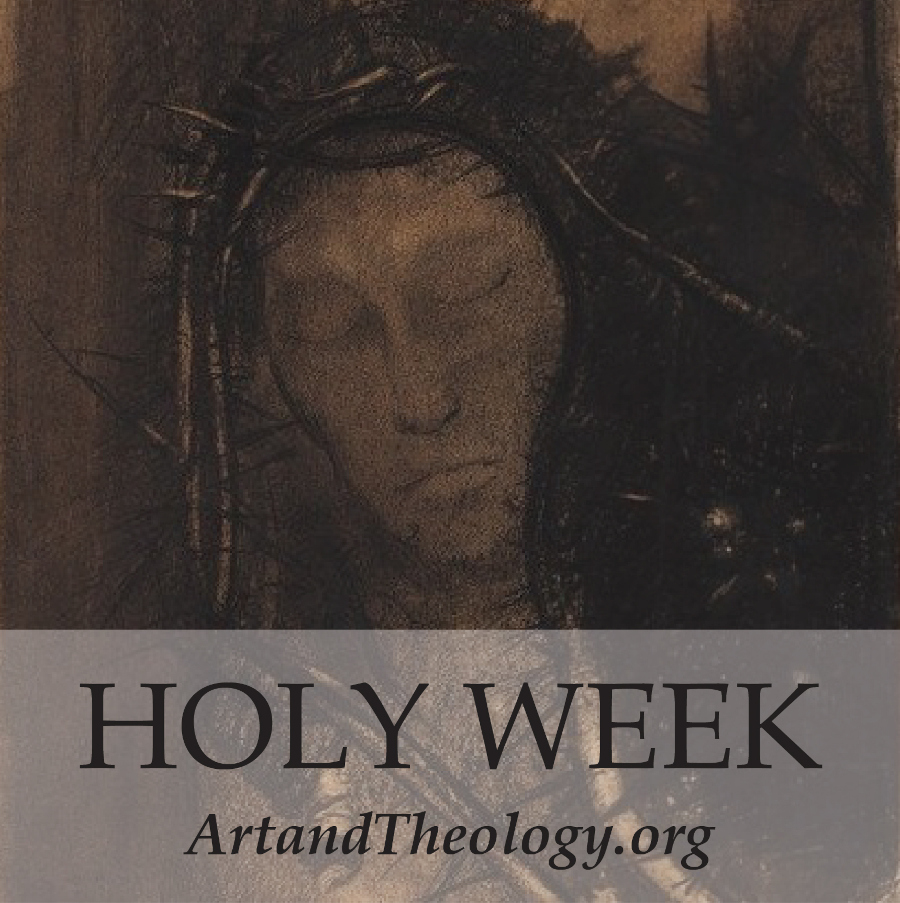
Roundup: “Soul Food Love,” call for Sufjan Stevens papers, and more

LECTURES:

Calvin University’s January Series is an annual fifteen-day series of lectures and conversations that “aims to cultivate deep thought and conversations about important issues of the day, to inspire cultural renewal and make us better global citizens in God’s world.” It brings in various scholars on various topics, but the two lectures I want to call out in particular are both about food!

Also note: upcoming events in the series include “Neurodivergent Storytelling” with Daniel Bowman Jr., a novelist and professor with autism; a live recording of the Poetry for All podcast featuring guest poet Marilyn Nelson; and “Tuning Our Minds, Ears, and Hearts to Sing God’s Grace: Reflections of a Conductor” with Pearl Shangkuan.

>> “Soul Food and the Collective Cultural Memory” by Caroline Randall Williams (available through Feb. 15): Caroline Randall Williams is a multigenre writer (of poems, YA fiction, essays, recipes), educator, activist, and home cook in Nashville whom Southern Living recognized as one of “50 People Changing the South” for her work around food justice. She’s the coauthor (with her mother, Alice Randall) of Soul Food Love: Healthy Recipes Inspired by One Hundred Years of Cooking in a Black Family and host of the TV show Hungry for Answers. I enjoyed this wonderful introduction to her work—though frustratingly, the sound cuts in and out several times. The introduction starts at 14:05, and the Q&A starts at 1:04:40. She opens with a reading of the delicious poem “When the Burning Begins” by Patricia Smith.

>> “Table Conversations: Building Community as We Eat” by Kendall Vanderslice: Kendall Vanderslice is a baker, writer, and the founder of the Edible Theology Project, an educational nonprofit connecting the Communion table to the kitchen table. She earned her master’s of theological studies from Duke Divinity School and master’s in gastronomy from Boston University. . . . Through her work in food studies and theology, Vanderslice explores the ways God uses the table to restore communities and creation. In her most recent book, By Bread Alone: A Baker’s Reflection on Hunger, Longing, and the Goodness of God, she discusses her faith journey, shares recipes, and dives into the role of bread in church history.” Introduction starts at 11:45; Q&A, at 50:33.

+++

CALLS FOR PAPERS:

>> For inclusion in the forthcoming book My Impossible Soul: The Metamodern Music of Sufjan Stevens: Dr. Tom Drayton and Greg Dember are compiling essays for a new book on Sujan Stevens, and they’re seeking contributing writers from across academic disciplines. “My Impossible Soul will be the first academic volume dedicated to the work of multi-instrumentalist singer-songwriter Sufjan Stevens. A staple of the indie/alternative music scene since 2000, Stevens’ work transcends genres – ranging from minimalist folk to maximalist electronica. His prolific discography blends “stories of his own life with ancient mythology and religious references” (McKinney 2015), interweaving themes of grief (Minton 2023), nostalgia, queer relationships (Postelli 2016; Glow 2021), Christianity, disease, problematic families, and the apocalypse with intricately produced compositions. . . . This volume aims to provide the first international and interdisciplinary analysis of the music, lyrics, performance process and cultural impact of Sufjan Stevens, through the framework of metamodernism . . .” Proposal deadline: March 1, 2024.

>> On Religion and Film: The International Conference on Religion and Film is held every two years, gathering leading scholars in the fields of religious studies and film; 2022’s was in Amsterdam, and this year’s (June 27–28, 2024) is in Hollywood! The Brehm Center at Fuller Seminary is soliciting papers for the conference. “We invite papers exploring Hollywood films from their origins in the 1890s through the silent film era as well as the Classic Hollywood studio film era from the 1930s through the end of the Hays Code (1968). How did religion influence the creative process, production, reception, and distribution of these films? How might the intersection of religion and film in this historic era inform our conversations about religion and film today? We are especially interested in contemporary films that deal with the future and the role of religion in the future. In addition, we seek papers exploring how advances in film technologies and our collective experience of film (in-theater technologies, VR, Streaming) will influence the future of filmmaking. Additionally, how might AI change storytelling and human creativity? How will those who work in Religion and Film Studies adapt/respond to these changes?” Abstracts are due by February 10, 2024.

+++

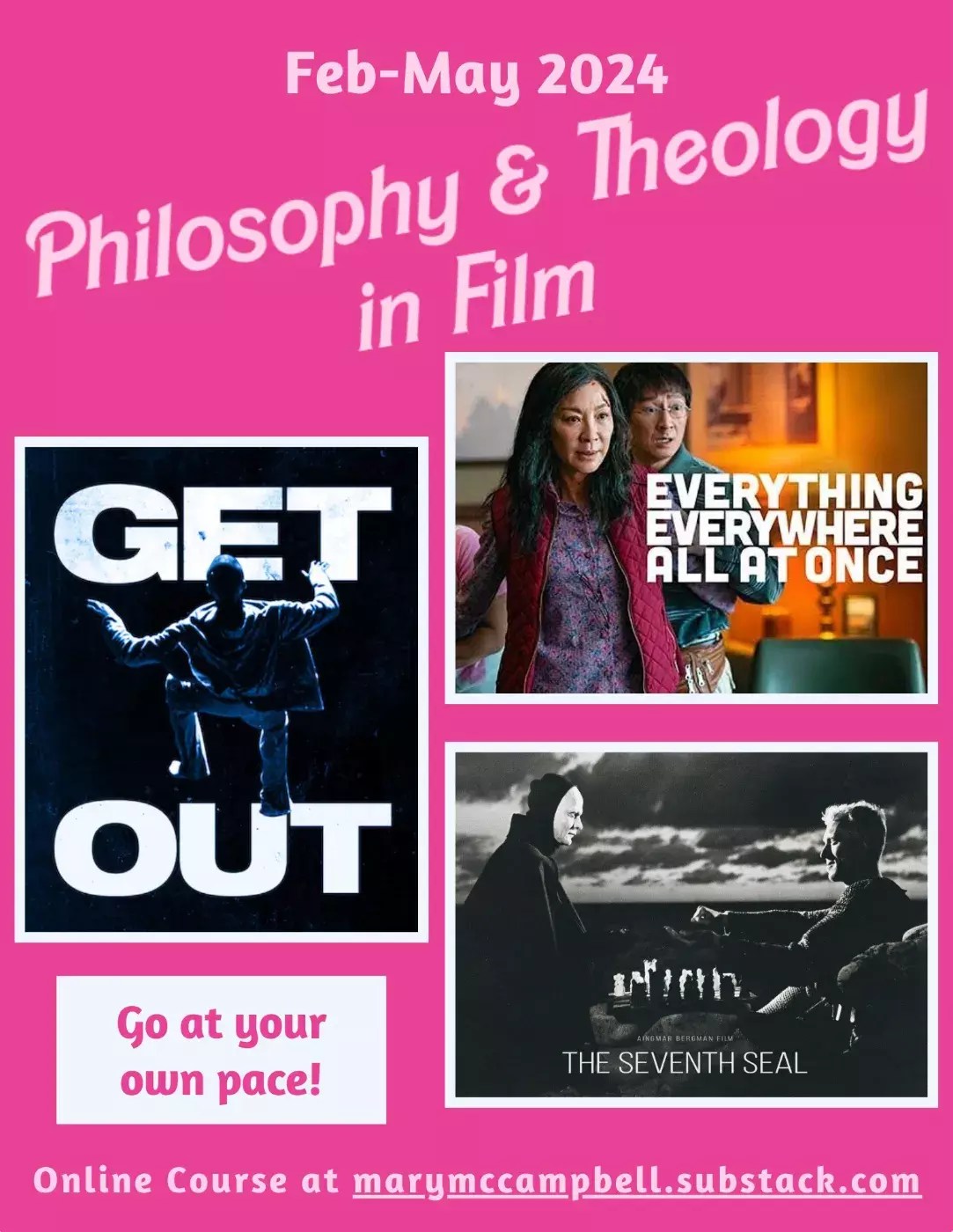
ONLINE COURSE: “Philosophy and Theology in Film” with Dr. Mary McCampbell, February–May 2024: Mary McCampbell [previously] is a writer and educator on film, literature, and popular culture whose Substack, The Empathetic Imagination, is one of my favorites! In December she and nine other professors lost their jobs at Lee University because the university’s humanities major has been suspended due to financial difficulties—and this despite her being tenured and having taught there for fourteen years.

So, she won’t be in a traditional classroom this spring, but the course she had prepared to teach undergraduates she is adapting for online and opening up to the public! It costs just $20 (a four-month paid subscription to The Empathetic Imagination), which is a real steal. Beginning near the end of February and running through May, the course will include:

  • An introductory video for each of ten films, including a lesson on the main philosophical influences and parallels (including intro lectures on Marx, Nietzsche, Freud, Sartre, Descartes, and more)
  • A live Zoom discussion of each film
  • A written Substack post of McCampbell’s analysis of each film, hopefully followed by a lively discussion in the comments section

I’ll be participating!
+++

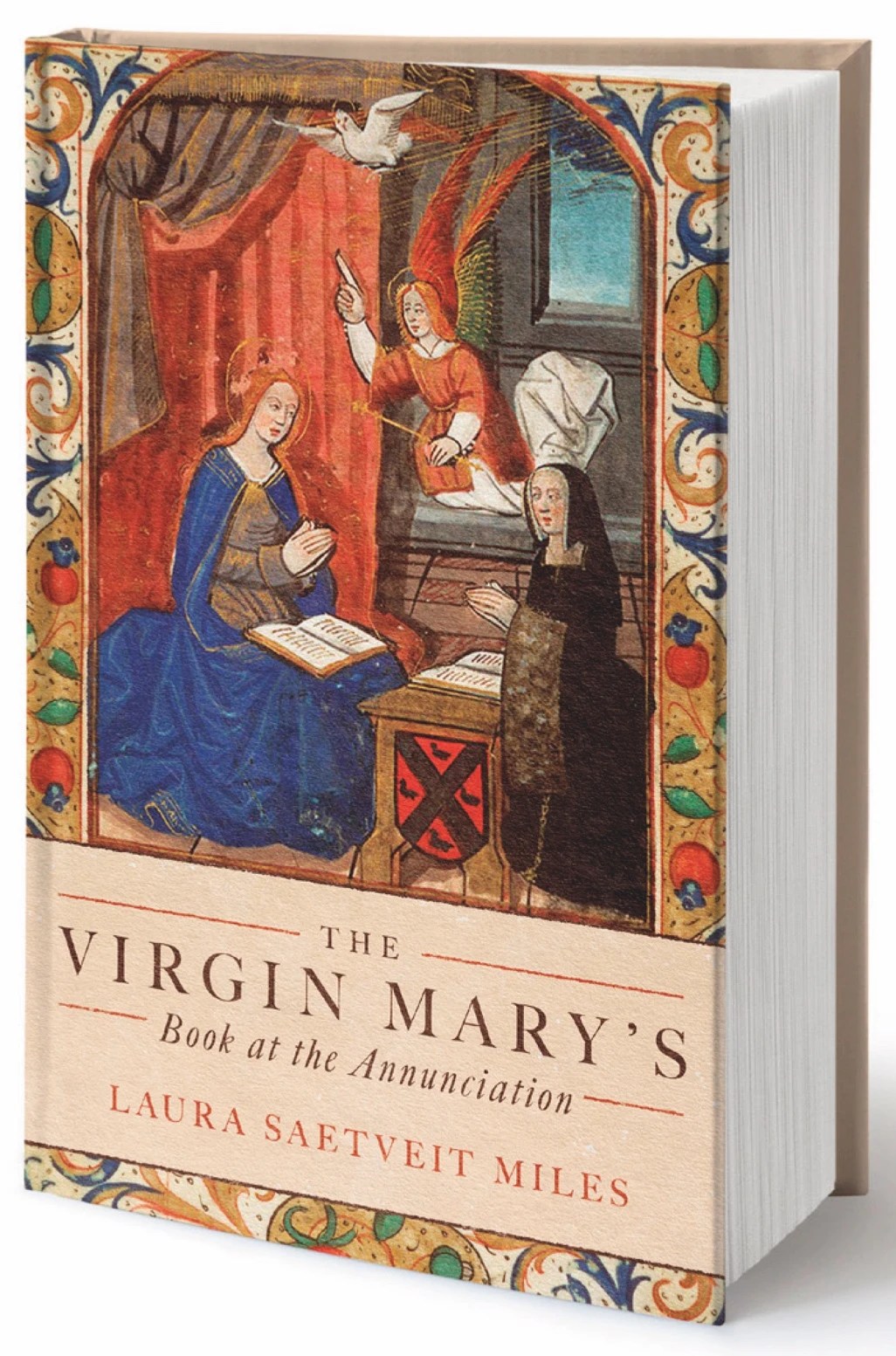
UPCOMING (ONLINE) LECTURE: “Reading alongside the Virgin Mary in Late Medieval Books of Hours Annunciation Scenes” by Laura Saetveit Miles, February 1, 2024: Professor Laura Saetveit Miles’s book The Virgin Mary’s Book at the Annunciation (Boydell & Brewer, 2020) has been one of my favorite reads of the last several years—so I was delighted to see she’ll be giving a free online talk on the topic next week! Organized by the Centre for Marian Studies at St Mary’s University in Twickenham, Miles’s lecture “will focus on two rare and fascinating versions of the standard Annunciation scene, as they are developed in both devotional literature and illuminations in Books of Hours. One type of representation captures the moment before Gabriel arrives; the other type depicts the reader herself as part of the scene. Some versions even combine these two. Where do these variations come from, and what do they mean? This neglected story of imitatio Mariae sheds new light on what Mary’s role in the Incarnation meant for medieval Christians across Europe.” (Update, 2/2: Here’s the recording.)
Online highlights from the 2023 Calvin Symposium on Worship

On February 8–10, 2023, I had the pleasure of attending in person my first Calvin Symposium on Worship, an annual ecumenical gathering of Christian worship leaders from throughout North America (and some from overseas) organized by the Calvin Institute of Christian Worship at Calvin University and the Center for Excellence in Preaching at Calvin Theological Seminary in Grand Rapids, Michigan. The half-week is full of diverse worship services, lectures, breakout sessions, and opportunities to meet and mingle with folks who serve the church as pastors, liturgists, musicians, publishers, scholars, etc. It was an invigorating time!

The CICW is generous in providing recordings of much of its symposium content for free on their YouTube channel several months after the event, and they’ve just released a big batch. Below are some of my highlights that are shareable.  

Though music is not the exclusive focus of the symposium, it is a major component, and my ministry background is in that area, so I want to share with you some of the new songs I learned.

The worship service on February 9, titled “Rooted in Christ,” was excellent and worth watching in full (the sermon, on Colossians 2:6–15, was preached by Rev. Dr. Marshall E. Hatch, pastor of New Mount Pilgrim Missionary Baptist Church in Chicago), but here are three standout songs. The first two are led by the Calvin University Gospel Choir, directed by Nate Glasper Jr., and feature guest soloist Eric Lige.

“On Christ the Solid Rock,” adapt. and arr. Gerald Perry, 2022:

This song is a new gospel adaptation and arrangement by Gerald Perry of the classic Edward Mote–William Bradbury hymn “The Solid Rock.” It appears on the 2022 album Legacy by the James Family Singers (which is on Spotify), a West Michigan gospel group founded by Oscar and Erma James in 1981 and to which Perry belongs, along with more than two dozen members of his extended family.

“God Is Good” by Morris Chapman, 1992:

A call-and-response song written by Lige’s late mentor, Morris Chapman (1938–2020), a Grammy- and Dove Award–nominated composer and recording artist. The song appears on the 2010 compilation album Incredible Gospel, vol. 2.

“If God” by Casey Hobbs, John Webb Jr., and Natalie Sims, 2019:

This song of lament was sung by Samantha Caasi Tica, then a senior in Calvin’s speech-language pathology department, and Calvin alum Emma Gordon as the “Prayer of Intercession” portion of the service. The congregation (is that what you’d call the group of worshippers at a symposium?) was asked to come in on the chorus and the “Nothing but the Blood of Jesus” bridge. For the official live video of the song as performed by its writer, Casey J, see here.

And now from other worship services at the symposium:

“Los que sembraron con lágrimas” (Those Who with Tears Went Out Sowing) (Psalm 126) by Carlos Colón, 2019:

The Bifrost Arts setting of Psalm 126 by Isaac Wardell is one of my favorite congregational songs—it leans into the “weeping” aspect of the psalm. But this new setting by Carlos Colón leans into the psalm’s “joy” aspect, which gives it a different tone that works equally well, I think. It was led by Colón at the piano, with the help of Calvin University students and guest Wendell Kimbrough. (Watch full worship service.) It is #333 in the bilingual hymnal Santo, Santo, Santo: Cantos para el pueblo de Dios (Holy, Holy, Holy: Songs for the People of God).

“His Love Is My Resting Place (Psalm 23)” by Wendell Kimbrough, 2020:

There’s no standalone video for this song from the symposium, but I cued up the service video to where the song starts at 13:42; you can also listen to the solo recording released by songwriter Wendell Kimbrough in 2020. Director of music and songwriter at Church of the Incarnation in Dallas, Kimbrough is one of today’s foremost composers of biblical psalm settings for contemporary worship. Despite the dozens of settings that already exist of this most famous psalm, which begins “The Lord is my shepherd . . . ,” Kimbrough’s take is not a redundancy but rather a vibrant new and easily singable addition to this catalog of options. I brought it back with me to the local congregation I’m a member of, and the people took to it really well.

“Anta Atheemon” (You Are a Great God) by Ziad Samuel Srouji, 1990:

“Anta Atheemon” is sung by Christians throughout the Middle East and the Arabic-speaking world. It was written by Ziad Samuel Srouji, who was born in Haifa, Israel, and raised in Lebanon but then displaced by civil war to the United States. He is pastor of the Gate International Church in San Mateo, California.

“Soul, Adorn Yourself with Gladness / Vengo a ti, Jesús amado” (cued to 59:00):

What a wonderful song for the celebration of the Eucharist! “Bless the one whose grace unbounded this amazing banquet founded! The high and exalted and holy deigns to dwell with you most lowly. Be thankful! Soul, adorn yourself with gladness and rejoice!” I love the exuberant Puerto Rican melody.

The source of this hymn is the German communion chorale “Schmücke dich, O liebe seele” by Johann Franck (1618–1677). After being translated into Spanish by Albert Lehenbauer (1891–1955) for Lutherans in South America, the chorale traveled up to Puerto Rico, where it was reset to the tune CANTO AL BORINQUEN by Evy Lucío Cordova (b. 1934), now with an added refrain by Esther Eugenia Bertieaux (b. 1944). The English in the bilingual version here, published in Evangelical Lutheran Worship‎ #489, is a composite translation, borrowing from Catherine Winkworth (1827–1878) and others.

+++

The worship services, several a day, are only one component of the Calvin Symposium on Worship. There are also wonderful talks, panel discussions, and workshops—such as “Hardwired to Sing: Entrainment, Interactional Synchrony, and the Spirit-ed Magic of Corporate Song” by Dr. W. David O. Taylor. In this talk Taylor, a liturgical theologian teaching at Fuller Theological Seminary, expands on what I think is the most fascinating chapter of his latest book, A Body of Praise: Understanding the Role of Our Physical Bodies in Worship, which is “The Nature of the Body: Scientific Perspectives on the Body in Worship.”

“First, I wish to suggest that it is the Holy Spirit’s pleasure to work in and through our physical bodies, not just in our heads and hearts, in order to form us wholly into Christ’s body,” Taylor says. “And second, I would like to show how the sciences offer empirical insights into the metaphysical work of the Spirit to form our embodied communal singing.”

Citing Hebbian theory—namely, that “neurons that fire together wire together”—he says that singing together in corporate worship bonds us in ways that nothing else can, strengthening our kinship with one another through our bodies. “People who sing together experience a wiring together of their neural networks. They become tethered to one another in neurological and physiological ways, not just affective or relational ways.” He demonstrates this principle with the help of some audience volunteers.

The last twenty-five minutes of the video are Q&A. Unfortunately, the questioners aren’t miked, and not all the questions are repeated for the recording, so that part is a little hard to follow.

My favorite session that I attended was “The Practice of Lament,” a panel discussion with Drs. Wilson de Angelo Cunha, Cory B. Willson, and Danjuma Gibson, moderated by David Rylaarsdam—all Calvin faculty. “What are the different faces of lament? What is the goal of lament? How can pastoral leaders facilitate lament? What does lament reveal about the nature of God and what it means to be human?” It’s an excellent introduction to this important Christian discipline.

“Lament is a central part of our mission as God’s people, and I will say, we have largely failed,” says Willson. And later: “You cannot be a hopeful people or community if you don’t lament. And we need each other to hold out hope for us when we can’t find the strength to swing our feet from the bed to take another step toward a future.”

Asked to define lament, Gibson, a professor of pastoral care and a practicing psychotherapist, said, “Lamentation, or griefwork, is the process you engage in to come to terms with what has been lost, the rupture, the unattaching to what you have loved—that may be a way of life, that may be a person, that may be an image of how you thought things should have been—when there is a tragedy.”

Later in the discussion, in response to a question about how lament coheres with the apostle Paul’s call to rejoice always, Gibson clarifies: “Lamentation is not the opposite of joy. Lamentation is a particular manifestation of joy. And how I understand joy in my own work is this: joy is the inner assurance that you cultivate over time that you belong to God no matter what. . . . Lamentation is a declaration of that joy.”

Again, the questions from the audience are inaudible. But from memory, I can tell you that one was about divine impassibility (Greek apatheia), an attribute ascribed to God in classical theology that means that God does not feel pain or have emotions. This is an ascription that has always puzzled me and that I reject (it makes a virtue out of Stoicism), and indeed many Christian theologians have problems with it as well, because the picture of God that we have in both Testaments is of a God who is passionate, who grieves and gets angry and exults, and who is responsive to his people, empathetic.

Another question mentions the beating to death of Tyre Nichols by police officers in Memphis. Another asks how we know when we’re done lamenting a particular tragedy.

There’s so much that’s helpful and illuminating in this conversation; please give it a listen.

Another great panel discussion at the symposium was “Worship Music from Africa and the African Diaspora,” between Drs. James Abbington, Stephanie Boddie, Brandon A. Boyd, Pauline Muir, and Jean Kidula:

“What treasures and insights from the rich history of Christian worship music on the continent of Africa as well as from African diaspora communities in the United States and England should be more celebrated and cherished? What misunderstandings should be corrected? How can we learn from this rich history without misappropriating it? What signature examples of congregational song should we all learn more about and from? How can we all continue to learn more and explore more deeply connections across continents and Christian traditions?”

At 57:35, Abbington asks each panelist if they could teach the church one congregational song, one that’s important for the church to know, what would it be?

At the symposium, I also really enjoyed the lecture “More Than We Can Ask or Imagine: Music and the Uncontainability of Hope” by Dr. Jeremy Begbie, a theologian and pianist—but it is not and will not be available online. However, it draws on the themes of his new book from Baker Academic, Abundantly More: The Theological Promise of the Arts in a Reductionist World, which just released this week.


There were lots of other sessions offered as well—on creating a sense of belonging with youth in worship, intergenerational worship in global contexts, worshipping God with our public witness, sacred architecture and space design, cultural intelligence, singing the Psalms, wisdom from Indigenous Christians in Australia, how to shape a compelling sermon, lessons for leading congregational singing, refugia faith, and more. Several of these were recorded and are now hosted online in the Calvin Institute of Christian Worship Resource Library, which has content going back more than a decade (see also their YouTube channel @worshiprenewal).

Registration for next year’s Calvin Symposium on Worship has not yet opened, but the dates have been announced: February 7–9, 2024. The theme is Ezekiel. Find out more at https://worship.calvin.edu/symposium/index.html.

“Sursum Corda” by Christina Rossetti (poem)

“Lift up your hearts.” “We lift them up.” Ah me!
I cannot, Lord, lift up my heart to Thee:
Stoop, lift it up, that where Thou art I too may be.
“Give Me thy heart.” I would not say Thee nay,
But have no power to keep or give away
My heart: stoop, Lord, and take it to Thyself today.

Stoop, Lord, as once before, now once anew
Stoop, Lord, and hearken, hearken, Lord, and do,
And take my will, and take my heart, and take me too.

This poem was originally published in Time Flies: A Reading Diary (1885) and subsequently Verses (1893) and is in the public domain.


A devout Anglican from Victorian England and one of my favorite spiritual writers, Christina Rossetti (1830–1894) opens her poem “Sursum Corda” with a quotation from the ancient Eucharistic prayer compiled in the Book of Common Prayer: “Lift up your hearts . . .”

The Sursum corda, Latin for “Lift up your hearts,” is a Christian liturgical dialogue between priest/pastor and congregation that dates at least as far back as the third century (it’s mentioned in the Early Christian treatise Apostolic Tradition, as well as by Cyprian, Augustine, and Cyril of Jerusalem) and that is still used in Catholic, Orthodox, and Protestant churches today. Most, like my Presbyterian church, recite it as part of the celebration of the Eucharist, aka the Lord’s Supper, though some place it after the Call to Worship.

Here are the words used in the Roman Rite:

Priest: Dominus vobiscum.
People: Et cum spiritu tuo.
Priest: Sursum corda.
People: Habemus ad Dominum.
Priest: Gratias agamus Domino Deo nostro.
People: Dignum et iustum est.
Priest: The Lord be with you.
People: And with your spirit.
Priest: Lift up your hearts.
People: We lift them up to the Lord.
Priest: Let us give thanks to the Lord our God.
People: It is right and just.
Sursum corda (Cambrai Missal)
Folio 1r from the Cambrai Missal, made in northern France, ca. 1120. Collection of Notre-Dame Cathedral, Cambrai, France. This page starts mid-liturgy with “Per omnia saecula saeculorum, amen” (Forever and ever, amen; or World without end, amen)—the inhabited initial P has a lion and a fantastical bird inside!—and then proceeds to the Sursum corda. The tildes indicate omitted letters.

The following is what my church uses—you’ll see it concludes with the Memorial Acclamation:

Pastor: The Lord be with you.
People: And also with you.
Pastor: Lift up your hearts!
People: We lift them up to the Lord.
Pastor: Let us lift up our hearts to the Lord our God.
People: It is right to give him thanks and praise.
Pastor: Therefore we proclaim the mystery of faith:
All: Christ has died. Christ is risen. Christ will come again.

The phrase “Lift up your hearts” is taken from biblical passages such as Psalm 86:4—“Gladden the soul of your servant, for to you, O Lord, I lift up my soul”—and Lamentations 3:41, which says, in the context of confession and repentance, “Let us lift up our hearts as well as our hands to God in heaven.” The Sursum corda expresses an inclining of the whole self toward God in praise and offering.

Rossetti responds to this jubilant call with an admission of personal weakness. She lacks the power to lift up her heart, she says (perhaps because it’s so heavy); she needs God to lift it for her. She begs him four times to “stoop,” to condescend to her level, so that she might ascend to his throne. Line 4 contains a partial quotation of Proverbs 23:26: “My son, give me thine heart, and let thine eyes observe my ways.” She wants to give God her heart, but in her frail spiritual state, all she can do is bid him “take it.”

I often pray Rossetti’s poems, as I find her such a sensitive seeker, full of longing that so frequently reflects my own. You can find other Rossetti poems from the Art & Theology archives on my new Poetry Index tab. All her poems are accessible online, scattered across various volumes on Google Books, but if you want to read them all in one place and in physical book form, I recommend the Penguin Classics edition of her Complete Poems (which stands at a whopping 1221 pages!).

“Upper Room” by Keith Patman (poem)

Sister Oksoon Kim_Bread of Life from Heaven
Sister Kim Ok-soon (김옥순 수녀), The Bread of Life from Heaven (하늘에서 내려온 생명의 빵), 2014

Stars sing, light-years deep in silent space.
In a bottle’s neck God’s Ghost sings
as the wine is poured.
Out on the edge of eternity, the Father
sees the Lamb slain ere the world is formed.
A soft cough splits the silence of this room
light-years below the wheeling stars.
A hollow prayer; give it breath, O Ghost,
let roar a wind like that which shook
the bones in Vision Vale.
For vision, God spills bread crumbs on the board.
His stars sing, light-years deep in silent space.
Here, emblems speak a mystery of brokenness:
the shattering of him by whom all things consist.

This poem was originally published in the anthology A Widening Light: Poems on the Incarnation, edited by Luci Shaw, and is used here by permission of the poet.

Keith Patman is an occasional poet whose primary vocation is Bible translation. Since 1982 he has worked for Wycliffe Bible Translators, assisting with the translation of scripture into the languages of West and Central Africa. He lived in Cameroon from 1987 to 1995, working on a Nugunu New Testament, and now serves from the US as part of an international team providing tools and training to African translators. He currently lives in Waynesboro, Virginia, with his wife, Jaci, who is a Presbyterian minister. They have two grown children and six grandchildren.

Lent, Day 36 (Last Supper)

While they were eating, Jesus took a loaf of bread, and after blessing it he broke it, gave it to the disciples, and said, “Take, eat; this is my body.” Then he took a cup, and after giving thanks he gave it to them, saying, “Drink from it, all of you; for this is my blood of the covenant, which is poured out for many for the forgiveness of sins.”

—Matthew 26:26–28 (cf. Mark 14:22–24; Luke 22:17–20)

The Lord Jesus on the night when he was betrayed took a loaf of bread, and when he had given thanks, he broke it and said, “This is my body that is for you. Do this in remembrance of me.” In the same way he took the cup also, after supper, saying, “This cup is the new covenant in my blood. Do this, as often as you drink it, in remembrance of me.” For as often as you eat this bread and drink the cup, you proclaim the Lord’s death until he comes.

—1 Corinthians 11:23b–26

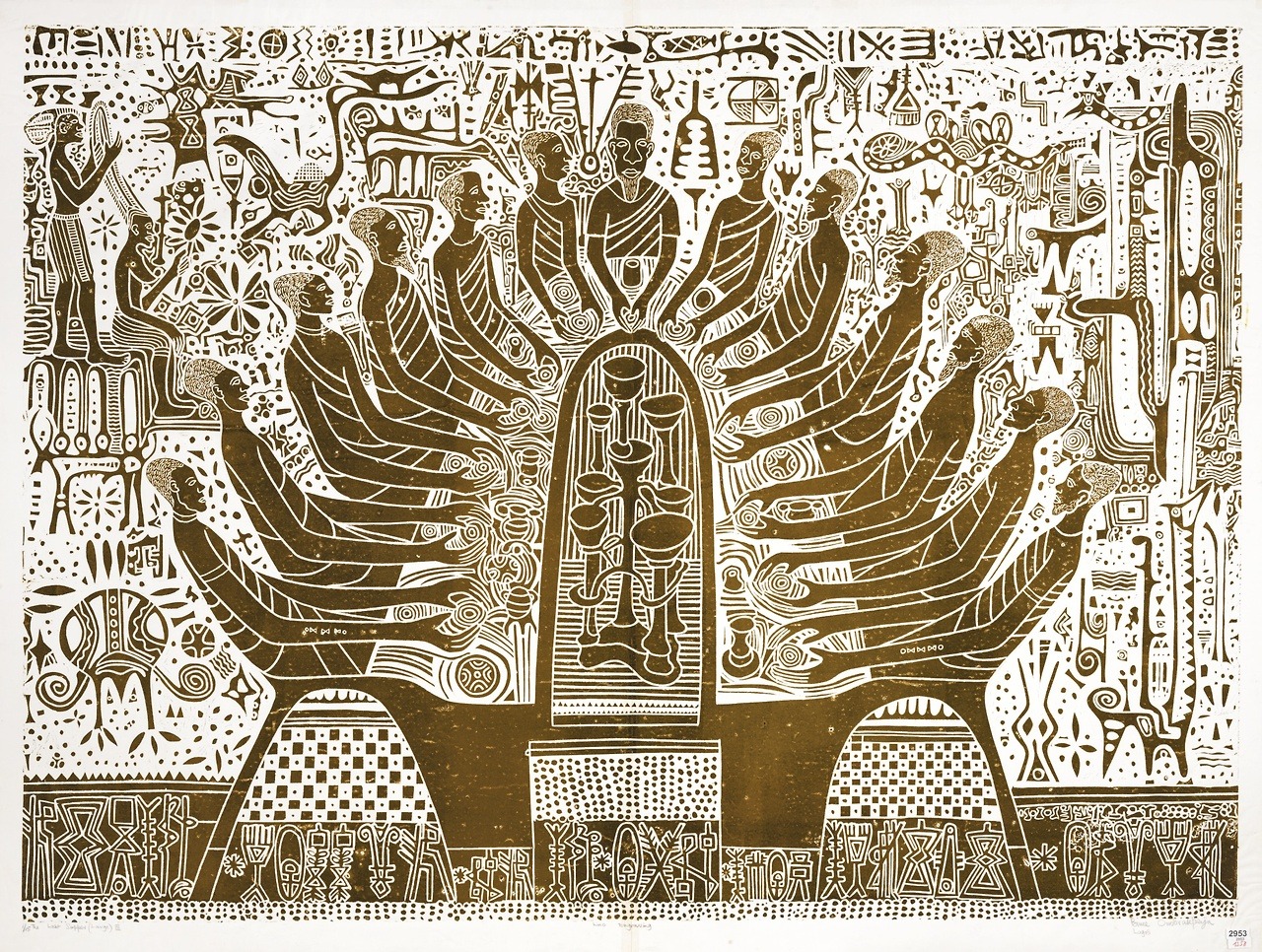
LOOK: The Last Supper III by Bruce Onobrakpeya

Onobrakpeya, Bruce_Last Supper III
Bruce Onobrakpeya (Nigerian, 1932–), The Last Supper III. Lino engraving on rice paper, 58 × 62 3/4 in. (147 × 195 cm). Edition 1/15.

A pioneer of modern African art, Bruce Onobrakpeya is an internationally renowned Nigerian printmaker, painter, and sculptor of Urhobo heritage. He was raised Christian and has fulfilled several commissions on Christian themes, especially from 1967 to 1981. (I wrote about his Stations of the Cross series of colored linocut prints on my old blog.) His work also explores Urhobo traditional religion, culture, and history and the modern world of Nigeria.

In Onobrakpeya’s Last Supper III, Jesus sits at the head of an oblong table with his twelve disciples, making eye contact with the viewer. The food and drink are highly stylized, but the men appear to be breaking bread. The background features the Ibiebe alphabet, a script of ideographic geometric and curvilinear glyphs that Onobrakpeya developed.

LISTEN: “Take, Eat” by Josh Garrels, on Chrysaline (2019)

Take, eat
This is my body
Broken for your healing
This is my blood
Shed for remission
And forgiveness of your sin

Do this to remember what I’ve done for you
Do this to remember me

Lent, Day 32

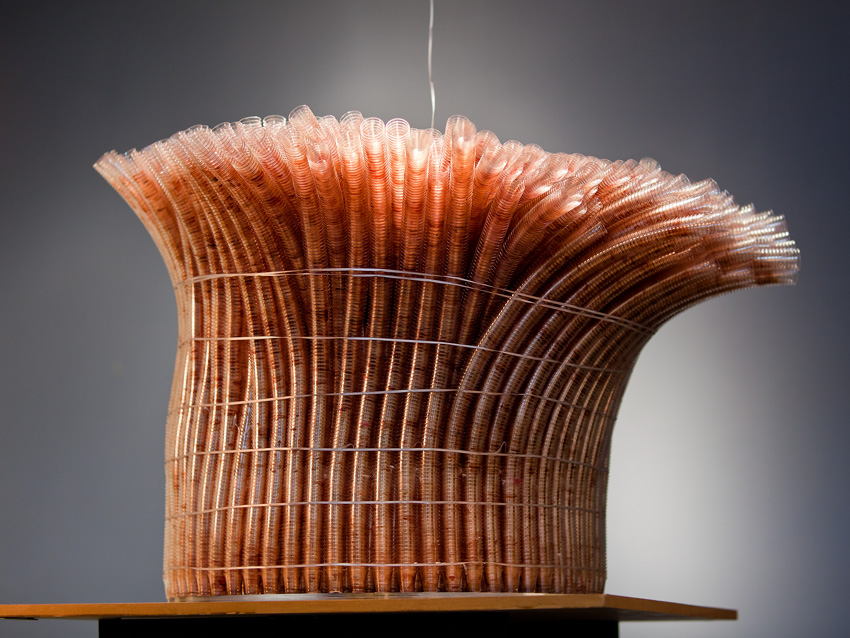
LOOK: Tabernacle by Denise Weyhrich

Weyhrich, Denise_Tabernacle
Denise Weyhrich (American, 1956–), Tabernacle, 2010. 70,000 used communion cups, 7 silver ribbons, plexiglass base, 42 × 42 in. Sasse Museum of Art, Upland, California. Photo: Jeff LeFever. [object record]

From Easter 2008 through Yom Kippur 2009, installation artist Denise Kufus Weyhrich collected unwashed cups from weekly communions at St. John’s Lutheran Church in Orange, California, and a few neighboring churches, leaving them out to dry in her studio. Over that year and a half when they accumulated, the room was filled with the fragrance of wine, she told me.

Once she had collected 70,000 cups into stacks—seven is the number of completion or perfection in Judaism and, by extension, Christianity—she arranged the stacks on a plexiglass disc and bound them together with six silver ribbons, like a sheaf of wheat. The seventh ribbon she threaded through all the cups and up to the ceiling, which could be read as the love of God coming down and through the people, uniting them, and/or the people’s thanksgiving going up to God through this ritual act of celebrating the Eucharist.

Each one of those wine-stained cups represents a person being fed by the body and blood of Christ. Their collective presentation is such a beautiful picture of the church and of God’s ongoing bestowal of grace and forgiveness. Weyhrich named the piece Tabernacle, the place where God dwells.

Weyhrich is the codirector, with Cindi Zech Rhodes, of Seeds Fine Art Exhibits, a nonprofit that supports artists of faith by transforming galleries into sacred spaces. “Our exhibits always have a central theme which invites contemplation of ‘that something other’ than the purely physical world,” she says. They just wrapped up California Redemption Value, a solo show by assemblage artist Leslie Caldera, and are now showing work by Teri Shagoury through May. Their gallery is located inside Full Circle in Orange, California.

LISTEN: “Holy Communion” by The Brilliance, on Lent (2012)

Gracious Father, we give you praise
And thanks for this Holy Communion
The body and blood
Of your beloved Son

The body is broken
God’s love poured open
To make us new
Lord, make us new

Abba Father, we bless your name
And take part in this Holy Communion
Make us all one
To love like your Son

Refrain ×2

Lent, Day 31

Jesus said to them, “I am the bread of life. Whoever comes to me will never be hungry, and whoever believes in me will never be thirsty. . . . Your ancestors ate the manna in the wilderness, and they died. This is the bread that comes down from heaven, so that one may eat of it and not die. I am the living bread that came down from heaven. Whoever eats of this bread will live forever; and the bread that I will give for the life of the world is my flesh.”

—John 6:35, 49–51

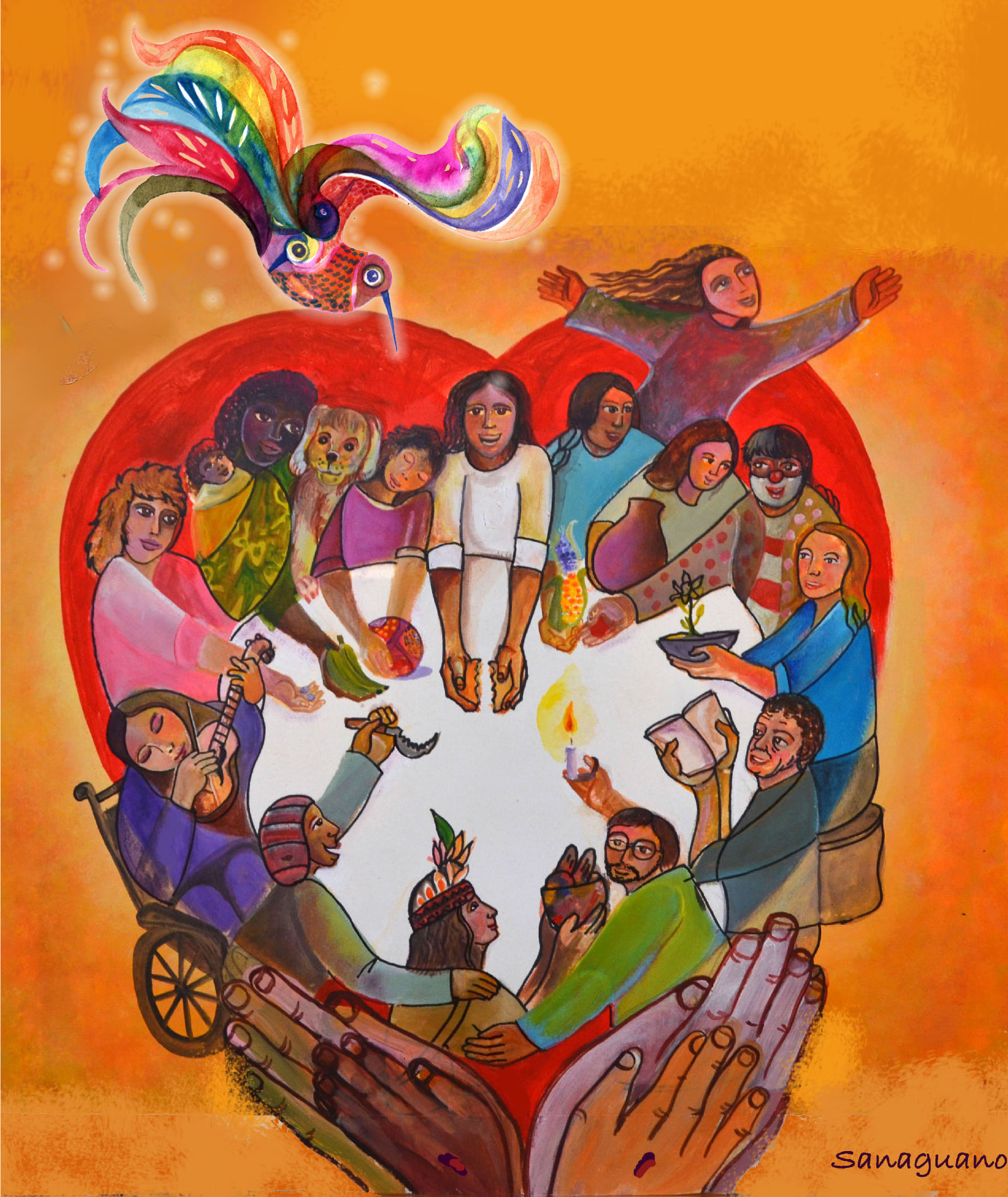
LOOK: Painting by Pablo Sanaguano

Painting by Pablo Sanaguano
Painting by Pablo Sanaguano (Ecuadorian, 1964–), 2021

LISTEN: “Jesus, Bread of Life” by Audrey Assad and Fernando Ortega, feat. Diana Gameros, on Neighbor Songs by The Porter’s Gate, 2019

This song was written for the Porter’s Gate album Neighbor Songs, which released in 2019. Diana Gameros, a member of the collective, sings on the recording and plays guitar. Here she is a year later, singing the song with Minna Choi for a City Church San Francisco [previously] virtual worship service.

Jesus, bread of life
Manna from heaven
Broken for the world
Offered up for every man

The feast of angels becomes food for the weary
And hungry hearts are filled
When you open up your hand

O Lord, come fill us with your love
This table laid for us
There is more than enough
Jesus, bread of life

Sister, take what you need
Anything I own
There is no famine here
Jesus’ love will multiply

Brother, what’s mine is yours
You are not alone
There is no shortage here
Jesus’ love satisfies

O Lord, come fill us with your love
This table laid for us
There is more than enough
Jesus, bread of life

[Related post: “Open Your Mouth (Artful Devotion)”]

Christmas, Day 6

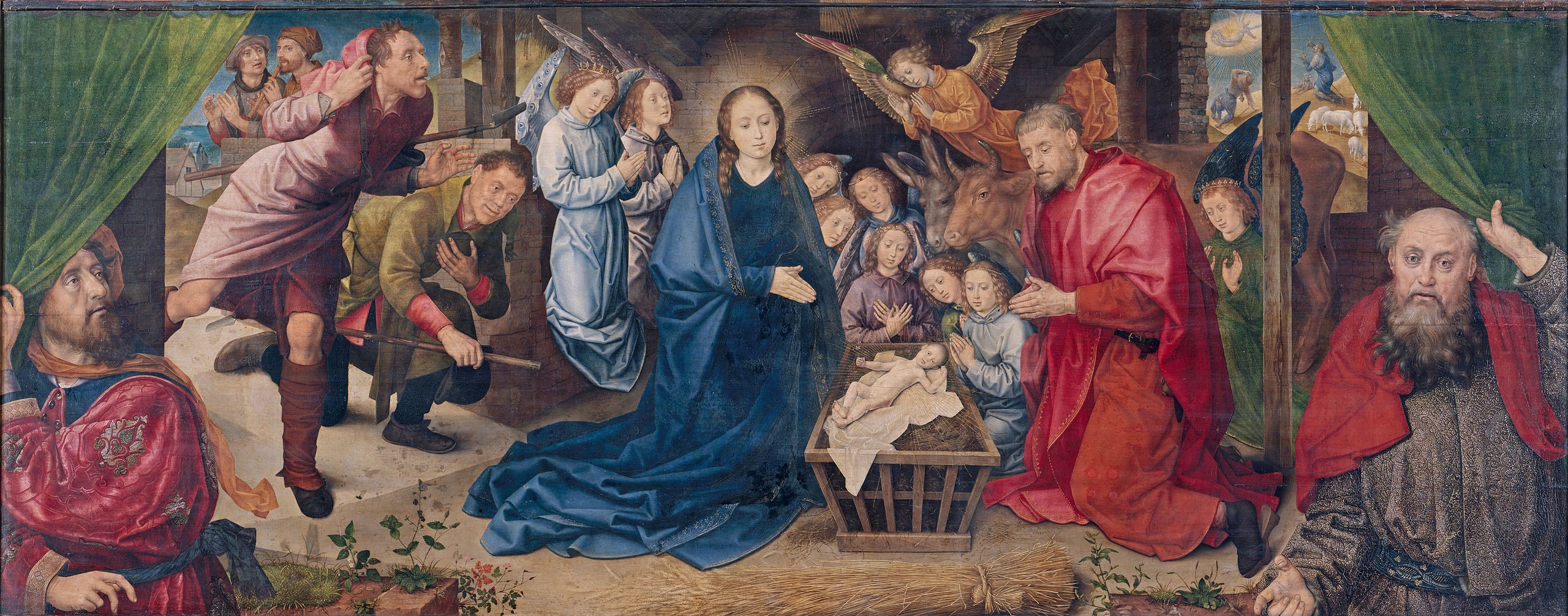
LOOK: Adoration of the Shepherds by Hugo van der Goes

van der Goes, Hugo_Adoration of the Shepherds
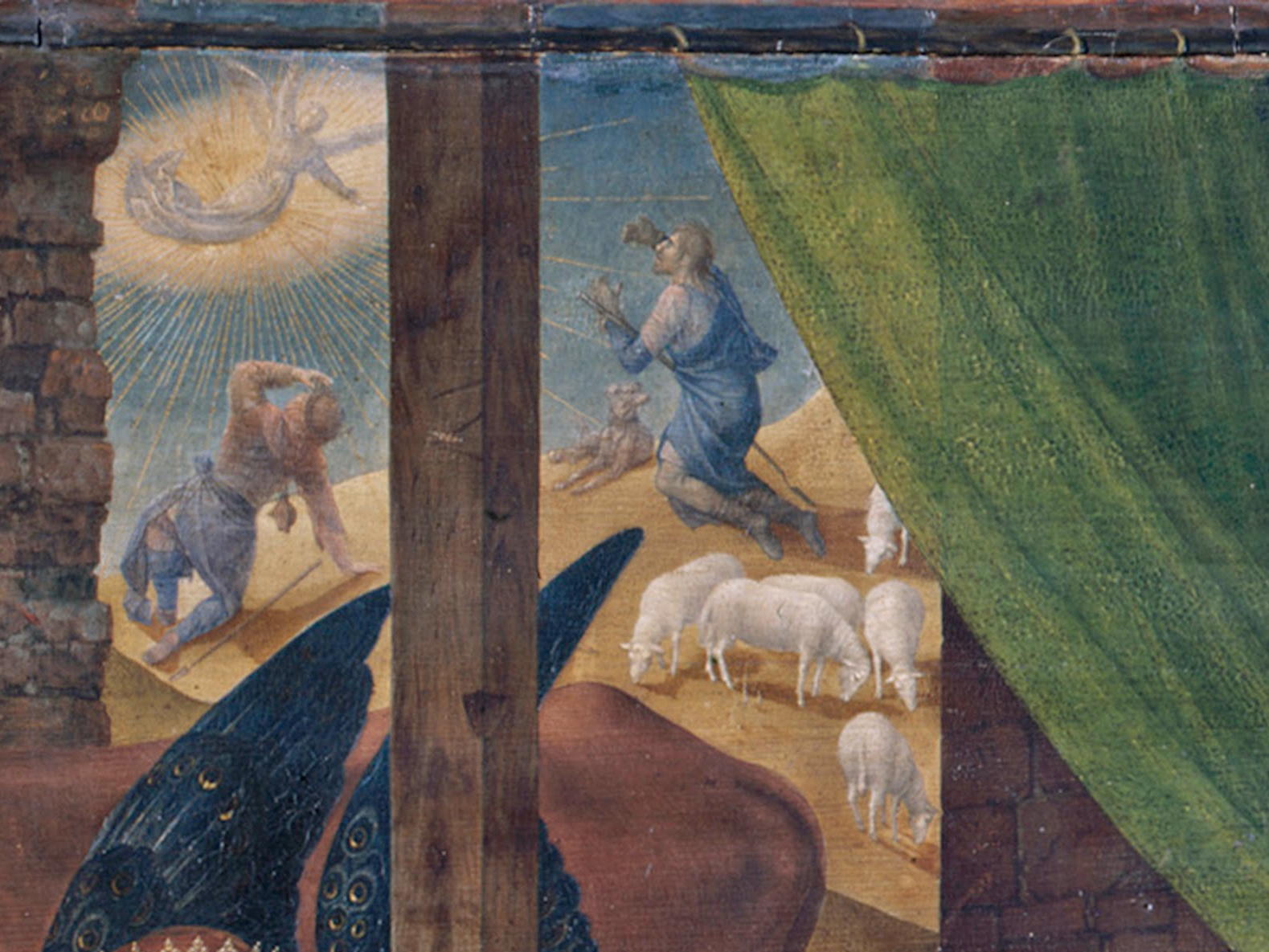
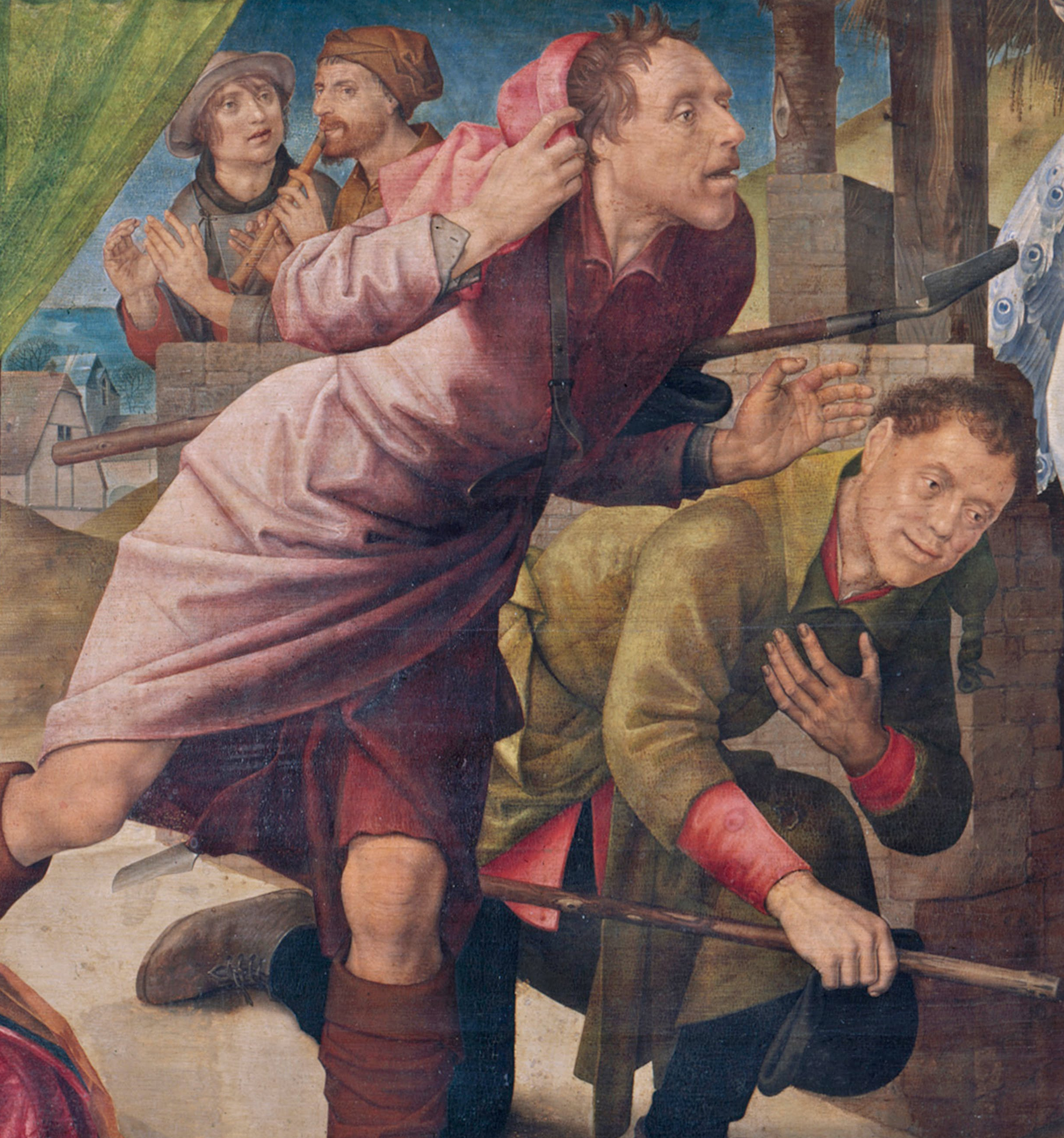
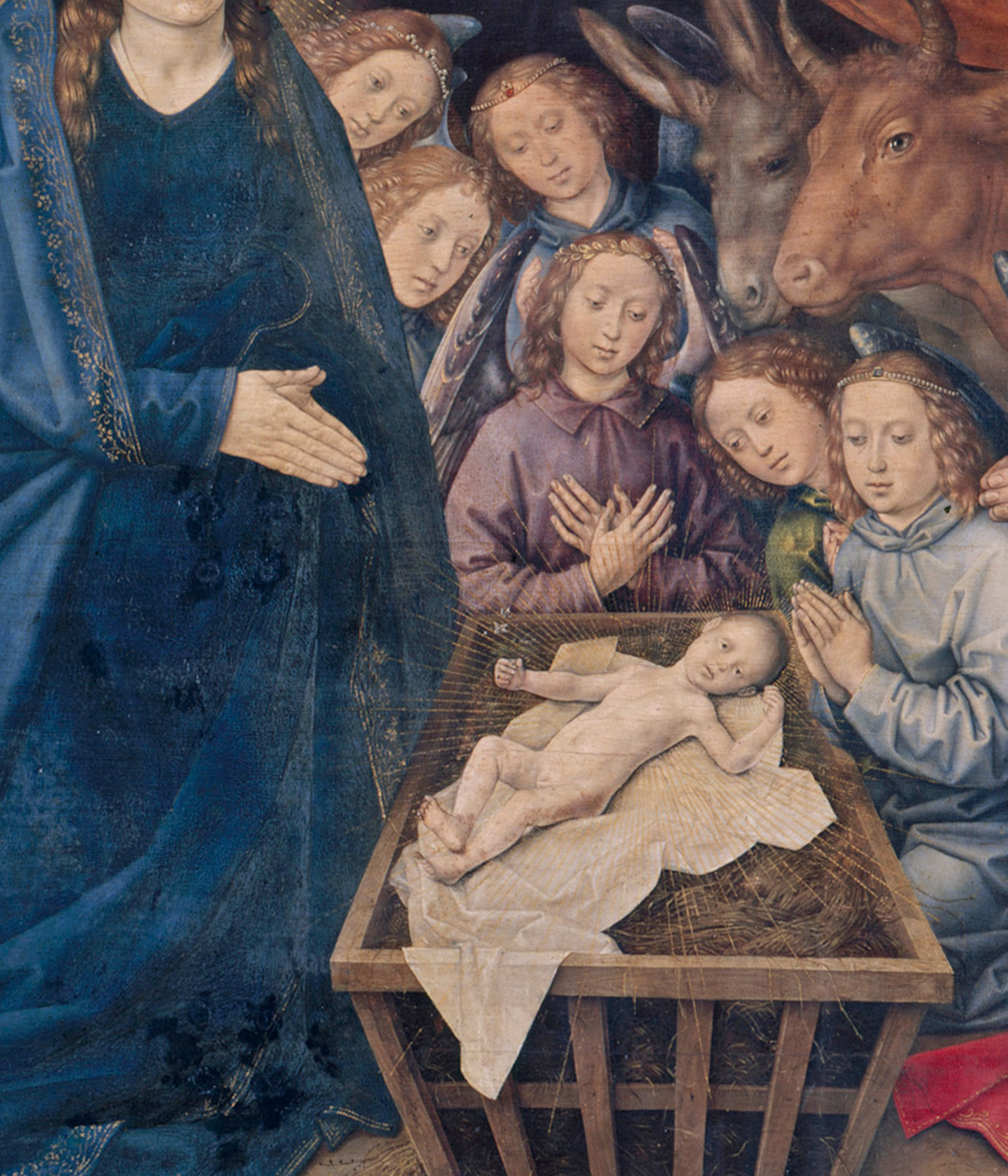
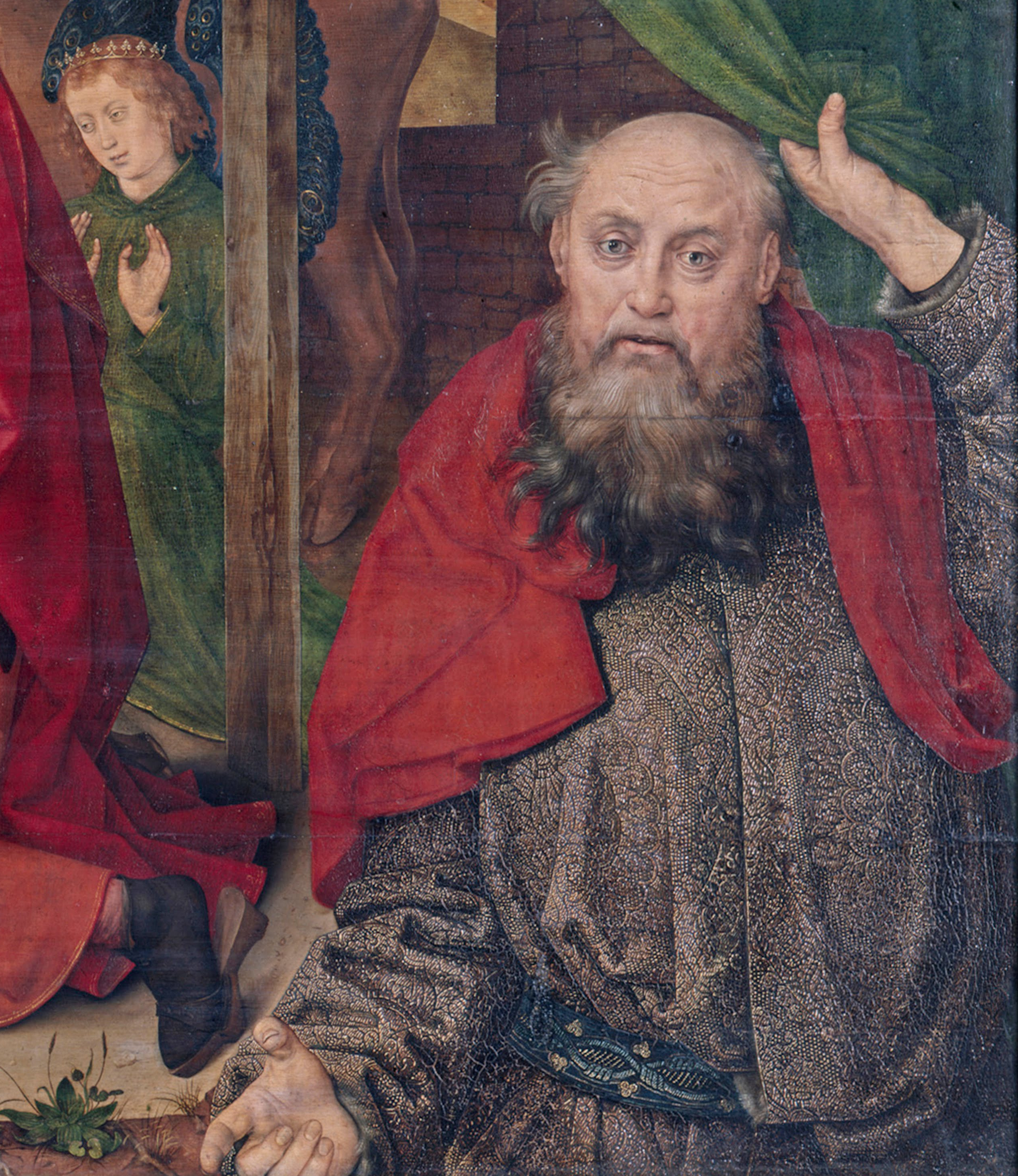
Hugo van der Goes (Flemish, ca. 1440–1482), Adoration of the Shepherds, ca. 1480. Oil on oak wood, 99.9 × 248.6 cm. Gemäldegalerie, Berlin.

After the angel of the Lord announced the birth of the Messiah to a band of shepherds, “they went with haste” to the place where he lay (Luke 2:16). The Flemish artist Hugo van der Goes shows the shepherds’ hurried arrival at the manger. One of them gallops through the door panting, having run from the scene in the upper right corner, and another removes his hat and kneels. Two more stand behind them just outside the shed—one playing a recorder, the other in midclap.

van der Goes, Hugo_Adoration of the Shepherds (detail, Annunciation)
van der Goes, Hugo_Adoration of the Shepherds (detail, shepherds)

In the center of the composition, the Christ child squirms in his makeshift bed, surrounded by his parents, an ox and ass, and a coterie of angels. At the foot of the manger is a sheaf of wheat, an allusion to Jesus as “the living bread that came down from heaven” (John 6:51) and, by extension, to the Eucharist. This painting, after all, was originally made, most likely, to hang over an altar.

van der Goes, Hugo_Adoration of the Shepherds (detail, Jesus)

In the foreground two men draw open a set of curtains, revealing God made flesh. An actual wooden rod is attached to the panel and painted with rings, enhancing the illusion. Most scholars agree that the men represent Isaiah (left) and Jeremiah (right), Old Testament prophets who foretold Christ (see, e.g., Isa. 7:14; Jer. 23:5–6)—though John Moffitt suggests they are the apostles Mark and Paul, two New Testament personages who specifically associate themselves with a veil as a sign of divine manifestation. Either way, these figures act as intermediaries between the viewer and the depicted narrative, inviting us, like the shepherds, to bear witness to the wondrous mystery of the Incarnation and to respond in adoration.

van der Goes, Hugo_Adoration of the Shepherds (detail, Jeremiah)

This Adoration, sometimes referred to as van der Goes’s Berlin Nativity, is not the artist’s most famous painting on the subject. That would be the central panel of the Portinari Altarpiece, painted a few years earlier.

LISTEN: “Where Shepherds Lately Knelt” | Words by Jaroslav J. Vadja, 1987, © Concordia Publishing House | Music by Carl F. Schalk, 1987, © GIA Publications, Inc. | Performed by Koiné on Emmanuel Lux, 2012

Where shepherds lately knelt and kept the angel’s word,
I come in half-belief, a pilgrim strangely stirred;
but there is room and welcome there for me,
but there is room and welcome there for me.

In that unlikely place I find him as they said:
sweet newborn babe, how frail! and in a manger bed,
a still small voice to cry one day for me,
a still small voice to cry one day for me.

How should I not have known Isaiah would be there,
his prophecies fulfilled? With pounding heart I stare:
a child, a son, the Prince of Peace for me,
a child, a son, the Prince of Peace for me.

Can I, will I forget how Love was born, and burned
its way into my heart, unasked, unforced, unearned,
to die, to live, and not alone for me,
to die, to live, and not alone for me?

Holy Week Playlist

There are hundreds of thousands of musical works, from a range of genres, inspired by Christ’s passion, especially his death on the cross, which, along with the resurrection, is the centerpiece of the Christian faith. I’ve curated just a sampling of these on Spotify, from across time periods and countries, to serve as an aural guide through the final week of Jesus’s life. The drama begins with Christ’s triumphal entry into Jerusalem on a donkey, where he’s hailed with hosannas, and then continues with a last supper shared with his disciples, an agonized prayer in Gethsemane followed by betrayal and arrest, then, all in one day, multiple trials (religious and civil), conviction by mob, a public execution, and burial. Many of the playlist selections are narrative in character, while some have a more theological bent. My hope is that these pieces aid you in observing this most holy of weeks, walking with Christ through the shadows, taking in how “he himself bore our sins in his body on the tree, that we might die to sin and live to righteousness. By his wounds [we] have been healed” (1 Pet. 2:24).

To add the playlist to your account, open the Art & Theology Holy Week Playlist link, then click on the More (…) icon and select “Save to Library.”

Art & Theology Holy Week playlist (art by Odilon Redon)

[Playlist cover art: Odilon Redon, Christ, ca. 1895, charcoal, chalk, pastel, and pencil on paper, Museum of Modern Art, New York]

The playlist is a mixture of classical and popular (indie-folk, gospel) music. In this post I want to provide a little context for some of the pieces, by which I mainly mean translations of all the non-English lyrics. Because of what you see here, you might get the wrong impression that the list is almost entirely classical; actually, it’s only about half.

The opening track, “Herr, unser Herrscher” (Lord, Our Ruler), is a unique arrangement of the opening chorus from Johann Sebastian Bach’s St. John Passion, a Good Friday oratorio in German.

Herr, unser Herrscher, dessen Ruhm
In allen Landen herrlich ist!
  Zeig uns durch deine Passion,
  Daß du, der wahre Gottessohn,
  Zu aller Zeit,
  Auch in der größten Niedrigkeit,
  Verherrlicht worden bist!
Lord, our ruler, whose fame
In every land is glorious!
  Show us, through your passion,
  That you, the true Son of God,
  Through all time,
  Even in the greatest humiliation,
  Have become transfigured! [source]

Unique, because the Baroque choir and orchestra are accompanied by an ensemble of Gabonese musicians who contribute their own rhythmic profile, along with solo percussionists Sami Ateba from Cameroon and Naná Vasconcelos from Brazil. The recording, rereleased on the compilation album Babel (2008), is originally from Lambarena: Bach to Africa (1995), a collaboration between French composer and producer Hughes de Courson and Gabonese composer and guitarist Pierre Akendengué, synthesizing two disparate sound worlds. (“Bombé / Ruht wohl, ruht wohl, ihr heiligen Gebeine” is another highlight from the album. For weeks I debated whether to include it on this playlist—adding it, taking it off, adding it back again—ultimately deciding to leave it off, the reason being that it overlays Bach’s choral rondo with music and invocations to the dead from a Bwiti religious ritual. Though sonically compelling and worth listening to, I felt that it might impede some Christians’ ability to engage this list in a devotional way; so I opted for a traditional Western classical recording instead.)

Other selections from Bach’s St. John Passion are:

>> “Christus, der uns selig macht”

Christus, der uns selig macht,
Kein Bös’ hat begangen,
Der ward für uns in der Nacht
Als ein Dieb gefangen,
Geführt für gottlose Leut
Und fälschlich verklaget,
Verlacht, verhöhnt und verspeit,
Wie denn die Schrift saget.
Christ, who makes us blessed,
committed no evil deed,
for us he was taken in the night
like a thief,
led before godless people
and falsely accused,
scorned, shamed, and spat upon,
as the scripture says. [source]

>> “Petrus, der nicht denkt zurück”

Petrus, der nicht denkt zurück,
Seinen Gott verneinet,
Der doch auf ein' ernsten Blick
Bitterlichen weinet.
Jesu, blicke mich auch an,
Wenn ich nicht will büßen;
Wenn ich Böses hab getan,
Rühre mein Gewissen!
Peter, who did not recollect,
denied his God,
who yet after a serious glance
wept bitterly.
Jesus, look upon me also,
when I will not repent;
when I have done evil,
stir my conscience! [source]

>> “O große Lieb”

O große Lieb, O Lieb ohn alle Maße,
Die dich gebracht auf diese Marterstraße!
Ich lebte mit der Welt in Lust und Freuden,
Und du mußt leiden.
O great love, O love beyond measure,
that brought you to this path of martyrdom!
I lived with the world in delight and joy,
and you had to suffer. [source]

>> “Ruht wohl, ihr heiligen Gebeine”

Ruht wohl, ihr heiligen Gebeine,
Die ich nun weiter nicht beweine,
Ruht wohl und bringt auch mich zur Ruh!
Das Grab, so euch bestimmet ist
Und ferner keine Not umschließt,
Macht mir den Himmel auf und schließt die Hölle zu.
Rest well, you blessed limbs;
now I will no longer mourn you.
Rest well and bring me also to peace!
The grave that is allotted to you
and encloses no further suffering
opens heaven for me and closes off hell. [source]

For Bach’s St. Matthew Passion—one of the most celebrated works of classical sacred music ever written, right up there with Handel’s Messiah—I’ve drawn from the abridged English version (rather than the original German), translated by the Rev. Dr. John Troutbeck and performed in 1962 by the New York Philharmonic and Collegiate Chorale under the direction of Leonard Bernstein. I chose just a few pieces from it, not wishing to replicate the whole thing; as you can see, I tend to favor chorales over arias.

Continue reading “Holy Week Playlist”

Analysis of “The Feast” by Henry Vaughan (poem) and The Eucharistic Man of Sorrows by Friedrich Herlin (painting)

O come away,
Make no delay,
Come while my heart is clean and steady!
While faith and grace
Adorn the place,
Making dust and ashes ready!

No bliss here lent
Is permanent,
Such triumphs poor flesh cannot merit;
Short sips and sights
Endear delights:
Who seeks for more, he would inherit.

Come then, True Bread,
Quick’ning the dead,
Whose eater shall not, cannot die!
Come, antedate
On me that state
Which brings poor dust the victory.

Ay! victory,
Which from Thine eye
Breaks as the day doth from the East;
When the spilt dew
Like tears doth shew
The sad world wept to be released.

Spring up, O wine,
And springing shine
With some glad message from His heart,
Who did, when slain,
These means ordain
For me to have in Him a part.

Such a sure part
In His blest heart,
The Well where living waters spring,
That with it fed,
Poor dust, though dead,
Shall rise again, and live, and sing.

O drink and bread,
Which strikes Death dead,
The food of man’s immortal being!
Under veils here
Thou art my cheer,
Present and sure without my seeing.

How dost thou fly
And search and pry
Through all my parts, and, like a quick
And knowing lamp,
Hunt out each damp,
Whose shadow makes me sad or sick!

O what high joys!
The turtle’s voice
And songs I hear! O quick’ning showers
Of my Lord’s blood,
You make rocks bud,
And crown dry hills with wells and flowers!

For this true ease,
This healing peace,
For this taste of living glory,
My soul and all
Kneel down and fall,
And sing His sad victorious story!

O thorny crown,
More soft than down!
O painful cross, my bed of rest!
O spear, the key
Opening the way!
O Thy worst state, my only best!

Oh! all Thy griefs
Are my reliefs,
And all my sins Thy sorrows were!
And what can I
To this reply?
What—O God!—but a silent tear?

Some toil and sow
That wealth may flow,
And dress this Earth for next year’s meat:
But let me heed
Why Thou didst bleed
And what in the next world to eat.

Henry Vaughan (1621–1695) [previously] was a Welsh metaphysical poet, translator, and physician, known chiefly for his religious poetry in English. For info on his life and times, as well as his literary importance, see https://www.poetryfoundation.org/poets/henry-vaughan.

Vaughan’s “The Feast” was originally published in 1655 in the expanded edition of his celebrated collection Silex Scintillans (1650). (The book’s title is Latin for “The Fiery Flint,” referring to the stony hardness of man’s heart, from which divine steel strikes fire.) The poem consists of thirteen sestets (six-line stanzas), each following the syllable pattern 4-4-8-4-4-8, with a few cheats. More specifically: the first two lines of each stanza are in iambic dimeter, and the third is in iambic tetrameter, repeat. Which is simply the technical way of saying that the rhythm sounds like da-DUM, da-DUM—unstressed syllable, stressed syllable. The rhyme scheme is aabccb. I mention these details because it’s important to see the structure of a poem.

Now let’s walk through it piece by piece.

O come away,
Make no delay,
Come while my heart is clean and steady!
While faith and grace
Adorn the place,
Making dust and ashes ready!

No bliss here lent
Is permanent,
Such triumphs poor flesh cannot merit;
Short sips and sights
Endear delights:
Who seeks for more, he would inherit.

The speaker starts out by beseeching Christ’s return. He’s saying that he, who is mere dust, has put the affairs of his heart in order and is ready for the next life. He has come to realize that earthly pleasures are but “short sips,” quick delights, and he wants a long, slow drink, one that infinitely satisfies. Like the Samaritan woman at the well in John 4:13–14, to whom Jesus said, “Everyone who drinks of this [physical] water will be thirsty again, but whoever drinks of the water that I will give him will never be thirsty again. The water that I will give him will become in him a spring of water welling up to eternal life.”

Those who truly seek for more than what this world has to offer will find it.

[Related post: “Lent, Day 3”]

Come then, True Bread,
Quick’ning the dead,
Whose eater shall not, cannot die!
Come, antedate
On me that state
Which brings poor dust the victory.

“Come then, True Bread,” the speaker exclaims, addressing Christ in biblical metaphor. John 6 is a major reference point for Vaughan throughout this poem, which is where Jesus addresses the crowds whom he had just fed the day before with miraculously multiplied loaves and fishes:

“Do not work for the food that perishes, but for the food that endures to eternal life, which the Son of Man will give to you. For on him God the Father has set his seal.” Then they said to him, “What must we do, to be doing the works of God?” Jesus answered them, “This is the work of God, that you believe in him whom he has sent.” So they said to him, “Then what sign do you do, that we may see and believe you? What work do you perform? Our fathers ate the manna in the wilderness; as it is written, ‘He gave them bread from heaven to eat.’” Jesus then said to them, “Truly, truly, I say to you, it was not Moses who gave you the bread from heaven, but my Father gives you the true bread from heaven. For the bread of God is he who comes down from heaven and gives life to the world.” They said to him, “Sir, give us this bread always.”

Jesus said to them, “I am the bread of life; whoever comes to me shall not hunger, and whoever believes in me shall never thirst. . . .

“Your fathers ate the manna in the wilderness, and they died. This is the bread that comes down from heaven, so that one may eat of it and not die. I am the living bread that came down from heaven. If anyone eats of this bread, he will live forever. And the bread that I will give for the life of the world is my flesh.”

Jesus is the bread of life, whose flesh we eat at the Communion table, taking his self into our selves. Those who feed on Christ are strengthened in their union with him in both his crucifixion and resurrection. As the apostle Paul writes in 1 Corinthians 10:16, “The cup of blessing that we bless, is it not a participation in the blood of Christ? The bread that we break, is it not a participation in the body of Christ?”

“Come,” the poem’s speaker continues, “antedate / On me that state / Which brings poor dust the victory.” He, as one who has already lost battle after battle against sin, asks that Christ grant him the victory post-factum, rendering his past losses of no account. In other words: “Christ, have mercy.”

Continue reading “Analysis of “The Feast” by Henry Vaughan (poem) and The Eucharistic Man of Sorrows by Friedrich Herlin (painting)”