
PODCAST EPISODES:
>> “Jack’s Bookshelf: Julian of Norwich” with Dr. Grace Hamman, Pints with Jack: The “Jack’s Bookshelf” podcast series explores the authors and books that influenced the life and writings of C. S. Lewis. Hosted by David Bates, this episode covers Julian of Norwich (ca. 1343–after 1416), an English anchorite and mystic who authored what editors call Revelations of Divine Love or The Showings, the first English-language book by a woman. The most famous quote from this work is “Sin is behoovely, but all shall be well, and all shall be well, and all manner of thing shall be well.” Medieval scholar Grace Hamman [previously] unpacks the quote and discusses other key passages and themes from Julian, as well as what little we know of her biography. An excellent introduction!
>> “Ben Myers—The Divine Comedy,” Life with God: One of the many gifts my parents have given me over the years was a four-month study-abroad stay in Florence during my junior year of college, where one of my courses was devoted to reading and studying—in its original Italian and in the author Dante Alighieri’s hometown!—the masterful trilogy of narrative poems known as La Divina Commedia, or The Divine Comedy in English. Moving through hell, purgatory, and heaven, it is an allegory of the soul’s journey toward God. I enjoyed hearing Dr. Benjamin Myers [previously], director of the Great Books Honors Program at Oklahoma Baptist University, discuss this deeply influential work from the early fourteenth century, and sharing one of his own poems, “Listening to Reggae at the Nashville Airport.”
+++
VIRTUAL TOURS OF CATHEDRALS:
Cathedrals are, among other things, repositories of sacred art. I’m so appreciative of digitization initiatives that seek to make some of those treasures available to global publics online. Here are two admirable examples.
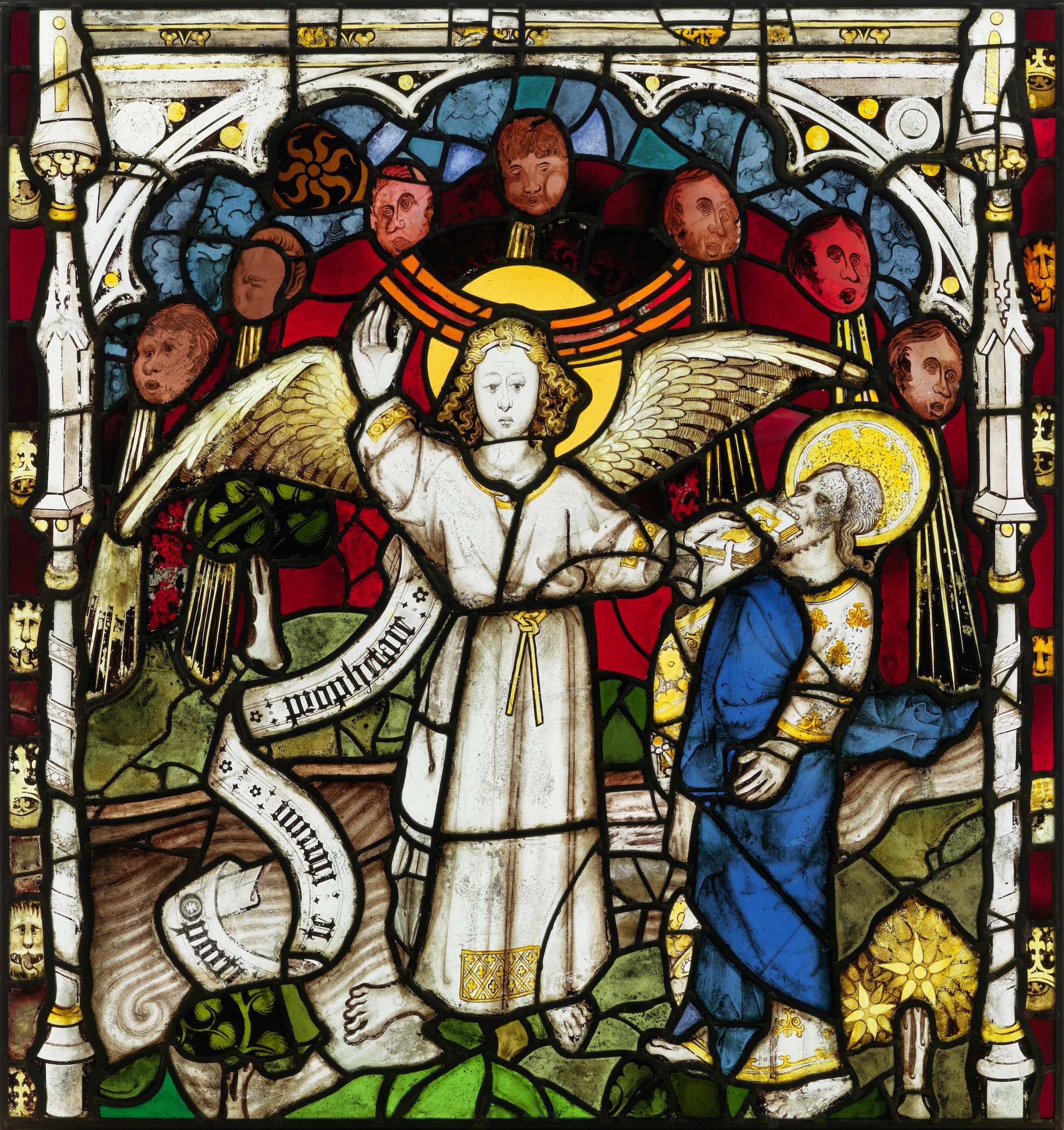
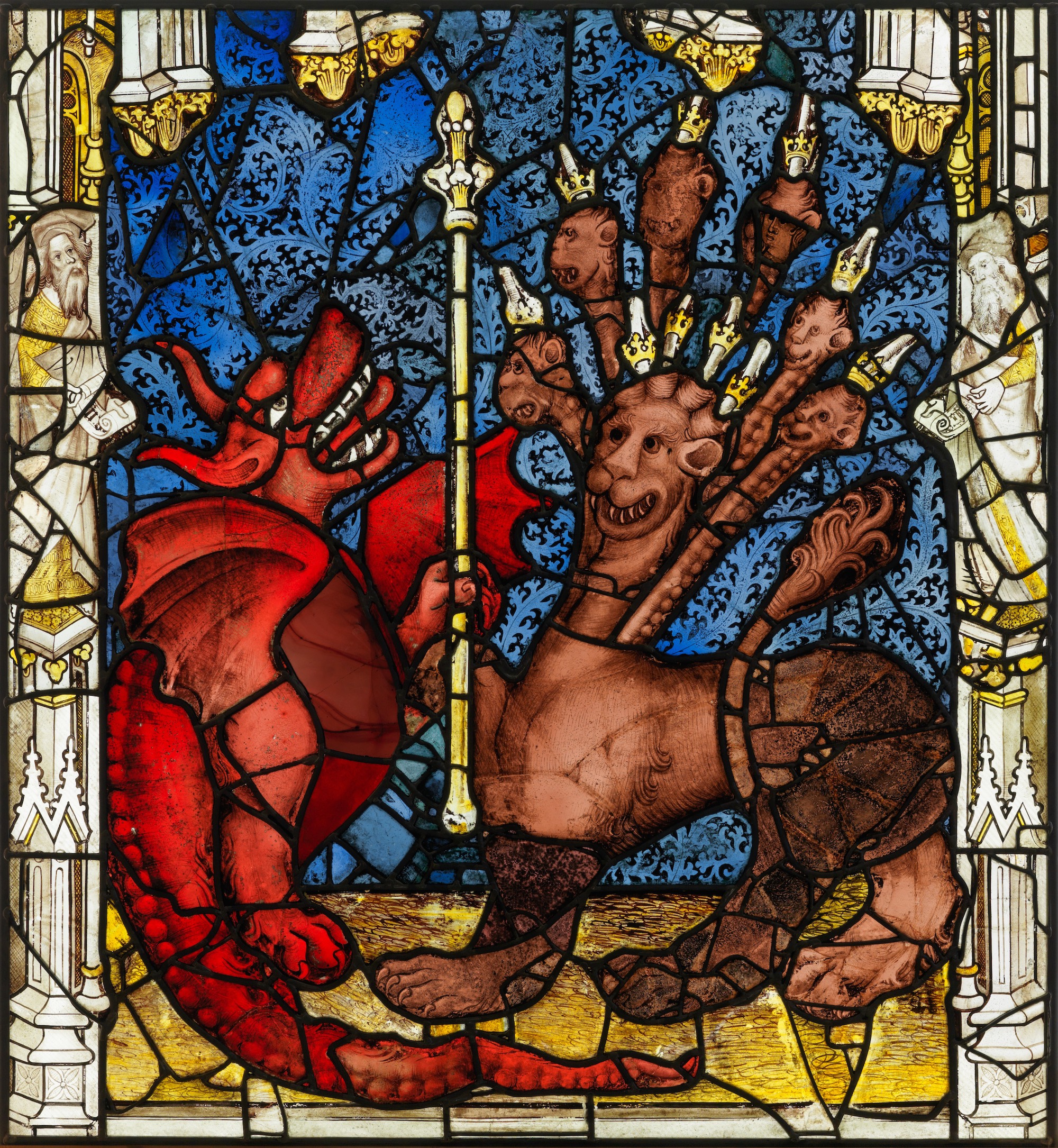
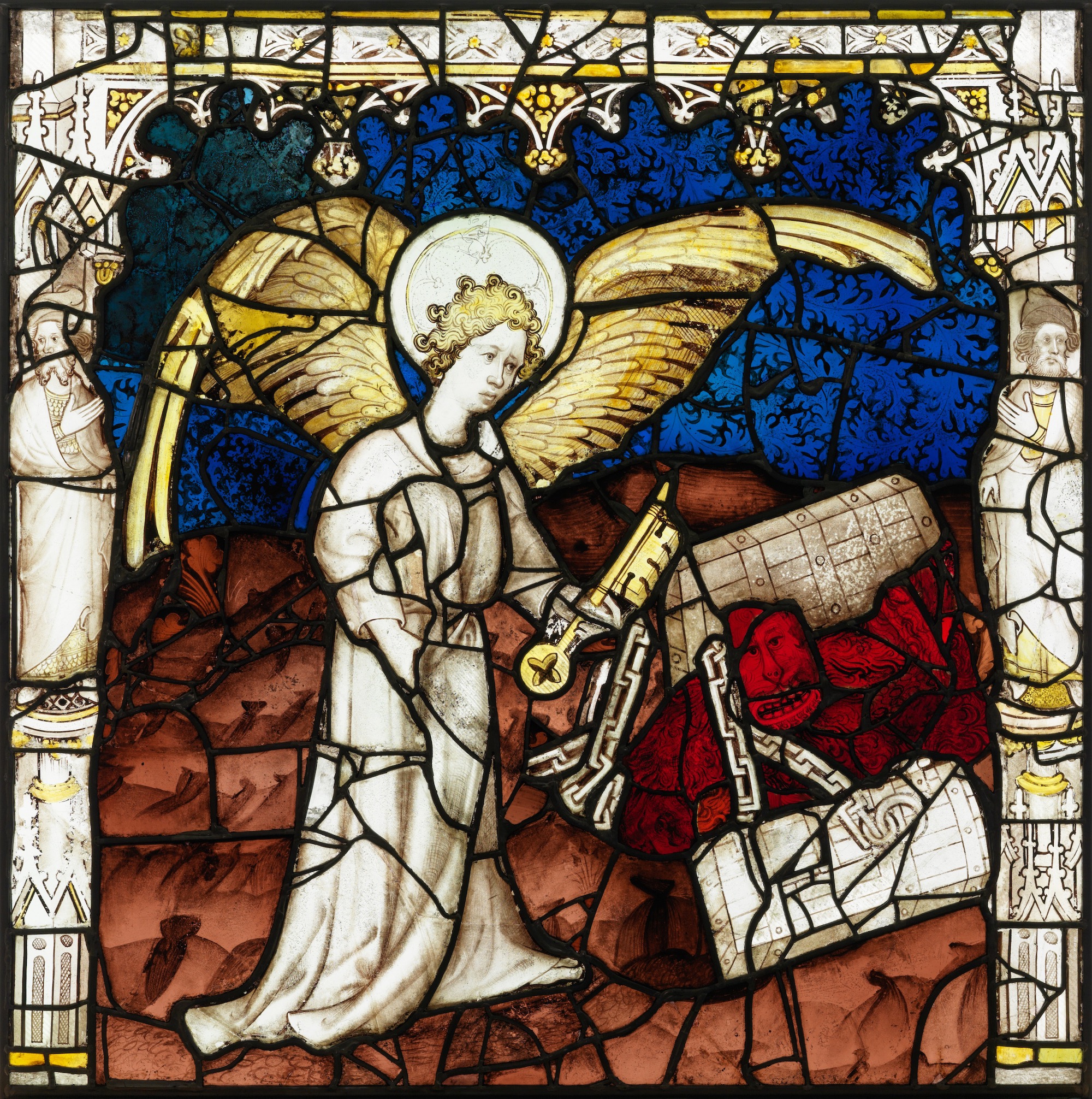
>> The York Minster Stained Glass Navigator: York Minster in northeastern England has the largest collection of medieval stained glass in the UK, with the earliest pieces dating from the late twelfth century. On behalf of the Chapter of York, the York Glaziers Trust is undertaking to photograph it all. These photos are available for viewing online through the cathedral’s “Stained Glass Navigator,” which enables you to hover over panels to identify the scenes, zoom in for higher resolution, and see where each panel in situated in the context of the window’s larger narrative.
I especially recommend exploring the extraordinary Great East Window, which depicts the beginning and the end of all things. The top section opens with the seven days of creation, followed by other select scenes from the Old Testament, but the bulk of the window—and my favorite sequence—consists of scenes from the book of Revelation. The bottom row depicts historical and legendary figures associated with the history of York Minster.
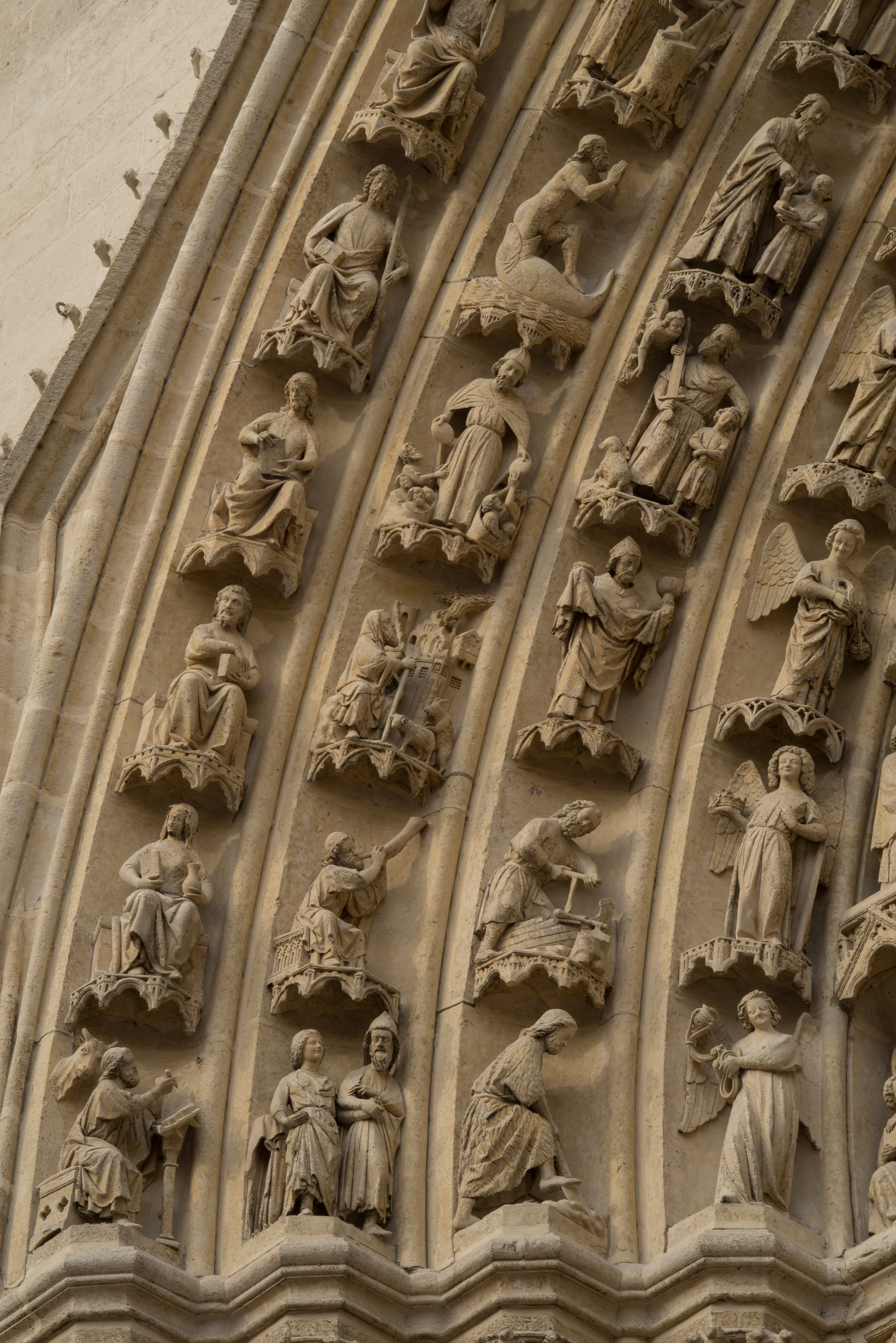
>> Life of a Cathedral: Notre-Dame of Amiens: Located in the heart of Picardy in northern France, Amiens Cathedral is one of the largest Gothic churches of the thirteenth century, renowned for the beauty of its three-tier interior elevation, its prodigious sculpted decoration, and its stained glass. This website put together by Columbia University’s Media Center for Art History offers a detailed virtual tour of the cathedral, drawing attention to its architectural features and artworks, from the many stone relief sculptures over its four portals (my favorite) to the octagonal labyrinth that adorns the marble floor in the nave to the early sixteenth-century misericords in the choir stall.
+++
SONG: “Adon Olam,” performed by the Maqamat Masters, feat. Nissim Lugas: The well-loved text of this traditional Hebrew prayer in five stanzas probably originated in medieval Spain, having been first found in a thirteenth-century siddur (Jewish prayer book) from Andalusia. Drawn from the language of the Psalms, it praises God for both his transcendence and his immanence. He is incomparably great, the ruler over all, and yet he’s also a personal God, a refuge for those who call on him. The prayer’s title and opening phrase translates to “Master of the Universe” or “Eternal Lord.”
Various tunes have been used for the singing of this prayer over the centuries. The Maqamat Masters perform it here with a melody based on the traditional Armenian folk tune NUBAR NUBAR, arranged by Elad Levi and Ariel Berli. They also add to the prayer a few lines from the ghazals of the Persian Sufi poet Saadi (1210–ca. 1292), about the burning fire of God’s love; Lugas sings this Farsi passage from 3:06 to 4:08.
“Maqamat Masters is a unique group of musicians that coalesced around their work together teaching at the Maqamat School of Eastern Music in Safed, Israel,” 12 Tribes Music writes. “Each of the musicians is a master in a different traditional musical genre from the Middle East, and they bring their personal voices and decades of explorations together, to create a magical, new and innovative sound.”
+++
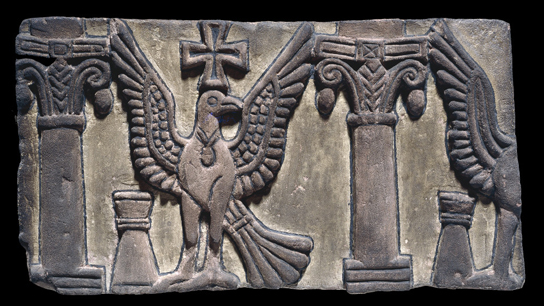
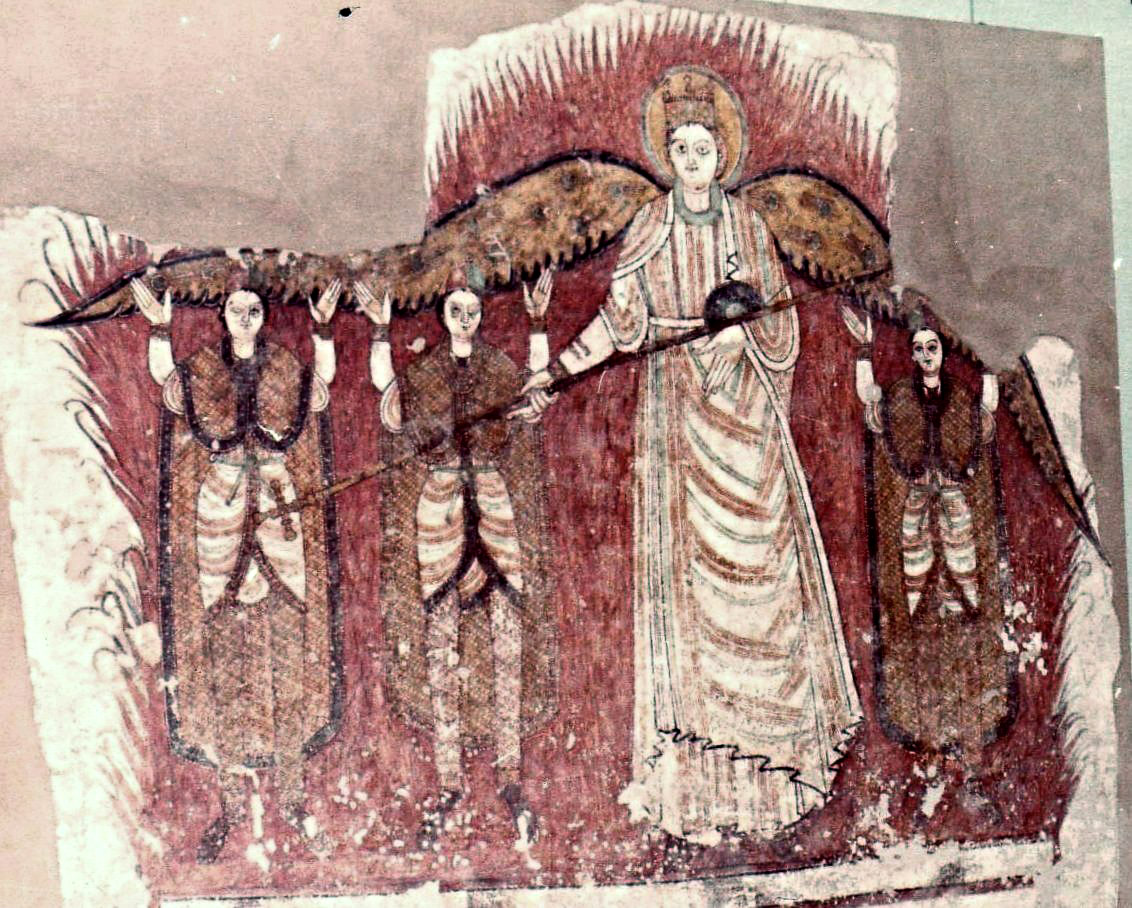
VIRTUAL EXHIBITION: The Faras Gallery: Treasures from the Flooded Desert: In 1960, Faras, a small town in Sudan near the Egyptian border, was one of the archaeological sites designated for flooding by the waters of the Nile to create Lake Nasser. Responding to an international call by UNESCO to preserve the area’s cultural heritage before it would be buried beneath the new reservoir, a Polish team led by Professor Kazimierz Michałowski proceeded with salvage excavations in 1961–64. Their efforts uncovered the wonderfully preserved ruins of a medieval cathedral, active from the eighth to fourteenth centuries (it was built on the remains of an early seventh-century church) and containing over 150 religious paintings, a trove of Nubian Christian art. By agreement with Sudan, half of the findings went to Poland’s National Museum in Warsaw, while the other half are kept in Sudan’s National Museum in Khartoum.


Curated by Paweł Dąbrowski and Magdalena Majchrzak and hosted by Google Arts & Culture, this virtual exhibition spotlights the wall paintings and artifacts from Faras that are housed in Warsaw. It discusses the importance of the discovery of the cathedral and the technical challenges of detaching the paintings (tempera on dry mud plaster) from the walls. It also includes digital reconstructions of the cathedral’s interior and exterior in 3D stereoscopy, as well as video elements. Here is one of the four videos from the exhibition:
 Art & Theology