
My son, from the chalk
hills of this old flesh
how you have sailed
beyond the waters of
your father’s doubt.

I feel the small skiff
of your body. Yesterday
you leaped (rapids or
waterfall) when young
Mary walked into my arms.

What we women know.
And how much we keep
within the heart, secret
as the honeycomb that is
your skull growing in me.

My son John, trust this
first solitude. Here in the
ancient cave of my body,
sail inland water
safe from followers,

kings and dancing girls.
This poem appears in After Silence: Selected Poems of Sister Maura Eichner, SSND (Notre Dame of Maryland University, 2011), copyright © the Atlantic-Midwest Province of the School Sisters of Notre Dame.
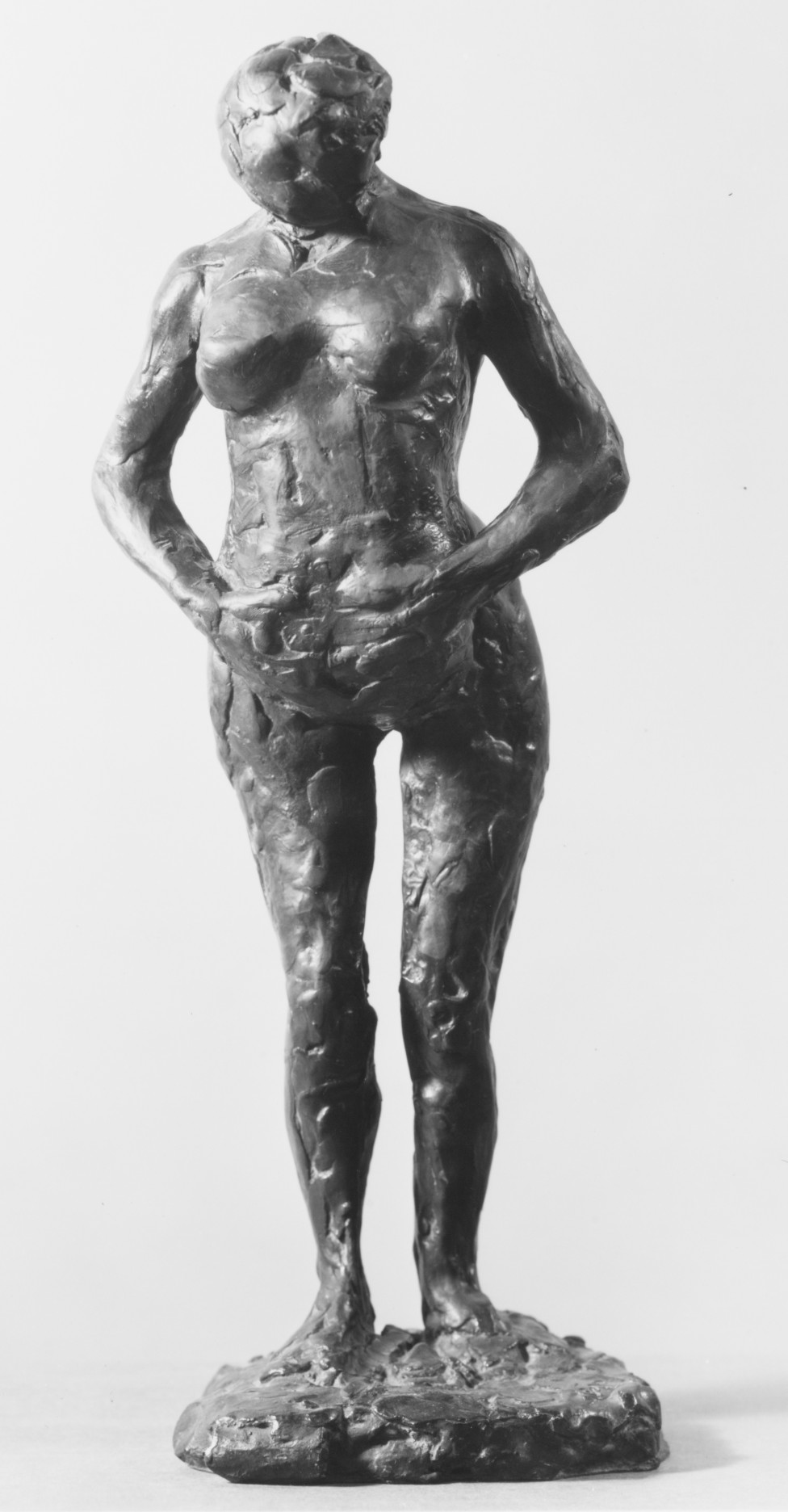
In anticipation of the Feast of the Nativity of John the Baptist on June 24, I offer this tender poem by Sister Maura Eichner in which the elderly Elizabeth speaks to her son, John, while he’s still in utero. She senses his life will end early and wishes to keep him safe forever, away from the burdens and perils of a prophetic vocation, away from Herod’s order of imprisonment, away from the lethal spite of Herodias and her daughter-pawn, Salome, whose dancing trophy of choice is John’s head on a platter.
Elizabeth is faithful to God and God’s will—just yesterday, in the company of her also-pregnant cousin Mary, she praised God for the coming Messiah whom even the fetal John recognized, leaping. But as great an honor as it is that her son has been chosen to herald the Messiah, her maternal instinct is to shield and protect him. In the dark of midnight, while her husband, Zechariah, is asleep, she whispers her fears rolled up in a charge, instructing John to savor the shelter of her womb while he still can, as soon he will enter the world’s wilderness and eventually preach himself to a martyr’s death.
For scripture texts that inform Sister Maura’s “Dialogue at Midnight,” see Luke 1 and Matthew 14:1–12.
Sister Maura Eichner, SSND (1915–2009), was a Catholic nun, poet, and professor of literature and creative writing. Born Catherine Alice Eichner in Brooklyn, New York, she took vows with the School Sisters of Notre Dame in 1933 at age eighteen. In 1943 she was assigned to teach in the English Department at the College of Notre Dame of Maryland (now Notre Dame of Maryland University) in Baltimore, where she continued until 1992, serving also as department chair. She published ten books of poetry during her lifetime, including The Word Is Love (1958) and Hope Is a Blind Bard (1989), and maintained correspondence with such writers as Flannery O’Connor, Richard Wilbur, Katherine Anne Porter, and Eudora Welty. She experimented with a diversity of poetic forms and subject matter and disliked religious poetry that is redolent of “thin piety” and “decoratively sweet nosegays,” she told The New York Times in a 1959 interview.
 Art & Theology