Roundup: Free e-book on church art galleries, Hagar in art, Dramatic Encounters film series, and more

SPOTIFY PLAYLIST: August 2025 (Art & Theology)

+++

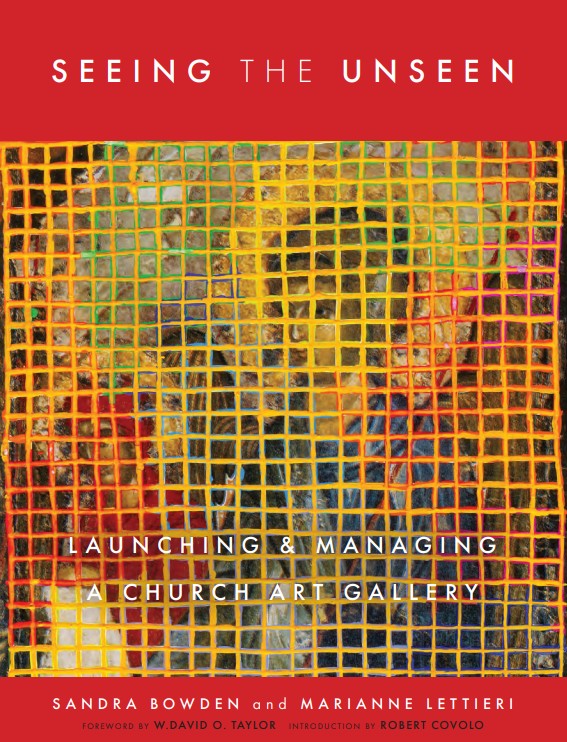
FREE E-BOOK: Seeing the Unseen: Launching and Managing a Church Art Gallery by Sandra Bowden and Marianne Lettieri: I own a copy of the original 2015 edition of this book written by two wise, experienced friends of mine and published by the now-defunct Christians in the Visual Arts; this revised edition, published this year by Square Halo Books, includes all-new images and other updates. It’s an excellent resource for churches looking to start an art gallery, covering the logistics of defining the gallery program, designing the gallery space, funding the gallery, organizing exhibits and juried shows, handling art, engaging viewers, and more. The authors and publisher are generously making it available for free download!
Seeing the Unseen

+++

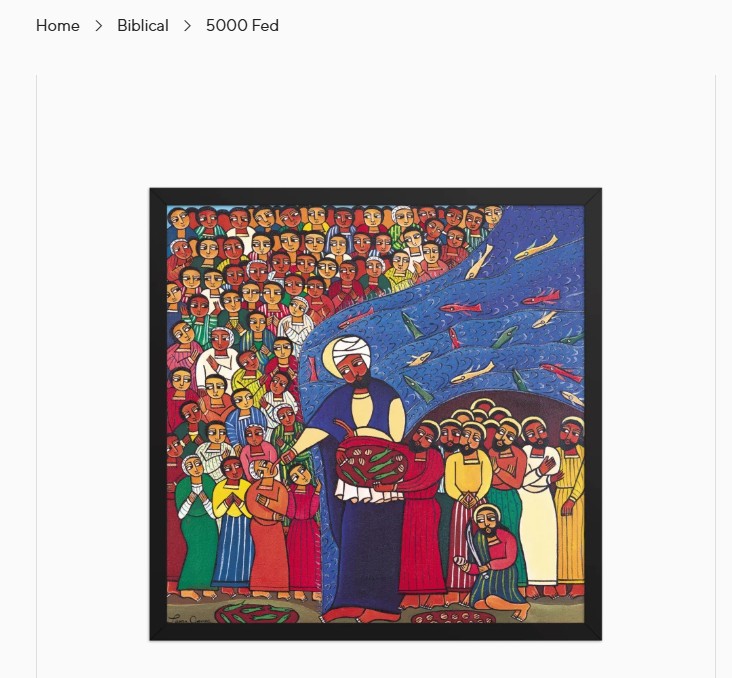
New this summer, the popular artist Laura James [previously], who frequently paints biblical subjects, now has a simple form on her website through which you can license digital image files of hers for use in publications, presentations, or websites: https://shop.laurajamesart.com/product/image-licensing/.
James, Laura_5000 Fed
Screenshot from laurajamesart.com: Laura James (American, 1971–), 5000 Fed, 1999

Also, folks often ask me where they can purchase affordable art: Check out James’s online store, as she sells giclée prints of many of her paintings.

+++

ESSAY: “Toward a Genuine Dialogue between the Bible and Art” by J. Cheryl Exum: J. Cheryl Exum (1946–2024) was a Hebrew Bible scholar renowned for her work on the Song of Songs, feminist biblical studies, and the reception of the Bible in culture and art history. In much of her writing and teaching she staged a dialogue between biblical texts and biblical art, the latter of which, she said, constitutes a form of exegesis. She argued “for adding visual criticism to other criticisms (historical, literary, form, rhetorical, etc.) in the exegete’s toolbox—for making visual criticism part of the exegetical process, so that, in biblical interpretation, we do not just look at the text and the commentaries on the text but also at art as commentary.” More than simply enhancing our appreciation of a biblical text, art “can point to problematic aspects of the text and help us ‘see’ things about the text we might have overlooked, or enable us to see things differently.”

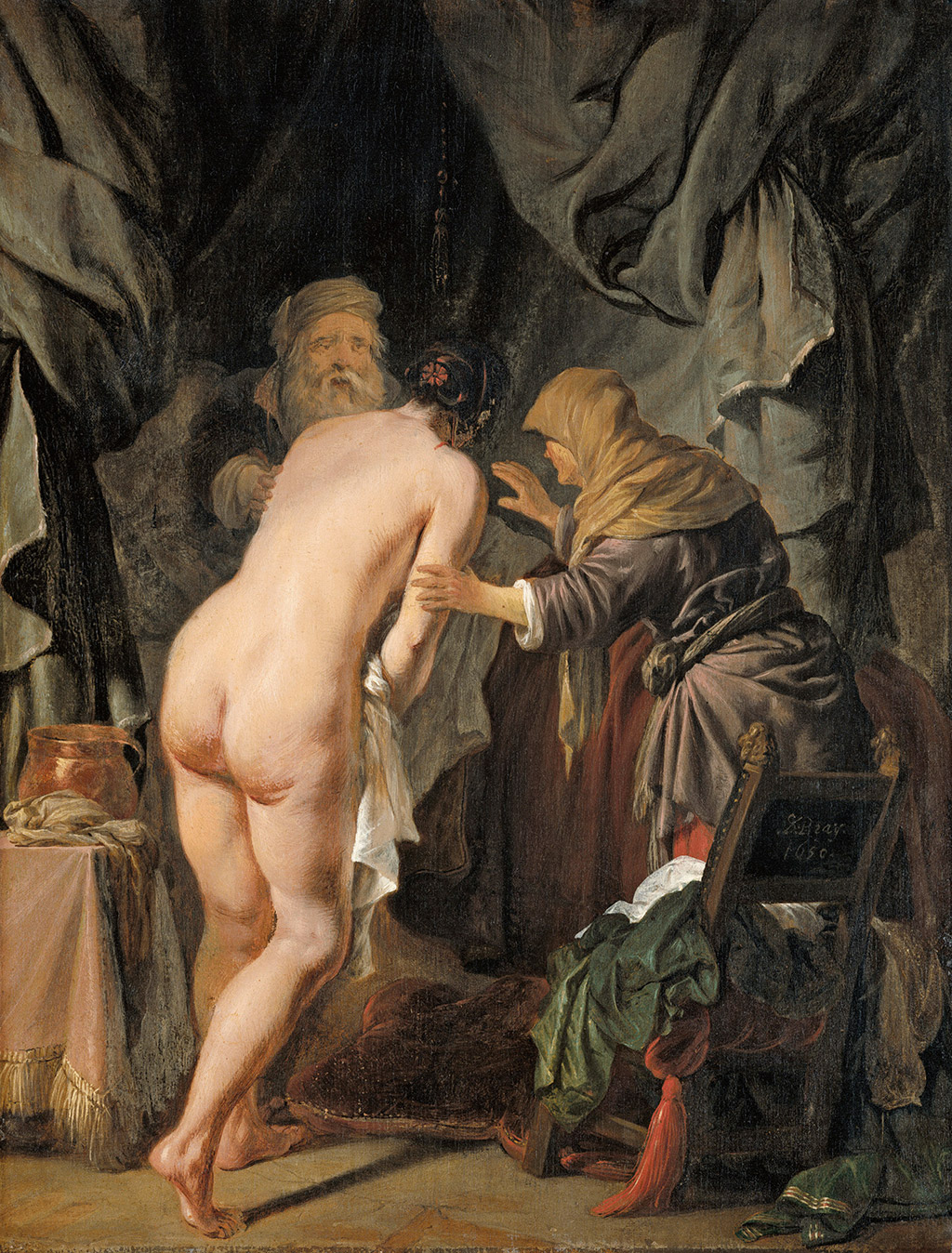
In this paper from 2012, Exum examines two episodes from the life of Hagar: the Expulsion of Hagar and Ishamel (Gen. 21:8–14), and Sarah Presenting Hagar to Abraham (Gen. 16:3–4). I found the second section particularly illuminating in how it addresses a narrative gap in Genesis 16, which is Hagar’s being raped (made to have sex without her consent) by Abraham at Sarah’s behest. Customary in many ancient patriarchal societies, the use of slaves to bear children for one’s family line is what is dramatized in the popular novel-turned-TV series The Handmaid’s Tale. Exum looks at six seventeenth-century paintings of Sarah leading a reluctant and sometimes humiliated Hagar, who tries in vain to cover her nakedness, into Abraham’s bed. “These paintings,” Exum writes, “require us to consider what assumptions about women and slaves and their rights to their bodies lie behind the biblical narrator’s simple ‘he went in to her and she conceived’, assumptions commentators too readily ignore.”
Salomon de Bray_Hagar Brought to Abraham by Sarah
Salomon de Bray (Dutch, 1597–1664), Hagar Brought to Abraham by Sarah, 1650. Oil on panel, 31.2 × 23.5 cm. Agnes Etherington Art Centre, Queen’s University, Kingston, Ontario.

In the final section of the paper, Exum considers a disturbing verse in the Song of Songs that has stumped commentators but that the artist Gustave Moreau chose to visually interpret.

+++

POEM: “He Who Sees Hagar” by Michelle Chin: “She buys me for my birth canal / but beats me for the birth. / I despise her . . .” Published in Reformed Journal.

+++

VIDEO SERIES: Dramatic Encounters (proof of concept pilot), created by Martin J. Young: Martin J. Young, a UK-based speaker, writer, and mentor to church leaders and creatives, is developing a film series with writer-director Ethan Milner of Cedar Creative that explores people’s dramatic encounters with Jesus in John’s Gospel. Inspired in part by David Ford’s The Gospel of John: A Theological Commentary (Baker Academic, 2021), the series will adapt particular gospel stories to screen and, uniquely, will include a documentary component that highlights the creative process from start to finish.

Each episode will consist of four primary elements (expanded from the three showcased in the pilot):

  1. The Roundtable, a conversation with theologians, pastors, and artists about the given gospel story, examining its form, meaning, themes, and interpretations
  2. The Rehearsal, in which the actors, informed by the roundtable discussion, work out how to perform the story, choosing facial expressions, postures and movements, vocal tones and inflections
  3. Behind-the-Scenes, exploring the various cinematographic choices made by Milner and his filmmaking team (e.g., sets, lighting, framing, editing, scoring)
  4. The Film, a roughly ten-minute drama that brings the gospel story to life

The proof of concept pilot episode below is based on John 12:1–8, in which Mary of Bethany anoints Jesus with expensive perfume, much to Judas’s chagrin. The short starts at 24:13. I’m impressed by the quality! And the “voyage of discovery” approach of the overall episode—wrestling with scripture in preparation for inhabiting its characters, and translating it into a filmic narrative—pays off, as viewers are granted insight into the crafts of acting, filmmaking, and literary adaptation.

Young is seeking funding to produce and distribute a season of eight to ten episodes. (None have been made yet.) If you’re interested in helping out financially, visit https://www.cedarcreative.net/encounters, and click “Donate Today.” Explore more at https://this-is-that.com/.
“Unexpected” by Tom Darin Liskey (poem)

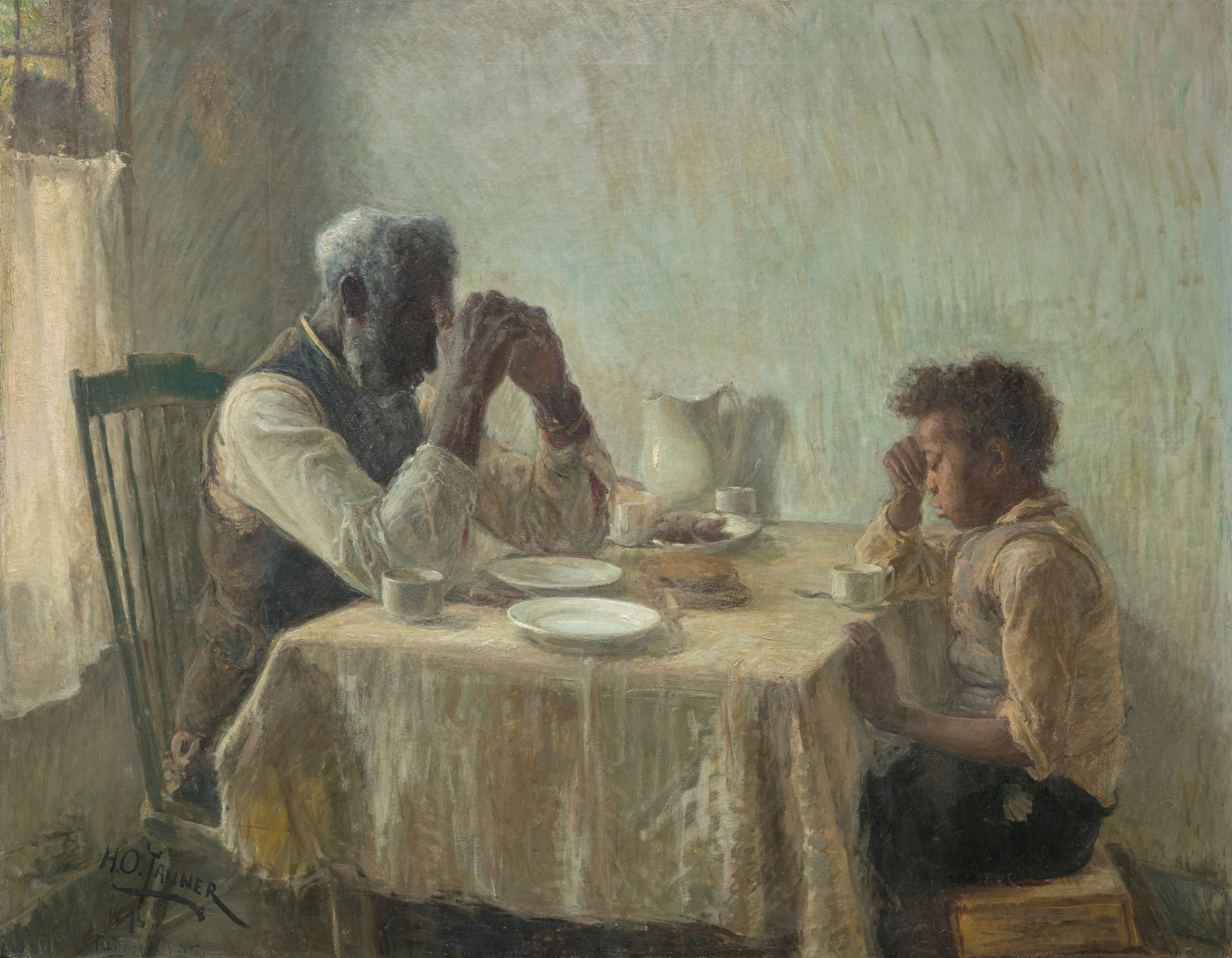
Tanner, Henry Ossawa_The Thankful Poor
Henry Ossawa Tanner (American, 1859–1937), The Thankful Poor, 1894. Oil on canvas, 35 1/2 × 44 1/4 in. (90.2 × 112.4 cm). Collection of the Art Bridges Foundation, Bentonville, Arkansas.

Momma used to say
That when Jesus turned the
Loaves and fish
Into a picnic
For those hungry folks
In the wilderness
The God blessed victuals
Tasted like mouth watering
Mississippi catfish
Deep fried in the best store bought meal
Served with a healthy side helping
Of iron skillet cornbread—
Bread so fine that
No one asked for butter or honey
And nary a crumb hit the ground.
She grew up an orphan
In the Great Depression,
Where low cotton prices
And bad weather
Killed farms and families—
Times, she remembered, so hard
That sometimes even dinner
Was a miracle
And prayers offered
At the evening meal
Wafted in the air
Thick as coal oil smoke
In the fragrance of gratefulness.

This poem by Tom Darin Liskey was originally published June 16, 2019, on Kelly Belmonte’s All Nine blog. Used with permission of the author.

Tom Darin Liskey is a photographer and a writer of fiction, nonfiction, and poetry. A graduate of the University of Southern Mississippi, he spent nearly a decade working as a photojournalist in Venezuela, Argentina, and Brazil. He is the author of the short story collection This Side of the River (2022) and, with Kelly Belmonte, the poetry-photography collaboration Transit (2022), as well as a contributor to The Cultivating Project. He lives with his family in South Carolina.

Roundup: Poetry releases; Heaven, help us; interfaith art exhibitions; 3 free albums

POETRY BOOKS: I just learned about some recently released poetry collections in the Christian Century’s Book Reviews section: Joy: 100 Poems, compiled by Christian Wiman (the review responds to the comment Adrianna Smith made in her otherwise positive review for the Atlantic, that the book’s one fault is its “slant toward a theological comprehension of joy, specifically, an over-representation of a Christian one”); Wade in the Water: Poems by Pulitzer Prize winner Tracy K. Smith; and Meister Eckhart’s Book of the Heart: Meditations for the Restless Soul, a collection of verse-style renderings of the thirteenth-century German Christian mystic by Jon M. Sweeney and Mark S. Burrows, like this one:

“You Are Not an Answer”

There is no Why in You
and so I must learn to trust

that You are not an answer
to my questions but rather

the source that is true before
every question I ever had

and the love beyond every
answer I will ever know.

+++

SONG: “Heaven Help Us All”: This a cappella Stevie Wonder cover is by the vocal group Accent, featuring guest singer Vanessa Haynes. Comprising six male vocalists from five different countries, Accent creates music through Internet collaboration. This song is an intercession to God on behalf of the desperate poor, the homeless, the abused, the lonely, and the depressed. [HT: Global Christian Worship]

+++

ART EXHIBITIONS:

“Pathways to Paradise: Medieval India and Europe,” Getty Museum, Los Angeles, May 1–August 5, 2018: “The pages of medieval manuscripts reveal a dynamically interconnected world filled with real and imagined ideas about foreign peoples and places. Buddhists, Muslims, and Christians living across Europe and Asia conceived paradise as a place of perfect harmony, but the path for locating such a site or achieving this state of mind varied between these religions. By exploring the terrestrial and celestial realms, this exhibition highlights the spiritual motivations for creating and owning portable and devotional artworks.”

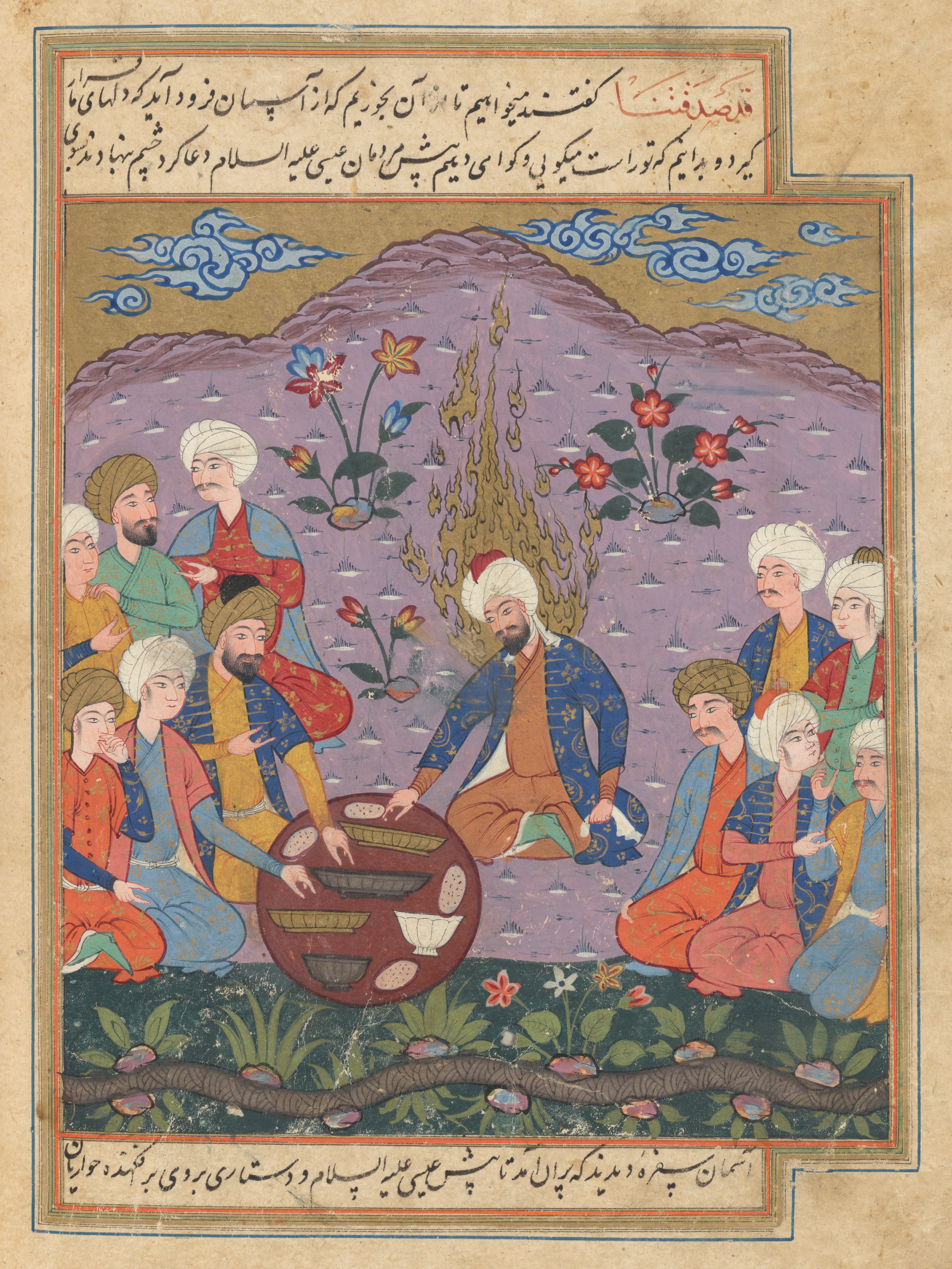
“Shared Sacred Sites,” Manhattan, March 27–June 30, 2018: Spread across three Manhattan cultural institutions, the multidisciplinary exhibition “Shared Sacred Sites” aims to raise awareness of the potential for cooperation among the three Abrahamic faiths. The tour begins at the New York Public Library with illuminated manuscripts and documents that highlight holy figures shared in common, like Abraham, Moses, Elijah, and (between Christianity and Islam) Mary and Jesus. The Muslim miniature below shows the Miracle of the Table recounted in the Qur’an (5:111–114), in which ’Isa (Jesus) causes a table set with food to descend from heaven, corroborating his status as a true prophet. This miracle story echoes the Miracle of the Loaves and Fishes in the Gospels.

Jesus receives food from heaven (Persian)
“‘Îsâ (Jesus) receives food from heaven and is able to feed his followers,” from Qisas al-Anbiya (Tales of the Prophets), Iran, ca. 1580. Spencer Collection (Pers. ms. 46, fol. 152v), New York Public Library.

Then it moves to the Morgan Library and Museum, where the celebrated Morgan Picture Bible, produced in thirteenth-century Paris, is on display. This masterpiece of Gothic art offers exquisite visualizations of some three hundred Old Testament scenes (one of which I featured on the last “Artful Devotion”), and it’s also a testament to intercultural exchange: as the book circulated across civilizations, explanatory captions in Latin, Persian, Arabic, Judeo-Persian, and Hebrew were added in the margins.

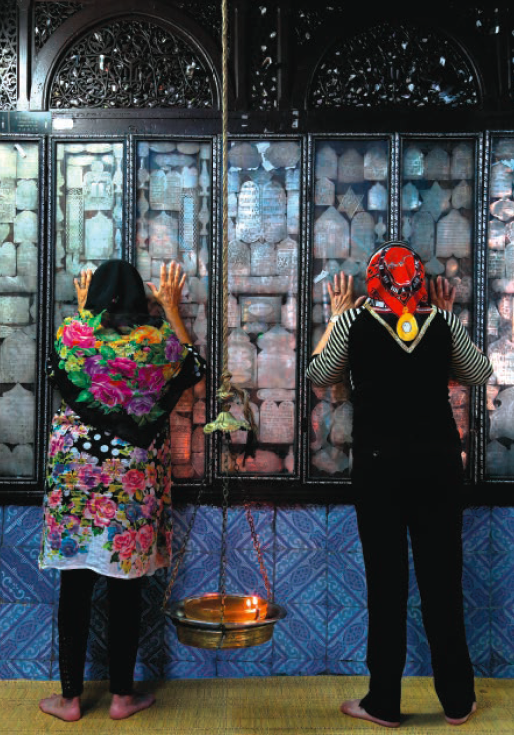
Lastly, the James Gallery at the CUNY Graduate Center presents artifacts, videos, contemporary art, and photographs that showcase examples of peaceful coexistence of people from different faiths throughout the Eastern Mediterranean as a counternarrative to the stories of conflict that saturate the news media. Several of the photos are of shared worship spaces, like the mosque-synagogue in the cave of Machpelah in Hebron, West Bank, or Ghriba synagogue in Djerba, Tunisia, where Muslims can often be found praying alongside Jewish friends and neighbors or attending pilgrimage ceremonies. (For more on Djerba’s beautiful culture of religious tolerance, see “Jews and Muslims Celebrate Unusual Coexistence in Tunisia’s Djerba.”)

Jewish and Muslim Women Praying
Jewish and Muslim women pray side by side in the Ghriba synagogue in Tunisia, 2014. They stand before the building’s eastern wall, behind which the scrolls of the Torah are preserved. Photo © Manoël Pénicaud.

+++

FREE ALBUM DOWNLOADS:

Weep + Rejoice by Trenton Durham: This four-track EP was released in March as a series of soft-rock meditations on Christ’s death and resurrection.

Top of the Stairs by Scott Mulvahill: Mulvahill is a singer-songwriter and upright bass player from Nashville who toured for five years with Ricky Skaggs’s bluegrass band, Kentucky Thunder. “The Lord Is Coming,” which Mulvahill wrote with Alanna Boudreau and Gabi Wilson, is one of eight songs on his latest EP. See below for a live performance from 2017 with two backing vocalists, or click here for a more recent solo performance from the Tokens Show, uploaded yesterday.

Volume 2 by Deeper Well Records: Five Deeper Well artists have contributed two songs each to this compilation of acoustic hymns, a mix of classics, like “Turn Your Eyes Upon Jesus” and “This Is My Father’s World,” and originals. I can’t speak highly enough of this label—the quality of music they release is superb. You can stream all the full songs on Bandcamp.