Favorite Films of 2024, Part 1

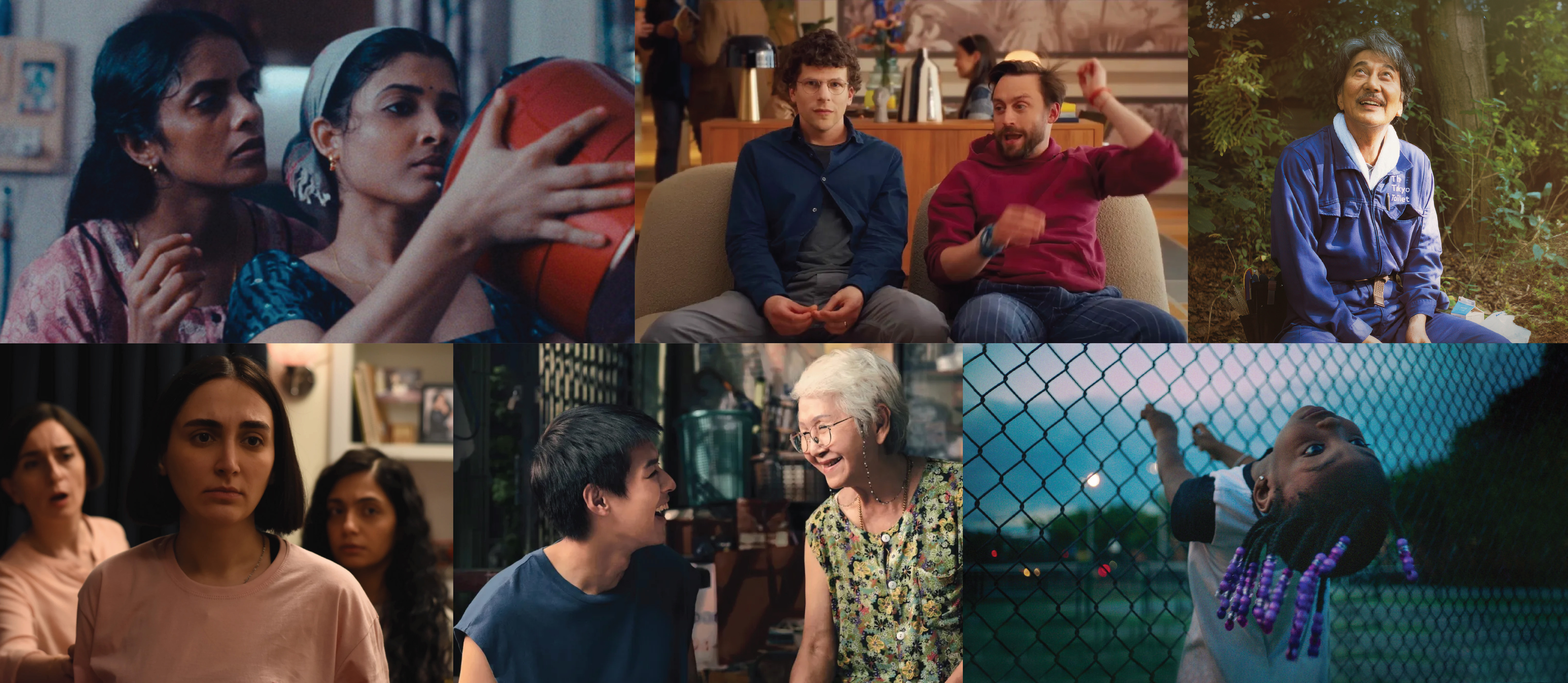
Of the 102 films I’ve seen that were released in the United States in 2024, these are my top ten. I’ll reveal my top eleven through twenty in a “part 2” post in the next few days.

Although I typically draw spiritual, theological, or liturgical connections with the art I feature on this website, here I do not do that. I’ve chosen these films not based on any kind of Christian messaging or interpretive possibilities but because they are beautifully made films that resonated with me. They address themes such as family, friendship, simplicity and awe, repressive governments, growing up, grief, mortality, addiction, trauma, joy, disability, identity.

One thing I love about cinema, as holds true with all the arts, is how it can connect us more fully to God, others, the world, and our own selves. So while I don’t think you need to watch movies with a purpose in mind, if you find yourself hesitant to invest the time, perhaps you might consider that connective capacity.

If the film is currently streaming for free with a subscription service, I’ve noted that at the bottom of the entry. Otherwise, check your local theaters or online rental platforms.

[Top 20 from 2023] [Top 20 from 2022] [Top 20 from 2021] [Top 20 from 2020]

Cautionary note: Different viewers have different sensitivities. If there’s a particular type of content you want to avoid, I’d advise you to check out the “Parents’ Guide” section of the film’s IMDb webpage, to which I’ve linked each film title.
Favorite Films of 2024

1. How to Make Millions Before Grandma Dies, dir. Pat Boonnitipat: From Thailand comes this tender story of a late teenage boy, M (Putthipong “Billkin” Assaratanakul), who quits his job as a video game streamer to become the live-in caretaker of his ailing amah (maternal grandmother) (Usha Seamkhum) in the hopes of inheriting her house when she dies. While initially motivated by self-interest, M develops genuine affection and gratitude for his grandma the more time he spends with her—getting up early with her each morning to make and sell congee at the street market, bringing her to the temple to pray, sitting with her during chemotherapy sessions (one of the most moving scenes is when he picks off the loose hairs she’s been shedding, one by one, from her sweater while she rests in her chemo chair). The balance of humor—conveyed especially through Amah’s feistiness—and sadness—loneliness, familial hurt and estrangement, terminal illness—is deftly handled and the emotional climax well earned.

2. Daughters, dir. Angela Patton and Natalie Rae. Pursuing the initiative of a group of young Black girls at Camp Diva Leadership Academy (now merged with Girls For A Change), Virginia-based community activist Angela Patton has helped organize a series of daddy-daughter dances in US prisons, a chance for K–12 girls to connect in person and make memories with their incarcerated fathers. This documentary captures one of those dances from 2019, following Aubrey, Santana, Raziah, and Ja’Ana over the course of eight years—before, during, and after the event. These girls and their fathers speak their sorrows, fears, insights, disappointments, and hopes, shedding light on the impact of parental incarceration and especially the rise, since 2014, of no-touch and even screen-only prison visits.

I appreciate that the film shows the complexity of the father-daughter bond, avoiding a simplistic portrait of that bond as either wholly resilient or frankly unmendable. The dance is not a triumph for all participants. While all at least have a desire to show up for each other, forgiveness and trust don’t always come easily. Nor does conversation, when you’ve been separated from someone for so long and barely know them.

Surely a contender for scene of the year is when the girls come down the hallway in their dresses, hand in hand and proud but nervous, to greet their fathers, who sit in a row of folding chairs in borrowed suits and ties. The men’s reactions are precious.

Streaming on Netflix.

3. Dìdi, dir. Sean Wang. Dìdi means “little brother” in Mandarin, and Chinese parents also use the term as an endearment for their younger sons. In this semiautobiographical dramedy from writer-director Sean Wang, it references the lead character Chris (Izaac Wang), a thirteen-year-old Taiwanese American boy growing up in Fremont, California. It’s 2008, the summer before high school, and all the awkwardness and anxieties of adolescent boyhood are upon him. He’s trying to fit in with a skater crowd and to figure out how to flirt with girls, and he’s navigating turbulent relationships with his mom (Joan Chen), who he feels is ashamed of him, and his sister (Shirley Chen), his only sibling, who’s getting ready to leave for college. Also living in the house is his nai nai (paternal grandmother) (Zhang Li Hua), played by Sean Wang’s actual grandma. The film is cringey in all the right ways, capturing that pubescent period we’ve all gone through of insecurity, immaturity, pressure, and desperation. Izaac Wang’s is one of my favorite performances of the year, especially for the vulnerability he lets us see in his character.

Streaming on Peacock.

4. Perfect Days, dir. Wim Wenders. This serene drama contains little plot, dialogue, or conflict and yet is absorbing to watch. It’s built around the daily routine of Hirayama (Kôji Yakusho), a custodial worker in Tokyo whose job is to clean public toilets. We watch him wake up, fold his bedding, water his plants, brush his teeth, put on his royal blue jumpsuit, and walk outside to greet a new day. He sanitizes toilet bowls, sweeps floors, and wipes mirrors, taking great pride and care in his work. He occasionally pauses to appreciate moments of beauty: children playing in the park, leaves glimmering in sunlight. He eats dinner at a restaurant where he’s friends with the proprietor. Then he reads at home by lamplight before falling asleep. His is a quiet life and a full one. His attentiveness and gratitude call us to the same.

Streaming on Hulu.

5. Sing Sing, dir. Greg Kwedar. Rehabilitation Through the Arts (RTA) is a program at New York’s Sing Sing Correctional Facility in which professional teaching artists lead year-round workshops inside the prison in theater, dance, music, creative writing, and visual arts. The drama Sing Sing spotlights the acting troupe as they put on a production of Breakin’ the Mummy’s Code, a time-traveling epic they helped come up with that involves an Egyptian prince, gladiators, pirates, cowboys, Robin Hood, and Hamlet. Starring Colman Domingo as the real-life John “Divine G” Whitfield (who was a founding member of RTA and who makes a cameo appearance), Clarence “Divine Eye” Maclin as himself, and an ensemble cast of other formerly incarcerated RTA participants, the film celebrates the transformative, therapeutic power of the arts, as the men find vulnerability, agency, creativity, confidence, connection, and release. It’s a real heart-warmer!

6. Nickel Boys, dir. RaMell Ross. Based on the Pulitzer Prize–winning novel by Colson Whitehead, this lyrical film is set in the Jim Crow era primarily at Nickel Academy, a state-run juvenile “reform school” (essentially a prison farm) in Florida, inspired by the real-life Dozier School for Boys that operated from 1900 to 2011, where hundreds of students were subjected to forced labor and physical and/or sexual abuse. The remains of several dozen boys have recently been unearthed from unmarked graves on the school grounds, many presumed to be victims of excessive punishment.

Nickel Boys centers on Elwood (Ethan Herisse), a high-achieving high schooler who gets sent to Nickel after hitching a ride in, unbeknown to him, a stolen car. There he becomes friends with Turner (Brandon Wilson). Despite the harrowing backdrop of their relationship, the boys share moments of leisure and joy, and for any violence that occurs, the director made the deliberate choice to portray it offscreen.

The film is shot almost entirely in double first-person POV, switching between the perspectives of Elwood and Turner. I had heard this beforehand and was skeptical that it would work for an entire movie, worried that it might come across as gimmicky, but on the contrary, it worked beautifully. I was mesmerized by the compositional poetics from the very beginning, by how the use of what the director calls “sentient perspective” allows us to get inside moments in a new way. (Shout-out to cinematographer Jomo Fray for, alongside director RaMell Ross, developing and executing such an evocative visual language; for an enthusiastic, in-depth conversation Fray has on his process, approach, and choices for the film, see here.) Before we meet Turner, a decade-plus earlier in the timeline, we see young Elwood’s face only in reflections—in the chrome plating of his grandma’s iron as he watches her do house chores, or through a window display of televisions that are broadcasting King’s “Our God Is Marching On” speech, before which Elwood stands transfixed. Then later we get to see him through Turner’s eyes. That characters look straight into the camera when they address the two mains creates an atypical intimacy and directness.

7. The Seed of the Sacred Fig, dir. Mohammad Rasoulof: Shot in secret and smuggled out of Iran, this thriller is about a family of four in Tehran who become increasingly divided as the Woman, Life, Freedom movement takes hold in 2022, demanding the end of compulsory hijab laws and other forms of oppression against women. Because the protest and crackdown scenes could not be re-created without attracting scrutiny, the director spliced in documentary footage that had been captured on various anonymous cellphones, some of which, I’ll warn, graphicly depicts police brutality and its aftermath.

In the film, the head of household, Iman (Missagh Zareh), works as an investigator in the country’s Islamic Revolutionary Court, signing death warrants against those who have violated sharia law, much to the chagrin of his daughters, Rezvan (Mahsa Rostami) and Sana (Setareh Maleki), who sympathize with the antigovernment protestors. Their mom, Najmeh (Soheila Golestani), tries to run interference between them and Iman and maintain normalcy, tradition, and respect in the home. But when Iman’s gun goes missing, chaos ensues; he becomes increasingly paranoid and unhinged.

Writer-director Mohammad Rasoulof has served jailtime before for his criticism of the Iranian government, and to avoid his latest eight-year prison sentence, he escaped the country illegally in 2024 and currently resides in self-exile in Berlin.

8. A Real Pain, dir. Jesse Eisenberg. After the recent death of their grandmother, a Holocaust survivor, two Jewish American cousins embark on a tour of Poland to visit her childhood home and connect with their heritage. David (Jesse Eisenberg) is straitlaced, shy, and anxious, whereas Benji (Kieran Culkin) is loud, uninhibited, fly-by-the-seat-of-his-pants, devil-may-care. This clash of personalities makes for a funny film, but we also come to see that behind Benji’s bluster there is, as the title gestures toward, “a real pain.” (The more frivolous meaning, of course, is that Benji is exasperating!) Both comedic and serious, the film succeeds in pulling off its dual tone while exploring relational dynamics and different ways of dealing with pain and trauma.

Streaming on Hulu.

9. All We Imagine as Light, dir. Payal Kapadia. Prabha (Kani Kusruti) and Anu (Divya Prabha) live together as apartment mates in multicultural Mumbai and work as hospital nurses. Prabha’s husband lives in Germany and rarely communicates with her, and Anu is dating a young Muslim man, against her Hindu parents’ wishes. When their friend Parvaty (Chhaya Kadam) becomes widowed, she is evicted from her shantytown, and they help her move back to her home village by the sea. The film is about sisterhood and longing—about these three women of different ages each pursuing a light-filled future in their own way.

10. Nowhere Special, dir. Uberto Pasolini. This warm, affectionate, tragic film set in Belfast was inspired by a newspaper headline: “Father dying of cancer spent his final months finding family for son.” When John (James Norton), a single dad who’s thirty-three, is diagnosed with brain cancer, he starts looking for a home for his four-year-old boy, Michael (Daniel Lamont). He partners with social workers to interview potential parents and tries to prepare Michael for what’s coming. A dead beetle in the park becomes an opportunity to teach him about death.

A premise like this could easily become over-the-top sentimental, but much to the film’s credit, and owing in part to the contained performances of the two leads, it does not. There’s both a sweetness and a sadness to it, as we watch father and son build ordinary memories before their imminent separation: they take naps together, wash their respective vehicles, enjoy ice cream cones in the park, watch dump trucks in action. As John becomes progressively weaker, Michael notices: he observes how his dad now needs to use two hands to pour a cup of OJ; he sees him wincing in pain when he thinks he’s not looking. Despite the heartbreaking scenario, the film is ultimately hopeful.

Streaming on Kanopy.
Five Films about Finding Community

There are many great movies that spotlight the positive role of family, friendship, and community, showing how humans are built for interdependence. For this article of recommendations, I’ve chosen a narrower subset of that theme: movies about a character or characters who don’t have community at the beginning, or who aren’t receptive to it, but who find it throughout the course of the story. That may sound cliché, but I promise, all five selections are nonsappy and bring something new to the table.

What movie(s) would you add to the list? Also, what other thematic film lists would you like to see on this website?

About a Boy
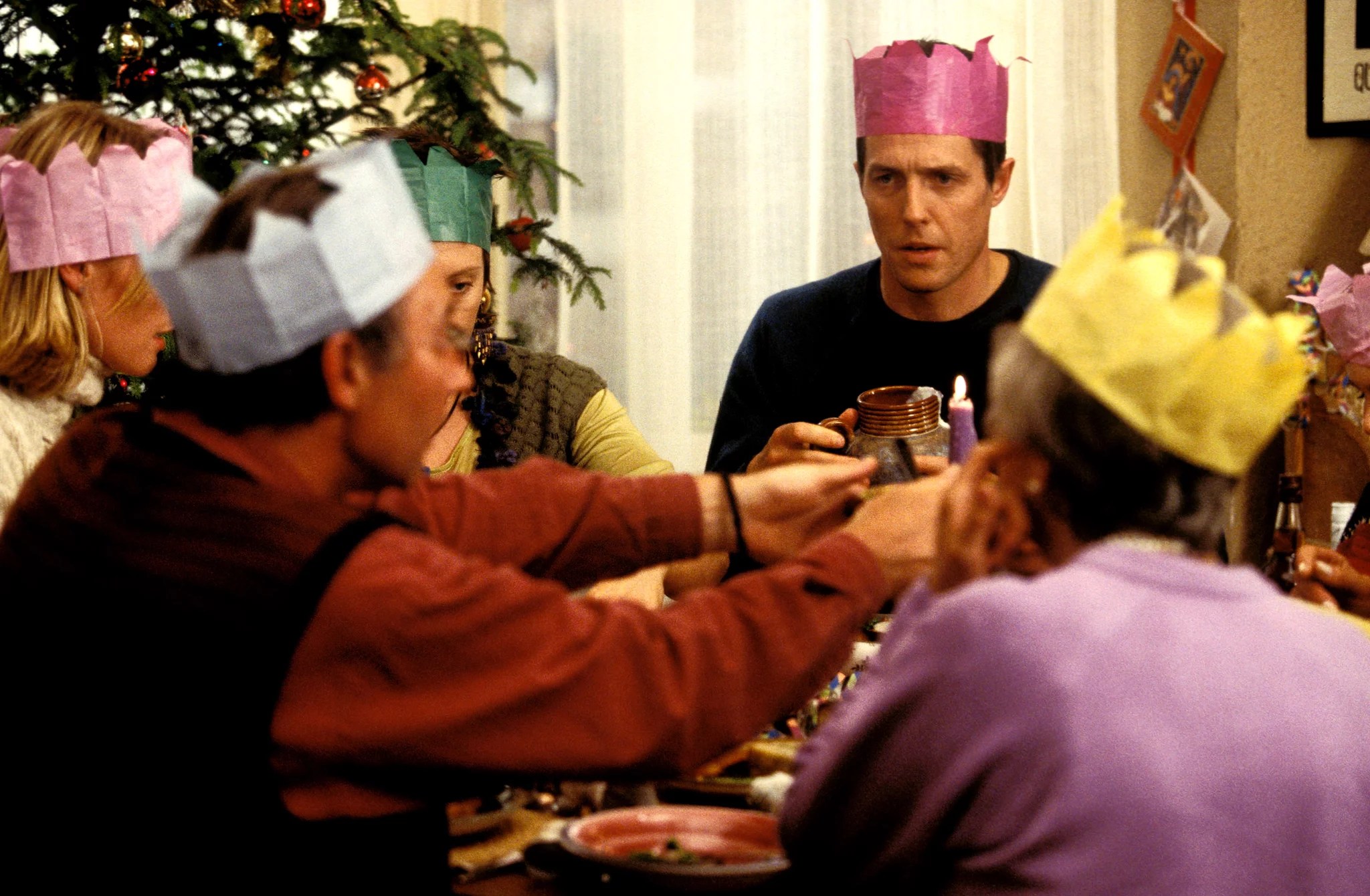
Will (Hugh Grant) sits through an uncomfortable Christmas dinner at Fiona’s house (the main course: nutloaf), having been invited by her son, Marcus, in this scene from About a Boy.

1. About a Boy (2002), dir. Chris Weitz and Paul Weitz. In general, my favorite type of movie is one that makes me both laugh and cry. About a Boy hits that spot. Based on a novel of the same name by Nick Hornby, it stars Hugh Grant as Will, a thirty-something single man who lives a carefree life in a swanky apartment—with no responsibilities, no commitments—subsisting off the royalties of a hit song his late father wrote many years ago. He prides himself in this unattached, “island living.”

Sleazeball that he is, he joins a Single Parents Alone Together group for access to vulnerable single women, despite his not having kids. It’s through that group that he meets a nerdy twelve-year-old named Marcus (Nicholas Hoult), whose mom, Fiona (Toni Collette), has depression. Marcus strategizes to make Will a part of their life so that they have a bigger support network as his mom navigates her mental illness. (“Two people isn’t enough; you need a backup,” he reasons.) Will is resistant at first. He doesn’t want the complexity or inconvenience that come with relationships. But Marcus’s persistence wears him down, and as he warms up to Marcus’s friendship and later Fiona’s, he learns to care for people and things other than just himself. His autonomy breaks down the more he allows his behaviors and decisions to be influenced by those around him whom he’s grown fond of and invested in, and he eventually realizes that, as the poet John Donne famously wrote, “no man is an island.”

(Not currently streaming for free through any subscription services but can be rented digitally. If you’re a local friend, you can borrow my Blu-ray copy—or come over and watch it with me!)

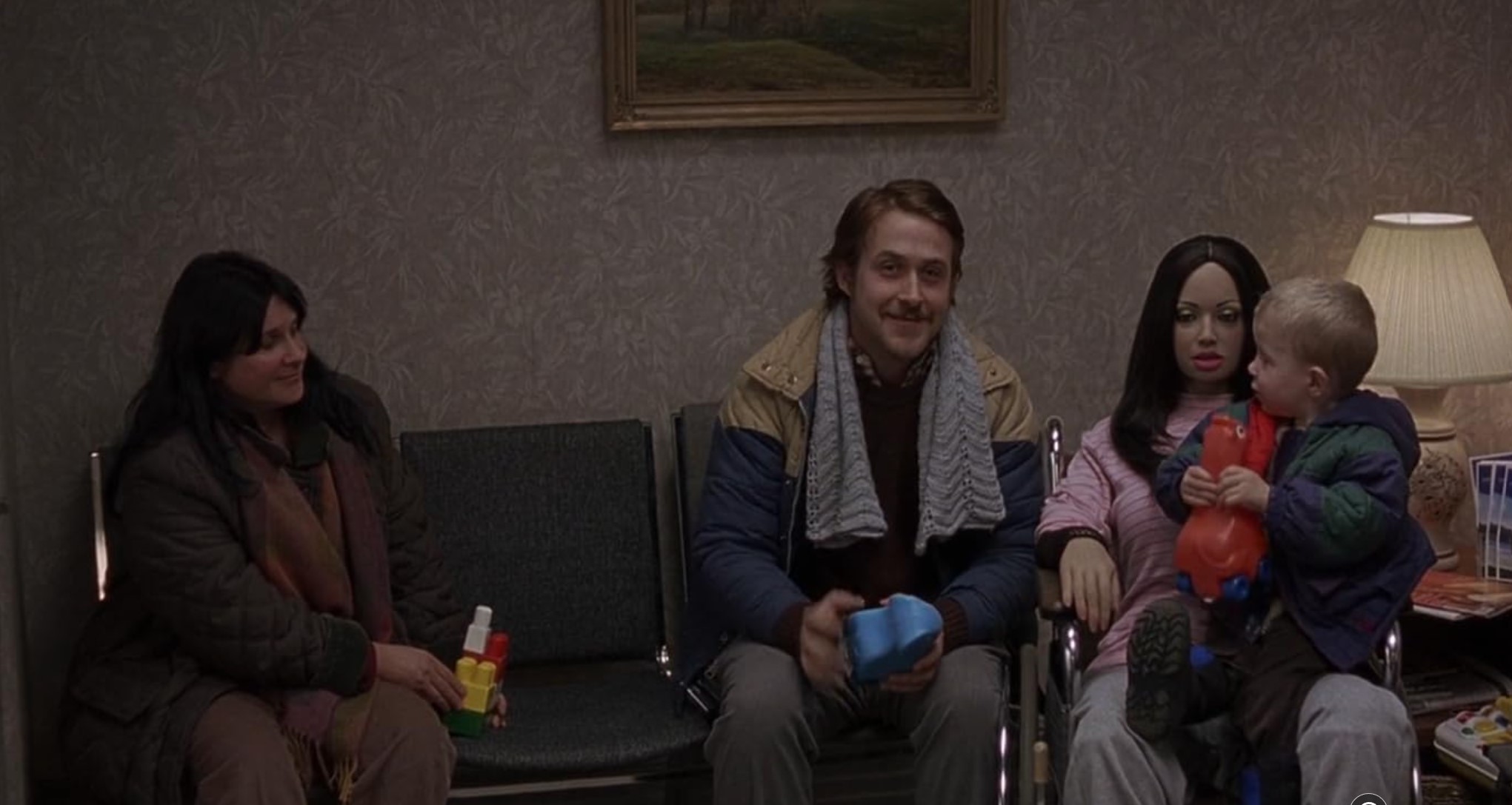
2. Lars and the Real Girl (2007), dir. Craig Gillespie. Twenty-seven-year-old Lars Lindstrom (Ryan Gosling) lives in a small Wisconsin town in his brother Gus (Paul Schneider) and sister-in-law Karen’s (Emily Mortimer) garage. Conversation and physical contact make him anxious, so he generally keeps to himself. But then one day a sex doll named Bianca arrives at his house, and he develops a chaste relationship with her. He gives her a backstory—she’s a half-Brazilian, half-Danish missionary with nurse’s training who was orphaned as a baby—and starts introducing her around town as his girlfriend.

Lars and the Real Girl (doctor's office)
Bianca, at right, waits for her doctor’s appointment in Lars and the Real Girl. (“She loves kids,” Lars says.)

The beauty of this film is in how Lars’s family, his church (one of the rare positive portrayals of Christianity in contemporary cinema), his coworkers, and local retailers all compassionately care for Lars as he experiences this delusion, not judging or teasing—although there is some initial resistance—but instead welcoming Bianca into the community, as his psychiatrist advised. Bianca attends worship, gets her hair done at the salon, volunteers at the hospital, leads story time at the elementary school, even gets elected to the school board! Karen bathes and dresses her; a work colleague dances with her at a party; her new friends drive her to a girls’ night out. As the people in Lars’s life embrace Bianca, Lars becomes more open to human interaction, more sociable, until he no longer needs the delusion. Waiting in the wings is Margo (Kelli Garner), the “real girl” of the title, who works in Lars’s office and sings in the church choir—and who has a crush on him. The love and support of his community as he works through psychological issues is what enables him to eventually pursue healthy relationships with real-life people.

Streaming on Tubi (no account necessary).

3. Shoplifters (2018), dir. Kore-eda Hirokazu. My favorite film by one of my favorite writer-directors, Shoplifters is a preeminent onscreen example of “found family.” It follows a band of outsiders living together in a small house on the outskirts of Tokyo. Each of them has suffered some form of abuse or neglect, having been cast off by their biological families or spouses. None of them are blood-related, and yet they’ve formed bonds of love and loyalty. They support each other emotionally and financially: Hatsue (Kirin Kiki), aka “Grandma,” contributes funds allegedly from her deceased husband’s pension; Nobuyo (Sakura Andô) works for an industrial laundry service, while her husband, Osamu (Lily Franky), works as a day laborer; Aki (Mayu Matsuoka) works at a sex parlor; and the boy Shoto (Jyo Kairi) engages in petty theft.

Shoplifters
Nobuyo, Aki, Lin, Shota, and Osamu take a day off from their workaday lives to spend time together at the beach in the found-family film Shoplifters—Kore-eda’s best, in my opinion.

The conflict is introduced when the family finds a little girl named Yuri/Juri (Miyu Sasaki), dirty and hungry, left alone on a front porch, and they decide to take her. They rename her Lin, and she becomes part of their family. But now they are guilty of kidnapping. The film explores themes of belonging and of being unwanted versus wanted—that is, chosen. It also asks, What is a mother or a father? What is a sibling? Kore-eda deftly folds together the delicate layers of the various relationships, most movingly (to me) Grandma and Aki’s, and Shoto’s with his new younger sister, Lin.

Sakura Andô is outstanding as Noboyu—the best performance of any of the films on this list, and of 2018. She delivers a zinger during the interrogation scene, and the nuances of her voice and body language throughout bear so much of the film’s complexity and meaning.

Streaming on Hulu.

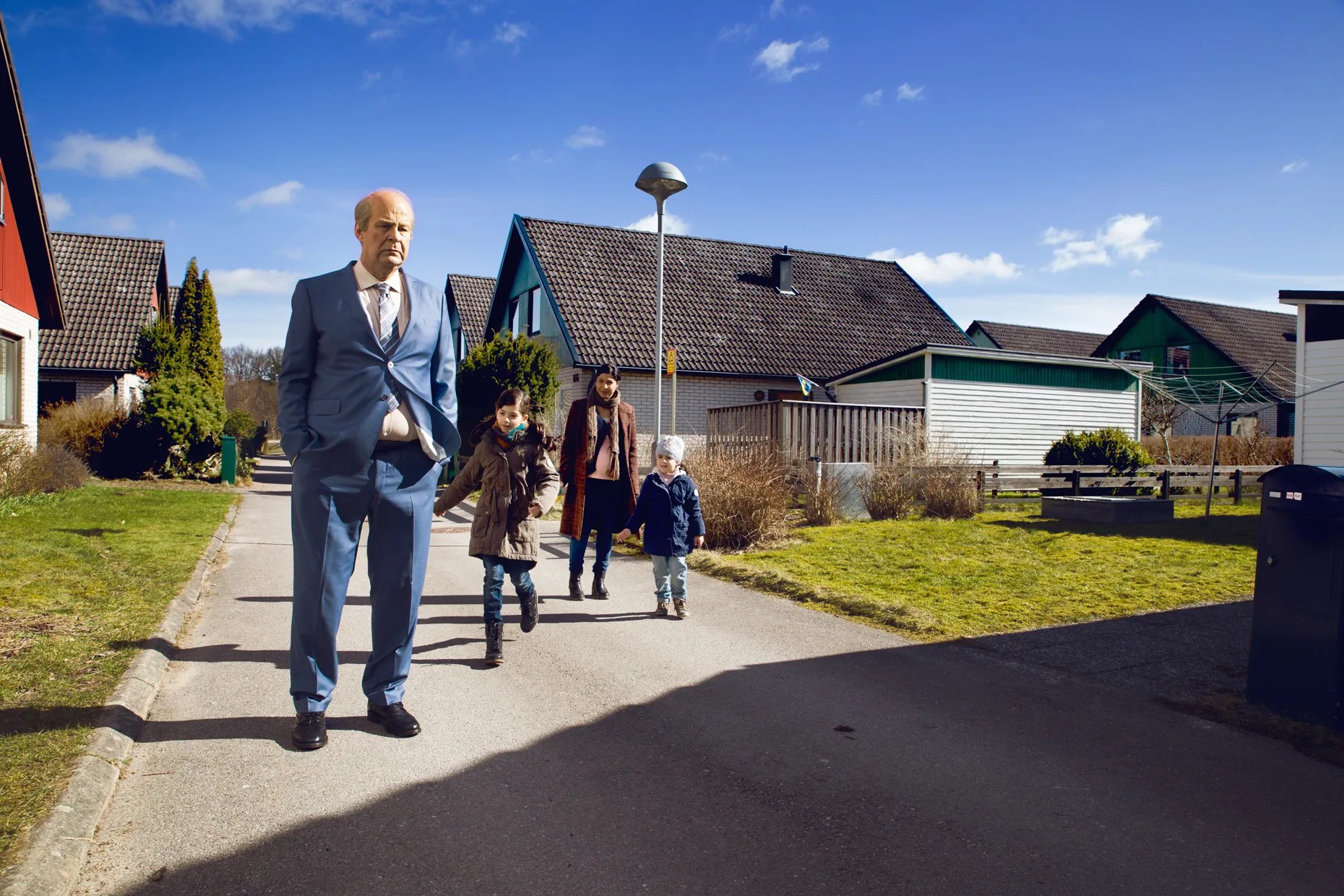
4. A Man Called Ove (2015), dir. Hannes Holm. Based on the best-selling Swedish novel En man som heter Ove by Fredrik Backman, this movie centers on Ove (pronounced “oo-vah”) (Rolf Lassgård), a grumpy old widower and retiree obsessed with enforcing block association rules no one cares about and still mourning the death of his wife. When a lively young couple and their two kids move in next door, the commotion interrupts Ove’s suicide attempt. He is called on to help out with increasing frequency—lend his ladder, watch the girls, teach the wife, Parvaneh (Bahar Pars), to drive—which outwardly annoys him but, he subconsciously realizes, gives him purpose and opportunities for meaningful human connection. He gradually learns also to receive acts of care and outreach, like a chicken and rice dinner, and to interact with others in modes other than just criticism and judgment.

A Man Called Ove
In A Man Called Ove, the titular character becomes disgruntled when a boisterous family moves in next door, but they ultimately draw him out of his suicidal ideation and help him let go of his bitterness over the hand he’s been dealt in life.

Through flashbacks, we learn about Ove’s childhood and his romance and married life with Sonja (Ida Engvoll) and begin to better understand the bitterness he holds. It’s beautiful to see that bitterness fade, even if it doesn’t entirely go away, as he begins to let his guard down and open himself to small joys.

The film was remade in English in 2022 as A Man Called Otto, set in Pittsburgh and starring Tom Hanks, but the original Swedish adaptation is the better of the two.

Streaming on Amazon.

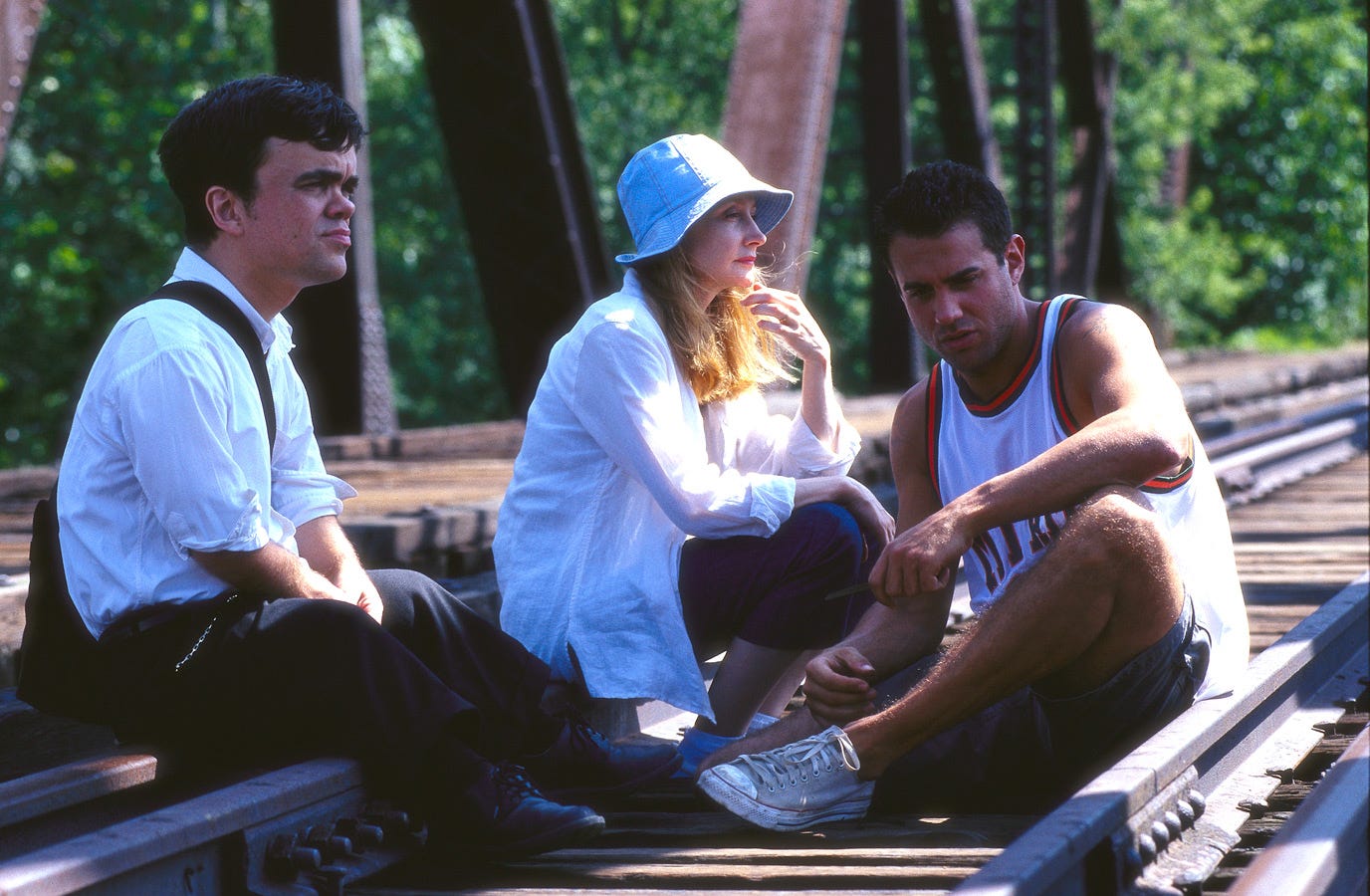
5. The Station Agent (2003), dir. Tom McCarthy. When his only friend dies, Fin (Peter Dinklage), a train enthusiast, inherits an abandoned train depot in rural New Jersey, which he moves into, intent on living in solitude. But situated just outside his new digs is a chatty hot dog vendor, Joe (Bobby Cannavale)—in town indefinitely from Manhattan to care for his sick father—whose stand is frequented by Olivia (Patricia Clarkson), a discombobulated woman who, we later find out, is grieving the death of her son and the fraying of her marriage. Fin gradually surrenders to the uninvited companionship. He also befriends a local elementary school girl who plays alone and likes trains, and a librarian with an abusive boyfriend.

The Station Agent
In The Station Agent, Fin’s deliberate life of solitude is interrupted by Olivia and Joe, who adopt his hobby of train watching not so much for their interest in trains as for their desire for companionship.

Fin had chosen a solitary life to protect himself from the taunts he receives because of his dwarfism. But he finds that vulnerability—putting yourself out there—is ultimately the better way to live, even though it means greater unpredictability and susceptibility to hurt. He forges a community from an unlikely bunch, people with whom he learns to enjoy comfortable silences and talk both small and large. The movie is punctuated by long walks along railroad rights-of-way and ends with a meal around a table.

Streaming on Amazon.

Favorite Films of 2023, Part 2

Read part 1 here.

11. Oppenheimer, dir. Christopher Nolan. Based on the biography American Prometheus by Karl Bird and Martin J. Sherwin, Oppenheimer chronicles the role of nuclear physicist J. Robert Oppenheimer (Cillian Murphy) in developing the world’s first atomic bomb. Recruited by the US Army in 1942, Oppenheimer heads up the new Manhattan Project lab in Los Alamos, New Mexico, assembling a team of leading scientists. While some decline the invitation or, over the next few years, drop off the project for ethical reasons, Oppenheimer persists with the self-justification that if the US didn’t make the bomb, Germany would. The film grapples with moral responsibility and guilt when it comes to applying advanced scientific knowledge toward destructive ends.

12. The Holdovers, dir. Alexander Payne. It’s December 1970, and Angus Tully (Dominic Sessa) is looking forward to getting away from his New England boarding school for Christmas break, especially from his ornery classical studies teacher Paul Hunham (Paul Giamatti). But when his mom calls to say she and her new husband need some alone time, Angus is left under the begrudging care of Mr. Hunham for the holidays. Mary Lamb (Da’Vine Joy Randolph), the school cook whose son died earlier that year in Vietnam, also stays on campus to make meals. We learn about these three unlikely companions as they learn about one another and confront their griefs, anger, and disappointment. The Holdovers is a warm and charming film that’s destined to become a new Christmas classic.

Streaming on Peacock.

13. Godland, dir. Hlynur Pálmason. In this slow-burning mood piece set in the late nineteenth century, a young Lutheran priest named Lucas (Elliott Crosset Hove) is dispatched from his home country of Denmark to a remote part of Iceland to establish a church. Led by the gruff but spiritually curious local guide Ragnar (Ingvar Sigurðsson), Lucas treks through the country’s rugged wilderness. But the deeper he travels, the more his sense of purpose and morality falters. The film explores the physical and mental challenges of international mission work, opposing approaches to nature (as something to be dominated versus something to work with in humility), and the interlocking histories of two nations, one under the political control of the other.

A title card at the beginning of the film says Godland was inspired by seven wet-plate photographs found in a wooden box, the sole documentation of a Danish priest’s odyssey to the southeast coast. What an intriguing concept!, I thought: to invent a narrative out of this anonymous set of historical photos (a girl playfully posing on a horse, a nascent church congregation seated outside its new building, etc.), which are re-created throughout the film. It turns out there were no photos; the writer-director made that up. But the strength of the concept still stands. In addition to serving a religious vocation, Lucas is a photographer, and his journey is made all the more rigorous by his having to lug his heavy camera equipment over the terrain. He photographs what he values—and refuses to photograph what he doesn’t, which leads to a climactic altercation. The frames of the film have a 4:3 aspect ratio and rounded corners to further evoke vintage photography.  

I found it hard to get a handle on Lucas’s character, as he seems so ill suited to pastoral ministry. He’s generally closed off, uncharitable (even spiteful), and easily annoyed, and he has a sense of superiority over Icelanders, refusing to learn their language and to recognize the glory of their land and culture. I think he starts off more optimistic and open, but when he suffers a loss and his feelings of isolation and frustration increase, he becomes a reluctant prophet, like Jonah. I read the muddy scene near the end as him finally acknowledging his guilt (Ragnar’s barking dog piercing his conscience), but others have interpreted it differently. If you watch it, I’m curious to know what you think.

Streaming on Kanopy.

14. The Eight Mountains, dir. Felix van Groeningen and Charlotte Vandermeersch: Adapted from the best-selling 2016 novel by Paolo Cognetti, The Eight Mountains is a tale of friendship and making peace with the past. Eleven-year-old Pietro meets Bruno one summer while vacationing in the Italian Alps with his family. Pietro’s dad, Giovanni (Filippo Timi), becomes a father figure for Bruno, whose own father neglects him. As a teen Pietro becomes estranged from his family while Bruno maintains a relationship with them. Pietro doesn’t return to Bruno’s village until some twenty years later, when he learns that his father has died. Pietro and Bruno (played by Luca Marinelli and Alessandro Borghi as adults) reconnect over restoring a dilapidated cabin that the father had always dreamed of living in. Over the next decade, the two support each other in their griefs and letting go: Pietro over the years he lost not knowing his father, and Bruno over the loss of the dairy farm that has been in his family for generations but that is no longer viable, and with it the loss of a simple, rural way of life in the mountains he loves.

It’s rare to see a film about male friendship that doesn’t involve war, crime, or drunken shenanigans or turn into a romance. The Eight Mountains shows us two men who are a caring presence in each other’s lives, whose getting together simply involves conversation, comfortable silences, and scenic hikes. It’s a quiet film with gorgeous cinematography.

15. Return to Seoul, dir. Davy Chou. Frédérique “Freddie” Benoît (Park Ji-Min), a twenty-five-year-old French woman who was adopted as a baby from South Korea, returns for the first time to her birth country and hesitantly decides to track down her biological parents. The film follows her over the course of eight years as she tries to find who she is and where she belongs.

Streaming on Amazon Prime.

16. A Thousand and One, dir. A. V. Rockwell. After getting released from prison, the devoted and determined Inez (Teyana Taylor) kidnaps her son, Terry (played at different ages by Aaron Kingsley Adetola, Aven Courtney, and Josiah Cross), from the foster care system and sets out to build a life for him in a Harlem that is rapidly changing through gentrification. Spanning 1994 to 2005, the film is about love that we choose and that chooses us. Taylor is phenomenal in the lead role.

Streaming on Amazon Prime.

17. R.M.N., dir. Cristian Mungiu. When three Sri Lankan migrant workers are hired by a bread factory in a Transylvanian town, paranoia and violence erupt. The locals boycott the bread and demand the “outsiders” leave—and this despite the town’s already multiethnic population, consisting of Romanians, Hungarians, Germans, and Roma. Writer-director Cristian Mungiu based the film on an actual incident of xenophobia in Ditrău, Romania, in January 2020, in which ethnic resentments led to a petition that pushed the Sri Lankans out. The Christmastime setting underscores the irony of the town’s hostile response to its new residents, as the Christmas story involves strangers seeking lodging and welcome to bring the Christ child into the world.

Streaming on AMC+.

18. American Fiction, dir. Cord Jefferson. Thelonious “Monk” Ellison (Jeffrey Wright) is shopping his novel to different publishers, but they’re not interested; they say it’s “not Black enough.” Frustrated by the industry’s platforming and profiting from stereotypes of Blackness, he decides to write a new novel so outrageous in its use of tired and offensive Black tropes that the gatekeepers will be forced to confront their ridiculousness. Turns out, My Pafology becomes a smash success. This film addresses through comedy our culture’s narrow expectations of what Black art and entertainment should be—what stories Black people should tell and in what kind of voice, or what issues Black writers and filmmakers should address in their work.

19. One Fine Morning, dir. Mia Hansen-Løve. Sandra (Léa Seydoux) is a young widowed woman caring for her eight-year-old daughter (Camille Leban Martins), her aging father (Pascal Greggory), and herself, while holding down a job as a translator in Paris. Too often in film, moms are flat characters, but I love how multidimensional Sandra is—how we see her balancing motherhood, daughterhood, and her professional and romantic lives. Neither perfect nor unforgivably flawed, she is just a normal mom dealing with normal stuff, and wow, is Seydoux endearing in the role. The scene in which she’s having to size down her dad’s personal library after moving him into a long-term care facility where his neurodegenerative disease can be monitored made me cry.

Streaming on Amazon Prime.

20. Flora and Son, dir. John Carney. From the director who brought us Once and Sing Street comes another well-made feel-good movie about the power of music. Flora (Eve Hewson), a single mom, is constantly at war with her delinquent fourteen-year-old, Max (Orén Kinlan). (I’m genuinely shocked by how they talk to each other!) To keep him out of trouble, she tries to find him a hobby, and when he rejects the guitar she salvaged from a dumpster, she decides to take up the instrument herself. When she learns that Max is into making electronica and rap, she helps him turn one of his songs into a music video, and he helps her write a song for the online class she’s taking. It’s a sweet movie about a mother and son finding a way to connect with each other through music.

Streaming on Apple TV+.

HONORABLE MENTIONS: American Symphony (Netflix); Barbie (HBO); Rye Lane (Hulu); Spider-Man: Across the Spider-Verse (Netflix); Close (Showtime); Earth Mama (Kanopy)

Favorite Films of 2022, Part 1

Since 2020, I have been publishing an annual list of my top twenty films of the year, with trailers and microreviews. (See my lists for 2020 and 2021.) I love the collaborative nature of filmmaking, the coming together of so many talents—writing, acting, directing, shooting, editing, set design, costume design, etc.—to tell a story through moving images. Movies are actually my favorite mode of storytelling. It’s a shame that in some circles they’re denigrated as inferior to novels, less worthy of our time. That’s absolutely not true!

Moviegoing can be transformative. Like other art forms, movies reflect back to us the many aspects of the human (and in the case of my #5, animal!) experience, and can demand something of us.

Here are the first ten of my twenty recommendations for films to see that were released in the United States (though several were made internationally) in 2022, ranked in order of preference. Please be aware that many of these have R ratings and that you can consult content advisories if that concerns you.

1. Everything Everywhere All at Once, dir. Daniels (Daniel Kwan and Daniel Scheinert). Bighearted and bizarre, this comedy sci-fi action adventure is about a first-generation Chinese American woman, Evelyn (Michelle Yeoh), who’s trying to hold it all together as her laundromat business is failing and her relationships are fraying, especially with her twenty-something daughter, Joy (Stephanie Hsu), whom she just doesn’t “get.” Then one day, out of nowhere, Evelyn is enlisted by a version of her husband, Waymond (Ke Huy Quan), to stop the evil Jobu Tupaki, a version of Joy, from destroying the multiverse. As Evelyn travels to alternate universes, she’s able to access skills and emotions her alt-selves possess and bring them back with her to help her fight.

Absurdity ensues. In one universe, Evelyn has hotdogs for fingers, and so becomes adept at using her feet; in one she’s a rock overlooking a canyon; in another, a teppanyaki chef whose colleague is controlled by a raccoon under his hat; in yet another, she’s a martial arts–trained movie star who never left China. She “verse jumps” from one to the other seeking to save her daughter from the vortex of despair into which she’s trying to suck everyone and everything, and all the while Joy is trying to find a version of her mother whom she can connect with, who can understand the emptiness in her.

The directors said the film is about a family trying to find each other through the chaos. At its core, it’s a family drama—one that explodes across the multiverse. It’s also about choosing kindness and joy (symbolized by a googly eye) and moving toward one another in empathy. It’s much louder and more outrageous than all my other picks, and I could have done without the scatological humor, but I found myself enthralled by the wild, disorienting ride that lands at a really tender place. Michelle Yeoh proves her versatility as an actor, and Jamie Lee Curtis, who plays IRS inspector Deirdre Beaubeirdra, is hilarious.

Streaming on Showtime.

2. The Banshees of Inisherin, dir. Martin McDonagh. Set in 1923 during the Irish Civil War on a fictional island off Ireland’s west coast, this dark comedy begins when Colm (Brendan Gleeson) tells his lifelong bestie, Pádraic (Colin Farrell), that he no longer wants to be friends. Colm is a fiddler and composer who wants to establish a legacy, a musical output that will live on—a goal that Pádraic is impeding by distracting him with daily hours of dull conversation, he says—whereas Pádraic says he merely wants to be known for “being nice.” Baffled by his friend’s abrupt severing of their relationship, Pádraic repeatedly pursues understanding and restoration, escalating the tension toward acts of violence. Male friendship and loneliness, melancholy, and mortality are key themes in this artful buddy-breakup movie that had me laughing out loud as well as tearing up.

Streaming on HBO Max.

3. Guillermo del Toro’s Pinocchio, dir. Guillermo del Toro and Mark Gustafson. Light overcomes the darkness in this stop-motion animated musical adaptation of the classic Italian children’s novel from 1883. It was written and codirected by Guillermo del Toro, a master of magical realism, and has been in development since 2008. When his young son dies, the carpenter Geppetto (David Bradley) carves a boy puppet, Pinocchio (Gregory Mann), to fill the hole left by this profound loss. In an act of compassion, the Wood Sprite (Tilda Swinton) brings Pinocchio to life and commissions Sebastian J. Cricket (Ewan MacGregor), an itinerant writer, to look out for him. Curious and unruly, Pinocchio ends up trapped in a circus by an abusive showman. He and his father spend much of the film trying to reunite, to be family to each other.  

These story points will sound familiar to most, but del Toro cleverly adapts them and adds new ones, setting the story in a Tuscan village during the rise of Mussolini in the 1930s, with one of the main villains being a Fascist podestà who’s trying to recruit Pinocchio into the army. It turns out it is the villagers who blindly subscribe to Il Duce’s propaganda who are the puppets, whereas Pinocchio, with his irrepressibility, is decidedly unpuppetlike. Thus the film explores contexts in which disobedience can be a virtue. Del Toro also places more emphasis on Geppetto’s growth than Pinocchio’s, making the story about Geppetto becoming a real father—learning to accept Pinocchio with all his quirks and difference, not making his love contingent on Pinocchio fulfilling his image of the perfect son—rather than Pinocchio becoming a real boy.

The artistry of this film is dazzling! I was blown away by the production design by Guy Davis and Curt Enderle (they designed the locations and characters and established the whole visual style), especially the evocation of interwar Italian life and culture, with the centrality of the church. I’m also dazzled by the puppets—shout-out to Georgina Haynes, the director of character fabrication—because remember, with stop-motion animation, all the characters are handmade, physical creations existing in three-dimensional space, not computer-made or drawn on a page; all but the “wooden” Pinocchio (made from 3D-printed hard plastic) consist of a manipulable silicone skin sitting over a mechanized system.

Streaming on Netflix.

4. Aftersun, dir. Charlotte Wells. Eleven-year-old Sophie (Frankie Corio) is on vacation with her single dad, Calum (Paul Mescal), in Turkey. He doesn’t have a lot of money, but he’s trying to create a memorable holiday for her. And despite its mundanity, it is memorable—the frame story is adult Sophie replaying its moments on tape and in her mind. Aftersun is a very personal project for first-time writer-director Charlotte Wells, who draws on her own history and relationship with her father; she says she wants people to be able to feel the warmth of these memories, even though they’re tinged with sadness. Though it’s never spelled out, it appears that Calum suffers from depression, and we gradually see more and more of his pain. The lack of exposition enables us to make our own inferences about it and about the ending. The “Under Pressure” dance sequence, which intercuts a frantic, stroboscopic nightclub scene where adult Sophie searches the floor for Calum with one of young Sophie and Calum dancing lovingly outside the hotel, safe in each other’s arms, is a contender for scene of the year—a metaphoric conveyance of mental health decline, of holding on and letting go.

5. EO, dir. Jerzy Skolimowski. Who would have thought a donkey’s inner life could be so captivating to watch onscreen? His memories, his imagination, his hopes, his fears, the affection he feels and longs for, his joys and sorrows. EO follows the life journey of the titular donkey as he passes from owner to owner, some of them kind, others cruel. He starts out at a circus in Poland, where he’s tenderly cared for by the young performer Magda (Sandra Drzymalska). But he’s seized by animal rights activists and ends up at a horse sanctuary, and from there he moves to a petting farm for children with disabilities. He escapes, looking for Magda, and spends a harrowing night alone in the forest. Chancing upon a soccer game the next day, he becomes a mascot for a time, a figure of great adulation but also vitriol by the opposing team. His next job is as a beast of burden at a fur farm, where he’s made to carry fox pelts, and then he’s acquired by an Italian priest.

There’s very little dialogue in the film, and there are no voiceovers to convey EO’s thoughts or emotions, which we infer by context. The cinematography, from close-up shots of EO’s dark, expressive eyes to wide shots of varied landscapes, is gorgeous—visual poetry. EO is an indictment of human violence and a call to empathy for animals. Dare I say I liked it better than the Bresson classic (Au hasard Balthazar) that inspired it? Unlike its predecessor, it stays entirely focused on the donkey’s perspective, with humans relegated to the periphery.

6. Hit the Road, dir. Panah Panahi. A road-trip dramedy from Iran, this debut feature by Panah Panahi follows a family of four as they drive across the Iranian countryside under the pretext of a wedding. Dad (Mohammad Hassan Madjooni), who wears a leg cast, sits in the back with the young, ball-of-fire son (Rayan Sarlak) and sick dog, while Mom (Pantea Panahiha) and the quiet older son (Amin Simiar) take turns at the wheel, sometimes evincing their worry. There’s something clandestine about this journey, and over the course of the film we learn more but not much. But even with the imminent separation hanging like a cloud, there’s a lightness and a sweetness that’s so endearing as we watch the characters bicker and goof around and connect with one another. Films that can hold together the weighty and the comical, like this one, tend to be the ones I enjoy most.

Streaming on Showtime.

7. TÁR, dir. Todd Field. Set in the classical music world, this drama explores the corrupting nature of power through the (fictional) character of Lydia Tár (Cate Blanchett), an award-winning conductor, composer, educator, and author. It’s an intense and brilliant performance of a complex character who is amazing at her craft but who also uses her status to manipulate others, including the young female cellist who has just joined her orchestra, the prestigious Berlin Philharmonic. The tension rachets up as they prepare to perform Mahler’s Fifth Symphony and rumors about Lydia’s connection to the death of one of her former protégés threaten to undo her.

8. Broker, dir. Kore-eda Hirokazu. Found families is a key theme in the oeuvre of the Japanese director Kore-eda Hirokazu, whose Shoplifters (2019) is one of my all-time favorite films. His latest, Broker, is set in South Korea. Seeking to place her newborn son, Woo-sung, in the care of a family better equipped to raise him, the young single mom So-young (Ji-eun Lee) leaves him outside a church, where he is intercepted by Sang-hyeon (Song Kang-ho) and Dong-soo (Dong-won Gang), who attempt to sell him on the adoption black market. The next day she returns with doubts and demands to be included in the process of finding a home for Woo-sung. So she follows the two brokers in responding to the calls of prospective buyers, and along the way they pick up a stowaway from an orphanage, the ebullient Hae-jin (Seung-soo Im), the character that really brought it all together for me.

As they drive from city to city, the five travelers bond with one another, each of them carrying their own forms of rejection trauma and seeking love and belonging. The last night they spend together . . . wow! Kore-eda is a deft handler of sentiment, never maudlin but rather inserting understated emotional moments in all the right places (another example: the flower on the wet car window scene). He tackles heavy subject matter and complex social issues with heart, always keeping his characters at the center and allowing for reprieves of warmth and brightness. He avoids simplistic endings but also unnecessarily bleak ones, taking a vantage point of hope.

9. The Fabelmans, dir. Steven Spielberg. This coming-of-age drama is a fictionalized telling of Steven Spielberg’s upbringing in a midcentury Jewish American household and, since seeing his first movie in a theater at age six, his developing passion for cinema. Spielberg’s stand-in is Sammy Fabelman (Gabriel LaBelle). In many ways The Fabelmans is Spielberg’s love letter to his artistic and free-spirited mother, named Mitzi in the movie and played by Michelle Williams, who from the get-go fully supports Sammy’s dream to become a filmmaker, unlike his much more practical father, Burt (Paul Dano), a computer engineer, who doesn’t initially see filmmaking as a worthy pursuit.

I wondered if The Fabelmans was going to be a self-indulgent homage to Spielberg’s successful career, full of Easter eggs to his other films, but it wasn’t that at all. The story stands on its own apart from its basis in the particularities of Spielberg’s life. It’s about vocation and family and the power of films to help us see the truth. That it’s also a semiautobiographical portrait of a director whose films I grew up on (E.T., Jaws, Jurassic Park) and continue to admire is an added bonus!

10. Nanny, dir. Nikyatu Jusu. Marked by menace and mystery, this psychological horror-drama centers on Aisha (Anna Diop), a Senegalese immigrant to New York City hired by an affluent couple to care for their daughter. Aisha is haunted by the absence of her six-year-old son, whom she left under the care of a cousin in Senegal so that she could earn money to bring him to the US. But that goal becomes difficult when her employers start withholding her wages. As she navigates the oppressive situation she finds herself in, she is visited by figures from West African folklore: Mami Wata (a mermaid-like water spirit) and Anansi (a trickster spider). They seem like malevolent forces, but her boyfriend’s grandmother encourages her to reframe her thinking and to ask what the spirits want not from her but for her. Could they be haunting her to help guide her toward a new and better life?

The film deals with class, race, exploitation, resistance, survival, motherhood, and guilt—all parts of Aisha’s immigrant experience. Despite the too-quick resolution that follows, the scene at the end of Aisha being reborn out of chaos is visually and emotionally compelling. I appreciate how writer-director Nikyatu Jusu, born in the US to Sierra Leonean parents, uses supernatural horror tropes in unique and subversive ways.

Streaming on Amazon Prime.

Read part 2.

Favorite Films of 2021, Part 2

Read part 1 here.

11. Summer of Soul (. . . or, When the Revolution Could Not Be Televised), dir. Ahmir “Questlove” Thompson. The Harlem Cultural Festival of summer 1969, consisting of six free concerts spread out over six sequential Sundays, is a touchstone of Black music history and culture. Attracting over 300,000 people and known colloquially as “Black Woodstock” (Woodstock took place the same summer), it featured major pop, R&B, blues, jazz, funk, and gospel artists, including Nina Simone, Gladys Knight & the Pips, Mahalia Jackson, B. B. King, Stevie Wonder, the 5th Dimension, Edwin Hawkins, Mavis Staples, and Sly and the Family Stone. But because the festival got so little media attention, both during and in the fifty-plus years since, few people actually know about it.

Questlove combines archival footage of the incredible live concert performances—drawing from the forty-plus hours shot by festival coproducer Hal Tulchin, most of it never before seen—with interviews he conducted with participating musicians, audience members, and cultural commentators, as well as with other historical footage that gives a broader portrait of the times. Thoughtfully constructed, Summer of Soul highlights several movements taking place at the time within Black communities—civil rights, antiwar, Black pride, Black Power—anchoring them in musical expressions of those ideas. One thing that keeps coming up in the film is the therapeutic aspect of music, especially gospel music; several interviewees mention how music is one way they cope with unrest, trauma, and injustice and express their pain as well as their hope.

The concert took place only one year after the assassination of Martin Luther King Jr., and one of the highlights for me was gospel veteran Mahalia Jackson and a young Mavis Staples singing “Precious Lord, Take My Hand” as a tribute to him. (Seconds before King died, he had requested that song from Ben Branch, who was set to perform that night.) At one point Jackson passes the mic to Staples to let her solo, which could be read symbolically as her passing the gospel music baton to the next generation.

The most revelatory sequence for me was the one where the Staples Singers’ performance of “It’s Been a Change” is interwoven with contemporary interviews about the moon landing. As Apollo 11 touched down on July 20, 1969, and the astronauts’ disembarkment was being broadcast live around the world, thousands of Black people were gathered at a park in Harlem watching the festival concert, just as they had been for the past three Sundays, instead of their television screens. A journalist was there asking attendees why they were missing this important historic event, and the responses overwhelmingly boiled down to: it wasn’t relevant to them; this music was. Several expressed frustration that with the rampant poverty, hunger, and urban decay, the pouring of tax dollars into space exploration was not only a serious misuse of funds but also immoral. These sentiments are best encapsulated in the spoken-word poem “Whitey on the Moon,” written and performed by Gil Scott-Heron the following year.

Streaming on Disney+ and Hulu.

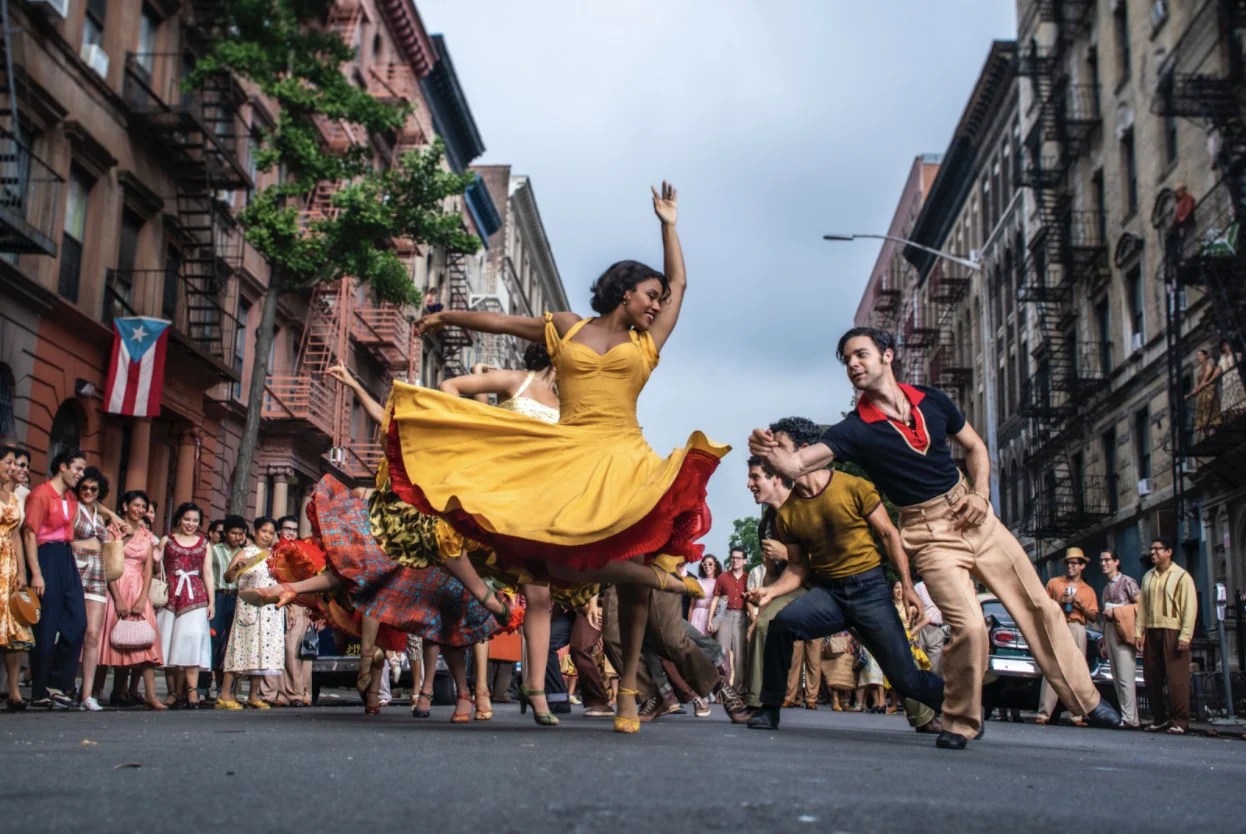
12. West Side Story, dir. Steven Spielberg. I was skeptical of this musical being remade, as the original film adaptation from 1961 is so iconic and well loved. But I must say, I actually prefer this version! The choreography, dancing, and cinematography are phenomenal. Filming dance sequences, especially with large ensembles, is a notorious challenge, and the scene of the school dance in the gym nails it. And rather than being confined to an apartment rooftop, as it was in ’61, the “America” number moves through the streets of Manhattan and is even more colorful and dynamic.

You’re probably already familiar with the storyline, which is inspired by Shakespeare’s Romeo and Juliet: two teenage lovers associated with rival New York street gangs, the Sharks (made up of Puerto Ricans) and the Jets (who are white), fall in love, with disastrous consequences. I’ve always thought the love story to be pretty shallow, and for all the narrative and character fixes/updates Tony Kushner makes to the source material in this screenplay, that doesn’t really change here. Tony (Ansel Elgort) and Maria (Rachel Zegler) are given a little more dimension, but I’m still not totally invested in their romance. And Maria’s quick forgiveness of Tony for what he does to her brother (no spoilers) is just baffling to me.

Still, I appreciate the added backstories given to several of the characters, and even to the turf wars. Spielberg makes it clear that the story is unfolding against the backdrop of the real-life slum-clearance projects in San Juan Hill (Lincoln Square), in which, beginning in 1959, the neighborhood’s majority Black and Hispanic tenants were evicted to make way for the building of Lincoln Center.

West Side Story (2021)
Anita (Ariana DeBose) leads the boisterous musical number “America” in Steven Spielberg’s West Side Story. Charismatic and layered, DeBose’s performance is my favorite in the film. (Her character is given more to do in this version.)

Spielberg also corrects an egregious flaw in the 1961 film, which was the casting of white actors in brownface to play Puerto Rican characters. (Even Rita Moreno, who was a Puerto Rican playing a Puerto Rican, was made to wear skin-darkening makeup as Anita in the original.) Spielberg took care to cast Latinx actors of various skin tones. He also has them speaking occasional Spanish in the film, which is not subtitled (he did not want to “other” the language). So there’s more ethnic and cultural authenticity, and the Puerto Rican characters are more rounded. However, I understand the criticism that the story itself, despite Spielberg’s modifications, still stereotypes Puerto Rican males as violent and ignorant, and Puerto Rican women as either virginal (like Maria) or fiery (like Anita).

For an alternative musical depiction of Puerto Ricans in New York City, set in the 2000s, I commend to you In the Heights, which also released last year. It didn’t crack my top 20, and I was not impressed by the female lead, but it’s a really enjoyable watch—and the concept, music, lyrics, and screenplay are actually by Puerto Ricans (Lin-Manuel Miranda and Quiara Alegría Hudes), not by white guys.

Streaming on Disney+ and HBO Max. (But if you can catch it on a big screen, do it!)

13. Together Together, dir. Nikole Beckwith. A type of aspiring parent that I’ve never seen onscreen before, and frankly have never even thought about, is the single man in middle age who, because he has no partner but really wants a child, uses a surrogate. This heartwarming pregnancy dramedy explores the odd relational dynamic between these two people—Matt (Ed Helms), who’s getting ready to be a father, and Anna (Patti Harrison), the young woman, a stranger at first, whom Matt hires to grow his child inside her.

Many Christians have strong opinions about how children should be brought into the world—that is, through the sexual union of a husband and wife. And while that is a beautiful and God-honoring process, not to mention the most practical, there are some for whom marriage never pans out but who still desire to experience the miracle of new life bred from one’s own genes, and the joys of parenthood. What might the bond between an expectant dad and his gestational surrogate look like? They share an incredibly intimate (but nonsexual) connection by virtue of the creative act they’re participating in together, but obviously it’s sticky, because one of the parties will have to cut her attachment to the child after the birth—or will she?

The movie subverts popular rom-com tropes by showing a deep platonic relationship between two nonrelated people of the opposite sex—and I really appreciate that. We’ve been programmed to want to see, and even to expect, these two people to become romantically involved, as that’s the happiest ending we can imagine. Beckwith gives us something different. Watching Matt and Anna’s friendship blossom throughout the film is so beautiful and gratifying, and the ending is perfect.

Streaming on Hulu.

14. The Mitchells vs. The Machines, dir. Michael Rianda and Jeff Rowe: In this animated family flick, the quirky and dysfunctional Mitchell family must band together to save the world from a robot apocalypse. It’s genuinely funny, and I appreciated the foregrounding of the father-daughter relationship, which starts out strained but heals and grows through shared crisis.

Streaming on Netflix.

15. Judas and the Black Messiah, dir. Shaka King. It’s Chicago, 1968. When Bill O’Neal (LaKeith Stanfield) is caught impersonating a federal officer to steal a car, the FBI agrees to drop all charges, plus give him a monthly stipend, if he will infiltrate the Illinois chapter of the Black Panther Party to gather intelligence on Chairman Fred Hampton (Daniel Kaluuya), whose message of Black liberation and community activism toward that goal have made him a perceived national threat.

This American biopic dramatizes Hampton’s rise to power and his assassination by police. A charismatic leader with strong organizational skills, Hampton was building an alliance among gangs and minority groups in Chicago—an antiracist, anticlass Rainbow Coalition. He taught political education classes, launched a project for community supervision of the police (to hold them accountable for brutality), helped set up a free medical clinic and a free breakfast program on the West Side, and more.  

After striking his deal with the FBI, O’Neal was able to gain the trust of Party members through deception. He became Hampton’s driver and, later, his security captain. The information he supplied to agents about Hampton’s apartment layout enabled the infamous police raid on December 4, 1969, in which Hampton was gunned down while sleeping next to his pregnant girlfriend (Dominique Fishback), who survived—and who served, alongside Fred Hampton Jr., as a consultant on the film.

Significant as he is, Fred Hampton is not a person I ever learned about in school, so this film was educative for me.

Streaming on HBO Max.

16. Hive, dir. Blerta Basholli. This Albanian-language drama from Kosovo is based on the real-life story of Fahrije Hoti (played by Yllka Gashi). The film opens seven years after Fahrije’s husband went missing in the Krusha massacre in March 1999, during the Kosovo War.

Fahrije is a beekeeper, but she’s struggling to provide for her two children and her disabled father-in-law with local honey sales alone. So she starts her own business making and selling ajvar (a condiment made from roasted red peppers), first at the grocery store in town and later for export to other European countries. For help in this venture she recruits many of the other widows in Krusha, of varying ages, who form a “hive” of support for one another. But because the culture is very patriarchal, the women meet with hostility from the older men in the village who believe it’s dishonorable for women to be entrepreneurs and who see their economic independence as a threat to traditional values.

Grief and empowerment are interwoven in this inspiring story of a woman who dares to imagine a future for herself and her family apart from her husband, whom she painfully acknowledges (though not out loud) may be dead.

It’s now been twenty-three years since the massacre, and people in Krusha are still holding out hope for husbands and sons to return, putting pressure on the government to redouble its search efforts. More than 240 men from the village have been confirmed dead, while sixty-four remain missing.

Streaming on Kanopy.

17. Licorice Pizza, dir. Paul Thomas Anderson. I don’t know what to say about this one, except that it’s wacky and entertaining. An ode to LA’s San Fernando Valley of the 1970s, where writer-director Paul Thomas Anderson grew up, it centers on the “goofily chaste romance” (Alissa Wilkinson’s words) between fifteen-year-old Gary Valentine (Cooper Hoffman) and twenty-five-year-old Alana Kane (Alana Haim). She’s flattered by the attention he gives her and charmed by his precocity and cheeky drive; he, besides simply crushing on her, relishes her cheerleading and practical support for his upstart business ventures, like selling waterbeds and opening a pinball arcade. Although the age difference between Gary and Alana is a bit uncomfortable, the tone is light and the stakes are low. Their chemistry is not an erotic one, but rather one that’s sparked and sustained by their having fun together on ridiculous adventures.

18. The Tragedy of Macbeth, dir. Joel Cohen. “A tale of murder, madness, ambition, and wrathful cunning,” adapted here with stunning visuals that capture the mood of the play just right. Add to that a stellar cast. Kathryn Hunter as the three witches (aka “the weird sisters”) is especially compelling—sent shivers down my spine!

Streaming on Apple TV+.

19. Our Friend, dir. Gabriela Cowperthwaite. A celebration of faithful, embodied friendship, this drama is adapted from the 2015 Esquire article “The Friend: Love Is Not a Big Enough Word” that Matt Teague wrote after his wife Nicole’s death from ovarian cancer at age thirty-six. When Nicole (Dakota Johnson) is diagnosed and starts getting sick, her and Matt’s (Casey Affleck) friend Dane (Jason Segal) leaves his management job and girlfriend in New Orleans and moves into the Teagues’ house in Fairhope, Alabama, to provide care and support for as long as he’s needed—which ends up being fourteen months! He gets their girls ready for school in the mornings, cooks meals, does the laundry, provides mental and emotional support, and helps Nicole accomplish her bucket list. The film is sweet and sad and joyful all at once.

Our Friend has been criticized for not portraying several of the physical horrors of cancer that Matt describes in the article. But I’d say that even though it’s not particularly graphic, the film still presents cancer as ugly and disruptive and painful and exhausting; rightfully, it does not romanticize terminal illness or death. What is a shame, I’ll mention, is that the central role Christian faith plays in the Teagues’ lives, as Matt has been vocal about in interviews and Nicole shared a lot about on her cancer blog and on YouTube, is entirely absent from the film.

Segal is excellent as Dane. And it’s beautiful to see not just Dane’s sacrificial love but also the Teagues’ dedication to and inclusion of Dane throughout their married life, as we see in the many flashbacks that develop their friendship story. Married couples, especially ones with kids, tend to maintain relationships mostly with other married couples, not with singles, which should not be so—so I love that the film highlights this trio of friends in a meaningful way.

Streaming on Amazon Prime.

20. A Hero, dir. Asghar Farhadi. Rahim (Amir Jadidi) is on leave from debtors’ prison when he finds a bag of gold. He seeks to return it to its owner and becomes a local celebrity—until some people start to question his integrity.

Streaming on Amazon Prime.

HONORABLE MENTIONS: The Pink Cloud; One Night in Miami; Luca; Spencer; Lorelei; The Eyes of Tammy Faye.