Pentecost roundup: Invocations; Holy Spirit as “lodes-mon”; organ improv; tongues of fire in a flower patch

SONGS:

Here are three sung invocations of the Holy Spirit, seeking his power, liberation, comfort, light, and renewal.

>> “Holy Spirit, Come with Power”: This hymn was written by Anne Neufeld Rupp in 1970, who set it to a Sacred Harp tune from 1844 attributed to B. F. White. It’s performed here by the Bel Canto Singers from Hesston College in Kansas, featuring Gretchen Priest-May on fiddle and Tim May on acoustic guitar.

I was introduced to this hymn through the Voices Together Mennonite hymnal, where it appears in both English and Spanish as no. 57.

>> “Mweya Mutsvene” (Holy Spirit, Take Your Place) by Joshua Mtima and The Unveiled: The Unveiled is a collective of Christian musicians from Harare, Zimbabwe, founded by Joshua Mtima in 2020. Here they sing one of their songs in Shona. An English translation is provided onscreen. [HT: Global Christian Worship]

>> “Ven Espíritu Divino (Secuencia de Pentecostés)” (Come, Spirit Divine) by Pablo Coloma, performed by Chiara Bellucci: The Spanish lyrics of this contemporary Christian song from the Latin American Catholic tradition are in the YouTube video description. They ask the Holy Spirit, “sweet guest of our souls,” to come bringing healing, regeneration, growth, joy, and charisms.

+++

SUBSTACK POST: “Veni Creator Spiritus: A Lush Middle English Hymn” by Grace Hamman, Medievalish: Dr. Grace Hamman shares Friar William Herebert’s (ca. 1270–ca. 1333) Middle English translation of the classic Latin Pentecost hymn attributed to Rabanus Maurus (ca. 780–856), “Veni Creator Spiritus” [previously]. Herebert uses words like vor-speker (for-speaker; i.e., intercessor), lodes-mon (lodesman; i.e., journeyman or navigator), and shuppere (shaper) as titles for the Holy Spirit.

+++

ORGAN WORK: “Improvisation on Veni Creator Spiritus” by Alfred V. Fedak: “Your congregation will hear the rushing of the Holy Spirit in this improvisatory prelude (taken from Fedak’s and Carl P. Daw’s oratorio The Glories of God’s Grace),” writes Selah Publishing. “Fedak effectively uses sweeping whole-tone scale passages and arpeggios to indicate the Spirit’s presence, while the pedal plays phrases of the hymn tune,” a medieval plainchant. The publisher has posted the following performance of the piece (audio only), by the composer himself, along with a selection of Pentecost art from the thirteenth to eighteenth centuries. [HT: Global Christian Worship]

There are many other works on organ (fantasias, partitas, fugues) based on the “Veni Creator Spiritus” tune; view a select list on Wikipedia.

+++

POEM: “Book of Hours” by Kimberly Johnson: “A pentecost of bloom: all the furred tongues / awag in the iris patch, windrush through the fireflower.” So opens the poem “Book of Hours” by Kimberly Johnson [previously], from her collection Uncommon Prayer (Persea, 2014). A book of hours is a genre of medieval prayer-book used by laypeople, which arranges prayers, scripture, and other devotional texts for reading at prescribed times of the day. Johnson’s “Book of Hours” draws on the fields of codicology (the study of manuscripts as physical objects) and botany to consider how God’s Spirit moves through and enlivens the material world, be it the irises, fire lilies, alyssum, and paperwhite narcissus in her garden, or the ink and natural pigments on calfskin—green verdigris, red cochineal, yellow curcumin—in the rare manuscripts library where she examines a book of hours whose embellished Latin text she can’t quite make out but whose beauty enraptures her nonetheless. These are but two untranslatable experiences of sensual, embodied communion with God that Johnson narrates in the collection, the paint flakes on her lips and the pollen on her wrist a chrism and a prayer.
Roundup: Why go to church, “Good Trouble,” “Sacred Songs Suite,” and more

SPOTIFY PLAYLIST: February 2025 (Art & Theology): I put these monthly playlists on pause for December and January, since I’ve already published long, dedicated playlists for the seasons of Advent, Christmas, and Epiphany, but now I’m picking back up my usual smorgasbord routine. Enjoy two hours of songs handpicked by me!

+++

PODCAST EPISODE: “Nadia Bolz-Weber: From Fundamentalism to Stand-Up Comedy to Ordained Pastor,” No Small Endeavor, January 27, 2025: “Christian Fundamentalism is often looked down upon for its dualistic, black-and-white outlook, which is often used for policing behavior. But, Nadia Bolz-Weber explains, these are the same extreme tendencies that she found in secular activism after she left the church. Later in life, after working as a comedian and entering recovery, Nadia began to untangle the mindset that had taken her from one extreme to the other. Her long journey has since led her to becoming a Lutheran pastor and a three-time bestselling author. In this episode, she tells her story.”

In conversation with host Lee C. Camp, Bolz-Weber [previously] discusses some of the gifts and wounds from her Church of Christ upbringing; how comedy prepared her for preaching; the influence of AA’s Twelve-Step Program on her life, especially her necessary reckoning with her powerlessness (“it doesn’t mean you don’t have access to power; it’s just that it doesn’t all come from you”); moving through the grief of losing her nephew; and her Red States Revival tour, which since the date of recording has been actualized!

+++

SUBSTACK POST: “Why go to church, anyway” by Amy Peterson, Making All Things New, November 20, 2024: Amy Peterson is an Episcopal priest from Asheville, North Carolina, and the author of one of my favorite books from 2020, Where Goodness Still Grows: Reclaiming Virtue in an Age of Hypocrisy. In this Substack post from last November, she shares some responses from when she asked on Instagram, “Why did you stop going to church?” and, to a different set of respondents, “Why do you go to church?” Then she answers the second question for herself, giving fourteen reasons why she would still go to church even if it wasn’t her job. I (a regular churchgoer who has been hurt in the past by the church, though not to the degree that many others have been) find these reasons so compelling and encouraging.

+++

SONG: “Good Trouble by Thomas Keesecker: This choral work was inspired by the catchphrase of the civil rights icon John Lewis (1940–2020), who repeatedly called on Americans to “get in good trouble”—to agitate for liberty and justice for all. For example, on June 27, 2018, he tweeted, “Do not get lost in a sea of despair. Be hopeful, be optimistic. Our struggle is not the struggle of a day, a week, a month, or a year, it is the struggle of a lifetime. Never, ever be afraid to make some noise and get in good trouble, necessary trouble.” Similarly, on December 4, 2019, at the opening of the Library of Congress exhibition Rosa Parks: In Her Own Words, Lewis said, “Rosa Parks inspired us to get in trouble. And I’ve been getting in trouble ever since. She inspired us to find a way, to get in the way, to get in what I call good trouble, necessary trouble.”

Lewis was a crucial leader of the civil rights movement, chairing the Student Nonviolent Coordinating Committee (SNCC) from 1963 to 1966, participating in sit-ins and Freedom Rides, co-organizing the 1963 March on Washington, and, on March 7, 1965, physically leading, with Hosea Williams, some six hundred peaceful marchers across the Edmund Pettus Bridge from Selma to Montgomery to protest the disenfranchisement of African Americans, an action that erupted into what’s known as Selma’s Bloody Sunday. When the marchers refused to disperse, Alabama state troopers attacked them with billy clubs and teargas, fracturing Lewis’s skull. He survived and continued his political activism and advocacy for another half century, serving in the US House of Representatives for Georgia’s Fifth Congressional District from 1987 until his death in 2020.

To learn more about John Lewis and his remarkable Christian witness, see the documentary John Lewis: Good Trouble, which is streaming for free on Kanopy (ask your local library if they subscribe). Here’s a trailer:

+++

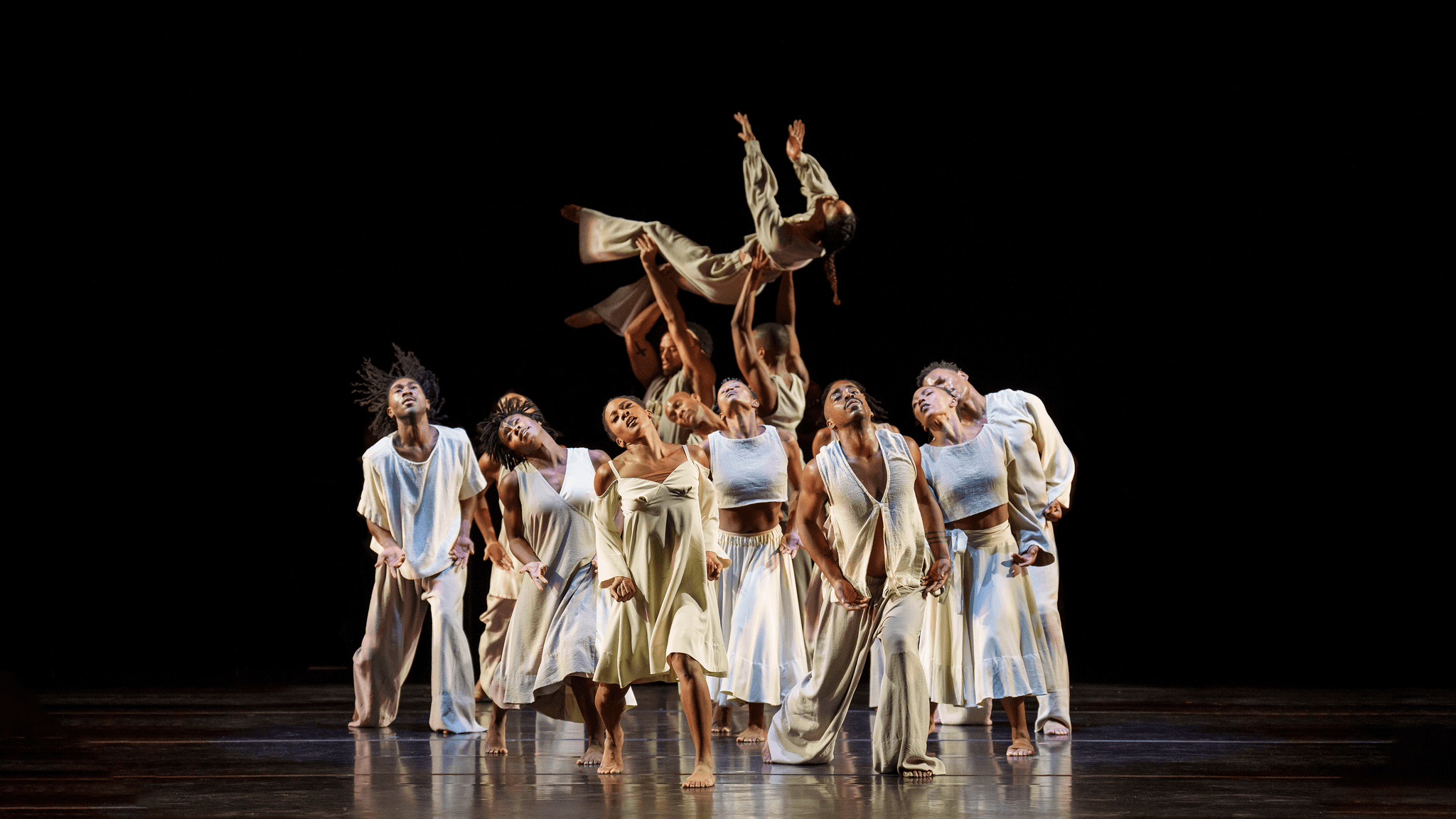
NEW ALBUM: Sacred Songs Suite by Du’Bois A’Keen: Last month I had the privilege of seeing Sacred Songs, a new dance work choreographed by Matthew Rushing and scored by Du’Bois A’Keen, performed by Alvin Ailey American Dance Theater. It was phenomenal! Both a visual and aural experience. The music was performed live with four vocalists (A’Keen sang lead) and a four-piece band, and throughout the evening, the verbal responses from the audience—“Mmmm” and “Amen” and “Yes, Lord!”—made me feel much more like I was in church than in a performing arts center.

Sacred Songs

Featuring original arrangements of nine spirituals, Sacred Songs “brings together and reimagines the sounds of jazz, West African drums, gospel, hip-hop, calypso, and more to call on the past, engage our present, and invite the listener into a magical, hopeful, and musical future.” A’Keen released the music, plus a few bonus tracks, on his album Sacred Songs Suite on January 18. “By the Waters” is one of the most memorable sections for me.

+++

VIDEO PROFILE: “NEA National Heritage Tribute Video: Marion Coleman”: I learned about the quilter and NEA National Heritage Fellow Marion Coleman last year when perusing the book Visioning Human Rights in the New Millennium: Quilting the World’s Conscience at the Subversive, Skilled, Sublime: Fiber Art by Women exhibition at the Renwick Gallery in Washington, DC. (The book is not a catalog of the exhibition but was complementary in nature and thus was left on one of the gallery tables.) Her work is amazing! Here’s a video that provides a nice snapshot:

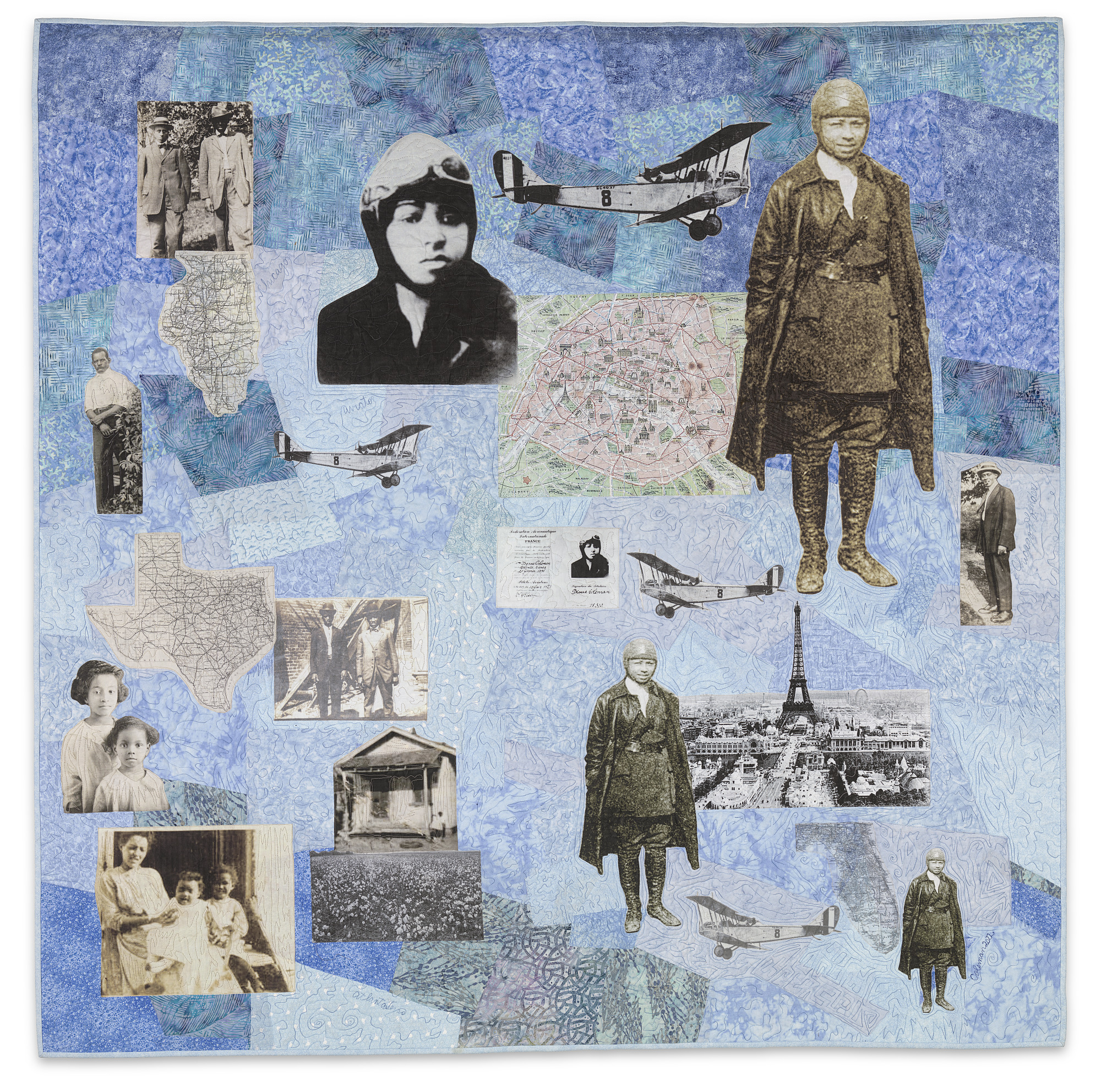
Coleman, Marion_Her Heart Was in the Clouds
Marion Coleman (American, ?–2019), Her Heart Was in the Clouds, 2012. Cotton fabric, cotton thread, and cotton batt, 60 1/2 × 60 in. (153.7 × 152.4 cm). Smithsonian American Art Museum, Washington, DC.

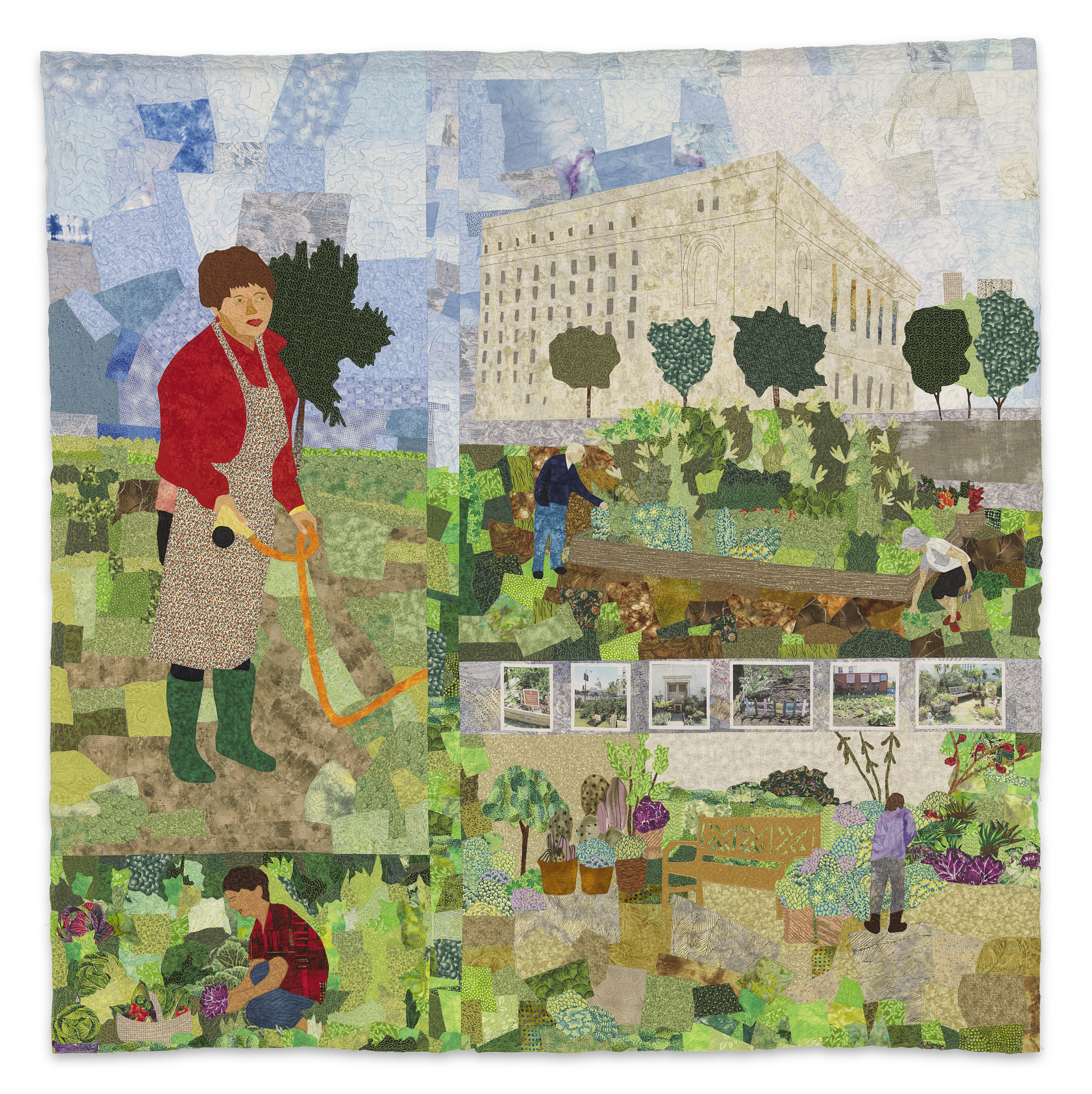
Coleman, Marion_Tender Gardens
Marion Coleman (American, ?–2019), Tender Gardens, 2014. Cotton fabric and batt, 72 1/2 × 72 1/8 in. (184.2 × 183.2 cm). Smithsonian American Art Museum, Washington, DC.

Easter, Day 7: Creation Blooms Anew

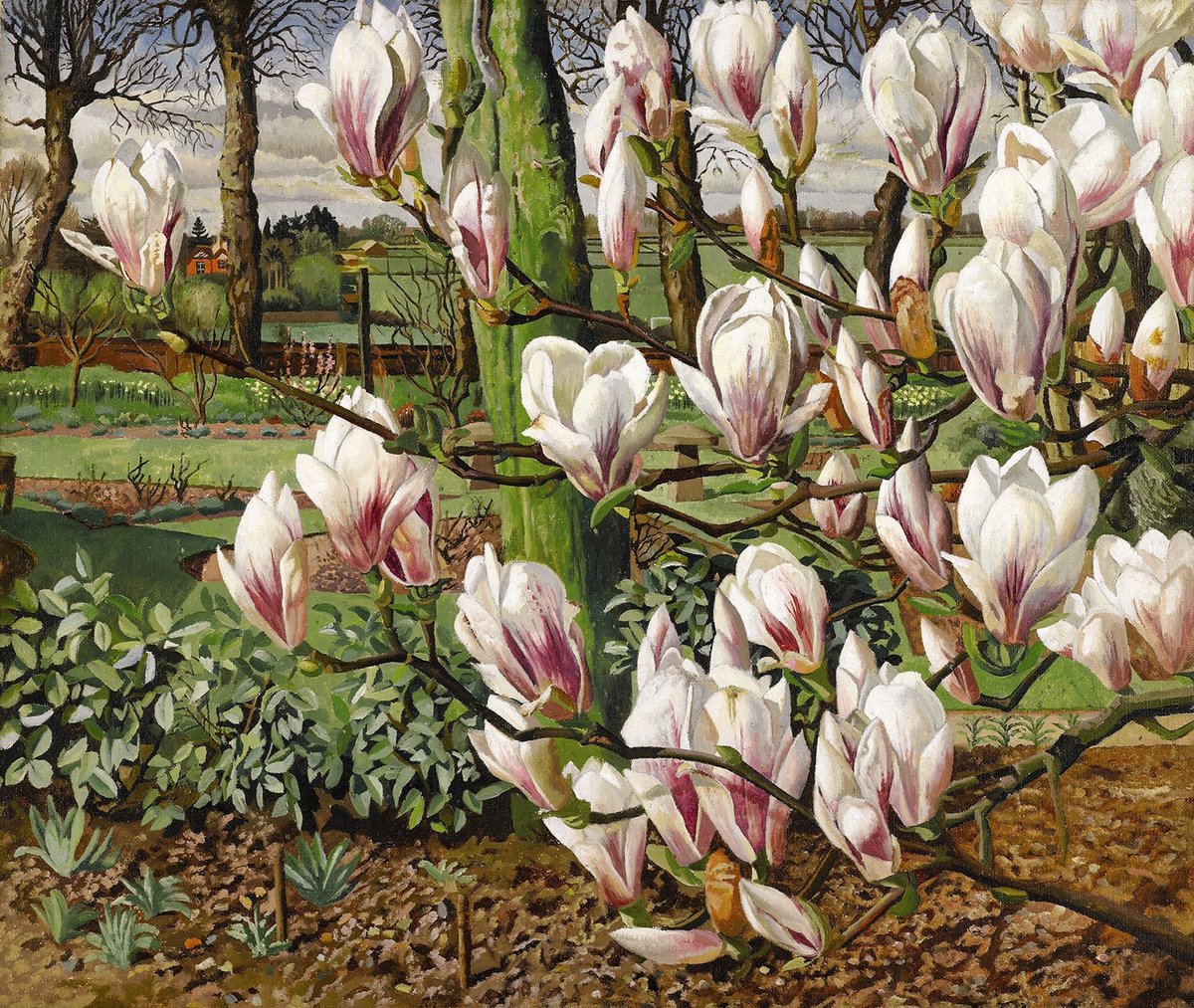
LOOK: Magnolias by Stanley Spencer

Spencer, Stanley_Magnolias
Stanley Spencer (British, 1891–1959), Magnolias, 1938. Oil on canvas, 22 × 26 in. (56 × 66 cm). Private collection.

LISTEN: “Creation Blooms Anew” by Nick Chambers, 2020

Again your Spirit sweeps,
a wind over the deep;
a new creation now arrives
to rouse us from our sleep.

The breath of heaven brings
the long-awaited spring
into the fields and seas and skies
and every barren thing.

Refrain:
Creation blooms anew
in fresh and joyful hue.
In Christ’s arising all things rise
to draw their breath from you.

Awaken by the sound
of forging swords into plows.
Come fill the Garden with your light,
and we will till the ground.

The earth is being cleared
for heaven to come near.
From every depth an eager sigh
is all that we can hear. [Refrain]

Nick Chambers [previously] is the worship pastor at Church of the Incarnation in Atlanta and a singer-songwriter whose debut album, Great Cloud, released last year. “Creation Blooms Anew” is not part of that LP, but he shared it on YouTube in 2020. It was inspired by a hymn of Adam of St. Victor, a major Latin-language poet from twelfth-century France:

Earth blooms afresh in joyous dyes;
In Christ’s arising all things rise;
A solemn joy o’er nature lies;
Alleluia!

Now peace the sea, the sky doth fill;
Heav’n’s breath wakes fair each vale and hill;
Spring pours through barren hearts and chill;
Alleluia!

Life wins from death the glorious prey;
The cherub’s sword is turned away,
And Eden’s paths are free today;
Alleluia!

Trans. A. M. E., 1884

Memories of his family’s first Easter in Atlanta in 2017 also influenced the song. “More than anything I remember the magnolia flowers,” Chambers said, “bright white and big as our baby’s head. The branches bent with the weight of them, swinging like bells welcoming us into a new home, a new season of life.”

Chambers reflects further on the image of flowering:

Norman Wirzba, in one of his many reflections on gardening, writes, “It is significant that the material context for creation and for redemption should be a garden, for it is precisely through gardening that we most experience ourselves as created beings, as beings tied to a magnificent creation and to God. . . . [The writer of Genesis 2] is clear that we become authentic and truly fulfill our vocation as we learn to care for the garden which is creation itself.” He continues, “Gardens have long been a place of spiritual nourishment, because it is here that we can sense the vivifying and gracious power of the creator at work in the creation. Without much help from us, and sometimes in spite of our worst efforts, we can plainly see that we are in the presence of a life- and death-wielding power that overcomes and envelops us all” (The Paradise of God, 117).

In the beginning, God creates humanity to till the ground in a garden. Christ suffers anguish and grief in a garden, then to be resurrected in a garden and even mistaken for its caretaker. The story comes to its endless ending in a garden—steady streams in the shade of trees thick with healing leaves. We live from this past into this future, ourselves like flowers nourished by soil and bending toward the sun. Here and now, Easter invites us into this vision, into the wild surprises of spring to be both gardeners and the garden itself.