
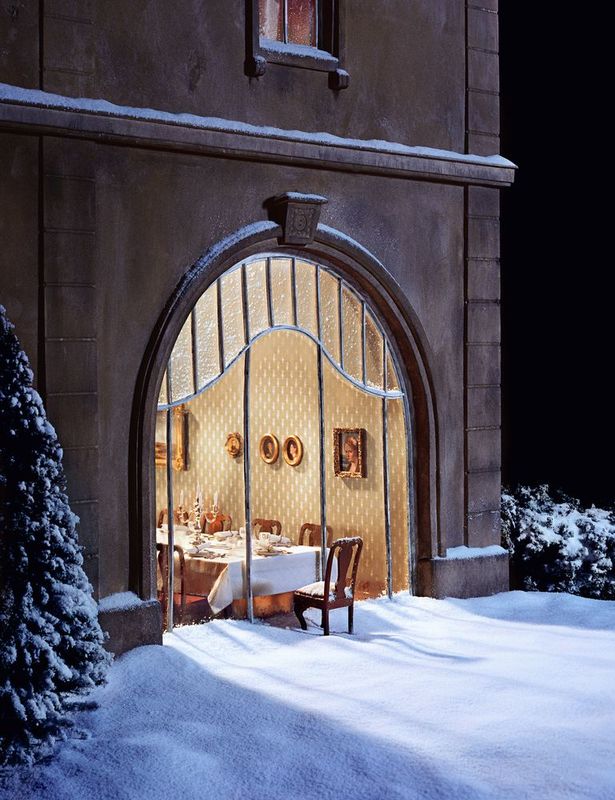
LOOK: Closed Society by Frank Kunert
LISTEN: “The Ditchling Carol” (Roud 3216) | Words by William Robert Spencer, 1811 | Music by Peter Parsons, before 1901 | Performed by Waterson:Carthy on Broken Ground (1999; reissued 2013)
Be merry all, be merry all
With holly dress the festive hall
Prepare the song, the feast of all
To welcome Merry ChristmasAnd all remember, gentles gay
For you who bask in fortune’s ray
The year is all a holiday
The poor have only ChristmasWhen you with velvets mantled o’er
Defy December’s tempest’s roar
Oh spare one garment from your store
To clothe the poor at ChristmasAnd all remember, gentles gay
For you who bask in fortune’s ray
The year is all a holiday
The poor have only ChristmasWhen you the costly banquet deal
To guests who never famine feel
Oh spare one morsel from your meal
To feed the poor at ChristmasAnd all remember, gentles gay
For you who bask in fortune’s ray
The year is all a holiday
The poor have only ChristmasFrom blazing logs of fuel awhile
Your homes are within summer’s smile
Oh spare one log from off the pile
To warm the poor at ChristmasAnd all remember, gentles gay
For you who bask in fortune’s ray
The year is all a holiday
The poor have only ChristmasSo shall each note of mirth appear
More sweet to heaven than praise or prayer
And angels in their carols there
Shall bless the poor at ChristmasAnd all remember, gentles gay
For you who bask in fortune’s ray
The year is all a holiday
The poor have only Christmas
This carol from Ditchling in East Sussex has a very Dickensian feel to it. More sobering than the usual Christmas fare, it contrasts the lavish holiday feasts of the well-off with the poverty that exists outside their doors. Think Lazarus and the rich man. The poor rely on the feelings of goodwill and generosity that Christmas engenders, but as this song acknowledges, the needs persist year-round. Those whom God has blessed with good fortune would do well to share it—not just with family and friends of like socioeconomic status but with neighbors of all classes, and not just during the “season of giving” but on a continuing basis.
Peter Parsons (1825–1901), a Ditchling shoemaker and leader of the village glee club, found the poem above on a broadside ballad sheet from the early nineteenth century and was moved to write a tune for it. I encountered the carol through a nineties recording by Norma Waterson, her husband Martin Carthy, and their daughter Eliza Carthy, who have been at the forefront of the English folk music scene for decades.
I would go even further than the lyrics do and say, don’t just give the poor a morsel or a log; invite them in! What might radical hospitality look like for you this Christmas? How might your merriment expand to embrace those who are typically excluded?

 Art & Theology