Christmas, Day 3: Stupendous Stranger

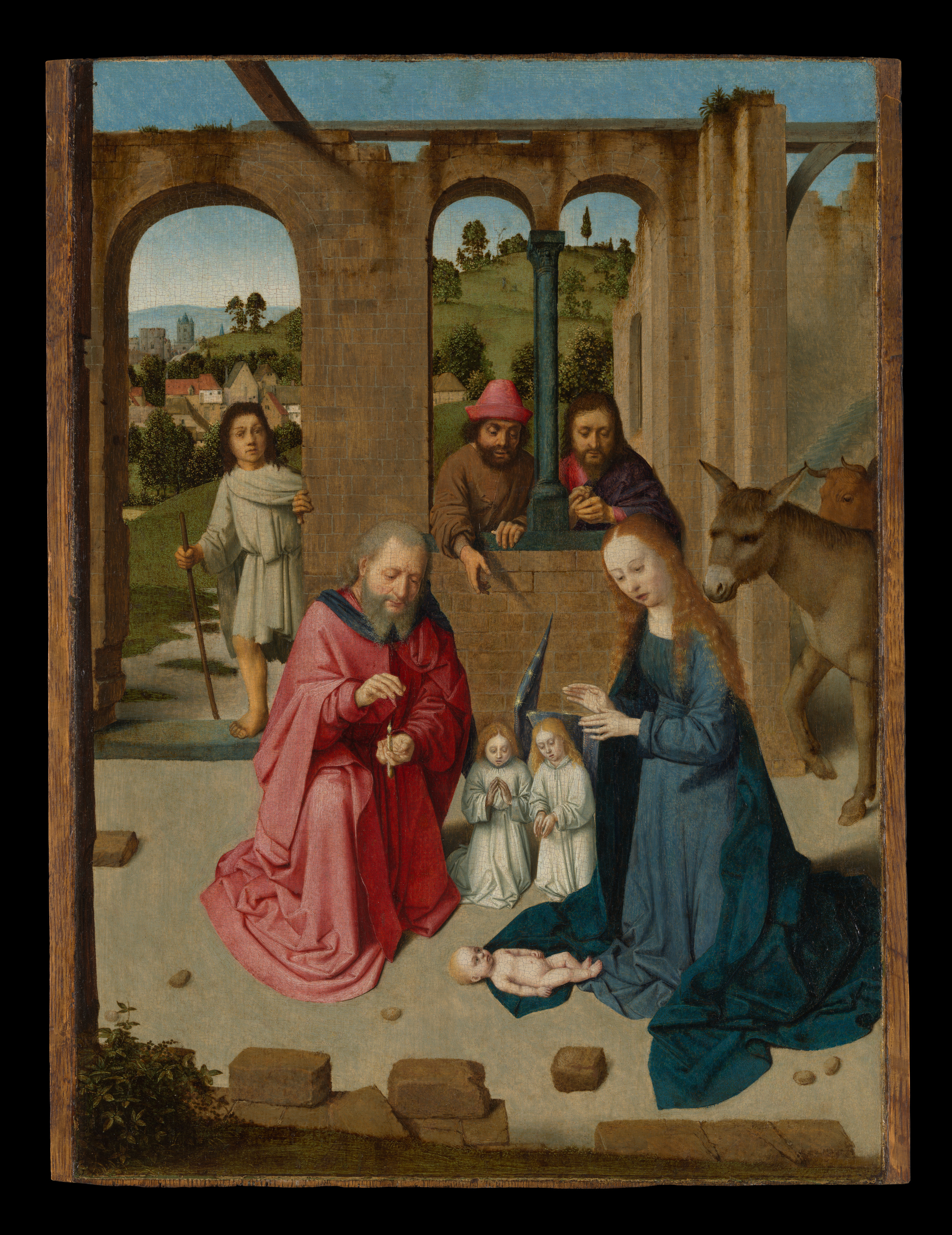
LOOK: The Nativity by Gerard David
David, Gerard_Nativity
Gerard David (Netherlandish, ca. 1455–1523), The Nativity, early 1480s. Oil on wood, 18 3/4 × 13 1/2 in. (47.6 × 34.3 cm). Metropolitan Museum of Art, New York.

LISTEN: “Where Is This Stupendous Stranger” | Words by Christopher Smart, 1765 | Music by Linda L. Hanson, 2012 | Performed by Fire (women’s a cappella chamber ensemble), 2020

Where is this stupendous Stranger?
Prophets, shepherds, kings, advise!
Lead me to my Master’s manger,
Show me where my Savior lies.

O most mighty, O most holy,
Far beyond the seraph’s thought,
Are you then so mean and lowly
As unheeded prophets taught?

O the magnitude of meekness,
Worth from worth immortal sprung!
O the strength of infant weakness,
If eternal is so young!

God all-bounteous, all-creative,
Whom no ills from good dissuade,
You have come to be a native
Of the very world you made.

The four verses of this Christmas hymn are excerpted from a nine-stanza poem by Christopher Smart [previously] published in Hymns and Spiritual Songs for the Fasts and Festivals of the Church of England (London, 1765). The poem was recovered in the twentieth century and since then has received multiple new musical settings—by composers such as I-to Loh, Charles Heaton, Conrad Susa, Joan A. Fyock, Leo Nestor, Alec Wyton, Thomas Gibbs Jr., Scott M. Hyslop, and Jacques Cohen—as well as pairings with older tunes.

My favorite setting of the text is by Linda L. Hanson, the founding director of Fire, a women’s a cappella chamber ensemble in Charlottesville, Virginia. The group performs the hymn in the video above, which Fire member Mary Welby von Thelen spliced together from thirteen solitary recordings during the COVID-19 pandemic. Hanson is in the top row, the third from the left.

The alliterative opening line of the hymn asks where the “stupendous Stranger” can be found—the divine one sent from heaven. Stupendous isn’t an adjective we use often. It means “causing astonishment or wonder: awesome, marvelous.” The poetic speaker begs the prophets, shepherds, and magi to divulge the location of the Christ child so that he can go and worship him.

The next two stanzas marvel at the paradoxes of the Incarnation—how Christ is “mighty” and “holy,” beyond the comprehension of even the angels, and yet “mean” (humble) and “lowly,” lying here in the dirt before us, visible, tangible, vulnerable, no longer far above us but in our very midst. What “magnitude of meekness,” what “strength of infant weakness.” The eternal one is born in time.

The omnibenevolent Creator has deigned to become part of his creation. No potential ill that he will suffer as a result—and he will suffer many and grievous ills, culminating in death by crucifixion—can deter him from making his beloved earth his home.

Hanson has generously allowed me to share the sheet music of “Where Is This Stupendous Stranger,” and says the hymn can be freely used by local church congregations. Anything outside that context will require her permission.
Roundup: Global passion art, free song downloads, “Refiguring the Biblical,” boxwood minis, reassembled altarpiece

“Journey to the Cross: Artists Visualize Christ’s Passion” (+ Part 2): As a devotional support for Passion Week and to show the breadth of Christian art across cultures, I’ve curated an online gallery of thirteen art images for the International Mission Board. Spanning the Last Supper through the Resurrection, the images come from the Democratic Republic of Congo, Japan, Bulgaria, the Philippines, China, Croatia, India, South Africa, Australia, Ecuador, Ukraine, Malaysia, and Slovenia.

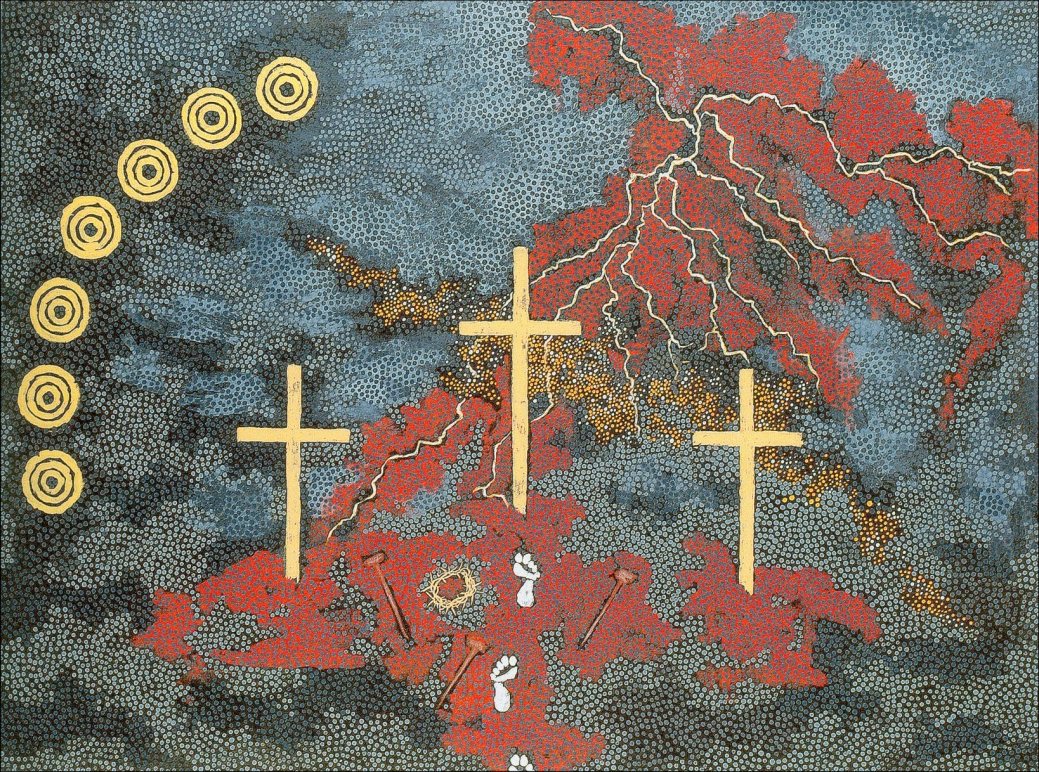
Good Friday by Clifford Possum Tjapaltjarri
Clifford Possum Tjapaltjarri (Anmatyerre, 1932–2002), Good Friday, 1994. Acrylic on canvas, 116 × 154 cm. National Gallery of Australia, Parkes, ACT, Australia.

+++

FREE SONG DOWNLOADS:

“Into the Woods My Master Went”: Last summer singer-songwriter Seth Woods (The Whiskey Priest) discovered in an old Baptist hymnal an unusual nineteenth-century hymn text by Sidney C. Lanier, about Christ in Gethsemane—unusual not just for its content but for its rhyme and meter. In the first verse, Jesus enters the garden and receives the friendship of nature—the olive leaves caress him for comfort, and the thorns retract so as not to hurt him. In the second verse, Jesus departs from the garden, assured in his mission, and is forthwith arrested, taken from trees (olive grove) to tree (cross). Woods and Richard Kentopp (The Gentle Wolves) each took a stab at setting the text to music, and they invited four other friends—Jana Horn, Bruce Benedict, Alex Dupree (Idyl), and Chris Simpson (Mountain Time)—to do the same. These six retunings are available for free download via Bandcamp. The diverse results demonstrate how the same text can inspire different creative approaches.


“Wheat and Tares” and “Draw Me to You”: The Windtalkers is a Florida-based husband and wife duo (Benny and Ashley Permuy) backed by a band of musician friends who seek to create songs of life and truth unto the Lord. Through NoiseTrade they’re offering two of the seven tracks from their upcoming album All Creation Groans (available May 30): the blues-inflected “Wheat and Tares,” and the cello-backed “Draw Me to You.”

+++

KICKSTARTER PROJECT: “Refiguring the Biblical” juried exhibition (includes cash prizes): Others Imagining Initiative hopes to organize a juried art exhibition featuring racially diverse depictions of biblical characters, awarding prize money to select artists. The purpose is to help promote a Christian visual culture that does not elevate white Jesus but rather is inclusive of minorities. Submissions would be limited to current and recently graduated art students (BA/BFA within the last two years), and the exhibition would open in January 2018 at Biola University, hopefully traveling to other US universities as well. The viability of this project is dependent on the raising of funds through Kickstarter.

+++

EXHIBITIONS:

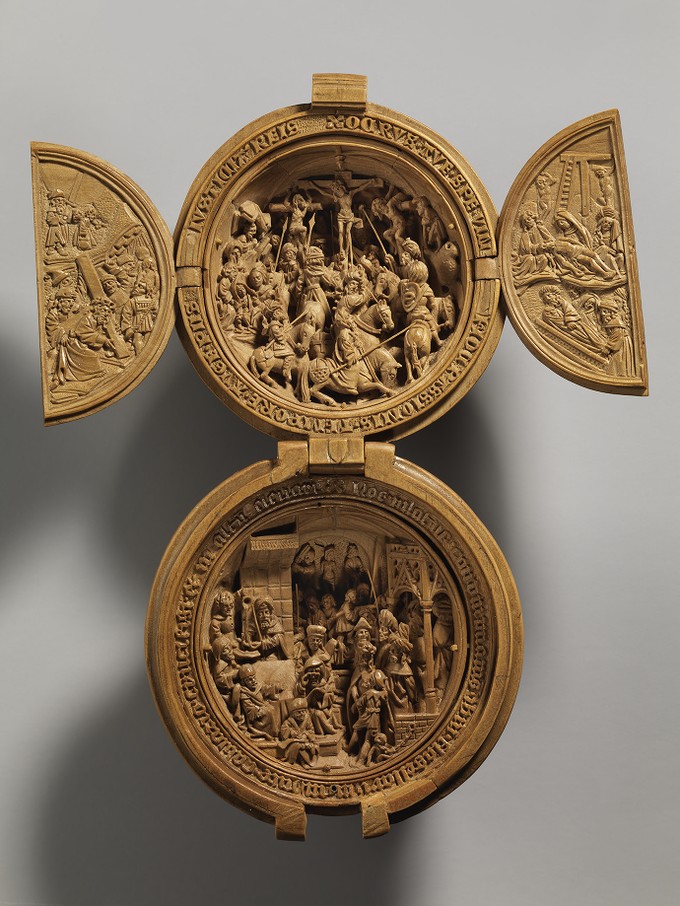
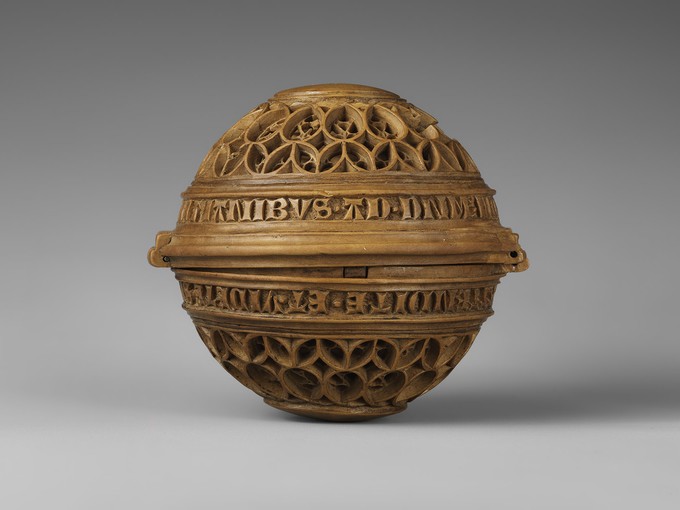
“Small Wonders: Gothic Boxwood Miniatures” (The Met Cloisters): On display through May 20. “Small in scale, yet teeming with detail, miniature boxwood carvings have been a source of wonder since their creation in the Netherlands in the 16th century. On these intricately carved objects—some measuring a mere two inches (five centimeters) in diameter—the miracles and drama of the Bible unfold on a tiny stage. Many of the works can be opened and closed: masterfully crafted hinges and clasps still function today. . . . Offering new insight into the methods of production and cultural significance of these awe-inspiring works of art, this exhibition [organized in partnership with the Art Gallery of Ontario and the Rijksmuseum] highlights more than four years of research that has used cutting-edge technology to understand these elegantly precise miniature rosaries, prayer beads and altarpieces.” The AGO’s Boxwood Project is a fantastic resource—an online catalogue raisonné, with photos and essays.

Boxwood prayer bead
Boxwood prayer bead (closed), Netherlands, ca. 1500–25, from the Metropolitan Museum of Art.

Boxwood prayer bead
Boxwood prayer bead (open), Netherlands, ca. 1500–25, from the Metropolitan Museum of Art.

“Gerard David: An Early Netherlandish Altarpiece Reassembled” (The Getty): The long-separated components of a fifteenth-century triptych by Netherlandish painter Gerard David have been reassembled following eighteen months of technical study and conservation treatment of the wings at the Getty. On display from March 21 to June 18, Pilate’s Dispute with the High Priest and The Holy Women and Saint John (from the Koninklijk Museum in Antwerp) flank Christ Nailed to the Cross (from the National Gallery in London), a dynamic scene rendered in exquisite detail. For more on the artist, see Gerard David: Purity of Vision in an Age of Transition by Maryan Ainsworth, available for free e-viewing through the Getty Research Portal.

Christ Nailed to the Cross by Gerard David
Installation view at the Getty: Gerard David (Netherlandish, ca. 1460–1523), Christ Nailed to the Cross triptych, 1480–85. Oil on panels.