Roundup: Fractured series, the Darkling Psalter, “Parce mihi Domine” with sax, and more

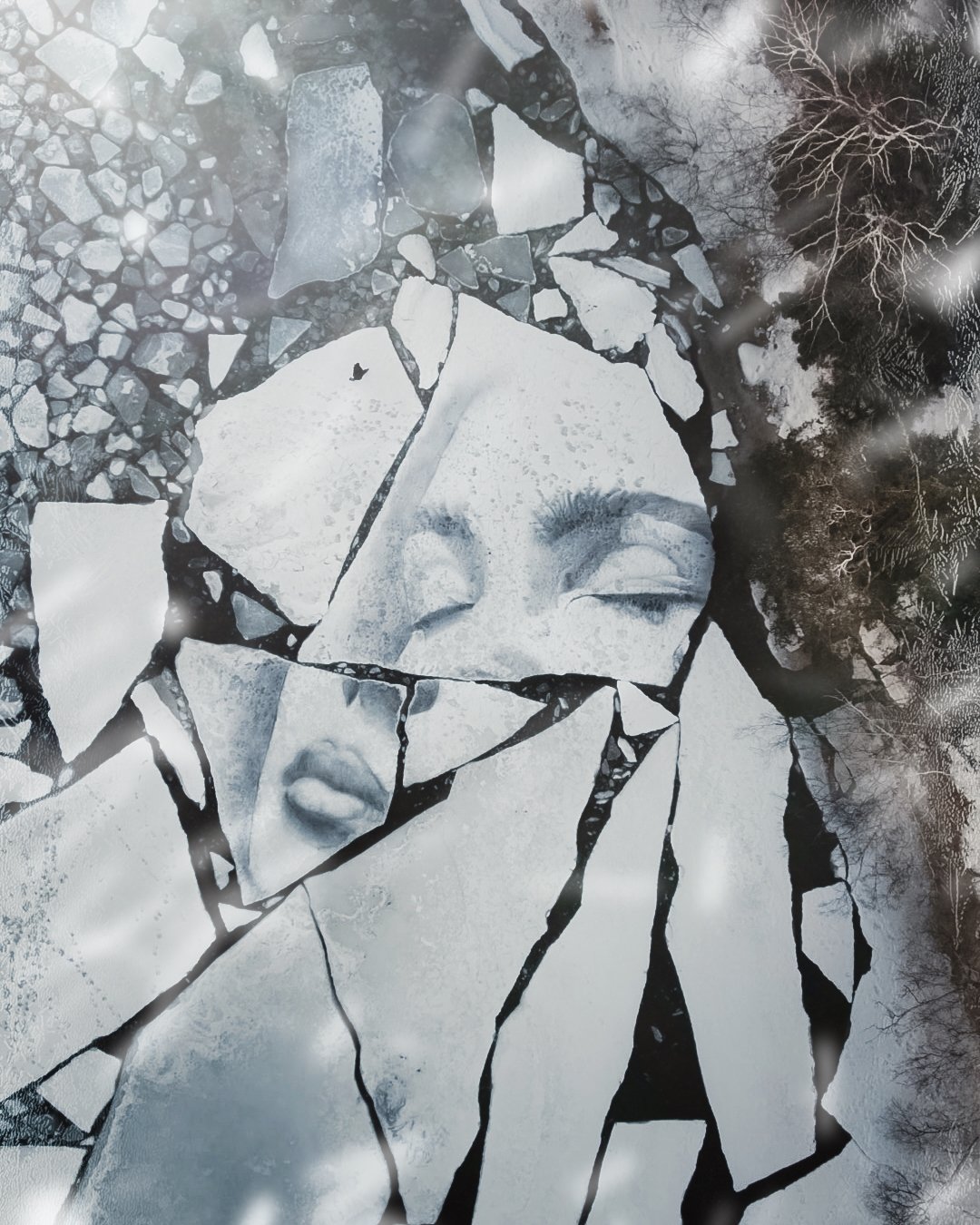
ART PROJECT: Fractured by David Popa:Fractured is a project located on various ice floes in southern Finland. By use of only earth, charcoal and the source water, a series of portraits were created on fractured ice floes that remained for only a brief time. The pieces were documented via aerial drone video, photography and photogrammetry and hold a tactile form as limited-edition prints as well as in digital form through 1/1 NFTs. The project evolved as a response to the ongoing conflict in Ukraine, which has only further highlighted the fractured state of the world in which we live. During the project, the ice fractured completely unexpectedly at unpredictable times, leaving the artist at odds as to whether continuing the work was even worthwhile. From the ground, one would never be able to decipher any silver linings within the chaos; however, from above, the fragments hold a harmony and beauty that is imperceptible from any other perspective. The work offers a means to point the viewer not to despair and chaos, but rather questions where we must look to mend the broken fragments of our lived reality and perhaps how the fragments can be used to create an entirely new mosaic from the scattered vestiges.”

David Popa (American, 1997–), from the Fractured series, 2023. Iron oxide black earth pigment and charcoal on floating ice.

Explore more of the artist’s work at www.davidpopaart.com. For a printed interview with Popa (featuring many of his amazing photos of his amazing land art), see www.yatzer.com/david-popa.

+++

POEMS: Seven Reimagined Psalms from the Darkling Psalter by Andy Patton: The Darkling Psalter is a project by Andy Patton (MA, Trinity Evangelical Divinity School) to write new creative renditions of the Bible’s 150 psalms. The Rabbit Room recently featured seven of these: Psalms 5, 10, 12, 14, 25, 27, 30.

+++

PODCAST INTERVIEW: “Van Gogh Has a Broken Heart, with Russ Ramsey,” Makers & Mystics: I appreciated this recent conversation in which pastor, writer, and arts enthusiast Russ Ramsey discusses his latest book, exploring the struggles and sorrows of a handful of historical artists and how they are reflected in their art.

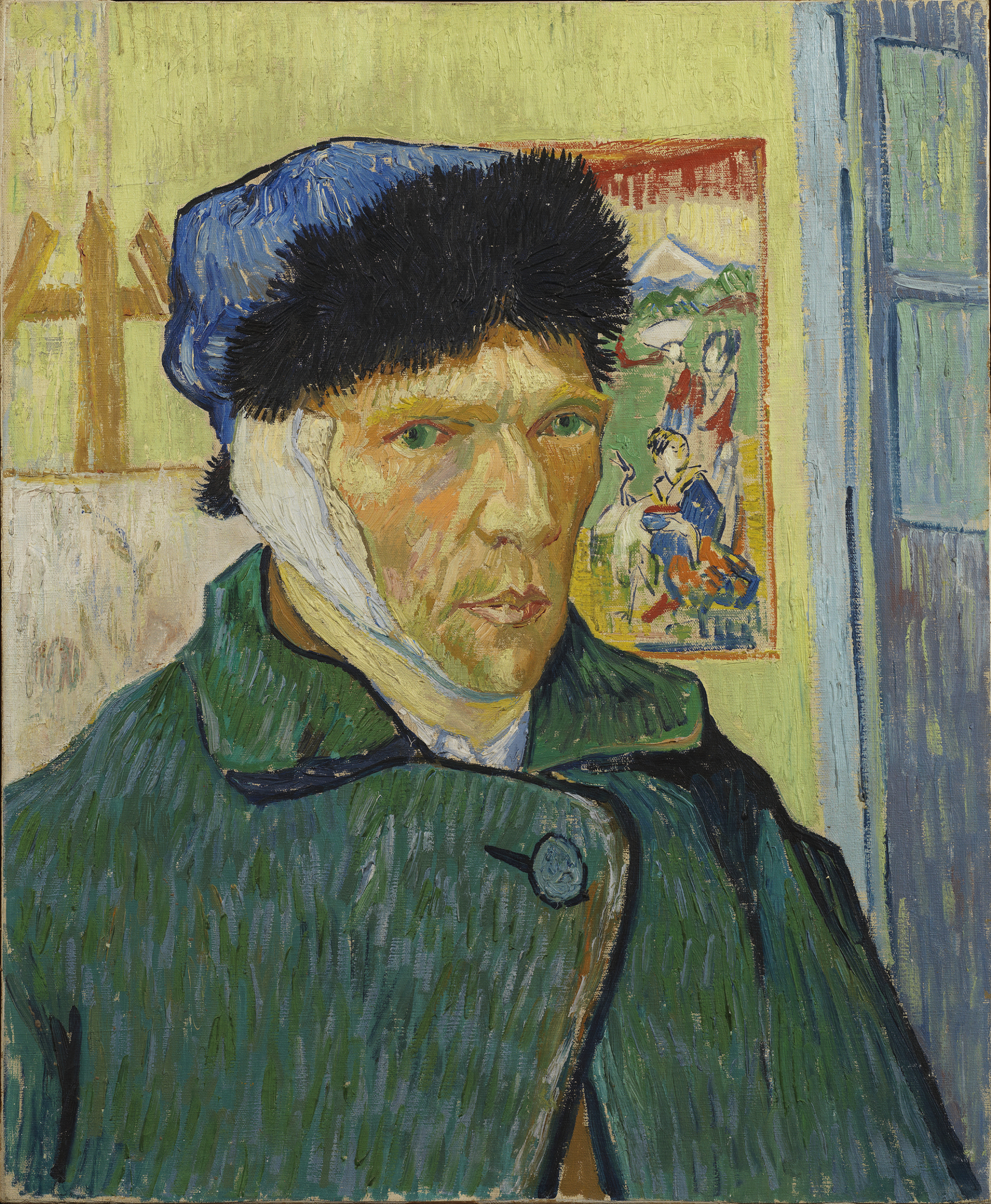
van Gogh, Vincent_Self-Portrait with Bandaged Ear
Vincent van Gogh (Dutch, 1853–1890), Self-Portrait with Bandaged Ear, 1889. Oil on canvas, 60 × 49 cm. Courtauld Gallery, London.

If you’re interested to learn more about Vincent van Gogh, check out the Artist Profile I was commissioned to create for the same podcast, which I expand on here. I spent two months doing intensive research to write this seventeen-minute script!

+++

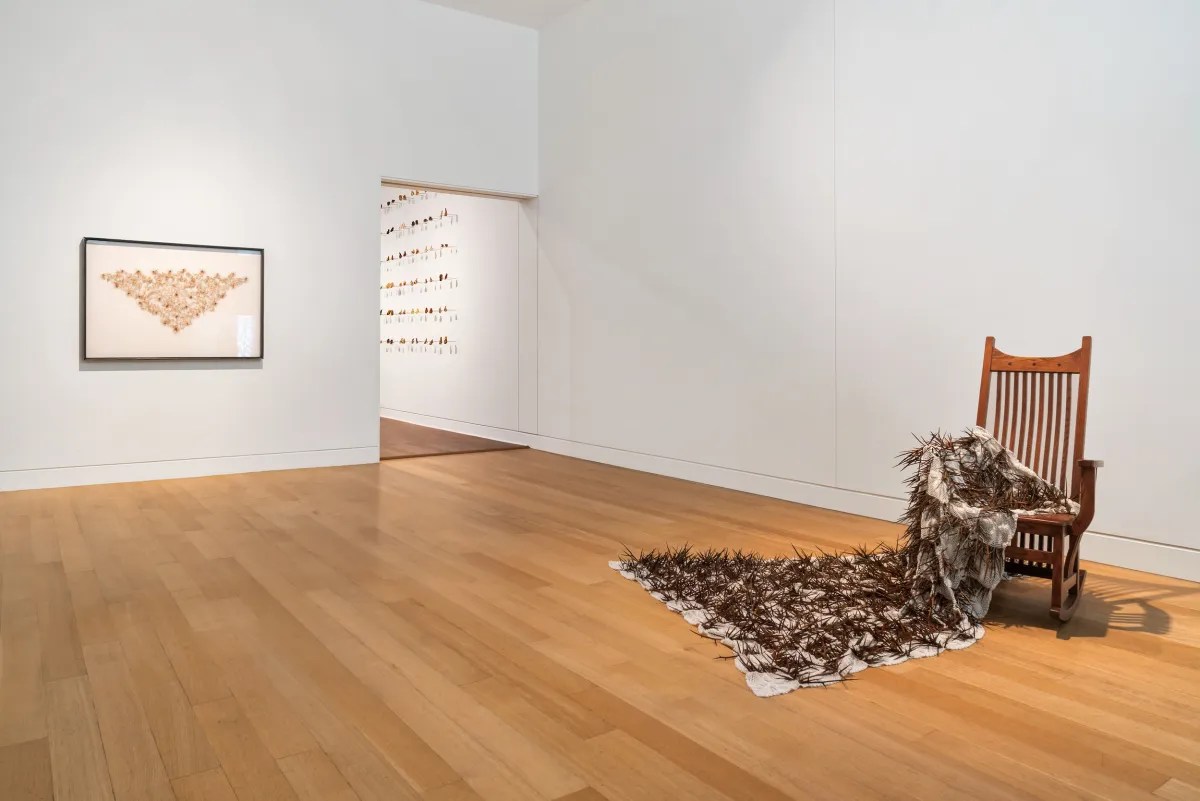
EXHIBITION REVIEW: “Selva Aparicio’s Memorials to Loss and Renewal” by Lori Waxman, Hyperallergic: Mounted last year by the DePaul Art Museum in Chicago, the first solo show of the Barcelona-born artist Selva Aparicio featured works that “offer a merciful focal point for grief.” Aparicio, Waxman writes, “treats unwanted things with extreme sensitivity, personally gathering and storing them over many years, eventually renewing them with remarkable vision.” She reproduced the twice-destroyed rose window of the Basilica de Santa Maria del Pi using lettuce leaves discarded by her neighborhood market; she filled the interior of an upright piano with wasp nests; she constructed over two dozen pairs of decorative ears out of moss, shells, seed pods, animal hair, and other materials for her late cat, Momo, whose ears were removed due to illness; using strands of hair from herself, her mother, and her niece, she sewed a mourning veil, the kind traditionally worn by widows, out of 1,365 cicada wings.

Selva Aparicio exhibition view
Exhibition view: Selva Aparicio: In Memory Of, DePaul Art Museum, Chicago, 2024. Left: Velo de luto (Mourning Veil) (2020), formed from 1,365 Magicicada wings; right: Solace (2023–24), crochet cotton blanket woven through with honey locust thorns.

I didn’t get to see this exhibition in person, but I’m compelled by what I saw and read of it online—how it deals so tenderly with suffering, death, remembrance, and hope.

+++

SONGS:

>> “Parce mihi Domine” (Spare Me, O Lord): A musical setting of the Latin translation of Job 7:16b–21, this motet by the Spanish Renaissance composer Cristòbal de Morales “captures the sense of desolation and abandonment that is expressed by Job, a dark condition akin to the forsakenness that our Lord experienced on the cross,” writes church music director Ken Myers. In 1994 the Hilliard Ensemble recorded the piece in collaboration with the Norwegian saxophonist Jan Garbarek for their album Officium, a jazz-classical fusion that became one of ECM’s most successful releases, selling over 1.5 million copies.

The video below features a different set of musicians paying tribute to this “unexpected . . . alliance of austere vocal music and wandering saxophone” (Elodie Olson-Coons). Filmed December 18, 2015, at the Chiesa di Sant’Anna (Church of St. Anne) in Cagliari, Italy, the performance is by the vocal ensemble Cantar Lontano (under the direction of Marco Mencoboni) and saxophonist Gavino Murgia. [HT: Global Christian Worship]

After losing his health, wealth, and children, the Old Testament character Job laments openly before God. “I will not restrain my mouth,” he says. “I will speak in the anguish of my spirit; I will complain in the bitterness of my soul” (Job 7:11). He views God as his tormentor and begs God to leave him alone (“spare me”). Adopting Job’s voice, the four singers of the Morales piece sing the following biblical passage:

Parce mihi Domine, nihil enim sunt dies mei.
Quid est homo, quia magnificas eum?
Aut quid apponis erga eum cor tuum? Visitas cum diluculo, et subito probas illum.
Usquequo non parcis michi, nec dimittas me, ut glutiam salivam meam? Peccavi.
Quid faciam tibi, o custos hominum? Quare posuisti me contrarium tibi, et factus sum michimet ipsi gravis?
Cur non tollis peccatum meum, et quare non aufers iniquitatem meam?
Ecce nunc in pulvere dormio; et si mane me quesieris, non subsistam.

English translation (NRSVUE):

    Let me alone, for my days are a breath.
What are humans, that you make so much of them,
    that you set your mind on them,
visit them every morning,
    test them every moment?
Will you not look away from me for a while,
    let me alone until I swallow my spittle?
If I sin, what do I do to you, you watcher of humanity?
    Why have you made me your target?
    Why have I become a burden to you?
Why do you not pardon my transgression
    and take away my iniquity?
For now I shall lie in the earth;
    you will seek me, but I shall not be.

>> “Lamb of God” by The Many: From the EP Have Mercy (2021) by The Many [previously], “an uncommon, intentionally diverse collective making music for people to sing together about peace and justice and a world where all belong.” This song is an adaptation of the ancient Christian liturgical prayer known as the Agnus Dei. The music is by Gary Rand, and the lyrics are by Gary Rand and his daughter, Lenora Rand. Click here to purchase an individual MP3 recording or sheet music, or visit the group’s Bandcamp page.

Lamb of God, with love poured out
you suffer with the world.
Have mercy. Have mercy.
Lamb of God who suffers with the world,
grant us peace, grant us peace.

Favorite Films of 2024, Part 2

Read part 1 here.

Favorite Films of 2024 (Part 2)

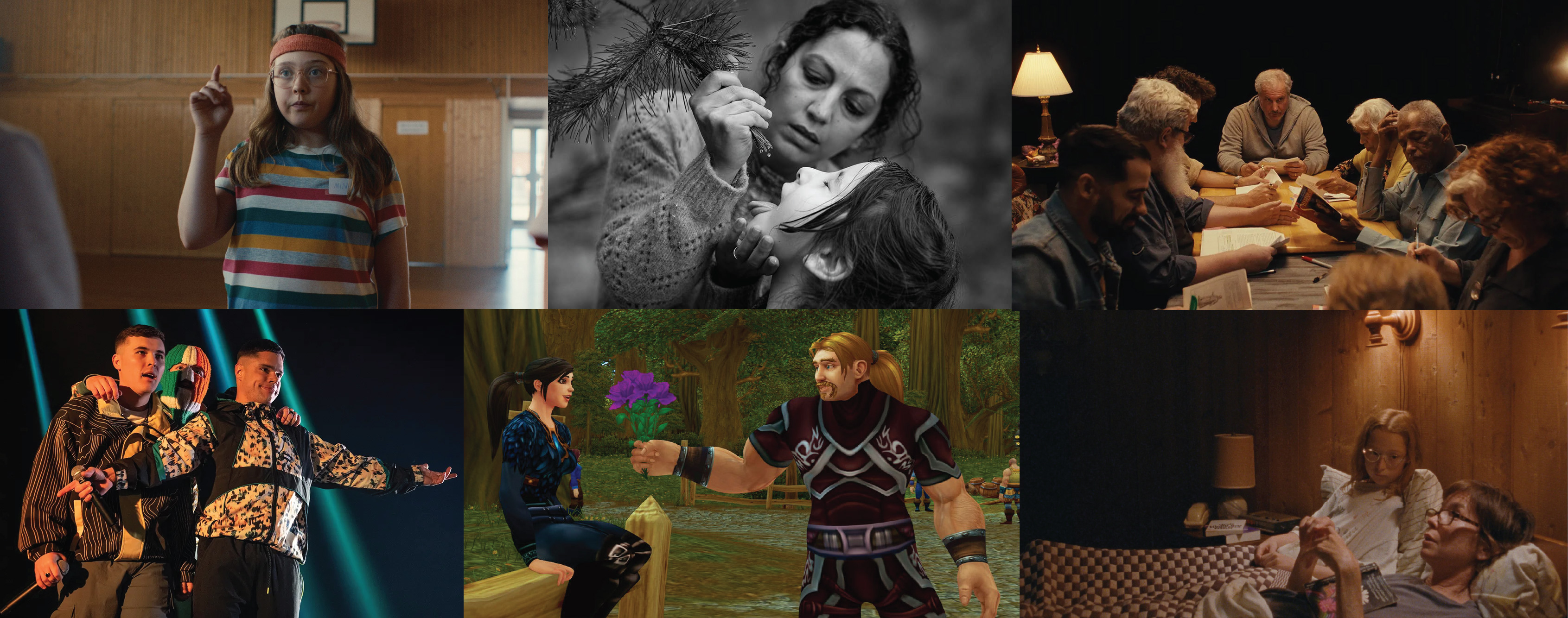
11. Dancing Queen, dir. Aurora Gossé. This coming-of-age dramedy from Norway was not promoted at all in the US but quietly arrived on Google Play early this year—thanks to my YouTube algorithm for suggesting it! Seventh-grade Mina (Liv Elvira Kippersund Larsson) has a crush on Edwin (Vilijar Knutsen Bjaadal), aka E.D. Win, a hip-hop dancer with a large social media following who has just transferred to her school. Despite having no dance experience, Mina decides to audition for his crew ahead of a local competition, and she enlists her grandma (Anne Marit Jacobsen) to train her, and her best friend Markus (Sturla Harbitz) to help her practice the partner work. The film is so endearing, even if a bit predictable in its beats. 

12. Ghostlight, dir. Alex Thompson and Kelly O’Sullivan. Dan (Keith Kupferer) is a construction worker who’s grieving a grave loss and is unwilling to open up about it with his wife Sharon (Tara Mallen) and daughter Daisy (Katherine Mallen Kupferer). (The three actors are father-mother-daughter in real life.) One day he inadvertently stumbles into a rehearsal of a community theater production of Romeo and Juliet. The head of the troupe, Rita (Dolly De Leon), invites him to stay, which he reluctantly does. He’s never acted before, but he finds himself taking on a role in the play, which helps him connect with his emotions and with other people and begin his healing journey.

Streaming on AMC+.

13. Janet Planet, dir. Annie Baker. The free-spirited but weary Janet (Julianne Nicholson) lives with her eleven-year-old daughter, Lacy (Zoe Ziegler), in western Massachusetts, running an acupuncture practice out of their home. Lacy is lonely and quirky and craves her mom’s affection; Janet gives it but is usually also absorbed in some kind of interpersonal entanglement. Over the summer of 1991, during which the film is set, a succession of three visitors come in and out of Janet’s life: a live-in boyfriend, a woman trying to escape a cult, and said cult leader. Lacy tolerates these ephemeral presences but wishes her mom were more exclusively available to her. The film is about Lacy learning to share her mom with others and coming to grips with the fact that she is not the only person her mom needs. The last scene, where Lacy comes to this realization while watching her mom contradancing, gutted me!

Streaming on Max.

14. Green Border, dir. Agnieszka Holland. This film is a difficult watch. It dramatizes the humanitarian crisis precipitated in fall 2021 when Alexander Lukashenko, the dictator of Belarus, lured several thousand asylum seekers from the Middle East and Africa to his country with the promise of free transit to the European Union, then dumped them on the borders of Poland, Lithuania, and Latvia as payback for EU sanctions against his country. Green Border focuses on a Syrian refugee family of six (Jalal Altawil plays the father) and an Afghan woman (Behi Djanati Atai) they befriend on the plane ride over—their being tossed (like a football, as one character laments) back and forth across the militarized Polish-Belarussian border, cold and hungry, with neither country willing to receive them.

The film also follows two Poles: border guard Jan (Tomasz Wlosok), who contracts PTSD, and budding activist Julia (Maja Ostaszewska), who joins a group providing water, food, clothing, first aid, power banks, and legal counsel to those crossing the forested swampland into Poland. We see one aid worker cradling the head of a hypothermic refugee as she spoon-feeds him hot soup, and another tenderly rubbing ointment onto the swollen, blistered feet of a weary woman traveler. Sadly, government policy has made these tangible acts of loving care acts of political resistance and grounds for arrest. But there’s a double standard at play, as we see in the epilogue.

Streaming on Kanopy.

15. Juror #2, dir. Clint Eastwood. A taut legal thriller, Juror #2 is all about conscience. Family man Justin (Nicholas Hoult) finds himself on the jury of a murder trial, and when the details of the alleged crime are revealed, he realizes he may have been the unwitting perpetrator. He is torn between his integrity and his self-preservation instincts, between his loyalty to the law and his loyalty to his wife and soon-to-be-born child. What I like about the film is how it prompts you to consider what you would do in the same situation—let someone with less to lose and with lower morals take the fall (the defendant, a single man with gang involvement, is a known abuser of women, and the prosecution has a strong case against him), or own up to what you know and have your and your family’s lives upended.

Streaming on Max.

16. Kneecap, dir. Rich Peppiatt. UNESCO classifies the Irish language as “endangered,” as the number of native speakers has continued to decline ever since English became the national language during British rule. However, more recently there’s been an urban revival, owing in part to the proliferation of Irish-language immersion schools—and to the popularity of Kneecap, a hip-hop trio from West Belfast who rap mostly in Irish, for them a sign of national identity and pride. Formed in 2017, they’re a controversial group whose lyrics often contain Irish republican themes along with profanity and references to drugs and sex. Many young Irish people have embraced them and been inspired by their music to learn Irish.

Band members Liam Ó Hannaidh (stage name Mo Chara), Naoise Ó Caireallain (Móglaí Bap), and JJ Ó Dochartaigh (DJ Próvai) play versions of themselves in this riotous, fictionalized origin story that compelled me mostly because of its fresh take on the musical biopic genre and in how it addresses the politicization of language. Also, it’s funny. But expect irreverence.

Streaming on Netflix.

17. The Outrun, dir. Nora Fingscheidt. Based on the best-selling memoir by Amy Liptrot, The Outrun follows Rona (Saoirse Ronan), an alcoholic in her late twenties who drops out of her PhD program in biology and returns to the remote Orkney Islands of Scotland, where she grew up, to pursue recovery. Rona is closely attuned to the natural forces around her, which gives the film an elemental quality, and Ronan attacks the role with an admirable ferocity. It’s a vital portrait of addiction and the journey to and through sobriety. Unlike some other films that tackle the subject, it doesn’t revel in the character’s misery; it shows the destructiveness of addiction, for sure, but it also shows Rona finding happiness along the way in things other than drink, like dancing with neighbors, barking at seals, baking bread, collecting and drawing seaweed, or pretending she’s a sailor at sea.

18. We Live in Time, dir. John Crowley. In nonlinear fashion, this affecting rom dram traces the relationship of Tobias (Andrew Garfield) and Almut (Florence Pugh), from their initial meeting in a hospital hallway, to the birth of their daughter, to Almut’s death from cancer, and a hundred little moments in between. It’s a beautiful picture of committed romantic love and how it negotiates change, crisis, and conflicting aspirations, but also the many joys it holds.

19. The Remarkable Life of Ibelin, dir. Benjamin Ree. The subject of this Norwegian documentary is Mats Steen (1989–2014), a video gamer who was born with Duchenne disease, a rare form of muscular dystrophy. When he died at age twenty-five, his parents had thought he lived an isolated life. But then they started receiving emails from strangers, numbering in the hundreds, who knew Mats through the online role-playing game World of Warcraft, where Mats interacted with friends daily as the character Ibelin Redmoore.

To bring Mats’s story to life, the film starts out conventionally, with home video footage from and interviews with the family. But then it transitions into animated segments that re-create some of Mats’s personal experiences within the world of the game. An actor voices Mats using Mats’s own words, taken from gaming transcripts and blog posts. These segments are interspersed with in-person interviews with some of Ibelin’s fellow Starlight guild members. I appreciate how the film challenges the stereotype of video games as shallow, time-wasting, and solitary, showing how for Mats, who had limited mobility, they were a means of exercising agency and cultivating meaningful connections with people all over the world.

Streaming on Netflix.

20. A Different Man, dir. Aaron Schimberg. Part dark comedy, part psychological thriller, this film stars Sebastian Stan as Edward, a man living with neurofibromatosis, which causes noncancerous tumors to grow on nerve tissue. He undergoes an experimental procedure that undoes his facial disfigurement and thrusts him into an identity crisis, even more so when he meets a man named Oswald (Adam Pearson) who looks a lot like his presurgery self. He envies Oswald’s confidence and charisma and feels increasingly threatened by him when Oswald is cast to play a version of him in a stage play written by his former next-door neighbor Ingrid (Renate Reinsve). We’re made to wonder whether there’s something insidious about Oswald, or Edward’s insecurities are just acting up.

Writer-director Aaron Schimberg, who has a cleft palate, said this film arose in part from his own contradictory feelings about his disfigurement, and the odd experience of looking in a mirror after having had multiple surgeries and wondering if the face he sees is his own or one that was only created by doctors. He also said he wanted to write a role for Pearson, whom he had worked with before, that defies the two roles he is typically offered—either a sympathetic victim who’s deemed heroic simply for existing, or a horror villain—and that makes use of his naturally gregarious, extroverted personality.

Streaming on Max.

HONORABLE MENTIONS: Inside Out 2 (Disney+), Thelma (Hulu), Spermworld (Hulu), Civil War (Max), Problemista (Max), The Promised Land (Hulu)

“The Pillar” by Mary Cartledgehayes (poem)

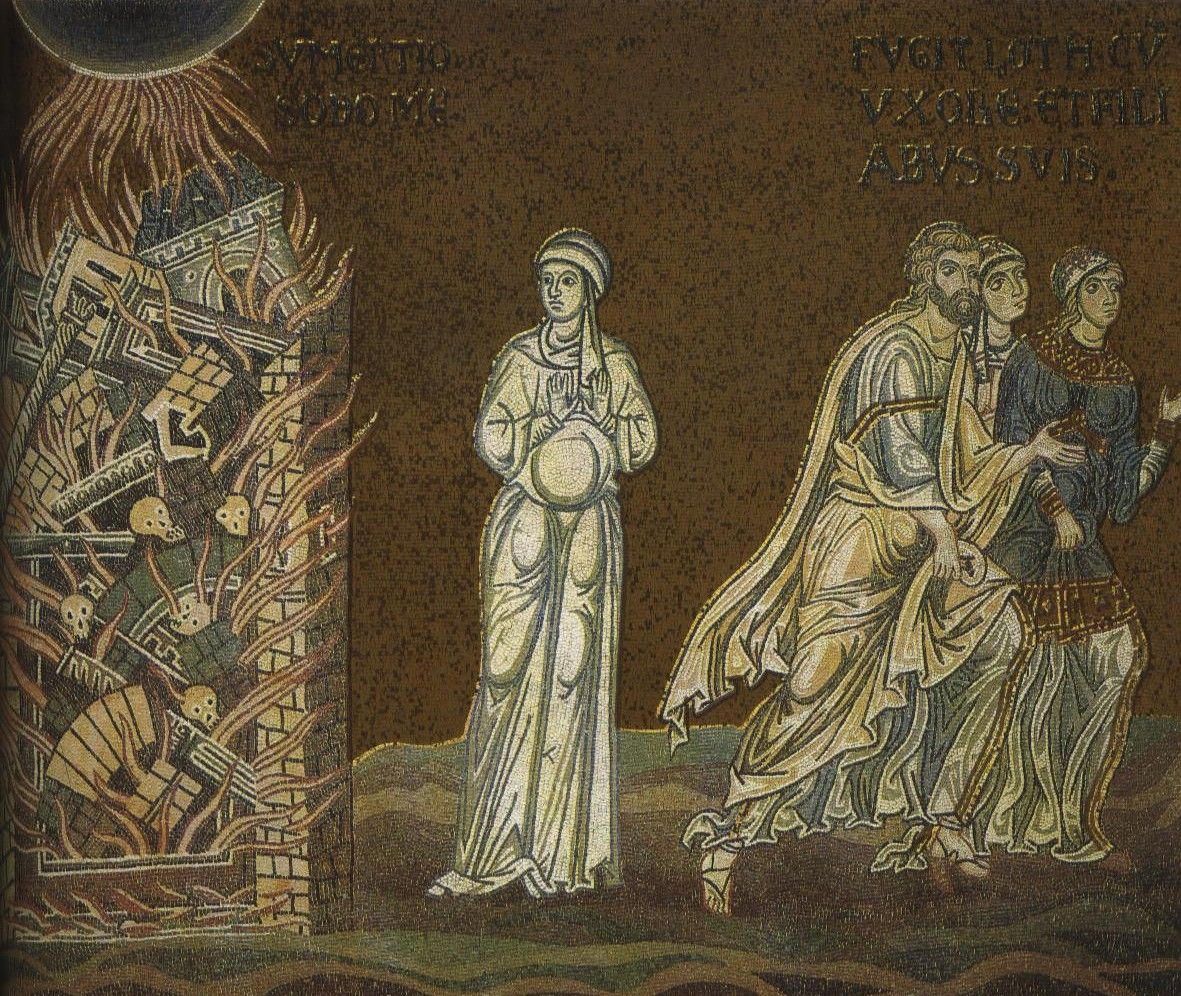
The Destruction of Sodom, 1175–90, mosaic, Monreale Cathedral, Palermo, Sicily

Even to the nameless dog I said farewell.
Madness took him long since,
but I remember his sharp bark,
how he warmed my feet on cool evenings.
I nursed my father in that city,
raised a cup to his lips the night he died.
We laid him near the fig tree,
its twisted trunk his monument.

Now ash marks his place, and Mother’s too,
and all the others whose bread sometimes burnt,
whose clay pots shattered, who wept with me.
They were not good people, and yet . . .
Lot’s back was not enough to see.
I turned. One sign, one glance
for all we left behind.
My faith is strong—
yea, stronger even than salt.
I wait for God to forgive my love.

From To Love Delilah: Claiming the Women of the Bible by Mary Cartledgehayes (San Diego: LuraMedia, 1990). Used by permission of the author.


Lot’s wife, unnamed and unvoiced in scripture, was probably a native of Sodom, the thriving city where Abraham’s nephew had settled. But the people there harbored sin. They were prideful, and did not share their wealth with the poor (Ezek. 16:49–50). To say they lacked hospitality is an understatement: they tried to gang-rape two visitors (Gen. 19:1–11; cf. Jude 1:7). For their persistence in doing evil, God destroyed them.

Genesis 19:12–29 records the story of Lot’s family’s escape. Two angels warn them of the coming judgment, tell them to run and not look back. But in their sudden flight, as the fire and brimstone are raining down behind them, wiping out the life they’ve known together, Lot’s wife turns to see. In an instant, she’s transmogrified into a pillar of salt.

This narrative is often preached as a lesson against looking back on one’s old (preconversion) life with longing, or clinging to the things of this world. Typically Lot’s wife’s reason for turning, disregarding the angels’ instruction, is interpreted as unbelief or covetousness.

But in this poem Mary Cartledgehayes cuts through the moralistic framing of the story and taps into its human emotional component. She suggests that the backward look of Lot’s wife was her taking a moment to mourn the loss of the people she loved and the only home she ever knew—could this be wrong? In To Love Delilah Cartledgehayes writes, “I don’t think she was motivated by greed or stupidity but by love: the love she felt for others, the love of a hometown that was a place of relationship, the love of the security in seeing the same faces at the well day after day, of sharing the births and deaths of children, of hearing the same chickens scratching in the dirt and the same dogs barking for a bite of food” (34).

For Cartledgehayes, Lot’s wife was a pillar of faith, strength, and compassion. Anna Akhmatova (“Lot’s Wife”) and Natalie Diaz (“Of Course She Looked Back”) imagine similar qualities in their poems on the subject. I’ve heard at least one commentator suggest that the salt Lot’s wife becomes is metaphoric, representing the salty tears she shed for her city, her being encrusted by grief, a monument of grief.

It’s common for those displaced by disasters to look back on their hometowns, both literally and in remembrance, and grieve the destruction, the loss of life, property, and possessions, and all the memories held there. In the case of Lot’s wife, God explicitly tells her and her family, through two angels, not to look back, so it’s her disobedience that’s punished. There’s no indication in the story that she engaged in the unrighteous behaviors of her Sodomite neighbors and relatives, or that a prior life of indulgence is what she yearns for. And yet because the punishment seems harsh, many of us try to read some kind of nefarious motive into her looking back. Or else we receive this simply as a cautionary tale about the severe consequences of defying God’s word.

Because Lot’s wife is given no backstory or dialogue (external or internal) in Genesis, nor does the narrator explain, we don’t know why she looked behind her as she fled. (The Polish poet Wisława Szymborska provides a whole list of options in “Lot’s Wife”!) I’m thankful to poets, like Cartledgehayes and others, who poke the trope of the “worldly” wife of Lot in an attempt to find the multidimensional woman beneath.


Mary Cartledgehayes is a writer and an ordained minister in the United Methodist Church, living in Louisville, Kentucky. Possessing an MFA in creative nonfiction from Goucher College and an MDiv from Duke University, she has led workshops across the US on writing and spirituality and enjoys mentoring other writers. In addition to numerous essays, poems, and sermons, she is the author of Grace: A Memoir (Crown / Random House, 2003), about love, death, praxis, fury, and entering pastoral ministry as a middle-aged woman.

Roundup: “By Babylon’s River,” Jack Baumgartner, Ordinary Saints, and more

NEW ALBUM: By Babylon’s River by the Pharaoh Sisters: A folk band from the foothills of North Carolina, the Pharaoh Sisters [previously] are Austin Pfeiffer, Jared Meyer, Kevin Beck, and John Daniel Ray. On September 13 they released their second album, By Babylon’s River, unveiling a new genre they call “saloon Christian.” The title track is a western waltz adaptation of Psalm 137. Also included on the album are a version of Psalm 81 (“Sing, Oh Sing”); bluegrass arrangements of the gospel standards “Leave It There” and “Hold to God’s Unchanging Hand”; retunes of the hymns “All Things Bright and Beautiful” by Cecil Frances Alexander and “’Tis Finished” by Charles Wesley; a cheeky take on the story of Samson, and more.

Here’s the press release.

+++

TRAILER: A Man Called Hurt: The Life and Music of Mississippi John Hurt: Made by directors Jamison Stalsworth and Alex Oliver of Draft creative agency in conjunction with the Mississippi John Hurt Foundation, this documentary about the titular Delta bluesman premiered May 1 at the San Francisco Documentary Festival and has been continuing on the festival circuit; most imminently, it will be screening at the Nashville Film Festival on September 19–25. I’m eager to see it once it hits on-demand streaming or comes to a screen near me! Follow updates at https://www.facebook.com/HurtTheFilm/.

I was introduced to Hurt over a decade ago through his recording of the African American spiritual “I Shall Not Be Moved,” based on Psalm 1. The songs he sang were a mix of sacred and secular.

+++

ARTISTS’ PROFILE: “Sunny Taylor / Jack Baumgartner,” Artful, season 3, episode 6: The BYUtv docuseries Artful, which is available to watch freely online, profiles a variety of artists of faith—many of them Latter-day Saints, but some (non-LDS) Christian or Jewish.

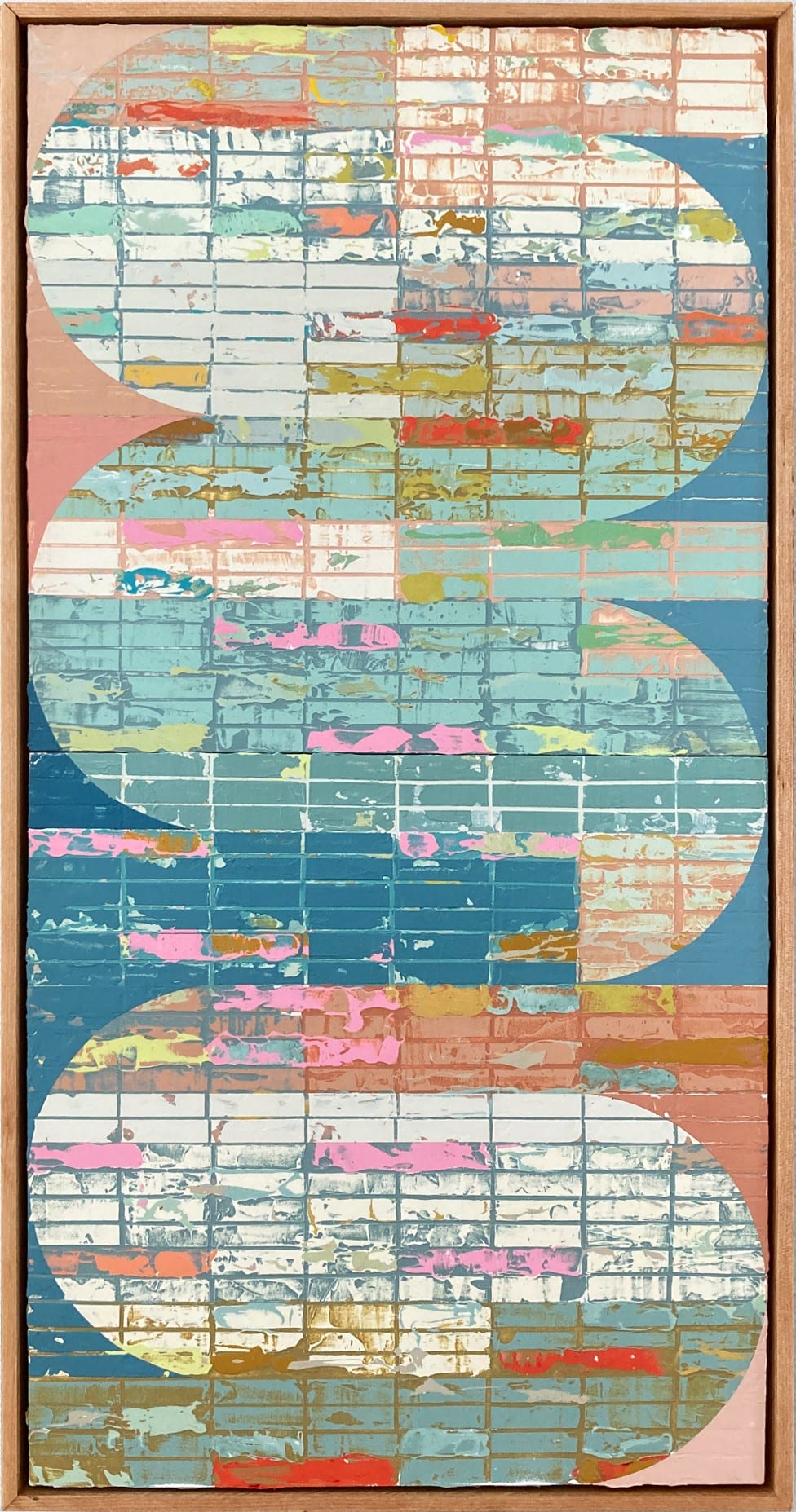
The first half of episode 6, season 3, highlights the work of Sunny Taylor, who lives in Wilton, Maine, and engages with painting’s geometric tradition. She values process over product and wants viewers to observe the surface and textures of her paintings, built up through meticulous layering techniques that involve scraping and grinding. She sees beauty in imperfection, and sorrow and joy as bound up together. Follow her on Instagram @sunnytaylorart.

Taylor, Sunny_Connections
Sunny Taylor (American, 1979–) Connections, 2024. Acrylic on panel, 24 × 12 in. [for sale] [artist’s statement]

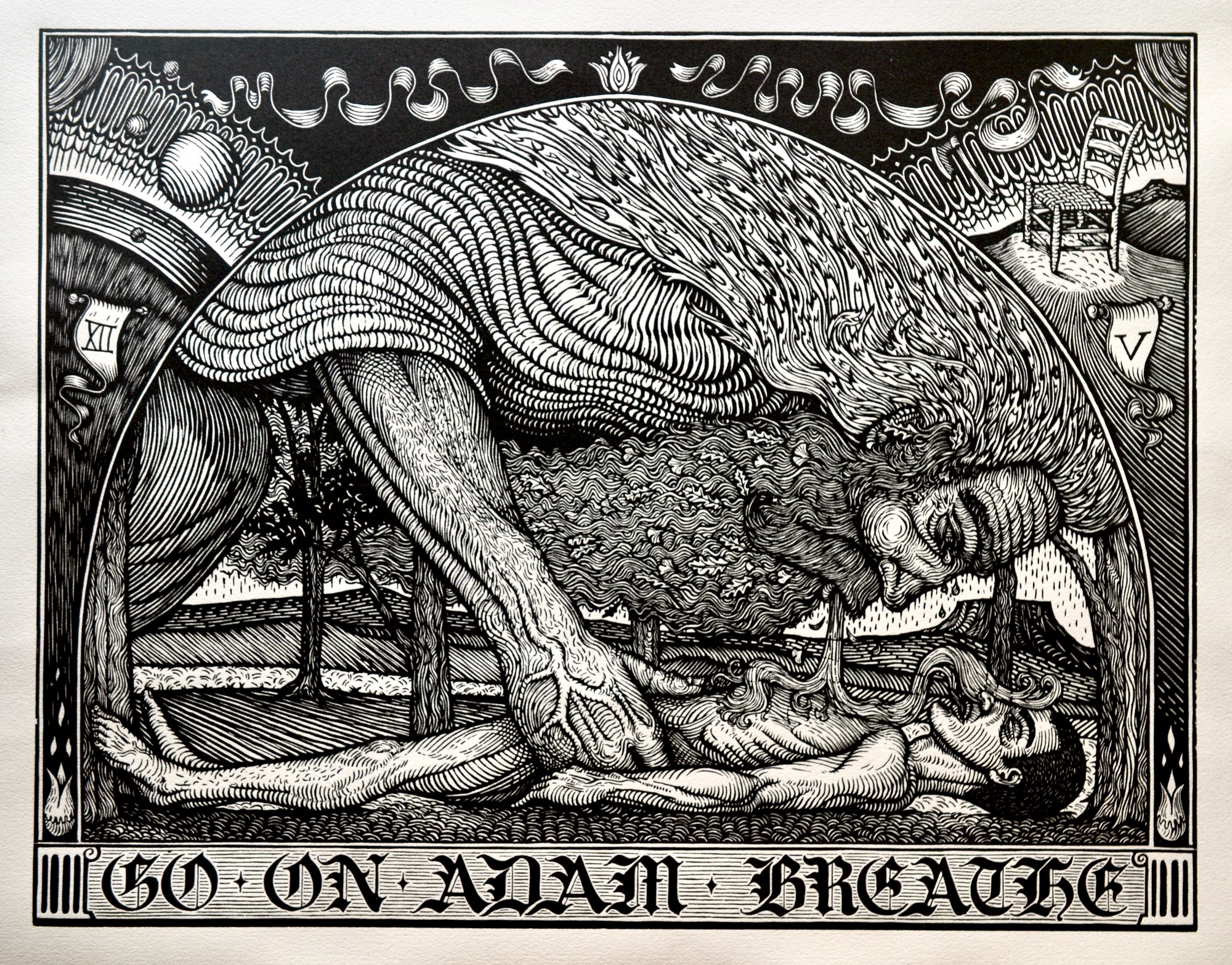
Beginning at the 13:38 time stamp, the second half is on multidisciplinary artist Jack Baumgartner of Kansas. Baumgartner, who has a Presbyterian background, is a printmaker, painter, farmer, woodworker, puppeteer, and musician. He raises sheep, goats, and chickens, builds furniture, plays the banjo, and cohosts the podcast The Color of Dust with two poet friends, “exploring the seen and unseen in the soil of art and agriculture.” He is also a husband and a father of five. I first learned about Baumgartner through an Image journal profile; and Plough published an article about him in 2018. I really enjoyed this twelve-minute video segment that shows him at work and at play in and around his home—especially his puppet theater performance of The Two Deaths of John Beartrist Laceroot! Follow him on Instagram @baumwerkj.

Baumgartner, Jack_Go On, Adam, Breathe
Jack Baumgartner (American, 1976–), Go On, Adam, Breathe, 2023. Linocut, 14 × 18 in. [for sale]

+++

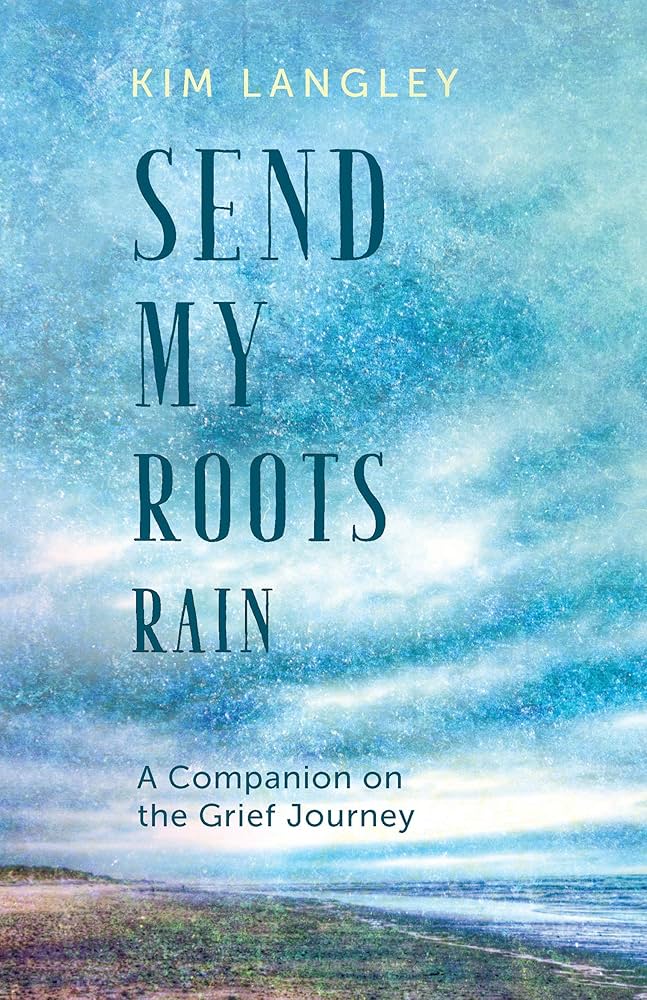
PODCAST EPISODE: “Grief and Poetry, with guest Kim Langley,” Faith and Imagination, October 4, 2021: Kim Langley is a certified spiritual director and retreat leader from Ohio; she is also the founder of WordSPA (acronym for “Spirituality Poetry Appreciation”) and author of Send My Roots Rain: A Companion on the Grief Journey (Paraclete, 2019), a compilation of sixty poems interwoven with narrative and commentary, in preparation for which she interviewed some three dozen chaplains, pastors, grief counselors, hospice workers, funeral directors, and bereaved people. She wrote the book after the death of her parents. “I found such comfort in the poems,” she writes, “written by a host of people just like us, picking up their pain, juggling it awkwardly in their arms at first—or maybe for a long time—then gradually finding the resilience to carry it, to know when and how to put it down, when to pick it up, and how to develop strong muscles for the long haul. They helped me carry my pain, and I think they will help you to survive, and maybe even thrive a little.” In this podcast episode, she and the host read and discuss four poems from the book: “Let Evening Come” and “Otherwise” by Jane Kenyon, “Those Winter Sundays” by Robert Hayden, and “Stillbirth” by Laure-Anne Bosselaar.

Send My Roots Rain

Launched in 2020, Faith and Imagination [previously] is the podcast of the BYU Humanities Center, hosted by founding director Matthew Wickman. It features interviews with a range of writers, scholars, clergy, and others. View the full archive at https://humanitiescenter.byu.edu/podcast/. And in addition to the Langley episode, let me turn your attention to an excellent recent release with an author I’ve mentioned before: “On Deepening Our Religious Experience: An Invitation to Poetry for the Church, with Abram Van Engen.” You may have heard Van Engen discuss his new book elsewhere, but this interview brings some great insights to the fore.

+++

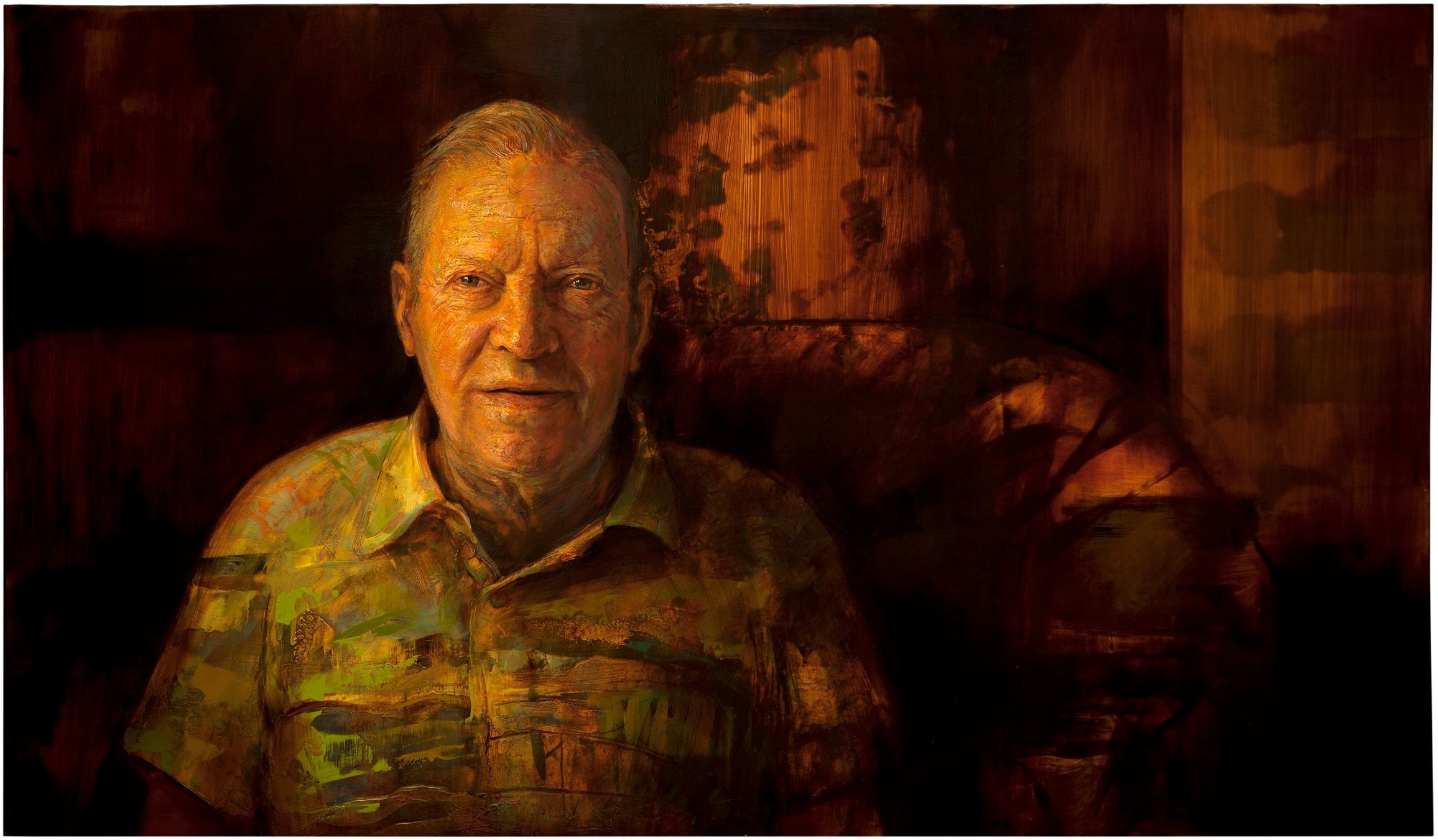
CREATIVE COLLABORATION: Ordinary Saints, a project by artist Bruce Herman, poet Malcolm Guite, and composer J.A.C. Redford: When Bruce Herman’s parents died unexpectedly in 2009, three months apart, painting their portraits was a key way in which he moved through his grief. Poet Malcolm Guite saw Herman’s portrait of his father exhibited at a Christians in the Visual Arts conference in 2011 and, struck by its sheer sense of presence, wrote a sonnet about it. This act of ekphrasis then developed into a three-way collaboration when their mutual friend J.A.C. Redford, a composer, responded by setting Guite’s poem to music.

Herman, Bruce_Portrait of the Artist's Father
Bruce Herman (American, 1953–), Portrait of the Artist’s Father: William C. Herman, 2010. Oil and alkyd on wood, 30 5/8 × 51 in. Collection of the artist.

The basis of Ordinary Saints is a series of portraits Herman painted of family and friends throughout the 2010s, which spawned a series of poems by Guite, which in turn spawned a suite of instrumental music and a song cycle by Redford. The first public presentation of the multidisciplinary project was at a Laity Lodge retreat in the Texas Hill Country on October 26–28, 2018, and it has since traveled to Nashville and Oxford.

The project attempts “to render . . . a glimpse of the glory of our mortal faces when turned toward God . . . faces that point toward the one Face we all must seek,” Herman says. Or, as Guite puts it: “to explore what it means to be truly face to face with one another, how we might discern the image of God in our fellow human beings, and how that discernment might ready us for the time when, as we are promised, we will no longer see ‘through a glass darkly’ but really see God and one another face to face in the all-revealing, and all-healing light of Heaven.”

Here is the title poem, followed by Redford’s title composition for voice, piano, cello, and clarinet:

Ordinary Saints

by Malcolm Guite

The ordinary saints, the ones we know,
Our too-familiar family and friends,
When shall we see them? Who can truly show
Whilst still rough-hewn, the God who shapes our ends?
Who will unveil the presence, glimpse the gold
That is and always was our common ground,
Stretch out a finger, feel, along the fold
To find the flaw, to touch and search that wound
From which the light we never noticed fell
Into our lives? Remember how we turned
To look at them, and they looked back? That full-
Eyed love unselved us, and we turned around,
Unready for the wrench and reach of grace.
But one day we will see them face to face.

Explore more, including readings of all the poems and recordings of the music, at https://ordinary-saints.com/.

+++

POEMS:

>> “Ordinary Sugar” by Amanda Gunn: Pádraig Ó Tuama reads and comments on this food poem in the July 10, 2023, episode of Poetry Unbound. “How can russet potatoes be made to taste of sugar and caramel? By dedication, love, and craft. Amanda Gunn places her poetry in conversation with the farming and culinary skills of her forebears: women who cultivated land, survival, strength, and family bonds.”

>> “Given” by Anna A. Friedrich: This poem by Anna A. Friedrich is a beautiful tribute to her grandmother, Juanita Powell Alphin, who died this June. Friedrich imagines all the gifts her memama ever gave—jump ropes, stuffed animals, homemade fudge, thrift-store doodads, five-dollar bills, a kitten, a plane ticket, etc.—tumbling out onto the golden streets of heaven, a testimony to her generous, loving spirit.

Roundup: Doubting Thomas, practicing stillness, living with grief, and more

SPOTIFY PLAYLIST: October 2023 (Art & Theology): Each month I compile a nonthematic mix of thirty faith-inflected songs from a range of sources. October’s playlist is now live. One track I’ll draw your attention to, with a live performance video below, is the soul-baring prayer “Doubting Thomas” by Chris Thile of Nickel Creek; read the lyrics, with annotations, here. (Also, Paul Demer has a nice cover of this song on YouTube.)

+++

MEDITATION EXERCISE: “Stillness—Richard Rohr’s Daily Meditations”: From the Center for Action and Contemplation comes this one-minute video that takes the most memorable line from Psalm 46, progressively paring it down and creating meditative space around each subtraction.

Be still and know that I am God
Be still and know that I am
Be still and know
Be still
Be

The Rev. Dr. Cynthia Bourgeault, an Episcopal priest, writer, and retreat leader, mentions this chant in her book Chanting the Psalms. “Each time the line is repeated,” she writes, “key words are taken away. The result is a funnel-like effect that leads straight down into silence. . . . Each phrase expresses its own unique meaning and understanding as the prayer moves toward utter simplicity” (185). Bourgeault recommends working with the recording “Be Still and Know” found on the album Songs of Presence: Contemplative Chants for the New Millennium from Praxis Publishing House; I couldn’t find the audio online, but I did find a song by The River’s Voice (Trish and Richard Bruxvoort Colligan) that’s also based on this exercise of Fr. Rohr’s: “Be (Still and Know That I Am God)”:

+++

PODCAST EPISODES: Here are two podcast episodes I caught up with recently and enjoyed. Both links include transcripts.

>> “Jan Richardson: Stubborn Hope,” Everything Happens with Kate Bowler, October 27, 2020: Kate Bowler, a historian and cancer survivor who has done much academic work on the prosperity gospel, talks with spiritual writer Jan Richardson [previously], whose husband died unexpectedly in 2013, about the hidden rooms of grief, being disciplined by hope, and how the concept of blessing in the Jewish and Christian traditions differs from the #blessed culture of social media. Don’t miss the three discussion questions in the show notes.

>> “Esau McCaulley: How Far to the Promised Land?,” No Small Endeavor, September 14, 2023: Lee C. Camp interviews public theologian Esau McCaulley, a professor of New Testament at Wheaton College and a New York Times opinion writer, about his new memoir, How Far to the Promised Land: One Black Family’s Story of Hope and Survival in the American South. I’ve heard rave reviews from multiple corners about this book, and this conversation has really whetted my appetite to read it!

+++

POEM COMMENTARY: “Learning about Constellations” by Saddiq Dzukogi, commentary by Pádraig Ó Tuama: On this episode of On Being’s Poetry Unbound podcast, host Pádraig Ó Tuama unpacks a poem written by Saddiq Dzukogi in the aftermath of his one-year-old daughter’s death. It’s from his 2021 collection Your Crib, My Qibla.

Easter, Day 6: Hope

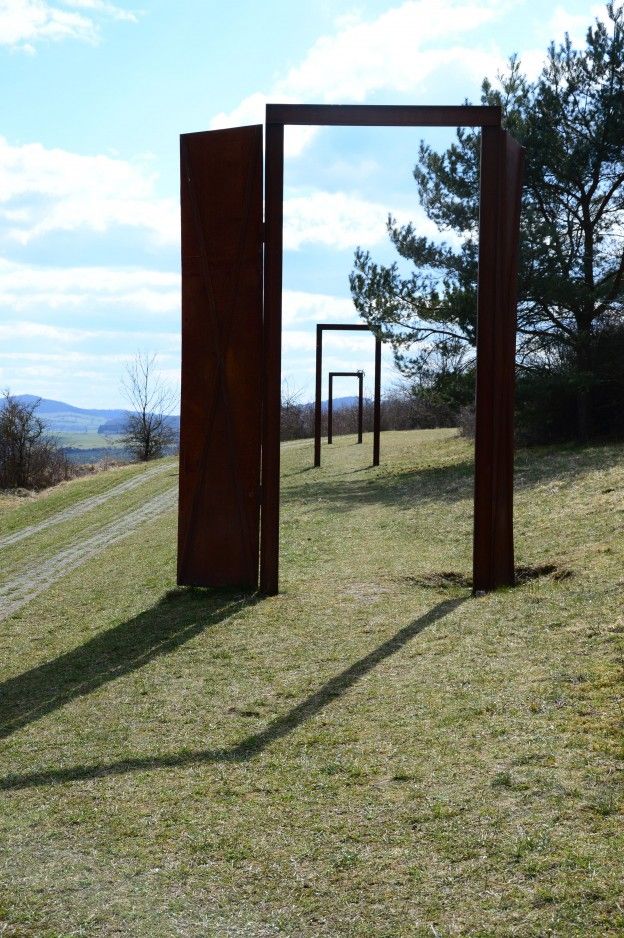
LOOK: Hope by Ulrich Barnickel

Barnickel, Ulrich_Hope
Ulrich Barnickel (German, 1955–), Hoffnung (Hope), fourteenth station from the cycle Weg der Hoffnung (Path of Hope), 2009–10. Iron sculpture, Geisa, Germany.

This is the last of fourteen monumental sculptures situated along the former inner German border that separated Soviet-occupied East Germany and Allied-occupied West Germany from 1952 to 1990. Stretching from Hesse to Thuringia, this highly militarized frontier consisted of high metal fences, barbed wire, alarms, watchtowers, and minefields, a literal iron curtain that divided families, friends, and neighbors.

In 2009, the Point Alpha Foundation, founded to preserve the historic site as a memorial, commissioned German metal sculptor Ulrich Barnickel to create an artwork as part of the memorial. He decided to draw on the traditional fourteen Stations of the Cross, connecting the suffering of Jesus to that of the people on the inner German border under Communism. Collectively titled Path of Hope, his fourteen iron sculptures cover 1,400 meters of ground (scaling down the 1,400 kilometers of the former border). All but the last are figurative, representing Jesus falling, meeting his mother, being nailed to the cross, and so on. They contain artifacts from or references to German Cold War era history, such as a vintage steel helmet hanging on Pilate’s chair, or the grenade and the trench that Jesus stumbles over.

The final station, titled Hope, is a threefold open doorway. After all the heaviness of the previous thirteen stations, we get this breather. Here’s what the doors say to me: Invitation. Possibility. The fourteenth station of the cross is traditionally where Christ is buried in his tomb. But instead of a dead body on a slab or a sealed-up cave, Barnickel gives us an open frame, a door ajar, a view of sky. It alludes to resurrection. Jesus walked through death and came out the other side. And so can we.

While the Path of Hope is a vehicle for remembering, lamenting, and healing from the collective traumas of war and political violence and oppression, it can also speak to personal losses, to any individual’s journey of grief. It’s an invitation to acknowledge the pain we carry but also to see beyond it to the Better Day that is coming, as well as to embrace the life before us here and now. The doors ask us to unburden ourselves of whatever weight is crushing us and to be renewed. (Notice the crown of thorns, an emblem of suffering, left hanging on the corner of the final threshold.) To follow the Man of Sorrows, who walks beside us in our own sorrow, from death into life.

For those accompanying a loved one to the door of death, or who have had a loved one suddenly snatched through, may Barnickel’s Hope meet you in your grieving, filling you with soft consolations of a Love stronger than death, a Love who, once buried, became on the third day the firstfruits of the resurrection harvest.

Barnickel, Ulrich_Hope

LISTEN: “Alleluia, Christ Is Risen Once Again” by Tara Ward, written 2007, performed 2020

Waking up to tragic dawn
Not comprehending what is going on
Alleluia, Christ is risen once again

And it frames a hollow place
Lost dreams and accolades
Alleluia, Christ is risen once again

Alleluia, Christ is risen
Though the walls of castles fall
Alleluia, he is risen for us all

From these sights the shadows light
In an overwhelming night
Alleluia, Christ is risen once again

Hopes fly from us every day
Fear reigns far and so does hate
Alleluia, Christ is risen once again

Alleluia, Christ is risen
Though the gates of all this war
Alleluia, Christ is risen evermore

Alleluia, God is able
To complete the life you led
Alleluia, Christ is risen from the dead

Alleluia, he is risen once again

From the sorrow you have fled
You have joy around your head
Alleluia, Christ is risen once again

And as from earthly trials you fly
You leave sadness when you die
Alleluia, Christ is risen once again

Alleluia, Christ is risen
And the life you’re living now
Alleluia, all’s forgiven somehow

Alleluia, there is beauty
When I think of you, joy I feel
Alleluia, in my sadness, faith is real

Alleluia, Christ is risen once again
Alleluia for you, my friend

Tara Ward [previously] wrote this song during the 2007 Easter season when two tragedies struck within a week of each other. On April 16, a mass shooter opened fire at Virginia Tech, killing thirty-two people, and on April 21, Ward’s friend Liz Duncan was fatally struck by a car while jogging. In the second half of the song, Ward addresses Duncan in the second person, rejoicing through tears that she has entered a state of joy and rest and will one day be raised, body and soul.

Ward returned to the song for Easter 2020 following the death that March of another friend and the initial outbreak of COVID-19. “I was trying to think of what I would sing if I was still working at a church, looking for honest songs to sing on Easter, and this one came up,” she writes on the YouTube video description.

The Nashville community, and America at large, is still reeling from the March 27 shooting at Covenant School that left seven dead, the 131st mass shooting in the US this year. I can only imagine the absolute devastation and rage a parent would feel upon learning that the child they dropped off at school that morning would not be coming home because they were gunned down with an assault rifle.

As I listen to this song, I think, too, of Leslie Bustard, a writer and book publisher, a luminary in the art and faith sphere, who, less than two months after hosting an amazing Square Halo conference on the theme of “ordinary saints,” is now in hospice with late-stage cancer.

Sometimes all the exuberance of Easter can seem disjunctive with the bleak state of the world or our own present circumstances. Christ is risen, but death is still a reality, and it’s still painful. Quiet and aching, this song gives space to grief while also confessing this central Christian doctrine: that Jesus rose from the dead, giving life to all who will receive it. Of course, that doesn’t mean Christians are exempt from experiencing physical death—we will all one day go to the grave—nor from the grief that follows in the wake of a loved one’s passing.

But what Ward’s song helps us do is sing “alleluia” in our sadness, because Christ’s resurrection life is at work in those who have passed on in him, and it’s at work in those of us who walk through the valley of death’s shadow here on earth. The “once again” language—“Christ is risen once again”—indicates that Jesus’s historical rising has ongoing implications, its efficacy extending to every new place of death.

Favorite Films of 2022, Part 2

Read part 1 here.

11. After Yang, dir. Kogonada. Set in the near future, After Yang is a patiently minimalist, transcendent film about learning to treasure those moments of mundane beauty that make up our lives. When Jake (Colin Farrell) and Kyra (Jodie Turner-Smith) adopt their daughter Mika (Malea Emma Tjandrawidjaja) from China, they purchase a preowned “technosapien,” a humanoid robot, named Yang (Justin H. Ming) to educate her about her cultural roots and to be an older sibling to her. But one day Yang malfunctions and shuts down, and Mika is devastated.

When Yang is opened up at the repair shop to be diagnosed, Jake discovers Yang’s memory bank, where Yang stored all the memories he thought important. He unlocks it. By viewing the world, especially his family life, as processed by Yang, Jake realizes he has failed to engage meaningfully with the small daily gifts he has been given. He also becomes aware of more of Yang’s history—of his previous families and loves.

Streaming on Showtime.

12. Petite Maman, dir. Céline Sciamma. In this poignant French drama, eight-year-old Nelly (Joséphine Sanz) accompanies her parents (Nina Meurisse and Stéphane Varupenne) on a trip to clear out her mother’s childhood home following her grandmother’s death. As she explores the nearby woods, she meets a neighbor girl her own age (Gabrielle Sanz), and the two strike up a bond. There’s a fantasy element I won’t reveal—it’s better to let the movie unfold it for you—but suffice it to say, I love the imaginative way that writer-director Céline Sciamma tells this mother-daughter tale of grief and loss.

Streaming on Hulu.

13. The Wonder, dir. Sebastián Lelio. Inspired by the nineteenth-century phenomenon of the “fasting girls” and based on Emma Donoghue’s celebrated novel of the same name, this psychological drama is set in a rural Irish Catholic community in 1862. Eleven-year-old Anna O’Donnell (Kíla Lord Cassidy) has allegedly not eaten anything for four months but has been miraculously sustained by “manna from heaven.” As pilgrims begin flocking to witness the miracle and rumors swirl about possible sainthood, a council of local dignitaries initiates an investigation to determine whether Anna’s survival without food is indeed a holy feat, or a hoax perpetrated by Anna and her family.

The council hires Lib Wright (Florence Pugh)—a scientifically minded English nurse—and a nun to independently observe Anna over two weeks in alternating eight-hour shifts and to report back. Lib grows increasingly concerned for Anna’s health and safety, and when Anna reveals to her the reason for her fast, she knows she must act drastically.

Streaming on Netflix.

14. Apollo 10½: A Space Age Adventure, dir. Richard Linklater. Apollo 10½ is writer-director Richard Linklater’s nostalgic homage to growing up in a Houston suburb in the 1960s, the youngest of six. This was during the Space Race, and Linklater uses that context to interweave real childhood memories with his childhood fantasy of being an astronaut. So in a tongue-in-cheek revision of history, he has NASA recruit fourth-grader Stan (Milo Coy) to fly a secret mission to the moon to test out a landing module shortly before Apollo 11 goes up. The film uses an animation technique known as rotoscoping, which layers animation over live performances.

While I can appreciate the blend of dream and reality, I was much more interested in the real-life portions of the movie, which are substantial, than the revisionist space stuff. Playing kickball on the school blacktop, getting disciplined, eating Frito pies at the pool, watching cheesy TV shows with family, listening to the Monkees and the Archies and the 5th Dimension, riding to the beach in the bed of a pickup truck, braving the Black Dragon at AstroWorld, fighting Roman candle wars in the backyard on New Year’s Eve, competing in Little League, stealing plywood from home construction sites with his cheapskate father, listening to Grandma’s conspiracy theories—ordinary memories like these are narrated with such fondness by adult Stan (voiced by Jack Black) and so meticulously rendered, and it’s here where the movie really shines. If you like The Wonder Years, you’ll like this.

Streaming on Netflix.

15. Decision to Leave, dir. Park Chan-wook. A slow-burn crime drama with a heavy dose of romance, this film follows the married police detective Hae-joon (Park Hae-il), who, when investigating the death of a mountain-climber, becomes infatuated with the prime murder suspect, the climber’s widow, Seo-rae (Wei Tang). In an interview, the director said his goal was “to make a love story that does not say the words, ‘I love you.’” The film is all about what’s not said, what’s observed. For much of the movie we question whether Seo-rae is manipulating Hae-joon or is actually falling for him too.

I have to admit, I didn’t like either of the characters; I struggled to understand them or to be invested in their “love” story, which to me seems more like simply lust or intrigue. Seo-rae’s inscrutability is, I think, part of the point; she is a mystery to be solved, as much as the murders happening around her. And attraction is rarely rational, I suppose. (But c’mon, Hae-joon, you’ve got a loving wife back home!) Despite my failure to connect with it on all levels, this is a beautifully shot, craftily edited, engrossing film with a sustained, understated sensuality that is to be commended.

Streaming on MUBI.

16. God’s Creatures, dir. Saela Davis and Anna Rose Holmer. Aileen (Emily Watson) works as a shift manager at a seafood processing plant, alongside most of the other local women, in a remote Irish fishing village. When one of her coworkers, Sarah (Aisling Franciosi), files a rape claim against her son, Brian (Paul Mescal), Aileen fabricates an alibi to protect him. Is she incredulous that he could be capable of sexual assault, or is her denial more sinister? Atmospheric and tense, the film centers on Aileen’s psychological grappling with the limits of maternal love and her duty to what’s right and just.

17. Elvis, dir. Baz Luhrmann. Frenetic and flashy, this music biopic traces the meteoric rise and fall of rock and roll’s biggest legend, Elvis Presley (Austin Butler). The story is narrated by Elvis’s exploitative manager, Colonel Tom Parker (Tom Hanks), and examines their complex, twenty-plus-year relationship. Butler is amazing in the role, embodying Elvis’s energy and sex appeal while also showing his emotional vulnerability.

I appreciate how the movie shows the influence of Black artists on Elvis’s music, even dispelling the myth that he was the founder of rock and roll—a credit that he himself, in multiple interviews, rejected, instead crediting his Black predecessors. Elvis grew up in a Black neighborhood in Tupelo, Mississippi, and when he moved to Memphis as a teenager, he frequented Beale Street, a hub of African American culture. From these environments he absorbed the sounds of Pentecostal gospel and rhythm and blues.

Elvis features stunning performances by historical Black characters. An early scene intercuts bluesman Arthur Crudup (Gary Clark Jr.) performing his original song “That’s All Right” in a juke joint—which would become Elvis’s first single—with “I’ll Fly Away” sung by a Black congregation at a tent revival; preteen Elvis observes one through a hole in the wall and participates, Spirit-caught, in the other. As a young aspiring recording artist, prior to mounting the Louisiana Hayride stage, his first big premiere, he pumps himself up by singing “I’ll Fly Away.”

Later, Elvis hears Big Mama Thornton (Shonka Dukureh) perform the raunchy “Hound Dog” (written for her by a Jewish songwriting duo, Jerry Leiber and Mike Stoller) in a bar on Beale Street, which is then sampled and interpolated in a song by Doja Cat commissioned for the movie. At Club Handy, Elvis hangs out with his friend B.B. King (Kelvin Harrison Jr.) and is blown away by the vitality and genius of the young Little Richard (Alton Mason), who performs his original and then-unknown “Tutti Frutti” for the crowd; the conversation Elvis has about it with King, and what King says and doesn’t say, speaks volumes. As people shuffle out for the night, the pioneering rock singer-guitarist Sister Rosetta Tharpe (Yola) sings “Working on the Building” and “Strange Things Happening Every Day.”

All these and more were part of Elvis’s music education. They came before. His use of Black source material has always been controversial, deemed “cultural appropriation” (i.e., theft) by some. He profited greatly from the creative contributions of Black women and men, many of whom failed to attain proper recognition and compensation for their work. They lacked the platform and the acceptance across racial lines, whereas Elvis’s whiteness opened doors for him. And so he brought rock and roll—developed in Black churches, juke joints, streets, and nightclubs—to the masses. For sure, he added his own stamp, synthesized it with other influences, and was a majorly talented performer in his own right. Elvis celebrates the title character’s inventiveness but also recognizes his indebtedness to Black musicians. It’s not a central concern of the movie, but it is present. More central is, as one might expect of the genre, the toll of fame.

Streaming on HBO Max.

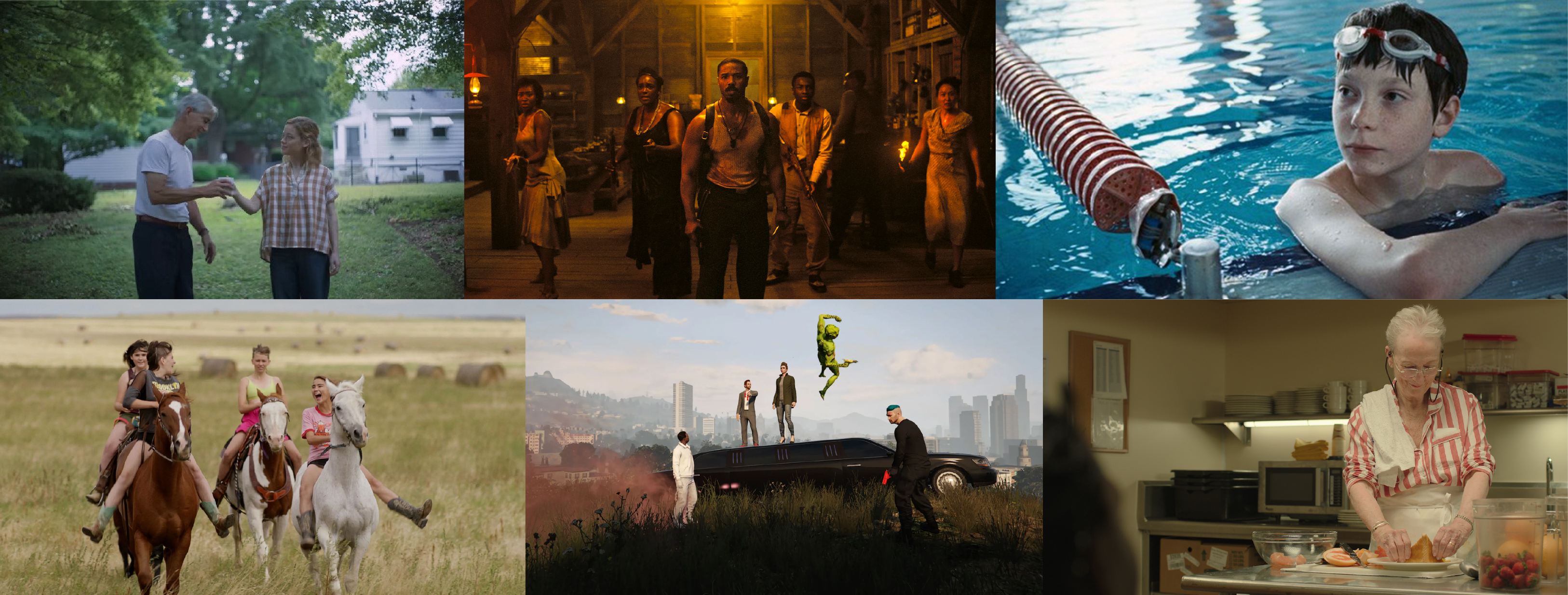
18. Nope, dir. Jordan Peele. In this neo-western sci-fi thriller, OJ (Daniel Kaluuya) and his sister, Em (Keke Palmer), own a family ranch in California, where they train and handle horses for television and film productions. But their business is struggling, and to keep it afloat they sell some horses to Jupe (Steven Yeun), a former child actor who operates a nearby theme park that capitalizes on his surviving an infamous violent attack on the set of a nineties sitcom. (Best opening scene of the year?) Then their ranch becomes a site of abduction—a UFO takes some of their horses. They attempt to capture video evidence with the help of tech salesman Angel Torres (Brandon Perea) and documentarian Antlers Holst (Michael Wincott). The film’s epigraph is a quotation of Nahum 3:6, a pronouncement of divine judgment: “I will cast abominable filth upon you, make you vile, and make you a spectacle.”

Nope is not as concise as Peele’s other two films, Get Out and Us; I couldn’t follow all the threads. But surely a major thread is an indictment of our voracious need for spectacle. Another is the traumas that the film industry can inflict on people. Another, or maybe a subset of the previous, is the erasure of Black cowboys from our stories of the American West. Nope pokes and prods at these issues and raises questions rather than providing answers. For example, there’s a tension here between the magic of spectacle and its insidiousness. Peele participates in what he condemns. As film critic Thomas Flight articulates, “Nope is a spectacular horror film about the danger of spectacle. It’s a big-budget Hollywood film that critiques the Hollywood industry. It’s not a movie that can draw a clear resolution to those dualities. Instead, it’s a film that explores the queasiness that arises when we’re not sure if something’s good or bad but we find ourselves in the midst of it.”

Entertaining; suspenseful; riveting sound design by Johnnie Burn; and an infectious performance by Palmer as the charismatic Emerald, her live-wire personality a perfect foil to the taciturn OJ’s.

19. Cha Cha Real Smooth, dir. Cooper Raiff. Andrew (Cooper Raiff), a Gen Zer, is a recent college grad who lives with his mom, stepdad, and younger brother and works as a party starter at bar mitzvahs. At one he meets Domino (Dakota Johnson) and her daughter, Lola (Vanessa Burghardt), who has autism, and strikes up a friendship. This movie is sweet and maybe slight, and it takes a few missteps, but I enjoyed it a lot.

I find Raiff’s onscreen persona—essentially the same one he adopted in his debut feature, which I also really liked—charming, though I know others find it insufferable! Andrew is vulnerable, quippy, awkward, real. He loves his mom. He cries openly. He lacks direction. He seeks connection. He’s trying to figure life out, and growth comes slowly. He’s someone I recognize and have empathy for.

Streaming on Apple TV+.

20. Causeway, dir. Lila Neugebauer. This quiet drama follows the physical and emotional recovery of Lynsey (Jennifer Lawrence), a US military veteran who returns home to New Orleans after suffering a traumatic brain injury serving in Afghanistan. In the process, she develops a friendship with her auto mechanic, James (Brian Tyree Henry), who bears his own wounds from a tragic event—some visible, some not. The two help each other work through the lingering effects of their traumas and move closer to wholeness. Their gentle, easy vibe with one another is really beautiful to witness.

Streaming on Apple TV+.

HONORABLE MENTIONS: Sr.; Hustle; Marcel the Shell with Shoes On; The Sea Beast

Favorite Films of 2021, Part 1

I know, I know. My top 20 list of films from 2021 is very late. Several that I wanted to see before compiling the list didn’t come to a theater near me until after the Oscar nominees were announced . . . But better late than never, right?

I’m breaking up the list into two separate posts.

I am counting films as from 2021 if they were released in the US in that year. If the film is available for free through a streaming service to subscribers, I will mention that at the end of the description; most of the others can be rented online for a fee, or you might also try checking your local library for a DVD.

Note: Several of these films are rated R, and for a variety of reasons. If you want to avoid specific types of mature content, I suggest you consult the Parents’ Guide on the IMDB page of whatever movie you’re considering watching.

If you’d like to see my top 20 films of 2020, click here.

Belfast film still
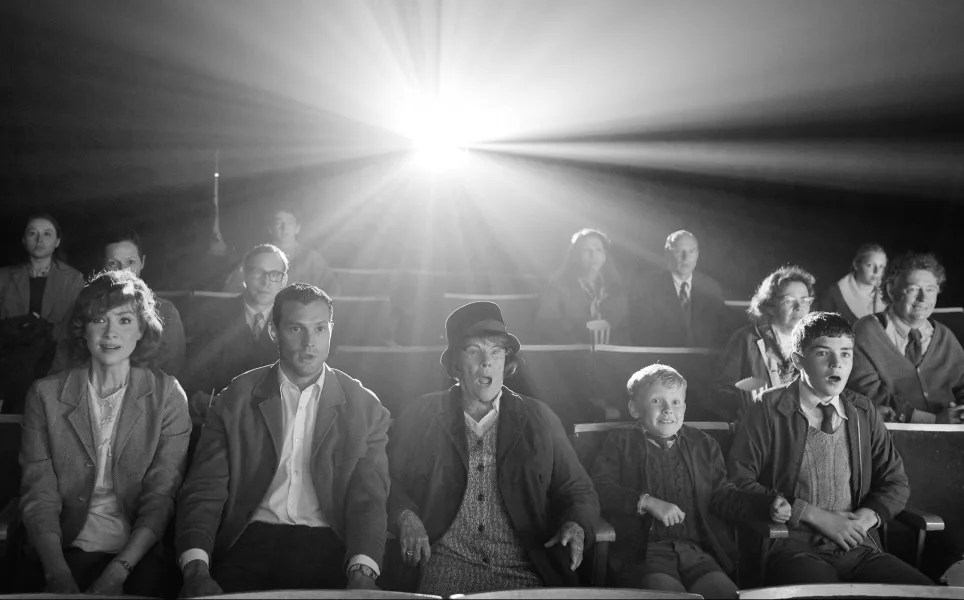
The joy of cinema is one of the themes in Kenneth Branagh’s semiautobiographical film Belfast, as all three generations of Buddy’s family enjoy going to the movies together. In this still, they react to the flying car riding off the cliff in Chitty Chitty Bang Bang.

1. Belfast, dir. Kenneth Branagh. Drawn from writer-director Kenneth Branagh’s own childhood, Belfast takes place in 1969–70 in a working-class neighborhood in the Northern Ireland capital, at the beginning of the thirty-year period of political violence known as the Troubles. This conflict was between (mostly Catholic) nationalists seeking independence from Britain, and (mostly Protestant) loyalists who saw themselves as British and thus sought to preserve Northern Ireland’s union with Britain. The focus of the film, however, is on family, not politics, as all the events of the year are filtered through the perspective of nine-year-old Buddy (Jude Hill). He sees his dad, for example, who refuses to participate in the riots, as a hero in the vein of his favorite western film characters.

Belfast is poignant and nostalgic and not at all the worse for being so. The “Everlasting Love” scene near the end is euphoric—and well earned!—and made me cry. In the wake of a death and amid financial debt, impending displacement from what has been their family’s hometown for generations, and other marital strains, Pa (Jamie Dornan) sings a pop song to Ma (Caitriona Balfe) from a lounge stage and pulls her into a dance, creating a moment of pure celebration, love, and defiant survival. The film’s highlight for me is how it holds together life’s joys and struggles, sorrows and laughter. Branagh, who moved with his parents and brother from Belfast to Reading, England, at age nine to escape the violence, dedicated the film to “those who stayed, those who left, and those who were lost” in Belfast.

2. The Power of the Dog, dir. Jane Campion. An adaptation of a Thomas Savage novel, this film subverts the traditional image of the western cowboy, exploring male virility, vulnerability, and agency. What is required to protect those you love? Is it muscles and bluster and a “gloves off” sort of grit, or a courage rooted someplace else?

Set in Montana in 1925, the film centers on the macho-posturing Phil Burbank (Benedict Cumberbatch), who runs a cattle ranch with his brother George (Jesse Plemons). When George marries the widowed Rose (Kirsten Dunst), she and her impressionable teenage son Peter (Kodi Smit-McPhee) settle at the Burbank estate. Phil is set off by Peter’s “sissiness”—his willowy frame, his slight lisp, his delight in crafting paper flowers for his mother—and he reacts with incessant bullying. He is cruel, mocking, and emotionally abusive not only to Peter but also to Rose, whom he resents for layered reasons.

The ending makes us see one of the characters in a completely different light and therefore prompts us to reread some of the emotional dynamics we have witnessed. The title comes from Psalm 22:20: “Deliver my soul from the sword; my darling from the power of the dog” (KJV).

Streaming on Netflix.

3. The Lost Daughter, dir. Maggie Gyllenhaal. Ambivalence toward motherhood is rarely explored onscreen. We see mother characters overwhelmed and exhausted, even stifled, but the sacrifices they make in those roles are almost always portrayed as ultimately worth it for the profound love and joy they experience as a result of being a mom. Because we’re conditioned, culturally and religiously, to view children as an unmitigated blessing, to express any kind of regret about having children is taboo (we’re only allowed to regret not having children). Women are expected to relish their role as mothers and to find their deepest fulfillment in that role, and if they don’t, they’re branded as “bad” or selfish.

I can already hear the alarm bells going off with my readers right now. “Children are a gift from God! How dare we be anything less than grateful for them! Women are designed to bear and nurture life! What could possibly be more fulfilling than living out that design?” One of the great things about films is that they often help us to enter into other experiences and perspectives, to access the feelings of another and, through that, our own. That doesn’t mean we forsake our beliefs and convictions, but we open ourselves up to a story that could challenge our sometimes overly simplistic thinking. One doesn’t have to reject the Bible to acknowledge that motherhood is messy and that for many women it requires them to confront (or else bury) darker pulls and emotions. Contrary to what we’re often told, motherliness does not come naturally to all women! There’s much more I could say about this, but let’s get to The Lost Daughter:

First-time writer-director Maggie Gyllenhaal, who herself has two daughters, wanted to make a film that explores all the complicated, unresolved emotions surrounding motherhood, which can include terror, anxiety, doubt, annoyance, and despair. An adaptation of Elena Ferrante’s novel of the same title, it follows Leda (Olivia Colman), a middle-age literature professor on holiday in Greece. One day on the beach she encounters a young mother named Nina (Dakota Johnson), who triggers Leda’s memories of her own two daughters, now in their twenties. We see flashbacks to Leda’s life as a struggling twenty-something mom (played by Jessie Buckley). She loves her children but feels plundered by them. And so she does something “aberrant,” as Gyllenhaal put it in an interview, which we find out about halfway through the film.

The film neither punishes nor condones its protagonist’s behavior. To what degree Leda feels guilt, regret, or satisfaction, and about what specifically, is largely left to the viewer to interpret, as she’s a hard one to read. (Colman gives us a very interior performance, which I think is to her and the film’s credit.) She is obviously troubled by past decisions, as her dizzy spells and thievery would suggest. There is also quite a bit of open-ended symbolism at play throughout.

Streaming on Netflix.

4. Drive My Car, dir. Ryûsuke Hamaguchi. The forty-minute prologue of this three-hour film establishes the relationship between theater actor-director Yusuke Kafuku (Hidetoshi Nishijima) and his screenwriter wife, Oto (Reika Kirishima). Within this pocket of time, Oto dies of a cerebral hemorrhage—after Yusuke finds out about her having an affair but before he confronts her about it. Roll opening credits.

Based loosely on a short story by Haruki Murakami, Drive My Car is about grief, intimacy, betrayal, forgiveness, self-knowledge, and communication across barriers. Two years after his wife’s death, Yusuke participates in a residency in Hiroshima, where he has been invited to direct a multilingual stage production of Chekhov’s Uncle Vanya, about a forty-seven-year-old man who is so world-weary that he wants to die. Yusuke’s concept is for the actors to act in their native language—Mandarin, Japanese, Korean, Korean Sign Language—feeding off their dialogue partner’s tones, speech rhythms, body language, and facial expressions, while subtitles are projected on a screen for the play’s audience.

Yusuke’s emotional healing comes through his work on this play (“Chekhov is terrifying because his lines drag the real out of you,” he says) and through the friendship he develops with his assigned driver, Misaki Watari (Toko Miura), a young woman who also carries a private grief. The two help each other come to terms with loss and regret and learn how to live again.

Streaming on HBO Max.

5. Flee, dir. Jonas Poher Rasmussen. This animated documentary chronicles the refugee experience of Amin Nawabi (not his real name), who fled from Afghanistan to Russia with his family in 1992 when he was eleven to escape the Mujahedeen attacks that became more frequent in Kabul after the Soviet withdrawal. He sought asylum in Europe for the next few years as an unaccompanied minor and eventually settled in Denmark, where he attended high school in Copenhagen and became friends with classmate Jonas Poher Rasmussen, now a filmmaker. More than twenty years later, he is telling his story for the first time, and it is Rasmussen he has entrusted it to.

The use of animation, a rare but not unheard-of choice for a documentary, has several advantages. It enables the subject to remain anonymous for his own safety. It allows for the re-creation of scenes from Amin’s childhood that were not, and could not have been, captured on film. And it enhances the expressiveness, tone, and meaning of certain scenes. The animation is supplemented, sparingly, with archival newsreel footage that gives historical veracity to some of Amin’s memories. And an important link to “the real” is forged by the use of Amin’s own voice in the animated interview sessions, conducted over several years, and sometimes in voiceover in the flashbacks. (His younger self is voiced by actors who capture him at two different ages—nine to eleven, and fifteen to eighteen.)

Throughout the film, Amin works to integrate his past and present and to make a home (“someplace safe, somewhere you know you can stay, and you don’t have to move on”) with his fiancé, Kasper, whom he has not yet spoken his traumas to.

Streaming on Hulu.

6. CODA, dir. Sian Heder. Sure, this film follows a predictable narrative arc and hits all the notes you would expect. But it’s so good! Seventeen-year-old Ruby (Emilia Jones) is the only hearing member of her family (CODA = child of deaf adults). Before school each day she works on the family’s fishing boat with her dad (Troy Kotsur) and older brother (Daniel Durant), while her mom (Marlee Matlin) runs the business side of things. But she finds herself increasingly drawn toward singing as a career path, and she starts to consider applying to Berklee College of Music in Boston.

The conflict is a familiar one: follow the plans your parents have laid out for you, or chase your own dreams, your own calling. Ruby needs to find her identity apart from being her family’s interpreter. But how can she honor the talents she’s been gifted with and her family obligations? Ruby’s parents slowly learn to accept and support her ambitions, even though they revolve around an auditory art form that is not accessible to them, and even though it means she’ll have to leave home. A turning point comes when they see her sing a duet at a school concert. In what is the most moving scene in the film, they experience the performance through watching the reactions of others in the audience.

Streaming on Apple TV+.

7. The Killing of Two Lovers, dir. Robert Machoian. A stylish arthouse drama set in rural Utah, this film follows David (Clayne Crawford), who’s desperately trying to keep his family of six together during a separation from his wife, Niki (Sepideh Moafi). He refuses to accept that the marriage is over. Shot in a 4:3 aspect ratio and with lots of long takes, the film is raw, potent, unflinching. And I love where it ends up.

Streaming on Hulu.

8. The Truffle Hunters, dir. Michael Dweck and Gregory Kershaw. This documentary made me smile more than any other film I saw last year. It’s so tender, and so gorgeously shot. And it’s got to be my favorite dog movie!

Truffle hunters are typically a secretive bunch, but the filmmakers got access to several of these elderly men from northern Italy who forage the forests with their trusty dogs, seeking out the edible fungus, a gourmet delicacy, to sell at high-priced auctions or on the black market. There are no interviews, no voiceovers—just a quietly observant camera. Despite the high prices truffles fetch, the hunters live simple lives in their Piedmont villages. And each has his own personality.

There’s a heavy focus on the relationship between the men and their dogs. They share meals with them, take baths with them, sing “Happy Birthday” to them, bring them to church. Aurelio, who is single and has no children, looks for someone to take care of his dog Birba when he dies; his chatter with Birba, and his expressions of love (like baking her a cake for her birthday), is the most endearing part of the film. It was also precious to see Titina, Carlo’s dog, being blessed by a priest—to use her gift of scent to serve others, to bring joy, as her finds will end up being used to make delicious dishes.

9. The Father, dir. Florian Zeller. Because of the COVID-19 extended eligibility period for Oscar submissions last year, this film was technically part of the 2021 Academy Awards, even though it was released in February 2021. Anthony Hopkins, who won Best Actor for this role, plays Anthony, an elderly man with dementia. As he loses his grip on the things and people around him, he becomes easily agitated and resists the care of his daughter Anne (Olivia Colman).

Zeller said he wanted the audience to feel as though, like Anthony, they’re “groping their way through a labyrinth,” so he wove a complex narrative that mixes reality with Anthony’s memories. We are made to feel his confusion, terror, frustration, and disorientation, in part by the use of multiple actors to portray a single character, such that we’re also not sure who’s who and what’s going on. Kudos to editor Yorgos Lamprinos and production designer Peter Francis for their work, as both those skills are key in pulling off this kind of storytelling.

The film is heartbreaking—the biggest downer on my list, for sure, especially with its climactic scene where Anthony breaks down and cries for his mommy. But by inviting us into Anthony’s suffering, The Father develops our empathy for those whose brains stop functioning properly in old age, for whom the world no longer makes any sense—an incredibly fearful thing.

10. C’mon C’mon, dir. Mike Mills. Johnny (Joaquin Phoenix) is a radio journalist who travels the US asking kids big questions about life. When his sister (Gaby Hoffmann) is forced to deal with a mental health crisis her ex-husband is experiencing, Johnny becomes the caretaker of her son (Woody Norman) for an extended period. The uncle-nephew bonding that follows constitutes the core of the film. Unlike The Lost Daughter, C’mon C’mon paints a bright and affirmative portrait of parenthood. It acknowledges the challenges of raising children while also celebrating the many small, beautiful moments of connection that are possible between adult and child.

Read part 2.

Roundup: Grief work, kintsugi, “The O in Hope,” and more

INTERACTIVE PERFORMANCE ART: DIG: A Hole to Put Your Grief In by Cara Levine: Last month artist Cara Levine led a weeklong collaborative project in which she invited those in and around Malibu to join her in digging a hole to visualize the depth of grief being experienced right now in response to personal losses as well as national and global crises. Carried out on a property owned by the Shalom Institute, the project was inspired in part by the Jewish ritual of shiva, the seven-day mourning period following the burial of a family member, during which the bereaved discuss their loss and accept comfort from the community.

“Whatever one is grieving is welcome—be it the loss of a loved one, or more nuanced and subtle grief—the grief that comes with aging, with watching children grow, loss of friendships, habitat, completions to other life cycles, opportunities, loves, that one won’t see flourish, and so on,” Levine wrote in an email to Hyperallergic.

Levine, Cara_Dig a Hole to Put Your Grief In
Cara Levine, DIG: A Hole to Put Your Grief In, August 14–21, 2021, Shalom Institute, Malibu, California. Photo: Nir Yaniv.

“Part of the act of inviting others to share in the digging, is an invitation for the collective to lift the burden of the individual. I think digging together, expressing the depth and weight of the grief all around us, can be a shared burden.”

At week’s end the hole was filled with water and transformed into a mikvah (ritual bath) for a ceremonial hand washing, before being refilled with the original dirt. As arts writer Matt Stromberg reported, participants were invited to write down what they were grieving on sheets of paper embedded with flower seeds, which were then buried in small pots that could be taken home, while native seeds were scattered in the hole, a symbol of renewal. Though I, living on the opposite coast, didn’t participate, it sounds like it was a meaningful time of healing and of giving and receiving support.

+++

VIDEO: “Mending Trauma” by Makoto Fujimura: In this video from the 2019 Theology of Making series from Fuller Studio, artist and author Makoto Fujimura describes the Japanese art of kintsugi (literally “golden seams”) and how it reflects the beauty that can emerge from our own fractured hearts and lives.

“Kintsugi theology,” he says, is the theology of the new creation, and it’s embodied by Jesus himself. His resurrection body retains the wounds of crucifixion, but there is light flowing through them, suggesting how our traumas will be carried into the new creation but wholly transformed. Like broken bowls mended with gold.

Check out the three other videos in the series:

+++

SONG: This video, taken in June 2015 by someone from the Free Burma Rangers humanitarian service movement, shows an Assyrian Christian woman in Kurdistan lingering behind after church let out, singing a praise song to Jesus alone in a pew. She had recently returned home after having fled an ISIS attack. [HT: Global Christian Worship]

+++

NEW BOOKS:

>> The O in Hope by Luci Shaw, illustrated by Ned Bustard: “Combining a joyful poem from the much-celebrated poet Luci Shaw with playful cut-paper art created by Ned Bustard, The O in Hope helps us experience the goodness of God’s gifts of hope and love.” I found out about this recent release from IVP Kids at a Zoom event, where Shaw [previously] read the poem—it’s so delightful!

>> First Nations Version: An Indigenous Translation of the New Testament: “Many First Nations tribes communicate with the cultural and linguistic thought patterns found in their original tongues. The First Nations Version (FNV) recounts the Creator’s Story—the Christian Scriptures—following the tradition of Native storytellers’ oral cultures. This way of speaking, with its simple yet profound beauty and rich cultural idioms, still resonates in the hearts of First Nations people.

“The FNV is a dynamic equivalence translation that captures the simplicity, clarity, and beauty of Native storytellers in English, while remaining faithful to the original language of the New Testament.” The project was carried out by an eleven-member council selected from a cross-section of Native North Americans (elders, pastors, young adults, and men and women from different tribes and geographic locations) and overseen by Ojibwe storyteller Terry M. Wildman. Here is Wildman reciting the FNV translation of the Lord’s Prayer from the Gospels, accompanied by his wife, Darlene, on cedar flute:

Album recommendation: Mercy by Natalie Bergman

Much has been written about Natalie Bergman’s debut solo album, Mercy, which she self-produced and released May 7 through Third Man Records. Described as “a psychedelic spin on vintage gospel-soul” (Brooklyn Vegan), it comprises twelve original songs that combine praises and intercessions to God with expressions of grief over the recent, sudden death of her dad in a car accident. It’s excellent, and I wish I had time to write about it in more depth. Instead, let me just share four of the music videos Bergman created to coincide with the album, and commend to you the interviews she did with Aquarium Drunkard and Hero magazine, both in which she discusses her Christian faith, her visual and musical influences, and the impetus behind the album.

Natalie Bergman, Mercy

Chicago-bred and Los Angeles–based, Bergman formed a band with her brother Elliot after high school, the psych-pop duo Wild Belle; they eventually signed to Columbia Records, and have toured internationally.

In October 2019, when Wild Belle was getting ready to go onstage at Radio City Music Hall, the siblings learned that their father and stepmother had been killed by a drunk driver. To process her grief, Bergman retreated to the Benedictine Monastery of Christ in the Desert in New Mexico’s Chama Valley in February 2020, where she spent time in silence and going to chapel, where the resident monks prayed the Divine Office seven times a day, starting at 4 a.m. The seeds for the album were planted there, as she talked to God and listened.

As evidenced by comments on social media, some people are incredulous that a singer of this status and level of artistry would choose to sing about Jesus in a nonironic way, from a place of genuine faith. Could contemporary Christian music really be this beautiful? Could a sung spirituality that straightforwardly proclaims things like “Jesus is our friend” and “Oh, I need you, Lord” really have a broad appeal, one that extends beyond churchgoers, as Bergman’s music does?

Unwilling to take her new music at face value, some have even suggested that Bergman’s videos are making fun of Christianity, or that she’s using the name “Jesus” as some kind of metaphor. Bunk!

In addition to referring to Mercy as a gospel album, Bergman speaks openly, in secular media, about her love of “traditional praise music” and her desire to share “the good news” and her “testimony”—of hope in the midst of sorrow, of the companionship of Christ, of a Love that calls us home.

  • “I have my own poems that I want to sing about God and about my father . . . my own Psalms.” [source]
  • “I’m a Christian fighting the good fight, and I want that to be the message. I want the message to be love and the goodness of the creator and why we were created.” [source]
  • “I think that God has given me this platform to praise his name in a loving way. I would love this music to work through people and become a sort of healing agent for others.” [source]
  • “I need my art and I need my faith. . . . Faith has become my greatest consolation, and it’s really allowed me to see the light. I think that the relationship between music and faith go hand in hand—one needs the other.” [source]

Because Mercy completely defies the expectations set by the contemporary Christian music industry, on the one hand, and alternative music on the other, it has confounded some listeners. Music podcaster John J. Thompson—rightfully, I think—sees the album as in line with the countercultural Christian music (sometimes referred to as “Jesus Music”) of the 1970s, an association Bergman embraces.

(Related post: “Of pain and praise: Cherry Blossoms by Andy Squyres”)

I see Mercy as a gorgeous (and groovy!) example of moving through grief with hope, clinging unabashedly to God’s promises and inviting others to do the same. Whereas doubt and cynicism seem to be the order of the day in US culture, Bergman demonstrates a trust in the Divine that is childlike but not childish, simple but not simplistic. She confronts the pain of loss while also consenting to the uplift that God brings. She sings praises in the valley, plays in puddles.

Not only do I love Bergman’s sound; I dig her style too! You’ll see what I mean in the music videos below.

Purchase Mercy on Bandcamp, or wherever else you get your music.

“Talk to the Lord”

This is my favorite song on the album, and the video is so enchanting! Bergman designed and made by hand her wardrobe as well as the set pieces. The blocks were inspired partly by Sister Corita Kent, a sixties pop artist and nun, and the banners were prompted by Bergman’s memory of the liturgical banners her mother made for their church growing up.

Bergman also made the kite in the video, which she yokes to her back—a reference, I’m assuming, to Matthew 11:28–30, where Jesus says, “Come to me, all you that are weary and are carrying heavy burdens, and I will give you rest. Take my yoke upon you, and learn from me; for I am gentle and humble in heart, and you will find rest for your souls. For my yoke is easy, and my burden is light.”

In other video segments Bergman dances in the grass wearing a black leotard and a black cardboard cutout around her face with white stripes projecting outward like flower petals or rays of light. This recalls lines from the song: “He who makes the flowers face the sun / And all the creatures sing / He can make the heavens rain . . .” Her mourning is turned to dancing as she lets in the Light.

You can also watch Bergman perform “Talk to the Lord” with the Chicago Children’s Choir as part of GRAMMY.com’s Positive Vibes Only video series. What joy!

“Shine Your Light on Me”

This music video was filmed in 4:3 on television cameras from the 1960s, with an aesthetic inspired by a 1967 performance by Diana Ross and the Supremes. Bergman performs in a beehive hairdo and a vintage mirror dress that reflects the light (“light is the inherent message behind this music,” she says), on a set designed by Hanrui Wang.

The song includes contributions from Elsa Harris and the Larry Landfair Singers, whom Bergman previously sang with at her father’s funeral.

I Will Praise You”

This one has a reggae rhythm.

Home at Last”

“Home at Last” was filmed in and around the historic Lincoln Avenue Methodist Church in the Montecito Heights neighborhood of Los Angeles, a Carpenter Gothic and Queen Anne–style building from the turn of the century that is now part of the Heritage Square Museum. Footage of the band inside the sanctuary is intercut with shots of them relaxing in a green space, eating fruit and enjoying one another’s company—a vision of paradise. They’re all dressed in white, per Revelation 7.