Roundup: Grief work, kintsugi, “The O in Hope,” and more

INTERACTIVE PERFORMANCE ART: DIG: A Hole to Put Your Grief In by Cara Levine: Last month artist Cara Levine led a weeklong collaborative project in which she invited those in and around Malibu to join her in digging a hole to visualize the depth of grief being experienced right now in response to personal losses as well as national and global crises. Carried out on a property owned by the Shalom Institute, the project was inspired in part by the Jewish ritual of shiva, the seven-day mourning period following the burial of a family member, during which the bereaved discuss their loss and accept comfort from the community.

“Whatever one is grieving is welcome—be it the loss of a loved one, or more nuanced and subtle grief—the grief that comes with aging, with watching children grow, loss of friendships, habitat, completions to other life cycles, opportunities, loves, that one won’t see flourish, and so on,” Levine wrote in an email to Hyperallergic.

Levine, Cara_Dig a Hole to Put Your Grief In
Cara Levine, DIG: A Hole to Put Your Grief In, August 14–21, 2021, Shalom Institute, Malibu, California. Photo: Nir Yaniv.

“Part of the act of inviting others to share in the digging, is an invitation for the collective to lift the burden of the individual. I think digging together, expressing the depth and weight of the grief all around us, can be a shared burden.”

At week’s end the hole was filled with water and transformed into a mikvah (ritual bath) for a ceremonial hand washing, before being refilled with the original dirt. As arts writer Matt Stromberg reported, participants were invited to write down what they were grieving on sheets of paper embedded with flower seeds, which were then buried in small pots that could be taken home, while native seeds were scattered in the hole, a symbol of renewal. Though I, living on the opposite coast, didn’t participate, it sounds like it was a meaningful time of healing and of giving and receiving support.

+++

VIDEO: “Mending Trauma” by Makoto Fujimura: In this video from the 2019 Theology of Making series from Fuller Studio, artist and author Makoto Fujimura describes the Japanese art of kintsugi (literally “golden seams”) and how it reflects the beauty that can emerge from our own fractured hearts and lives.

“Kintsugi theology,” he says, is the theology of the new creation, and it’s embodied by Jesus himself. His resurrection body retains the wounds of crucifixion, but there is light flowing through them, suggesting how our traumas will be carried into the new creation but wholly transformed. Like broken bowls mended with gold.

Check out the three other videos in the series:

+++

SONG: This video, taken in June 2015 by someone from the Free Burma Rangers humanitarian service movement, shows an Assyrian Christian woman in Kurdistan lingering behind after church let out, singing a praise song to Jesus alone in a pew. She had recently returned home after having fled an ISIS attack. [HT: Global Christian Worship]

+++

NEW BOOKS:

>> The O in Hope by Luci Shaw, illustrated by Ned Bustard: “Combining a joyful poem from the much-celebrated poet Luci Shaw with playful cut-paper art created by Ned Bustard, The O in Hope helps us experience the goodness of God’s gifts of hope and love.” I found out about this recent release from IVP Kids at a Zoom event, where Shaw [previously] read the poem—it’s so delightful!

>> First Nations Version: An Indigenous Translation of the New Testament: “Many First Nations tribes communicate with the cultural and linguistic thought patterns found in their original tongues. The First Nations Version (FNV) recounts the Creator’s Story—the Christian Scriptures—following the tradition of Native storytellers’ oral cultures. This way of speaking, with its simple yet profound beauty and rich cultural idioms, still resonates in the hearts of First Nations people.

“The FNV is a dynamic equivalence translation that captures the simplicity, clarity, and beauty of Native storytellers in English, while remaining faithful to the original language of the New Testament.” The project was carried out by an eleven-member council selected from a cross-section of Native North Americans (elders, pastors, young adults, and men and women from different tribes and geographic locations) and overseen by Ojibwe storyteller Terry M. Wildman. Here is Wildman reciting the FNV translation of the Lord’s Prayer from the Gospels, accompanied by his wife, Darlene, on cedar flute:

Album recommendation: Mercy by Natalie Bergman

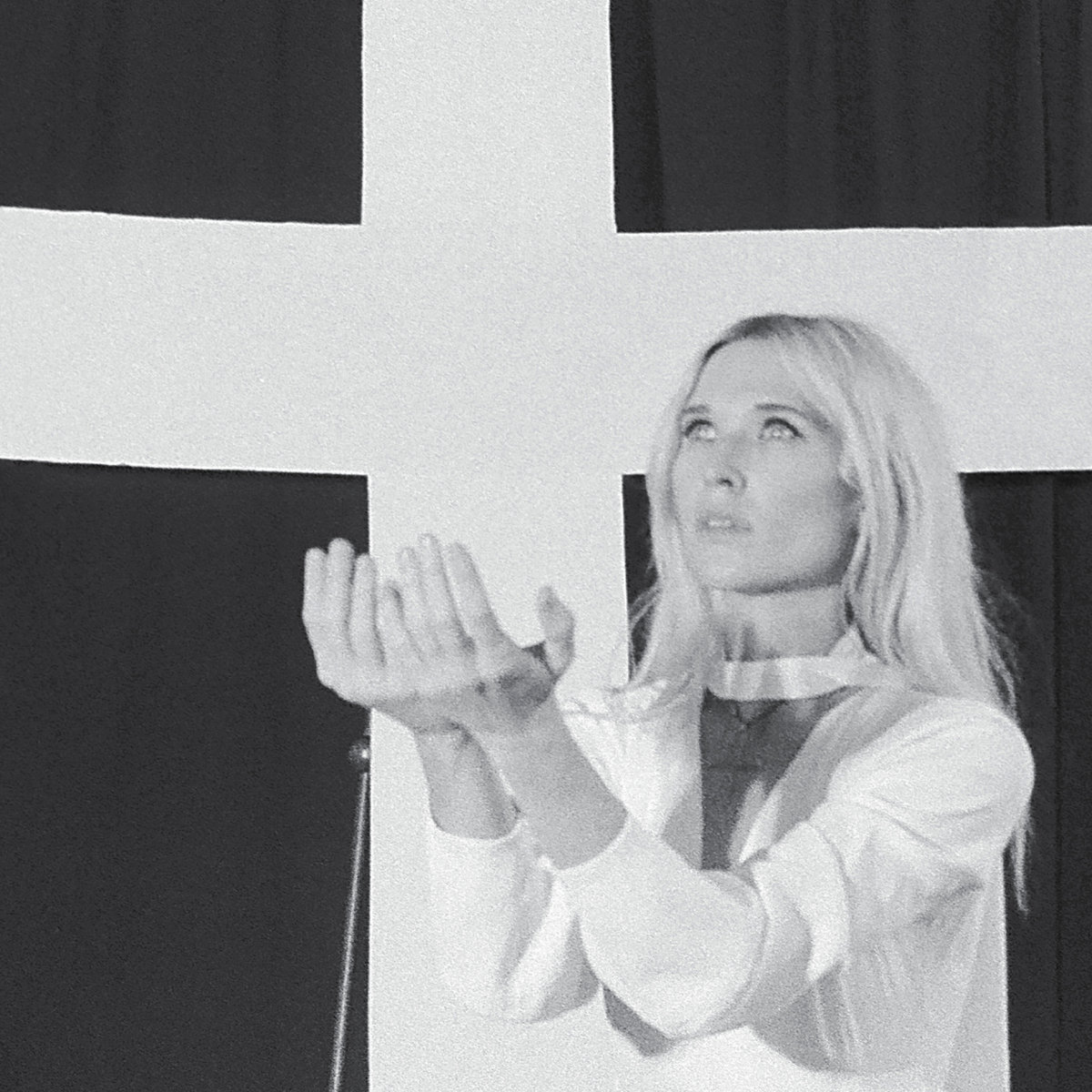
Much has been written about Natalie Bergman’s debut solo album, Mercy, which she self-produced and released May 7 through Third Man Records. Described as “a psychedelic spin on vintage gospel-soul” (Brooklyn Vegan), it comprises twelve original songs that combine praises and intercessions to God with expressions of grief over the recent, sudden death of her dad in a car accident. It’s excellent, and I wish I had time to write about it in more depth. Instead, let me just share four of the music videos Bergman created to coincide with the album, and commend to you the interviews she did with Aquarium Drunkard and Hero magazine, both in which she discusses her Christian faith, her visual and musical influences, and the impetus behind the album.

Natalie Bergman, Mercy

Chicago-bred and Los Angeles–based, Bergman formed a band with her brother Elliot after high school, the psych-pop duo Wild Belle; they eventually signed to Columbia Records, and have toured internationally.

In October 2019, when Wild Belle was getting ready to go onstage at Radio City Music Hall, the siblings learned that their father and stepmother had been killed by a drunk driver. To process her grief, Bergman retreated to the Benedictine Monastery of Christ in the Desert in New Mexico’s Chama Valley in February 2020, where she spent time in silence and going to chapel, where the resident monks prayed the Divine Office seven times a day, starting at 4 a.m. The seeds for the album were planted there, as she talked to God and listened.

As evidenced by comments on social media, some people are incredulous that a singer of this status and level of artistry would choose to sing about Jesus in a nonironic way, from a place of genuine faith. Could contemporary Christian music really be this beautiful? Could a sung spirituality that straightforwardly proclaims things like “Jesus is our friend” and “Oh, I need you, Lord” really have a broad appeal, one that extends beyond churchgoers, as Bergman’s music does?

Unwilling to take her new music at face value, some have even suggested that Bergman’s videos are making fun of Christianity, or that she’s using the name “Jesus” as some kind of metaphor. Bunk!

In addition to referring to Mercy as a gospel album, Bergman speaks openly, in secular media, about her love of “traditional praise music” and her desire to share “the good news” and her “testimony”—of hope in the midst of sorrow, of the companionship of Christ, of a Love that calls us home.

  • “I have my own poems that I want to sing about God and about my father . . . my own Psalms.” [source]
  • “I’m a Christian fighting the good fight, and I want that to be the message. I want the message to be love and the goodness of the creator and why we were created.” [source]
  • “I think that God has given me this platform to praise his name in a loving way. I would love this music to work through people and become a sort of healing agent for others.” [source]
  • “I need my art and I need my faith. . . . Faith has become my greatest consolation, and it’s really allowed me to see the light. I think that the relationship between music and faith go hand in hand—one needs the other.” [source]

Because Mercy completely defies the expectations set by the contemporary Christian music industry, on the one hand, and alternative music on the other, it has confounded some listeners. Music podcaster John J. Thompson—rightfully, I think—sees the album as in line with the countercultural Christian music (sometimes referred to as “Jesus Music”) of the 1970s, an association Bergman embraces.

(Related post: “Of pain and praise: Cherry Blossoms by Andy Squyres”)

I see Mercy as a gorgeous (and groovy!) example of moving through grief with hope, clinging unabashedly to God’s promises and inviting others to do the same. Whereas doubt and cynicism seem to be the order of the day in US culture, Bergman demonstrates a trust in the Divine that is childlike but not childish, simple but not simplistic. She confronts the pain of loss while also consenting to the uplift that God brings. She sings praises in the valley, plays in puddles.

Not only do I love Bergman’s sound; I dig her style too! You’ll see what I mean in the music videos below.

Purchase Mercy on Bandcamp, or wherever else you get your music.

“Talk to the Lord”

This is my favorite song on the album, and the video is so enchanting! Bergman designed and made by hand her wardrobe as well as the set pieces. The blocks were inspired partly by Sister Corita Kent, a sixties pop artist and nun, and the banners were prompted by Bergman’s memory of the liturgical banners her mother made for their church growing up.

Bergman also made the kite in the video, which she yokes to her back—a reference, I’m assuming, to Matthew 11:28–30, where Jesus says, “Come to me, all you that are weary and are carrying heavy burdens, and I will give you rest. Take my yoke upon you, and learn from me; for I am gentle and humble in heart, and you will find rest for your souls. For my yoke is easy, and my burden is light.”

In other video segments Bergman dances in the grass wearing a black leotard and a black cardboard cutout around her face with white stripes projecting outward like flower petals or rays of light. This recalls lines from the song: “He who makes the flowers face the sun / And all the creatures sing / He can make the heavens rain . . .” Her mourning is turned to dancing as she lets in the Light.

You can also watch Bergman perform “Talk to the Lord” with the Chicago Children’s Choir as part of GRAMMY.com’s Positive Vibes Only video series. What joy!

“Shine Your Light on Me”

This music video was filmed in 4:3 on television cameras from the 1960s, with an aesthetic inspired by a 1967 performance by Diana Ross and the Supremes. Bergman performs in a beehive hairdo and a vintage mirror dress that reflects the light (“light is the inherent message behind this music,” she says), on a set designed by Hanrui Wang.

The song includes contributions from Elsa Harris and the Larry Landfair Singers, whom Bergman previously sang with at her father’s funeral.

I Will Praise You”

This one has a reggae rhythm.

Home at Last”

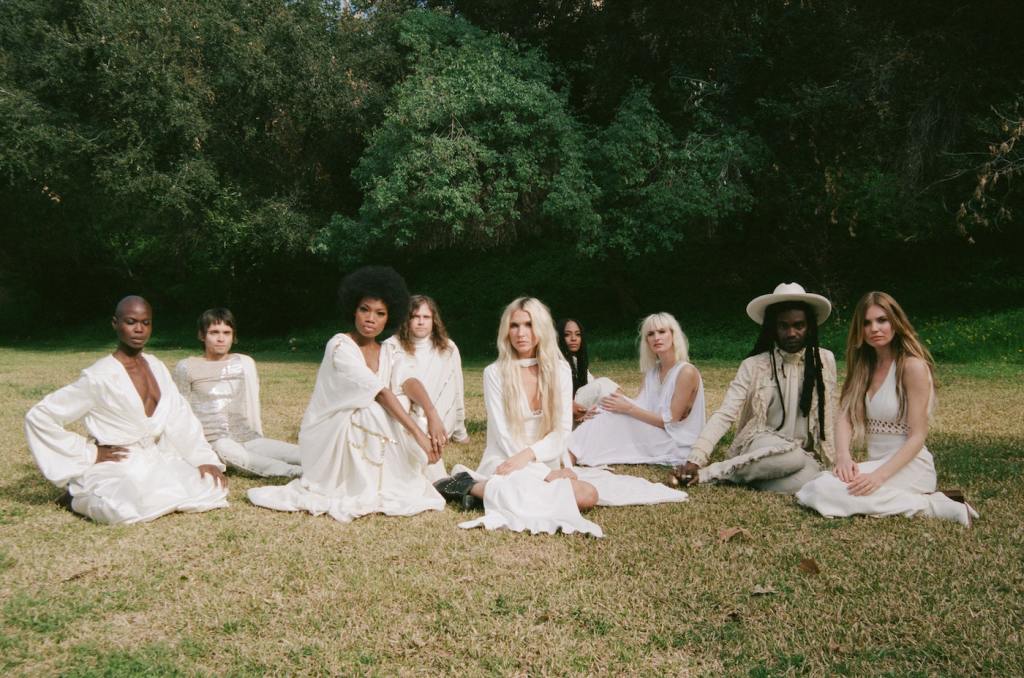
“Home at Last” was filmed in and around the historic Lincoln Avenue Methodist Church in the Montecito Heights neighborhood of Los Angeles, a Carpenter Gothic and Queen Anne–style building from the turn of the century that is now part of the Heritage Square Museum. Footage of the band inside the sanctuary is intercut with shots of them relaxing in a green space, eating fruit and enjoying one another’s company—a vision of paradise. They’re all dressed in white, per Revelation 7.