

Father Frans Claerhout (1919–2006) was a Belgian Catholic missionary to South Africa as well as a self-taught artist whose painting sales helped support the church’s work in and around the impoverished towns of Bloemfontein and Thaba ‘Nchu. For him, painting was an extension of his mission, for through it, he said, he sought to communicate joy and beauty. He often depicted the everyday scenes he observed around him—farmers harvesting grain, women carrying water or flowers, children playing, donkeys, chickens, sweethearts. Sometimes he transformed such scenes into biblical ones, such as the Annunciation, the Flight to Egypt, Peter’s denial, or the Good Shepherd.
Claerhout understood himself as having a dual vocation. In a 1999 interview with Esté de Klerk, he said, “I am a priest, but I am also an artist, and I have always combined the two. I am one and the same, Father Claerhout—priest and painter. Not two sides of a piece of bread but the whole piece.” In other words, he saw the two as perfectly integrated. He couldn’t turn over his priestly duties for part of the day to focus on his art, nor vice versa, because they were one and the same. In both roles, he administered the gospel.
With the money Claerhout made from his paintings, he funded the building of twenty churches and several houses for families in addition to the purchase of eight vehicles for the transport of schoolchildren, the sick, and the elderly. He liked to think of himself as “a breadwinner for the church.”
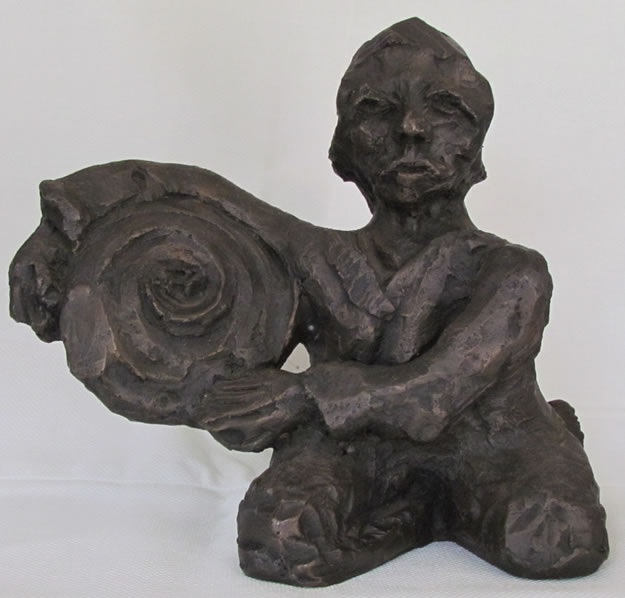
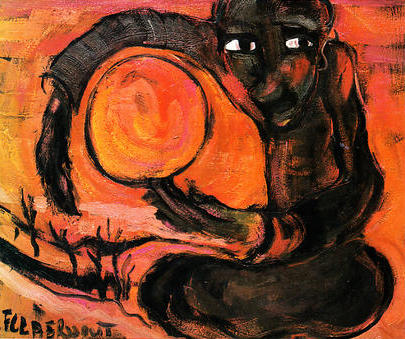
One recurrent motif in Claerhout’s work is what he called the “sun catcher” (sonnevanger): a person cradling the sun in his or her arms or toting it by hand or by cart. “Catching the sun” is a phrase that Claerhout used often in his teaching and poetry in reference to possessing joy—warmth, light—in Christ. It engages a theological wordplay that’s been in use since the earliest developments of the English language: sun/Son. Christ is both.

 Art & Theology