Roundup: Theological spinoff of “The Twelve Days of Christmas,” Advent art with Elissa Yukiko Weichbrodt, and four new Christmas song recordings

POEM SERIES: “Twelve Days of Advent” by Kate Bluett: This year on her blog, writer Kate Bluett [previously] is publishing a series of original metrical verses based loosely on the cumulative song “The Twelve Days of Christmas.” She calls it the Twelve Days of Advent and through it explores the theology of Christ’s coming. I love this creative, sacred spin on the popular seasonal ditty! Here’s where the series currently stands (my favorite poems are in boldface):

  1. “A Partridge in a Pear Tree”: Bluett imagines, in the tree of the knowledge of good and evil, a bird singing (representing, as I take it, God’s word), but Adam and Eve heed not his song, and, taking the tree’s forbidden fruit, find themselves exiled. The bird weeps for the alienation of his two friends, and wings his way east of Eden, into the home of a young maiden, a daughter of Eve, who receives him, shelters him, an act that leads to restoration. Bluett uses some of the language of late medieval English folksong, such as “with a low, low, my love, my love” and “welaway.”
  2. “Two Turtledoves”
  3. “Three French Hens”
  4. “Four Calling Birds”: This poem is brilliant. In it the four matriarchs in Jesus’s genealogy speak to Mary, tenderly calling her “Child” and rejoicing in her “bringing forth our life’s tomorrow.” Tamar, Rahab, Ruth, Bathsheba—they’ve long awaited redemption, and now they’re at its threshold. Mary’s yes to God’s call “set[s] [their] dry bones stirring, thrumming / with a hope [they’d] hardly dared.” They inform her that her vocation will involve great suffering (as we know, she’ll experience the brutal death of her son)—but her willingness to give up her son to the cross, to endure that rupture, will mean new life for the world.
  5. “Five Gold Rings”
  6. “Six Geese a-Laying”: Picking up the Isaianic language of the wilderness being made glad, the poetic speaker sings an eschatological vision of flocks coming home to “the orchard of the rood” (rood = cross) to lay and hatch eggs in nests once empty, now brimming with life.
  7. “Seven Swans a-Swimming”

I eagerly await the remaining five poems!

Update, 12/23/25:

    +++

    SUBSTACK SERIES: “Art + Advent 2025” by Elissa Yukiko Weichbrodt: The art historian Elissa Yukiko Weichbrodt [previously], author of Redeeming Vision and the Loving Look Substack, is one of my favorite writers. This Advent she is writing a weekly series of art reflections centered on the themes of hope, peace, joy, and love.

    >> “Week 1 // Hope: Abraham’s Oak and Sarah’s Laughter”: Looking at Henry Ossawa Tanner’s painting Abraham’s Oak, Weichbrodt writes about shadowy promise. She also considers, with reference to an early Byzantine mosaic of the Hospitality of Abraham, how to hope again after being wounded, as Sarah did, is a vulnerable thing. “As Advent begins, I find myself peering into a Tanner-like mist, seeing the dim outline of longed-for goodness taking shape in the distance. Sometimes I’m full of hope, but I’m also, like Sarah, sometimes full of armored laughter.”
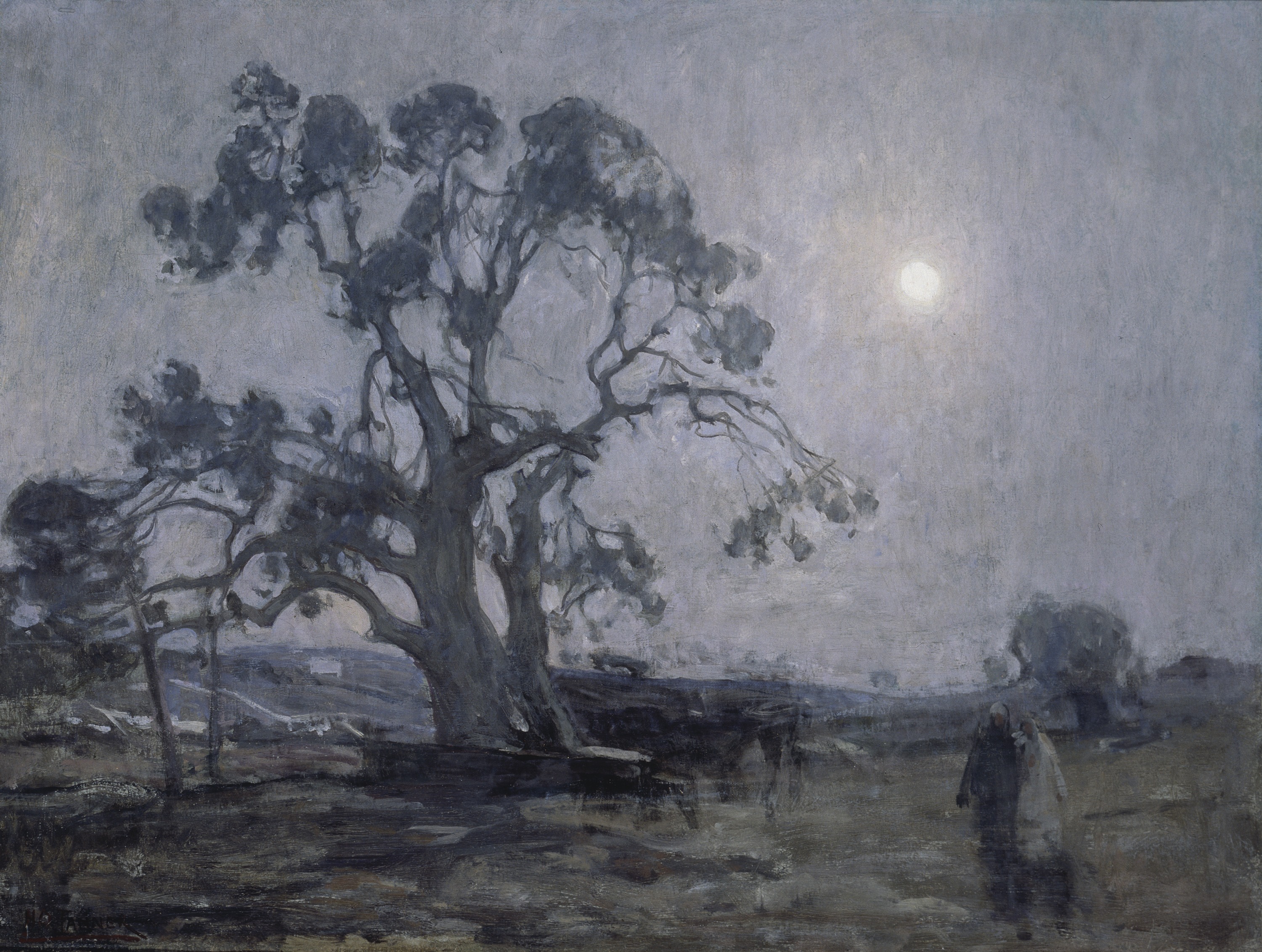
    Tanner, Henry Ossawa_Abraham's Oak
    Henry Ossawa Tanner (American, 1859–1937), Abraham’s Oak, 1905. Oil on canvas, 21 3/8 × 28 5/8 in. (54.4 × 72.8 cm). Smithsonian American Art Museum, Washington, DC.

    >> “Week 2 // Peace: A Stitch Pulling Tight”: “How do we do repair work in a fraying world with our own, fraying selves? What thread can stitch together all these gaping wounds?” Weichbrodt asks. She looks at Mary Weatherford’s monumental painting Gloria (new to me!), finding in the hot coral neon light blazing across the canvas resonance with Renaissance paintings of the Annunciation, which portray the Light of the World as the stitch that mends the tear between God and humanity.
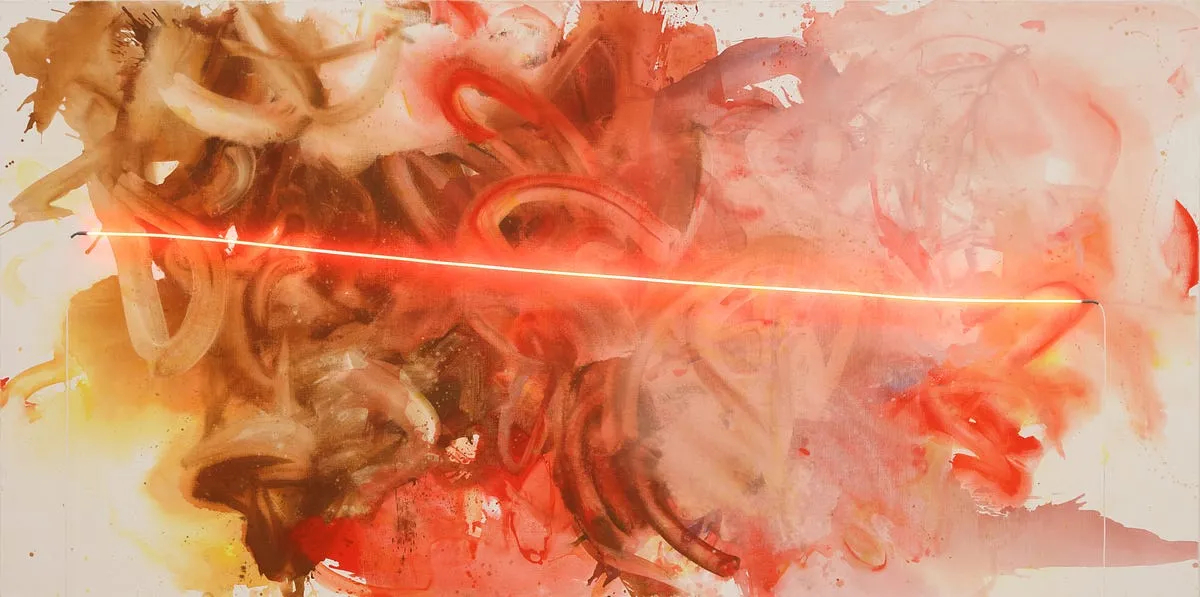
    Weatherford, Mary_Gloria
    Mary Weatherford (American, 1963–), Gloria, 2018. Flashe paint and neon on linen, 117 × 234 in. (297.2 × 594.4 cm). High Museum of Art, Atlanta.

    >> “Week 3 // Joy: Far as the Curse Is Found”: In this post, Weichbrodt explores nine Visitation paintings and one extraordinary embroidery. “Every time I see [a Visitation artwork],” Weichbrodt writes, “I encounter joy. It’s not that Mary and Elizabeth are always smiling. Often, their expressions are quite serious. But joy—deep, sustained, sustaining joy—circulates between them like an electrical current.” Justice, threshold, and fecundity are among the supplementary themes touched on.
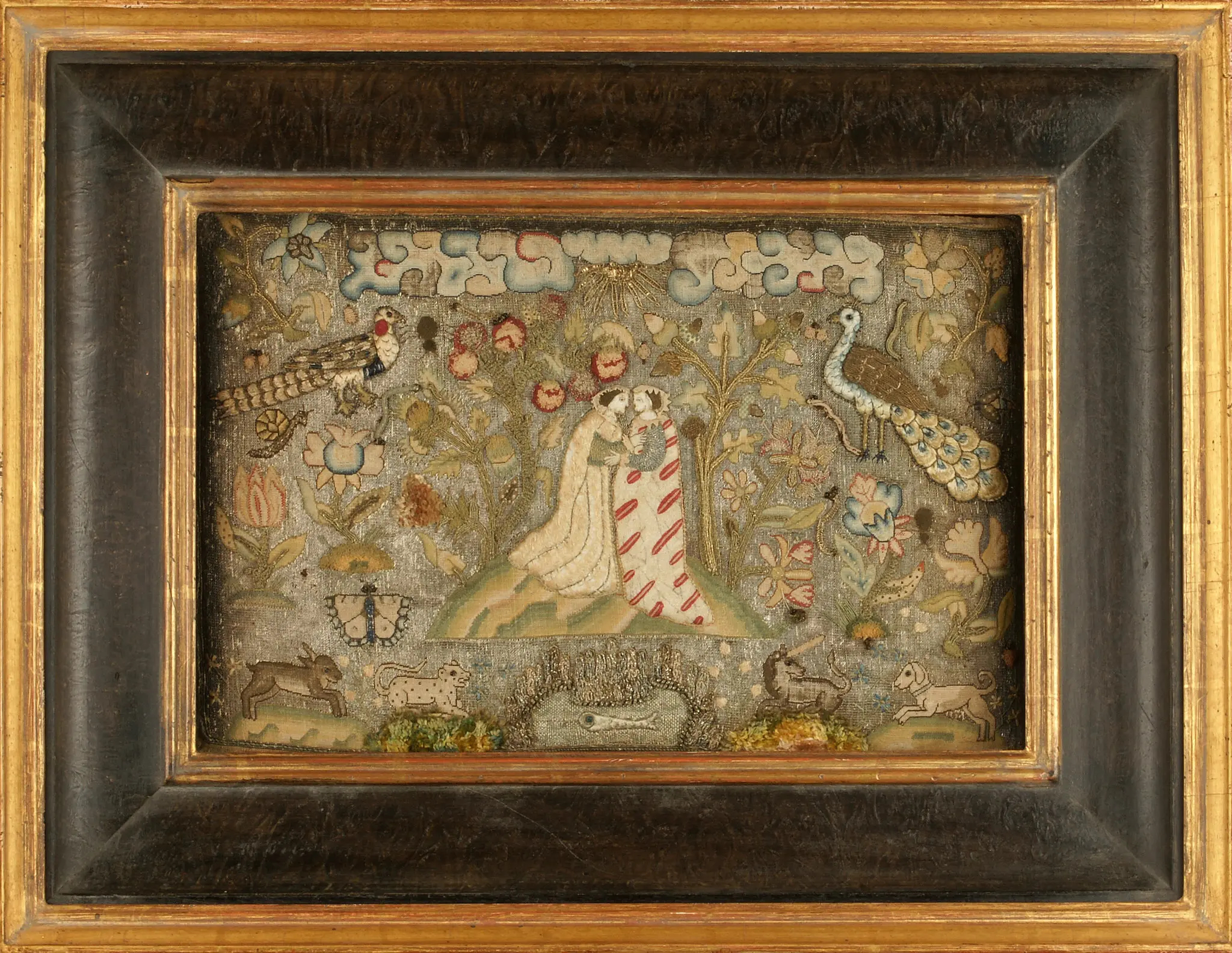
    Visitation embroidery
    The Visitation, England, first half of 17th century. Embroidery, 44.1 × 57 cm (framed). Ashmolean Museum, University of Oxford.

    Weichbrodt’s final Advent 2025 post, on love, will be published this Saturday. Weichbrodt’s final Advent 2025 post, on love, will be published this Saturday. (Update, 12/20/25: Week 4’s post, “Love In Between,” is now published. It centers on Vincent van Gogh’s painting Almond Blossoms, a gift for his newborn nephew, but also spends time with a Nativity mosaic by Pietro Cavallini and a Nativity painting by Gerard David.)

    +++

    SONGS:

    Here are four newly released Christmas songs of note: two originals, one lyrical adaptation of a classic, and a new arrangement.

    >> “War on Christmas” by Seryn: Seryn’s new album is titled War on Christmas. Here’s the title track:

    The refrain is:

    There is a war on Christmas
    But it’s not the one you think
    It’s in the news, it’s out of mind
    It happens overseas
    Cause as we sing the hymns and songs
    With families by our sides
    There is a war on Christmas
    Someone’s fighting to survive

    “War on Christmas” is a phrase some Christian conservatives in the US use to express their feeling of having their faith traditions attacked by the sinister forces of pluralism when people or signage greet them with a generic “Happy Holidays” instead of “Merry Christmas.” I roll my eyes big-time when I hear people complain about this, because it’s ridiculous for any American to assert that they are impeded from or ostracized for celebrating Christmas in this country, or to take offense that a stranger does not automatically assume their particular religious affiliation.

    Seryn’s song affirms that yes, there is a war on Christmas—only it’s a war not against personal religious freedoms in America but against peace, love, and the other values Christ came to teach and embody. When humans wage literal wars with literal weapons, killing and maiming each other and inducing mass terror—that’s an assault against Christ’s mass, with its message of welcome and reconciliation. So, too, when we perpetuate hate, whether on personal, national, or global scales. As another Christmas song puts it, “Hate is strong and mocks the song of ‘Peace on earth, goodwill to men.’”

    >> “O New Commingling! O Strange Conjunction!” by the Anachronists: The lyrics to this new song by the Anachronists [previously]—Corey Janz, Andrés Pérez González, and Jonathan Lipps—are a paraphrase from the sermon “On the Theophany, or Birthday of Christ” by Gregory of Nazianzus (ca. 329–390), one of the most influential and poetic theologians of the early church. Gregory delivered the sermon, labeled “Oration 38” in the Nicene and Post-Nicene Fathers series, at Christmastime in 380 in Constantinople, where he served as bishop. In section 13, the Anachronists’ source for the song, he expresses awe at the beautiful mystery of the Incarnation. Below is an excerpt from the public-domain NPNF translation.

    The Word of God Himself—Who is before all worlds, the Invisible, the Incomprehensible, the Bodiless, Beginning of Beginning, the Light of Light, the Source of Life and Immortality, the Image of the Archetypal Beauty, the immovable Seal, the unchangeable Image, the Father’s Definition and Word—came to His own Image, and took on Him flesh for the sake of our flesh, and mingled Himself with an intelligent soul for my soul’s sake, purifying like by like; and in all points except sin was made man. . . . O new commingling; O strange conjunction; the Self-Existent comes into being, the Uncreate is created, That which cannot be contained is contained. . . . He Who gives riches becomes poor, for He assumes the poverty of my flesh, that I may assume the richness of His Godhead. He that is full empties Himself, for He empties Himself of His glory for a short while, that I may have a share in His fullness. What is the riches of His goodness? What is this mystery that is around me? I had a share in the image; I did not keep it; He partakes of my flesh that He may both save the image and make the flesh immortal. He communicates a second Communion far more marvelous than the first.

    (Related post: Andy Bast sets to music a Nativity hymn by St. Ephrem)

    >> “Away in a Manger (Then to Calvary)” by Sarah Sparks: Singer-songwriter Sarah Sparks [previously] released a new EP, Christmas Hymns, last month, comprising five classic carols, including one with revised lyrics that further draw out the significance of the Incarnation. I’m a big fan of Sparks’s voice and her no-frills acoustic style.

    Away in the manger
    No crib for a bed
    The great King of Heaven
    Does lay down his head
    The stars he created
    Look down where he lay
    The little Lord Jesus
    Asleep on the hay

    And there in the manger
    The Maker of earth
    In riches and glory?
    No, born in the dirt
    With oxen and cattle
    With shepherds and sheep
    No stranger to weakness
    He loves even me

    And there in the manger
    Is our Servant-King
    He sits with the lowly
    He washes their feet
    Away in the manger
    Then to Calvary
    His birth, life, and death
    And his raising for me

    And there in the manger
    Is my greatest friend
    His mercy, his patience
    His grace know no end
    Be near me, Lord Jesus
    For all of my days
    In life and in death
    Till we meet face to face

    >> “Angels We Have Heard on High” by the Petersens: Last Friday the Petersens [previously] released a music video—shot at Wonderland Tree Farm in Pea Ridge, Arkansas—debuting their new bluegrass arrangement of one of my favorite Christmas carols. Banjo, mandolin, fiddle, acoustic guitar, dobro, upright bass—I love the instrumentation of the bluegrass genre and what it adds here, and the Petersens are consummate performers.  
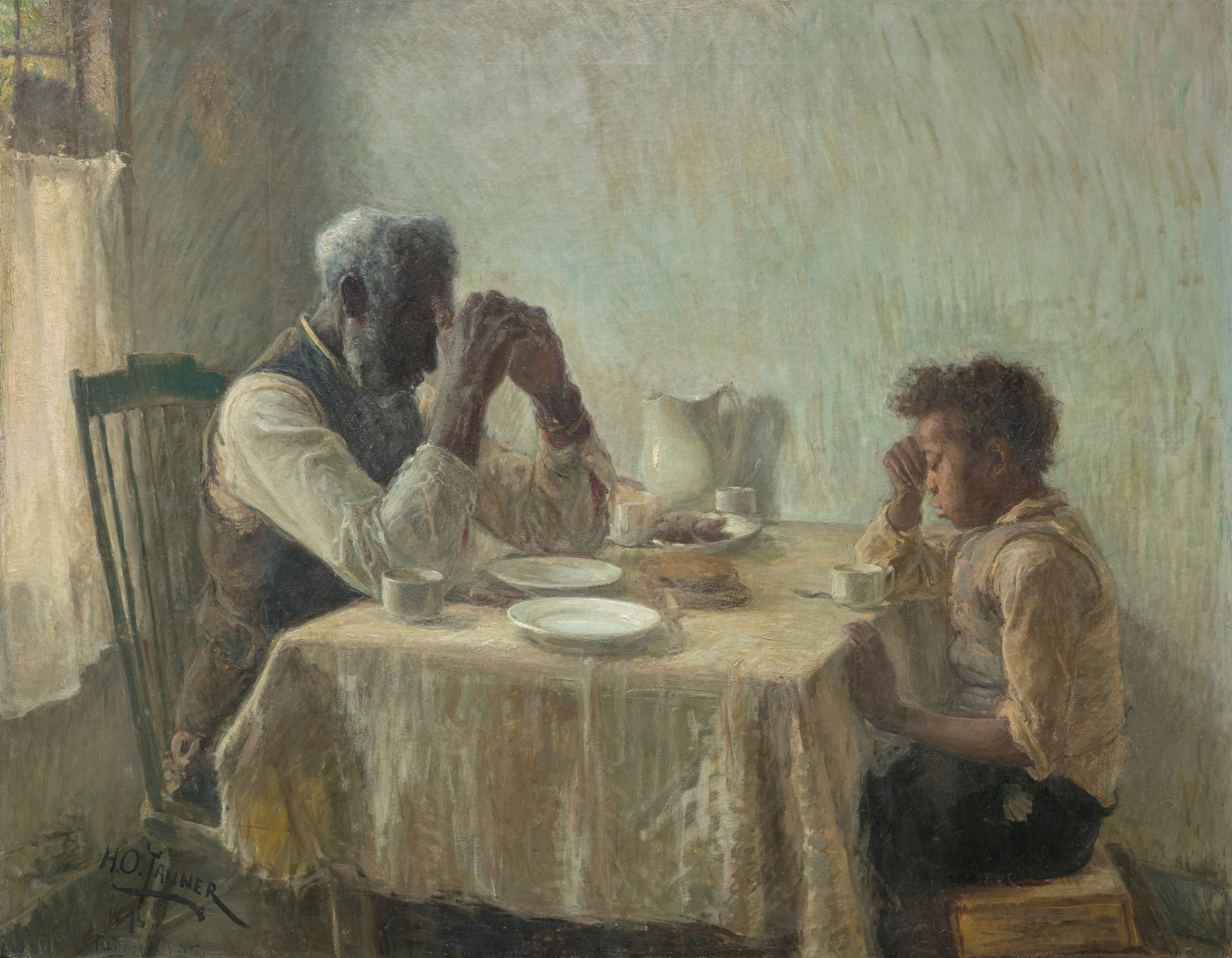
    “Unexpected” by Tom Darin Liskey (poem)

    Tanner, Henry Ossawa_The Thankful Poor
    Henry Ossawa Tanner (American, 1859–1937), The Thankful Poor, 1894. Oil on canvas, 35 1/2 × 44 1/4 in. (90.2 × 112.4 cm). Collection of the Art Bridges Foundation, Bentonville, Arkansas.

    Momma used to say
    That when Jesus turned the
    Loaves and fish
    Into a picnic
    For those hungry folks
    In the wilderness
    The God blessed victuals
    Tasted like mouth watering
    Mississippi catfish
    Deep fried in the best store bought meal
    Served with a healthy side helping
    Of iron skillet cornbread—
    Bread so fine that
    No one asked for butter or honey
    And nary a crumb hit the ground.
    She grew up an orphan
    In the Great Depression,
    Where low cotton prices
    And bad weather
    Killed farms and families—
    Times, she remembered, so hard
    That sometimes even dinner
    Was a miracle
    And prayers offered
    At the evening meal
    Wafted in the air
    Thick as coal oil smoke
    In the fragrance of gratefulness.

    This poem by Tom Darin Liskey was originally published June 16, 2019, on Kelly Belmonte’s All Nine blog. Used with permission of the author.

    Tom Darin Liskey is a photographer and a writer of fiction, nonfiction, and poetry. A graduate of the University of Southern Mississippi, he spent nearly a decade working as a photojournalist in Venezuela, Argentina, and Brazil. He is the author of the short story collection This Side of the River (2022) and, with Kelly Belmonte, the poetry-photography collaboration Transit (2022), as well as a contributor to The Cultivating Project. He lives with his family in South Carolina.

    Easter, Day 2: When the Sabbath was past…

    LOOK: The Three Marys by Henry Ossawa Tanner

    Tanner, Henry Ossawa_The Three Marys
    Henry Ossawa Tanner (American, 1859–1937), The Three Marys, 1910. Oil on canvas, 42 × 50 in. Fisk University Art Galleries, Nashville, Tennessee.

    Based on Mark 16:1–4, this painting shows Mary Magdalene (leading the way), Mary the mother of James, and Salome approaching the tomb of their rabbi, Jesus, the Sunday after his crucifixion. They came bearing spices to anoint his body. They expected it to be a mournful day.

    Imagine their response when they found the stone rolled away and the tomb empty! That’s the moment the artist Henry Ossawa Tanner shows us here. Not the Resurrection itself, but the emotional reaction to it, or rather to the evidence of it.

    What do you read on the faces of these women? Surprise? Confusion? Fear? Curiosity? Caution? Wonder? Love? Some mix thereof?

    They are illumined by the light of an angel who is out of frame and who will speak the news to them presently. Mary Magdalene lifts her hand to her face in a gesture of self-reassurance, while her companion raises her tensed arms at the elbow in a defensive posture, as I read it. Compelled but still somewhat guarded, they progress toward the mystery.

    Born and raised the son of a minister in the AME Church in Pennsylvania, Henry Ossawa Tanner (1859–1937) was an African American expat to Paris whose biblical paintings, inspired in part by his two trips to the Holy Land, garnered him international acclaim. In Beholding Christ and Christianity in African American Art, art historian James Romaine identifies Tanner as “the most artistically gifted and theologically astute American painter of biblical subjects.” A master of conveying nuanced mystery, “Tanner paints personal experiences rather than public spectacles,” Romaine writes, communicating more through suggestion than depiction and urging the viewer to undergo, like the figures in his paintings, their own experience of spiritual sight.

    LISTEN: “Dum transisset Sabbatum” (When the Sabbath was past) | Text: Mark 16:1–2 | Music by John Taverner, 1520s | Performed by Alamire, 2010

    Dum transisset Sabbatum, Maria Magdalene et Maria Jacobi et Salome emerunt aromata ut venientes ungerent Jesum. Alleluia.

    Et valde mane una sabbatorum veniunt ad monumentum orto iam sole.

    Gloria Patri et Filio et Spiritui Sancto.

    English translation:

    And when the sabbath was past, Mary Magdalene, and Mary the mother of James, and Salome, had bought sweet spices, that they might come and anoint him. Alleluia.

    And very early in the morning the first day of the week, they came unto the sepulcher at the rising of the sun.

    Glory be to the Father, and to the Son, and to the Holy Ghost.

    The third responsory at Matins on Easter Sunday, this text has been set to music by many composers. The motet by English Renaissance composer John Taverner is the most famous. The video above is just an excerpt. The full piece lasts about eight minutes and alternates between plainchant and polyphony.

    This song is on the Art & Theology Eastertide Playlist.

    Book Review: Beholding Christ and Christianity in African American Art, ed. James Romaine and Phoebe Wolfskill

    Typically when scholars interpret African American art, they do so through the primary lens of racial identity, often glossing over overt Christian themes, expressions of religious identity. Beholding Christ and Christianity in African American Art (Penn State University Press, 2017), edited by James Romaine and Phoebe Wolfskill, seeks to redress that dearth by examining the Christian content, including theological significance, of works by fourteen African American artists who came to maturity between the Civil War and the civil rights era: Mary Edmonia Lewis, Henry Ossawa Tanner, Aaron Douglas, Malvin Gray Johnson, Archibald Motley Jr., William H. Johnson, James Richmond Barthé, Allan Rohan Crite, Sister Gertrude Morgan, William Edmondson, Horace Pippin, James VanDerZee, Romare Bearden, and Jacob Lawrence. Many of these artists were themselves devout Christians, working out of internalized religious convictions and not merely outward tradition or market expectations.

    Beholding Christ and Christianity in African American ArtThe essayists certainly take race into account as a factor in the works discussed, but not the only factor; political, socioeconomic, and biographical circumstances are also considered. Christianity, however, as the title suggests, is given pride of place in the selection and examination of the fifty-five images reproduced in the book.

    One of the hallmarks of Beholding Christ is the diversity of styles, media, and denominational affiliations represented. As the book shows, African American art is no monolith, and neither is African American Christianity. While there is so-called primitive art and visionary art created by self-taught individuals with crayons, cardboard, or salvaged limestone, there is also neo-classical sculpture, as well as other academically informed works that tend toward impressionism or expressionism. Among the pages are rough-hewn stone sculptures, abstract watercolors, naturalistic oil paintings, and portrait photographs. While there are many depictions of Christ as black, there are also, per tradition, white Christs, and even a Middle Eastern one. What was most surprising to me was to see examples of art by African Americans from high-church traditions, like Catholicism and Anglicanism, who distinguish themselves from low-church Baptists, Pentecostals, and Holiness Christians. The editors are to the applauded for resisting the urge to perpetuate a narrow vision of “Negro art” in line with what the artists’ contemporary critics and viewers principally sought.

    Another hallmark of the book is the rigorous formal evaluation and content analysis of specific artworks that make up the bulk of almost every essay, encouraging readers to look deeply. Biographical information about the artists is well integrated and does not overwhelm the focus on the works themselves. Given this image-forward approach, I must say, I’m disappointed that a handful of works, for which color photographs should be available, are reproduced in black and white—for example, Motley’s Tongues (Holy Rollers), Edward Hicks’s Peaceable Kingdom, and Lawrence’s Sermon II and Sermon VII. Luckily these can be found online, but seeing as the entire book is printed in full color with glossy pages, I wonder why color photographs of these were not obtained.

    Lastly, I really appreciate the connections between artists made possible by the bringing together of these essays—some made explicitly by the authors, others implied. Douglas and Lawrence both dignified the art of black preaching by visualizing sermons. Crite and Johnson visualized the spirituals, but using very different approaches. Edmondson and Morgan were both motivated by a belief that they were divinely ordained to create by supernatural visions. Episcopal Crite and Catholic Motley intertwined class and religion in their works.

    This book is essential reading for anyone in the fields of Christianity and the arts or African American studies. As one belonging to the former category, I see these artworks as part of not only art history but Christian history, and as worthy of being studied by Christians as any theological treatise, written scripture commentary, saint’s biography, or church trend. These artworks teach theology; they encapsulate hopes and fears; they comment on public issues; they expose sin; they lead us in celebration and in lament; they help us to re-member the works of Christ, and invite us into communion with him; they tell us who we are and from whence we’ve come; they cast a biblically grounded vision for the future.

    What follows is a brief summary of each chapter.

    In chapter 1, Kirsten Pai Buick traces the network of patronage that supported Catholic sculptor Mary Edmonia Lewis, as well as the multiple geographic moves she made to further her career: from Boston to Rome (1865), Rome to Paris (1893), and Paris to London (1901). Because many of Lewis’s religious works have been lost, little attention is given in this chapter to the art itself; the only art illustration is her conventional-looking Bust of Christ (1870), mentioned cursorily in the text.

    In chapter 2, James Romaine demonstrates the shift in Henry Ossawa Tanner’s paintings from the visual clarity favored by nineteenth-century academic art to a mood of personalized spiritual mystery favored by the twentieth-century symbolists. He examines four paintings as representative of this move—The Resurrection of Lazarus (1896), Nicodemus (1899), The Two Disciples at the Tomb (ca. 1906), and The Disciples See Christ Walking on the Water (ca. 1907)—revealing how each explores the complex exchange between vision and belief.

    Nicodemus by Henry Ossawa Tanner
    Henry Ossawa Tanner (American, 1859–1937), Nicodemus, 1899. Oil on canvas, 85.5 × 100.3 cm (33.7 × 39.5 in.). Pennsylvania Academy of the Fine Arts, Philadelphia.

    In chapter 3, Caroline Goeser examines the seven gouaches Aaron Douglas made in response to James Weldon Johnson’s God’s Trombones: Seven Negro Sermons in Verse. These images align biblical narrative with modern black experience to tell socially resonant stories. In its attention to the African Simon of Cyrene, for example, The Crucifixion (1927) promotes an “Ethiopianist” narrative, influenced by the late nineteenth-century biblical scholar Edward W. Blyden. Simon looms large as the most prominent figure, heaving Christ’s heavy cross over his shoulders, heroized by his vigorous stride and his active gaze toward God’s light above. Bearing similarities to that of the trudging African American migrant in Douglas’s On de No’thern Road (1926), this pose subtly associates the Great Migration north with the burdensome road to Calvary.

    Crucifixion by Aaron Douglas
    Aaron Douglas (American, 1899–1979), The Crucifixion, 1927. Oil on Masonite, 121.9 × 91.4 cm (48 × 36 in.) Private collection.

    Up Golgotha’s rugged road
    I see my Jesus go.
    I see him sink beneath the load,
    I see my drooping Jesus sink.
    And then they laid hold on Simon,
    Black Simon, yes, black Simon;
    They put the cross on Simon,
    And Simon bore the cross.

    In chapter 4, Jacqueline Francis examines the dozen or so paintings Malvin Gray Johnson created between 1927 and 1934, the final years of his life, as visual interpretations of Negro spirituals. Modernist in style, these paintings, she says, united old and new and high and popular expressions, helping to revive and elevate this genre of black folk music that saw diminishing audiences during the Great Depression. Swing Low, Sweet Chariot (1928), a night scene painted in thick, dark hues and mounted in a gold lunette frame reminiscent of medieval icons, received the most critical attention in Johnson’s time, eliciting comparisons to Albert Pinkham Ryder. The artist said,

    I have tried to show the escape of emotion which the plantation slaves felt after being held down all day by the grind of labor and the consciousness of being bound out. Set free from their tasks by the end of the day and the darkness, they have gone from their cabin to the river’s edge and are calling upon their God for the freedom for which they long. (qtd. 56)

    Swing Low, Sweet Chariot by Malvin Gray Johnson
    Malvin Gray Johnson (American, 1896–1934), Swing Low, Sweet Chariot, 1928. Oil on canvas, 124.5 × 73.5 cm (49 × 29 in.). Studio Museum in Harlem, New York.

    Continue reading “Book Review: Beholding Christ and Christianity in African American Art, ed. James Romaine and Phoebe Wolfskill”

    Three Advent video series

    “Art for Advent 2017” (Dr. James Romaine): For the third year in a row, my friend James Romaine, an art historian, is releasing four videos in which he discusses historically significant artworks keyed to the season of Advent. Last year he looked at works from the Met Cloisters; this year he’s focusing on paintings by the African American artist Henry Ossawa Tanner (1859–1937). If you want to learn more about Tanner, see Romaine’s essay on him in the recently published book Beholding Christ and Christianity in African American Art, which Romaine coedited; I own a copy and look forward to reviewing it on the blog in the new year! (Update: Here’s the book review.)

    Annunciation (detail) by Henry Ossawa Tanner
    Henry Ossawa Tanner (American, 1859–1937), The Annunciation (detail), 1898. Oil on canvas, 57 × 71 1/4 in. (144.8 × 181 cm). Philadelphia Museum of Art. Photo: Victoria Emily Jones.

    Romaine’s first “Art for Advent 2017” video covers Tanner’s Annunciation, which has been the header image of this website for the last two months. I saw the painting in person for the first time this summer at the Philadelphia Museum of Art, and it transfixed me. (Along with Rogier van der Weyden’s Crucifixion, it was my favorite piece on display.) It was the first major painting of a biblical subject that Tanner completed following his six-week trip to the Holy Land, undertaken as part of his search for historically authentic imagery.

    First Sunday of Advent: The Annunciation:

    Second Sunday of Advent: The Holy Family:

    Third Sunday of Advent: Flight into Egypt:

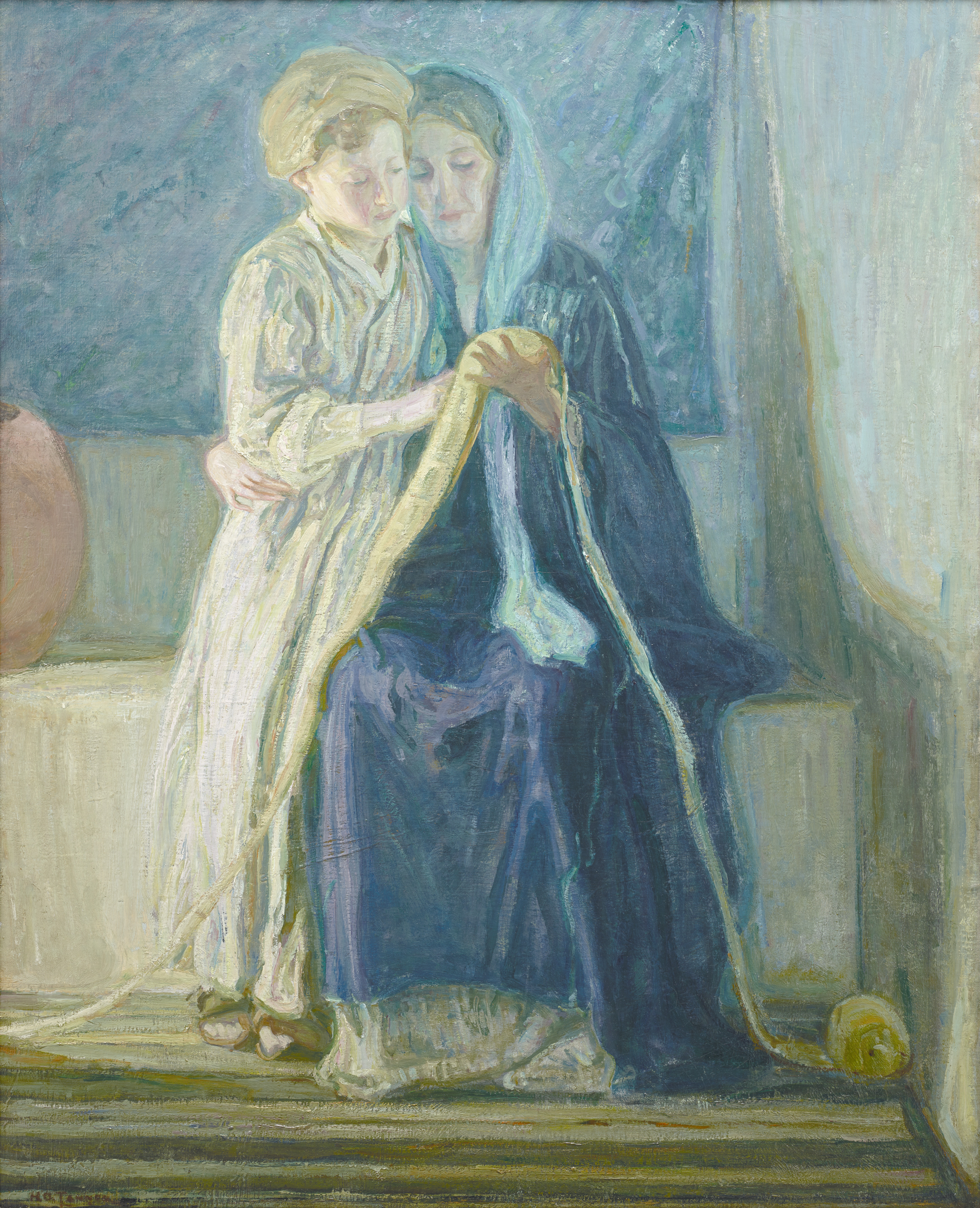
    Fourth Sunday of Advent: Christ and His Mother Studying the Scriptures:

    To view “Art for Advent” videos from previous years, visit Romaine’s Seeing Art History YouTube channel.

    +++

    “The Joyous Mysteries” (The Liturgists): Meditating on the five “Joyous Mysteries” of Christ’s childhood—the Annunciation, the Visitation, the Nativity, the Presentation in the Temple, and the Finding of Christ in the Temple—is a Catholic devotional practice, part of “praying the rosary,” that some Protestants have found spiritually helpful and have adapted to their own quiet times with God.

    To draw us into the movements of the Christmas story, The Liturgists invited four visual artists to create a work based on one of the first four Joyous Mysteries. They then shot two videos for each artwork—one an “Artist Narrative,” where the artist talks about his or her work and process, and the other an “imago divina” meditation led by Mike McHargue (“Science Mike”), which guides us through looking at and responding to the artwork. The videos are backed by original instrumental compositions by Tim Coons of Giants & Pilgrims and one by Jon Leverkuhn, which you can download for free on Bandcamp. You can also purchase signed, limited edition art prints for $35 each, or $95 for a full set.

    Here is the list of videos; I’ve embedded my two favorites (I’m partial to figurative art):

    1. The Annunciation, with art by Betony Coons: Meditation | Artist Narrative

    2. The Visitation, with art by Wes Sam-Bruce: Meditation | Artist Narrative

    3. The Nativity, with art by Katie Mai-Fusco: Meditation | Artist Narrative

    4. The Presentation, with art by Tony Garza: Meditation | Artist Narrative

    Thank you, Liturgists and friends, for this impressive Advent offering!   Continue reading “Three Advent video series”

    Mother Mary teaches her son Jesus

    Christ and His Mother Studying the Scriptures by Henry Ossawa Tanner
    Henry Ossawa Tanner (American, 1859–1937), Christ and His Mother Studying the Scriptures, ca. 1909. Oil on canvas, 48.8 × 40 in. Dallas Museum of Art, Dallas, Texas.

    “The Son of Man” by Charles L. O’Donnell

    He lit the lily’s lamp of snow
    And fired the rose’s sunset heart,
    He timed the light’s long ebb and flow
    And drove the coursing winds apart.

    He gathered armfuls of the dew
    And shook it over earth again,
    He spread the heaven’s cloth of blue
    And topped the fields with plenteous grain.

    He tuned the stars to minstrelsy
    As twilight soft, as bird song wild,
    Who learned beside His Mother’s knee
    His prayers like any other child.

    This poem was originally published in The Dead Musician, and Other Poems by Charles L. O’Donnell (New York: Laurence J. Gomme, 1916) and is now in the public domain.

    +++

    Mary gave her son everything she had—body, mind, and soul. These three served as the seedbed of his maturation. She surrendered her womb, where Jesus progressed through the various stages of embryonic and fetal development as he took in the nutrients supplied by her blood. Once born, she gave him her body’s milk, and often forwent sleep to attend to his cries, a deprivation all mothers have known. But her provision was more than physical. She also nurtured, with the help of Joseph, his intellectual, emotional, and spiritual growth, fulfilling as best she could her parental calling.

    O’Donnell’s poem juxtaposes the deity of Christ—in particular, his role as Creator and Sustainer of the universe—with his humanity, highlighting how he is one who both shapes and was shaped. He chose the color of each and every flower, he programmed the angular speed of Earth’s rotation and its atmospheric circulation patterns, he wrote the laws of thermodynamics, he makes energy-rich grain to grow under his vast expanse of sky, and he conducts the choir of Nature: makes the stars to sing in soft duet with the twilight, then cues in the wild avian melodies of the morning. Monumental feats—all these. Testaments to his mastery and might.

    And yet as the incarnate boychild Jesus of Nazareth, he sat at his mother’s knee, learning from her the sacred stories of his people, and how to address the Father they had in common (albeit in different senses).

    We know from her Magnificat that Mary was a woman of deep passion and yearning, gratitude and praise, and from the Annunciation account, we get a sense of her courageous trust. Luke 2:19 points to her contemplative nature, and the Passion narratives attest to her faithfulness. These qualities characterized the way she lived and infused the spiritual instruction she gave her son.   Continue reading “Mother Mary teaches her son Jesus”