In today’s Christmas devotional, there’s a convergence of three Native cultures of Turtle Island (North America): Jemez, Dakelh, and Kwakwaka’wakw.
LOOK: Jemez Nativity by Maxine Toya
Maxine Toya (Jemez Pueblo, 1948–), Jemez Nativity, 2014. Polychrome pottery figures, red micaceous slip, tallest figure 8 1/2 inches high. Photo: Blair Clark, courtesy of Susan’s Christmas Shop, Santa Fe.
A granddaughter of Persingula Gachupin and a daughter of Marie Romero (both eminent Jemez Pueblo potters), Maxine Toya grew up assisting her family with pottery chores and painting. She began making her own pottery in 1974 and is one of the most renowned living potters from Jemez Pueblo, a census-designated place in Sandoval County, New Mexico. She has won numerous awards at the prestigious Santa Fe Indian Market, which every August brings together a thousand-plus Indigenous artists from more than two hundred tribal nations to exhibit and sell their work.
I learned about this artist from the wonderful book Nativities of the Southwest by Susan Topp Weber, the owner and operator of Susan’s Christmas Shop in Santa Fe. The book compiles dozens of nativities made with local clays and other materials by Pueblo Indians, Navajo Indians, and Spanish and Anglo artists of New Mexico and Arizona. Maxine Toya’s nativity appears on page 47. Weber writes,
Maxine’s donkey in this nativity has a blanket painted with a fringe similar to the one made by her mother, Marie [see page 46]. . . . She sometimes combines her figures into groups. Her standing figures all have closed eyes. The carefully painted detail distinguishes this nativity, as well as the sweet little Pueblo drummer boy with his drumstick raised in the air. The angel’s wings have a lovely feather design.
You can watch Maxine Toya give a pottery demonstration with her daughter Domnique Toya, also a potter, in this 2022 video from the Museum of Indian Arts and Culture. (I cued it up to Maxine’s first section.)
Cheryl Bear (DMin, The King’s University) is an award-winning singer-songwriter, speaker, and workshop leader from Nadleh Whut’en First Nation in central British Columbia, whose work explores the intersection of Christian faith and First Nations cultures. She is a founding board member of NAIITS: An Indigenous Learning Community (formerly the North American Institute for Indigenous Theological Studies), an organization that addresses biblical, theological, and ethical issues from Indigenous perspectives. She travels throughout North America telling the Great Story of Jesus both within and outside Indigenous communities, bringing to bear her Indigenous worldview and values.
Bear’s song “Welcome Our Creator” is from her sophomore album, The Good Road. It opens with a drumbeat and then her singing a series of vocables (small nonlexical “words” without semantic meaning). “The song is played to the drum beat of my people,” the Dakelh (Carrier), she writes in the liner notes. “I use the words ‘Gilakas’la Gikumi’ from the Kwakwaka’wakw Nation,” which translate to “Welcome our Creator.”
The song’s title on the CD sleeve and in online metadata does not have a comma, suggesting that the phrase, if interpreted in relation to Christmas, is an exhortation to give Jesus welcome, to gladly and hospitably receive him. But it could also be sung as a greeting to the incarnate God himself: “Welcome, our Creator!”
Outside the Christmas context, the song might be sung during an assembly as an acknowledgment of Creator’s presence.
The RFP is open to interested individual artists, artist collaboratives, church leaders, scholars/theologians, arts-affiliated organizations, faith-based nonprofit organizations, or institutions who reside or operate in the United States. Eligible applicants may submit proposals with requests ranging from $50,000 to $250,000 that may be used over one year. Chosen applications will then be requested to submit a full grant proposal for the competitive 2025 Spring Grant Program.
The 2025 grant-seeking theme is “Performing Shalom.” Applicants are invited to reflect the theme in their project or program, but it is not a requirement when applying for a grant. Please click here for more information.
+++
SUBSTACK POST: “On Artists, Kings, and Mending the Multiverse” by Houston Coley: A wise and rousing reflection after the US presidential election. Houston Coley is an Atlanta-based documentary filmmaker, video essayist (YouTube @houston-coley), podcaster, and writer on TV and film, who “cultivat[es] spiritual imagination around art and pop culture,” as one person put it.
+++
POEM: “What to Do After Voting” by James A. Pearson: The poet James Pearson shared this poem from his collection The Wilderness That Bears Your Name (Goat Tail Press, 2024) on Instagram on Election Day last Tuesday. He writes, “What’s driving [all our voting] are two things: Our common needs for love, safety, and belonging. And our often conflicting attempts to meet them. Rumi wrote: ‘Out beyond ideas of wrongdoing and rightdoing, there is a field. I’ll meet you there.’ History is offering us a fork in the road. Let’s turn towards what we can do—vote. Then let’s find each other in that field and do the long, slow work of building a world where everyone has access to the love, safety, and belonging they need.” [HT: Amy Peterson]
He writes further on his website, “This poem doesn’t pretend to be a full prescription for what our country needs. It’s just my way of acknowledging that all electoral choices are imperfect. Because even more important is what happens between elections—the long, slow work of building a culture of love and justice for our politicians to live up to. And the better we do that work, the better our options will be next time elections come around.”
+++
SONG: “Apsáalooke Praise Song,” sung by Sarah Redwolf (née Bullchief):Sarah Redwolf is a member of Crow Nation in Montana and a follower of the Jesus Way whose Apsáalooke name is Baawaalatbaaxpesh (Holy Word). Here she sings a praise song by her grandmother Xáxxeáakinnee (Rides the Painted Horse). The Apsáalooke lyrics are below; I couldn’t find an English translation, and the artist has not yet returned a message I sent ten days ago, but I believe the song was written with Christian intent, as Christianity has been in Sarah’s family for generations. Her father, Duane Bull Chief, is a traveling Pentecostal preacher and the leader, with his wife, Anita, of Bull Chief Ministries, and Sarah has often led worship for church services and other Christian gatherings. What a beautiful voice!
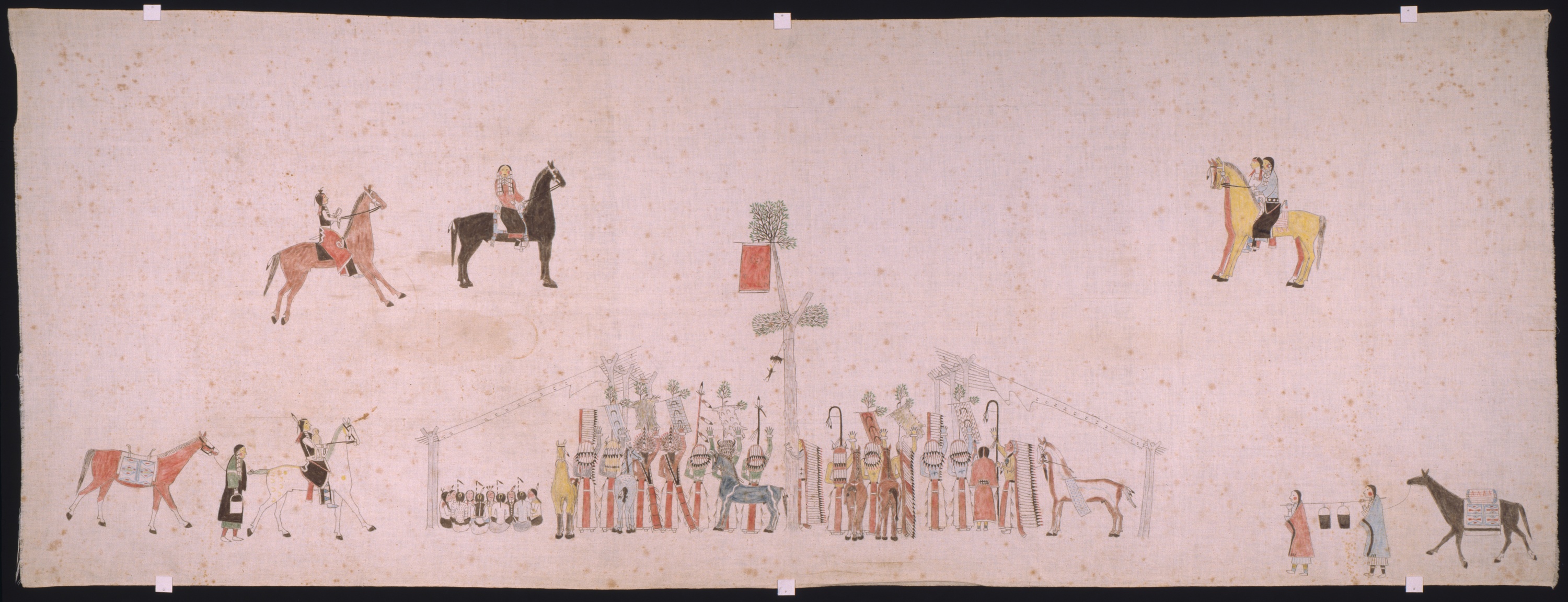
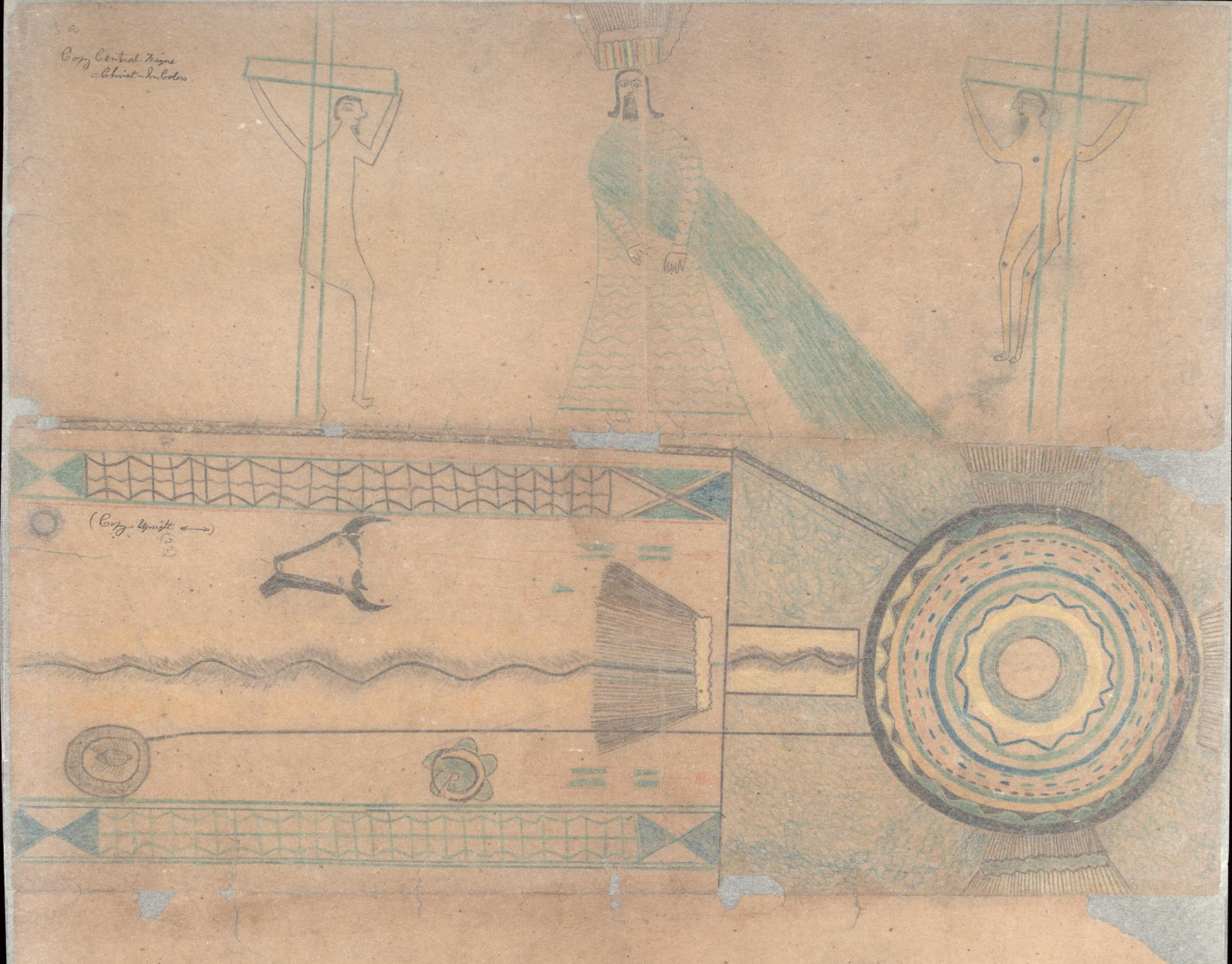
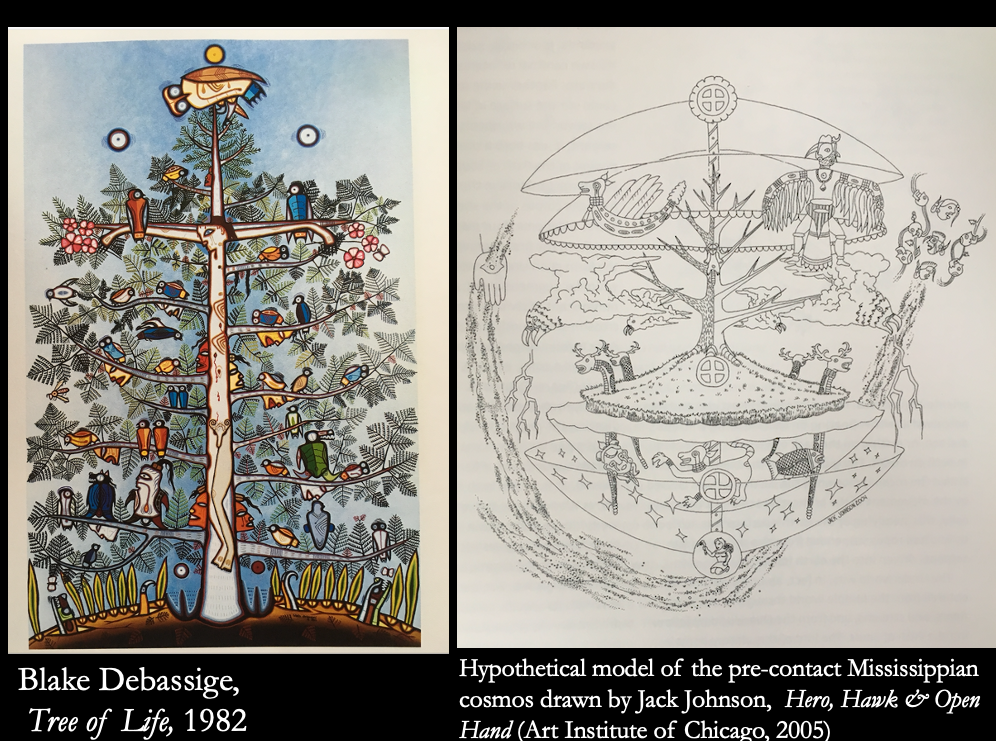
In conversation with Chesterton’s The Everlasting Man, Milliner explores contact points between Christianity and Indigenous North American art, symbol, ritual, and history. The discussion touches on pre-contact petroglyphs carved into Teaching Rocks near Peterborough, Ontario (one of them, a sun figure, quite possibly representing Gitchie Manitou, the Great Spirit—Christ incarnate?), the Sun Dance (which many Native Christians interpret as a prophecy of the Crucifixion), the Ghost Dance (about resurrection and renewal), the Mishipeshu (an underwater panther often representing death, which some Native Americans used to characterize white settlers), the Thunderbird, Black Elk’s vision of a mysterious figure with holes in the palms of his hands, and the cross as an axial tree conjoining the above and below worlds. Just as ancient Hebrew culture contained pointers to Christ, so too, Milliner argues, do the Indigenous cultures of North America. Artists, preachers, and visionaries from among the Ojibwe, Kiowa, Lakota, and other peoples are “our North American Virgils,” he says—Virgil being a Latin poet whose Fourth Eclogue, written around 40 BCE, prophesied the birth of a divine savior who would usher in a golden age.
Sun Dance Scene, Teton Lakota, Central Plains or Northern Plains, Wyoming, ca. 1885. Muslin cloth with watercolor paint, 36 × 91 1/2 in. (91.5 × 232.5 cm). Art Institute of Chicago. See 32:55 of Milliner’s lecture.Vision of a Kiowa man named Fiqi (Eater), received during the revived Ghost Dance, of Christ blessing the ceremony, collected by ethnologist James Mooney, ca. 1890. Pencil and crayon drawing from MS 2538, National Anthropological Archives, Smithsonian Institution, Washington, DC. See 38:49 of Milliner’s lecture and pages 11–12, 130, 142–44 of his book The Everlasting People.See 59:24 of Milliner’s lecture and page 8 of his book The Everlasting People
There’s much more I could say, as there’s certainly more nuance and complexity to this, but instead let me simply refer you to Milliner’s lecture and finely footnoted book. There’s also a great audio interview with Milliner about The Everlasting People from November 2021, conducted by Jason Micheli for the Crackers and Grape Juice podcast.
+++
VIDEO: Chapel service led by Terry Wildman, November 6, 2023, Azusa Pacific University, California: Earlier this year I got to have dinner with Terry Wildman [previously] and his wife, Darlene, who form the Nammy Award–winning musical duo RainSong. It was exciting to hear all about their work with Native InterVarsity and other projects. They live in Maricopa, Arizona, on the traditional lands of the Pima and Tohono O’odham peoples. Wildman, who has both Ojibwe and Yaqui ancestry, was the lead translator, general editor, and project manager of the First Nations Version: An Indigenous Bible Translation of the New Testament. (The nativity narrative from the FNV translation of the Gospel of Luke, you may be interested to know, was adapted into an illustrated book titled Birth of the Chosen One: A First Nations Retelling of the Christmas Story, which just released this fall.)
Last November Wildman led a worship service for Azusa Pacific University students. Here are the key elements:
The opening three minutes are an animated video of the gospel story, narrated by Terry Wildman to a flute accompaniment by Darlene Wildman
8:12: Blessing of the Gabrielino-Tongva people
9:38: The Lord’s Prayer (FNV)
10:57: Sermon: “Worship in Spirit and in Truth” (John 4:1–42)
21:17: Reading of Psalm 8 (FNV)
23:48: Song: “Lift Up Your Heads” by Terry and Darlene Wildman, based on Psalm 24
28:40: Song: “Hoop of Life” by Terry Wildman – Native American powwows often feature hoop dancers, who dance a prayer that Creator will bring harmony and goodwill to all the gathered people. Wildman says, “I look at Jesus and I call him the Great Hooper Dancer. Because he’s the one who ever lives to pray for us, to make intercession for us, and when he dances his prayer, he is bringing harmony and balance to the whole world, to the whole universe. And if we follow him, if we give our hearts to him, he will produce that harmony and balance in us and with each other.”
35:56: Song: “Nia:wen” (Mohawk for “Thank You”) by Jonathan Maracle of Broken Walls


 Art & Theology