Roundup: Why go to church, “Good Trouble,” “Sacred Songs Suite,” and more

SPOTIFY PLAYLIST: February 2025 (Art & Theology): I put these monthly playlists on pause for December and January, since I’ve already published long, dedicated playlists for the seasons of Advent, Christmas, and Epiphany, but now I’m picking back up my usual smorgasbord routine. Enjoy two hours of songs handpicked by me!

+++

PODCAST EPISODE: “Nadia Bolz-Weber: From Fundamentalism to Stand-Up Comedy to Ordained Pastor,” No Small Endeavor, January 27, 2025: “Christian Fundamentalism is often looked down upon for its dualistic, black-and-white outlook, which is often used for policing behavior. But, Nadia Bolz-Weber explains, these are the same extreme tendencies that she found in secular activism after she left the church. Later in life, after working as a comedian and entering recovery, Nadia began to untangle the mindset that had taken her from one extreme to the other. Her long journey has since led her to becoming a Lutheran pastor and a three-time bestselling author. In this episode, she tells her story.”

In conversation with host Lee C. Camp, Bolz-Weber [previously] discusses some of the gifts and wounds from her Church of Christ upbringing; how comedy prepared her for preaching; the influence of AA’s Twelve-Step Program on her life, especially her necessary reckoning with her powerlessness (“it doesn’t mean you don’t have access to power; it’s just that it doesn’t all come from you”); moving through the grief of losing her nephew; and her Red States Revival tour, which since the date of recording has been actualized!

+++

SUBSTACK POST: “Why go to church, anyway” by Amy Peterson, Making All Things New, November 20, 2024: Amy Peterson is an Episcopal priest from Asheville, North Carolina, and the author of one of my favorite books from 2020, Where Goodness Still Grows: Reclaiming Virtue in an Age of Hypocrisy. In this Substack post from last November, she shares some responses from when she asked on Instagram, “Why did you stop going to church?” and, to a different set of respondents, “Why do you go to church?” Then she answers the second question for herself, giving fourteen reasons why she would still go to church even if it wasn’t her job. I (a regular churchgoer who has been hurt in the past by the church, though not to the degree that many others have been) find these reasons so compelling and encouraging.

+++

SONG: “Good Trouble by Thomas Keesecker: This choral work was inspired by the catchphrase of the civil rights icon John Lewis (1940–2020), who repeatedly called on Americans to “get in good trouble”—to agitate for liberty and justice for all. For example, on June 27, 2018, he tweeted, “Do not get lost in a sea of despair. Be hopeful, be optimistic. Our struggle is not the struggle of a day, a week, a month, or a year, it is the struggle of a lifetime. Never, ever be afraid to make some noise and get in good trouble, necessary trouble.” Similarly, on December 4, 2019, at the opening of the Library of Congress exhibition Rosa Parks: In Her Own Words, Lewis said, “Rosa Parks inspired us to get in trouble. And I’ve been getting in trouble ever since. She inspired us to find a way, to get in the way, to get in what I call good trouble, necessary trouble.”

Lewis was a crucial leader of the civil rights movement, chairing the Student Nonviolent Coordinating Committee (SNCC) from 1963 to 1966, participating in sit-ins and Freedom Rides, co-organizing the 1963 March on Washington, and, on March 7, 1965, physically leading, with Hosea Williams, some six hundred peaceful marchers across the Edmund Pettus Bridge from Selma to Montgomery to protest the disenfranchisement of African Americans, an action that erupted into what’s known as Selma’s Bloody Sunday. When the marchers refused to disperse, Alabama state troopers attacked them with billy clubs and teargas, fracturing Lewis’s skull. He survived and continued his political activism and advocacy for another half century, serving in the US House of Representatives for Georgia’s Fifth Congressional District from 1987 until his death in 2020.

To learn more about John Lewis and his remarkable Christian witness, see the documentary John Lewis: Good Trouble, which is streaming for free on Kanopy (ask your local library if they subscribe). Here’s a trailer:

+++

NEW ALBUM: Sacred Songs Suite by Du’Bois A’Keen: Last month I had the privilege of seeing Sacred Songs, a new dance work choreographed by Matthew Rushing and scored by Du’Bois A’Keen, performed by Alvin Ailey American Dance Theater. It was phenomenal! Both a visual and aural experience. The music was performed live with four vocalists (A’Keen sang lead) and a four-piece band, and throughout the evening, the verbal responses from the audience—“Mmmm” and “Amen” and “Yes, Lord!”—made me feel much more like I was in church than in a performing arts center.
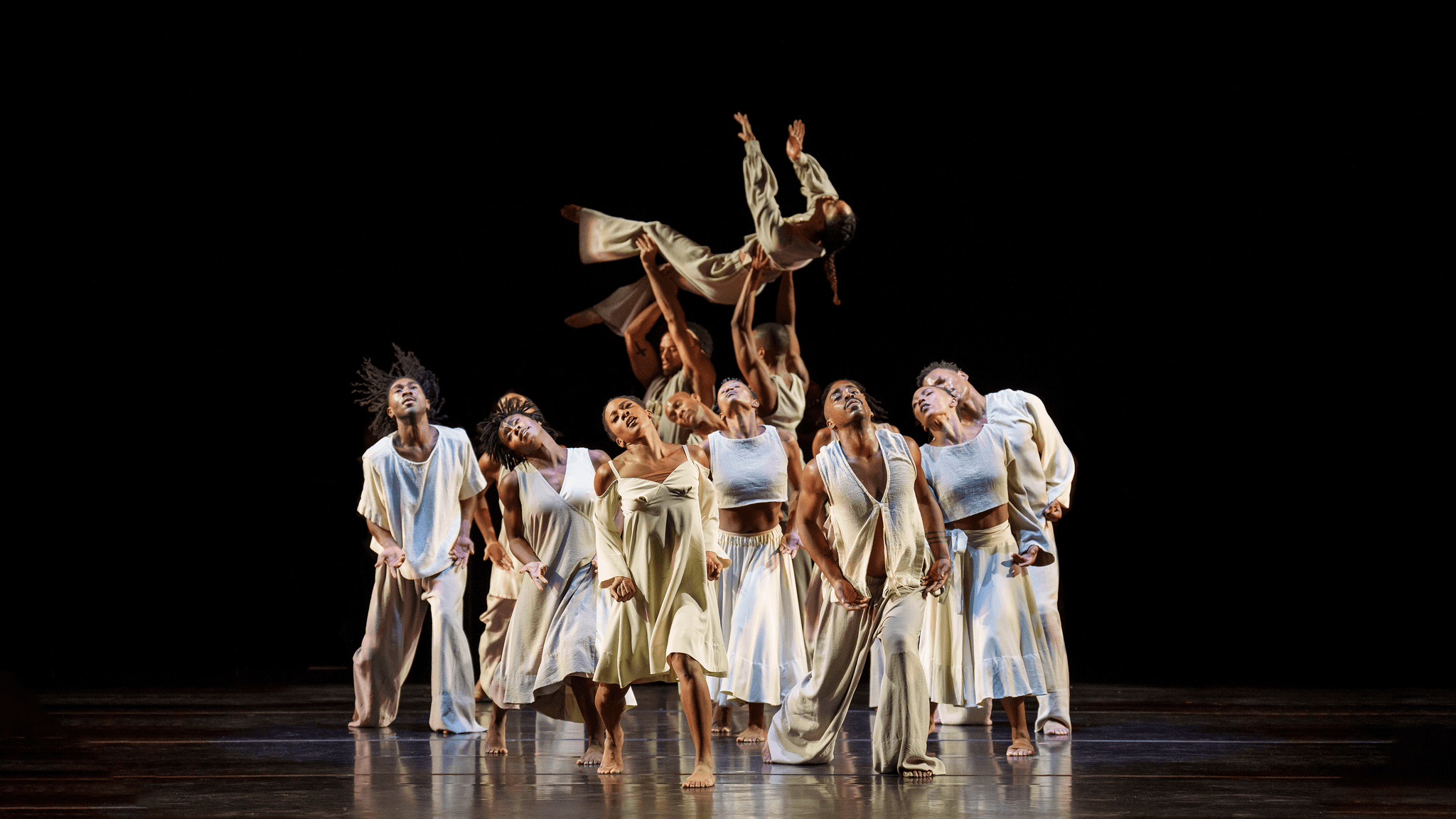
Sacred Songs

Featuring original arrangements of nine spirituals, Sacred Songs “brings together and reimagines the sounds of jazz, West African drums, gospel, hip-hop, calypso, and more to call on the past, engage our present, and invite the listener into a magical, hopeful, and musical future.” A’Keen released the music, plus a few bonus tracks, on his album Sacred Songs Suite on January 18. “By the Waters” is one of the most memorable sections for me.

+++

VIDEO PROFILE: “NEA National Heritage Tribute Video: Marion Coleman”: I learned about the quilter and NEA National Heritage Fellow Marion Coleman last year when perusing the book Visioning Human Rights in the New Millennium: Quilting the World’s Conscience at the Subversive, Skilled, Sublime: Fiber Art by Women exhibition at the Renwick Gallery in Washington, DC. (The book is not a catalog of the exhibition but was complementary in nature and thus was left on one of the gallery tables.) Her work is amazing! Here’s a video that provides a nice snapshot:
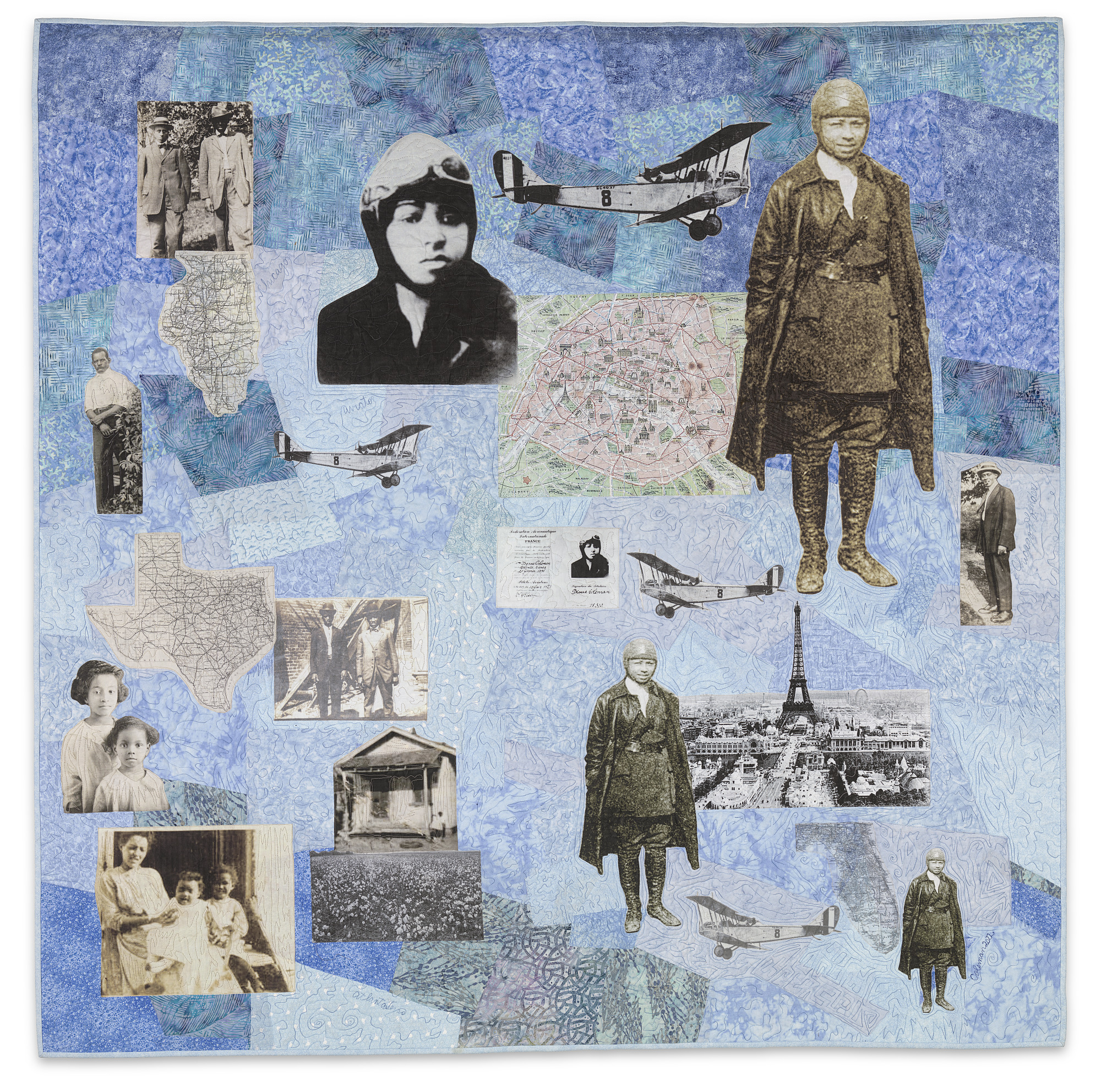

Coleman, Marion_Her Heart Was in the Clouds
Marion Coleman (American, ?–2019), Her Heart Was in the Clouds, 2012. Cotton fabric, cotton thread, and cotton batt, 60 1/2 × 60 in. (153.7 × 152.4 cm). Smithsonian American Art Museum, Washington, DC.

Coleman, Marion_Tender Gardens
Marion Coleman (American, ?–2019), Tender Gardens, 2014. Cotton fabric and batt, 72 1/2 × 72 1/8 in. (184.2 × 183.2 cm). Smithsonian American Art Museum, Washington, DC.

Roundup: Jewish prayer song, stolen paintings, graphic novels by John Lewis, and new VCS videos

SONG: “Ahavat Olam”: Back in April the Platt Brothers—Jonah, Henry, and Ben—posted a home-recorded video of themselves singing this traditional Jewish prayer arranged by Gabriel Mann and Piper Rutman. (I know actor-singer Ben Platt from The Politician, which is probably how the video came to be recommended to me by YouTube!)

It stoked a lot of public enthusiasm, so on September 21 they released a studio recording, available for streaming and download from all major music platforms.

A translation of the Hebrew is as follows:

With an eternal love have You loved your people Israel, by teaching us the Torah and its commandments, laws, and precepts. Therefore, Adonai our God, we shall meditate on Your laws when we lie down and when we rise up, and we shall rejoice in the words of Your Torah and Your commandments forever. For they are our life and the length of our days, and we shall reflect upon them day and night.

O may You never remove Your love from us. Blessed are You, Adonai, Who loves your people Israel. [source]

+++

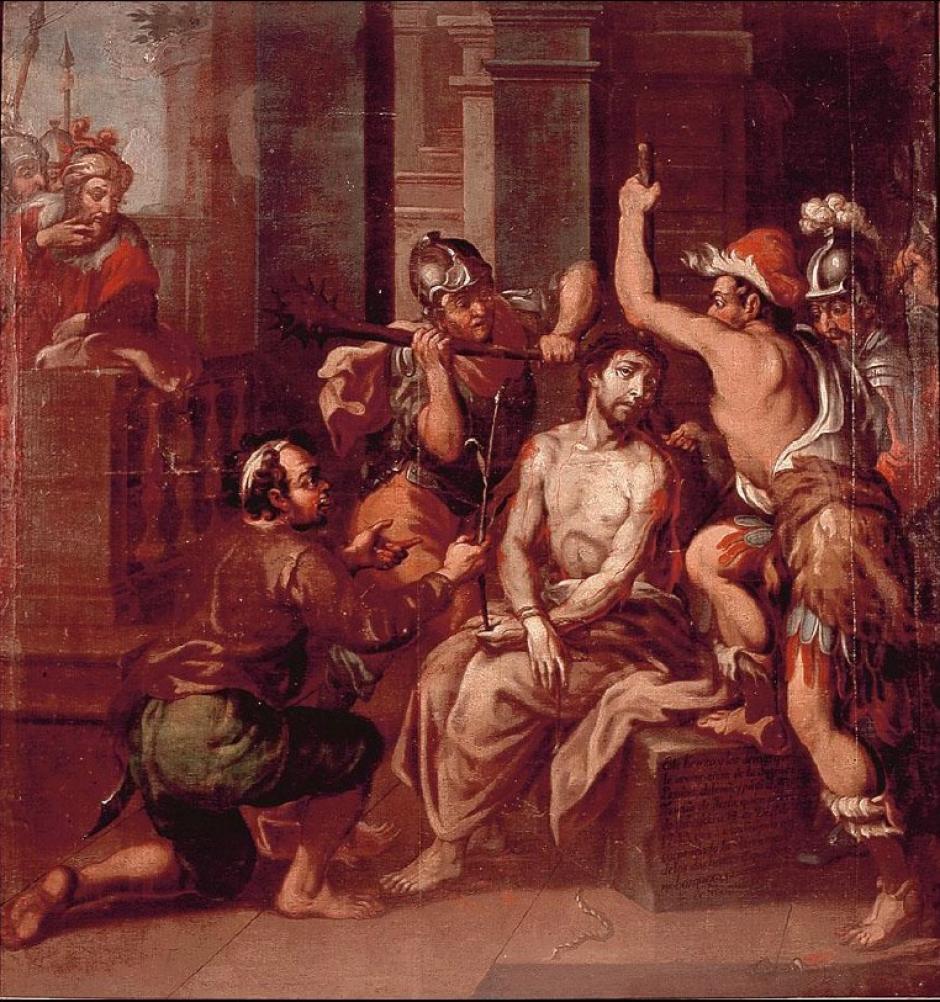
PIANO CONCERTO: Tomás de Merlo by Xavier Beteta: In February 2014 six religious paintings by the early eighteenth-century Guatemalan painter Tomás de Merlo were stolen from a church in Antigua. Although the thieves have been caught, the paintings have disappeared into the black market and have likely been smuggled out of the country. Wanting to preserve the essence of the paintings in music, Guatemalan composer Xavier Beteta wrote a piano concerto whose three movements, titled after the stolen paintings, are “La Oración en el Huerto” (The Prayer in the Garden), “La Piedad” (The Pietà), and “El Rey de Burlas” (The Mocking of Christ). Beteta said he may eventually compose three additional movements, one for each of the other three lost paintings.

Tomás de Merlo (Guatemalan, 1694–1739), El Rey de Burlas (aka La Coronación de Espinas), 1737

Last year the Camellia Symphony Orchestra in Sacramento, California, premiered the concerto. Listen to excerpts, interspersed with interview clips of the composer by Josh Rodriguez, in the video below—which is itself excerpted from the Deus Ex Musica podcast episode “How Stolen Sacred Paintings Inspired a New Piano Concerto.”

See photos of the other paintings at https://www.soy502.com/articulo/capturan-dos-robo-valiosas-obras-iglesia-calvario.

+++

DOCUMENTARY: The Painter and the Thief (2020), dir. Benjamin Ree: A story of crime and trauma, love and redemption, this documentary follows Oslo-based Czech artist Barbora Kysilkova as she confronts one of the men, Karl-Bertil Nordland, who stole two of her most prized paintings. A mutual friendship develops, and it’s so beautiful to watch.

What I love about the film is how it captures the rehabilitation of both subjects—in a way that honors the complexity, the nonlinearity of that process—and the role art can play in healing. “Barbar” forgives “the Bertilizer” and helps him on his road to sobriety, and he helps her access deep parts of herself and come to grips with the history of abuse she’s suffered. They become, in a sense, each other’s muses. His stunned, tearful reaction when he sees the first portrait she paints of him melted me—someone sees him for the first time.

With documentaries I always wonder who’s the person making it and why. I had cynically assumed the project was instigated by the artist to try to vitalize her career, but no, the filmmaker, who has had an ongoing interest in art theft, contacted Kysilkova after reading about the gallery break-in in the news. As is true with most documentarians, he had no idea when he started filming that the story would evolve the way it did and shift genres, and even become feature-length. Streaming on Hulu.

+++

INTERVIEW: In 2016 Adelle M. Banks of the Religion News Service interviewed Rep. John Lewis about the National Book Award–winning graphic novel trilogy March, the role of music and religious faith in the civil rights movement, protest (and getting into “good trouble”) as a form of Christian ministry, the urgent need for the church to be a headlight, not a taillight, and more.

+++

VCS VIDEO EXHIBITION SERIES: The Visual Commentary on Scripture [previously] is an online, open-access resource for those looking to explore the biblical text through art. For every passage of scripture, an art historian, artist, theologian, media theorist, or other is solicited to select and comment on three art images that illuminate the text in some way. The site’s typical format is written commentaries, but by way of experimentation, the VCS has just released video commentaries instead for four new texts. Ben Quash comments on the story of Lot’s Wife through the lens of an early English stained glass panel, a Flemish Renaissance landscape, and a stunning photograph taken after the Allied bombing of Dresden. For Belshazzar’s Feast from the book of Daniel, Michelle Fletcher is guided by paintings from the Dutch Golden Age and the English Romantic period, which she juxtaposes with a contemporary room installation. But here I’ll highlight the videos for two New Testament passages.

The Burial of Christ, with commentary by Italian Renaissance art expert Jennifer Sliwka [previously], covers Andrea Mantegna’s innovatively foreshortened Christ on a marble slab; an altarpiece painting by Michelangelo, in which Christ’s dead body is held up for display, evoking the presentation of the eucharistic host; and a contemporary Pietà, of sorts, by Swiss artist Urs Fischer, which involves a skeleton and a fountain.

Michelle Fletcher, a feminist scholar and specialist on the book of Revelation, comments on the controversial apocalyptic figure known as The Whore of Babylon, which she discusses as a symbol of a city, as a satirization of the goddess Roma, and as bequeathing a legacy of vilification of prostitutes. Fletcher selected a didactic painting by street evangelist Robert Roberg, an ancient Roman coin, and William Hogarth’s A Harlot’s Progress.