Playlist: Christ the King

The final Sunday of the liturgical year—which this year is November 24—marks the Feast of Christ the King. This festival celebrates the reign of Jesus Christ over all of creation and every aspect of our lives.

“The belief in Christ as King finds its roots in the Christian understanding of Jesus as the Messiah, whose reign exists as both a present reality and a future hope,” writes Ashley Tumlin Wallace on her blog The Liturgical Home. “In the here and now, his reign manifests in the lives of believers who seek to live under his lordship. But the Feast of Christ the King also carries a sense of eschatological anticipation, signaling the ultimate culmination of time when the reign of Christ is fully realized.”

Unlike some who sit on earthly thrones, Christ is no tyrant; he’s a benevolent ruler who leads with love and perfect wisdom. He is high and lifted up, and yet he stoops down to us and attends to our cries. He’s so committed to our flourishing that he became one of us and sacrificed himself to save us from the Evil One and reconcile us to God. We owe him our praise, our deference, our all.

For Christ the King Sunday, I put together a Spotify playlist of songs that extol Christ as king of the cosmos and of our own hearts.

It includes traditional hymns like “All Hail the Power of Jesus’ Name” (below, sung by Paul Zach), “Come, Christians, Join to Sing,” “All Creatures of Our God and King,” “All People That on Earth Do Dwell,” “Praise to the Lord, the Almighty,” “O Worship the King,” “Crown Him with Many Crowns” . . .

In looking up hymns, I was delighted to find a new-to-me one from the nineteenth century by Josiah Conder called “The Lord Is King,” which Navy Jones set to a buoyant new tune:

There’s one song on the list whose text dates all the way back to the fifth century. Written in Latin by the Christian poet Sedulius, “Regnavit Dominus” (The Lord Is King) combines praises to the One who conquered death and feeds us with himself with the humble plea, “Kyrie eleison” (Lord, have mercy). Owen and Moley Ó Súilleabháin sing it to a twelfth-century melody:

The playlist also features several psalm settings, including two of Psalm 93, which opens,

The LORD is king; he is robed in majesty;
    the LORD is robed; he is girded with strength.
He has established the world; it shall never be moved;
    your throne is established from of old;
    you are from everlasting.

One is by Jacob Mwosuko, a member of the Abayudaya (People of Judah) Jewish community near Mbale in eastern Uganda. The text is in Luganda. Though Jews would read “LORD” as referring to God the Father, ever since the early church Christians have confessed Jesus not only as Lord (Master) but also as LORD (YHWH), consubstantial and co-eternal with the Father, sharing with him all rule, authority, power, and dominion.

Also from Africa, there’s the Resurrection-rooted salsa song “Jesus Reigns” by Joe Mettle of Ghana, which I learned while attending worship at a Nigerian friend’s church plant for African Christians in Maryland:

On a softer note, there’s the piano ballad “Wondrous Things” by Sandra McCracken, Patsy Clairmont, and JJ Heller of FAITHFUL, a collective of female Christian authors and artists formed in 2019. It lauds Jesus as king to the poor, the oppressed, and the brokenhearted. Heller and McCracken perform it with Sarah Macintosh in the following video:

This next one is more of a nostalgic pick for me: “Make My Heart Your Throne”:

Over two decades ago, when I was a young high schooler, I attended a Christian retreat. The worship leader for the weekend was a man named Carl Cartee, and I remember being struck by this original song of his that we all sang one night. Its words and melody imprinted on me, and all these years later I still find myself sometimes singing them in private as a prayer that Christ would be foremost in my affections and that I would cede control to him.

One of the keenest depictions of Christ’s kingship in scripture is in the book of Revelation, where his glory and triumph are on full display and he’s surrounded by worshipping throngs. Chapter 19, where the exiled John describes “the loud voice of a great multitude in heaven,” is the source text of the song “He Is Wonderful,” sung by Lowana Wallace with Lana Winterhalt and Josh Richert:

These three overlaid, harmonized vocal lines are so enthralling!

Wallace’s song is a simplified arrangement of “Revelation 19:1” by A. Jeffrey LaValley, who wrote it in 1984 for the gospel choir of New Jerusalem Baptist Church in Flint, Michigan, where he served as music director. You can listen to a more recent performance of “Revelation 19:1” on the album Jesus Is King (2019) by the Sunday Service Choir under the direction of Jason White, or in this Mav City Gospel Choir video from 2021, which features soloist Naomi Raine. The choir is directed by Jason McGee:

The build to such fullness of sound . . . wow! It really is evocative of the ample rejoicing in heaven around God’s throne that John the Revelator narrates—“like the sound of many waters and like the sound of mighty thunderpeals” (Rev. 19:6).

For a multilingual (English-Korean-Spanish) arrangement performed by students and staff at Fuller Theological Seminary in California, see here.

This is just a sampling of the eighty-plus songs on Art & Theology’s “Christ the King” playlist, exalting the One who lives and reigns supreme in the heavens and who will one day bring his kingdom to full fruition on earth.

Christ the King playlist cover

Cover art: John Piper (British, 1903–1992), Christ in Majesty, 1984, East Window, Chapel of St John Baptist without the Barrs, St John’s Hospital, Lichfield, Staffordshire, England

Roundup: Epiphany Playlist, thread installation, and more

In the church calendar, the linked seasons of Advent, Christmas, and Epiphany are sometimes referred to as the “cycle of light.” “Since earliest times the Christian community has utilized light as a primary symbol to convey the meaning of the Christ-event,” writes Wendy M. Wright in The Vigil: Keeping Watch in the Season of Christ’s Coming. “The power of the symbol was not lost on most generations of believers who lived closer than we do to the truth that we are all ultimately dependent upon the light of the sun for warmth, vision, and life itself” (152). Light imagery permeates scripture and the writings of the church fathers.

The capstone of the cycle of light, celebrated each year on January 6, is Epiphany, which means “manifestation” or “appearance.” In the West, this feast commemorates the visit of the magi, to whom the divinity of Christ was revealed, and who brought back the light they received to their homelands, an early spreading of the gospel. Epiphany is exactly one month away, but I wanted to provide a few resources in advance. For those in the DC metro area: note that there are just two weeks left to see the Anne Lindberg exhibition!

+++

NEW PLAYLIST: Epiphany (Art & Theology): I put together a playlist of nearly a hundred Epiphany songs that celebrate Jesus as the light of the world and that mark the magi’s transformative encounter with him.

Besides the classic “We Three Kings,” it also includes a few versions of the ancient hymn “Phos Hilaron” (originally written in Koine Greek and translated into English as “Gladsome [or Gladdening] Light”), a Provençal carol popularized by Bizet, a shape-note hymn from Appalachia, aguinaldos from Puerto Rico, Arabic hymns from Syria and Lebanon, plainchant scripture settings, Renaissance motets, traditional and contemporary Black gospel songs, indie songs (including retuned hymns) from the past decade, and choral works from the UK, Jamaica, and Argentina. Some of the selections are quieter, more reflective, whereas others are very exuberant, like “Jesus Is the Light” by Hezekiah Walker and the Love Fellowship Crusade Choir:

And “Los Reyes Magos,” the fifth movement of Ariel Ramirez’s folk drama Navidad Nuestra (lyrics here); the song was written as a taquirari, a type of Bolivian folk song that has a syncopated rhythm and that is danced to, and features a charango (small guitar) and siku (Andean panpipe):

+++

ART COMMENTARIES: The VCS Advent Calendar 2023: Every Advent, the Visual Commentary on Scripture sends out a daily image from its online archives to its email list around a seasonal theme. This year’s theme is “light.” The images are keyed to particular scripture passages having to do with light and are accompanied by commentary from a range of contributors. So far the VCS has featured a Genesis 1–inspired Sistine Chapel fresco, John Piper and Patrick Reyntiens’s extraordinary Baptistery Window at Coventry Cathedral, a Trinitarian miniature from an English book of hours, a heliotropic landscape sculpture by David Wood, a light installation by Dan Flavin at a church in Milan, and Vincent van Gogh’s Starry Night.

Baptistery Window, Coventry
Baptistery Window, Coventry Cathedral. Designed by John Piper and made by Patrick Reyntiens, 1957–61. Stained glass, 85 × 56 ft.

+++

EXHIBITIONS:

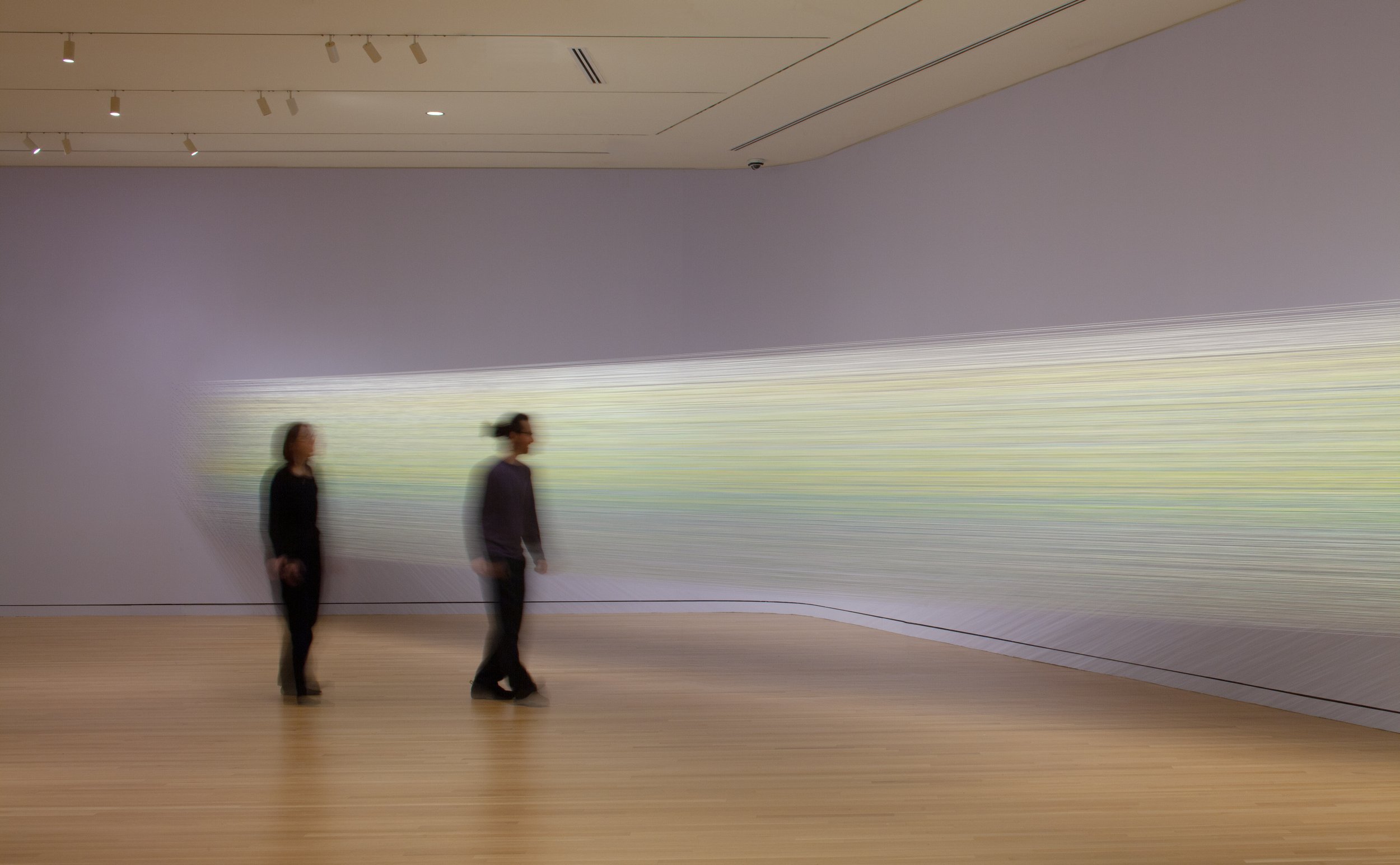
>> What color is divine light? by Anne Lindberg, January 5–December 22, 2023, Textile Museum at George Washington University, Washington, DC: I saw this installation last month, and it is striking! About four thousand strands of complementary yellow and blue cotton thread (and some white and green), stretching across the gallery against a backdrop of lavender-painted walls, evoking light. The artist describes the work as a drawing made of textile material in the air. It was inspired by a 1971 essay of the same title by the art historian Patrik Reuterswärd (see The Visible and Invisible in Art: Essays in the History of Art), and it opened adjacent to an exhibition of prayer carpets, titled Prayer and Transcendence.

Lindberg, Anne_What color is divine light
Anne Lindberg (American, 1962–), What color is divine light?, 2023. Cotton thread, staples, 5 × 55 × 14 ft. Solo exhibition at the Textile Museum, George Washington University, Washington, DC. Photo: Derek Porter.

In addition to the video above, you can view gorgeous photos of the installation on Lindberg’s website.

>> Bubble Universe: Physical Light, Bubbles of Light, Wobbling Light, and Environmental Light by teamLab, opens early February 2024, Borderless (museum), Azabudai Hills, Tokyo: teamLab is an international collective of “ultra-technologists” consisting of artists, programmers, engineers, CG animators, mathematicians, and architects who collaborate on immersive art projects. One of their upcoming installations is a room with hundreds of glowing spheres, each containing unique changing lights that interact with guests and the environment itself. [HT: My Modern Met]

Bubble Universe
teamLab, Bubble Universe, 2023 (work in progress). Interactive installation, Borderless, Azabudai Hills, Tokyo.

+++

NEW ALBUMS:

>> The Light by Sarah Sparks: A four-song EP by a Christian singer-songwriter from Hawaii. Here’s the first track:

>> Morning Star: Music for Epiphany Down the Ages by the Gesualdo Six: Released November 3, this wonderful album comprises twenty-one choral pieces for Epiphany—a mix of plainchant propers for Mass, hymns, Renaissance motets, and twenty-first-century works. One of the contemporary works is a setting by Owain Park of Psalm 43:3: “O send out thy light and thy truth, that they may lead me; let them bring me unto thy holy hill, and to thy dwelling”:

Roundup: Imagination; inclusive dance; art theft; singing through divorce; and more

JOHN PIPER ON IMAGINATION: “Obey God with Your Creativity: The Christian Duty of Imagination”: Within evangelicalism (the tradition I belong to), the imagination is often deemed more of a liability than a virtue, something to be distrusted, at the very least, and at most, to be rejected as evil. So I was thrilled earlier this month to hear John Piper, one of America’s leading evangelicals, speak out in strong affirmation of imagination, which he calls “one of the great duties of the Christian mind.” It can be used destructively, he cautions, but it’s a God-given capacity that God wants us to exercise and strengthen, like a muscle, so that we can see more clearly what is and what could or what will be.

“The imagination,” Piper writes, “calls up new words, new images, new analogies, new metaphors, new illustrations, new connections to say old, glorious truth—whether from the world or from the word of God. Imagination is the faculty of the mind that God has given us to make the communication of his beauty beautiful.” To communicate breathtaking truth in a boring way is “probably a sin,” he says, for God is “infinitely worthy of ever-new verbal, musical, and visual expressions.”

“A college—or a church, or a family—which is committed to the supremacy of God in the life of the mind will cultivate many fertile, and a few great, imaginations. And oh, how the world needs God-besotted minds that can say the great things of God and sing the great things of God and play the great things of God in ways that have never been said or sung or played before.”

+++

Wheelchair dancing (Infinite Flow)

INCLUSIVE DANCE: Founded by Marisa Hamamoto in 2015, Infinite Flow is a professional dance company and nonprofit whose mission is “to use dance as a vehicle to create an inclusive world and eliminate the stigma and inequality associated with disability,” especially wheelchair use. Artistic excellence, social innovation, empowerment, community, and integration are among its values, which are played out through dance classes, workshops, and outreach events that incorporate people with and without disabilities. You can view snippets from classes and rehearsals as well as polished, artfully filmed choreographed routines on their Facebook page—like this most recent one, in which Hamamoto dances with Piotr Iwanicki, a multiple wheelchair World Latin Champion.

After twenty years of training in ballet and contemporary dance, Hamamoto suffered a spinal cord infarction, which left her temporarily paralyzed from the neck down. Upon recovery, she developed an interest in and pursued ballroom dancing, which led her to imagine what an inclusive form of the genre might look like. To learn more about Infinite Flow, see these two promo videos, and follow them on Facebook. You’ll also want to check out “Gravity.”

+++

PODCAST: Speaking with Joy: Lately I’ve been devouring this podcast by Joy Clarkson, a doctoral candidate at the Institute for Theology, Imagination, and the Arts at St. Andrew’s University in Scotland (she’s studying the role of the affections and the arts in moral formation). Though it was launched last November, I first discovered it in July at the tail-end of her summer book series on The Great Divorce, an allegorical tale by C. S. Lewis, in which she discusses themes such as desire, grace, the real, incurvatus in se (St. Augustine), self-choice, being seen and known, and need-love versus gift-love. I was hooked! Now I’m a Patreon supporter.

Speaking with Joy

Speaking with Joy is such a bright corner of the Internet, full of hope, wisdom, and delight. The standard episode format is an exploration of a given theme through three pieces of art: one literary, one visual, and one musical. I really enjoyed the last three I listened to: “The Army of Emotions,” featuring St. Macrina, Mister Rogers’s ditty “What Do You Do with the Mad That You Feel?,” and the Irish animated film The Song of the Sea; “The Wisdom of Whimsy,” featuring Manalive by G. K. Chesterton, the illustrations of Beatrix Potter and Breezy Brookshire, and “On the Radio” by singer-songwriter Regina Spektor; and “Decent Men in Indecent Times,” which explores why and how we tell stories of the two world wars by looking at the contrasting poetry of Wilfred Owen and Laurence Binyon, the movie Dunkirk, and John Williams’s score for Schindler’s List.

+++

NEW IMAGE STAFF: Last week Image journal announced that James K. A. Smith, a professor of philosophy at Calvin College, will be taking the helm of Image as the journal’s new editor in chief. What a perfect choice! I’ve been hearing a lot of Smith since the publication of his book You Are What You Love: The Spiritual Power of Habit in 2016 and have appreciated his recognition of the important role of artists. “If you want to change how the world thinks, you first have to change how they imagine,” he once said. “That’s why, today, artists are our apologists.” More recently, in a letter to the Image search committee, he wrote,

The arts speak to aspects of human nature ignored or denied by a culture captivated by brutal notions of “efficiency” or quasi-scientific narratives that reduce us to animality. It’s in literature, poetry, film, and so many other art forms that we hear echoes of a biblical understanding of humanity—that we are created in God’s image, animated by hungers and hopes, made to delight and play. In other words, the arts are evidence of what I’ve called “cracks in the secular”—the recalcitrant mystery at the heart of the human that refuses to be eviscerated. Art continues to shout Nein! to our disenchantment.

I’m looking forward to this next chapter of Image.

+++

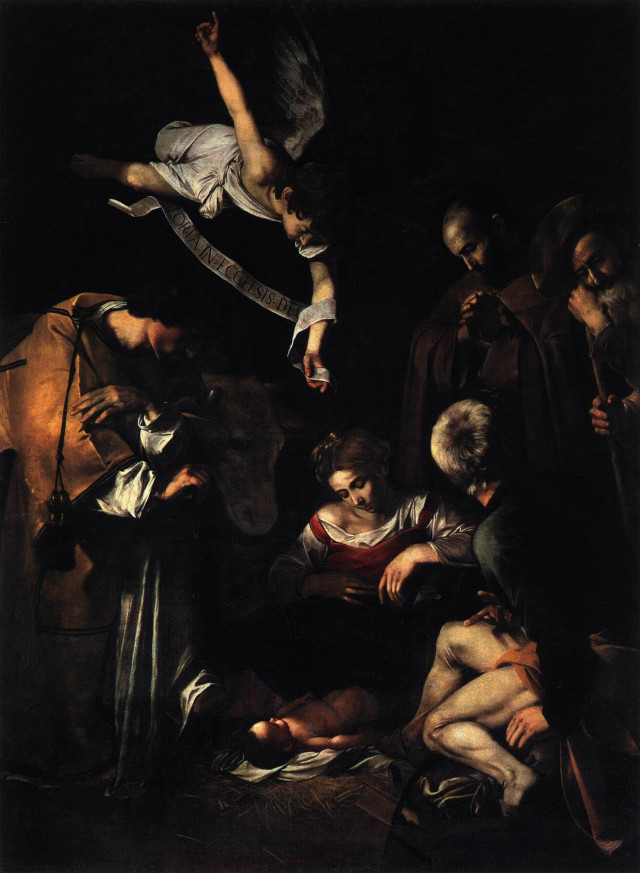
ART HEIST: “Police back on the trail of ‘world’s most wanted’ stolen Caravaggio painting”: On October 15, nearly fifty years after Caravaggio’s Nativity with San Lorenzo and San Francesco was stolen from the Oratory of San Lorenzo in Palermo, Sicily, experts met at the Vatican to discuss reinstating an active search. Speculation of mafia collusion and espionage have circulated around the case, which ranks second on the FBI’s list of top ten unsolved art crimes.

Nativity by Caravaggio
Caravaggio (Italian, 1571–1610), Nativity with San Lorenzo and San Francesco, 1609. Oil on canvas. The angel’s banderole reads, “Gloria in eccelsis Deo.”

+++

NEW ALBUM: Yesterday Moda Spira (the stage name of Latifah Alattas) released Divorce, an intimate musical chronicle of the unexpected end of her marriage and the journey of grief she’s been on since. “I hope it helps those of you that might feel alienated or lost in the throes of divorce or disconnection from someone you love,” she says. In response to a request, Alattas released a series of podcast episodes that discuss each song on the album in depth; listen here. I first learned about the project back in July when Stephen Roach interviewed Alattas on the Makers & Mystics podcast—such a rich and memorable conversation that deepened my empathy for the loved ones of mine who have had to endure the pain of divorce.

Below is a video promo Alattas made for the album’s Kickstarter campaign. Click here to view the variety of streaming and purchase options.

Roundup: Jewish mosaics; New Psalm Contest; revising hymns; tree-inspired chapel; and more

I will be going on vacation soon and will be mostly unplugged, so you will notice less frequent blog posts for a few weeks. I’ll cue up some Artful Devotions to be published automatically each Tuesday I’m gone but won’t be posting the links to the blog’s Twitter and Facebook pages as I usually do—so be sure to check the site instead! (Or subscribe by email by clicking the “Follow” link, located in the sidebar if viewing from your computer or at the bottom if viewing from your phone.) My regular publishing schedule will resume in September.

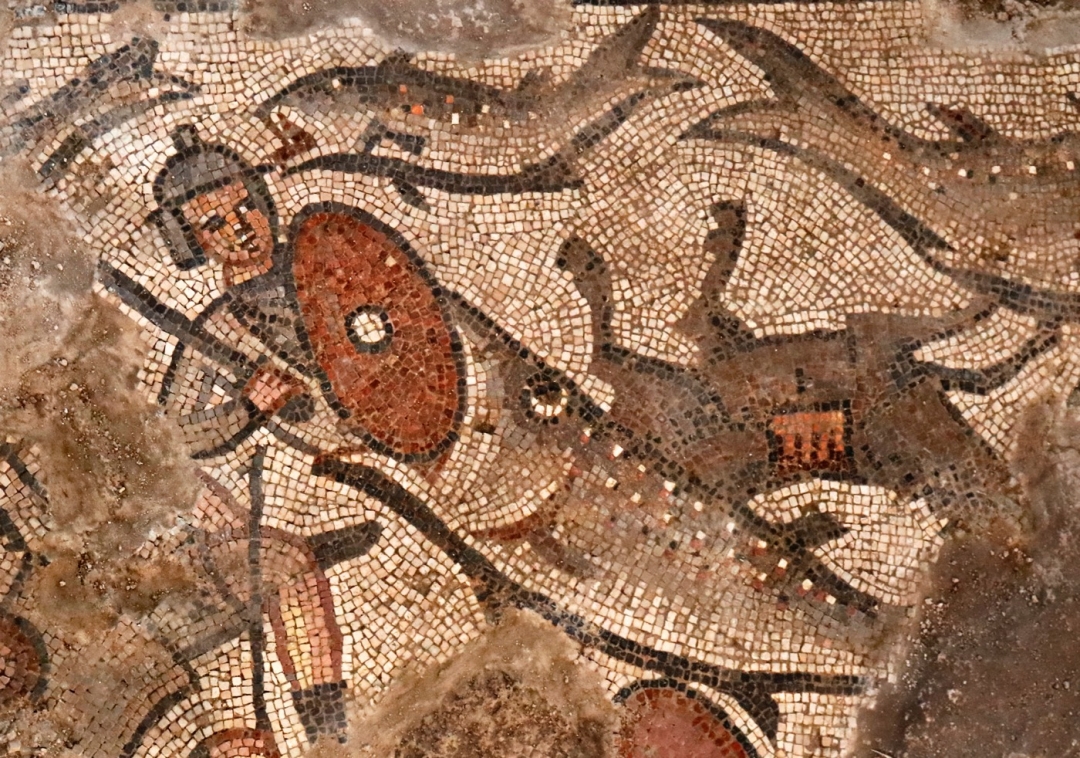
ARCHAEOLOGICAL FIND: “Discovery of Jewish Mosaics in Israel Bring Color to Biblical Accounts” by Sarah E. Bond: “At the ancient site of Huqoq, near the Sea of Galilee in modern Israel, a number of stunning mosaics depicting biblical, astrological, and historical narratives have been uncovered in a Jewish village that flourished during the late Roman empire. The colorful and large number of mosaics found in a synagogue challenge traditional views about Jewish art of the period as symbolic rather than representational of biblical texts, bland, and in decline during the period.”

Fish swallowing Pharoah's soldier
A giant Red Sea fish swallows one of Pharaoh’s soldiers in this mosaic detail from the late Roman (ca. 5th century) synagogue at Huqoq, Israel. Photo: Jim Haberman, via UNC-Chapel Hill.

+++

SONGWRITING CONTEST: “In an effort to encourage Psalm-singing, Church of the Servant [in Grand Rapids, Michigan] invites congregational songwriters to submit a Psalm-based song to its 2018 COS New Psalm Contest. The winner will receive a $500 award. There is no entry fee and the contest is open to all. Submissions must be emailed or postmarked by October 1, 2018. The song will be premiered in worship on January 27, 2019. Church of the Servant is a Christian Reformed Church with a rich history of encouraging the arts in worship. Its worship is Reformed, liturgical, participatory, eclectic, and open to creative new worship expressions.”   Continue reading “Roundup: Jewish mosaics; New Psalm Contest; revising hymns; tree-inspired chapel; and more”

John Berger on how to see

John Berger—essayist, novelist, poet, screenwriter, art critic—loves to help people see what is around them, teach them how to look at the world. His life’s work is dedicated to this endeavor.

One of his most celebrated achievements is the BAFTA Award–winning Ways of Seeing, a four-episode television program written and presented by Berger and originally airing in 1972 on the BBC. “A British arts broadcasting landmark” and “a key moment in the democratisation of art education,” The Guardian calls it. The script was adapted the same year into a book, a collaboration among Berger, Mike Dibb (BBC producer/director), Richard Hollis (graphic designer), Chris Fox (consultant), and Sven Blomberg (artist). It’s still in print!

Berger’s super-conversational style and his bucking against tradition no doubt contribute to his appeal. In the first episode, he establishes his aim: to get people to cut the mumbo-jumbo that always rises up around art and instead approach art directly, much like children.

Here it is:

The episode points out the ways in which photographic technology has changed the way we look at art—it has made it more accessible, but it can also manipulate. When a painting is reproduced in a textbook, for example, details may be cut out to force your focus somewhere, or arranged to form a narrative, or compared with other works, and words surround the painting that will influence your reading of it. If presented on film, camera movement and music also play a part. Berger gives examples using, among others, Pieter Bruegel’s The Procession to Calvary [14:03]; Vincent Van Gogh’s Wheatfield with Crows [16:12]; and Francisco Goya’s The Third of May 1808 [18:28].

He says,

The camera, by making the work of art transmittable, has multiplied its possible meanings and destroyed its unique original meaning. Have works of art gained anything by this? They have lost and gained.

Paintings (especially sacred ones) used to be an integral part of the buildings for which they were designed, says Berger, but now they are often experienced outside that context, rendering their meanings ambiguous. Of paintings in churches, he says, “Everything around the image is part of its meaning. Its uniqueness is part of the uniqueness of the single place where it is. Everything around it confirms and consolidates its meaning” [05:20]. He briefly addresses icons, which I know some Orthodox believers are averse to having displayed in museums, where they cannot even be touched and thus lose part of the function for which they were created.   Continue reading “John Berger on how to see”