
Roundup: Films for Advent, new Advent books, and more

BLOG SERIES: Three excellent, brief musings on the season of Advent by W. David O. Taylor, published last year on his blog:

  1. “Advent is for singing not-Christmas songs”: “This is, of course, easier said than done. Hymnals fail to supply a decent list of options and congregants often clamor for the ‘traditional’ carols, the songs of triumphant appearance and glorious coming. Yet this insistence fights against the dominant concern of the Gospels. Luke especially spends the bulk of his story anticipating Christ’s birth rather than narrating his arrival. The dramatic tension lies in what’s to come—not in what’s happened already . . .”
  2. “Advent is about being neither fish nor fowl”: “In being neither here nor there, Advent reminds us of our truest identity. We are amphibious creatures . . .”
  3. “Advent is about the goodness of divine interruptions”: “The entire story of Advent is a story of interruptions. . . . May we, like the actors in God’s divine nativity drama, have eyes to see and hearts to welcome his interrupting work in our lives. May we trust that he wills our deepest good in these interruptions. May we be blessed in our trust in him.”

+++

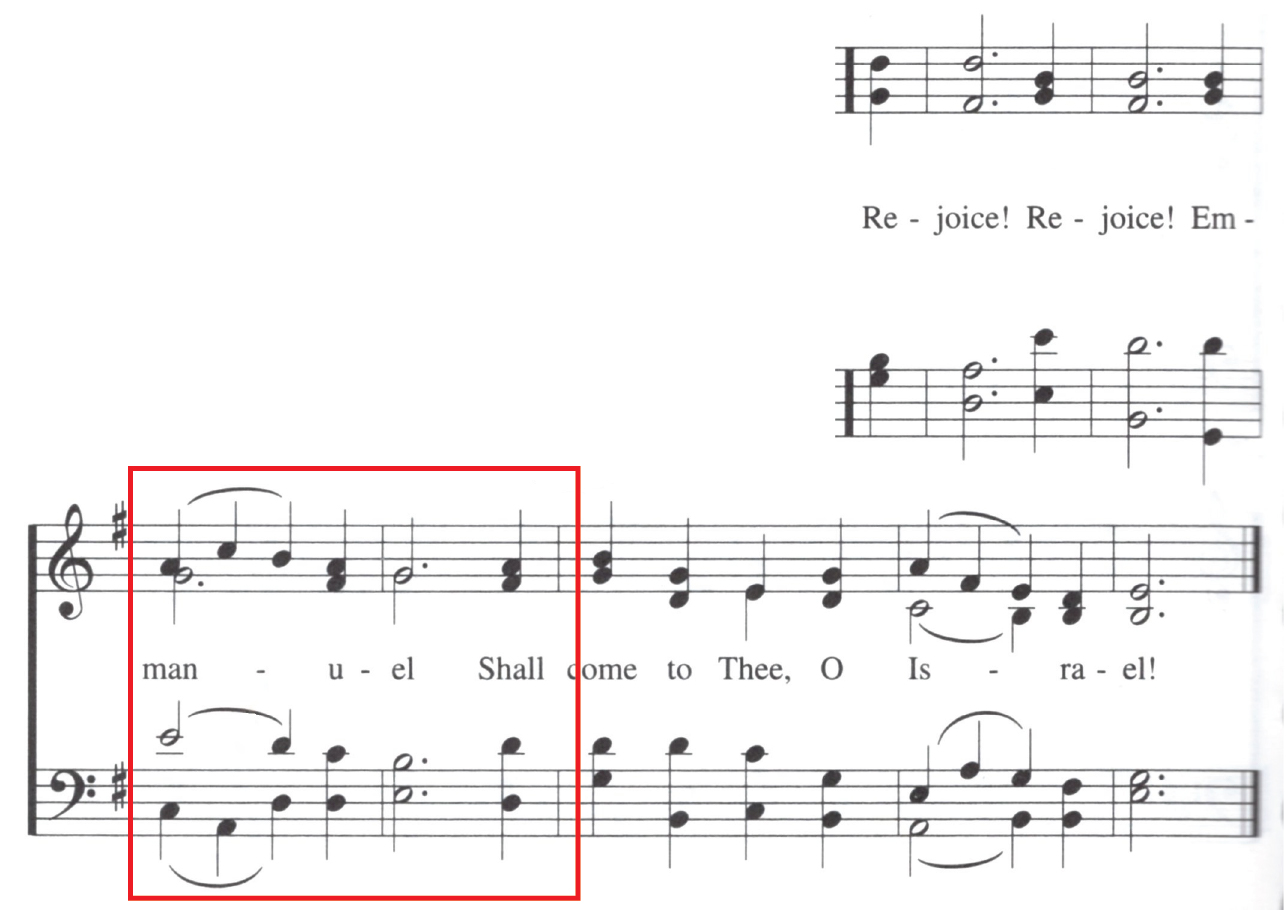
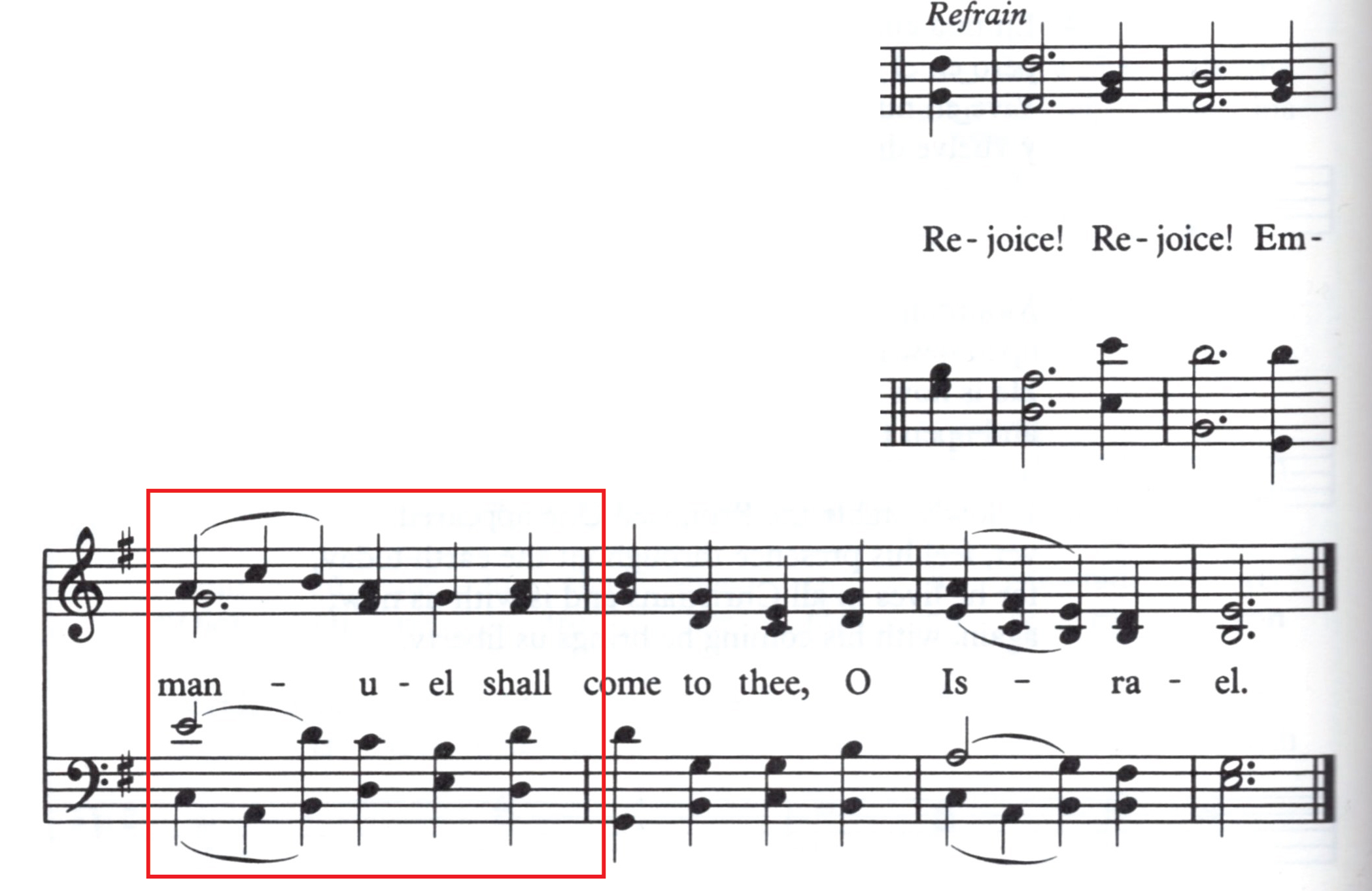
ESSAY: “O Come, O Come, Emmanuel: Dark Good News” by Linda Gregerson, Image: Poet Linda Gregerson reflects, in prose, on the quintessential Advent hymn, which dates back to the Middle Ages. She grew up singing it in her Methodist church every December. “It’s ironic, really—it quite betrays me—to realize that I must have loved this hymn for its whiff of the monastery: chalice and incense smuggled in by way of the minor chord. There’s a moment, a breathtaking moment, when the meter defies expectation. Everything has been steady-as-you-go, four-four time, all quarter notes and dotted halves. But during that remarkable refrain, just when you expect to dwell on the last syllable of the holy name for a count of three, as every verse before this has prepared you to do, the hymn leaps forward and anticipates itself by half a measure. No breath, no stately pause: Emmanuel / Shall come to thee, as though rushing to arrival. Those missed beats never fail to stop my heart.”

I didn’t know what Gregerson was talking about until I looked up the notation in The United Methodist Hymnal no. 211, and sure enough, in measure 15 there are two extra beats. In all the other hymnals I have (and all the recordings of the song I’ve heard), that measure is divided into two and the regular meter sustained, with “el” held out for three beats. Interesting! It does feel unnatural to me to sing it the way she suggests, but she offers a compelling theological reason for why the arranger made that decision.
O Come_v1
This is the standard way (as far as I’m concerned) of singing “O Come, O Come, Emmanuel.” Sheet music excerpt from Majesty Hymns, the hymnal of my youth.

O Come_v2
Sheet music excerpt from The United Methodist Hymnal, showing the unusual (but significant, Gregerson claims) shift from 4/4 meter to 6/4 in one of the measures of the refrain

Here’s an example of a congregation (First United Methodist Houston) singing the refrain the way Gregerson so fondly remembers:

+++

NEW BOOKS:

>> The Art of Living in Advent: 28 Days of Joyful Waiting by Sylvie Vanhoozer: A retired French teacher and a botanical artist, Sylvie Vanhoozer was born and grew up in Provence and now lives in Illinois with her husband, the theologian Kevin Vanhoozer. In this little illustrated book, she introduces readers to the tradition of Provençal crèches, localized nativity scenes populated by santons (“little saints”). Made from the land’s clay, the santons resemble nineteenth-century villagers, who offer up gifts from their vocations—olives, bread, wine, wood, sheep, hurdy-gurdy music, herbal remedies. (Reminds me of the presepe from southern Italy that I encountered some years ago!) The crèches are also traditionally decorated with native vegetation, such as thyme, juniper, lavender, and rosemary, freshly harvested on the first weekend of Advent. This is one of the ways in which Provençals embrace Christ’s presence in their own time and place.
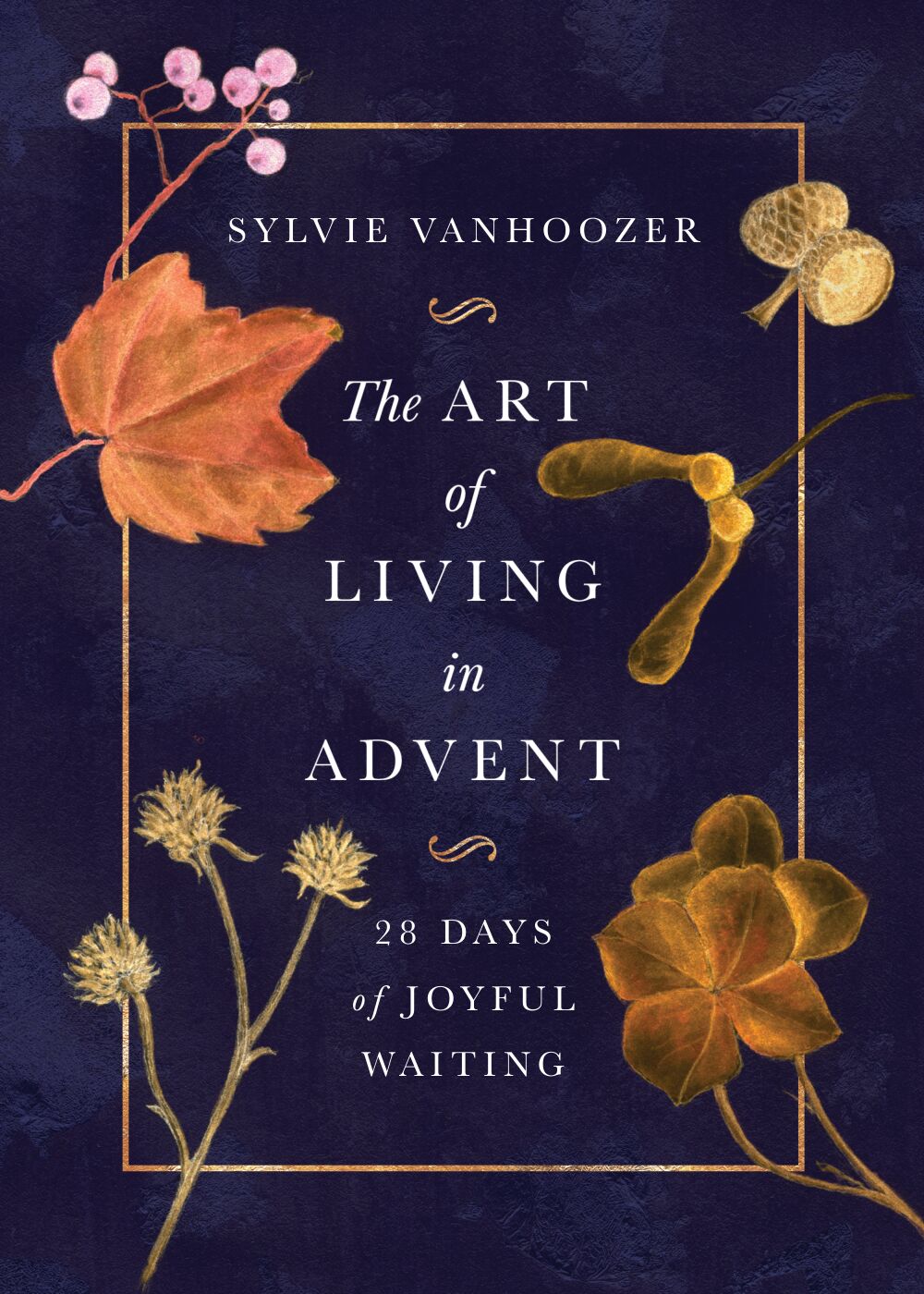
The Art of Living in Advent

“I am not inviting readers to leave their place and go to some distant land in a distant past,” Vanhoozer writes. “The invitation is rather to transpose this Provençal scene into one’s own place, to live the same story in a different context. . . . The question is not ‘Did Jesus really come to Provence?’ but rather ‘Could Jesus really come here, to me?’ Could my home, my neighborhood, my church, become a crèche scene, with Christ right here beside me, in me?”

I think this book would have worked better as a literary essay, as it feels padded out to make its ninety-page count, with redundancies and somewhat arbitrary divisions. But I love how Vanhoozer draws us into this cherished and still-living tradition from her childhood and calls us to see and participate in the story of God’s coming where we live, in all its particularities.

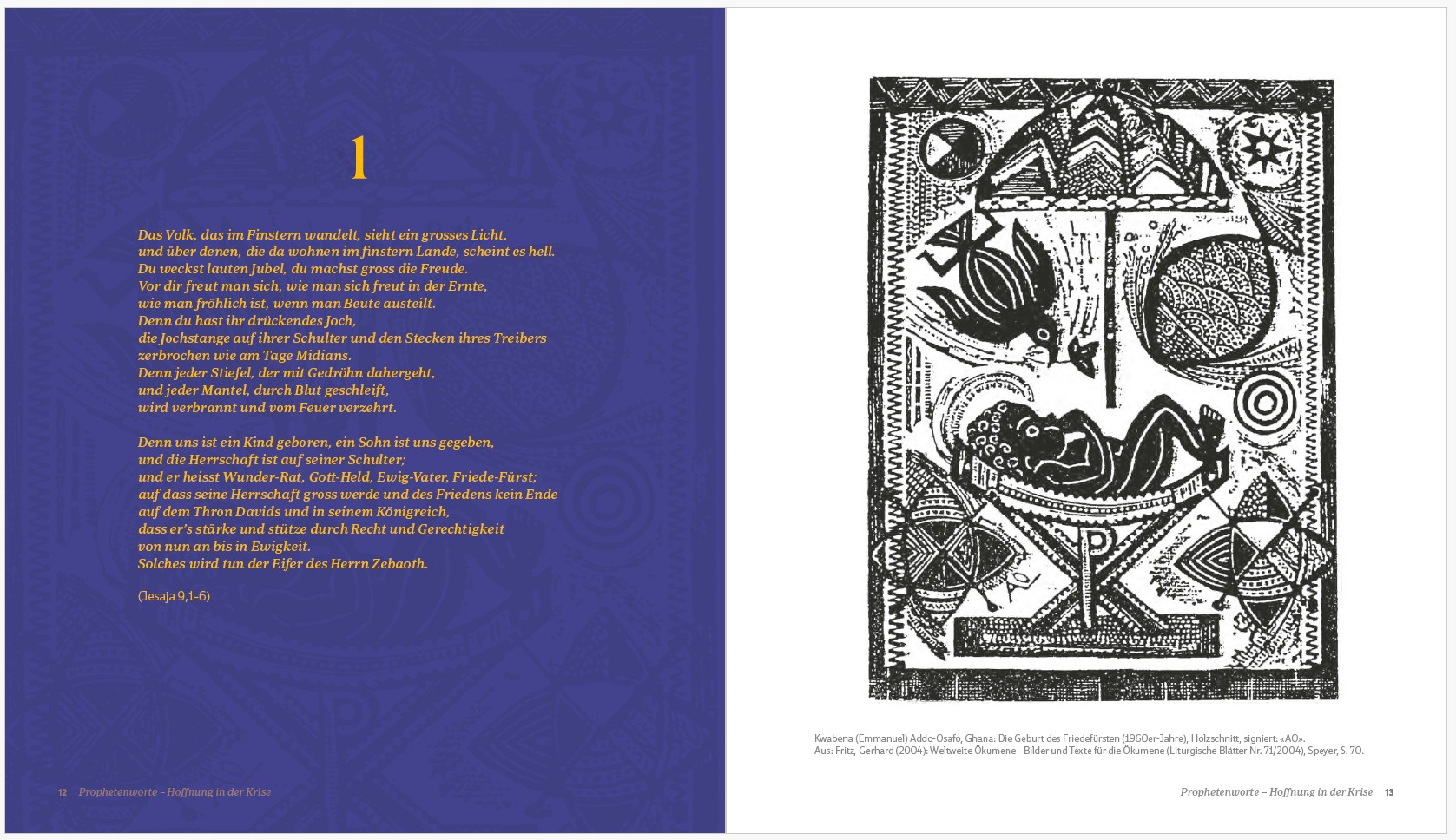
>> Advent: 24 Kunstwerke zur Bibel aus aller Welt by Christian Weber: Rev. Dr. Christian Weber [previously] is the director of studies for Mission 21, an international mission agency of the Protestant Reformed Churches in Switzerland. His work brings him into contact with religious art from diverse parts of the globe. I’m delighted by this new (German-language) book of his, whose title translates to Advent: 24 Bible-Inspired Artworks from Around the World. Organized into four parts (“Words of Prophecy,” “Parables of Jesus,” “John the Baptist,” and “Mary”) and printed in full color, the book features twenty-four primary artworks (plus some supplementary) from twenty-two countries, providing background on and interpretations of each, as well as information about the artists and a bibliography.
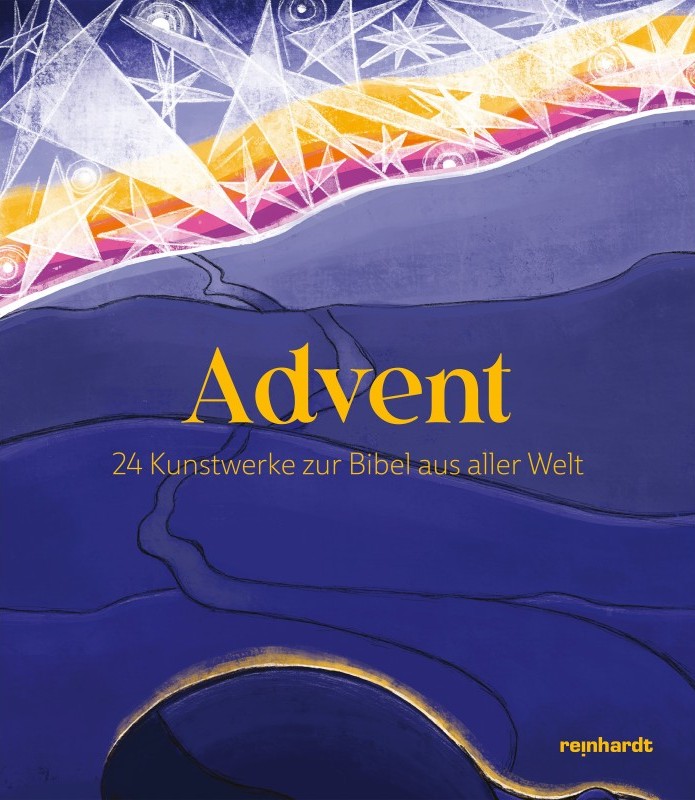
Advent (Mission 21 book cover)
Advent (Mission 21 page spread)
Sample page spread from Advent: 24 Kunstwerke zur Bibel aus aller Welt, showing a woodcut by the Ghanaian artist Kwabena (Emmanuel) Addo-Osafo

A church mural from Zimbabwe, a kalamkari from South India, a gourd carving from Peru, a manuscript illumination from Armenia—these are among the artworks Weber highlights. Some of the works are of higher quality than others, but the emphasis is on how the scripture texts of the Advent season have prompted artistic responses in a variety of places outside Europe, which is the continent that has most shaped the popular imagination when it comes to the biblical story. Weber’s Advent encourages us to widen those imaginations. Despite my fifteen or so years spent researching global Christian art, Weber is always bringing new artists to my attention! You can view sample pages from the book on the publisher’s website.

The cover image is a detail of For Those in Darkness by the American artist Lauren Wright Pittman.

Weber is looking for a North American publisher to release an English-language edition of the book.

+++

ARTICLE/VIDEO: “Five Films to Help You Observe Advent” by Abby Olcese, Think Christian: Abby Olcese, author of Films for All Seasons: Experiencing the Church Year at the Movies, provides five movie suggestions for Advent, corresponding to the themes of Hope, Faith, Joy, Peace, and Christ. (Other churches and families, like mine, substitute “Faith” with “Love” on their Advent wreaths; Olcese’s fifth pick, for Christmas Eve, would fit the “Love” theme perfectly, but see also my suggestion below.) You can read the content as an article or watch it in video format, which includes a few film clips:

ALSO: Allow me to add one of my own suggestions: American Symphony, a 2023 documentary about musical artist Jon Batiste, whose meteoric rise to fame coincided with the return of his partner Suleika Jaouad’s leukemia. Directed by Matthew Heineman, the film follows a year in the life of the married couple, as Batiste prepared for the premiere of his boundary-breaking American Symphony composition at Carnegie Hall in September 2022 while Jaouad endured chemotherapy. It has a very Advent-y feel, by which I mean its calling on God in the darkness (Batiste is a devout Christian) and its orientation around faith, hope, and love. It’s a beautiful, intimate portrait of a marriage, of creativity, courage, and care.

+++

ART: Advent Wreath by Beach4Art: Beach4Art is a family of four who create beach art inspired by beautiful nature in Devon, UK. (Follow them on Facebook, Instagram, or TikTok, and see their Etsy shop.) Below are some photos of the Advent wreath they made out of twigs, stones, and shells on Sandymere beach for the first Sunday of Advent in 2023.

Roundup: Fargo, “When We Love,” and more

SPOTIFY PLAYLIST: June 2024 (Art & Theology): Here are thirty selections of good, true, and beautiful music for your listening this month, spanning genres but leaning heavily into folk and gospel. The first song is written by my friend and Daily Prayer Project colleague Joel Littlepage!

+++

TV SERIES: Fargo, season 5: The latest season of the dark comedy anthology series Fargo, written by Noah Hawley and streaming on Hulu, has been my favorite so far, in part because of its subversive (i.e., redemptive) ending. (I also recommend seasons 1 and 2!) Set in the American Midwest, the series is inspired by the 1996 Coen brothers’ film of the same name but has all-new characters and plots, and each season is self-contained (though those who watch all the seasons will find Easter eggs). Viewer beware: the show contains graphic violence, and season 5 centers on domestic violence.

Debt is a major theme in Fargo’s season 5. In the first episode, two men invade main character Dorothy “Dot” Lyon’s (Juno Temple) home, having been sent by someone in her past who is collecting a debt, revealing her to be a hardcore survivalist. (We gradually learn more of her backstory, especially through a fantastic puppet sequence in episode 7.) Dot is married to the kindest man, Wayne (David Rysdahl), whose billionaire mother, Lorraine (Jennifer Jason Leigh), is the CEO of a debt collection agency. Both women eventually come to heads with Roy Tillman (Jon Hamm), an extreme alt-right Christian nationalist running for the office of police chief. One of his lackies is Ole Munch (pronounced “oo-lah moonk”) (Sam Spruell), a mysterious man from Wales via Scandinavia who we learn is a “sin-eater” wandering the earth without hunger, rest, or hope, taking on himself the sins of the powerful and privileged.

Injuries are inflicted back and forth in a seemingly unending cycle of violence and retaliation. How can the cycle be broken? When should a debt be forgiven? In its final twenty minutes, which at first feels like a coda but actually moves the story someplace new, Hawley explores the power of love and empathy, of baking and breaking bread together. The last shot (which is not the one pictured here; I don’t want to spoil it) is perfect.

Fargo season 5
Juno Temple as Dot in the finale of Fargo’s season 5, “Bisquik”

After you watch season 5, read what Hawley had to say about the ending: to the Hollywood Reporter and Variety magazine.

+++

SONGS:

>> “When We Love,” performed by Laudate Mennonite Ensemble: This work for a cappella SATB choir is by Charles Anthony Silvestri (words) and Elaine Hagenberg (music). It looks to the natural world for lessons in love: the tree that provides shade, shelter, and rest, and the mother bird who builds a nest for the nurture of her young. “When we love, simply love, even as we are loved, our weary world can be transformed,” goes the refrain. You can preview and purchase the sheet music through GIA.

>> “Amazing Grace,” performed by Tori Kelly and Jon Batiste: Tori Kelly and Jon Batiste are both multiple-Grammy-winning artists who are unabashed Christians working in secular spaces. Here they perform a classic Christian hymn together on late-night television—unrehearsed!—with Kelly on vocals and Batiste on piano. The video was recorded live at Steinway Hall in New York City in August 2019 for The Late Show with Stephen Colbert. Kelly’s voice is gorgeous, and Batiste—my oh my, his talent blows me away. Listening to Kelly sing, he improvises a piano arrangement that follows and responds to her lead, weaving into and around those tones, providing ornamentation and support.

+++

ARTICLE: “12 Easy Ways to Improve Your Listening” by Blake Glosson: “True listening isn’t just hearing words but selflessly seeking understanding,” writes MDiv student Blake Glosson in this recent Gospel Coalition article. It’s not a fixed trait that you either have or you don’t, but rather a habit that can be formed with practice. He offers twelve tips for improving your listening so that those you converse with are heard and loved. These may seem obvious, but I found it helpful to have them listed all in one place, as I never really thought about listening in a systematic way. The “Ask engaging questions” and “Ask clarifying questions” is something I always appreciate when others do it for me and that I need to improve myself.

+++

VIDEO: “Art Break: Alma Thomas” with Jan Haugen: Jan Haugen is a docent at the National Gallery of Art in Washington, DC, who also leads “art breaks” for the spiritual formation ministry Coracle as part of their “Space for God” video series. In this installment she guides us through a practice of gratitude using the story and artwork of the African American artist Alma Thomas, whom I profiled two years ago in a post that includes many photos of her paintings.

View more devotional content from Coracle on their Vimeo channel and on their website, https://inthecoracle.org/.

Juneteenth Playlist: Songs of Black joy, liberation, and faith

Juneteenth (June 19) is a federal holiday in the United States celebrating the liberation of enslaved African Americans in Texas in 1865. Abraham Lincoln had issued the Emancipation Proclamation on January 1, 1863, but it was not implemented in places still under Confederate control, and because Texas, being on the westernmost edge of the Confederacy, was farthest from the military action of the Civil War, Texans could conveniently continue to enslave, as there were no soldiers there to enforce the executive decree. But when Union troops, both white and Black, arrived in Galveston Bay on June 19, 1865, two months after the official end of the war, they saw to it by threat of force that the 250,000-plus enslaved Black people in the state were freed.

Also known as Emancipation Day or Jubilee Day (after the year of release mandated by ancient Israelite law), Juneteenth has been celebrated by African American communities in Texas ever since the first anniversary of the freeing event. Historically, the church has been at the center of these celebrations, as the formerly enslaved attributed their liberation to God, to whom they gave effusive thanks and praise. In the twentieth century, Juneteenth expanded into other states but still remained very niche, until 2021, when, after decades of lobbying by Black activists, President Joe Biden signed into law the Juneteenth National Independence Day Act, moving the holiday into the mainstream.

Juneteenth marks not only that one historic day but also, more broadly, freedom as an ongoing struggle. It’s not as if the illegalizing of chattel slavery, or even the passage of the Civil Rights Act of 1964, ended racial oppression or prejudices, which manifest today in, for example, the racial wealth gap, voter suppression, and disparities in policing. We have made important progress as a country, for sure, but there’s still a ways to go until everyone breathes free.

Bishop T. D. Jakes of The Potter’s House in Dallas says that Juneteenth must involve a reckoning with our nation’s sordid past and a commitment to identifying and rooting out whatever sordidness persists. “It’s vital we all must remember when liberty and justice is delayed or denied, it causes traumatic ripples throughout future generations. . . . As we collectively stop to acknowledge and learn from the delayed liberties of our nation’s ancestors, we must not allow those same systems to repeat injustices.”

In recognition of Juneteenth, I’ve compiled on Spotify 118 songs of Black joy, liberation, and faith. From Beyoncé to Duke Ellington, Adolphus Hailstork to Rhiannon Giddens, Mary Lou Williams to Richard Smallwood, these artists jubilate, extol, lament, protest, revel, testify, and hope.

I acknowledge the complications of me, a white person, offering this playlist. I have grappled with how to appropriately celebrate Juneteenth and how to balance its predominant tone of joy (am I allowed to feel joy?) with an honest accounting of past and present evils that mark the Black experience in America, especially slavery and its legacy. One basic piece of advice I’ve heard is to center Black voices. Listen to and lift up Black historians, Black theologians, Black novelists, Black songwriters, etc.  

The Art & Theology Juneteenth Playlist combines sacred and so-called secular music written and/or performed by Black artists and exhibiting a spirit of defiant joy. It emphasizes the beauty, power, creativity, and divine belovedness of Black people.

Honoring the religious roots of Juneteenth and the faithful ongoing witness of the Black church, I have incorporated many Christian songs, especially those that speak to the imago Dei and to God’s faithfulness, guidance, and deliverance. The Bible is full of divine deliverance tales: the Israelites from slavery in Egypt; Daniel from the lions’ den; the three Hebrew boys from the fiery furnace; Jonah from the belly of the whale; Paul and Silas from prison. “Didn’t my Lord deliver Daniel? Then why not every man?” sings one spiritual. Another, “Go Down, Moses,” confronts Pharaoh, a stand-in for white Southern enslavers, with the demand “Let my people go,” while yet another exults in the toppling of Pharaoh’s power—“Pharaoh’s army got drownded.” The spiritual “Satan, We’re Gonna Tear Your Kingdom Down” addresses the Enemy directly, expressing resolve to overthrow demonic systems and ideologies, such as white supremacy.

There are also plenty of feel-good vibes on the playlist, lighter songs like Lee Dorsey’s “Occapella,” Count Basie’s “Jumpin’ at the Woodside,” and Jon Batiste’s “Freedom” (with its stylish, smile-inducing music video that I can’t get enough of!):

There’s also the gospel song “This Joy” by Shirley Caesar, sung by the Resistance Revival Chorus:

Its first verse is: “This joy that I have—the world didn’t give it to me. . . . The world didn’t give it, and the world can’t take it away.” “This strength,” “this love,” and “this peace” follow in subsequent verses—otherworldly qualities given to us by God, as Caesar makes explicit in the original, and which no one can ever steal from us. No matter what harm people may do to us, we still possess these inner gifts, which help us face whatever comes.

Composed in the antebellum South, “No More Slavery Chains for Me” (aka “Many Thousands Gone” or “No More Auction Block”) holds together proclamation and grief. The speaker boldly asserts her freedom: “No more slavery chains,” “no more auction block,” “no more peck of corn,” “no more driver’s lash,” “no more mistress’ call,” “no more children stole from me.” It could be spoken by someone who is still enslaved but who refuses to tolerate that condition any longer, or it could be spoken by someone recently freed, rejoicing in what she has escaped. But the solemn refrain, “Many thousands gone,” remembers the multitudes whom slavery has killed. Here’s a performance by mezzo-soprano Shirley Verrett, an international opera star active from the late 1950s through 1990s:

Often words fail to capture the emotional intensity one might feel. “Triptych: Prayer / Protest / Peace” by Max Roach, from his 1960 avant-garde jazz album We Insist!: Freedom Now Suite, featuring Abbey Lincoln, consists almost entirely of wordless vocal expressions, screaming, and sighing, along with drumming by Roach. It’s mournful and alarming. The only words are at the beginning of part 3: “I need peace.” Cued up here (starting at 5:50) is Lincoln and Roach’s performance of the first two parts of “Triptych” for a Belgian TV station that aired January 10, 1964. (The earlier song in the video is “Tears for Johannesburg,” from the same suite.)

In the liner notes for We Insist!, Nat Hentoff writes that “Triptych” is a “final, uncontrollable unleashing of rage and anger that have been compressed in fear for so long that the only catharsis can be the extremely painful tearing out of all the accumulating fury.”

From the same era and genre is “They Say I Look Like God” from The Real Ambassadors, a jazz musical by Dave Brubeck and Iola Brubeck that never made it to the stage but that was recorded in the studio in 1961 and released a year later. Sung by Louis Armstrong, the song opens with these humorous lines, which Armstrong delivers with chilling earnestness:

They say I look like God
Could God be black? My God
If all are made in the image of Thee
Could Thou perchance a zebra be?

This is one-half of the first of four verses, all of which are interspersed with lines of scripture from Genesis 1 and 1 John 4 intoned, like a liturgical chant, by the trio Lambert, Hendricks & Ross, affirming the inherent goodness of Black folks, bearers of the divine breath. Verses 2 and 3 are addressed to God, pleading that he would show “that our creation was meant to be.” The final verse expresses longing for the day

When God tells man he’s really free
Really free
Really free
Really free

The creation narrative of Genesis 1 is also where Sho Baraka’s “Black as Heaven” opens—with beautiful Blackness, sacred humanity. Historically the color white has been used to symbolize goodness, purity, and heaven, but Baraka turns that symbol inside out and declares that he is “black as heaven.” If God created all humans in his image and many of those humans have black skin, then Blackness is a reflection of God. The Creator loves what he created, and we should too.

Heaven is full of Black saints and will continue to fill with such. The song lists many from across the fields of politics, music, history, education, theology and homiletics, agricultural science, and the culinary arts: Dr. Martin Luther King Jr., King Ezana of Aksum, King Lalibela of the Zagwe dynasty, Mahalia Jackson, Athanasius, Mary McLeod Bethune, George Washington Carver, David Walker, Edna Lewis, Carter G. Woodson, Bishop G. E. Patterson, Sister Rosetta Tharpe. These men and women are all “black as gold,” not in the sense that they are commodities or currencies, but rather are holy, luminous; and black as life-giving soil.

This is one of the songs commissioned for the 2022 documentary Juneteenth: Faith and Freedom [previously], and it includes a rap by Mag44 of Zambia. There’s so much richness in it, and I encourage you to follow along and sit with the lyrics, investigating any unfamiliar references and, depending on your background, humbly receiving the critiques or gladly receiving the affirmations.

In addition to hip-hop and jazz, the playlist is full of songs from the civil rights movement, such as “Woke Up This Morning with My Mind.” This old gospel song was recorded by Roosevelt and Uaroy Graves in 1936 and adapted in 1961 by the Rev. Robert Wesby, a Baptist minister from Aurora, Illinois. Wesby first sang it while spending time in jail in Hinds County, Mississippi, as a Freedom Rider, replacing the repeated word “Jesus” with one of Jesus’s key platform goals, “freedom”: “Woke up this morning with my mind stayed on freedom.”

This song became an important one in civil rights marches, and is led in the above recording by the famous activist Fannie Lou Hamer. For subsequent verses, she sings “Walkin’ and talkin’ with my mind . . . ,” “Singin’ and prayin’ with my mind . . . ,” “Ain’t no harm to keep your mind . . .” Stayed on freedom.

“Ain’t No Grave” is another traditional gospel song, first recorded by Bozie Sturdivant in 1942 and then by Sister Rosetta Tharpe in 1946–47. It’s about the general resurrection, when the saints will be called up out of their graves, but it’s also about indestructibility, the refusal to be or stay buried. I chose a more recent arrangement performed by jazz vocalist Tiffany Austin [previously], from her 2018 album Unbroken:

Hers starts off with the percussive sounds of a ring shout, a style borrowed from the Gullah Geeche of South Carolina’s Sea Bird Islands, and then goes on to incorporate scat singing. It’s full of enthusiastic energy!

One of the most powerful songs on the playlist is “Make It Home” by Tobe Nwigwe, written after the murder of George Floyd in May 2020. The song is “for the nappy heads in heaven, with a nappy-head Christ by they side”—for Blacks who have died.

It’s also a prayer and a blessing for Blacks who are living. “I pray you catch a wave that doesn’t subside. . . . May your streets be paved with gold. Hope my whole hood make it home.” He prays that his friends, family, and neighbors are able to make it safely back to their homes each night and are not killed in the streets. But “home” operates on other levels as well. To be at home with yourself, for example, is to feel whole, confident, secure in your body. Home also implies belonging. And of course “home” can also mean heaven, that place of ultimate freedom and rest. Are we creating the necessary conditions for freedom and rest here on earth as it is in heaven?

I learned about this song from Dr. Mary McCampbell (see the February 17, 2022, installment of her newsletter, The Empathetic Imagination), who teaches the music video in her humanities class at a Christian university.

Collectively, the songs on this playlist reflect the multifaceted spirit of Juneteenth, which encapsulates exultation, passion, power, praise, irrepressibility, resistance, sorrow, anger, and hope and trust. Like Juneteenth itself, the playlist is a looking back and a looking forward. We Americans are a people “on our way.” The work of emancipation is unfinished. These Black artists invite us to join the work.

I invite you, as a way of commemorating the holiday, to:

1. Choose one of the songs and pray from it.

2. Choose one of the artists and explore more of their oeuvre.

3. Choose one of the older songs and explore its origin and history, learning more about the context from which it arose and how it has been received over the decades. Listen to other renditions to see the different ways it’s been interpreted.

The image on the playlist cover is cropped from a photo I took a few years ago at Duke University Chapel of the linocut Ain’t No Grave by Steve A. Prince (2019), which shows a dancing winged figure emerging from the head of Carlotta Walls LaNier, the youngest of the Little Rock Nine, as she integrates the city’s high school in 1957. It is an embodiment of LaNier’s mighty spirit, and that of other Black “agents of God,” to use Prince’s term, who pursue freedom for themselves and others.

Juneteenth roundup: Documentary, playlists, Alvin Ailey’s Revelations

DOCUMENTARY: Juneteenth: Faith and Freedom, dir. Ya’Ke Smith: Released June 7 by Our Daily Bread Ministries, this film follows Where Ya From? podcast host Rasool Berry to Texas to talk with pastors, historians, activists, artists, and elected officials about the spiritual significance of America’s newest federal holiday, and to visit historic sites associated with it. You can watch the full seventy-five-minute film for free on YouTube. Here’s the trailer:

The interviewees, in order of appearance, are:

  • Dr. Michael W. Waters, pastor, Abundant Life African Methodist Episcopal Church
  • Sam Collins, president, Juneteenth Legacy Project
  • Lisa Fields, founder, Jude 3 Project
  • DJ Norman-Fox, historian, author of Juneteenth 101: Popular Myths and Forgotten Facts
  • Lawrence Thomas, Juneteenth organizer
  • Dr. Carey Latimore, history professor, Trinity University
  • Sharon Batiste Gillins, genealogist, Institute of Genealogy and Historical Research
  • Diane Henderson-Moore, member, Reedy Chapel AME
  • Deborah Blacklock-Sloan, historical researcher and genealogist, Rutherford B. H. Yates Museum
  • Jacqueline W. Bostic, chairman, Fourth Ward Redevelopment Authority
  • Jacqueline Bostic-McElroy, assistant district attorney, Fort Bend County
  • Rev. Art McElroy, senior pastor, Antioch Missionary Baptist Church
  • Opal Lee, civil rights activist and “grandmother of Juneteenth”
  • Lecrae, hip-hop artist

+++

SPOTIFY PLAYLISTS by Lara Downes (with commentary!):

>> Songs for Freedom: A Juneteenth Playlist (2021): Award-winning pianist and NPR radio host Lara Downes curated an excellent Spotify playlist for Juneteenth last year—a mix of jazz, classical, and soul. It is full of wonderful surprises, introducing me to the work of several African American composers, new and old, such as Wynton Marsalis’s The Democracy! Suite for jazz ensemble; a symphony by William Grant Still titled “Song of a New Race”; “Adoration” by Florence Price (originally written for organ but arranged here for violin and piano); “Fanfare on Amazing Grace” by Adolphus Hailstork; and “Startin’ Sumthin’” by Jeff Scott, a French hornist who performs “urban classical chamber music.”

There are also several well-known names—Billie Holiday, Mahalia Jackson, Aretha Franklin, Nina Simone, Duke Ellington, John Coltrane, Stevie Wonder—and more recent popular artists like Jon Batiste and Rhiannon Giddens. Batiste’s arrangement of “What a Wonderful World” is gorgeous, and the music video—wow (see below). It features a group of Black nuns having fun around London—picnicking on a park bench, traversing monkey bars, sharing the gospel with passersby, eating cotton candy, riding bumper cars. It captures the tone of the song perfectly.

From Downes’s list I also really like the blues song “I Knew I Could Fly” by Allison Russell and Leyla McCalla, excerpted in the following featurette. It’s from the album Songs of Our Native Daughters, which sheds light on African American women’s stories of struggle, resistance, and hope.

Be sure to read the NPR article that introduces the playlist. Downes calls out nine of the musical selections with blurbs that provide some background, and throughout there is a smattering of historical photographs of Black flourishing in and around Washington, DC, from 1904 onward, taken by the Black-owned Scurlock Studio.

YWCA camp for girls
YWCA camp for girls. Highland Beach, Maryland, 1930. This photo is from the Scurlock Studio Collection at the Smithsonian National Museum of American History.

>> Songs to Believe In: A Juneteenth Playlist (2022): As I was formatting this post I realized that Downes just published a brand-new playlist for Juneteenth 2022. I haven’t had time to listen yet, but it looks awesome. “I offer you a collection of music that insists on the promise of freedom, however long in coming,” she writes. “Music that counters the shrieking dissonance of conflict with the radiant warmth of its harmonies, that offers us comfort in our sorrow and sustenance in our struggle. Songs that ground us with the steadiness of their rhythms and embrace us in the lines of their melodies. Music that brings us hope and faith and even joy, urging us to stand and fight another day, reminding us that what we are celebrating on this holiday is our freedom to believe, even in the hardest of times.”

+++

YOUTUBE PLAYLIST: Juneteenth Playlist by Victoria Emily Jones. Nineteen songs of freedom and faith—gospel, pop, funk, R&B, and spirituals. I wanted to choose all live performances or music videos so that there’s a visual element to engage.

One of the songs is “Clap Praise” by Diane White-Clayton, performed by Selah Gospel Choir. It’s a setting of Psalm 47, which opens, “Clap your hands, all you peoples; shout to God with loud songs of joy!”

Dr. Diane White-Clayton is a composer, conductor, pianist, and lecturer in ethnomusicology specializing in Black sacred music. I love the exuberance and all the body percussion in this widely performed piece of hers. I learned about Selah Gospel Choir through Bridge Projects, an art gallery in Los Angeles where they recently performed. The choir was founded in 2007 “as a space for people who want to sing gospel music birthed by the spirit of the Black church and the ancestry of Black community but are either unable to find it in their home place of worship or do not identify with being in a church at all.”

+++

DANCE WORK: Revelations, choreographed by Alvin Ailey: This classic thirty-six-minute work choreographed by the pioneering Alvin Ailey premiered in New York in 1960 and since then has been performed continually around the globe. This particular performance at Lincoln Center premiered online on December 6, 2020, as part of Alvin Ailey American Dance Theater’s virtual season during the pandemic. “Using African American spirituals, song-sermons, gospel songs, and holy blues, Revelations fervently explores the places of deepest grief and holiest joy in the soul.” Ailey said it was born of the “blood memories” of his childhood in rural Texas and his affection for the Baptist church that nurtured him.

All the numbers are great, but my favorite is “Wade in the Water” (part of the “Take Me to the Water” sequence that begins at 9:41). Second favorite: “Fix Me” (5:22).

The evolution of “Jesu, Joy of Man’s Desiring”

You’ve probably heard this lovely lilting Baroque piece performed as an instrumental at weddings. But the composer who popularized the tune—the inimitable J. S. Bach—originally used it for the two chorale movements, one of them the finale, of a ten-movement liturgical work celebrating the miraculous pregnancies of Mary and Elizabeth from the Gospel of Luke, and God’s subversion of the world order through the birth of Christ. “The wondrous hand of the exalted Almighty / is active in the mysteries of the earth!” the work proclaims.

Under Bach’s design, those iconic triplets (DUM-da-da DA-da-da DA-da-da . . .) gird up a choir-song of praise to Jesus Christ, Emmanuel, our joy and our strength. Even when the light, bright major chords give way to the minor in line 5, signifying the turning of life’s circumstances, the Christian’s confession remains the same: Jesus is mine; what shall I fear?

Though Bach is often cited as the melody’s originator, that credit in fact goes to Johann Schop; it was first published in 1642 with Johann Rist’s hymn text “Wach auf, mein Geist, erhebe dich” (“Wake, My Spirit, Rise”). In 1661 Martin Janus wrote a new text for the tune—of no less than nineteen stanzas!—titled “Jesu, meiner Seelen Wonne” (“Jesus, My Soul’s Bliss”). Bach took stanzas 6 and 17 of this hymn, harmonized and orchestrated them, and placed them as the closings to part 1 and part 2, respectively, of his cantata Herz und Mund und Tat und Leben (Heart and Mouth and Deed and Life) (BWV 147).

These two chorale movements, titled “Wohl mir, daß ich Jesum habe” (Blest am I, that I have Jesus) and “Jesus bleibet meine Freude” (Jesus shall remain my joy), have identical musical settings, and their English translation is as follows:

Blest am I, that I have Jesus!
O how tightly I cling to him,
so that he delights my heart
when I am sick and sad.
I have Jesus, who loves me
and gives himself to me as my own;
ah, therefore I will not let go of Jesus,
even if my heart is breaking.

Jesus shall remain my joy,
my heart’s comfort and sap;
Jesus shall fend off all sorrow.
He is the strength of my life,
the delight and sun of my eyes,
the treasure and wonder of my soul;
therefore I will not let Jesus go
out of my heart and sight. [source]

Bach wrote Herz und Mund in 1723 during his first year as the director of church music in Leipzig, basing it on an earlier cantata he had written in Weimar in 1716 for the fourth Sunday of Advent. Because Leipzig observed tempus clausum (a “closed time” of penitence) during Advent, allowing cantata music only on the first Sunday of the season, Bach could not perform the cantata for the same occasion in Leipzig, so he adapted it for the Feast of the Visitation on July 2.

Scored by Bach for four solo vocalists, a four-part choir, and an instrumental ensemble of trumpet, two oboes, violin, viola, and continuo, the chorale music was first given the title “Jesu, Joy of Man’s Desiring” in 1926 when Dame Myra Hess published a transcription for solo piano—which you can hear Benjamin Moser play in the video below.

(“Jesu” is a poetic derivation of the Latin form of the name Jesus. I most commonly hear it pronounced YAY-su, but see here.)   Continue reading “The evolution of “Jesu, Joy of Man’s Desiring””