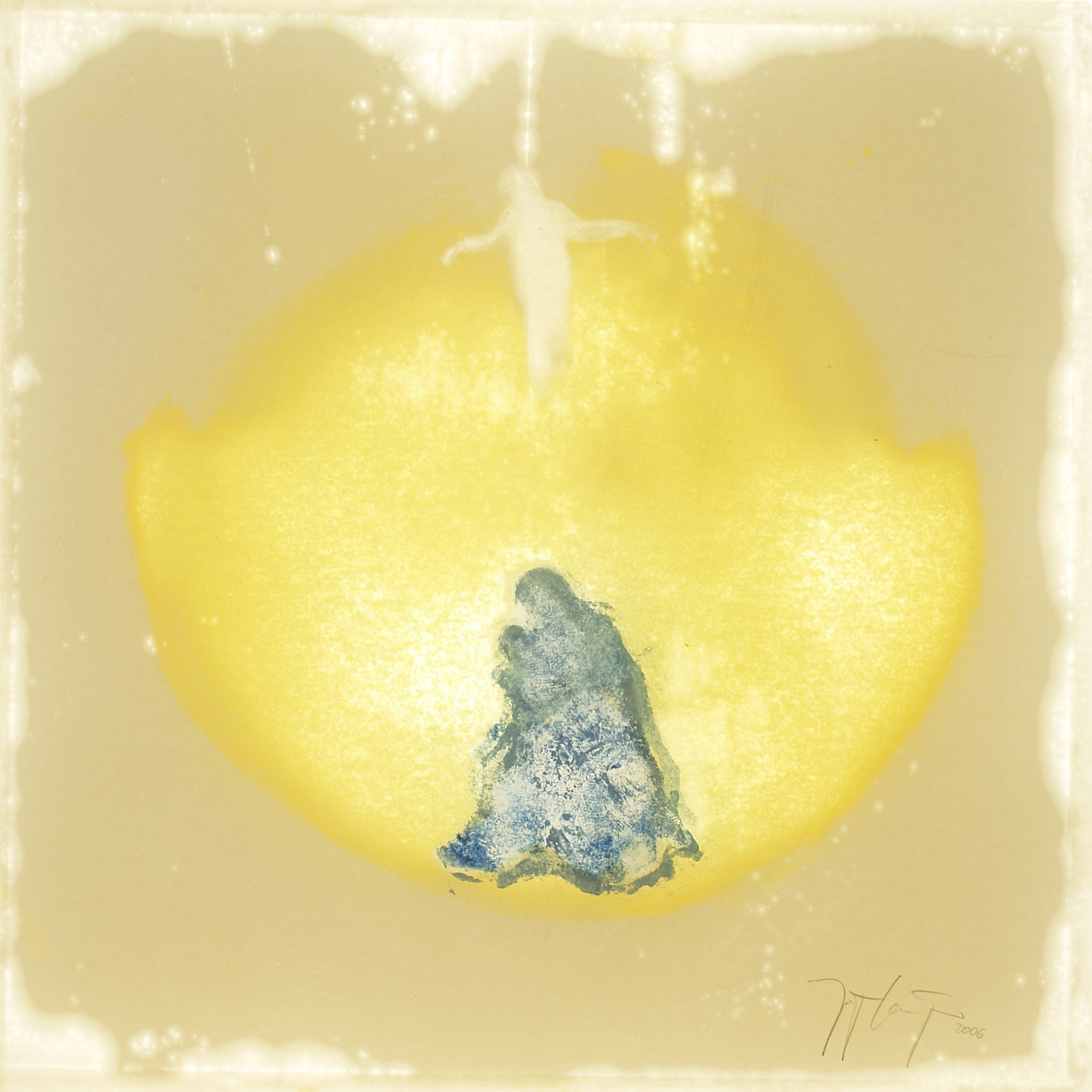
Jörg Länger (German, 1964–), Chr. Geb., 2006. Linocut, wax, oil, and graphite pencil on paper, 33 × 33 cm, cast with resin between two Optiwhite sheets of glass, 38 × 38 cm.
The contemporary German artist Jörg Länger creates extraordinary mixed-media works, many of which are in dialogue with Christian art history. In addition to earning an advanced degree in art, Länger has also done university coursework in theology and philosophy, so it’s no wonder his pieces demonstrate a keen theological awareness and spiritual sensibility.
After some fifteen years of working in photography, installation art, performance art, and conceptual art, in 1998 Länger shifted gears to focus on drawing, painting, and printmaking. He developed a series, still ongoing, that he calls “Protagonisten aus 23.000 Jahren Kulturgeschichte” (Protagonists from 23,000 Years of Cultural History), in which he takes figures from prehistoric petroglyphs and bas-reliefs, ancient Greek vases, medieval manuscripts, European Renaissance paintings, and contemporary art, simplifies them, and puts them into a new pictorial context. He copies the figure’s outline onto a linoleum block, inks and prints it to produce a sort of silhouette, and builds out from there using oil paint, pastels, wax, and/or gold leaf, while still retaining a minimalist aesthetic.
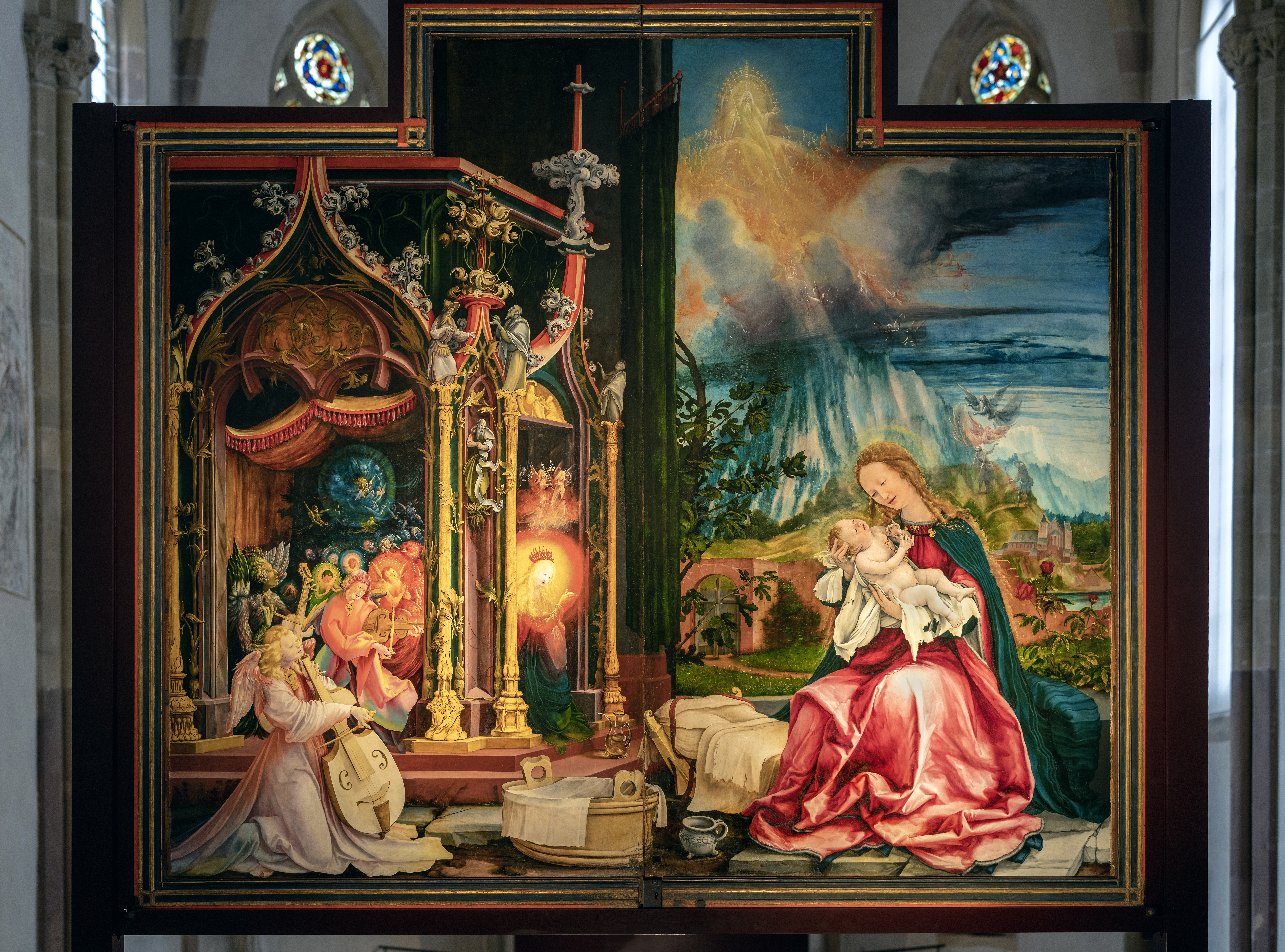
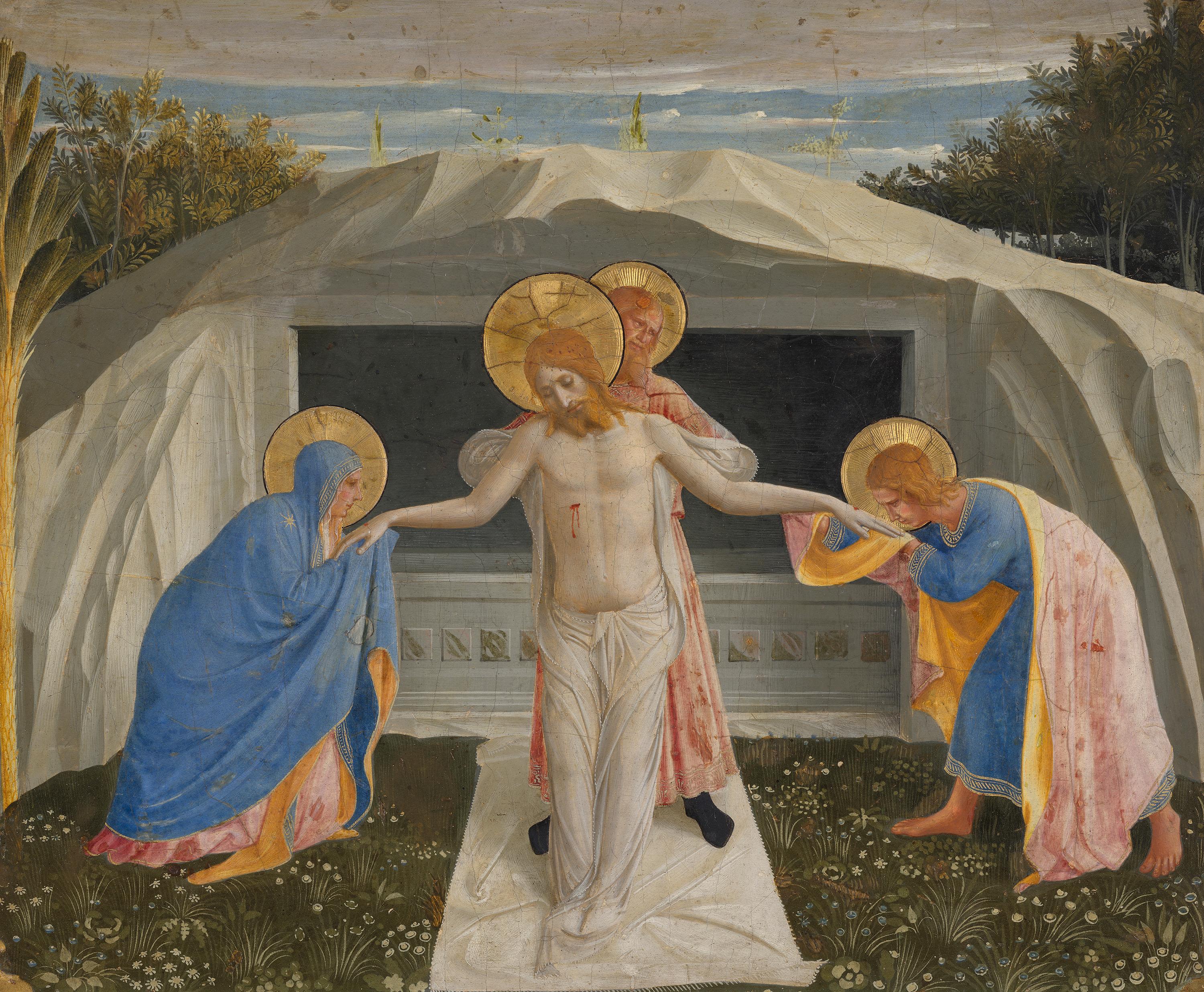
In his 2006 piece Chr. Geb. (short for Geburt Christi, “Birth of Christ”), the silhouetted figures are taken from Matthias Grünewald’s Isenheim Altarpiece and Fra Angelico’s Entombment of Christ.
Matthais Grünewald (German, ca. 1475/80–1528), The Nativity, central panel (first open view) of the Isenheim Altarpiece, 1515. Oil on wood, 269 × 307 cm. Unterlinden Museum, Colmar, France. Photo: Steven Zucker.Fra Angelico (Italian, ca. 1400–1455), Entombment of Christ, 1438–40. Tempera on wood, 37.9 × 46.6 cm. Alte Pinakothek, Munich.
With the shadowy blue central pair of Mother and Child, the ghostly impression of Christ’s crucified body (being dragged into a tomb in the scene it’s excised from), the expanding puddle of gold that holds together both birth and death, and the light that presses in from the edges, the work has a mystical feel. It shows the Eternal One entering time, born of a woman, to live and die and rise and so bring humanity back to God and back to their truest selves.
LISTEN: “O Vis Aeternitatis” by Hildegard of Bingen, ca. 1140–60 | Performed by Azam Ali, 2020
V. O vis aeternitatis
que omnia ordinasti in corde tuo,
per Verbum tuum omnia creata sunt
sicut voluisti,
et ipsum Verbum tuum
induit carnem
in formatione illa
que educta est de Adam.

R. Et sic indumenta ipsius
a maximo dolore
abstersa sunt.

V. O quam magna est benignitas Salvatoris,
qui omnia liberavit
per incarnationem suam,
quam divinitas exspiravit
sine vinculo peccati.

R. Et sic indumenta ipsius
a maximo dolore
abstersa sunt.

V. Gloria Patri et Filio
et Spiritui sancto.

R. Et sic indumenta ipsius
a maximo dolore
abstersa sunt.
V. O power within Eternity: All things you held in order in your heart, and through your Word were all created according to your will. And then your very Word was clothed within that form of flesh from Adam born.
R. And so his garments were washed and cleansed from greatest suffering.
V. How great the Savior’s goodness is! For he has freed all things by his own Incarnation, which divinity breathed forth unchained by any sin.
R. And so his garments were washed and cleansed by greatest suffering.
V. Glory be to the Father and to the Son and to the Holy Spirit.
R. And so his garments were washed and cleansed by greatest suffering.
Hildegard of Bingen [previously] was a twelfth-century German nun and polymath who wrote works on theology, medicine, and natural history; hymns, antiphons, and a drama for the liturgy (all with original music); and one of the largest bodies of letters to survive from the Middle Ages. In 1136 she was unanimously elected to lead her Benedictine community as abbess, which she did until her death in 1179.
“O vis aeternitatis” is the first entry in Hildegard’s Symphonia armonie celestium revelationum (Symphony of the Harmony of Celestial Revelations), a compilation of her liturgical songs that she made during her lifetime. It is labeled a “Responsory to the Creator.” “The responsory, one of several compositional forms Hildegard used,” explains medievalist Nathaniel M. Campbell, “is a series of solo verses [marked V] alternating with choral responses [marked R] sung at the first office of the day, vigils (matins), in the monastic liturgy.” It’s basically a call-and-response song.
This responsory, Campbell continues, “contemplate[s] the Incarnation . . . as the pivotal moment in which creation reached its perfect and predestined trajectory.” He notes how the refrain meditates on the cleansing of Adam’s flesh both from suffering and by (Christ’s) suffering. God put on our humanity and redeemed it.
Here’s how the medievalist Barbara Newman translates the responsory on page 99 of the critical edition of the Symphonia published by Cornell University Press:
Strength of the everlasting! In your heart you invented order. Then you spoke the word and all that you ordered was, just as you wished.
And your word put on vestments woven of flesh cut from a woman born of Adam to bleach the agony out of his clothes.
The Savior is grand and kind! From the breath of God he took flesh unfettered (for sin was not in it) to set everything free and bleach the agony out of his clothes.
Glorify the Father, the Spirit, and the Son.
He bleached the agony out of his clothes.
In the video above, “O vis aeternitatis” is performed by Azam Ali, an internationally acclaimed singer, producer, and composer who was born in Iran and raised in India and is now based in Los Angeles. She writes in the video’s YouTube description that Hildegard is part of the canon of universal spirituality and mysticism and that she is attracted to her cosmology, especially her articulation of the ancient philosophical concept of “the music of the spheres.”
In addition to her solo work, Ali is part of the musical group Niyaz, who blend medieval Sufi poetry and ancient Middle Eastern folk songs with modern electronic and trance music.
“One of poetry’s great gifts is to slow us down,” writes Peggy Rosenthal in Praying the Gospels through Poetry. “We’re used to racing ahead as we read, whether it’s a newspaper or an email memo or even an essay: language in these forms propels us forward, urging us to grab up its main points. But poetry doesn’t press ahead so much as hold us still—in the wonder of words crafted to open into another dimension.”
Below are twenty-five poems to “hold us still” this holiday season.
I’ve collected hundreds of Advent and Christmas poems over the past decade, but for this feature one of the selection criteria was that the poem must be freely available online. I chose the number twenty-five because that is standard in most Advent calendars—tools for counting down the days to Christmas. This way, you can choose, if you wish, to bookmark this page and read just one poem a day from December 1 to 25, each one a little treat.
The order progresses, in general, from Advent longing and anticipation to Christmas joy and wonder to post-nativity moments like the presentation in the temple and the visit of the magi.
1. “Advent Madrigal” by Lisa Russ Spaar: I’m not sure I understand this poem, but I like it. A madrigal is a part-song, and this is a song of waiting in simultaneous belief and doubt, of being irresistibly attracted to God’s story while also skeptical of aspects. The speaker compares the moon to a flashlight that a theater usher shines down the aisle to escort folks to their seats. What does it mean that “the treetops sough // & seize with” escape? Escape from what? And that the earth has been purloined? I don’t know, but the final couplet really lands for me—about how in the dark night of our not-knowing, we make our Advent wreaths, decking them with evergreens, their round shape an O of lament and awe before the yet-to-be-seen.
Source: University of Virginia Office of Engagement
2. “Prayer” by John Frederick Nims: The first in a sequence of five poems, “Prayer” expresses a sense of emptiness and desire, beckoning an unnamed one whom I read as Christ to come and fill. “Come to us, conceiver, / You who are all things, held and holder. / . . . / Come, infinite answer to our infinite want.”
3. “how he is coming then” by Lucille Clifton: This poem is part of a sequence on the life of Mary; it appears between “mary’s dream” (on the Annunciation) and “holy night” (on Mary’s ecstatic birthing experience). In answer to the title, Clifton gives three similes.
4. “Advent 2” by Anna A. Friedrich: This poem is the second in a series of Advent villanelles commissioned by the poet’s church in Boston last year to converse with one or more of the lectionary readings for each week of the season. Malachi 3:1–4 is the primary touchstone here, a formidable prophetic passage that compares God in the day of his coming to a blazing fire that refines metal. Stanza 3 references the fiery repentance-preaching of John the Baptist from Luke 3:1–6, and then Friedrich draws in another, unexpected “fire” text: Daniel 3, in which three young Hebrew men are thrown into a furnace by a Babylonian king for their refusal to worship his gods but are preserved from harm when a mysterious fourth person appears with them in the flames. Friedrich connects this story to the promise that the earth and its inhabitants will not be wholly consumed in the fire of God’s judgment—only the impurities, the dross, will be destroyed, so that all may be restored to their truest selves. Hence why, in Friedrich’s words, “We pray for His fire. We trust this flame.”
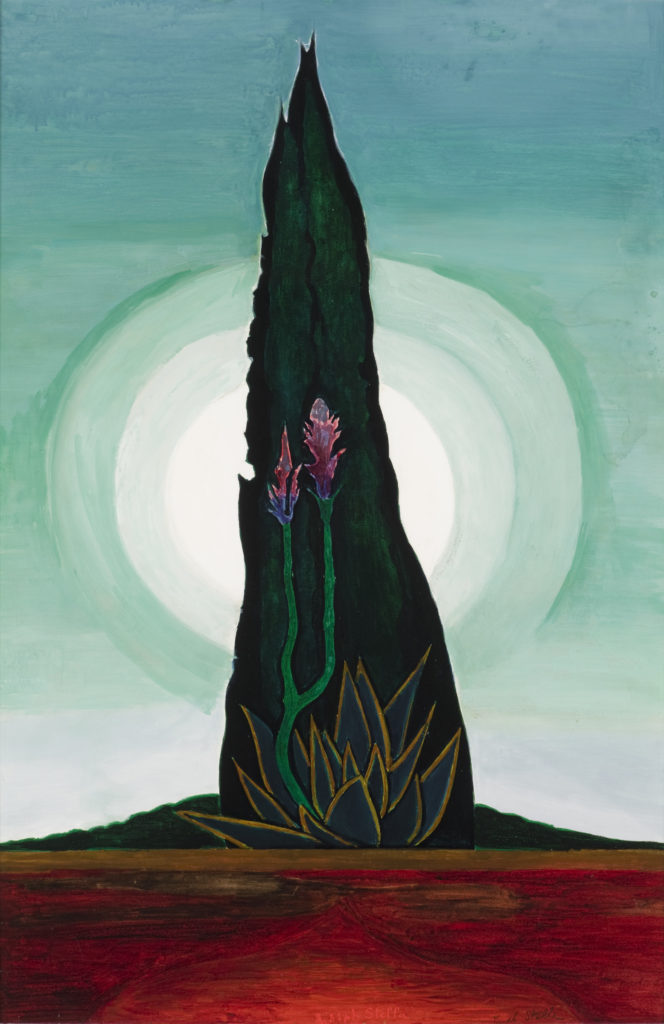
5.“Desert Blossoming” by Amit Majmudar: A reflection on the messianic promise of Isaiah 35:1–2, this poem celebrates how, through the deserts of Israel, Jesus “scattered his verses on the secretly gravid ground,” causing the wilderness to blossom. Majmudar mentions red, the color of fire (an image he connects to the light of faith), rhyming it with “bled.” Although he uses this final word in the sense of spreading into or through—oases bleeding into one another as dry land becomes water—one can’t help but think of Jesus’s sacrificial death, his blood extraordinarily fertile, producing life.
Joseph Stella (American, 1877–1946), Tree, Cactus, Moon, ca. 1928. Gouache on paper, 104.1 × 68.6 cm. Reynolda House Museum of American Art, Winston-Salem, North Carolina.
6.“Name One Thing New”by Seth Wieck: This six-line poem takes the Teacher of Ecclesiastes to task, responding to his cynical claim that “there is nothing new under the sun” (Eccles. 1:9) with a counterexample.
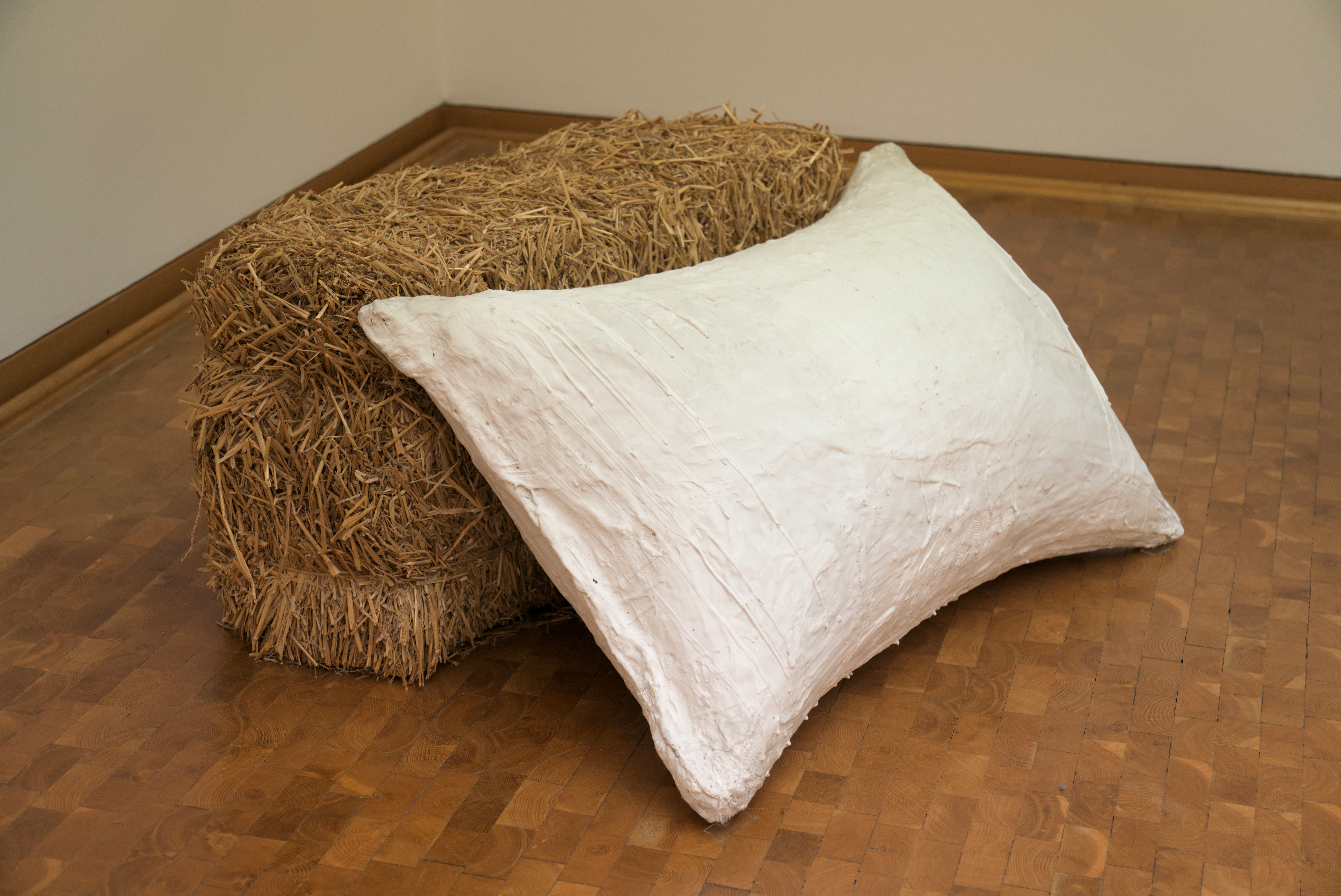
7.“For My Mother at Advent” by Brian Volck: The poet recalls a simple Advent tradition his mother established in his childhood and reflects on her spiritual legacy, her lifetime of Christ-inspired kindnesses that continue to pillow him. How might we soften the hardness of the world for others?
8. “Advent” by Suzanne Underwood Rhodes: This stunning poem makes unlikely intertextual connections, bringing Matthew 19:24 (one of Jesus’s hard sayings regarding wealth) to bear on John 1. Its unique angle on the Incarnation and its evocative imagery have inspired an experimental jazz composition and several paintings.
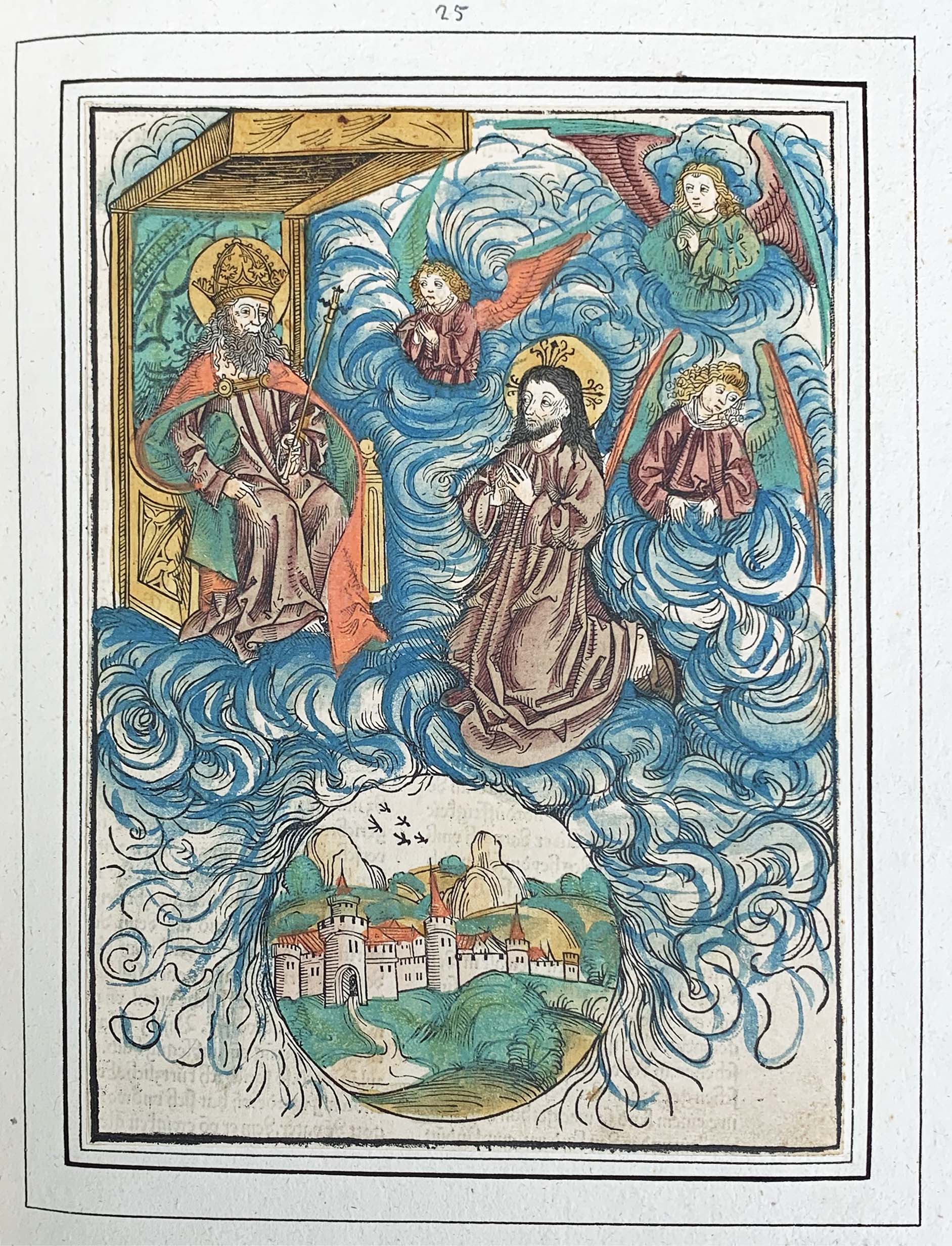
9. “An Hymn to Humanity” by Phillis Wheatley: “Lo! for this dark terrestrial ball / Forsakes his azure-pavèd hall / A prince of heav’nly birth!” So begins this poem on the Incarnation by Phillis Wheatley (ca. 1753–1784), the first African American to publish a book of poetry. In stanzas 2 and 3, God the Father dispatches the Son to establish his throne on earth, “enlarg[ing] the close contracted mind, / And fill[ing] it with thy fire.” The “languid muse” in stanza 5 refers to Wheatley herself, whereas the “celestial nine” are the ancient Greek inspirational goddesses of literature, science, and the arts. The “smiling Graces” is another classical reference.
Michael Wolgemut (German, 1434–1519), The Father sending the Son into the world, 1491. Hand-colored woodcut from the Schatzbehalter (published by Anton Koberger, Nuremberg), 43.7 × 27.5 cm. British Museum, London.
10. “In My Hand” by Sarah Robsdottir: Mary remembers the moment she conceived Jesus, one ordinary day when sitting down to a bowl of lentil stew.
Source: Aleteia, April 9, 2018
11. “The Risk of Birth, Christmas, 1973”by Madeleine L’Engle: Best known for her children’s novel A Wrinkle in Time, Madeleine L’Engle was also a poet. Here she compares our era to the one in which Jesus was born—both are characterized by violence and hate, and yet Jesus, the embodiment of divine love, willingly entered the peril.
12. “On Another’s Sorrow” by William Blake: Through the Incarnation, God lovingly, humanly, entered the world of human woe to experience it firsthand. “He doth give His joy to all,” Blake writes: “He becomes an infant small, / He becomes a man of woe, / He doth feel the sorrow too.” I featured this poem about Emmanuel, God-with-us, in a musical setting by singer-songwriter David Benjamin Blower in 2023 but was surprised that Blower omitted Blake’s final stanza, whose closing couplet I find striking, as it conveys Jesus’s continued identification with and compassion for humanity, how he moans alongside us in our suffering. For a different musical interpretation, also in an acoustic indie folk mode, see the one by Portland-based artist Michael Blake, from his 2021 album Songs of Innocence and Experience:
Source: Songs of Innocence and Experience (London, 1794). Public Domain.
13.“Missing the Goat”by Lorna Goodison: An immigrant from Kingston, Jamaica, to Toronto, Ontario, Goodison writes of the heightened feeling of exile but also of creative adaptations during the holidays as she tries to carry out the food traditions of her native country on a foreign soil where some of the ingredients are in more limited supply. For the sorrel wine, traditionally made with roselle (Hibiscus sabdariffa) petals, tropically grown, she has to make do with redbuds. And the local shops have run out of goat meat—“the host of yardies” (people of Jamaican origin) who’ve moved to the area have already bought it all up—so “we’ll feast then on curried some-other-flesh.” Despite the differences from home, Christmas is still Christmas, and she raises her “hybridized wassail cup” to her new place, her new neighbors (many of them, like her, also recent arrivals from the Caribbean), and the creation of new rituals in multicultural Toronto.
Source: Controlling the Silver (University of Illinois Press, 2010); compiled in Collected Poems (Carcanet, 2017)
14. “Word Made Flesh”by Kathleen Raine: Awarded the CBE (Commander of the Order of the British Empire) for her significant contributions to literature and culture, Raine has been described as a mystical and visionary poet. Here is her revoicing of John 1. What a powerful last two lines!
15.“Nativity”by Barbara Crooker: In the heavy dark, in the windy cold, “love is born in the world again” every December when we retell the story of Christ’s birth.
Gary Kuehn (American, 1939–), Straw Pillow, 1963. Straw, plaster. Ludwig Museum, Cologne, Germany, Inv. ML/SK 5185. Photo: Victoria Emily Jones.
16. “First Miracle”by A. E. Stallings: The first miracle Jesus performed, according to the Gospel of John, was turning water into wine. Stallings reflects on an earlier miracle performed by his mother’s body, and all birth-giving mothers’: turning nutrients from her blood into milk.
17.“What Sweeter Music Can We Bring” (or “A Christmas Carol, sung to the King in the Presence at Whitehall”)by Robert Herrick: “The Darling of the world is come”! Originally written as a song for soloists (each number corresponds to a different singer) and chorus, this poem reverses the typical seasonal imagery of Christmas, remarking how, at Jesus’s birth, “chilling Winter’s morn / Smile[s] like a field beset with corn” and “all the patient ground [is turned] to flowers.” The original music by Henry Lawes is lost, but many contemporary composers have written settings of the text, most famously John Rutter.
Source: Hesperides: Or, Works Both Human and Divine (London, 1648). Public Domain.
18.“Sharon’s Christmas Prayer”by John Shea: A five-year-old recounts the Christmas story, and when she reaches the clincher, she can’t hold back her glee.
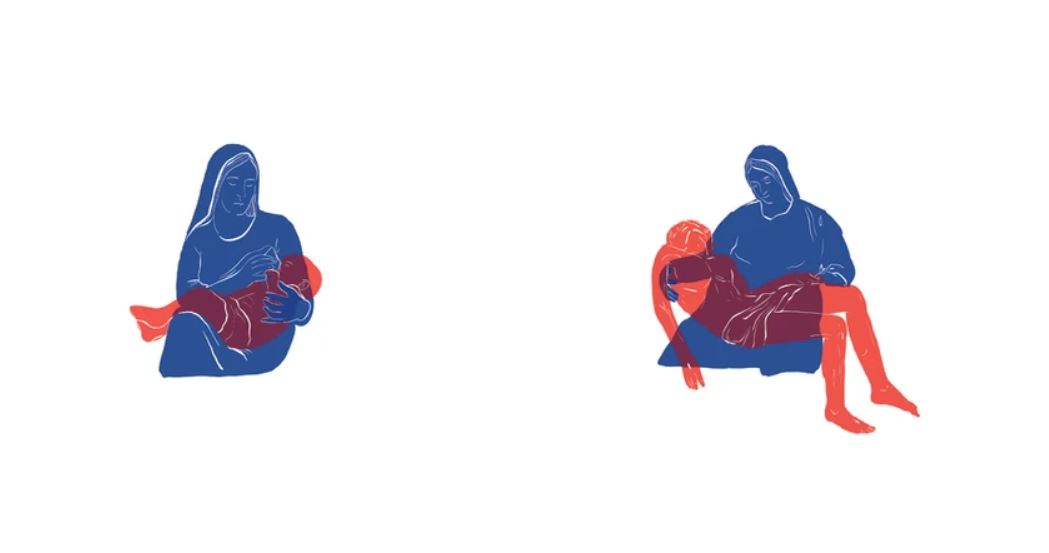
19.“God”by D. A. Cooper: Riffing on Williams Carlos Williams’s “The Red Wheelbarrow,” this spare poem attends to the birth and death of the incarnate God, upon which so much depends.
Source: Reformed Journal, September 3, 2024
Katarzyna Malinowska (Polish, 1989–), Juxtapose (diptych), 2021. Digital painting, 20 × 30 cm.
20. “Lullaby after Christmas”by Vassar Miller: The speaker wishes sweet sleep for the newborn Christ child, wishes to keep him innocent of his fate for as long as possible—for “even God has right to / Peace before His pain.” Consisting of four sestets whose second, fourth, and sixth lines rhyme, the poem has a sing-songy quality that is jarring for the juxtaposition of words like “soft,” “warm,” and “tinkling” with the likes of “blood,” “gore,” and “die.”
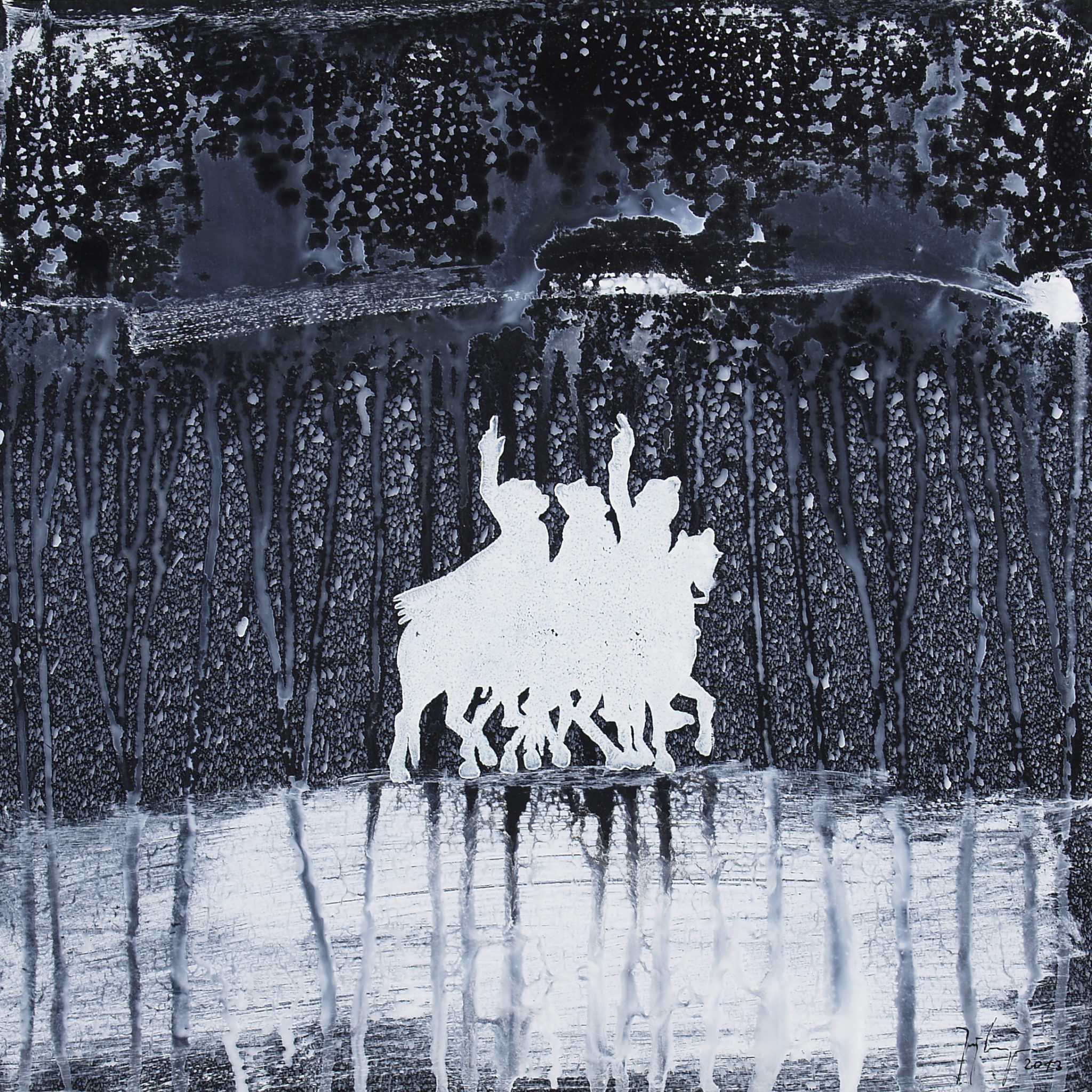
21. “Journey of the Magi”by T. S. Eliot: Eliot wrote this poem shortly after his conversion to Christianity in 1927. Opening with a passage from a Christmas sermon by the seventeenth-century Anglican bishop Lancelot Andrewes, it is from the perspective of one of the magi, who made a long, toilsome journey in search of the meaning of a mysterious guiding star. After the magi’s encounter with the Christ child, they would never be the same; their paganism would no longer satisfy. The poem is about the transformative impact Christ has on those with humility enough to see him for who he is (having followed the light of revelation) and to worship him accordingly. And that transformation is in some ways painful, as it involves giving up some of the things one once held dear.
“Were we led all that way for / Birth or Death?” the magus asks. Jesus’s wasn’t the only birth they witnessed; they, too, were (re)born in Bethlehem. But spiritual rebirth is also a sort of death—the magi died to their old selves and false loves and loyalties. Thus, when they returned to Babylon, they felt like strangers in a strange land. They were now citizens of a different kingdom, and filled with a longing for its consummation.
Source: Journey of the Magi (Ariel Poems) (Faber & Gwyer, 1927). Public Domain.
Jörg Länger (German, 1964–), The Three Kings, 2013. Linocut and gesso on aluminum dibond, 38 × 38 cm. The linocut is after a 12th-century illumination from the St Albans Psalter, held at the Dombibliothek, Hildesheim, Germany.
22. “Twelfth Night”by Sally Thomas: (Scroll to second poem.) As the Christmas season draws to a close, holly berries shrivel and drop, the “candles drown themselves in waxen lakes,” “the tree’s a staring corpse,” and a spider has built a web across the mantel nativity. Thomas uses the passing of the season to reflect more broadly on the passing of time and our own dustiness and desiccation—and by contrast, the unchangeability of God.
23. Untitled poemby S. E. Reid: Most reflections on the New Year are full of enthusiastic goal-setting and go-getting, but Reid, gardening in her greenhouse in the crisp cold of January, describes a “fall[ing] backwards,” “dropping into the dark,” “shivering,” herself a seed, latent in the soil, trusting God that growth will come.
24. “Anna the Prophetess” by Tania Runyan: Forty days after Jesus’s birth, Mary and Joseph presented him in the Jerusalem temple. Runyan imagines this event from the perspective of Anna, a woman who was widowed young and thenceforth lived at the temple into old age, devoted to prayer, fasting, praise, and prophecy.
25. “The Work of Christmas”by Howard Thurman: Drawing on Jesus’s mission statement in Luke 4, the great African American theologian and civil rights leader Howard Thurman urges us to continue the work of Christmas—finding, healing, feeding, etc.—throughout the year. Listen to the simple yet vigorous choral setting by Elizabeth Alexander.

 Art & Theology