
Advent, Day 1: Redeemer, Come

At Christmas, we celebrate how light entered into darkness. But first, Advent bids us to pause and look, with complete honesty, at the darkness. Advent asks us to name what is dark in the world and in our own lives and to invite the light of Christ into each shadowy corner. To practice Advent is to lean into a cosmic ache: our deep, wordless desire for things to be made right. We dwell in a world shrouded in sin, conflict, violence, and oppression. . . .

Before the delight of Christmas, Advent invites us to a vulnerable place—a place of individual and communal confession where we honestly name unjust systems, cultural decay, sorrow, the sin of the world, and the sin in our own lives. Only by dwelling in that vulnerable place can we learn to profess true hope. Not cheap hope, spun from falsehoods, half-truths, or denial, but a hope offered by the very light that darkness cannot overcome.

—Tish Harrison Warren, Advent: The Season of Hope, pp. 32–33

LOOK: Luminarias by Juan Francisco Guzmán
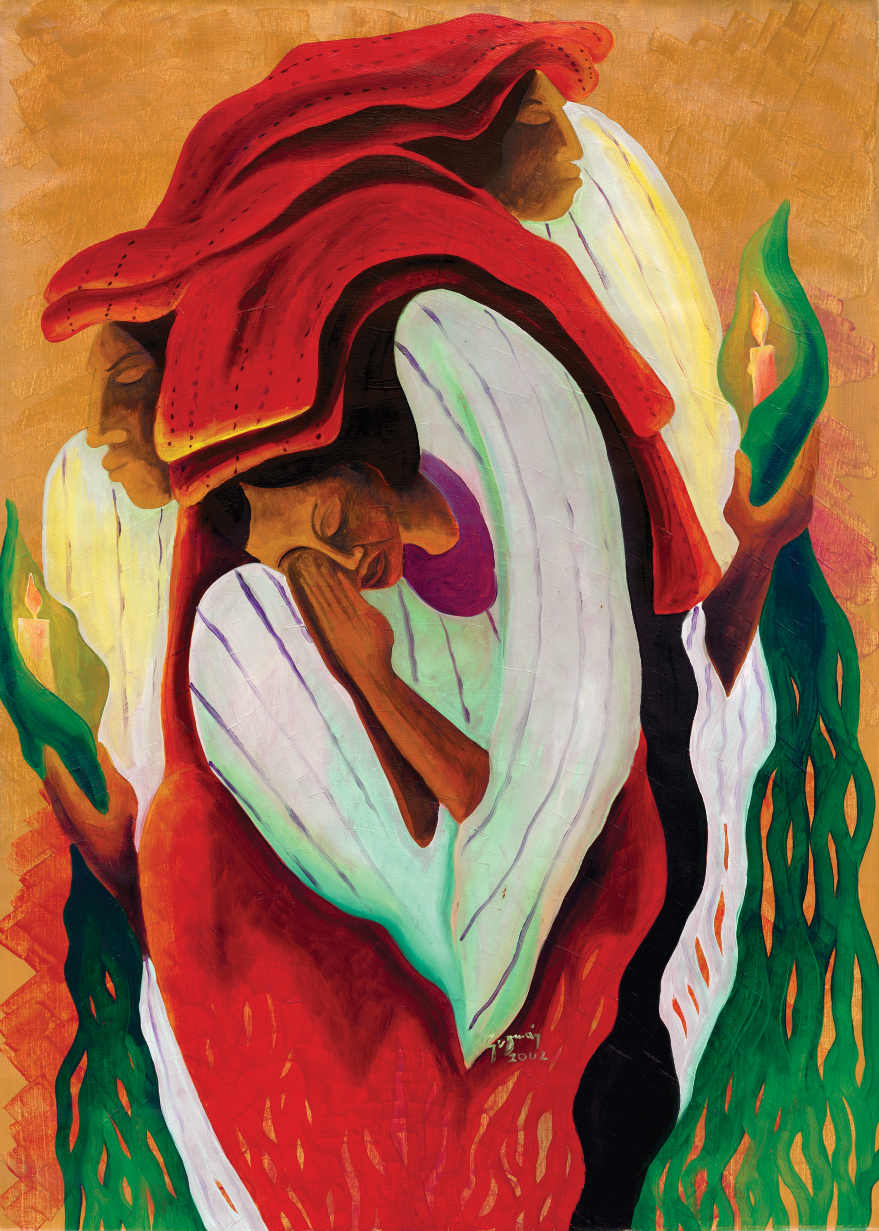
Guzman, Juan_Luminarias
Juan Francisco Guzmán (Guatemalan, 1954–), Luminarias, 2002. Oil on canvas. © missio Aachen.

LISTEN: “Come, Oh Redeemer, Come” by Fernando Ortega, on Give Me Jesus, 1999 | Performed by MissionSong (musicians of The Mission Chattanooga Parish), 2020

Father enthroned on high
Holy, holy
Ancient, eternal Light
Hear our prayer
Lord, save us from the dark
Of our striving
Faithless and troubled hearts
Weighed down

Refrain:
Come, oh Redeemer, come
Grant us mercy
Come, oh Redeemer, come
Grant us peace

Look now upon our need
Lord, be with us
Heal us and make us free
From our sin [Refrain ×2]

Father enthroned on high
Holy, holy
Ancient, eternal Light
Hear our prayer

“Go to the Limits of Your Longing” (Book of Hours I, 59) by Rainer Maria Rilke

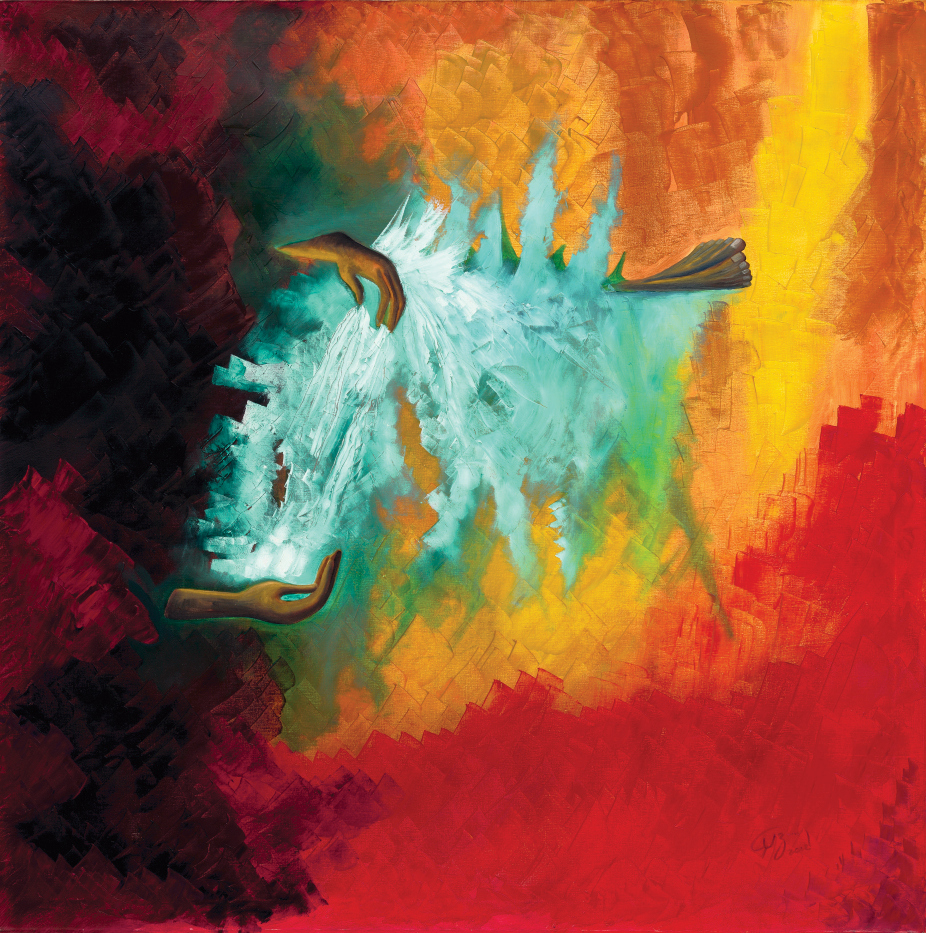
Guzman, Juan_Espíritu sin Medida
Juan Francisco Guzmán (Guatemalan, 1954–), Espíritu sin Medida (Spirit Without Measure), 2012. Oil on canvas, 103 × 102 cm. © missio Aachen.

God speaks to each of us as he makes us,
then walks with us silently out of the night.

These are the words we dimly hear:

You, sent out beyond your recall,
go to the limits of your longing.
Embody me.

Flare up like flame
and make big shadows I can move in.

Let everything happen to you: beauty and terror.
Just keep going. No feeling is final.
Don’t let yourself lose me.

Nearby is the country they call life.
You will know it by its seriousness.

Give me your hand.

From Rilke’s Book of Hours: Love Poems to God (Riverhead, 1996, 2005), translated by Anita Barrows and Joanna Macy. The original German is in the public domain.

Rainer Maria Rilke (1875–1926) was a primarily German-language lyric poet, playwright, and short story writer. Born of Catholic parents in Prague, then part of the Austro-Hungarian empire, he came to reject church dogma as an adult, though he maintained a lifelong fascination with Christian imagery and biblical stories. His volumes of poetry include Das Stunden-Buch (The Book of Hours) (1899–1903), about the search for God; Das Buch der Bilder (The Book of Images) (1902–6); Das Marienleben (The Life of Mary) (1913), a thirteen-poem cycle about the Virgin; the Duineser Elegien (Duino Elegies) (1922), which weigh beauty and existential suffering; and Sonette an Orpheus (Sonnets to Orpheus) (1922). After Rilke’s death from leukemia, a young mentee of his, Franz Xaver Kappus, compiled ten of the letters Rilke had written to him about creativity, the poetic vocation, and the inner life; published as Briefe an einen jungen Dichter (Letters to a Young Poet) (1929), this correspondence has influenced generations of writers and other artists.

Anita Barrows (born 1947) is a clinical psychologist, political activist, poet, and translator from German, French, and Italian. She lives in the Bay Area of California.

Joanna Macy (1929–2025) was a scholar of Buddhism, general systems theory, and deep ecology. A respected voice in movements for peace, justice, and environmentalism, she wove her scholarship with decades of activism.