Roundup: “A Radiant Birth,” Kate Bowler’s Advent Guide, messy family trees, and more

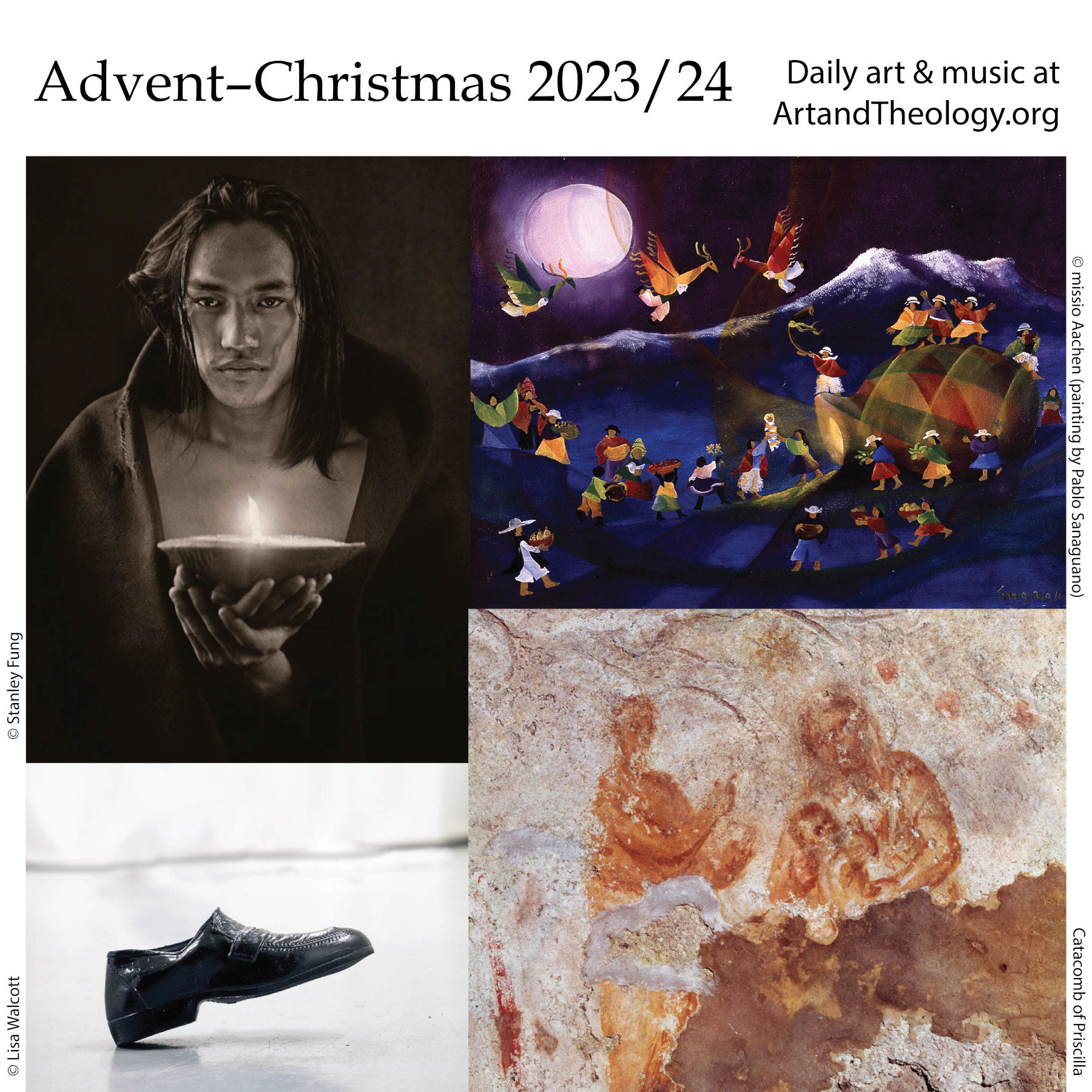
This year I’m continuing my Advent and Christmas tradition of daily art-music pairings on the blog, from December 2 (a prologue before the official start of Advent on December 3) through January 6, Epiphany. If you know of anyone who might be interested to follow along, they can subscribe here.

Advent 2023 promo

An ancient catacomb painting, a contemporary light installation, an Urdu anthem, a French West Indian carol, an Ethiopian tapestry, an impearled chasuble, a kinetic sculpture, a jazz rhapsody, a Byzantine-inspired piano quintet, an isicathamiya-style song, a Puerto Rican bulto, a Netherlandish altarpiece, and settings of Herbert, Blake, Wilbur, and Augustine—these are some of the gifts from artists on offer this season, inviting us to deepen our desire for and celebration of Christ Emmanuel, God with us.

+++

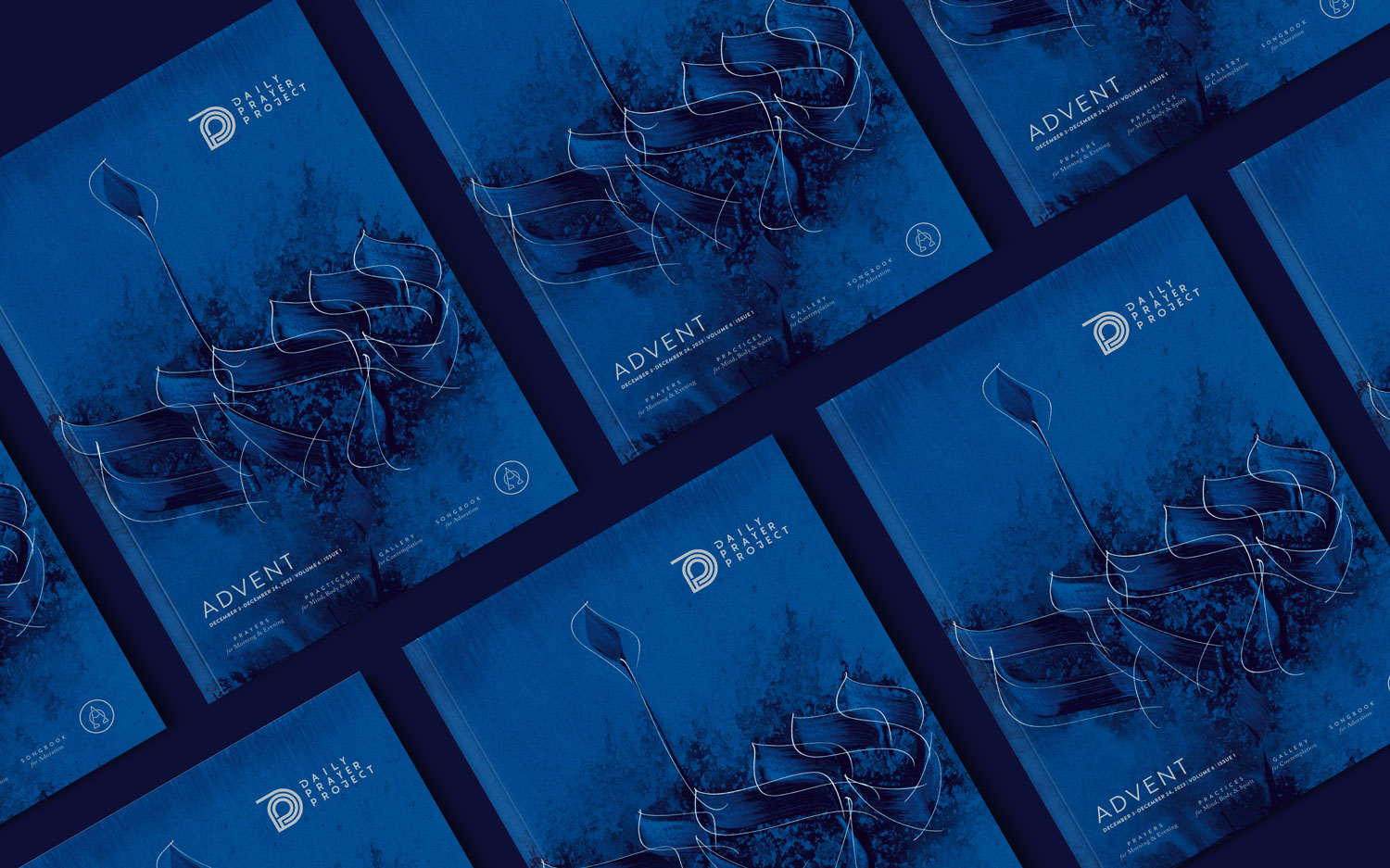
THE DAILY PRAYER PROJECT: Advent 2023: With Advent comes the start of a new liturgical year—which means a new volume of the Daily Prayer Project’s Living Prayer Periodical! Published in six editions a year, this periodical aims to “connect and unify Christians by resourcing them with daily prayers, practices, and music from the global-historical church, and visual art of spiritual and artistic value.” I curate the art. The cover image for Advent 2023—which, providentially, was finalized before the Hamas attack on Israel on October 7 and the ensuing retaliations—is a calligraphic rendering of the Hebrew word shalom by Michel D’anastasio, a French Catholic artist with Jewish ancestry. The lamed is like a candle held hopefully aloft against a dark-blue midnight.

Advent LPP

Rev. Joel Littlepage, who is the pastor of worship and formation at Grace Mosaic in Washington, DC, curates the prayers. Here’s Friday evening’s, from the church in New Guinea: “Lord, oil the hinges of our hearts’ doors, that they may swing gently and easily to welcome your coming.” Wednesday morning’s prayer is a responsive confession by Jorge Lockward, a Dominican song leader from New York, which begins, “Por tantas injusticias, perdón, Señor. Por tanta indiferencia, perdón, Señor.” (For so much injustice, forgive us, Lord. For so much indifference, forgive us, Lord.)

+++

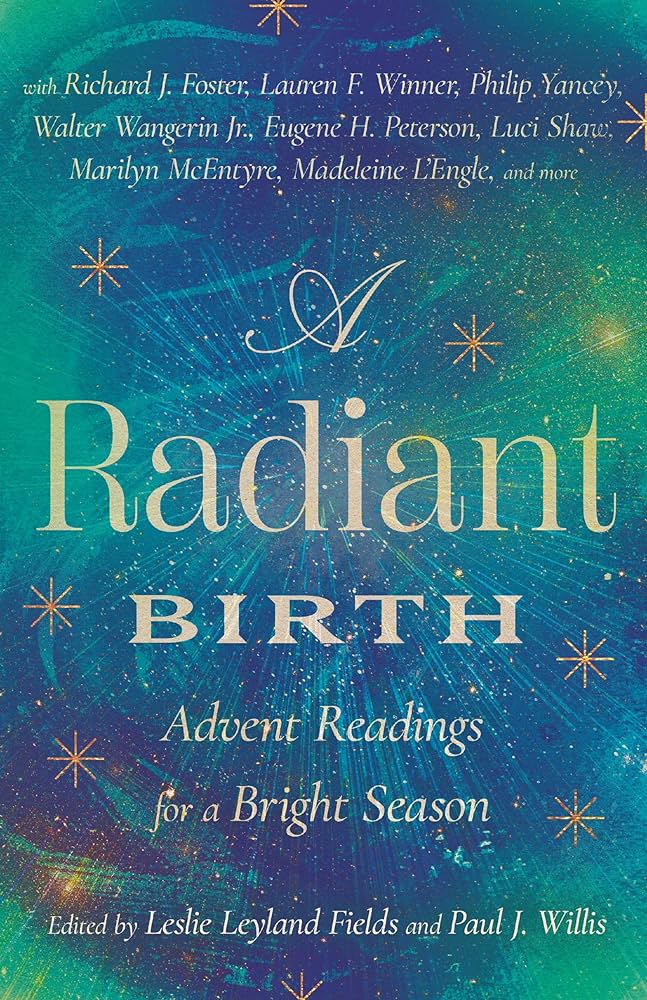
NEW BOOK: A Radiant Birth: Advent Readings for a Bright Season, ed. Leslie Leyland Fields and Paul J. Willis: New this fall from InterVarsity Press, this Advent devotional book is a multiauthor compilation of forty-two readings for Advent through Epiphany, consisting of literary essays, poems, and short stories. Contributors are affiliated with the Chrysostom Society and include Richard Foster, Lauren Winner, Madeleine L’Engle, Philip Yancey, Walter Wangerin Jr., Eugene Peterson, Luci Shaw, and Marilyn McEntyre. About one-third of the content is previously unpublished, including a wonderful little reader’s theater (pages 81–89) by Leslie Leyland Fields that I can imagine working really well as part of a church service (and I received confirmation from Fields that people may use it freely in such settings). I know the market is really thick with Advent books, and I’ve read a lot of them, but this one has to be one of my favorites—the selections are wonderful.

+++

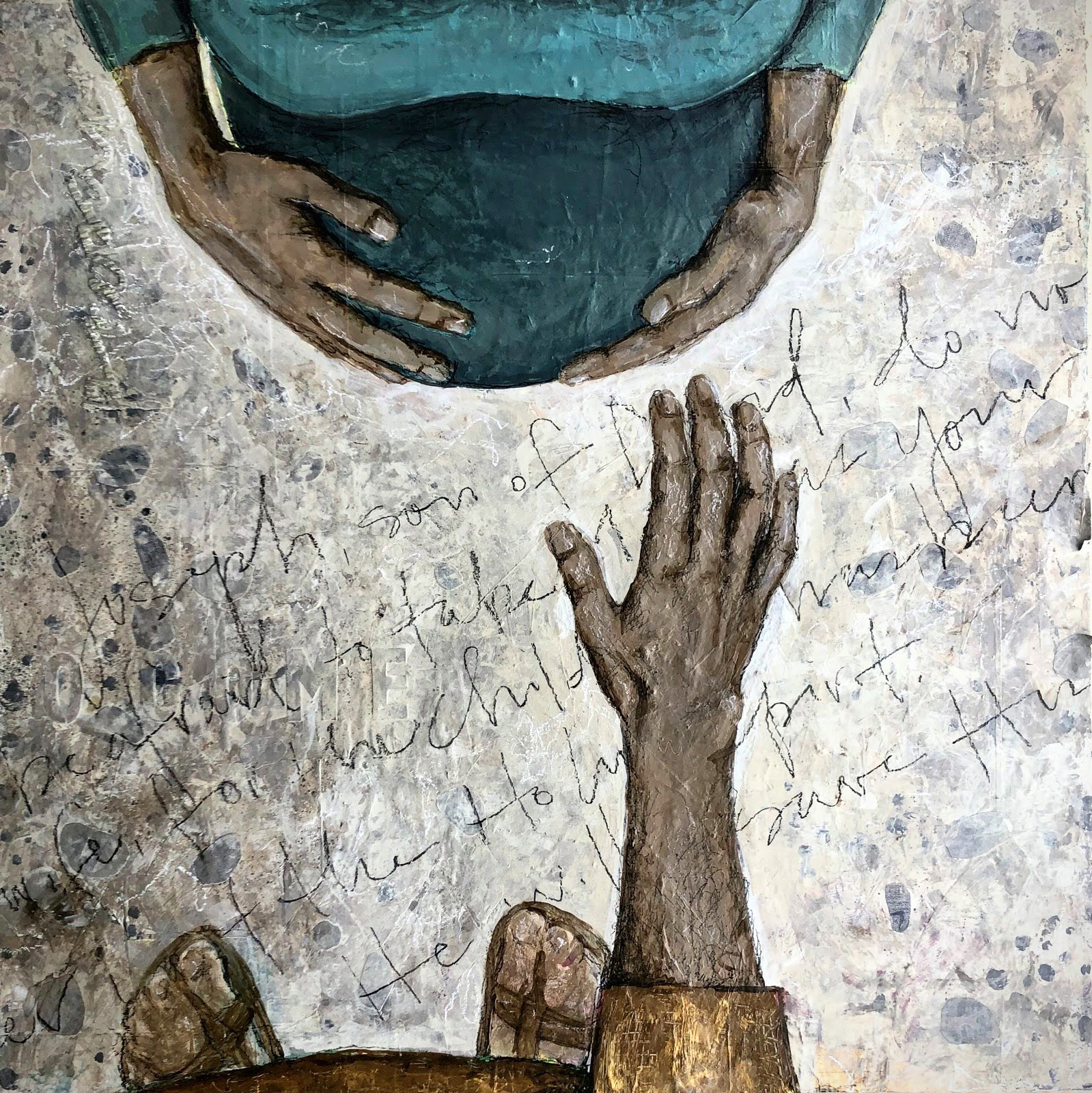
ART SERIES: Advent by Riki Yarbrough: For Advent 2018, artist Riki Yarbrough set herself a challenge: each day, create a 24 × 24-inch mixed media work corresponding to that day’s family devotions, structured around Jesus’s lineage. She didn’t have nearly enough canvases to last the duration of the season, so on day two “I woke up, took the very same canvas I had painted the day before, and worked right on top.” The final product was an artwork twenty-seven layers deep—the various people, prophecies, and foreshadowings adding weight and texture to the progressing story that culminated, in Yarbrough’s devotional program, with the infant Christ in a manger. “To cover the previous day’s work under the beauty of a new focus and set of Scriptures became both an offering and a sacrifice,” she said. “I wasn’t worried about meeting someone’s expectation or coming back to rework it later. I was simply conversing with the Lord over the truth of His Word in those wonderful moments on that particular day.”

Yarbrough, Riki_Joseph, Husband of Mary
Riki Yarbrough (American, 1975–), Joseph, Husband of Mary, 2018. Mixed media on canvas, 24 × 24 in.

Here’s a thirty-second time lapse of the Cain and Abel composition transforming into Noah:

In Advent 2022 Yarbrough reprised the daily challenge, this time executing her images on separate canvases. You can find this series on her Instagram @rikiyarbrough, starting with the candle image—but you can also purchase it in book form, as this month, Yarbrough released Advent in Art and Verse, combining full-color photos of all twenty-seven works from her 2022 Advent series with scripture passages and original poetic reflections. I received my copy, and my first impression was: what a beautiful design!

Advent in Art and Verse

I like the allusiveness of her paintings: a set of footprints, stalks of grain, a red cord, tongs gripping a hot coal, tree rings, harp strings, a split fig, a cairn—simple objects like these guide us through the narrative of the Old Testament and the opening pages of the New.

+++

SONG MEDLEY: “O Come, O Come, Emmanuel / Come, Thou Long-Expected Jesus” by the Petersens: In this video shot in Weddings at the Homestead in their hometown of Branson, Missouri, family bluegrass band The Petersens perform the two best-known Advent hymns—the one mournful, meditative, and minor key, the other bright and exuberant. They recorded both songs (released as two separate tracks) for their 2020 album Christmas with the Petersens.

+++

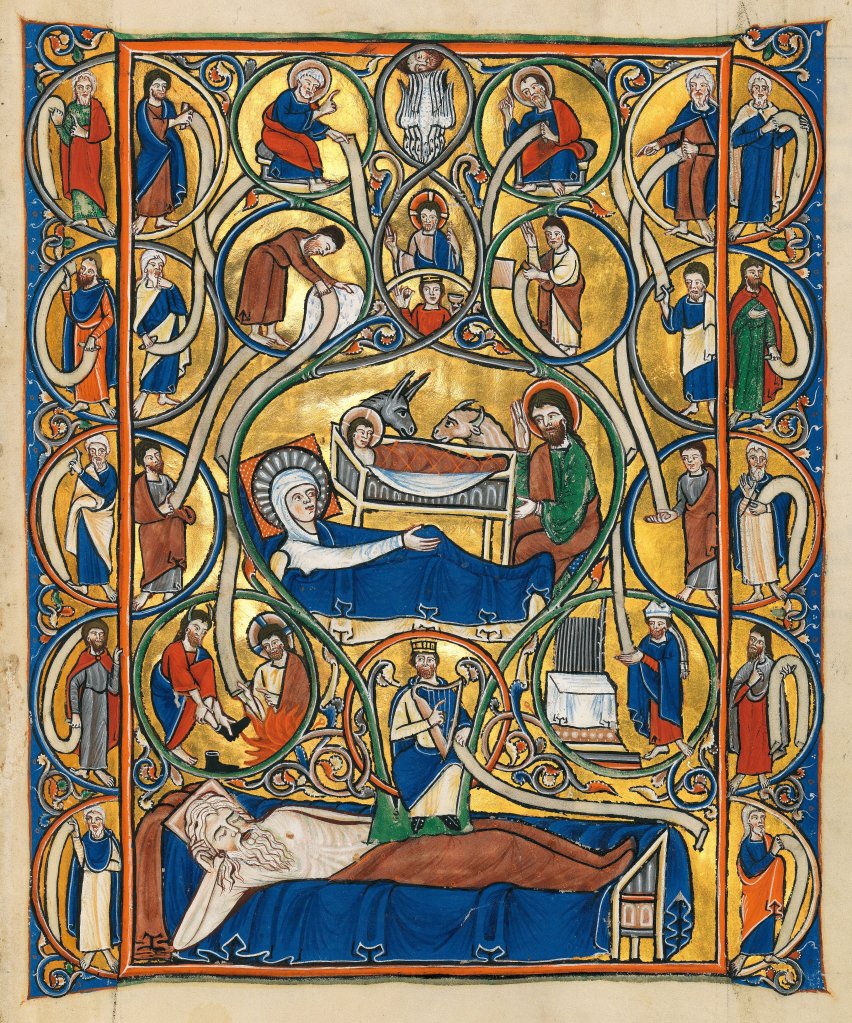
SUBSTACK POST: “O Come, Thou Rod of Jesse” by Grace Hamman, Medievalish 1.12, December 12, 2022: In last December’s installment of her monthly Medievalish newsletter, Grace Hamman considers Jesus’s family tree, visualized in the Middle Ages as what’s called, after Isaiah 11:1, the Tree of Jesse [previously here and here]. What does it mean that Jesus came from a real human family, a “complex web of generation, adoption, relationship, and dependence”? “The Son did not only take on flesh,” Hamman writes, “he took on David’s sometimes troublesome courage and cowlicks, Anne’s devotion and double-jointed pinky fingers. He comes from a line of real and complex people: faithless and faithful, abusers and abused, holy and broken. Baby Jesus is born into our funny human particularities and our burdensome histories, into created time and place.”

Tree of Jesse (English Psalter)
Tree of Jesse from an English Psalter in Latin, ca. 1190–1210. Bayerische Staatsbibliothek, Munich, BSB Clm 835, fol. 121r.

+++

PODCAST EPISODE: “The Season of Waiting (and Waiting . . . and Waiting),” Everything Happens with Kate Bowler, November 29, 2022: In this podcast episode from the beginning of last Advent, bestselling author Kate Bowler introduces the season as one of waiting. She explains the history of the Advent wreath, and takes calls from listeners who share Christmas traditions they observe to honor a loved one they’ve lost. Be sure to download Bowler’s 2023 Advent guide, titled Bless the Advent We Actually Have. Here’s an excerpt from Day 1:

Advent is a time marked by waiting. We wait for God to make all things right. For justice to be meted. For democracy to feel stable. For wrongs to be righted. For our communities to be safe spaces for the vulnerable. For our earth to heal. We wait for our lives to get easier—for us to have the financial security we need, for our relationships to be restored, for our bodies to ache less. We wait for our parents to understand us and our families to feel whole. We wait for our kids and grandkids to be healed or come back home. We wait for the grief to end.

But the waiting of Advent is one marked by hope. We wait with expectancy. With anticipation for the inbreaking of God to make all things new. . . .

Advent hope is gritty. It shirks all false optimism. It is hope as protest. Hope in the face of impossibilities. . . .

The excerpt Bowler reads in the podcast is from her 2022 Advent guide, The Season of Waiting (and Waiting . . . and Waiting . . .) (which you can also download for free, along with 2021’s A Good Enough Advent + Christmastide, at https://katebowler.com/advent/).

Roundup: “Art and Religion Now” symposium, landscape of the body, and more

SYMPOSIUM: “Kunst en religie nu” (Art and Religion Now), October 20, 2023, 1:30–4:30 p.m., Museum Catharijneconvent, Utrecht, Netherlands: A week from Friday, attend a free afternoon of talks (in Dutch) on the topic of religion in modern and contemporary art. The speakers are Lieke Wijnia, who will present the results of her past two years of research on religious themes that crop up in modern and contemporary artworks in the Collectie Nederland (Netherlands Collection); Rozanne de Bruijne, on religion in art of the interwar period (1918–1940), the topic of a spring 2025 exhibition she’s curating; Wouter Prins from the Museum Krona, on the state of religious art in the post-Nietzsche era; and Joost de Wal on contemporary art in church spaces. Here’s the autotranslated description:

“The more modern the art, the smaller the presence of religion.” This frequently heard approach appears to be anything but justified. In fact, at the beginning of the twenty-first century, spirituality seems to be on the rise in the visual arts, resulting in a multitude of artistic interpretations. What does this say about the relationship between religion and art?

This symposium focuses on the multifaceted and sometimes unexpected presence of religion in visual art. For example, how does contemporary (religious) art relate to ongoing secularization on the one hand and to flourishing international religious communities on the other? What does the growing interest in spirituality mean for the arts? And what about the use of religious symbolism in visual art, both inside and outside the church? The speakers also shed light on how the wealth of (religious) stories and images can provide guidance in times of social uncertainty and uprooting.

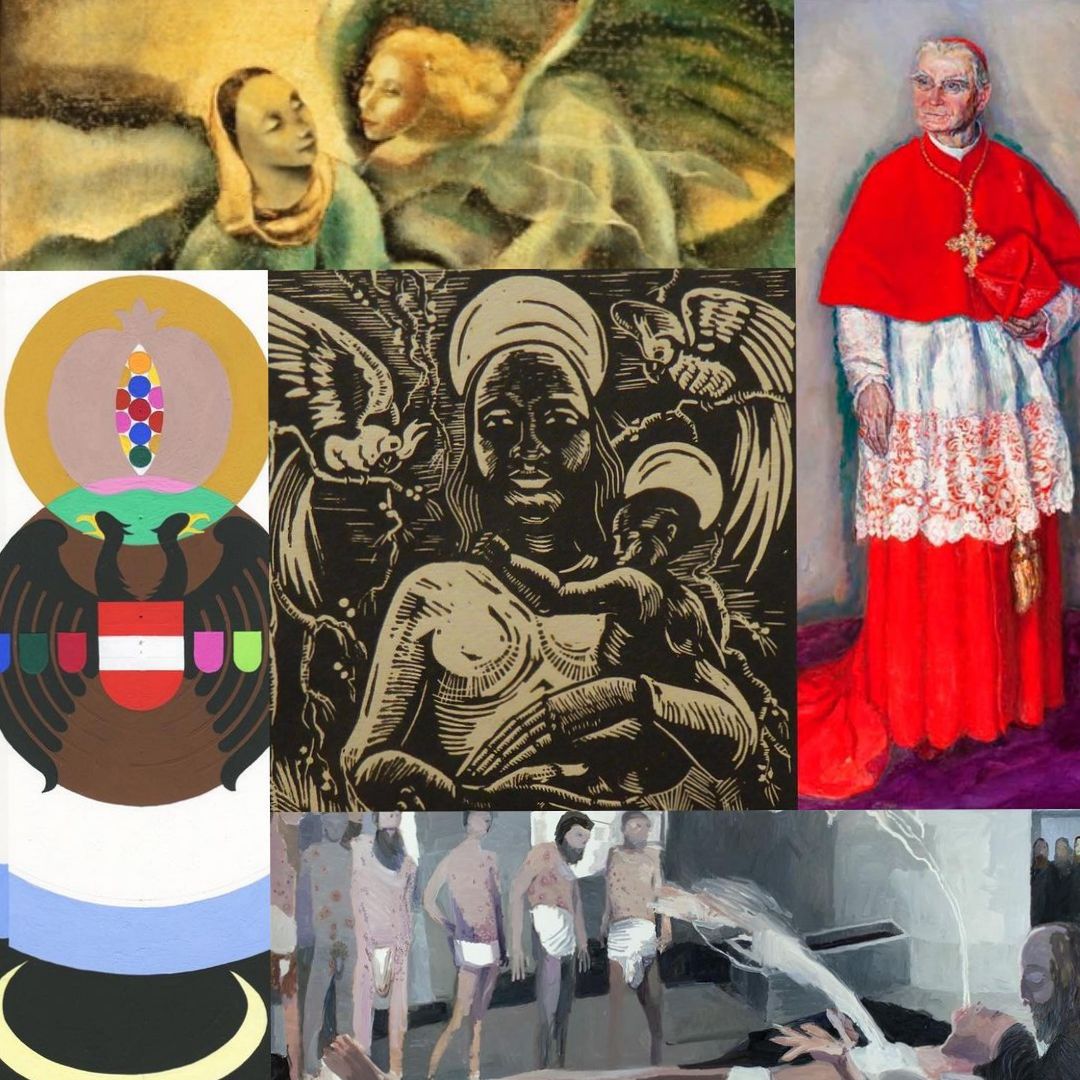
Clockwise from top left: Annunciation by Mariette Lydis (1931); Portrait of Cardinal W.M. van Rossum by Jan Sluijters (1927); The Exorcism of Mary Magdalene by Helen Verhoeven (2020); Path and Puddle, panel 4, by Kasper Bosmans (2022); Black Madonna by Genia van der Grinten-Lücker (1934)

+++

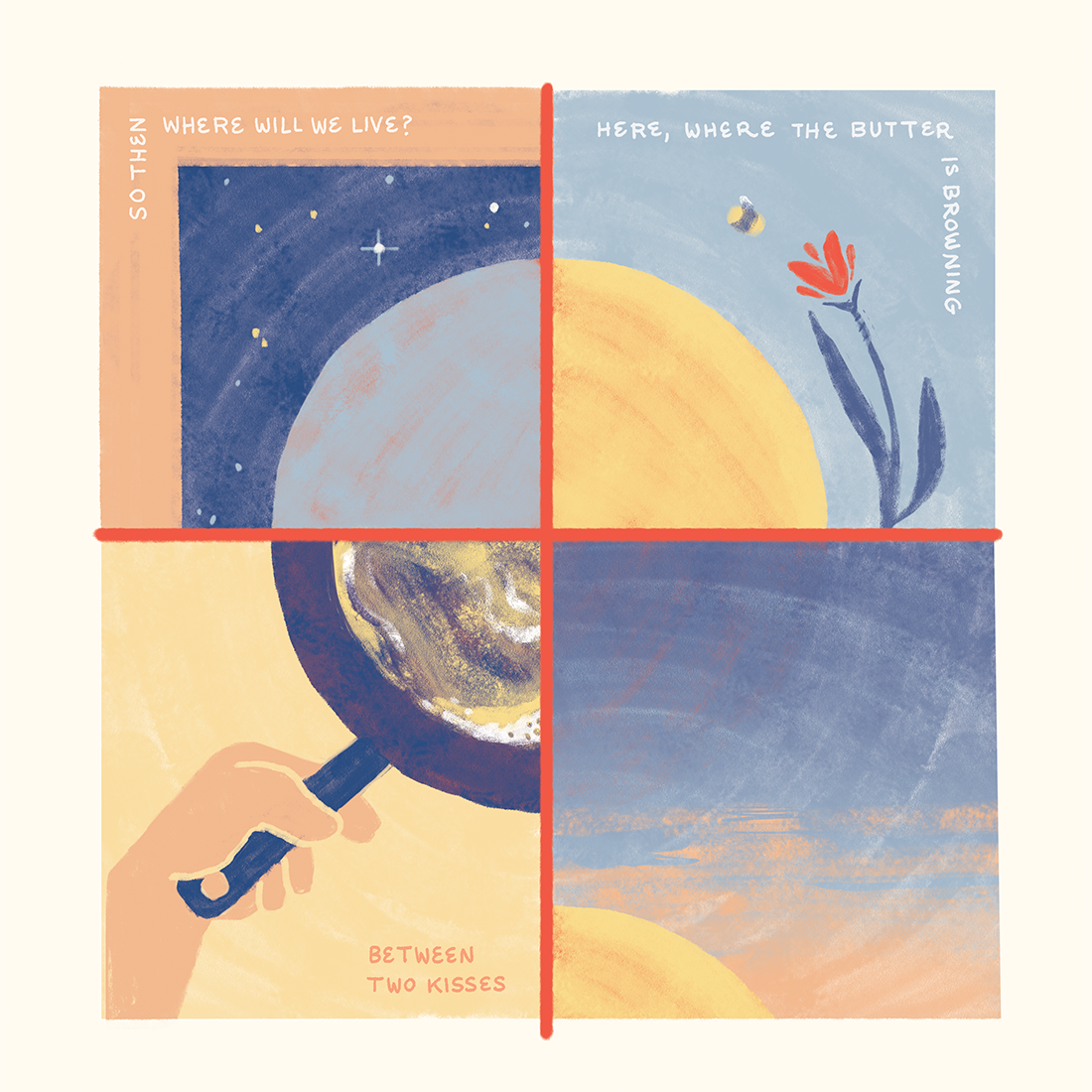
ONLINE WORKSHOP: “Deep Dive into Poetry Comics,” led by Madeleine Jubilee Saito, November 2, 9, 16, 30, 5–7 p.m. Pacific (8–10 p.m. Eastern): Madeleine Jubilee Saito [previously] is a cartoonist from Seattle who makes “poetry comics” about the environment and the sacred—and in four virtual sessions offered through Push/Pull, she’ll teach you how to make your own on topics of your choice!

Saito, Madeleine Jubilee_Love Poem
Madeleine Jubilee Saito, Love Poem, 2019

“In this online course, you’ll practice exercises to explore your own voice and interests in drawing and text, creating poetry comics in a variety of styles. You’ll learn about minicomics, how to do basic layout for printing, and how to print a quarter-page minicomic. We’ll end the course with a celebratory comics reading for friends and family on Zoom. Students need to either be comfortable drawing digitally (Procreate, Photoshop, etc.) or have access to a scanner. Students will be also need access to a printer or local print shop for the last phase of the course.”

If you don’t have time to commit to four classes, there’s a single one offered on October 27.

+++

NEW ALBUM: You Don’t Carry It Alone by Leila Way: Leila Way is a singer-songwriter from Austin, Texas, writing songs for the church. Her first full-length album, “You Don’t Carry It Alone is a collection of songs for hard times. Some of these are old hymns; some were written during a period of intense grief and loneliness, while others grew out of prayers for friends. The album was created to comfort those who mourn; to remind God’s people that He is always faithful, always present and at work, even when we can’t see what He’s up to.”

The album consists of four original songs, two original instrumentals, a cover of “Be Still, My Soul,” and new retunes of George Matheson’s “O Love That Wilt Not Let Me Go” (one of my favorite hymns) and James Montgomery’s “I cannot call affliction sweet.”

+++

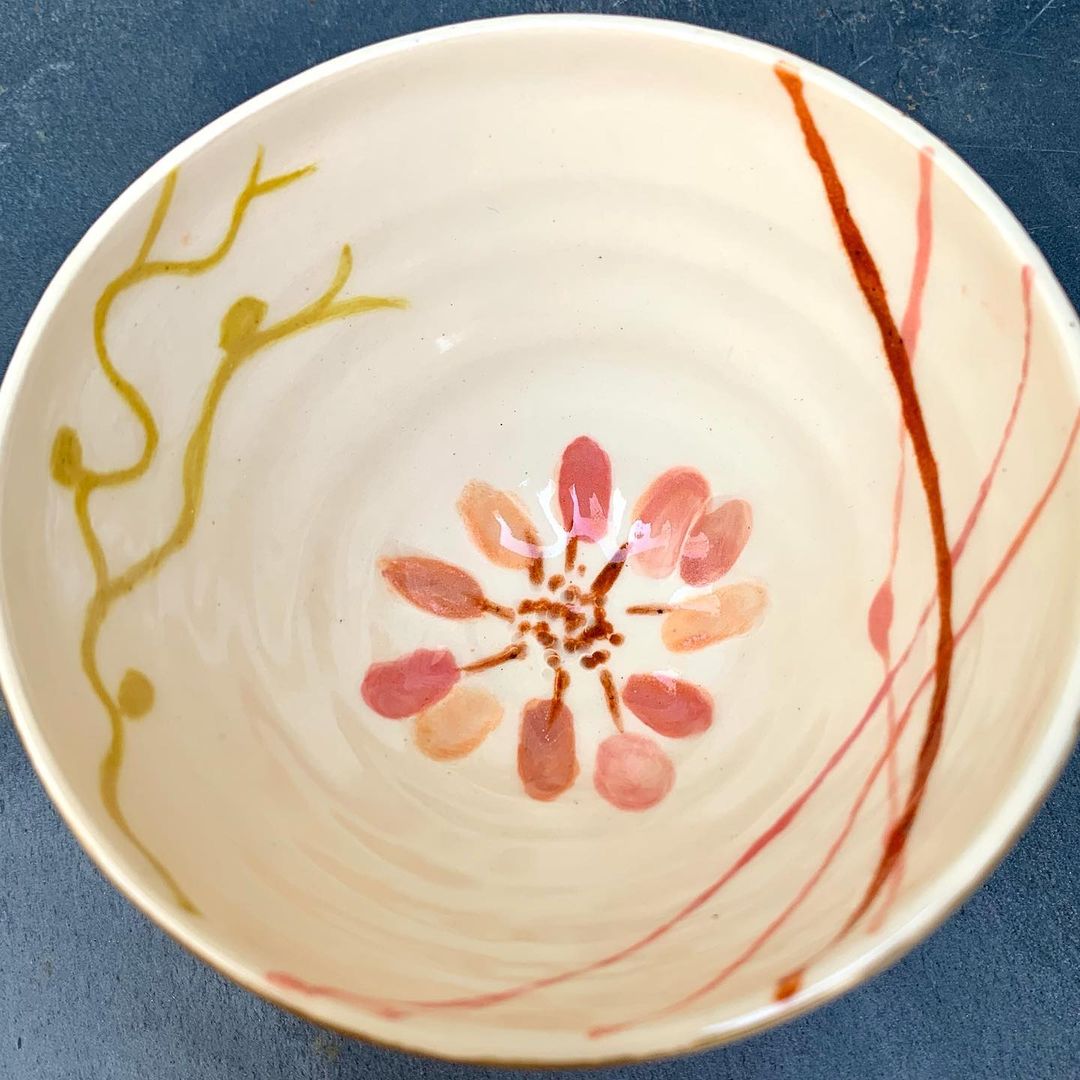
CERAMIC BOWLS: Nurture Collection by Jane Boutwell: I met artist Jane Boutwell at a Christians in the Visual Arts (CIVA) conference in 2021 after she presented this body of work that really moved me—a collection of ceramic bowls that take as their three design elements anatomical features of the female breast: lymph nodes (gold, river-like), mammary glands (pink and blooming), and musculature. She started the Nurture Collection after having one of her milk ducts surgically removed in 2019 for a biopsy (it turned out not to be cancer), as a meditation on the strength and inner beauty of this part of the body that is so often objectified or shamed. She recommends the bowls as a gift for a woman in your life who has had a tender year with regard to her breasts—cancer, nursing, etc.—to honor her journey.

Boutwell, Jane_Mammary bowl
Bowl from the Nurture Collection by Jane Boutwell, 2020

I share these now because October is Breast Cancer Awareness Month. Below is an eight-minute video explanation by the artist, followed by a short “making of” montage:

There are five Nurture bowls currently for sale in Boutwell’s online shop: Joan, Tracy, Colleen, Rita, and Wendy. Each is named after a woman she knows with breast cancer.

+++

PODCAST EPISODES:

>> “Landscape of the Body with David Taylor,” Makers & Mystics, September 13, 2023: Constructing a cogent theology of the body, theologian W. David O. Taylor discusses why it’s important that we honor and understand our bodies, and why having a right relationship to our bodies is imperative to the quest of art. Christians have often feared, distrusted, or despised the body; sin has meant that we’ve become alienated from our own bodies and the bodies of others, that we harm our bodies and others’, and that we often flee from our bodies, dissimulate. But Jesus wants us to be at home in our bodies, Taylor says—in worship, and in day-to-day life. He talks about Jesus as an icon of care-filled touch and the implications of that.

>> “On Being in a Body,” On Being with Krista Tippett, September 21, 2023: At the 2023 Aspen Ideas Festival, Krista Tippett interviewed Kate Bowler, author of Everything Happens for a Reason (and Other Lies I’ve Loved), a reflection on how she moved through learning at age thirty-five that she had Stage IV colon cancer. “From the new reality in our time of living with cancer as a chronic illness, to the telling of truths to our young as we face precarity in our collective body, this conversation is full of the vividly-whole humanity that Kate Bowler singularly embodies.” I heard Kate in person at Duke University a few years ago talking on a panel about suffering. She’s full of wisdom, wit, and raw tenderness and so, so endearing, and even though I’ve heard her story many times, every conversation with her brings up something new.  

+++

DANCE PERFORMANCE: Chroma, Grace, Takademe, and Revelations, performed by Alvin Ailey American Dance Theater: I’ve shared a video of Alvin Ailey’s Revelations here before. Well, this rebroadcast from 2015 includes that, plus performances of three other works by the prestigious Alvin Ailey American Dance Theater. I especially enjoyed Chroma, with music by Joby Talbot and choreography by Wayne McGregor—it’s the first twenty-six minutes of the video.

Roundup: Doubting Thomas, practicing stillness, living with grief, and more

SPOTIFY PLAYLIST: October 2023 (Art & Theology): Each month I compile a nonthematic mix of thirty faith-inflected songs from a range of sources. October’s playlist is now live. One track I’ll draw your attention to, with a live performance video below, is the soul-baring prayer “Doubting Thomas” by Chris Thile of Nickel Creek; read the lyrics, with annotations, here. (Also, Paul Demer has a nice cover of this song on YouTube.)

+++

MEDITATION EXERCISE: “Stillness—Richard Rohr’s Daily Meditations”: From the Center for Action and Contemplation comes this one-minute video that takes the most memorable line from Psalm 46, progressively paring it down and creating meditative space around each subtraction.

Be still and know that I am God
Be still and know that I am
Be still and know
Be still
Be

The Rev. Dr. Cynthia Bourgeault, an Episcopal priest, writer, and retreat leader, mentions this chant in her book Chanting the Psalms. “Each time the line is repeated,” she writes, “key words are taken away. The result is a funnel-like effect that leads straight down into silence. . . . Each phrase expresses its own unique meaning and understanding as the prayer moves toward utter simplicity” (185). Bourgeault recommends working with the recording “Be Still and Know” found on the album Songs of Presence: Contemplative Chants for the New Millennium from Praxis Publishing House; I couldn’t find the audio online, but I did find a song by The River’s Voice (Trish and Richard Bruxvoort Colligan) that’s also based on this exercise of Fr. Rohr’s: “Be (Still and Know That I Am God)”:

+++

PODCAST EPISODES: Here are two podcast episodes I caught up with recently and enjoyed. Both links include transcripts.

>> “Jan Richardson: Stubborn Hope,” Everything Happens with Kate Bowler, October 27, 2020: Kate Bowler, a historian and cancer survivor who has done much academic work on the prosperity gospel, talks with spiritual writer Jan Richardson [previously], whose husband died unexpectedly in 2013, about the hidden rooms of grief, being disciplined by hope, and how the concept of blessing in the Jewish and Christian traditions differs from the #blessed culture of social media. Don’t miss the three discussion questions in the show notes.

>> “Esau McCaulley: How Far to the Promised Land?,” No Small Endeavor, September 14, 2023: Lee C. Camp interviews public theologian Esau McCaulley, a professor of New Testament at Wheaton College and a New York Times opinion writer, about his new memoir, How Far to the Promised Land: One Black Family’s Story of Hope and Survival in the American South. I’ve heard rave reviews from multiple corners about this book, and this conversation has really whetted my appetite to read it!

+++

POEM COMMENTARY: “Learning about Constellations” by Saddiq Dzukogi, commentary by Pádraig Ó Tuama: On this episode of On Being’s Poetry Unbound podcast, host Pádraig Ó Tuama unpacks a poem written by Saddiq Dzukogi in the aftermath of his one-year-old daughter’s death. It’s from his 2021 collection Your Crib, My Qibla.