Roundup: “Art and Religion Now” symposium, landscape of the body, and more

SYMPOSIUM: “Kunst en religie nu” (Art and Religion Now), October 20, 2023, 1:30–4:30 p.m., Museum Catharijneconvent, Utrecht, Netherlands: A week from Friday, attend a free afternoon of talks (in Dutch) on the topic of religion in modern and contemporary art. The speakers are Lieke Wijnia, who will present the results of her past two years of research on religious themes that crop up in modern and contemporary artworks in the Collectie Nederland (Netherlands Collection); Rozanne de Bruijne, on religion in art of the interwar period (1918–1940), the topic of a spring 2025 exhibition she’s curating; Wouter Prins from the Museum Krona, on the state of religious art in the post-Nietzsche era; and Joost de Wal on contemporary art in church spaces. Here’s the autotranslated description:

“The more modern the art, the smaller the presence of religion.” This frequently heard approach appears to be anything but justified. In fact, at the beginning of the twenty-first century, spirituality seems to be on the rise in the visual arts, resulting in a multitude of artistic interpretations. What does this say about the relationship between religion and art?

This symposium focuses on the multifaceted and sometimes unexpected presence of religion in visual art. For example, how does contemporary (religious) art relate to ongoing secularization on the one hand and to flourishing international religious communities on the other? What does the growing interest in spirituality mean for the arts? And what about the use of religious symbolism in visual art, both inside and outside the church? The speakers also shed light on how the wealth of (religious) stories and images can provide guidance in times of social uncertainty and uprooting.
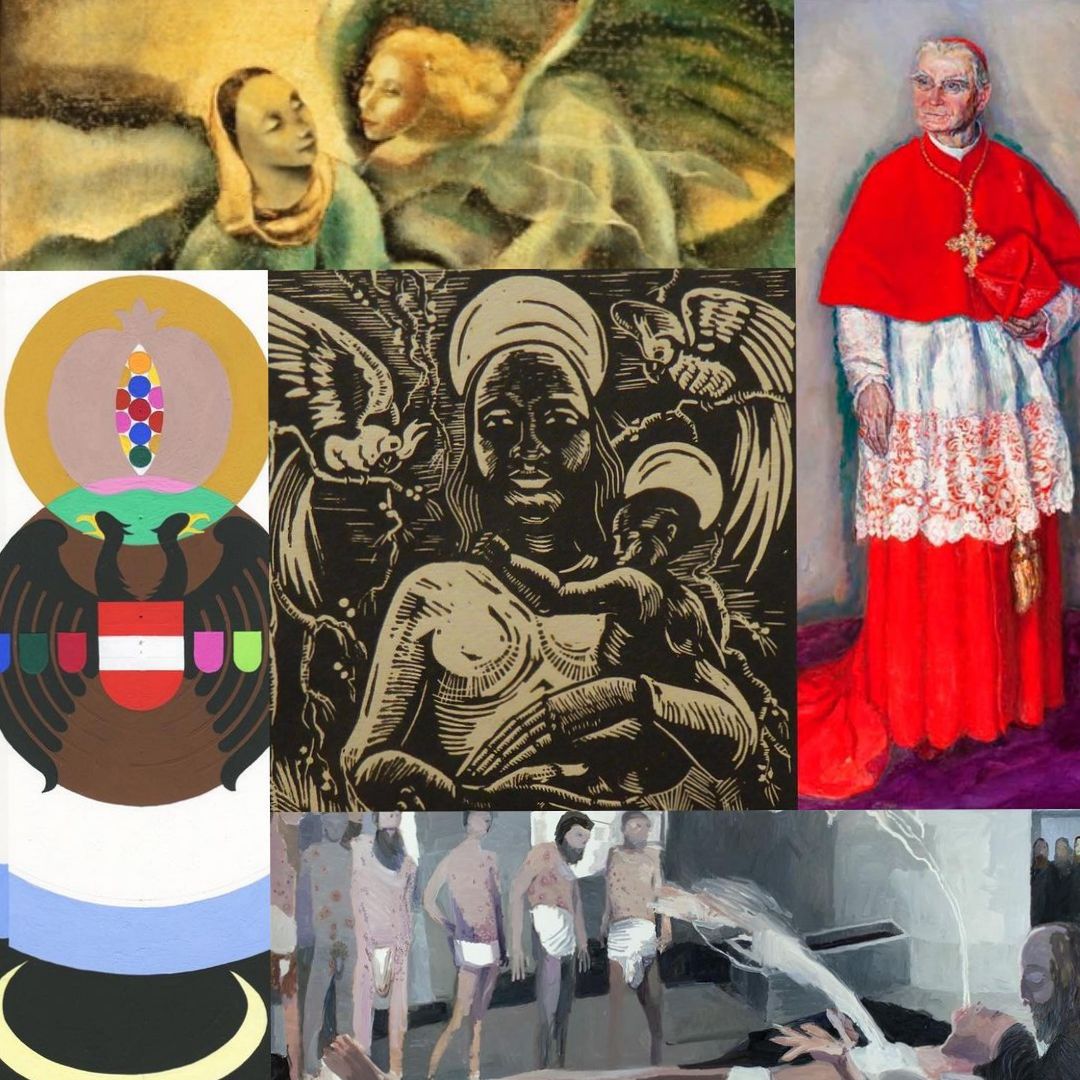
Clockwise from top left: Annunciation by Mariette Lydis (1931); Portrait of Cardinal W.M. van Rossum by Jan Sluijters (1927); The Exorcism of Mary Magdalene by Helen Verhoeven (2020); Path and Puddle, panel 4, by Kasper Bosmans (2022); Black Madonna by Genia van der Grinten-Lücker (1934)

+++

ONLINE WORKSHOP: “Deep Dive into Poetry Comics,” led by Madeleine Jubilee Saito, November 2, 9, 16, 30, 5–7 p.m. Pacific (8–10 p.m. Eastern): Madeleine Jubilee Saito [previously] is a cartoonist from Seattle who makes “poetry comics” about the environment and the sacred—and in four virtual sessions offered through Push/Pull, she’ll teach you how to make your own on topics of your choice!
Saito, Madeleine Jubilee_Love Poem
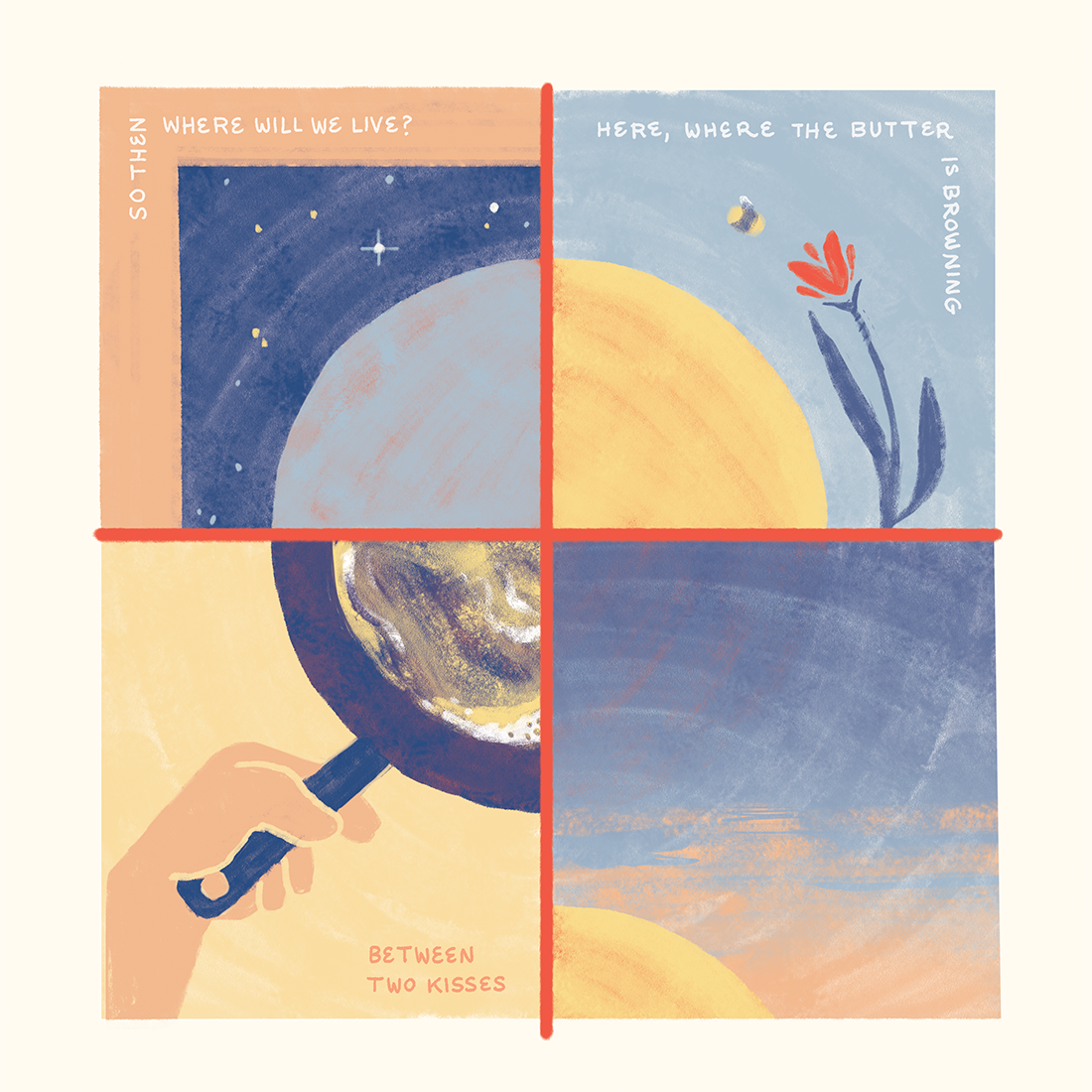
Madeleine Jubilee Saito, Love Poem, 2019

“In this online course, you’ll practice exercises to explore your own voice and interests in drawing and text, creating poetry comics in a variety of styles. You’ll learn about minicomics, how to do basic layout for printing, and how to print a quarter-page minicomic. We’ll end the course with a celebratory comics reading for friends and family on Zoom. Students need to either be comfortable drawing digitally (Procreate, Photoshop, etc.) or have access to a scanner. Students will be also need access to a printer or local print shop for the last phase of the course.”

If you don’t have time to commit to four classes, there’s a single one offered on October 27.

+++

NEW ALBUM: You Don’t Carry It Alone by Leila Way: Leila Way is a singer-songwriter from Austin, Texas, writing songs for the church. Her first full-length album, “You Don’t Carry It Alone is a collection of songs for hard times. Some of these are old hymns; some were written during a period of intense grief and loneliness, while others grew out of prayers for friends. The album was created to comfort those who mourn; to remind God’s people that He is always faithful, always present and at work, even when we can’t see what He’s up to.”

The album consists of four original songs, two original instrumentals, a cover of “Be Still, My Soul,” and new retunes of George Matheson’s “O Love That Wilt Not Let Me Go” (one of my favorite hymns) and James Montgomery’s “I cannot call affliction sweet.”

+++

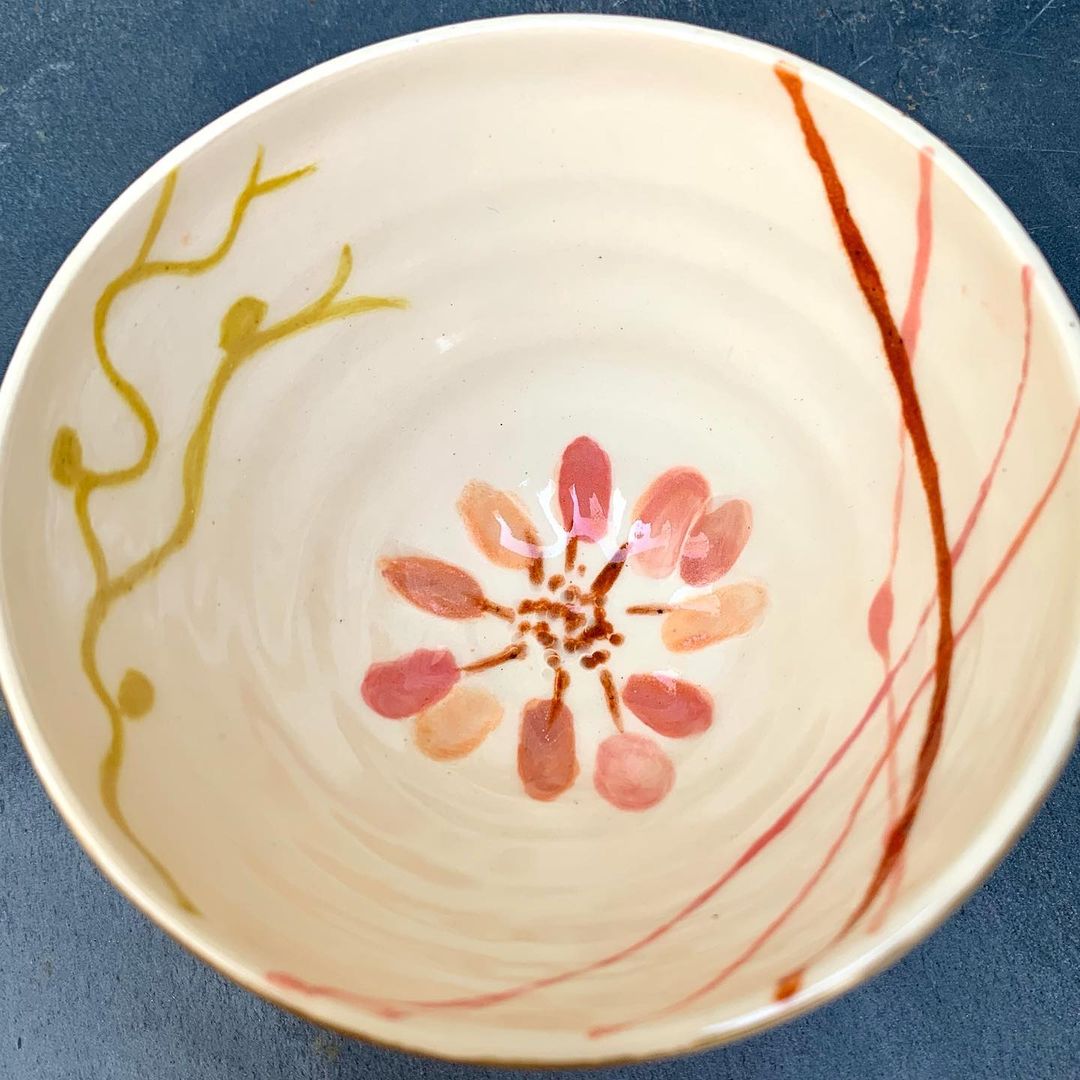
CERAMIC BOWLS: Nurture Collection by Jane Boutwell: I met artist Jane Boutwell at a Christians in the Visual Arts (CIVA) conference in 2021 after she presented this body of work that really moved me—a collection of ceramic bowls that take as their three design elements anatomical features of the female breast: lymph nodes (gold, river-like), mammary glands (pink and blooming), and musculature. She started the Nurture Collection after having one of her milk ducts surgically removed in 2019 for a biopsy (it turned out not to be cancer), as a meditation on the strength and inner beauty of this part of the body that is so often objectified or shamed. She recommends the bowls as a gift for a woman in your life who has had a tender year with regard to her breasts—cancer, nursing, etc.—to honor her journey.
Boutwell, Jane_Mammary bowl
Bowl from the Nurture Collection by Jane Boutwell, 2020

I share these now because October is Breast Cancer Awareness Month. Below is an eight-minute video explanation by the artist, followed by a short “making of” montage:

There are five Nurture bowls currently for sale in Boutwell’s online shop: Joan, Tracy, Colleen, Rita, and Wendy. Each is named after a woman she knows with breast cancer.

+++

PODCAST EPISODES:

>> “Landscape of the Body with David Taylor,” Makers & Mystics, September 13, 2023: Constructing a cogent theology of the body, theologian W. David O. Taylor discusses why it’s important that we honor and understand our bodies, and why having a right relationship to our bodies is imperative to the quest of art. Christians have often feared, distrusted, or despised the body; sin has meant that we’ve become alienated from our own bodies and the bodies of others, that we harm our bodies and others’, and that we often flee from our bodies, dissimulate. But Jesus wants us to be at home in our bodies, Taylor says—in worship, and in day-to-day life. He talks about Jesus as an icon of care-filled touch and the implications of that.

>> “On Being in a Body,” On Being with Krista Tippett, September 21, 2023: At the 2023 Aspen Ideas Festival, Krista Tippett interviewed Kate Bowler, author of Everything Happens for a Reason (and Other Lies I’ve Loved), a reflection on how she moved through learning at age thirty-five that she had Stage IV colon cancer. “From the new reality in our time of living with cancer as a chronic illness, to the telling of truths to our young as we face precarity in our collective body, this conversation is full of the vividly-whole humanity that Kate Bowler singularly embodies.” I heard Kate in person at Duke University a few years ago talking on a panel about suffering. She’s full of wisdom, wit, and raw tenderness and so, so endearing, and even though I’ve heard her story many times, every conversation with her brings up something new.  

+++

DANCE PERFORMANCE: Chroma, Grace, Takademe, and Revelations, performed by Alvin Ailey American Dance Theater: I’ve shared a video of Alvin Ailey’s Revelations here before. Well, this rebroadcast from 2015 includes that, plus performances of three other works by the prestigious Alvin Ailey American Dance Theater. I especially enjoyed Chroma, with music by Joby Talbot and choreography by Wayne McGregor—it’s the first twenty-six minutes of the video.
Roundup: Four talks and an interview

Hi friends. I’m preparing for a trip to Bangalore, India, later this month, to meet an artist whose work I admire, Jyoti Sahi [previously]. I apologize for being slow to respond to emails lately, but I do appreciate each and every message I receive from my readers! I read them all and will try my best to respond just as soon as I get the chance. Please note: email is the best way to get in touch with me, as I’ve found that Facebook, Instagram, and Twitter messages tend to get buried under a slew of notifications and are harder for me to tag and track. Thank you again for your support of Art & Theology, and for all your questions, encouragements, personal introductions, invitations, and art recommendations.

In this roundup I want to share a few recorded lectures that I’ve listened to in the past month and have really enjoyed; I hope you will too. The first two are by art historians speaking to secular audiences at museums about the (Protestant) art of the Dutch Golden Age—which I saw a lot of this spring during my visit to the Netherlands! The second two are by Christian professors speaking at Christian academic institutions, from different angles, about prophetic art. And lastly, Biola University interviews Krista Tippett, one of my absolute favorite podcast hosts.

+++

“Dutch Art of the Golden Age, 1600–1675” by Dr. Eric Denker, National Gallery of Art, Washington, DC, July 14, 2019: In this hour-long lecture, Eric Denker discusses some of the highlights from the National Gallery of Art’s seventeenth-century Dutch art collection: paintings by Emanuel de Witte, Jan van der Heyden, Salomon van Ruysdael, Aelbert Cuyp, Ludolf Bakhuizen, Hendrick ter Brugghen (of the Utrecht Caravaggisti), Frans Hals, Johannes Cornelisz Verspronck, Judith Leyster, Thomas de Keyser, Rembrandt, Jan Steen, Pieter de Hooch, Willem Claesz Heda, Johannes Vermeer, Ambrosius Bosschaert, and Adriaen Coorte. These include scenes of everyday life (such as church and domestic interiors), landscapes, portraits, and still lifes.

https://youtu.be/u-Qoko2-Rfw

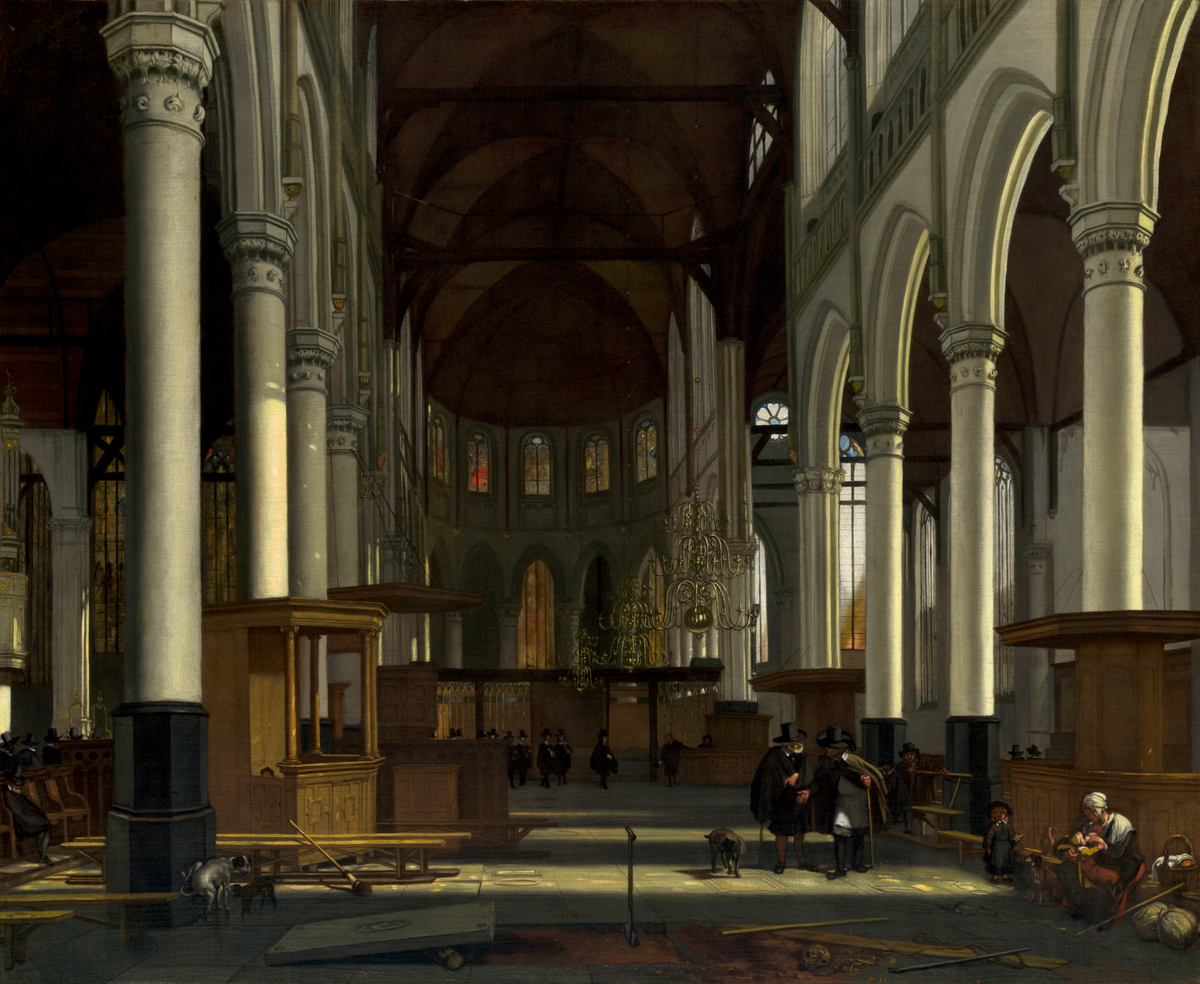
Interior of the Oude Kerk, Amsterdam by Emanuel de Witte
Emanuel de Witte (Dutch, ca. 1616–1691/92), The Interior of the Oude Kerk, Amsterdam, ca. 1660. Oil on canvas, 31 11/16 × 39 3/8 in. (80.5 × 100 cm). National Gallery of Art, Washington, DC.

I especially appreciated him pointing out details from de Witte’s Interior of the Oude Kerk, Amsterdam, which brings together death (a burial plot has just been dug up under the stone floor, with a skull visible in the upturned dirt heap) and life (a woman nursing her infant on a bench at the right). Unlike the French and Italian painting of the time, Denker says, in Dutch painting “there is nothing too vulgar . . . to portray. They felt that they inhabited God’s world, and that everything that existed in that world was necessarily of God’s making.” Hence the dog relieving himself on a column!

+++

“Food for Thought: Pieter Claesz. and Dutch Still Life” by Dr. John Walsh, Yale University Art Gallery, September 25, 2015: The Dutch coined the word “still life” (stilleven) to describe pictures of things that are incapable of movement or that lack a soul. In the Dutch conception, such paintings weren’t just for looking at but also for meditating on; the aim, in other words, was visual pleasure and moral edification. John Walsh outlines various categories: vanitas paintings, breakfast pieces, kitchen still lifes, pipe-smoking pieces, arrangements of food and wares on a table, fruit pieces, compositions of dead game and weapons, and flowers.

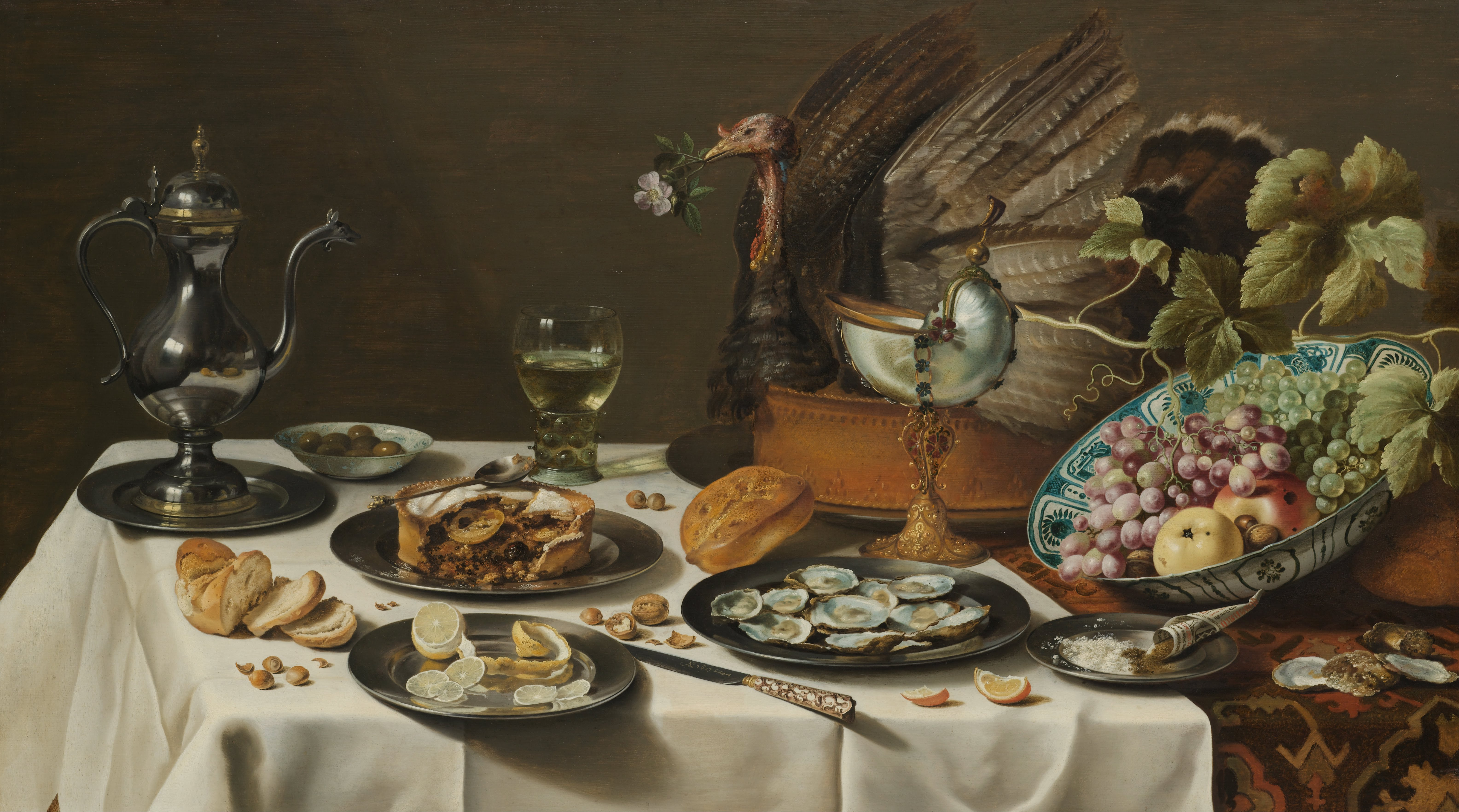
Walsh discusses many different paintings in detail, by many different artists (not just by the premier one in the lecture title), including a few examples of contemporaneous still lifes from Italy and Spain. He really made them come alive for me! The feasts of meats and cheeses, fruits and vegetables, for example, with all their subtle richness of texture and color, are a celebration of God’s goodness. In honor of Thanksgiving in a few weeks, here’s Pieter Claesz’s Still Life with a Turkey Pie:

Claesz, Pieter_Still Life with a Turkey Pie
Pieter Claesz (Dutch, 1597/98–1660), Still Life with a Turkey Pie, 1627. Oil on panel, 29 1/2 × 51 9/10 in. (75 × 132 cm). Rijksmuseum, Amsterdam.

+++

“Practicing the Prophetic: Liturgy, Formation, and Discernment for Public Life” by Dr. James K.A. Smith, Seattle Pacific University, October 16, 2019: James K.A. Smith has made a name for himself writing about worship, worldview, and cultural formation, through such books as You Are What You Love: The Spiritual Power of Habit and his Cultural Liturgies series. The first half of this talk, which starts at 6:15, is a good introduction to his work in that arena, as he discusses the liturgical nature of public life—how “the rhythms and rituals of public life aren’t just something we do; they are also doing something to us.” Cultural forces can de-form us, he says, in often insidious ways, such that we don’t even realize the deformation. Smith is all about getting us to take stock of what we’ve been conscripted to want, to love, to hope for; to perform a “liturgical analysis” on the social imaginary that we’ve absorbed through our culture’s images, stories, myths, rituals, practices, etc. And for a toolkit, he offers St. Augustine.

The second half of the talk (starting at about 33:40) is devoted to “the art of prophetic hope,” which “requires both the renewal of the Christian imagination and an outward offering of a Christian imagination for the sake of the world.” He continues: “What’s at stake in our liturgical formation is really a restorying of the imagination. It’s a restoring of the imagination because it’s a restorying of the imagination. And if Christianity has something to offer our neighbors, I think that will be most powerfully and prophetically embodied in the arts, which meet people on the register of the imagination.” I am always so compelled by Smith’s words; they’re all so quotable. But particularly germane to the Art & Theology project I have going here, and also to the upcoming Advent season, is what he says about a truly “Christian” art being that which holds together hurt and hope:

There is nothing more scandalous than Christian eschatology, I realize. And yet nothing speaks more directly to a hurtful and fearful world. This eschatological orientation, which is at the heart of the prophets, fuels art that is suspended between the already and the not yet. The unique imaginative capacity of the arts speaks to this ineffaceable human hunger for restoration even while honoring the heartbreak of our present pilgrimage. A Christian eschatology nourishes a distinct imagination that refuses to be constrained by the catalog of the currently available and instead imagines a world to come breaking into the present. Art that is infused with this eschatological imagination at once laments and hopes. In its lament, it honors our experience of brokenness, the heartbreak of the now. And in its hope, it gives voice to our longings. It neither wallows in romanticized tragedy nor escapes to sentimental naivete. Such eschatological art is like an embodied form of the Lord’s Prayer. Each such work is its own requiem, such that what Jan Swafford says of Mozart’s Requiem could be true of all such eschatological art. He says, “It’s full of death and hope, lacerating sorrow and uncanny beauty.”

I like this “uncanniness” metaphor. Uncanniness is an apt descriptor of such art that paints beauty with ashes, that can walk the soul through the valley of the shadow of death on the way to a feast in the wilderness. Such art stops us short in its uncanny, even paradoxical, ability to embody both hurt and hope.

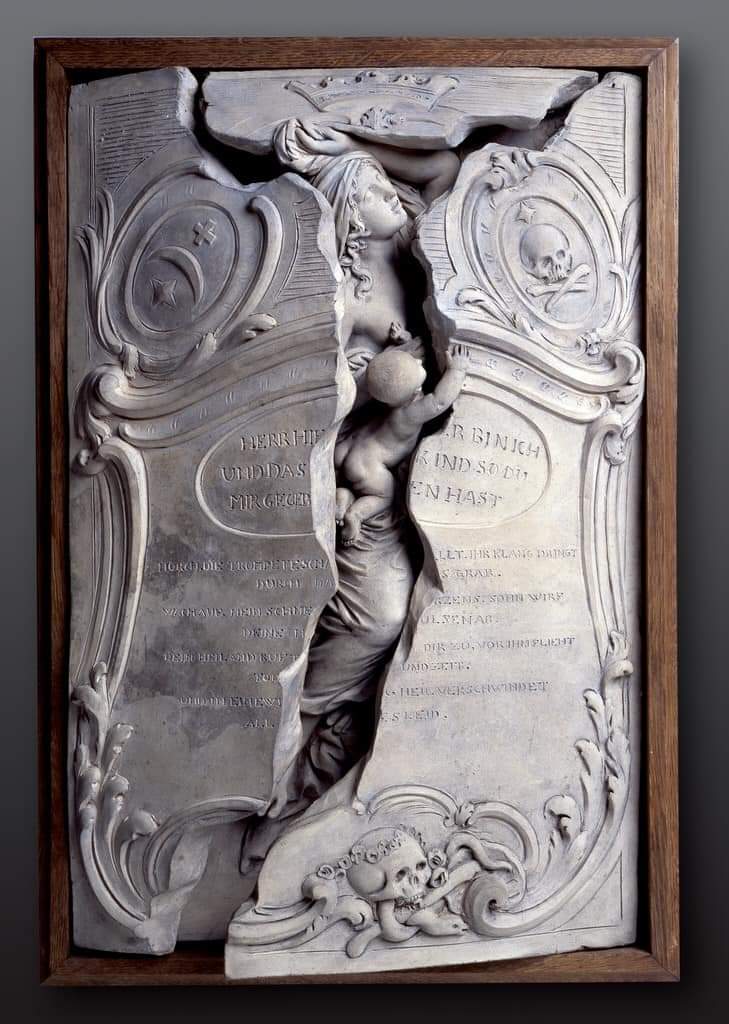
By way of example, he discusses the Tomb of Maria Magdalena Langhans (1723–1751), who died in childbirth, along with her baby, on Holy Saturday; the Memorial to Fallen Workers in Hamilton, Ontario; and Sugar and Spice by Letitia Huckaby [previously].

Nahl, Johann August_Tomb of Madame Langhans
Johann August Nahl (German, 1710–1781), Tomb of Mme. Maria Magdalena Langhans, 1751–53. Sandstone. (This is an 18th-century replica; the original is in the village church of Hindelbank in Bern, Switzerland.)

+++

“Turn and Face the Strange: Thoughts on Ergonomics and Artistry” by Jeffrey Overstreet, Sacrament & Story conference, Brehm Cascadia, Bellevue, Washington, April 5, 2019: “This is a presentation about the courage that artists must have in order to behold, and then bear witness to, new visions of beauty and truth,” says film critic and professor Jeffrey Overstreet [previously here and here]. He teaches his students at Seattle Pacific University (a Christian institution) to ask, like Miles Morales, “What’s up, danger?” To go outside the walls, to the wild edges, and be still, and then to report on that encounter. Films he discusses, whose characters (or director) “go to the edge of the water,” so to speak, include Babette’s Feast, The Secret of Kells, The Fits, Moonrise Kingdom, and 24 Frames.

+++

An Interview with Krista Tippett by Jonathan A. Anderson, Biola University presidential luncheon, La Mirada, California, February 22, 2017: Journalist Krista Tippett is the most talented interviewer I know—time after time initiating open, hospitable, genuinely mutual conversations with a range of subjects. (It’s no wonder she’s won a Peabody Award and a National Humanities Medal! The latter for “thoughtfully delving into the mysteries of human existence.”) Here Jonathan A. Anderson, the director of Biola University’s Center for Christianity, Culture, and the Arts, interviews her, and it’s so rich!

After graduating from Brown in 1983, Tippett became a foreign correspondent in divided Berlin. After years of that, she earned an MDiv from Yale. In 2003 she created the NPR show Speaking of Faith, which, despite initial skepticism from many corners, became wildly popular and evolved into On Being. Her upbringing was Christian, but she interviews people from all different faith traditions—poets, clergy, scientists, doctors, historians, activists, etc.—always opening with the question “What is your spiritual background?” The show’s tagline is “Pursuing deep thinking, social courage, moral imagination and joy, to renew inner life, outer life, and life together.” Again and again, On Being brightens my outlook, builds my compassion, and gives me hope and inspiration, and I’m so grateful to Tippett for creating that space.

In her interview at Biola, Tippett describes what it was like to discover theology as “one of humanity’s great disciplines,” as “carrying questions and virtues and substantive riches that should be able to find a way in public life true to their depth and their wisdom.” She discusses her desire to be true to the intellectual and spiritual content of faith—the latter almost absent in public talk; how she responds to the criticism of being “soft” on religious voices; and she gives tips for conversing with those you disagree with. When Anderson opened up the Biola project to critique by asking her the problems and possibilities with their approach to Christian liberal arts education, she had this beautiful response: “Whatever our particularity is, that is our gift to the world.” To immerse oneself fully in a particular religious tradition is not a narrowing but a deepening, she said; being deeply who you are and having convictions and seeking truth is not incompatible with living lovingly and peaceably in a pluralistic world!

Tippett is the author of Speaking of Faith: Why Religion Matters—and How to Talk About It (Penguin, 2008) and Becoming Wise: An Inquiry into the Mystery and Art of Living (Penguin, 2016). Her radio show / podcast, On Being, has a vast archive, and I only just became a listener two years ago, but here are some episodes that I remember particularly enjoying: