Roundup: “The Loving Look,” Keiskamma retrospective, and more

ONLINE EVENT: “Theodicy of Beauty” by Sarah Clarkson, March 6, 2:30 p.m. ET: “The question of suffering is one of the central, aching questions of faith. Too often, we meet suffering with an argument for God’s goodness, rather than an invitation to find and discover his goodness anew. Join me for an exploration of what it means to encounter and trust the beauty of God in our times of darkness, suffering, and pain. Drawing on my own story of mental illness and depression, I’ll explore what it means to engage with God’s goodness in a radically healing way, one that restores our capacity to imagine, hope, and create. We’ll use literature, art, and poetry to discern the ways that God arrives in our darkness to heal us, and also to restore us as agents of his loveliness in the midst of a broken world.”

This Crowdcast talk by Sarah Clarkson is based on her book This Beautiful Truth: How God’s Goodness Breaks into Our Darkness. Registration is $7 and includes a complimentary downloadable copy of “Encountering Beauty,” an arts-based reader’s guide to Clarkson’s book. I have appreciated her From the Vicarage: Books, Beauty, Theology newsletter and her wise, gentle reflections on spirituality, literature, and motherhood on Instagram @sarahwanders, so I’m looking forward to hearing from her on this topic!

+++

LECTURES (available on podcast platforms):

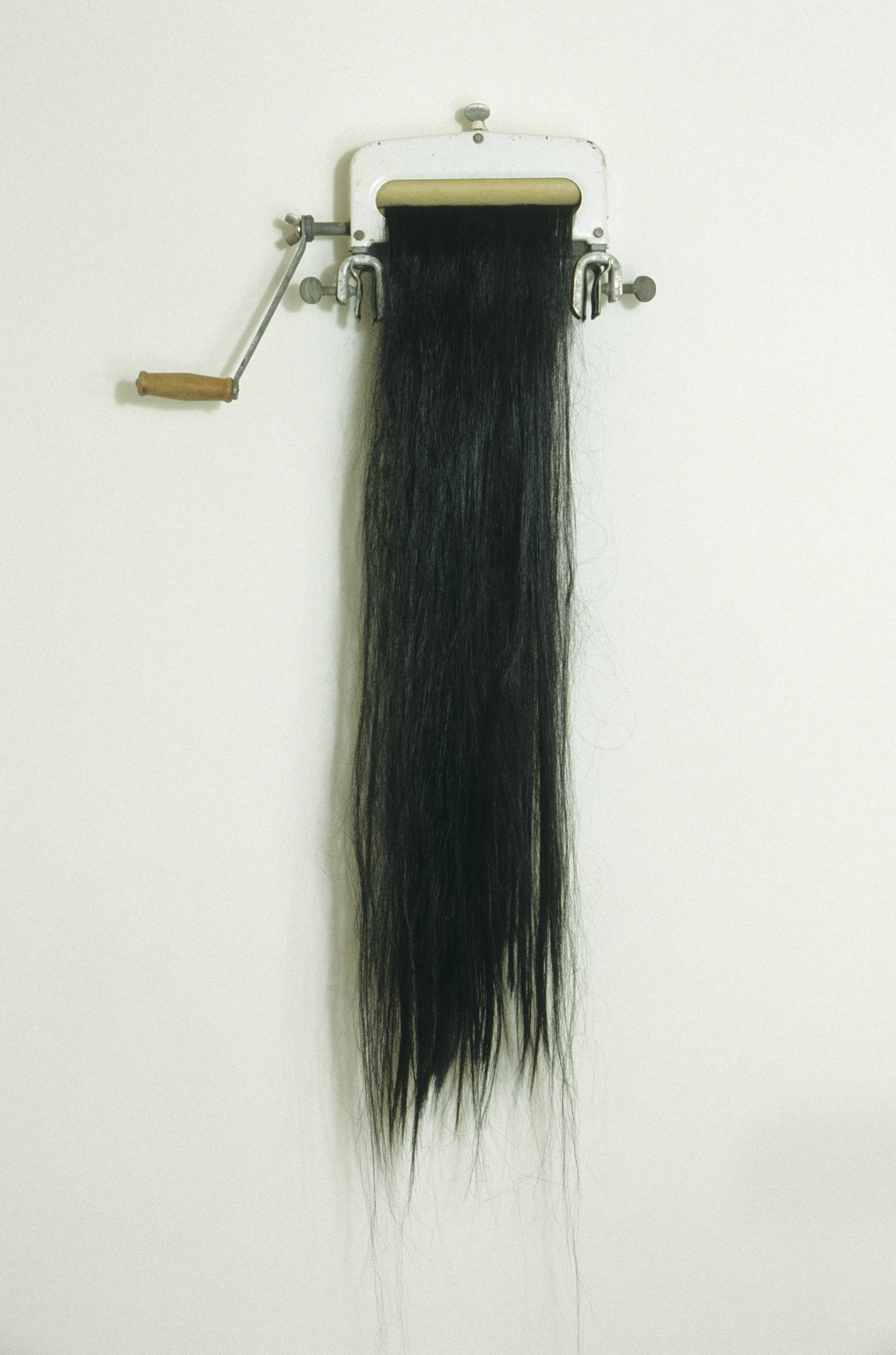
>> “The Loving Look” by Dr. Elissa Yukiko Weichbrodt: In this keynote address for the 2018 Beautiful Orthodoxy conference, art historian Elissa Yukiko Weichbrodt [previously], author of Redeeming Vision: A Christian Guide to Looking at and Learning from Art, discusses how contemporary art—which can sometimes be confounding or otherwise challenging—can drive us to confession, empathy, and love. Sharing her encounters with three contemporary artworks, she talks about art as a place where we can experience sanctification and common grace; how the Incarnation further vested our material world with significance; art as an invitation to embodied knowledge; art as part of how we order and understand our physical world; artworks as mirrors and shapers of culture; and how viewers, not just artists, are called to faithfulness.

Yamamoto, Lynne_Wrung
Lynne Yamamoto (American, 1961–), Wrung, 1992. Wringer, synthetic hair, nails, string, 42 × 13 × 5 in.

She cites Esther Lightcap Meek’s Loving to Know: Covenant Epistemology, in which Meek says that all acts of coming to know are integrative; they become part of us. Knowledge is an act of covenantal care, Meek says. We don’t know in order to love; we love in order to know. Weichbrodt says, “For me, contemporary art—particularly art made by artists grappling with histories and experiences that have remained largely unseen, unknown, and unloved by the dominant culture—has served as a catalyst for faithful knowing.”

Besides Wrung, the two other works she spotlights are Outline by Lorna Simpson and From Here I Saw What Happened and I Cried by Carrie Mae Weems.

>> “The Arts as a Means to Love” by Dr. Mary McCampbell: In this lecture given for English L’Abri, Mary McCampbell [previously], an associate professor of humanities at Lee University, discusses some of the ideas from her book Imagining Our Neighbors as Ourselves: How Art Shapes Empathy. I appreciate how her writing and teaching embraces the arts of film and television alongside literature, such that not only are works like The Power and the Glory by Graham Greene, “A Good Man Is Hard to Find” by Flannery O’Connor, and Beloved by Toni Morrison explored, but so are, for example, the comedy-drama Lars and the Real Girl and the drama series Better Call Saul. Discrediting the recent odd assertion from a prominent evangelical corner that empathy is a sin, McCampbell affirms that empathy is, on the contrary, an essential Christian virtue, and one that the narrative arts are adept at forming in us, exposing us to people and stories outside our realms of experience and helping us recognize the image of God in unlikely places.

+++

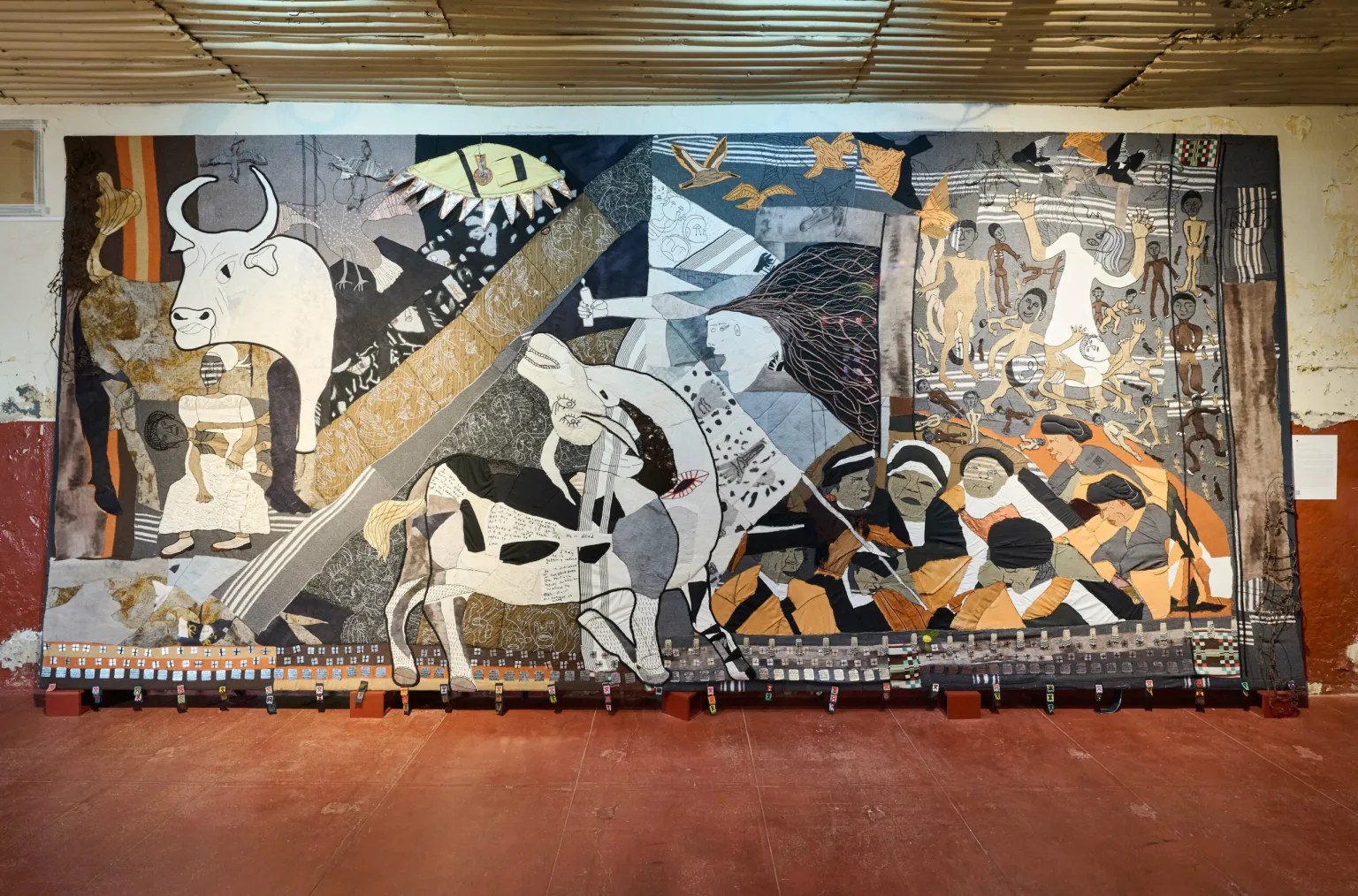
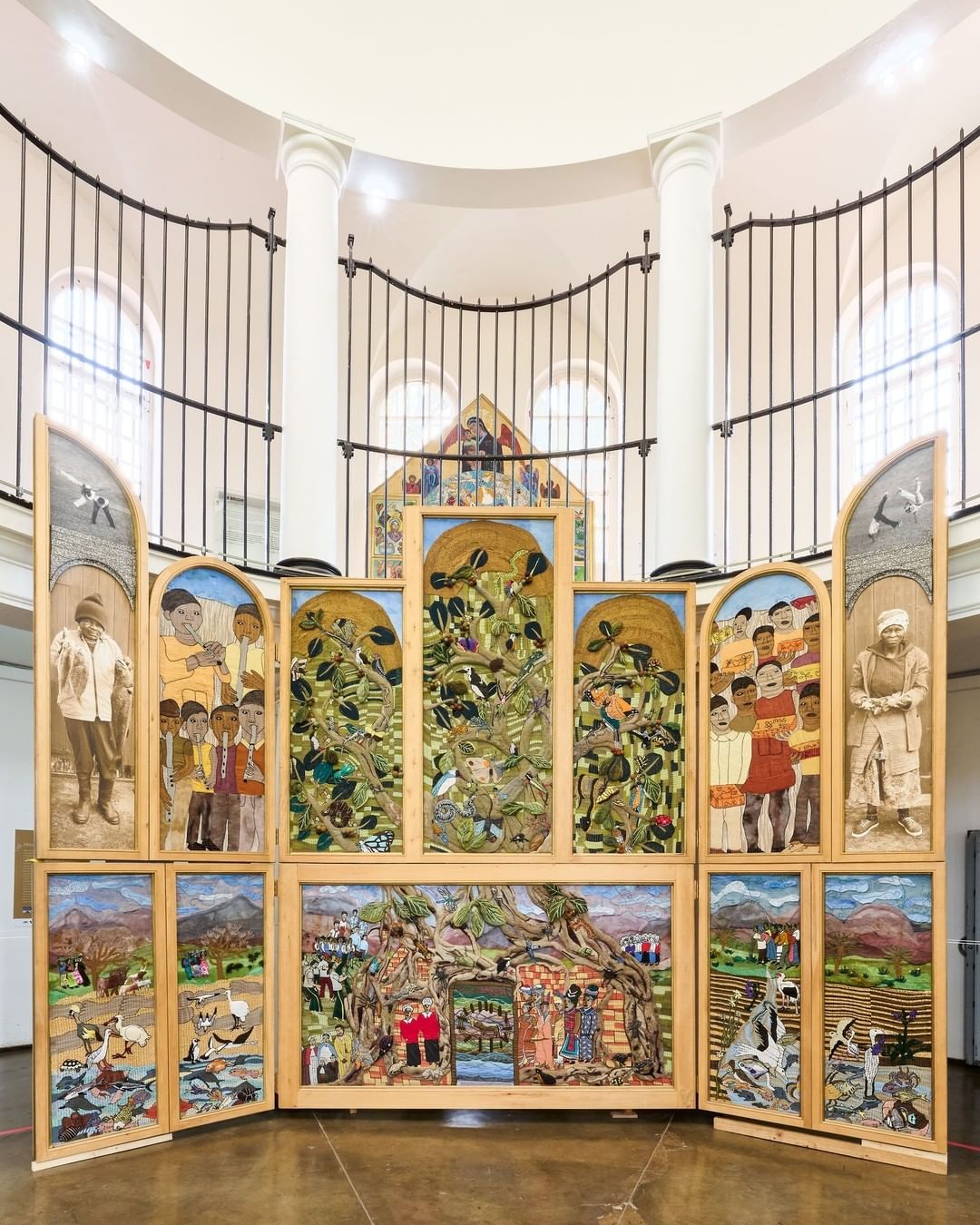
EXHIBITION REVIEW: “Mourning and Perseverance Stitched into South African Tapestries” by Alexandra M. Thomas: Through March 24 at Constitution Hill in Johannesburg, you can see Umaf’evuka, nje ngenyanga, dying and rising, as the moon does, a major retrospective of the work of the Keiskamma Art Project. Founded in 2000, the project archives the collective memory and oral histories of the rural Eastern Cape of South Africa through textile artworks, mainly by Xhosa women. Monumental and small-scale works tell stories of trauma, grief, hope, faith, resilience, and celebration. One of my favorite art research projects has been the one I did on the Isenheim-inspired Keiskamma Altarpiece in 2015, which resulted in the article “Sewing seeds of hope in South Africa”; this altarpiece is one of the many works on display. Let me call out just two others. The photos are from the current exhibition.

Keiskamma Guernica
Keiskamma Guernica, 2010. Mixed media, including appliqué, felt, embroidery, rusted wire, metal tags, beaded AIDS ribbons, used blankets, and old clothes, 3.5 × 7.8 m. Collection of Javett Art Centre at the University of Pretoria, Tshwane, South Africa. Photo: Anthea Pokroy / Keiskamma Trust.

Creation Altarpiece (Keiskamma)
Creation Altarpiece, 2007. Mixed media, including felt, embroidery, photographs, beadwork, wirework, and appliqué, 3.8 × 5.2 m (open). Collection of Unisa Art Gallery, Tshwane, South Africa.

Keiskamma Guernica, after Picasso’s famous antiwar painting, laments the limited access to HIV treatment in rural South Africa in the 2000s and the negligence of government hospitals, which resulted in many HIV/AIDS deaths. The piece repurposes the blankets and clothes of the deceased and serves as an expression of outrage as well as a form of commemoration. Creation Altarpiece, modeled loosely after the Ghent Altarpiece, exults in the region’s abundant wildlife and natural resources and in life-giving initiatives like Hamburg’s music education program, its capoeira group (a dance-like martial art), and the memory boxes made by orphaned children to remember their parents. The three top central panels depict a fig tree eating up an old hotel built by colonialists (a real-life scene observed in the nearby village of Bell!), and the bottom three show villagers of all kinds gathering around Christ, represented as a bull (whereas lambs were commonly sacrificed in ancient Israelite religion, traditional Xhosa religion calls for bull sacrifices).

View the beautiful exhibition catalog here.

+++

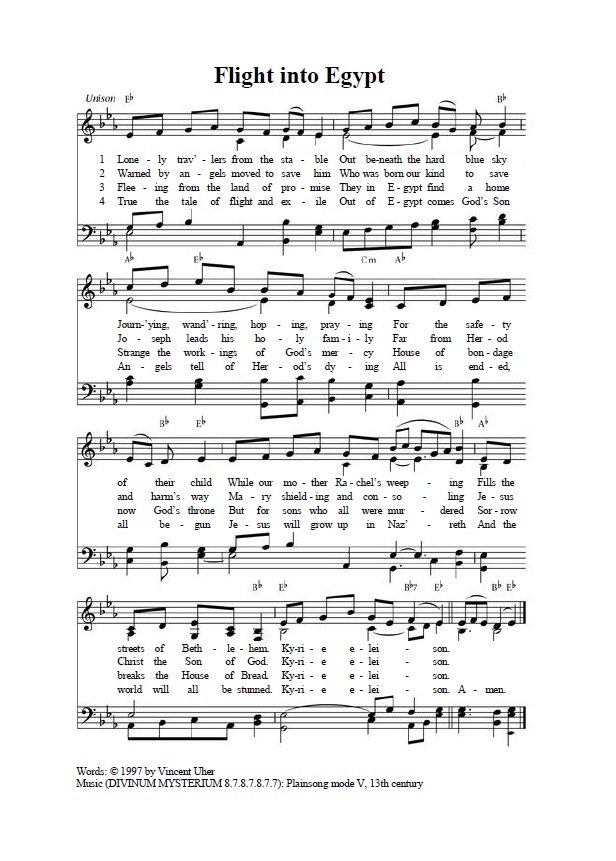
SONG: “Kyrie” by Ngwa Roland: Ngwa Roland is a composer and the director of De Angelis Capella [previously], a Catholic choir from Yaoundé, Cameroon. Here is his choral setting of the Kyrie eleison (Greek for “Lord, have mercy”), an important Christian prayer used in liturgies around the world.

+++

ARTICLES:

>> “To One Kneeling Down No Word Came” by Jonathan Chan, Yale Logos: Jonathan Chan is a Singapore-based poet and essayist who graduated with a master’s degree in East Asian Studies from Yale in 2022. In this personal essay he reflects on the poetry of R. S. Thomas, a twentieth-century Anglican priest from Wales, particularly as it relates to the toil of prayer—prayer as a discipline requiring persistence and solitude. Thomas’s poems often express a sense of alienation from God, which is not what we might expect from a pastor, but, as Chan remarks, “God’s absence cultivates a desire for God’s presence.”

>> “Stabat Mater: How a 13th Century Lament Resonates Today” by Josh Rodriguez, Forefront: Back in July 2020, composer Josh Rodriguez [previously here and here] published this article on four modern settings of one of the most celebrated Latin hymns of all time, the twenty-stanza Stabat Mater Dolorosa (lit. “The sorrowful mother was standing”), about Mary mourning the death of her son Jesus. Written in the Middle Ages, it continues to inspire composers today, and it remains “a powerful vehicle for ‘grieving with those who grieve,’” Rodriguez writes. He spotlights the settings by James Macmillan, Julia Perry, Hawar Tawfiq, and Paul Mealor, analyzing some of the musical elements of each and quoting the composers in regards to the piece’s meaning to them.

Roundup: “Kyrie / Oh Death” medley, preaching Chagall, Isaiah 35-inspired chamber work, and more

SONGS: The following two songs appear on the Art & Theology Lent Playlist on Spotify. (Note: I’ve also integrated some Lovkn, Sarah Juers, and a few others into the list since originally publishing it.)

>> “Kyrie / Oh Death,” performed by Susanne Rosenberg: March 11 marks one year since the coronavirus outbreak was officially declared a pandemic, and the tremendous number of lives lost is staggering. (A friend from Japan reminded me that it’s also the ten-year anniversary of the Great Tōhoku earthquake and tsunami that killed some 16,000 people; 3/11, he says, is as important in Japan as 9/11 is in the United States.) This lament by Susanne Rosenberg, one of Sweden’s foremost folk singers, seems appropriate. It combines a twelfth-century Kyrie chant with the Appalachian folk song “Oh Death,” the latter made famous by Ralph Stanley. Kyrie eleison, Christe eleison, Greek for “Lord, have mercy, Christ, have mercy,” is a short, repeated invocation used in many Christian liturgies, and Rosenberg seamlessly integrates it with these few lines: “Oh Death, oh Death, won’t you spare me over till another year?” The video recording is from a February 2010 concert in Dublin, and a similar version of the medley, in a different key, appears on Rosenberg’s album of the same year, ReBoot/OmStart.

>> “Washed in the Blood,” performed by Pokey LaFarge and Harry Melling: The Devil All the Time (2020) isn’t a great movie, but it has a great soundtrack. Harry Melling—known for his roles as Dudley Dursley in the Harry Potter series and, more recently, Harry Beltik in The Queen’s Gambit—plays a spider-handling preacher named Roy, and singer-songwriter Pokey LaFarge (whose style pulls from ragtime, jazz, country, and blues) plays his guitar-playing sidekick, Theodore. The two actors sing as their characters in the film, this classic hymn by Elisha Hoffman. Love it!

+++

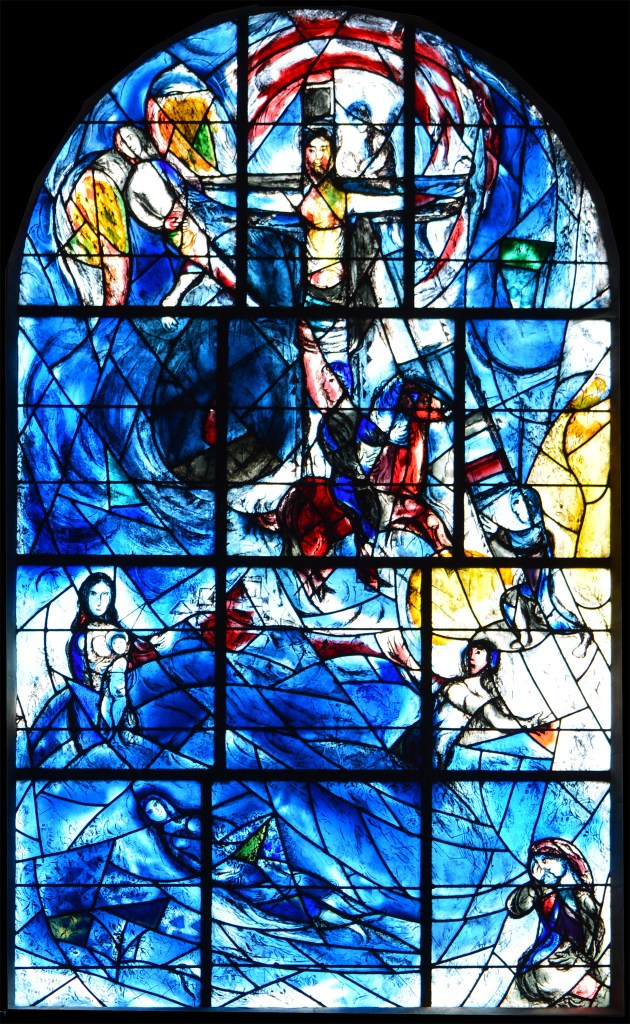
SERMON: “Chagall at Tudeley” by Rev. James Crockford, University Church, Oxford, April 7, 2019: This sermon, preached on Passion (Palm) Sunday two years ago, is an excellent example of how pastors can draw on visual art as a theological and homiletical resource—not to merely illustrate a point already made or to add some pretty dressing to a sermon, but taking it on its own terms and allowing it to generate insight and guide the congregation someplace new. Crockford uses the East Window in All Saints’ Church in Tudeley, Kent, England, designed by the Russian Jewish artist Marc Chagall, to open up profound discussion on human loss, hope, renewal, and the cross. [HT: Jonathan Evens]

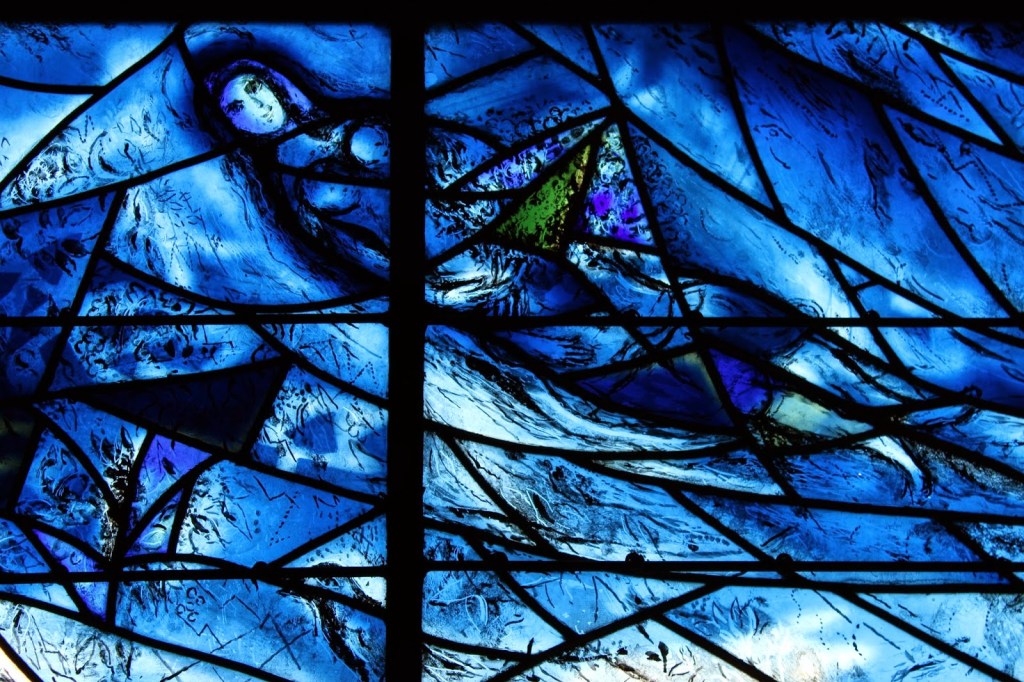
The window was commissioned by the parents of twenty-one-year-old Sarah d’Avigdor-Goldsmid, who in 1963 drowned off the coast of Sussex in a boating accident. “What I see in that East Window,” Crockford says, “is a remarkable exercise in the nature of suffering, and the interaction of human tragedy with the reality of Christ’s death and victory on the cross. It is a carefully composed centrepiece that asks us to face the depths of an abiding experience of grief, and to be faced with that grief each time we remember the grief of God, in broken bread and wine outpoured. But the window also shows a bigger picture – one that does not shut out the pains of our past, and the wounds in our hearts – and you’ll notice, when we come to it, that the scene of Sarah’s death still takes up over half of the window – but the bigger picture asks us to frame our grief and suffering on the centrality and promise of a God who, in Christ, is both suffering and victorious, broken and yet glorious, wounded but risen and standing among us to breathe Peace.” You can read the full transcript, or listen to an audio recording, at the link above.

East Window, Tudeley (Marc Chagall)
East Window, All Saints’ Church, Tudeley, Kent, designed by Marc Chagall and executed by Charles Marq. Installed 1967. Photo: George Rex.

Chagall, Marc_East Window, Tudeley (detail)
Detail photo by Jonathan Evens

+++

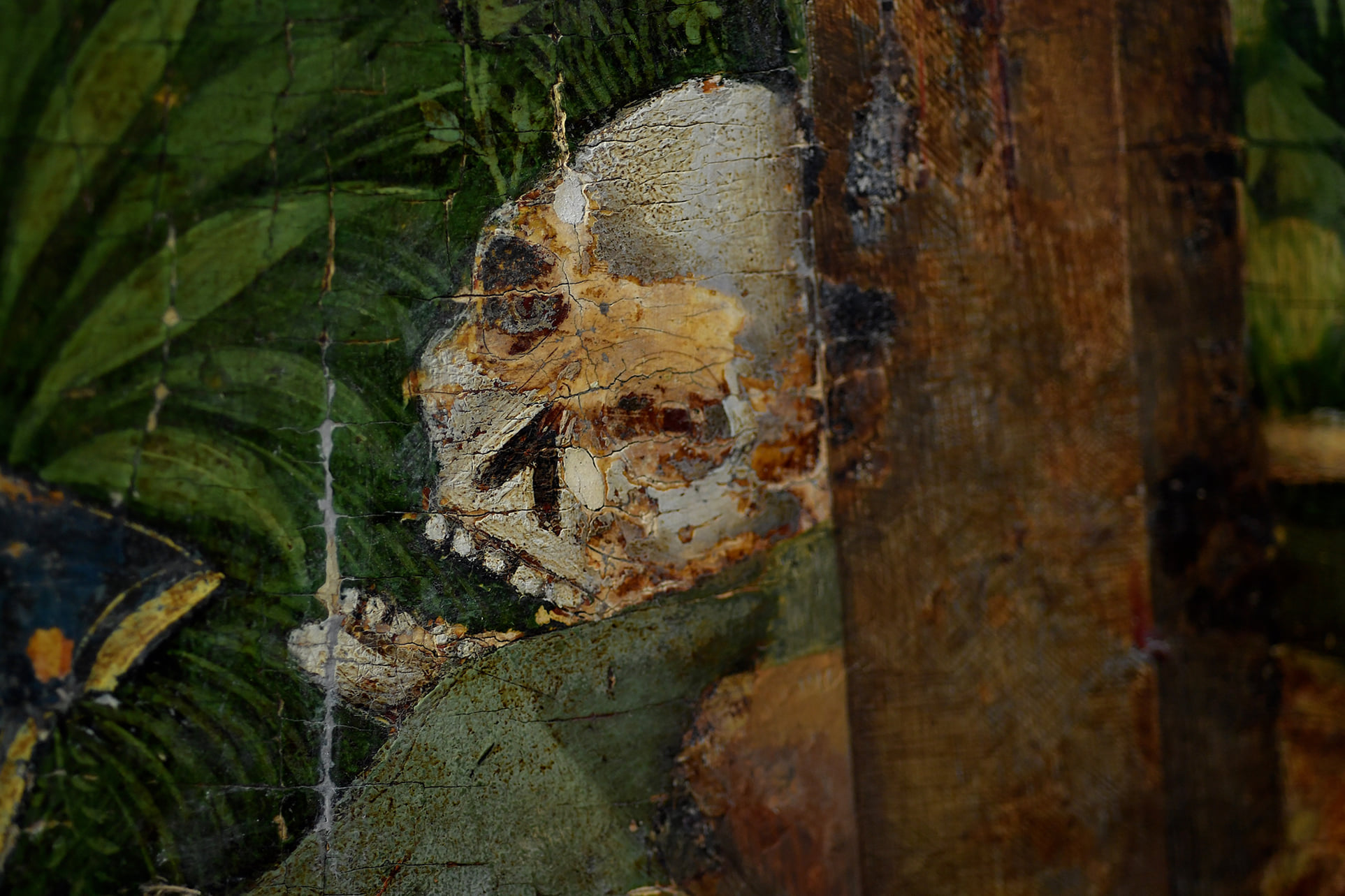
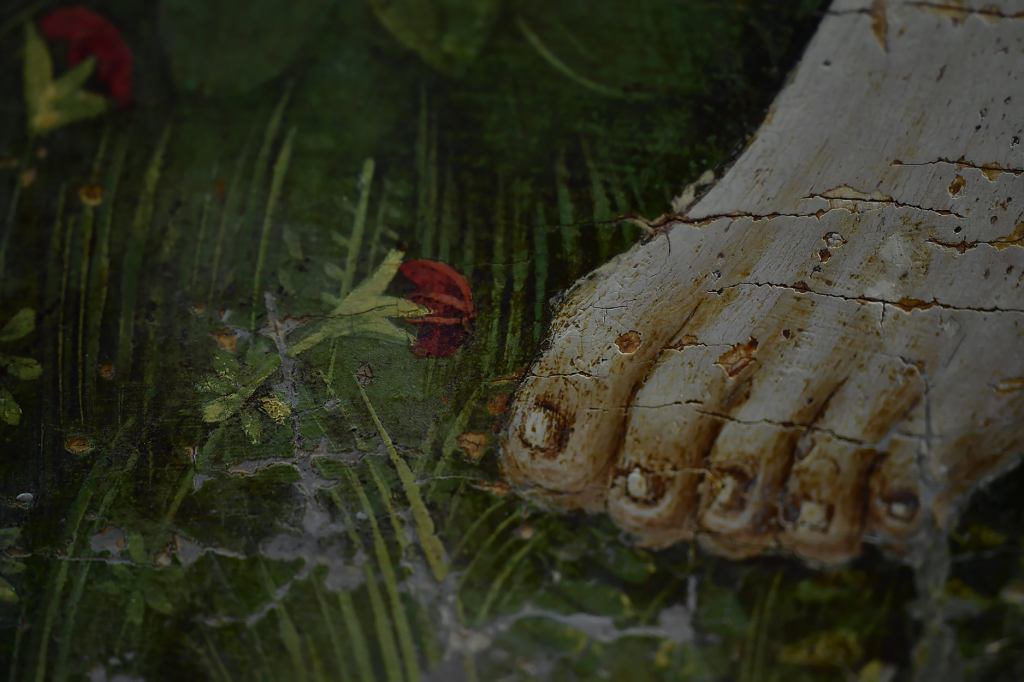
ART RESTORATION: “Hidden Gem: The Crucifixion by the Master of the Lindau Lamentation”: A Crucifixion painting from around 1425 by the Master of the Lindau Lamentation was recently restored by conservator Caroline van der Elst, and this short video documents part of that process. The Museum Catharijneconvent in Utrecht, the Netherlands, acquired the painting in 1875, but since then it had lain mostly forgotten in storage until being rediscovered by a staff member a few years ago, who recognized it as a masterpiece worthy of restoration efforts and public display. After the surface dust and discolored varnish were removed, in addition to other treatments, it was unveiled last year as the centerpiece of the Body Language exhibition (check out that link!), which ran from September 25, 2020, to January 17, 2021.

Curators Micha Leeflang and Annabel Dijkema discuss how the painting was made, how it was originally used, and its theological significance, and van der Elst explains some of the conundrums she faced while restoring the work—when it came to light, for example, that the azurite background was added in the sixteenth century. View the full painting here.

Lindau Crucifixion detail
Master of the Lamentation of Christ in Lindau, Crucifixion (detail), ca. 1425. Tempera on panel, 125 × 89 cm. Catharijneconvent Museum, Utrecht, the Netherlands. Photo: Marco Sweering.

Crucifixion detail (1425)

+++

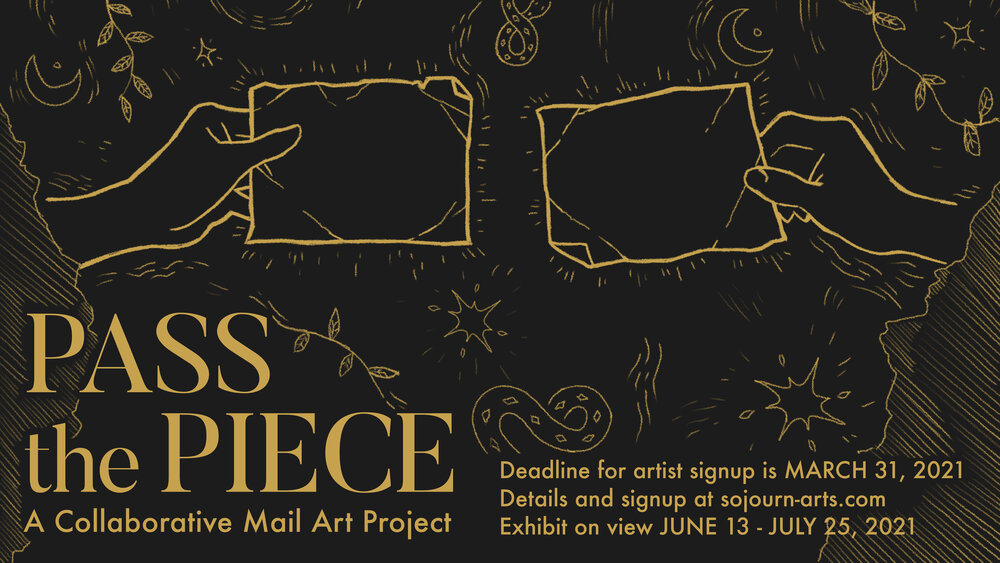
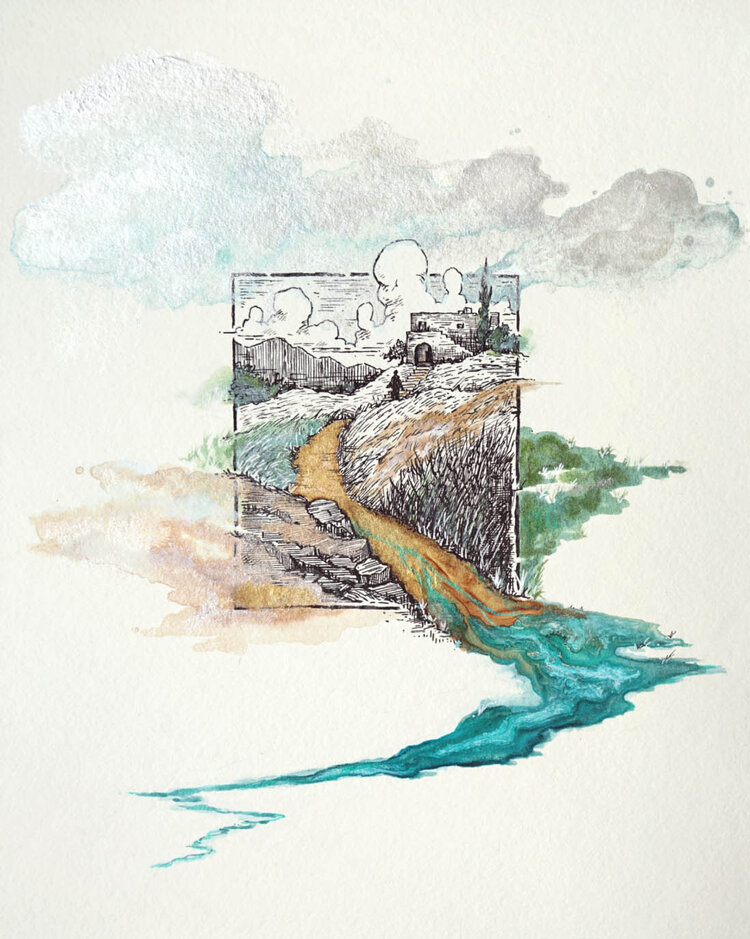
CALL FOR ARTISTS: Pass the Piece: A Collaborative Mail Art Project: A neat opportunity for artistic collaboration, organized by Sojourn Arts [previously] and open to US artists ages 13+. “Pass the Piece is a collaborative mail art project to be exhibited at Sojourn Arts in June 2021. Deadline for participating artists to sign up is March 31, 2021. Project is limited to 100 participants. We’re mailing out up to one hundred 8″ × 10″ panels, one to each participating artist. Each artist will start a panel that another artist will complete. Each artist will finish a panel that someone else started. Each artist will have their work exhibited and have a printed zine-style catalog of each piece from the exhibit. Artworks will be auctioned online with 50% going to the artists and 50% going towards Sojourn Arts interns’ travel expenses for the upcoming CIVA conference.”

Pass the Piece (Sojourn Arts)
Begun with an illustration by Stephen Crotts and finished with a painting by Kyra Hinton

+++

NEW ALBUM: for / waters by Joshua Stamper: Joshua Stamper [previously] composed this four-movement instrumental piece about marriage for pianist Bethany Danel Brooks and violinist David Danel, who are themselves married and perform on the recordings. Its title and that of each movement is taken from Isaiah 35, which was read at the couple’s wedding.

Stamper writes,

Marriage, ideally, is about two people in a state of mutual belonging. But marriage is more than a state of belonging: it includes an ongoing journey toward and into belonging. It encompasses the trajectories and momentum of individuals towards each other, even before an initial connection takes place. People are therefore in relationship with each other before they are “in relationship” with each other. From this perspective, marriage might be understood as another mystical manifestation of the inscrutable and unknowable fault line between free will and providence. Two lives are always in reference to one another before the initial “hello,” because though individual trajectories have not yet crossed, they will. This interweaving begins early: each life is conditioned, shaped, sensitized to see, hear, feel the other. Home is created in each for each.

Stamper goes on to describe how he reflects these ideas through the structure, melodic and rhythmic motifs, harmonies, and other musical elements of for / waters. Read more and stream/purchase at Bandcamp.

“Joshua Stamper has been a restless composer and collaborator for over twenty-five years. His work reflects a deep interest in the intersection points between seemingly disparate musics, and a profound love for the intimacy, charm, and potency of chamber music. Equally at home in the jazz, classical, avant-garde, and indie/alternative worlds, his work ranges from large-scale choral and instrumental works to art-pop song cycles to chamber jazz suites. Joshua has worked as an orchestral arranger and session musician for Columbia / Sony BMG and Concord Records, and for independent labels Domino, Dead Oceans, Important Records, Sounds Familyre, Smalltown Supersound, and Mason Jar Music, collaborating with such luminaries as Todd Rundgren, Robyn Hitchcock, Sufjan Stevens, Danielson, and Emil Nikolaisen.” [source]