
BLOG SERIES: Three excellent, brief musings on the season of Advent by W. David O. Taylor, published last year on his blog:
- “Advent is for singing not-Christmas songs”: “This is, of course, easier said than done. Hymnals fail to supply a decent list of options and congregants often clamor for the ‘traditional’ carols, the songs of triumphant appearance and glorious coming. Yet this insistence fights against the dominant concern of the Gospels. Luke especially spends the bulk of his story anticipating Christ’s birth rather than narrating his arrival. The dramatic tension lies in what’s to come—not in what’s happened already . . .”
- “Advent is about being neither fish nor fowl”: “In being neither here nor there, Advent reminds us of our truest identity. We are amphibious creatures . . .”
- “Advent is about the goodness of divine interruptions”: “The entire story of Advent is a story of interruptions. . . . May we, like the actors in God’s divine nativity drama, have eyes to see and hearts to welcome his interrupting work in our lives. May we trust that he wills our deepest good in these interruptions. May we be blessed in our trust in him.”
+++
ESSAY: “O Come, O Come, Emmanuel: Dark Good News” by Linda Gregerson, Image: Poet Linda Gregerson reflects, in prose, on the quintessential Advent hymn, which dates back to the Middle Ages. She grew up singing it in her Methodist church every December. “It’s ironic, really—it quite betrays me—to realize that I must have loved this hymn for its whiff of the monastery: chalice and incense smuggled in by way of the minor chord. There’s a moment, a breathtaking moment, when the meter defies expectation. Everything has been steady-as-you-go, four-four time, all quarter notes and dotted halves. But during that remarkable refrain, just when you expect to dwell on the last syllable of the holy name for a count of three, as every verse before this has prepared you to do, the hymn leaps forward and anticipates itself by half a measure. No breath, no stately pause: Emmanuel / Shall come to thee, as though rushing to arrival. Those missed beats never fail to stop my heart.”
I didn’t know what Gregerson was talking about until I looked up the notation in The United Methodist Hymnal no. 211, and sure enough, in measure 15 there are two extra beats. In all the other hymnals I have (and all the recordings of the song I’ve heard), that measure is divided into two and the regular meter sustained, with “el” held out for three beats. Interesting! It does feel unnatural to me to sing it the way she suggests, but she offers a compelling theological reason for why the arranger made that decision.
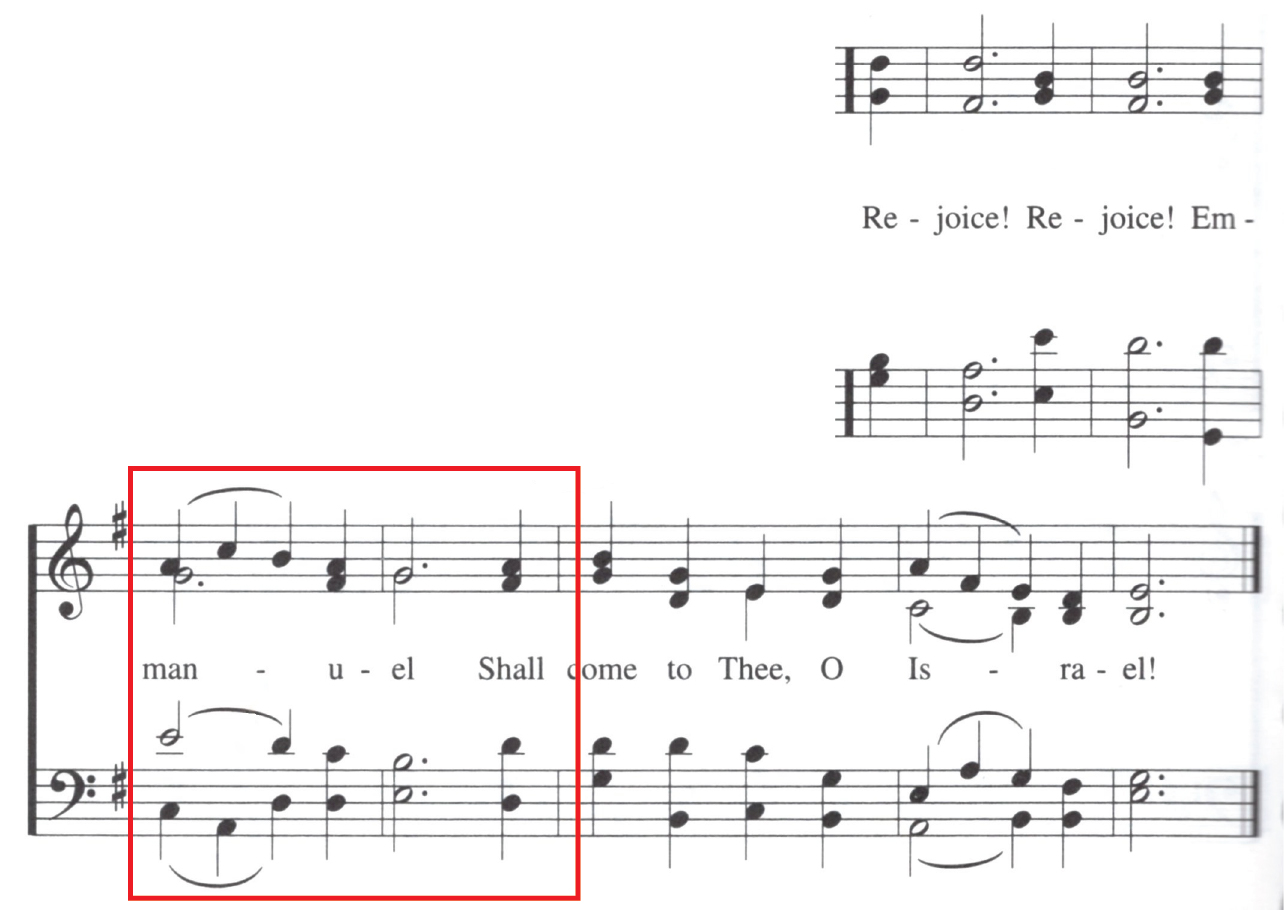
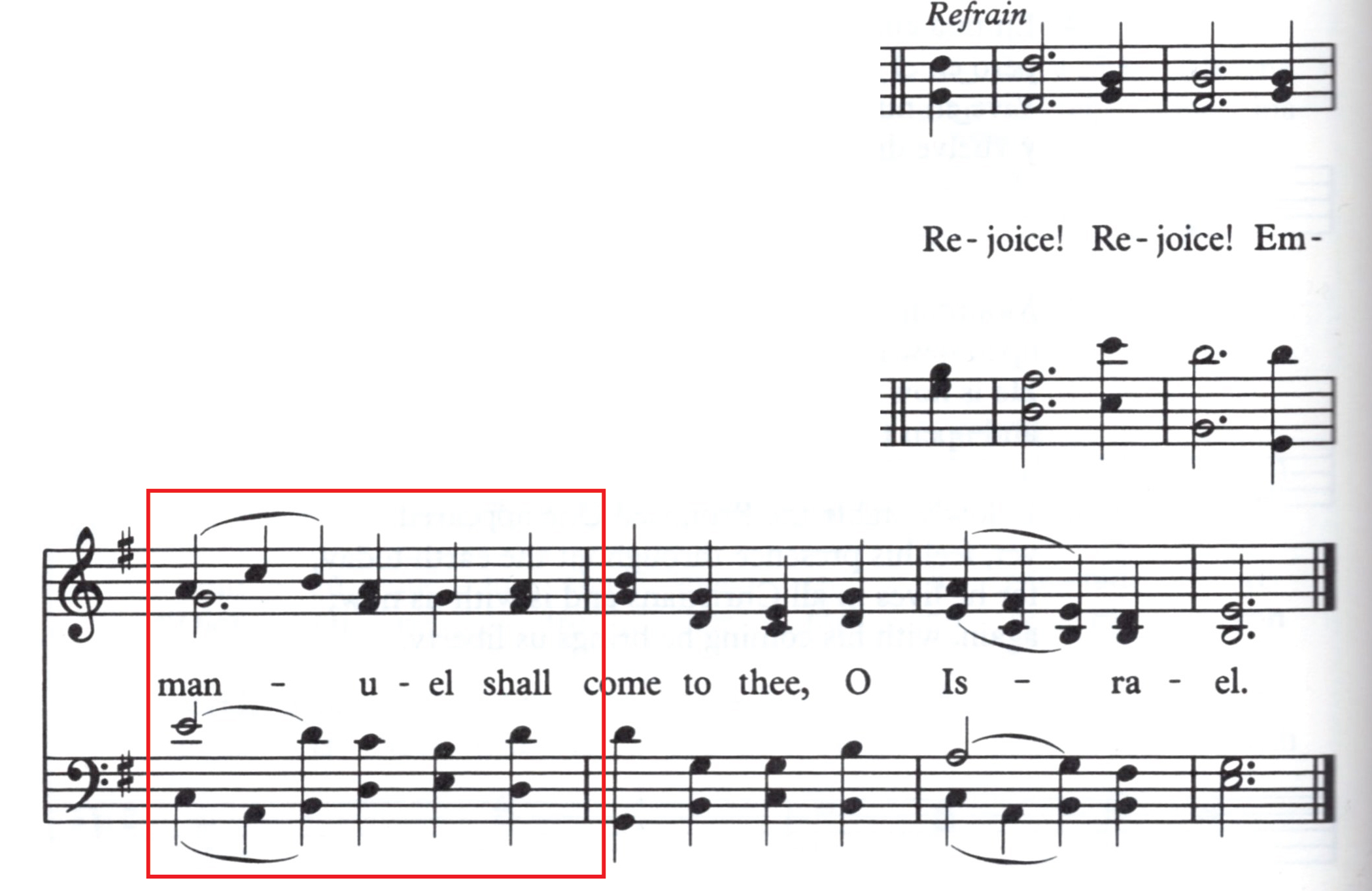
Here’s an example of a congregation (First United Methodist Houston) singing the refrain the way Gregerson so fondly remembers:
+++
NEW BOOKS:
>> The Art of Living in Advent: 28 Days of Joyful Waiting by Sylvie Vanhoozer: A retired French teacher and a botanical artist, Sylvie Vanhoozer was born and grew up in Provence and now lives in Illinois with her husband, the theologian Kevin Vanhoozer. In this little illustrated book, she introduces readers to the tradition of Provençal crèches, localized nativity scenes populated by santons (“little saints”). Made from the land’s clay, the santons resemble nineteenth-century villagers, who offer up gifts from their vocations—olives, bread, wine, wood, sheep, hurdy-gurdy music, herbal remedies. (Reminds me of the presepe from southern Italy that I encountered some years ago!) The crèches are also traditionally decorated with native vegetation, such as thyme, juniper, lavender, and rosemary, freshly harvested on the first weekend of Advent. This is one of the ways in which Provençals embrace Christ’s presence in their own time and place.
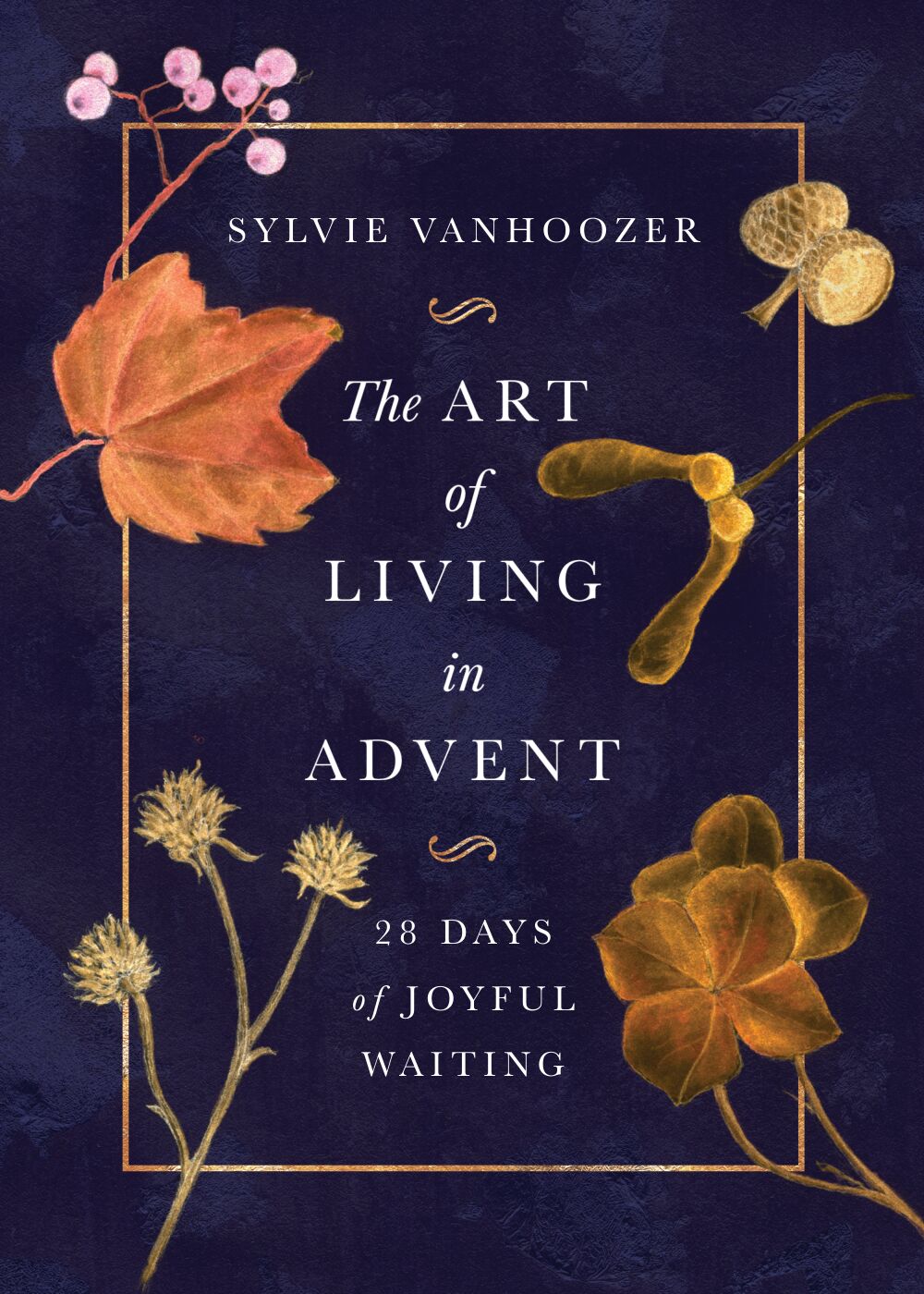
“I am not inviting readers to leave their place and go to some distant land in a distant past,” Vanhoozer writes. “The invitation is rather to transpose this Provençal scene into one’s own place, to live the same story in a different context. . . . The question is not ‘Did Jesus really come to Provence?’ but rather ‘Could Jesus really come here, to me?’ Could my home, my neighborhood, my church, become a crèche scene, with Christ right here beside me, in me?”
I think this book would have worked better as a literary essay, as it feels padded out to make its ninety-page count, with redundancies and somewhat arbitrary divisions. But I love how Vanhoozer draws us into this cherished and still-living tradition from her childhood and calls us to see and participate in the story of God’s coming where we live, in all its particularities.
>> Advent: 24 Kunstwerke zur Bibel aus aller Welt by Christian Weber: Rev. Dr. Christian Weber [previously] is the director of studies for Mission 21, an international mission agency of the Protestant Reformed Churches in Switzerland. His work brings him into contact with religious art from diverse parts of the globe. I’m delighted by this new (German-language) book of his, whose title translates to Advent: 24 Bible-Inspired Artworks from Around the World. Organized into four parts (“Words of Prophecy,” “Parables of Jesus,” “John the Baptist,” and “Mary”) and printed in full color, the book features twenty-four primary artworks (plus some supplementary) from twenty-two countries, providing background on and interpretations of each, as well as information about the artists and a bibliography.
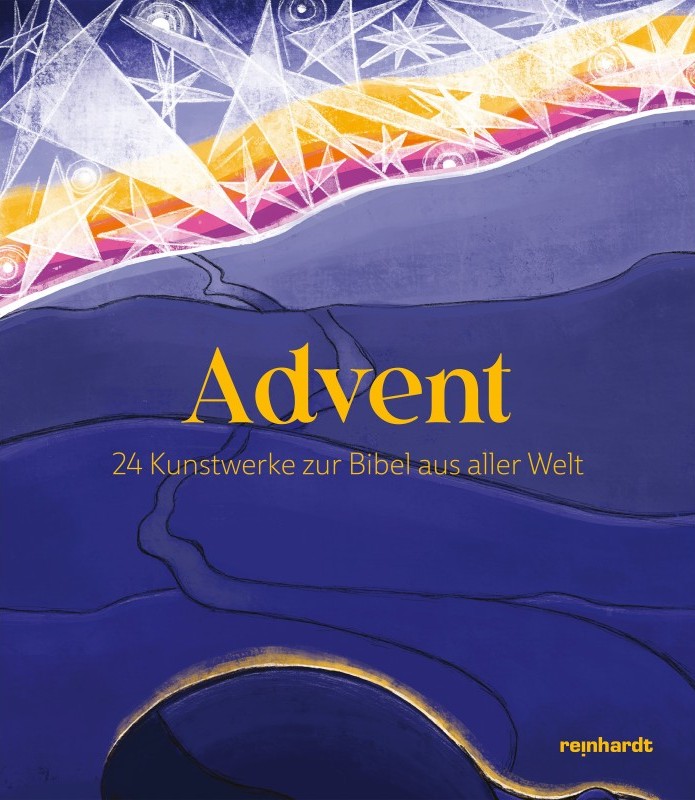
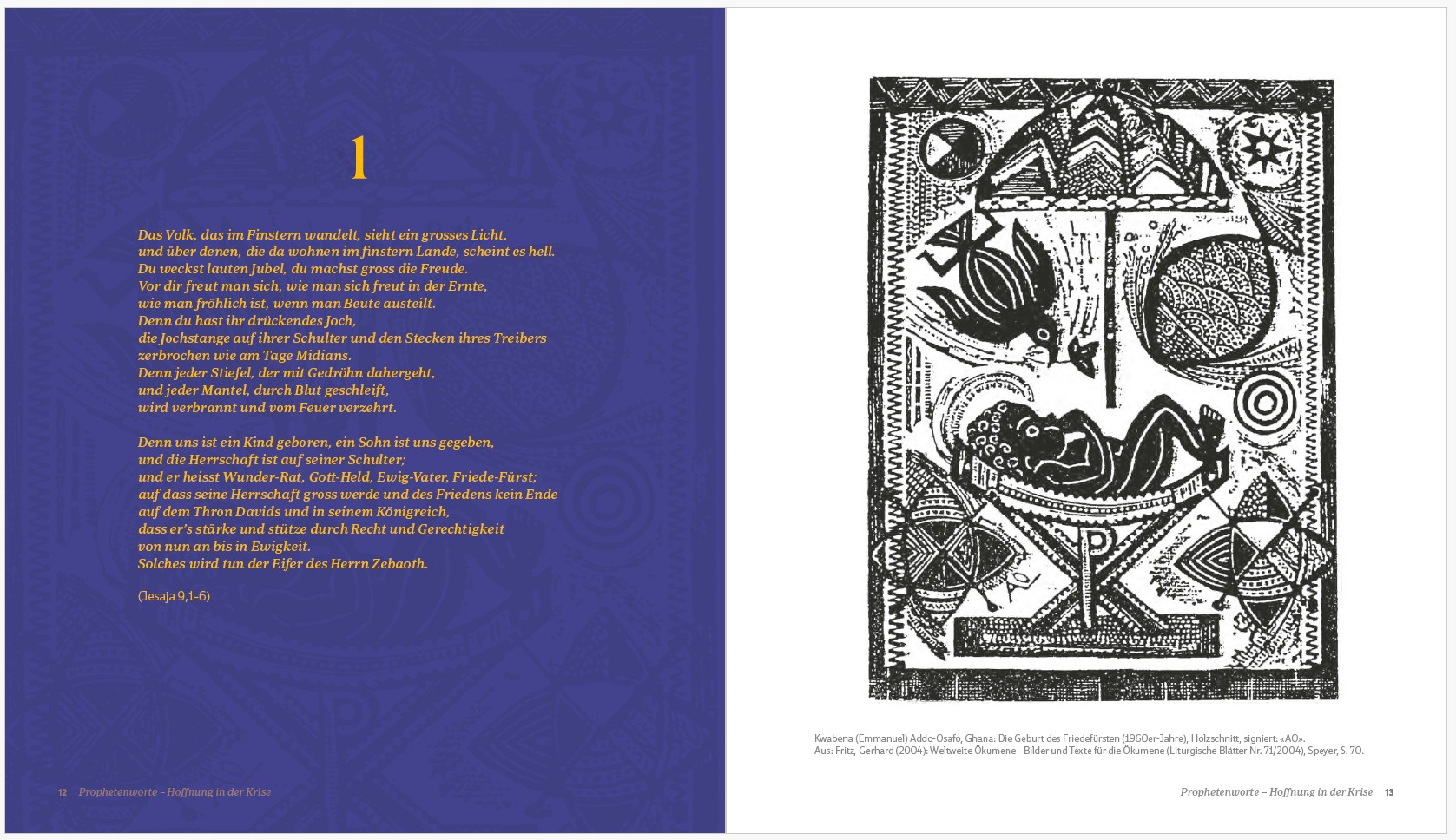
A church mural from Zimbabwe, a kalamkari from South India, a gourd carving from Peru, a manuscript illumination from Armenia—these are among the artworks Weber highlights. Some of the works are of higher quality than others, but the emphasis is on how the scripture texts of the Advent season have prompted artistic responses in a variety of places outside Europe, which is the continent that has most shaped the popular imagination when it comes to the biblical story. Weber’s Advent encourages us to widen those imaginations. Despite my fifteen or so years spent researching global Christian art, Weber is always bringing new artists to my attention! You can view sample pages from the book on the publisher’s website.
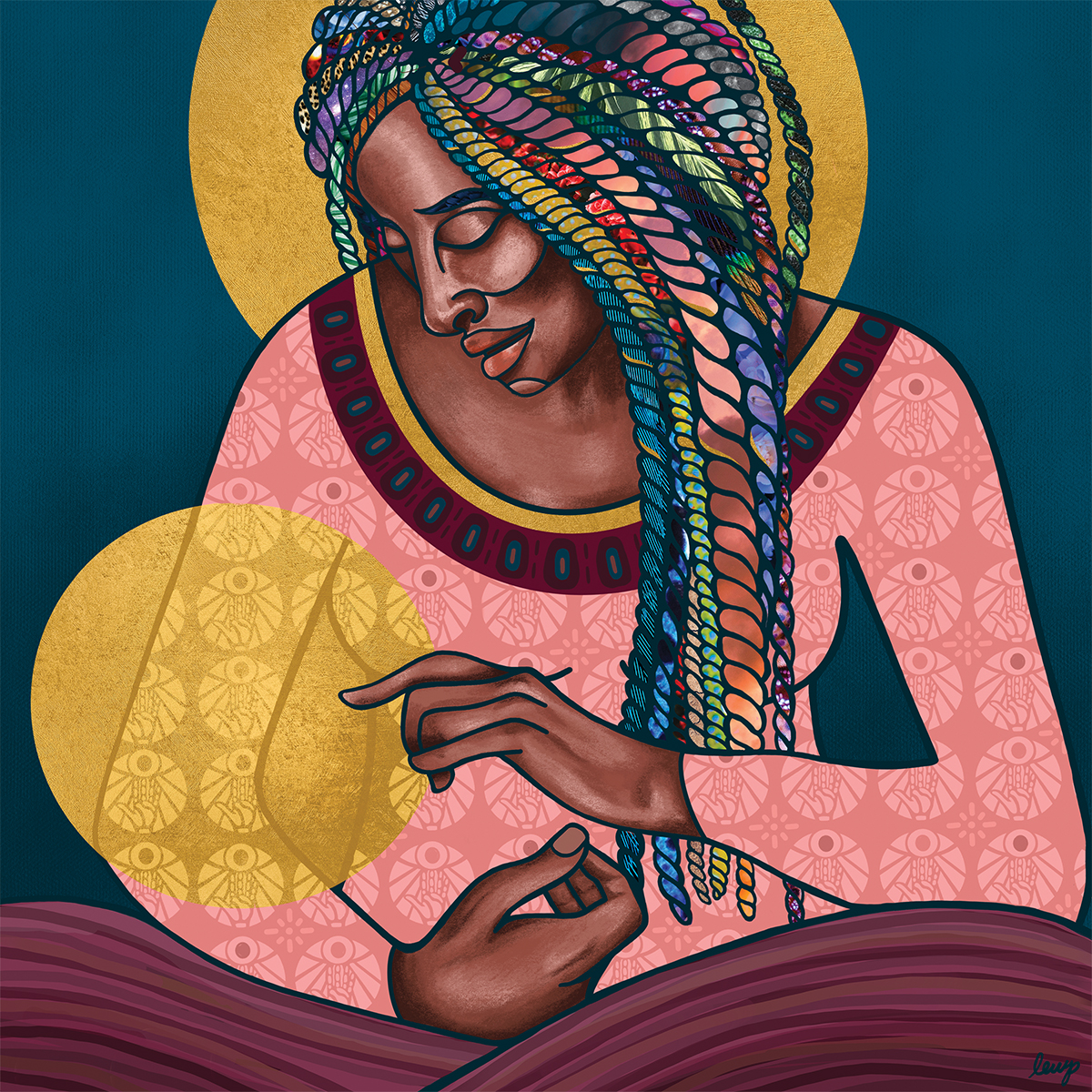
The cover image is a detail of For Those in Darkness by the American artist Lauren Wright Pittman.
Weber is looking for a North American publisher to release an English-language edition of the book.
+++
ARTICLE/VIDEO: “Five Films to Help You Observe Advent” by Abby Olcese, Think Christian: Abby Olcese, author of Films for All Seasons: Experiencing the Church Year at the Movies, provides five movie suggestions for Advent, corresponding to the themes of Hope, Faith, Joy, Peace, and Christ. (Other churches and families, like mine, substitute “Faith” with “Love” on their Advent wreaths; Olcese’s fifth pick, for Christmas Eve, would fit the “Love” theme perfectly, but see also my suggestion below.) You can read the content as an article or watch it in video format, which includes a few film clips:
ALSO: Allow me to add one of my own suggestions: American Symphony, a 2023 documentary about musical artist Jon Batiste, whose meteoric rise to fame coincided with the return of his partner Suleika Jaouad’s leukemia. Directed by Matthew Heineman, the film follows a year in the life of the married couple, as Batiste prepared for the premiere of his boundary-breaking American Symphony composition at Carnegie Hall in September 2022 while Jaouad endured chemotherapy. It has a very Advent-y feel, by which I mean its calling on God in the darkness (Batiste is a devout Christian) and its orientation around faith, hope, and love. It’s a beautiful, intimate portrait of a marriage, of creativity, courage, and care.
+++
ART: Advent Wreath by Beach4Art: Beach4Art is a family of four who create beach art inspired by beautiful nature in Devon, UK. (Follow them on Facebook, Instagram, or TikTok, and see their Etsy shop.) Below are some photos of the Advent wreath they made out of twigs, stones, and shells on Sandymere beach for the first Sunday of Advent in 2023.
 Art & Theology