Roundup: “Art and Religion Now” symposium, landscape of the body, and more

SYMPOSIUM: “Kunst en religie nu” (Art and Religion Now), October 20, 2023, 1:30–4:30 p.m., Museum Catharijneconvent, Utrecht, Netherlands: A week from Friday, attend a free afternoon of talks (in Dutch) on the topic of religion in modern and contemporary art. The speakers are Lieke Wijnia, who will present the results of her past two years of research on religious themes that crop up in modern and contemporary artworks in the Collectie Nederland (Netherlands Collection); Rozanne de Bruijne, on religion in art of the interwar period (1918–1940), the topic of a spring 2025 exhibition she’s curating; Wouter Prins from the Museum Krona, on the state of religious art in the post-Nietzsche era; and Joost de Wal on contemporary art in church spaces. Here’s the autotranslated description:

“The more modern the art, the smaller the presence of religion.” This frequently heard approach appears to be anything but justified. In fact, at the beginning of the twenty-first century, spirituality seems to be on the rise in the visual arts, resulting in a multitude of artistic interpretations. What does this say about the relationship between religion and art?

This symposium focuses on the multifaceted and sometimes unexpected presence of religion in visual art. For example, how does contemporary (religious) art relate to ongoing secularization on the one hand and to flourishing international religious communities on the other? What does the growing interest in spirituality mean for the arts? And what about the use of religious symbolism in visual art, both inside and outside the church? The speakers also shed light on how the wealth of (religious) stories and images can provide guidance in times of social uncertainty and uprooting.
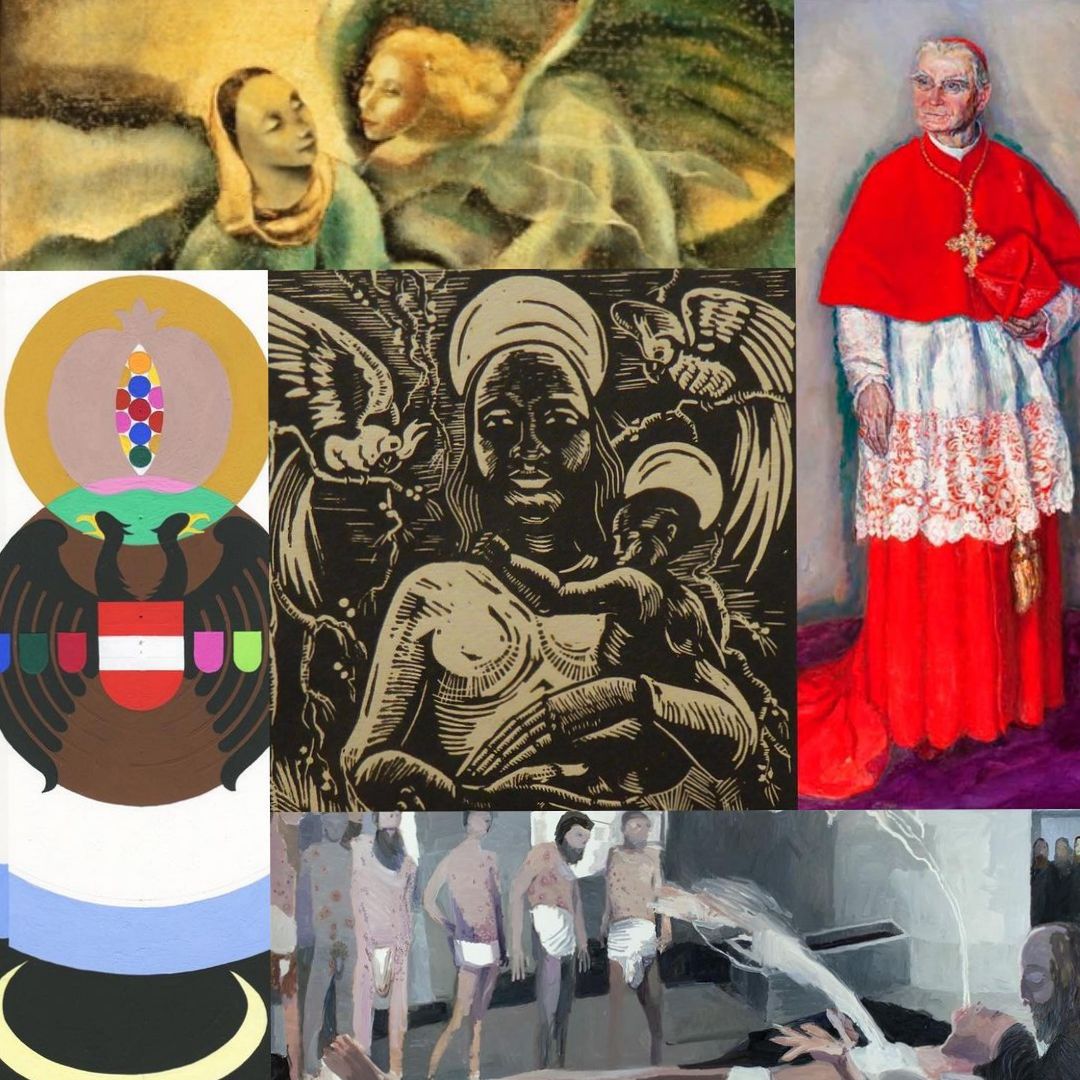
Clockwise from top left: Annunciation by Mariette Lydis (1931); Portrait of Cardinal W.M. van Rossum by Jan Sluijters (1927); The Exorcism of Mary Magdalene by Helen Verhoeven (2020); Path and Puddle, panel 4, by Kasper Bosmans (2022); Black Madonna by Genia van der Grinten-Lücker (1934)

+++

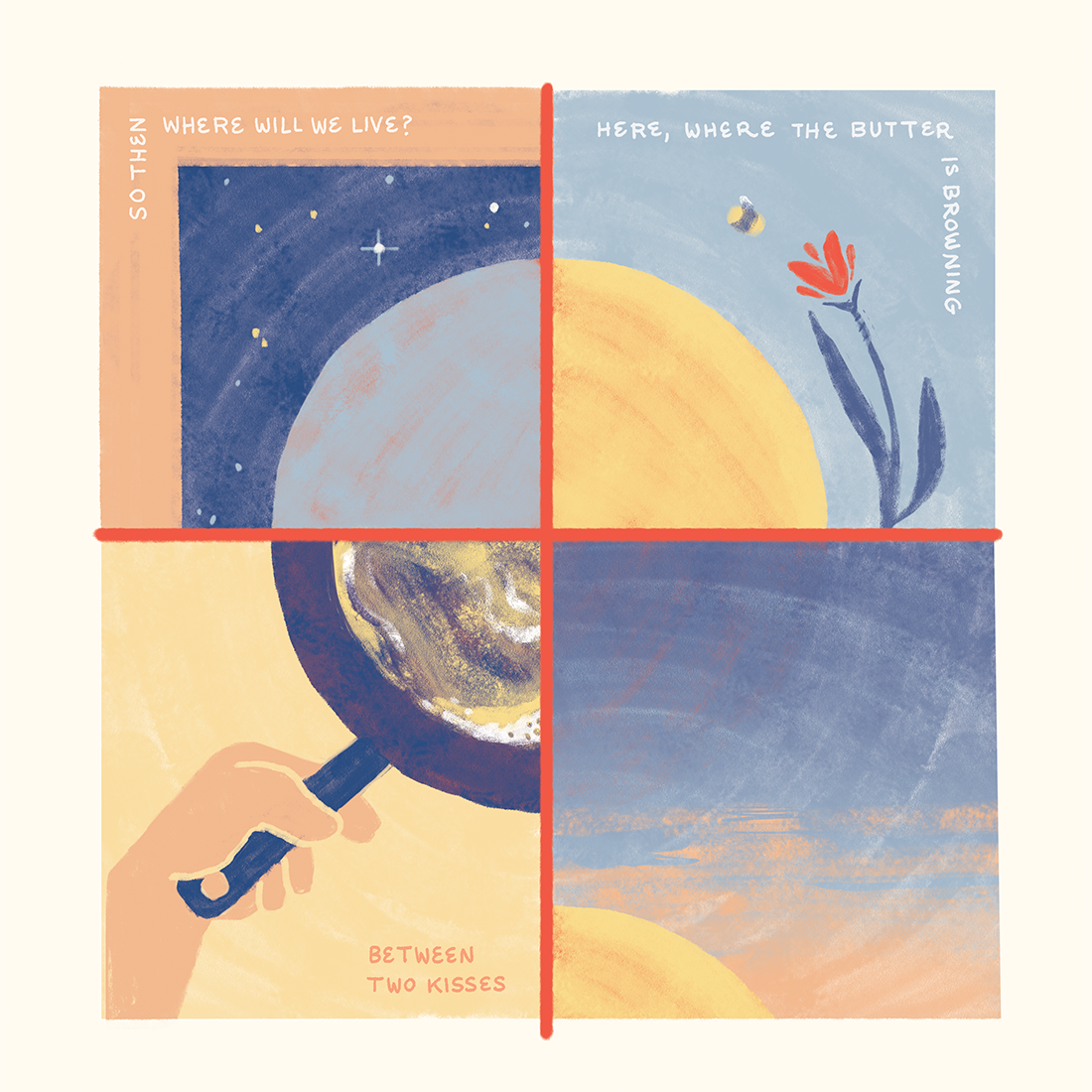
ONLINE WORKSHOP: “Deep Dive into Poetry Comics,” led by Madeleine Jubilee Saito, November 2, 9, 16, 30, 5–7 p.m. Pacific (8–10 p.m. Eastern): Madeleine Jubilee Saito [previously] is a cartoonist from Seattle who makes “poetry comics” about the environment and the sacred—and in four virtual sessions offered through Push/Pull, she’ll teach you how to make your own on topics of your choice!
Saito, Madeleine Jubilee_Love Poem
Madeleine Jubilee Saito, Love Poem, 2019

“In this online course, you’ll practice exercises to explore your own voice and interests in drawing and text, creating poetry comics in a variety of styles. You’ll learn about minicomics, how to do basic layout for printing, and how to print a quarter-page minicomic. We’ll end the course with a celebratory comics reading for friends and family on Zoom. Students need to either be comfortable drawing digitally (Procreate, Photoshop, etc.) or have access to a scanner. Students will be also need access to a printer or local print shop for the last phase of the course.”

If you don’t have time to commit to four classes, there’s a single one offered on October 27.

+++

NEW ALBUM: You Don’t Carry It Alone by Leila Way: Leila Way is a singer-songwriter from Austin, Texas, writing songs for the church. Her first full-length album, “You Don’t Carry It Alone is a collection of songs for hard times. Some of these are old hymns; some were written during a period of intense grief and loneliness, while others grew out of prayers for friends. The album was created to comfort those who mourn; to remind God’s people that He is always faithful, always present and at work, even when we can’t see what He’s up to.”

The album consists of four original songs, two original instrumentals, a cover of “Be Still, My Soul,” and new retunes of George Matheson’s “O Love That Wilt Not Let Me Go” (one of my favorite hymns) and James Montgomery’s “I cannot call affliction sweet.”

+++

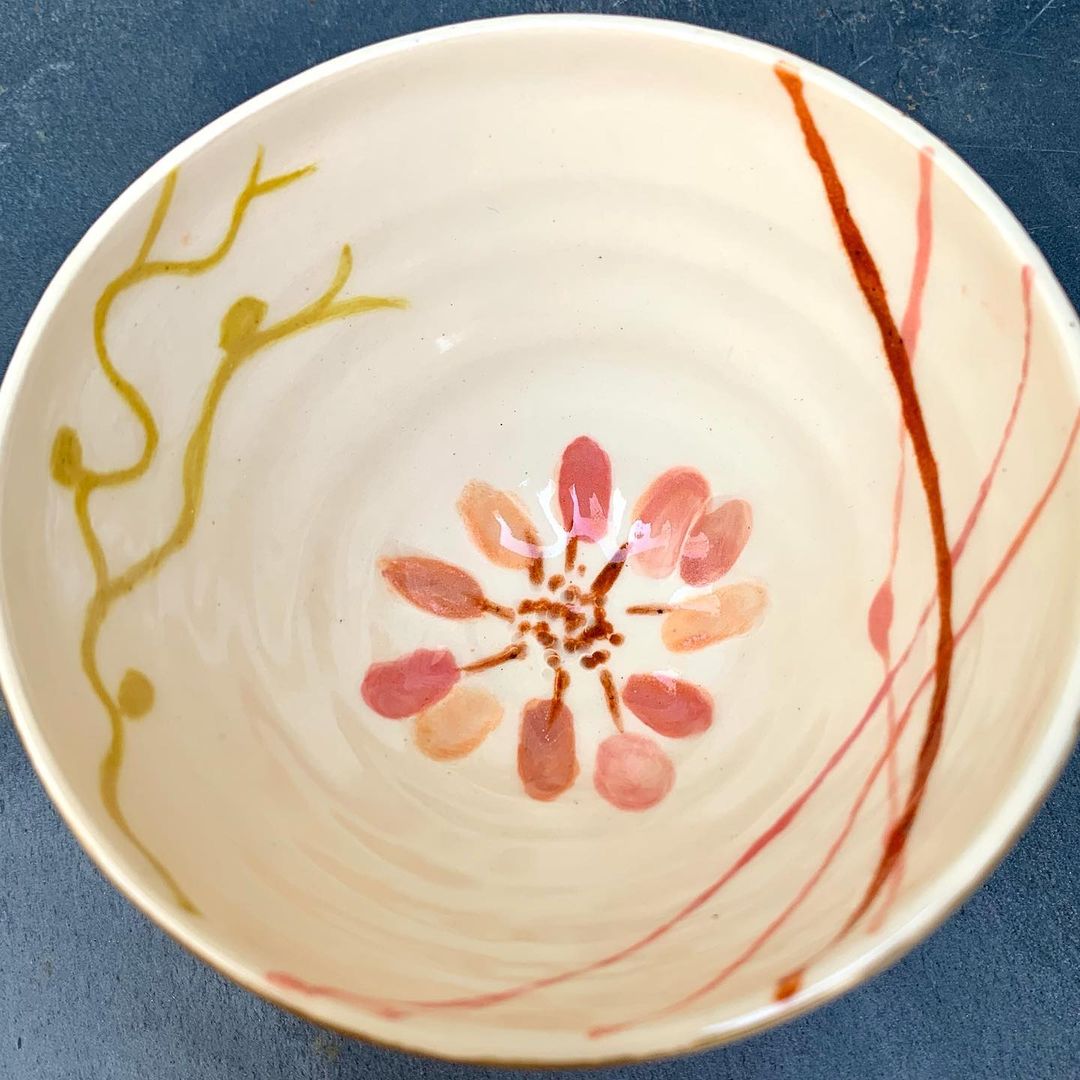
CERAMIC BOWLS: Nurture Collection by Jane Boutwell: I met artist Jane Boutwell at a Christians in the Visual Arts (CIVA) conference in 2021 after she presented this body of work that really moved me—a collection of ceramic bowls that take as their three design elements anatomical features of the female breast: lymph nodes (gold, river-like), mammary glands (pink and blooming), and musculature. She started the Nurture Collection after having one of her milk ducts surgically removed in 2019 for a biopsy (it turned out not to be cancer), as a meditation on the strength and inner beauty of this part of the body that is so often objectified or shamed. She recommends the bowls as a gift for a woman in your life who has had a tender year with regard to her breasts—cancer, nursing, etc.—to honor her journey.
Boutwell, Jane_Mammary bowl
Bowl from the Nurture Collection by Jane Boutwell, 2020

I share these now because October is Breast Cancer Awareness Month. Below is an eight-minute video explanation by the artist, followed by a short “making of” montage:

There are five Nurture bowls currently for sale in Boutwell’s online shop: Joan, Tracy, Colleen, Rita, and Wendy. Each is named after a woman she knows with breast cancer.

+++

PODCAST EPISODES:

>> “Landscape of the Body with David Taylor,” Makers & Mystics, September 13, 2023: Constructing a cogent theology of the body, theologian W. David O. Taylor discusses why it’s important that we honor and understand our bodies, and why having a right relationship to our bodies is imperative to the quest of art. Christians have often feared, distrusted, or despised the body; sin has meant that we’ve become alienated from our own bodies and the bodies of others, that we harm our bodies and others’, and that we often flee from our bodies, dissimulate. But Jesus wants us to be at home in our bodies, Taylor says—in worship, and in day-to-day life. He talks about Jesus as an icon of care-filled touch and the implications of that.

>> “On Being in a Body,” On Being with Krista Tippett, September 21, 2023: At the 2023 Aspen Ideas Festival, Krista Tippett interviewed Kate Bowler, author of Everything Happens for a Reason (and Other Lies I’ve Loved), a reflection on how she moved through learning at age thirty-five that she had Stage IV colon cancer. “From the new reality in our time of living with cancer as a chronic illness, to the telling of truths to our young as we face precarity in our collective body, this conversation is full of the vividly-whole humanity that Kate Bowler singularly embodies.” I heard Kate in person at Duke University a few years ago talking on a panel about suffering. She’s full of wisdom, wit, and raw tenderness and so, so endearing, and even though I’ve heard her story many times, every conversation with her brings up something new.  

+++

DANCE PERFORMANCE: Chroma, Grace, Takademe, and Revelations, performed by Alvin Ailey American Dance Theater: I’ve shared a video of Alvin Ailey’s Revelations here before. Well, this rebroadcast from 2015 includes that, plus performances of three other works by the prestigious Alvin Ailey American Dance Theater. I especially enjoyed Chroma, with music by Joby Talbot and choreography by Wayne McGregor—it’s the first twenty-six minutes of the video.
Roundup: Formational films, Mary Magdalene exhibition, and more

WEBINAR: “Formational Films Round-Up: Movies That Matter,” hosted by Renovaré: Recorded August 24, this is an excellent eighty-minute conversation with film critic and professor Jeffrey Overstreet [previously], minister Catherine Barsotti, and theologian Chris Hall, led by Carolyn Arends [previously]. Each of the three guests identifies and discusses five films that have been spiritually formative to them—and what great selections! (Though there are four I have not yet seen.) Barsotti’s number one is one of my all-time favorites.

Because the movie ratings issue (that is, content like violence, sex, and/or profanity) is almost always raised by Christian audiences, Arends asks, “Are there some films that are bad for you to watch, and if so, why?” The question is wisely addressed from 34:52 to 49:40.

+++

INTERVIEW: “We must become poetry,” Still Life: For the September 13, 2021, edition of his weekly Still Life letter, Michael Wright [previously] interviewed Christian author Paul J. Pastor, having been intrigued by a recent tweet of his, which asks, “Where are the bardic preachers, wild at the eye, speaking not just to mind or heart, but to gut?” Pastor talks about the connection between the seen and the unseen; the relationality of poetry and finding shelter in the words, images, and emotions of another; holistic knowing; the disservice of reducing the Bible’s poetry to moral lessons with tidy applications; the nearness of Walt Whitman’s poetic vision to the Christian vision of sanctification; and more.

“My passion is for Christians to reclaim our way’s remarkable resources for living virtuously, beautifully, and well,” he says. Mine too!

To subscribe to Still Life, distributed for free every Monday over email, click here.

+++

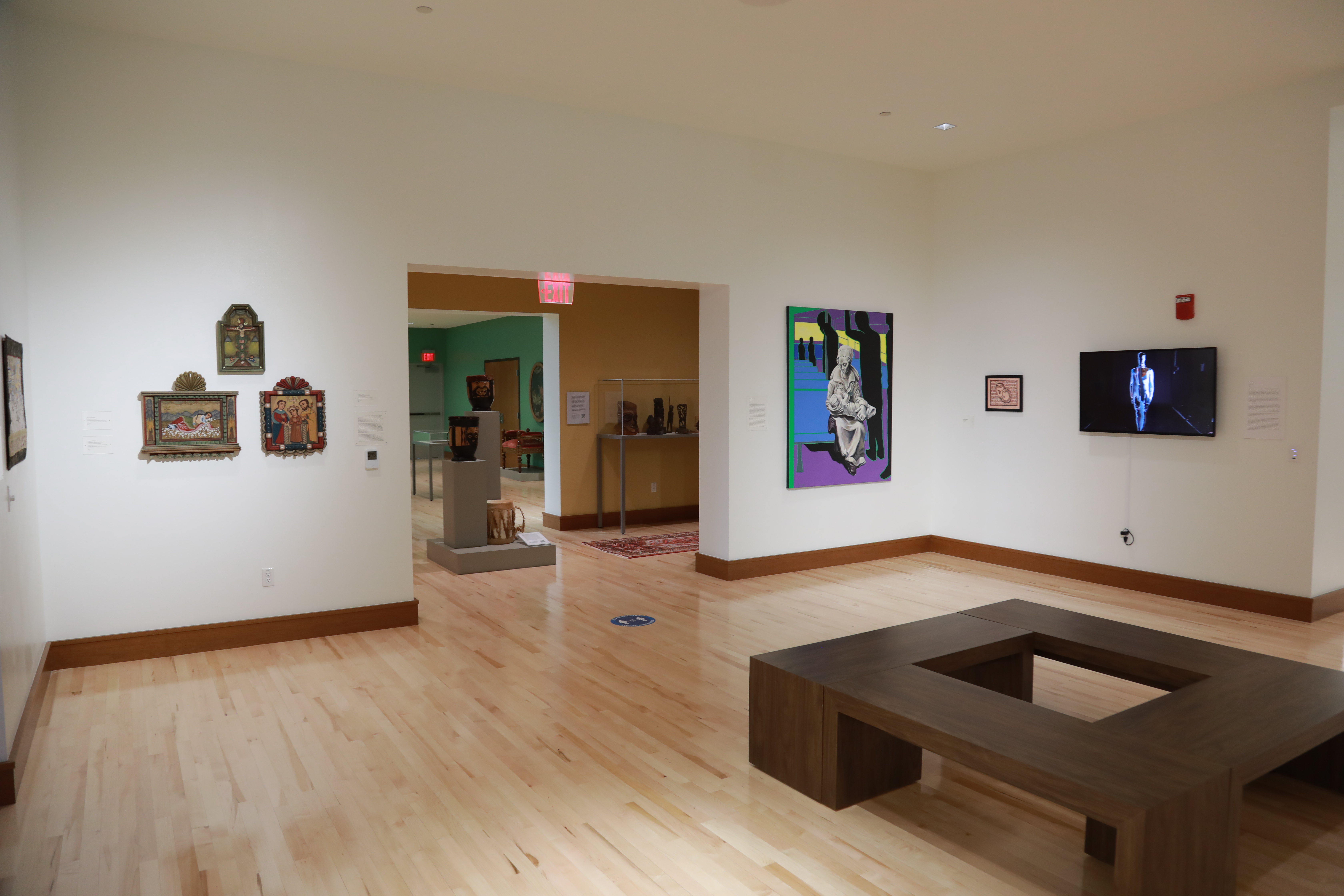
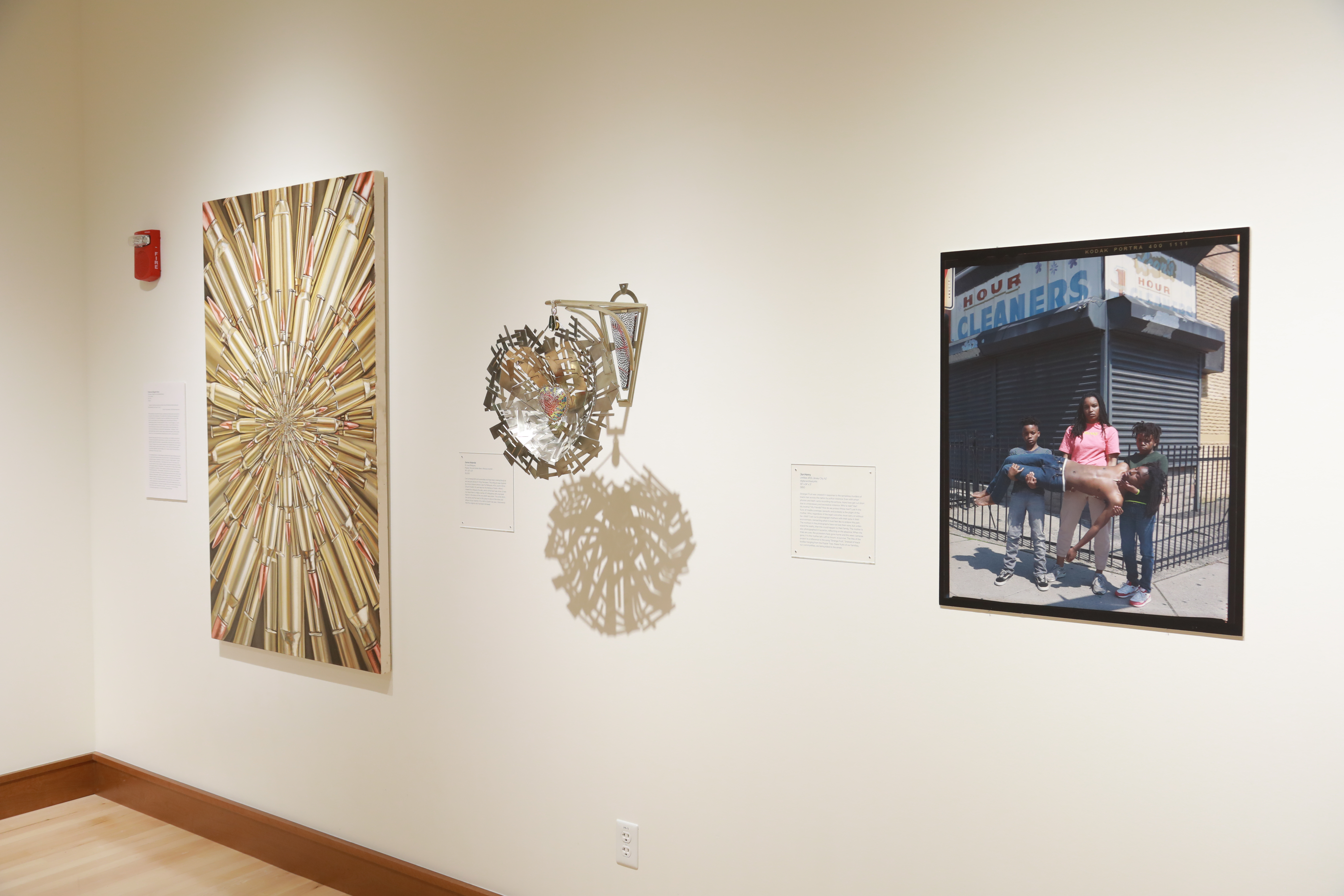
Lecture by David Brinker for the 8th Catholic Arts Biennial, Verostko Center for the Arts at Saint Vincent College, Latrobe, PA, September 12, 2021: I mentioned the call for entries for this exhibition back in June. Of the 396 entries from artists from around the country, MOCRA director and guest juror David Brinker has selected 52. In this talk given the weekend after the exhibition’s opening (which starts at 14:47), he discusses the following three questions, pulling in artworks from the current exhibition and from his twenty-five-plus years as an art curator at a Catholic institution.

  • What identifies contemporary art as “Catholic”?
  • What contributions can Catholic art and artists offer to the broader contemporary art world?
  • What can Catholic art and artists receive from the broader art world?
8th Catholic Arts Biennial
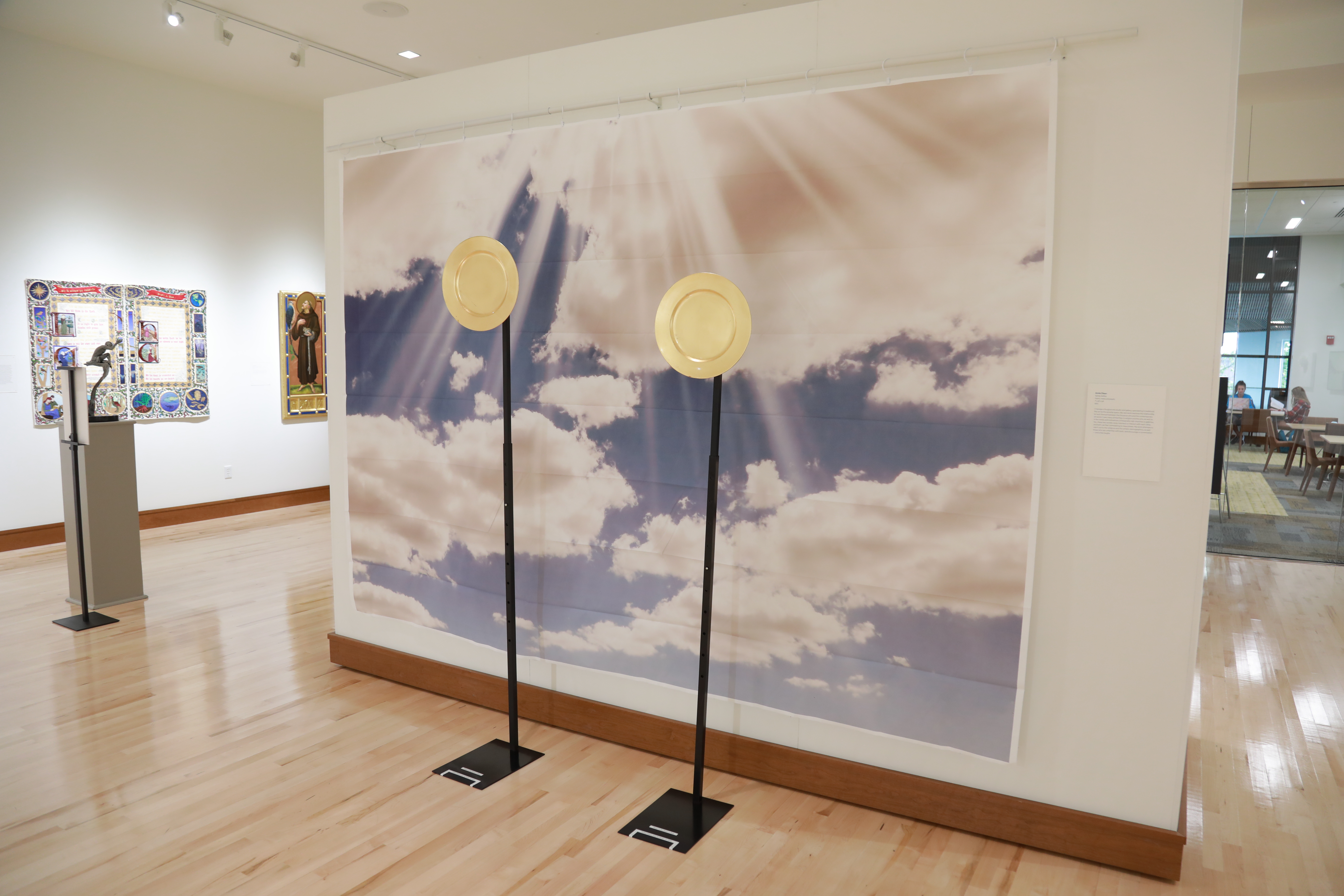
Exhibition view, 8th Catholic Arts Biennial. From left to right are three retablos by Vicente Telles, Maternidad by Piki Mendizabal, Iesu in Utero by Rebecca Spilecki, and The Living Temple by Jesse Klassen.

8th Catholic Arts Biennial
The Heart of Man by Kristen van Diggelen Sloan; St. Laud Reliquary by James Malenda; Untitled, #33, Jersey City, NJ by Jon Henry

8th Catholic Arts Biennial
Foreground: Saintly Selfies by Annie Dixon

(The three photos above are provided courtesy of the Verostko Center for the Arts.)

Saint Vincent’s 8th Catholic Arts Biennial exhibition is on view through October 29, 2021; off-campus visitors are asked to make an appointment by emailing verostkocenter@stvincent.edu. While you’re in the area, you might also want to visit the Fred Rogers Center at Saint Vincent College, which houses artifacts from Mister Rogers’ Neighborhood as part of a larger permanent exhibition on his life, work, and influence. (Latrobe was Fred Rogers’s hometown.) And Pittsburgh is just an hour away!

+++

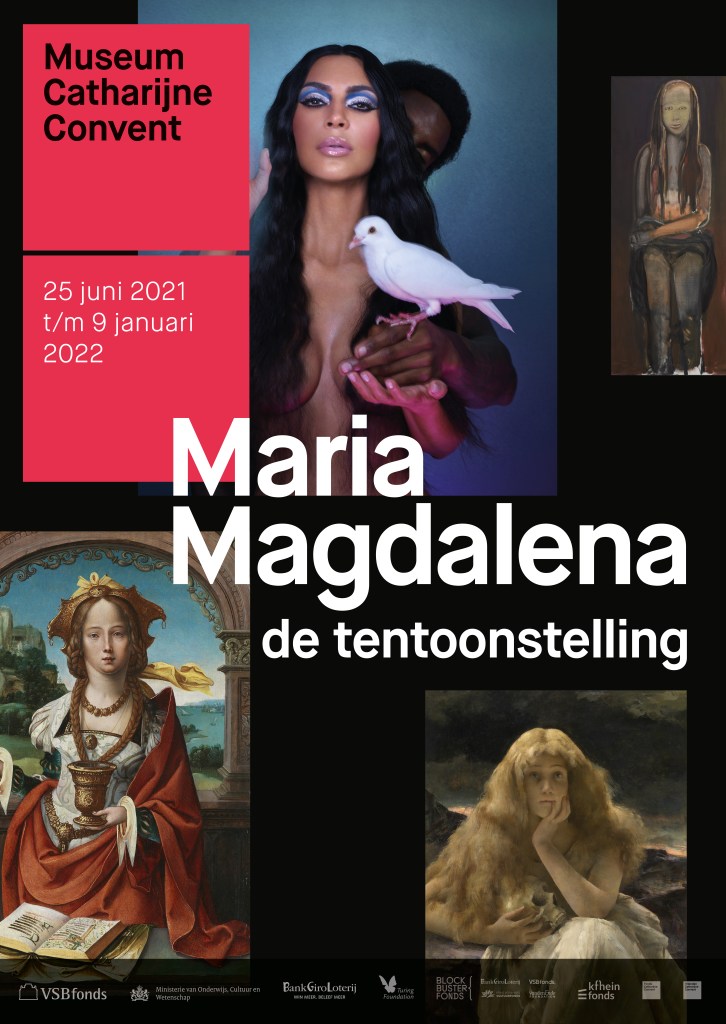
EXHIBITION: Maria Magdalena (Mary Magdalene), Museum Catharijneconvent, Utrecht, Netherlands, June 25, 2021–January 9, 2022: Curated by Lieke Wijnia. “Mary Magdalene is one of the most enigmatic women from the New Testament. Through a trans-historical display of artistic representations from the eleventh century to the present day, this exhibition explores the enduring fascination for this mysterious saint.” The catalog, Mary Magdalene: Chief Witness, Sinner, Feminist, is available in Dutch or English from the publisher Waanders. In addition to the exhibition page on the museum’s website, which hosts select images and a series of videos, resources in Dutch include an audio tour (with images), a podcast episode and accompanying article, and a video preview with commentary by Karin Haanappel.

Maria Magdalena art exhibition

I’m fascinated by Mary Magdalene, and while I won’t get to see this exhibition, it appears that it does an excellent job of exploring the many facets of her life and identity (including both before meeting Jesus and after his ascension), as told through canonical and apocryphal texts, and her complicated reception history. It addresses her role as the first witness to Jesus’s resurrection; the so-called Gnostic Gospel of Mary, which has Peter saying, “Sister, we know that the Savior loved you more than the rest of the women. Tell us the words of the Savior which you remember—which you know (but) we do not, nor have we heard them”; the legacy of Pope Gregory the Great’s infamous Easter sermon of 591 CE, which, in its (many would say erroneous) conflation of the Magdalen with other New Testament women, identified her as a converted prostitute; the development of legends about her later life in southern France, as an evangelist, a miracle-worker, and a penitent, cave-dwelling ascetic; modern films and literature that cast her as a romantic lover, or even the wife, of Jesus; and Pope Francis’s elevation of her liturgical commemoration from an obligatory memorial to a feast day in 2016, in which she is to be celebrated not as a fallen woman doing penance but as the “apostle to the apostles,” a title of hers dating back to the High Middle Ages.

The poster above features Mary Magdalene Receives the Holy Spirit by American photographer David LaChapelle, Magdalena by contemporary South African artist Marlene Dumas, The Magdalen from a sixteenth-century Flemish workshop, and Mary Magdalene by nineteenth-century Belgian artist Alfred Stevens.

+++

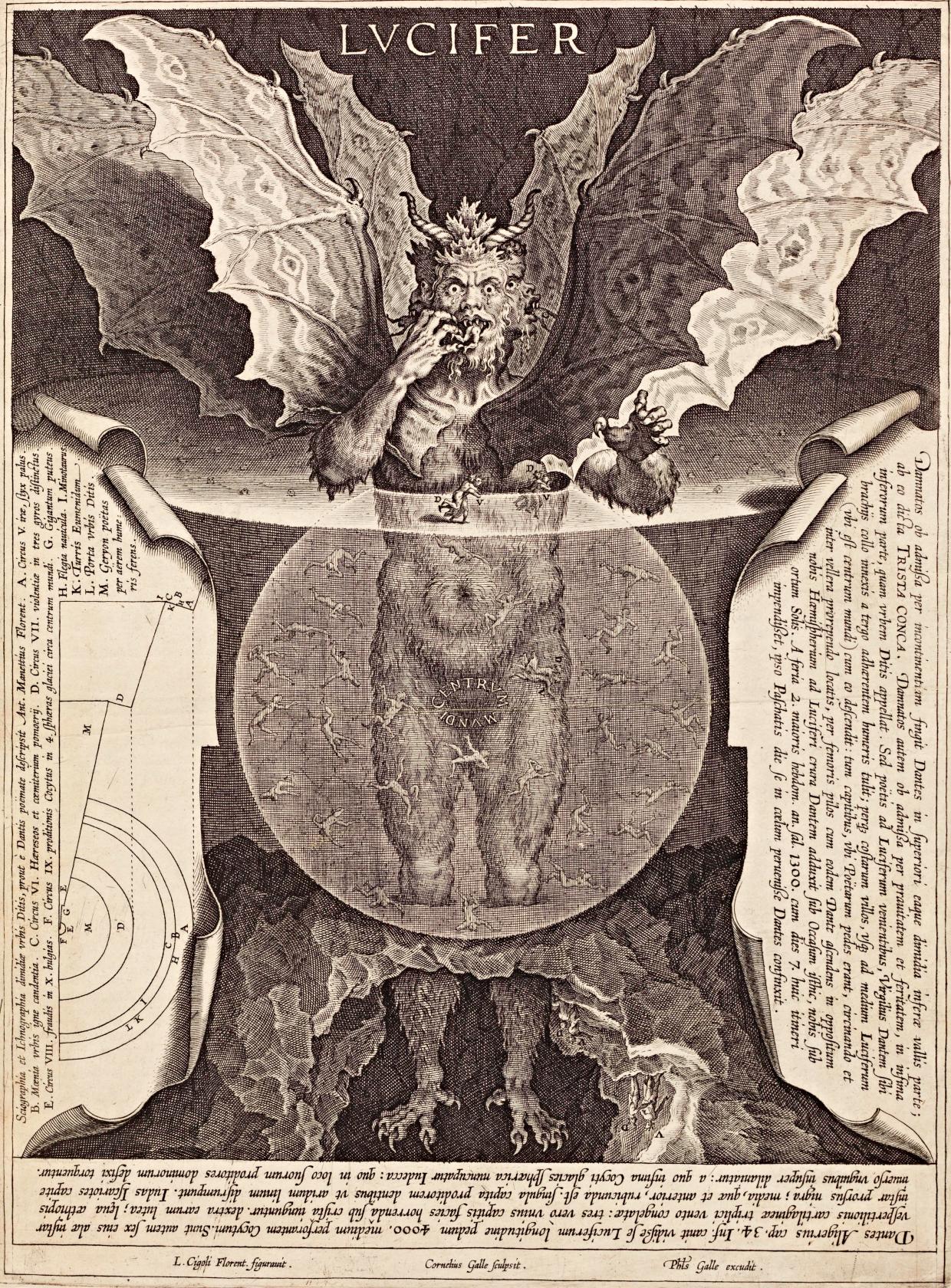
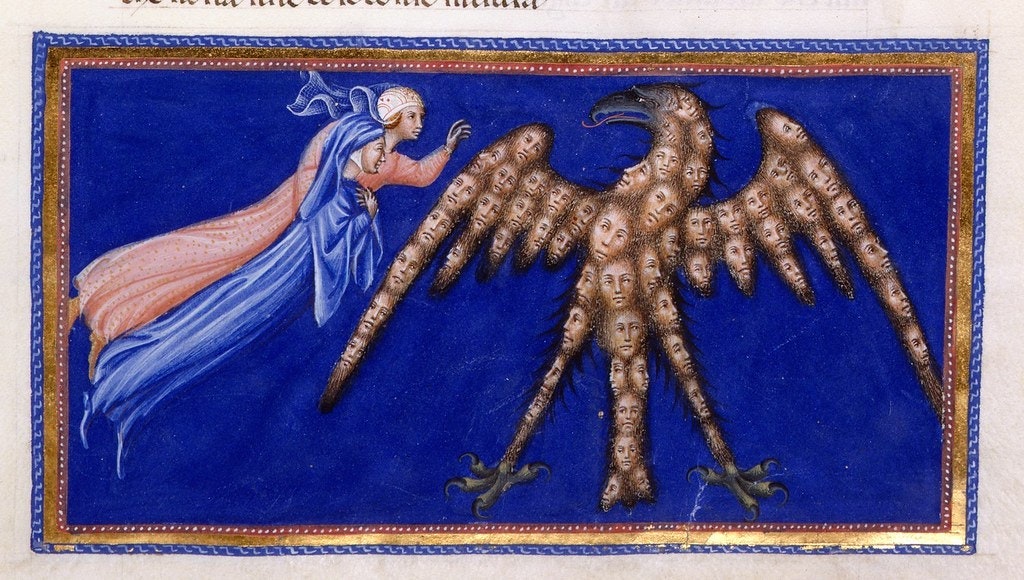
ARTICLE: “700 Years of Dante’s Divine Comedy in Art”: In honor of the seven hundredth anniversary of the Italian poet Dante Alighieri’s death on September 14, the Public Domain Review has collected art directly inspired by his Commedia from over the last seven centuries—on the nine circles of hell, the beatific vision, and much more. Under the tutelage of literature professor Stefano Gidari, I read and studied Dante’s groundbreaking afterlife-adventure trilogy—in Italian!—in 2009 while living in Florence, where it was written, which was such an invaluable experience.

Galle I, Cornelis_Lucifer
Cornelis Galle I (Flemish, 1576–1650), Lucifer, after Stradanus, ca. 1595. Engraving, 27.5 × 20 cm.

Eagle of Justice
Giovanni di Paolo (Italian, ca. 1403–1482), Dante and Beatrice before the Eagle of Justice, ca. 1450. From Yates Thompson 36, fol. 162, British Library, London.

Roundup: “Religious Art” panel, Advent songs, the Christmas tree’s praise, BBC Nativity film

PANEL DISCUSSION: “Religious Art,” organized by the Forum for Philosophy: I posted about this live online event a month ago, and now that it’s passed, I want to share the video recording. Theologian Ben Quash (King’s College, London), curator Lieke Wijnia (Catharijneconvent Museum, Utrecht), and art historian Mehreen Chida-Razvi (Khalili Collections, London) discuss the relationship between art and religion, how art can function within religious practice, how to exhibit religious art in a museum, and artworks as sites of conversation across religious traditions.

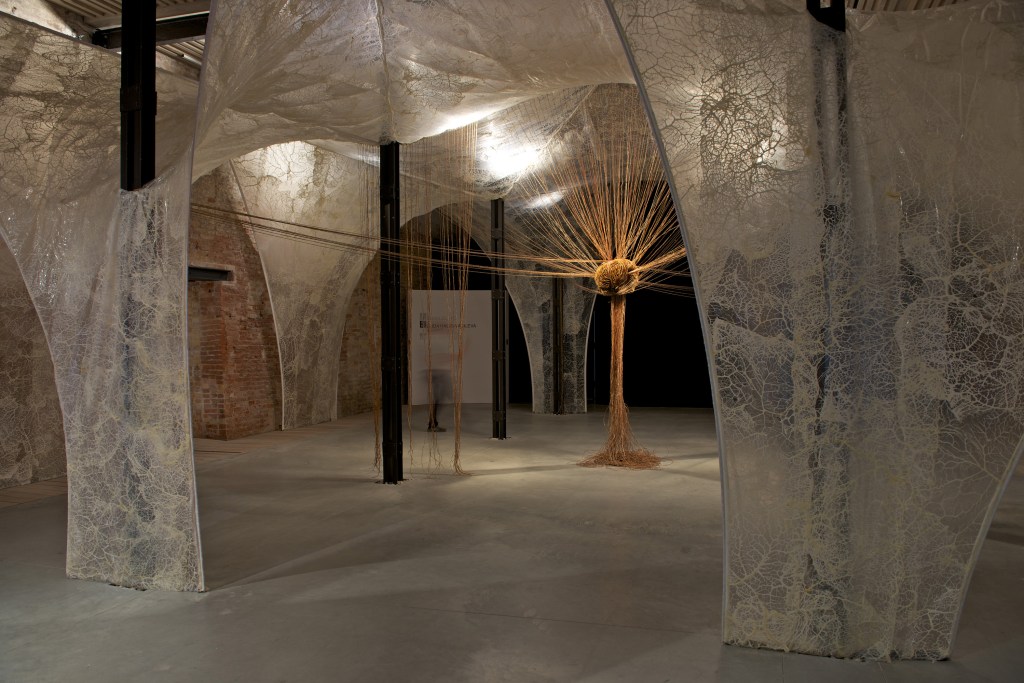
Quash opens by proposing different categories of “religious art”: art for religion, art about religion, art with religion, and art instead of religion. The three unpack those a bit, discussing the intentions of the artist or patron versus how the artwork is perceived by the viewer. Quash mentions Haruspex by Elpida Hadzi-Vasileva (a fascinating installation commissioned by the Vatican for the 2015 Venice Biennale, a contemporary artist’s response to “In the beginning . . . the word became flesh”; read Quash’s essay and an artist interview), the East Window at St Martin-in-the-Fields by Shirazeh Houshiary, the Raphael Cartoons, and Aaron Rosen’s 2016 Stations of the Cross exhibition throughout the city of London, which shows the permeability of the boundaries between sacred and secular. (I participated, as viewer/pilgrim, in a 2019 iteration of the Stations project in Amsterdam.)

Hadzi-Vasileva, Elpida_Haruspex
Elpida Hadzi-Vasileva (Macedonian, 1971–), Haruspex, 2015. Organic materials. Installation at the Pavilion of the Holy See at the 56th Venice Biennale.

In reference to Hadzi-Vasileva’s canopy of pig’s caul fat, Quash says that challenge or provocation can be a meaningful thing to happen in a religious context:

Works that ambush you are also religiously important, because a sort of religious art that only gives you what you already expect and want quickly becomes kitsch. It’s just a reward of your expectations. And that shouldn’t be what religious art does, it seems to me. It should actually want to take you somewhere else, just as good religion should—it should be transformative, not merely confirming where you already are. So there’s a role for these sorts of artworks within religion as well as outside it.

Chida-Razvi shares slides of Islamic architectural spaces, devotional objects, and manuscript illuminations, including a Mughal painting that exemplifies the interfaith dialogue going on at the court of Akbar in Lahore, and Wijnia shares her experience curating objects people pray with for museum display and (forthcoming) an exhibition on Mary Magdalene. Such great content!

+++

ADVENT SONGS:

“He Comes,” words by Kate Bluett, music by Paul Zach: A lovely new Advent hymn, performed here by Paul Zach.

“The Heavens Shake” by Reindeer Tribe: Reindeer Tribe is a group of friends based in Los Angeles who get together each year to make a live Christmas album, a mix of originals and traditional, sometimes retuned, carols. They bring their voices, instruments, and arrangements and jam together for a long weekend in a big living room. (COVID-19 put the kibosh on this year’s gathering.) This original song, perfect for Advent, is on their 2014 album, A Great Light. “For thus says the LORD of hosts: Yet once more, in a little while, I will shake the heavens and the earth . . .” (Haggai 2:6).

+++

ARTICLE: “We don’t need to be afraid of the Christmas tree’s pagan roots” by Damian Costello, America: Dr. Damian Costello specializes in the intersection of Catholic theology, Indigenous spiritual traditions, and colonial history. In this article he considers how the Christmas tree pictures Christ as the new Yggdrasil (the giant ash tree at the center of the Norse cosmos), and the spiritual character of nature. The second half—about “the hidden agency of trees”—stretches my categories for sure, and I wonder if it’s a bit overwrought, but I’m intrigued by the links Costello draws between the Psalms, Anishinaabe spirituality, and the theology of the Catholic saint John Henry Newman. The article reminds me of Luci Shaw’s poem “Perfect Christmas Tree.”

+++

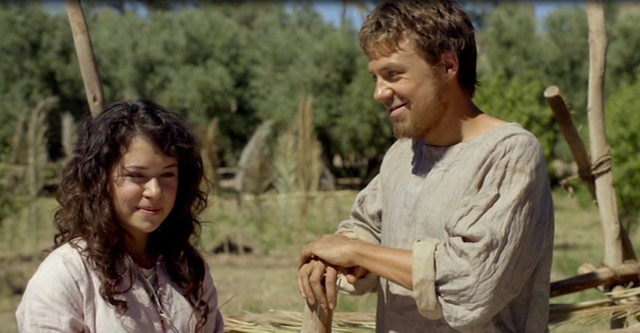
FILM: The Nativity (2010), written and directed by Tony Jordan: I’m always skeptical of film adaptations of the Bible because so many are poorly done. But I gave this four-part BBC miniseries (streaming on Amazon Prime) a shot, and, other than a really cheesy moment during the birthing scene, I thought it was quite good! Writer-director Tony Jordan is not a Christian but approaches the story with the reverent curiosity of a dramatist. He said he never connected with the nativity story until he worked on this project and started to see the very real humans beneath the auras tradition has given the “holy couple”—he saw their earthiness and complexity and began to imagine their emotional lives, especially their reactions to the disruptions they encountered. He said the relationship between Mary and Joseph was key to him. Many storytellers assume that because the marriage was arranged (or because, according to apocryphal sources, Joseph was an old man), there was no passion in their relationship, that they were bound together more by duty than by love, but Jordan, without overly romanticizing, imagines otherwise. The warmth between Mary and Joseph in the first half, which they have to work to regain after news of Mary’s pregnancy hits Joseph like a ton of bricks, is a hallmark of the movie.

Tatiana Maslany (Orphan Black) is probably my favorite Mary I’ve seen onscreen. (I also like Andrew Buchan [Broadchurch] as Joseph.) Jordan says most people see Mary as “a one-dimensional character with a halo round her head,” but actually, “she’s not saccharine. Just a nice kid—real but fallible.” He shows her as virtuous but not a goody-goody, fun-loving and confused and scared and courageous all at once, stepping into her new role by faith without seeing the full picture and even discipling Joseph into that faith. Maslany plays the part brilliantly, endearingly. The film addresses the isolation Mary felt, being rejected not only by her fiancé at first but also by the synagogue leadership and disbelieved, too, by the community she had grown up in. I’ve seen many actors portray Mary as detached, transcending all her difficult circumstances with calm, unshaken resolve. This Mary, by contrast, experiences hurt and fear and yet endures, which, I suspect, is closer to the historical reality. This in no way undermines her faith.

I was delighted by the Annunciation scene, where Gabriel comes to Mary as an ordinary man, much like the angels who visited Abraham generations earlier. He is not wearing ermine or carrying a scepter or standing on a rock above Mary with a booming voice and a heavenly glow. He’s simply a stranger who startles her, even more so when he relays his news. He speaks gently, colloquially. The moment of conception is portrayed as sudden and visceral; Mary feels Light enter her and reacts with a sort of joyful shock.

The trailer and posters, I will say, make the film seem pretty conventional. It does follow some conventions, but it’s also fresh, and while it has some flaws, I think it’s a very worthy use of two hours—it brings this ancient story to life in compelling ways.