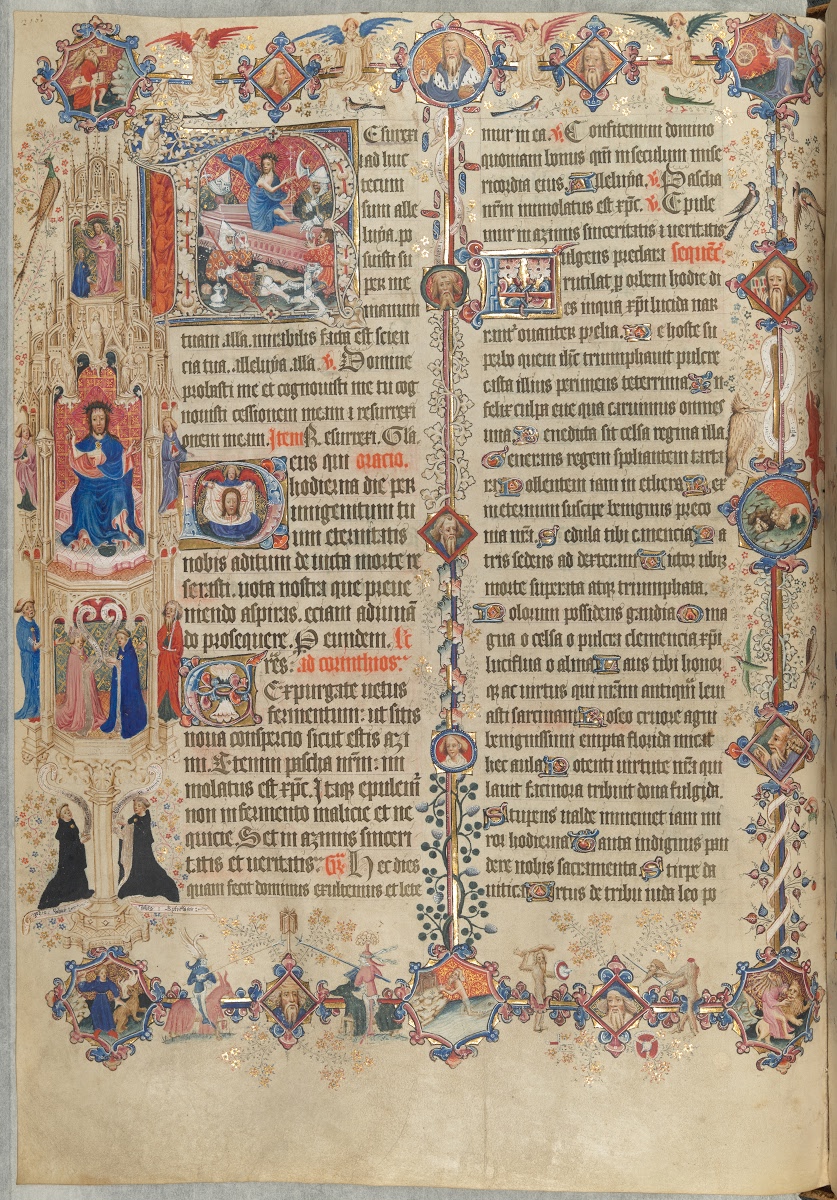
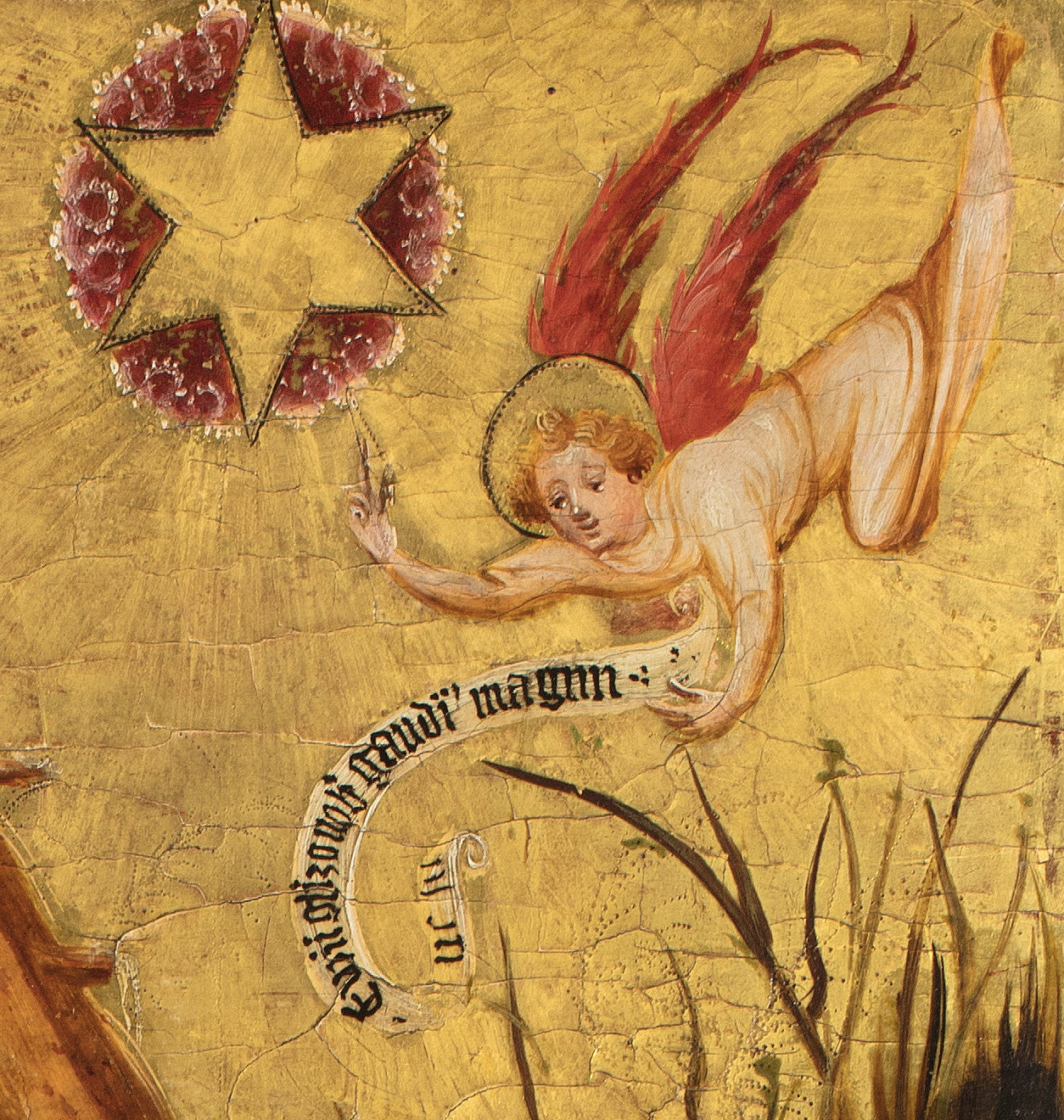
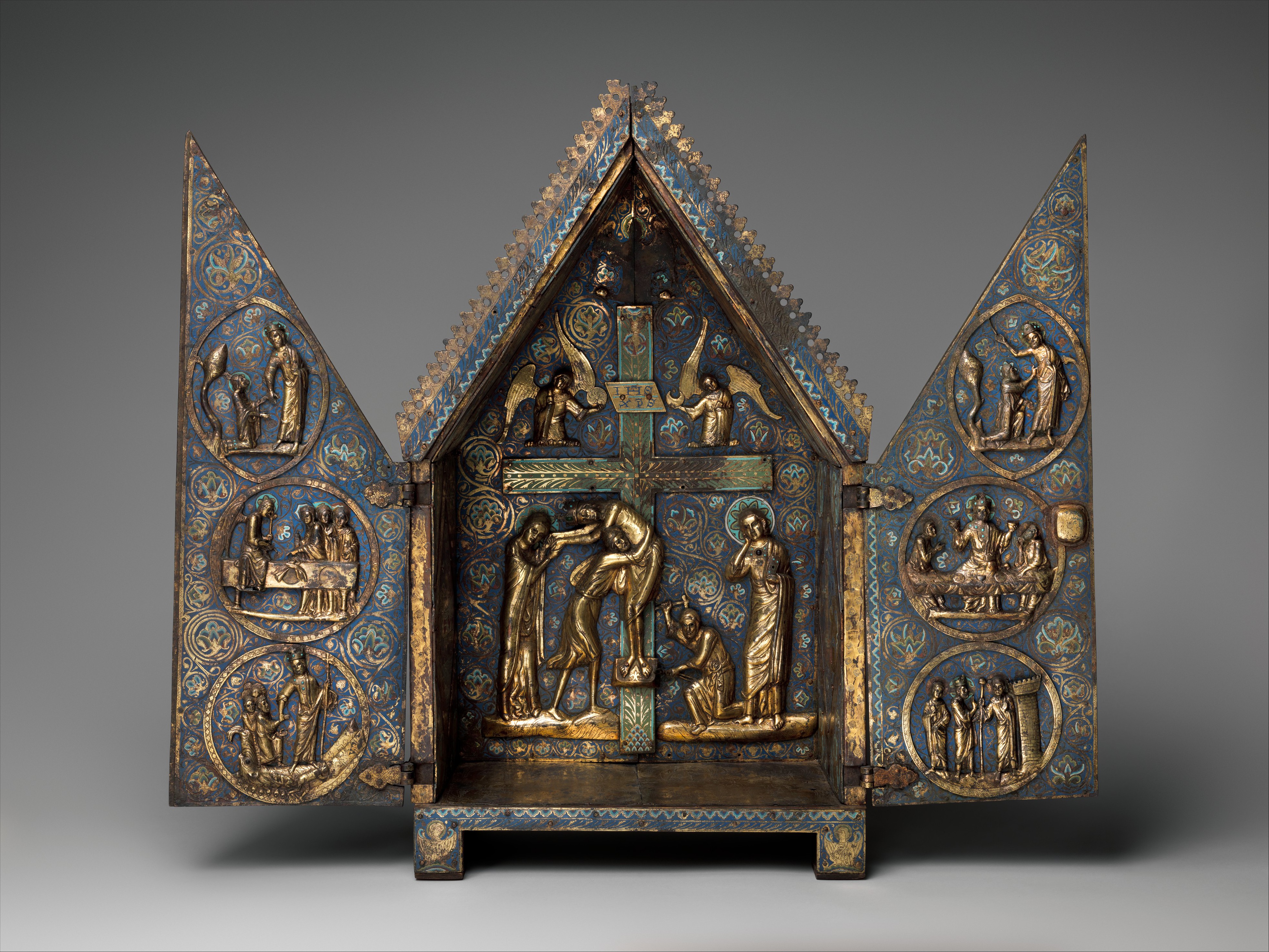
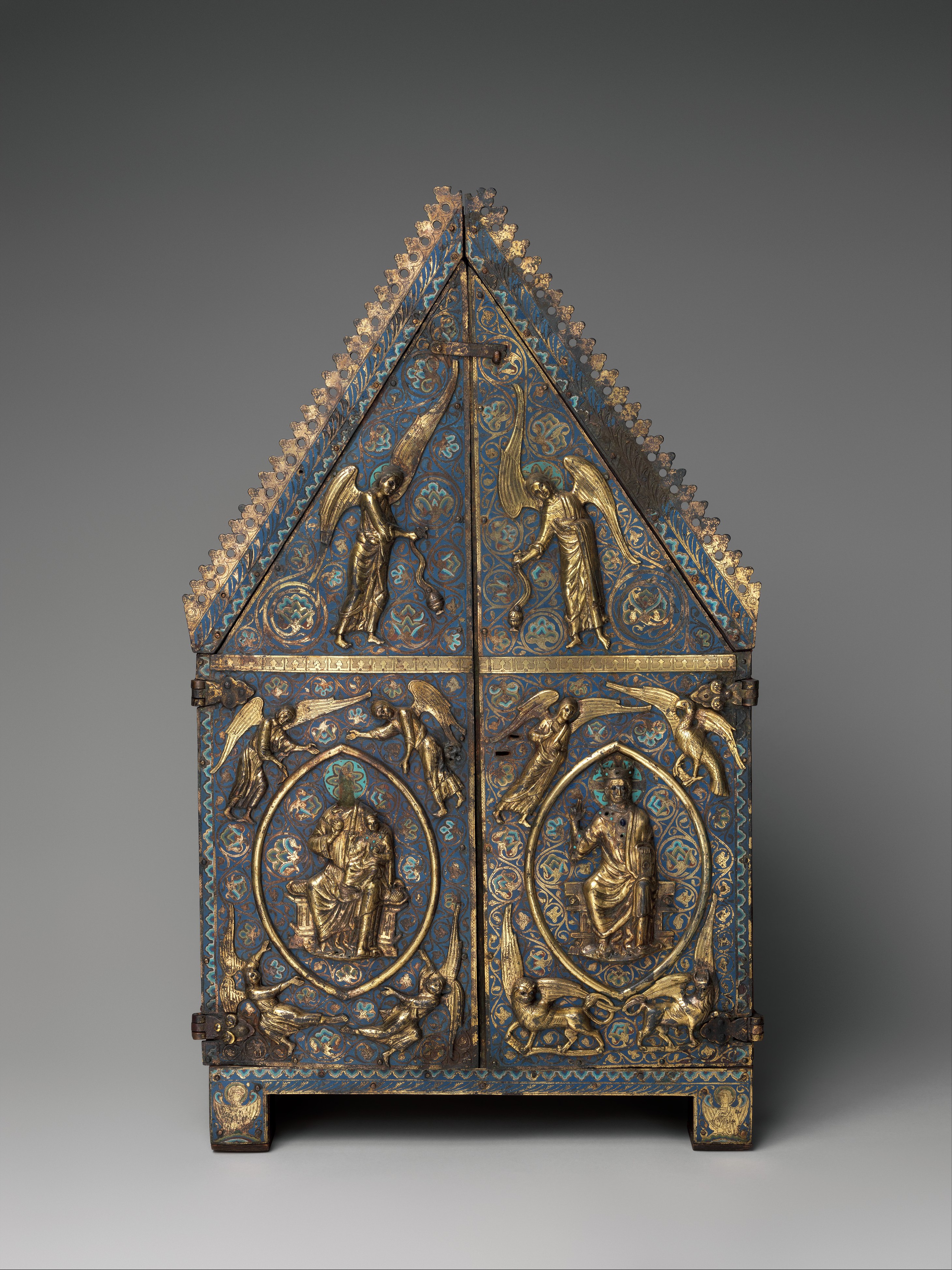
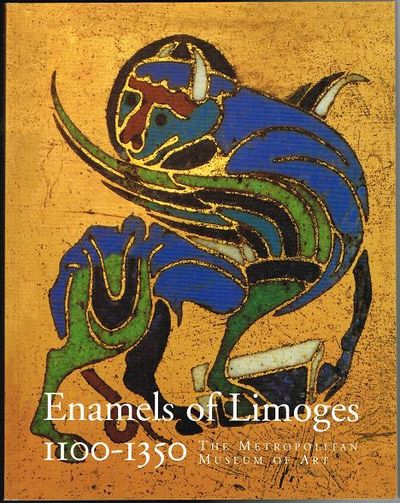
EXHIBITION: Living by the Rule: Contemporary Meets Medieval, Sainsbury Centre, Norwich, May 16–October 4, 2026: Curated by Jessica Barker and Ed Krčma, Living by the Rule puts objects from medieval Benedictine monastic contexts into dialogue with contemporary artworks, creating a reciprocity and generating reflection on the rules we live by today—how we structure our everyday lives. For example, a set of mazers (drinking vessels used by monks) from Canterbury is juxtaposed with Andrea Büttner’s Table woodcut and an apartheid-era drawing of a Seder by the Jewish South African artist Vivienne Koorland. Three tapestries from Susan Morris’s SunDial:NightWatch series, recording the amount of ambient light the artist was exposed to during the years 2010, 2011, and 2012, are displayed alongside the San Zeno Wheel, a rare manuscript volvelle (a timekeeping device with movable, rotating discs) from ca. 1455 Verona, Italy (view photos here).
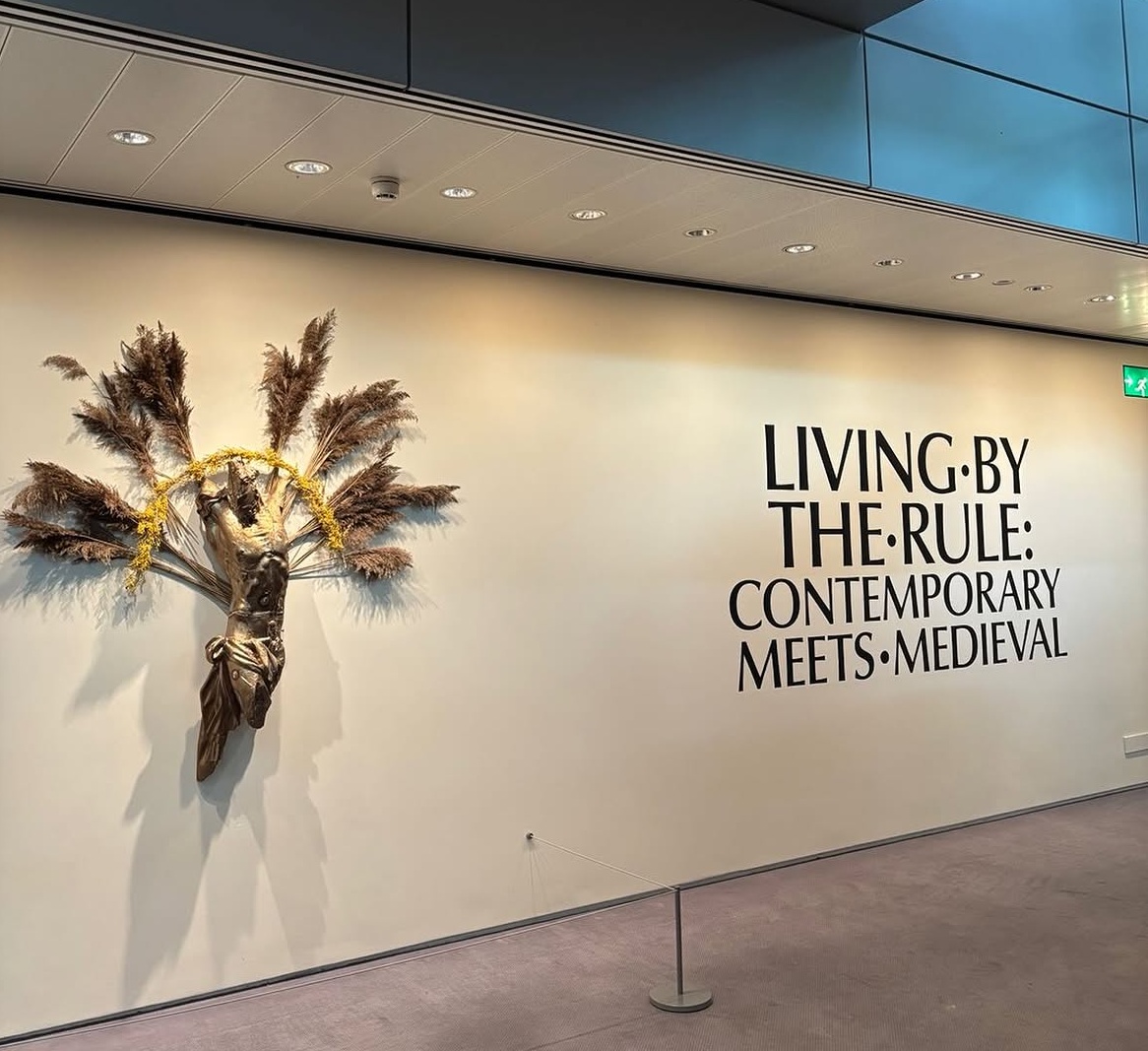
The accompanying catalog will be published in the US in September. Here’s the press release.
+++
ARTWORKS:
>> Golden Madonna, with heads by Walter Moroder: Last fall when I was in Germany, I took a day trip from Hanover to the city of Hildesheim (just a half hour south by train)—I wanted to see the fabulously painted ceiling of St. Michael’s Church, as well as the bronze Bernward Doors at St. Mary’s Cathedral. Well, the cathedral was closed for a funeral when I arrived, so while I waited for it to reopen, I spent time in the adjacent Dommuseum (Cathedral Museum) Hildesheim. There I saw this unusual-looking Virgin and Child sculpture, whose gold-plated limewood core looked medieval to me, but whose heads, also wooden, looked contemporary. The plaque underneath confirmed my suspicions, giving a date of 1010–15, “with heads by Walter Moroder, 2013.”
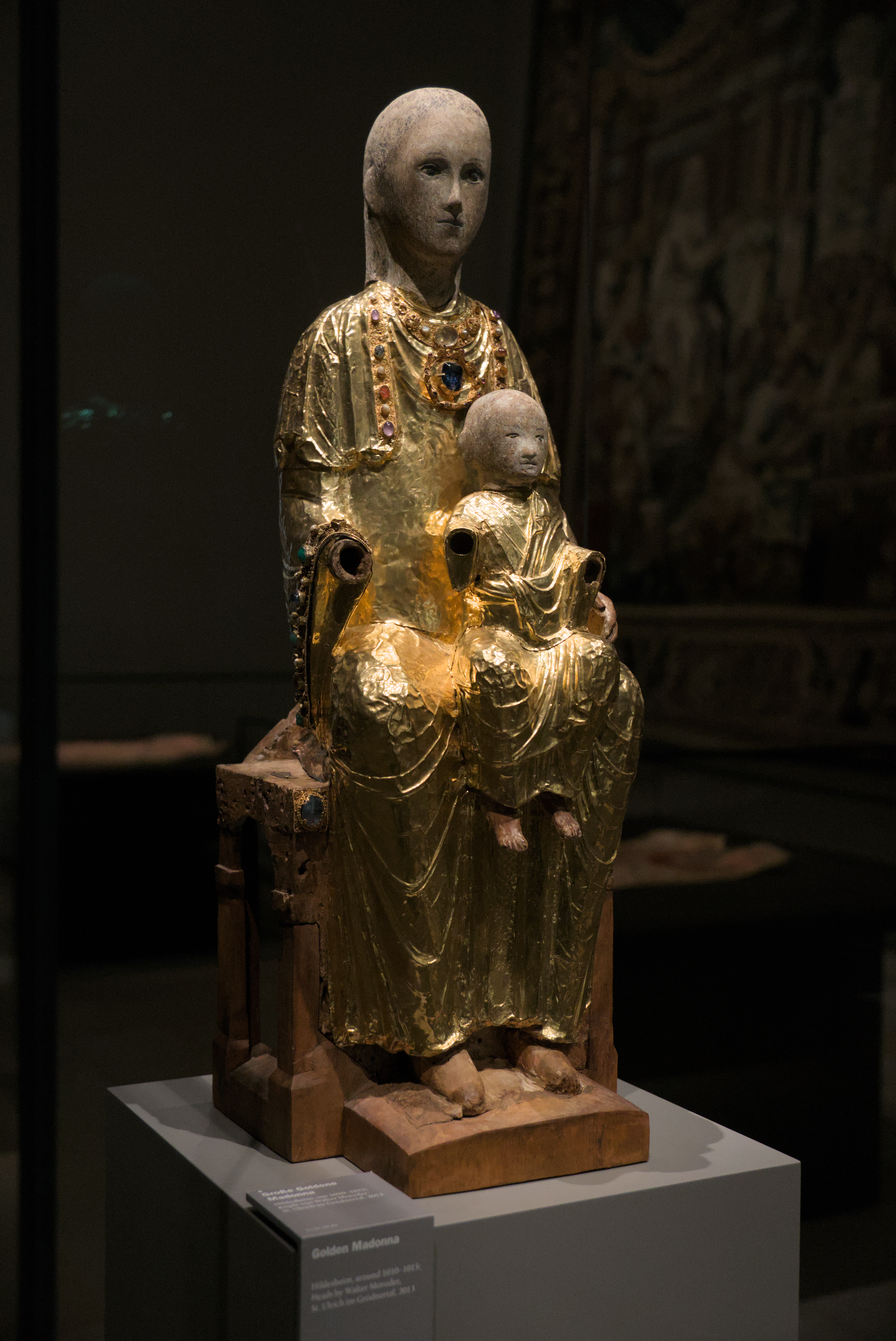
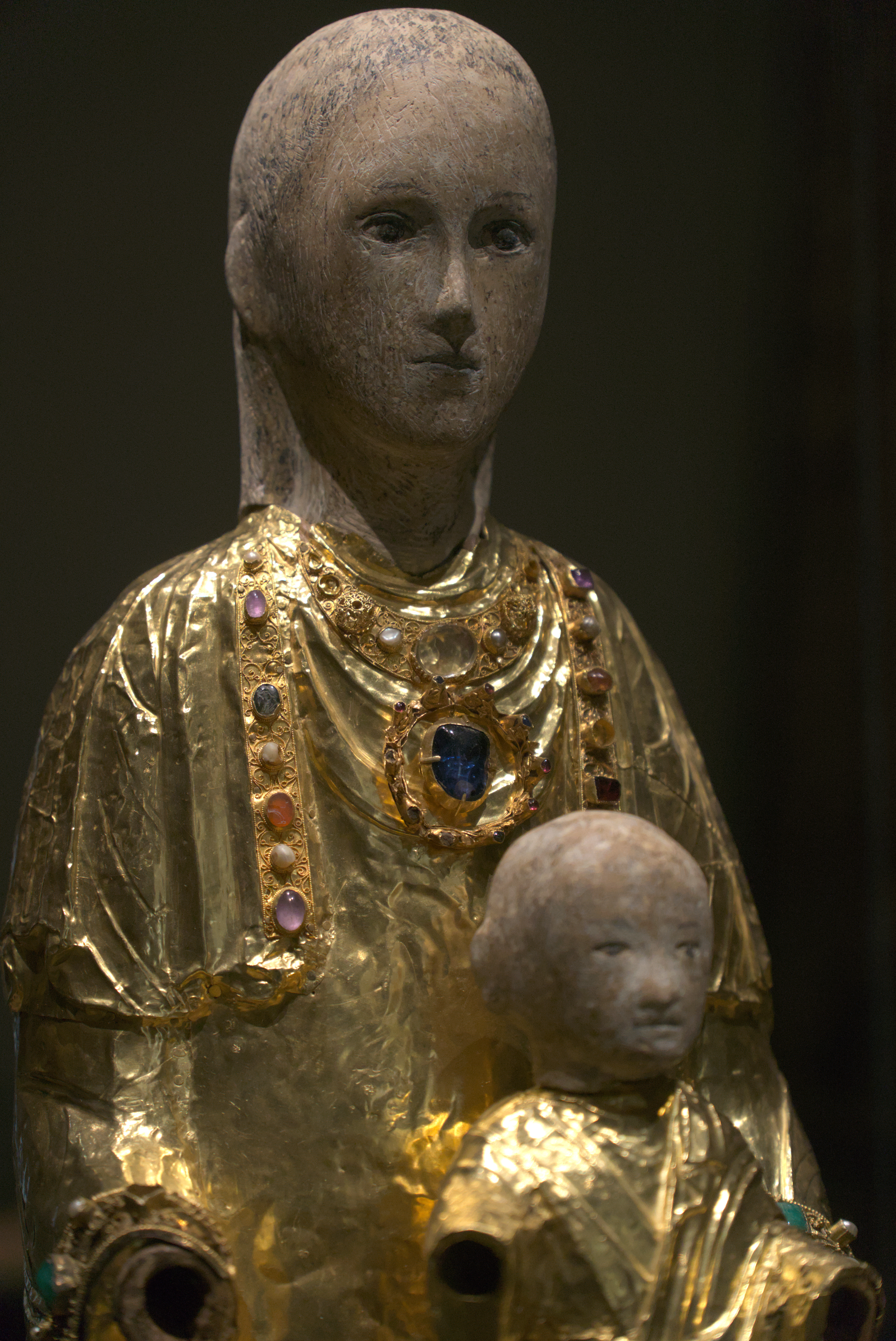
Showing Mary enthroned with her son Jesus, the Golden Madonna of Hildesheim is one of the most important works of Ottonian art and, at over a thousand years old, is among the oldest three-dimensional sculptures in the medieval Latin West. It was probably commissioned by St. Bernward, bishop of Hildesheim from 993 to 1022. It stood on the high altar of Hildesheim Cathedral from at least the thirteenth century onward and was often carried in procession.
Its heavy liturgical usage led to the original heads, Mary’s left hand, and both the Christ child’s hands breaking off and becoming lost. The twentieth century saw a succession of restored heads, but the sculpture was exhibited more often without them, until recently. To commemorate a major interior redesign, the Dommuseum commissioned the contemporary South Tyrolean artist Walter Moroder to make new heads; he completed them in 2013, and they were attached in 2014. Moroder’s additions are not restoration-style but markedly contemporary, creating a compelling fusion of old and new while still honoring the sacred and historical significance of the object.
To learn more about this and other works in the cathedral museum, see the free e-book Medieval Treasures from Hildesheim.
>> Vitrail des cent visages (Stained Glass Window of 100 Faces) by Véronique Ellena and Pierre-Alain Parot: To commemorate the millennium of the 1015 founding of Strasbourg Cathedral, the French state commissioned a contemporary stained glass window to be installed in two unadorned bays in the cathedral’s Saint Catherine Chapel. The commission was awarded to the artist Véronique Ellena, who works mainly in photography, and the master glassmaker Pierre Alain Parot; the two worked together on a design, which was executed by GLASSOLUTIONS Saint-Gobain, who used their advanced Dip-Tech digital ceramic in-glass printer to reproduce photographs on glass—a groundbreaking technique. Parot then applied a blown glass second skin over the printed imagery.
Installed in September 2015, the window features a half-length image of Christ, based on the early Netherlandish painting Christ Blessing by Hans Memling, but with the face made up of 150-some faces of everyday people who have come to the cathedral, photographed by Ellena. This photomontage approach to imaging Christ—constituting his visage with those of diverse others—is profound, inviting connections to theological anthropology (humans being created in the imago Dei), the incarnation (God assuming our flesh), and ecclesiology (the church as the “body of Christ”).
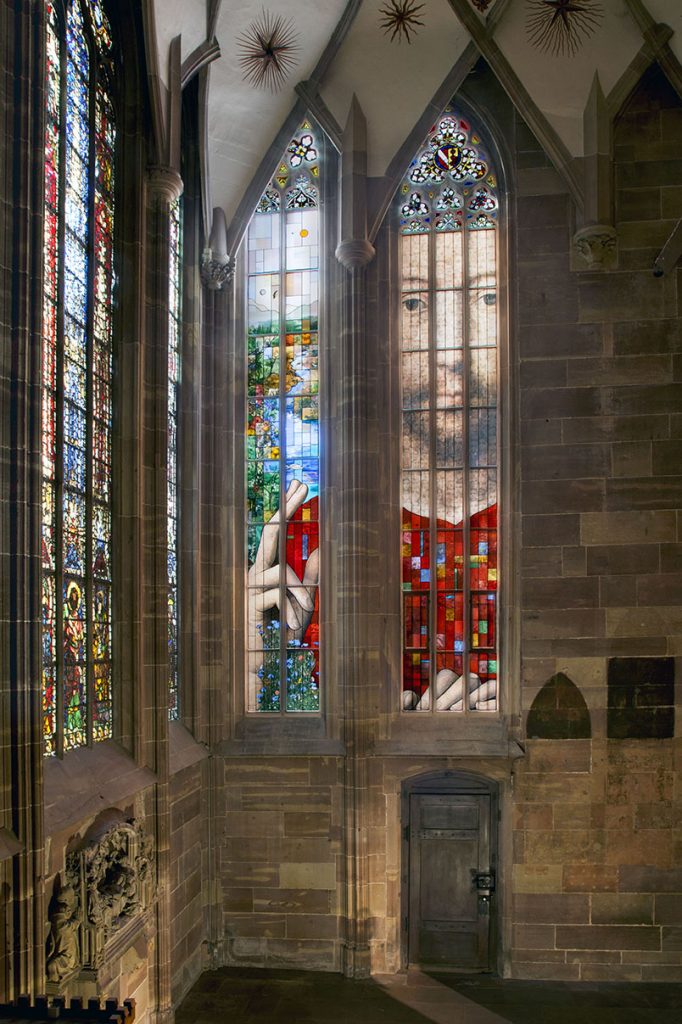

Ellena also used photomontage to depict the natural world in the left bay—rivers, fields, forests, mountains, and sky, along with various flora and fauna. She may have drawn inspiration from an address St. Catherine of Alexandria (the chapel’s namesake) gave before Emperor Maxentius in the early fourth century, shortly before being martyred:
You admire this temple wrought by the hands of artisans; you admire its precious adornments which will be as dust before the face of the wind. You ought rather to wonder at the heavens and the earth, the land and the sea, and all the things that are in them; to wonder at the ornaments of the heavens, namely the sun and the moon and the stars, and at their servitude, whereby from the beginning of the world to the end thereof they run to the west and return to the east, night and day, and are never wearied. And when you have taken notice of these things, ask and learn who is more powerful than they! And when, by His own gift, you shall have come to know Him, . . . adore Him and glorify Him, for He is the God of gods and Lord of lords!
Ellena’s goal with the window, she said, was to convey “the beauty and diversity of the world.” View additional photos on her website, and on the blog of Jean-Yves Cordier. For making-of photos, see the website of the Fondation Bettencourt Schueller, who awarded the window a prize in 2016.
+++
VIDEO SERIES: Contemporary Artists and the Sacred Space: Conversations in London, presented by the Foundation for Spirituality and the Arts and Art + Christianity: I really enjoyed this four-part series of in-depth, on-site video interviews with artists Shirazeh Houshiary (her East Window at St Martin-in-the-Fields is phenomenal!), Christopher Le Brun, Graeme Mortimer Evelyn, and Victoria Rance, each focused on a single work of art commissioned from the artist for a place of worship in London. “The series explores the conception, process, and realization of each artwork, attending to the distinctive challenges and possibilities of creating art for sacred spaces. The interviews offer rare insight into this collaborative endeavor, revealing the artists’ practices alongside their reflections on the spiritual and religious dimensions of their work.” Here’s the trailer:
+++
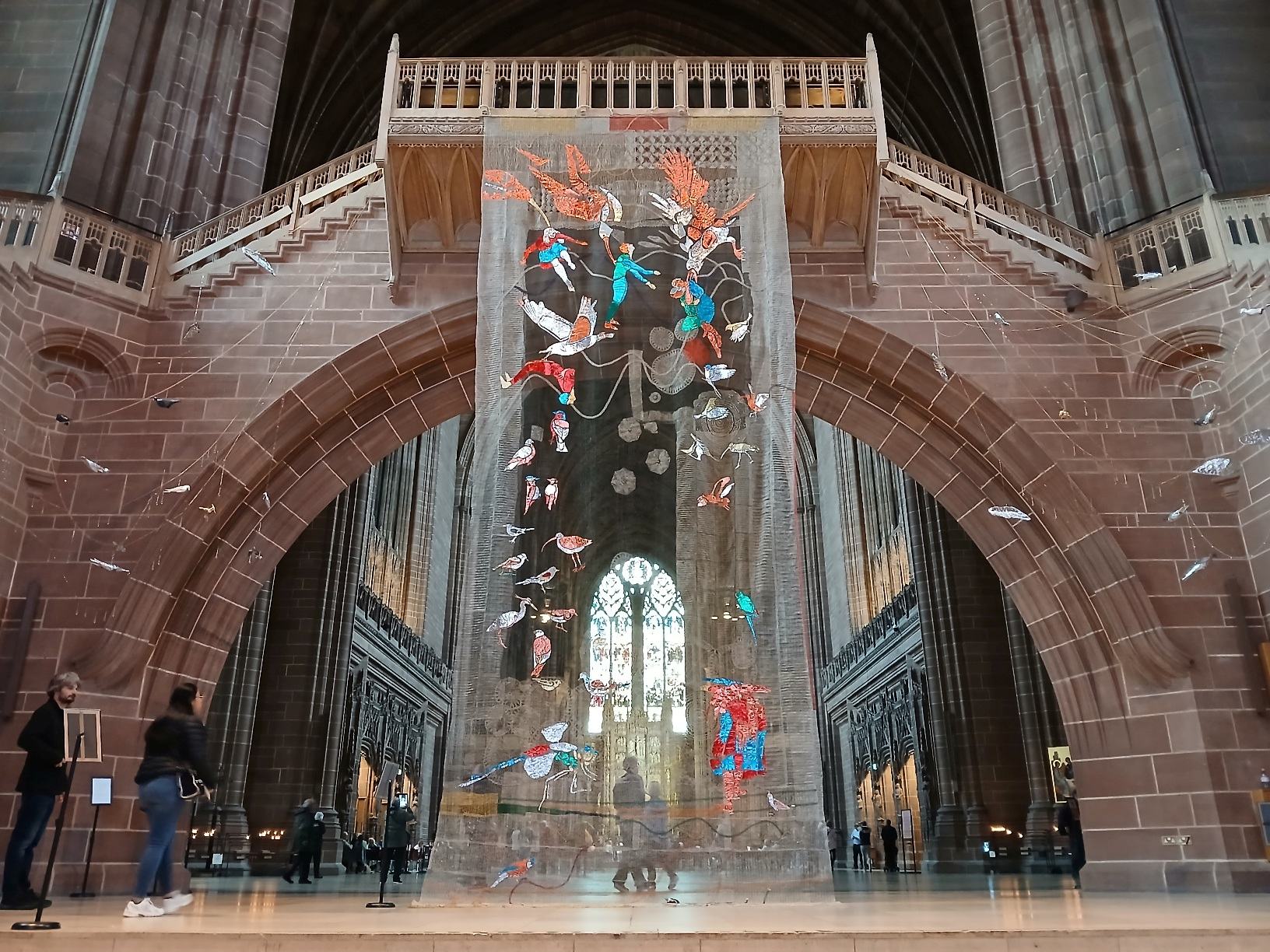
PODCAST EPISODE: “The Art of Liverpool’s Anglican Cathedral,” Exhibiting Faith: Host David Trigg and guest Laura Moffatt, director of Art + Christianity, explore a selection of modern and contemporary artworks displayed in Liverpool’s Anglican cathedral. (Links to the works discussed are at the bottom of the show notes.) Besides its several wonderful permanent installations, since 1999, Liverpool Cathedral has partnered with the Liverpool Biennial—the UK’s largest free festival of contemporary art—to host temporary installations, which last year comprised a monumental crocheted hanging by Maria Loizidou featuring migratory birds native to the Merseyside area, and a series of “glass collages” in the Lady Chapel by Ana Navas.



+++
Because we’ve entered a new month, that means a new playlist! Here’s my thirty-song compilation for July: