
“The Dream” by Paul J. Pastor (poem)

I woke, and all the kingless world was bleak.
I slept, and earth was governed by the meek.

I woke, and there was roaring from the south.
I slept, and children stopped the lion’s mouth.

I woke, and saw the locust eat the wheat.
I slept, and wept before the mercy seat.

I know I sojourn in the land of seem.
But which is real, my God? And which the dream?

From The Locust Years (Wiseblood, 2025). Used by permission of the publisher.
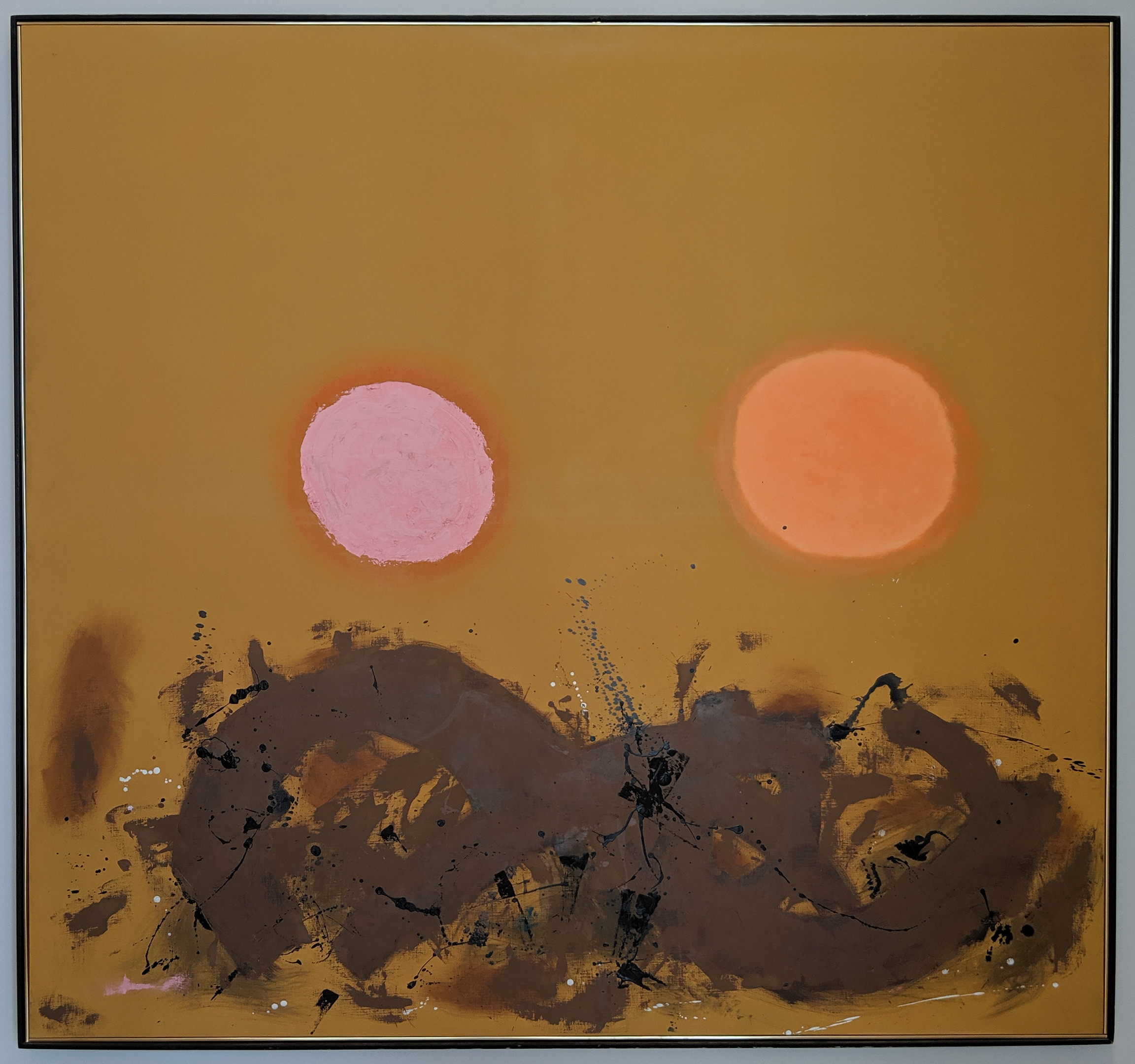

Gottlieb, Adolph_Duet
Adolph Gottlieb (American, 1903–1974), Duet, 1962. Oil on canvas, 84 × 90 in. High Museum of Art, Atlanta, Georgia. Photo: Victoria Emily Jones.

In his succinct poem “The Dream,” Paul J. Pastor reflects on the dissonance between our earthbound reality—marked by misrule, violence, and famine—and the new-earthly reality that awaits us when Christ returns. Which is truer, more ultimately solid? This present bleakness, or the long-dreamt-of future that we see glimpses of throughout the scriptures, in the visions of prophets and the words and deeds of Jesus?

The poem reminds me of these lines from George MacDonald’s Diary of an Old Soul:

Lord, in the land of things that swell and seem,
Help me to walk by the other light supreme,
Which shows thy facts behind man’s vaguely hinting dream.

And Samwise Gamgee’s oft-quoted question from Tolkien’s Return of the King, which Christian eschatology answers in the affirmative: “Is everything sad going to come untrue?”

“The Dream” comes from Pastor’s latest collection, The Locust Years, most of which was written from 2020 to 2024, a time of pandemic, increasingly intense political polarization in the US, and, as Pastor mentions in the opening, for him, personal grief. The book’s title is a reference to Joel 2:25, where God promises his people, “I will restore to you the years that the locust hath eaten . . .”


Paul J. Pastor is a poet, writer, and editor whose work uncovers the inner life of the world as experienced in nature, literature, and the rich traditions of historic Christian spirituality. In addition to two volumes of poetry—The Locust Years and Bower Lodge—he is also the author of A Kids Book About God, The Listening Day, and The Face of the Deep. He is an executive editor for Nelson Books, an imprint of HarperCollins, and he lives in Oregon’s Columbia River Gorge with his wife and three children.
Grief and Loss Will Be Undone (Artful Devotion)

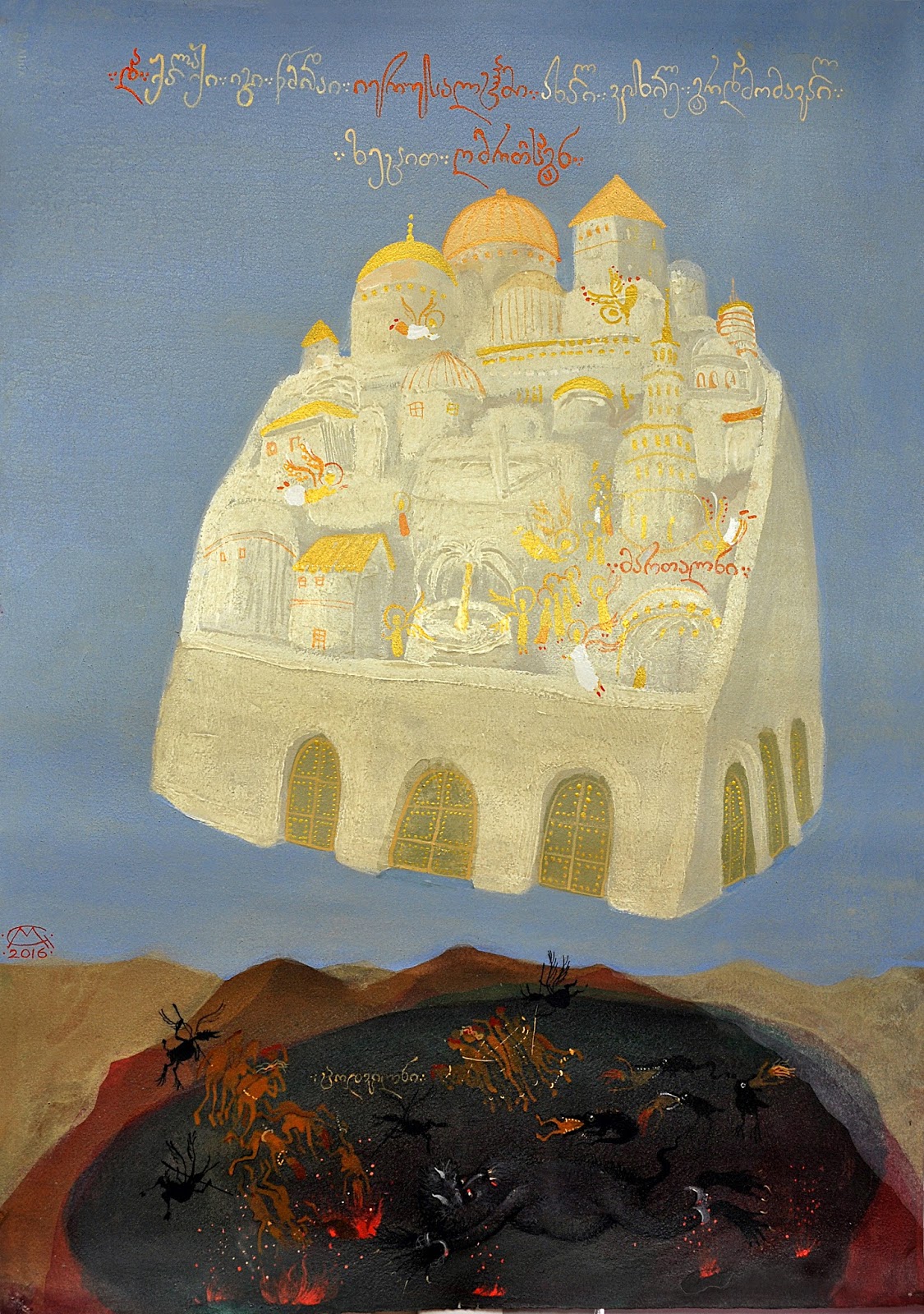
Descent of the New Jerusalem (Georgian icon)
Gocha Kakabadze (Georgian, 1966–), Descent of the New Jerusalem, 2016. Gouache on paper.

On this mountain the LORD of hosts will make for all peoples
a feast of rich food, a feast of well-aged wines,
of rich food filled with marrow, of well-aged wines strained clear.
And he will destroy on this mountain
the shroud that is cast over all peoples,
the sheet that is spread over all nations;
he will swallow up death forever.
Then the Lord GOD will wipe away the tears from all faces,
and the disgrace of his people he will take away from all the earth,
for the LORD has spoken.
It will be said on that day,
Lo, this is our God; we have waited for him, so that he might save us.
This is the LORD for whom we have waited;
let us be glad and rejoice in his salvation.

—Isaiah 25:6–9 (NRSV)

+++

SONG: “When Your Kingdom Comes” by the Silver Pages, feat. Mona Reeves, on The Silver Pages: Part II (2015)

Christians are called to be “aching visionaries,” writes Nicholas Wolterstorff in the classic Lament for a Son—much like the Hebrew prophets, who by the Spirit’s enlightening were able to see through the pain of this present era into a future where all things are made new, where sorrow is undone and Love reigns. Blessed are those who cling to this vision, and who actively live into it here and now, not ignoring hurt but acknowledging its wrongness (that’s what lament is: to say, “This is not right”) and co-laboring with God to heal it. For this task we are equipped with God’s Spirit.

(Related posts: “A sweeping vision of all things made new”; “‘Jis’ Blue’ by Etta Baldwin Oldham”)

The Christian fixation on heaven is sometimes perceived by outsiders as escapist, as opioid. Claiming its promise does console, it’s true. It does give us power to push through pain and guards us against despair. But what it absolutely does not allow is retreat from reality. On the contrary, it helps us to inhabit reality more fully. Talk of heaven doesn’t numb us to the world—or at least it shouldn’t. It makes us hyperaware, especially of history’s path. History is going somewhere! It has a telos, and it has manifestly not arrived there yet. Until then, we ache. We labor. We hope. Rather than having an idling effect, seeing the goal actually motivates us to live presently in tighter line with God’s values, because we see how beautiful a world they usher in. We know that we cannot ourselves create the final fullness that Christ will institute when he returns, nor can we remove the pall of evil (again, that’s only within Christ’s power), but we can certainly live as citizens of God’s kingdom and thus practitioners of the gospel in all its transformative goodness.

Brothers Philip and Paul Zach (The Silver Pages) are aching visionaries who write songs and sing. “When Your Kingdom Comes,” performed with Mona Reeves, helps us to see with greater clarity the glorious future that’s in store for this earth. One day when we come home to it, it will be heaven. The New Jerusalem will descend, and we’ll be wed eternally to its king.

To download the album version of the song (which has more pronounced percussion) along with five other Silver Pages tracks, go to NoiseTrade. It’s free in exchange for your email address.

Update, 9/21/20: Paul Zach posted a solo acoustic version of the song on his Instagram today.

And here he is singing the song with his friend Patrick Bagaza from Rwanda, who translated the song into Swahili:

+++

[After the Ring is destroyed]

“Gandalf! I thought you were dead! But then I thought I was dead myself. Is everything sad going to come untrue? What’s happened to the world?”

“A great Shadow has departed,” said Gandalf, and then he laughed and the sound was like music, or like water in a parched land; and as he listened the thought came to Sam that he had not heard laughter, the pure sound of merriment, for days upon days without count.

—J. R. R. Tolkien, from The Return of the King


This post belongs to the weekly series Artful Devotion. If you can’t view the music player in your email or RSS reader, try opening the post in your browser.

To view all the Revised Common Lectionary scripture readings for Proper 23, cycle A, click here.