“One of poetry’s great gifts is to slow us down,” writes Peggy Rosenthal in Praying the Gospels through Poetry. “We’re used to racing ahead as we read, whether it’s a newspaper or an email memo or even an essay: language in these forms propels us forward, urging us to grab up its main points. But poetry doesn’t press ahead so much as hold us still—in the wonder of words crafted to open into another dimension.”
Below are twenty-five poems to “hold us still” this holiday season.
I’ve collected hundreds of Advent and Christmas poems over the past decade, but for this feature one of the selection criteria was that the poem must be freely available online. I chose the number twenty-five because that is standard in most Advent calendars—tools for counting down the days to Christmas. This way, you can choose, if you wish, to bookmark this page and read just one poem a day from December 1 to 25, each one a little treat.
The order progresses, in general, from Advent longing and anticipation to Christmas joy and wonder to post-nativity moments like the presentation in the temple and the visit of the magi.
1. “Advent Madrigal” by Lisa Russ Spaar: I’m not sure I understand this poem, but I like it. A madrigal is a part-song, and this is a song of waiting in simultaneous belief and doubt, of being irresistibly attracted to God’s story while also skeptical of aspects. The speaker compares the moon to a flashlight that a theater usher shines down the aisle to escort folks to their seats. What does it mean that “the treetops sough // & seize with” escape? Escape from what? And that the earth has been purloined? I don’t know, but the final couplet really lands for me—about how in the dark night of our not-knowing, we make our Advent wreaths, decking them with evergreens, their round shape an O of lament and awe before the yet-to-be-seen.
Source: University of Virginia Office of Engagement
2. “Prayer” by John Frederick Nims: The first in a sequence of five poems, “Prayer” expresses a sense of emptiness and desire, beckoning an unnamed one whom I read as Christ to come and fill. “Come to us, conceiver, / You who are all things, held and holder. / . . . / Come, infinite answer to our infinite want.”
3. “how he is coming then” by Lucille Clifton: This poem is part of a sequence on the life of Mary; it appears between “mary’s dream” (on the Annunciation) and “holy night” (on Mary’s ecstatic birthing experience). In answer to the title, Clifton gives three similes.
4. “Advent 2” by Anna A. Friedrich: This poem is the second in a series of Advent villanelles commissioned by the poet’s church in Boston last year to converse with one or more of the lectionary readings for each week of the season. Malachi 3:1–4 is the primary touchstone here, a formidable prophetic passage that compares God in the day of his coming to a blazing fire that refines metal. Stanza 3 references the fiery repentance-preaching of John the Baptist from Luke 3:1–6, and then Friedrich draws in another, unexpected “fire” text: Daniel 3, in which three young Hebrew men are thrown into a furnace by a Babylonian king for their refusal to worship his gods but are preserved from harm when a mysterious fourth person appears with them in the flames. Friedrich connects this story to the promise that the earth and its inhabitants will not be wholly consumed in the fire of God’s judgment—only the impurities, the dross, will be destroyed, so that all may be restored to their truest selves. Hence why, in Friedrich’s words, “We pray for His fire. We trust this flame.”
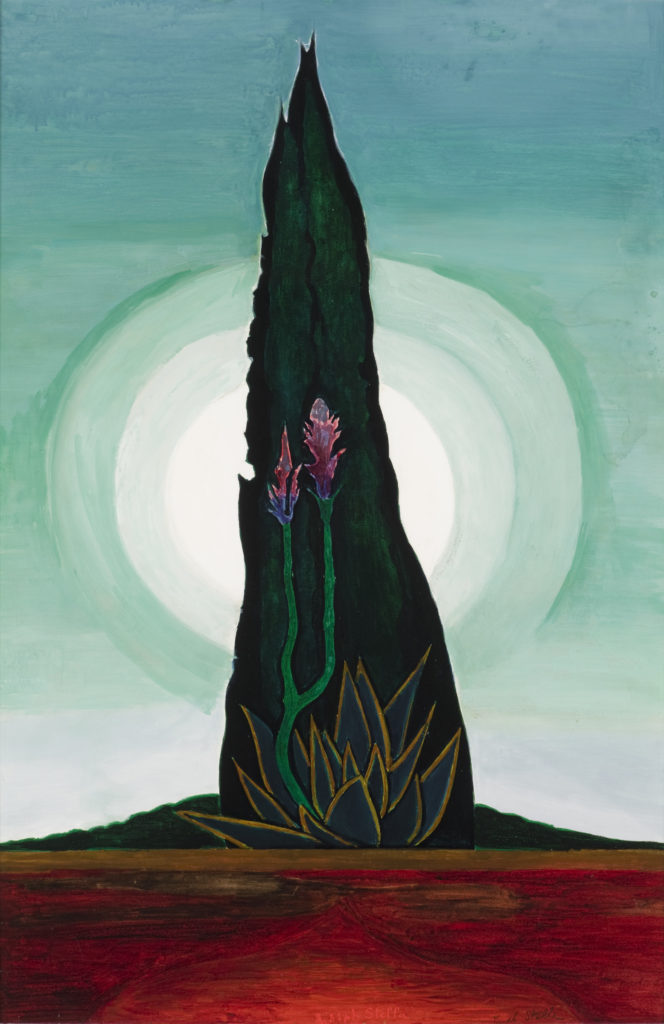
5.“Desert Blossoming” by Amit Majmudar: A reflection on the messianic promise of Isaiah 35:1–2, this poem celebrates how, through the deserts of Israel, Jesus “scattered his verses on the secretly gravid ground,” causing the wilderness to blossom. Majmudar mentions red, the color of fire (an image he connects to the light of faith), rhyming it with “bled.” Although he uses this final word in the sense of spreading into or through—oases bleeding into one another as dry land becomes water—one can’t help but think of Jesus’s sacrificial death, his blood extraordinarily fertile, producing life.
Joseph Stella (American, 1877–1946), Tree, Cactus, Moon, ca. 1928. Gouache on paper, 104.1 × 68.6 cm. Reynolda House Museum of American Art, Winston-Salem, North Carolina.
6.“Name One Thing New”by Seth Wieck: This six-line poem takes the Teacher of Ecclesiastes to task, responding to his cynical claim that “there is nothing new under the sun” (Eccles. 1:9) with a counterexample.
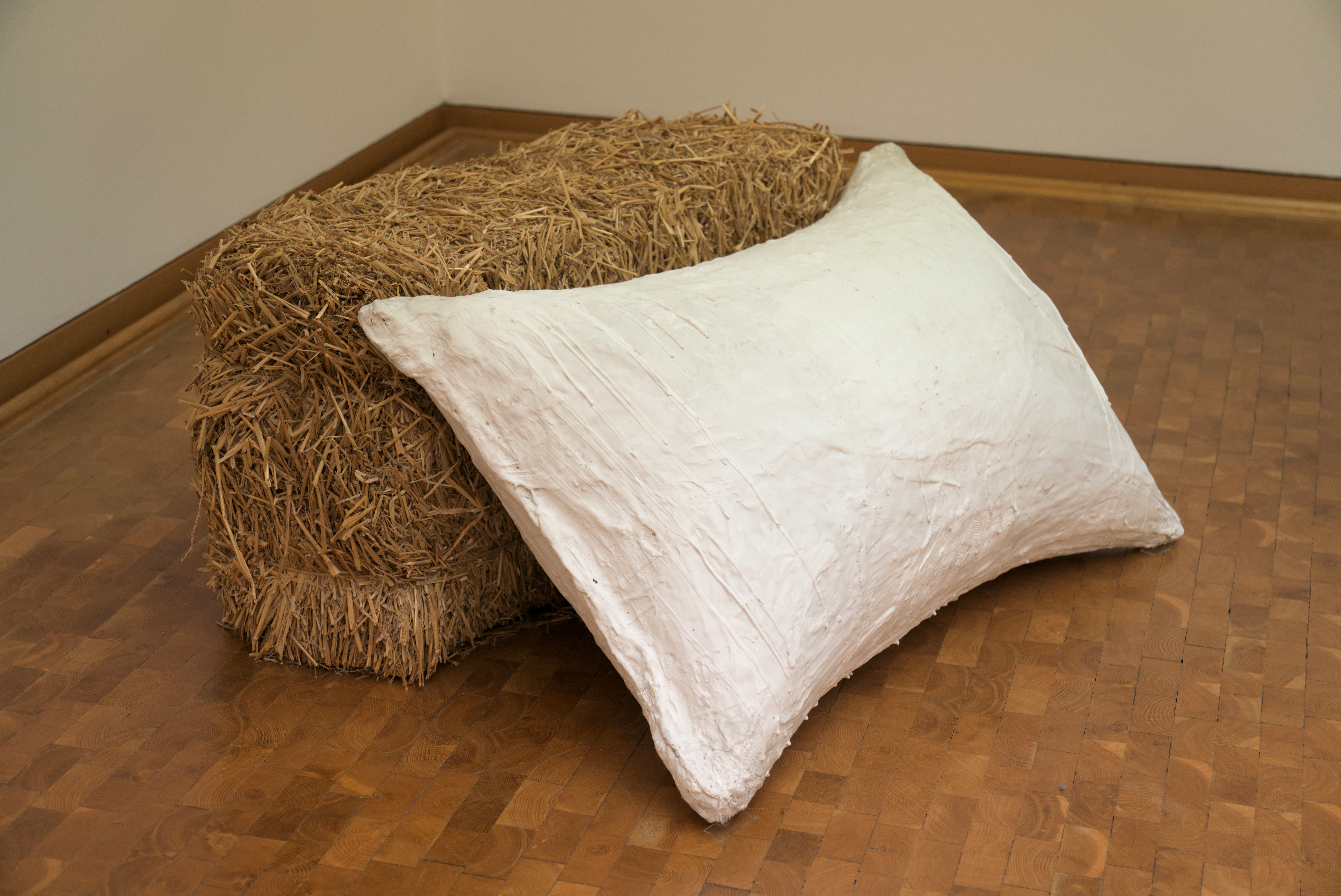
7.“For My Mother at Advent” by Brian Volck: The poet recalls a simple Advent tradition his mother established in his childhood and reflects on her spiritual legacy, her lifetime of Christ-inspired kindnesses that continue to pillow him. How might we soften the hardness of the world for others?
8. “Advent” by Suzanne Underwood Rhodes: This stunning poem makes unlikely intertextual connections, bringing Matthew 19:24 (one of Jesus’s hard sayings regarding wealth) to bear on John 1. Its unique angle on the Incarnation and its evocative imagery have inspired an experimental jazz composition and several paintings.
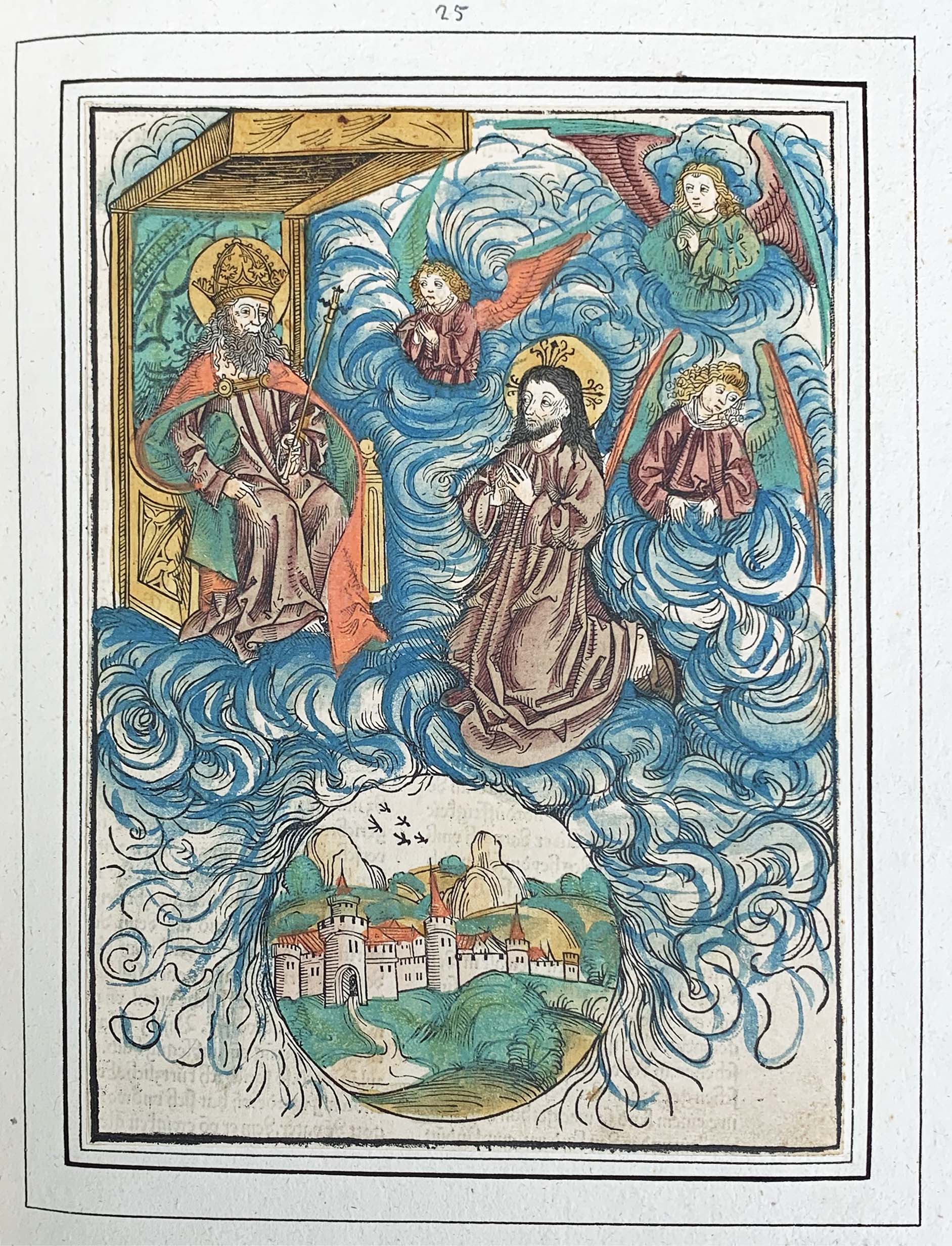
9. “An Hymn to Humanity” by Phillis Wheatley: “Lo! for this dark terrestrial ball / Forsakes his azure-pavèd hall / A prince of heav’nly birth!” So begins this poem on the Incarnation by Phillis Wheatley (ca. 1753–1784), the first African American to publish a book of poetry. In stanzas 2 and 3, God the Father dispatches the Son to establish his throne on earth, “enlarg[ing] the close contracted mind, / And fill[ing] it with thy fire.” The “languid muse” in stanza 5 refers to Wheatley herself, whereas the “celestial nine” are the ancient Greek inspirational goddesses of literature, science, and the arts. The “smiling Graces” is another classical reference.
Michael Wolgemut (German, 1434–1519), The Father sending the Son into the world, 1491. Hand-colored woodcut from the Schatzbehalter (published by Anton Koberger, Nuremberg), 43.7 × 27.5 cm. British Museum, London.
10. “In My Hand” by Sarah Robsdottir: Mary remembers the moment she conceived Jesus, one ordinary day when sitting down to a bowl of lentil stew.
Source: Aleteia, April 9, 2018
11. “The Risk of Birth, Christmas, 1973”by Madeleine L’Engle: Best known for her children’s novel A Wrinkle in Time, Madeleine L’Engle was also a poet. Here she compares our era to the one in which Jesus was born—both are characterized by violence and hate, and yet Jesus, the embodiment of divine love, willingly entered the peril.
12. “On Another’s Sorrow” by William Blake: Through the Incarnation, God lovingly, humanly, entered the world of human woe to experience it firsthand. “He doth give His joy to all,” Blake writes: “He becomes an infant small, / He becomes a man of woe, / He doth feel the sorrow too.” I featured this poem about Emmanuel, God-with-us, in a musical setting by singer-songwriter David Benjamin Blower in 2023 but was surprised that Blower omitted Blake’s final stanza, whose closing couplet I find striking, as it conveys Jesus’s continued identification with and compassion for humanity, how he moans alongside us in our suffering. For a different musical interpretation, also in an acoustic indie folk mode, see the one by Portland-based artist Michael Blake, from his 2021 album Songs of Innocence and Experience:
Source: Songs of Innocence and Experience (London, 1794). Public Domain.
13.“Missing the Goat”by Lorna Goodison: An immigrant from Kingston, Jamaica, to Toronto, Ontario, Goodison writes of the heightened feeling of exile but also of creative adaptations during the holidays as she tries to carry out the food traditions of her native country on a foreign soil where some of the ingredients are in more limited supply. For the sorrel wine, traditionally made with roselle (Hibiscus sabdariffa) petals, tropically grown, she has to make do with redbuds. And the local shops have run out of goat meat—“the host of yardies” (people of Jamaican origin) who’ve moved to the area have already bought it all up—so “we’ll feast then on curried some-other-flesh.” Despite the differences from home, Christmas is still Christmas, and she raises her “hybridized wassail cup” to her new place, her new neighbors (many of them, like her, also recent arrivals from the Caribbean), and the creation of new rituals in multicultural Toronto.
Source: Controlling the Silver (University of Illinois Press, 2010); compiled in Collected Poems (Carcanet, 2017)
14. “Word Made Flesh”by Kathleen Raine: Awarded the CBE (Commander of the Order of the British Empire) for her significant contributions to literature and culture, Raine has been described as a mystical and visionary poet. Here is her revoicing of John 1. What a powerful last two lines!
15.“Nativity”by Barbara Crooker: In the heavy dark, in the windy cold, “love is born in the world again” every December when we retell the story of Christ’s birth.
Gary Kuehn (American, 1939–), Straw Pillow, 1963. Straw, plaster. Ludwig Museum, Cologne, Germany, Inv. ML/SK 5185. Photo: Victoria Emily Jones.
16. “First Miracle”by A. E. Stallings: The first miracle Jesus performed, according to the Gospel of John, was turning water into wine. Stallings reflects on an earlier miracle performed by his mother’s body, and all birth-giving mothers’: turning nutrients from her blood into milk.
17.“What Sweeter Music Can We Bring” (or “A Christmas Carol, sung to the King in the Presence at Whitehall”)by Robert Herrick: “The Darling of the world is come”! Originally written as a song for soloists (each number corresponds to a different singer) and chorus, this poem reverses the typical seasonal imagery of Christmas, remarking how, at Jesus’s birth, “chilling Winter’s morn / Smile[s] like a field beset with corn” and “all the patient ground [is turned] to flowers.” The original music by Henry Lawes is lost, but many contemporary composers have written settings of the text, most famously John Rutter.
Source: Hesperides: Or, Works Both Human and Divine (London, 1648). Public Domain.
18.“Sharon’s Christmas Prayer”by John Shea: A five-year-old recounts the Christmas story, and when she reaches the clincher, she can’t hold back her glee.
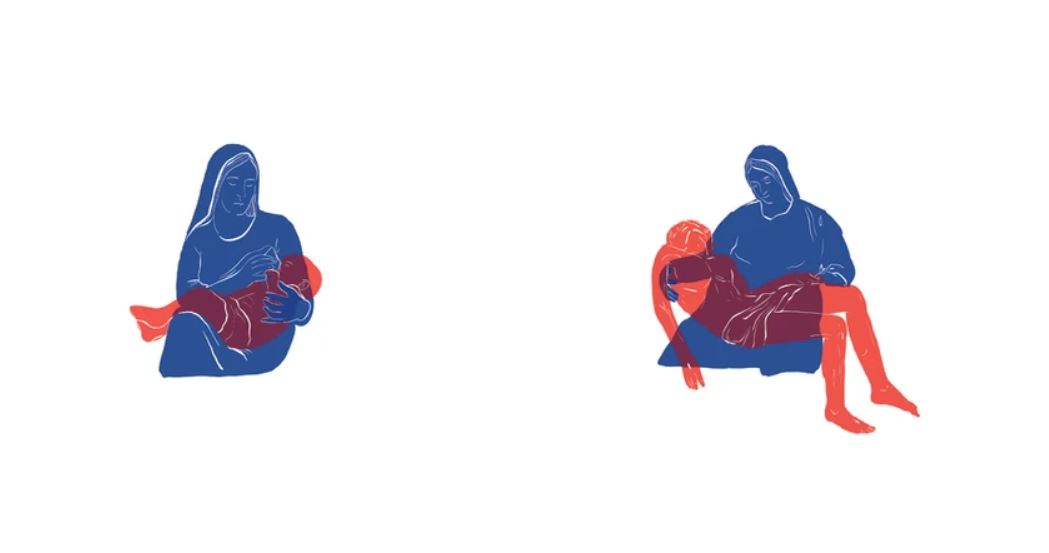
19.“God”by D. A. Cooper: Riffing on Williams Carlos Williams’s “The Red Wheelbarrow,” this spare poem attends to the birth and death of the incarnate God, upon which so much depends.
Source: Reformed Journal, September 3, 2024
Katarzyna Malinowska (Polish, 1989–), Juxtapose (diptych), 2021. Digital painting, 20 × 30 cm.
20. “Lullaby after Christmas”by Vassar Miller: The speaker wishes sweet sleep for the newborn Christ child, wishes to keep him innocent of his fate for as long as possible—for “even God has right to / Peace before His pain.” Consisting of four sestets whose second, fourth, and sixth lines rhyme, the poem has a sing-songy quality that is jarring for the juxtaposition of words like “soft,” “warm,” and “tinkling” with the likes of “blood,” “gore,” and “die.”
21. “Journey of the Magi”by T. S. Eliot: Eliot wrote this poem shortly after his conversion to Christianity in 1927. Opening with a passage from a Christmas sermon by the seventeenth-century Anglican bishop Lancelot Andrewes, it is from the perspective of one of the magi, who made a long, toilsome journey in search of the meaning of a mysterious guiding star. After the magi’s encounter with the Christ child, they would never be the same; their paganism would no longer satisfy. The poem is about the transformative impact Christ has on those with humility enough to see him for who he is (having followed the light of revelation) and to worship him accordingly. And that transformation is in some ways painful, as it involves giving up some of the things one once held dear.
“Were we led all that way for / Birth or Death?” the magus asks. Jesus’s wasn’t the only birth they witnessed; they, too, were (re)born in Bethlehem. But spiritual rebirth is also a sort of death—the magi died to their old selves and false loves and loyalties. Thus, when they returned to Babylon, they felt like strangers in a strange land. They were now citizens of a different kingdom, and filled with a longing for its consummation.
Source: Journey of the Magi (Ariel Poems) (Faber & Gwyer, 1927). Public Domain.
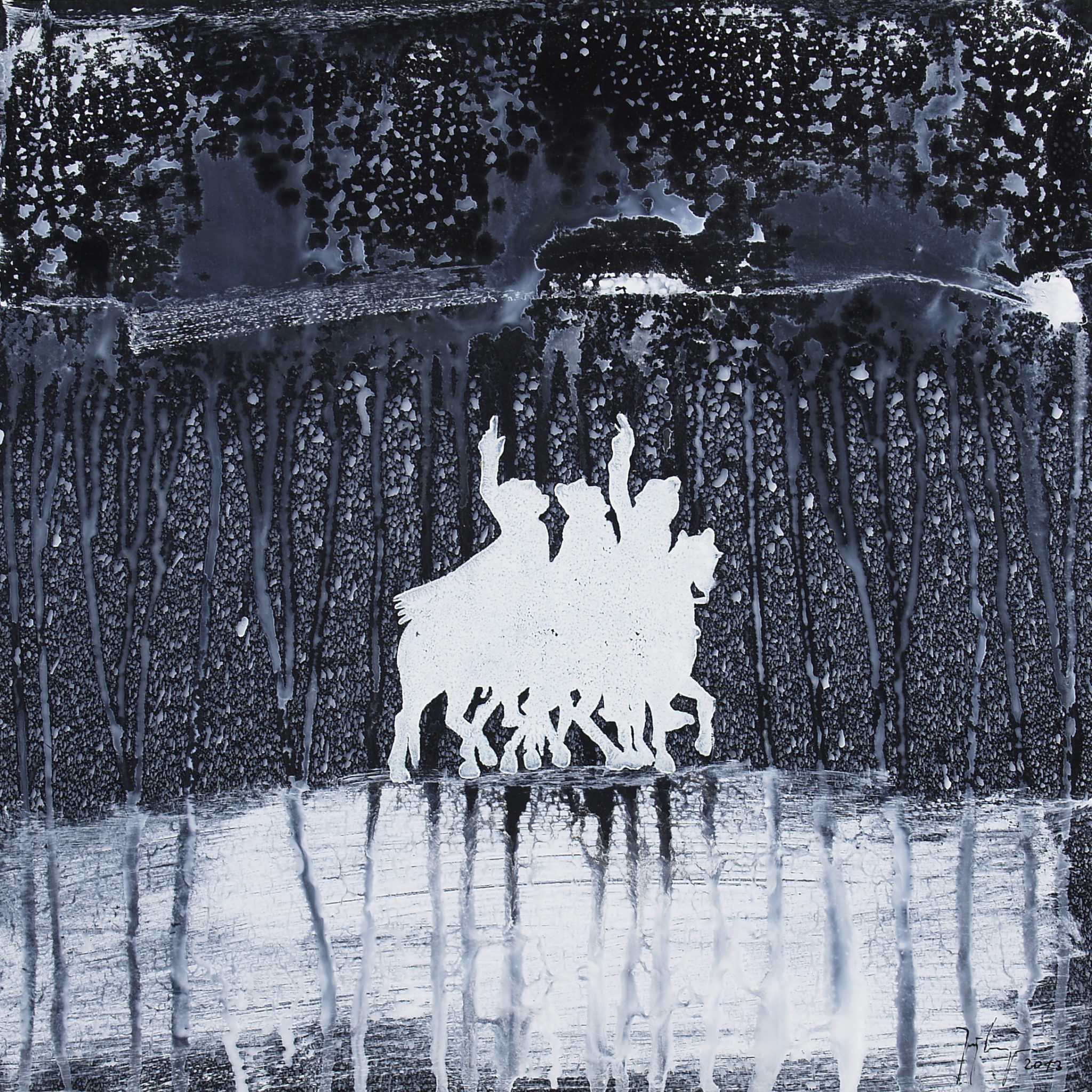
Jörg Länger (German, 1964–), The Three Kings, 2013. Linocut and gesso on aluminum dibond, 38 × 38 cm. The linocut is after a 12th-century illumination from the St Albans Psalter, held at the Dombibliothek, Hildesheim, Germany.
22. “Twelfth Night”by Sally Thomas: (Scroll to second poem.) As the Christmas season draws to a close, holly berries shrivel and drop, the “candles drown themselves in waxen lakes,” “the tree’s a staring corpse,” and a spider has built a web across the mantel nativity. Thomas uses the passing of the season to reflect more broadly on the passing of time and our own dustiness and desiccation—and by contrast, the unchangeability of God.
23. Untitled poemby S. E. Reid: Most reflections on the New Year are full of enthusiastic goal-setting and go-getting, but Reid, gardening in her greenhouse in the crisp cold of January, describes a “fall[ing] backwards,” “dropping into the dark,” “shivering,” herself a seed, latent in the soil, trusting God that growth will come.
24. “Anna the Prophetess” by Tania Runyan: Forty days after Jesus’s birth, Mary and Joseph presented him in the Jerusalem temple. Runyan imagines this event from the perspective of Anna, a woman who was widowed young and thenceforth lived at the temple into old age, devoted to prayer, fasting, praise, and prophecy.
25. “The Work of Christmas”by Howard Thurman: Drawing on Jesus’s mission statement in Luke 4, the great African American theologian and civil rights leader Howard Thurman urges us to continue the work of Christmas—finding, healing, feeding, etc.—throughout the year. Listen to the simple yet vigorous choral setting by Elizabeth Alexander.
PODCAST: Poetry for All, hosted by Joanne Diaz and Abram Van Engen:Poetry for All “is for those who already love poetry and for those who know very little about it. In this podcast, we read a poem, discuss it, see what makes it tick, learn how it works, grow from it, and then read it one more time.” I’ve consistently enjoyed this podcast since its launch in 2020, having learned about it through cohost Abram Van Engen [previously], an academic who often writes and speaks about poetry for general Christian audiences. Here are some of my favorite episodes of the ninety-seven that have been released to date:
Three haiku by Kobayashi Issa, translated from the Japanese by Robert Hass: The first: “The snow is melting / and the village is flooded / with children.” Learn the characteristics of what Joanne Diaz calls “the perfect poetic form.”
“spring song” by Lucille Clifton: One of my favorite poems by one of my favorite poets. “This joyful poem caps a sequence of sixteen poems called ‘some jesus,’ which walks through biblical characters (beginning with Adam and Eve) and ends on four poems for Holy Week and Easter. [Clifton] wrote other poems on the Bible as well, including ‘john’ and ‘my dream about the second coming,’ which reimagine a way into biblical characters to make their stories fresh.”
“Elegy for My Mother’s Mind” by Laura Van Prooyen: This episode is unique in that it has the poet herself on to read and discuss the poem, which in this case navigates the complexities of memory, loss, and familial relationships.
“View but This Tulip” by Hester Pulter: Ashamedly, I had never heard of this seventeenth-century female poet before listening to this episode, so I’m grateful to guest Wendy Wall, cocreator of the award-winning Pulter Project website, for introducing me to her! “In this episode we discuss [Pulter’s] work with emblems, her scientific chemistry experiment with flowers, and her wonderment (both worried and confident, doubtful and awestruck) about the resurrection of the body and its reunification with the soul after death.”
“From Blossoms” by Li-Young Lee: A much-anthologized poem ostensibly about eating summer peaches, but more deeply, it’s about joy. “One of the things that draws me to this poem,” says Van Engen, “is that joy is actually very hard to write about . . . without it sounding naive or sentimental or withdrawn or unaware.”
“Primary Care” by Rafael Campo: Dr. Rafael Campo is both a poet and a practicing physician. Here he uses blank verse to explore the experience of illness and suffering.
+++
POEMS:
>> “For V. the Bag Lady, Great in the Kingdom of Heaven,” “Damascus Road,” “The Sower,” and “Crosses” by Paul J. Pastor: The Rabbit Room received permission to reproduce four poems from Paul J. Pastor’s [previously] new poetry collection, The Locust Years, which “explores a world of mystery and sorrow, desolation and love. Rooted in the Pacific Northwest, these poems offer readers an invitation to walk along a path pebbled with profound joy and deep loss.” I’ll be sharing another on the blog next week, courtesy of Wiseblood Books.
>>“Undone”by Michael Stalcup: The rise of blogging in the aughts and its descendant, Substacking, in the last few years has meant that poets and other writers can share their work directly with their reading publics and give them insight into their creative process if they wish. On his Substack, the Thai American poet Michael Stalcup [previously] recently shared one of his new poems that’s based on the story of the woman caught in adultery in John 8:1–11. He explains how the poem’s form, a blend of the Petrarchan sonnet and the chiasmus, contributes to its meaning.
Nalini Jayasuriya (Sri Lankan, 1927–2014), Go, Sin No More, 2004. Mixed media on cloth, 23 × 19 in. Published in The Christian Story: Five Asian Artists Today, ed. Patricia C. Pongracz, Volker Küster, and John W. Cook (Museum of Biblical Art, 2007), p. 119.
Blessed be the paps which Thou hast sucked. —Luke 11:27
Suppose he had been Tabled at thy Teats, Thy hunger feels not what he eats: He’ll have his Teat ere long (a bloody one). The Mother then must suck the Son.
Scholar Kimberly Johnson [previously] unpacks these four lines about the body of Christ, who as an infant drank milk from his mother’s breast, and whose sacrificial death opened up his own breast whence flows the blood that nourishes us all. Johnson teases out the overlap of physical and spiritual in the poem, highlighting the maternal sharing of one’s own substance that links both couplets. At the eucharistic table, we are bidden to come and eat; or, in the stark metaphorical language of Crashaw, come and suck Christ’s bloody teat.
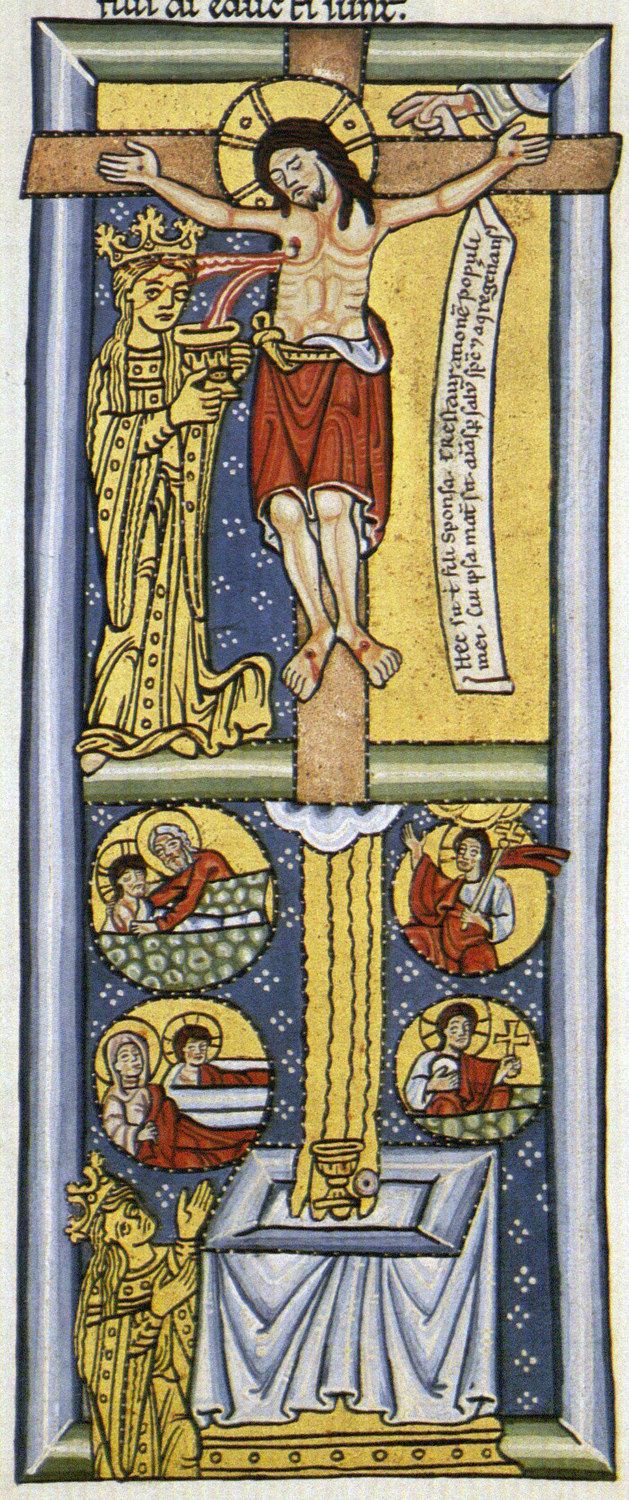
I plan to write an essay sometime about Christ as a nursing mother, as I’ve seen the image pop up in medieval writings and some visual art, including from Kongo and Ethiopia. In the meantime, here’s an illumination of the sixth vision in part 2 of Hildegard of Bingen’s Scivias (Know the Ways), painted under the supervision of Hildy herself. It shows the crucified Christ feeding Ecclesia (his bride, the church) with blood from his breast.
“The Crucifixion and the Eucharist,” from Scivias (Know the Ways) II.6, Rupertsberg Abbey, Germany, before 1179. Rupertsberg Codex, fol. 86r, Hildegard Abbey, Eibingen, Germany. The original manuscript from Hildegard’s lifetime was lost in 1945, but a faithful copy was made in 1927–33, which is the source of the color reproductions now available.
+++
ESSAY: “Only One Heart: The Poetry of Franz Wright as Emblem of God’s Grace” by Bonnie Rubrecht, Curator: “Are You / just a word? // Are we beheld, or am I all alone?” These three lines typify the poetry of Franz Wright (1953–2015), the Pulitzer Prize–winning author of Walking to Martha’s Vineyard, God’s Silence, and other collections. “Wright’s work is often described as confessional, colored by irony and humor. His irreverence, juxtaposed with honesty and humility, make his poetic voice unique in addressing God. Writers and poets often traffic in spiritual themes, but few modern poets echo the prophetic Old Testament tradition of crying out, approaching God with the concision and raw emotion that Wright does. He excels in voicing the concerns and ruminations of the human experience of suffering, while simultaneously shifting towards his own embodiment of grace.”
New Mount Pilgrim commemorates the Maafa, the Great Migration, and martyrs of urban violence and instills hope with trilogy of rose windows, which include an African Christ
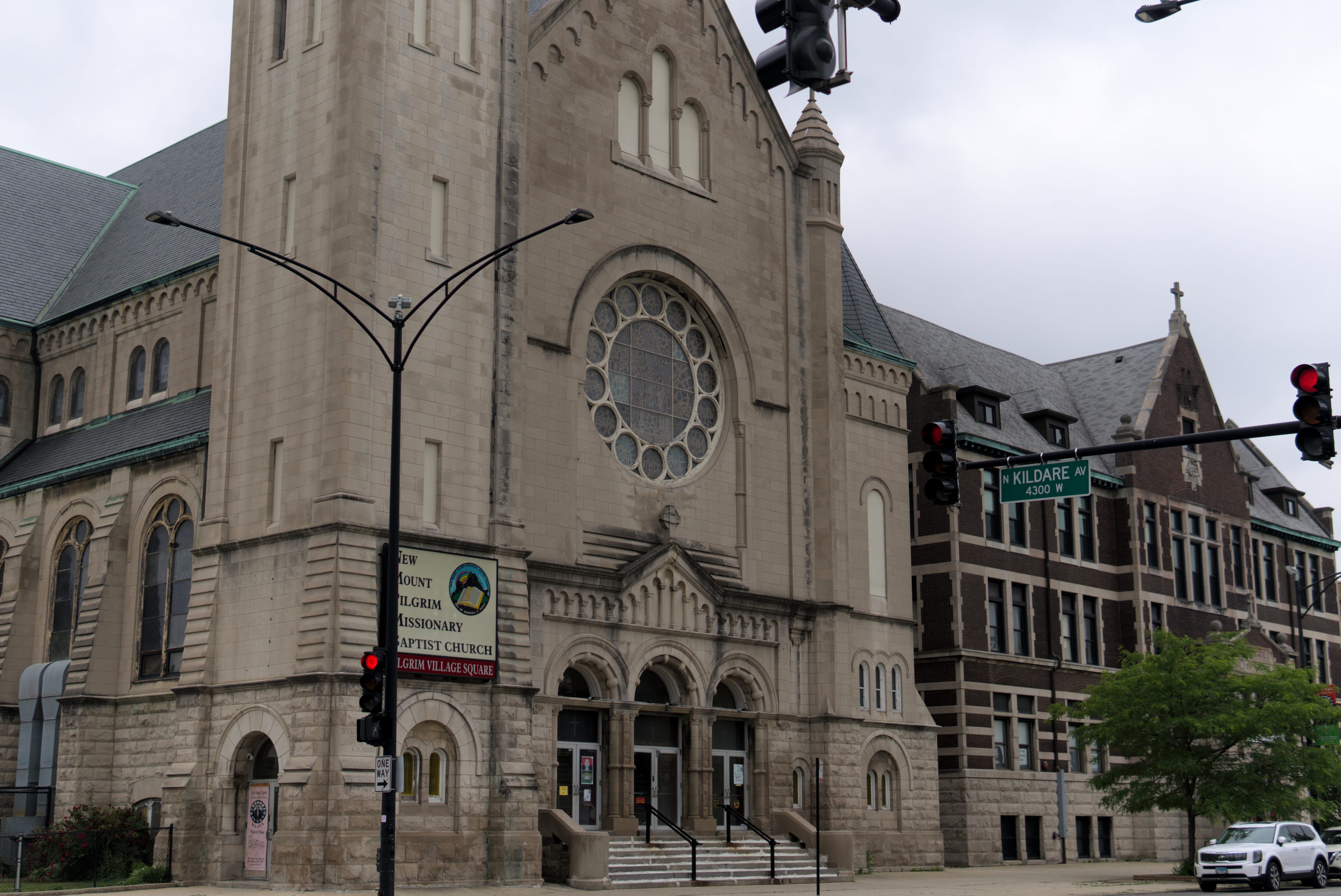
Designed by Charles L. Wallace and built in 1910–11, the French Romanesque–style church at 4301 West Washington Boulevard in Chicago’s West Garfield Park neighborhood was originally home to one of the largest Irish Catholic parishes in the city: St. Mel’s (named after Mél of Ardagh, a nephew of St. Patrick from the fifth century). They had the interior decorated with stained glass windows made by the studio of F. X. Zettler in Munich, portraying biblical figures and other saints—all as Caucasian, as was customary at the time and, frankly, still is. St. Mel’s, which merged with Holy Ghost Catholic Church in 1941 (whose parishioners were mainly of German descent), was a flourishing congregation. But in the late 1960s, white people began leaving the neighborhood as Black people moved in, and St. Mel’s membership waned until eventually the church closed its doors in 1988.
After the building had stood vacant for several years, in 1993, the Catholic Archdiocese of Chicago sold it to New Mount Pilgrim Missionary Baptist Church, a local Black congregation founded in 1950. The church leaders found that, due to lack of maintenance, the three large rose windows had structural issues that needed to be addressed. Rather than repairing the windows, they decided to replace them with new ones that better reflected the faith stories of their own parishioners—their history, heritage, and aspirations as a community. Rev. Dr. Marshall E. Hatch Sr., who had become the church’s pastor just a month after they moved into the new building and still serves in that role, developed the concepts for the windows with input from the congregation and started fundraising. All three were fabricated by Botti Studio of Architectural Arts in nearby Evanston, Illinois.
The Maafa Remembrance Window
The most striking and theologically profound of the three new windows, and the one I flew to Chicago to see last summer, is the Maafa Remembrance window on the wall to the left of the front altar. Because the church is oriented south rather than the traditional east, this is, directionally speaking, the East Rose Window; it purposefully faces the Atlantic Ocean. It was dedicated December 17, 2000, the church’s fiftieth anniversary year. It replaced an image of the Assumption of Mary (which you can view here); read more about the church building’s original windows on the website of art historian Rolf Achilles.
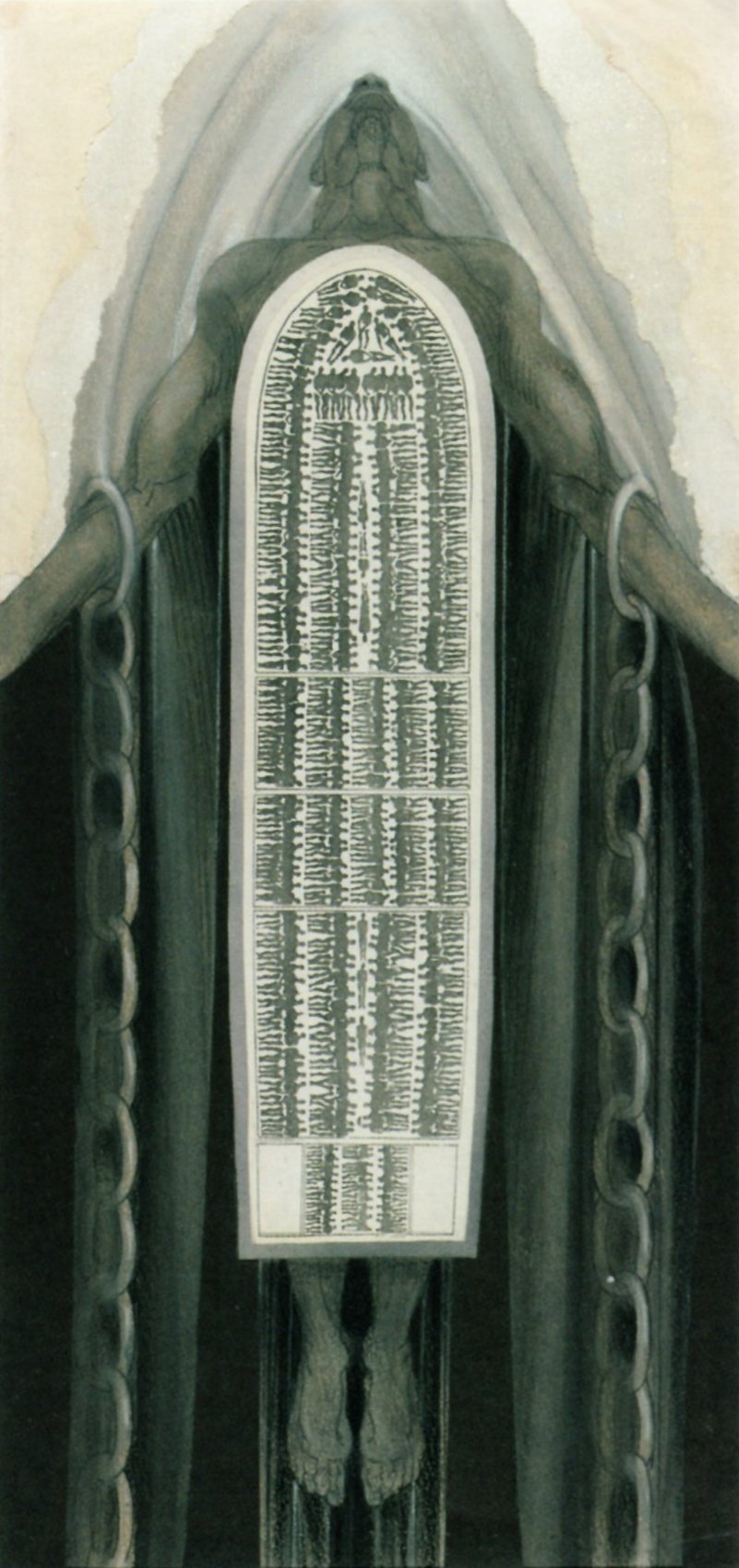
Maafa Remembrance, 2000, based on an illustration from The Middle Passage by Tom Feelings. Stained glass, diameter 25 feet. New Mount Pilgrim Missionary Baptist Church, West Garfield Park, Chicago. Photo: Victoria Emily Jones.Six of the twelve apostles are pictured in these stained glass windows inherited by New Mount Pilgrim from the building’s former owner, St. Mel’s Catholic Church. They appear beneath the newer Maafa Remembrance window, commissioned to counterbalance the preponderance of sacred white personages with sacred Black ones and to tell a narrative of liberation. Photo: Victoria Emily Jones.
Maafa (mah-AH-fah) is a Swahili word meaning “great disaster” or “great tragedy.” Since the late 1980s it has been used to refer to the transatlantic slave trade of the sixteenth through nineteenth centuries, during which an estimated 12.5 million African men, women, and children were kidnapped from their homes and forcibly brought to the Americas to work plantations without pay (by and large), building the wealth of their white enslavers. Some scholars prefer the term “African Holocaust” or “Black Holocaust” to describe this historic atrocity.
Based on an illustration by Tom Feelings from his extraordinary book The Middle Passage: White Ships / Black Cargo (Dial, 1995), the East Rose Window commemorates the Maafa through an evocation of the Middle Passage, the second leg of the triangular trade route. On this harrowing two- to three-month voyage across the Atlantic Ocean, which ships made many times over chattel slavery’s multicentury duration, at least two million enslaved Africans died of malnutrition, dehydration, disease, captor-inflicted violence, or suicide.
The closeness of the place, and the heat of the climate, added to the number in the ship, which was so crowded that each had scarcely room to turn himself, almost suffocated us. This produced copious perspirations, so that the air soon became unfit for respiration, from a variety of loathsome smells, and brought on a sickness among the slaves, of which many died, thus falling victims to the improvident avarice, as I may call it, of their purchasers. This wretched situation was again aggravated by the galling of the chains, now become insupportable; and the filth of the necessary tubs, into which the children often fell, and were almost suffocated. The shrieks of the women, and the groans of the dying, rendered the whole a scene of horror almost inconceivable.
In Feelings’s image, an African Christ figure stretches his chained arms out, as if on the cross. His body is constituted by the famous schematic representation of the crowded lower deck of the Brookes slave ship’s human cargo hold, first created in England in 1788 and widely disseminated throughout the nineteenth century. The perspective is such that we’re looking down on a body-as-slave-ship gliding through the waters—but it’s also a crucifixion. The Son of God carries the suffering of the sons and daughters of God, feeling it in his own body. He wears the slave ship like a giant wound that will forever mark him because it has marked his ecclesial body, the church.
The window functions, on one level, as a lament. Consider it in light of the following poem by Lucille Clifton, which draws out the cruel irony of the actual names some ostensibly Christian slave ship owners gave their vessels.
“slaveships” by Lucille Clifton
loaded like spoons into the belly of Jesus where we lay for weeks for months in the sweat and stink of our own breathing Jesus why do you not protect us chained to the heart of the Angel where the prayers we never tell and hot and red our bloody ankles Jesus Angel can these be men who vomit us out from ships called Jesus Angel Grace Of God onto a heathen country Jesus Angel ever again can this tongue speak can these bones walk Grace Of God can this sin live
The speaker of the poem, an enslaved African, addresses Jesus, questioning why he allows them to be so brutally treated—stolen from their homeland, marched to the coast in chains, claustrophobically packed in ship holds for maximum profitability, and spat out onto auction blocks in a barbarous country that appears to practice the devil’s ways more than God’s. How can God abide such sin? What kind of grace is it that transports them into oppression?
Christian Wiman brilliantly unpacks this poem, noting Clifton’s cunningly subtle tweak of a prophetic passage from Ezekiel that promises resurrection, both of individuals and of a nation. Underneath its acerbity, there’s a certain hopefulness to the poem—a hope that this sin will die, this suffering be transformed. In both Ezekiel’s vision of the valley of dry bones and Clifton’s poem, Wiman writes,
the Word comes streaming again through, and by means of, the word. In terms of the poem, Jesus (the man) is on board Jesus (the ship), but he is in the hold, just as, when the worship services took place above the captured slaves on the Gold Coast of Africa, God, if he was anywhere, was underneath it all, shackled and sweating and merged with human terror.
Emmanuel, God-with-us.
Clinging to this truth, the psalmist declares, “If I make my bed in hell, behold, thou [God] art there” (Psalm 139:8b). In his great compassion, God descends with us into the depths, and bears us up.
The Maafa Remembrance window plays with the themes of descent and ascent. As Emmanuel, Jesus was below deck, in the miserable belly of the thousands of slave ships that traversed the Atlantic, suffering with those chained inside. Christ’s arms are draped with chains, notes Marshall Hatch Jr., the pastor’s son and cofounder and executive director of the MAAFA Redemption Project (more on that below), “but he’s rising. And at some point those chains will break. That’s the hopefulness that shines through.”
Thus, the window commemorates both tragedy and triumph. It honors those who died on the Middle Passage and through the institution of slavery more broadly while also honoring those who persevered all the way to freedom. Hatch Jr. says this Christ is “carrying within himself the memories of those who lost their lives on the journey to America. But also he’s carrying the legacy of those who survived. And we are that living legacy,” descendants of the Middle Passage.
The border around the window’s central image calls parishioners to “REMEMBRANCE.” They must remember their history, the Great Catastrophe their ancestors endured, and, having faced the truth, commit to ending slavery’s legacy of racism in America’s civic, social, and religious spheres and in their own psyches.
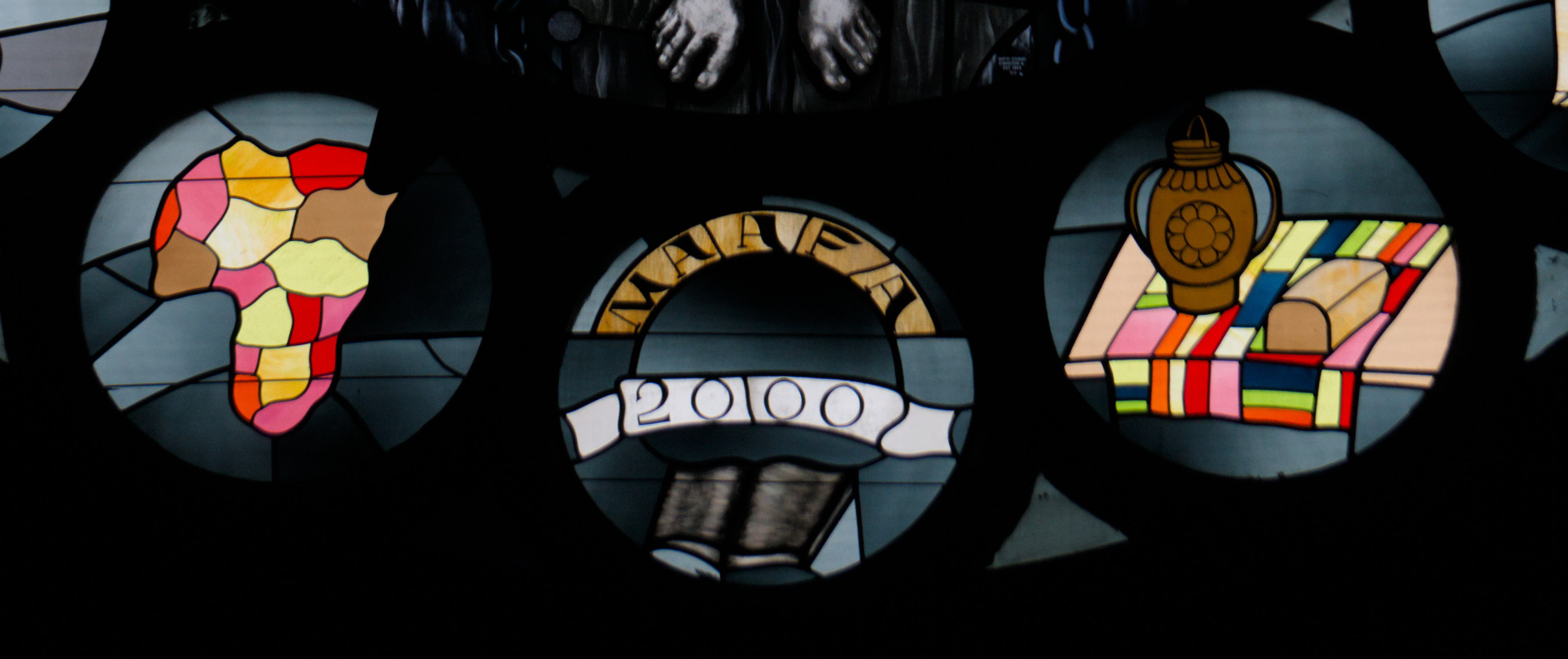
Two of the roundels in the bottom border show a map of Africa and a Communion table laid with kente cloth, a loaf of bread, and a flask of wine. The roundel between these two displays the open word of God, which guides Christians forward in our work of justice and reconciliation.
Art historian Cheryl Finley features New Mount Pilgrim’s Maafa Remembrance window in her book Committed to Memory: The Art of the Slave Ship Icon (Princeton University Press, 2022), which traces the origins of the Brookes schematic and its proliferation in mass culture and art. She identifies the window, twenty-five feet in diameter, as the largest example of the “slave ship icon” in the world and writes that, like the cross of Christ, the slave ship embodies both death and rebirth. It is “a site of death, of dying Africans, and of new life, of a people who would persevere in the face of slavery and unspeakable cruelty to become a free people who helped define the modern era” (6).
“The children will need to know that this symbol, this window, is a representation of not only the pain but also the possibilities of a great and mighty God,” Rev. Dr. Gregory Thomas told the Chicago Tribune in 2000. Thomas was a theology professor at Harvard Divinity School, where Hatch Sr. served a fellowship sabbatical semester in 1999 and first encountered Feelings’s Middle Passage book.
In the window, slavery is interpreted in light of the paradox of the cross. Theologian James H. Cone famously interpreted another, later icon of Black suffering—the lynching tree—in light of the same in his essential book The Cross and the Lynching Tree (Orbis, 2011). He opens the book by explaining why and how the cross has held such power for the Black church:
The cross is a paradoxical religious symbol because it inverts the world’s value system with the news that hope comes by way of defeat, that suffering and death do not have the last word, that the last shall be first and the first last.
That God could “make a way out of no way” in Jesus’ cross was truly absurd to the intellect, yet profoundly real in the soul of black folk. Enslaved blacks who first heard the gospel message seized on the power of the cross. Christ crucified manifested God’s loving and liberating presence in the contradictions of black life—that transcendent presence in the lives of black Christians that empowered them to believe that ultimately, in God’s eschatological future, they would not be defeated by the “troubles of this world,” no matter how great and painful their suffering. Believing this paradox, this absurd claim of faith, was only possible through God’s “amazing grace” and the gift of faith, grounded in humility and repentance. There was no place for the proud and the mighty, for people who think that God called them to rule over others. The cross was God’s critique of power—white power—with powerless love, snatching victory out of defeat. (2)
A powerful reclamation of Christian iconography, New Mount Pilgrim’s Maafa Remembrance window weds Black history and Christian theology to offer its predominantly African American congregation a communal symbol that honors what they’ve been through as a people and reminds them that they worship a risen Christ who breaks chains and brings life out of death.
The North Star / Great Migration Window
The East Rose Window covered in the previous section is narratively the first in the trilogy of newly commissioned windows, but the first of the three to be fabricated and installed, earlier in 2000, was the North Rose Window, called the North Star or Great Migration window. It commemorates those who traveled north on the Underground Railroad to escape slavery, and, a few generations later (from about 1910 to 1970), as part of a mass movement to escape Jim Crow oppression.
North Star / Great Migration, 2000. Stained glass, diameter 25 feet. New Mount Pilgrim Missionary Baptist Church, West Garfield Park, Chicago. Photo: Victoria Emily Jones.
The North Star window shows a Black family unit, the father, in purple robe, lifting his newborn up to the heavens in a gesture of gratitude and pride. The child is backlit by the North Star, a beacon to freedom. The scene recalls the famous naming ceremony in the 1977 Roots miniseries, based on the best-selling novel by Alex Haley, in which Omoro Kinte, a Mandinka man living in The Gambia, carries his firstborn son, Kunta Kinte, to the edge of the village, raises him into the starry night sky, and exclaims, “Behold, the only thing greater than yourself!” This declaration affirms the child’s inherent worth and directs him toward worship of his Creator God.
During New Mount Pilgrim’s baby dedication ceremonies, the pastor raises the child in like manner while the parents vow to bring up the child in the nurture and admonition of the Lord and the congregation vows to support them in this task. This physical gesture of lifting up signifies surrender to God and hope that the next generation will carry the flame of faith out into the city of Chicago and the wider world. Because the North Star window is situated across from the pulpit, over the choir loft and organ, it is in full view of the dedicants.
Baby dedication ceremony, New Mount Pilgrim Missionary Baptist Church. Photo courtesy of Partnering for Community Impact.View from the pulpit of New Mount Pilgrim, facing the North Star window and the main entrance to the church. Photo courtesy of the church.
The inscription below the family in the window reads, “Lift holy hands,” a phrase taken from 1 Timothy 2:8, and the roundels in the border spell out the name of the church. The three portraits at the bottom are of the church’s longest-serving pastors: (from right to left) Rev. J. H. Johnson, the church’s first elected pastor; Rev. James R. McCoy, who served from 1965 to 1993; and Rev. Dr. Marshall Hatch Sr., who has served since 1993. Hatch Sr.’s father and McCoy both participated in the Great Migration, having moved to Chicago from Aberdeen, Mississippi, and so did the majority of the church’s founding members.
The North Star window fills the space previously occupied by a window depicting Saint Cecilia, a Roman virgin martyr.
The Sankofa Peace Window
The West Rose Window, known as the Sankofa Peace window, was the final one to be installed, replacing the clear panes that were there for over two decades. (New Mount Pilgrim sold the original window depicting Mary and the Christ child blessing and accepting the rosary from a male and female saint, to raise funds for the new one.) The Sankofa Peace window was dedicated on February 24, 2019 (watch the service here and view photos here), the year that marked the four hundredth anniversary of race-based slavery in America.
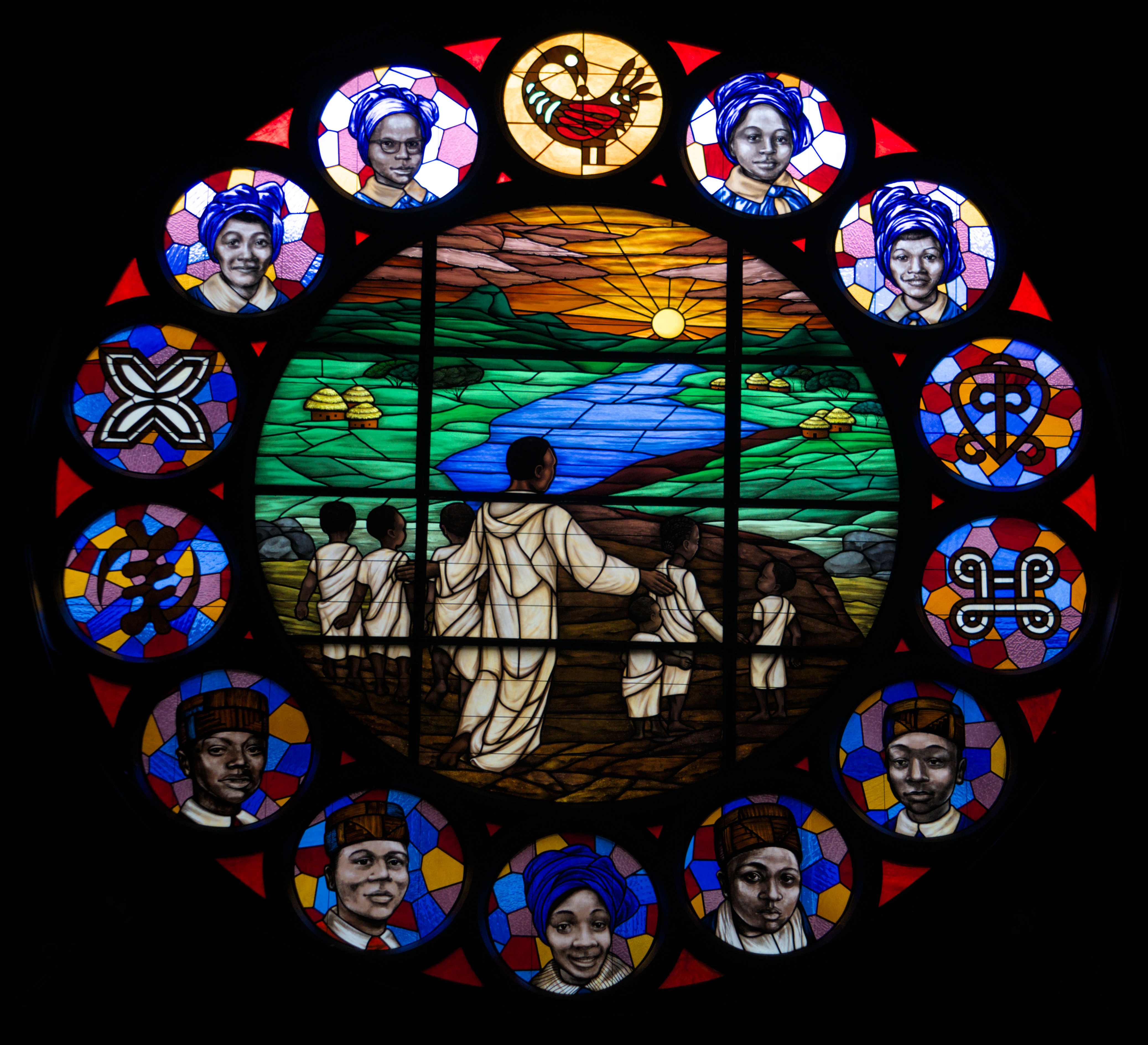
Sankofa Peace, 2019. Stained glass, diameter 25 feet. New Mount Pilgrim Missionary Baptist Church, West Garfield Park, Chicago. Photo: Victoria Emily Jones.
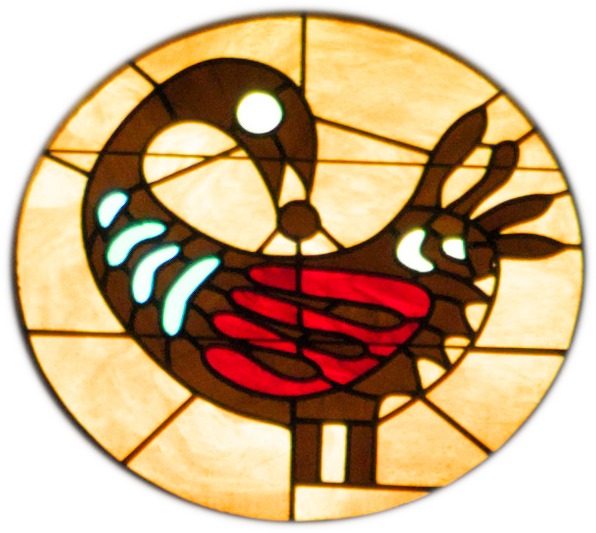
Sankofa is a Twi word from the Akan people of Ghana that means “go back and retrieve it,” a phrase that encourages learning from the past to inform the future. It comes from the proverb “Se wo were fi na wosan kofa a yenkyiri”—“It is not wrong to go back for that which you have forgotten,” to return to one’s roots to reclaim lost identity. The concept of Sankofa is traditionally symbolized by a mythical bird with its head turned backward while its feet face forward, carrying a precious egg in its mouth, which represents the knowledge of the past on which wisdom is based.
The Sankofa bird appears in the top center roundel of the window.
Hatch Jr., who preached at the window’s dedication service, discussed Sankofa as a spiritual discipline, highlighting how it can refer not only to returning to one’s cultural roots, but also to God, our Source. “Sankofa is the process of training my soul to reach back and remember the grace and the glory of God,” he says, which can fuel us for the forward journey. He quotes the famous gospel hymn that says, “My soul looks back in wonder how I got over.” We must regale one another with stories of where we’ve been and how far God has brought us, and remind ourselves and each other where we’re heading.
Besides the Sankofa bird, the other four adinkra symbols that New Mount Pilgrim chose to include in the window’s border are:
These are key guiding principles of the church, part of their missional purpose and identity. They seek liberation and peace for all, through the power of God, following the path of the Savior who is Love, who brings us back to who we most truly are.
One way the Sankofa Peace window looks backward while moving forward is through the memorialization of murdered Black American youth, from the civil-rights-era South and twenty-first-century Chicago. The portraits at the top depict the four girls who were killed by the Sixteenth Street Baptist Church bombing in Birmingham, Alabama, in 1963: Carole Robertson (age fourteen), Addie Mae Collins (fourteen), Denise McNair (fourteen), and Cynthia Wesley (eleven).
The five teens at the bottom, selected by members of New Mount Pilgrim’s youth leadership committee, were victims of Chicago violence from the previous decade or so. From left to right, they are:
Derrion Albert(1994–2009), age sixteen. On his way home from school, he got caught in the middle of a brawl between two rival factions of students and was beaten to death with a railroad tie. The crime was captured on cellphone video.
Laquan McDonald (1997–2014), age seventeen. He was shot sixteen times by a police officer while he was walking away.
Hadiya Pendleton (1997–2013), age fifteen. She was killed by a stray bullet while hanging out in a park with friends after her final honors exams.
Blair “Bizzy” Holt (1990–2007), age sixteen. He was fatally shot on a CTA bus while shielding his friend from gang gunfire.
Demetrius “Nunnie” Griffin Jr. (2000–2016), age fifteen. A lifelong member of New Mount Pilgrim, he was burned to death in a trash can in a West Side alley. His death was ruled a homicide, but his killer(s) have not been found. He had told his mother that a gang had been trying to recruit him.
All nine children are dressed in traditional African headwear.
Even as the window laments these unjust deaths, it also provides a vision of restoration. The central scene shows Jesus as the Good Shepherd, leading his children to green pastures and still waters lined with thatched-roof homes—an Edenic place of peace and rest. One might view this as the afterlife (Hatch Sr. told me the children are “going back to the Father’s estate”); but it could also be seen as a picture of Christ leading us into a future on this side of the parousia, where all God’s children are safe and thrive on earth as it is in heaven.
Hatch Sr. told me the window is about recovering a village mentality right in the heart of the city, embracing values like hospitality, family, mutual support, elder respect, and the protection and uplift of children. Whereas the North Star window visualizes the literal lifting up of a child, the Sankofa Peace window calls parishioners to do it metaphorically, through the building of strong community and advocacy for policies that prevent violence and tragedy.
The MAAFA Redemption Project
As a tangible outworking of the communal values expressed in its three rose windows, in 2017 New Mount Pilgrim established a workforce, social, and spiritual development program for young Black men in West Garfield Park, which is still running strong. (It graduated its seventh cohort last month!) Called the MAAFA Redemption Project, it is predicated on the belief that redemption and transformation must begin with the individual, and then that personal transformation can effect family and community transformation. The program emphasizes the importance of, as its website says, “remembering the past in order to create a more just and verdant present and future.”
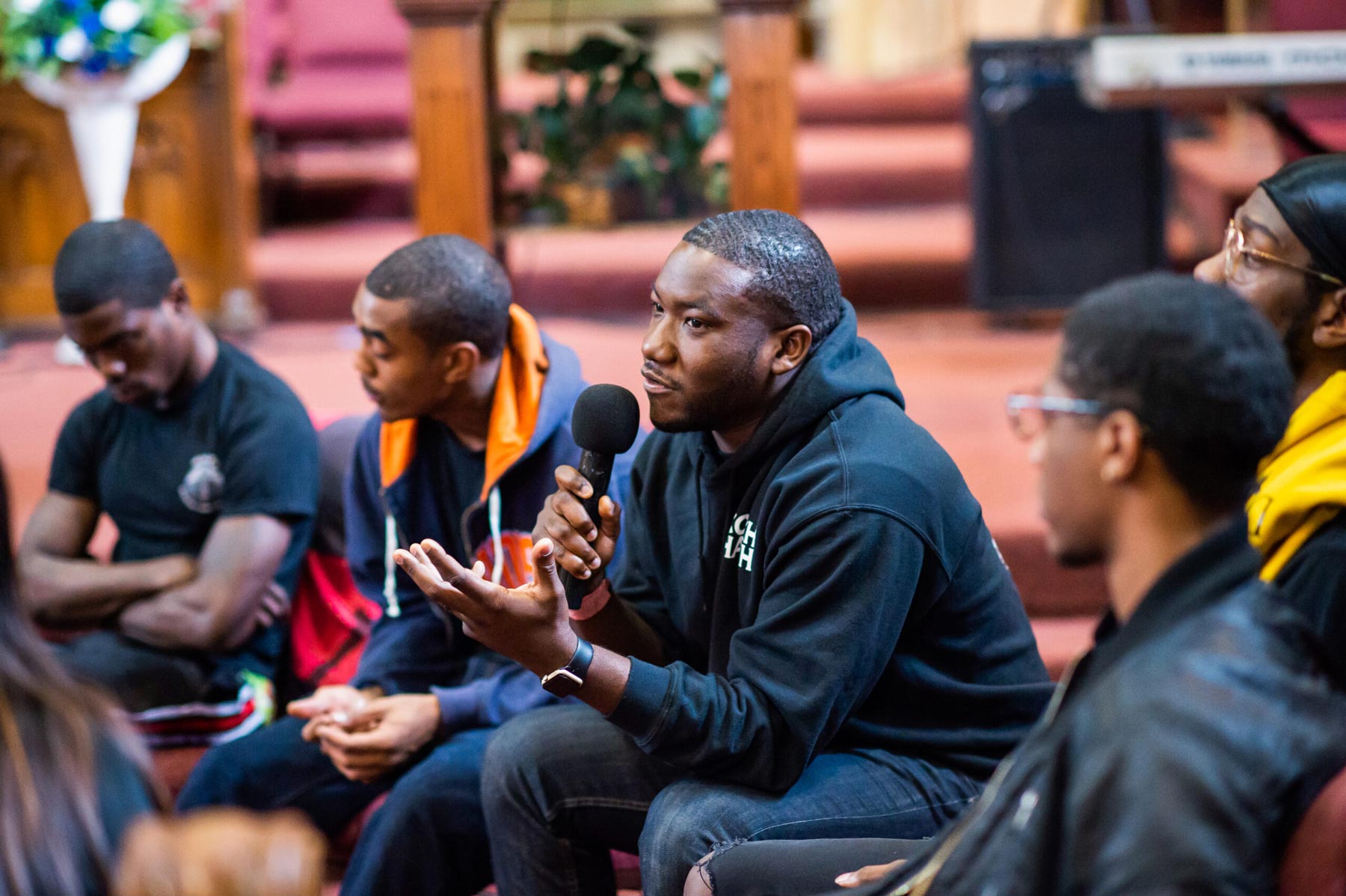
Marshall Hatch Jr., director of the MAAFA Redemption Project (a ministry of New Mount Pilgrim MB Church), speaks with a group of participants about their experiences as young Black men living in West Garfield Park.
Using a dual direct-service and community-building approach, the program provides housing, job training, educational opportunities, psychotherapy, counseling, and wrapround social services to the young men who enroll. These supports are supplemented with programming that focuses on the arts, cultural identity development, spiritual enrichment, transformative travel, civic empowerment, and life coaching and mentoring.
The square-mile neighborhood of West Garfield Park has the highest rate of gun violence in Chicago and is one of the most crime-dense populations in the nation. The MAAFA Redemption Project seeks to recruit men between the ages of eighteen and thirty who are a part of this gun culture or at risk of becoming so, recognizing that young people are a neighborhood’s greatest resource for change. The project affirms the dignity and promise of the neighborhood’s Black and Brown youth and aims to instill hope in them, empowering them in activism against gun violence and the conditions that create it.
“The young people who come to us are tired of the subculture that only produces death, despair, and falling into the trap of the criminal justice system,” says Marshall Hatch Jr., the cofounder and executive director of the MAAFA Redemption Project. “They want something different for themselves and their loved ones.”
He continues, “We want to create the space for young men to see themselves differently, to reimagine themselves as men and leaders, pillars of this neighborhood. And so our goal is to embrace the truths that they give us of their experience but also challenge them to overcome, just as their ancestors overcame; to develop the inner resources to persevere and to challenge the system so that their sons, their daughters, don’t have to fight the same fights.”
The video storytelling unit NBC Left Field ran a wonderful segment in November 2018 that features the work of MAAFA Redemption Project:
I also recommend the feature-length documentary All These Sons (2021), directed by the Oscar-nominated Bing Liu and Joshua Altman (Minding the Gap) and streaming for free on Tubi, Amazon, and other services. MAAFA Redemption Project is one of the two Chicago antiviolence programs profiled, the other being the South Side’s Inner-City Muslim Action Network (IMAN) run by Billy Moore.
Most recently, MAAFA Redemption Project has partnered with other groups to build and share ownership of the Sankofa Wellness Village, a series of interconnected capital projects and social enterprises sited along the Madison and Pulaski corridor in West Garfield Park. Winner of the Chicago Prize awarded by the Pritzker Traubert Foundation, the village will be a sprawling, $50 million campus that will bring critical health, financial, and recreational resources back into the disinvested neighborhood, including a wellness center, a credit union, an art center, a business incubator and entrepreneurial support center, and pop-up fresh food markets.
The Sankofa Wellness Village breaks ground later this summer and is expected to open in late 2025.
Having identified the arts as an unmet need and desire of West Garfield Park residents, MAAFA Redemption Project has taken the reins on what will be called the MAAFA Center for Arts and Activism. They are working to restore the old St. Barnabas Episcopal Church to provide a space where residents can engage in intergenerational art making, relationship building, community organizing, political education, and civic empowerment.
Rendering of the future MAAFA Center for Arts and Activism in West Garfield Park, Chicago. Credit: Moody Nolan/Bureau Gemmel
“We’re part of a continuum of that liberation narrative of God,” Hatch Sr. says, referring to his church’s commitment to see their neighborhood flourish.
When in the nineties they inherited a grand church full of Eurocentric stained glass and other decoration from the Irish Catholic community that worshipped there previously, New Mount Pilgrim Missionary Baptist Church had some decisions to make. How would they honor the history of that sacred space while also making room for their own histories? What adjustments would have to be made to accommodate their different ecclesial and theological tradition? They made a few changes to the sanctuary, but they left most of it intact. The most significant change is the three new rose windows they commissioned to replace the old ones that were buckling. Once the first two were installed, Pastor Marshall Hatch Sr. told me, the space really started to feel like home.
Hatch Sr. spoke to me about “the power of art to reclaim an identity” for youth involved in or susceptible to gang violence. For sure, many local youth have been inspired by the Maafa Remembrance image in particular, which MAAFA Redemption Project uses as its logo, and thus it’s been widely visible throughout the neighborhood. And yet while the “under thirty” demographic is a particular focus of the church’s outreach efforts, the identity-forming power of art holds true for folks of any age. When a West Garfield Park resident enters the New Mount Pilgrim sanctuary for whatever reason—prayer, worship, respite, connection, religious education, compulsion from a family member—they can hopefully see themselves reflected in the imagery of the rose windows, and, in conjunction with the church’s music and preaching ministries, experience healing and revival.
Their culture, their history, their stories are sacralized in stained glass and integrated into the larger story of redemption God is telling.
Perhaps, from viewing the windows, they feel a deep identification with Christ in his crucifixion, or a sense of God’s presence with them in their suffering; perhaps they are dazzled by the dignity and endurance of their ancestors, or are compelled by the freedom Christ offers; perhaps that was one of their friends whose face shines down from the wall, or the niece or nephew of a friend, and they are turned toward somber remembrance of the lost life and moved to concrete action to reduce the city’s violence; perhaps they’re emboldened by the reminder that Christ goes with them as they seek transformation, as they bring to bear the gospel in this present age, in their own lives and the life of their community.
Visit the Church
Address: New Mount Pilgrim Missionary Baptist Church 4301 W. Washington Blvd. Chicago, IL 60624 (To see the windows in the sanctuary, I made a weekday appointment ahead of time with office manager Rochelle Sykes by calling the church at 773-287-5051. She let me in through the side door.)
The Middle Passage: White Ships / Black Cargo by Tom Feelings (Dial, 1995). This is an important work that every American should own a copy of. It consists of fifty-four powerful grayscale drawings that tell the story of the transatlantic slave trade’s Middle Passage. There’s no written narrative, but there is a brief introduction by the historian John Henrik Clarke. The book caught the attention of Marshall Hatch Sr. while he was a scholar-in-residence at Harvard Divinity School in 1999 and led him to reach out to Feelings for permission to have a stained glass window made based on one of the illustrations.
Committed to Memory: The Art of the Slave Ship Icon by Cheryl Finley (Princeton University Press, 2022). Thank you to Marshall Hatch Sr. for recommending this book to me. Finley, an art historian, explores how an eighteenth-century engraving of a slave ship became a cultural icon of Black resistance, identity, and remembrance, its radical potential rediscovered in the twentieth century by Black artists, activists, writers, filmmakers, and curators who have used it as a medium to reassert their common identity and memorialize their ancestors. It’s heavily illustrated and an insightful read, academic in tone but very accessible.
Painting the Gospel: Black Public Art and Religion in Chicagoby Kymberly N. Pinder (University of Illinois Press, 2016). This is where I first found out about the Maafa Remembrance window at New Mount Pilgrim. It’s one of sixty-some Black-affirming religious images from Chicago churches and their neighborhoods made between 1904 and 2015 that Pinder, an art historian, features, focusing on their intersection with the social, political, and theological climates of the times. Read my review here.
“Voices from Chicago’s Most Violent Neighborhood” by Andy Grimm, Chicago Sun-Times, 2023. The Sun-Times spent months last year talking to residents of West Garfield Park about why they’ve chosen to stay despite the rampant violence, and they’ve presented some of these stories in a well-designed, interactive web feature. One of the remarks that stands out to me is: “The most dangerous residents of the neighborhood are also the most endangered.”
Following the popularity of last year’s “25 Poems for Christmas,” I’ve decided to publish a brand-new installment, and will perhaps make this a yearly tradition! All the selections can be read online—just follow the links.
Despite the pithy title of this post, not all the poems are “Christmas” poems, strictly speaking, but rather they encompass the season of Advent too, as well as Epiphany. Advent is a four-week season leading up to Christmas that is characterized by a mood of longing and expectation; it is oriented not only toward Jesus’s first coming but also toward his second. Christmas, of course, celebrates the birth of Jesus, the Word of God made flesh. And Epiphany, on January 6, commemorates the visit of the magi to the crib, representing God’s self-revelation to the wider world.
Each poem is accompanied by a micro-commentary or short descriptive blurb, which I suggest you read after reading the poem itself. There’s a benefit to first entering a poem without having any context—then after registering your initial impressions and questions, to consider another person’s framing or analysis or highlights, and reread. And then a third time! Each reading can potentially reveal new meaning.
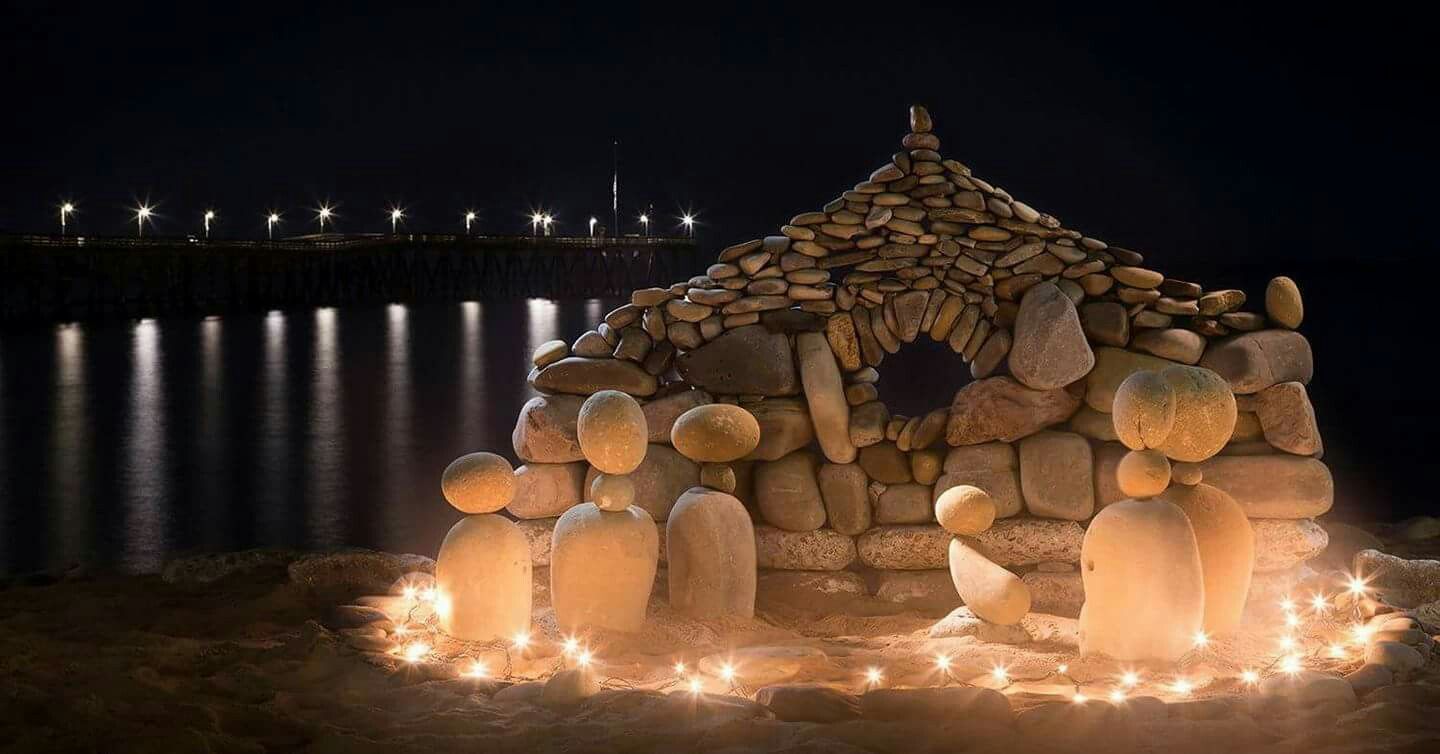
Stone Nativity by Juan Manuel Cisneros, Ventura, California, December 2016 [learn more]
1.“Haiku for an Advent Calendar” by Richard Bauckham: Church services during Advent tend to focus on messianic prophecies from the Hebrew Bible, rumblings of a coming savior. In this sequence of twenty-four haiku, Richard Bauckham pulls a detail from each book of the Jewish scriptures, finding anticipations of Christ. For example, Isaiah: “In the wilderness / a voice cries for centuries / seeking an echo.” Or Job: “God answered Job but / not his question. Maybe he / will do that again.”
2. “How Christ Shall Come” (anonymous): The cosmological Christ blew in from the four cardinal directions, coming as lover, knight, merchant, and pilgrim. So says this fourteenth-century Middle English lyric, rich in metaphor, compiled in a book of preaching aids and sermons by John Sheppey (d. 1360), bishop of Rochester. (It is unclear whether he is the author of the poem.) The great medieval literature scholar Carleton Brown gave it the title “How Christ Shall Come” in his landmark Religious Lyrics of the XIVth Century (1924), and Grace Hamman brought it to my attention recently in her wonderful monthly Substack, Medievalish, providing a modern English translation and commentary.
3.“Hawk Lies Down with Rabbit” by Seth Wieck: What would it look like for death to no longer have dominion in the animal world? Grappling with Isaiah’s end-time vision of a peaceable kingdom void of predation, this poem describes in graphic terms a bird of prey making its kill, feeding on flesh, and wonders how a hawk could still be itself with rewired impulses. Hear the author read and provide context for the poem on the Reformed Journal Podcast.
4.“john” by Lucille Clifton: Written in the voice of John the Baptist, this poem is part of an extraordinary sixteen-poem sequence titled “some jesus,” which features a range of biblical characters. In her retelling of his ministry as forerunner to the Messiah, Lucille Clifton casts John as a Black Baptist preacher, preparing his listeners to receive the one who “com[es] in blackness / like a star.” Clifton’s larger body of work would suggest that “blackness” here is multivalent, describing what Jesus comes into and as: the word suggests the darkness of the world that Christ entered, on the one hand, but also functions as a positive racial identifier. In Clifton’s revisioning, Christ comes as a Black man, wearing “a great bush / on his head”—which, again, could be read as an Afro, and/or as a mystical reference to the site at which God revealed himself to Moses in the Sinai desert. Luminous with truth, Christ comes, “calling the people brother.”
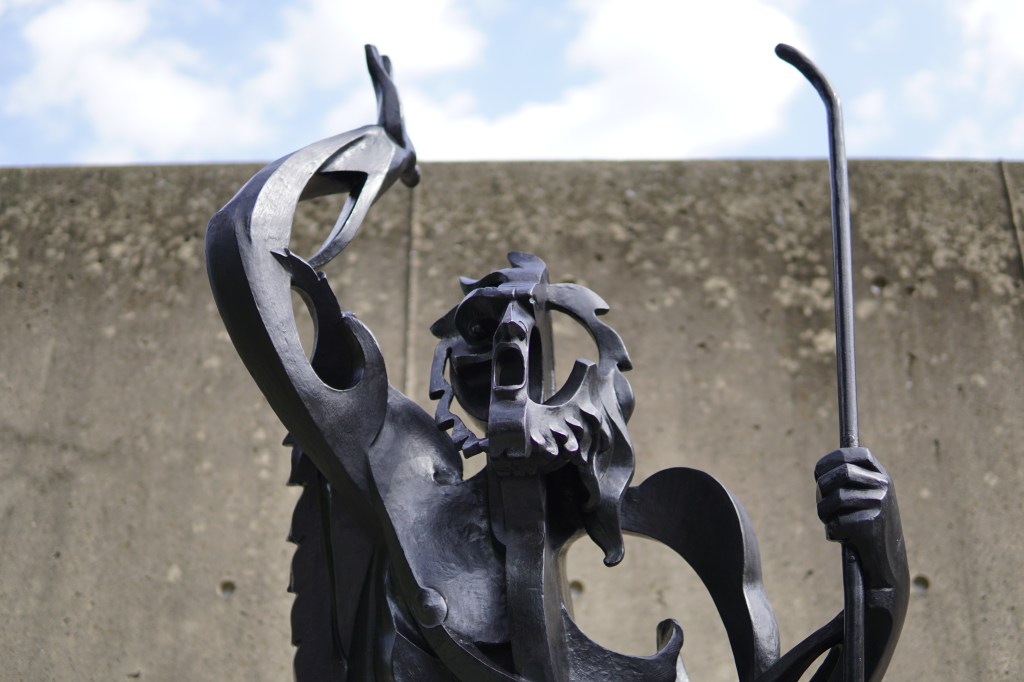
Pablo Gargallo (Spanish, 1881–1934), The Prophet (St. John the Baptist) (detail), 1933. Bronze, 91 3/4 × 29 1/2 × 19 in. Wurtzburger Sculpture Garden, Baltimore Museum of Art. Photo: Victoria Emily Jones.
5. “Christmas Mail” by Ted Kooser: Every December the story of an ancient birth comes alive again in couriers’ mailbags, in tin boxes at the ends of driveways, on mantels and fridges. This poem honors those postal workers who deliver good tidings in the form of Christmas cards, the magic spilling out the envelopes to make even the most tiresome routes sparkle a bit.
6. “December 25” by George MacDonald: Through the mid-nineteenth century, denominations influenced by the Reformed tradition, including the Church of Scotland in which George MacDonald was raised, typically did not observe Christmas, the rationale being that no one day should be thought of as holier than any other. But in his book-length dramatic poem Within and Without, MacDonald refers to December 25 as “this one day that blesses all the year”—and in this seven-liner from his Diary of an Old Soul, he describes Christmas as a gleaming blue sapphire, a structural center around which all the other jewels of the church calendar are oriented.
7. “On a Cardinal Climbing Down a Manhole to Restore Power to 400 Homeless People” by Michael Stalcup: On May 11, 2019, Cardinal Konrad Krajewski, the papal almoner (Pope Francis’s special appointee to distribute charity), crawled into a manhole and broke a police seal to personally restore power to a homeless shelter in Rome whose electricity had been shut off due to its failure to pay its bills. The shelter was occupied by some 450 people at the time, 100 of them children, who had been without electric light, hot water, and refrigeration for nearly a week. In this poem, which can be read Christologically, Michael Stalcup celebrates this defiant humanitarian act that brought light to a people living in darkness.
8. “Incarnation” by Amit Majmudar: “Inheart yourself, immensity. Immarrow, / Embone, enrib yourself.” So begins the five-poem sequence “Seventeens.” Musical and witty, this first poem is a plea to the great I AM to take on a body and “be all we are, and all we aren’t.”
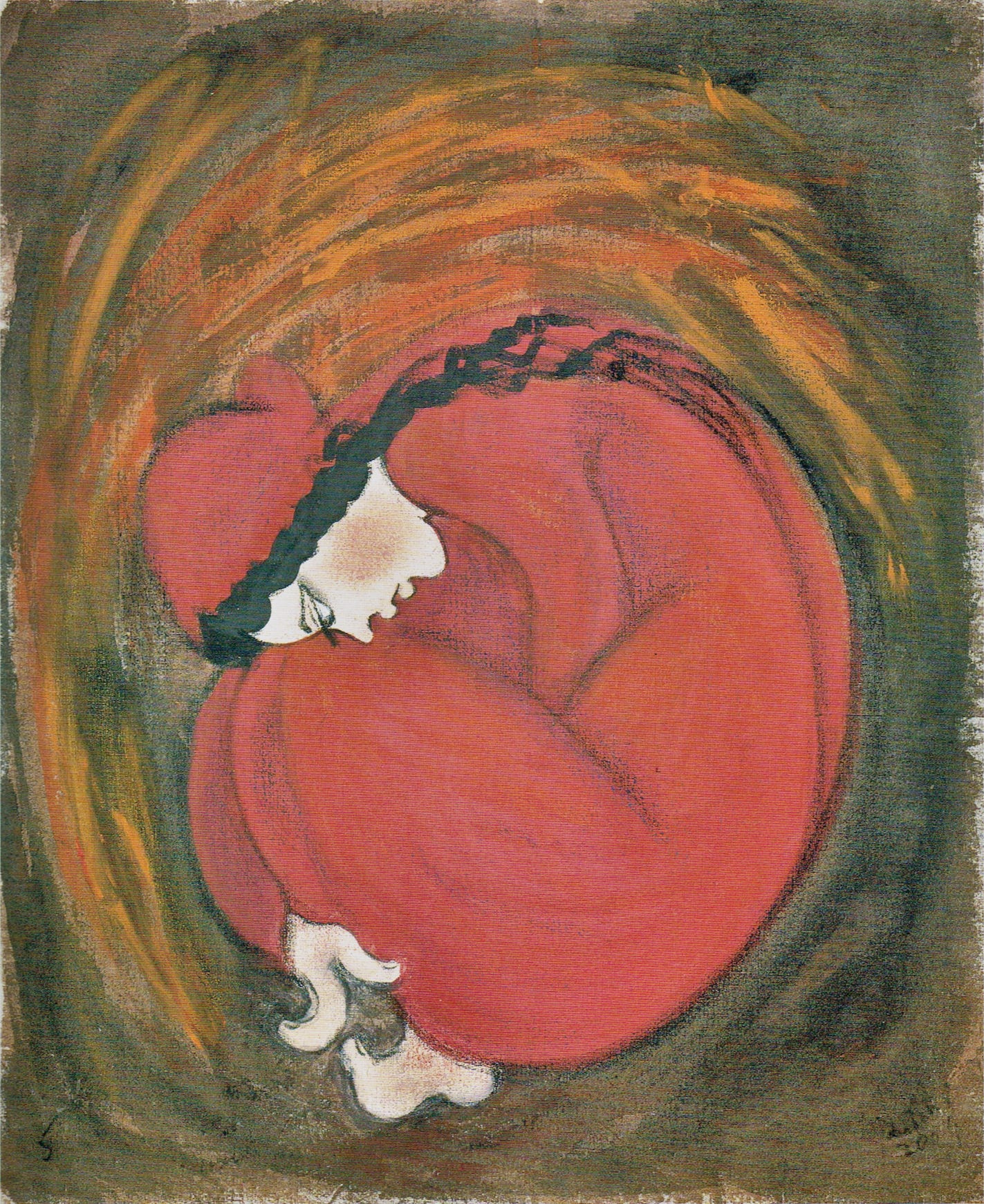
9.“The Lord Is with Thee” by Micha Boyett: Written in 2010 as the third in a five-poem sequence commissioned by John Knox Presbyterian Church in Seattle, this poem centers on the Visitation episode described in Luke 1:39–58. It’s about Mary finding belonging in God’s story, especially through the companionship of her elder cousin Elizabeth, who has nurtured Mary’s faith since infancy and continues to do so in this her moment of crisis. “How easily she spoke of God, / as if he were a neighbor, a fish vendor on the street,” Mary admires. Elizabeth supports Mary physically, emotionally, and spiritually, holding her hair back as she vomits, protecting her from vicious rumors, affirming the work of God in her life, and accompanying her at the start of this wild path God has set them both on.
Odilon Redon (French, 1840–1916), Mystical Conversation, ca. 1896. Oil on canvas, 65 × 46 cm. Museum of Fine Arts, Gifu, Japan.
10.“Our Lady” by Mary Elizabeth Coleridge: The great-grandniece of the Romantic poet Samuel Taylor Coleridge, Mary Elizabeth Coleridge (1861–1907) grew up in a home visited by family friends Alfred Lord Tennyson, Anthony Trollope, John Ruskin, and Robert Browning, among others. In this poem she marvels at how God chose the common-born Mary for such a task as mothering the Christ, singing along with Mary’s Magnificat about how God raises up the lowly.
Source: Fancy’s Following (privately published, 1896). Public Domain.
11. “Traveling Man”by Marjorie Maddox: With his pregnant wife alongside, Joseph plods down south to Bethlehem, “convinced of the predestined / roll of dice chrismated with Miracle.” An epigraph from a Leonard Cohen song sets the tone.
12.“Sonnet in the Shape of a Potted Christmas Tree” by George Starbuck: This charming shape poem contrasts the extravagance of our popular celebrations of Christmas with the poverty of the first-century event it marks. The first half describes the furious wind of decorative activity that uproots evergreens from their natural habitats to bring them indoors and deck them with baubles and ribbon. I don’t know how to interpret “no scapegrace of a sect,” but “Daughter-in-Law Elect” refers to a duet from the Gilbert and Sullivan opera The Mikado. The turn comes with “a son born / now / now,” the latter two lines styled as the visible trunk of the tree; here the scene shifts to the simple stable of old, where Mary lies “spent” next to her newborn along with a cow and donkey, a sole “firework” guiding the magi and us all to the spot.
13.“Christmas (I and II)” by George Herbert: George Herbert (1593–1633) is one of the most celebrated poets of the English language. In part 1, a sonnet, of this two-part poem, he imagines himself a weary traveler who chances upon a humble inn where he unexpectedly finds his Lord, the infant Christ. It’s the inn of Bethlehem. Having then received rest from Christ his host, in the closing couplet he expresses his desire to reciprocate—to offer his own soul, lowly though it is, as a residence for Christ, praying that God first adorn it to make it hospitable. In the second part of the poem, Herbert uses a metaphysical conceit (extended metaphor) comparing his soul to a shepherd whose flock of thoughts, words, and deeds pastures on God’s word and who, like the shepherds of Bethlehem, sings glory to God. His shepherd-soul seeks eternal daylight, which he finds in the Son/sun, whose beams so intertwine with his song that the beams sing and his song shines.
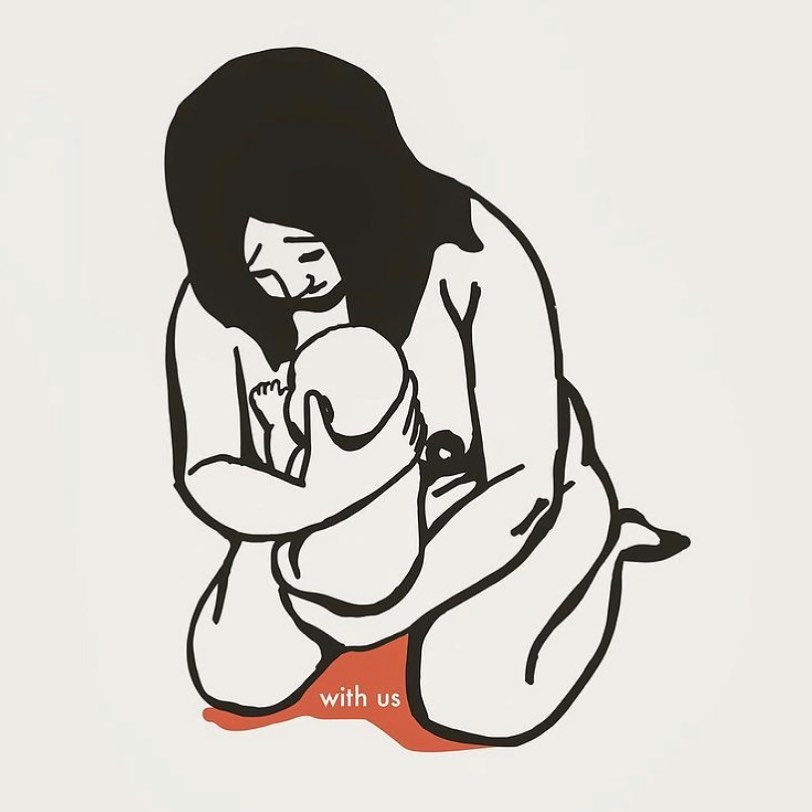
14. “Descending Theology: The Nativity” by Mary Karr: The physicality of childbirth, from the contractions (which pierce the Virgin like a star, Karr writes) to the bodily fluids, is heavily featured in this poem. Jesus emerges from his mother “a sticky grub” with a “lolling head” and “sloppy mouth” that seeks out her breast for food. And as she feeds him physically, he feeds her spiritually. Then he falls asleep. His first nap, Karr writes, is a foretaste of the sleep of death he will eventually come to taste. But for now, he wakes up crying—as all babies do.
Scott Erickson (American, 1977–), With Us, Face to Face, 2016. Digital art. [available for purchase]
15.“from spiralling ecstatically this”by E. E. Cummings: What a fantastic opening line! The heavenly spheres whirling, twirling, down into the “proud nowhere”—Bethlehem—“of earth’s most prodigious night.” Heretofore living in mundanity, the domestic animals, hungry for miracle, for newness, are vouchsafed to be witnesses of this supernatural event, before which they kneel “humbly in their imagined bodies.” Overhead floats the “perhapsless mystery of paradise,” a phrase suggesting that heaven is beyond human understanding but not without certainty; it’s a declarative reality, not subjunctive, even if it can’t quite be put into words. Mary herself has no words—she silently, knowingly smiles, while the created world erupts in song around her. The “mind without soul” is a reference to Herod, who seeks to snuff out this new life, but to no avail.
The omission of spaces after punctuation marks (e.g., “a newborn babe:around him,eyes”) is not a mistake; that’s how E. E. Cummings liked it. Scholars say it’s to create a faster rhythm, but in this poem I don’t think that choice is as effective, as pauses and slow savoring seem more appropriate to its contemplative mood.
16.“How the Natal Star Was Born”by Violet Nesdoly: Narrated by the angel Gabriel, this poem imaginatively describes heaven’s nervously awaiting the birth of Jesus during the nine months following Gabriel’s dispatch to Mary, and then busting out in celebration when at last they hear his infant-cry. When his Son is born, instead of cigars, the Father passes out trumpets to his company of friends, who sound them all the way to Bethlehem’s fields, and pops open a bottle of champagne whose bubbles spray far and wide.
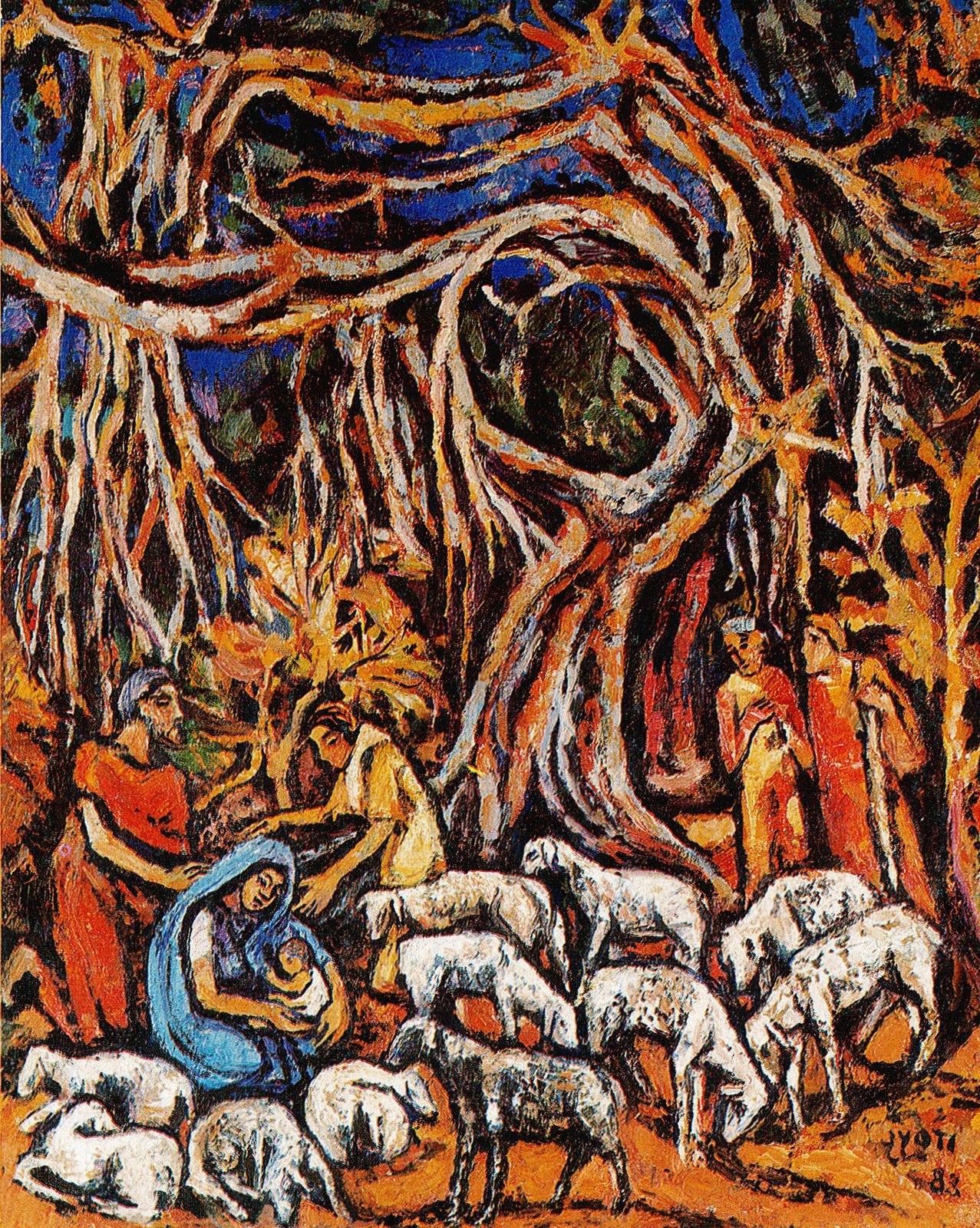
17. Sections 9–10 of “The Child” by Rabindranath Tagore: Hinduism was the religion of Rabindranath Tagore’s birth and upbringing, but he also held deep respect for Jesus Christ. (For more on the influence of Christianity on Tagore’s thought and writing, see chapter 4 of Rabindranath Tagore and Interfaith Dialogue by Manas Kumar Ghosh [DMin thesis, Charles Sturt University, 2010].) “The Child” is a free-verse poem that Tagore wrote in English in 1930 after seeing a passion play in Germany and then translated into Bengali in 1932 with the title “Sishutirtha” (Pilgrimage to Childhood). In it a “Man of faith” gathers people from all walks of life to join him on a “pilgrimage of fulfilment,” to “struggle [through the dark] into the Kingdom of living light.” Initially met with enthusiasm, the Man later becomes a target of the people’s anger and distrust, and they kill him. Disorientation ensues. But a man in the crowd is able to rally the others to repent and resume their quest, following the spirit of “the Victim.”
The final two sections, 9 and 10, are the selection I’ve chosen. (Scroll right to read the last.) At “the first flush of dawn,” when the time is ripe, the pilgrims arrive at a thatched hut in a palm grove, where they finally meet the eternal Light they’ve been seeking: “the mother . . . seated on a straw bed with the babe on her lap, / . . . the morning star.” Here is the Child of the title, humanity’s redeemer.
Source: The Child (London: George Allen and Unwin, 1931)
Jyoti Sahi (Indian, 1944–), Adoration of the Shepherds, 1983. Oil and acrylic on canvas.
18. “Love’s Bitten Tongue (11)”by Vassar Miller: This poem, “You, my God, lonesome man, Love’s bitten tongue,” is from a crown of twenty-two sonnets, a type of sequence in which the last line of each sonnet is repeated as the first line of the next, but each time with a new twist of syntax and sense. The crown as a whole expresses the poet-speaker’s struggle against her ego, and her desire for Christ (whom she gives such an evocative name in the title!). In this particular sonnet she describes waiting at the edge of her bed every Christmas Eve as a child in anticipation of both Santa’s arrival with gifts and the holy mystery of Christ’s birth, an admixture of sacred and profane longings that fill her still as an adult.
19. “Gloria in Profundis” by G. K. Chesterton: G. K. Chesterton’s poems are of variable quality, but this one is brilliant, emphasizing God’s descent from the rich heights of heaven into an obscure cave in a simple town. “Glory to God in the lowest!” it exclaims, a clever inversion of the angels’ song to the shepherds in Luke 2:14. The poem was originally published in a 1927 Christmas pamphlet with wood engravings by Eric Gill. The Latin title translates to “Glory in the Depths.”
Source: Gloria in Profundis by G. K. Chesterton (Ariel series pamphlet) (London: Faber and Gwyer, 1927); compiled in The Spirit of Christmas (New York: Dodd, Mead, 1985)
20.“Silent Night” by Bonnie Bowman Thurston: Rev. Dr. Bonnie Thurston invokes a tradition that says the night of Christ’s birth, there was a whole hour in which time stood still and all was silent. What a fascinating legend! Thurston told me its origin is northern European, said she remembers reading it in some scholarly Celtic studies; I wasn’t able to locate any such mentions, but the second-century Protoevangelium of James, chapter 18, probably written in Egypt or Syria, does describe everything momentarily freezing in place around Joseph as he steps out to find a midwife for Mary. Anyway, the poem ends with a striking metaphor! Word, flesh: fire. (Reminds me of this digital artwork by Scott Erickson.)
21. “After Luke 2:19” by Michelle Ortega: When the shepherds recounted to Mary what the angels had told them in the fields about Jesus being the promised Messiah, “Mary treasured all these words and pondered them in her heart,” Luke narrates in his Gospel. Poet Michelle Ortega expounds on this verse, emphasizing the relationship of Mary’s body to her son’s from conception to birth and now postpartum—an intimacy known well by mothers across the centuries. As wondrous as it was to be part of a cosmic story writ large in the skies, Ortega suggests that Mary treasured just as much as the grand pronouncements those small moments of being just an ordinary mama.
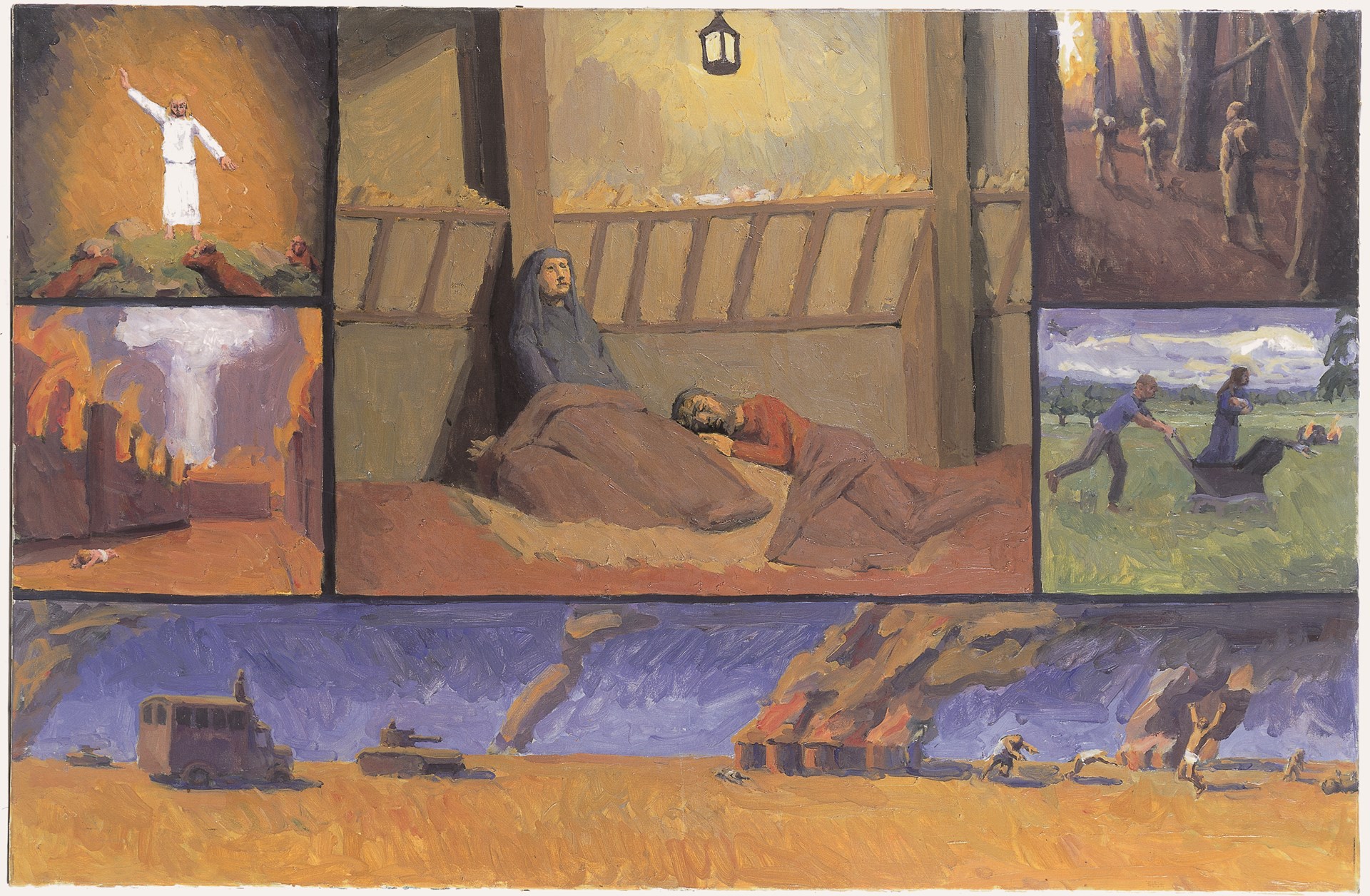
22. “Christmas: 1924”by Thomas Hardy: “We the civilized world have given Christianity a fair trial for nearly 2000 years, & it has not yet taught countries the rudimentary virtue of keeping peace,” lamented the British novelist and poet Thomas Hardy (1840–1928) in a letter to Florence Henniker dated February 25, 1900, during the Boer War. World War I only increased his cynicism, which is on display in this sour little epigram that opens with an ironic quotation of the angels’ proclamation to the shepherds the night of Jesus’s birth.
Francis Hoyland (British, 1930–), Nativity, 1961. Oil on canvas, 90 × 120 cm. Methodist Modern Art Collection, HOY/1963/1.
23. “Eating Baklava on New Year’s Eve” by Anya Krugovoy Silver: Poet Anya Silver (1968–2018) reads a spiritual benediction in her piece of baklava, layered and sweet and consumed on the eve of a new year.
Source: Second Bloom (Eugene, OR: Cascade Books, 2017)
24. “A Ballad of Wise Men”by George M. P. Baird: Jesus so often confounds the wisdom of the wise, starting with his birth. With gentle humor and in iambic rhythm and rhyme, this poem celebrates the simple access we all have to Christ.
Source: Rune and Rann (Pittsburgh: Aldine Press, 1916). Public Domain.
25. “Excrucielsis”by Hannah Main-van der Kamp: Originally published at ArtWay.eu as a response to the contemporary Romanian sculpture The Spring by Liviu Mocan, this poem alternates between the weary journeying toward truth of one of the biblical magi and that of a modern-day seeker similarly “longing for / the something more.” It can be a trudge, finding the Light—it involves risk, a willingness to follow the signs, and the tenacity to hold on to your “vision burden,” “clutch[ing] the weight” of it all the way over rough and varied terrain. But the epiphanic moment awaits, to sound like a trumpet blast. The title of the poem is a neologism combining the words “excruciating” and “excelsis” (Latin for “the heights”); “every excelsis contains something excruciating, that’s how we get to genuine excelsis,” the poet told me in an email. Read a related prose reflection by Main-van der Kamp here.
Source: The Slough at Albion (Victoria, BC: Ekstasis Editions, forthcoming)
Disclosure: This post contains Amazon affiliate links, meaning I earn a small commission from qualifying Amazon purchases originating from clicks on this site.
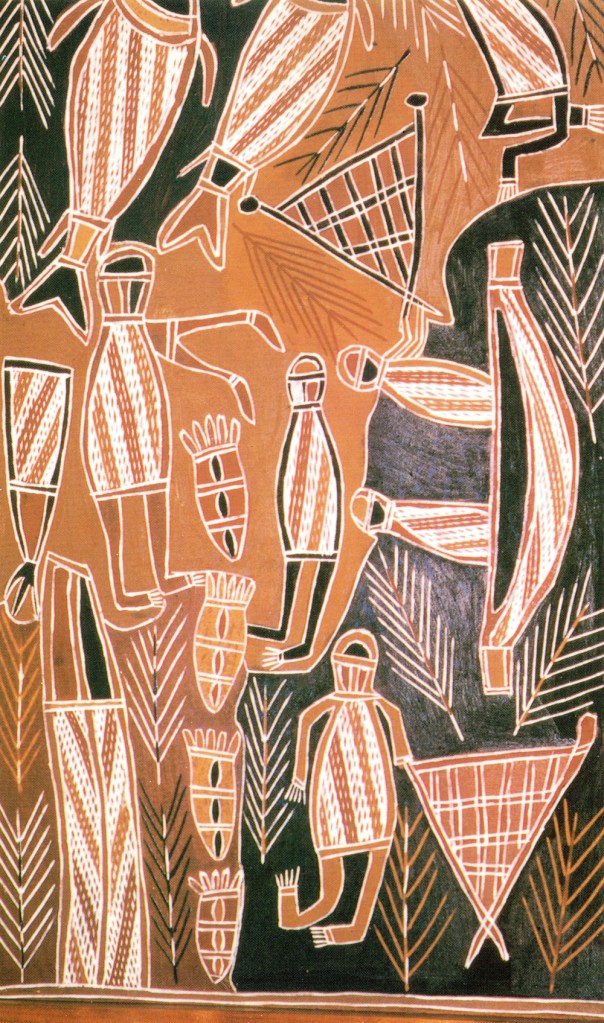
George Garawun (Djinang [Aboriginal Australian], 1945–1993), Calling the Disciples, natural earth pigments on eucalyptus bark, Maningrida Church, Arnhem Land, Northern Territory, Australia. Source: The Bible Through Asian Eyes, p. 93.
some Jesus
has come on me

i throw down my nets
into the water he walks

i loose the fish
he feeds to cities

and everyone calls me
an old name

as i follow out
laughing like God’s fool
behind this Jesus
“the calling of the disciples” by Lucille Clifton is the eleventh poem in a sixteen-poem sequence titled “some jesus,” originally published in Good News About the Earth (Random House, 1972) and later compiled in The Collected Poems of Lucille Clifton 1965–2010(BOA Editions, 2012).Used with permission.












 Art & Theology