Roundup: Kyries for Lent, refugee-themed art exhibition at Portsmouth Cathedral, “Forevergreen,” and more

NEW BOOK: Bread and Wine: Readings for Lent and Easter, Second Edition: Plough is the publishing house of the Bruderhof, an international Anabaptist communal movement. This year they released a revised and expanded edition of their popular Lent and Easter devotional, increasing the original seventy-two entries to ninety-six to cover the full fifty days of Easter—although the last section is themed around Pentecost. The selections are all from previously published material, but what a treasure-house has been curated here from across denominations, countries, and eras, from early church fathers to medieval mystics to modern saints. Clement of Rome, Julian of Norwich, Kahlil Gibran, Watchman Nee, Gonzalo Báez Camargo, Thomas Merton, Simone Veil, Howard Thurman, Toyohiko Kagawa, Barbara Brown Taylor, Jürgen Moltmann, Tish Harrison Warren—these are some of the many voices included here that reflect on and expound the beautiful truths of the Lent and Easter seasons. Each reading is just a few pages long, so it’s easy to pick up with your morning coffee or just before bed.
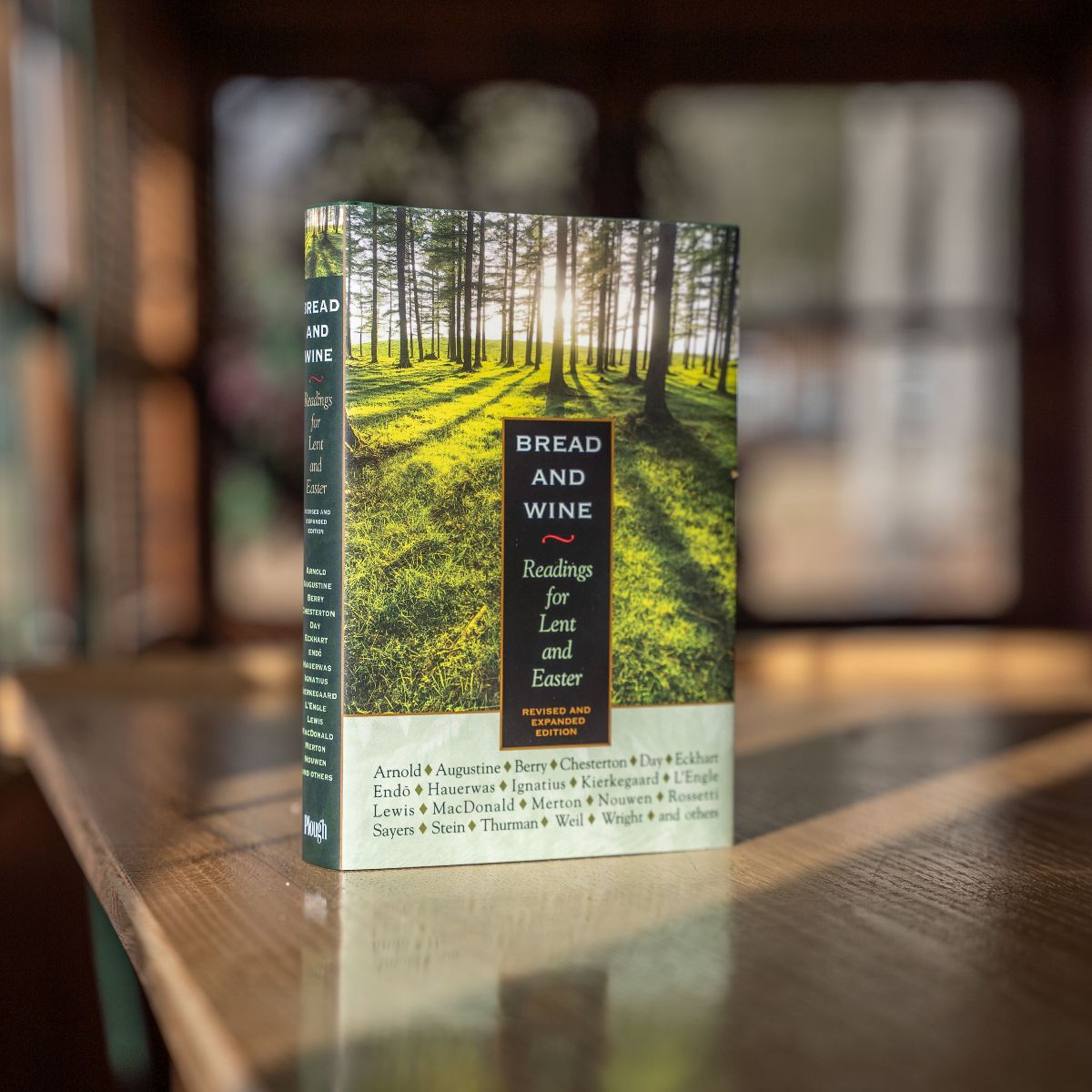
Bread and Wine book cover

Besides the expansion, other changes I’ve noticed in this edition are:

  • Thinner pages, which, despite the additional content, reduce the overall thickness of the book
  • The epigraph at the beginning of each reading was removed, as these were not the authors’.
  • Thirteen of the original readings were replaced, possibly due to permissions costs, but maybe also just to get in some fresh voices or content, and in one case, to remove an accused sex abuser.
  • A misattribution in the original to Mother Teresa was corrected to Joseph Langford, who founded the Missionaries of Charity Fathers with her.
  • There is a slight reordering of readings so that pertinent meditations appear during Holy Week.

I’ve provided a link to the Plough book page above, but you can also purchase through Amazon or your retailer of choice.

+++

SONGS:

I grew up in an independent Baptist church, ignorant of most of the historic prayers of the church at large. The first time I ever heard the phrase “Kyrie eleison” [previously] was on track 5 of the Christian recording artist Mark Schultz’s 2001 album Song Cinema, which is a cover of an eighties rock song by Mr. Mister. I was in middle school, and I had to look up what it meant. Derived from a prayer found in multiple places in the Psalms and the Gospels, “Kyrie eleison” (pronounced KEER-ee-ay eh-LAY-ee-sohn) is Greek for “Lord, have mercy,” and it’s traditionally followed by “Christe eleison”—Christ, have mercy. An inheritance from early Eastern Christian liturgies, it has been part of the Ordinary of the Catholic Mass since the fifth century, which means it’s recited or sung in every eucharistic service regardless of the liturgical season, and it’s used in many other Christian traditions as well. I’ve never been part of a church that sings the Kyrie, but I occasionally sing it in my personal devotions. It’s been set to music by hundreds of composers, for choirs, contemporary bands, and more. Here are two settings that I’ve recently come across and enjoy, followed by a song that entreats (God’s?) mercy on father, brother, church, country, and every living thing.

>> “Kyrie (Lord, Have Mercy)” by Robert Alan Rife: This song was written by Robert Alan Rife [previously], a minister with the Evangelical Covenant Church, serving in Edinburgh. It’s performed here by worship musicians at Great Road Church (formerly Highrock Covenant Church) in Acton, Massachusetts. The lead vocalist is Caelyn Jarrett Poetz; she’s accompanied on guitar by her dad, Travis Jarrett, the church’s music pastor, and Hannah Moulton provides backing vocals. Rife tells me you can purchase the sheet music here, and that other songs of his can be streamed on Spotify, Apple Music, etc.; he has not yet recorded this one, but it’s in the works.

>> “Kyrie” by Paul Smith: This peaceful, resonant setting of the Kyrie was composed by Paul Smith, cofounder of the Grammy-nominated British vocal ensemble VOCES8, who perform it here. The song appears on Smith’s 2025 album Revelations.

>> “Mercy Now” by Mary Gauthier: In this video from the 2010 Americana Music Festival in Nashville, folk singer-songwriter Mary Gauthier (last name pronounced go-SHAY) performs her most famous song, “Mercy Now,” originally released on her 2005 album of the same title. It doesn’t directly invoke God, but it feels like a prayer, asking for mercy (forgiveness, relief, compassion, lovingkindness) first for two family members—her father on his deathbed, and her drug-addicted brother—and then for the institutions of church and state, both in need of repair, and then for everyone: “We all could use a little mercy now / I know we don’t deserve it / But we need it anyhow,” and “only the hand of grace” can give it, can intervene to save us from our self-destructive ways. In response to the song’s being listed as “one of the saddest 40 country songs of all time” by Rolling Stone in 2014, Gauthier said, “It is not a sad song. It is about hope.”

+++

EXHIBITION: Sanctuary by Nicholas Mynheer, February 18–April 12, 2026, Portsmouth Cathedral, UK: One of my favorite artists, Nicholas Mynheer, has a show that opened on Ash Wednesday at Portsmouth Cathedral, aka the Cathedral of the Sea, and that will continue for the duration of Lent plus some. “The exhibition features paintings and sculptures that explore the experiences of refugees, both ancient and contemporary. The story of Jesus, Mary and Joseph fleeing to Egypt sits alongside the realities faced by people crossing the English Channel today. Mynheer’s work doesn’t offer easy answers – instead, it asks questions. What would we do if our home were no longer safe? How do we respond to those seeking refuge? What does it mean to hope for a better life when the risks are so great?”
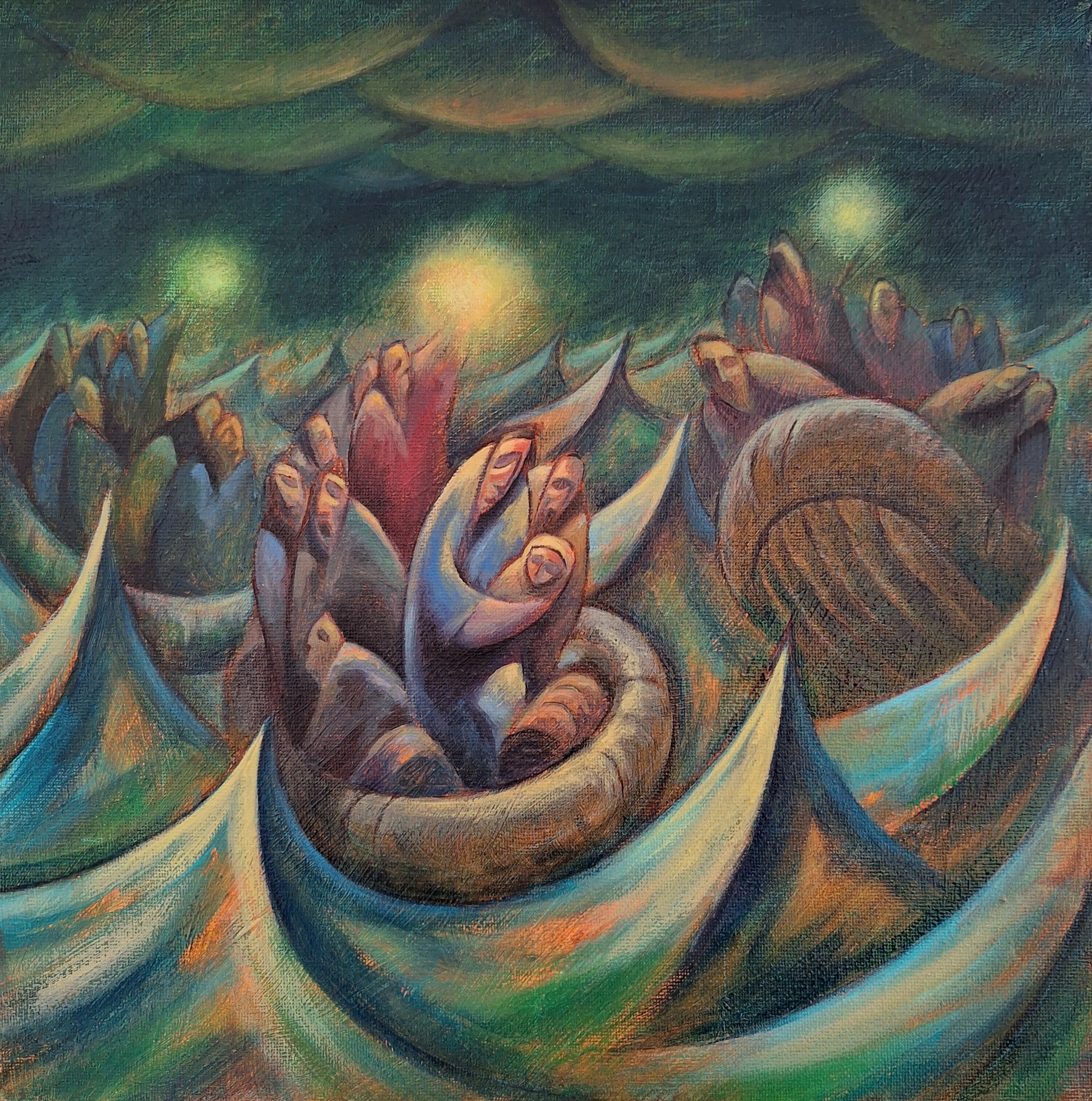
Mynheer, Nicholas_The Holy Family Cross the English Channel
Nicholas Mynheer (British, 1958–), The Holy Family Cross the English Channel, 2025. Oil on canvas, 30 × 30 cm.

View artworks from the exhibition on the artist’s website at https://www.mynheer-art.co.uk/gallery/sanctuary-exhibition.html. Follow him on Instagram @mynheer_art. Mynheer writes:

As an artist, one of the themes that I’ve been drawn to repeatedly is that of the Holy Family on the Flight to Egypt. The fact that even Jesus, Mary and Joseph became refugees to escape the wrath of Herod reminds us that it could happen to any one of us.

Over the past years we have become increasingly aware of the plight of refugees; from Syria, Afghanistan, Ukraine, Somalia, along with daily reports of refugees attempting to cross the English Channel. Whether they flee from war, persecution, famine, political instability or for economic reasons, the risks are the same; all driven by hope, the hope of a better life.

I often wonder what I would do if I lived in a country ravaged by war? What would I do if I was persecuted for my faith, my colour or my culture? What would I do if scrolling on my phone, others’ lives seemed easier, happier, and all I had to do was get there?

It is my hope that these meditations in paint and stone might draw us in to question how we might respond if we, like Jesus, Mary and Joseph, were forced to seek refuge; to be refugees . . . to search for Sanctuary.

Starting February 25, Portsmouth Cathedral is offering a free four-week Lent course (classes are in person on Wednesday evenings) inspired by the exhibition. The first class will be a talk by Mynheer himself, and the other three will be led by clergy, exploring biblical themes of journey, rescue, and redemption through the art on display.

+++

CALL FOR ART: The Valley of Dry Bones, Museum of the Bible, Washington, DC:The Valley of Dry Bones art invitational seeks to inspire the creation of new artwork based on Ezekiel 37:1–14, the biblical vision in which God brings life, renewal, and restoration to a valley of dry bones. Museum of the Bible invites Christian and Jewish artists residing in the continental United States to create original pieces in a variety of media that show their personal and spiritual reflections on this powerful theme. The goal is to show how the Bible can shape modern art and give visitors a meaningful way to connect with biblical themes through creativity. Museum of the Bible will choose 15 artists through a national call and design a professional exhibition to showcase their art from May 7–November 7, 2027. The museum will also help promote the artists and their work through talks, social media, and special events. Each artist chosen will be paid a stipend of $3,000 to cover the costs of creation, travel, and shipping.” Entry deadline: April 24, 2026.

Here’s a double print on the subject by my friend Margaret Adams Parker, aka Peggy:
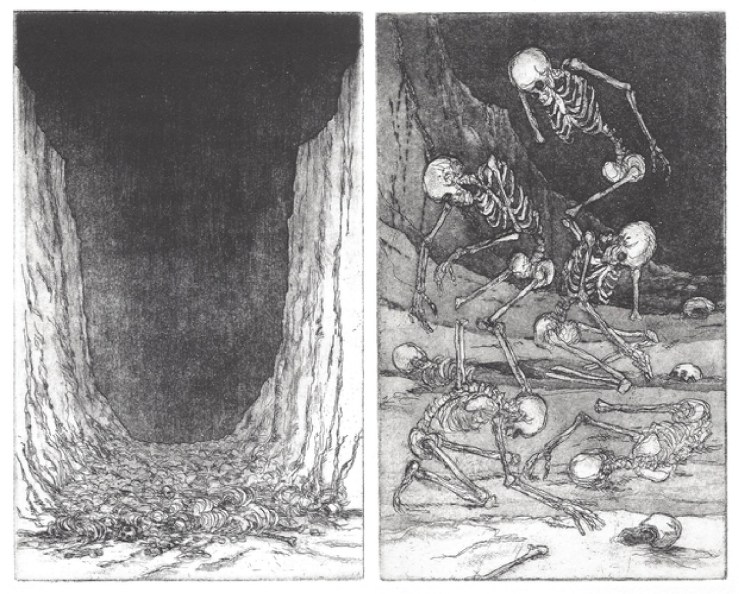
Parker, Margaret Adams_Ezekiel 37
Margaret Adams Parker (American, 1948–), Ezekiel 37, from The Vigil Etchings, 2013–14. Etching with roulette and aquatint on Somerset velvet white paper, each 8 1/2 × 5 1/2 in. Edition of 15.

+++

SHORT FILM: Forevergreen (2025), dir. Nathan Engelhardt and Jeremy Spears: With the announcement of the 2025 Academy Award nominations last month, I learned that Forevergreen is one of five nominees for Best Animated Short Film! Written and directed by two Christians in the animation industry (employed by Disney but working independently here) and executed by a team of over a hundred, Forevergreen is a thirteen-minute gospel-oriented film in which “an orphaned bear cub finds a home with a fatherly evergreen tree, until his hunger for trash leads him to danger.” I found out about it last November through the music artists who wrote the soundtrack, Josh Garrels and Isaac Wardell, and am delighted to see it recognized in such a huge way. I really dig its unique animation style, which uses whittled wood figures. The movie is currently streaming for free on YouTube (see embed below), but if you want to see it on a big screen, check your local theater listings.
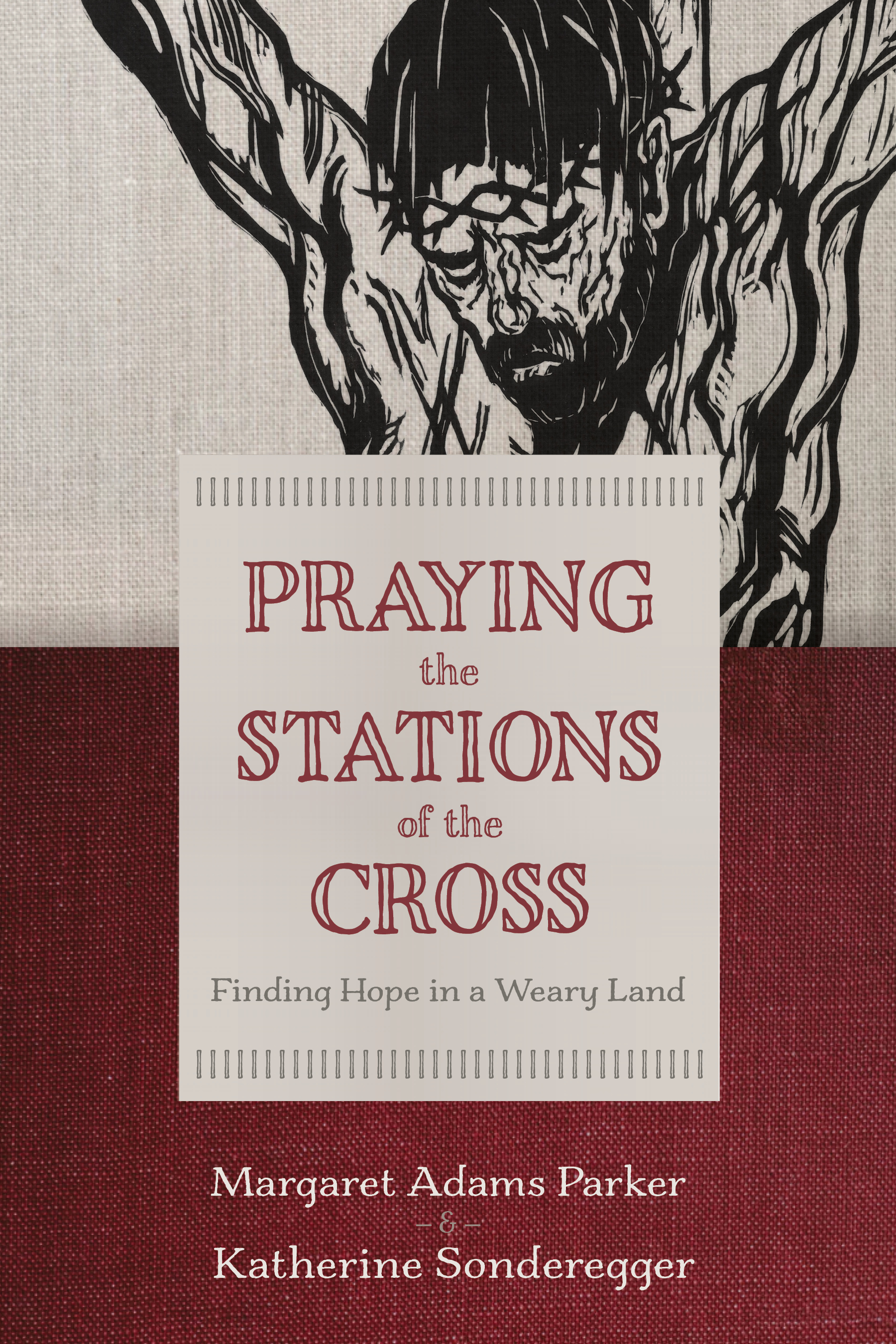
Book Review: Praying the Stations of the Cross by Margaret Adams Parker and Katherine Sonderegger

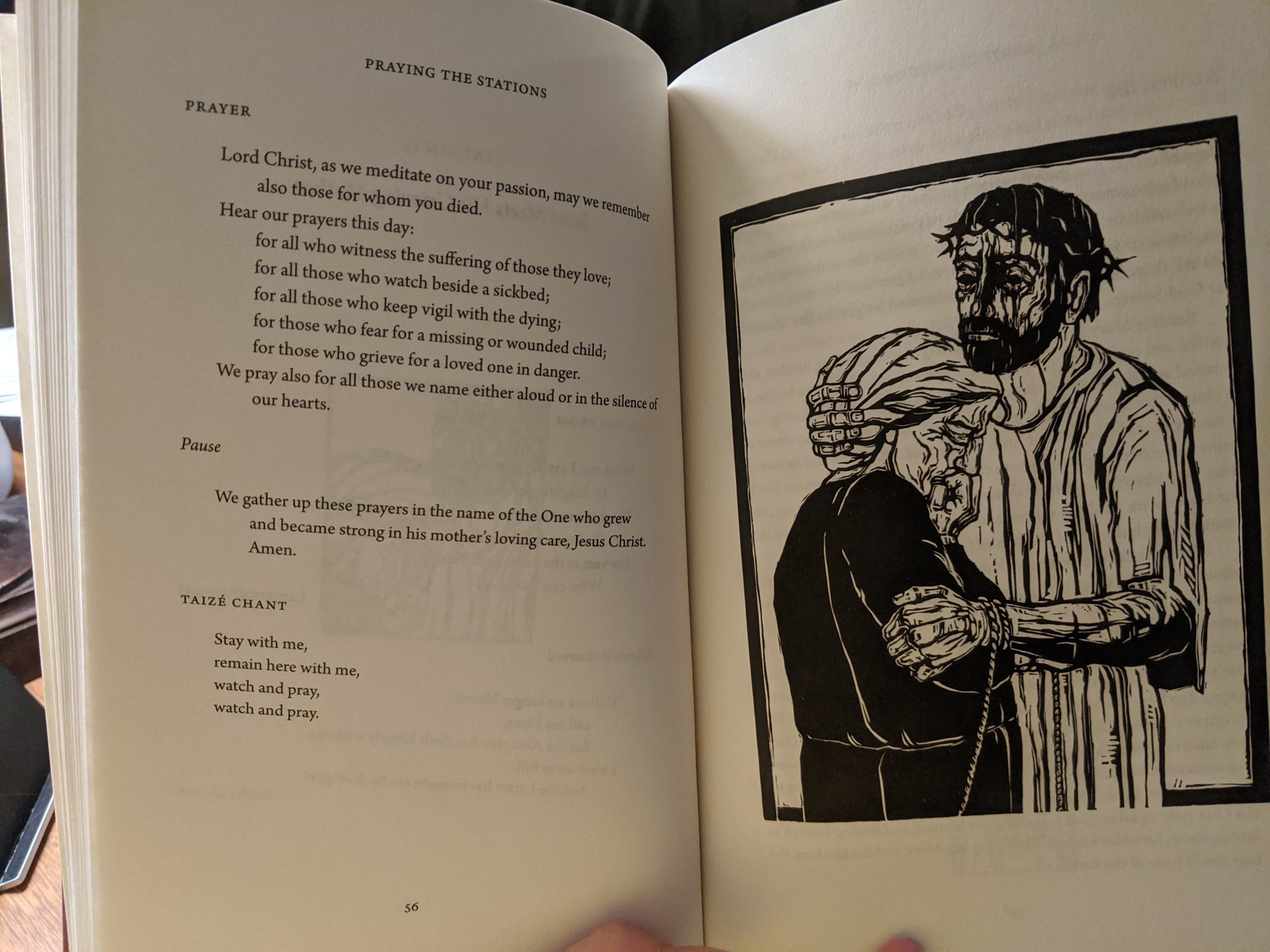
A collaboration between an artist and a preacher, Praying the Stations of the Cross: Finding Hope in a Weary Land by Margaret Adams Parker and Katherine Sonderegger (Eerdmans, 2019) is an ecumenical on-ramp to the ancient Lenten practice named in the title. A substantial introductory section provides a history of the Stations of the Cross, which are rooted in Holy Land pilgrimages, and selections from centuries’ worth of passion art, song, and other texts, showing the range of ways this old, old story has been engaged in various eras and locales. The core of the book is a service of scripture, prayer, image, and meditation, featuring original woodcuts by Parker alongside theological reflections by Sonderegger, who writes in a pastoral voice; together they draw us into the biblical narrative and its present-day implications, emphasizing how Christ’s mercy goes out and embraces all the sins and sorrows of the world. The final section provides resources for further study as well as an afterword by each of the authors, discussing their respective vocational callings and their approaches to this book project.

Praying the Stations of the Cross

Having grown up in a Baptist church, I don’t think I ever heard of the Stations of the Cross until college, and even then, it was just a vague head knowledge. My real entry point into the Stations—into a more experiential knowing of them—was through art, which I began studying more deeply about a decade ago and incorporating, in a loose way, into my spiritual practice. I came to realize that traditional images like the Ecce Homo and the Holy Face of Jesus and the Crucifixion and the Pietà, though often made to stand alone, are sometimes made as part of a fourteen-piece sequence that takes you all the way down the road to Calvary, from the praetorium to the tomb. And since the Middle Ages this sequence of images has had liturgies to go along with it.

The Stations of the Cross are about bearing witness, Parker writes, to the suffering death of Jesus Christ. They’re a way of being with a friend in his last moments (“How dreadful is the death that takes place alone, unwatched, unwept!”), and we do so in participation with fellow witnesses across time and place:

Countless pilgrims have walked and prayed the Stations of the Cross. We imagine that great cloud of witnesses, moving across centuries and cultures. We glimpse them in the winding streets of Jerusalem, in magnificent cathedrals of Europe, in dusty villages in South America. They are rich and poor, young and elderly, vigorous and dying, joyous and heartsick. They pray beside images resplendent in gold and rich color, in front of stark depictions in wood and unbaked clay, with Stations marked by numbers only. They speak and chant and pray in a myriad of languages. They weep. They stand silent. It is remarkable and moving to think of all of these worshipers—in ways so many and so varied—bearing witness to Jesus’s atoning work.

Today the practice of the Stations, for centuries primarily a devotion for Roman Catholics, has spread into the other liturgical denominations and even beyond. It takes many forms, visually and liturgically, from the sparest set of recitations to the most ornate combination of images, texts, and hymns. But to some Christians the practice can seem strange, bizarre, or even offensive, a kind of lugubrious piety with the puzzling addition of nonbiblical scenes. Why would the Stations dwell on this suffering, offering prayers that often seem to focus on Christ’s wounds? What is the spiritual and theological merit of the Stations? And how can a valid spiritual discipline include six (out of fourteen) scenes that are absent from the New Testament account of Christ’s passion? (7–8)

The authors go on to answer these questions, demystifying the Stations—drawing out their theological meaning, scriptural significance, and pastoral dimensions. They clarify the common misconception that the Stations are only about suffering, doubt, and darkness; actually, they are just as much about hope and redemption and resurrection. They are consolatory by nature.

Praying the Stations of the Cross book
Excerpt from Station IV, “Jesus Meets His Grieving Mother”

Praying the Stations of the Cross book
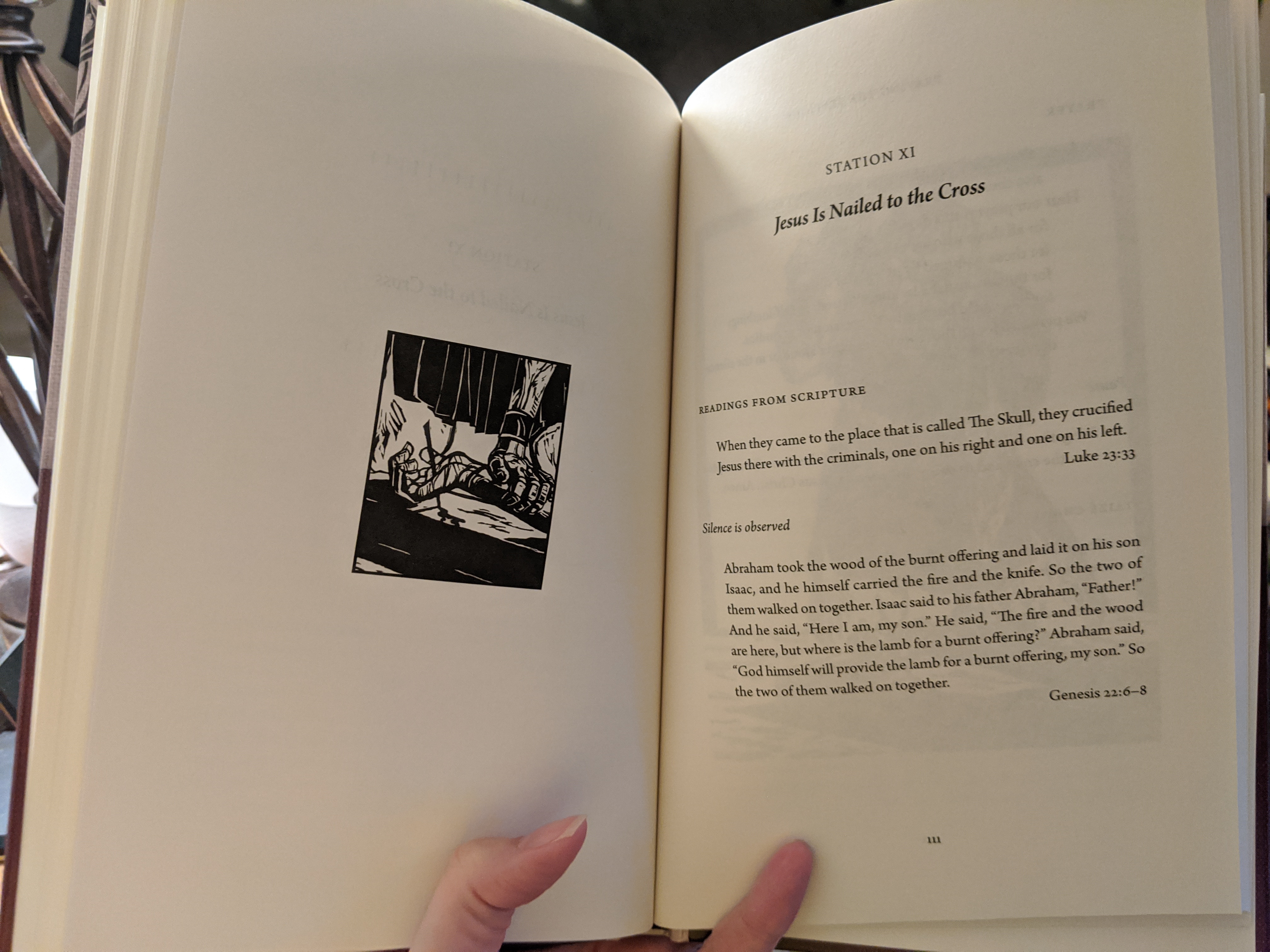
Excerpt from Station XI, “Jesus Is Nailed to the Cross”

Though centered on the person of Jesus and his journey to the cross, the Stations can also be a way of bearing witness to the suffering of those around us. Historically, they have sometimes taken this form, emphasizing that Christ stands beside all those who suffer. The prayers in Praying the Stations, written by Sonderegger, reflect this concern, interceding for those who bear heavy burdens; who are stricken by shame, guilt, or fear; who live in places of famine or disaster; and so on.

(Related post: “‘Where Sorrow and Pain Are No More’ by Margaret Adams Parker”)

One of the most powerful reflections in the book is on Station XIII, “Jesus Is Placed in the Arms of His Mother.” While acknowledging the uniqueness of Mary, Sonderegger also identifies her as every woman who is vulnerable through the suffering of those she loves. The image of Mary holding her dead son, therefore, can speak to the women of Ramah or Hiroshima, Auschwitz or the Jim Crow South, or any number of other mothers, wives, daughters, sisters who have lost loved ones to violence.

Praying the Stations isn’t merely a theoretical introduction to the Stations of the Cross; it’s practical, hands-on. The new worship service of the Stations that it offers gives readers the opportunity to see for themselves the powerful impact such a practice can have. The book would be suitable for individual or group use—I can envision it being used in small-group settings or corporate worship, or in private devotions.

As one who has never participated in a formal “Praying the Stations” liturgy—being from a denomination that does not readily avail itself of this rich devotional resource from the church’s past—I found the book incredibly helpful in understanding the purpose of the Stations and how a church community of any type could make use of them. The book is perfect for beginners (I’d especially recommend it to pastors and liturgists), while also being of value to those already familiar with the Stations, as it provides a fresh encounter, through word and image, with Jesus’s “Way of Sorrows.” The dual perspective of artist and preacher-theologian is a real asset. Clear, wise, and compassionate.

[Purchase from publisher] [Purchase on Amazon]

+++

I’ve featured artists’ interpretations of the Stations of the Cross several times on this blog and its predecessor, sometimes as part of a roundup, sometimes in full-fledged posts:

Roundup: Modern Bible illumination; hula; First Nations baptism design; father-daughter waltz; Tamayo and Parker

ESV Illuminated Bible spread

NEW BOOK: ESV Illuminated Bible (2017): In October Crossway released a new Bible illuminated by Seattle-based designer and lettering artist Dana Tanamachi. Printed in two-color (the illuminations are in gold ink), this volume contains one full-page illustration, custom icon, and illuminated drop cap for each book of the Bible, plus hundreds of hand-lettered Bible verses throughout the margins. There are no human figures in any of the illuminations; most consist of flora and fauna—olives, figs, pomegranates, peacocks, lions, lilies, deer, cedar, and so on—derived from the given book. Be sure to check out the book-opener illustration index, and the short video below, in which Tanamachi introduces herself, talks through her process, and explains some of her artistic choices:

“God loves beauty, so we wanted to honor him through this project with something that was beautiful,” says Josh Dennis, Crossway’s senior vice president of creative. “For this edition we really want people to engage with it, so there’s a lot of negative space and wide margins for people to write in it and to do their own Bible journaling.”

This publication comes six years after the release of Makoto Fujimura’s Four Holy Gospels, another illumination project. Fujimura’s is an oversize book with a $150 price point, containing original abstract paintings reproduced in full color alongside the first four books of the New Testament. By contrast, the ESV Illuminated Bible is more wieldy—it has a 6½ × 9 trim size—and less costly ($45), and it contains all sixty-six books. The aesthetic is also much different, as Tanamachi’s influences include art nouveau, the arts and crafts movement, and designers like William Morris and Koloman Moser. [HT: David Taylor]

+++

CHRISTIAN HULA: “‘O ‘Oe ‘Io” (You Are God): Though reduced to tourist entertainment in some places, Hawaiian hula dancing, in its traditional context, is a form of teaching and worship. Because of its associations with polytheism, early missionaries denounced it as sinful. Over the last half century or so, however, most missionaries have changed their stance toward this and other traditional forms of artistic expression—not only in Hawaii, but in whatever their host culture—seeing how such forms can offer more authentic ways for the people to connect to and worship the Christian God.

In the video below, Moani Sitch and ‘Anela Gueco perform a hula noho (“seated hula”) at the 2006 Urbana student missions conference sponsored by InterVarsity Christian Fellowship. It’s to the Christian hymn “‘O ‘Oe ‘Io” (You Are God), originally written in Maori by Luke Kaa Morgan but translated into Hawaiian by Moses Kaho‘okele Crabbe. The sacred name for Creator God—‘Io—is the same in both languages. The lyrics are below. [HT: Global Christian Worship]

‘O ‘oe ‘Io, e makuna lani (You are God, Heavenly Father)
‘O ‘oe ‘Io, ka waiola (You are God, the Living Water)
‘O ‘oe ‘Io, e kumu ola (You are God, the Source of Life)
Ka mea hana i na mea apau (The one who has made all things)
E ku‘u Haku (My Lord)
Ka mauna ki‘eki‘e (Who is the Highest Mountain)
‘O ‘oe ‘Io (You are God)

For a fantastic religious history of Hawaii, see this PDF booklet published by Aloha Ke Akua (“God Is Love”) Ministries. Among the many things I learned is that Hawaiians regard the arrival of Christian missionaries as the fulfillment of their elders’ prophecies that the one true God would one day return to the islands.

+++

FROM THE ARCHIVES: “Jesus as Chief: ‘Baptism Mural’ by Tony Hunt”: First Nations artist Tony Hunt Sr. died last month, just two months after his son Tony Hunt Jr., also a renowned carver. Read about Hunt Sr.’s inculturated serigraph of Christ’s baptism at my old blog, The Jesus Question—part of a seven-part series I did on Christian art of the Pacific Northwest Coast. Based on a carved and painted design he made for the Canadian Conference of Catholic Bishops, it shows John the Baptist as a Kwakwaka’wakw shaman in Native dress and with ceremonial rattle, installing Jesus as chief. The Father is manifest as Sun and the Spirit as Thunderbird.   Continue reading “Roundup: Modern Bible illumination; hula; First Nations baptism design; father-daughter waltz; Tamayo and Parker”

ESSAY: “Where Sorrow and Pain Are No More” by Margaret Adams Parker

Last summer when participating in a two-week Calvin College seminar, I was providentially assigned to room with Margaret (Peggy) Adams Parker, a sculptor and printmaker who lives, as it so happens, just an hour south of me! Peggy’s enthusiasm—for God, for life, for art—is infectious. She possesses such deep joy, and yet she feels so deeply the hurts of the world. She is attentive, as all good artists must be. “I feel called as an artist to bear witness to the world I see around me and also to the ways I understand that world,” Peggy wrote in an ArtWay feature. “This yields not only images of beauty and tenderness, but also images of suffering and terror.” She regards her art as a means of prayer.

The recipient of numerous church and seminary commissions, Peggy majors on religious and social justice themes. Her sculpture Mary as Prophet won a 2016 honor award from the Interfaith Forum on Religion, Art, and Architecture. In addition to maintaining a studio practice and doing shows, Peggy serves as an adjunct instructor at Virginia Theological Seminary, teaching such courses as “Encountering Scripture through the Visual Arts” and “The Artist as Theologian.” She also writes for various publications, including ARTS: The Arts in Religious and Theological Studies and the Anglican Theological Review, and collaborated on the book project Who Are You, My Daughter? Reading Ruth through Image and Text. She is currently working on a Saint Andrew sculpture group. To learn more about Peggy and view more of her work, visit her website, www.margaretadamsparker.com.

By way of further introduction, here is an essay Peggy wrote ten years ago for the book Heaven, ed. Roger Ferlo (New York: Seabury Books, 2007), pp. 158–66. It is reproduced by kind permission of the publisher.

“Where Sorrow and Pain Are No More”

by Margaret Adams Parker

To be honest, I’ve never thought much about heaven, at least in any systematic fashion. I was interested enough to pick up, at some point, The Great Divorce, C. S. Lewis’s allegory of heaven and hell. And I’ve been known to joke about my expectations that heaven had better have a comprehensively stocked art studio, as well as a fabulous bookstore.

But in looking back though many years of making art and also teaching about art at a Christian seminary, I’ve unearthed a great deal about heaven, although not in the expected places. I haven’t glimpsed heaven among the many imagined depictions, ranging from medieval woodcuts to the visual speculations of twentieth-century outsider artists. I’m simply not drawn to “visionary” images. These are not the kinds of images I make. Instead, my image of heaven is distinctly negative (theologians would call it apophatic). I have no vision of what heaven is like. But I have seen, and I have also made, pictures of what heaven is not.

I am a concrete thinker, and so my art is earthbound, far from visionary. I’ve always understood the incarnational nature of Christianity as a charge to take seriously life in this world. What’s more, my two great artistic mentors—Rembrandt and Käthe Kollwitz—were rarely given to visions. Rather, their work was grounded in the physical, spiritual, and social realities of life. Such symbols as they used (most notably Kollwitz’s use of the skeleton to represent death) served to underscore their understanding of human existence as it is. They recorded moments as small as a child learning to walk and as momentous as war or revolution. Even when picturing the incarnation, that most heavenly of earthly events, both artists showed the miracle taking place in a tangible human setting.

Consider some of these two artists’ characteristic images. Rembrandt’s drawings testify powerfully to his all-encompassing interest in the life around him. He depicted everyone he saw—beggars and merchants, rabbis and serving girls—with the same probing yet sympathetic scrutiny. His drawings of his wife Saskia constitute a particularly poignant record: we watch as she endures four pregnancies, suffers the deaths of three infants, and finally dies at thirty, a short nine years after their betrothal. We glimpse her first in a silverpoint drawing (1633), made the week of their engagement. In this love poem in line, Rembrandt shows us a winsome young woman, resting her cheek lightly against her hand, dangling in her other hand one of the flowers that also adorn her straw hat. In a pen and ink drawing made four years later (1637), Saskia lies in bed, supporting her head heavily on her hand, staring out with a weary and resigned expression. And in the image that Rembrandt sketched on a tiny etching plate the year Saskia died (1642), she has become an old woman, worn, gaunt, and desperately ill.

Portrait of Saskia as a Bride
Rembrandt van Rijn (Dutch, 1606–1669), Portrait of Saskia as a Bride, 1633. Silverpoint on parchment, 18.5 × 10.7 cm (7 3/10 × 4 1/5 in.). Staatliche Museen Preussischer Kulturbesitz, Kupferstichkabinett, Berlin. Inscription (trans.): “This was portrayed after my wife when she was 21 years old, the third day after we were married. June 8, 1633.”

Saskia in Bed
Rembrandt van Rijn (Dutch, 1606–1669), Saskia in Bed, ca. 1637. Pen and brown ink, 8.4 × 10.4 cm (8 3/10 × 10 1/10). British Museum, London.

Sick Woman with a Large White Headdress by Rembrandt
Rembrandt van Rijn (Dutch, 1606–1669), Sick Woman with a Large White Headdress (Saskia), ca. 1642. Etching with touches of drypoint, 6 × 5.1 cm (2 3/8 × 2 in.).

Käthe Kollwitz’s imagery is more politically engaged. The daughter of a trained lawyer who chose to work as a builder rather than practice within the Prussian legal system, she spent her life depicting the plight of the poor and protesting the ravages of war. In her first great print series, A Weavers’ Rebellion (1897–98), she chronicled the causes, progression, and bloody aftermath of the 1844 revolt of Silesian home weavers against their employers. The series begins with Poverty (1894), where a family of weavers gathers around the deathbed of an infant, and concludes with The End (1897), where the bodies of slain revolutionaries are being laid out on the floor of a weaver’s cabin. In both of these dimly lit interiors, the looms and other apparatus of the weavers’ trade stand as ominous reminders of the weavers’ plight.   Continue reading “ESSAY: “Where Sorrow and Pain Are No More” by Margaret Adams Parker”