Roundup: Via Dolorosa with medical X-rays, hope in the night, and more

PRINT SUITE: Via Dolorosa by William Frank: Commissioned by SSM Saint Louis University Hospital for their chapel, this set of Stations of the Cross prints by William Frank combines depictions of Christ’s passion with diagnostic X-ray imaging of patients from the hospital’s archives. “The human body, and the community, act as the landscape,” he told me. A bullet in the spine, a kidney stone, a wrist fracture, a tumor, tuberculosis of the bones—Jesus’s suffering unfolds against the backdrop of these specific, tangible forms of suffering. But the rainbow color scheme transforms the stark black-and-white medical images into something a little less scary, suggesting hope and promise—maybe healing, maybe not, but at the very least, divine accompaniment along the path of sorrow.
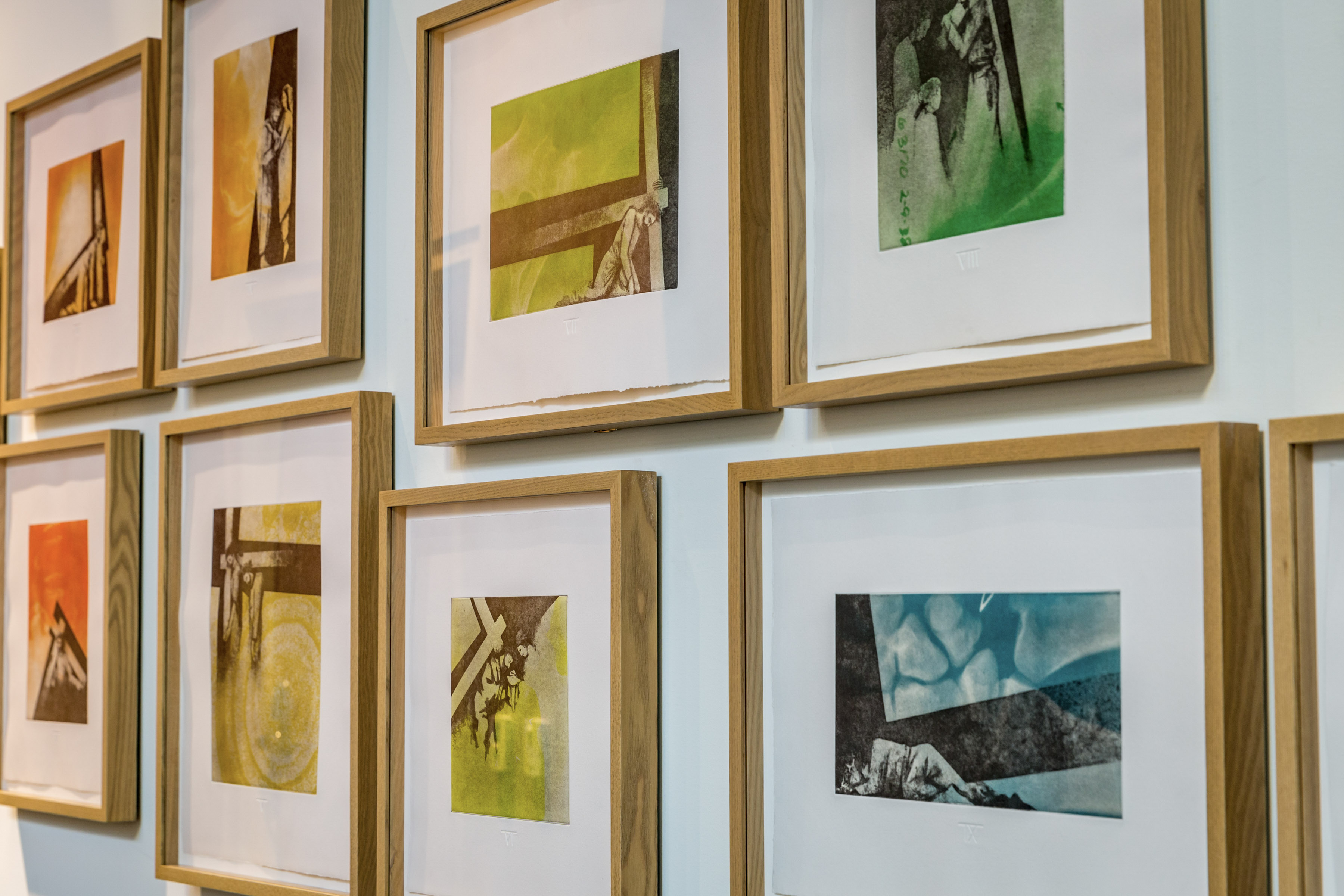
Frank, William_Via Dolorosa
William Frank (American, 1984–), Via Dolorosa (installation detail), 2020. Etching, archival inkjet, chin collé, with embossment, suite of fourteen prints, overall 4 × 16 ft. SSM Saint Louis University Hospital Chapel, St. Louis, Missouri. Photo: Lisa Johnston, courtesy of the artist.

This year, the Catholic Health Association of the United States created a set of video reflections around Frank’s Stations, one for each piece, which you can find at https://www.chausa.org/prayers/lent-reflections. They also shot a video conversation with the artist:

The suite won a Faith & Form International Award for Religious Architecture & Art.

+++

NEW SONG: “Spooling” by Rev. Matt Simpkins: Diagnosed with stage 4 skin cancer, the Rev. Matt Simpkins [previously] of Lexden in Colchester, an Anglican vicar and a rock musician, said the only way he could calm his nerves enough to get through his next MRI scan was by writing a song from inside the machine. He composed some words and harmonies in his head to the “groovy,” sonorous beeps of the scanner, recording the song afterward using sampling, thus turning a typically threatening, antiseptic medical sound into a party vibe. He was interviewed on the BBC about it last month:

And here’s the bizarre music video, with special effects!

“I’m in a difficult situation with stage 4 cancer, but again, you’ve got a choice, and this song is a good example of that—how you can take something up into song and live,” he says. He hopes the song will minister to those who are undergoing cancer treatment or facing a possible diagnosis—that it is a small oasis, a source of silly laughter, comfort, and strength, for those in dire health.

“Spooling” is the first single from Simpkins’s forthcoming album Pissabed Prophet, a collaboration with his friend Ben Brown. The album is available for preorder on Bandcamp.

+++

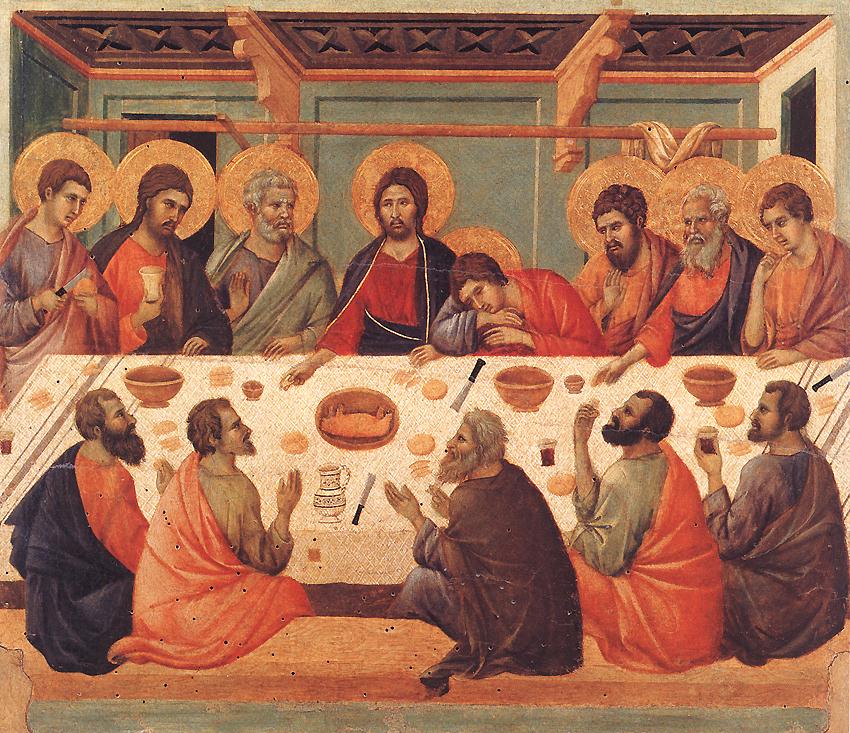
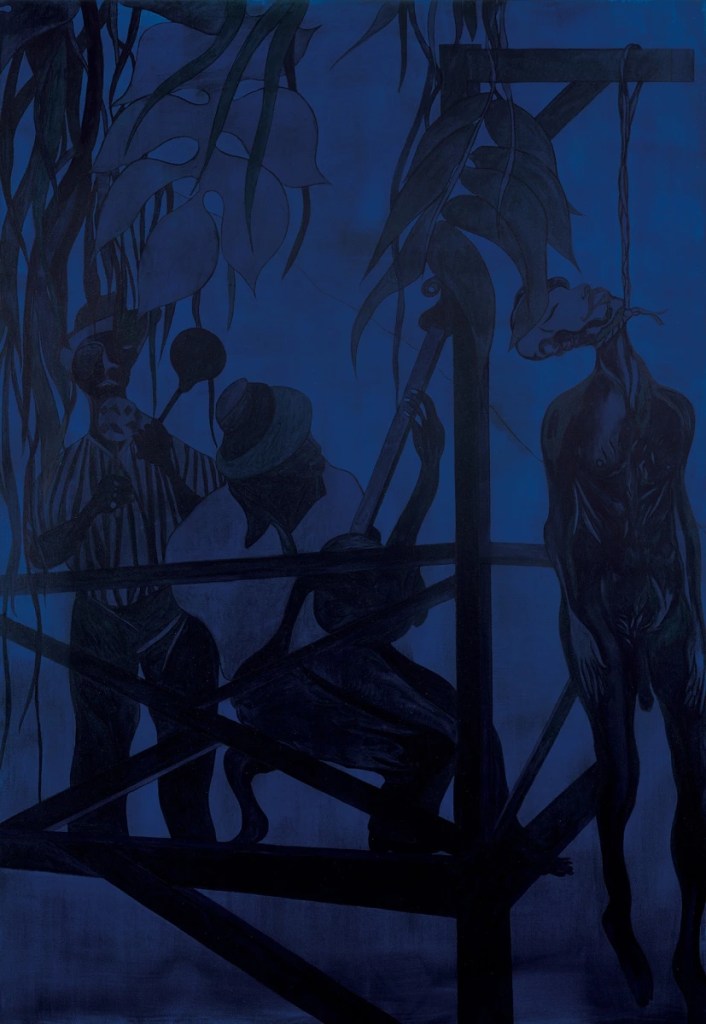
ART COMMENTARY: The Apostle Judas by Adrienne Dengerink Chaplin: As part of the Visual Commentary on Scripture project, Dr. Adrienne Dengerink Chaplin has selected three artworks that in some way interpret Matthew 26:20–25 (and parallel passages), when at the Last Supper Jesus announces that someone there will betray him. Rather than featuring the more common portrayals of Judas as malevolent, halo-less, and/or segregated from the group at the far end of the table, Dengerink Chaplin has chosen works that show him integrated and indistinct, one of twelve betrayers, whose treachery, she boldly proposes, we might construe as “a happy fault.”
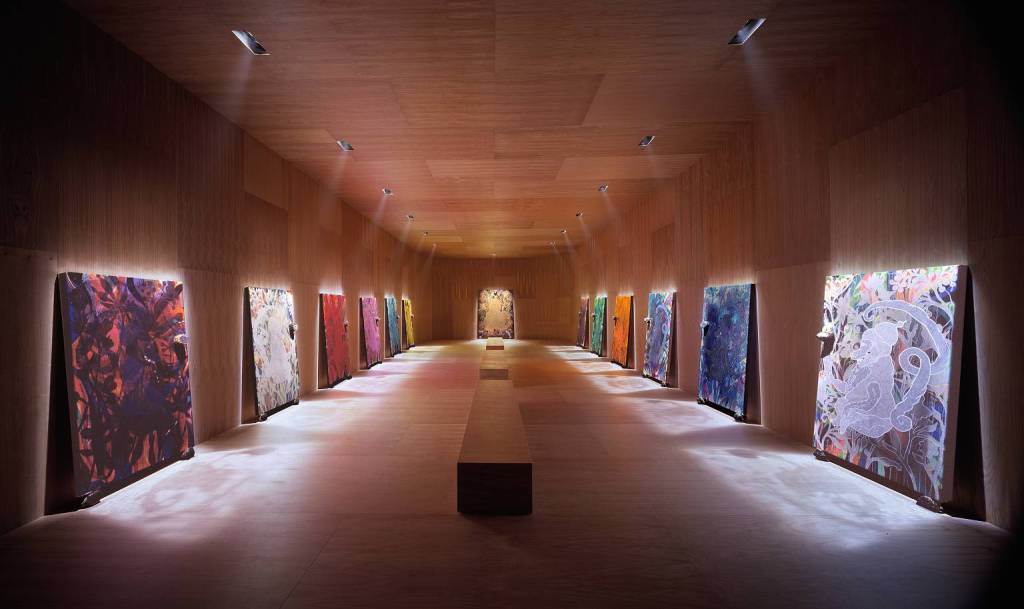
  • Ofili, Chris_The Upper Room
  • Duccio_Last Supper
  • Ofili, Chris_Iscariot Blues

With the Duccio panel, she points out something I’ve often contemplated as well: that Jesus feeds Judas with the element he calls his body, keeps communion with him, and is there not a preemptive forgiveness implicit in that act?

+++

SONG: “In the Night” by Andrew Peterson: At a Laity Lodge retreat in 2015, Andrew Peterson of Nashville performed one of the songs from his album Counting Stars (2010) with fellow musicians Buddy Greene, Jeff Taylor, and Andy Gullahorn. “In the Night” rehearses “dark night” stories from scripture: Israel wrestles with God, is enslaved by Egypt, is pressed in by Syria; a prodigal son must resort to eating pig slop; the Son of Man is beaten and killed. But in each of these stories, deliverance comes. Hence the refrain: “In the night, my hope lives on.”

+++

VISUAL MEDITATION: On The Holy Women at the Tomb by George Minne, commentary by Marleen Hengelaar-Rookmaaker: Marleen Hengelaar-Rookmaaker, the creator of ArtWay, writes about a nineteenth-century bronze sculpture by the Belgian artist George Minne, which shows the three women who went to Jesus’s tomb on Easter morning in an attitude of grief—bent backs, bowed heads—drawing on the gothic pleurants, or weepers, of late medieval tombs. The women are “totally enwrapped in mourning their beloved,” Hengelaar-Rookmaaker writes. “This is in fact the very last moment of the passion, the last moment of suffering past the Pietà and the burial of Christ. It will only be a minute before their hoods will come off and the news of the resurrection will enter their numbed minds.”
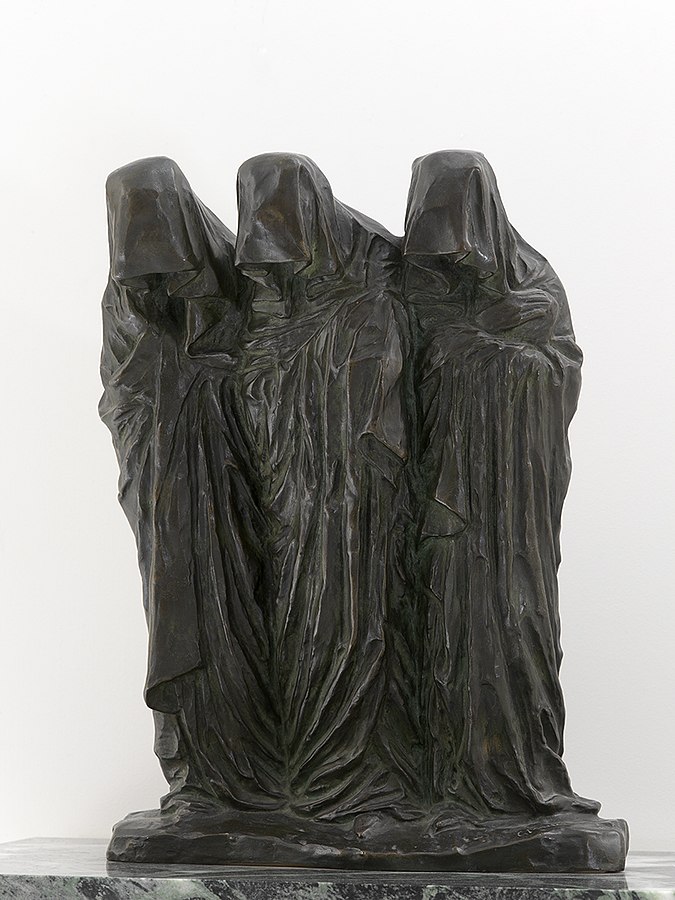
Minne, George_The Holy Women at the Tomb
George Minne (Belgian, 1866–1941), Les saintes femmes au tombeau (The Holy Women at the Tomb), 1896. Bronze, 44.5 × 62 × 20.5 cm. Groeningemuseum, Bruges, Belgium.

This composition by Minne also exists in granite, wood, and plaster versions.

+++

NEW PLAYLIST: April 2023 (Art & Theology): Includes an excerpt from the psychedelic rock–style Mass in F Minor by the Electric Prunes, “The Outlaw” by Jesus Movement icon Larry Norman, a chuckle-inducing bluegrass song first recorded in 1926 by Gid Tanner and Faith Norris and covered here by the Local Honeys, a choral setting of Psalm 128 (“Happy is everyone who fears the Lord, who walks in his ways . . .”) by the Italian Jewish Renaissance composer Salomone Rossi, Whitney Houston’s rendition of “His Eye Is on the Sparrow,” and a short Kiowa Apache church song that translates to “Son of our Father will set up a cedar tree / Now he is calling to us / He’s going to heal our minds / That’s why he is calling to us.”
Walking the Via Dolorosa through Amsterdam (Part 1)

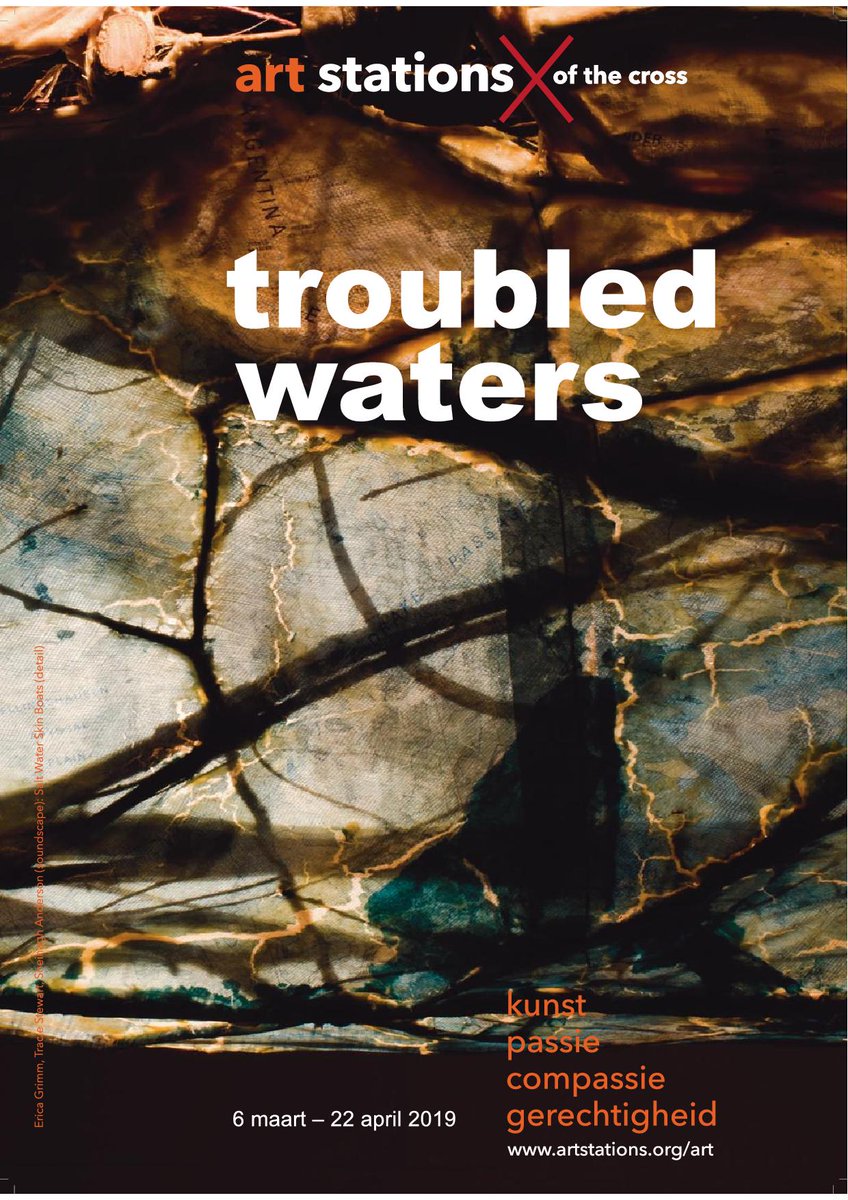
Last month I undertook a contemporary art pilgrimage through Amsterdam, curated by Marleen Hengelaar-Rookmaaker and Anikó Ouweneel-Tóth under the aegis of Art Stations of the Cross, a project founded in 2016 by Dr. Aaron Rosen and the Rev. Dr. Catriona Laing. (Previous city-specific editions have been in London; Washington, DC; and New York.)

Inspired by the traditional Stations of the Cross, the pilgrimage comprises fifteen stops at thirteen locations across the city, where participants are invited to spend time before a specially chosen contemporary artwork that addresses some form of human or environmental suffering. The route starts at the Basilica of Saint Nicholas (Amsterdam’s patron saint) just across from the train station and weaves through, among other places, a park, the old Jewish quarter, a former orphanage, a church-cum–rock concert hall, a hidden house church where persecuted Catholics used to worship, and the red-light district, ending inside the Oude Kerk (Old Church), the city’s oldest extant building, located right in the heart. Not only the art but also the sites themselves were selected with intention, each one a part of the journey down this via dolorosa, “way of sorrows.”

This was my first time to Amsterdam, and it was such a good way to see the city, learn about the city, and pray for the city—all through the agent of art, which functions in this experience as a series of visual laments. When I encounter suffering or read about it in the news, I am often at a loss for how to bring it before God in prayer. I feel its heaviness but lack the words to express that feeling or to intercede in any concrete way. That’s why I’m so appreciative of artists, whose work so often becomes, for me, a nonverbal prayer addressed to my Maker, as I behold and internalize what the artist has first beheld and internalized and has then shared with me through whatever their medium. This is a gift that artists offer the church: vision, long and deep, that’s sensitive to the glories but also the woes of the world and that invites others in, through the skillful crafting of materials, to see right along with them. That act of seeing—of noticing, of giving attention to—can itself be prayer.

Troubled Waters

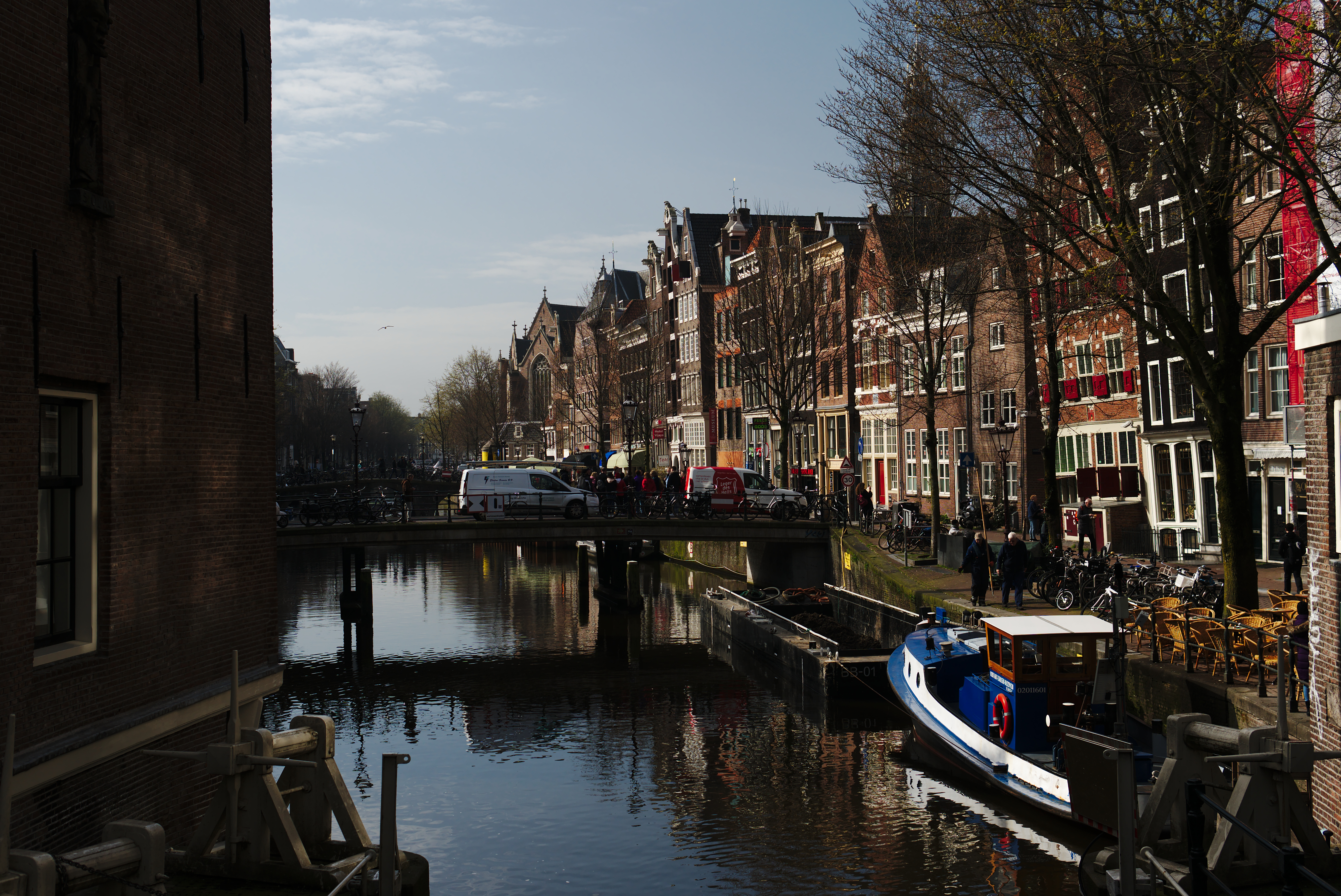
Amsterdam was founded as a fishing village at the end of the twelfth century with the building of a dam on the Amstel River. (The name Amstelledamme later evolved into Amsterdam.) Its sixty-plus miles of interconnected canals have earned it the nickname “Venice of the North” and make it the most watery city in the world. These navigable waterways led to Amsterdam becoming, in the seventeenth century, the foremost maritime and economic power in the world, and the wealth that came through international trade also enabled the arts and sciences to flourish throughout the country; that’s why the seventeenth century is known as the Dutch Golden Age. (Think Rembrandt and Vermeer.)

Amsterdam canal

The exhibition’s subtitle, Troubled Waters, alludes to the fraught nature of Amsterdam’s identity as a historic port city into which both goods and people travel. The pioneering Dutch East India Company, an amalgamation of trading companies that is now defunct, is important in global business history as the forerunner of modern corporations, but it also cannot be separated from its involvement in the slave trade. Although slavery was formally abolished in the Netherlands in 1863, it continues in Amsterdam’s sex industry, in which a percentage of workers are victims of human trafficking; girls and women sometimes arrive in shipping containers, enslaved by pimps and even further by ignorant customers.

Other residents of Amsterdam arrive as refugees, and for many of them, water is a formidable danger that must be traversed on the way to safety.

“Troubled waters” also references the acidification, pollution, and rising temperatures of the world’s oceans, which endanger the many marine species that live there. So even the water itself bears wounds.

Although the overall tone of the pilgrimage is one of sorrow, pockets of hope are dispersed throughout, as in the empowered Surinamese painted by Iris Kensmil (station 5), Paul van Dongen’s Rising drawing that counterbalances his Judgment (station 7), Janpeter Muilwijk’s afterlife vision of his dead daughter victoriously bounding over the earth (station 9), the soothing “streams of mercy, never ceasing” that provide an auditory accompaniment to Anjet van Linge’s chiseled “Kyrie eleison” (station 12), and, of course, the inclusion of a resurrection station (station 15).

(Related posts: “Stations of the Cross at the Smithsonian American Art Museum”“Remembering Charleston”)

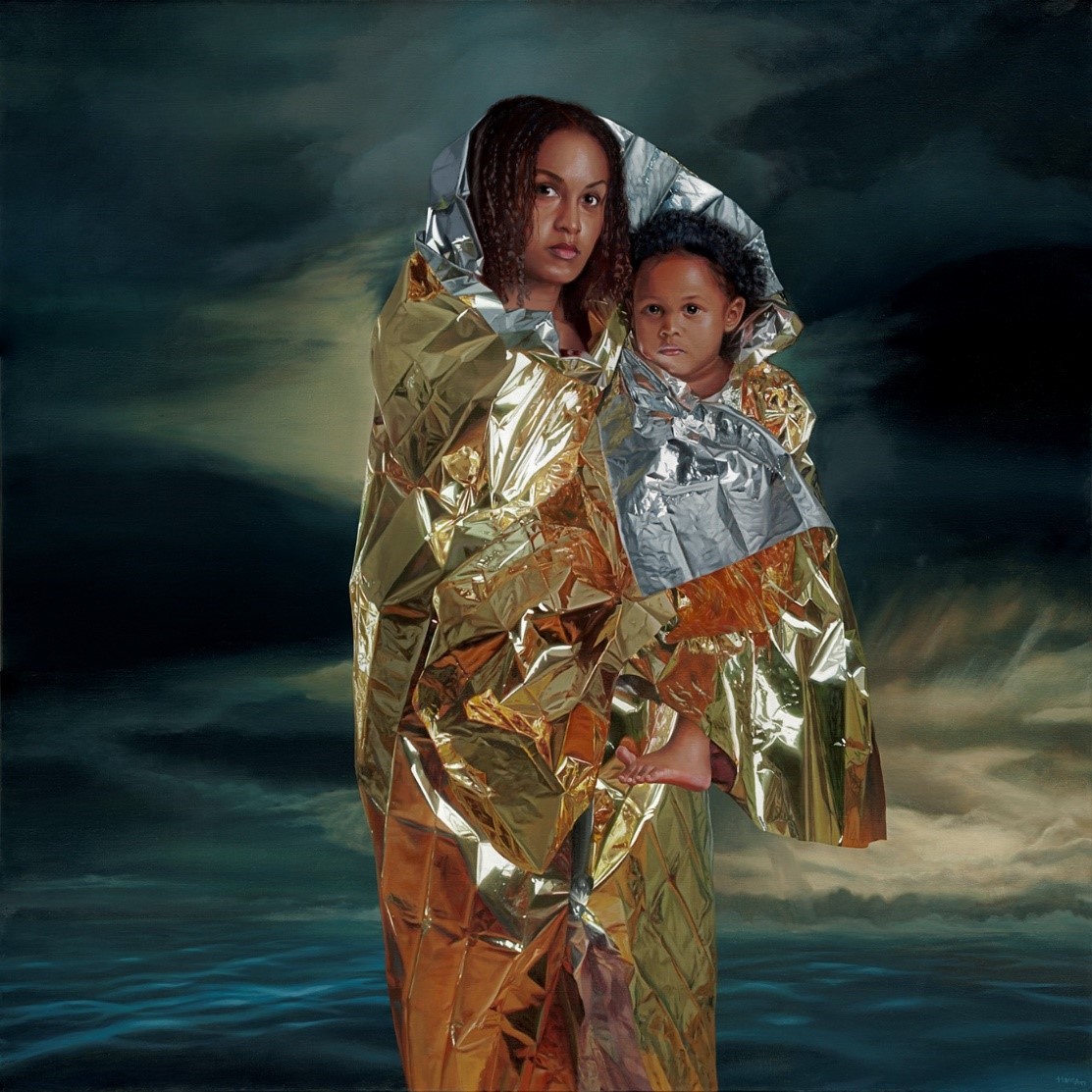
Though modeled loosely after a medieval devotional practice, Art Stations of the Cross: Troubled Waters is thoroughly modern, incorporating audio and video components, 3-D technologies, and the distinctively contemporary genre of installation art. Figurative art is still present and in some cases interacts with the traditional religious images in its environs, but it often does so transgressively—for example, the photorealistic Madonna and Child wrapped in emergency blankets in station 1 and the decapitated corpus of Christ in station 13.

For more information about Art Stations, which runs through April 22, visit http://www.artstations.org/. There you can find a map, opening times, descriptions, tie-in events, and information on where you can purchase a catalog (available in Dutch or English). Most stops along the route host a stack of brochures that condense this info and that contain a stamp card on the back, where you can mark off the stations you’ve visited. All the exhibition sites are freely accessible. (Oude Kerk waives its admission fee if you present your Art Stations brochure at the entrance desk.)

Below and in two subsequent posts, I will share some of my photos and impressions of each station. Unless otherwise specified, all photos are by my husband, Eric James Jones, and are the property of ArtandTheology.org. Feel free to use them noncommercially, with credit to the artists and a link back to this webpage.

+++

Madonna del Mare Nostrum by Hansa
Hansa (Hans Versteeg) (Dutch, 1941–), Madonna del Mare Nostrum, 2017. Oil on canvas, 125 × 125 cm. Photo courtesy of the artist.

STATION 1. The route starts at the neo-Baroque Church of St. Nicholas, which temporarily houses one of my favorite and arguably the most confrontational of all the works on the tour: Hans Versteeg’s Madonna del Mare Nostrum: Of, Mantel der Liefde (Our Lady of the Mediterranean Sea: Or, Cloak of Love). A young dark-skinned mother holds her toddler son, both of them wrapped in a thermal blanket like the ones given to refugees to prevent hypothermia. Replacing Mary’s traditional ultramarine robe with a “robe” of metallized polyethylene terephthalate, whose gold surface glints in the sun, emphasizes how she and her boy are clothed not only in holiness but also in need. Because of how the artist chose to frame the composition, we don’t know if the figures are standing in a boat that’s still at sea or on the shore. Regardless, their strongly frontal positioning and their direct stares seem to ask the viewer, “Will you receive us?”  Continue reading “Walking the Via Dolorosa through Amsterdam (Part 1)”