Roundup: Ellsworth Kelly’s “Austin,” new book by Jonathan Anderson, religion in pop art, and more

PRINT INTERVIEWS:

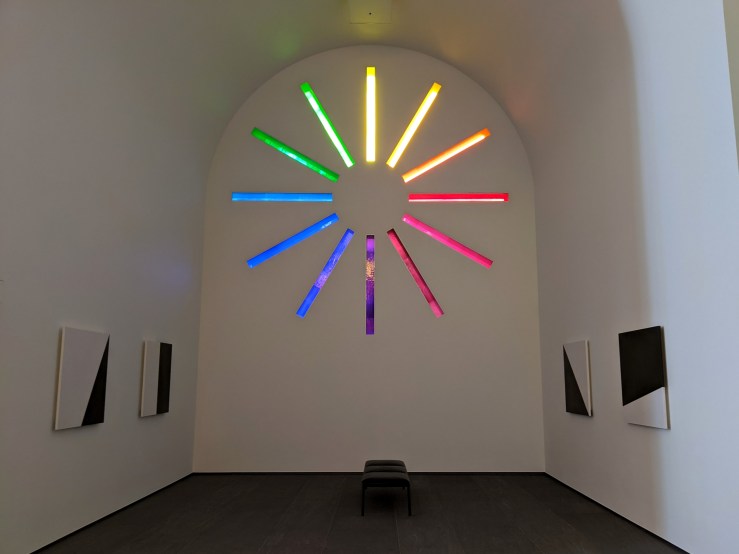
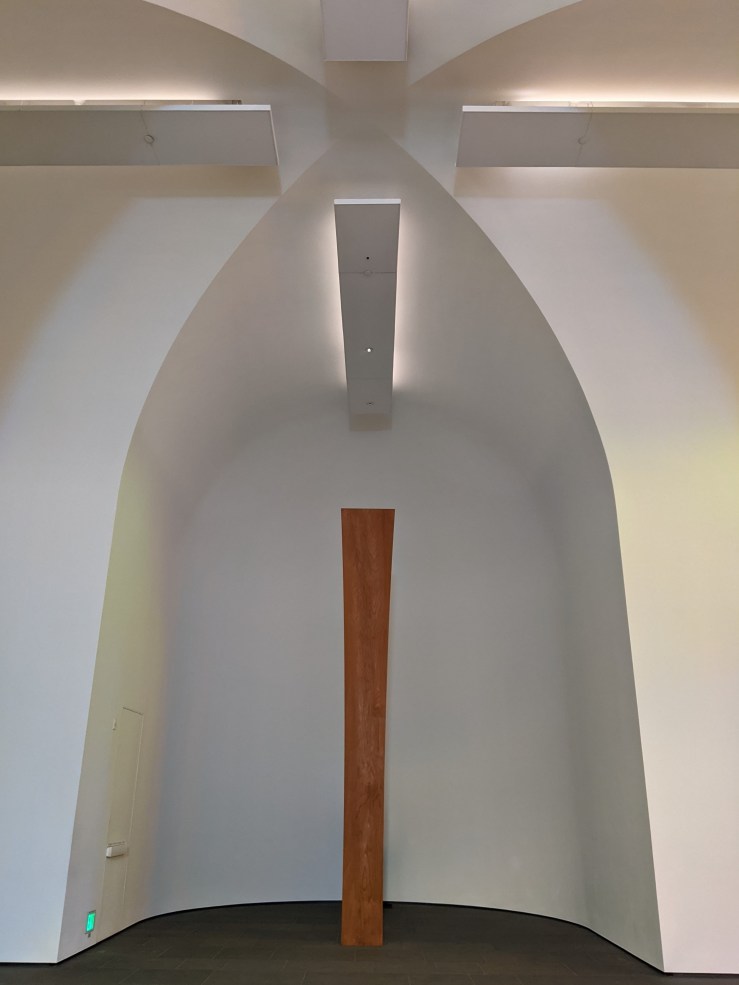
>> “What Remains: The Making of Ellsworth Kelly’s Last Work,” Image interview with Rick Archer: I got to experience Ellsworth Kelly’s Austin—a modernist “chapel” containing three stained glass windows, fourteen black-and-white marble panels (Stations of the Cross), and a redwood totem—while in Texas for a CIVA conference in 2021; see some of my photos below. Kelly was an atheist inspired by Romanesque church architecture, and the architect he chose to collaborate with on Austin, Rick Archer, is a Christian. In this wonderful new interview by Bruce Buescher, Archer discusses his working relationship with Kelly, Kelly’s desire for randomization and form over meaning, the technical and architectural challenges of bringing Kelly’s vision to life, religious references, and the artist’s objective for the space. “I hope when people go in here, they will experience joy,” Archer remembers Kelly saying.
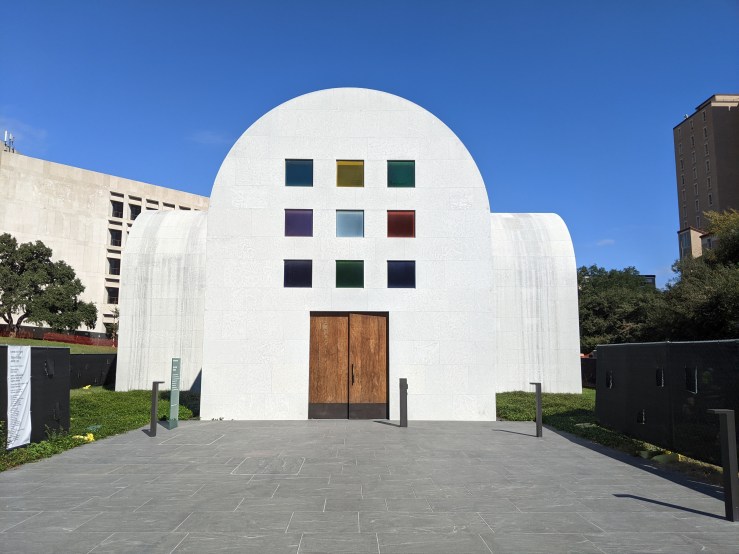
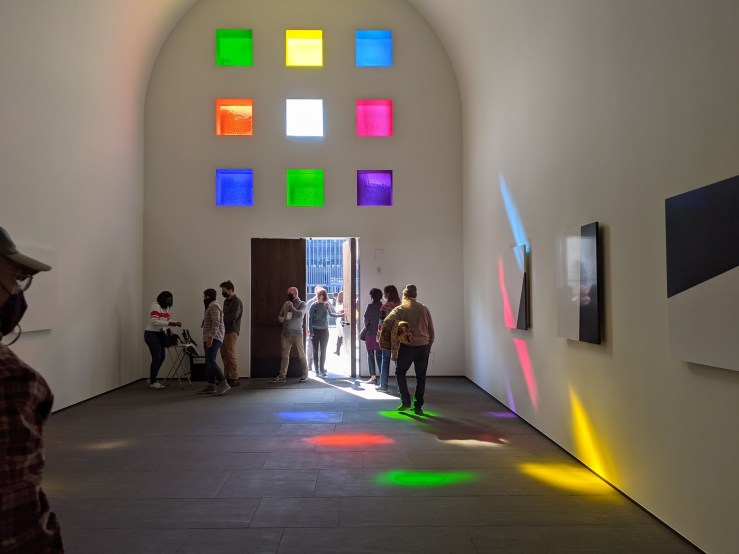
  • Austin by Ellsworth Kelly
  • Austin by Ellsworth Kelly
  • Austin by Ellsworth Kelly
  • Austin by Ellsworth Kelly
  • Austin by Ellsworth Kelly

>> “The Invisibility of Religion in Contemporary Art: An interview with Jonathan A. Anderson” by Matthew J. Milliner: Jonathan Anderson [previously] is one of the most important people working across the disciplines of art and theology, and I’m thrilled that his book The Invisibility of Religion in Contemporary Art is now available from the University of Notre Dame Press!
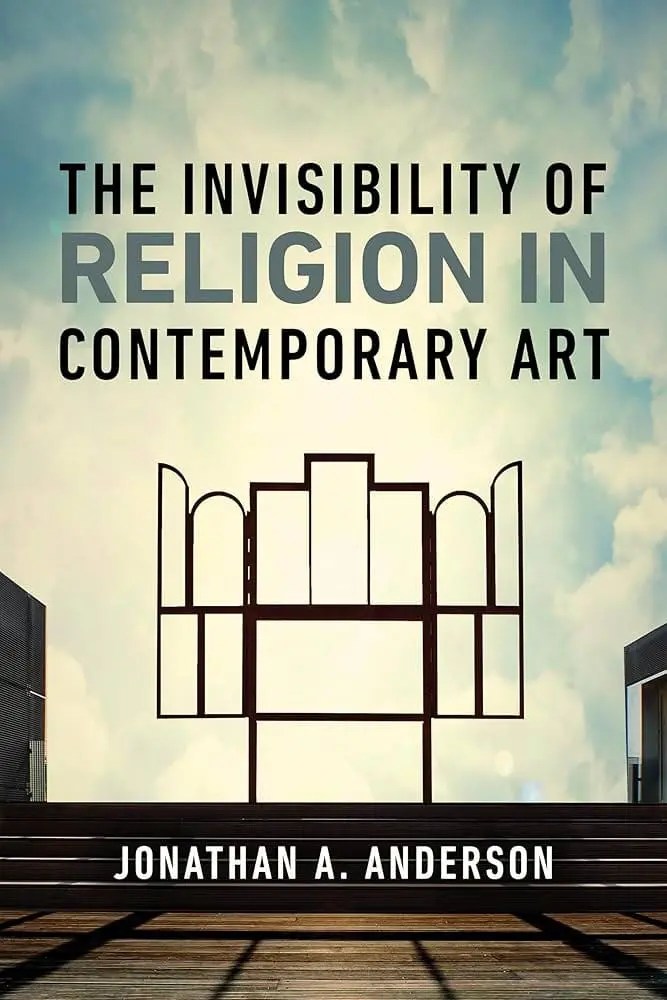
Invisibility of Religion in Contemporary Art

In this recent interview for Comment magazine, Anderson explains his purpose in writing the book:

I have become increasingly convinced that so many pivotal artists and artworks over the past century are deeply shaped by religious traditions and seriously engaged in theological questioning, but this remains severely under-interpreted or misinterpreted in the scholarship about these artists. One might see these threads running through an artist’s artworks and personal writings and even discuss these topics with the artist in their studio, but when one moves to the scholarly writing and teaching about that same artist, that language consistently disappears or is transposed into another register—usually politics, occasionally a highly esoteric spirituality. I wanted to understand, at a non-superficial level, why this was the case, and I wanted to see how other ways of speaking and writing about this topic might be possible.

Don’t miss, at the end of the article, his three hopes for the field of “art and theology,” which I very much share!

+++

LECTURE: “The Problems and Possibilities of Visual Theology: The Ascension as a Case Study” by Jonathan A. Anderson: With Ascension Day coming up on May 29, it’s timely to share this talk given by Jonathan Anderson (see previous roundup item) a few years ago at Duke Divinity School, where he worked as a postdoctoral associate of theology and the visual arts from 2020 to 2023. Anderson explores a handful of images depicting the Ascension of Christ, a particularly challenging subject because of the spatial ambiguity. The scriptural accounts of the event (Luke 24:50–53 and Acts 1:6–11) beg the question, “What does ‘lifted up’ mean? Where is Jesus?” Attempting to work out these spatial difficulties visually can be theologically and exegetically productive, Anderson claims—even if it sometimes leads to unsatisfying results, as, Anderson says, it often does in Western art from the Renaissance onward. By contrast, when artists foster intertextual readings across the biblical canon and focus not so much on what the Ascension looks like as a historical event but rather on what it means, they are generally more successful.

Here are some time stamps, with links to the artworks discussed:

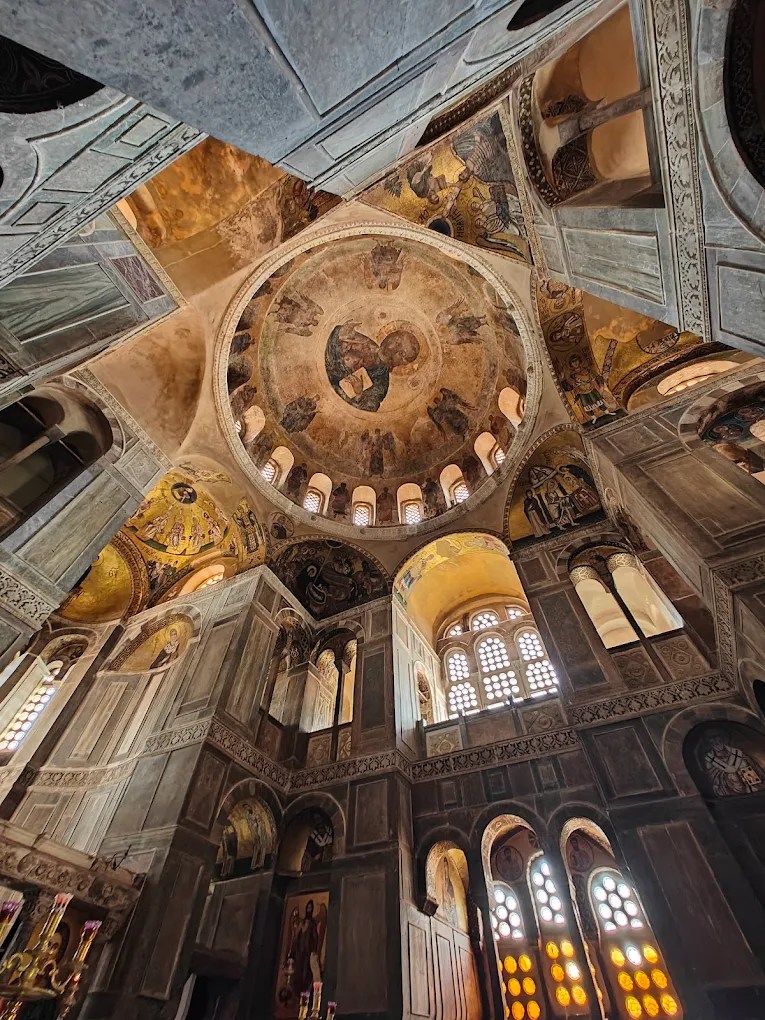
Hosios Loukas
Katholikon of Hosios Loukas monastery, Boeotia, Greece, 1011–12

+++

INSTRUMENTAL JAZZ: “Prayer” by Cory Wong: This video shows a live performance of Cory Wong’s “Prayer” on July 4, 2023, at Gesù music hall in Montreal. Wong, on guitar at far left, is joined by Ariel Posen on guitar, Victor Wooten on bass, and Nate Smith on drums. I learned about Wong through his collaborative album with Jon Batiste, Meditations (2020), which includes a version of this piece featuring Batiste’s piano playing.

+++

EXHIBITION: OMG! Reli Popart, Museum Krona, Uden, Netherlands, April 5–September 7, 2025: This exhibition at Museum Krona (housed in the complex of the still-active Birgittine Abbey of Maria Refugie in Uden, Netherlands) explores the connection between the pop art movement and Christianity through works by artists such as Andy Warhol, Corita Kent, Niki de Saint Phalle, and especially Dutch artists, including Woody van Amen and Wim Delvoye. Pop art is characterized by the use of imagery from popular culture, sourced from television, magazines, comic books, ads—and sometimes from the trash bin.

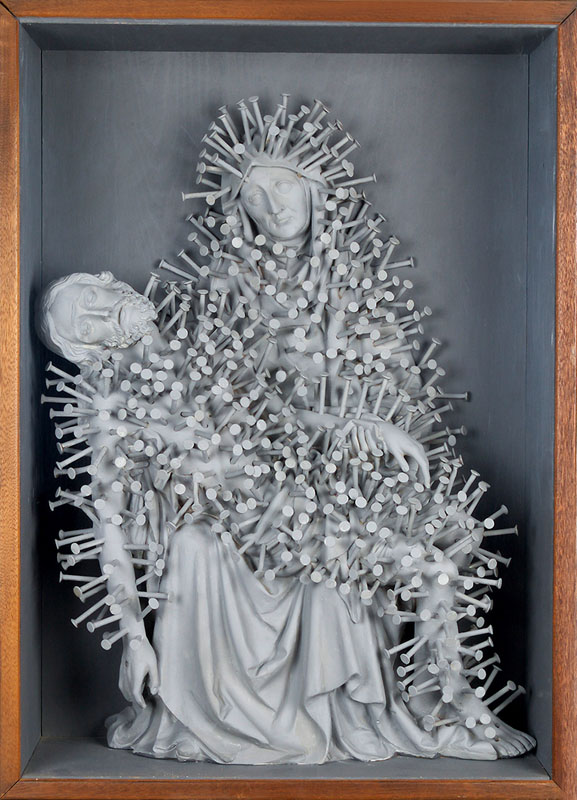
Jacques Frenken [previously], for example, built a body of work by salvaging discarded plaster sculptures of Christ and the saints—mass-produced for Catholic devotional use—and reconstructing them into assemblages. For his Spijkerpiëta, he “brought the Pietà back into our midst and accentuated the pain it radiates with nails,” the artist said.
Frenken, Jacques_Spijkerpieta
Jacques Frenken (Dutch, 1929–2022), Spijkerpiëta (Nail Pietà), 1967. Plaster, paint, iron, wood. Museum Krona, Uden, Netherlands.

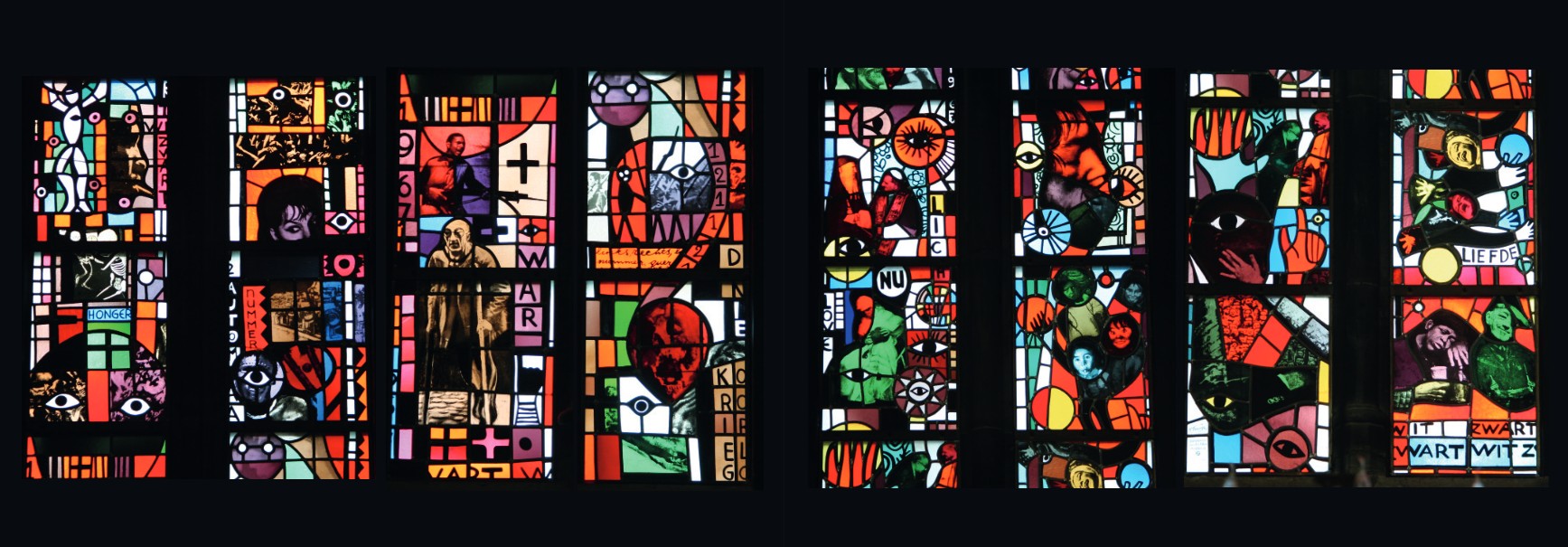
Another artist represented in the exhibition is Hans Truijen, who was commissioned in the 1960s by St. Martin’s Church in Maastricht to design eight stained glass windows for their worship space. The four along the left aisle of the nave depict human and divine suffering, whereas those on the right express hope, love, freedom, and happiness. He chose photographic images from various periodicals, including ones of the Vietnam War, and transferred them to glass using a special screen-printing process.
Truijen, Hans_Stained glass
Hans Truijen (Dutch, 1928–2005), Studies for the eight stained glass windows commissioned by St. Martinuskerk, Wyck-Maastricht, Netherlands, 1966–68. Courtesy of the artist’s son, Marc Truijen.

Roundup: “What to Do After Voting,” Apsáalooke praise song, chapel service led by Terry Wildman (Ojibwe, Yaqui), and more

PRESS RELEASE: “The Creative Arts Collective for Christian Life and Faith Announces Launch of Its First Competitive Request for Proposals (RFP)”: The Creative Arts Collective for Christian Life and Faith [previously], an endowed initiative run by Belmont University in Nashville, has just opened its online Letter of Inquiry form for the 2025 Spring Grant Program. Form submission deadline: December 6, 2024.

The RFP is open to interested individual artists, artist collaboratives, church leaders, scholars/theologians, arts-affiliated organizations, faith-based nonprofit organizations, or institutions who reside or operate in the United States. Eligible applicants may submit proposals with requests ranging from $50,000 to $250,000 that may be used over one year. Chosen applications will then be requested to submit a full grant proposal for the competitive 2025 Spring Grant Program.

The 2025 grant-seeking theme is “Performing Shalom.” Applicants are invited to reflect the theme in their project or program, but it is not a requirement when applying for a grant. Please click here for more information.

+++

SUBSTACK POST: “On Artists, Kings, and Mending the Multiverse” by Houston Coley: A wise and rousing reflection after the US presidential election. Houston Coley is an Atlanta-based documentary filmmaker, video essayist (YouTube @houston-coley), podcaster, and writer on TV and film, who “cultivat[es] spiritual imagination around art and pop culture,” as one person put it.

+++

POEM: “What to Do After Voting” by James A. Pearson: The poet James Pearson shared this poem from his collection The Wilderness That Bears Your Name (Goat Tail Press, 2024) on Instagram on Election Day last Tuesday. He writes, “What’s driving [all our voting] are two things: Our common needs for love, safety, and belonging. And our often conflicting attempts to meet them. Rumi wrote: ‘Out beyond ideas of wrongdoing and rightdoing, there is a field. I’ll meet you there.’ History is offering us a fork in the road. Let’s turn towards what we can do—vote. Then let’s find each other in that field and do the long, slow work of building a world where everyone has access to the love, safety, and belonging they need.” [HT: Amy Peterson]

He writes further on his website, “This poem doesn’t pretend to be a full prescription for what our country needs. It’s just my way of acknowledging that all electoral choices are imperfect. Because even more important is what happens between elections—the long, slow work of building a culture of love and justice for our politicians to live up to. And the better we do that work, the better our options will be next time elections come around.”

+++

SONG: “Apsáalooke Praise Song,” sung by Sarah Redwolf (née Bullchief): Sarah Redwolf is a member of Crow Nation in Montana and a follower of the Jesus Way whose Apsáalooke name is Baawaalatbaaxpesh (Holy Word). Here she sings a praise song by her grandmother Xáxxeáakinnee (Rides the Painted Horse). The Apsáalooke lyrics are below; I couldn’t find an English translation, and the artist has not yet returned a message I sent ten days ago, but I believe the song was written with Christian intent, as Christianity has been in Sarah’s family for generations. Her father, Duane Bull Chief, is a traveling Pentecostal preacher and the leader, with his wife, Anita, of Bull Chief Ministries, and Sarah has often led worship for church services and other Christian gatherings. What a beautiful voice!

Akbaatatdíakaata Dáakbachee
Huúlaa-k awúaleel akósh
Sáawe dée kush
Ahóohkaáshi, ahóohkaáshi, áaaaweelee-éeh

Akbaatatdíakaata
Baléelechiisaa awúaleel akósh
Ahóohkaáshi, ahóohkaáshi, áaaaweelee-éeh [source]

+++

LECTURE: “The Sign of Jonah” by Matthew Milliner, Marion E. Wade Center, Wheaton College, Illinois, October 3, 2019: This is the first lecture in a three-part series by art historian Matthew Milliner called The Turtle Renaissance that he developed into the book The Everlasting People: G. K. Chesterton and the First Nations (InterVarsity Press, 2021). (Here’s a well-written book review that I concur with; you can read an excerpt from the book here.) In the video, the talk starts at 8:49, followed by a response by Capt. David Iglesias, JD, of Kuna nation at 1:03:31, and then a Q&A starting at 1:25:27.

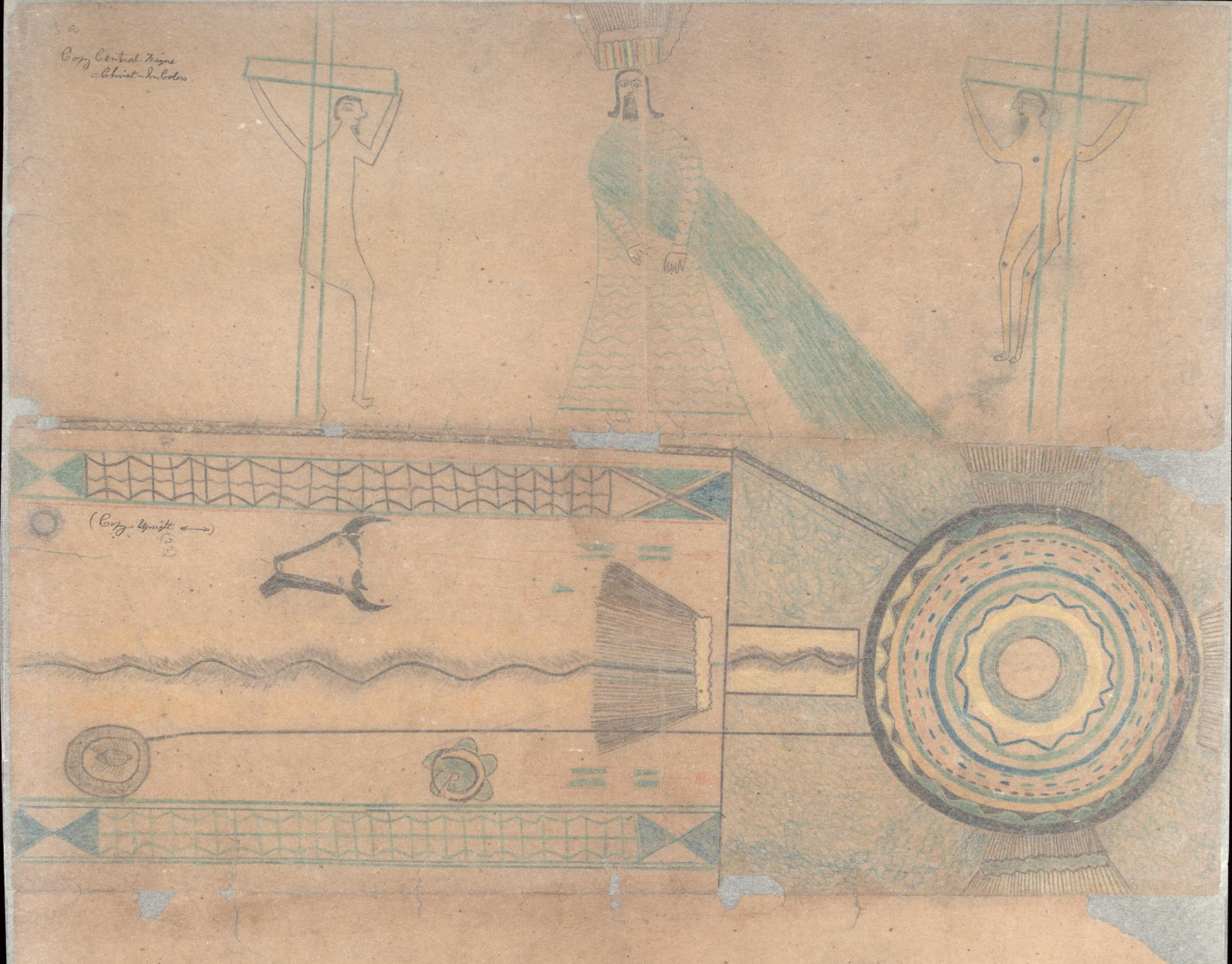
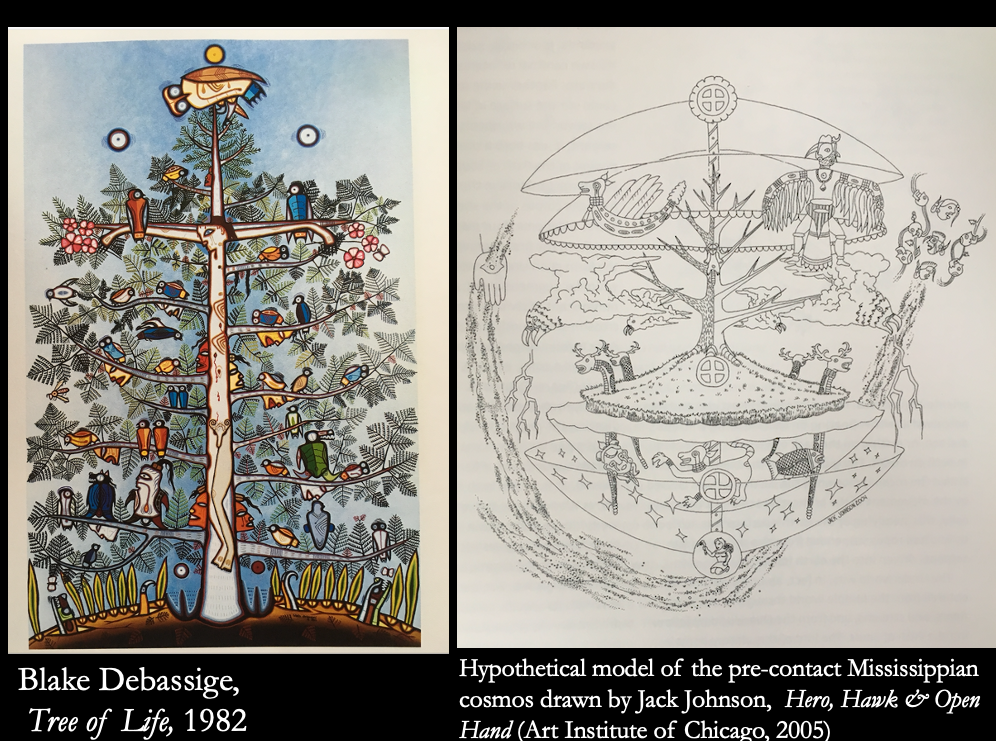
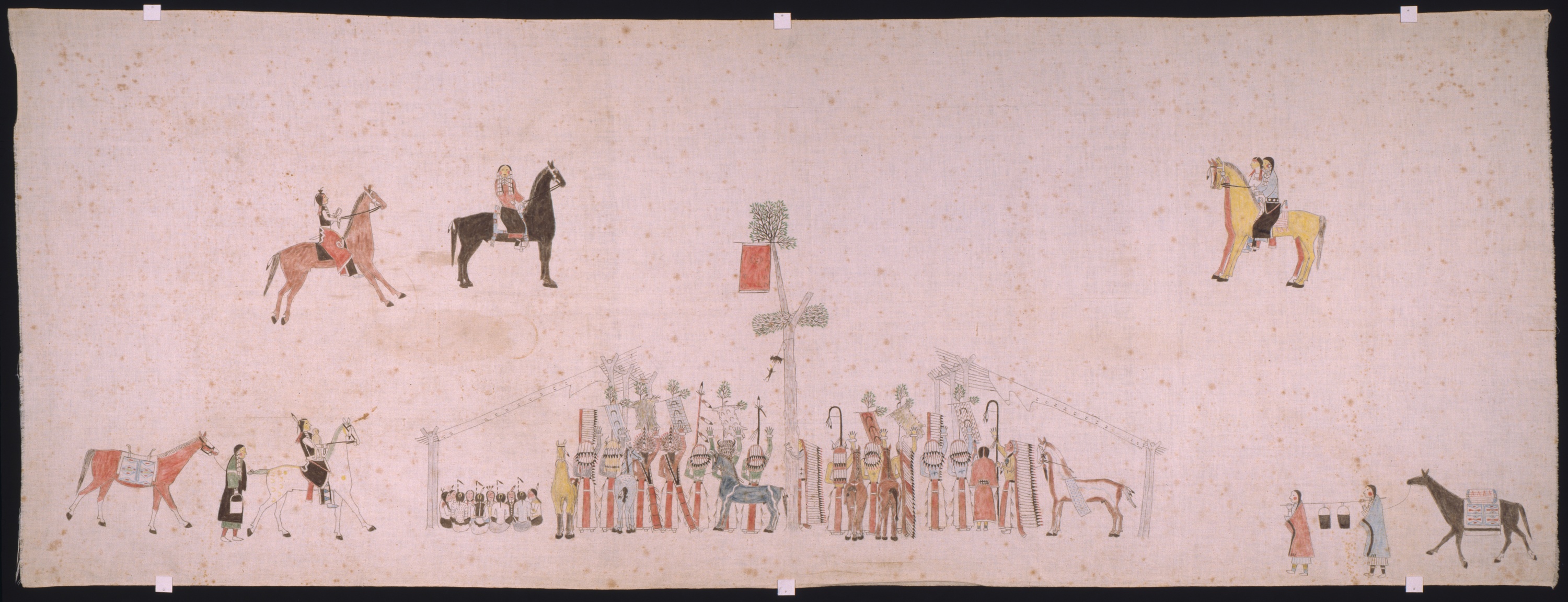
In conversation with Chesterton’s The Everlasting Man, Milliner explores contact points between Christianity and Indigenous North American art, symbol, ritual, and history. The discussion touches on pre-contact petroglyphs carved into Teaching Rocks near Peterborough, Ontario (one of them, a sun figure, quite possibly representing Gitchie Manitou, the Great Spirit—Christ incarnate?), the Sun Dance (which many Native Christians interpret as a prophecy of the Crucifixion), the Ghost Dance (about resurrection and renewal), the Mishipeshu (an underwater panther often representing death, which some Native Americans used to characterize white settlers), the Thunderbird, Black Elk’s vision of a mysterious figure with holes in the palms of his hands, and the cross as an axial tree conjoining the above and below worlds. Just as ancient Hebrew culture contained pointers to Christ, so too, Milliner argues, do the Indigenous cultures of North America. Artists, preachers, and visionaries from among the Ojibwe, Kiowa, Lakota, and other peoples are “our North American Virgils,” he says—Virgil being a Latin poet whose Fourth Eclogue, written around 40 BCE, prophesied the birth of a divine savior who would usher in a golden age.

Sun Dance Scene
Sun Dance Scene, Teton Lakota, Central Plains or Northern Plains, Wyoming, ca. 1885. Muslin cloth with watercolor paint, 36 × 91 1/2 in. (91.5 × 232.5 cm). Art Institute of Chicago. See 32:55 of Milliner’s lecture.

Vision of Jesus (Kiowa Ghost Dance)
Vision of a Kiowa man named Fiqi (Eater), received during the revived Ghost Dance, of Christ blessing the ceremony, collected by ethnologist James Mooney, ca. 1890. Pencil and crayon drawing from MS 2538, National Anthropological Archives, Smithsonian Institution, Washington, DC. See 38:49 of Milliner’s lecture and pages 11–12, 130, 142–44 of his book The Everlasting People.

Debassige, Blake_Tree of Life
See 59:24 of Milliner’s lecture and page 8 of his book The Everlasting People

There’s much more I could say, as there’s certainly more nuance and complexity to this, but instead let me simply refer you to Milliner’s lecture and finely footnoted book. There’s also a great audio interview with Milliner about The Everlasting People from November 2021, conducted by Jason Micheli for the Crackers and Grape Juice podcast.

+++

VIDEO: Chapel service led by Terry Wildman, November 6, 2023, Azusa Pacific University, California: Earlier this year I got to have dinner with Terry Wildman [previously] and his wife, Darlene, who form the Nammy Award–winning musical duo RainSong. It was exciting to hear all about their work with Native InterVarsity and other projects. They live in Maricopa, Arizona, on the traditional lands of the Pima and Tohono O’odham peoples. Wildman, who has both Ojibwe and Yaqui ancestry, was the lead translator, general editor, and project manager of the First Nations Version: An Indigenous Bible Translation of the New Testament. (The nativity narrative from the FNV translation of the Gospel of Luke, you may be interested to know, was adapted into an illustrated book titled Birth of the Chosen One: A First Nations Retelling of the Christmas Story, which just released this fall.)

Last November Wildman led a worship service for Azusa Pacific University students. Here are the key elements:

  • The opening three minutes are an animated video of the gospel story, narrated by Terry Wildman to a flute accompaniment by Darlene Wildman
  • 8:12: Blessing of the Gabrielino-Tongva people
  • 9:38: The Lord’s Prayer (FNV)
  • 10:57: Sermon: “Worship in Spirit and in Truth” (John 4:1–42)
  • 21:17: Reading of Psalm 8 (FNV)
  • 23:48: Song: “Lift Up Your Heads” by Terry and Darlene Wildman, based on Psalm 24
  • 28:40: Song: “Hoop of Life” by Terry Wildman – Native American powwows often feature hoop dancers, who dance a prayer that Creator will bring harmony and goodwill to all the gathered people. Wildman says, “I look at Jesus and I call him the Great Hooper Dancer. Because he’s the one who ever lives to pray for us, to make intercession for us, and when he dances his prayer, he is bringing harmony and balance to the whole world, to the whole universe. And if we follow him, if we give our hearts to him, he will produce that harmony and balance in us and with each other.”
  • 35:56: Song: “Nia:wen” (Mohawk for “Thank You”) by Jonathan Maracle of Broken Walls
  • 45:29: Closing prayer

Roundup: Worship songs in Tamil and Sesotho, contemporary church architecture, and more

SONGS:

>> “Ennil Adanga Sthothiram” (எண்ணிடலங்கா ஸ்தோத்திரம்) (Of Many Blessings I Will Sing Forever), performed by Zanbeni and Benny Prasad: On February 10, 2019, at Trinity Worship Center in Chennai, Zanbeni Prasad Odyuo, who is from Nagaland in northeastern India, sang a popular Tamil Christian praise song, accompanied on guitar by her husband, Dr. Benny Prasad. Tamil is not her native language (Lotha is), but she learned the words phonetically and worked with Tamil-speaking friends on pronunciations. The song expresses gratitude for God’s goodness and enjoins all of creation—dwellers on land and in the seas and skies—to praise him. I love this jazz waltz arrangement and Zanbeni’s gorgeous vocals.

>> “Tlotlo le be ho Modimo” (Glory to God in the Highest): A song from the Catholic Mass in the Sesotho language of South Africa, with a Latin refrain taken from Luke 2:14.

Here are the lyrics, with a rough English (auto)translation on the right:

Tlotlo le be ho Molimo
Ea busang maholimong
Khotso e be teng lefatsheng
Ho batho ba lokileng
Re u boka ka thabo
Re phehella thorisong
Gloria! Gloria! in excelsis Deo!

Re ntse re u khumamela
Ka tumelo e phelang
A re rosiseng Molimo
Tebohong e sa feleng
U mohloli e moholo
Ea busang maholimong
Gloria! Gloria! in excelsis Deo!

Jesu mora oa Molimo
U konyana e tlosang
Libe tsa lefatshe lohle
Re batla ho u rata
U re hauhele bohle
Ba llang mona lefatsheng
Gloria! Gloria! in excelsis Deo!
Glory be to God
Who reigns in the heavens
Peace be on earth
To righteous people
We praise you with joy
We pursue praise
Gloria! Gloria! in excelsis Deo!

We continue to worship you
With living faith
Let us praise God
In eternal gratitude
You are a great source
Who reigns in the heavens
Gloria! Gloria! in excelsis Deo!

Jesus, Son of God
You are the Lamb who takes away
The sins of the whole world
We want to love you
You have mercy on all
Who cry here on earth
Gloria! Gloria! in excelsis Deo!

+++

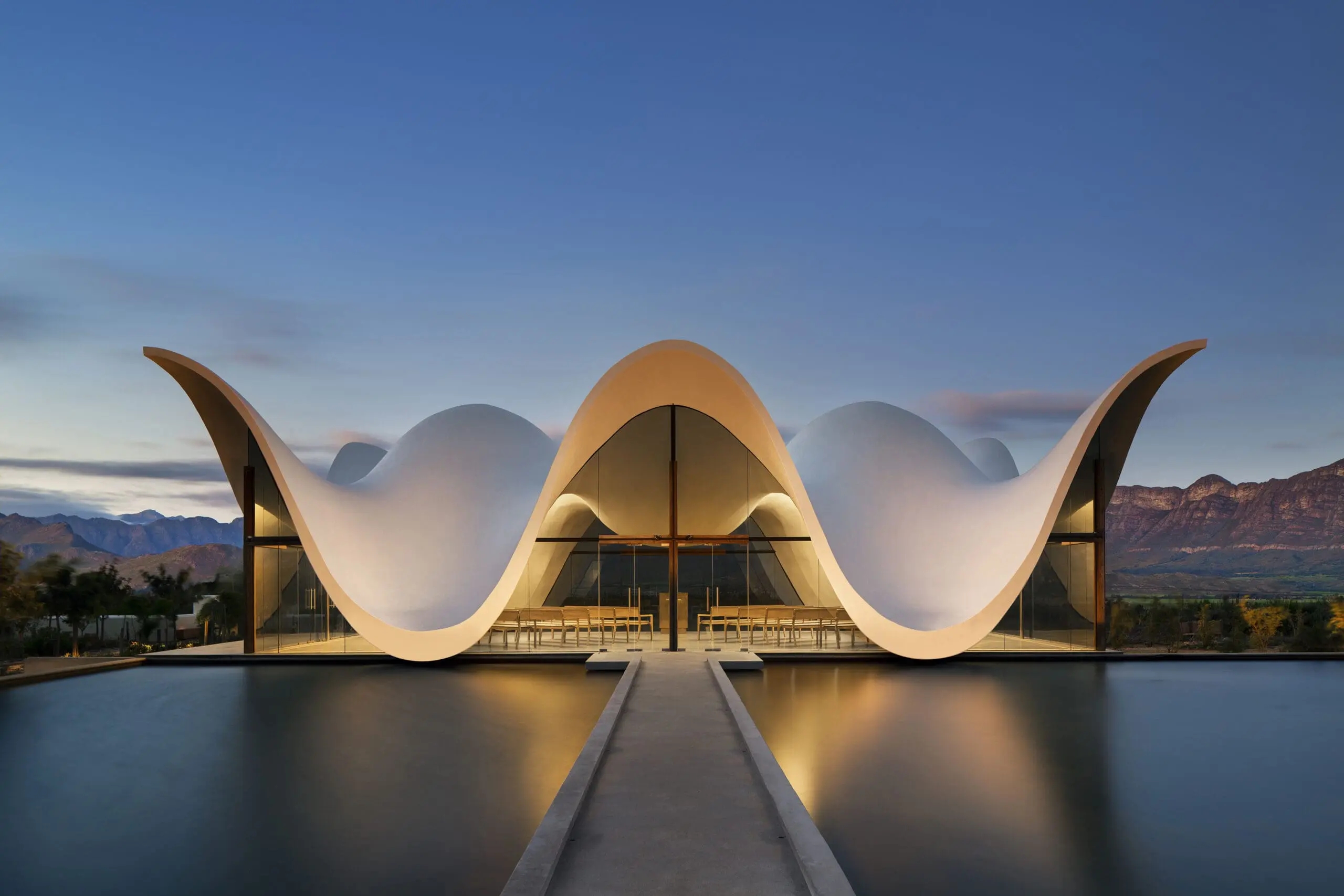
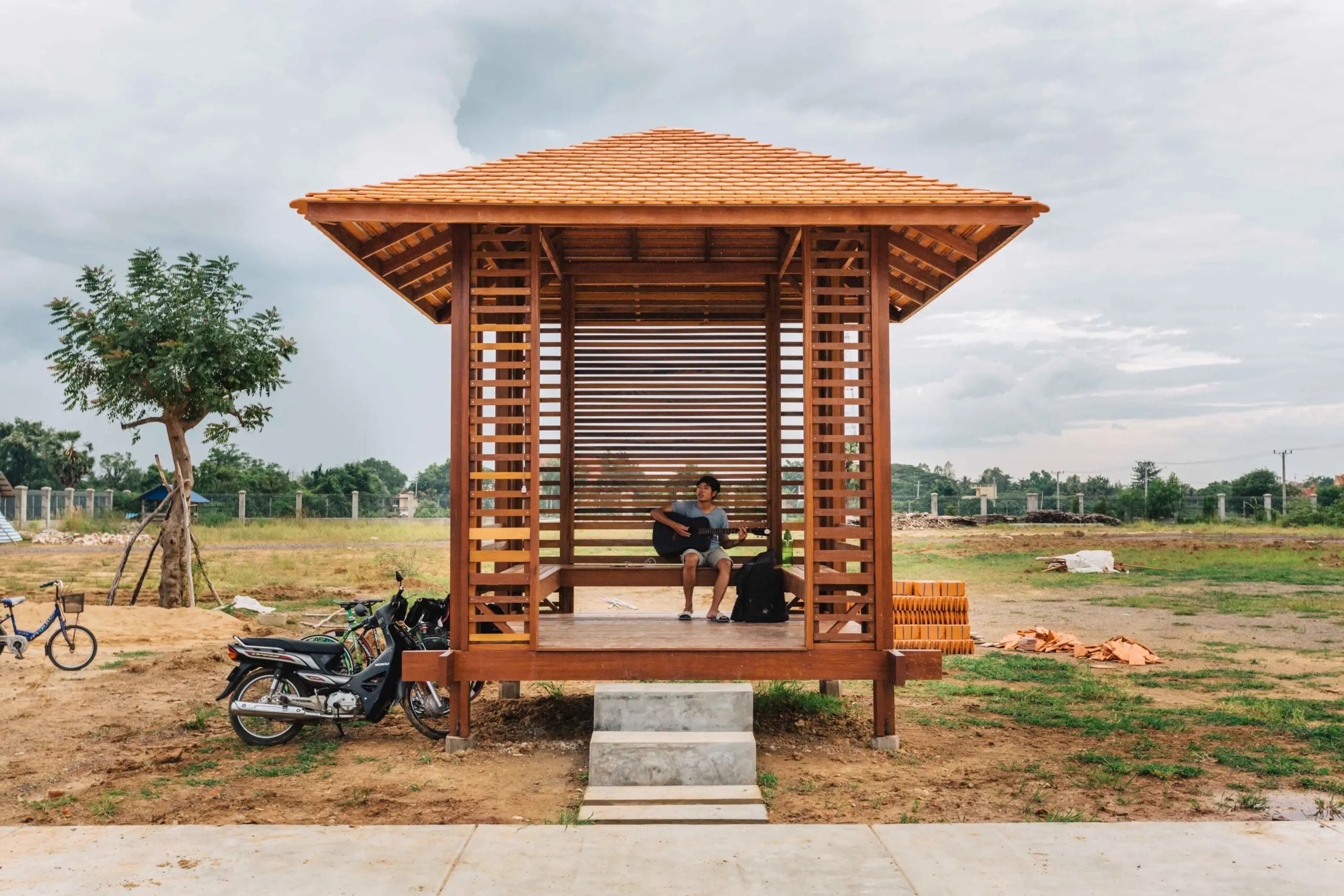
PRINT INTERVIEW (heavily illustrated!): “The Architecture of Prayer” with Amanda Iglesias, Comment: For his latest Material Mysticism column in Comment magazine, art historian Matthew J. Milliner talks with architect Amanda Iglesias, who curated the traveling exhibition The Architecture of Prayer to showcase the best of contemporary church architecture across a variety of cultures, denominations, and budgets. She discusses traditional versus modernist architecture, the church as the longest and richest of architectural experiments (even today, Christianity remains a generative influence on architecture, she says), examples of churches as conversations with history or as an exegesis of scripture, architecture’s redemptive capacity, why church projects are desirable for an architect, advice for congregations with modest means seeking to work with an architect, advice for those looking to enter the field of architecture, and book recommendations.

Bosjes Chapel
Bosjes Chapel in South Africa, designed by Steyn Studio, completed 2016. Photo: Adam Letch. The sinuous, winged form of this building was inspired by Psalm 36:7: “All people may take refuge in the shadow of your wings.”

Cambodian Prayer Pavilion
Christian prayer pavilion, or “gathering hut,” on the campus of the University of the Nations, Battambang, Cambodia, designed by 100 Fold Studio, completed 2017. Photo courtesy of 100 Fold Studio.

The Architecture of Prayer is on display at the Brauer Museum of Art at Valparaiso University in Indiana through September 28. (I saw the exhibition last year at Calvin University, and it’s great! Take a virtual walk-through, and view the gallery booklet.) You can follow Iglesias on Instagram @iglesiasproject.

+++

ARTICLE: “Inuce designs Mountain Church of Julong as ‘more than just a place of worship’” by Tom Ravenscroft, Deezen: The construction of a remarkable new church has recently been completed in Julong, China. It’s the first church in the city, and one of several churches in China designed by the international architecture studio Inuce (including a pink pebbledash church in Fuzhou and a church wrapped in 100,000 panes of stained glass in Luoyuan). “Located at the foot of a mountain surrounded by forest and with views across the town, the Mountain Church of Julong references both the form and representation of an ark,” Ravenscroft writes in the article. Inuce founder Dirk U. Moench told him that “biblical archetypes were fundamental in our design process. . . . As a powerful symbol for shelter and new beginnings, the ark of salvation, safely landed on a foundation of rock, became the crystallisation point for our design.” [HT: Mark Meynell]

Mountain Church of Julong
The Mountain Church of Julong near Quanzhou, China, designed by the architecture studio Inuce and completed in 2024, evokes the form of an ark resting on a rock, as in Genesis 8:4.

+++

VIDEO PODCAST INTERVIEW: “Dr. David Taylor on Worship, Embodiment, and the Value of Beauty in Church Buildings,” Making Space: Sara Joy Proppe is the founder of Proximity Project, which helps churches discover real estate and placemaking solutions that fit their mission in the neighborhood. Here she presents a recent Barna poll result in which, when asked, “Which do you feel are the most important to having a meaningful experience at a church?,” 64 percent of Christians and 65 percent of non-Christians responded “art and beauty in the building.” She then speaks with liturgical theologian and author W. David O. Taylor on how we’re shaped by the physical spaces we worship in. I appreciate the charitable attitude of Taylor, who is Anglican, toward a variety of Christian traditions and aesthetic expressions, not holding any single one up as the only right way but rather inviting us to consider how our notion of “church” plays out in the buildings we construct and how we use them. The conversation with Taylor starts at the 11:48 timestamp. (There are overlaps with a podcast interview of his that I recommended in 2021.)

“I love church architecture, I love how it can tell the story of God’s creative and recreative work, I love how our bodies are integrally attuned to spaces and can come alive (or go dead) in particular spaces, and I love how architects invite us to pray with our whole beings in order that we might be both re-habituated and re-sensitized to our calling to be Christ’s ‘little tabernacles’ wherever we may go,” Taylor wrote on social media when sharing this interview.

Making Space is a podcast of the Christian research organization Barna Group and the Aspen Group, a church design and construction firm headquartered in Frankfort, Illinois. Learn more at https://www.barna.com/MakingSpace/.

+++

VISUAL COMMENTARY ON SCRIPTURE: “The Earthly Tent (2 Corinthians 5:1–10)” by Sarah White: For this coming Sunday’s New Testament lectionary reading from Paul’s second letter to the church at Corinth, Sarah White, a visual arts program curator and artist mentor at Morphē Arts, has curated a VCS mini-exhibition of three contemporary artworks that speak obliquely to that text: a performance art piece in a Manhattan cathedral by Eiko Otake; a forest diorama by Alyssa Coffin, meant to be “read” and “seen” through touch; and a giant hand-sewn jute sack sculpture by Ibrahim Mahama, which is draped over buildings. “Internal to this section of 2 Corinthians is a series of accumulating metaphors of architecture, clothing, geography, and time,” White writes. “The dynamics of these allusions are accentuated and shifted as we consider the performance of materials, bodies, and spaces in all three of these artworks.”

Eiko at St John the Divine
Eiko Otake (Japanese, 1952–), Eiko at St John the Divine, 26 November 2016, No. 1374, 2016. Photographed dance performance. Photo: William Johnston.

For example, at the Cathedral of Saint John the Divine in New York, Otake articulated both a personal and collective mourning through “the contortions and contractions of her body and face” and “moments of stumbling, falling, and lying down,” evoking Paul’s line about our groaning and longing. Her performance came out of her time as artist in residence at Saint John’s. I’m always intrigued by how artists respond to church spaces and help awaken worshipping communities (and curious publics!) to aspects of God’s story and our own—and I’m thrilled when churches invest in artists’ work. I wish that were more normative.

Roundup: Ascension Sunday, Mother God, and more

SUMMER COURSES: Arts at Regent: Regent College in Vancouver is offering eight one- or two-week in-person courses on its arts track this summer, including “After Disenchantment” with Joy Marie Clarkson (reading list includes Charles Taylor, James K. A. Smith, Kazuo Ishiguro, etc.), “The Puritan Literary Imagination” (on Paradise Lost and Pilgrim’s Progress) with Johanna Harris, and “The Arts, Empathy, and Spiritual Formation” with Mary McCampbell. Several years ago I took a Regent summer course on worship and the arts and really enjoyed it!

+++

BIBLICAL COMMENTARY: “Ascension Sunday (Year A): Luke 24:44-53 and Acts 1:1-11” by SALT Project: This Sunday marks the risen Jesus’s departure after forty days of dwelling with the community of disciples. While SALT Project’s commentary doesn’t plumb all the meaning of the Ascension, I was struck by its pointing out of the significance of the Mount of Olives (in light of Zechariah’s prophecy and the “choreography” of Palm Sunday) and the resonances with Elijah’s ascent, particularly with Christ’s passing on his mantle to the church.

+++

ASCENSION HYMN: “Alleluia, Sing to Jesus” by William Chatterton Dix, 1866

>> Music by Rowland Hugh Prichard, 1830: The hymn is often paired with the public-domain Welsh tune HYFRYDOL (which I know best from its association with “Jesus, What a Friend for Sinners”). It’s sung here by Ben Lashey and Chris Joyner:

>> Music by Rebecca Almazar and Brian Gurney, 2020: I really love this new tune that Almazar and Gurney wrote for the hymn while they were at New City Fellowship in Manassas, Virginia, which was released on the church’s EP A Liturgy. Gurney is now the director of contemporary worship at The Falls Church Anglican in Falls Church, Virginia. The song is not yet available on CCLI, but in the meantime, he has granted permission for license-free church use; here are the chords.

+++

CALL FOR ENTRIES: 2023 Sacred Art Competition and Exhibition: “Seeking the finest contemporary sacred art for an online juried exhibition hosted by the Catholic Art Institute, with a world-wide audience and the opportunity to sell work, be featured on the Catholic Art Institute website.” The top prize is $2,500. The deadline for submission is November 6, 2023. From what I can tell, participants need not be Catholic, but the artwork(s) should be suitable for devotional and/or liturgical use by Catholics.

+++

PODCAST EPISODE: “Loving Christ Our Mother with Julian of Norwich,” Old Books with Grace, May 17, 2023: This month marks the 650th anniversary of the anchorite Julian of Norwich’s visionary encounter with God, which she recorded in her Showings, the earliest surviving work of literature in English by a woman. In this twenty-minute episode of her podcast, medievalist Grace Hamman, author of the forthcoming Jesus Through Medieval Eyes: Beholding Christ with the Artists, Mystics, and Theologians of the Middle Ages, introduces us to Julian, dwelling especially on one of Julian’s favorite metaphors: that of Christ as mother.

In the fourteenth century, Hamman says, fathers generally loved their children but were less involved in the day-to-day tasks of caring for their physical and emotional needs, whereas mothers were deeply present. Julian wrote about how Christ gave birth to his children on the bed of the cross, how he nurses them from his side, and how he acutely hears and responds to their individual cries. This podcast episode is an excellent summation of a theological idea that may sound odd and unorthodox at first but that is in fact biblically derived, appearing throughout church history, and that grants us fuller insight into who Christ is.

(Related post: “Our Sweet, Travailing Mother Christ”)

+++

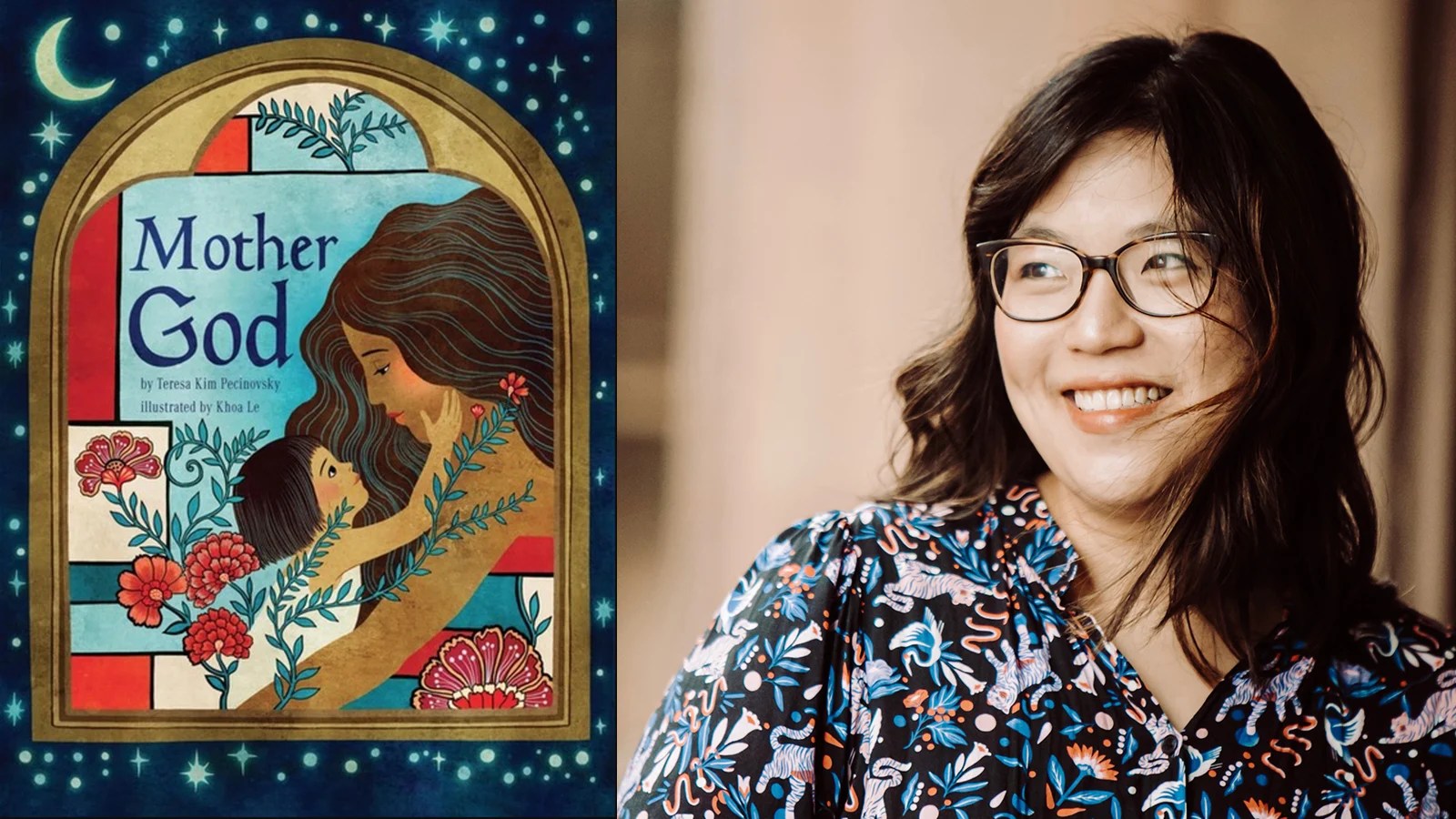
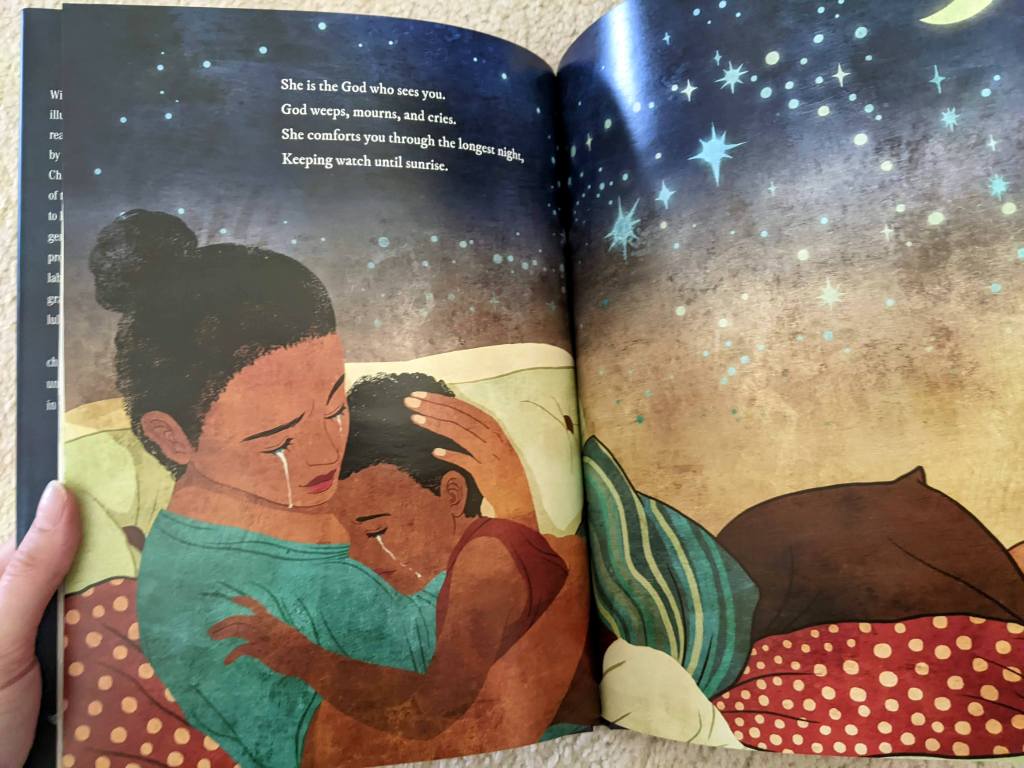
BOOK: Mother God by Teresa Kim Pecinovsky, illustrated by Khoa Le: Dovetailing with Hamman’s recent podcast episode is this beautifully unique children’s book that came out last year from Beaming Books. “With lyrical, rhyming text and exquisite illustrations, Mother God introduces readers to a dozen images of God inspired by feminine descriptions from Scripture. Children and adults alike will be in awe of the God who made them as they come to know her as a creative seamstress, generous baker, fierce mother bear, protective mother hen, strong woman in labor, nurturing nursing mother, wise grandmother, and comforting singer of lullabies. This gorgeous picture book welcomes children into a fuller, more diverse understanding of what it means to be made in the image of God.” Born in South Korea, raised in Iowa, and living in Texas, author Teresa Kim Pecinovsky (MDiv, MEd) (pictured below) is a hospice chaplain ordained in the Christian Church (Disciples of Christ) and a former elementary school teacher. Khoa Le is an artist from Vietnam.

Mother God
Illustration by Khoa Le

Some traditionalists will no doubt have a visceral reaction against the cover and concept—“God reveals himself as Father, not Mother!” they’ll say, or “The Bible uses only masculine pronouns for God”—but it’s important to remember that God is nongendered, although God does contain both the masculine and the feminine (see, e.g., Gen. 1:27). “Father” is a metaphor, same as “mother.” God became incarnate as a male, Jesus, but as Hamman shows (see previous roundup item), Jesus also exhibited some qualities traditionally associated with women and mothers in particular, and therefore we can speak metaphorically of Christ as mother, as we can, too, of the First Person of the Trinity. Having an academic background in literature, I’m very comfortable with (and enthralled by!) metaphor, but I can understand, lamentably, how it trips some people up.

+++

ARTICLE: “Waking Ancient Seeds: Why the Middle Ages Matter” by Matthew J. Milliner, Comment, May 10, 2023: “For the medievals, Jesus is the Rosetta stone of cosmic meaning, with whom all things are aglow in the polyphonic resonance of truth, and without whom the world hurdles into centrifugal disconnection,” writes Matt Milliner, a theologically trained professor of art history at Wheaton College, an evangelical institution in Illinois. “It is our world that has been flattened, lacking the full-orbed splendour of medieval significance and depth.” In this article he contrasts the symbolism and sense of wonder and reverence of the Middle Ages with the deficits of the present, identifying several, sometimes unlikely places in which these “ancient seeds” are sprouting again.

Roundup: Light in Nativity and Transfiguration icons, plus more art and song

LECTURE: “Light in Sacred Space: Light from the Cave” by Matthew J. Milliner and Alexei Lidov, December 19, 2019, Bridge Projects, Los Angeles: This double lecture about the role of light in Christian spirituality and theology was organized to coincide with the premiere of 10 Columns, an immersive light installation by Phillip K. Smith III that Bridge Projects commissioned for their inaugural exhibition.

While the Light & Space movement was born in Southern California in the 1960s, in many ways it participates in a much longer history of artists in dialogue with the phenomena of light. This presentation by two art historians, Matthew Milliner and Alexei Lidov, will begin with Milliner exploring the unexpected resonance of Phillip K. Smith III’s work with Byzantine and Gothic traditions. Lidov will then expand on these ideas with his scholarship in the Eastern Orthodox tradition and its long history of engaging light and mysticism. What kinds of insights might come when Light and Space artists, including Phillip K. Smith III, are put in conversation with ancient Orthodox Christian concepts of the nativity and uncreated light? [source]

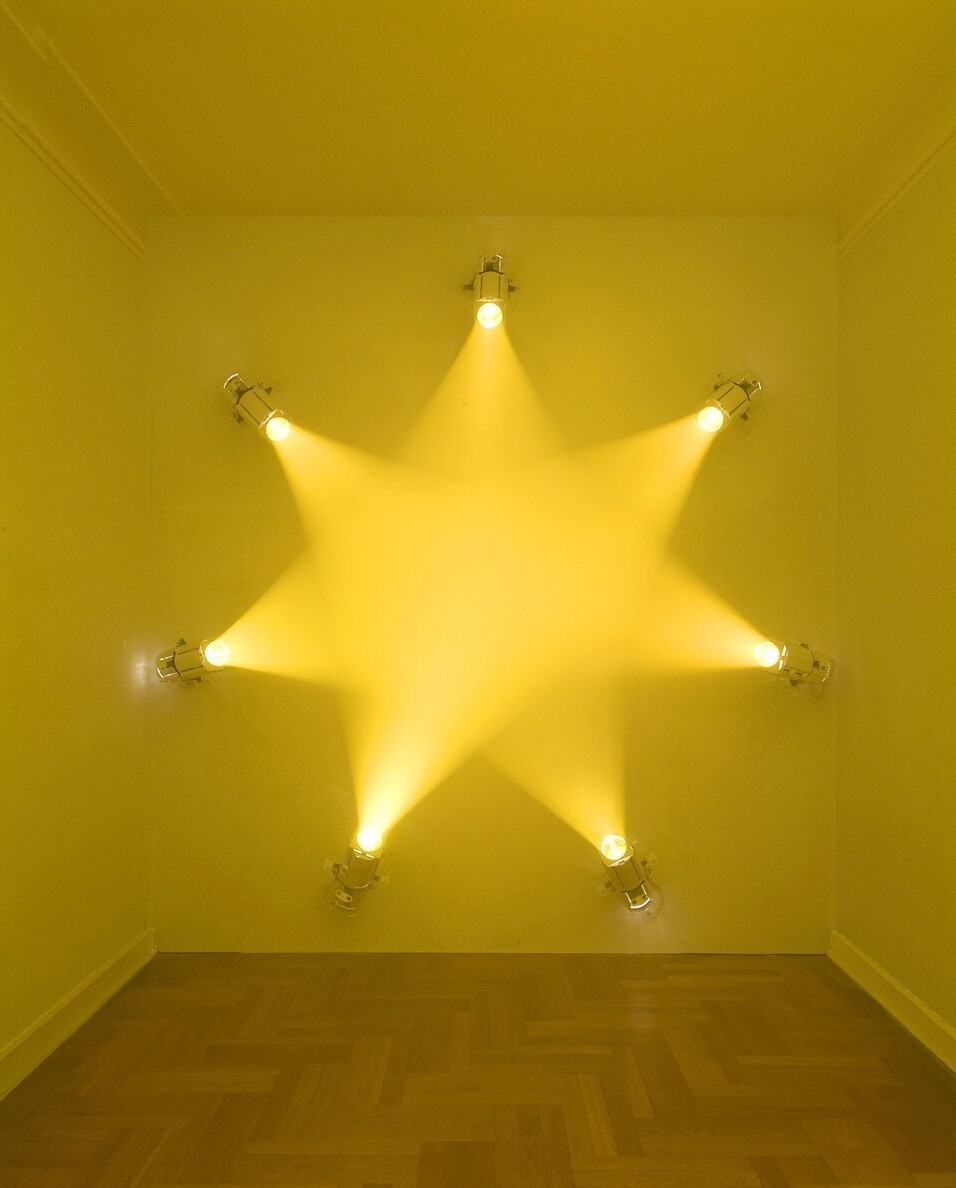
Milliner speaks for the first forty minutes, discussing Nativity and Transfiguration icons and their correlatives in the West and making, as always, fascinating connections between art of the past and present. For example, he overlays Olafur Eliasson’s Ephemeral Afterimage Star (2008) on Rublev’s Transfiguration icon (19:19), and Ann Veronica Janssens’s Yellow Rose on an Adoration of the Magi illumination from a fifteenth-century book of hours at the Getty (26:32). He also introduced me to a fascinating medieval manuscript illumination from Germany (which he in turn learned about through Solrunn Nes) that combines the light of Bethlehem and Tabor—two Gospel scenes in one. Don’t miss the quote by Gregory of Nazianzus.

Janssens, Ann Veronica_Yellow Rose
Ann Veronica Janssens (Belgian, 1956–), Yellow Rose, 2007. Projectors, dichroic filters, and artificial mist, dimensions variable (min. 360 cm diameter, min. 250 cm depth). Museum Morsbroich, Leverkusen, Germany. Photo: Philippe De Gobert.

Nativity-Transfiguration (Ottonian MS)
The Nativity and the Transfiguration, from an Ottonian Gospel-book made in Cologne, 1025–50. Bamberg State Library, Msc.Bibl.94, fol. 155r.

Combining art history and theology (he has advanced degrees in both), Milliner’s talk is organized as follows:

  1. Thessaloniki | Gregory Palamas (d. 1337)
  2. Constantinople | Pseudo-Dionysius the Areopagite (d. ca. 500)
  3. Paris | Abbot Suger (d. 1151)
  4. Los Angeles | Phillip K. Smith III (b. 1972)

+++

ART VIDEOS:

>> “A 60-second introduction to ‘The Nativity at Night’”: One of my favorite Nativity paintings! By fifteenth-century Dutch artist Geertgen tot Sint Jans, a lay brother in the religious order of St. John. In this video from the National Gallery in London, a camera scans over the painting as an atmospheric soundscape plays and captions guide us in looking at the details.

Geertgen tot Sint Jins_The Nativity at Night
Geertgen tot Sint Jans (Dutch, ca. 1455/65–ca. 1485/95), The Nativity at Night, ca. 1490. Oil on oak, 34 × 25.3 cm. National Gallery, London.

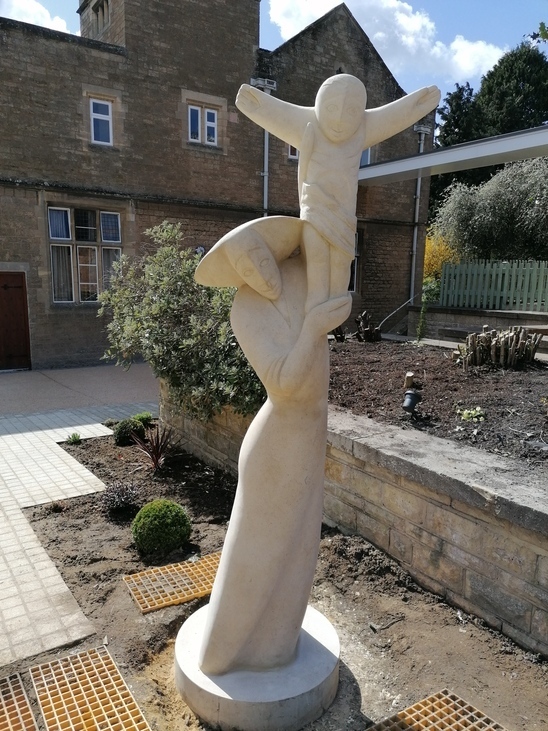
>> “Mother and Child Commission”: In this twelve-minute “making of” video, filmmaker Nick Clarke talks to artist Nicholas Mynheer over the first half of 2020, tracing his progress on the life-size Mother and Child sculpture that was commissioned by the Community of St Mary the Virgin, Wantage, an Anglican convent in Oxfordshire. I was struck by, from the looks of it, the physical demands of the sculpting process—the strength and endurance required to chip away daily at blocks of stone outside in winter, until they yield the shape you desire, then the logistics of attaching the blocks with steel, which weigh nearly a ton collectively, and disassembling, transporting, and reassembling them for installation. I was also interested to hear Mynheer discuss the expressive capabilities of English limestone—how you can convey emotional and sartorial subtleties, for example, through the precise angling of the chisel.

Mynheer, Nicholas_Mother and Child (Wantage)
Nicholas Mynheer (British, 1958–), Mother and Child, 2020–21. English limestone, height 230 cm.

Mother and Child was installed in the outdoor reception area of St Mary’s on April 12, 2021; you can watch a video of the installation here. “In very, apparently, simplified form, there is so much tenderness, energy, and something new,” says Sister Stella, the sister in charge, about the sculpture. “Jesus isn’t going to be held back. Her son’s going to go places.”

To learn more about Nicholas Mynheer, visit his website, https://www.mynheer-art.co.uk/. You can also read the artist profile I wrote on him for Transpositions in 2017.

+++

SONGS:

>> “Corazón Pesebre” (Heart Manger) by Rescate: A follower of the blog introduced me to this Christmas song from Argentina, and I dig it! Released as a single in 2017, it’s about turning our hearts into a manger to receive Christ. Read the Spanish lyrics in the YouTube video description.

The song is by the highly popular Argentinian Christian rock band Rescate, active from 1987 to 2020. Their lead singer and main songwriter, Ulises Eyherabide, died of cancer in July.

>> “Hallelujah, What a Savior!” (Christmas Version), performed by Providence Church, Austin, Texas: In 2012 Austin Stone Worship songwriters Aaron Ivey, Halim Suh, and Matt Carter rewrote the lyrics to Philip P. Bliss’s classic “Hallelujah, What a Savior!” to make them more Christmas-centered and added a new refrain; their version was released that year on A Day of Glory (Songs for Christmas). Here the song is performed by another Austin worship team—Jordan Hurst, Jaleesa McCreary, and Brian Douglas Phillips from Providence Church—for a virtual worship service on November 29, 2020. Instead of using the Austin Stone refrain, they quote Leonard Cohen’s “Hallelujah” between verses.

Roundup: Kenyan Annunciation; Jesus in utero; the politics of the Magnificat; and more

Many Catholics and Orthodox decry that Protestants really only ever talk about Mary during Christmas. While she does get some extra attention here on the blog in December, I also try to talk about her throughout the year, from the feasts of the Annunciation (March 25) and the Visitation (May 31) to her witness during Holy Week and Pentecost and her being such an important figure in Jesus’s life and exemplary for our own. Here’s a new Marian roundup, plus at the bottom a Christmas gift idea involving a product I helped create. 🙂

VISUAL MEDITATIONS:

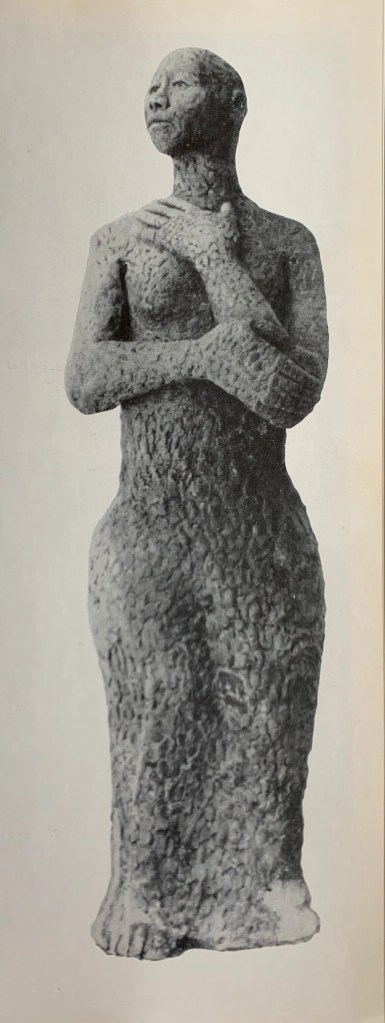
>> “Wondrous” by Paul Simpson Duke, Seeing the Sacred: In 2019, Rev. Drs. Paul and Stacey Simpson Duke, co-pastors of First Baptist Church in Ann Arbor, Michigan, ran an Annunciation art series on their blog, meditating on one artwork on the subject per day for twenty-five days. I commend the whole series, but I was particularly compelled by Day 13, which centers on a terracotta sculpture made by the late Kenyan artist Rosemary Namuli Karuga when she was a student at Makerere College Art School in Uganda. Paul Duke considers especially the mixture of sorrow and awe expressed in the figure’s face.

Karuga, Rosemary Namuli_Mary
Rosemary Namuli Karuga (Kenyan, 1928–2021), Mary, ca. 1950. Terracotta. This image is Plate 4 in the book Christian Art in Africa and Asia by Arno Lehmann.

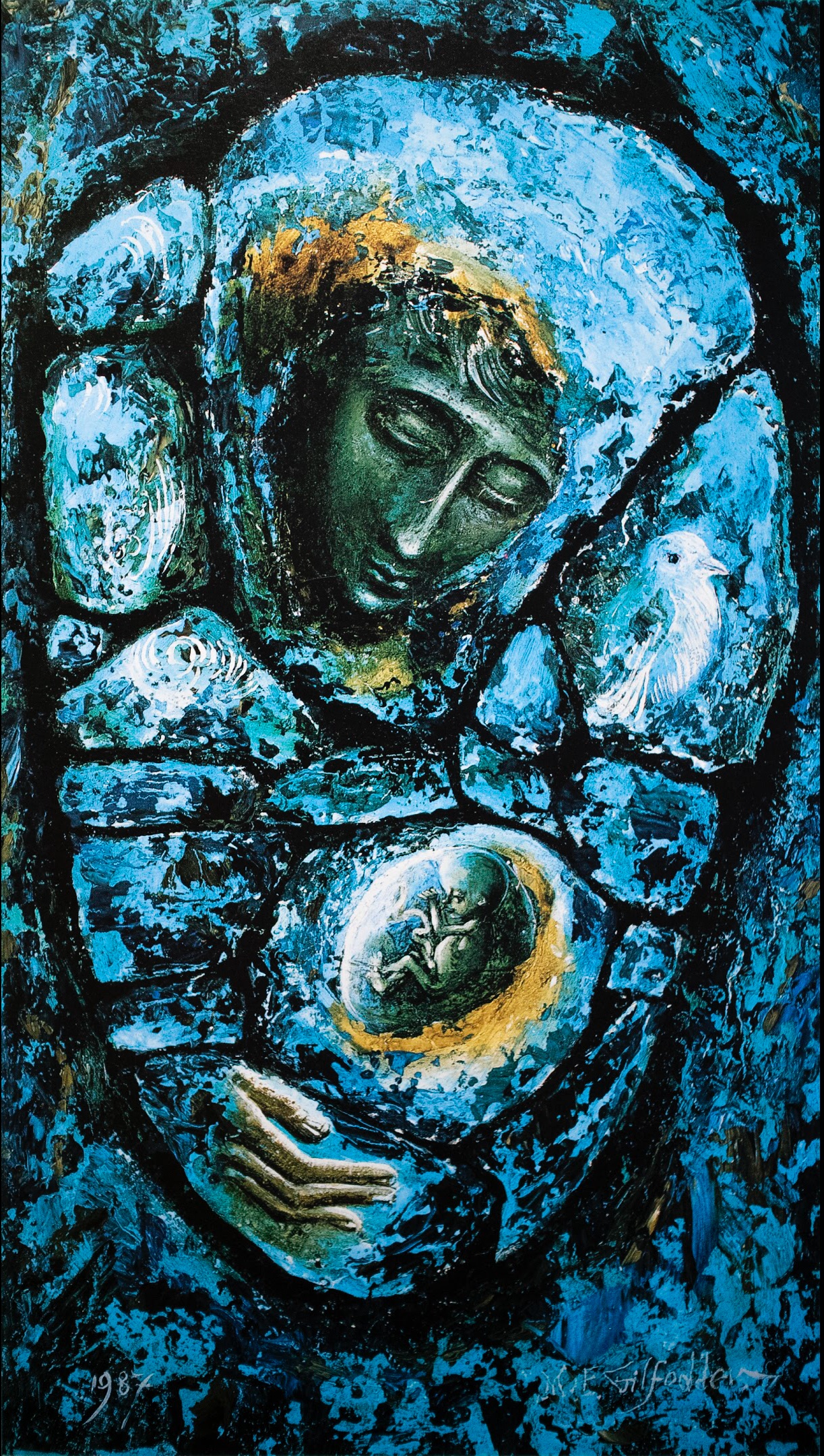
>> “Pregnant with God” by Victoria Emily Jones, ArtWay: For the first Sunday of Advent, I wrote about the painting Blue Madonna by Scottish Catholic artist Michael Felix Gilfedder, which shows the Christ child developing inside Mary’s womb. Pregnancy has always been an image I’ve carried with me during Advent, as it embodies the expectancy characteristic of the season—the growth of new life, a hidden fullness, about to come forth.

Gilfedder, Michael Felix_Blue Madonna
Michael Felix Gilfedder (Scottish, 1948–), Blue Madonna (Mary, Mother of God), 1987. Oil and tempera on wood with gesso relief, 25 1/4 × 13 in. (64 × 33 cm). Private collection, London. [prints for sale]

+++

PODCAST EPISODES: Both of the following come from For the Life of the World, the podcast of the Yale Center for Faith and Culture. Released back-to-back last December.

>> “Mary Theotokos: Her Bright Sorrow, Her Suffering Faith, and Her Compassion” with Frederica Mathewes-Green: Frederica Mathewes-Green is an American author and speaker, chiefly on topics related to Eastern Orthodox belief and practice. Here she discusses the Orthodox reverence for Mary; the scriptural account of her life; Mary as the mother of us all; the Protevangelium of James, which provides legendary material about Mary’s upbringing and betrothal; the ancient prayer “Sub tuum praesidium” (“Under Your Compassion”) from 250 CE, the earliest known appearance of the title “Theotokos”; and Mary’s role as intercessor. The latter point is something that Protestants like me are wary of—praying through saints who have passed on is not something I practice—but the way Mathewes-Green explains it is, just as we would ask fellow believers on earth to pray for us, why shouldn’t we also ask our friends in heaven to do the same, if we truly believe that they are alive and that we are in communion with them (as we confess in the Apostles’ Creed)?

Besides explicating several Marian doctrines, Mathewes-Green also speaks of Mary as an ordinary human being with an extraordinary call. With tenderness, she considers Mary’s experiences and emotions at different life stages: first as a perplexed young woman who is taken aback by Gabriel’s announcement but ultimately responds with humility and magnanimity, then as a parent who raises a child and later witnesses his violent death.

For more from Mathewes-Green on the topic, see her book Mary as the Early Christians Knew Her: The Mother of Jesus in Three Ancient Texts.

>> “A Womb More Spacious Than Stars: How Mary’s Beauty and Presence Upends the Patriarchy and Stabilizes Christian Spirituality” with Matthew J. Milliner: Matthew Milliner, an art history professor at Wheaton College and the author of Mother of the Lamb: The Story of a Global Icon, is a Protestant who wants to see other Protestants embrace a more robust doctrine of Mary as Theotokos, “Mother of God,” and develop a keener sense of her ecclesial presence. In this hour-long conversation he discusses Mary as person and as symbol; the need for “hermeneutical adventurousness anchored in the revelation of God in Christ”; how icons work, and particularly how Marian icons are spiritually formative; how to read a Nativity icon; the feminist objection to Mary; how Mary upends the ancient pagan goddess culture; and how we all must be Marian if we are to be orthodox Christians.

I’ve previously featured two other talks by Milliner on Mary: “The Art of Advent” and “Blessed Art Thou.”

+++

VIDEO: “Magnificat” by SALT Project: This short film features a reading of the Magnificat in Spanish, its words fleshed out in contemporary images. For the same video but in English, see here.

+++

ARTICLE: “The Political Is Personal: Mary as a Parent and Prophet of Righteousness” by Erin Dufault-Hunter, Fuller Magazine: What does the New Testament mean by “righteousness” (dikē)? Is it personal piety, or social justice? This article by Christian ethics professor Erin Dufault-Hunter examines how Mary upholds both connotations of the word. “Perhaps more than anyone else, Mary displays for us how saying yes to the kingdom, and its unlikely king, necessarily involves the personal but also reorients our social and political allegiances,” Dufault-Hunter writes. “Intimacy with God necessarily entails a political orientation, bringing or solidifying a way of seeing power and position.” Debunking the claim that Jesus’s coming was not political, Dufault-Hunter considers Mary’s Magnificat as well as other elements of the Christmas story—like the title “Son of God,” the word “gospel,” and the angels’ potentially treasonous news to the shepherds—showing how the good news of Christ is both personal and political.

+++

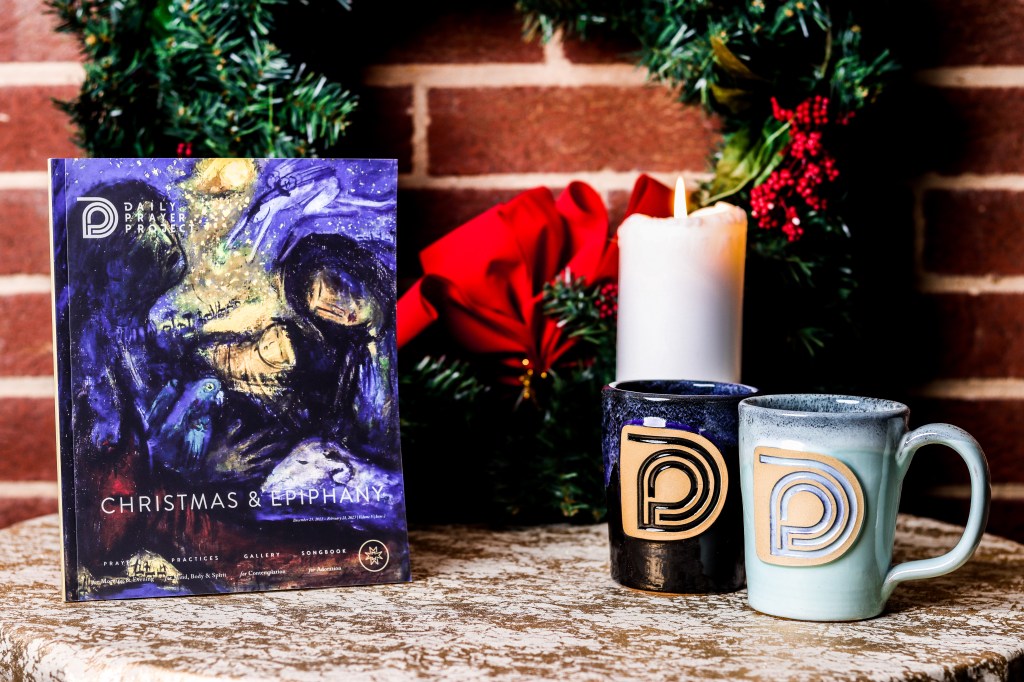
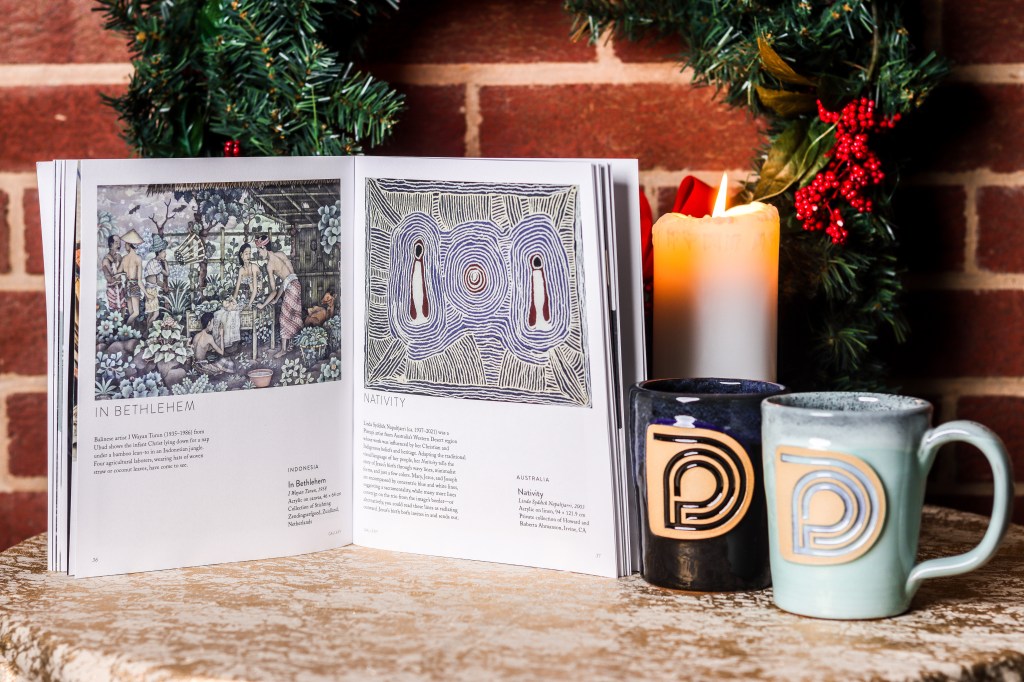
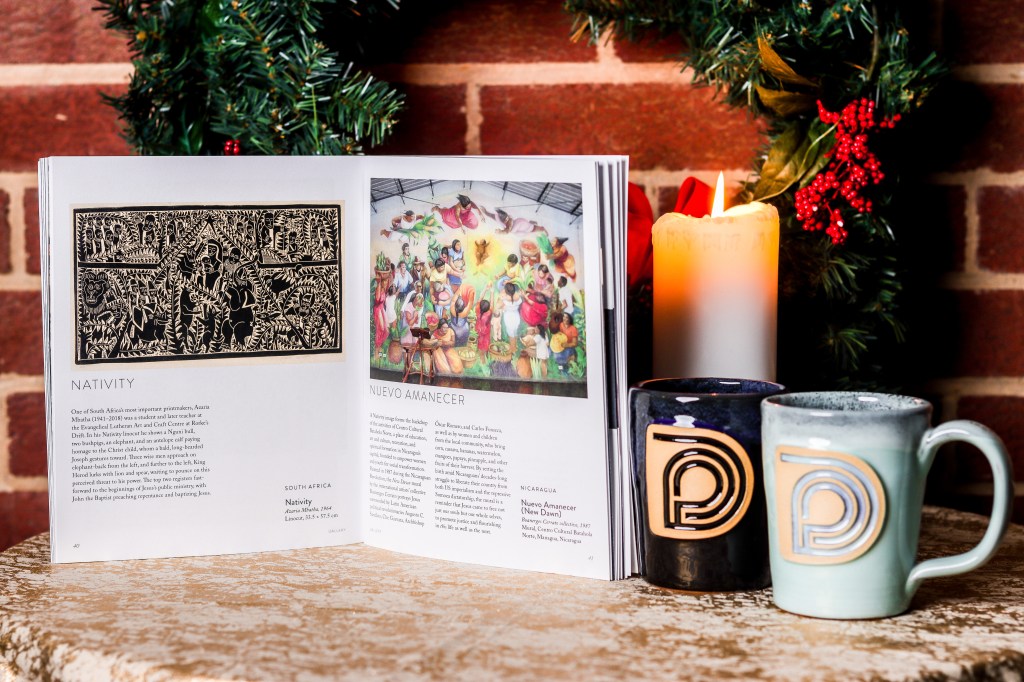
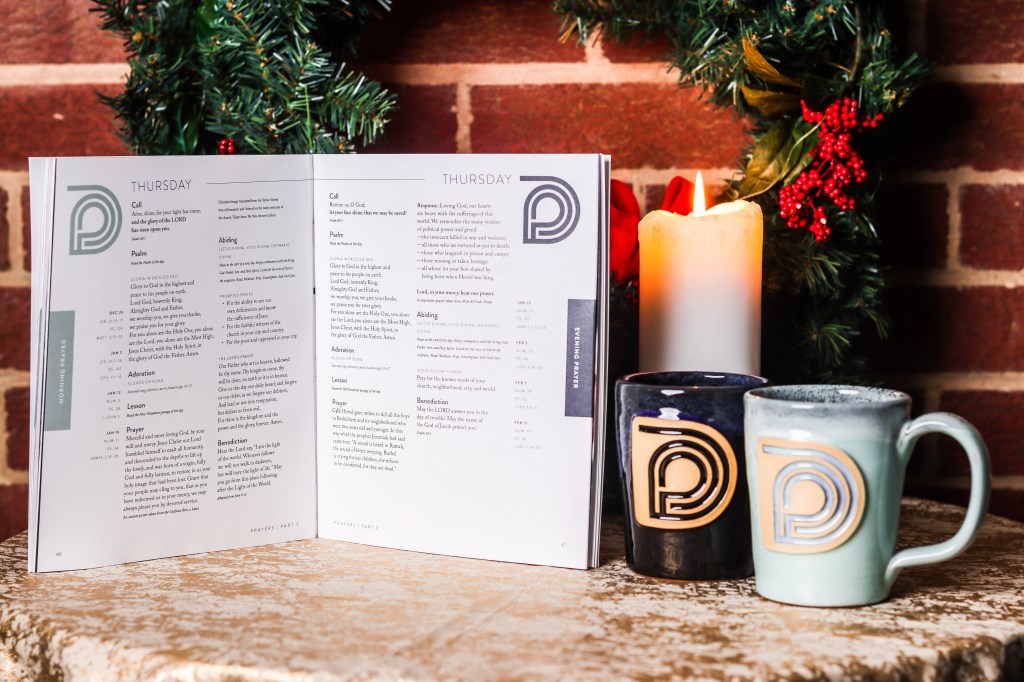
The Daily Prayer Project is running a special Christmas gift offer that, for $50, includes a physical and digital copy of our hot-off-the-press Christmas–Epiphany prayer periodical (covering December 25 through February 21) and two hand-thrown, dishwasher-safe mugs with a raised medallion of our labyrinth-inspired logo and glazes that map onto our morning and evening prayer colors. Packages ship early next week, so get your order in soon! There are also yearly subscription options, individual or communal, on the website.

In addition to working as a copyeditor and proofreader for the DPP, I also curate the art for the Gallery section, which is expanded in this edition to eight pieces—in this case, Nativities from around the world, each accompanied by a short reflection. The cover image is Morning Star by the Japanese Christian artist Hiroshi Tabata (1929–2014).

Roundup: Frederick Buechner on the arts, contemporary art as spiritual discipline, and more

SPOTIFY PLAYLIST: September 2022 by Victoria Emily Jones: This month’s thirty-song lineup includes a tango, a Pentecostal praise song, a playful setting of the Heidelberg Catechism Q&A number one, an Americana lament for hard times, a Negro spiritual on sax, Christina Rossetti, guitar evangelist Mother McCollum with a unique Jesus metaphor (!), a 9/11-inspired interfaith prayer that I will write about in a separate post, and songs in Turkish (“Kutsal, Kutsal, Kutsal Allah” = Holy, Holy, Holy Lord God) and Sepedi (“Modimo re boka wena” = God, we praise you).

+++

LECTURE (AUDIO): “God’s Thumbprint” by Frederick Buechner: Ordained minister and Pulitzer Prize– and National Book Award–nominated author Frederick Buechner died August 15 at age ninety-six. He was a wonderful writer (of both fiction and spiritual nonfiction) and preacher, and I hear him quoted all the time. He once summed up the theme of all his work as “Listen to your life.”

In 1992 Buechner spoke for the biennial Festival of Faith and Writing at Calvin University in Grand Rapids, Michigan, about how “art and religion are twin expressions of the human spirit.” Discussing poetry, painting, and music, he shows how the arts help us to pay attention. Listen to the talk, “God’s Thumbprint,” on FFW’s Rewrite Radio podcast. It is an expansion of the “Art” entry Buechner wrote in his book Whistling in the Dark: An ABC Theologized (1988); read the full excerpt here.

Rembrandt_Old Woman Praying
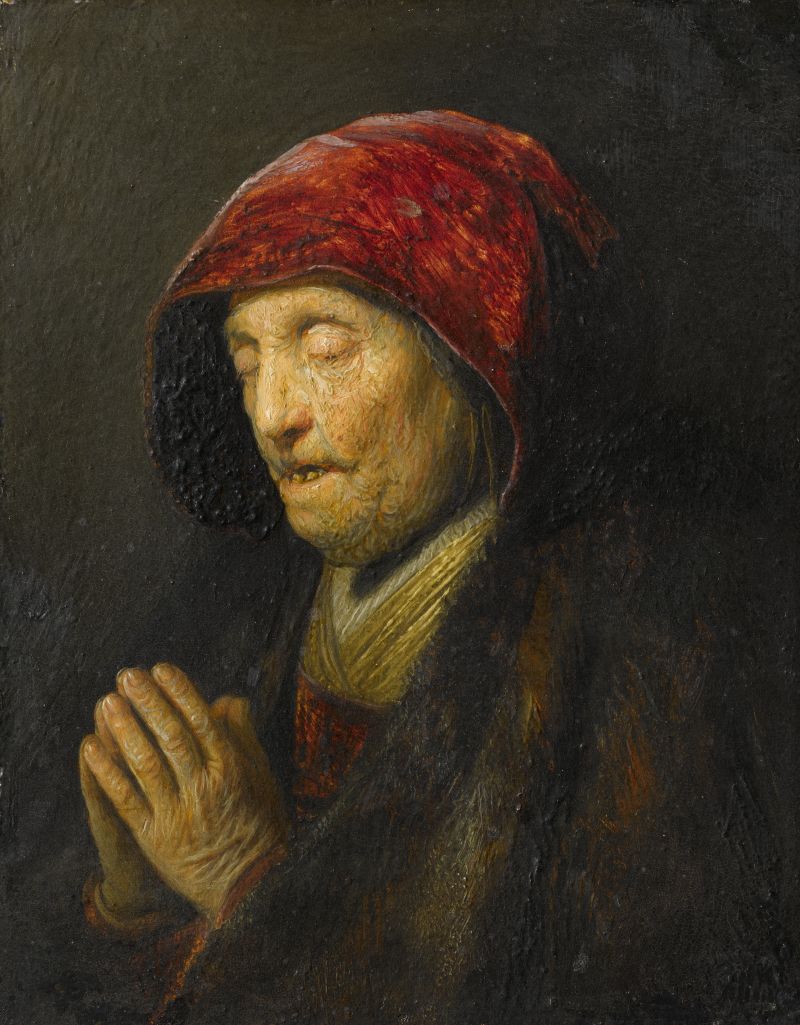
Rembrandt van Rijn (Dutch, 1606–1669), Old Woman Praying, 1629–30. Oil on gilded copper, 15.5 × 12.2 cm. Residenzgalerie Salzburg, Austria. This is one of the many careworn, lived-in elderly faces Rembrandt painted.

+++

LECTURE (VIDEO): “Difficult Beauty: Contemporary Art as Spiritual Discipline” by James K. A. Smith: In its content selection and development, the arts quarterly Image, says editor in chief James K. A. Smith, resists both nostalgia (old is better) and progressivism (new is better), charting a third way that he calls “archaic avant-garde.” The journal’s focus is on contemporary art, but contemporary art funded by tradition. Most of the writers and artists they feature see the tradition of religious art as a gift and a launchpad.

In this lunchtime Zoom talk from May 19, 2021, Smith considers why contemporary art so often feels alienating. He focuses on painting, giving a brief history of the onset of modernism in that medium, starting with the impact of photography, which pushed painters beyond the representation of objective reality. He shares compelling quotes by art critic Peter Schjeldahl and philosopher John Carvalho, about how we look and when thinking happens. Smith discusses the need for humility—to be comfortable with the not-knowing, to surrender our desire for mastery and control (i.e., demanding that paintings explain themselves).

What if the art that first alienates us is the art that might also stretch us? Or what if the literature that’s intimidating might also be the literature that has the possibility to kind of break us open in new ways, open us up to others, and even open us up to God? What if the difficulty of contemporary art is a virtue? And what if experiencing that difficulty is actually what we need? (12:42)

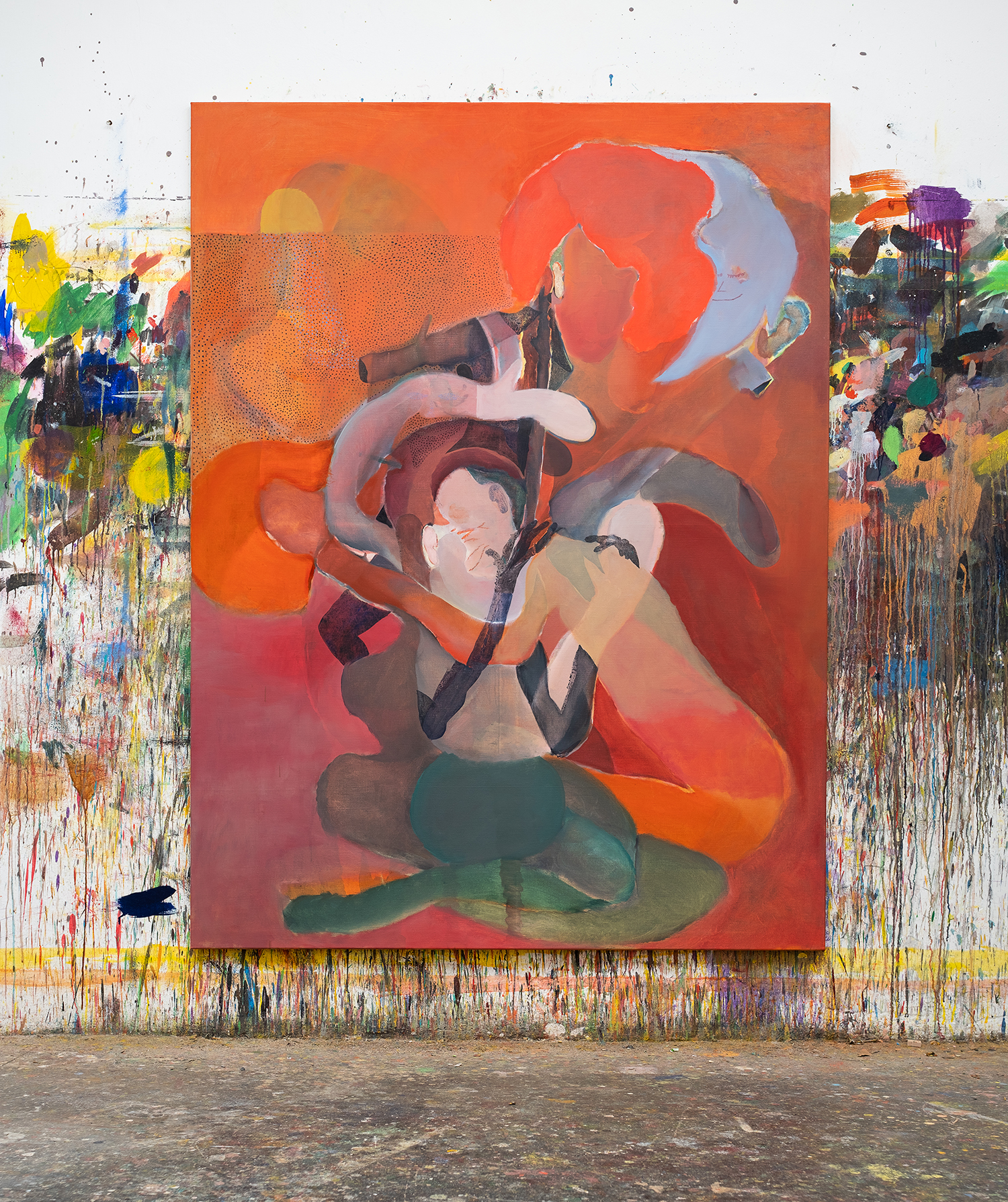
Daniel Domig (Canadian/Austrian, 1983–), Prayer Invites Chaos, 2019. Oil on mixed fibers, 75 × 59 in. [artist’s website]

The last twenty minutes consists of Q&A and addresses icons, art as propaganda, whether and how to engage art that comes out of a place of despair, and more.

I admit that I find much of contemporary art difficult, often unpleasantly so. A few readers have requested that I feature more abstract art, but I struggle to know how to talk about it. But I do want to learn. Image helps me do that.

+++

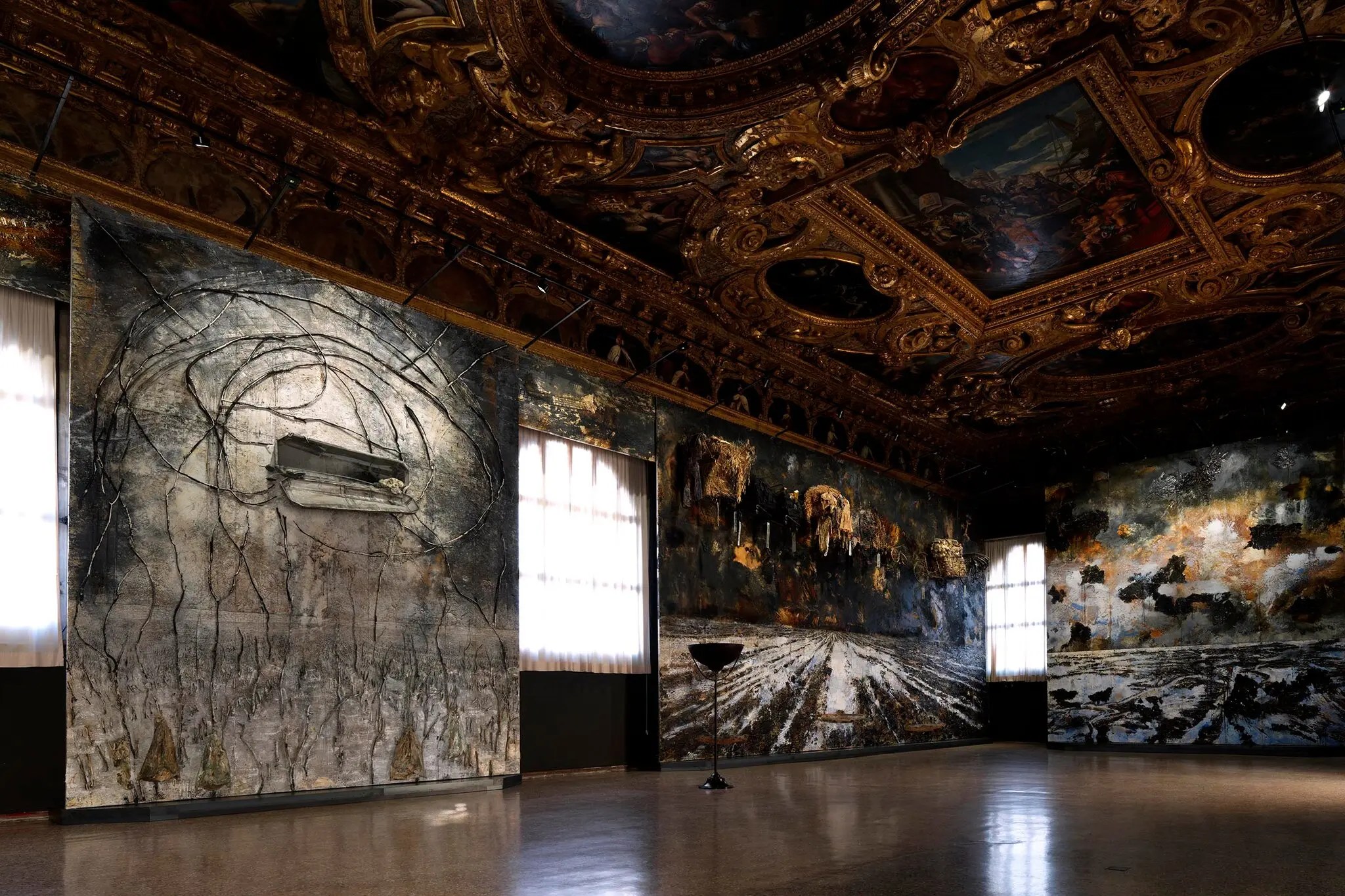
ESSAY: “Venice Undone” by Matthew J. Milliner: A core publication of Cardus, Comment magazine is committed to “the difficult work of being faithfully present in culture.” This summer they published an essay by art historian Matthew Milliner reflecting on the Anish Kapoor and Anselm Kiefer exhibitions at the 59th Venice Biennale, one of the art world’s largest and most significant recurring events.

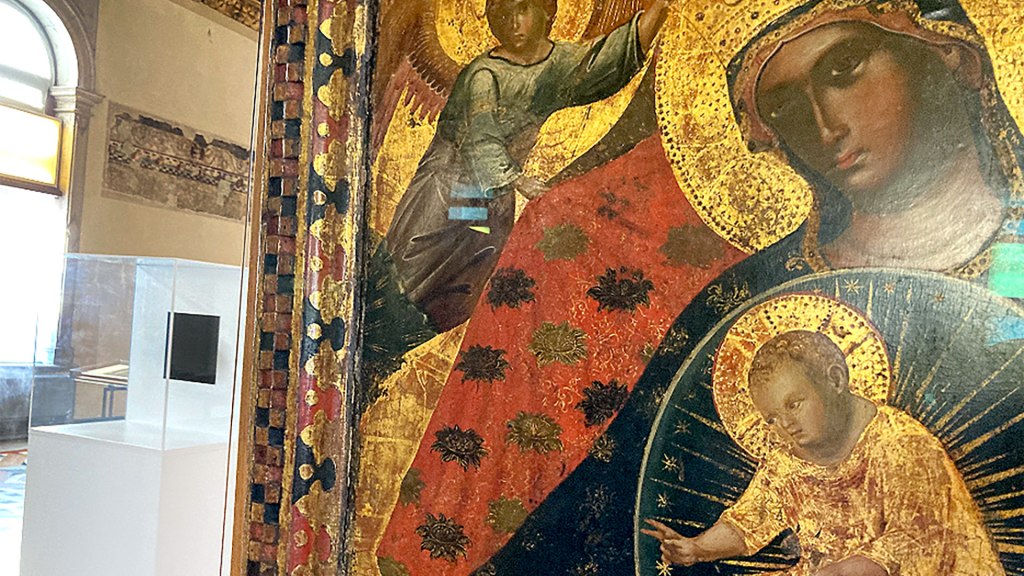
Milliner discusses one of Kapoor’s convex sculptures in Vantablack—a nanotech coating so dark that it absorbs 99.8 percent of visible light—which, in its staging at the Gallerie dell’Accademia, dialogues with three Marian icons and a ceiling painting of God the Father; Sky Mirror in the Accademia courtyard (see also Jonathan A. Anderson’s Instagram post on this piece); Shooting into the Corner; and The Healing of St. Thomas.

Photo by Matthew Milliner
At the 59th Venice Biennale, the Infant Christ from Paolo Veneziano’s Madonna and Child Enthroned (1320s) seems to bless one of Anish Kapoor’s “voids,” a black-painted work that appears flat when viewed head-on but whose convexity becomes apparent when viewed from the side. Photo: Matthew J. Milliner.

In part 2 of the essay, Milliner considers how the Kiefer show at the Doge’s Palace critiques Venice’s history of military conquest, replacing Titian’s The Conquest of Zara (1584) with an image of an empty tomb that evokes Jesus’s conquest over death. Apocalyptic themes have long been noted in Kiefer’s work; Milliner sees in particular traces of St. Paul and an interrogation of historic Venice’s bombastic displays of wealth and splendor, which are not lasting. And of course there’s the Jacob’s ladder motif. For a silent video tour of the exhibition, see here.

Kiefer, Anselm_Venice Biennale 2022
Anselm Kiefer (German, 1945–), These writings, when burned, will finally give some light, site-specific exhibition at the 59th Venice Biennale, 2022. Sala dello Scrutinio, Palazzo Ducale, Venice. Photo courtesy of the artist.

Prompted in part by their use of darkness, Kapoor and Kiefer have been read by some scholars through a lens of despair, but Milliner looks with eyes of hope and sees plenitude and light.

+++

SONG: “Jordan” by Jana Horn: One of Art & Theology’s subscribers sent this to me, and I’m not sure what to make of it, but I definitely find it intriguing, if a bit unsettling. A song from Jana Horn’s debut solo album, Optimism (2022), which Pitchfork calls “cryptic, bewildering, and daringly simple.” “Jordan” is full of veiled biblical allusions and touches on themes of pilgrimage, belief, destruction, incarnation, and burden bearing. I share it here in the spirit of Jamie Smith’s talk above, about not needing to nail down meaning in an artwork—even though I can’t help but ask, “Just who are the two dialogue partners?!” (God the Son and God the Father?)

Horn is a singer-songwriter from Austin, Texas, and a fiction-writing graduate student at the University of Virginia–Charlottesville.

7 Hours of Interviews on Religion and the Arts

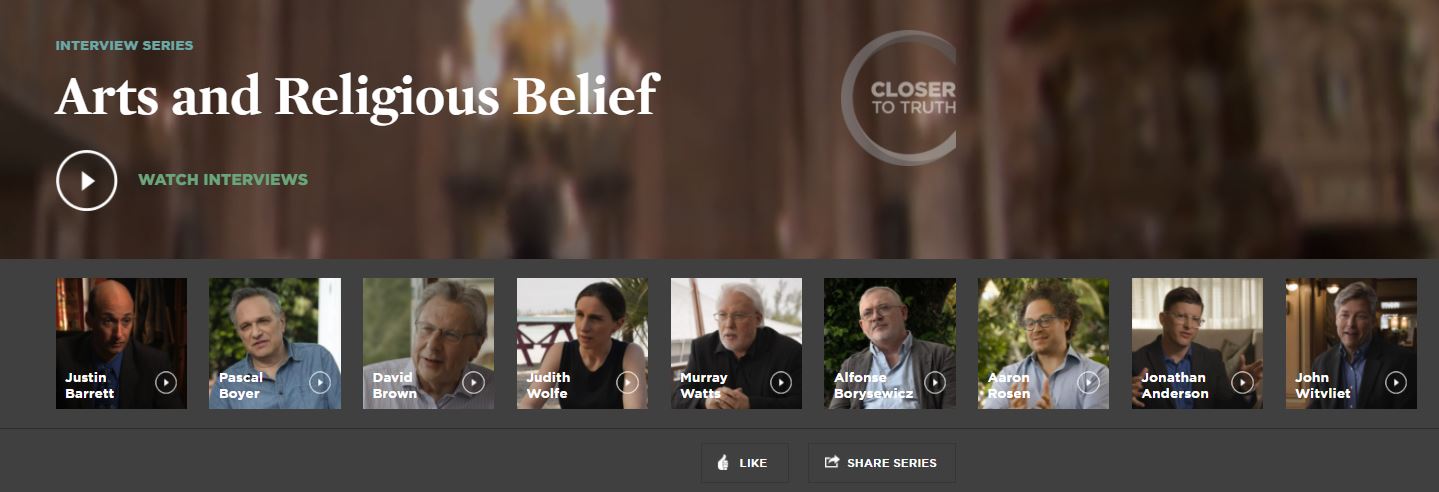
Created, written, and hosted by Robert Lawrence Kuhn, Closer To Truth is a public television series that explores fundamental questions relating to the cosmos, consciousness, religion, and the search for ultimate reality and purpose. The program boasts a robust website featuring over four thousand video interviews with scientists, philosophers, theologians, artists, and other scholars and practitioners.

I am particularly interested in the seven hours’ worth of interviews on art and religion/God that fall under the “Art Seeking Understanding” rubric. They are separated into three- to twelve-minute segments spread across these eight topical series:

  • Art and the Philosophy of Religion: “Can art inform topics in philosophy of religion? Can the existence and varieties of art address or affect theological questions about God, faith, belief, worship?”
  • Arguing God from the Arts?: “Is it possible to infer something of the nonphysical, divine existence of God from the physical, human existence of art? Can one argue for God from art?”
  • Can the Arts Reveal God’s Traits?: “If God is the Creator of human beings and art is a feature of human sentience, then can examining the arts help discern characteristics of God? Can one infer from various aspects of art various traits of God?”
  • Arts and Religious Experience: “What is the relationship between experiencing art and experiencing God? Can the arts generate or trigger religious experience? If so, can it be validated?”
  • Arts and Religious Belief: “Is there a relationship between diverse arts and belief in God? Can the arts express or encourage religious belief? If so, can it be validated?” (*This is my favorite.)
  • Arts and Religious Practice (Liturgy): “Why are the arts so deeply embedded in religious settings and services? How do the arts work in religious spaces and activities? What are differences among the arts, say music and painting, in the liturgy?” (*This is my second favorite!)
  • Arts and Religious Reality: “Art is deeply involved in the practice of religion, embedded in the rituals and liturgy of almost every religion. But how could the ubiquity of the arts in religion affect whether or not religion is real?”
  • Co-Evolution of Art and Religion: “Did art and religion co-evolve in parallel as archeology and anthropology suggest, and if so, what would be the significance? What do art and religion have in common that could enable their common, co-temporal development?”
Closer to Truth screen cap

Interviewees include Nicholas Wolterstorff, Matthew Milliner, Jonathan A. Anderson, Judith Wolfe, Aaron Rosen, Alfonse Borysewicz, John Witvliet, and others. I’m disappointed by the lack of diversity among interviewees—the program is very heavy on white male Christians—but I am nevertheless grateful for the wisdom these individuals share, and for the efforts of the Closer To Truth team to coax it out, capture it onscreen, and present it freely to the public.

Here are a few interviews I’ll call your attention to:

These videos and many more can also be found on Closer To Truth’s YouTube channel.

Roundup: Carrying a boulder, toppling statues, art and prayer retreat, and more

NEW SONG: “Trust in You” by Antoine Bradford: Alternative soul artist Antoine Bradford released the original song “Trust in You” on April 21, and then came this acoustic version, which simultaneously moves me and stills me! Another single, “How Many Times,” came out yesterday, and a full-length album is on its way, on the Humble Beast label.

+++

PODCAST EPISODES

“Andre Henry on Systemic Racism,” Conversing (Fuller Studio), May 7, 2020: Writer, musical artist, speaker, and activist Andre Henry sits down with Mark Labberton, president of Fuller Theological Seminary (where Henry earned a master’s in 2016), to share his personal journey of learning about systemic racism and some of the ways he’s exposing and pushing against it. He talks about growing up the son of Jamaican immigrants in Stone Mountain, Georgia, and the early influence of reggae music; his moving to New York City during the age of stop-and-frisk to take a job as a worship leader; and his time at Fuller in California, where, in the wake of Freddie Gray’s death, he shifted from the perspective of “Black people are treated differently in the US” to “The US is a fundamentally racist society.”

Along the way, he discusses “whiteness” as an invention made to subjugate other people, not letting the news cycle dictate when you talk about racism, his study of social movement theory and the post-Shoah theologians, his realization that black people are not powerless, his writing the songs “It Doesn’t Have to Be This Way” and “How Long,” the failure of many (white) church ministers to minister to black congregants, the resistance he met while interviewing for pastoral positions, the religious doubts that surfaced after repeatedly hearing from Christian friends that “Racism isn’t a priority for God” and that social activism distracts from the gospel, and more.

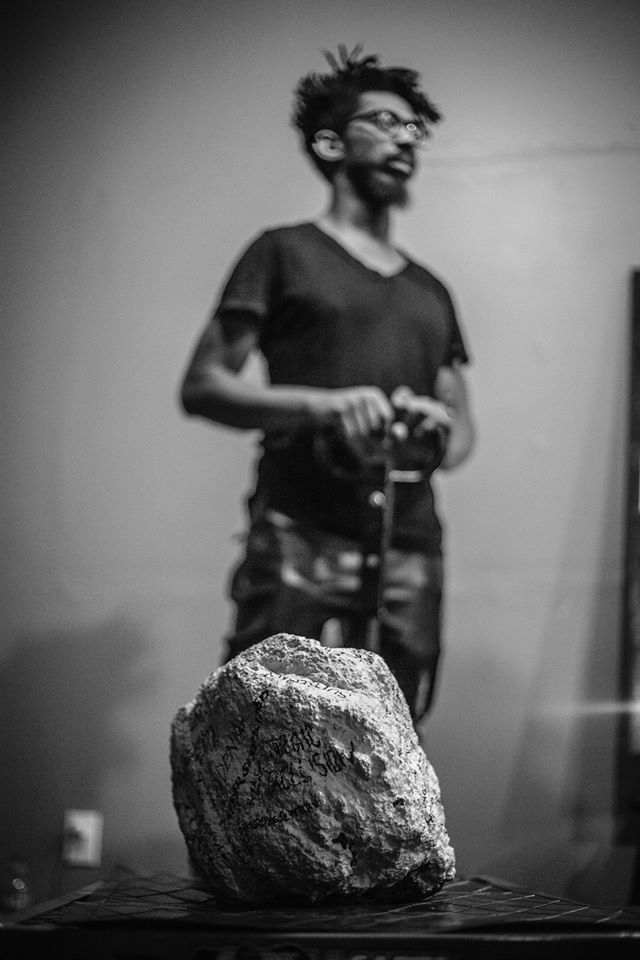
I particularly appreciated hearing Henry describe, starting at 28:36, an art piece he performed over the course of six months in 2016, in which he pulled around a hundred-pound boulder in a wagon everywhere he went—work, classes, dinners, church, grocery store, etc. The boulder was painted white and had words like “Mass incarceration,” “police brutality,” and “white fragility” written on it. Labberton, who was one of the many witnesses of this performance, interprets its intent as “I’m trying to externalize a burden that is the burden that I walk with every day, and I want you to see it for what it actually is, and the weightiness of it.” “Stunning,” “profound,” “a significant liturgical act,” and “a Jeremiah kind of an enactment” are some of the ways Labberton describes Henry’s boulder-carrying, the latter referring to the biblical prophet’s outrageous symbolic acts, such as the retrieval of soiled, tattered underwear, the breaking of a clay jug, and the wearing of an oxen yoke. (As a side note, one of my all-time favorite articles from the esteemed Image journal is “The Avant-Garde and Sacred Discontent: Contemporary Performance Artists Meet Ancient Jewish Prophets” by Wayne Roosa.)

Andre Henry carrying a boulder

To learn more about Andre Henry, visit his website, http://andrehenry.co/, where you can find his Hope and Hard Pills podcast, blog, and music and sign up for his newsletter. See also his self-introduction on Twitter and the short video Fuller Studio made with him in 2016, “Culture Care and Music.”

“Why Christians Have a Reputation for Smashing Statues,” Quick to Listen, interview with Matthew Milliner, July 8, 2020: Following the killing of George Floyd in May, protesters have torn down or vandalized dozens of statues connected to the Confederacy and to other controversial historical figures like Christopher Columbus. Matthew Milliner, associate professor of art history at Wheaton College, joins Christianity Today’s global media manager Morgan Lee and editorial director Ted Olsen “to discuss how much earlier Christian battles over statues echo today’s fights, what Christians have learned that might help us better understand the call to remove statues today, and whether we should even be creating memorials and monuments in the first place.”

Milliner references the Emancipation Memorial and Mary McLeod Bethune statue in DC’s Lincoln Park; the National Memorial for Peace and Justice in Montgomery, Alabama [previously]; Maya Lin’s Vietnam Veterans Memorial; the St. Augustine Foot Soldiers Monument; and UNC–Chapel Hill’s Silent Sam monument to the Confederacy and lesser-known Unsung Founders Memorial. After the interview he created a chart titled “What to Do with Monuments,” providing five options and citing historical analogues as well as contemporary examples in the US and internationally.

+++

OBITUARY: “Ennio Morricone, Oscar-Winning Composer of Film Scores, Dies at 91”: Regarded as one of the most influential film composers of all time, Ennio Morricone wrote over four hundred scores for cinema and television, as well as over a hundred classical works. I know him best for the soundtrack of The Mission, especially the “Gabriel’s Oboe” theme, which is played in the movie by the Spanish Jesuit priest Father Gabriel (Jeremy Irons) as an outreaching gesture of friendship to the Paraguayan Guarani.

+++

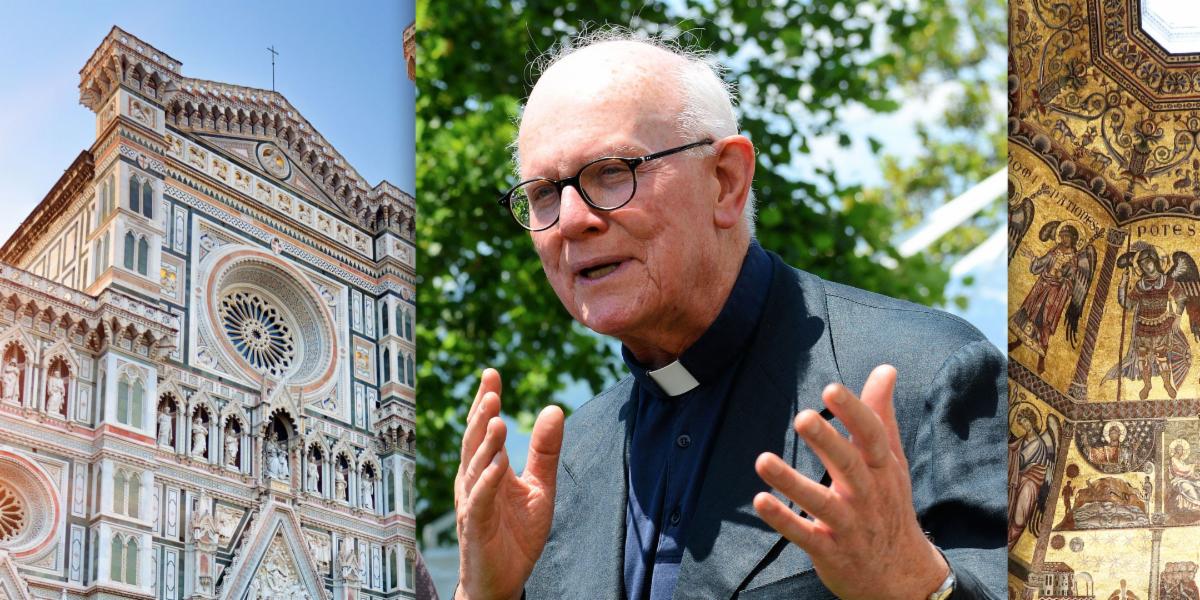
ONLINE RETREAT: “The Art of Prayer” with Monsignor Timothy Verdon: On August 7 Paraclete Press is hosting an online retreat with Monsignor Timothy Verdon, a Roman Catholic priest and art historian based in Florence, Italy. As in his book Art and Prayer: The Beauty of Turning to God, Msgr. Verdon will reflect on the ways in which visual art has historically supported, and can still support, prayer, guiding participants in meditating on images from the lives of Christ, Mary, and the saints. View the schedule and reserve your ticket here.

Timothy Verdon

+++

CHORAL ANTHEM: “Lead Me, Lord” | Text: Psalm 5:8, Psalm 4:9 | Music by Samuel Sebastian Wesley, 1905 | Performed by the Chapel Choir of Girton College, Cambridge, June 2020 [HT: Malcolm Guite]

Lead me, Lord,
Lead me in thy righteousness;
Make thy way plain before my face.
For it is thou, Lord,
Thou, Lord, only,
That makest me dwell in safety.

Roundup: Advent art, songs, poems

So much to share today! Be sure not to miss “Psalm 126” by Drew Miller (a new favorite Advent song) and Matthew Milliner’s excellent presentation on the Virgin Mary in art, which opened an exhibition that’s running in Southern California—both below. (If you only have time to take in a few items from this post, those are the ones I’d recommend.)

PODCAST EPISODE: “A Time for Wanting and Waiting: An Advent Conversation with W. David O. Taylor”: In this recent episode of The Road to Now, hosts Bob Crawford and Chris Breslin interview liturgical theologian David Taylor [previously] about the season of Advent: what it is, its history and how it fits into the wider church year (see especially 43:29ff.), the canon of Advent and Christmas songs, and the gift the Psalms offers us during this season. Referencing his 2015 Washington Post article, Taylor says our picture of Christ’s coming, especially as expressed through our hymnody, tends to be unidimensional and far too sanitized:

We should permit the Nativity stories to remain as strange and bizarre and fantastical and difficult as they in fact are, rather than taming and distilling them down to this one nugget or theme of effusive joy. There is effusive joy in that—it’s simply that that’s not the only thing that characterizes these stories. Unfortunately, most of our canon of Christmas carols or hymns tends to focus on what I would argue is only 50 percent of the Nativity stories. Everything that begins with Elizabeth and Zechariah and goes all the way to, say, Anna and Simeon and the visit of the Magi and the flight to Egypt . . . it really is one whole story that is being told with these subplots.

I would love to see us create . . . new music that either retells portions that we are already telling but not the whole of it, or we need to tell parts that have not yet been told. . . . Let’s ask ourselves how God is at work in all the minor-key or difficult or dissonant parts of the Nativity stories, not absent from—those are not extraneous to God incarnating himself in Jesus Christ. Those are essential parts of it. And so how can our hymns become ways of praying ourselves into these stories so they can sink deeply into the fibers of our hearts and minds and bodies, and for us to say, “Oh, all the weird and difficult and dissonant parts of our lives are part and parcel of God’s good work,” not, again, on the margins of it, or things we should eschew.

To help deepen and expand the church’s repertoire of Christmas music, Taylor founded, along with a few others, the Christmas Songwriters Project. The Psalms are an inspiration in this task, as they express a joy that is at times quiet and at others raucous, as in the Nativity narratives, and that exists as part of a dynamic constellation of emotions and postures that praise can encompass. Most of us don’t recognize the pure, undistilled happiness that is marketed to us throughout December, Taylor says, and we shouldn’t force ourselves to try to feel it but rather should take a cue from the Psalms and also see the same emotional complexity at work at the beginning of the Gospels:

The Psalms, and I think Christian faith at its heart, can make space for joy and sorrow to exist alongside each other in a way that happiness, as we commonly understand it, cannot, or only with great difficulty. . . . What the psalms of praise do . . . is that in one movement, there’s this effusive joy or a shouting joy or a convivial joy, and then it segues to a quieter joy or a contemplative joy or a yearning, painful kind of joy. . . .

So in the season of Advent, when we look at the characters in scripture—you know, Mary and Joseph and Zechariah and Elizabeth and the shepherds and Anna and Simeon—every one of them has this moment, perhaps, of which we could say, “That sounds like joy.” . . . But immediately before or immediately after, it transitions to something else. So does that mean that joy is negated? Is joy squashed? Is joy extinguished? Or is joy able to continue to exist side by side, to subsist, with a continued experience of longing or a sudden moment of sadness?

+++

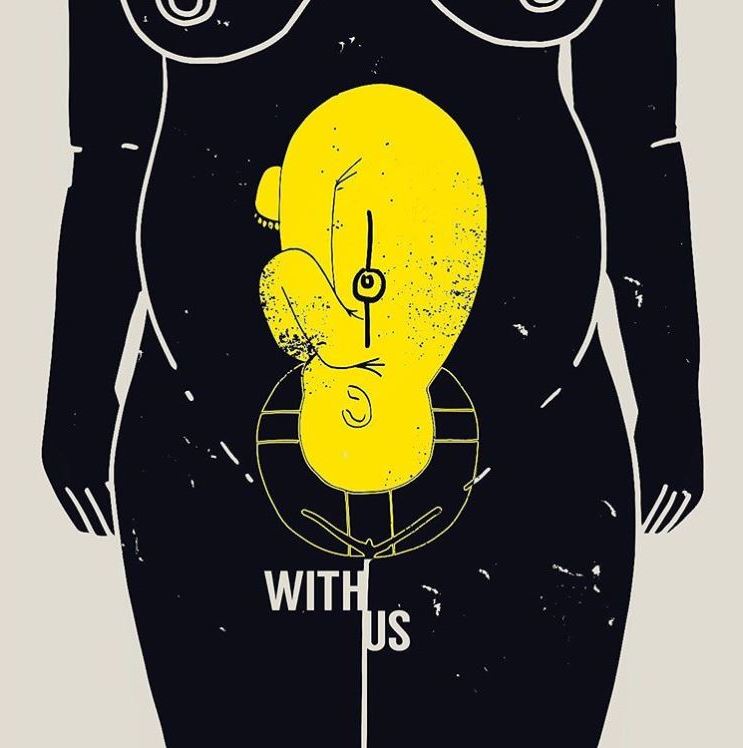
ART BY SCOTT ERICKSON: This month Portland-based artist Scott Erickson has been posting on Instagram Advent-themed images he has made, along with thoughtful meditations. Some emphasize the bodiliness of the Incarnation, which often gets overlooked, presumably out of a sense of propriety. But “grace comes to us floating in embryonic fluid . . . embedded in the uterine wall of a Middle Eastern teenage woman,” Erickson writes about With Us – With Child, to which one Instagrammer responded, “This is trajectory changing. Thank you for this. Nipples, vaginas, and Jesus CAN coexist!” Another mentioned how she had never seen Mary with a belly button and a linea nigra before. The image reminds us that Jesus was indeed “born of woman” (Gal. 4:4).

Erickson, Scott_With Us, With Child
Scott Erickson (American, 1977–), With Us – With Child, 2016 [purchase as poster]
Another imaginative image suggests that Christ came to set the world on fire, so to speak. God, who is of old, gives himself to earth as a Jewish babe (“Love has always been FOR GIVENESS,” Erickson writes), sparking a revolution.

Erickson, Scott_Advent
Art by Scott Erickson

View more art by Scott Erickson @scottthepainter.

+++

LECTIONARY POEMS FOR ADVENT: This year Englewood Review of Books launched a new feature on their website: a weekly post of four to six poems that resonate with the Revised Common Lectionary readings for that week. “We will offer here a broad selection of classic and contemporary poems from diverse poets that stir our imaginations with thoughts of how the biblical text speaks to us in the twenty-first century. We hope that these poems will be fruitful not only for preachers who will be preaching these texts on the coming Sunday, but also for church members in the pews, as a way to prime our minds for encountering the biblical texts.” I’m really enjoying these stellar selections, several of which are new to me.

Continue reading “Roundup: Advent art, songs, poems”