
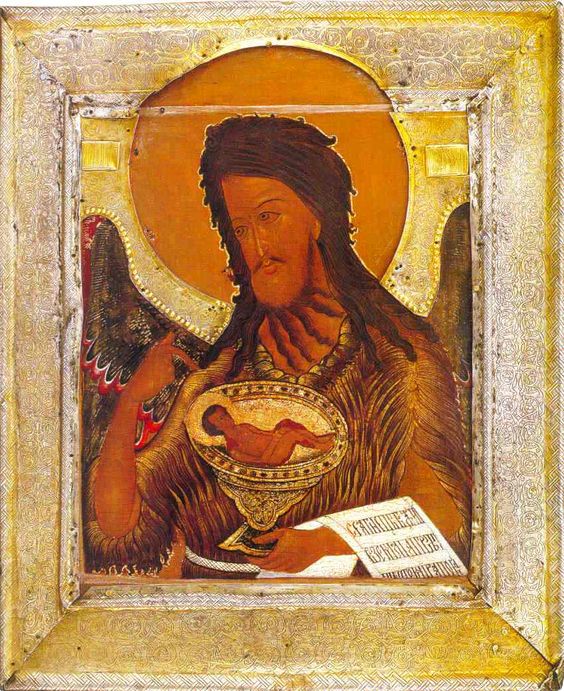
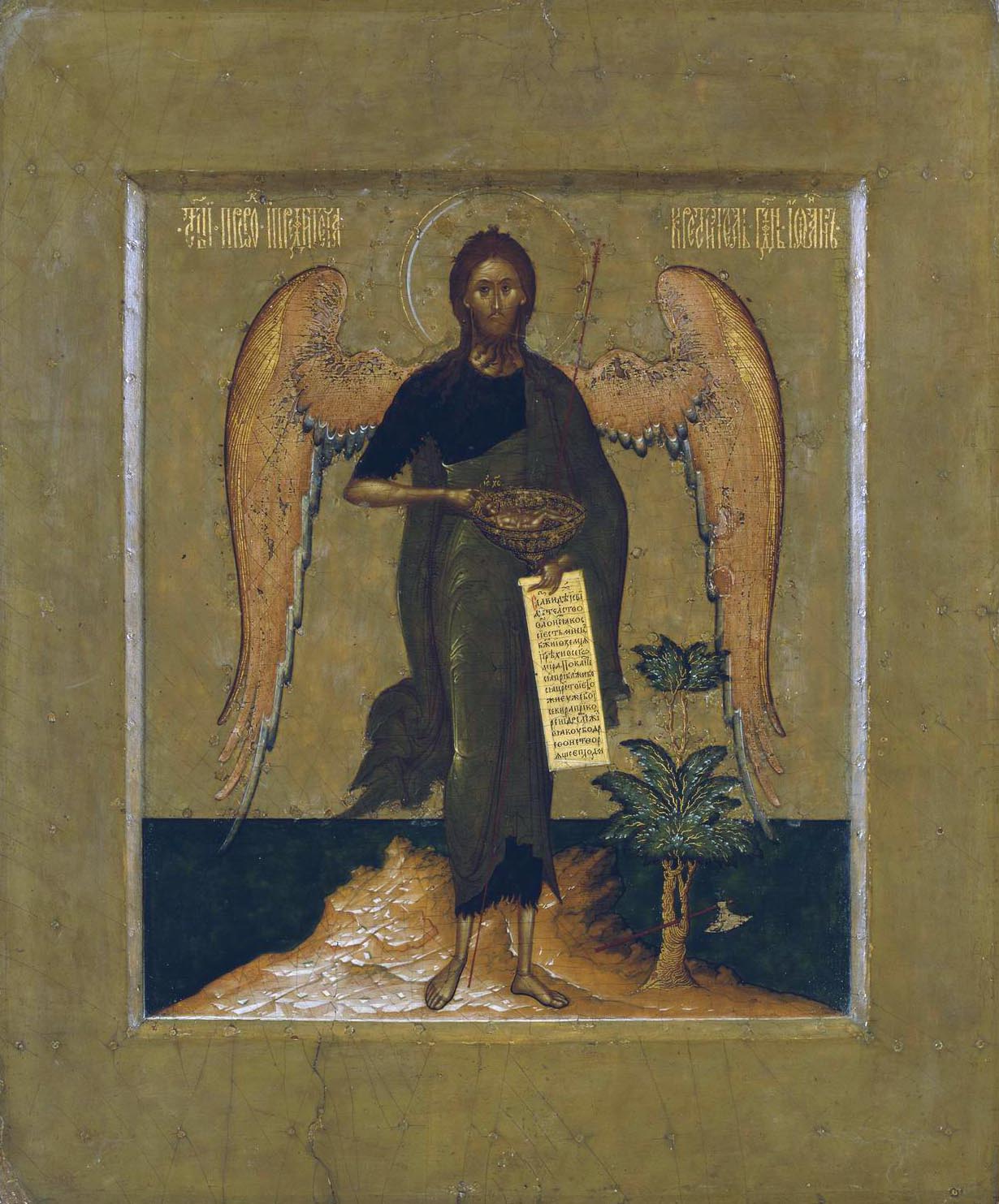
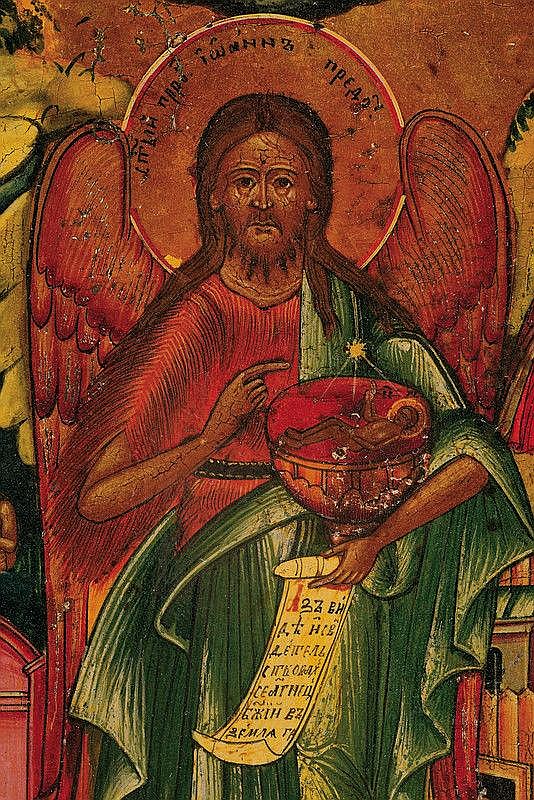
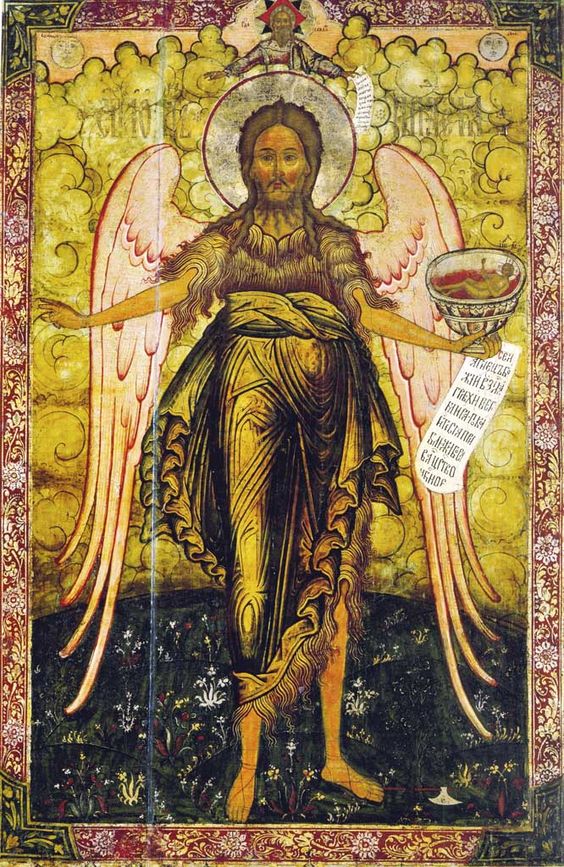
LOOK: John the Baptist, Angel of the Desert icon
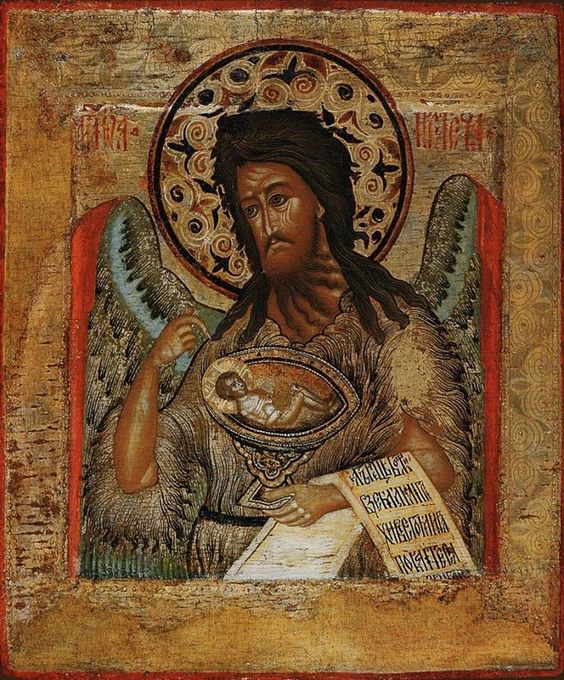
John the Baptist served as a bridge between the old and new covenants, calling on people to repent of their sins and produce good fruit in preparation for the arrival of the Messiah. “The kingdom of heaven is at hand!” he vigorously proclaimed on the banks of the river Jordan. “Get ready.”
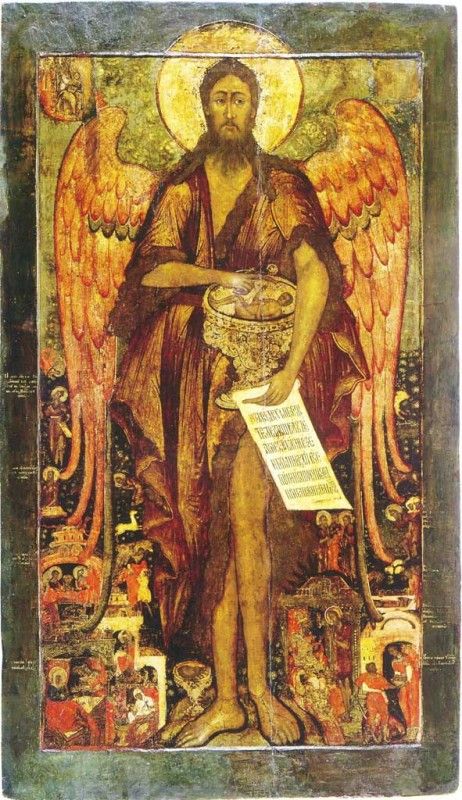
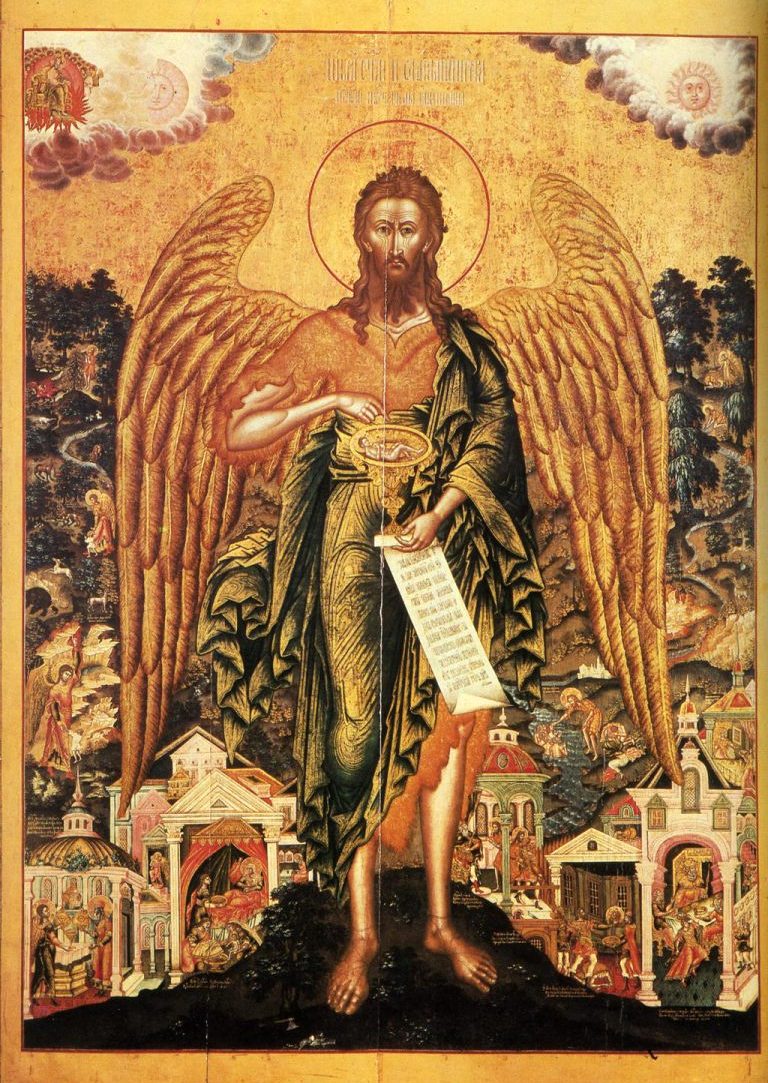
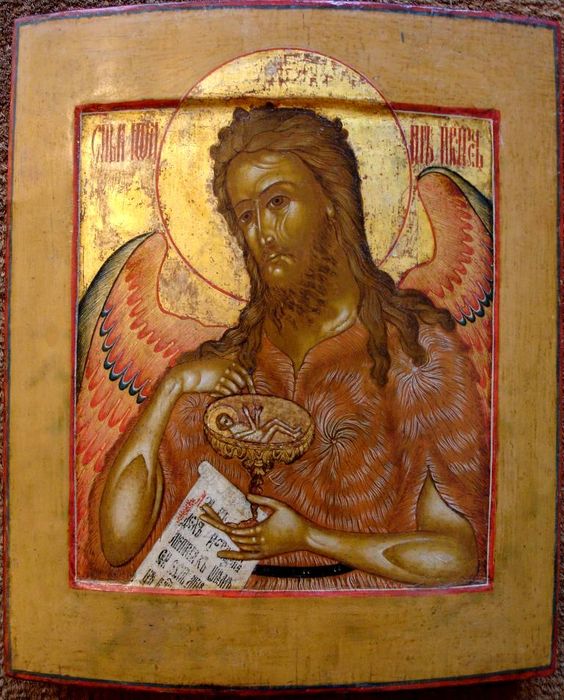
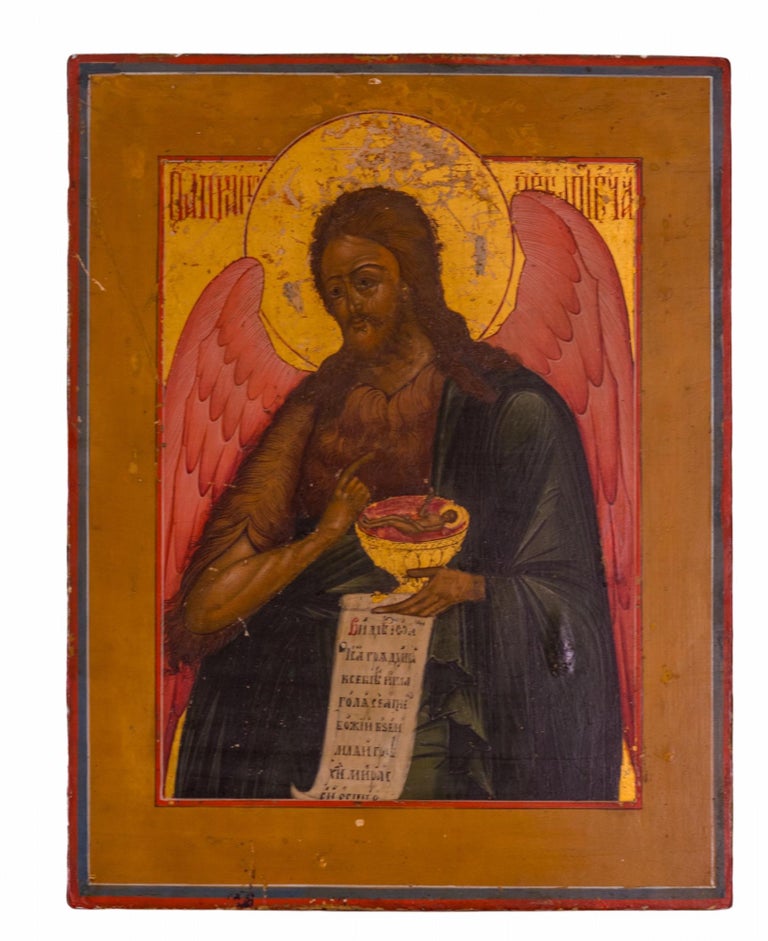
Eastern Orthodox icons sometimes portray John the Baptist with wings, as the word “angel” means “messenger.” God had announced through his prophet Malachi, “See, I am sending my messenger [mal’āḵ] to prepare the way before me, and the Lord whom you seek will suddenly come to his temple. The messenger of the covenant in whom you delight—indeed, he is coming, says the LORD of hosts” (Mal. 3:1). The Hebrew word, mal’āḵ, that is translated as “messenger” in this passage is translated elsewhere in the Old Testament as “angel.” Christian commentators see this prophecy as fulfilled in John the Baptist.
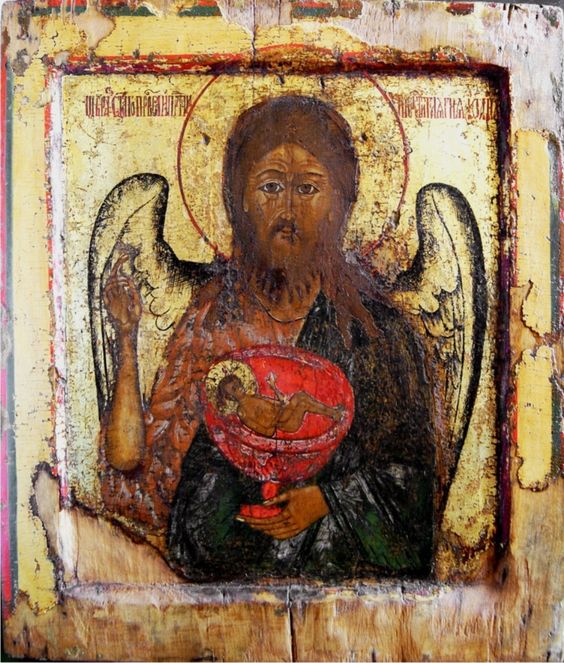
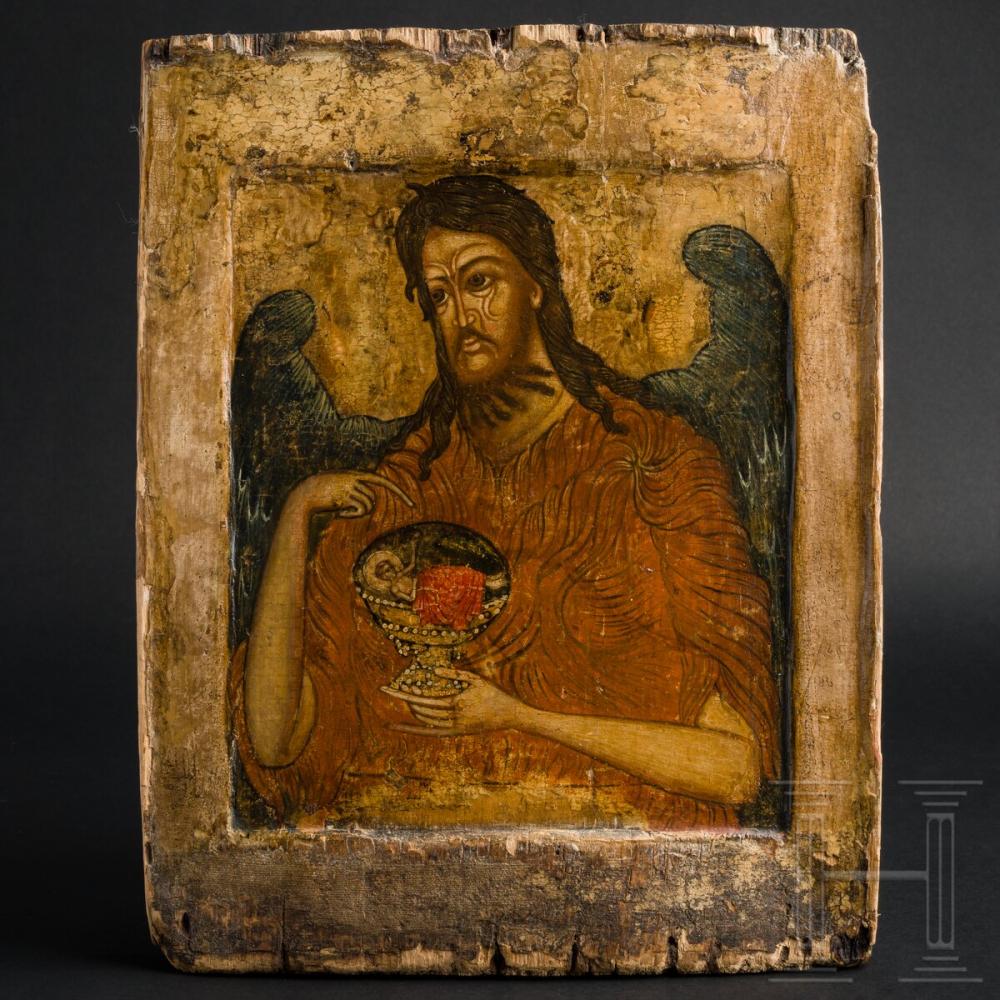
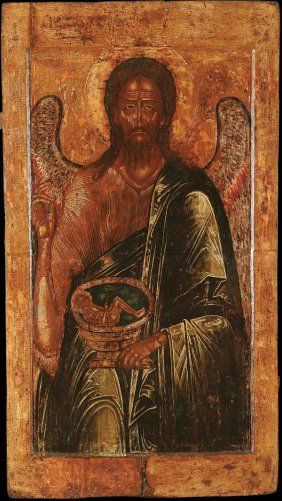
The iconography of John the Baptist as Angel of the Desert/Wilderness first started appearing in the sixteenth century and is present only in the East. In addition to having two wings, he wears camel skins, an allusion to his asceticism (Matt. 3:4). He usually holds an unfolded scroll bearing his words from Matthew 3:2—“Repent, for the kingdom of heaven has come near”—as well as a poteiron (liturgical chalice) in which lies a naked Christ Emmanuel, evoking the Eucharist. John points to Christ, the source of our salvation.
Sometimes it is John’s own severed head that lies in the chalice instead. This variation references his martyrdom, commemorated each year on August 29.
I’ve compiled a range of John the Baptist, Angel of the Desert icons that include the Christ child in a eucharistic cup. They are all from seventeenth-, eighteenth-, or nineteenth-century Russia; many are in private collections, and a few are in the State Tretyakov Gallery in Moscow.
LISTEN: “What Is the Crying at Jordan?” | Words by Carol Christopher Drake, 1950s | Tune: ST. MARK’S BERKELEY, an Irish melody from Danta De: Hymns to God, Ancient and Modern, 1928 | Performed by the Miserable Offenders on Keepin’ the Baby Awake: Music for Advent and Christmas, 2012
What is the crying at Jordan?
Who hears, O God, the prophecy?
Dark is the season, dark our hearts,
and shut to mystery.Who, then, shall stir in this darkness,
prepare for joy in the winter night?
Mortal, in darkness we lie down, blindhearted,
seeing no light.Lord, give us grace to awake us,
to see the branch that begins to bloom;
in great humility is hid all heaven
in a little room.Now comes the day of salvation;
in joy and terror the Word is born!
God comes as gift into our lives;
oh let salvation dawn!
The “crying at Jordan” in the first line of this modern hymn refers not to weeping but to a loud uttering—that of John the Baptist preparing the way for the Messiah through the preaching of repentance. When, in response to John’s ministry, the priests and Levites asked him who he was, he declared, “I am the voice of one crying out in the wilderness, ‘Make straight the way of the Lord,’ as the prophet Isaiah said” (John 1:23; cf. Isa. 40:3; Matt. 3:3).
The third stanza refers to Mary’s pregnancy, echoing the closing couplet of the poet John Donne’s “Annunciation” sonnet: “Thou hast light in dark, and shutst in little room, / Immensity cloistered in thy dear womb.” This is an idea that many Christians, both before and after Donne, have mused on and marveled at.
Thank you to my friend Peggy, who introduced me to this remarkable Advent hymn!
 Art & Theology