Roundup: Christmas disco song by Boney M., dancing fish, Indian Madonna and Child paintings, and more

Wondering why I’m still posting Christmas content? Because Christmas is a twelve-day feast that began December 25 and extends through January 5. While the stores and most media have moved on, the church continues to celebrate. So I encourage you to keep your Christmas decorations up, keep singing and playing carols, and keep partying!

Here’s a link to my Christmastide playlist, comprising over twenty-seven hours of hand-picked sacred Christmas music. Also check out my Epiphany playlist for January 6.

+++

SONGS:

>> “Mary’s Boy Child / Oh My Lord” by Boney M.: The calypso carol “Mary’s Boy Child” was written in 1956 by Jester Hairston and popularized by Harry Belafonte, who recorded it that year. The most famous cover, though, is by Boney M., a reggae, funk, and disco band founded in 1975 in West Germany by the record producer Frank Farian. Its four original members were Liz Mitchell and Marcia Barrett from Jamaica, Maizie Williams from Montserrat, and Bobby Farrell from Aruba. Boney M. released their disco-lite version of “Mary’s Boy Child,” in medley with the new song “Oh My Lord” (by Frank Farian and Fred Jay), as a single in 1978 and then on their full-length Christmas album in 1981. It’s one of the best-selling singles of all time in the UK.

The song makes me smile so much—it’s bright and catchy—especially when I watch the music video, which shows the band singing and dancing in a white room wearing furry white coats. It’s one of two music videos they made for the song, the other cut together with kids enacting the Nativity.

>> “O Ho, Masih Aaya, Zameen Par” (Oh, Christ Has Come! There Is Joy on Earth!) by Akshay Mathews: This contemporary carol from India opens, “Oh, Christ has come! There is joy on earth, there is joy throughout the heavens. Oh, Christ has come!” Then it describes the Annunciation to the Shepherds. Read the Hindi lyrics here. In the video, singer-songwriter Akshay Mathews [previously], who lives in Delhi, triplicates himself using a clone effect so that he is shown playing all three accompanying instruments: guitar, keyboard, and hand drum.

>> “There’s a Fire in Bethlehem,” arr. Conrad Susa: I learned of this traditional Spanish villancico, “En Belén tocan a fuego,” from Calvin University’s 2022 Lessons and Carols Service, For God So Loved the Cosmos. As part of that program, the song was performed in English by the university’s Women’s Chorale, as arranged by Conrad Susa. It opens with imagery of the fire of God’s love flaring out from a stable, and develops into a scene of fish, rivers, and birds rejoicing in the birth of their Redeemer. There was a recording error that puts the lips out of sync with the sound, but the music otherwise comes across just fine.

I love the playful chorus, where the tempo picks up and the pianist shifts to staccato technique (detached and bouncy): “Fish in the river are glistening and dancing, dancing and leaping to celebrate his birthday.” In the sixteenth-note piano run that signals the transition between chorus and verse, I can picture the cavorting, splashing, and darting of our gill-bearing brothers. Although several animal characters make an appearance in Christmas songs, fish usually aren’t one of them. I like how the anonymous writer of this song includes them among the ones who celebrate Christ’s birth. Reminds me a bit of the animated Christmas short from Russia that I shared back in 2017.

To hear a professional recording by the Balthasar-Neumann-Chor, click here.

+++

ARTICLES:

>> “Modernism and Islamic motifs: How Indian artists envisioned Christ’s birth” by Cherylann Molan, BBC News Mumbai: This article explores a handful of Indian depictions of the Virgin and Child by Mughal-era artists, Jamini Roy, and Angelo da Fonseca, all of which present Jesus’s birth from a local perspective.
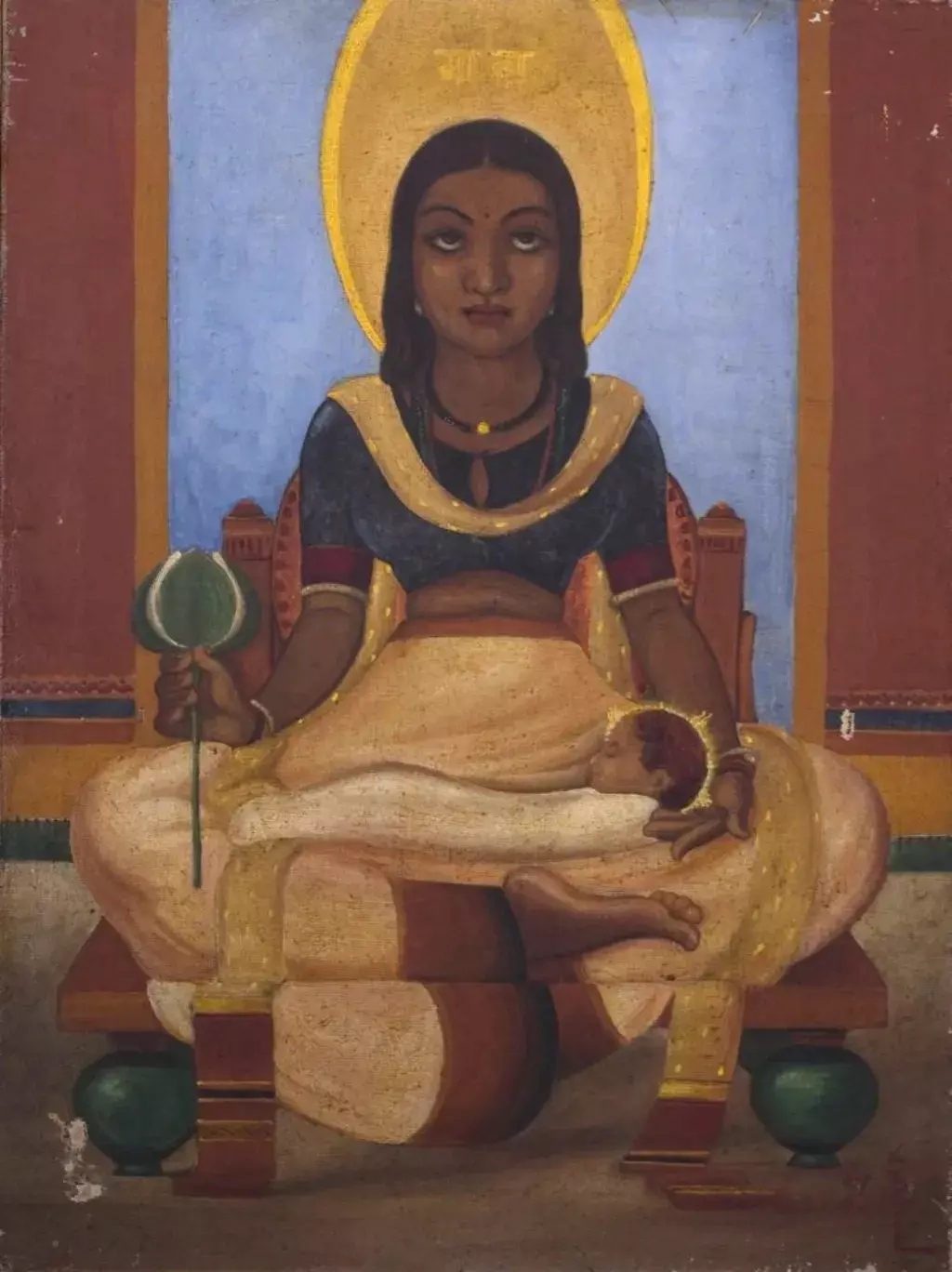
Fonseca, Angelo da_Mother and Child
Angelo da Fonseca (Indian, 1902–1967), Mother and Child, 1952. Watercolor on paper. Photo courtesy of the Xavier Centre of Historical Research, Goa.

>> “A Resolution for People Who Are Already Doing Their Best” by Kate Bowler, Everything Happens (Substack): “Every January, we perform this ritual together. We shake off the indulgence of the holidays and brace ourselves for improvement. We tell ourselves that this will be the year we get it together . . . that any mess was temporary . . . that with the right plan, the right habits, the right mindset, we can finally become the person we were always supposed to be. This is not a small thing. In the United States and Canada (bless us all), New Year’s resolutions have become a kind of secular sacrament—an annual recommitment to the belief that limits are a problem to be solved. But what if they aren’t?”

Kate Bowler [previously], an award-winning author, podcaster, and historian of American self-help, breaks the illusion of unlimited agency and shares the question she’s asking herself for the new year instead of “What should I fix?”

Christmas, Day 5: His Hair Alight

LOOK: Maryam and Isa, Mughal India

Mughal Nativity
Maryam and Isa (Mary and Jesus), miniature from a Falnama, Mughal India, 1550–1600. Opaque paint, gold, and silver on paper, 49 × 35 cm. Wereldmuseum, Rotterdam, Netherlands, Inv. 07180329.

This delicate painting is from an Islamic manuscript made in India during the Mughal era. It shows Mary sitting outside with her son, Jesus, on her lap, whose flaming halo identifies him as a prophet. Enclosed by a gate, they are seated on a mat, and Jesus hands his mother a fruit that looks to me like a pomegranate—though a date would cohere better with the Qur’an’s Nativity account (19:25–26). Verdant pink hills rise up behind them, as does a palm tree, under which sits a pitcher of water. From the left, an anthropomorphized sun gazes down on the sacred pair. The inscriptions are in Persian.

Like Christians, Muslims revere Jesus—his birth is recounted in the Qur’an 19:16–34 and 3:45–53, and in that book he is also described as the Messiah, the Word of God, and the Spirit of God—but unlike Christians, Muslims do not regard Jesus as divine.

LISTEN: “A Christmas Carol” | Words by G. K. Chesterton, 1900 | Music by Deanna Witkowski, 2017 | Performed by the ChoralArt Camerata, dir. Robert Russell, 2018

The Christ-child lay on Mary’s lap,
His hair was like a light.
(O weary, weary were the world,
But here is all aright.)

The Christ-child lay on Mary’s breast
His hair was like a star.
(O stern and cunning are the kings,
But here the true hearts are.)

The Christ-child lay on Mary’s heart,
His hair was like a fire.
(O weary, weary is the world,
But here the world’s desire.)

The Christ-child stood on Mary’s knee,
His hair was like a crown,
And all the flowers looked up at Him,
And all the stars looked down.

Roundup: Online literary retreat (Aug. 27), Yvonne Adhiambo Owuor interview, global Marian art, and more

ONLINE LITERARY RETREAT: “The Extraordinary Possibility of Ordinary Time: Retreat with Sarah Arthur,” August 27 (this Friday!), 1–3 p.m. ET: Hosted by Paraclete Press. “Come away for an afternoon of exploration, refreshment, and celebration of Ordinary Time. Sarah Arthur invites you to join her for a deep sip at the well of poetry and literature as devotional reading. Guest poets Luci Shaw and Scott Cairns will also take part in this mini-retreat for lovers of words and Spirit.” The $50 admission price includes a copy of Sarah’s book At the Still Point: A Literary Guide to Prayer in Ordinary Time. I attended her Lent retreat earlier this year and found it very meaningful. Sorry for the short notice.

+++

TRIBUTE: “My Benediction to the Beloved Storyteller Walter Wangerin Jr.” by Philip Yancey: Walter Wangerin Jr. died of cancer on August 5. He was a pastor; a storyteller; a National Book Award–winning author of novels, short stories, and spiritual essays, including The Book of the Dun Cow, The Book of Sorrows, and Ragman: And Other Cries of Faith; and a professor of literature, theology, and creative writing. His friend and fellow writer Philip Yancey has written this nice little tribute to him for Christianity Today.

+++

ONLINE EXHIBITION: A Global Icon: Mary in Context, created by the National Museum of Women in the Arts: Curated by Virginia Treanor, this digital resource was created as an expansion of the in-person exhibition Picturing Mary: Woman, Mother, Idea (see catalog), which ran from December 5, 2014, to April 12, 2015. Click through the pages to experience art images with descriptions, videos, and other content having to do with representations of Mary from across the world. The first video in the series is posted below, and here’s a playlist of all seven.

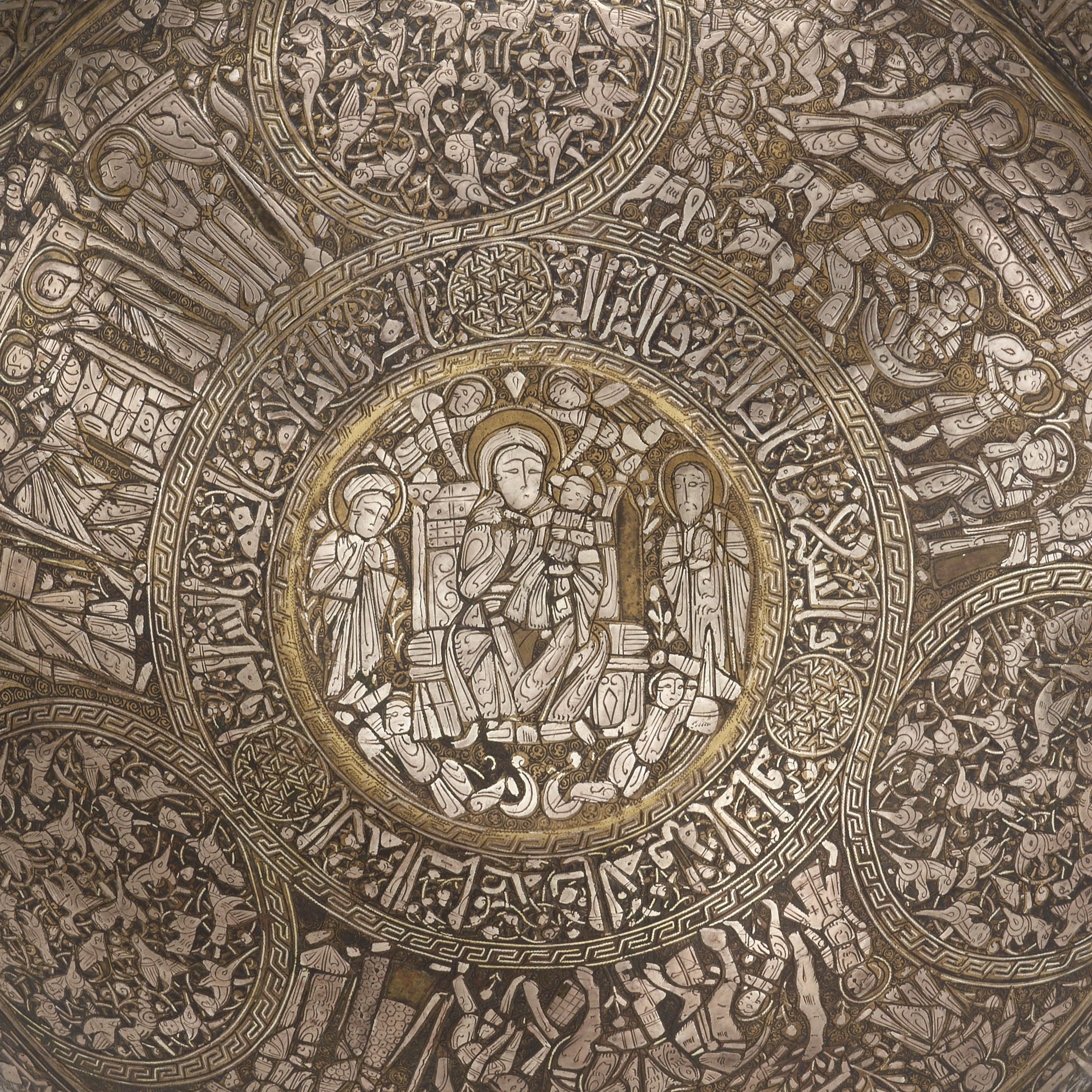
Christian canteen from Iraq
Canteen with Adoration of the Christ Child (detail), Syria or Northern Iraq, mid-13th century. Brass, silver inlay, 17 13/16 × 14 7/16 in. (45.2 × 36.7 cm). Freer Gallery of Art, Smithsonian Institution, Washington, DC. Click image to see full object.

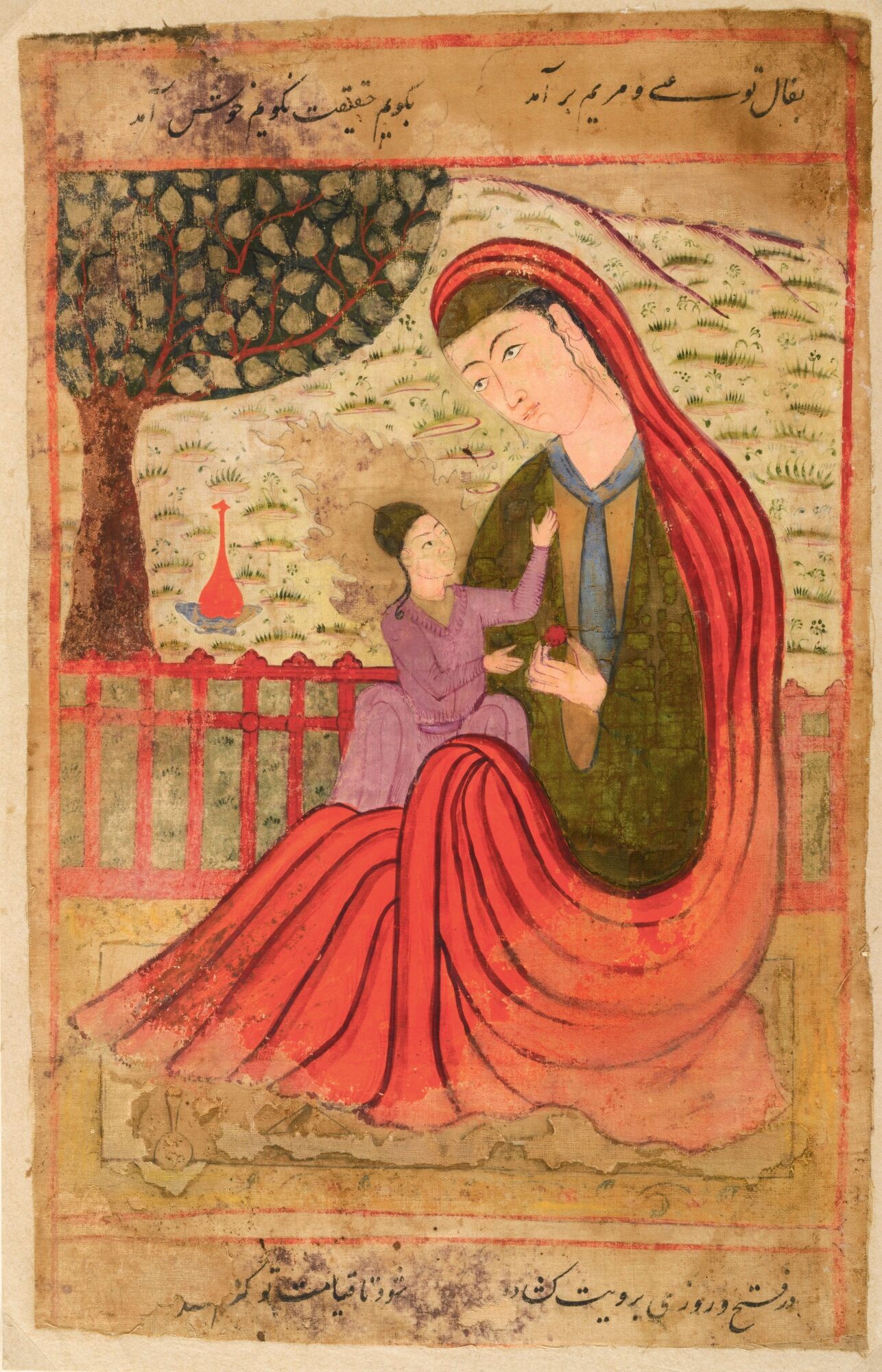
Virgin and Child, from a Falnama (Book of Divination), Mughal India, ca. 1580. Gouache on cloth, 33.4 × 21.1 cm.

Dehua Madonna and Child
Madonna and Child, Dehua, China, 1690–1710. Porcelain, 15 × 3 1/2 × 3 in. (38.1 × 8.9 × 7.6 cm). Peabody Essex Museum, Salem, Massachusetts, inv. AE85957.

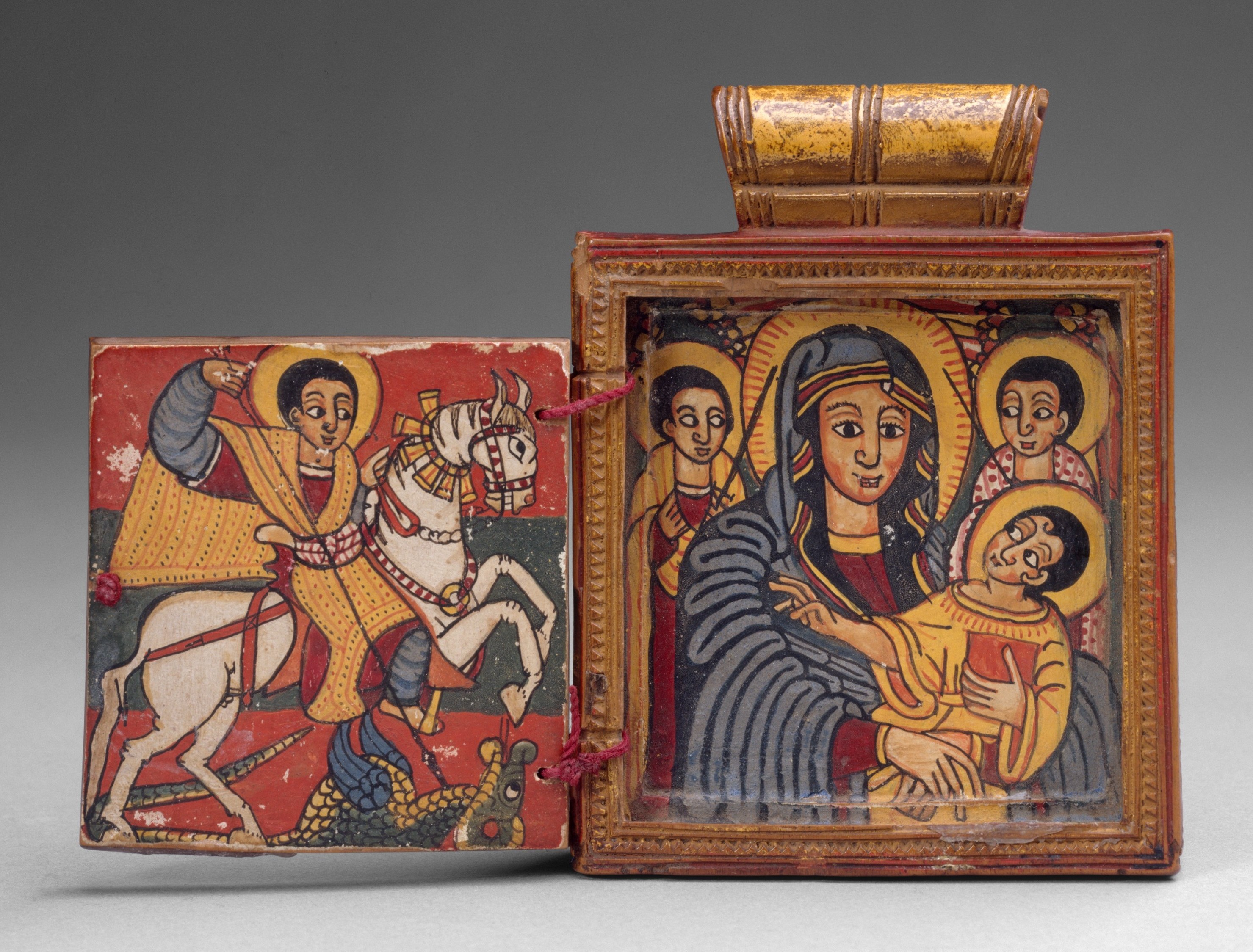
Ethiopian pendant icon
Double Diptych Icon Pendant, Ethiopia, early 18th century. Wood, tempera pigment, string, 3 3/4 × 6 × 5 1/2 in. (9.5 × 15.2 × 14 cm) (open, mounted). Metropolitan Museum of Art, New York.

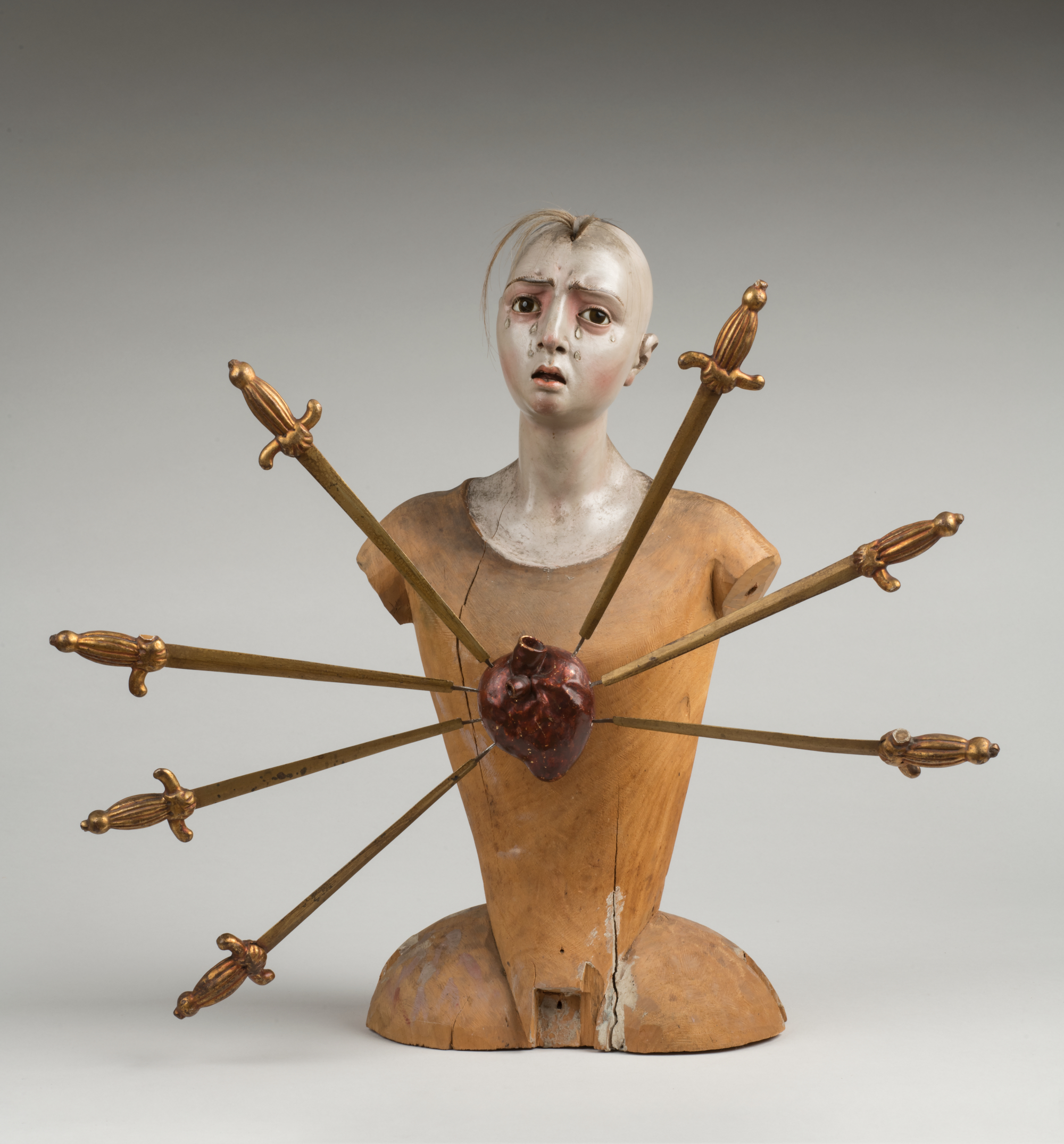
Lady of Sorrows (Italy, 18th c)
Our Lady of the Seven Sorrows, Italy, 18th century. Polychromed wood, human hair, 17 3/4 × 17 3/4 × 9 3/4 in. Royal Museums of Art and History, Brussels, Inv. FB.514. Photo © RMAH, used with permission.

+++

INTERVIEW (+ upcoming virtual conversation): “A God Who Wails and Dances: A Conversation with Yvonne Adhiambo Owuor”: This interview by Erika Kloss, which appears in the current issue of Image journal (no. 109), is so. good. Kenyan writer Yvonne Adhiambo Owuor is the author of the novels Dust and The Dragonfly Sea and award-winning short stories such as “The Weight of Whispers,” as well as the executive director of the Zanzibar International Film Festival. Here she talks about fiction, faith, coffee, and calling colonialism to account. To engage further, you can register for the Image-sponsored online event “The Art of Fiction: A God Who Wails and Dances with Yvonne Adhiambo Owuor,” which takes place September 23 at 3 p.m. ET.

Here’s just a snippet from her conversation with Kloss, where she describes what she would say to those who want nothing to do with Christianity because of all the evil that has been done in its name:

Dare to rescue God as Emmanuel from the dense debris of hubris, and from the weight and stench of whited sepulchers. For it is true, an excess of ghouls have appropriated for themselves the meaning and potency of the revolutionary One who dares to pronounce to humanity, “Love your enemies . . . Do good to those who hate you.”

Why should young people let themselves be revulsed by a legion who never fully entered into the depths of the subversive, seductive, paradigm-dissolving, drinking-and-hanging-out-with-sinners, beautiful, and heroic man-God? Why wouldn’t young people set out to experience for themselves the grand and compelling epic of a creator God in love, who loses his children and the earth to a defiant and rebellious once-beloved prince of light, and who struggles long and hard to regain the humanity he had loved and lost? So passionate and desperate is the creator in this endeavor that he will enter into humanity to try to court and secure these cherished children, even at the risk of his own murder—and even that does not stop the love. A love stronger than death? Don’t we all write anthems, in one form or another, yearning for this?

Let the next generation of seekers . . . visit old worlds that contain the spirit of the faith, not just in the Middle East, but also northern Africa, northern Sudan, Egypt, and Ethiopia, all those rubbed-out places (that colonialists presumed to suggest they were ‘civilizing’) from which Christianity entered into and transformed Europe and the world. . . . An historical quest for meaning at sites of origins might inspire young people to look again at the call to adventure and transcendent idealism that is the Way.

+++

VIDEO SERIES: How to Read the Bible by BibleProject: “Reading the Bible wisely requires that we learn about the ancient literary styles used by the biblical authors. . . . While the Bible is one unified story, it cannot all be read in the same way. The How to Read the Bible series walks through each literary style found in the Bible to show how each uniquely contributes to the overall story of Scripture.”

Led by Dr. Tim Mackie and Jon Collins, BibleProject is a crowdfunded animation studio that creates videos, podcasts, and small-group curricula. From 2017 to 2020 they executed a series called How to Read the Bible, which is nineteen episodes total. In it they examine the three major literary styles that comprise the Bible: narrative (chronicles, biographies, parables), poetry (celebratory, reflective, erotic, politically resistant, apocalyptic), and prose discourse (laws, sermons, letters). Each style lives by its own rules and structure, and we get into trouble, for example, when we don’t properly understand how metaphor works, or when we don’t recognize that Paul’s epistles were situated in a particular historical context. Here’s one of the videos in the series, on design patterns in biblical narrative: