SPOTIFY PLAYLIST: February 2025 (Art & Theology): I put these monthly playlists on pause for December and January, since I’ve already published long, dedicated playlists for the seasons of Advent, Christmas, and Epiphany, but now I’m picking back up my usual smorgasbord routine. Enjoy two hours of songs handpicked by me!
+++
PODCAST EPISODE: “Nadia Bolz-Weber: From Fundamentalism to Stand-Up Comedy to Ordained Pastor,”No Small Endeavor, January 27, 2025: “Christian Fundamentalism is often looked down upon for its dualistic, black-and-white outlook, which is often used for policing behavior. But, Nadia Bolz-Weber explains, these are the same extreme tendencies that she found in secular activism after she left the church. Later in life, after working as a comedian and entering recovery, Nadia began to untangle the mindset that had taken her from one extreme to the other. Her long journey has since led her to becoming a Lutheran pastor and a three-time bestselling author. In this episode, she tells her story.”
In conversation with host Lee C. Camp, Bolz-Weber [previously] discusses some of the gifts and wounds from her Church of Christ upbringing; how comedy prepared her for preaching; the influence of AA’s Twelve-Step Program on her life, especially her necessary reckoning with her powerlessness (“it doesn’t mean you don’t have access to power; it’s just that it doesn’t all come from you”); moving through the grief of losing her nephew; and her Red States Revival tour, which since the date of recording has been actualized!
+++
SUBSTACK POST: “Why go to church, anyway” by Amy Peterson, Making All Things New, November 20, 2024: Amy Peterson is an Episcopal priest from Asheville, North Carolina, and the author of one of my favorite books from 2020, Where Goodness Still Grows: Reclaiming Virtue in an Age of Hypocrisy. In this Substack post from last November, she shares some responses from when she asked on Instagram, “Why did you stop going to church?” and, to a different set of respondents, “Why do you go to church?” Then she answers the second question for herself, giving fourteen reasons why she would still go to church even if it wasn’t her job. I (a regular churchgoer who has been hurt in the past by the church, though not to the degree that many others have been) find these reasons so compelling and encouraging.
+++
SONG: “Good Trouble”by Thomas Keesecker: This choral work was inspired by the catchphrase of the civil rights icon John Lewis (1940–2020), who repeatedly called on Americans to “get in good trouble”—to agitate for liberty and justice for all. For example, on June 27, 2018, he tweeted, “Do not get lost in a sea of despair. Be hopeful, be optimistic. Our struggle is not the struggle of a day, a week, a month, or a year, it is the struggle of a lifetime. Never, ever be afraid to make some noise and get in good trouble, necessary trouble.” Similarly, on December 4, 2019, at the opening of the Library of Congress exhibition Rosa Parks: In Her Own Words, Lewis said, “Rosa Parks inspired us to get in trouble. And I’ve been getting in trouble ever since. She inspired us to find a way, to get in the way, to get in what I call good trouble, necessary trouble.”
Lewis was a crucial leader of the civil rights movement, chairing the Student Nonviolent Coordinating Committee (SNCC) from 1963 to 1966, participating in sit-ins and Freedom Rides, co-organizing the 1963 March on Washington, and, on March 7, 1965, physically leading, with Hosea Williams, some six hundred peaceful marchers across the Edmund Pettus Bridge from Selma to Montgomery to protest the disenfranchisement of African Americans, an action that erupted into what’s known as Selma’s Bloody Sunday. When the marchers refused to disperse, Alabama state troopers attacked them with billy clubs and teargas, fracturing Lewis’s skull. He survived and continued his political activism and advocacy for another half century, serving in the US House of Representatives for Georgia’s Fifth Congressional District from 1987 until his death in 2020.
To learn more about John Lewis and his remarkable Christian witness, see the documentary John Lewis: Good Trouble, which is streaming for free on Kanopy (ask your local library if they subscribe). Here’s a trailer:
+++
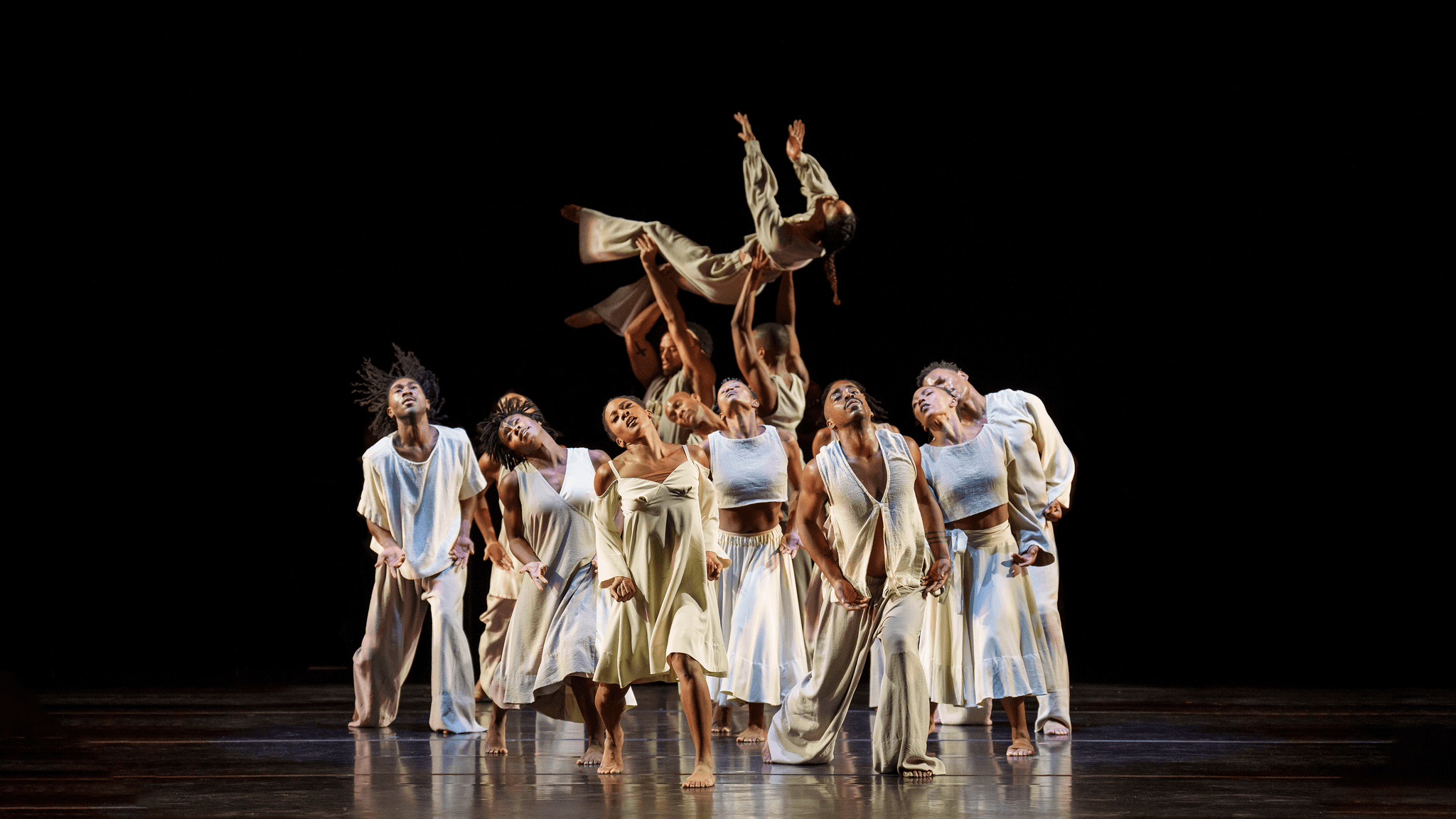
NEW ALBUM: Sacred Songs Suite by Du’Bois A’Keen: Last month I had the privilege of seeing Sacred Songs, a new dance work choreographed by Matthew Rushing and scored by Du’Bois A’Keen, performed by Alvin Ailey American Dance Theater. It was phenomenal! Both a visual and aural experience. The music was performed live with four vocalists (A’Keen sang lead) and a four-piece band, and throughout the evening, the verbal responses from the audience—“Mmmm” and “Amen” and “Yes, Lord!”—made me feel much more like I was in church than in a performing arts center.
Featuring original arrangements of nine spirituals, Sacred Songs “brings together and reimagines the sounds of jazz, West African drums, gospel, hip-hop, calypso, and more to call on the past, engage our present, and invite the listener into a magical, hopeful, and musical future.” A’Keen released the music, plus a few bonus tracks, on his album Sacred Songs Suite on January 18. “By the Waters” is one of the most memorable sections for me.
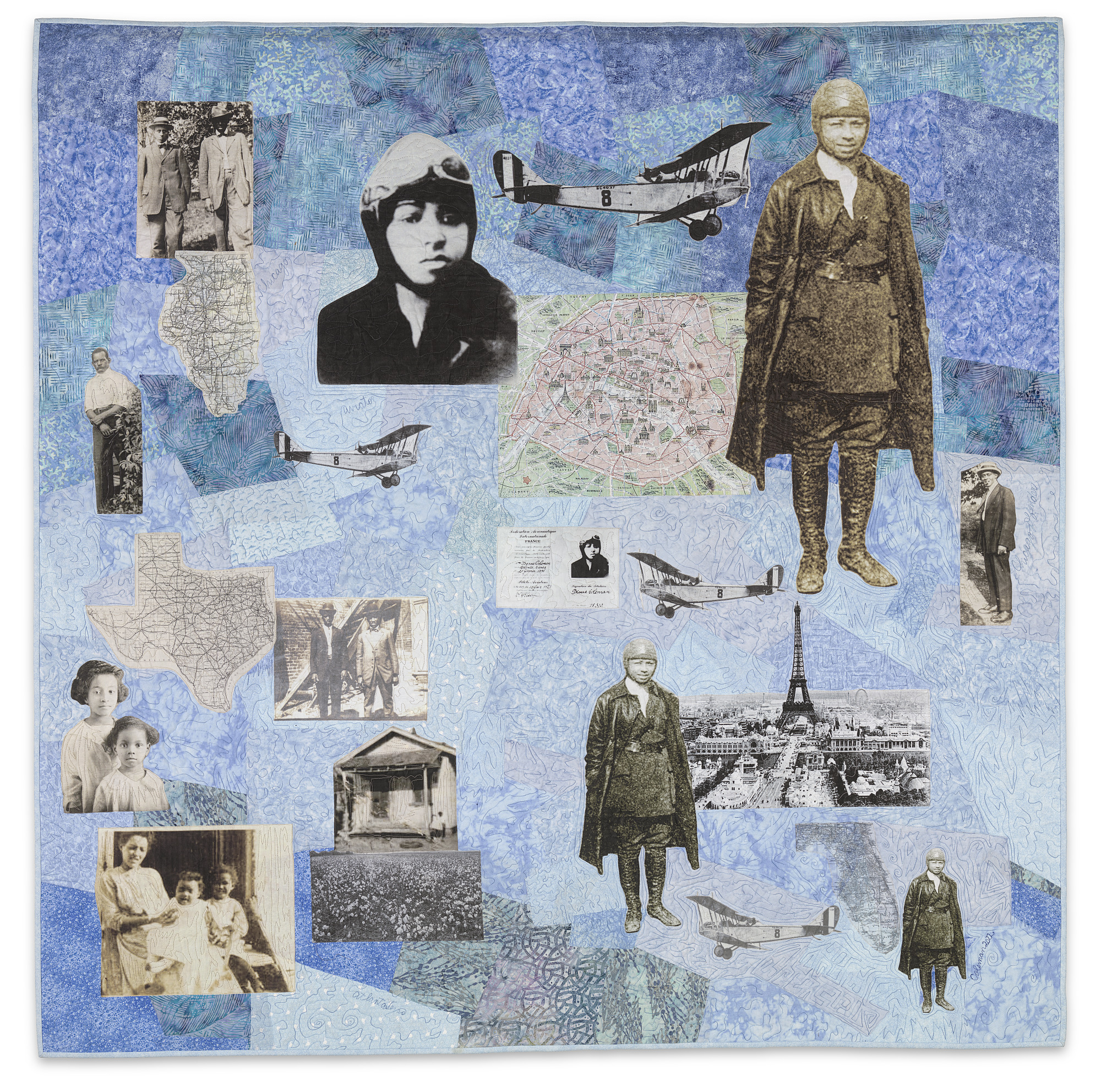
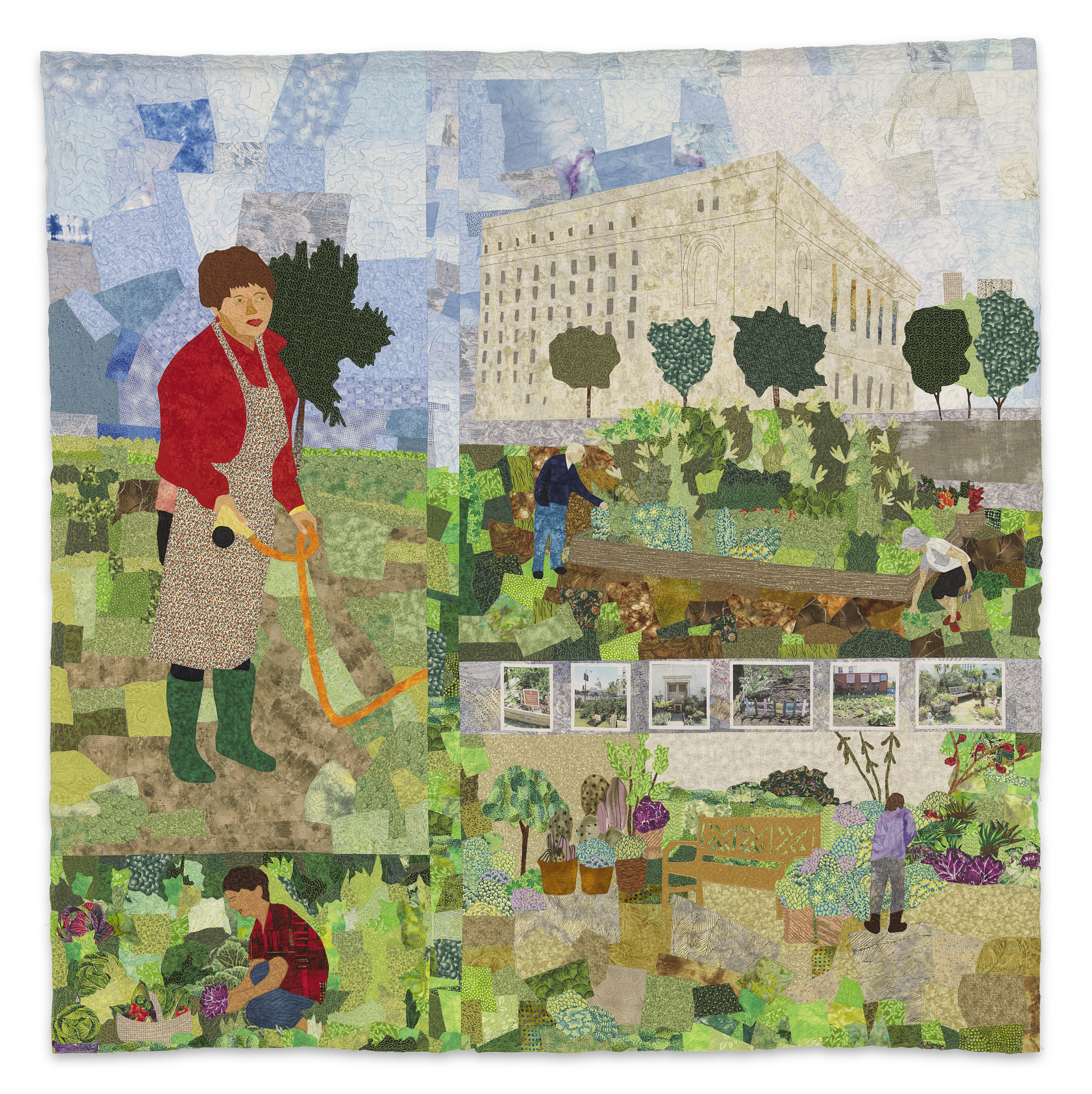
Marion Coleman (American, ?–2019), Her Heart Was in the Clouds, 2012. Cotton fabric, cotton thread, and cotton batt, 60 1/2 × 60 in. (153.7 × 152.4 cm). Smithsonian American Art Museum, Washington, DC.Marion Coleman (American, ?–2019), Tender Gardens, 2014. Cotton fabric and batt, 72 1/2 × 72 1/8 in. (184.2 × 183.2 cm). Smithsonian American Art Museum, Washington, DC.
CALL FOR APPLICATIONS: 2025 Artist Residency at Village Church, Beaverton, Oregon: “Village Church is seeking an Artist in Residence for 11 months of 2025, February to December, to create a lasting, creative impact on the wider community and church. The artist will create original work, lead art showcases, inspire future generations, and use art as a bridge between the tech culture surrounding the church, with the spiritual and theological. This residency offers the chance to create art that reflects God’s beauty, promotes worship, and connects people in meaningful ways.”
Applicants must have a minimum of five years of experience. If chosen, you will receive a monthly stipend, free housing, and studio space and will have the cost of all art supplies covered. The pastor tells me that the original application deadline of January 15 is being extended.
+++
NEW(ISH) ALBUM: The Hymnal by Life in Grooveland: Released last April. From World Music Central: “Life in Grooveland’s The Hymnal reimagines traditional hymns with dynamic, world music-influenced rhythms, creating an album that brings together spirituality and groove. Produced and arranged by Nashville session drummer and percussionist Justin Amaral, this fascinating instrumental collection features ten exquisitely crafted duets presenting some of Nashville’s most talented and inventive musicians, including Jeff Coffin (Dave Matthews Band, Béla Fleck), Fats Kaplin (Mitski, Jack White), Paul Niehaus (Lambchop), and Billy Contreras (Ricky Skaggs). Amaral’s versatile drumming, which ranges from subtle to explosive, provides the backbone for each track, layering rhythm to amplify each hymn.” Thanks to blog reader Ted Olsen for bringing this to my attention!
+++
PODCAST EPISODE: “The Hillbilly Thomists: Bourbon, Bluegrass, and the Bible,”No Small Endeavor: I really enjoyed this! “There aren’t many Billboard-charting bluegrass bands made up entirely of Dominican friars, who play their shows clad in white tunics and rosaries. In fact, there is precisely one such band: the Hillbilly Thomists. ‘A Thomist is someone who follows the thought and theological teaching of Saint Thomas Aquinas,’ they explain. ‘We combine it with a little bit of humor about our human condition.’ In this episode, they talk about their theology and vocation, as well as how they manage life on the road as priests who have taken a vow of poverty. Plus, they give live performances of some of their finest songs.”
+++
NEW POEM: “Jesus, Son of Gop” by Sarah M. Wells: Exposing the ridiculousness of followers of the nonviolent Christ sanctioning violence, this satirical poem is a response to a politician’s egregious misappropriation of the apostle Paul’s “armor of God” language. It’s an alternate history that rewrites how Jesus’s arrest in the garden went down. Listen to Wells discuss the poem on The Reformed Journal Podcast.
+++
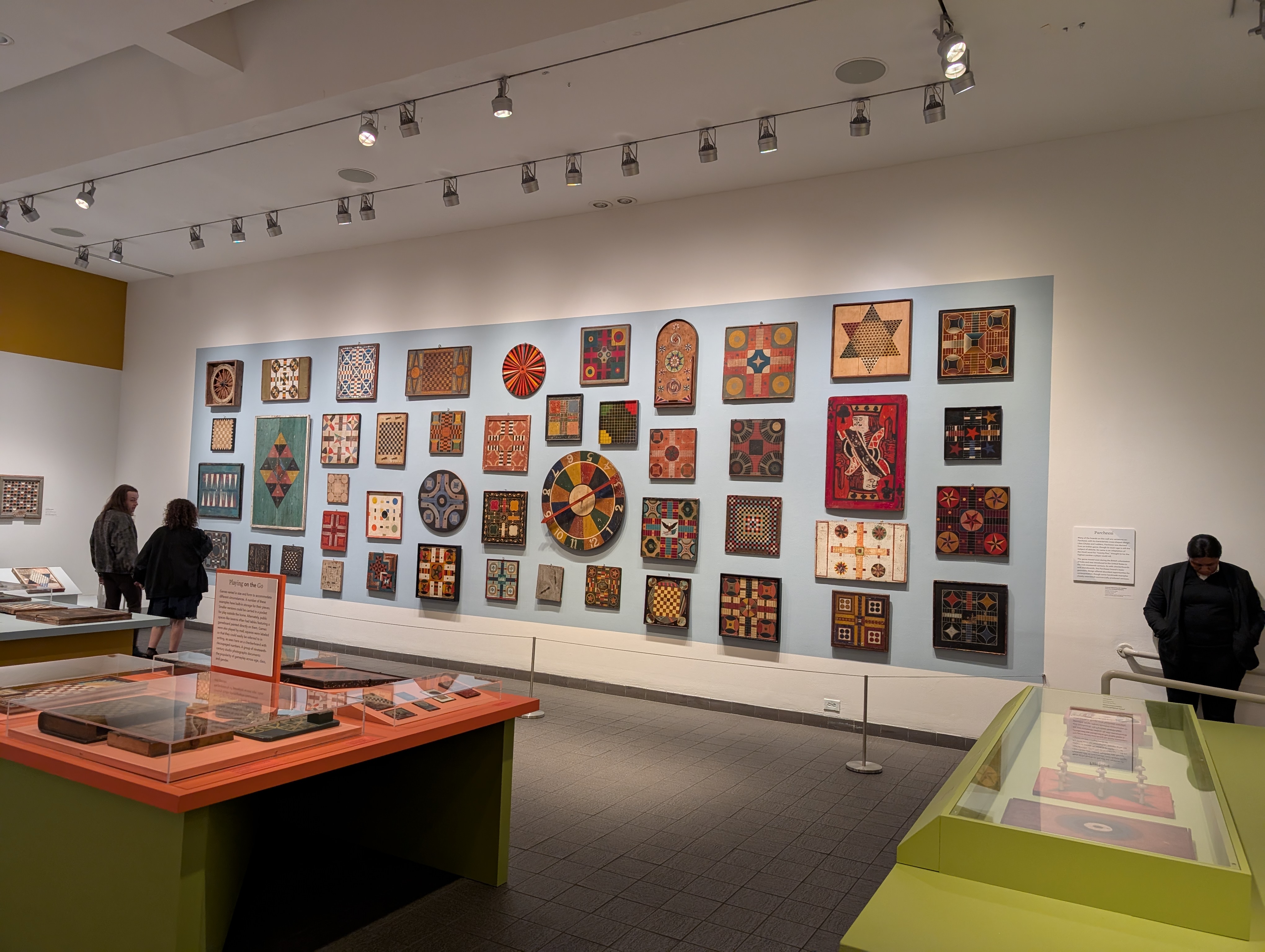
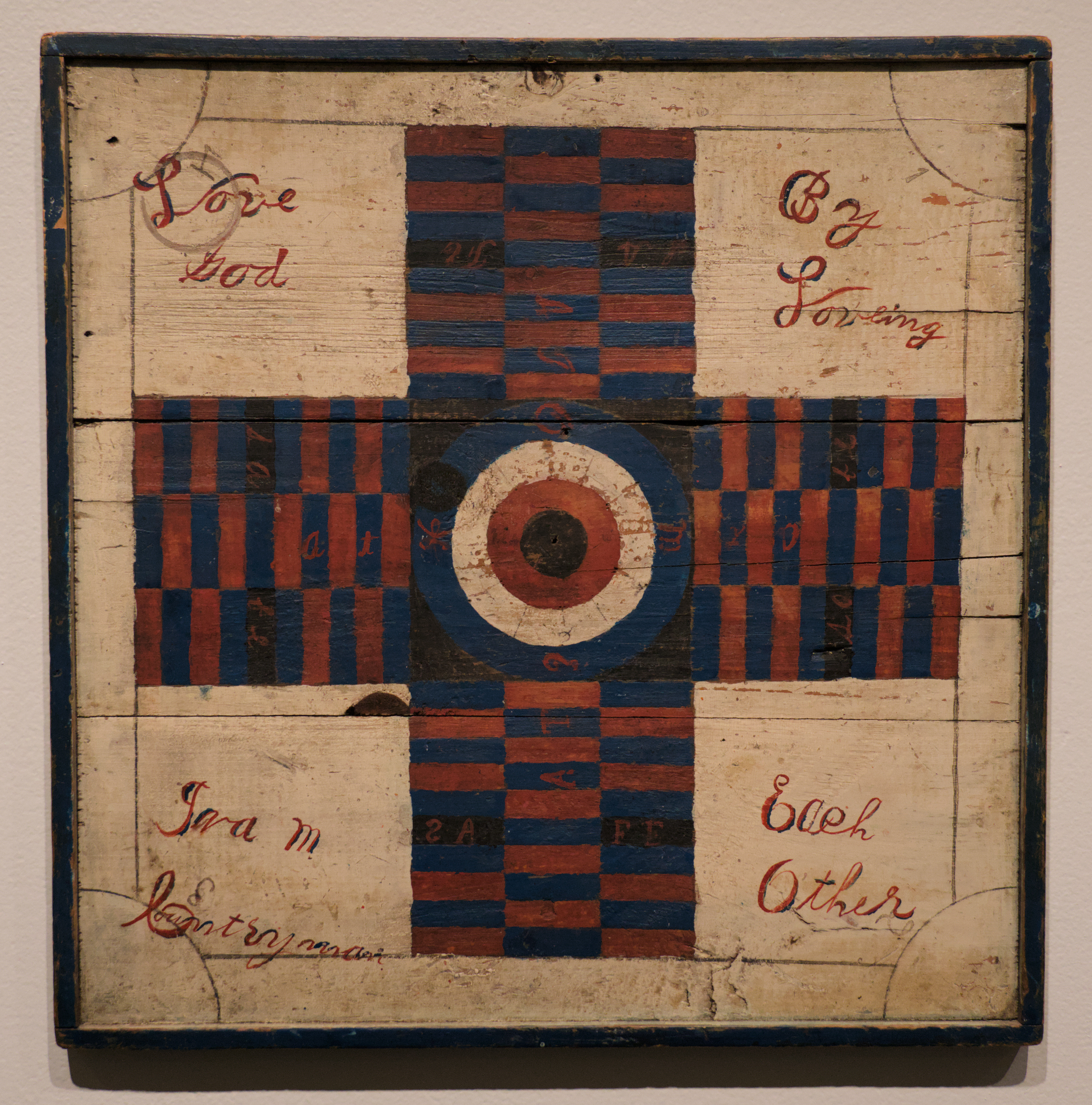
EXHIBITION: Playing with Design: Gameboards, Art, and Culture, September 13, 2024–January 26, 2025, American Folk Art Museum, New York City: I saw this show last weekend and was absolutely delighted by it! Curated by Emelie Gevalt with Austin Losada, it features over one hundred handmade gameboards, mostly nineteenth century, from the exuberant collection of Bruce and Doranna Wendel. Many are of familiar games I used to play as a child—Parcheesi (which I learned originated in India, its name an adaptation of the Hindi word for “twenty-five”), checkers, Chutes and Ladders—and others are creative variations on the typical racing board game. There is also a fortune-telling game, in the vein of the Magic 8 Ball! The objects on display—hand-carved and hand-painted and from the imaginations of common folk—are interesting both culturally and aesthetically.
Two that made me chuckle contain religious references. “Gameplay, especially cards, was sometimes thought to encourage vice, in particular gambling or idleness,” the gallery label reads. So board makers sometimes incorporated spiritual aphorisms or precepts into the design to counteract the corrupting influence and remind players to uphold Christian virtues even in moments of leisure. A Parcheesi board instructs players to “Love God by loving each other”—and I can’t make out what the Chinese checkers board says, other than “The Lord . . . your . . . God . . .”
Possibly Ira M. Countryman or Jimmy Hall, Parcheesi Board, late 19th century. Paint on wood, 21 × 21 in. American Folk Art Museum, Gift of Doranna and Bruce Wendel, 2024.7.3. Photo: Victoria Emily Jones.Possibly George Clark, Chinese Checkers Board, late 19th or early 20th century. Paint on wood, 17 1/2 × 15 in. Collection of Doranna and Bruce Wendel. Photo: Victoria Emily Jones.
The American Folk Art Museum is one of the few FREE museums in New York, and I’ve enjoyed it so much every time I’ve been there. (See the blog post “The biblical imagination of folk sculptor Annie Hooper,” documenting one of my previous visits.) It’s small—only three galleries. It’s on the Upper West Side of Manhattan, right off the Lincoln Center subway stop.
+++
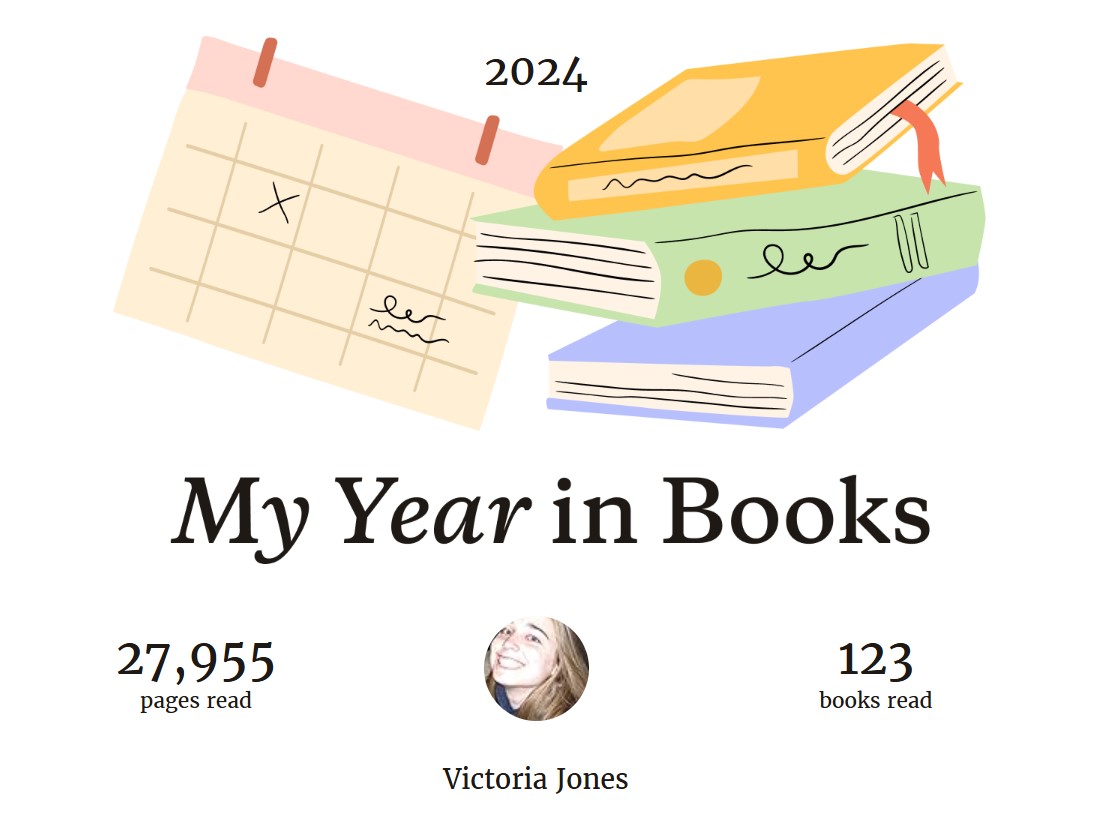
Interested to see what books I read in 2024? Goodreads has put together a “My Year in Books” page! Follow me on Goodreads if you want to stay apprised of my latest reads, want-to-reads, and star ratings.
Be still and know that I am God Be still and know that I am Be still and know Be still Be
Rev. Dr. Cynthia Bourgeault, an Episcopal priest, writer, and retreat leader, mentions this chant in her book Chanting the Psalms. “Each time the line is repeated,” she writes, “key words are taken away. The result is a funnel-like effect that leads straight down into silence. . . . Each phrase expresses its own unique meaning and understanding as the prayer moves toward utter simplicity” (185). Bourgeault recommends working with the recording “Be Still and Know” found on the album Songs of Presence: Contemplative Chants for the New Millennium from Praxis Publishing House; I couldn’t find the audio online, but I did find a song by The River’s Voice (Trish and Richard Bruxvoort Colligan) that’s also based on this exercise of Fr. Rohr’s: “Be (Still and Know That I Am God)”:
+++
PODCAST EPISODES: Here are two podcast episodes I caught up with recently and enjoyed. Both links include transcripts.
>> “Jan Richardson: Stubborn Hope,”Everything Happens with Kate Bowler, October 27, 2020:Kate Bowler, a historian and cancer survivor who has done much academic work on the prosperity gospel, talks with spiritual writer Jan Richardson [previously], whose husband died unexpectedly in 2013, about the hidden rooms of grief, being disciplined by hope, and how the concept of blessing in the Jewish and Christian traditions differs from the #blessed culture of social media. Don’t miss the three discussion questions in the show notes.
POEM COMMENTARY:“Learning about Constellations” by Saddiq Dzukogi, commentary by Pádraig Ó Tuama: On this episode of On Being’s Poetry Unbound podcast, host Pádraig Ó Tuama unpacks a poem written by Saddiq Dzukogi in the aftermath of his one-year-old daughter’s death. It’s from his 2021 collection Your Crib, My Qibla.
Update, 10/27/22: Two weeks after this article was published, Tokens Show rebranded and relaunched with a new name, No Small Endeavor; learn the inspiration behind the original title here, and the reason for the change here. Their mission remains the same but with a renewed commitment to greater diversity of guests, and their new tagline is “Exploring what it means to live a good life.” They also announced that starting in 2023, their radio show will be nationally syndicated.
“Public theology” is a term I’ve been seeing more and more—in people’s professional titles, in books, in taglines, etc. Public theology is theology that talks with and not just to society, write Sebastian Kim and Katie Day in their introduction to A Companion to Public Theology (2017); it ventures outside the ivory tower and the walls of the church, engaging issues of common interest to build the common good. It’s incarnational and touches all aspects of life, which means it’s interdisciplinary, addressing economics, politics, healthcare, criminal justice, the arts, and so on.
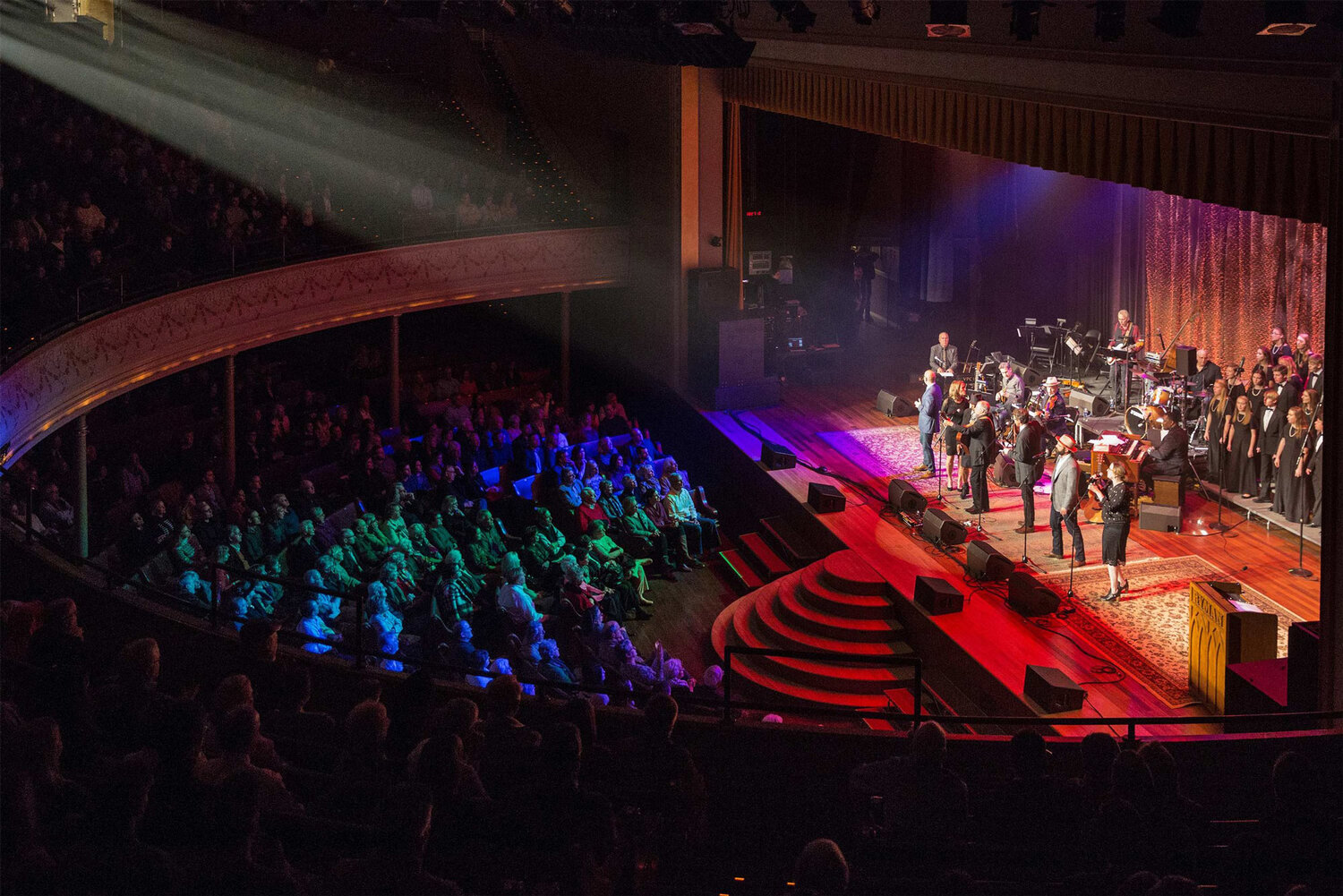
One media entity that does public theology really well is Tokens Media, which encompasses live events (Tokens Show), a podcast, a radio show, and online courses. Sponsored by Lipscomb University in Nashville with funding from the Lilly Endowment and the John Templeton Foundation, the shows are hosted and produced by Lee C. Camp, a professor of theology and ethics at Lipscomb.
Tokens Show blends music, theology, comedy, and social issues, bringing together a host of talent and thought from the local Nashville scene and the country at large for evenings of conversation and fun. See a trailer below, followed by a blurb from the Tokens press materials.
Called Nashville’s best variety show, our philosophical and theological events imagine a world governed by hospitality, graciousness, and joy; life marked by beauty, wonder, and truthfulness; and social conditions ordered by justice, mercy, and peace-making. We exhibit tokens of such a world in music-making, song-singing, and conversations about things that matter.
Unapologetically Christian but casting a wide net, Tokens Show spotlights poets, pastors, theologians, ethicists, historians, singer-songwriters, psychologists, journalists, politicians, activists, scientists, entrepreneurs, and other scholars and practitioners. Its long list of distinguished guests includes James Cone, Rachel Held Evans, Stanley Hauerwas, Miroslav Volf, Francis Collins, Jim Wallis, Tracy K. Smith, Keb’ Mo’, Christian Wiman, Naomi Shihab Nye, Walter Brueggemann, Amy-Jill Levine, Willie James Jennings, Pádraig Ó Tuama, Barbara Brown Taylor, Ricky Skaggs, Over the Rhine, and many more.
Tokens was launched in February 2008 as a quarterly event, generally held in Lipscomb’s Collins Alumni Auditorium, with its annual Thanksgiving show, a major bash, held at Nashville’s historic Ryman Auditorium since 2010. (This year’s is November 20—and I’ll be there! See more info at bottom of post.) The Tokens house band, the Most Outstanding Horeb Mountain Boys, consists of much-sought-after Nashville session players Byron House (upright bass), Pete Huttlinger (guitar), Aubrey Haynie (fiddle, mandolin), Chris Brown (drums), and Buddy Greene (harmonica, vocals), led by music director Jeff Taylor (piano, accordion).
Sojourners magazine praised Tokens Show for its substantive entertainment and overall playful tone:
If A Prairie Home Companion ever moved south and got religion—or at least went to divinity school—it might look a lot like TOKENS. While Camp and his cast deal with theology, they are after something bigger—glimpses of God’s action in the world . . . tokens of grace. . . . Camp knows the power of a pregnant pause, and how to switch from a song about environmental degradation to a radio skit without missing a beat. And the cast never seems to take itself too seriously.
One of Tokens Show’s regular segments is “Class and Grass,” where the house band plays a medley of classical music and bluegrass arranged by bandleader Jeff Taylor. For example, for Tokens’ 2019 Thanksgiving show, Taylor built a ruckus-raising medley around “Orange Blossom Special,” a fiddle tune from the 1930s named after a luxury passenger train of the same name, weaving in excerpts from Brahms’s Hungarian Dance No. 5, Bizet’s “Habanera,” Offenbach’s “Galop infernal,” and Rossini’s William Tell overture:
For their 2018 Thanksgiving show, they mashed up the Shaker hymn “Simple Gifts” with Aaron Copland’s Fanfare for the Common Man and “Did You Ever See the Devil, Uncle Joe?”:
“Für Elise and the Prophetic Imagination,” from “The Prophetic Ethic” show on June 6, 2014, features jazz, tango, and bluegrass variations on Beethoven’s famous, posthumously discovered bagatelle:
And the “Class and Grass” segment of Tokens’ April 13, 2010, show, “Back to Green,” combines a piano piece (anyone know what this is? Bach? Mozart?) and “Billy in the Lowground,” a popular fiddle tune among Kentucky musicians that has been known in Scotland for centuries:
Though several musical styles are represented on the Tokens stage—bluegrass, country, gospel, folk, blues, rock, classical—bluegrass predominates. Here’s a bluegrass version of the African American spiritual “My Lord Is a Rock in a Weary Land,” led by Buddy Greene:
And “Crying Holy Unto the Lord,” a song by Irene Amburgey that’s performed here by Bryan Sutton and Company:
One of the show’s past musical guests was Nefesh Mountain, a Jewish bluegrass band fronted by married couple Doni Zasloff and Eric Lindberg. Here they sing “Wayfaring Stranger” and “Esa Einai,” an original setting of Psalm 121:1 (“I lift my eyes to the mountains . . .”) in English and Hebrew.
Tokens Show also regularly features hymns, a significant part of Christian heritage, especially in the US. In the following video, Audrey Assad describes growing up in a Plymouth Brethren church that forbade the use of musical instruments but placed a high value on four-part a cappella singing. She then leads a vocal quartet in one of my favorite hymns, “Praise to the Lord, the Almighty” (the other singers are Michael Gungor, Buddy Greene, and Lee C. Camp):
Here’s an instrumental bluegrass hymn medley comprising “Where the Soul of Man Never Dies,” “Are You Washed in the Blood,” “Pass Me Not, O Gentle Savior,” and “Leaning on the Everlasting Arms”:
For some hymns, the audience is invited to sing along, as with “Pass Me Not, O Gentle Savior,” featuring soloist Jason Eskridge:
The show highlights new musical works as well, like singer-songwriter and upright bassist Scott Mulvahill’s “The Lord Is Coming”:
And Gungor’s “God and Country,” an antiwar anthem performed by Michael Gungor, Audrey Assad, and friends:
From their “Singing Down the Pain” show, I learned that the tune of Elvis’s “Love Me Tender” was taken from the American Civil War ballad “Aura Lee,” adopted by soldiers on both sides. I also learned about a historic music-sharing experience that happened outside Murfreesboro, Tennessee, on December 30, 1862, when, on the eve of a major military battle, Confederate and Union brass bands exchanged songs, Battle of the Bands–style, across enemy lines. Winding down, the Confederates started playing the familiar “Home, Sweet Home,” and the Union joined in, with soldiers from both North and South singing in unison their mutual longing for home.
Despite this bonding, the Battle of Stones River commenced early the next morning, resulting in 24,000 casualties.
As you can see from that video, Tokens Show is largely story-driven.
It occasionally features spoken-word pieces, as in their October 4, 2016, episode, “God Songs.” Leslie Garcia, one of Camp’s students at the time (now a digital product designer in New York), delivers a poetic reflection on the Latin American immigrant journey, drawing on her own family history. It opens, “My mother came to this country in the back of a pickup truck . . .”
Real-life questions and issues are met with the best of theological reflection at Tokens events, with Camp as emcee providing the connective tissue that links the various acts.
One thing I like about Tokens Show is how it recognizes the complexities of American Christianity’s past and present, painting neither as entirely good or entirely bad. It addresses some of the lamentable aspects of US and church history and culture, but it also speaks hope, confronting these realities with gospel truth so that we might humbly allow that truth to drive us to confession, action, and anticipation. And while it does acknowledge the ways in which sin has marked systems, it also celebrates those places within those systems where virtue or redemption can be found.
Tokens Show has a healthy relationship to tradition, which for them is a wellspring of creativity. In terms of music especially, Tokens showcases vibrant works from earlier eras but also, often, innovates on them or draws them into new contexts. In their theology, too, they adhere to the orthodox creeds while being open to what happens when those traditional tenets of belief are brought into so-called secular arenas of contemporary life, further unfolding their meaning. In the root sense of the words, Tokens is both conservative and progressive—conserving what’s worth conserving, leaving behind what’s not (such as cultural accretions that diminish the gospel), recovering and progressing toward the good, semper reformanda.
While some of the song selections may prompt nostalgia for some, Tokens Show is not all warm and cozy. There can be a bite and a challenge as we hear wrenching personal stories or encounter new facts. Tokens does not shy away from provocation for God’s sake. But it is to the show’s credit that the tone is never haranguing, always invitational.
The gospel calls us out of our bubbles and into the world. Our faith should have an impact on how we think about public issues and relate to others in the public square. Tokens Show models this kind of engagement.
During the COVID-19 pandemic, when live shows had to be shut down, Tokens launched a podcast, its first episode airing May 21, 2020. Its tagline is “Public theology. Human flourishing. The good life.” Even though live shows have resumed, the podcast continues to be active. I have enjoyed every single episode, but let me share just a few in particular:
>>“The Making of Biblical Womanhood: Beth Allison Barr,” June 3, 2021: Controversially, historian Beth Allison Barr defines “complementarianism,” the theological view that promotes male headship and female subordination, as “Christian patriarchy.” Hear her unpack that and other ideas from her book The Making of Biblical Womanhood: How the Subjugation of Women Became Gospel Truth in this episode. She offers a unique reading of 1 Corinthians 14 (bringing it into conversation with ancient Roman law codes); reminds us of the oft-neglected Romans 16 (which names a woman apostle and a woman deacon, among other early church leaders who were female, though several English translations obscure the fact); notes how the 1980s revival of the Arian heresy coincided with the explosion of “biblical womanhood”; and shares her and her husband’s personal connection to the topic in their ministerial life.
Shorter interviews of this nature also take place during the live shows, even though this blog article highlights the music.
You can subscribe to the Tokens podcast through the app of your choice, and episodes (audio only) are also posted on YouTube, though there’s a bit of a lag there. You can also find video excerpts from Tokens events on the Tokens YouTube channel.
Their annual Thanksgiving show this year is “No Small Endeavor”—Sunday, November 20, 7:30 p.m.,at Ryman Auditorium—with musical guest Johnnyswim, a husband-wife folk duo comprising Abner Ramirez and Amanda Sudano. As I mentioned, I’ll be going; I paid $137 for two tickets last week, including taxes and fees, and it looks like the house is already more than half-full. (There is also a $20 virtual option available, or a $47 virtual membership that gives you streaming access to four shows.) It will be my first Tokens Show and my first time in Nashville, and I’m making a long weekend of it with my husband. Let me know what we should do/see there, and if you have any tips on where to stay. We’re not country music fans, but bluegrass, gospel, blues, and folk—yes, please! We’re foodies too.
Besides catching one of Tokens’ live events, if you live in the Nashville area, you might also want to tune in to their radio show, which airs Sundays at 2 p.m. Central on WPLN Nashville Public Radio.


 Art & Theology