
MMK is an alternative folk band from France consisting of Noémie Kessler (lead vocals), Sophie Chaussier, Antoine Garnier, Jérémy Haessig, Cédric Kessler, and Jonathan Lubrez. On November 23, 2016, they released the album Oh My Goodness! Noël Live, comprising pop versions of ten classic Christmas songs, all but one of them in French. All ten performances are available on YouTube; I’ve listed them below in the order they appear on the LP, and have also compiled them into a YouTube playlist, but for audio only, you can listen on Spotify. My favorites are #2, #3, and #7.
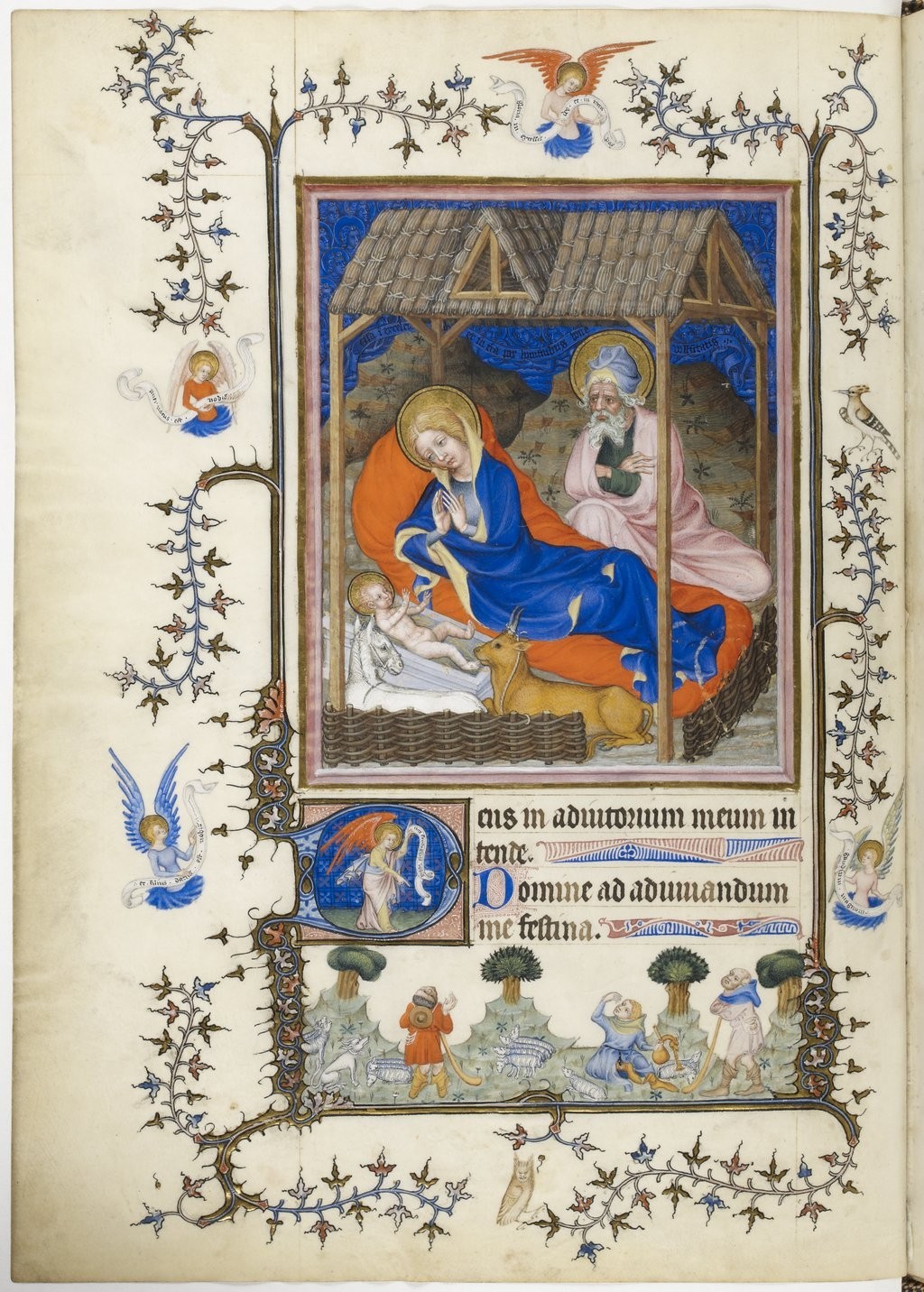
1. “Ô Peuple Fidèle” (O Come, All Ye Faithful): The origin of this carol is unknown, but it first appeared in England, with Latin lyrics, in the eighteenth century. Some scholars attribute it to Cistercian monks of either Germany, Portugal, or Spain.
2. “Vive le vent” (Long Live the Wind): This secular Christmas carol is sung to the same tune as “Jingle Bells,” but the words—written by Francis Blanche in 1948—are completely different. The song delights in wintry weather and hearth fires, evergreens and feasting.
Sur le long chemin
Tout blanc de neige blanche
Un vieux monsieur s’avance
Avec sa canne dans la main.
Et tout là-haut le vent
Qui siffle dans les branches
Lui souffle la romance
Qu’il chantait petit enfant, oh!

Refrain:
Vive le vent, vive le vent,
Vive le vent d’hiver,
Qui s’en va sifflant, soufflant
Dans les grands sapins verts, oh!
Vive le temps, vive le temps,
Vive le temps d’hiver,
Boules de neige et Jour de l’An
Et Bonne Année grand-mère!

Et le vieux monsieur
Descend vers le village,
C’est l’heure où tout est sage
Et l’ombre danse au coin du feu.
Mais dans chaque maison
Il flotte un air de fête
Partout la table est prête
Et l’on entend la même chanson, oh!

Chevalet:
Vive le vent, vive le vent
Vive le vent d’hiver
Qui rapporte aux vieux enfants
Leurs souvenirs d’hier, oh!
Along the long road
All white from the white snow
Walks an old man
With his cane in his hand.
And the wind way up there
Which whistles in the branches
Blows the romantic tune on him
That he sang as a young child, oh!

Refrain:
Long live the wind, long live the wind,
Long live the winter wind,
Which goes whistling, blowing
Through the tall green Christmas trees, oh!
Long live the season, long live the season,
Long live the holiday season—
Snowballs and New Year’s Day
And happy New Year, Grandma!

And the old man
Goes down toward the village;
It’s the time when everyone is good
And the shadow dances near the fire.
But in each house
There floats a festive air;
Everywhere the table is set,
And you hear the same song, oh!

Bridge:
Long live the wind, long live the wind,
Long live the winter wind,
Which brings to old kids
Their memories of yesterday, oh!

Trans. David Issokson
3. “Les anges dans nos campagnes” (Angels We Have Heard on High): The English carol “Angels We Have Heard on High” is a paraphrase by the Anglo-Irish Catholic bishop James Chadwick of a carol that originally appeared in French in 1842.
4. “Douce nuit” (Silent Night): “Silent Night” was originally written in German in 1816 by the Austrian Catholic priest Joseph Mohr and was set to music by the schoolteacher and organist Franz Xaver Gruber in 1818.
5. “Aujourd’hui le roi des cieux” (Today the King of Heaven—i.e., The First Noel): This is the French version of “The First Noel,” an early modern carol of Cornish origin. The word “Noel,” used as a refrain, comes from the Old French “Nouel,” meaning Christmas.
6. “Minuit, Chrétiens,” aka “Cantique de Noël” (O Holy Night): The song that English speakers know as “O Holy Night” was originally written in French by the poet and wine merchant Placide Cappeau in 1847, with music by the opera composer Adolphe Adam. It’s surprising to me that such powerful Christian worship lyrics could be written by an avowed atheist, as Cappeau was! (A parish priest in Roquemaure had hired him because he was a great writer—the priest wanted a new poem for Midnight Mass—and Cappeau took the commission presumably because he needed the money.)
7. “D’où viens tu, bergère?” (Where Are You Coming From, Shepherdess?): This French Canadian ballad is from the sixteenth century. It’s a dialogue between a shepherd girl who has just seen the Christ child and a curious interlocutor, who prompts her to describe everything she witnessed. MMK sings three of the seven traditional verses.
D’où viens-tu bergère, d’ou viens-tu?
—Je viens de l’étable de m’y promener,
J’ai vu un miracle ce soir arriver.Qu’as-tu vu bergère, Qu’as-tu vu?
—J’ai vu dans la crèche un petit enfant
Sur la paille fraîche mis bien tendrement.Rien de plus bergère, Rien de plus?
—Des anges de gloire descendus du ciel
Chantaient les louanges du Père éternel.ENGLISH TRANSLATION:
Where are you coming from, shepherdess? Where are you coming from?
—I’m coming from the stable, where I was walking.
I saw a miracle occur this evening.What did you see, shepherdess? What did you see?
—I saw in the manger a little child
Tenderly laid on the cool straw.Nothing more, shepherdess, nothing more?
—The angels of glory came down from the sky,
Singing the praises of the eternal Father.
8. “Entre le bœuf et l’âne gris” (Between the Ox and the Gray Donkey): With its text originating in the thirteenth century, this is the oldest French carol that’s still sung today. It describes how Jesus sleeps amid domestic animals and shepherds, in his mother’s arms. The refrain translates to “A thousand divine angels, a thousand seraphim, fly around this great God of love.” I recognize the striking minor-key tune, written in the nineteenth century by François-Auguste Gevaert, from Bifrost Arts’ “Joy, Joy!”
9. “Oh viens bientôt Emmanuel” (O Come, O Come, Emmanuel): Translated from the Latin, this hymn of longing has graced the lips of Christians since the eighth or ninth century.
10. “Go Tell It on the Mountain”: Coming from the Black church tradition in the United States, this is the only song on the live album that MMK sings in a language other than French. Such exuberance!
 Art & Theology