
Roundup: Traditional Balinese painting, Fijian hymn, and more

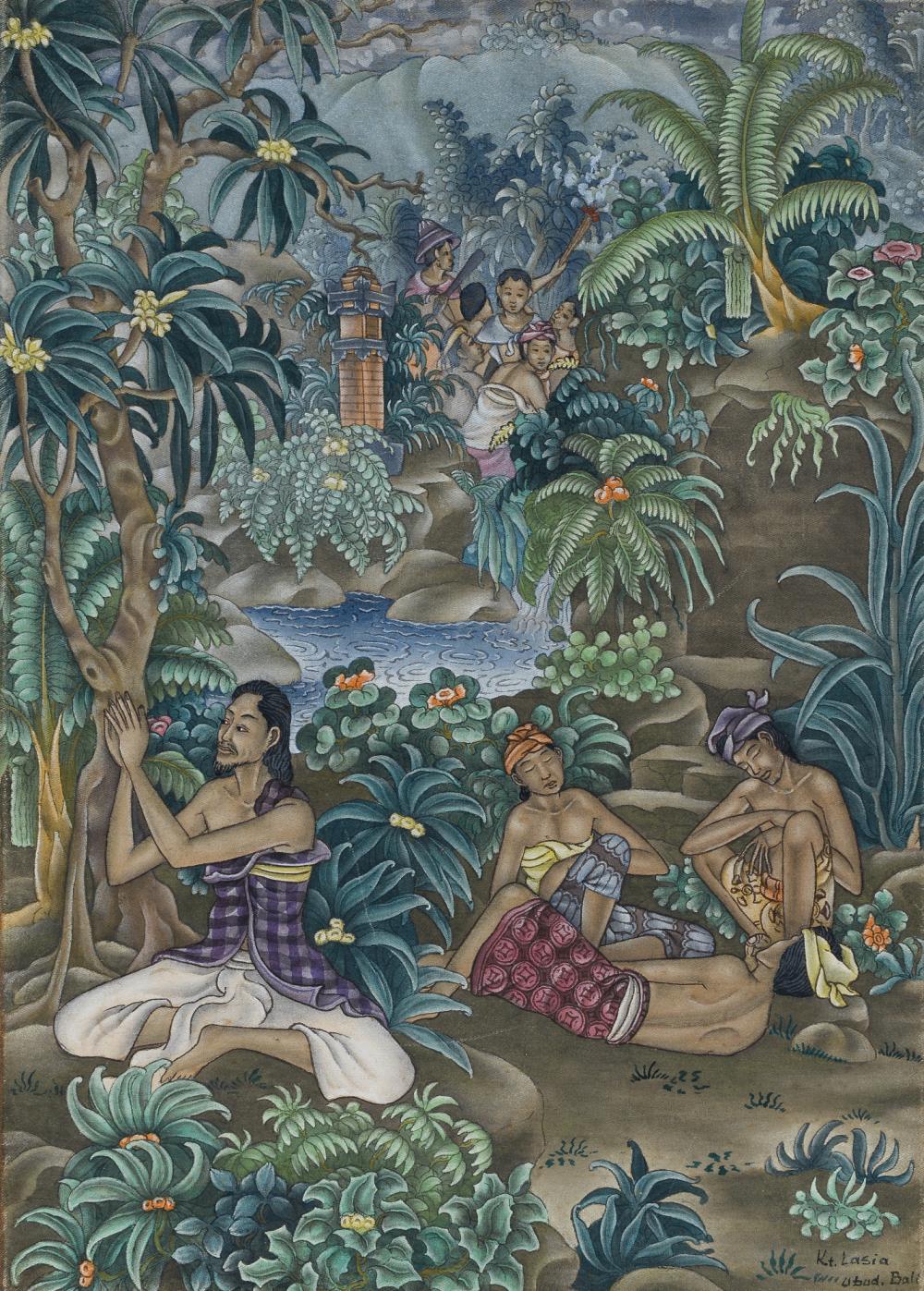
BROADCAST NEWS SEGMENT: “Ketut Lasia: The Last Generation of Ubud Traditional Painters,” UTV Televisi Indonesia, January 7, 2025: This three-minute video was filmed in the home studio of Ketut Lasia (born 1945), one of the last traditional Balinese painters, who studied under I Wayan Turun (1935–1986) and is still active at age eighty. As an adult, Lasia converted from Hinduism to Christianity, and he paints primarily biblical scenes. The video shows his visual interpretations of Jesus calming the storm, Jesus’s entry into Jerusalem, the miraculous catch of fish, the Crucifixion, Jesus in the house of Mary and Martha, and the Ascension.
Lasia, Ketut_Gethsemane
Ketut Lasia (Indonesian, 1945–), Gethsemane, n.d. Acrylic on canvas, 61 × 43 cm.

+++

ESSAY: “Christian Art in Indonesia” by Volker Küster, Karel Steenbrink, and Rai Sudhiarsa: This chapter is from the thousand-page, open-access book A History of Christianity in Indonesia, edited by Karel A. Steenbrink and Jan S. Aritonang (Brill, 2008). The authors discuss the development of an indigenized Indonesian Christian art, starting with the West Javanese sculptor Iko, a Muslim who worked in both wood and stone and fulfilled commissions for the (Catholic) Sacred Heart Chapel on the premises of the Joseph Schmutzer sugar estate in Ganjuran in the 1920s. They then cover a handful of artists who came in the wake of the Second Vatican Council in the 1960s and amid the global trend toward contextual theology promoted by international Protestantism—focusing especially on the most famous two, Bagong Kussudiardja (1929–2004) [previously] and Nyoman Darsane (1939–2024), both Christian converts.

Javanese King Jesus
Iko, Christ the King with Angels, 1924–27. Jati wood. Missiemuseum Steyl, Limburg Province, Netherlands. Photo: Fred de Soet, 2019.

Kussadiardja, Bagong_Crucifixion
Crucifixion batik by Bagong Kussudiardja, Yogyakarta, Indonesia. Private collection, Geneva. Jesus is rendered in the style of a Javanese shadow puppet. Source: On a Friday Noon by Hans-Ruedi Weber (Eerdmans / World Council of Churches, 1979)

Darsane, Nyoman_Creation of Sun and Moon
Nyoman Darsane, Creation of Sun and Moon, 1979

(This essay is not to be confused with the one I shared in 2022, where Volker Küster profiles five Christian artists from Yogyakarta, including one overlap with this present essay.)

+++

VIDEO PROMO: “OMSC Artist in Residence Program”: “Each year, the director of the Overseas Ministries Study Center at Princeton Theological Seminary (OMSC@PTS) invites one Artist in Residence to the Princeton campus to stay with us for a full academic year (September to May). Since its inauguration in 2001, the OMSC Artist in Residence program has hosted outstanding artists from the global South. Today, OMSC’s art collection is comprised of over one hundred fifty pieces, many of which are now on display throughout the campus of Princeton Theological Seminary. They represent some of the finest work being done by contemporary artists who are Christian.” Artists include Sawai Chinnawong (Thailand), Nalini Jayasuriya (Sri Lanka), Wisnu Sasongko (Indonesia), and Emmanuel Garibay (Philippines), among others.

The current OMSC artist in residence is KimyiBo, a Korean American artist based in Berlin. Explore more at http://www.omsc.org/.

+++

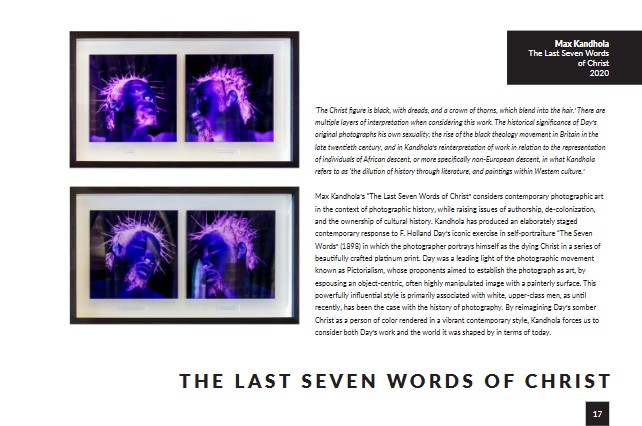
EXHIBITION CATALOG: Global Images of Christ: Challenging Perceptions: This free digital catalog documents an art exhibition that ran from September 25 to October 30, 2021, at Chester Cathedral in the UK. Artists include Lorna May Wadsworth, Max Kandhola, Silvia Dimitrova, John Muafangejo, Solomon Raj, Jyoti Sahi, and more.
+++

FIJIAN HYMN: “Oqo Na Noqu Masu” (This Is My Prayer): This Christian hymn is sung regularly in Fiji in churches and at rugby training camps and matches. The lyrics translate roughly to: “Lord, this is my prayer. I need your help in my time of need. I will always praise your name, and I ask that you grant me the desires of my heart. I sing and cry to you, Lord—to you and you alone. Hallelujah.” Here are some examples:

>> From the Rugby League World Cup, Fiji v. USA, 2017:

(Watch a similar video with subtitles.)

>> Again, the Fiji Bati rugby team singing before a match, this time against Papua New Guinea in 2022:

>> And here’s the hymn in a church context—sung by the Nawaka Methodist Village Choir in Nadi, Fiji:

Awareness of the deep-rooted Fijian tradition of four-part Christian hymn singing increased last summer when videos of the country’s Olympic team went viral. In the Christianity Today article “Yes, Fiji Olympians Are Singing Hymns,” Kelsey Kramer McGinnis writes,

Although Fijian hymnody grew out of Methodist songs brought by 19th-century missionaries, it has become a deeply rooted tradition that makes space for indigenous practices across the diverse country. Christianity’s connection to the legacy of colonialism in Fiji (which was a British colony from 1847 to 1970) is undeniable, but Fijian vocal music stands as an example of the ways Fijians have been contextualizing Christian worship and integrating it into their communities for nearly two centuries.

Here’s a 2024 video from a Sunday worship service at the Team Fiji camp in the Olympic Games Village in Paris, showing the team singing a different hymn, whose title and words I don’t know:

Advent art slideshow and devotional

Advent is just around the corner, commencing Sunday, November 27. To support Christians in their seasonal journey toward Christmas, I’ve developed two companion resources: a slideshow of art images for congregational use, and a devotional booklet for individuals or small groups that offers written reflections on these images.

The structural backbone is a liturgical text written by Jonathan Evens, which has as its refrain the plea “Come, Lord Jesus, come.” It looks forward to Christ’s second advent but also, necessarily, back to his first, in all its various aspects. Along with themes of peace, love, and sacrifice, you are invited to consider

  • what it meant for Jesus to be born of woman—coming as seed and fetus and birthed son;
  • the poverty Jesus shared with children around the world;
  • culturally specific bodies of Christ, like a dancing body and a yogic body;
  • how we are called to bear God into the world today;
  • and more.

Art is a great way to open yourself up to the mysteries of God, to sit in the pocket of them as you gaze and ponder. “Blessed are your eyes because they see,” Jesus said. Theologians in their own right, artists are committed to helping us see what was and what is and what could be. Here I’ve taken special care to select images by artists from around the world, not just the West, and ones that go beyond the familiar fare. You’ll see, for example, the Holy Spirit depositing the divine seed into Mary’s womb; Mary with a baby bump, and then with midwives; an outback birth with kangaroos, emus, and lizards in attendance; Jesus as a Filipino slum dweller; and Quaker history married to Isaiah’s vision of the Peaceable Kingdom.

My vision is for the two-minute slideshow to be shown in church on the first day of Advent during the main service. Two minutes is not nearly enough time to take in twenty-four images, so the slideshow is really just an invitation to deeper, one-on-one engagement with the images throughout the week, and that’s where the booklet comes in—as an aid to contemplation. To reinforce the practice and to make it more communal, pastors might consider drawing one image per week into his or her sermon, or discussion could be built into the Sunday school hour. There are twenty-eight days in Advent this year but only twenty-three reflections, so I’ll leave it up to you how to parse them out.

A humongous thanks to the artists and institutions who have granted permission for use of their work. Copyright of the images is retained by them, except where “Public Domain” is indicated, and reproduction outside the context of this slideshow and booklet is prohibited without their express permission. You of course are encouraged to show the slides publicly, and to distribute the booklet, but you must not charge a fee.

I hope these images fill you with wonder and holy desire—to know Christ more and to live into the kingdom he inaugurated two thousand-plus years ago from a Bethlehem manger.

Download the slideshow as a PowerPoint file.

Download the devotional booklet as a PDF. (Note: This version is slightly edited from the original.)

Want to have the booklet print and bound? Use this print-ready version. (I recommend a coil bind with a clear plastic front cover and a vinyl back cover. This will run you about $20 each at most commercial print centers, or less for larger quantities. Be sure to print double-sided, head-to-head.)

I realize that Sara Star’s The Crowning might be too graphic for some churches. Although I personally am compelled by it and obviously endorse it through its inclusion (what better complement to the line “Coming down the birth canal”?), I offer the following as alternative image suggestions for those who might want to substitute it with something more abstract or sanitized: Through the Needle’s Eye by Grace Carol Bomer; the Dieu parmi nous (God Among Us) panel from La Nativité du Seigneur (The Nativity of the Lord) by Sophie Hacker; Motherhood by Matthew Gill; or Nativity by Paula Rego. Please note that I have NOT received copyright clearance for any of these alternates, which means that if you were to use one, you would be responsible for securing the proper permission.

If you have any questions about how to use these resources, or if you’d like to share any feedback with me—either on how the images or format were received in your congregation, or suggestions for future improvement—feel free to contact me at victoria.emily.jones@gmail.com, or use the comment field below. This is really my first attempt to bring the principles of this blog out into the local church, so I’m eager to see what kind of fruit it bears.