Advent, Day 17: O!

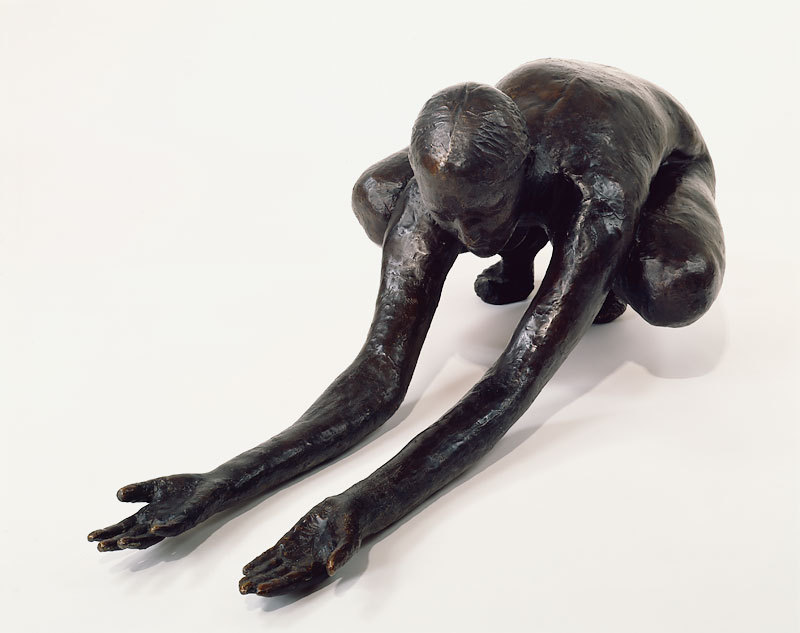
LOOK: Untitled by Kiki Smith
Smith, Kiki_Untitled bronze
Kiki Smith (American, 1954–), Untitled, 1992. Bronze with patina, 19 1/2 × 51 × 25 in. (49.5 × 129.5 × 63.5 cm). Edition of 2 + 1 AP. © Kiki Smith, courtesy The Pace Gallery.

LISTEN: “Advent ‘O’ Carol” by Joanna Forbes L’Estrange, 2018 | Performed by London Voices, dir. Ben Parry, on Winter Light, 2024

Refrain:
O, O, O, O, O, O, O
O, O, O, O, O, O, O

We long for your coming, O Wisdom;
we long for your coming, O Lord.
Come and teach us the way of understanding;
you are the living Word. [Refrain]

We long for you, O Lord and Ruler;
we long for your coming, O Lord.
Come and stretch out your arms and redeem us;
you are the living Word. [Refrain]

We long for you, O Root of Jesse;
we long for your coming, O Lord.
Come to deliver us and do not tarry;
you are the living Word. [Refrain]

We long for you, O Key of David;
we long for your coming, O Lord.
Come and bring forth the captive from his prison,
who sits in the shadow of death. [Refrain]

Dawn of the East,
we long for your coming, O Lord.
Come and lighten those who sit in darkness
and in the shadow of death. [Refrain]

We long for you, O King of the Gentiles;
we long for your coming, O Lord.
Come and deliver man, whom you formed
out of the dust of the earth. [Refrain]

O Emmanuel!
When will you come?
Come to save us, O Lord our God. [Refrain]

Tomorrow I will come.

Revealing different titles of the Messiah based on Isaiah’s prophecies, the seven so-called O Antiphons have been sung, one each from December 17 to 23, since at least as far back as the eighth century. For Christians outside the Roman Catholic Church, these antiphons are probably most familiar as the basis of the Advent hymn “O Come, O Come, Emmanuel.”

The British composer Joanna Forbes L’Estrange has lightly adapted them and set them to music for unaccompanied SATB choir. She offers the following note:

“Advent ‘O’ Carol” is inspired by the text and chants of the seven “O” Antiphons which traditionally would have been sung in the days immediately preceding Christmas (known as the Greater Ferias). The “O” refrain, which opens the piece and reoccurs between each of the seven verses, is based on the opening melodic chant of the Medieval antiphons, its 7/8 time signature reinforcing the piece’s connection to the number seven.

Ignoring the “O,” the first letter of each verse forms an acrostic which, when reversed, spells ERO CRAS, Latin for “I shall be (with you) tomorrow.” I have reworded this as “Tomorrow I will come” for the final resolution of the piece.

  1. Sapientia (Wisdom)
  2. Adonai (Lord and Ruler)
  3. Radix Jesse (Root of Jesse)
  4. Clavis David (Key of David)
  5. Oriens (Dawn of the East)
  6. Rex Gentium (King of the Gentiles)
  7. Emmanuel

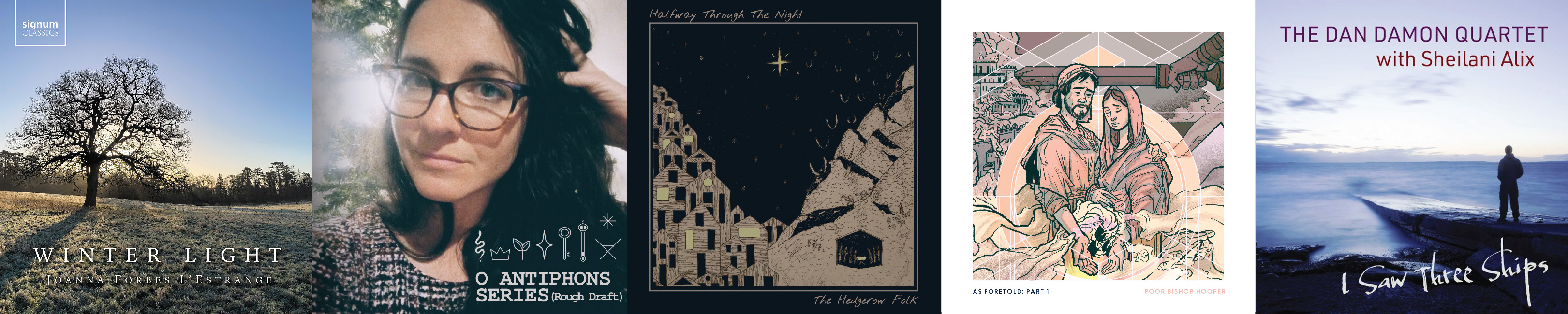
Five new Advent/Christmas albums

Every fall a number of new holiday albums hit the market. Here are five from this year that I’ve been enjoying. I’ve included one or two sample tracks from each.

2024 Holiday Albums

Winter Light by Joanna Forbes L’Estrange

A smorgasbord of choral works by the British composer Joanna Forbes L’Estrange, plus a few written or cowritten by her husband, Alexander, and one by her son Harry, all performed by Ben Parry’s London Voices. I learned about this album from Angier Brock, who wrote the anthem text for the title track. One of my favorite pieces is the “Advent ‘O’ Carol,” which I’ll be featuring in a devotional post on December 17. Below is a retune of “In the Bleak Midwinter” (risky, since Holst’s beautiful tune is so iconic, but I love what L’Estrange does with Rossetti’s poem), followed by an original jazzy carol about “The Three Wise Women” of Christmas—Mary, Elizabeth, and Anna.

O Antiphons Series by Elise Massa

Elise Massa is a singer-songwriter and music minister currently living in Durham, England, where she works for United Adoration, a global nonprofit that seeks to empower local artists to create music and art rooted in Christ and meaningful to their particular context, culture, and language. This quiet, understated album consists of seven original songs based on the O Antiphons, refrains sung during evening prayer on the seven last days of Advent preceding Christmas Eve. Here’s the first one, “O Wisdom (O Sapientia)”:

Halfway Through the Night by the Hedgerow Folk

Named after a phrase from a C. S. Lewis poem, The Hedgerow Folk is an Alabama-based acoustic Americana trio: Jon Myles, Amanda Hammett, and Bryant Hains. “Halfway through the night” is a through line that weaves through this their first Christmas album as a declaration of hope. My two favorite tracks: their reharmonized rendition of “Lo, How a Rose E’er Blooming,” and their bluegrass arrangement of “Oh Come, Divine Messiah” (which I knew previously only from an a cappella choir of nuns). Also available on vinyl.

As Foretold: Part 1 by Poor Bishop Hooper

As Foretold is a trilogy of albums that takes its subject matter from the prophetic fulfillment passages in Matthew’s Gospel. Part 1, released this week, covers the first two chapters of the book—Jesus’s birth, his flight to Egypt, Herod’s slaughter of innocents, and Jesus’s return to Nazareth. Three of the tracks deal with Joseph’s three dreams—a rarity in music! In his first dream, an angel appears to tell him that Mary is telling the truth, that the son inside her was indeed conceived by the Holy Spirit. In the second dream, treated in the “Out of Egypt” song below, the angel tells Joseph to take his family and flee Bethlehem to Egypt to escape Herod’s wrath, and in the third, the angel informs him it’s safe to return to their homeland.

Poor Bishop Hooper is offering the album for free download from their website! Parts 2 and 3 will release in early 2025.

I Saw Three Ships by Dan Damon

Daniel Charles Damon is a jazz pianist, hymn writer, and retired Methodist pastor from San Francisco, who also works as associate editor of hymnody at Hope Publishing Company. His latest jazz Christmas album features a combination of classics and originals, including two hymns he wrote both the words and music for (“Like a Child” and “Winter’s Child”); “Hunger Carol” by Shirley Erena Murray (words) and Saya Ojiri (tune), which Damon has freshly arranged; and “Peace Child,” another Murray hymn, for which Damon wrote a tune.

It’s difficult to choose a favorite track, as I love this album through and through! I’ll highlight first the nineties hymn “Peace Child,” a pensive reflection on how Christ comes to us “in the silence of stars, in the violence of wars,” “through the hate and the hurt, through the hunger and dirt.” Second, a lively medieval carol whose Latin refrain, “Id-e-o-o-o, id-e-o-o-o, id-e-o, gloria in excelsis Deo!,” translates to “Therefore, glory to God in the highest!”

The vocalist on the album is the award-winning Sheilani Alix. She is accompanied by Damon on piano, Kurt Ribak on acoustic bass, Carrie Jahde on drums, and Lincoln Adler on tenor saxophone and soprano sax.

If you like this album, be sure to also check out Damon’s 2022 Christmas album, No Obvious Angels.


What 2024 holiday albums have you been enjoying?

Advent, Day 21: Make a Womb

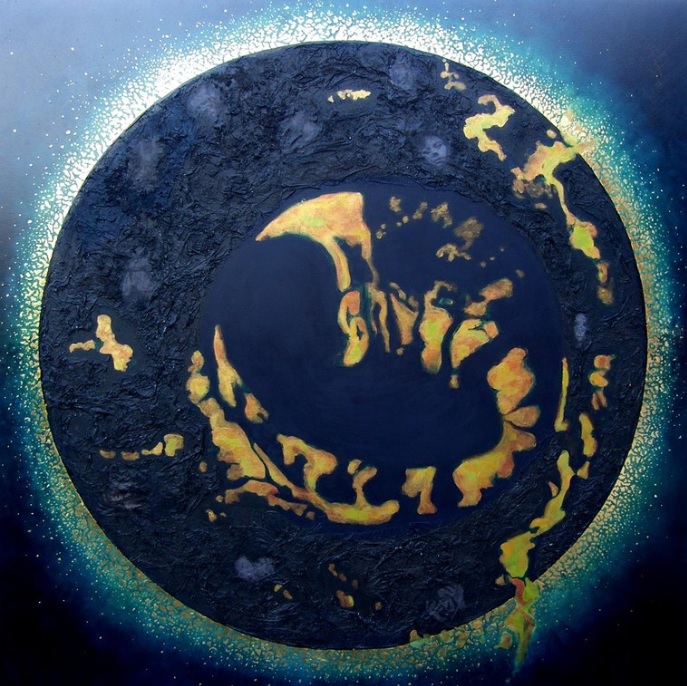
LOOK: Advent by Gerda Smelik

Smelik, Gerda_Advent
Gerda Smelik (Dutch, 1964–), Advent, 2006. Acrylic, oil paint, gold leaf, paper, wood chips, sand, glue, and photographs on canvas, 160 × 160 cm.

Dutch artist Gerda Smelik says about this mixed media piece:

Advent, a period of reflection and expectation, is portrayed by a globe with a fetus inside. The dark colours stand for the brokenness of life; the light around the fetus and the rays of gold around the globe already announce a better world. When you look at the painting up close, you discover that the suffering of the world is depicted by means of portraits of people in danger and distress.

LISTEN: “O Come, O Come, O Hidden Spring of Light” | Words by Malcolm Guite, 2011 | Music by Joshua Stamper, on PRIMEMOVER, 2021

Make a womb of all this wounded world
And make a womb of all this wounded world

Come to be born, to bear us to our birth
Make these rags of time our swaddling bands
O hidden spring of light
Come to us Wisdom, come unspoken Name
Come Root, and Key, and King, and holy Flame
O quickened little wick so tightly curled
Be folded with us into time and place
Unfold for us the mystery of grace

Make a womb of all this wounded world
And make a womb of all this wounded world

This jazz composition by Joshua Stamper, featuring vocalist Kristin Slipp, rearranges lines from Malcolm Guite’s sonnet “O Emmanuel,” which appears in Waiting on the Word: A Poem a Day for Advent, Christmas and Epiphany. (I shared the poem here, and another compelling Advent musical composition by Stamper here.)

“O Come, O Come, O Hidden Spring of Light” is from Stamper’s PRIMEMOVER, a double album of experimental jazz and classical chamber works commissioned by Resurrection Philadelphia from 2015 to 2021 for services marking holy days and seasons in the church calendar: Ash Wednesday, Good Friday, Easter, Pentecost, and Advent.

PRIMEMOVER is “a meditation on the Divine benediction over our corporeal world,” Stamper writes. “The hovering One . . . has bounded into our wounded world and unbound us from our own trajectory. . . . The abstract is made concrete.”

And, he continues, “It might just be the only record out there featuring everyone from members of the Dirty Projectors to Marilynne Robinson to Beyoncé-collaborators to the former Archbishop of Canterbury to avant-classical violin players from the Czech Republic.”

I love to see churches commissioning smart, exploratory, unconventional music like this!

Root of Jesse (Artful Devotion)

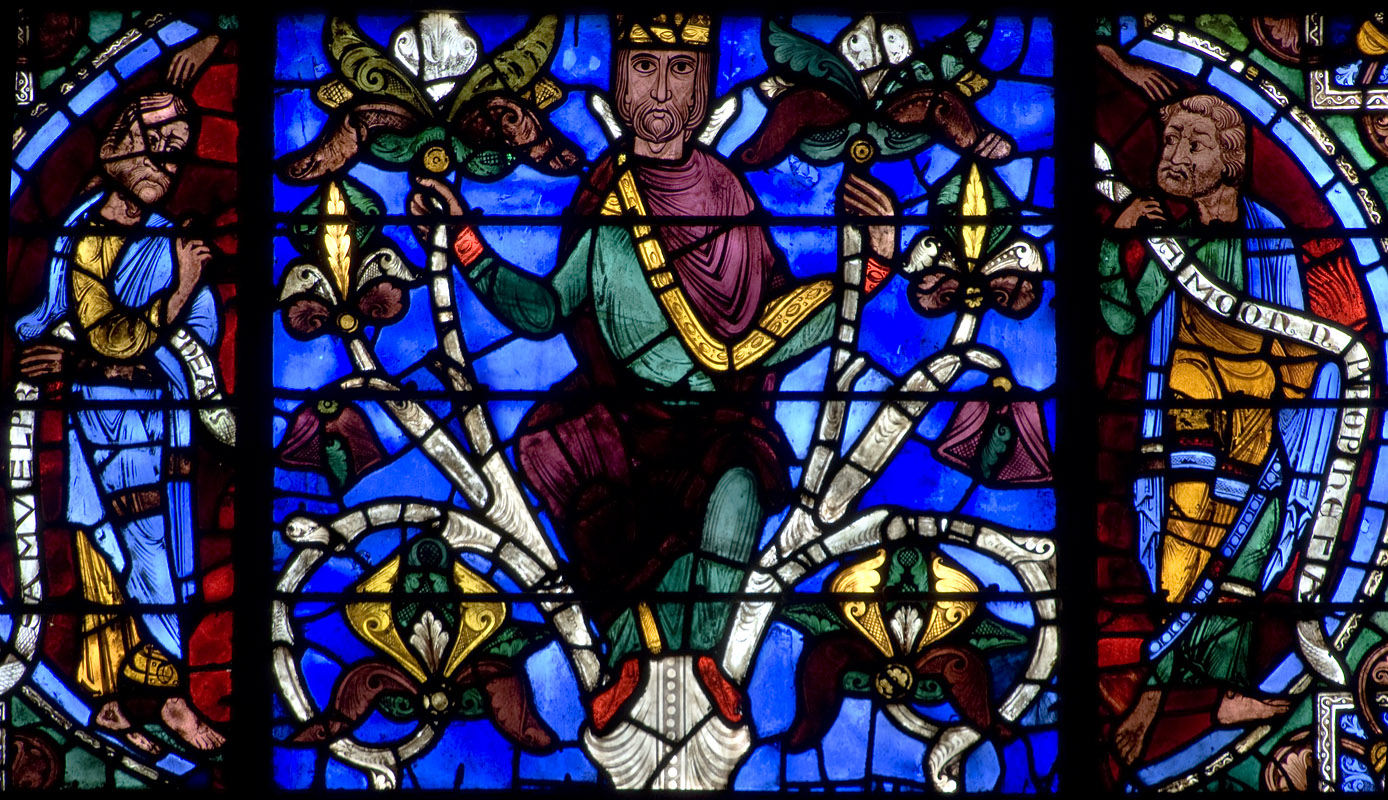
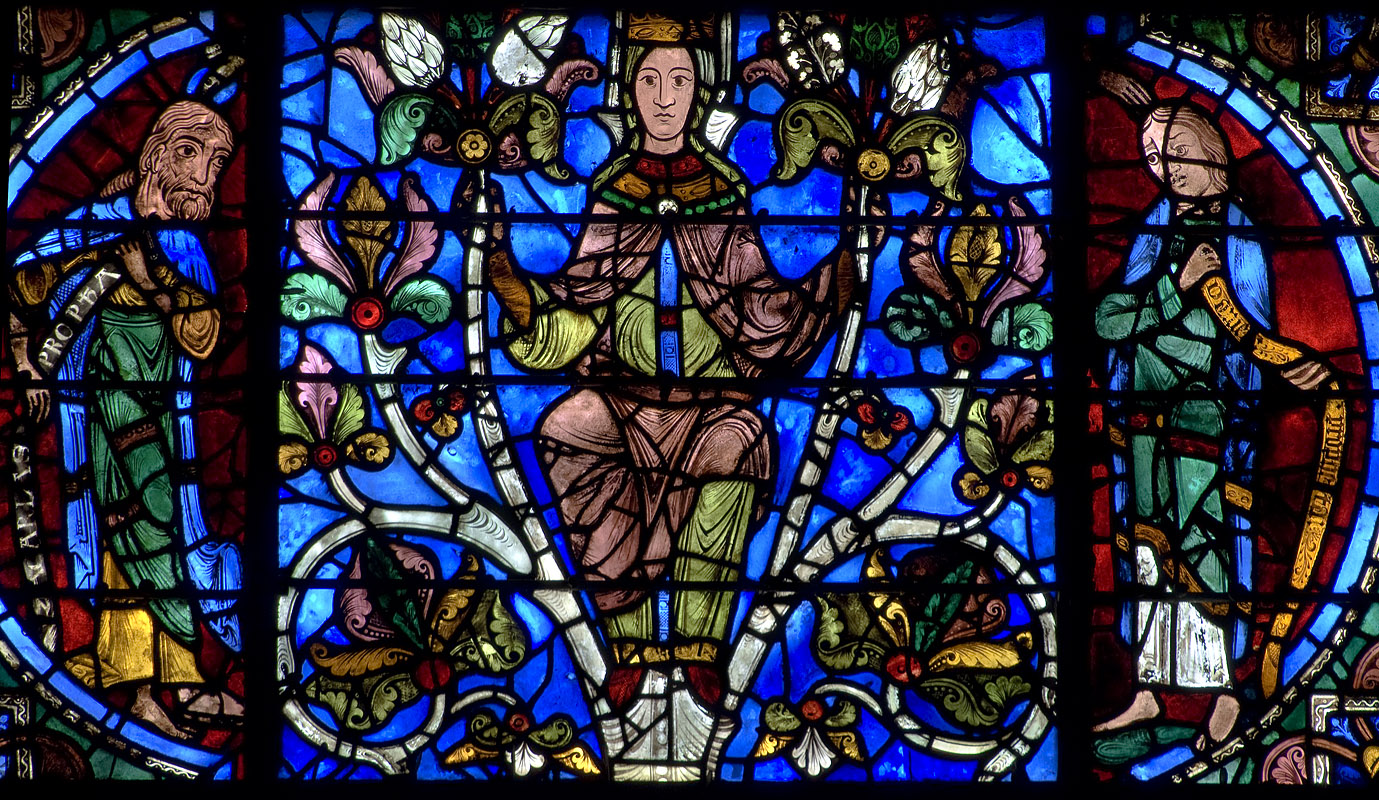
Tree of Jesse (Chartres Cathedral) (full)
The Tree of Jesse, 12th century. Stained glass window (Bay 49), Chartres Cathedral, France. Photo: Painton Cowen.

There shall come forth a shoot from the stump of Jesse,
and a branch from his roots shall bear fruit.
And the Spirit of the Lord shall rest upon him,
the Spirit of wisdom and understanding,
the Spirit of counsel and might,
the Spirit of knowledge and the fear of the Lord.
And his delight shall be in the fear of the Lord.
He shall not judge by what his eyes see,
or decide disputes by what his ears hear,
but with righteousness he shall judge the poor,
and decide with equity for the meek of the earth;
and he shall strike the earth with the rod of his mouth,
and with the breath of his lips he shall kill the wicked.
Righteousness shall be the belt of his waist,
and faithfulness the belt of his loins.
. . .

In that day the root of Jesse, who shall stand as a signal for the peoples—of him shall the nations inquire, and his resting place shall be glorious.

—Isaiah 11:1–5, 10

Tree of Jesse (Chartres)
The bottom panel depicts Nahum, Jesse, and Joel. This and all the following detail photos are by Dr. Stuart Whatling.

Tree of Jesse (Ezekiel, David, Hosea)
Ezekiel, David, Hosea

Tree of Jesse (Isaiah, Solomon, Micah)
Isaiah, Solomon, Micah

Tree of Jesse (Moses, Generic King, Balaam)
Moses, generic king, Balaam

Tree of Jesse (Samuel, generic king, Amos)
Samuel, generic king, Amos

Tree of Jesse (Zechariah, Mary, Daniel)
Zechariah, the Virgin Mary, Daniel

Tree of Jesse (Habakkuk, Christ, Zephaniah)
Habakkuk, Christ with the Seven Gifts of the Spirit (wisdom, understanding, counsel, fortitude, knowledge, piety, and fear of the Lord, per Isa. 11:2), Zephaniah

+++

SONG: “O Root of Jesse” | Text: Latin original from the sixth through eighth centuries, English translation from the Church of England’s Common Worship liturgy | Music by Ole Schützler (b. 1976) | Performed by the Junger Kammerchor Rhein-Neckar (Rhine-Neckar Youth Chamber Choir), under the direction of Mathias Rickert, on Advent (2014)

Latin:
O Radix Jesse, qui stas in signum populorum,
super quem continebunt reges os suum,
quem Gentes deprecabuntur:
veni ad liberandum nos, jam noli tardare.

English:
O Root of Jesse, standing as a sign among the peoples;
before you kings will shut their mouths,
to you the nations will make their prayer:
Come and deliver us, and delay no longer.

“O Radix Jesse” (O Root of Jesse) is one of the seven O Antiphons, names for Christ that are sung during Advent. (The others are O Wisdom, O Lord, O Key of David, O Dayspring, O King of Nations, and O God-with-Us.) Their precise origin is unknown, but their use in the eighth century is substantiated.

+++

Chartres Cathedral is “the high point of French Gothic art” (UNESCO) and one of my must-sees before I die. Its portals boast many exquisite figural sculptures, and its interior is renowned for, among other things, its stained glass windows. The Tree of Jesse, showing the royal lineage of Jesus, is one of three large, rounded lancet windows at the west end—the other two depicting the Life of Christ (center) and the Passion of Christ.

(Related posts: “Savior-King [Artful Devotion]”“Jesus as the Root/Shoot/Branch of Jesse”)

Chartres Cathedral with Tree of Jesse window

Lancet windows, Chartres
Photo: E. Vandenbroucque


This post belongs to the weekly series Artful Devotion. If you can’t view the music player in your email or RSS reader, try opening the post in your browser.

To view all the Revised Common Lectionary scripture readings for the Second Sunday of Advent, cycle A, click here.

Malcolm Guite on the imagination and God-with-us

I love listening to Malcolm Guite talk about spirituality, poetry, and the imagination; he’s a phenomenal teacher. In a December 2 podcast episode titled “Keeping Advent: Hope for a Dark World,” host Sally Clarkson interviews Guite on these topics as they relate to Advent. Before he launches into the meat of the talk, he describes the importance of the imagination in getting at truth:

God has given us all kinds of capacities with which to come to the truth, just like he’s given us different sense organs. When a bird is singing, your ears are telling you one part of what’s happening, and your eyes are telling you another. You’ve got both to get that whole experience. If you just had a silent film of the bird, you would be seeing something real, but you’d be missing something as well.

So I sometimes think that reason, the reason that makes for great science—analytic, helps us to think things through logically—that’s a very, very important test for truth, that’s a very important faculty, but it doesn’t get to everything. . . .

Imagination is the thing that shapes and puts things together. Shakespeare put this very beautifully. He said that imagination “apprehend[s] / more than cool reason ever comprehends” [A Midsummer Night’s Dream, 5.1.5–6]. He said we need to apprehend some joy before we can comprehend the bringer of the joy.

Samuel Taylor Coleridge believed that the imagination was part of our capacity to pay attention, and that the imagination would help us to remove, for a minute, the dull film of familiarity that we put over everything, and see it with freshness again. He also used a very beautiful analogy. He uses the example of a little insect, the horned fly, and how, when it’s still in the squashy pupa phase and it’s going to metamorphose, it makes a cocoon—a kind of carapace. He says that when that little fly does that, it leaves room in its involucrum, he calls it—what a wonderful word—for antennae yet to come [Biographia Literaria, vol. 1, chap. 12]. He says that’s what the imagination does.

Sometimes the artistic imagination, the poetic imagination, comes to us with something marvelous. And what that marvelous thing is doing is it’s holding open a shape that the rest of our mind is going to grow into, so that the antennae, the real reasoning and figuring it all out, can come a bit later, but the story [or poem or image] gives us something.

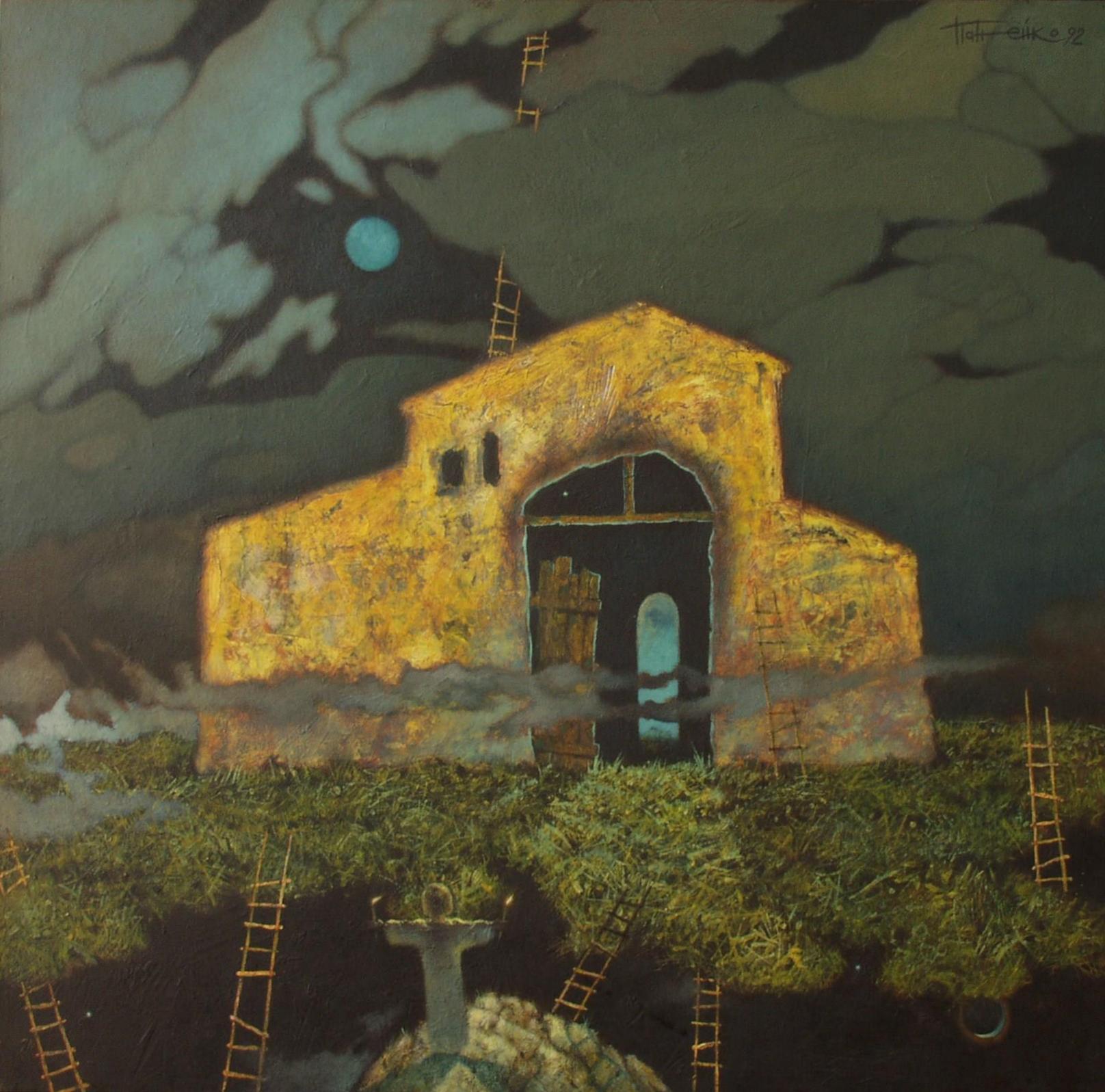
Paneyko, Igor_Gate II
Ihor Paneyko (Ukrainian, 1957–), Ворота ІІ (Gate II), 1992. Fiberboard, levkas, yolk emulsion, tempera.

In this interview Guite also reads one of his Advent sonnets, the last in a series of seven he wrote that were inspired by the traditional liturgical chants known as the O Antiphons. Titled “O Emmanuel,” the poem is a prayer for God to come among us again, in all his myriad attributes, and to rebirth not only the hearts of humanity but the whole earth.

“O Emmanuel” by Malcolm Guite

O come, O come, and be our God-with-us,
O long-sought With-ness for a world without,
O secret seed, O hidden spring of light.
Come to us Wisdom, come unspoken Name,
Come Root, and Key, and King, and holy Flame.
O quickened little wick so tightly curled,
Be folded with us into time and place,
Unfold for us the mystery of grace
And make a womb of all this wounded world.
O heart of heaven beating in the earth,
O tiny hope within our hopelessness,
Come to be born, to bear us to our birth,
To touch a dying world with new-made hands,
And make these rags of time our swaddling bands.

This and other poems, by Guite and others, can be found in the book Waiting on the Word: A Poem a Day for Advent, Christmas, and Epiphany. You can read more about “O Emmanuel” on Guite’s blog, which contains a wealth of writings. For additional books by Guite, see his Amazon page.