
Roundup: Traditional Balinese painting, Fijian hymn, and more

BROADCAST NEWS SEGMENT: “Ketut Lasia: The Last Generation of Ubud Traditional Painters,” UTV Televisi Indonesia, January 7, 2025: This three-minute video was filmed in the home studio of Ketut Lasia (born 1945), one of the last traditional Balinese painters, who studied under I Wayan Turun (1935–1986) and is still active at age eighty. As an adult, Lasia converted from Hinduism to Christianity, and he paints primarily biblical scenes. The video shows his visual interpretations of Jesus calming the storm, Jesus’s entry into Jerusalem, the miraculous catch of fish, the Crucifixion, Jesus in the house of Mary and Martha, and the Ascension.
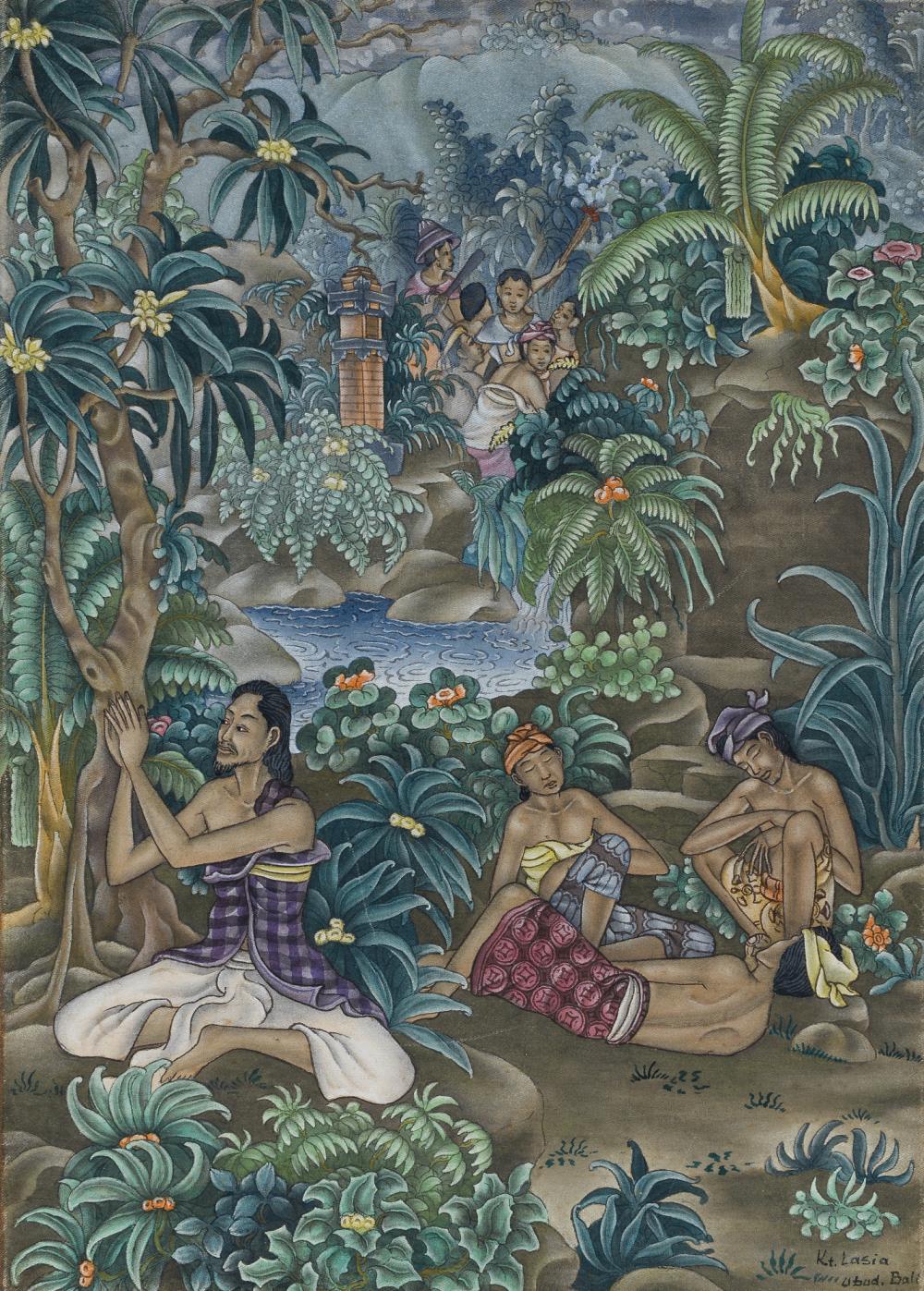
Lasia, Ketut_Gethsemane
Ketut Lasia (Indonesian, 1945–), Gethsemane, n.d. Acrylic on canvas, 61 × 43 cm.

+++

ESSAY: “Christian Art in Indonesia” by Volker Küster, Karel Steenbrink, and Rai Sudhiarsa: This chapter is from the thousand-page, open-access book A History of Christianity in Indonesia, edited by Karel A. Steenbrink and Jan S. Aritonang (Brill, 2008). The authors discuss the development of an indigenized Indonesian Christian art, starting with the West Javanese sculptor Iko, a Muslim who worked in both wood and stone and fulfilled commissions for the (Catholic) Sacred Heart Chapel on the premises of the Joseph Schmutzer sugar estate in Ganjuran in the 1920s. They then cover a handful of artists who came in the wake of the Second Vatican Council in the 1960s and amid the global trend toward contextual theology promoted by international Protestantism—focusing especially on the most famous two, Bagong Kussudiardja (1929–2004) [previously] and Nyoman Darsane (1939–2024), both Christian converts.

Javanese King Jesus
Iko, Christ the King with Angels, 1924–27. Jati wood. Missiemuseum Steyl, Limburg Province, Netherlands. Photo: Fred de Soet, 2019.

Kussadiardja, Bagong_Crucifixion
Crucifixion batik by Bagong Kussudiardja, Yogyakarta, Indonesia. Private collection, Geneva. Jesus is rendered in the style of a Javanese shadow puppet. Source: On a Friday Noon by Hans-Ruedi Weber (Eerdmans / World Council of Churches, 1979)

Darsane, Nyoman_Creation of Sun and Moon
Nyoman Darsane, Creation of Sun and Moon, 1979

(This essay is not to be confused with the one I shared in 2022, where Volker Küster profiles five Christian artists from Yogyakarta, including one overlap with this present essay.)

+++

VIDEO PROMO: “OMSC Artist in Residence Program”: “Each year, the director of the Overseas Ministries Study Center at Princeton Theological Seminary (OMSC@PTS) invites one Artist in Residence to the Princeton campus to stay with us for a full academic year (September to May). Since its inauguration in 2001, the OMSC Artist in Residence program has hosted outstanding artists from the global South. Today, OMSC’s art collection is comprised of over one hundred fifty pieces, many of which are now on display throughout the campus of Princeton Theological Seminary. They represent some of the finest work being done by contemporary artists who are Christian.” Artists include Sawai Chinnawong (Thailand), Nalini Jayasuriya (Sri Lanka), Wisnu Sasongko (Indonesia), and Emmanuel Garibay (Philippines), among others.

The current OMSC artist in residence is KimyiBo, a Korean American artist based in Berlin. Explore more at http://www.omsc.org/.

+++

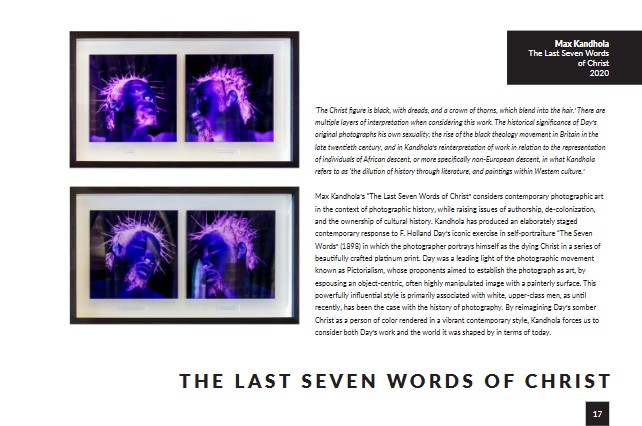
EXHIBITION CATALOG: Global Images of Christ: Challenging Perceptions: This free digital catalog documents an art exhibition that ran from September 25 to October 30, 2021, at Chester Cathedral in the UK. Artists include Lorna May Wadsworth, Max Kandhola, Silvia Dimitrova, John Muafangejo, Solomon Raj, Jyoti Sahi, and more.
+++

FIJIAN HYMN: “Oqo Na Noqu Masu” (This Is My Prayer): This Christian hymn is sung regularly in Fiji in churches and at rugby training camps and matches. The lyrics translate roughly to: “Lord, this is my prayer. I need your help in my time of need. I will always praise your name, and I ask that you grant me the desires of my heart. I sing and cry to you, Lord—to you and you alone. Hallelujah.” Here are some examples:

>> From the Rugby League World Cup, Fiji v. USA, 2017:

(Watch a similar video with subtitles.)

>> Again, the Fiji Bati rugby team singing before a match, this time against Papua New Guinea in 2022:

>> And here’s the hymn in a church context—sung by the Nawaka Methodist Village Choir in Nadi, Fiji:

Awareness of the deep-rooted Fijian tradition of four-part Christian hymn singing increased last summer when videos of the country’s Olympic team went viral. In the Christianity Today article “Yes, Fiji Olympians Are Singing Hymns,” Kelsey Kramer McGinnis writes,

Although Fijian hymnody grew out of Methodist songs brought by 19th-century missionaries, it has become a deeply rooted tradition that makes space for indigenous practices across the diverse country. Christianity’s connection to the legacy of colonialism in Fiji (which was a British colony from 1847 to 1970) is undeniable, but Fijian vocal music stands as an example of the ways Fijians have been contextualizing Christian worship and integrating it into their communities for nearly two centuries.

Here’s a 2024 video from a Sunday worship service at the Team Fiji camp in the Olympic Games Village in Paris, showing the team singing a different hymn, whose title and words I don’t know:

Christmas, Day 8: “Again and again his name laughs in my mouth”

A praising of God is what laughter is, because it lets a human being be human.

Laughter is a praise of God, because it lets a human being be a loving person.

Laughter is praise of God because it is a gentle echo of God’s laughter, of the laughter that pronounces judgment on all history.

Laughter is praise of God because it foretells the eternal praise of God at the end of time, when those who must weep here on earth shall laugh.

The laughter of unbelief, of despair, and of scorn, and the laughter of believing happiness are here uncannily juxtaposed, so that before the fulfillment of the promise, one hardly knows whether belief or unbelief is laughing.

—a found poem by Kathleen Norris, made up of sayings by Karl Rahner, from Amazing Grace: A Vocabulary of Faith (Riverhead, 1999), pp. 257–58

LOOK: You Shall Laugh by Soichi Watanabe

Watanabe, Soichi_You Shall Laugh
Soichi Watanabe (Japanese, 1949–), You Shall Laugh, 2011. Oil on canvas, 16 × 12 in. (41 × 31 cm). Kwansei Gakuin University Chapel, Kobe, Japan. Photo courtesy of the artist.

Soichi Watanabe is a Japanese Christian artist who served as the 2008–9 artist in residence at the Overseas Ministries Study Center (OMSC) in New Haven, Connecticut (now at Princeton Theological Seminary). OMSC published a catalog of his work, titled For the Least of These: The Art of Soichi Watanabe, in 2010, featuring forty-three of his paintings.

Watanabe doesn’t supply facial features for his human figures because he wants viewers to be able to see themselves in the characters portrayed. He concentrates on form and color.

I was introduced to this painting of his through the OMSC-sponsored Zoom presentation he gave on February 3, 2021. There he said, “We can laugh as the love of God is being poured out on us . . . the laughter of knowing that the Lord is with us in pain and sorrow.” The wave shape at the bottom, he told me in an email, is a reference to the tsunami of March 11, 2011, which wiped out his home city of Ishinomaki and accelerated his mother’s dementia.

Watanabe also painted a companion piece, With Those Who Weep, which shows the same three figures huddled together in a mass, one comforting the two who are crying. Together, the paintings encourage us to fully feel our griefs and our hurts, and to be present to one another through those experiences, but also to hold on to joy, which transcends circumstance.

The artist pointed out to me that the three figures in You Shall Laugh resemble a flower spreading out its petals. The kanji for “bloom,” he says, originally meant “laugh” and was written as “birds sing, flowers laugh.”

LISTEN: “Jesus soll mein erstes Wort” (Jesus shall be my first word) from Gott, wie dein Name, so ist auch dein Ruhm (God, as your name is, so also your praise is to the ends of the world) (BWV 171) | Words by Picander (Christian Friedrich Henrici), 1728 | Music by Johann Sebastian Bach, 1728 | Performed by Kathleen Battle and Itzhak Perlman on J. S. Bach: Arias for Soprano and Violin, 1991

Jesus soll mein erstes Wort
In dem neuen Jahre heißen.
Fort und fort
Lacht sein Nam in meinem Munde,
Und in meiner letzten Stunde
Ist Jesus auch mein letztes Wort.
Jesus shall be my first word
uttered in the new year.
Again and again
his name laughs in my mouth,
and in my last hour
Jesus will also be my last utterance.

English translation © Pamela Dellal, courtesy of Emmanuel Music Inc. Used with permission.

This aria is the fourth movement of a cantata Bach composed for his church in Leipzig for New Year’s Day 1729. January 1 is also the Feast of the Holy Name of Jesus, since Jesus was given his name when he was eight days old (Luke 2:21). Read the full libretto of BWV 171 here, and listen to the full cantata here. (It’s only sixteen minutes.)

For the excerpt I’ve chosen a recording by the legendary American operatic soprano Kathleen Battle, who is accompanied by the equally famous Israeli American violinist Itzhak Perlman.

Easter Hymn from the Early Church

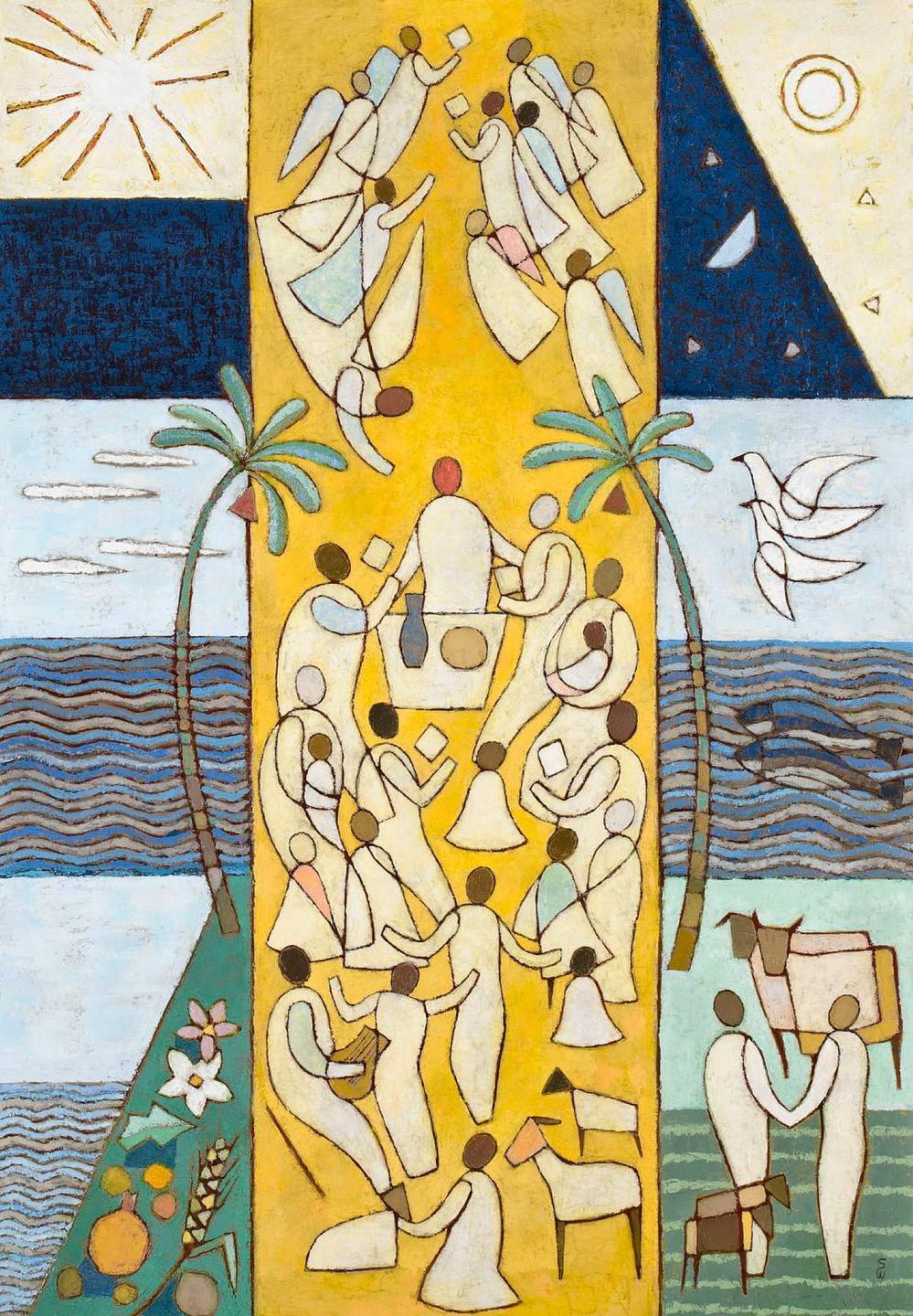
Watanabe, Soichi_To God Be the Glory
Soichi Watanabe (Japanese, 1949–), To God Be the Glory, 2009. Acrylic on canvas, 52 × 39 in. Collection of the Overseas Ministries Study Center at Princeton Theological Seminary.

This is the paschal feast,
the Lord’s passing from death to life:
so cries the Spirit.
No type or telling, this, no shadow.
Pasch of the Lord it is, and truly.

You have protected us, Jesus,
from endless disaster.
You spread your hands like a mother
and, motherlike, gave cover with your wings.
Your blood, God’s blood, you poured over the earth,
giving life, because you loved us.

The heavens may have your spirit, paradise your soul,
but oh, may the earth have your blood!

This feast of the Spirit
leads the mystic dance through the year.
New is this feast and all-embracing;
all creation assembles at it.

Joy to all creatures, honor, feasting, delight!
Dark death is destroyed
and life is restored everywhere.
The gates of heaven are open.
God has shown himself human,
humanity has gone up to God.
The gates of hell are shattered,
the bars of Adam’s prison broken.
The people of the world below have risen from the dead,
bringing good news:
what was promised is fulfilled.
From the earth has come singing and dancing.

This is God’s passing!
Heaven’s God, showing no stinginess,
has joined us together with God in the Spirit.
The great marriage hall is full of guests,
all dressed for the wedding,
no guest rejected for want of a wedding garment.
The paschal light is the bright new lamplight,
light that shines from the virgins’ lamps.
The light in the soul will never go out.
The fire of grace burns in us all,
spirit, divine, in our bodies and in our souls,
fed with the oil of Christ.

. . . . . . . . . . . . . . . . . . . . .

Join, then, all of you, join in this great rejoicing.
You who’ve been working the vineyard from the early hour
and you who came later,
come now and collect your wages.
Rich and poor, sing and dance together.
You who are hard on yourselves, you who are easy,
honor this day.
You who have fasted and you who have not,
make merry today.

The meal is ready: come and enjoy it.
The calf is a fat one: you will not go away hungry.
There’s kindness for all to partake of and kindness to spare.

Away with pleading of poverty:
the kingdom belongs to us all.
Away with bewailing of failings:
forgiveness has come from the grave.
Away with your fears of dying:
the death of our Savior has freed us from fear.
Death played the master: he has mastered death.
The world below had scarcely known him in the flesh
when he rose and left it plunged in bitter mourning.

Isaiah knew it would be so. [Isa. 14:9]
The world of shadows mourned, he cried, when it met you,
mourned at its being brought low, wept at its being deluded.
The shadows seized a body and found it was God;
they reached for earth and what they held was heaven;
they took what they could see: it was what no one sees.
Where is death’s goad? Where is the shadows’ victory?

Christ is risen: the world below [hell] is in ruins.
Christ is risen: the spirits of evil are fallen.
Christ is risen: the angels of God are rejoicing.
Christ is risen: the tombs are void of their dead.
Christ has indeed arisen from the dead,
the first of the sleepers.

Glory and power are his for ever and ever. Amen.

This text is a composite of excerpts from two Easter sermons spuriously attributed to John Chrysostom (ca. 347–407) and drawing inspiration from Hippolytus of Rome (ca. 170–ca. 235), which I adapted from Walter Mitchell’s English translation from the original Greek that appears in Adalbert Hamman, OFM, ed., Early Christian Prayers (Chicago: Regnery Gateway, 1961), 31–35. The source texts can be found in the Patrologia Graeca 59:741–46 and 59:721–24. They probably date to the fourth century.