Roundup: “Ask of Old Paths,” “An Axe for the Frozen Sea,” Crypt of the Three Skeletons, and more

BALTIMORE-ANNAPOLIS CONCERTS:

This November near where I live in Maryland there are at least two concerts by Christian artists I’d like to invite you to:

>> Matthew Clark, November 1, 2025, Crownsville, MD: The Eliot Society, an organization I volunteer with, is hosting Matthew Clark, a singer-songwriter from Mississippi, for an evening of music and stories this Saturday. Tickets are $10; wine, coffee, and refreshments will be served. Here’s Clark’s song “Ordinary Artists”:

>> Ordinary Time, November 22, 2025, St. Moses Church, Baltimore: Longtime friends Peter La Grand (Vancouver), Jill McFadden (Baltimore), and Ben Keyes (Southborough, Massachusetts) make up the acoustic folk trio Ordinary Time. They’re performing a free concert at McFadden’s church in a few weeks, which will be followed by Q&A around the role of music in the communal life of the church. Here’s their song “I Will Trust (Isaiah 12)”:

+++

BOOK REVIEW: “How Does Your Garden Grow? Grace Hamman on Medieval Conceptions of Virtue and Vice” by Victoria Emily Jones, Mockingbird: I reviewed Grace Hamman’s latest book, Ask of Old Paths: Medieval Virtues and Vices for a Whole and Holy Life, for Mockingbird. Check it out!
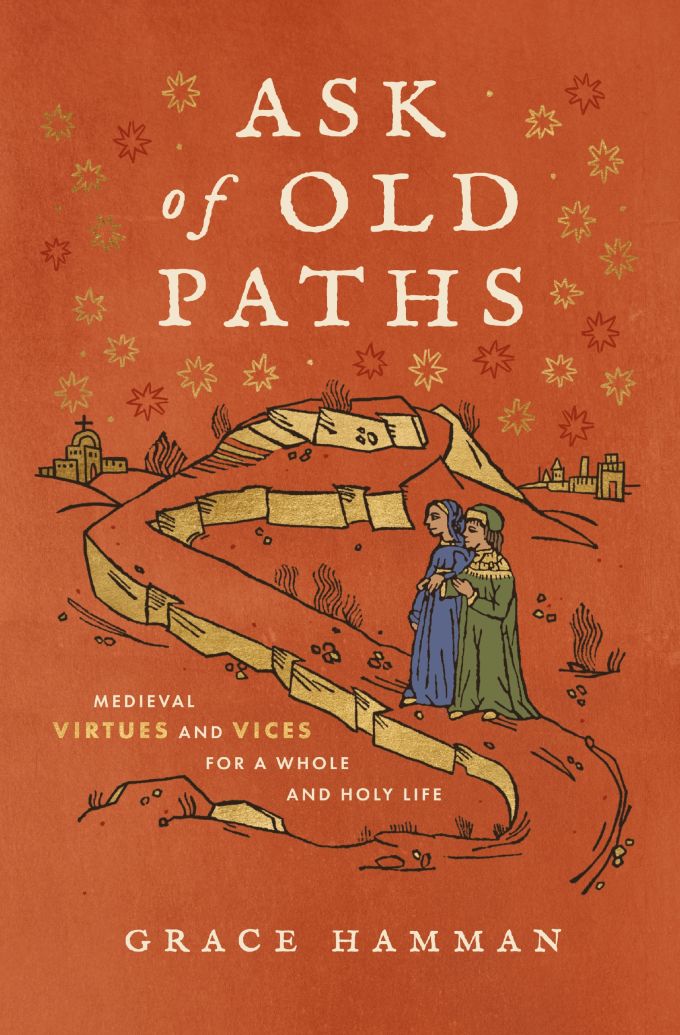
Ask of Old Paths

+++

FREE AUDIOBOOK: An Axe for the Frozen Sea: Conversations with Poets about What Matters Most by Bel Palpant: “A book must be the axe for the frozen sea within us,” Franz Kafka wrote in a letter to his friend Oskar Pollak in 1904. That quote is the source of the title of Ben Palpant’s new book, one of my favorites of this year. An Axe for the Frozen Sea is a collection of one-on-one interviews Palpant conducted with seventeen acclaimed poets of faith, exploring the human experience, especially everyday joys and struggles, and the writing life. Featured poets include Scott Cairns, Marilyn Nelson, Robert Cording, Li-Young Lee, and Jeanne Murray Walker. I was really compelled by the conversations.
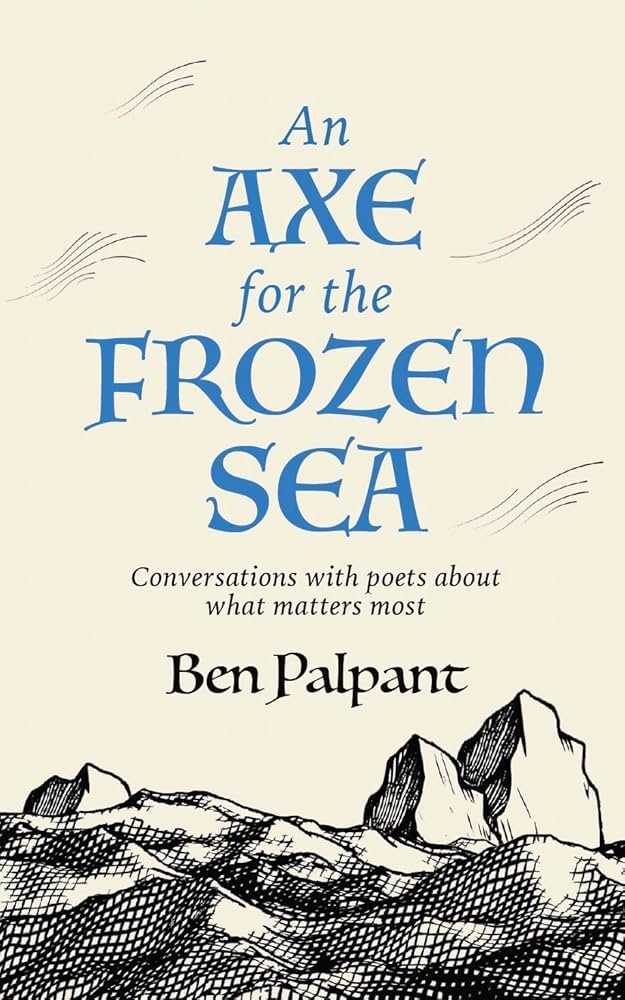
An Axe for the Frozen Sea

An Axe for the Frozen Sea is available for purchase in print, but it also kicked off the new podcast Rabbit Room Press Presents, serialized audiobooks of select titles from the publisher. All the book’s content, read by the author, can be listened to for free in this format. Highly recommended!

+++

ARTICLE: “Bone chapels and their strange art” by Lanta Davis, Christian Century: If my last blog post piqued your interest in Christian bone chapels, you’ll want to read this article Lanta Davis wrote last November about her visit to the crypt of Santa Maria della Concezione dei Cappuccini in Rome. With a scythe-wielding skeleton overhead and arches, garlands, chandeliers, and mock clocks made of human bones, you’d be forgiven for thinking you mistakenly wandered into a haunted house. But in fact this is a sacred space, its unusual decoration the devotional labor of a seventeenth-century friar. Davis reflects on how the bone installations transform the ugliness of death into something beautiful, rearranging death into surprising forms—such as a skull with butterfly wings made from shoulder blades—that culminate in the Crypt of the Resurrection.
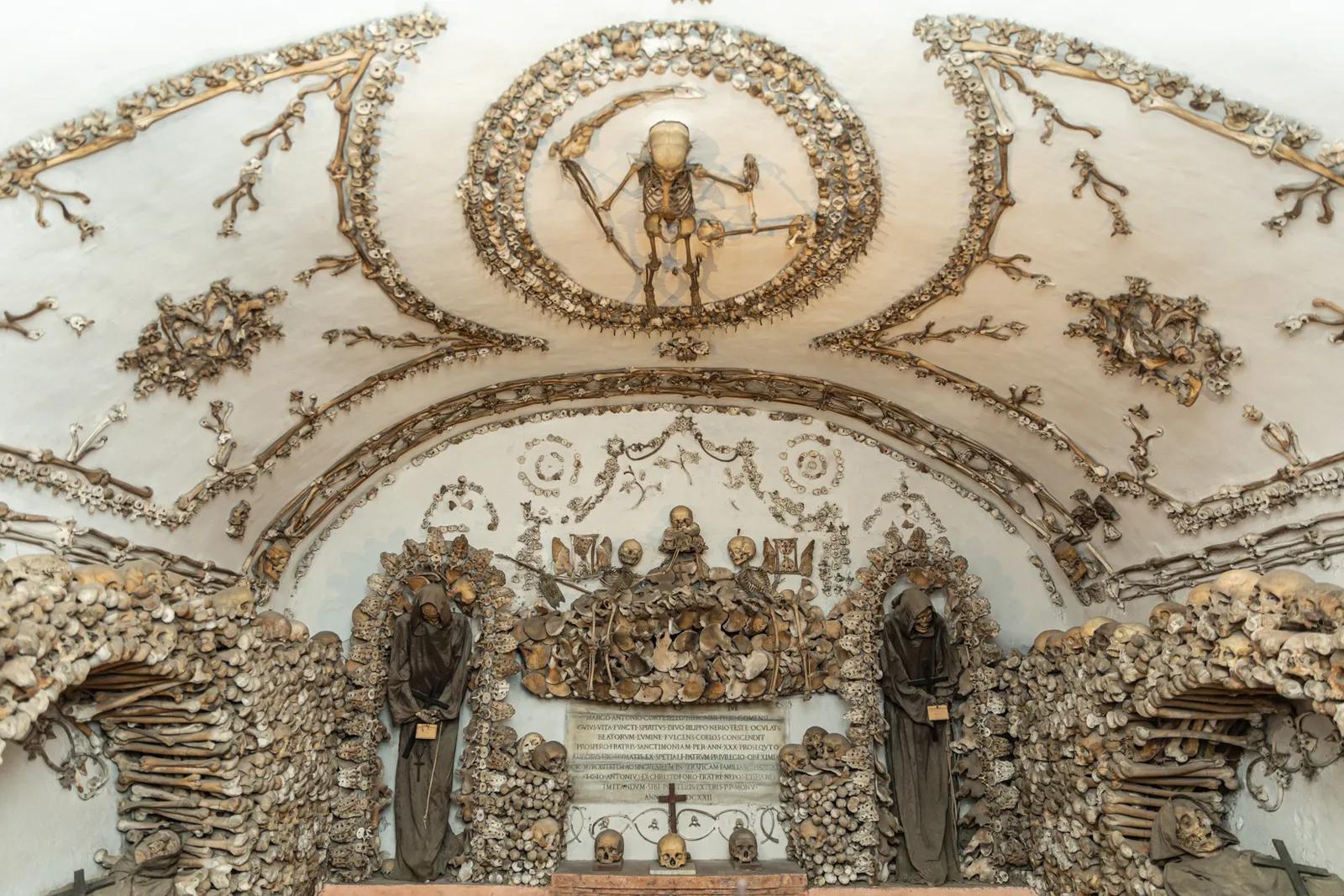
Crypt of the Three Skeletons
Cripta dei Tre Scheletri (Crypt of the Three Skeletons), one of five bone chapels built in 1626–31 under Santa Maria della Concezione dei Cappuccini (Our Lady of the Conception of the Capuchins) in Rome. Photo © Museo e Cripta dei Frati Cappuccini. Click for more photos.

+++

SONG: “Bones” by Mark Shiiba: The title track of Mark Shiiba’s debut album from last year references the placard that greets visitors to Rome’s Crypt of the Three Skeletons (see previous roundup item): “What you are now we used to be; what we are you will be.” This saying was a common memento mori, which I first learned when studying Renaissance art in Florence as a junior in college: Io fu già quel che voi siete, e quel chi son voi ancor sarete, reads the inscription above the fictive cadaver tomb that Masaccio painted inside Santa Maria Novella.

Shiiba’s song is jaunty in tone, and when he shared an excerpt on Instagram, he set it to the similarly sprightly animated short The Skeleton Dance (1929) by Walt Disney, which is based on medieval “danse macabre” imagery. Perhaps that seems to you unbefitting of such a serious subject as death—but since its inception, the church has proclaimed Christ’s ultimate defeat of death. “Where, O death, is your victory?” the apostle Paul taunts. “Where, O death, is your sting?” Death is lamentable, but it’s not the end of the story. The playfully arranged “bones at the bottom of a church in Rome” anticipate the resurrection of our bodies on the last day.
Roundup: Tish Harrison Warren on Advent; make your own Advent wreath; prayer card pack; and more

Advent begins a week from Sunday, on December 1—a roughly four-week season leading up to Christmas, during which we prepare our hearts to receive the coming Christ. Here are a few resources.

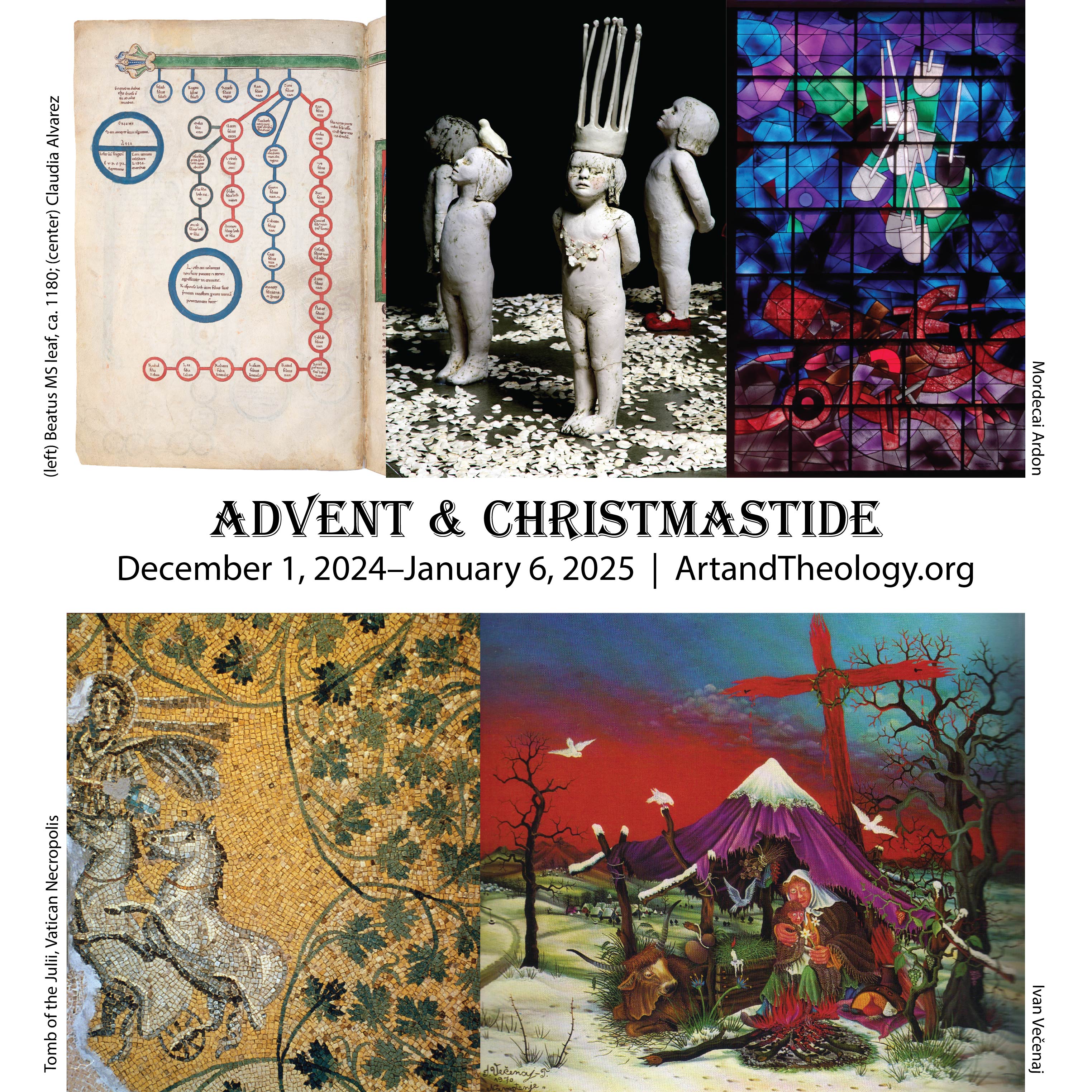
Daily posts at Art & Theology: First I want to let you know that, as I’ve done for the past three years, I will be posting daily here on the Art & Theology blog for the duration of Advent and Christmastide, each day selecting a visual artwork and a piece of music that I feel dialogue fruitfully with each other about a seasonal theme. Many Christians like to read through a devotional book during Advent, and while I do appreciate good devotional writing, I sometimes grow bored of reading prose reflections on the Christmas story. For me, I’ve found that engaging the arts frequently opens up wonder and new angles of inquiry and deepens my longing and gratitude for Christ. Songs, art, and other creative expressions help me slow down and put me in a contemplative frame of mind, and that’s why I use them as companions throughout the liturgical year.

Advent 2024 promo

Though the United States (my country) is heavily represented in the selections, I’ve tried to be intentional about featuring works from a variety of geographic locales. So you’ll see contributions from Mexico, Peru, The Gambia, Kenya, Germany, Turkey, Croatia, Japan, India, the Philippines, and more—a reflection of the global nature of Christianity.

Sometimes I will provide some written context or explication for the song or artwork or relevant biographical details for its maker, but other times I will let the works stand entirely on their own.

I’m really excited to unroll this year’s series! Advent starts December 1, but tune in a day early on November 30 for a “prelude” post to kick things off. The final post in the series will be on Epiphany on January 6. You can view the archives from previous years here:

Advent 2023 | Christmas 2023
Advent 2022 | Christmas 2022
Advent 2021 | Christmas 2021
Advent 2020 (abbreviated)

In addition to the daily posts in the music-art format, I have a few poems lined up and will continue doing periodic link roundups to direct you to other great Advent and Christmas content around the web.

+++

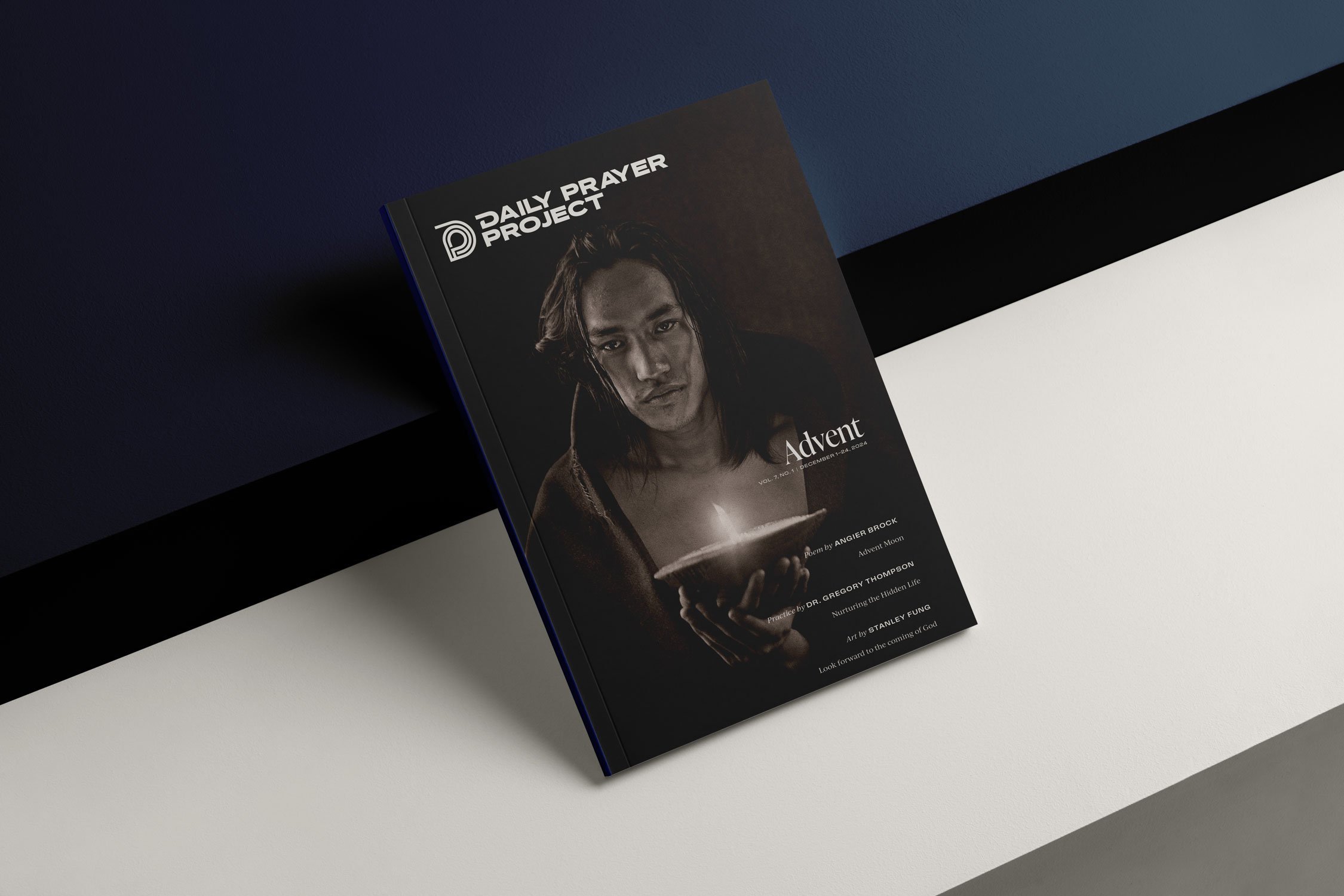
THE DAILY PRAYER PROJECT: Advent 2024: The Daily Prayer Project, a liturgical publishing nonprofit I work for as curator and copyeditor, is entering its seventh year, and our latest Advent edition is out! The cover art is Look forward to the coming of God by Stanley Fung, a pastor and photographer from Taipei; it’s one of three artworks that receive dedicated attention inside.

Advent DPP

In addition to art, the magazine includes a poem, four song sheets, two mini-essays (one on the spiritual practice of encouragement, the other on nurturing the hidden life of Christ within us), and fourteen distinct liturgies, one for each morning and evening of the week (plus a different scripture reading for every day of the season). Here is one of the featured prayers in this edition, from the Christian Council of Nigeria:

Grant us, O God, a vision of our land that is as beautiful as it could be:
a land of justice where none shall prey on others;
a land of plenty where poverty shall cease to fester;
a land of kinship where success shall be founded on service;
a land of peace where order shall rest not on force
but on the love of everyone for their community.
Give us grace to put this vision into practice
through Jesus Christ our Lord.

Our Christmas edition will also be ready for purchase soon. It covers December 25, 2024, through March 4, 2025.

+++

VIDEO INTERVIEW: “Advent: The Season of Hope” with Tish Harrison Warren, Trinity Forum, December 1, 2023: In Celebration of Discipline, Richard J. Foster writes, “In contemporary society our Adversary (the devil) majors in three things: noise, hurry, and crowds. If he can keep us engaged in ‘muchness’ and ‘manyness,’ he will rest satisfied.” The pull toward those things is particularly strong in December. But Advent calls us, counterculturally, to quietness, slowness, and moments of solitude.

Here Tish Harrison Warren, an Anglican priest and the author of Advent: The Season of Hope from IVP’s Fullness of Time series, discusses the character and history of Advent, the three traditional practices associated with it, and how to wait well. She also encourages us to ask ourselves: Where do we need Christ to come in the next year? Where do we need healing? Where do we need to find hope in the next season of our life?

The Q&A starts at 38:00 and includes questions such as: How might the theme of judgment shape our observance of Advent? How do we practice Advent during a time of jollity and indulgence and parties without being perceived as a Scrooge?

+++

SONG: “Come to Us, Emmanuel” by Ordinary Time: Made up of Peter La Grand, Jill McFadden, and Ben Keyes, Ordinary Time is a trio whose music blends elements of folk, Americana, and traditional hymnody. This original song is from their 2007 album In the Town of David, and the music video is shot around Vancouver, where the three band members met when they were students at Regent College.

** This is one of seven songs by Ordinary Time featured on Art & Theology’s Advent Playlist. Join 2,859 others in following the playlist on Spotify, which offers over twenty-one hours of music for the season.

Check out, too, Ordinary Time’s newest album, released Friday, titled You Are My Hiding Place. Favorite track: “All Shall Be Amen Alleluia.”

+++

ARTICLE: “My Favorite Advent Wreath Supplies” by Ashley Tumlin Wallace: The Liturgical Home is one of my favorite blogs to follow. It’s run by Ashley Tumlin Wallace, a pastor’s wife and mom of four from Florida who collects recipes and traditions from around the world and compiles them into liturgical living guidebooks to help families celebrate the seasons of the church in their homes. In this blog post she shares how to make your own Advent wreath, collecting greenery from outside and purchasing a few basic items.

Here’s her Instagram video showing you how to put it all together:

+++

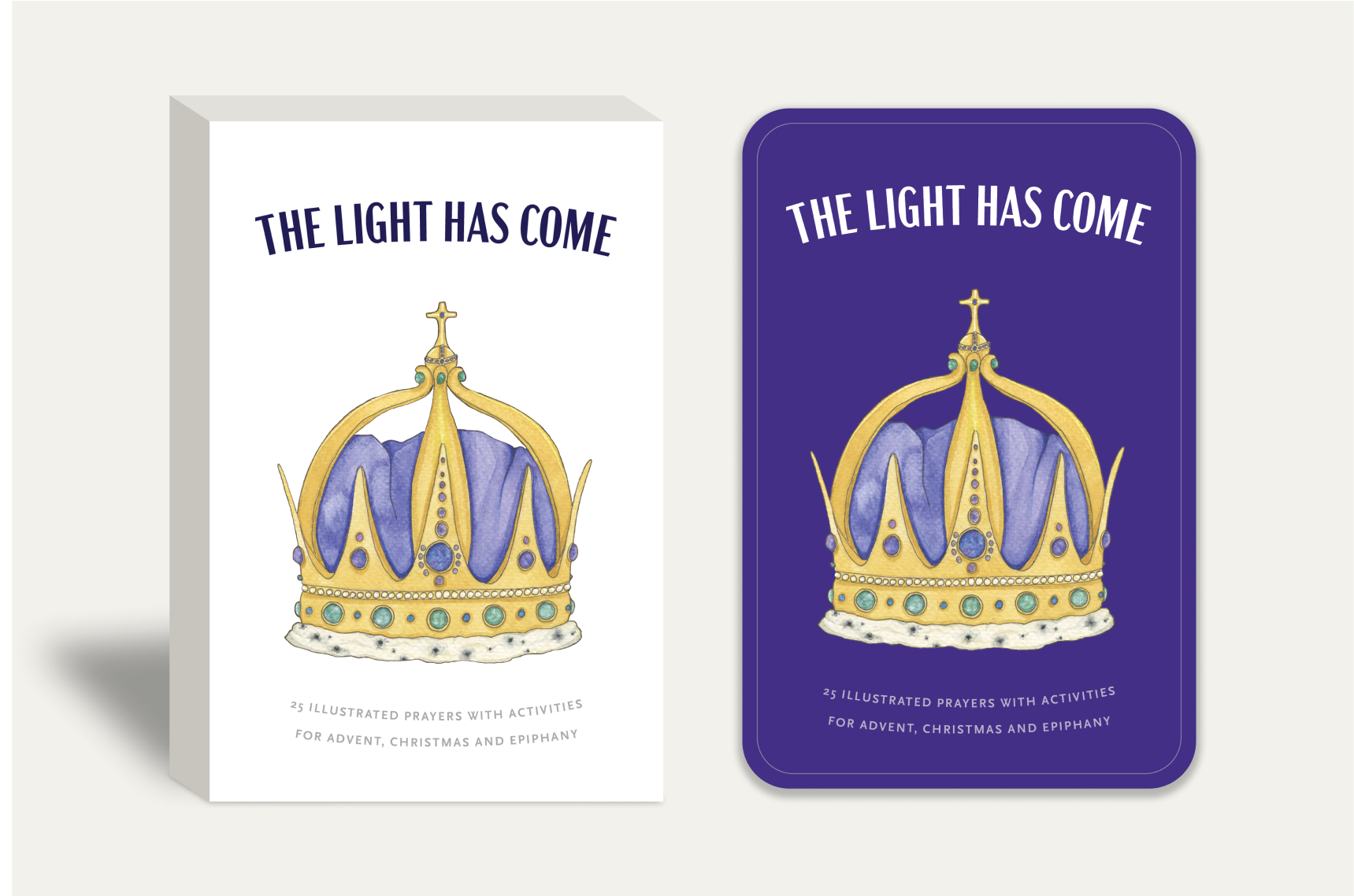
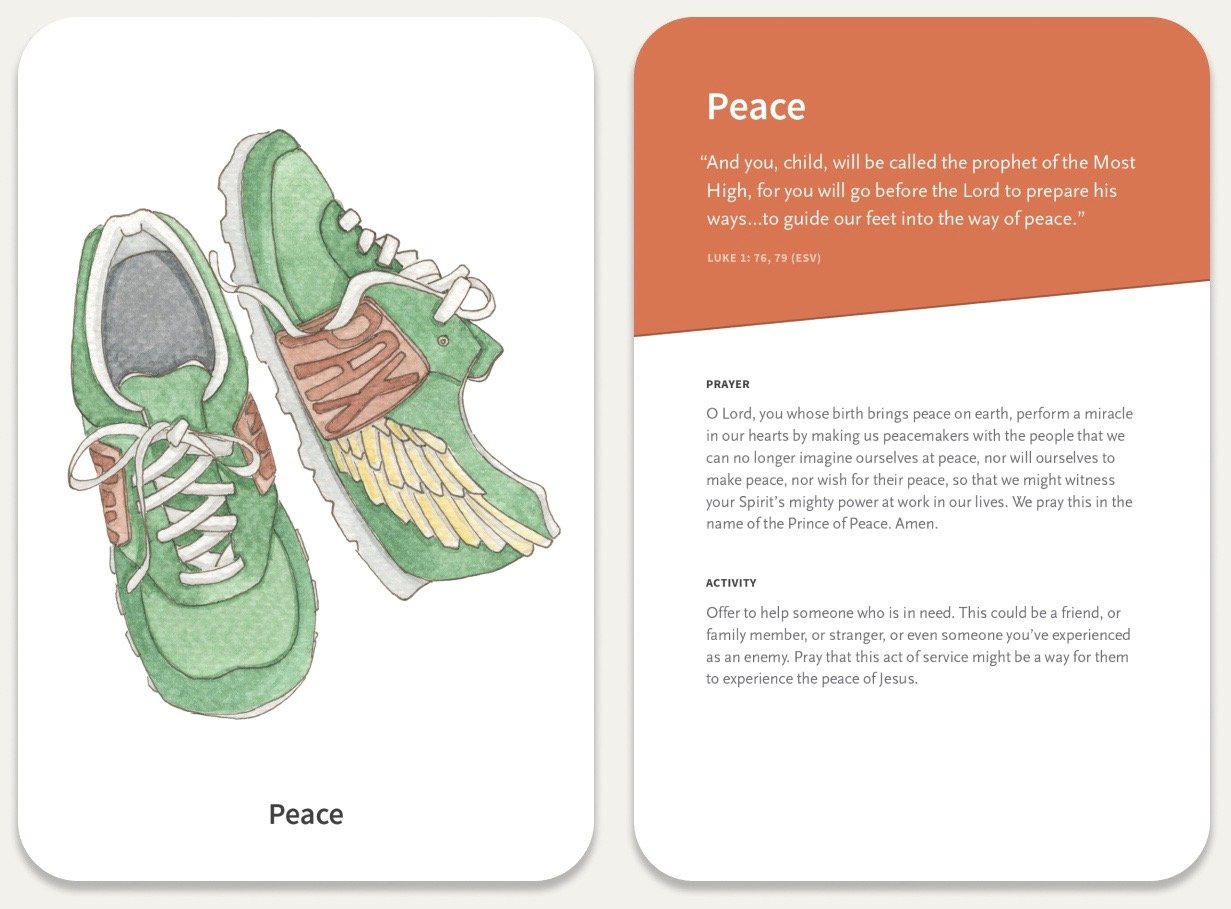
CARD PACK: The Light Has Come: 25 Illustrated Prayers with Activities for Advent, Christmas, and Epiphany by W. David O. Taylor and Phaedra Jean Taylor: Each of the twenty-five, 4 × 6 prayer cards in this pack includes a watercolor illustration by Phaedra Taylor, and on the other side a Bible verse, a collect prayer by David Taylor, and a suggested activity (e.g., stargazing, baking or buying a treat for a friend) or prayer prompt. Included are familiar themes, such as Hope, Joy, Shepherds, and Light, but also less familiar ones, like Feasting, Sorrow, Fear, and the Fantastical. There are also cards for Saint Nicholas Day, New Year’s Eve, New Year’s Day, and Epiphany. They are all held together in a cardstock sleeve.

The Light Has Come card pack
Peace (The Light Has Come)

The cards would work well in personal or family devotions, in a small group, or with church staff. “Our hope is that this box of cards will invite you to stop, look and listen afresh to the nativity narratives and to discover a story that truly heals and restores this very broken and beloved world of ours,” David writes in a blog post introducing the product.

You can order reproductions of the watercolors from this collection and others at Phaedra’s online shop.

Roundup: “Sing Hallelujah,” giant Advent calendar, snow drawings, and more

SONGS by Ordinary Time:

>> “Every Ditch, Every Valley,” on Until He Comes (2008). Based on Isaiah 40:3–9.

>> “Sing Hallelujah,” on Ordinary Time’s forthcoming album, and released last Friday as a single. Based on Isaiah 8:12–13; 9:1–7; and 60:1–2.

+++

EXHIBITIONS:

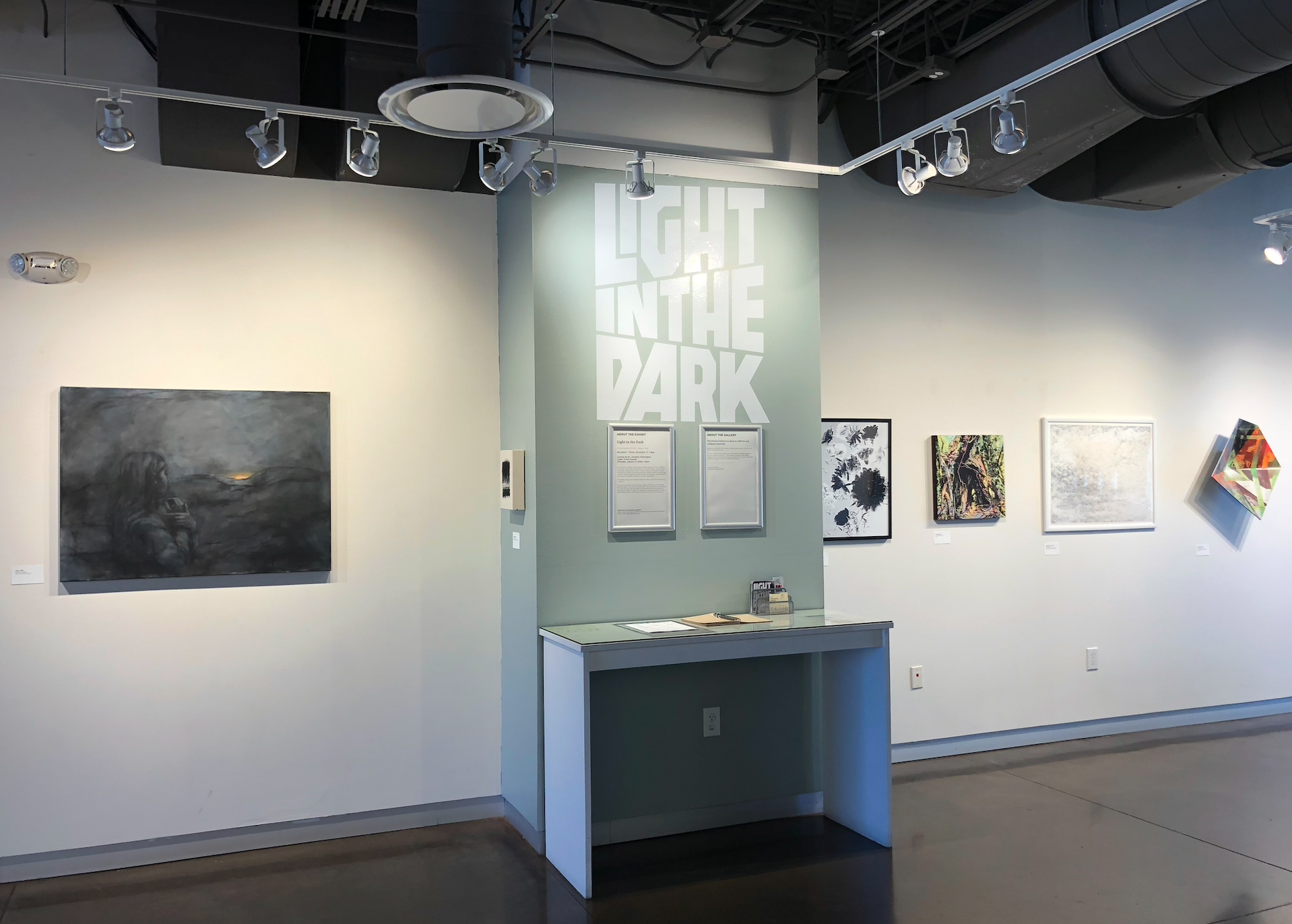
>> Light in the Dark, Sojourn Church Midtown, Louisville, Kentucky, November 17, 2023–January 7, 2024: Organized by Sojourn Arts, this juried exhibition features work by twenty-four artists from throughout the United States. It explores contrasts between light and dark, a powerful artistic as well as biblical theme with strong connections to the Christmas story. A complementary lecture on “Light in the Gospels” by Dr. Jonathan Pennington will take place on January 11, 2024.

Light in the Dark exhibition view
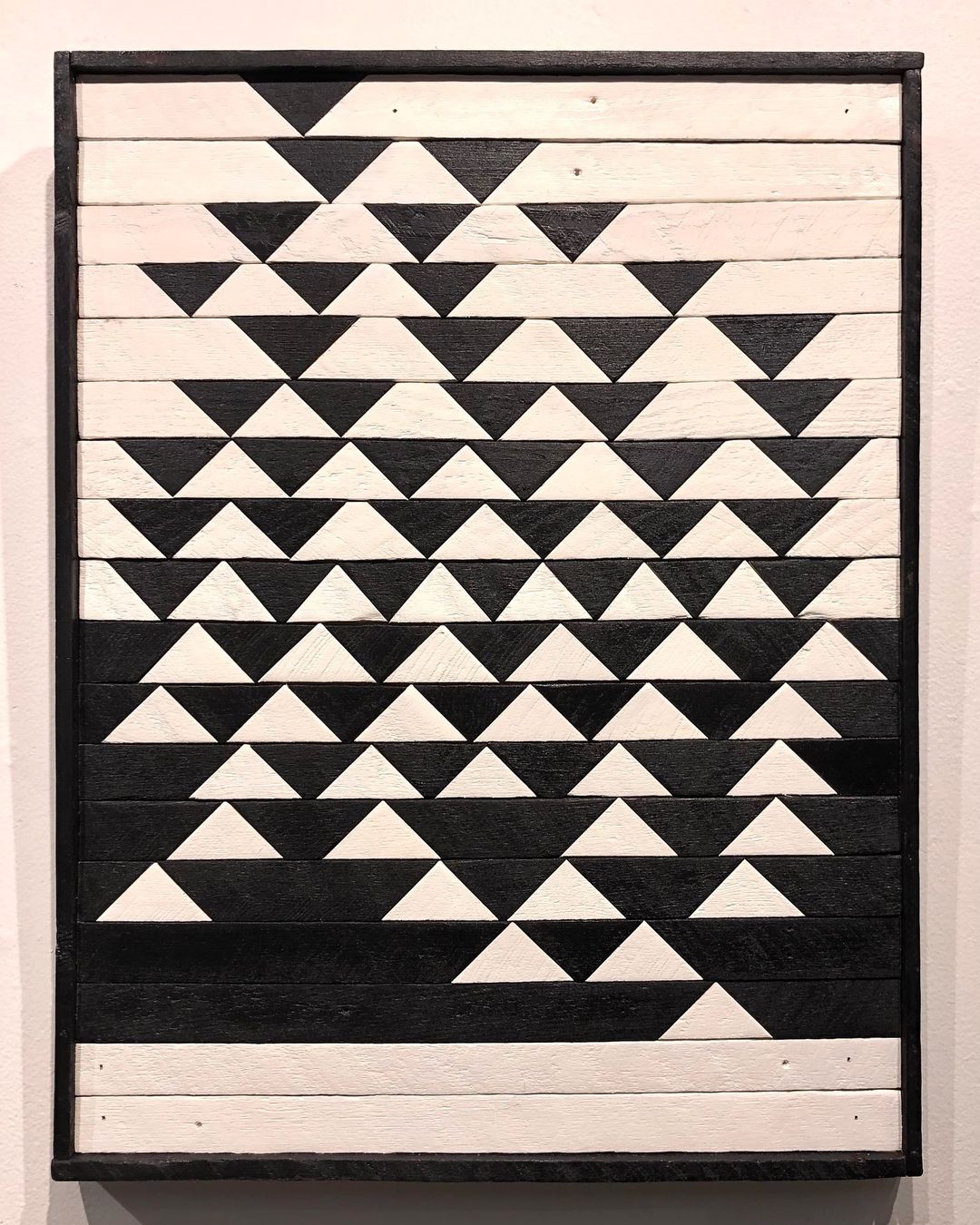
Hochhalter, Brandon_The Incredible Power of Light
Brandon Hochhalter, The Incredible Power of Light, 2023. Reclaimed lath wood from homes in Old Louisville, 18 × 24 × 1 in. [artist’s website]

>> Wilson Abbey Advent Windows, 935 W. Wilson Ave., Chicago, December 1, 2023–January 6, 2024: A business under the umbrella of Jesus People USA, Wilson Abbey in uptown Chicago is a neighborhood gathering place for coffee, art shows, workshops, theater, dance, film screenings, and live music. Every December since 2016, they have installed a three-story-tall Advent calendar in their windows to be enjoyed from the streets, with one new artwork revealed each day from December 1 to 24. Directed by the building manager, Karl Sullivan, the project commissions local artists to contribute a painting, photograph, or other graphic work, and this year there are twenty-three participating artists. It will be a brand-new series of images, all on the theme “The Soul Felt Its Worth”—which, Sullivan told me, will “explore the idea of the Christ child coming to earth as a promise of justice and care for those who are seen by God, showcasing people groups who may not be seen, or whom we may not want to see because their problems are bigger than us.”

Wilson Abbey Windows 2022
Wilson Abbey Advent Windows, December 2022 [see nighttime view]

Below are two of the paintings from a previous iteration of the project, which together form an Annunciation scene. The drone video that follows was shot in 2020 by Mike Angelo Rivera.

Bertsche, Sarah_Annunciation
Sarah Bertsche, Gabriel and Mary, 2020. Painted for the Wilson Abbey Advent Windows. [artist’s website]

Stop by 935 West Wilson Avenue in Chicago to see the progressively illuminated windows throughout the month of December (the full display will be up from December 24 to January 6), or follow along on Facebook or Instagram @wilsonabbeywindows. What a unique gift to the city! A fun way to engage the community.

+++

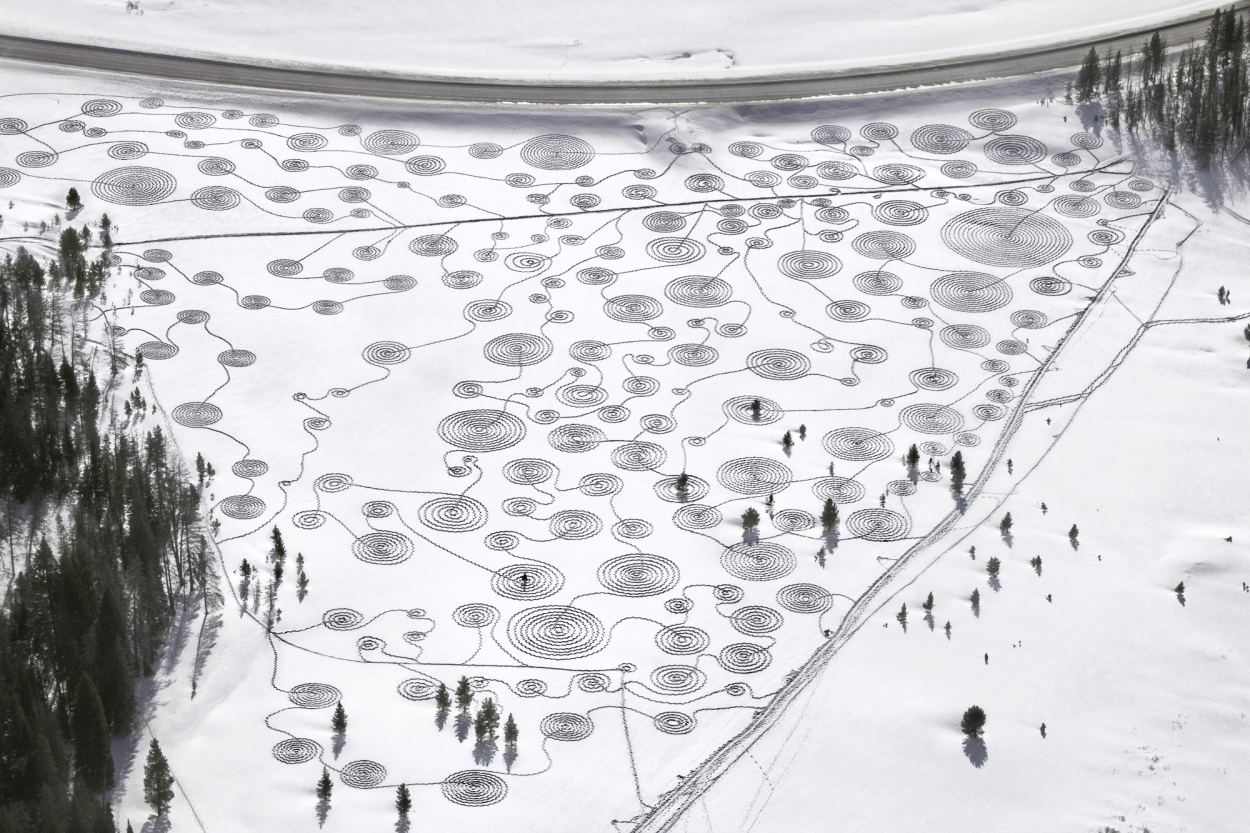
LAND ART: Snow Drawings by Sonja Hinrichsen: German-born, San Francisco–based artist Sonja Hinrichsen creates large-scale, ephemeral “snow drawings” in wintry locations around the world with the help of local volunteers who don snowshoes and track through the snow in patterns. She then photographs the land art from a helicopter or ski lift. These are amazing! Here’s a video by Cedar Beauregard of a drawing in progress at Rabbit Ears Pass, Colorado:

Hinrichsen, Sonja_Snow Drawings
Snow Drawing by Sonja Hinrichsen, Rabbit Ears Pass, Colorado, 2012

Advent, Day 1: Stars

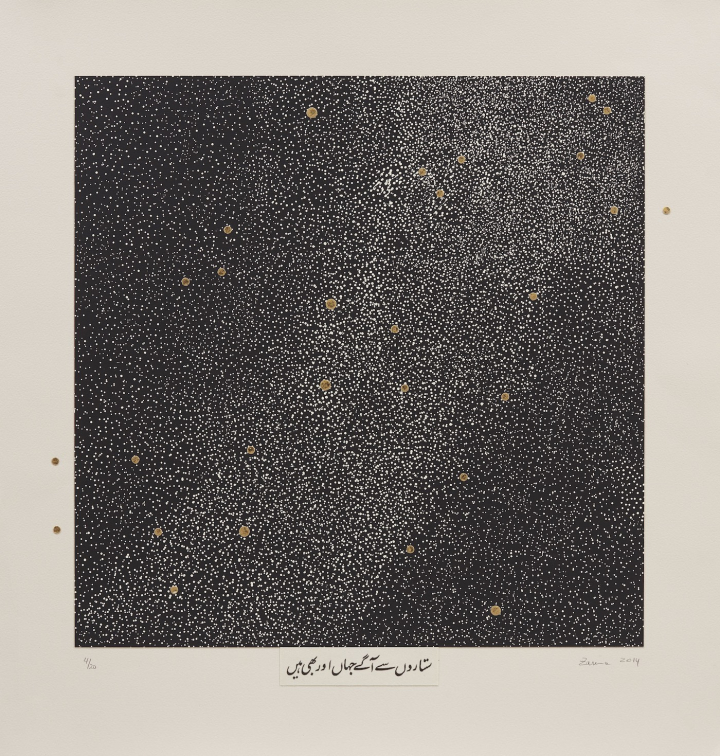
LOOK: Beyond the Stars by Zarina

Zarina_Beyond the Stars
Zarina (Indian American, 1937–2020), Beyond the Stars, 2014. Woodcut printed on BFK light paper collaged with gold leaf and Urdu text, mounted on Somerset Antique paper, 24 × 23 in. Photo: Farzad Owrang.

Printmaker Zarina Hashmi, who preferred to identify herself professionally by her first name only, was born and raised in the small university town of Aligarh, India, and was displaced to Karachi, Pakistan, after the partition of India in 1947. She had a cosmopolitan education, studying woodblock printing in Bangkok and Tokyo and intaglio in Paris. At the beginning of her career she moved to New York, living and working there for forty years before finally moving to London in 2018 to be near family. She passed away two years later.

In Beyond the Stars Zarina shows, through the medium of woodcut, the glory of a night sky. Innumerable stars dot the black ink, as do a smattering of small 22-karat gold orbs that could be read as angels or as the divine presence made visible. 

LISTEN: “All Shall Be Well” by Jill McFadden, on Good News by Ordinary Time (2016)

He called him into the night, said
Abram, count the stars so bright
Through you true peace will come
To every tribe and tongue
Though no one knows my Name
Blessing is coming all the same

And all shall be well

Now many years went by
Of withered hopes, unanswered cries
Till one night a virgin heard
A cry that broke the silence of God
That star above them bright
Had shone for Abram that night
This child so weak, so small
Brings peace and rest to all

And all shall be well (2×)

The years unending seem
Here in this in between
“Peace on earth, God’s will for men”
Seems like it came and went
The wars, they linger on
The darkness overcomes
We need not stars but sun
Break in, O Coming One
Sometimes we cannot tell
That You will make all well

But all shall be well
All shall be well

Jill McFadden is one-third of the sacred folk band Ordinary Time. She wrote the song “All Shall Be Well” for a Lessons and Carols service, to correspond with the Genesis 22 reading (cf. Gen. 15), where God tells Abraham, “I will indeed bless you, and I will make your offspring as numerous as the stars of heaven and as the sand that is on the seashore . . . and by your offspring shall all the nations of the earth gain blessing for themselves” (vv. 17–18).

This covenant extended down through the ages, reaching fruition many generations later in the person of Jesus of Nazareth, the Promised One from of old and on high, born to make all things well. As the song’s lyrics put it: “many years went by of withered hopes, unanswered cries, till one night a virgin heard a cry that broke the silence of God.” That is, the cry of Mary’s newborn son, whom the angel Gabriel called the “Son of the Most High” and said would establish a kingdom that has no end (Luke 1:32–33).

The Star of Bethlehem, the song says, was one of the millions present when God first promised to bless the world through Abraham’s seed, and now it burns particularly bright over the spot where that blessing is enfleshed in a brand-new and earthshaking way—for the babe in the manger is God incarnate.

But has all really been made well by God’s coming in Christ? There’s still violence and sin and pain and relational fracture. Where’s the peace?

The third stanza of “All Shall Be Well” entreats Christ’s second coming. It laments how peace and light seem elusive here on earth and asks God to make good on his ancient promise. Show us the blessing! Show us the new day, that universal redemption. We’ve received foretastes, but we want to sink our teeth into the whole magnificent meal.

The refrain is a reassurance rooted in God’s steadfast love and faithfulness: “All shall be well.” No matter how far-off that total wholeness feels for you, know that it’s written in the stars, so to speak. The God who created everything good will make it good again as he promised. Until then, we continue to hope and pray, work and wait.

If you would like a harmonized lead sheet, chord chart, and/or string parts for this song, email info@ordinarytimemusic.com, and Jill will make them freely available to you.

Roundup: Spirituality of food docuseries; a psalm and a jazz band walk into a bar; and more

DOCUMENTARY SERIES: Taste and See, dir. Andrew Brumme:Taste and See is a documentary series exploring the spirituality of food with farmers, chefs, bakers, and winemakers engaging with food as a profound gift from God. Their stories serve as a meditation on the beauty, mystery, and wonder to be found in every meal shared at the table.” The Rabbit Room, who is partnering with them for a virtual cinema event (see below), says, “If, in some blessed alternate universe, Robert Farrar Capon had decided to make a documentary with Terrence Malick, guided by the foundational wisdom of Wendell Berry, then they would have made something like the pilot of Taste and See.”

Some of the people you see in the series trailer are Shamu Sadeh, cofounder of Adamah Farm and Fellowship in Connecticut, which integrates organic farming, Jewish learning, sustainable living, and contemplative spiritual practice (Adamah is the focus of the pilot film); The Soul of Wine: Savoring the Goodness of God author Gisela Kreglinger, who grew up on a winery that has been in her family for generations and who leads wine pilgrimages in Burgundy and Franconia (“a spiritual, cultural, and sensory exploration of wine”); Norman Wirzba, a professor at Duke who teaches and publishes at the intersections of theology, philosophy, ecology, and agrarian and environmental studies (see, e.g., his Food and Faith: A Theology of Eating); Kendall Vanderslice, a North Carolina baker, author, and founder of Edible Theology, which offers “curriculum, community, and communications that connect the Communion table to the kitchen table”; and Joel Salatin, who raises livestock on his Polyface Farm in Swoope, Virginia, in the Shenandoah Valley.

You can buy tickets to a virtual screening of the hour-long pilot, which is happening twice daily from June 3 to June 19 and includes exclusive access to a panel discussion with singer-songwriter Andrew Peterson, theologian Norman Wirzba, and director Andrew Brumme. Revenue from ticket sales will fund the production of future films, some of which are already in the works. “The funding raised will determine how far we can go and which stories we can pursue,” Brumme tells me. “We’re hopeful the virtual event will bring together enough of a supportive base of people who want to see this series made.” There’s also an option on the website to donate.

To hear more from the director, especially about the inspiration behind the series, check out the interview Drew Miller conducted with him.

+++

DISCUSSION PANEL: “Art Between the Sacred and the Secular,” June 6, 2022, Akademie der Künste, Berlin: Moderated by the Rev. Professor Ben Quash, this free public event (reserve tickets here) puts in conversation artist Alicja Kwade; Dr. María López-Fanjul y Díez del Corral, senior curator of the Bode Museum and the Gemäldegalerie; and Dr. Neil MacGregor, former director of the British Museum and the National Gallery, London. The questions they’ll address (see below) sound really intriguing!

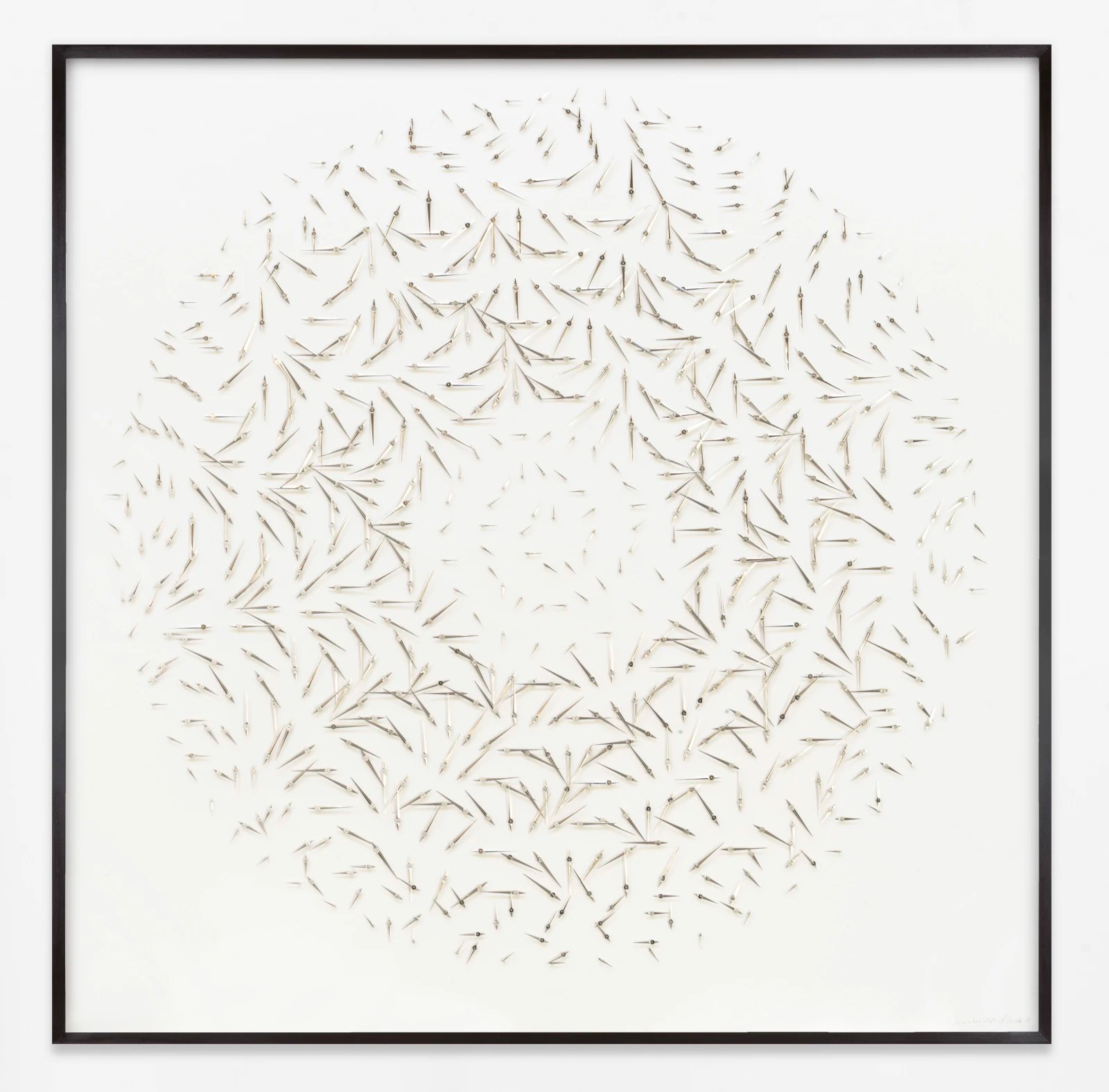
Kwade, Alicja_Causal Emergence
Alicja Kwade (Polish, 1979–), Causal Emergence (December 2020), 2019. Watch hands on cardboard, framed, 175 × 175 cm.

“The abiding power of Christian motifs, ideas and styles in a host of modern and contemporary works that superficially look un- or anti-Christian indicates that visual art and Christian tradition have not become complete strangers. This invites analysis and understanding.

“How have Christian artworks and artistic traditions found new articulations, caused new departures, or provoked new subversions in the last 100 to 150 years? What forms of engagement between theology and modern and contemporary art do such developments in the relationship between art and Christianity invite and reward?

“How do viewers (Christian and non-Christian) interact with historical Christian art today, and how do modern sensibilities affect our viewing of earlier Christian artworks and artistic traditions?

“Is contemporary art an alternative to religion or can it sometimes be an ally? How do contemporary art and religion each respond to human experiences of the absurd or the tragic? What do contemporary art and the spaces in which we encounter it, tell us about the histories of both Western Christianity and Western secularisation?”

+++

FUNDRAISER: New Ordinary Time Album: The indie folk trio Ordinary Time is one of my favorite musical groups—I heard them in concert at a church here in Baltimore a few years ago!—so I’m really excited to see that they’re working on their sixth full-length album, their first since 2016. It will be produced by the esteemed Isaac Wardell, founder of Bifrost Arts and the Porter’s Gate. Per usual, it will comprise a mix of original and classic sacred songs, including the new “I Will Trust,” demoed in the second video below. Help fund their production costs through this Indiegogo campaign, which ends June 15. A donation of just $25 will get you an early download of the album.

+++

SONG: “Oh Give Thanks (Psalm 107)” by Wendell Kimbrough: Wendell Kimbrough is among today’s foremost singer-songwriters engaging with the Psalms. His adaptation of Psalm 107 [previously] is one of his most popular songs, ever since the original studio recording released in 2016. Now he’s recorded a live version with a New Orleans jazz band! It is available on most streaming and purchase platforms.

The music video was shot in February at a bar in Daphne, Alabama, with some eighty of Kimbrough’s friends and supporters, and it premiered May 13. It was his way of saying farewell to his Church of the Apostles community in Fairhope, Alabama, where he served as worship leader and artist-in-residence for eight years. He left this spring to take a new job as uptown artist-in-residence at Church of the Incarnation in Dallas.

“From the time I wrote ‘Oh Give Thanks,’ I always pictured it as a bar tune, specifically set in New Orleans,” Kimbrough says. “The image Psalm 107 conjures for me is a group of friends sitting together swapping stories of God’s deliverance and raising their glasses to celebrate his goodness.” He has noted that some people are uneasy about singing the line “We cried like drunken sailors” in church, but he points out that it’s there in the Old Testament psalm! (Recounting how God rescued a group of men from a storm at sea, the psalmist says that as the waves rose, “they reeled and staggered like drunkards / and were at their wits’ end. Then they cried to the Lord in their trouble, / and he brought them out from their distress,” vv. 27–28).

To learn how to play the song on guitar, see Kimbrough’s video tutorial. You may also want to check out the songs of thanksgiving I compiled on Spotify.

+++

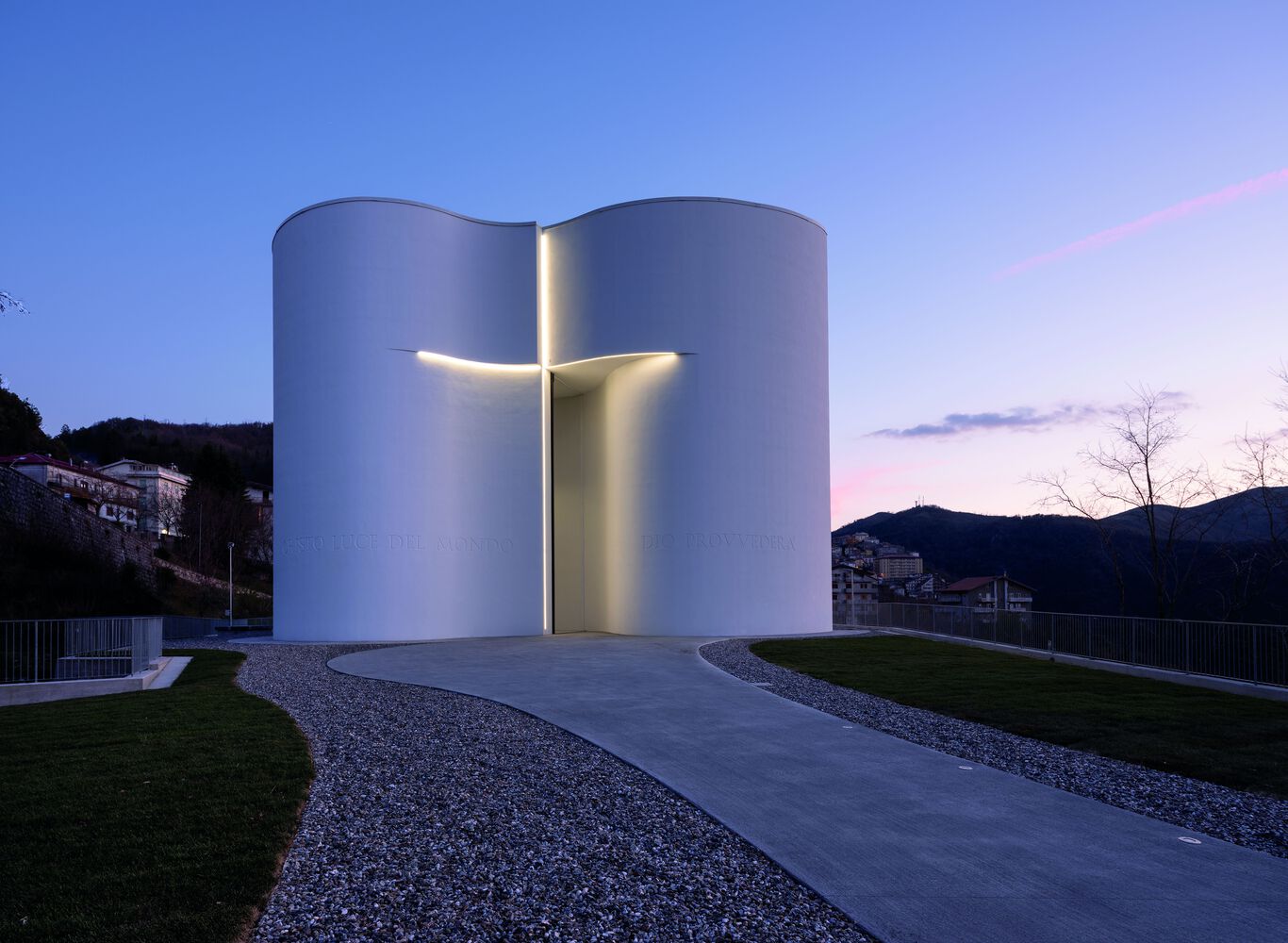
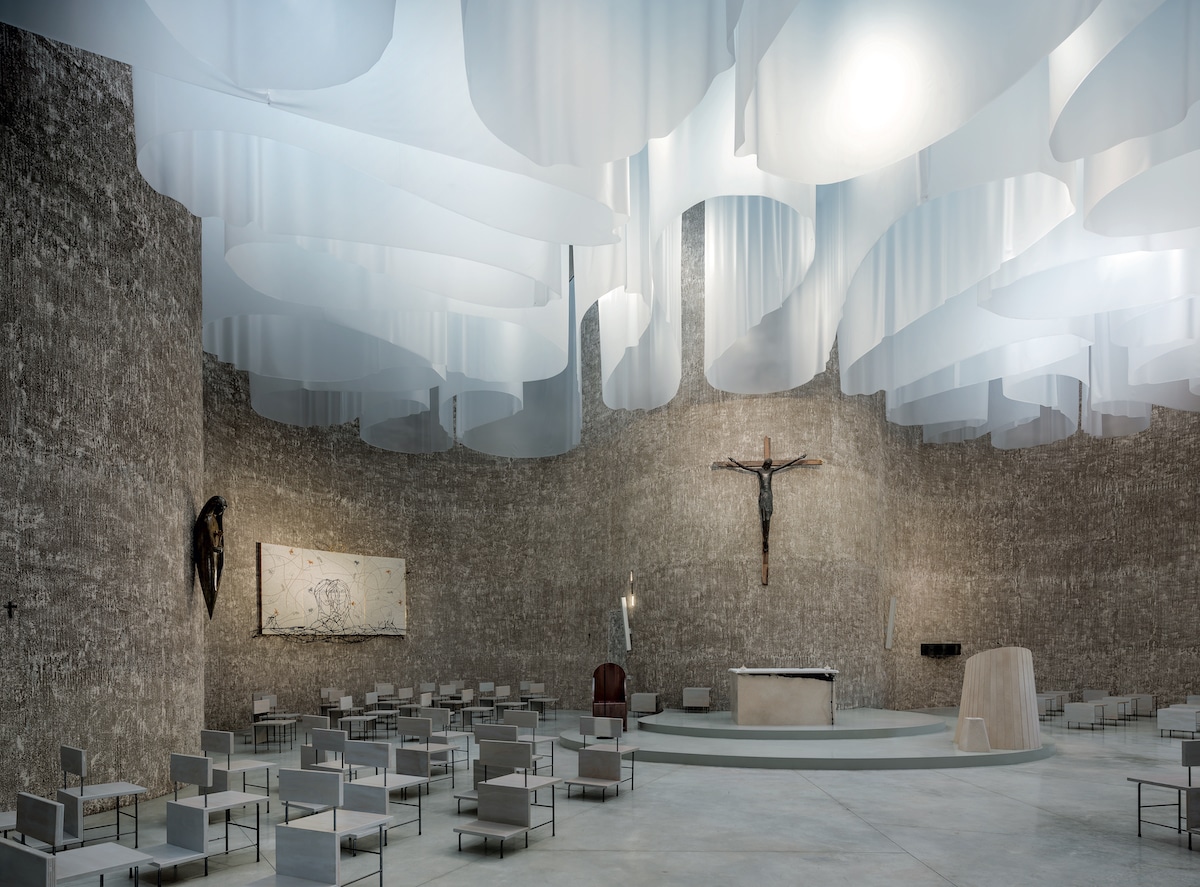
CHURCH ARCHITECTURE: Santa Maria Goretti Church, Mormanno, Italy: In 2013 architect Mario Cucinella won a competition held by Italy’s assembly of Catholic bishops to create the new parish church of Santa Maria Goretti in the hilltop town of Mormanno in Calabria. Because a third of the funds had to be raised locally, the project wasn’t completed until last year. Cucinella says that gave him time to win over its most important constituency: the elderly women who go to Mass every day, and who at first “were suspicious of its modernism.” [HT: My Modern Met]

Cucinella designed an elegantly minimalist concrete building with sinuous surfaces that form the shape of a four-leaf clover, a reinterpretation, Cucinella says, of the shape of Baroque churches. The enclosure has only a few openings. “On its north side, two walls part to create an entrance—while also contributing edges to a cross cut into the curves and lit by LEDs at night. On its south side, a small window is positioned to focus afternoon sunlight on a crucifix on July 6,” Maria Goretti’s birthday.

Santa Maria Goretti Church
Santa Maria Goretti Church, Mormanno, Italy, designed by Mario Cucinella Architects, completed 2021. Photo: Duccio Malagamba.

Photo: Duccio Malagamba

Maraniello, Giuseppe_Baptismal font
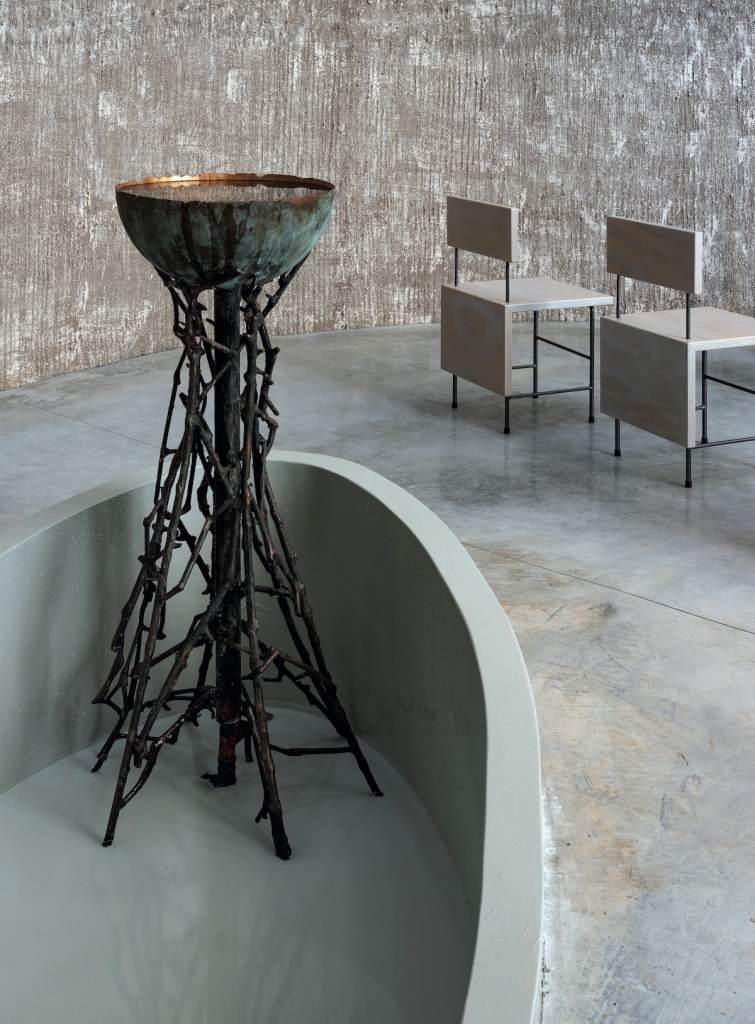
Baptismal font by Giuseppe Maraniello. Photo: Duccio Malagamba.

Inside, the walls are hand-finished in plaster mixed with hemp fibers and lime, which give them a mottled, earth-toned look. The most dominant feature of the interior is the twelve-foot-deep scrim that falls from the ceiling in swirls, filtering in sunlight. Artist Giuseppe Maraniello (b. 1945) was commissioned to create the lectern, tabernacle, baptismal font, and figure of the Virgin Mary, while the simple steel and wood seating is by Mario Cucinella Design. Click on any of the three photos above to view more.

The church’s namesake, one of the youngest saints to be canonized, was stabbed to death in 1902 at age eleven while resisting a rape. She is the patron saint of purity, young women, and victims of sexual assault.

Easter, Day 7

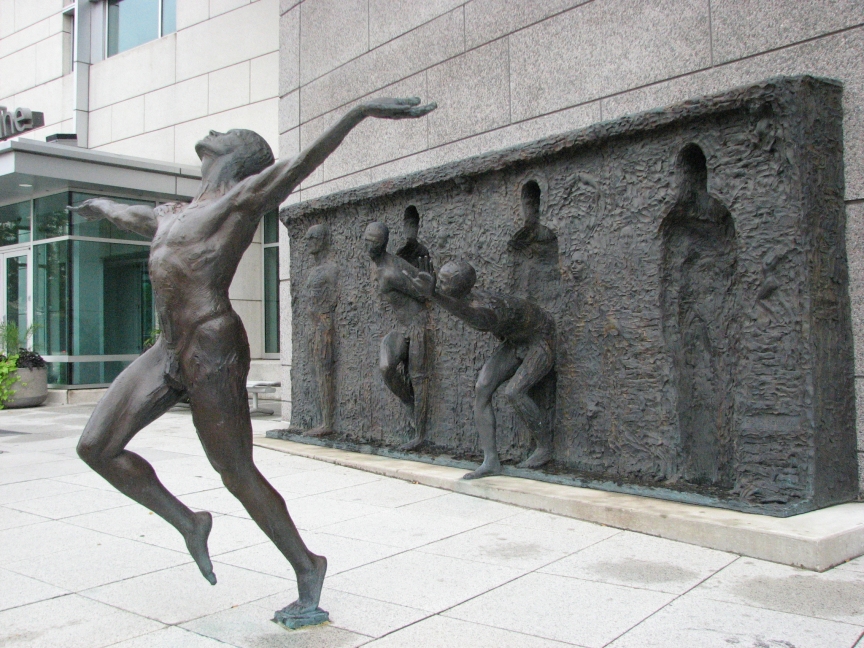
LOOK: Freedom by Zenos Frudakis

Frudakis, Zenos_Freedom
Zenos Frudakis (American, 1951–), Freedom, 2001. Bronze, 8 × 20 ft. 16th and Vine Streets, Philadelphia.

LISTEN: “We Will Rise Again” by Ben Keyes, on Were You There? Are You Here? (2007)

Hallelujah, we will rise again
Angels rolled the stone away
The Lord has raised his Son
Victory is won
He’s gonna call us from the grave

I want to walk in your kingdom
(Give me back my feet!)
I want to walk in your kingdom
(Roll that stone away from me!)
I want to clap my hands in glory
(Give me back my hands!)
I want to clap my hands in glory
(Roll that stone away from me!)

Refrain

I want to walk in your kingdom
(Give me back my feet!)
I want to walk in your kingdom
(Roll that stone away from me!)
I want to stomp my feet in glory
(Give me back my feet!)
I want to stomp my feet in glory
(Roll that stone away from me!)

Refrain

I want to sing in your kingdom
(Give me back my throat!)
I want to sing in your kingdom
(Roll that stone away from me!)
I want to shout in glory
(Give me back my throat!)
I want to shout out in glory
(Roll that stone away from me!)

Refrain ×2

This gospel song by Ben Keyes is sung from the perspective of the faithful departed—those siblings in Christ who have passed on but who are awaiting their own bodily resurrection on the last day. Although in this world our bodies decay and we return to dust, one day we will be reconstituted and raised, and we will join with saints from all over the globe in praise of Christ our Savior in the new heavens and the new earth. In Keyes’s song, the deceased anticipate that joyful reuniting of body and soul, and the eternal ingathering of the universal church. They appeal to God to give them back their vocal cords so that they can sing and shout; their feet, so they can move about and dance; their hands, so they can clap and serve.

Ben Keyes is the codirector, with his wife Nickaela Fiore-Keyes, of the Southborough L’Abri branch in Massachusetts. Founded by Edith and Francis Schaeffer, L’Abri (French for “shelter”) is an international network of communities that integrate study and discussion about God and life with practical community work. These “shelters” house both short-term guests and long-term residents. They are not a retreat, a commune, or a seminary, but they incorporate elements of all three.

Keyes grew up at the Southborough L’Abri and from an early age has loved to play music. When he was in high school his family joined an African American church and he became involved in the music ministry, learning how to play gospel piano and bass guitar. He went on to study ethnomusicology at Brown University, exploring the beauties of old-time music, bluegrass, blues, gospel, and traditional Irish music.

From 2005 to 2007 Keyes studied theology and the arts at Regent College in Vancouver, where he earned a master’s degree. He directed a large gospel choir as part of his final thesis project—which you can get a taste of from his excellent album Were You There? Are You Here?, whose finale is “We Will Rise Again.” All the songs are by Keyes, and the choir is made up of grad students from Regent and the University of British Columbia.

At Regent Keyes met Peter La Grand and Jill McFadden, fellow classmates, and the three of them formed Ordinary Time, a folk acoustic trio rooted in the Christian tradition. They sing both original songs and arrangements of old hymns and have five full-length albums to date—with another coming out in 2023! Here they are singing Keyes’s “We Will Rise Again” from their remote locations (Southborough, Vancouver, Baltimore) in 2020, using the Acapella app:  

+++

On a related note: In 2019 I wrote a set of commentaries on the general resurrection for the Visual Commentary on Scripture, using an ancient sarcophagus, a medieval manuscript illumination, and a modern painting to dialogue with 1 Corinthians 15:35–58. I shared some of the shortlisted images here.

How Gentle (Artful Devotion)

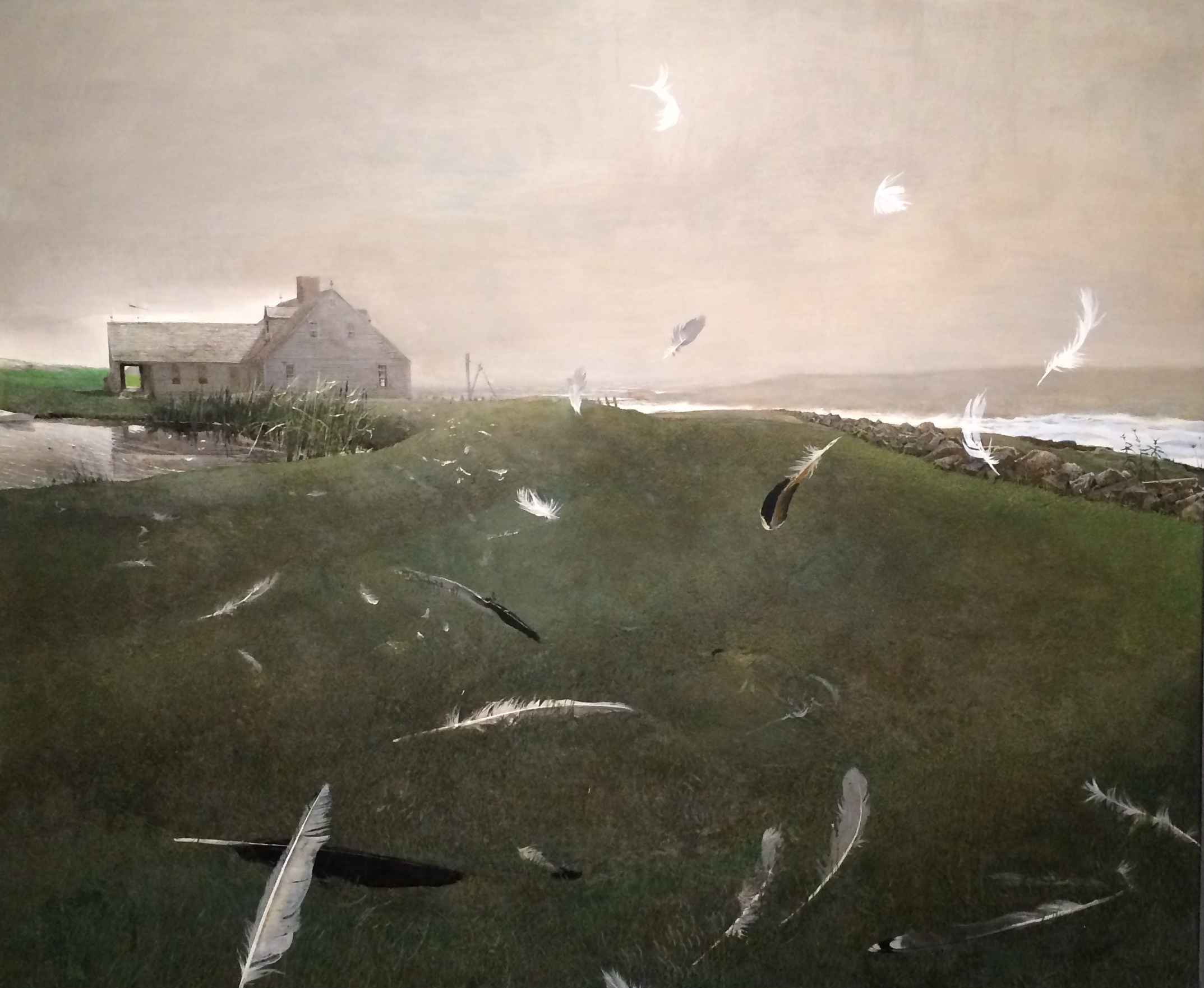
Airborne by Andrew Wyeth
Andrew Wyeth (American, 1917–2009), Airborne, 1996. Tempera on hardboard panel. Crystal Bridges Museum of American Art, Bentonville, Arkansas.

For this is the love of God, that we keep his commandments. And his commandments are not burdensome. For everyone who has been born of God overcomes the world.

—1 John 5:3–4a

+++

SONG: “How Gentle God’s Commands” | Words by Philip Doddridge (1702–1751) | Music by Hans Georg Nägeli (1773–1836) | Performed by Ordinary Time, on At the Table (2009)


How gentle God’s commands!
How kind his precepts are!
Come, cast your burdens on the Lord
And trust his constant care.

Beneath his watchful eye,
His saints securely dwell;
That hand which bears all nature up
Shall guard his children well.

Why should this anxious load
Press down your weary mind?
Haste to your heav’nly Father’s throne
And sweet refreshment find.

His goodness stands approved,
Unchanged from day to day;
I’ll drop my burden at his feet
And bear a song away.

+++

I cannot see, my God, a reason why
From morn to night I go not gladsome, free;
For, if thou art what my soul thinketh thee,
There is no burden but should lightly lie,
No duty but a joy at heart must be:
Love’s perfect will can be nor sore nor small,
For God is light—in him no darkness is at all.

—George MacDonald, from A Book of Strife in the Form of the Diary of an Old Soul (1880)


This post belongs to the weekly series Artful Devotion. If you can’t view the music player in your email or RSS reader, try opening the post in your browser.

To view all the Revised Common Lectionary scripture readings for the Sixth Sunday of Easter, cycle B, click here.

Songs about the Flight to Egypt

On the heels of Jesus’s birth came his frantic flight, with parents Mary and Joseph, from the sword of an egomaniacal politician who swore death to all the male children of Bethlehem under the age of two. To secure his own power and advantage, Herod had to squash all potential threats.

Thus the birthday festivities were cut short as the Holy Family packed up what little they had and hit the road running, seeking asylum in another country.

Flight to Egypt by Jean-Francois Millet
Jean-François Millet (French, 1814–1875), The Flight into Egypt, ca. 1864. Conté crayon, pen, ink, and pastel over gray washes on paper, 31.1 × 39.4 cm. Art Institute of Chicago.

Many families are still making this difficult journey today: fleeing home in order to escape persecution and/or death.

Even though the Flight to Egypt is a part of the Christmas story, it’s often omitted from present-day nativity pageants and carol services because we prefer to bask in that which is quaint and cozy and cute and joyful, and we want that happy ending. We don’t want the darkness to rain on all the Christmas light. This is a real shame. By leaving out this event from our retellings of Jesus’s birth narrative, not only do we do a disservice to his memory, we neglect an opportunity to see Christ in our refugee neighbors.

(Related post: “Maria von Trapp, plus seven artists, on Jesus the refugee”)

To help remedy this omission, I’ve compiled a list of songs based on the Flight to Egypt so that churches can consider using them (or be inspired to write their own!) as part of their Christmas observances. I’ve purposely excluded “The Cherry-Tree Carol,” a centuries-old ballad derived from an apocryphal story about the Flight to Egypt from the Gospel of Pseudo-Matthew (chapter 20); I did so not only because the anonymous lyricist reset the episode during the Journey to Bethlehem, when Jesus was still in the womb, but because, though charming, there’s nothing historic, spiritually valuable, or socially conscious about it, and it perpetuates a popular stereotype of Joseph as stubborn and unkind that I believe scripture itself does not bear.

Also excluded are the several carols about the Massacre of the Innocents—the episode that prompted the Flight to Egypt. The two episodes are obviously related, but I want to focus here on the Flight.

CONGREGATIONAL HYMNS

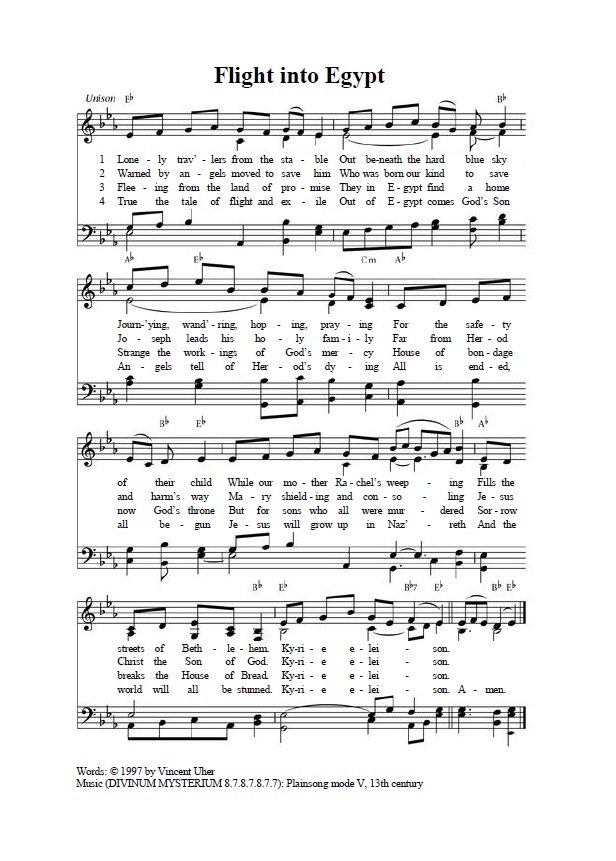
I could find only one song on the topic that was written with congregational singing in mind, and that is “Flight into Egypt” by the Rev. Vincent William Uher III (1963–). It’s made up of four verses and the refrain “Kyrie eleison” (Lord, have mercy), a common prayer in Christian liturgies. Because the hymn uses a plainchant tune, it has an irregular meter and may therefore be a little tricky for congregations to pick up right away. But the words are so beautifully crafted and set, and Rev. Uher gives his permission for noncommercial use, as long as credit is given. I put together a printable hymn sheet, reproduced below the lyrics. (Click on the image to open up the sheet as a PDF in a new tab.)

“Flight into Egypt” (1997) – Words: Vincent Uher | Music: Plainchant mode V, 13th century

Lonely travelers from the stable
Out beneath the hard blue sky
Journeying, wandering, hoping, praying
For the safety of their child
While our mother Rachel’s weeping
Fills the streets of Bethlehem.
Kyrie eleison.

Warned by angels moved to save him
Who was born our kind to save
Joseph leads his holy family
Far from Herod and harm’s way
Mary shielding and consoling
Jesus Christ the Son of God.
Kyrie eleison.

Fleeing from the land of promise
They in Egypt find a home
Strange the workings of God’s mercy
House of bondage now God’s throne
But for sons who all were murdered
Sorrow breaks the House of Bread.
Kyrie eleison.

True the tale of flight and exile
Out of Egypt comes God’s Son
Angels tell of Herod’s dying
All is ended, all begun
Jesus will grow up in Nazareth
And the world will all be stunned.
Kyrie eleison.

flight-into-egypt-by-vincent-uher

Because of the scarcity of carols referencing the Flight to Egypt, I took to writing some verses of my own, using already-popular hymn tunes. Each of these verses is intended not as an additional stanza to the carol whose tune it shares (that would render the narrative structure incoherent) but as a standalone reprise of sorts. I envisioned any one of them being sung as part of a Christmas Eve service following the reading, as part of the total Christmas story, of Matthew 2:13–14.   Continue reading “Songs about the Flight to Egypt”