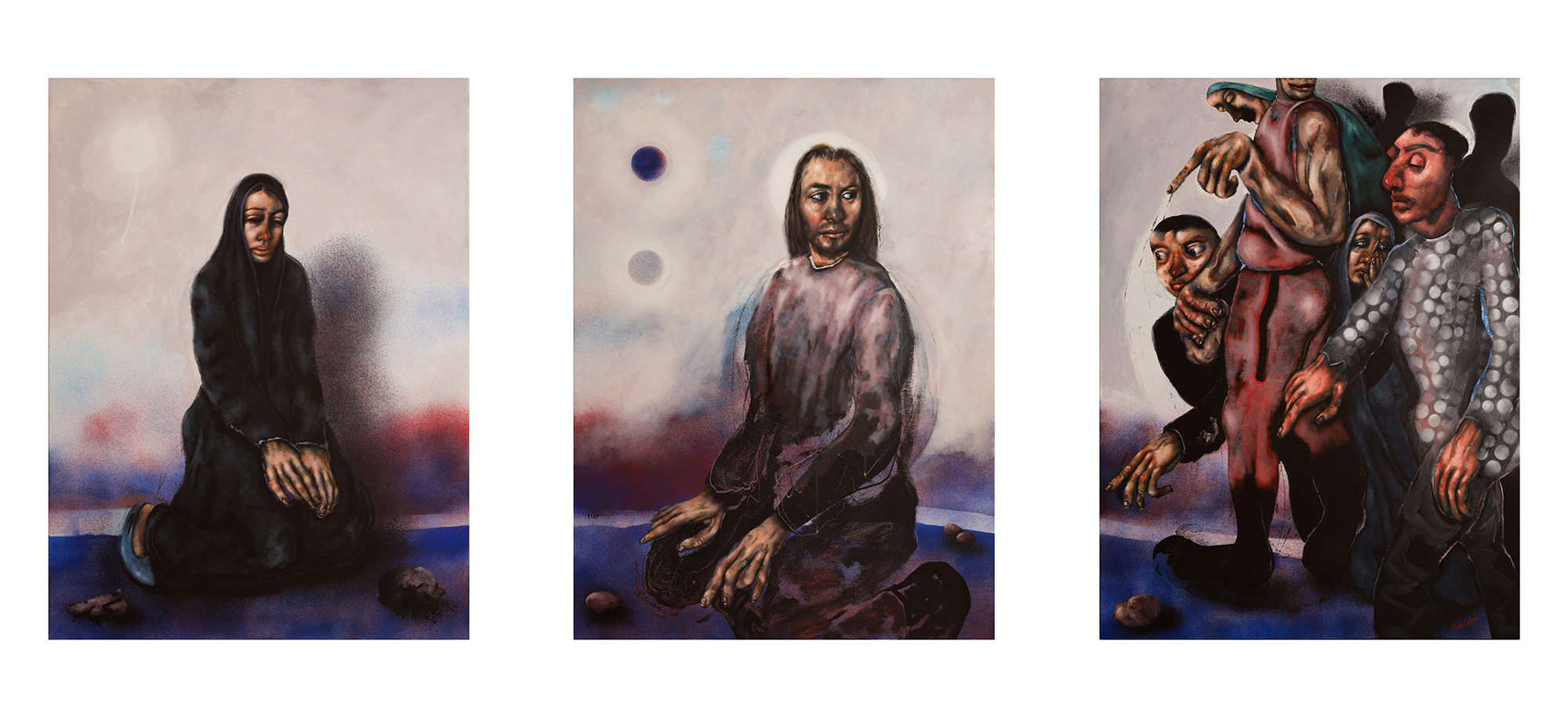
Chris Gollon (British, 1953–2017), Jesus and the Woman Taken in Adultery (Jesus Draws in the Dust) (triptych), 2015. Acrylic on canvas, each panel 48 × 36 in. (122 × 91 cm).
Jesus of Nazareth was not a powerless man. . . . Jesus knew exactly what he was doing, and he just used a different kind of power. When, in John’s Gospel [8:1–11], I read about a woman being stoned, I see Jesus using power. He bent down and scribbled in the ground, writing words that we do not know. He did that, knowing—I am guessing—that many of those who were about to throw stones couldn’t read the words even if they could have strained their necks to see them. He used his privilege to deflect attention, and in so doing he undid the story that held the slew of stoners together. This was not powerlessness. It was power and it is deep in us.
The woman was about to be stoned because of the addictions of the stoners. They were addicted to a violent kind of belonging, a kind of community that forges its borders through selective exclusion. She was about to be stoned with their bone-breaking morals that would prefer to kill a woman rather than examine their own complicity. We all need to be rescued from this kind of power—from both its appeal and its effect. An undoing of this power is seen when power is used for love. Power, used well, should be empowering, contagious, and protective. It should be self-critical, curious, and brave. It should know its own limits and be prepared to risk its own reputation. This kind of power asks questions to which it does not know the answers and listens because in listening is learning, and in learning is life.
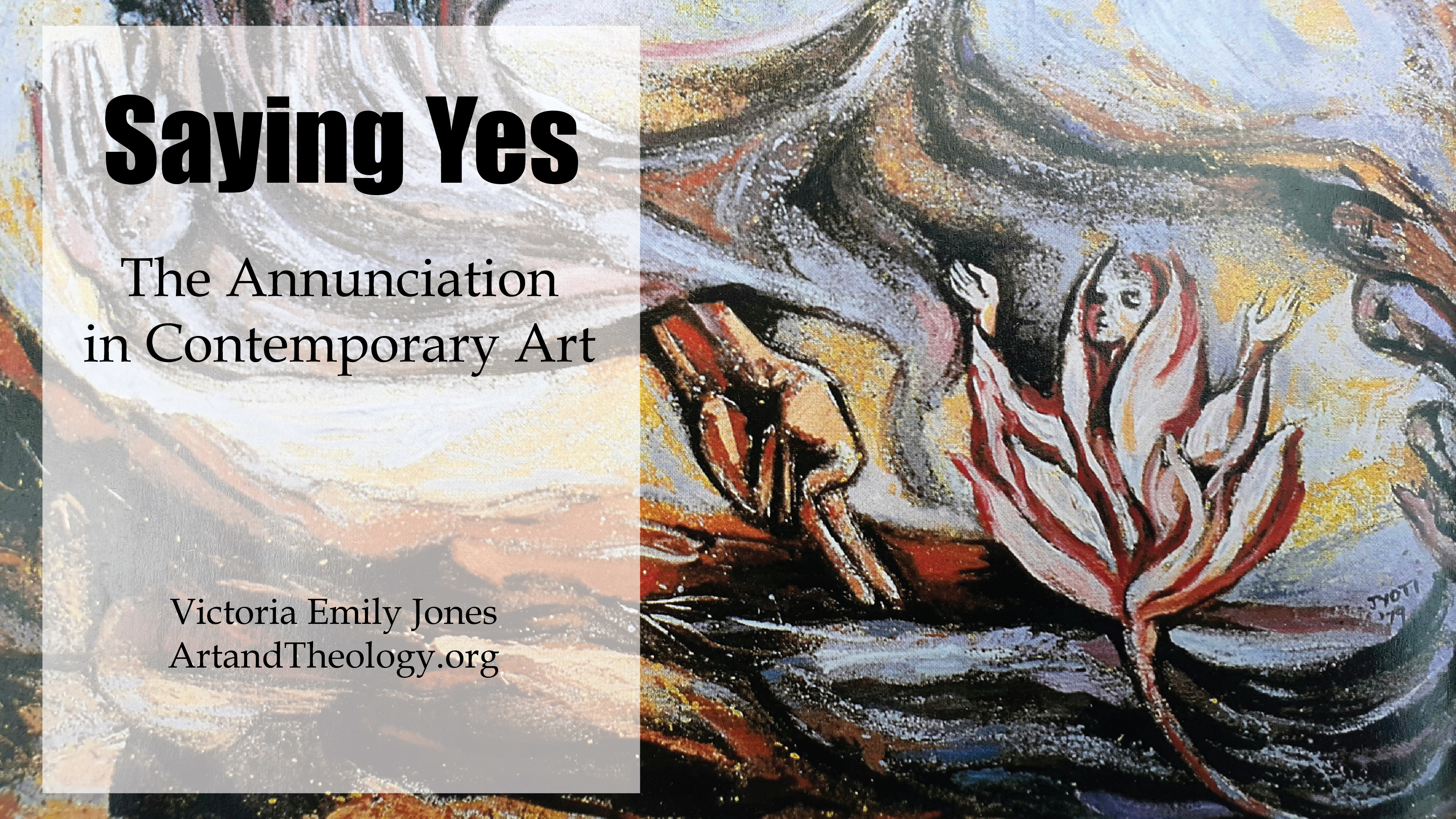
This year’s The Breath and the Clay creative arts gathering, on the theme of “Reenchantment,” is taking place March 17–21, with both in-person (in Winston-Salem, North Carolina) and virtual options. Registration for virtual attendees is pay-what-you-wish. Presenters include theologian Jeremy Begbie, poet Pádraig Ó Tuama, singer-songwriter Joy Ike, contemplative author Christine Valters Paintner, dancer Camille D.C. Sutton, and many more . . . including me! On the evening of March 18 I’ll be giving a twenty-minute talk titled “Saying Yes: The Annunciation in Contemporary Art,” which will be archived online afterward. (The global church celebrates the feast of the Annunciation the following week, on March 25.) (Update: Watch here.) Here’s the description:
The story of Jesus’s miraculous conception in the womb of Mary, a first-century Galilean peasant girl, told in Luke 1 has activated the imaginations of artists since the early Christian era. When an angelic messenger came and told Mary she had been chosen to bear God’s Son, she cycled through a range of emotions before ultimately accepting the call, stepping onto a path that, though scary, would be life-giving not only for her but also for her religious and ethnic community and for the whole world.
God invites us to participate in his work in the world and gives us the grace to do it. When his voice breaks through our safe, predictable routines, calling us to something big, do we respond with brave obedience? In this talk Victoria Emily Jones will share a handful of contemporary artworks that visualize that pivotal moment in salvation history when Mary said yes and set in motion the incarnation. These works show us the wild beauty of God’s plans and can help us tune our ears to the annunciations in our own lives.
(The title slide image is a detail of an Annunciation painting by Jyoti Sahi.)
I’m always impressed by the variety of artists, arts professionals, and art lovers that director Stephen Roach manages to bring together for The Breath and the Clay. Click here to learn more and to register.
+++
ONLINE LENT SERIES:
>> VCS Lent 2021: The Visual Commentary on Scripture is highlighting a different exhibition from its archives for each week of Lent, with new content including a video introduction to the week by Ben Quash and an audio reading of each of the three constituent commentaries.
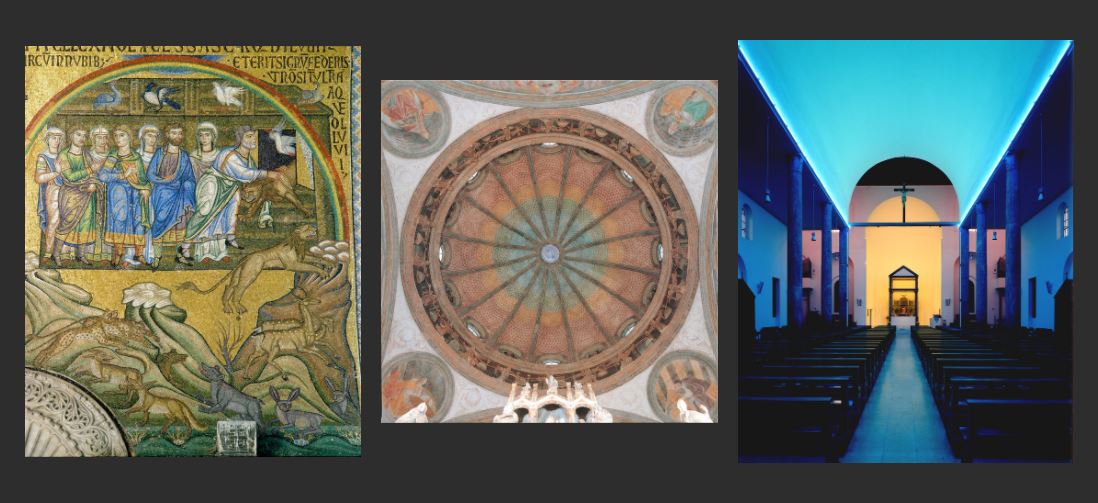
The first week was on the theme of Covenant and covers Genesis 8:20–9:17. Stefania Gerevini curated three artworks from Italy that convey some aspect of the rainbow as divine promise: a thirteenth-century mosaic from the Basilica di San Marco in Venice, a colorful dome fresco (fifteenth century) from the Cappella Portinari in Milan, and a contemporary light installation by Dan Flavin at Santa Maria Annunciata in Chiesa Rossa, also in Milan.
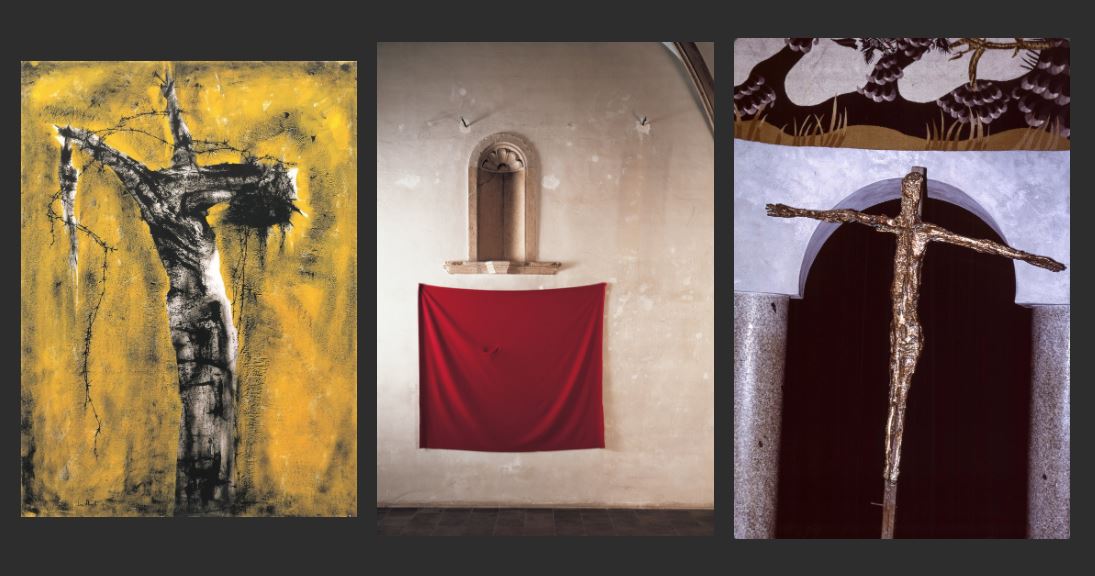
Week 2, on Prophecy, explores the Suffering Servant of Isaiah 53. Jonathan Koestlé-Cate comments on three modern artworks: Crucified Tree Form by Theyre Lee-Elliott, a crucifix by Germaine Richier (which sparked outrage when it was unveiled at Notre-Dame de Toute Grâce, Assy, in 1950), and an installation by postminimalist artist Anish Kapoor at the church of Saint Peter, Cologne.
>> “The Many Faces of Jesus”: I’ve been enjoying this Lenten series (on blog andpodcast) by medievalist Dr. Grace Hamman, who makes medieval lit super accessible.“For Lent, Old Books With Grace will share and explore some medieval representations of Jesus in art and literature—the versions of Jesus that dominate the medieval church’s imagination. These medieval portrayals of Jesus may strike us as odd, threatening, charming, creative, stupid, or inspiring. In attending to these versions of Jesus, I hope for a few end goals: the first is that we may expand our Christian imagination. Perhaps a side of Jesus that has never occurred to you, or been sideswept by our contemporary culture, will suddenly illuminate an aspect of the Jesus of scripture. The second is that we may better identify the ways that we ourselves have culturally contained and portrayed Jesus, in positive and negative ways. Often the strangeness of the past helps us recognize the weird or damaging things we believe in order to make Jesus more palatable, understandable, or like us.”
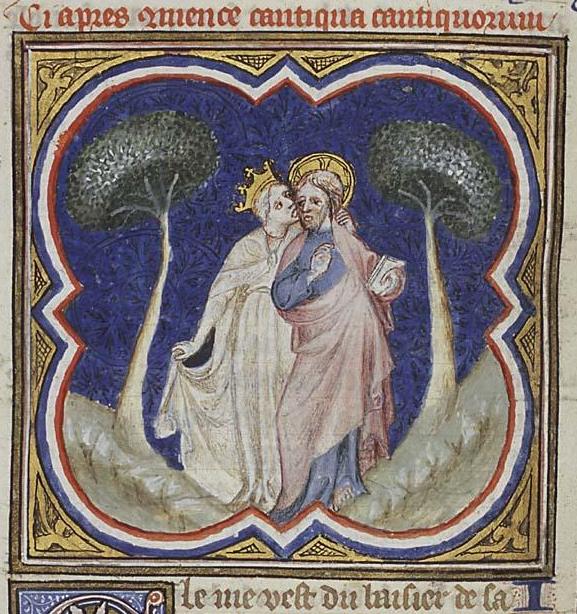
Jean Bondol, “The bride (Ecclesia) and bridegroom (Christ),” from a Bible Historiale made in Paris, 1371–72. The Hague, MMW, 10 B 23, fol. 330v.
>> “Up from My Youth (Psalm 129)” by Advent Birmingham, feat. CashBack and Terence June Gray: This is such a strange and compelling fusion! “An 1806 hymn by Isaac Watts meets hip-hop meets Johnny Cash meets folk meets New Orleans jazz meets industrial steel factory.”
Led by Zac Hicks, Advent Birmingham [previously] is a group of worship musicians from the Cathedral Church of the Advent in downtown Birmingham, Alabama. Hicks wrote this new tune for Isaac Watts’s metrical paraphrase of Psalm 129 and integrated a rap by guest artist Terence June Gray from Memphis. Singing lead (and playing drums) is Leif Bondarenko, the front man of the Johnny Cash tribute band CashBack. The video was filmed at Birmingham’s historic Sloss Furnaces. Available on iTunes, Amazon, and Spotify.
You can read the lyrics here, which include a slight revision of Watts’s verse 6.
POETRY READING:“Phase One” by Dilruba Ahmed, read, with commentary, by Pádraig Ó Tuama, Poetry Unbound: “What do you find hard to forgive in yourself? What might help? In this poem, the poet makes a list of all the things she holds against herself: opening fridge doors, fantasies, wilted seedlings, unkempt plants, lost bags, feeling awkward, treating someone poorly. Dilruba Ahmed repeats the line ‘I forgive you’ over and over, like a litany, in a hope to deepen what it means to be in the world, and be a person of love.”

 Art & Theology