Open-Access Image Archive of Middle Eastern Art, Architecture, and Archaeology

Based at the Faculty of Classics at the University of Oxford, the Manar al-Athar (“Guide to Archaeology”) digital archive provides high-resolution photographs of archaeological sites, buildings, and art from the Levant, North Africa, the Caucasus, and the Balkans, covering the time of Alexander the Great (ca. 300 BCE) through the Byzantine and early Islamic periods, with special emphasis on late antiquity. All the images are freely downloadable, made available for teaching, research, and academic publication under a Creative Commons Attribution-NonCommercial-ShareAlike 2.0 UK (CC BY-NC-SA 2.0) license.

Manar al-Athar was established in 2012 by Dr. Judith McKenzie (1957–2019) and since 2020 has been directed by Dr. Ine Jacobs. It is in continuous development. The photos are cataloged by geographical region and are labeled in both English and Arabic. They picture a range of historical structures—some intact, others in ruins; both interiors and exteriors, where applicable—including mausoleums, churches, mosques, khanqahs (Sufi lodges), hammams (public bathhouses), palace complexes, madrasas (colleges for Islamic instruction), forums, fountains, cisterns, aqueducts, civic buildings, theaters, markets, fortifications, and hostels.

Of primary interest to me is the Christian art from churches and tombs, from countries such as Egypt, Syria, Turkey, Armenia, Georgia, and Serbia, and Jewish art that pictures stories from the Hebrew Bible.

Unfortunately, the subjects of the artworks aren’t labeled and there’s no commentary or transcription/translation of inscriptions, nor are the buildings or artworks dated. Inevitably, many of the frescoes and mosaics have degraded with age, sometimes making the iconography difficult to read. There’s also no way to filter by religion; Christianity accounts for only a portion of the images, with others coming from Jewish, Islamic, or pagan traditions, and a number are from nonreligious contexts. I’d love to see a more robust tagging system and advanced searchability functions as the archive continues to evolve.

The archive is by no means comprehensive, but I hope it will encourage further scholarship and attract more digital image donations.

Below is a sampling of the hundreds of images you can find on the Manar al-Athar website.


One of the earliest surviving and best-preserved Christian cemeteries in the world, used by Christians from the third to eighth centuries, is Bagawat Necropolis in the Kharga Oasis in Egypt’s Western Desert. The Chapel of Peace is one of 263 mud-brick funerary chapels in the cemetery, celebrated for the painting of biblical, early Christian, and allegorical figures inside its dome.
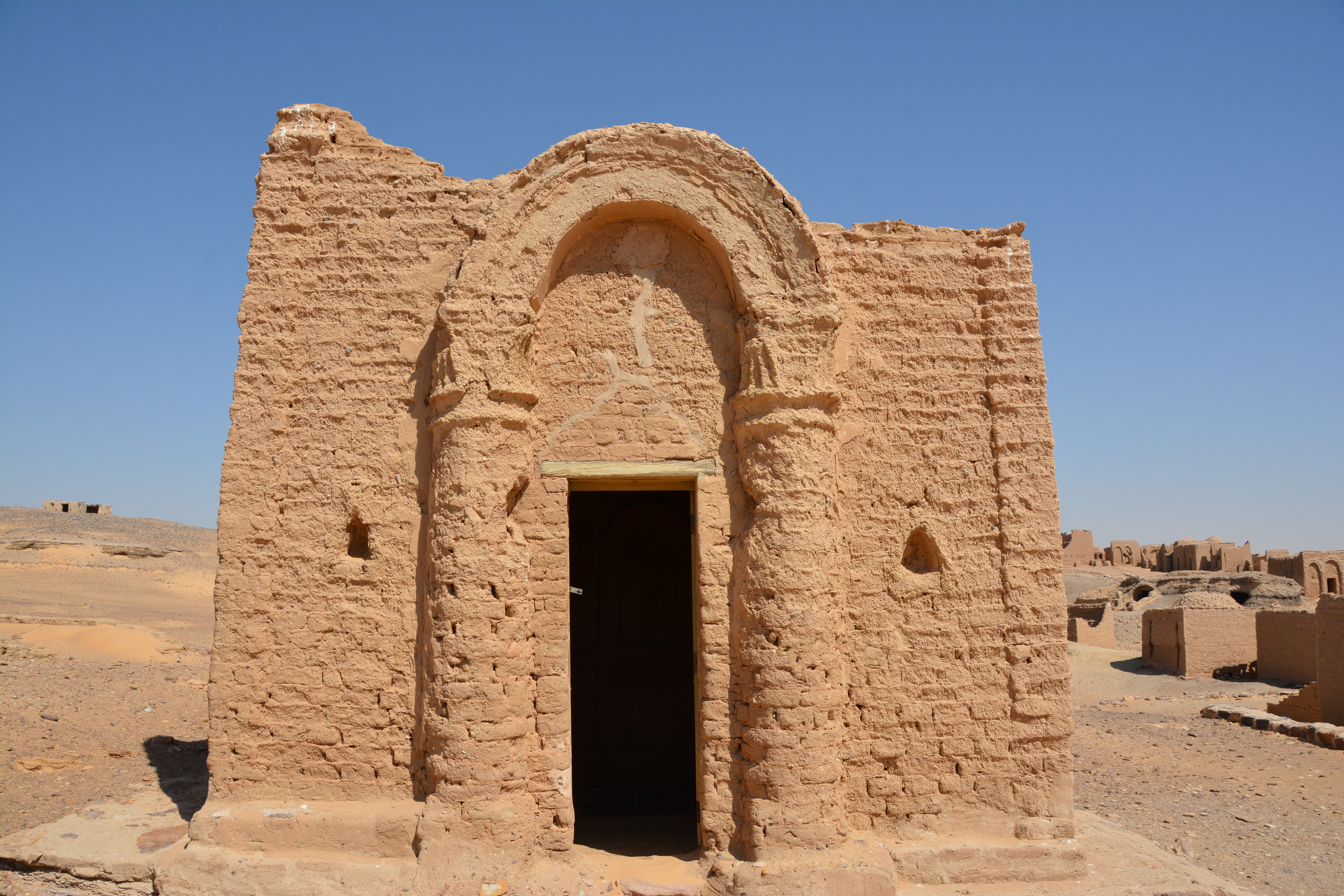
Chapel of Peace (Bagawat, Egypt)
The Chapel of Peace, a monumental Christian tomb at Bagawat Necropolis, Kharga Oasis, Egypt, built 5th or 6th century. Photo: Mohamed Kenawi / Manar al-Athar.

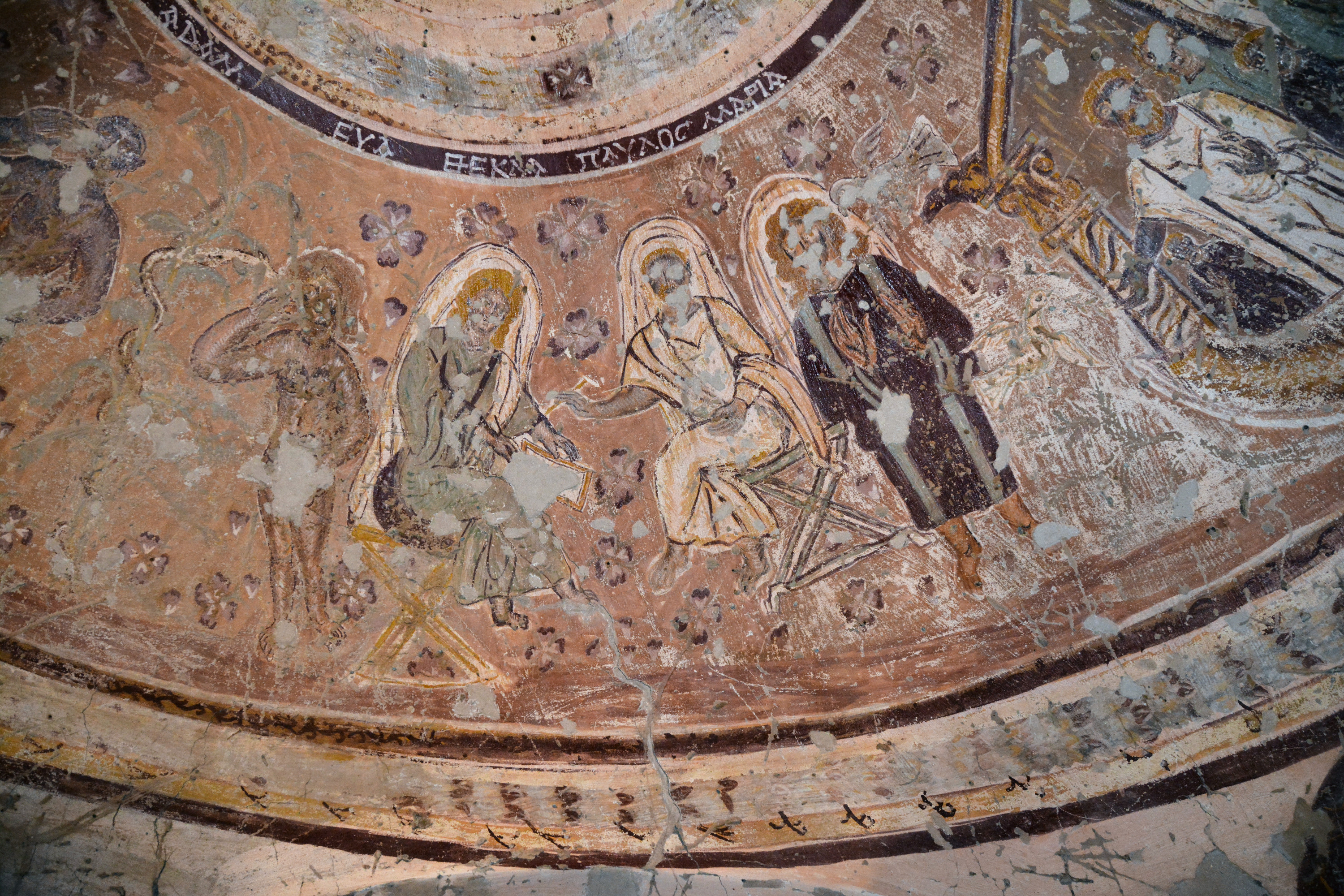
Paul and Thecla (Chapel of Peace)
Dome fresco detail from the Chapel of Peace at Bagawat Necropolis in Kharga Oasis, Egypt, 5th or 6th century. Photo: Mohamed Kenawi / Manar al-Athar.

The detail pictured above shows the female saint Thecla (Θέκλα), a first-century Christian preacher and martyr, learning from the apostle Paul (Παῦλος), as described in the ancient apocryphal Acts of Paul and Thecla. They both sit on stools, Thecla holding open a book on her lap, pen in hand, while Paul points out a particular text.

In addition to Paul and Thecla, the dome fresco also depicts, clockwise from that pair: Adam and Eve; Abraham about to sacrifice his son Isaac, with Sarah stretching out her hand (it’s unclear whether this gesture signifies her surrender to God’s will or an attempt to stop her husband’s act); Peace, holding a scepter and an ankh; Daniel in the Lions’ Den; Justice, holding a cornucopia and balance scales; Prayer; Jacob; Noah’s Ark; and the Virgin Annunciate, the New Eve, who heard the word of God and obeyed it and thus brought forth life, unlike her ancestor, who listened to the lies of the Evil One and brought forth death (the snake and dove at the women’s respective ears emphasize this contrast). View a facsimile of the full dome here.

Also in the Egyptian folder are photos of one of Byzantine Egypt’s most glorious encaustic-painted sanctuaries, that of the Red Monastery Church, a triconch (three-apse) basilica that’s part of the (Coptic Orthodox) Monastery of Apa Bishuy near Sohag.
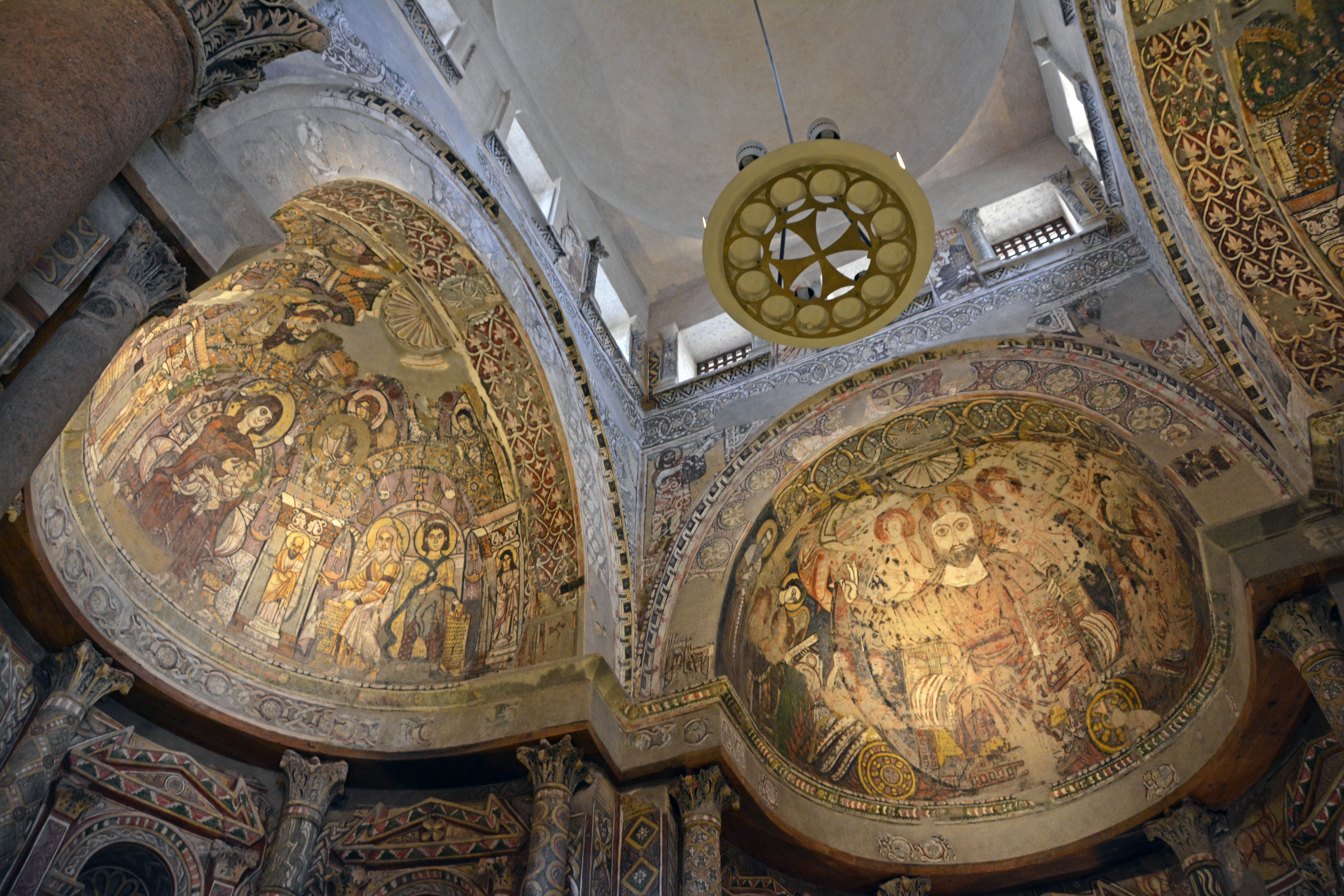
Red Monastery Church
North apse (Virgin Galaktotrophousa, aka the Nursing Madonna) and east apse (Christ Pantocrator), painted 6th–7th or 8th century, Red Monastery Church, near Sohag, Egypt. Photo: Mohamed Kenawi / Manar al-Athar.

Here’s a video that presents a 3D reconstruction and fly-through of the basilica:

Moving northeast into Israel, we come to the sixth-century Bet Alpha (sometimes rendered as Beit Alfa) Synagogue, located in the Beit She’an Valley. The excavation of Jewish sacred sites like this one reveal that, contrary to what is popularly alleged, Judaism is not a strictly aniconic religion. Many Jewish communities have understood the prohibition against graven images in Exodus 20:3–6 and Leviticus 26:1 as a prohibition against idol worship, not figurative art (art that depicts people and animals) in general. Thus several ancient synagogues, not to mention Jewish manuscripts, portray episodes from the biblical narrative, such as the Akedah (Binding [of Isaac]), told in Genesis 22.
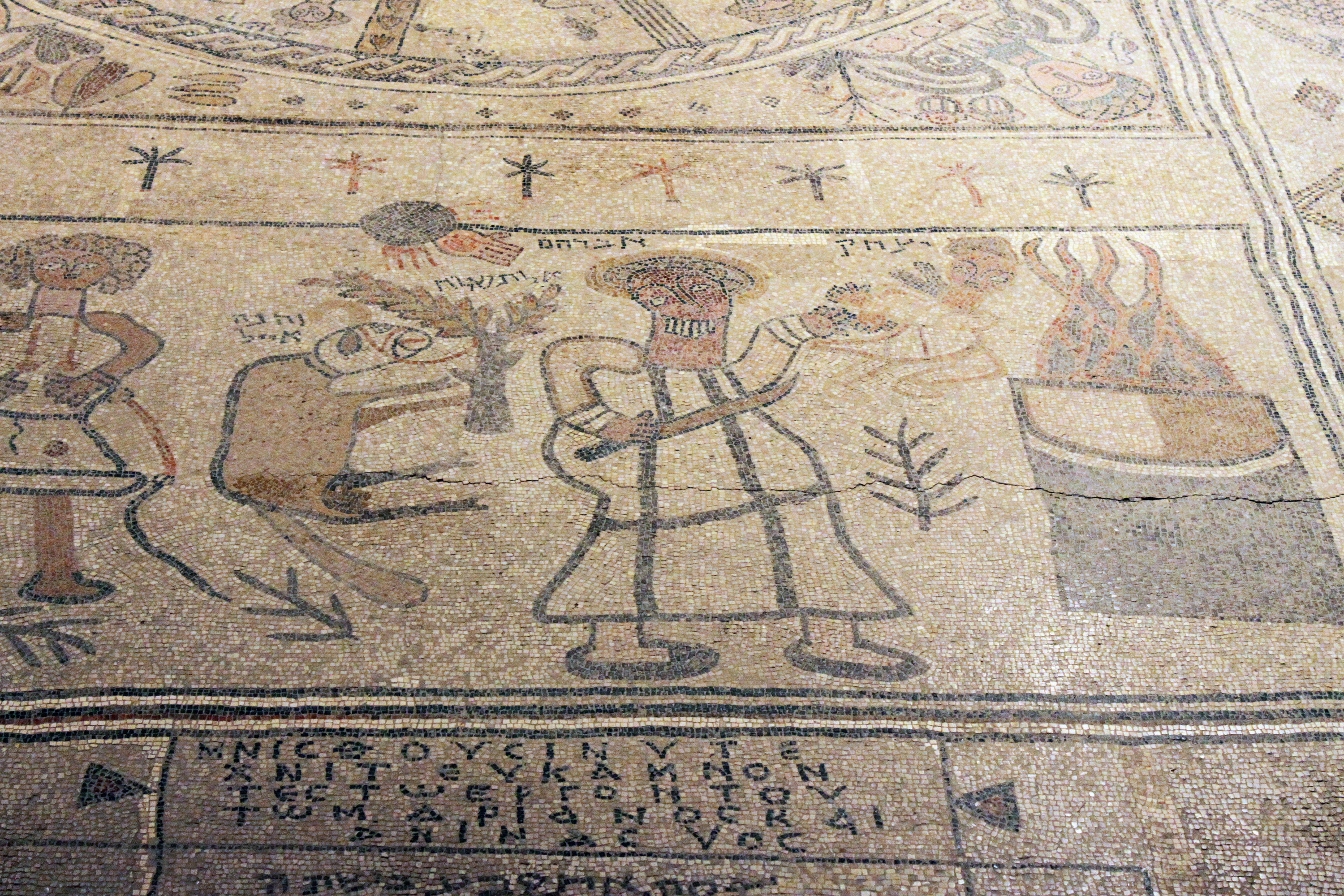
Sacrifice of Isaac (Bet Alpha mosaic)
The Binding of Isaac, early 6th century. Mosaic pavement, Bet Alpha (Beit Alfa) Synagogue, Heftziba, Israel. Photo: Sean Leatherbury / Manar al-Athar.

Rendered in a primitive style, this scene is one of three from the mosaic pavement in the central hall of Bet Alpha. It shows Abraham, sword in hand, about to throw his son Isaac onto a fiery altar, when God, represented by a hand from the sky, intervenes, telling him to stop; it’s then that Abraham notices a ram tangled up in a nearby thicket, which he sacrifices instead. The Hebrew inscriptions read, from right to left, “Yitzhak” (Isaac), “Avraham” (Abraham), “al tishlakh” (Do not lay [your hand on the boy]), and “v’hineh ayil” (Here is a ram). Stylized palm trees line the top of the scene.

Here is video footage of the full floor mosaic in its space, showing wide views as well as details, including of the remarkable zodiac wheel in the center:

Mosaic was a common form of late antique decoration in places of worship. Here are two examples from Syria:
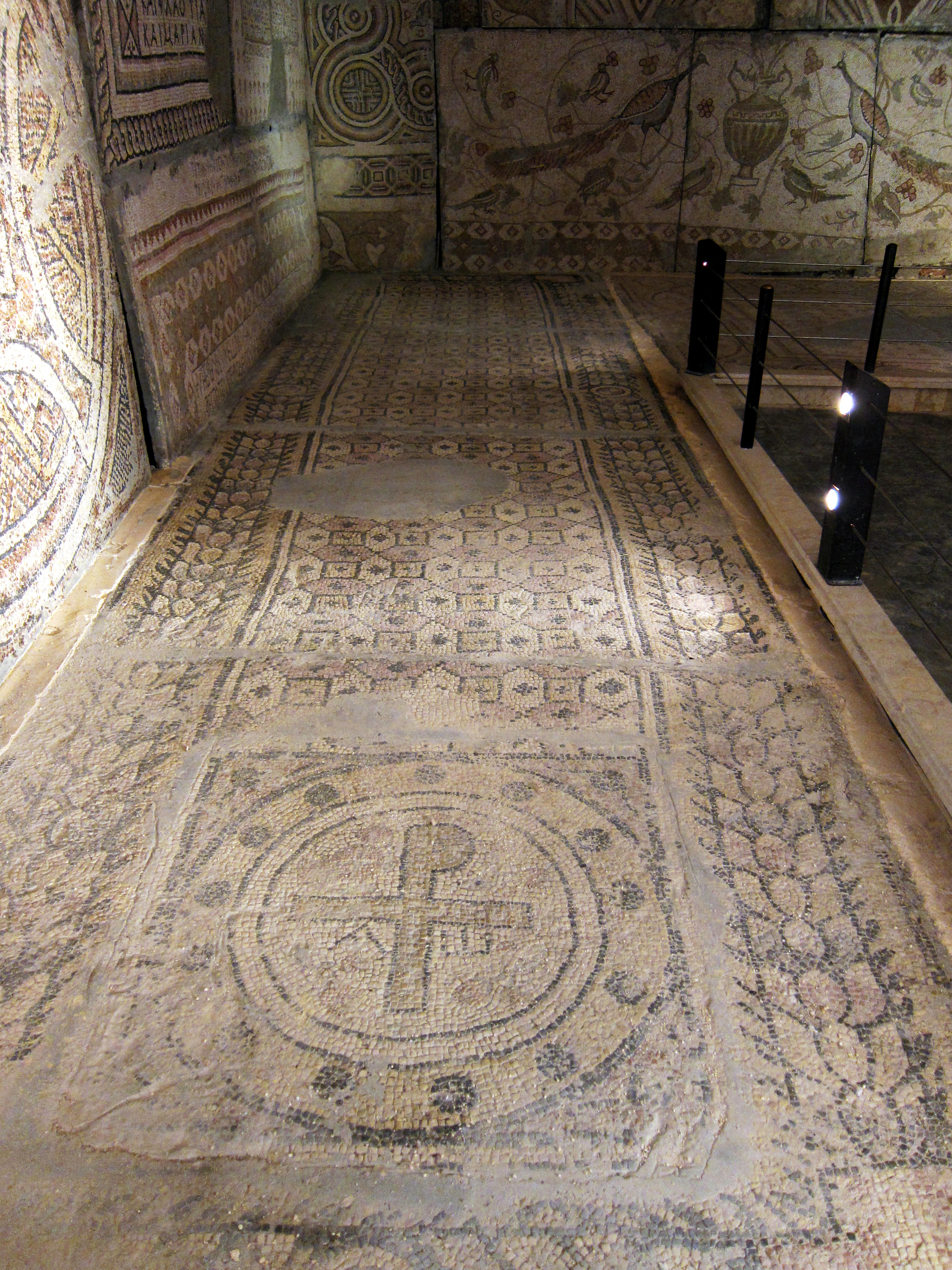
Tell Aar church mosaics
Mosaics from the ancient Tell Aar church, including a chi-rho monogram with an alpha and omega (foreground) and peacocks flanking an amphora (background), housed in the Maarat al-Numan Museum, Syria. Photo: Sean Leatherbury / Manar al-Athar.

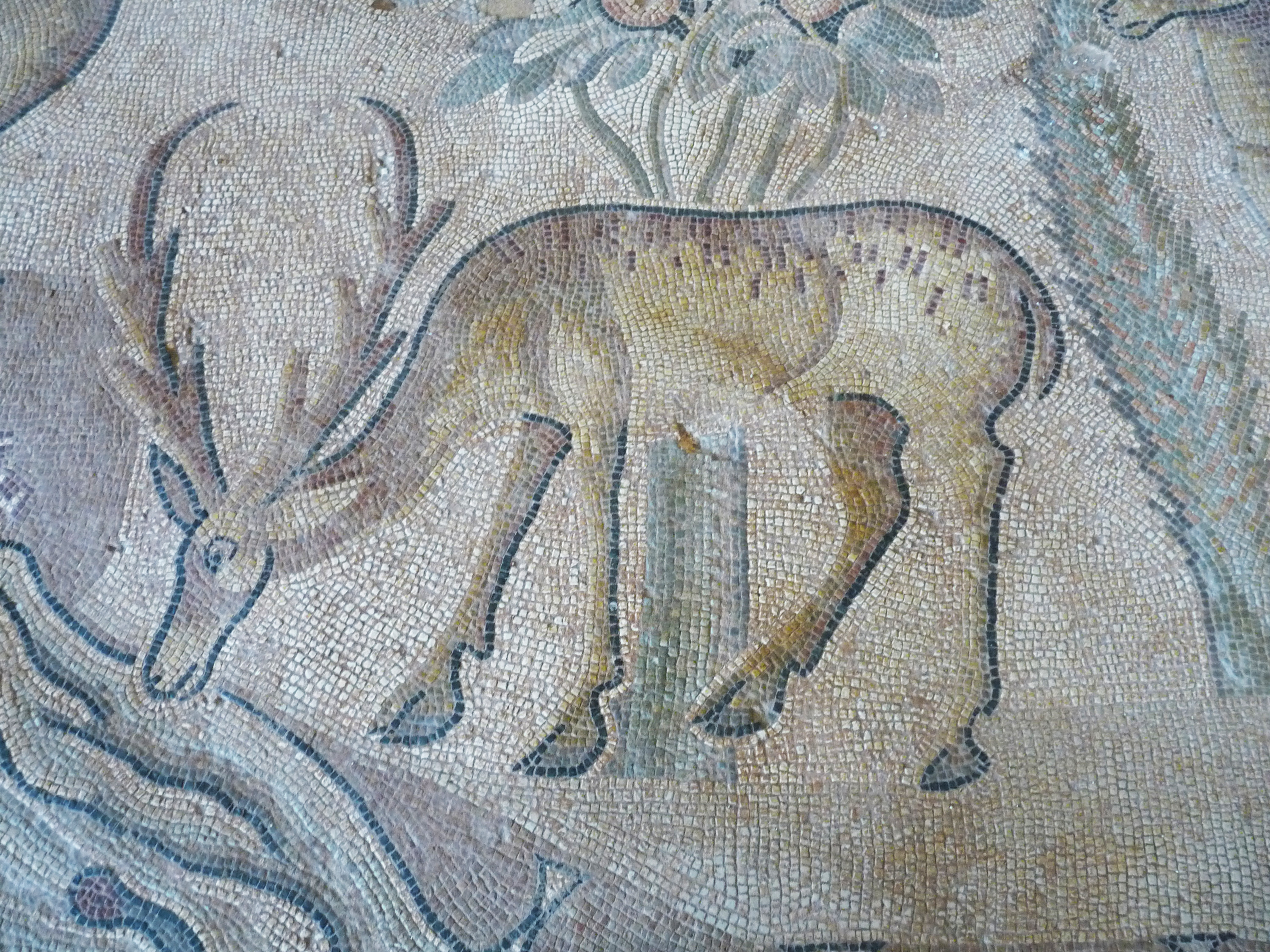
Deer drinking water
Deer drinking from a stream, 5th century. Mosaic, Church of the Martyrs, Taybat al-Imam, Syria. Photo: Jane Chick / Manar al-Athar.

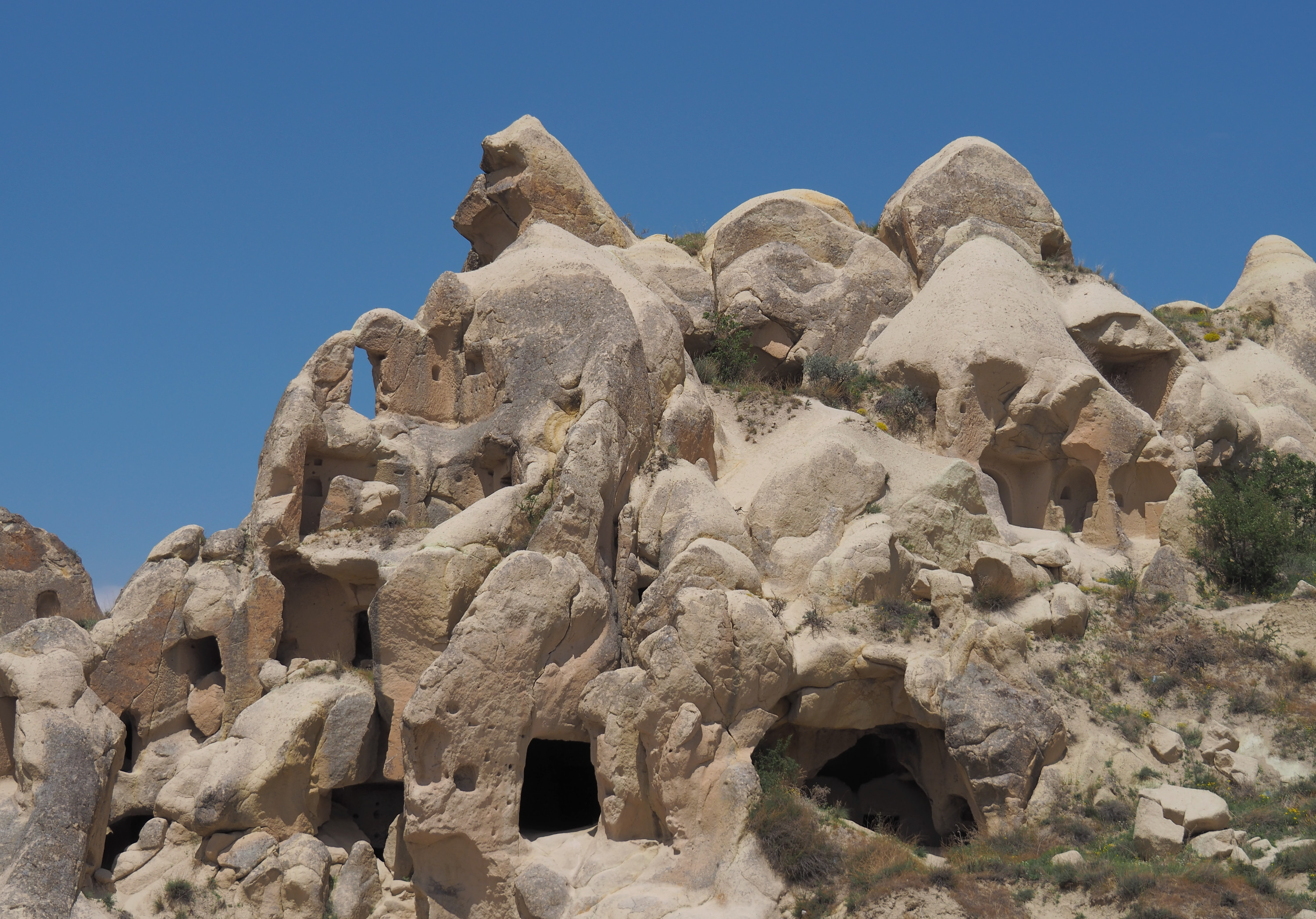
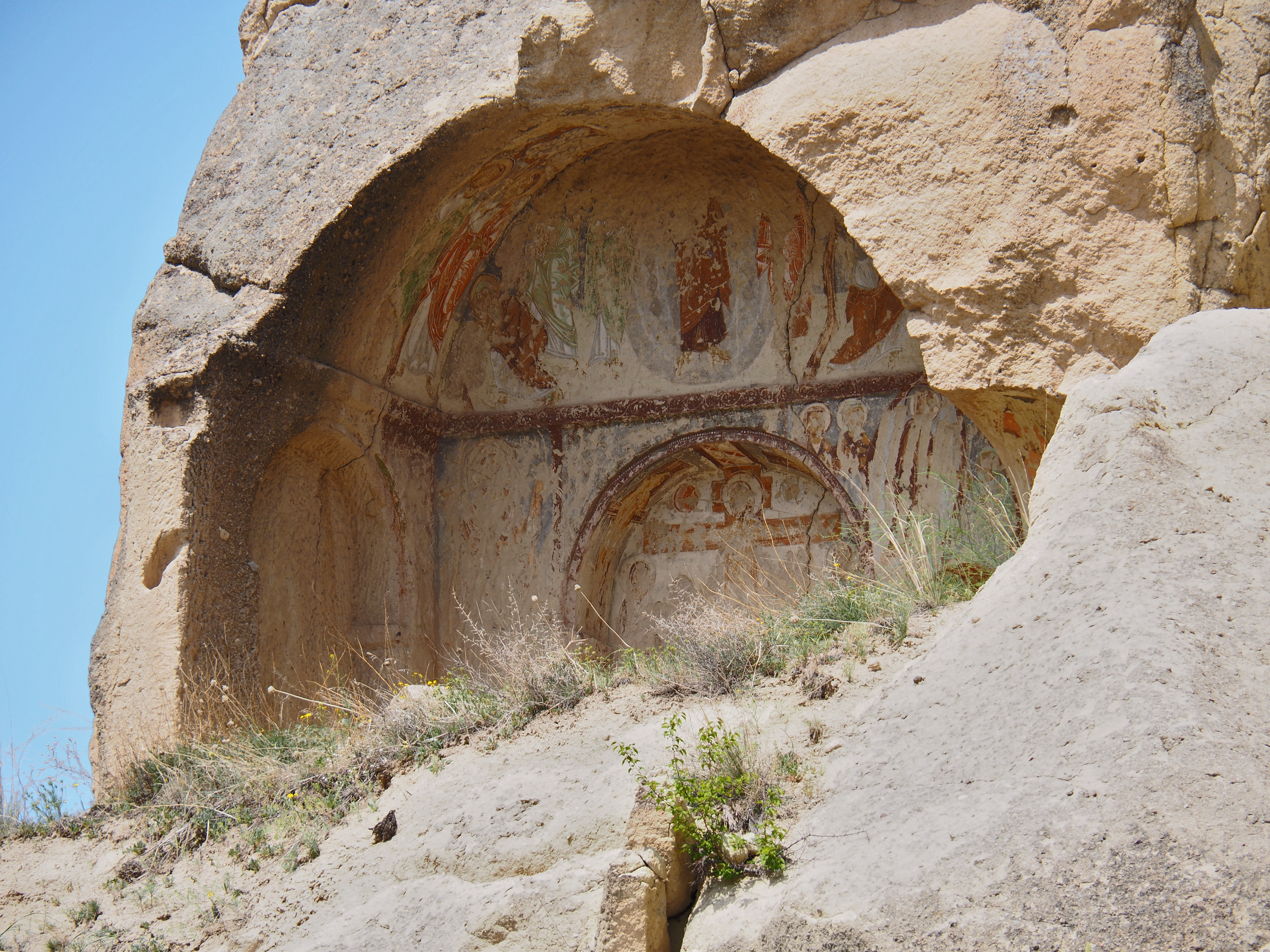
To the north of Syria in Turkey—cataloged by Manar al-Athar under “Anatolia,” the ancient name for the peninsula that comprises the majority of the country—there are the Cappadocian cave churches, hewn out of volcanic tufa. They began to be built in the fifth century, with a boom happening in the ninth through eleventh centuries, which is the period to which almost all the surviving paintings can be dated. There are over a thousand such churches, some very simple inside, and others elaborately painted. The architecture has been described as eccentric and enchanting. I like to imagine the monks, nuns, and other Christians who worshipped there all those centuries ago.
Rock-hewn chapel, Cappadocia
Middle Byzantine cave church, Göreme Open Air Museum, Cappadocia, Turkey. Photo: Marlena Whiting / Manar al-Athar.

Crucifixion and Transfiguration
Frescoes depicting the Crucifixion and the Transfiguration, from a rock-cut chapel at the Göreme Open Air Museum, Cappadocia, Turkey. Photo: Marlena Whiting / Manar al-Athar.

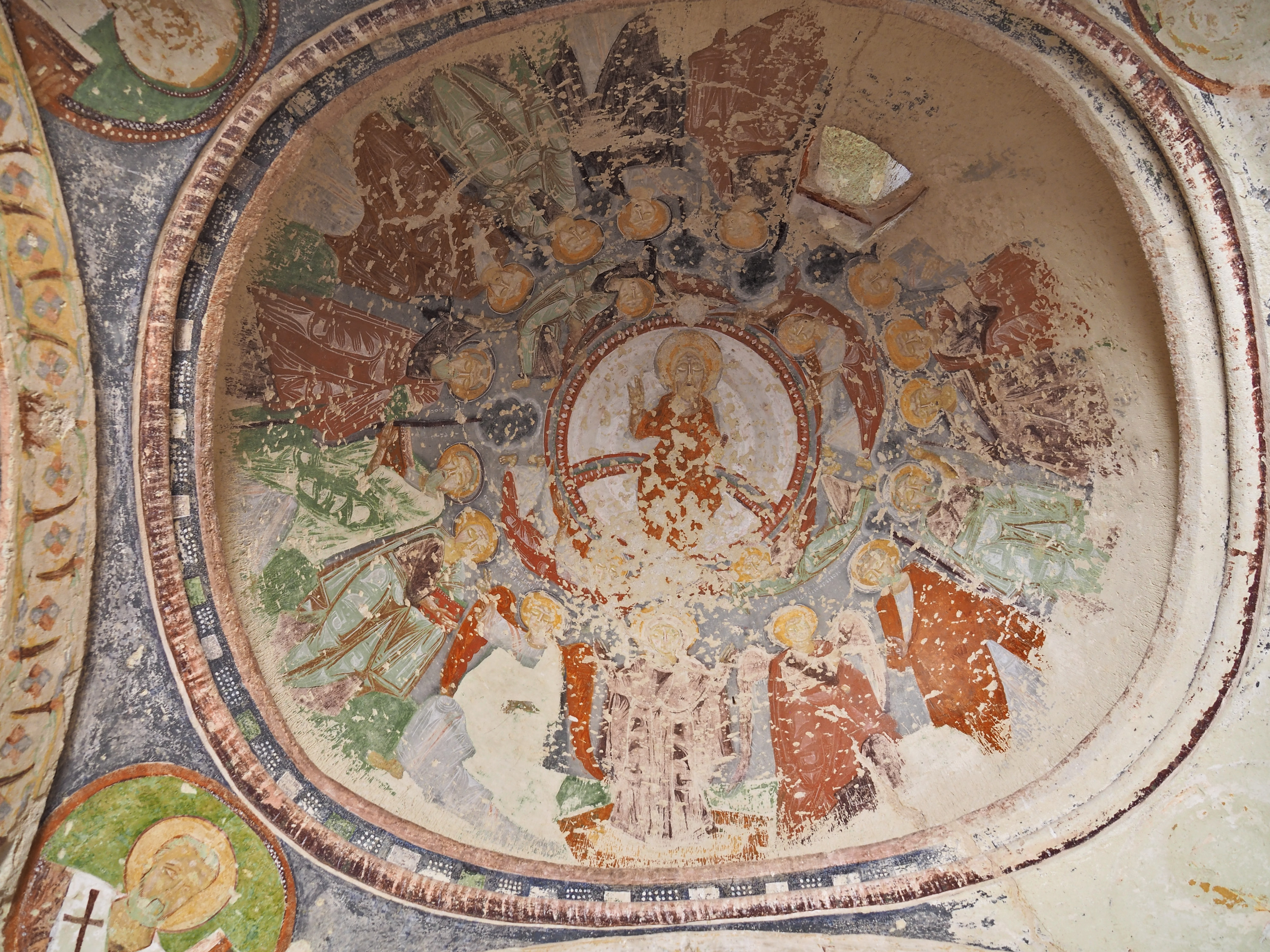
Christ in Glory (Turkey)
The Ascension of Christ, 10th century. Dome fresco, Church of the Evil Eye (El Nazar Kilise), Göreme, Cappadocia, Turkey. Photo: Marlena Whiting / Manar al-Athar.

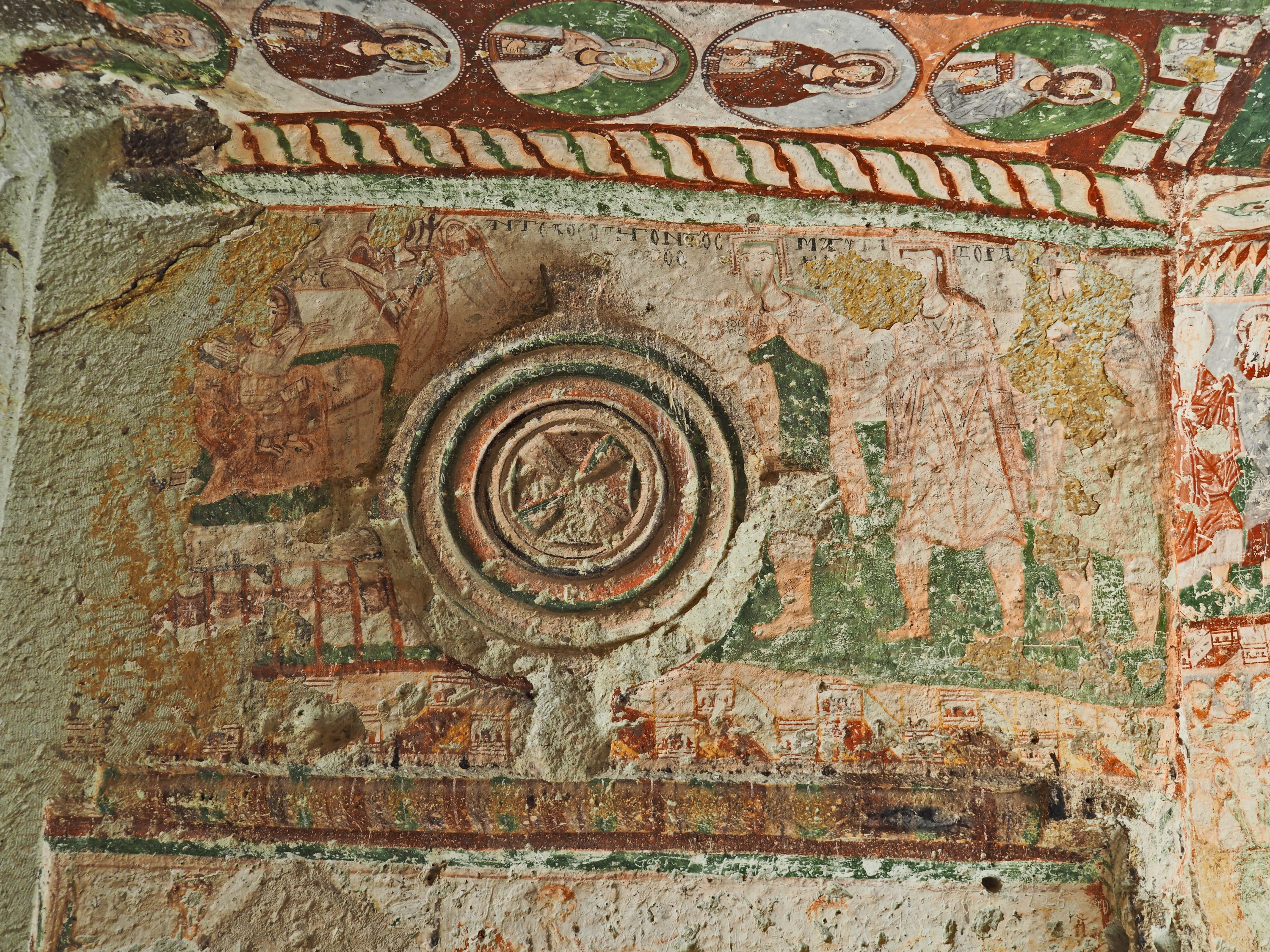
One of the cave churches in Cappadocia, part of an ancient monastic settlement, is Pancarlik Church, home to an impressive fresco cycle on the Life of Christ that’s painted mainly in rusty red and bean green.
Adoration of the Magi (Turkey)
Adoration of the Magi fresco and Greek cross relief carving, probably early 11th century. Pancarlik Church, Cappadocia, Turkey. Photo: Marlena Whiting / Manar al-Athar.

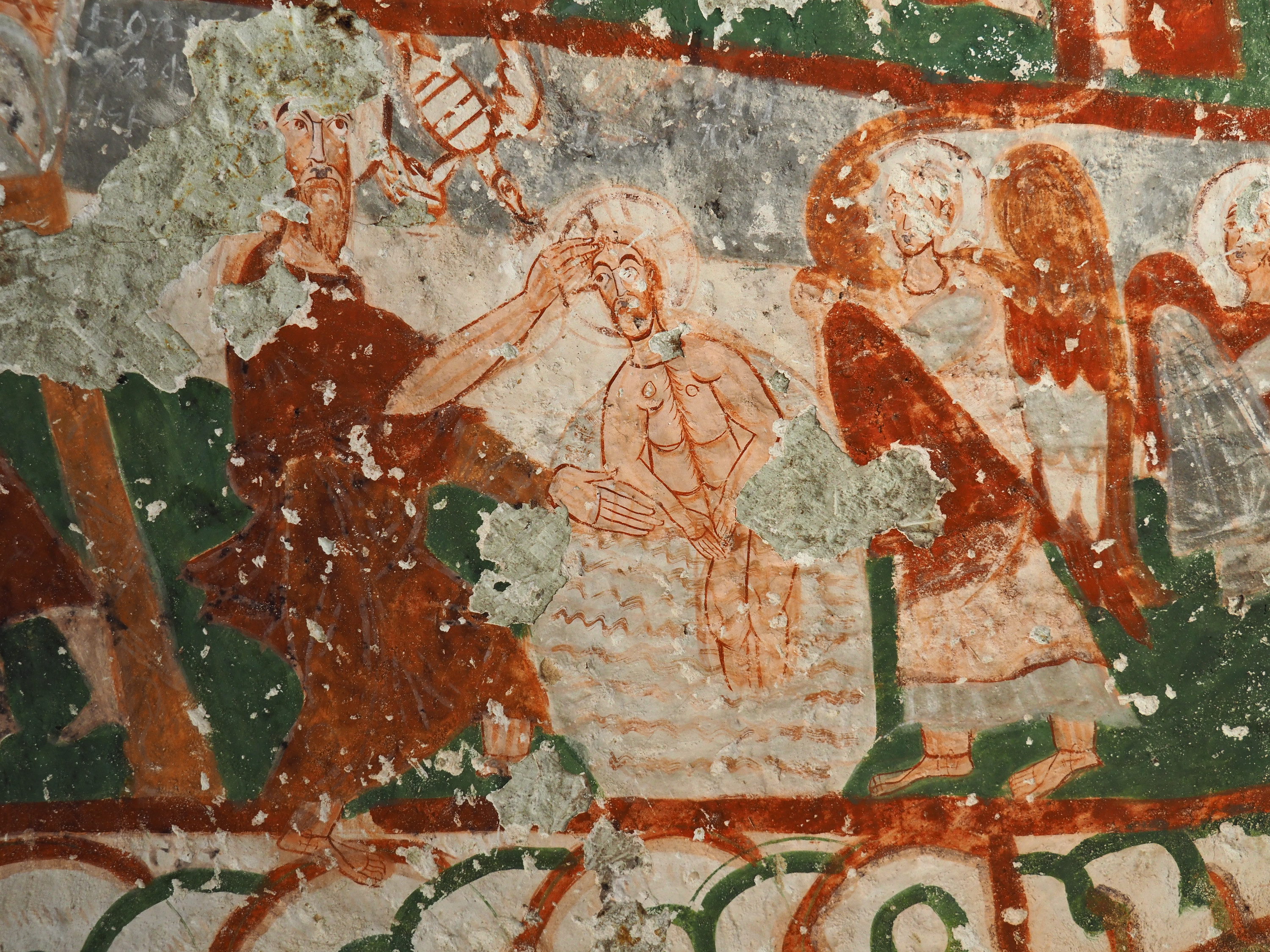
Baptism of Christ (Pancarlik Church, Turkey)
The Baptism of Christ, probably early 11th century. Fresco, Pancarlik Church, Cappadocia, Turkey. Photo: Marlena Whiting / Manar al-Athar.

Beyond Cappadocia but also in Turkey is Hagia Sophia (Holy Wisdom) in Trabzon, not to be confused with the more famous Hagia Sophia in Istanbul, 650 miles away. Originally a Greek Orthodox church, it was converted into a mosque following the conquest of Trabzon (then called Trebizond) by Mehmed II in 1461. During prayer the frescoes in the nave, made by Christians who built and previously occupied the space, are covered by curtains to honor the Islamic prohibition against images—the veils are pulled aside during tourist hours—while the frescoes in the narthex remain uncovered at all times.
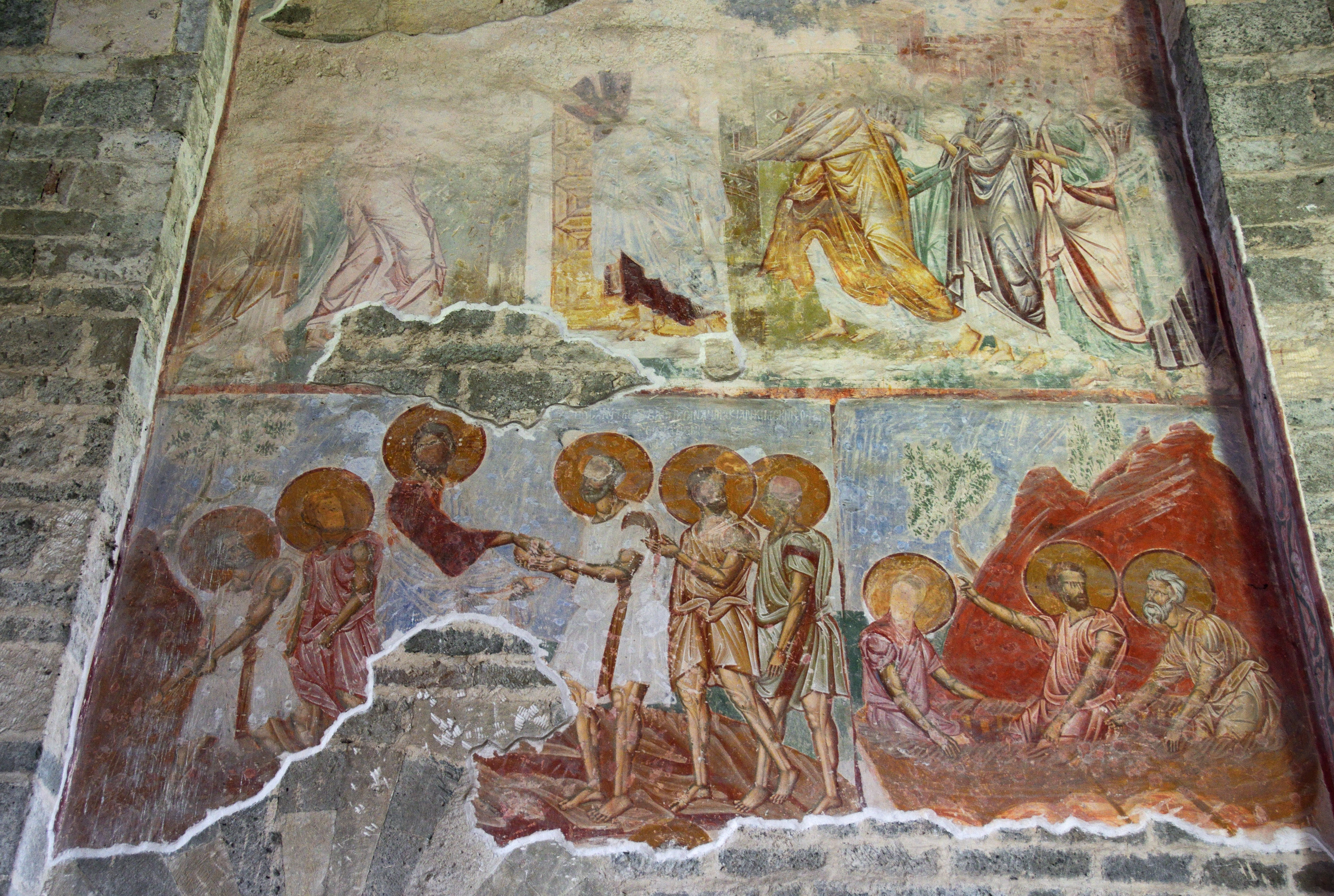
Breakfast on the Shore (Hagia Sophia, Trabzon)
The Incredulity of St. Thomas (top) and The Risen Christ Appears on the Shore (bottom), late 13th century. Frescoes, Hagia Sophia (Aya Sofya Mosque), Trabzon, Turkey. Photo courtesy of Manar al-Athar.

One of the frescoes shows Christ appearing to his disciples after his resurrection on the shore of the Sea of Galilee. He hands a fish and a loaf of bread to Peter, who stands at the front of the group, so that they can all share a joyous breakfast together after the tragic, upending events of the previous week.
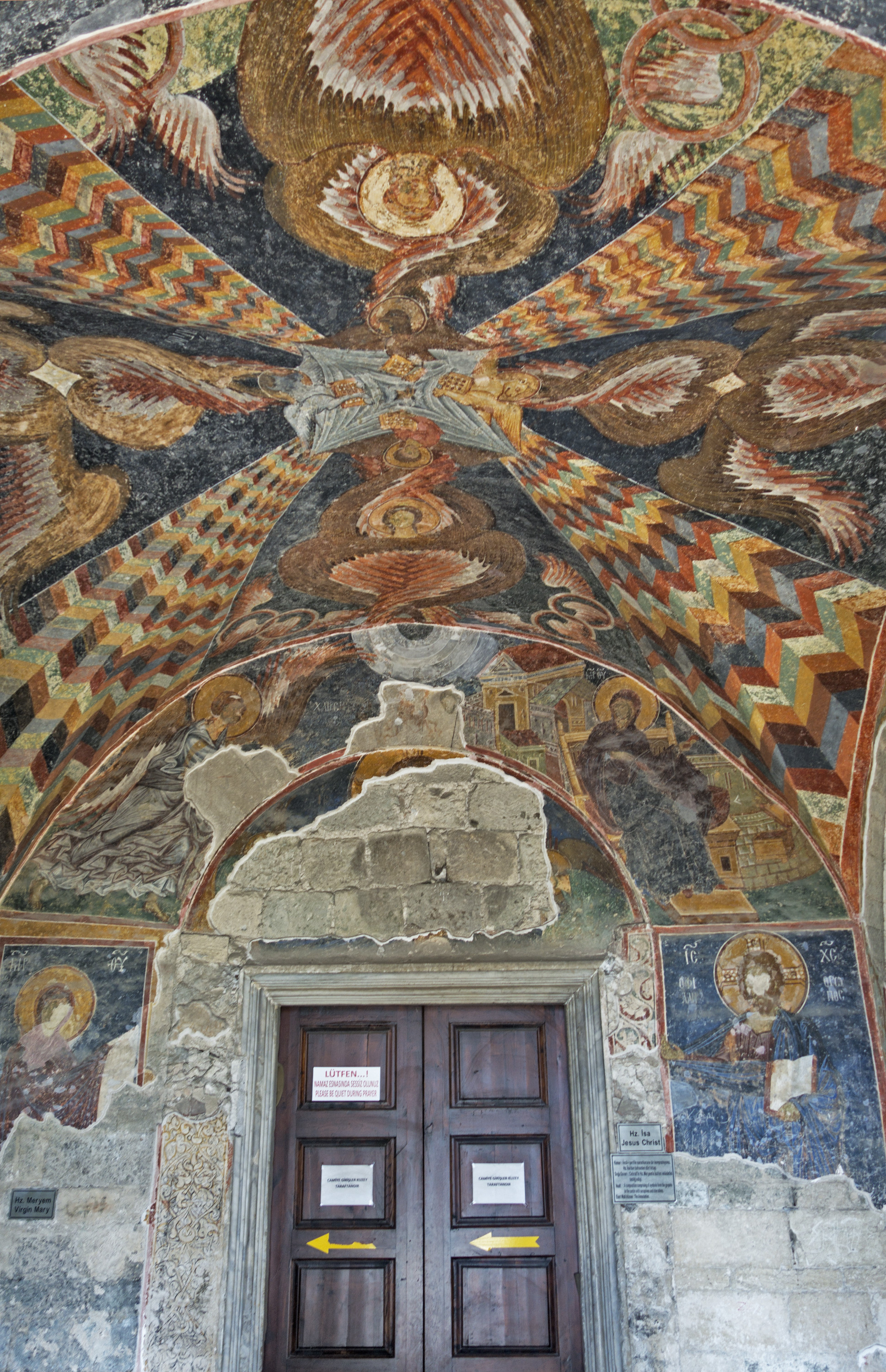
Tetramorph (Hagia Sophia, Trabzon)
Frescoed narthex, late 13th century, Hagia Sophia (Aya Sofya Mosque), Trabzon, Turkey. Photo: Matthew Kinloch / Manar al-Athar.

Another fresco, on the vaulted ceiling of the narthex, shows the four living creatures of Revelation 4—long interpreted by Christian artists as symbols of the Four Evangelists—situated along the four sides of the canopy of the heavens, each holding a golden Gospel-book and surrounded by seraphim and blazes of rainbow light.

In the Caucasus region, Armenia has a long and rich tradition of Christian art, especially relief carving and painting, as the faith took root there early on in the fourth century.
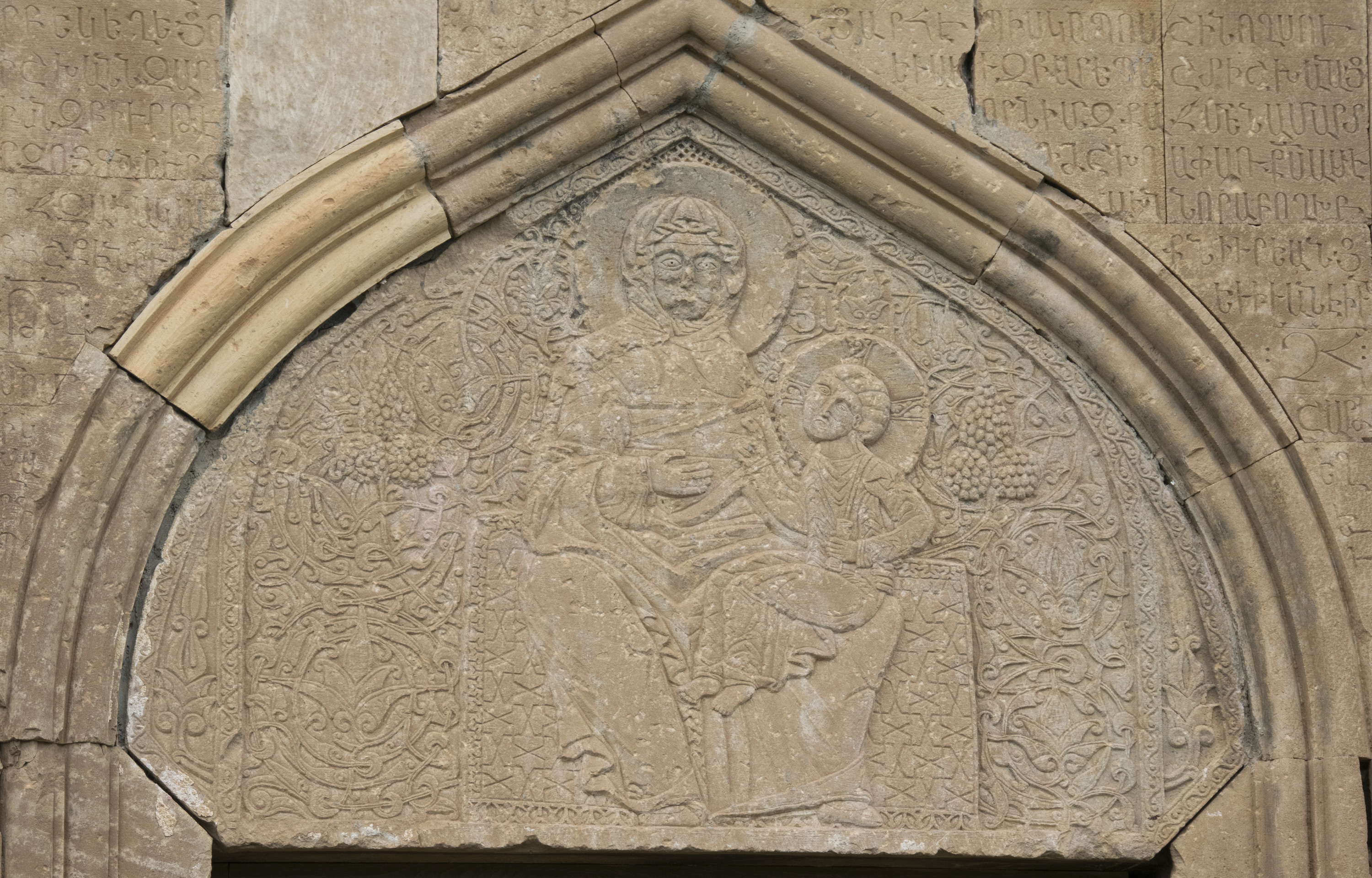
Virgin and Child
Momik Vardpet, Virgin and Child, ca. 1321. Carved tympanum, west portal, Church of St. Astvatsatsin (Holy Mother of God), Areni, Armenia. Photo courtesy of Manar al-Athar.

Overlooking the village of Areni on the eastern bank of the river Arpa is the Church of St. Astvatsatsin, which has a beautiful relief carving in the tympanum above the west portal by the Armenian architect, sculptor, and manuscript illuminator Momik Vardpet (died 1333). It depicts the Christ child seated on the lap of his mother, holding a scroll in one hand and raising the other in blessing. Decorative vines rise up behind and around the pair, suggesting verdancy.

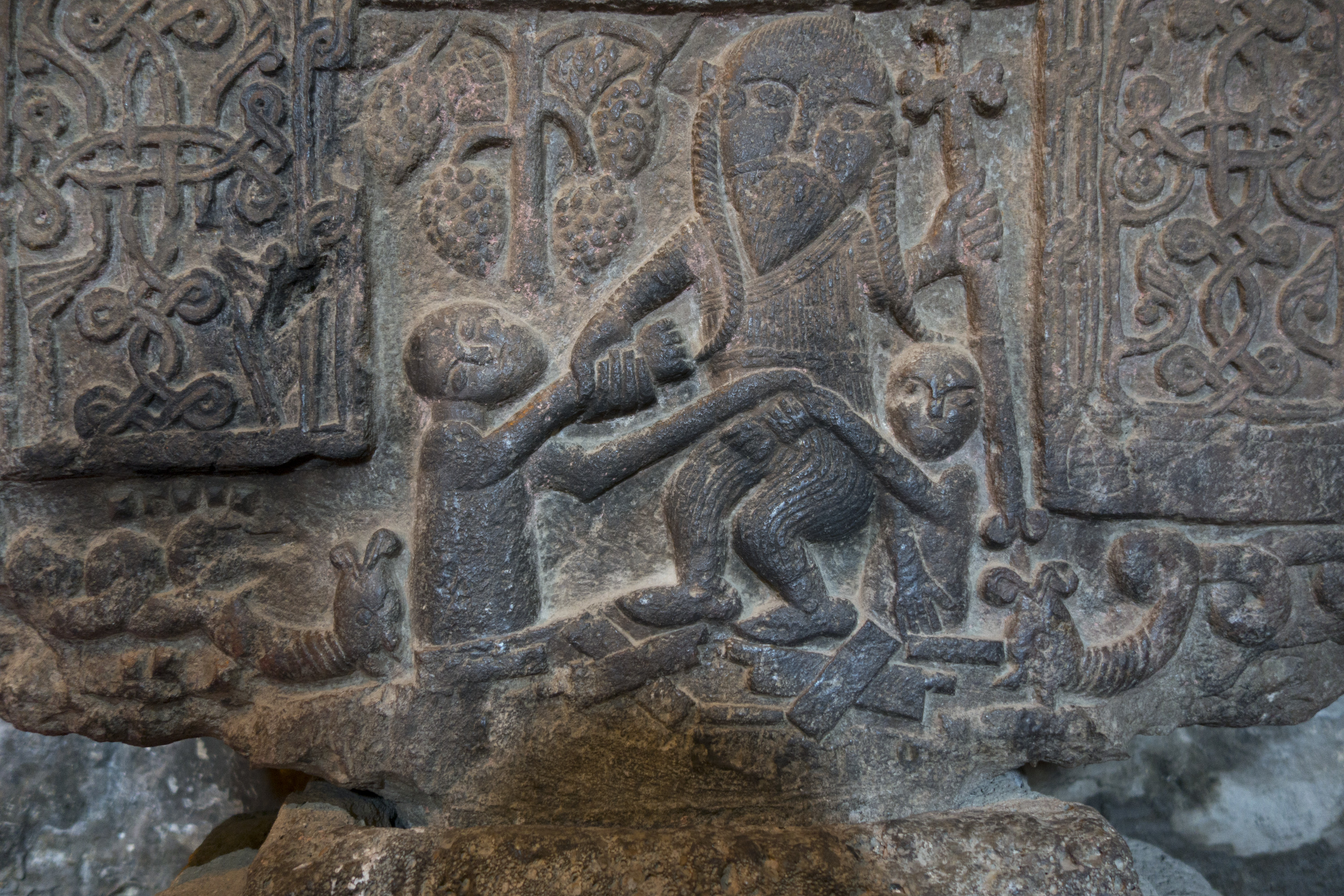
The most distinctive Christian art form in Armenia is the khachkar, a carved memorial stele bearing a cross and often botanical motifs, and only occasionally a Christ figure. In the village of Sevanavank, at a different Church of St. Astvatsatsin, there’s a particularly striking khachkar that portrays the crucified Christ in the center, and below that, a scene of the Harrowing of Hell.
Harrowing of Hell (Armenia)
The Harrowing of Hell, detail of a khachkar from the Church of St. Astvatsatsin (Holy Mother of God) in Sevanavank, Armenia. Photo: Matthew Kinloch / Manar al-Athar. [view full khachkar]

Holding aloft his cross as a scepter, the risen Christ breaks down the gates of death and rescues Adam and Eve, representatives of redeemed humanity, while serpents hiss vainly at his heels. I’m struck by the uniqueness of Christ’s hair, which flows down in two long braided pigtails. Was this a common hairstyle for males in medieval Armenia? I have no idea.

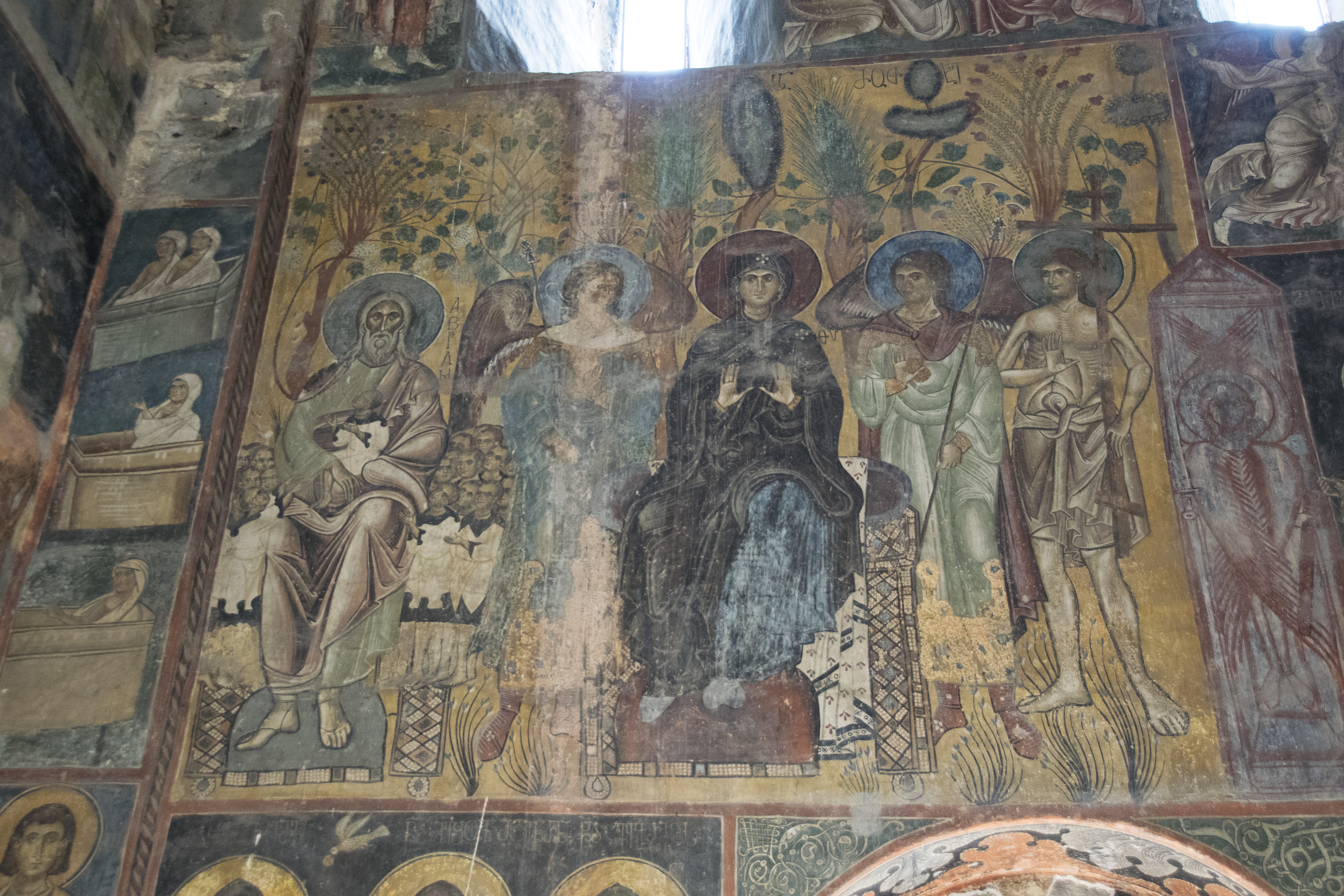
The last artwork from Armenia that I’ll share is an icon of paradise from the Church of St. Astvatsatsin (yes, it’s a popular church name in that country!) at Akhtala Monastery.
Paradise (Armenia)
Paradise, 1205–16. Fresco, west wall, Church of St. Astvatsatsin (Holy Mother of God), Akhtala Monastery, Akhtala, Armenia. Photo courtesy of Manar al-Athar.

In the center is the Mother of God flanked by two angels. On the left is Abraham with a child, representing a blessed soul, sitting on his lap (Luke 10:22 describes how the righteous dead go to “Abraham’s bosom,” a place of repose). On the right is Dismas, the “good thief” who repented on the cross of his execution, and to whom Jesus promised paradise (Luke 23:39–43); he is venerated as a saint in the Catholic and Orthodox churches.

The image is part of a larger Last Judgment scene that covers the entire west wall. A few panels above, at the very top, Christ is enthroned on a rainbow.

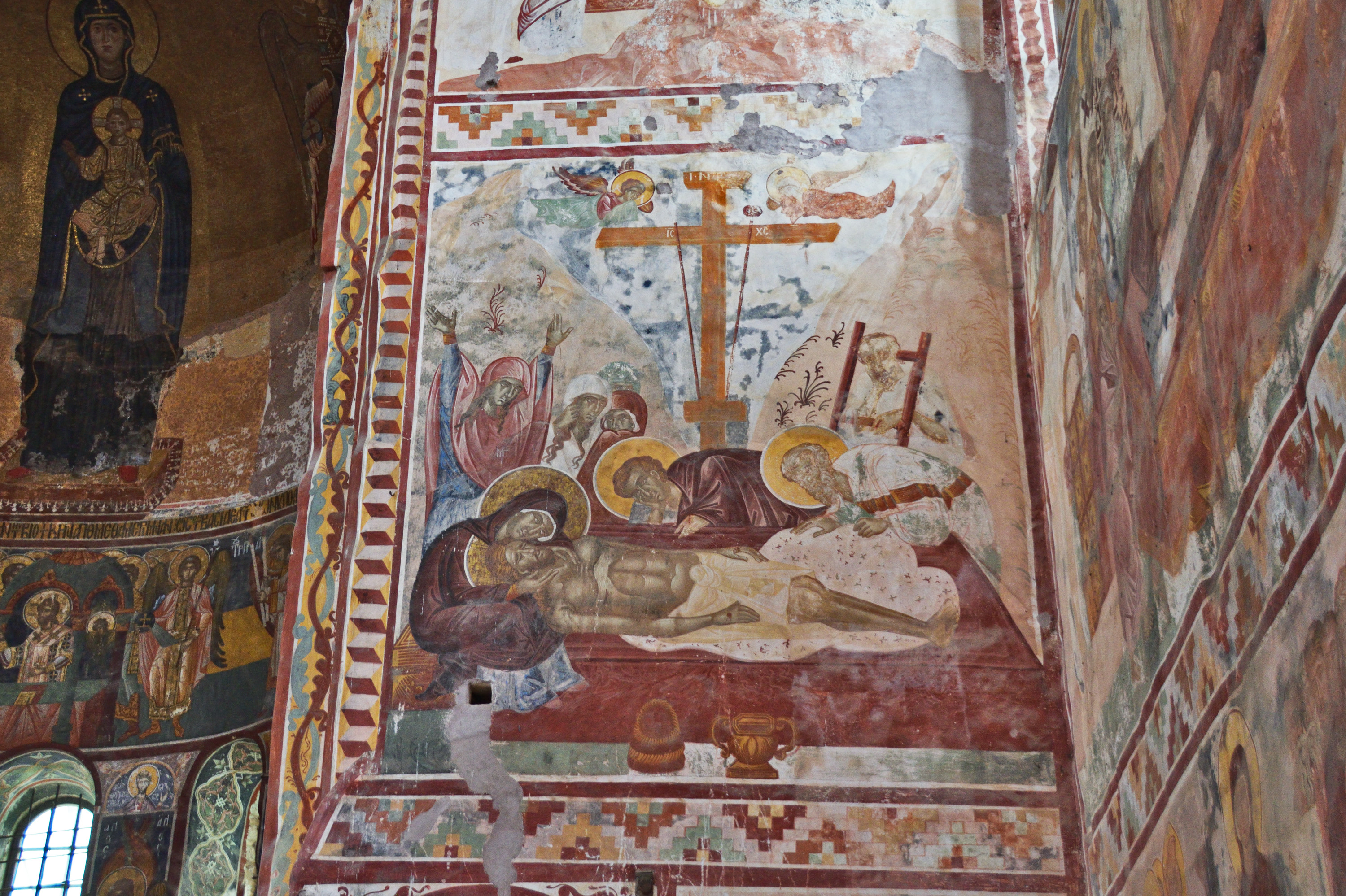
The neighboring country of Georgia has also cultivated a tradition of Christian icon painting. The main church of Gelati Monastery, founded in 1106, is richly decorated with painted murals dating from the twelfth through seventeenth centuries. One of them is the Lamentation over the Dead Christ: The Virgin Mary gently cradles the head of her son and Mary Magdalene throws her arms up in grief while the apostle John leans in close to mourn the loss and Joseph of Arimathea begins to wrap the body in a shroud.
Lamentation (Georgia)
Lamentation over the Dead Christ, fresco, Church of the Blessed Virgin, Gelati Monastery, near Kutaisi, Georgia. Photo courtesy of Manar al-Athar.

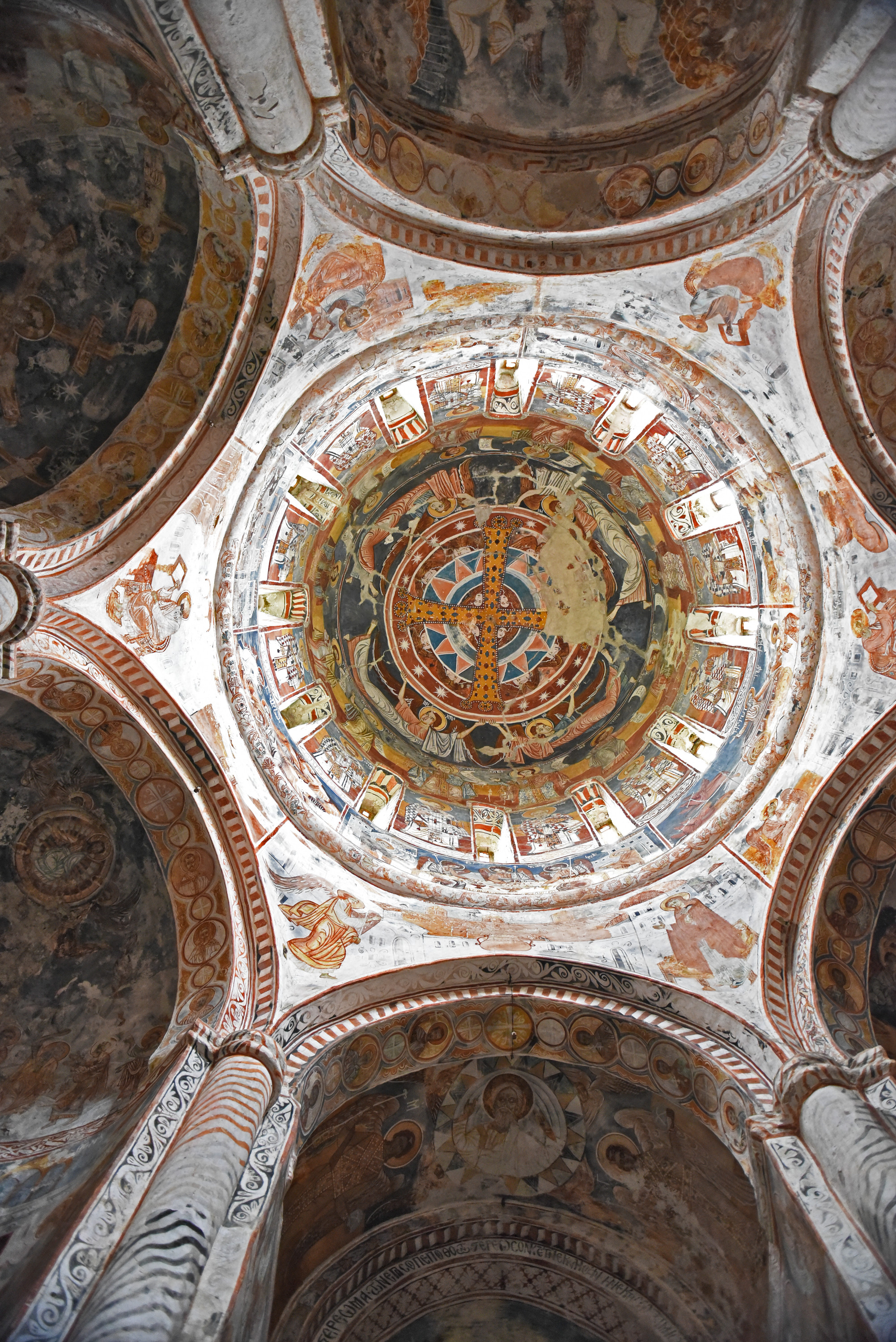
Another Georgian icon painting, from the central dome of the Church of St. Nicholas in Nikortsminda, shows angels bearing aloft a jeweled cross, surrounded by the twelve apostles.
Georgian church dome
Central dome, Church of St. Nicholas, Nikortsminda, Georgia. Photo: Ross Burns / Manar al-Athar.

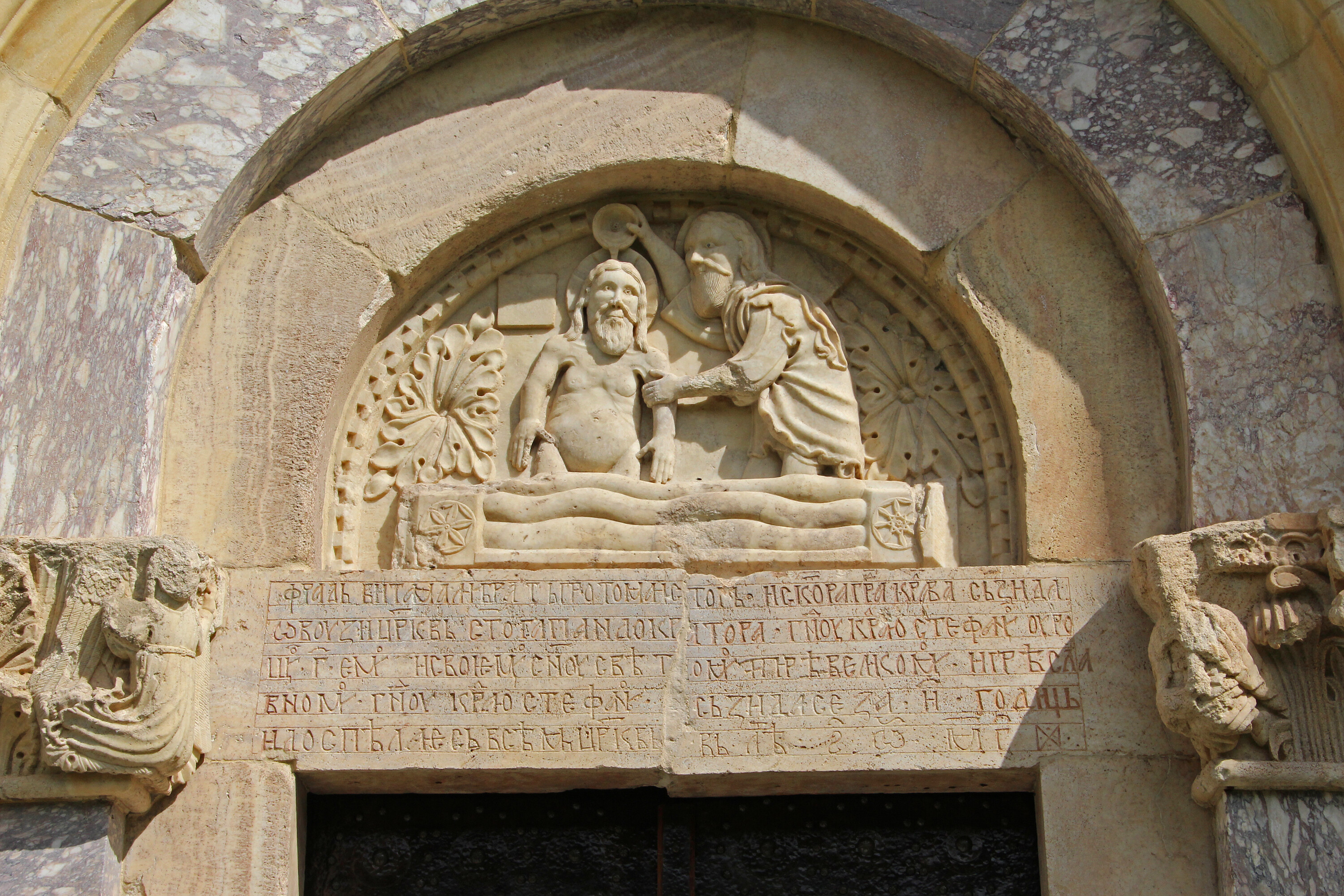
Lastly, from the Balkans, I want to point out Decani Monastery in Kosovo, a Serbian Orthodox monastery built in the fourteenth century in an architectural style that combines Byzantine and Romanesque influences. The tympana of its katholicon (main church) lean into the Romanesque. The one over the south entrance portrays John baptizing Jesus in the river Jordan, and the Serbian inscription below describes the monastery’s founding.
Baptism of Christ tympanum (Decani)
The Baptism of Christ, 1327–35. Carved tympanum, south portal, Christ Pantocrator Church, Decani Monastery, near Deçan, Kosovo. Photo: Mark Whittow / Manar al-Athar.

Decani’s katholicon is the largest and best-preserved medieval church in the Balkans and due to continuing ethnic strife in the region is under international military protection. The Blago Fund website has more and better photos of the extensive frescoes inside, from the fourteenth through seventeenth centuries.

It’s important to note that this is one of a number of churches from the Manar al-Athar archive that are still active sites of Christian worship, where communities of believers are nurtured through word, image, and sacrament.


If you are interested in volunteering with Manar al-Athar—helping with image processing, labeling, fundraising, or web building—or if you have taken any photographs that may be of interest to the curatorial team, email manar@classics.ox.ac.uk.

Website: https://www.manar-al-athar.ox.ac.uk/
Roundup: “Incarnation and Imagination” lecture, Planet Drum, and more

PODCAST EPISODE: “Incarnation and Imagination (with Malcolm Guite),” Imagination Redeemed: On March 28, 2015, the Anglican poet-priest Malcolm Guite from Cambridge, England, gave a talk in Colorado Springs for the Anselm Society, an ecumenical Christian organization whose mission is a renaissance of the Christian imagination. They have just released it on their podcast.

Guite discusses how the job of the arts is to link earth and heaven, heaven and earth; where a poem or other work of art stays on only one of those planes, it typically fails. He unpacks Theseus’s monologue from Act 5, scene 1 of Shakespeare’s A Midsummer Night’s Dream, focusing on these six lines: “The poet’s eye, in fine frenzy rolling, / Doth glance from heaven to earth, from earth to heaven. / And as imagination bodies forth / The forms of things unknown, the poet’s pen / Turns them to shapes and gives to airy nothing / A local habitation and a name.”

Shakespeare, Guite says, is riffing on the prologue to John’s Gospel.

The Logos . . . is bodied forth perfectly and beautifully in the living, walking poem of Jesus Christ, in whom everything eternal is made particular, and who invites everybody to come towards him . . . because he is a habitation with open doors. So of course in John’s Gospel he says, ‘I am the door’! . . . Open up, walk in! (48:51)

And one more quote from Guite!

The church . . . is founded by one who is himself artistically embodied meaning—meaning made visible, meaning made beautiful, meaning made habitable and hospitable and welcoming in the touch of the body and in the physical event, which is then transfigured, because it is also a meaningful event, because earth and heaven meet. (55:34)

It’s a brilliant and inspiring talk, and it integrates other poetic verse besides Shakespeare’s.

+++

MUSIC:

>> “More Love, More Power” by Paul Livingstone and Benny Prasad: This sitar-guitar duet is performed by Paul Livingstone (a multi-instrumentalist and composer of “ragajazz chamber music” who was one of the few American disciples of the late Ravi Shankar) and gospel musician Benny Prasad [previously]. The performance took place June 11 at Chai 3:16, a four-hundred-seat café and community space that Prasad founded in Bengaluru to reach out to college students. (Chai is Hebrew for “life,” and “3:16” refers to the famous verse in the Gospel of John about God’s love.) [HT: Global Christian Worship]

>> “King Clave” by Planet Drum: In 1991 Mickey Hart (best known as a drummer of the Grateful Dead) and Zakir Hussain (a classical tabla virtuoso from Mumbai) formed the Grammy-winning global percussion ensemble Planet Drum, bringing together the world’s greatest rhythm masters into a one-of-a-kind improvisational supergroup. Prompted by ongoing international strife, Planet Drum reconvened over the past two years to record their third album, In the Groove, which released August 5. It features six unique compositions led by Hart, Hussain, Sikiru Adepoju of Nigeria, and Giovanni Hidalgo of Puerto Rico.  

The centerpiece of the album is “King Clave” (the clave is a rhythmic pattern), created in partnership with Playing for Change and with funding from the United Nations Population Fund. The four core musicians mentioned above are joined by other percussionists and dancers from around the world. The music video uses the “Alternate Version” of the performance, released separately as a single.

Learn more about the Planet Drum project in this six-minute video:

+++

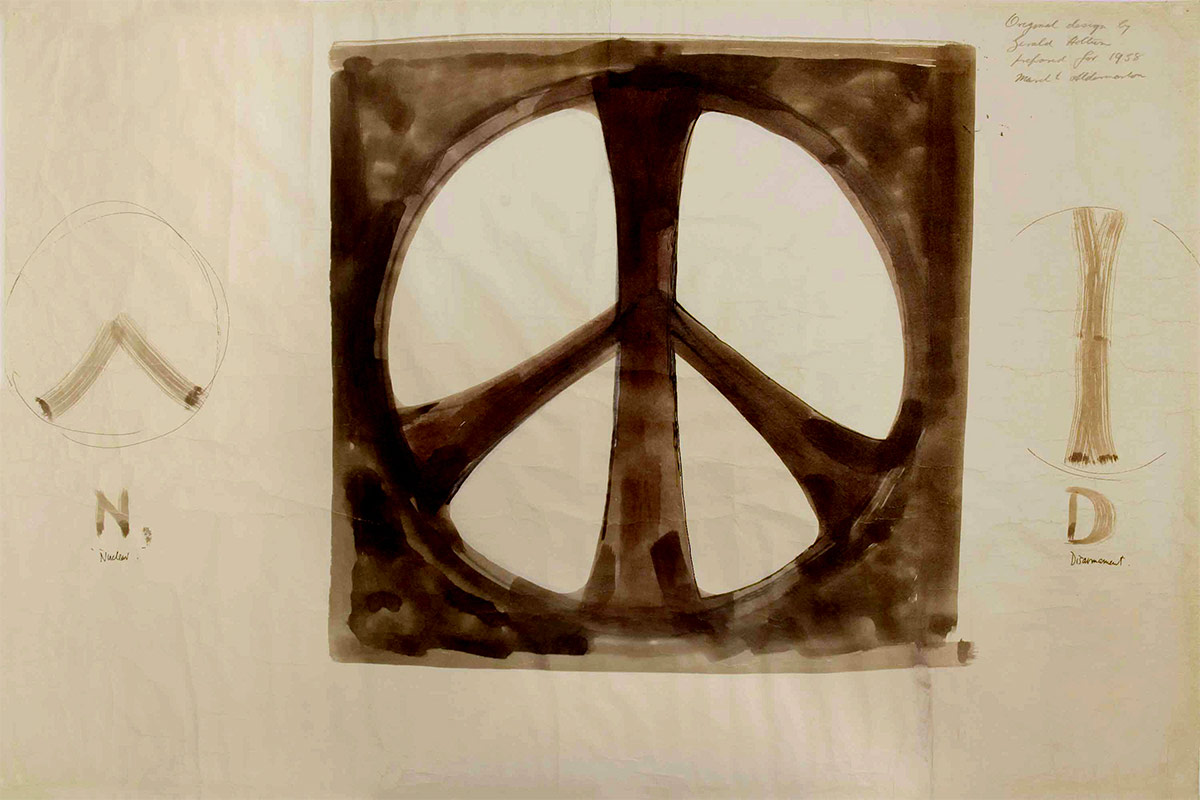
STILL LIFE EDITION: “The History of the Peace Symbol” by Michael Wright: Did you know that the peace symbol that spread worldwide during the 1960s was designed by a Christian from the UK? (Christian pacifism was one of the underappreciated drivers of the nuclear disarmament and antiwar movements.) Learn more about the symbol’s history and art historical and nautical influences in the August 15, 2022, edition of Michael Wright’s weekly letter on art and spirit, Still Life. Also included is the poem “Wildpeace” by Yehuda Amichai, and four weblinks of interest, such as an article on how the patristic tradition agrees with cognitive neuroscience, and a video of FKA Twigs performing in a church!

Holtam, Gerald_Peace
Sketch of nuclear disarmament symbol by Gerald Holtom, created for the first Aldermaston March in 1958. © Commonweal Collection, University of Bradford, England.

+++

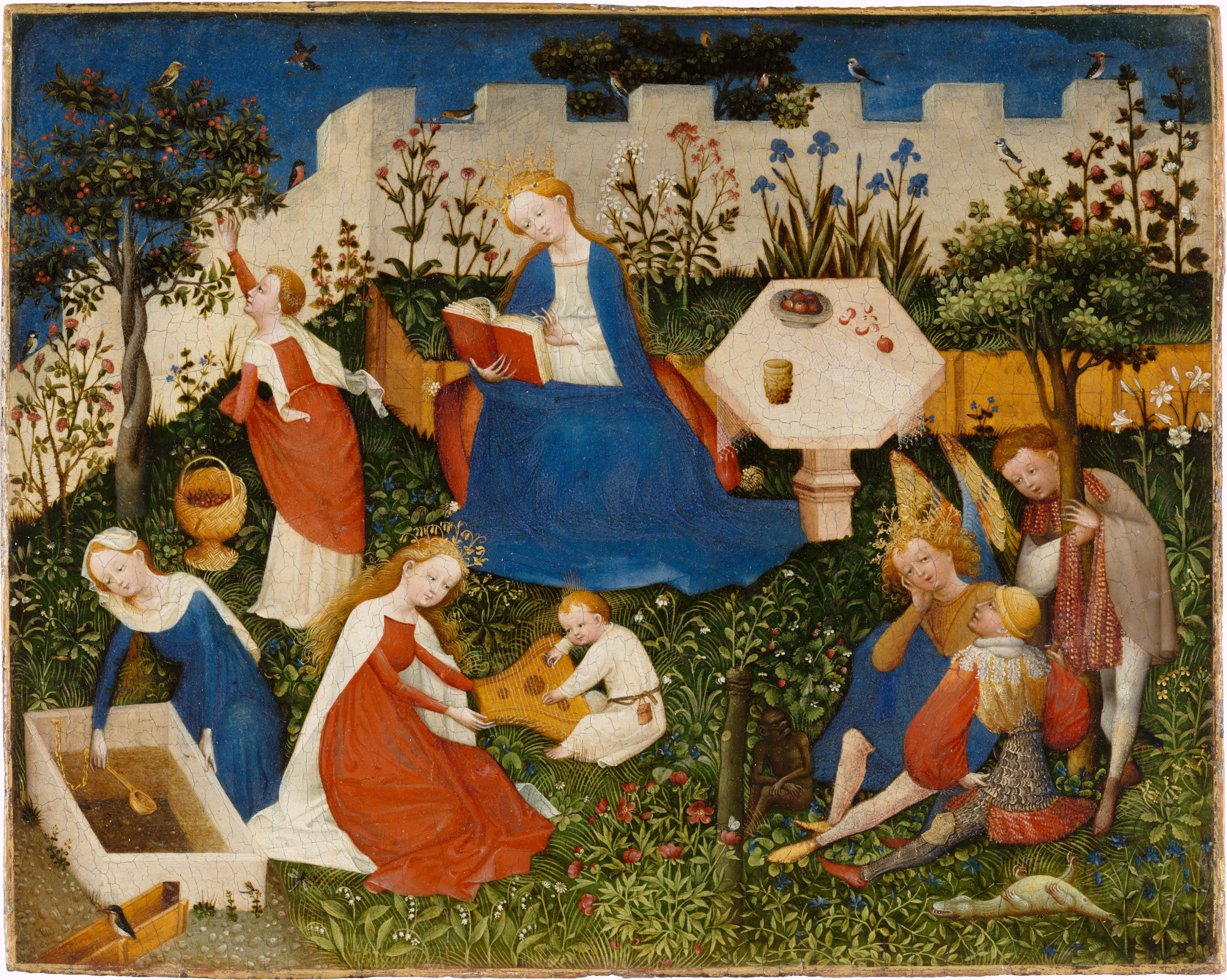
VIDEO LECTURE: “Symbolism and Sacramentality in Art: Medieval and Postmodern Representations of the Little Garden of Paradise” (Religion and Art Talks) by Tina Beattie: Dr. Tina Beattie is a professor emerita of Catholic Studies at the University of Roehampton whose research is at the intersections of art, gender, and theology. In this talk she explores the sacramental imagination of the medieval world through a Late Gothic painting from the Rhineland known as The Little Garden of Paradise. (You can zoom in in tremendous detail on the Städel Museum’s website.) It shows Mary reading in an enclosed garden in the company of saints, her little boy Jesus playing a psaltery at her feet. “Christ retunes the cosmos,” Beattie says. “The harmonies of creation were disrupted by sin. But all of creation is brought back into harmony through the Incarnation.”

Symbolism and allegory abound in medieval religious paintings, encoding profound meanings that can be discerned if we would but take the time to look and to meditate and to understand the world from which these images arose. “The visual image can say things that the theological text can’t,” Beattie asserts. “It can play with the doctrinal truth in ways that allow other meanings to emerge discreetly.”

Though many interpretations of hortus conclusus imagery focus on Mary’s virginity, and indeed that was a primary aspect motivating the creatives who developed such imagery, Beattie draws out themes of new creation and discusses the garden as the human soul.

The Little Garden of Paradise
The Little Garden of Paradise, Upper Rhine, ca. 1410–20. Mixed media on oak, 26.3 × 33.4 cm. Städel Museum, Frankfurt am Main, Germany.

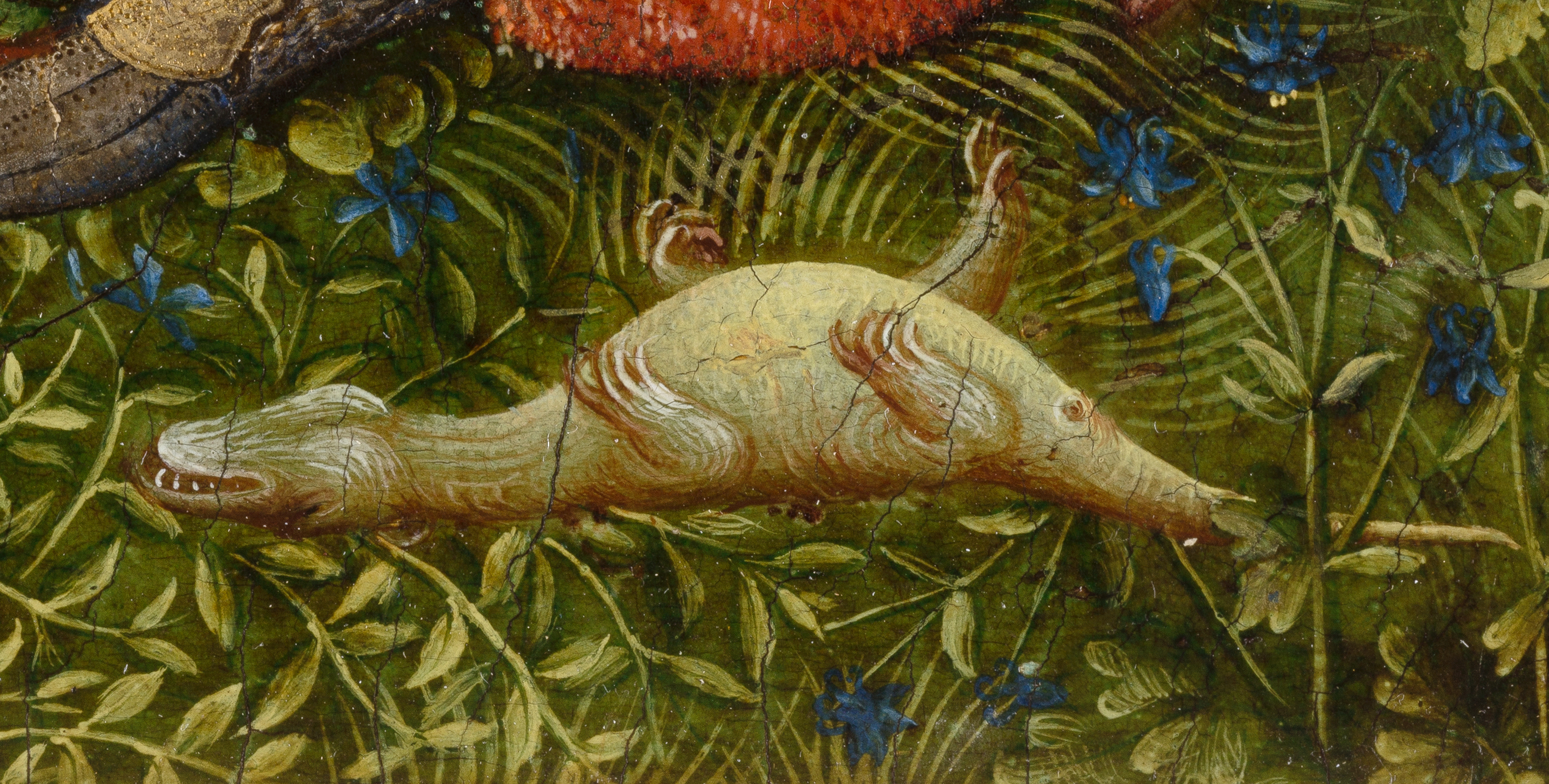
The Little Garden of Paradise (detail, dragon)
A small, slain dragon lies belly-up beside a man in greaves and chain mail, probably Saint George.

The other artworks she glosses are:

The last half hour of the video features audience engagement.

Easter, Day 1

LOOK: Easter Panels by Tanja Butler

Butler, Tanja_Easter Panels
Tanja Butler (American, 1955–), Easter Panels: “The Angel at the Tomb,” “Christ’s Victory Over the Gates of Hell and Death,” “Christ Appearing to Mary in the Garden,” and “The Angel Guarding the Entrance to Paradise,” 2005. Acrylic on canvas, each 8 ft. high. Collection of the artist.

“The tomb is empty!” So declares the angel in the far-left panel of this Easter quadriptych by Tanja Butler, an artist from New England. The angel gestures toward Jesus’s bare and open coffin and his cast-aside graveclothes, telling the women (out of frame) that “he has been raised, as he said” (Matt. 28:6).  

The second panel shows Jesus trampling down the gates of hell (the doors laid across each other in an X-shape references traditional iconography of Christ’s descent into Hades). He has defeated death, as indicated by the skull under his feet. A rainbow, symbol of God’s promise, arcs across the scene. Shaped in blessing and communicating doctrinal truths, the fingers on his right hand form the letters IC XC, the first and the last letters of the Greek words IHCOYC XPICTOC, “Jesus Christ.” His five wounds—on wrists, feet, and side—are still present on his resurrected body, but they have been transfigured.

The third panel shows the resurrected Christ appearing to Mary Magdalene in the garden of his burial. With one hand he reaches out to reassure her, but with the other he reminds her that he will be ascending soon, and so not to cling to him (Noli me tangere, as this scene is traditionally named). I believe that the twisting object that seems to proceed from Mary’s mouth and exits the garden gate is a speech scroll, suggesting that she is proclaiming the gospel; “apostle to the apostles,” she is tasked with delivering the news of resurrection to the Eleven. But with its riverine shape, it also reminds me of Jesus’s words to the Samaritan woman at the well: “Those who drink of the water that I will give them will never be thirsty. The water that I will give will become in them a spring of water gushing up to eternal life” (John 4:14).

(Update, 4/20/22: Butler tells me she had in mind the release of the Holy Spirit, breaking through walls and barriers.)

In the far-right scene, the angel who had been guarding paradise with a flaming sword (Gen. 3:24) has put down his sword and now invites us to enter. The sentry has become a porter! He gestures toward the doorway that Christ’s death and resurrection has opened for us. The fall has been undone. We are welcomed home.

Tanja Butler (b. 1955) was born in Germany and moved to the United States as a young girl. She received her B.A. and M.A. from the University of Albany. Her artistic practice has focused on liturgical art, illustration, and community service projects. She is inspired by Byzantine icons, American and European folk art, Persian manuscripts and textile patterns, African art, Early Christian art, Russian Suprematist paintings, Cubism and Fauvist color. Informed by studies in art history and time working in Italy, she was particularly influenced by the frescoes of Fra Angelico in the Monastery of San Marco in Florence. Her collection of 600 graphic images, Icon: Visual Images for Every Sunday, was published by Augsburg Fortress Publishers. Her work is included in the collections of the Vatican Museum of Contemporary Religious Art; the Billy Graham Center Museum at Wheaton; the Boston Public Library; the DeCordova Museum; and the Armand Hammer Museum of Art, UCLA. In 2014 she retired from her position as an associate professor of art at Gordon College in Wenham, Massachusetts, where she taught painting, drawing, liturgical art, and illustration and frequently integrated service opportunities in her courses.” [source]

Butler, Tanja_Easter Panels (Christ Church, Wenham)
Temporary installation at Christ Church, Hamilton/Wenham, Massachusetts, 2005

LISTEN: “Jésus est ressuscité” by Pat Berning, on Resurrection (2002)

1. Pourquoi, parmi les morts,
chercher les vivants?
Jésus est ressuscité!
Comme la lumière du soleil levant,
Jésus est ressuscité, alléluia,
Jésus est ressuscité.

2. Que la terre entière sache la vérité
Jésus est ressuscité!
Comme la vie nouvelle qu’il nous a donnée,
Jésus est ressuscité, alléluia,
Jésus est ressuscité.

3. L’ennemi est vaincu, il est terrassé,
Jésus est ressuscité!
À lui la victoire, nous sommes libérés,
Jésus est ressuscité, alléluia,
Jésus est ressuscité.

4. Nous voyons sa gloire dans tout l’univers.
Jésus est ressuscité!
L’image parfaite du Dieu notre Père,
Jésus est ressuscité, alléluia,
Jésus est ressuscité.

5. Acclamons Jésus, il a vaincu la mort!
Jésus est ressuscité!
Dansons et chantons, car il est le plus fort,
Jésus est ressuscité, alléluia,
Jésus est ressuscité.

6. Pourquoi, parmi les morts,
chercher les vivants?
Jésus est ressuscité!
Comme la lumière du soleil levant,
Jésus est ressuscité, alléluia,
Jésus est ressuscité.

English translation:

1. Why seek the living among the dead? Jesus is risen! Like the light of the rising sun, Jesus is risen, hallelujah, Jesus is risen.

2. Let the whole earth know the truth: Jesus is risen! Like the new life he gave us, Jesus is risen, hallelujah, Jesus is risen.

3. The enemy is defeated, he is struck down, Jesus is risen! To him the victory, we are freed, Jesus is risen, hallelujah, Jesus is risen.

4. We see his glory throughout the universe. Jesus is risen! The perfect image of God our Father, Jesus is risen, hallelujah, Jesus is risen.

5. Let us acclaim Jesus, he conquered death! Jesus is risen! Let’s dance and sing, because he is the strongest, Jesus is risen, hallelujah, Jesus is risen.

6. Why seek the living among the dead? Jesus is risen! Like the light of the rising sun, Jesus is risen, hallelujah, Jesus is risen.

Born and raised in South Africa, singer-songwriter Pat Berning moved to southern France with his wife Linda in 1988, following a call they felt while working for the international ministry Youth for Christ. Though he didn’t know the language at the time, now he sings and records primarily in French, and occasionally in English or Zulu.

His live performance above of his original song “Jésus est ressuscité” is from the Christian arts festival Psalmodia Gagnières—sometime in the early to mid-2000s. The album version uses male and female singers and has call-and-response elements. “Jesus is risen!” the refrain goes. Such a fun and celebratory song.

The hip-hop dancer in the video is Sodapop. He and his wife, Christine Jeanville (a classical and contemporary dancer), founded Machol Danser la Vie in 2005, named after the man in 1 Kings 4:31 whose name means “dancing.” The ministry organizes workshops that promote healing, empowerment, and connection with others and God through dance. And in 2018 they opened the Ecole de Formation sur l’ Identité et la Louange par le Mouvement (Training School on Identity and Worship through Movement).

This song is on the Art & Theology Eastertide Playlist.