
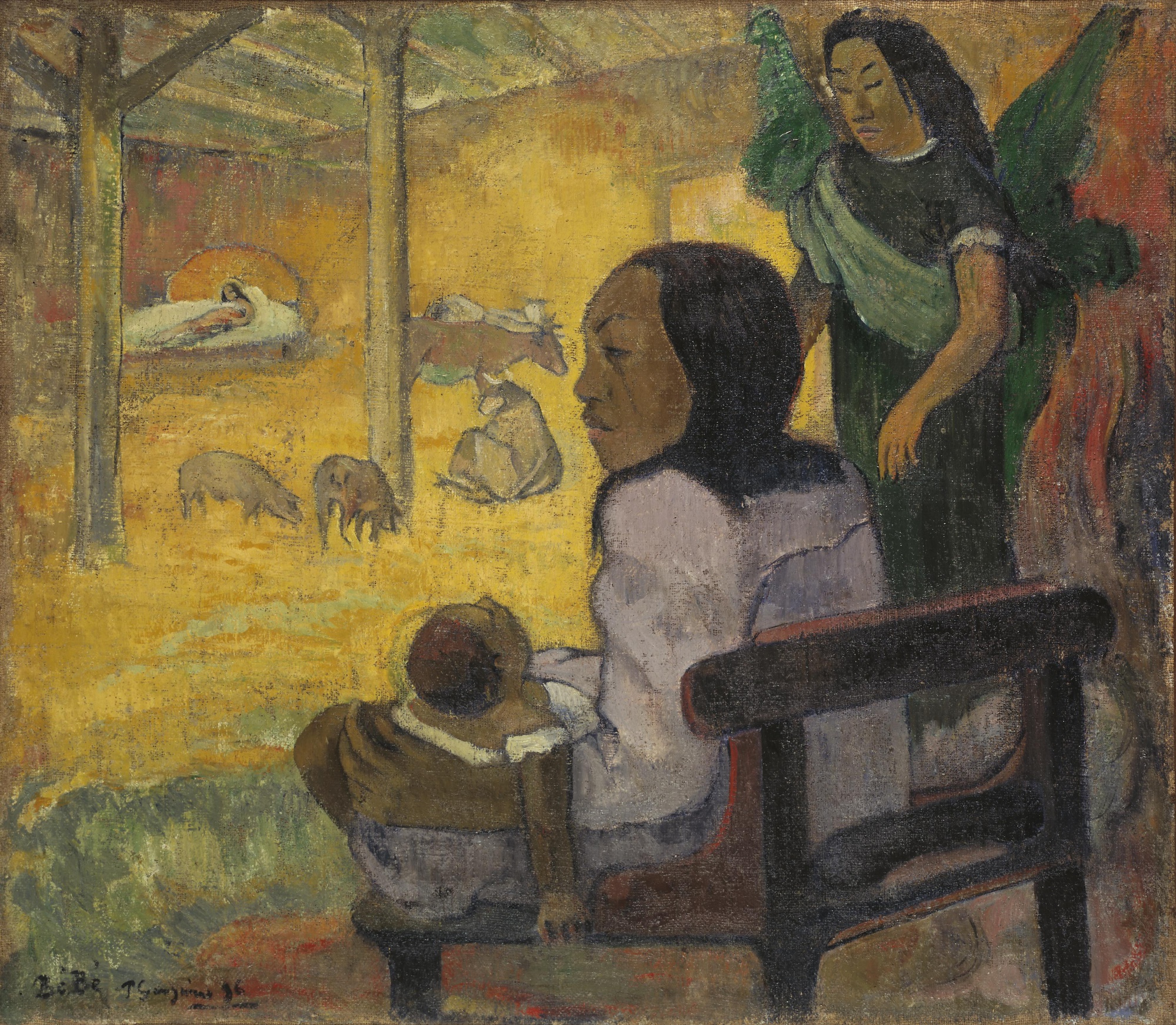
O child of man,
Wombed in dark waters you retell
Millenniums, image the terrestrial span
From an unwitting cell
To the new soul within her intricate shell,
O child of man.

O child of man,
Whose infant eyes and groping mind
Meet chaos and create the world again,
You for yourself must find
The toils we know, the truths we have divined –
Yes, child of man.

O child of man,
You come to justify and bless
The animal throes wherein your life began,
And gently draw from us
The milk of love, the most of tenderness,
Dear child of man.

So, child of man,
Remind us what we have blindly willed –
A slaughter of all innocents! You can
Yet make this madness yield
And lift the load of our stock-piling guilt,
O child of man.
“Agnus Dei” is the seventh of nine titled sections of the poem “Requiem for the Living” by Cecil Day-Lewis, originally published in The Gate, and Other Poems (J. Cape, 1962) and compiled in The Complete Poems of C. Day Lewis (Stanford University Press, 1992).
Cecil Day-Lewis CBE (1904–1972) was one of the leading British poets of the 1930s, closely associated with W. H. Auden. He was born in Ireland of Anglo-Irish parents, his father a Church of Ireland clergyman, and was educated at Oxford, where he taught poetry from 1951 to 1956. In the 1940s he “turned from poetry of left-wing political statement to an individual lyricism expressed in more traditional forms” (Britannica) and served as poet laureate of England from 1968 until his death in 1972. In addition to writing poetry, he also wrote crime novels under the pseudonym Nicholas Blake, sixteen of which feature detective Nigel Strangeways. One of Day-Lewis’s four children is the actor Daniel Day-Lewis.
 Art & Theology