I woke, and all the kingless world was bleak.
I slept, and earth was governed by the meek.

I woke, and there was roaring from the south.
I slept, and children stopped the lion’s mouth.

I woke, and saw the locust eat the wheat.
I slept, and wept before the mercy seat.

I know I sojourn in the land of seem.
But which is real, my God? And which the dream?
From The Locust Years (Wiseblood, 2025). Used by permission of the publisher.
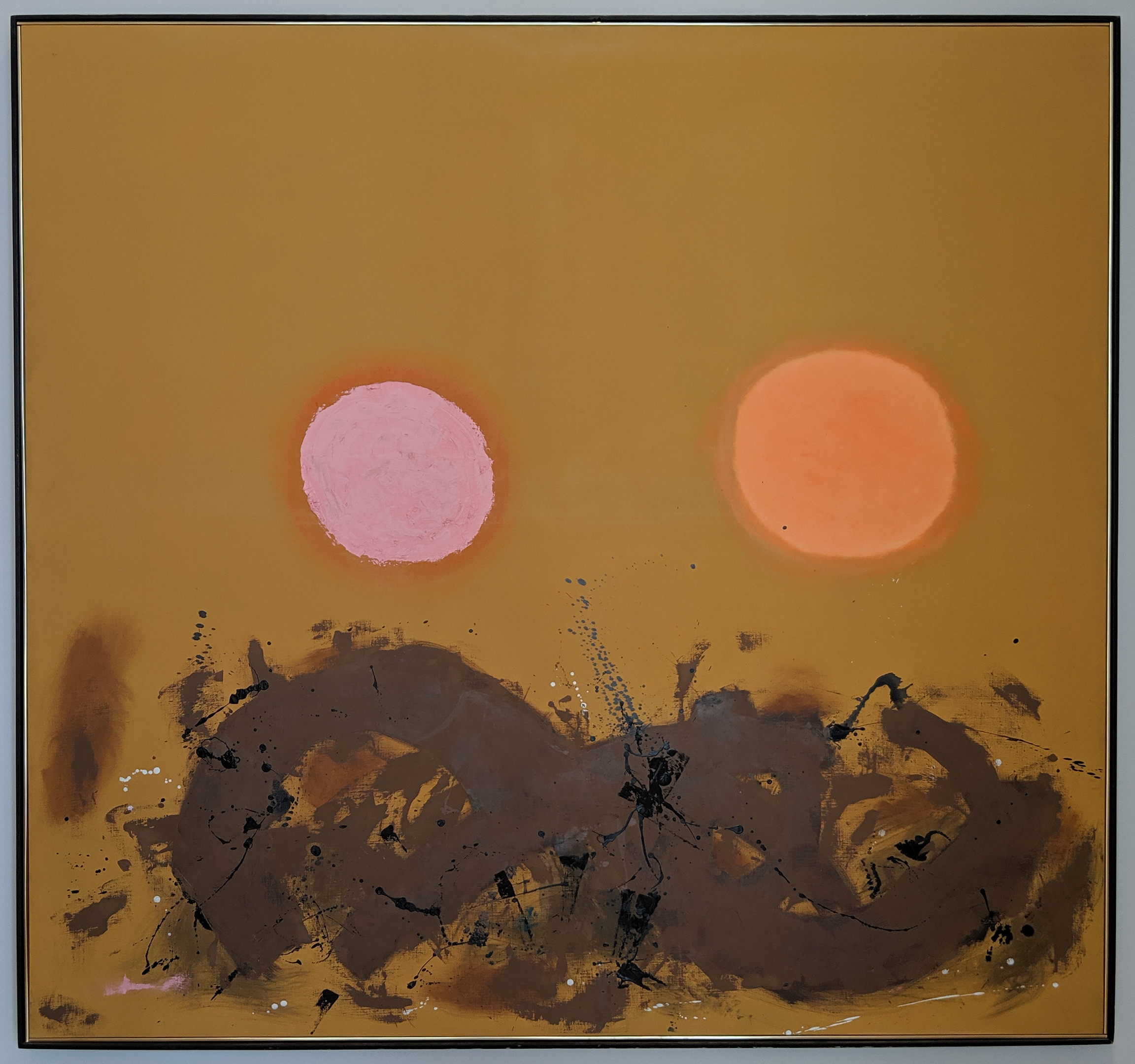
Adolph Gottlieb (American, 1903–1974), Duet, 1962. Oil on canvas, 84 × 90 in. High Museum of Art, Atlanta, Georgia. Photo: Victoria Emily Jones.
In his succinct poem “The Dream,” Paul J. Pastor reflects on the dissonance between our earthbound reality—marked by misrule, violence, and famine—and the new-earthly reality that awaits us when Christ returns. Which is truer, more ultimately solid? This present bleakness, or the long-dreamt-of future that we see glimpses of throughout the scriptures, in the visions of prophets and the words and deeds of Jesus?
The poem reminds me of these lines from George MacDonald’s Diary of an Old Soul:
Lord, in the land of things that swell and seem, Help me to walk by the other light supreme, Which shows thy facts behind man’s vaguely hinting dream.
And Samwise Gamgee’s oft-quoted question from Tolkien’s Return of the King, which Christian eschatology answers in the affirmative: “Is everything sad going to come untrue?”
“The Dream” comes from Pastor’s latest collection, The Locust Years, most of which was written from 2020 to 2024, a time of pandemic, increasingly intense political polarization in the US, and, as Pastor mentions in the opening, for him, personal grief. The book’s title is a reference to Joel 2:25, where God promises his people, “I will restore to you the years that the locust hath eaten . . .”
Paul J. Pastor is a poet, writer, and editor whose work uncovers the inner life of the world as experienced in nature, literature, and the rich traditions of historic Christian spirituality. In addition to two volumes of poetry—The Locust Years and Bower Lodge—he is also the author of A Kids Book About God, The Listening Day, and The Face of the Deep. He is an executive editor for Nelson Books, an imprint of HarperCollins, and he lives in Oregon’s Columbia River Gorge with his wife and three children.
PODCAST: Poetry for All, hosted by Joanne Diaz and Abram Van Engen:Poetry for All “is for those who already love poetry and for those who know very little about it. In this podcast, we read a poem, discuss it, see what makes it tick, learn how it works, grow from it, and then read it one more time.” I’ve consistently enjoyed this podcast since its launch in 2020, having learned about it through cohost Abram Van Engen [previously], an academic who often writes and speaks about poetry for general Christian audiences. Here are some of my favorite episodes of the ninety-seven that have been released to date:
Three haiku by Kobayashi Issa, translated from the Japanese by Robert Hass: The first: “The snow is melting / and the village is flooded / with children.” Learn the characteristics of what Joanne Diaz calls “the perfect poetic form.”
“spring song” by Lucille Clifton: One of my favorite poems by one of my favorite poets. “This joyful poem caps a sequence of sixteen poems called ‘some jesus,’ which walks through biblical characters (beginning with Adam and Eve) and ends on four poems for Holy Week and Easter. [Clifton] wrote other poems on the Bible as well, including ‘john’ and ‘my dream about the second coming,’ which reimagine a way into biblical characters to make their stories fresh.”
“Elegy for My Mother’s Mind” by Laura Van Prooyen: This episode is unique in that it has the poet herself on to read and discuss the poem, which in this case navigates the complexities of memory, loss, and familial relationships.
“View but This Tulip” by Hester Pulter: Ashamedly, I had never heard of this seventeenth-century female poet before listening to this episode, so I’m grateful to guest Wendy Wall, cocreator of the award-winning Pulter Project website, for introducing me to her! “In this episode we discuss [Pulter’s] work with emblems, her scientific chemistry experiment with flowers, and her wonderment (both worried and confident, doubtful and awestruck) about the resurrection of the body and its reunification with the soul after death.”
“From Blossoms” by Li-Young Lee: A much-anthologized poem ostensibly about eating summer peaches, but more deeply, it’s about joy. “One of the things that draws me to this poem,” says Van Engen, “is that joy is actually very hard to write about . . . without it sounding naive or sentimental or withdrawn or unaware.”
“Primary Care” by Rafael Campo: Dr. Rafael Campo is both a poet and a practicing physician. Here he uses blank verse to explore the experience of illness and suffering.
+++
POEMS:
>> “For V. the Bag Lady, Great in the Kingdom of Heaven,” “Damascus Road,” “The Sower,” and “Crosses” by Paul J. Pastor: The Rabbit Room received permission to reproduce four poems from Paul J. Pastor’s [previously] new poetry collection, The Locust Years, which “explores a world of mystery and sorrow, desolation and love. Rooted in the Pacific Northwest, these poems offer readers an invitation to walk along a path pebbled with profound joy and deep loss.” I’ll be sharing another on the blog next week, courtesy of Wiseblood Books.
>>“Undone”by Michael Stalcup: The rise of blogging in the aughts and its descendant, Substacking, in the last few years has meant that poets and other writers can share their work directly with their reading publics and give them insight into their creative process if they wish. On his Substack, the Thai American poet Michael Stalcup [previously] recently shared one of his new poems that’s based on the story of the woman caught in adultery in John 8:1–11. He explains how the poem’s form, a blend of the Petrarchan sonnet and the chiasmus, contributes to its meaning.
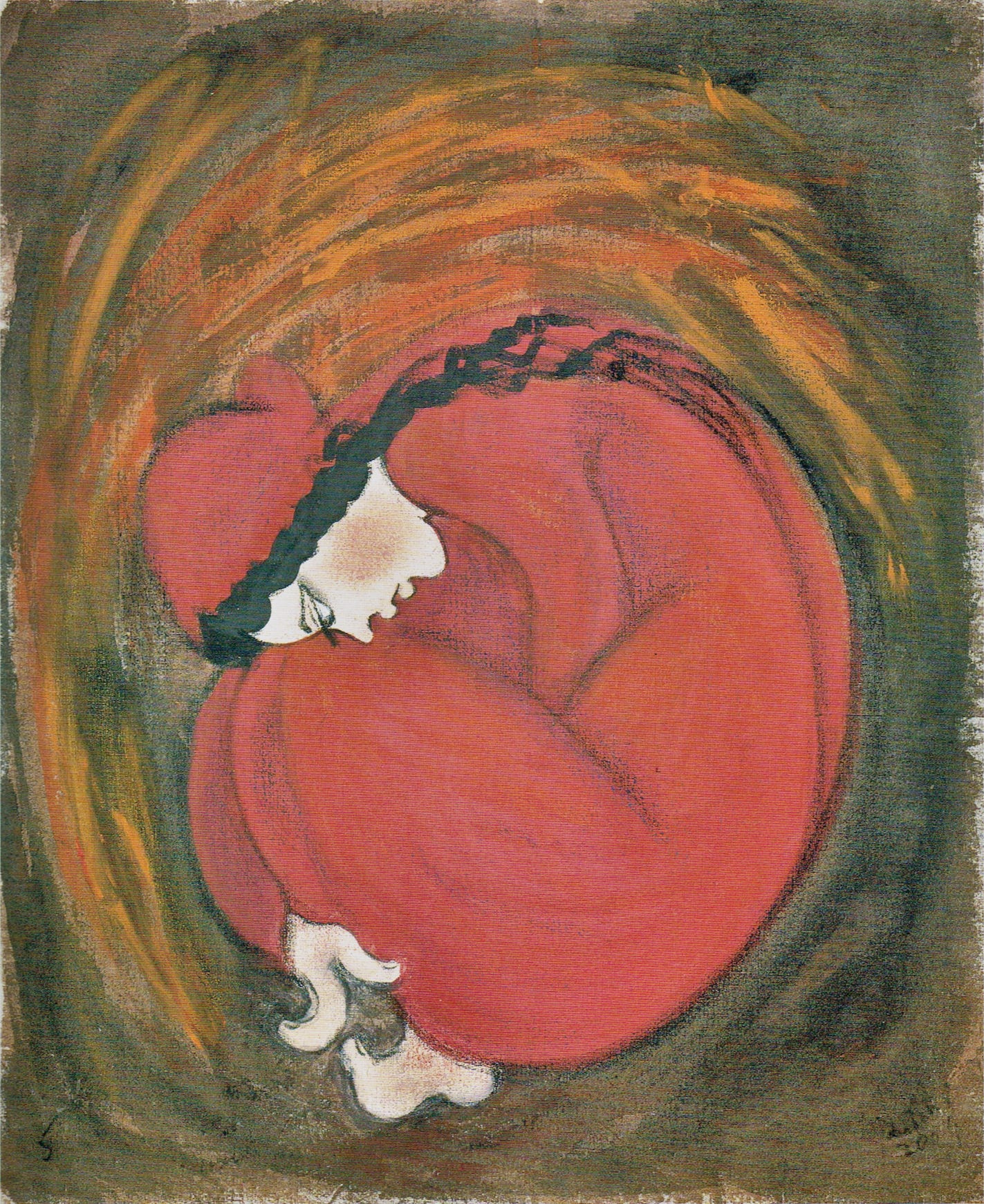
Nalini Jayasuriya (Sri Lankan, 1927–2014), Go, Sin No More, 2004. Mixed media on cloth, 23 × 19 in. Published in The Christian Story: Five Asian Artists Today, ed. Patricia C. Pongracz, Volker Küster, and John W. Cook (Museum of Biblical Art, 2007), p. 119.
Blessed be the paps which Thou hast sucked. —Luke 11:27
Suppose he had been Tabled at thy Teats, Thy hunger feels not what he eats: He’ll have his Teat ere long (a bloody one). The Mother then must suck the Son.
Scholar Kimberly Johnson [previously] unpacks these four lines about the body of Christ, who as an infant drank milk from his mother’s breast, and whose sacrificial death opened up his own breast whence flows the blood that nourishes us all. Johnson teases out the overlap of physical and spiritual in the poem, highlighting the maternal sharing of one’s own substance that links both couplets. At the eucharistic table, we are bidden to come and eat; or, in the stark metaphorical language of Crashaw, come and suck Christ’s bloody teat.
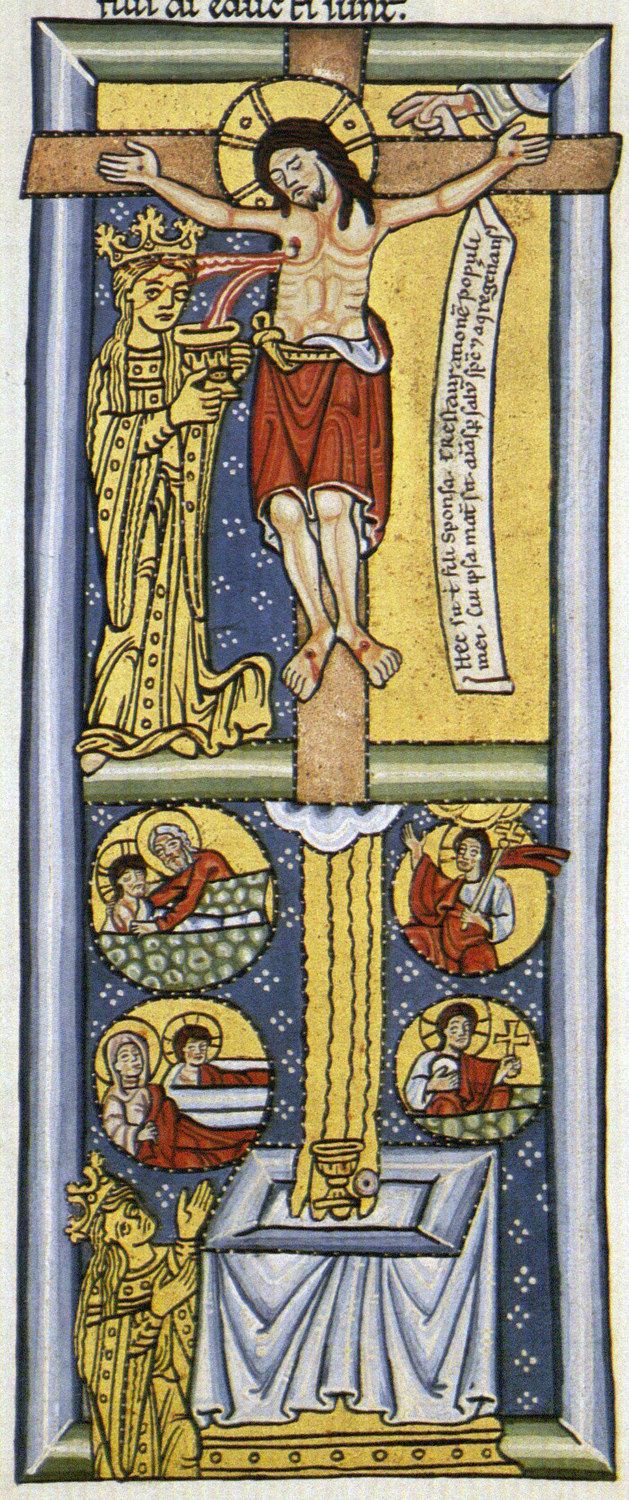
I plan to write an essay sometime about Christ as a nursing mother, as I’ve seen the image pop up in medieval writings and some visual art, including from Kongo and Ethiopia. In the meantime, here’s an illumination of the sixth vision in part 2 of Hildegard of Bingen’s Scivias (Know the Ways), painted under the supervision of Hildy herself. It shows the crucified Christ feeding Ecclesia (his bride, the church) with blood from his breast.
“The Crucifixion and the Eucharist,” from Scivias (Know the Ways) II.6, Rupertsberg Abbey, Germany, before 1179. Rupertsberg Codex, fol. 86r, Hildegard Abbey, Eibingen, Germany. The original manuscript from Hildegard’s lifetime was lost in 1945, but a faithful copy was made in 1927–33, which is the source of the color reproductions now available.
+++
ESSAY: “Only One Heart: The Poetry of Franz Wright as Emblem of God’s Grace” by Bonnie Rubrecht, Curator: “Are You / just a word? // Are we beheld, or am I all alone?” These three lines typify the poetry of Franz Wright (1953–2015), the Pulitzer Prize–winning author of Walking to Martha’s Vineyard, God’s Silence, and other collections. “Wright’s work is often described as confessional, colored by irony and humor. His irreverence, juxtaposed with honesty and humility, make his poetic voice unique in addressing God. Writers and poets often traffic in spiritual themes, but few modern poets echo the prophetic Old Testament tradition of crying out, approaching God with the concision and raw emotion that Wright does. He excels in voicing the concerns and ruminations of the human experience of suffering, while simultaneously shifting towards his own embodiment of grace.”
WEBINAR: “Formational Films Round-Up: Movies That Matter,” hosted by Renovaré: Recorded August 24, this is an excellent eighty-minute conversation with film critic and professor Jeffrey Overstreet [previously], minister Catherine Barsotti, and theologian Chris Hall, led by Carolyn Arends [previously]. Each of the three guests identifies and discusses five films that have been spiritually formative to them—and what great selections! (Though there are four I have not yet seen.) Barsotti’s number one is one of my all-time favorites.
Because the movie ratings issue (that is, content like violence, sex, and/or profanity) is almost always raised by Christian audiences, Arends asks, “Are there some films that are bad for you to watch, and if so, why?” The question is wisely addressed from 34:52 to 49:40.
+++
INTERVIEW: “We must become poetry,”Still Life: For the September 13, 2021, edition of his weekly Still Life letter, Michael Wright [previously] interviewed Christian author Paul J. Pastor, having been intrigued by a recent tweet of his, which asks, “Where are the bardic preachers, wild at the eye, speaking not just to mind or heart, but to gut?” Pastor talks about the connection between the seen and the unseen; the relationality of poetry and finding shelter in the words, images, and emotions of another; holistic knowing; the disservice of reducing the Bible’s poetry to moral lessons with tidy applications; the nearness of Walt Whitman’s poetic vision to the Christian vision of sanctification; and more.
“My passion is for Christians to reclaim our way’s remarkable resources for living virtuously, beautifully, and well,” he says. Mine too!
To subscribe to Still Life, distributed for free every Monday over email, click here.
+++
Lecture by David Brinker for the 8th Catholic Arts Biennial, Verostko Center for the Arts at Saint Vincent College, Latrobe, PA, September 12, 2021: I mentioned the call for entries for this exhibition back in June. Of the 396 entries from artists from around the country, MOCRA director and guest juror David Brinker has selected 52. In this talk given the weekend after the exhibition’s opening (which starts at 14:47), he discusses the following three questions, pulling in artworks from the current exhibition and from his twenty-five-plus years as an art curator at a Catholic institution.
What identifies contemporary art as “Catholic”?
What contributions can Catholic art and artists offer to the broader contemporary art world?
What can Catholic art and artists receive from the broader art world?
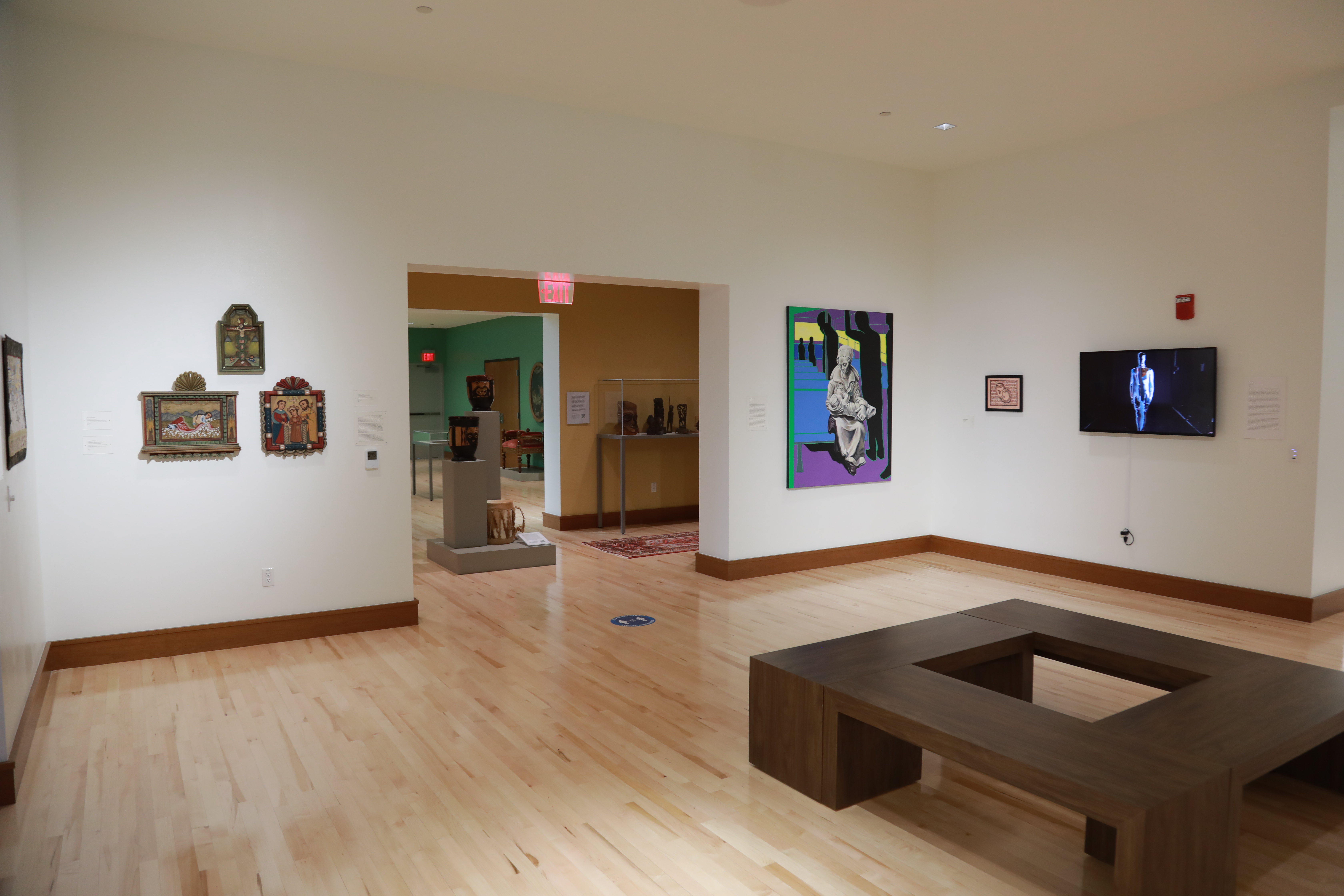
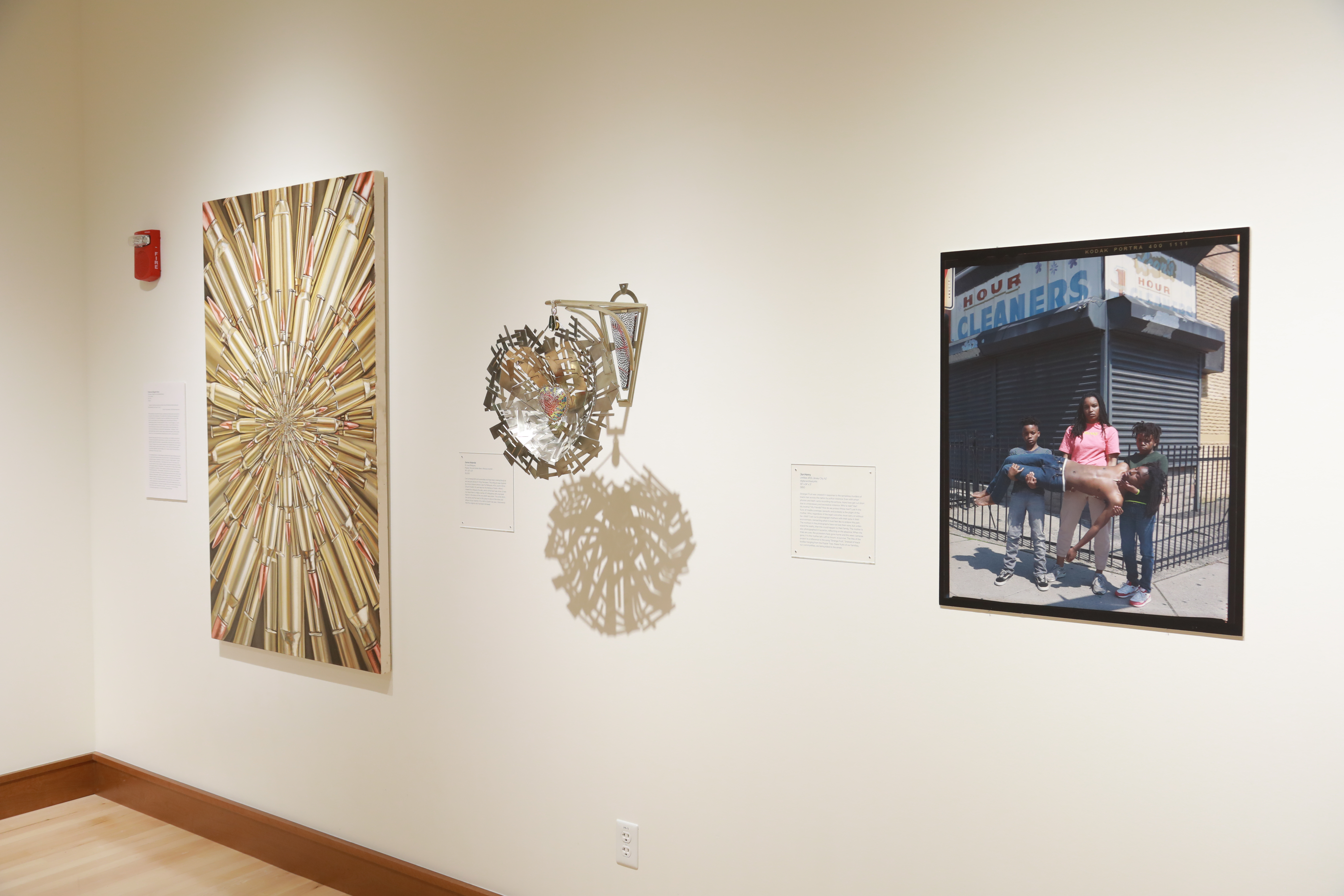
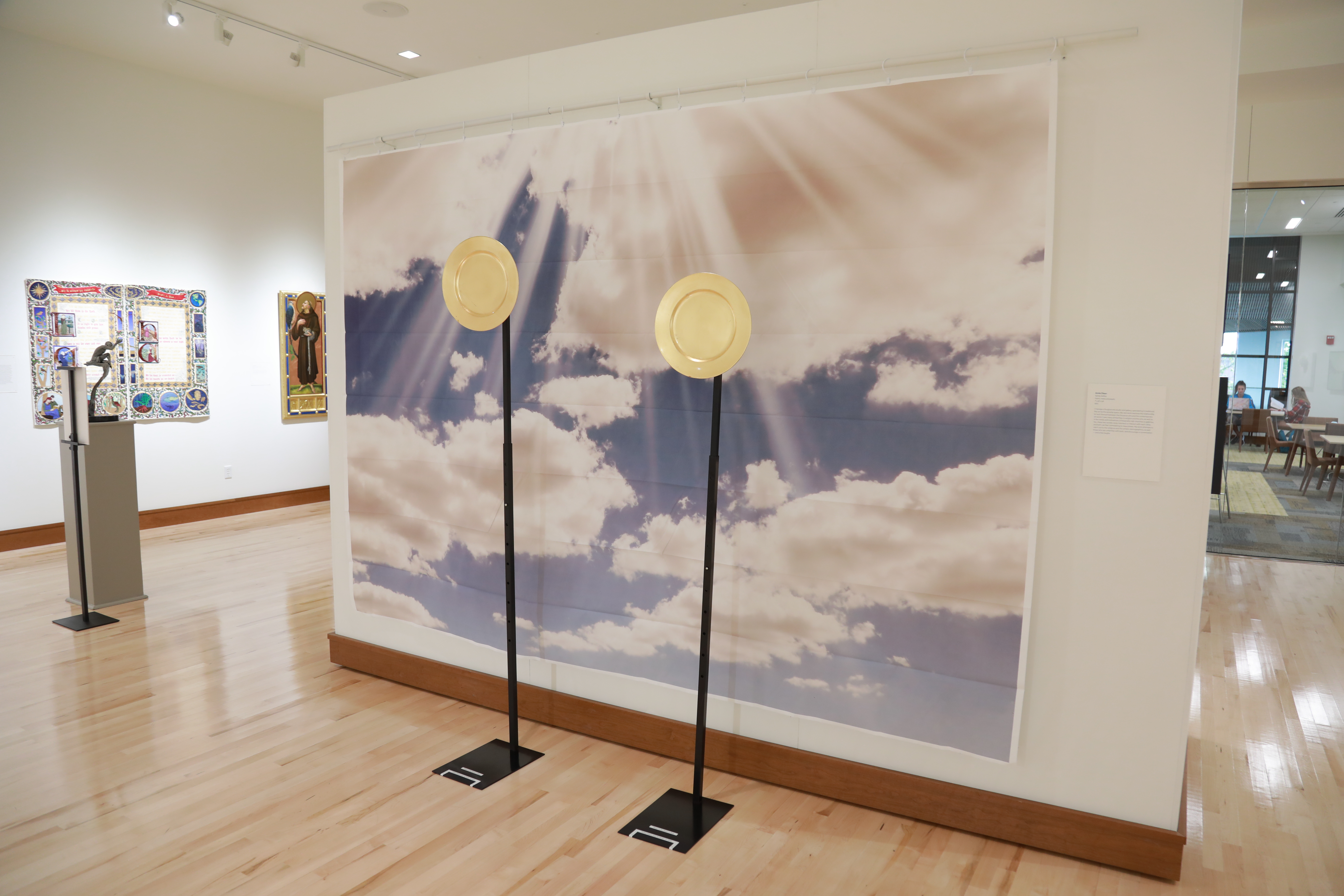
Exhibition view, 8th Catholic Arts Biennial. From left to right are three retablos by Vicente Telles, Maternidad by Piki Mendizabal, Iesu in Utero by Rebecca Spilecki, and The Living Temple by Jesse Klassen.The Heart of Man by Kristen van Diggelen Sloan; St. Laud Reliquary by James Malenda; Untitled, #33, Jersey City, NJ by Jon HenryForeground: Saintly Selfies by Annie Dixon
(The three photos above are provided courtesy of the Verostko Center for the Arts.)
Saint Vincent’s 8th Catholic Arts Biennial exhibition is on view through October 29, 2021; off-campus visitors are asked to make an appointment by emailing verostkocenter@stvincent.edu. While you’re in the area, you might also want to visit the Fred Rogers Center at Saint Vincent College, which houses artifacts from Mister Rogers’ Neighborhood as part of a larger permanent exhibition on his life, work, and influence. (Latrobe was Fred Rogers’s hometown.) And Pittsburgh is just an hour away!
+++
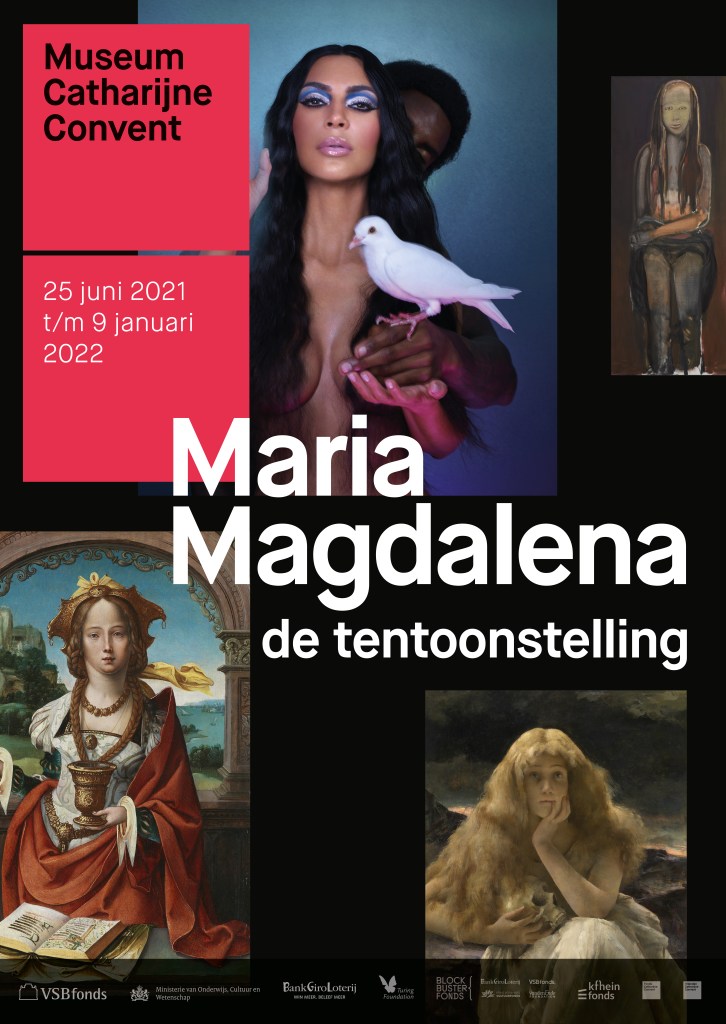
EXHIBITION: Maria Magdalena (Mary Magdalene),Museum Catharijneconvent, Utrecht, Netherlands, June 25, 2021–January 9, 2022: Curated by Lieke Wijnia. “Mary Magdalene is one of the most enigmatic women from the New Testament. Through a trans-historical display of artistic representations from the eleventh century to the present day, this exhibition explores the enduring fascination for this mysterious saint.” The catalog, Mary Magdalene: Chief Witness, Sinner, Feminist, is available in Dutch or English from the publisher Waanders. In addition to the exhibition page on the museum’s website, which hosts select images and a series of videos, resources in Dutch include an audio tour (with images), a podcast episode and accompanying article, and a video preview with commentary by Karin Haanappel.
I’m fascinated by Mary Magdalene, and while I won’t get to see this exhibition, it appears that it does an excellent job of exploring the many facets of her life and identity (including both before meeting Jesus and after his ascension), as told through canonical and apocryphal texts, and her complicated reception history. It addresses her role as the first witness to Jesus’s resurrection; the so-called Gnostic Gospel of Mary, which has Peter saying, “Sister, we know that the Savior loved you more than the rest of the women. Tell us the words of the Savior which you remember—which you know (but) we do not, nor have we heard them”; the legacy of Pope Gregory the Great’s infamous Easter sermon of 591 CE, which, in its (many would say erroneous) conflation of the Magdalen with other New Testament women, identified her as a converted prostitute; the development of legends about her later life in southern France, as an evangelist, a miracle-worker, and a penitent, cave-dwelling ascetic; modern films and literature that cast her as a romantic lover, or even the wife, of Jesus; and Pope Francis’s elevation of her liturgical commemoration from an obligatory memorial to a feast day in 2016, in which she is to be celebrated not as a fallen woman doing penance but as the “apostle to the apostles,” a title of hers dating back to the High Middle Ages.
The poster above features Mary Magdalene Receives the Holy Spirit by American photographer David LaChapelle, Magdalena by contemporary South African artist Marlene Dumas, The Magdalen from a sixteenth-century Flemish workshop, and Mary Magdalene by nineteenth-century Belgian artist Alfred Stevens.
+++
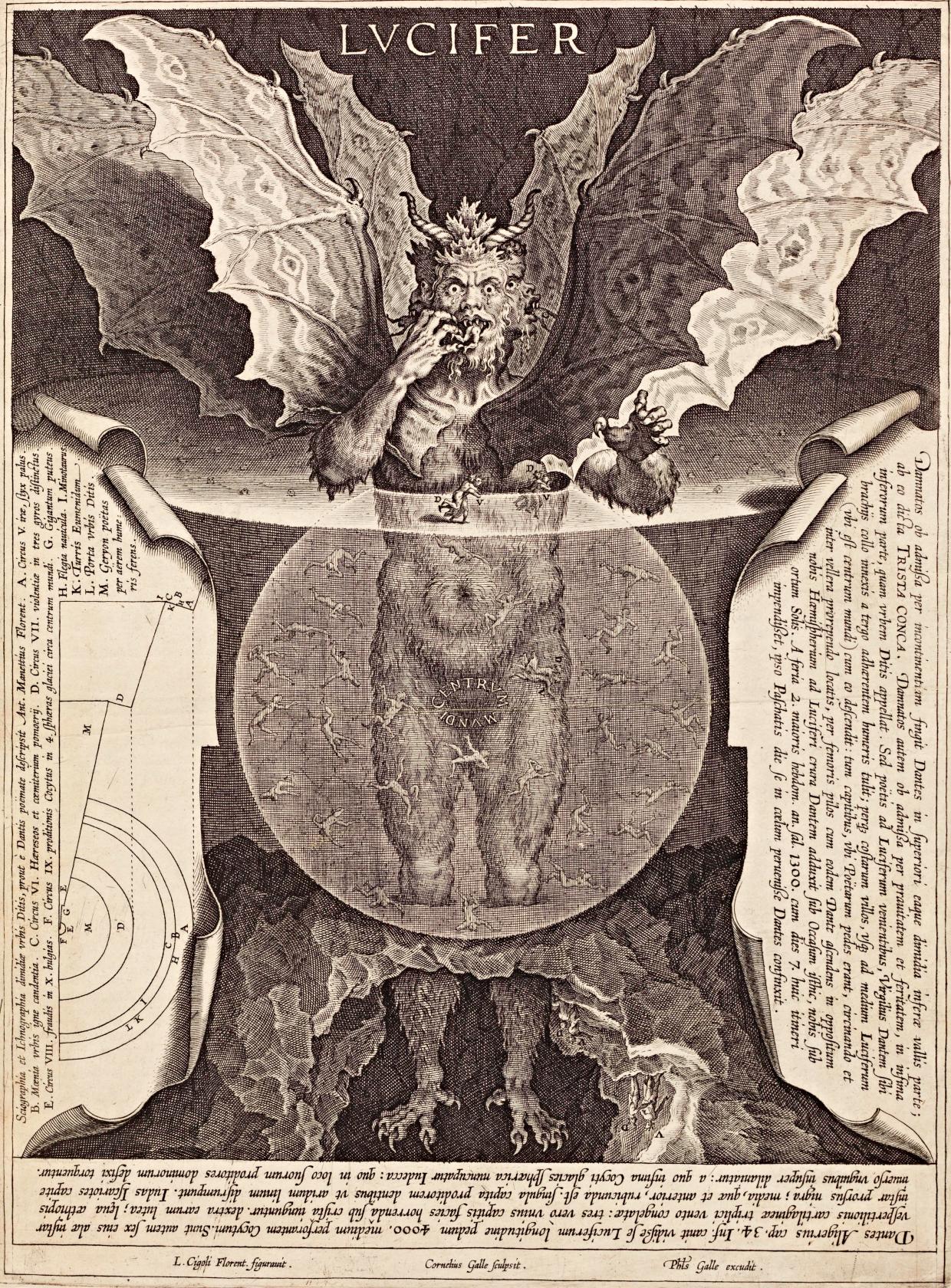
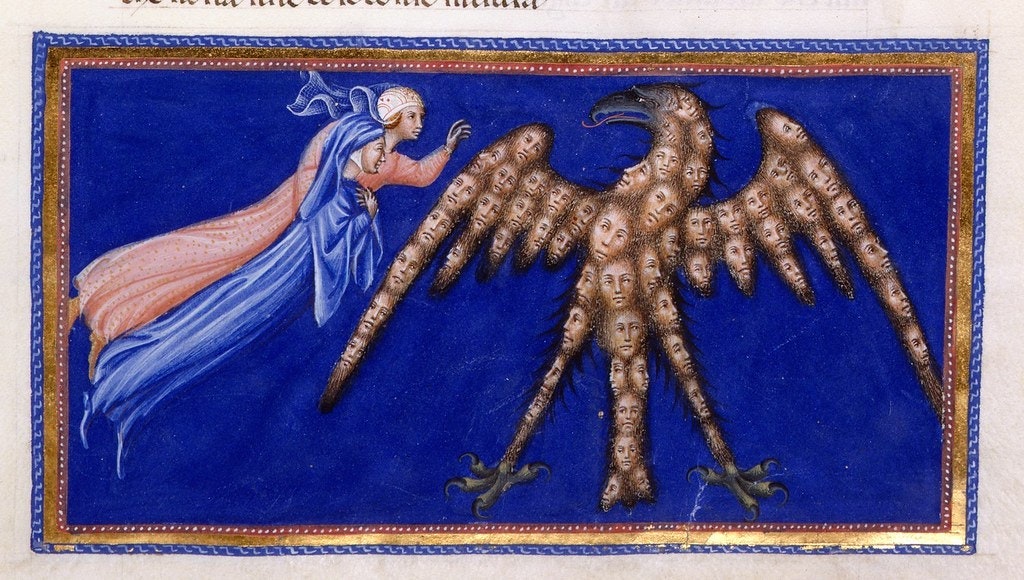
ARTICLE: “700 Years of Dante’s Divine Comedy in Art”: In honor of the seven hundredth anniversary of the Italian poet Dante Alighieri’s death on September 14, the Public Domain Review has collected art directly inspired by his Commedia from over the last seven centuries—on the nine circles of hell, the beatific vision, and much more. Under the tutelage of literature professor Stefano Gidari, I read and studied Dante’s groundbreaking afterlife-adventure trilogy—in Italian!—in 2009 while living in Florence, where it was written, which was such an invaluable experience.
Cornelis Galle I (Flemish, 1576–1650), Lucifer, after Stradanus, ca. 1595. Engraving, 27.5 × 20 cm.Giovanni di Paolo (Italian, ca. 1403–1482), Dante and Beatrice before the Eagle of Justice, ca. 1450. From Yates Thompson 36, fol. 162, British Library, London.

 Art & Theology