Roundup: Historiated crosses, English ballad carol of the Crucifixion, and more

Holy Week begins Sunday. I will be publishing short daily devotional posts during that time and through the first eight days of Easter. Also: don’t forget about the Art & Theology Holy Week Playlist and Eastertide Playlist! I’ve made some new song additions since last year, mixed in to preserve the narrative flow.

+++

ART VIDEO: “The Crucifixion, c. 1200 (from Christus triumphans to Christus patiens)”: When I was a student in Florence for a semester, my first paper for my Italian history, art, and culture class traced the evolution of the painted wood-panel crucifix in late medieval Italy, from the Christus Triumphans (Triumphant Christ) type to Christus Patiens (Suffering Christ). I lived less than a five-minute walk from the Uffizi, which has in its collection a beautiful example of each—explored by Drs. Steven Zucker and Beth Harris in this short Smarthistory video. Longtime readers of the blog may recognize the latter, which I posted back in 2018.
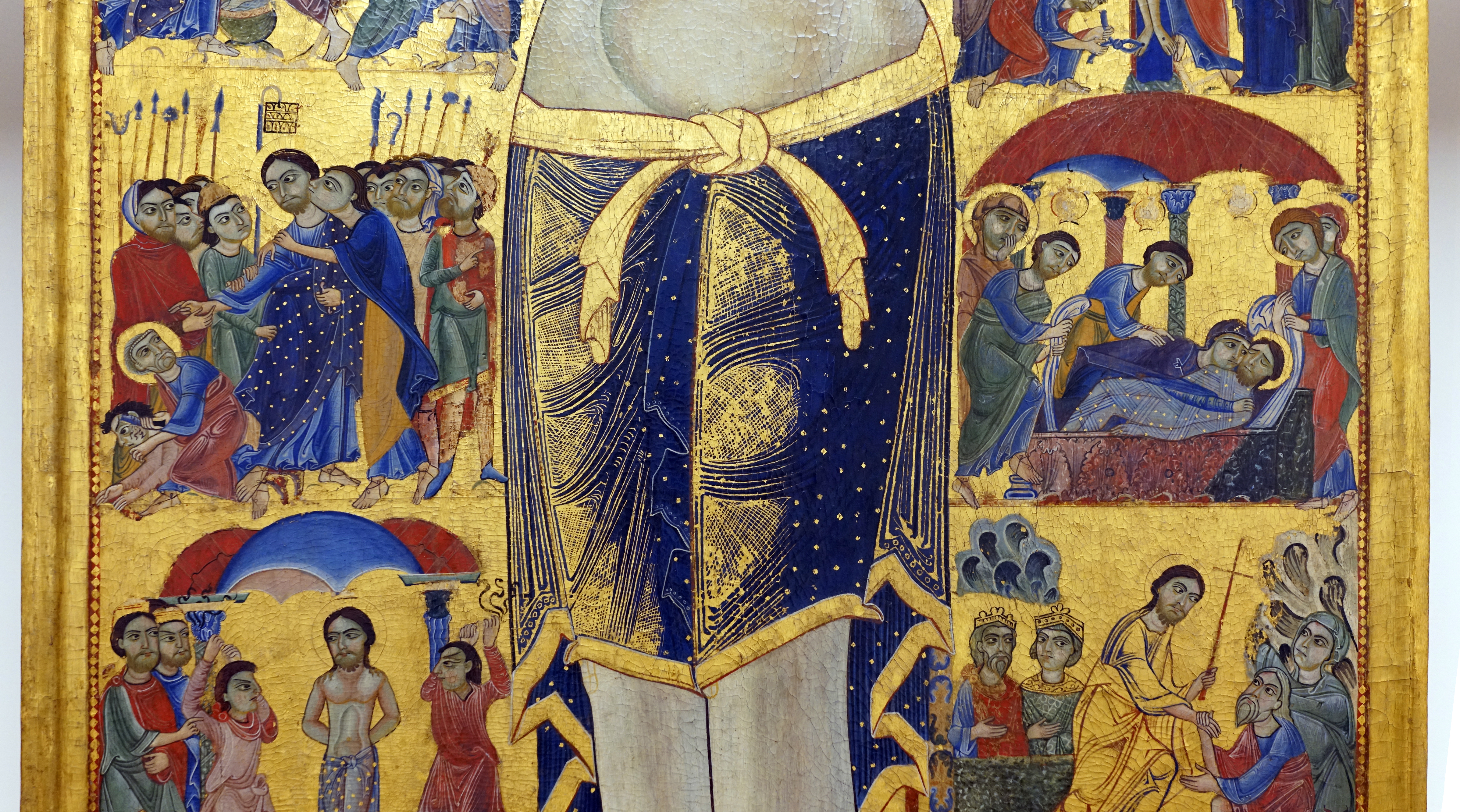
Painted cross, Pisa (detail)
Painted cross (detail), Pisa, ca. 1180–1200. Tempera and gold leaf on wood, 277 × 231 cm. Galleria degli Uffizi, Florence, Inv. 432. [object record]

Zucker provides wonderful photos of both in high resolution on his Flickr page (start here and scroll right)—the full crosses and details of each apron scene—available for free noncommercial use under a Creative Commons license. And there are many other art historical images there as well!

+++

ONLINE EXPERIENCE: “Anamnesis: Journey through the Stations of the Cross”: This year visual artist Daniel Callis and the music and liturgy collective The Many collaborated on a self-guided set of online Stations of the Cross. There are fifteen total, which are being released one at a time every morning and evening from March 30 through April 5. Each station consists of an artwork, a prayer, a song, and a written meditation that help us enter into lament.
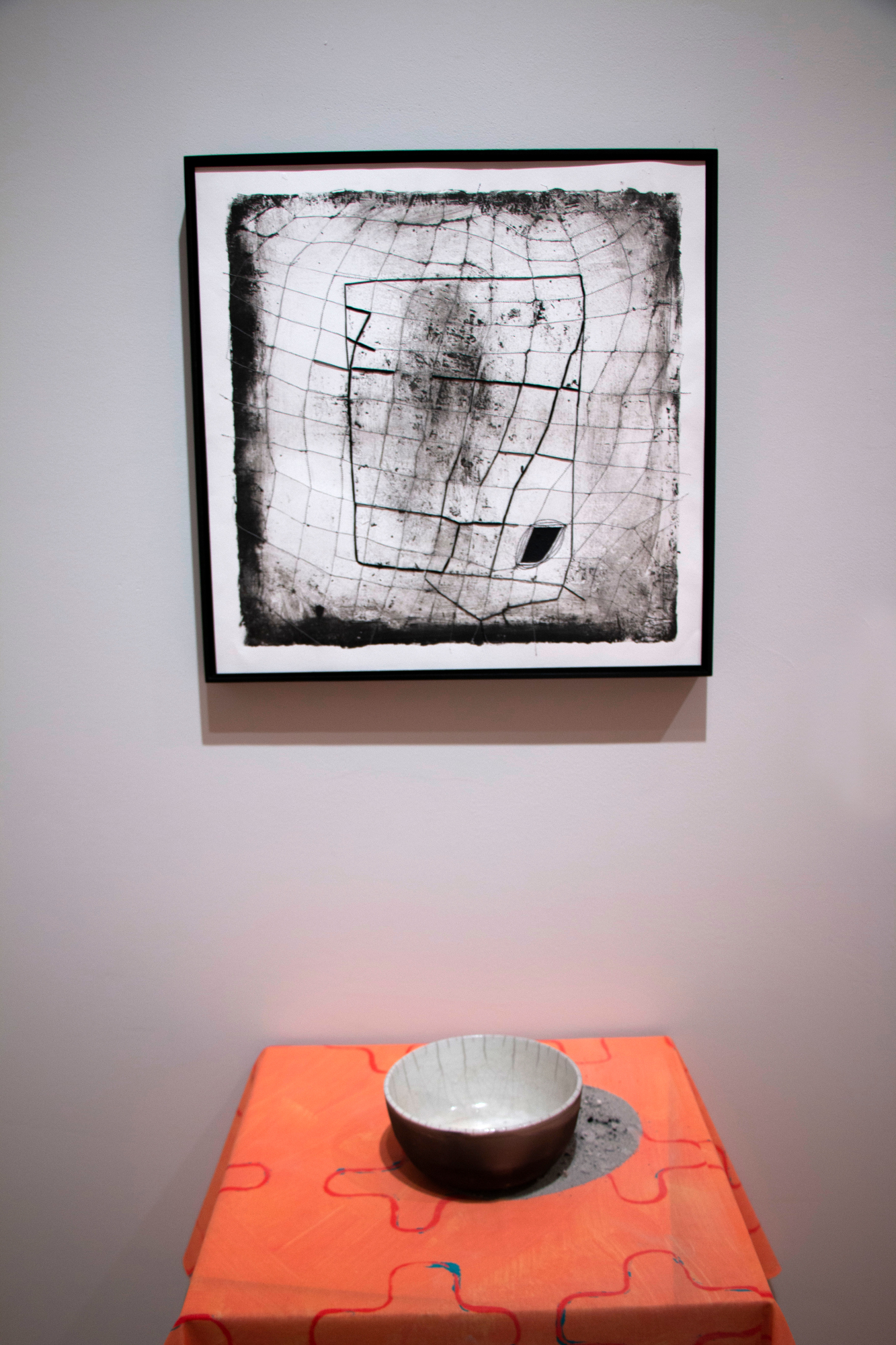
Callis, Dan_Grief Station 1
Daniel Callis (American, 1955–), Grief Station #1, Prognosis, 2022. Ink, oil, palm ash, fiber, clay, ash, fabric, 60 × 24 × 24 in. (total work). Photo courtesy of the artist.

The artworks are by Callis, and they’re from his Stations: Resurgam series, a body of work that was just exhibited this month at Green Art Gallery at Biola University in La Mirada, California. He began the series in January 2021 in response to the death of his son, Jeremy David Callis (1980–2020). It consists of fifteen mixed-media works on paper (his process involves printing, “wounding,” stitching, etc.) and fifteen raku-fired offering bowls that incorporate, from the cooling process, copies of letters, hospital documents, and drawings from Jeremy. “They are about pain and the absurd insistent pursuit of hope,” Callis says of the series. Resurgam is Latin for “I shall rise again.”

The songs are by The Many.

+++

BOOK EXCERPT from The Unvarnished Jesus: A Lenten Journey by Brian Zahnd: In this post from his blog, Pastor Brian Zahnd excerpts a passage from his book The Unvarnished Jesus (2019). “To interpret the meaning of the cross is more than a life’s work—in fact, it has and will remain the work of the church for millennia,” he writes. “The cross is the ever-unfolding revelation of who God is, and it cannot be summed up in a simple formula. This is the bane of tidy atonement theories that seek to reduce the cross to a single meaning. The cross is many things: It’s the pinnacle of God’s self-disclosure. It’s divine solidarity with all human suffering. It’s the shaming of the principalities and powers. It’s the point from which the satan is driven out of the world. It’s the death by which Christ conquers Death. It’s the abolition of war and violence. It’s the supreme demonstration of the love of God. It’s the re-founding of the world around an axis of love. It’s the enduring model of co-suffering love we are to follow. It’s the eternal moment in which the sin of the world is forgiven . . .” Read more.

+++

SONGS:

>> “The Leaves of Life”: “The Leaves of Life,” alternatively titled “The Seven Virgins,” is a traditional English ballad carol of Christ’s passion, first set down in the nineteenth century. It is narrated by (the apostle?) Thomas, who on a fateful Friday runs into the Virgin Mary and six of her companions, who are looking for Jesus. He directs them to the hill where Jesus is being crucified (“And sit in the gallery” may be a corruption of “The city of Calvary”). The women tearfully fly to the site, and Jesus tries to console his mother from the cross before breathing his last. The song ends with Thomas imbibing a strong scent of rose and fennel as he meditates on Christ’s love. [HT: Global Christian Worship]

Here the song is performed in the chapter house of Wells Cathedral in Somerset by William Parsons, founder of the British Pilgrimage Trust and author of Singing for Our Supper: Walking an English Songline from Kent to Cornwall, a book about the seven months he spent as a wandering minstrel. Parsons refers to it as a gypsy carol because Ralph Vaughan Williams collected one version of it from the Roma singer Esther Smith during his 1908–13 collecting trips that resulted in the publication, with Ella May Leather, of Twelve Traditional Carols from Herefordshire (1920).

>> “Were You There”: This African American spiritual is performed here by Pegasis, a vocal trio of sisters—Marvelis, Rissel, and Yaina Peguero Almonte—originally from the Dominican Republic but now living in Green Bay, Wisconsin. It’s as if they’re the three Marys singing their testimony! The song is on their 2016 album Peace Through Praise, which they released under the name The Peguero Sisters. Their harmonies are gorgeous.

+++

PODCAST EPISODE: “Malcolm Guite: Poems on the Passion”: In this special passion- and resurrection-themed Nomad devotional episode from 2018, Malcolm Guite reads and reflects on three of his poems, and David Benjamin Blower performs an original three-part song that he wrote in response and that has not been released elsewhere (see 4:30, 16:04, and 27:18).

Guite’s “Jesus dies on the cross,” part of his Stations of the Cross sonnet cycle, was inspired by a line from George Herbert’s poem “Prayer”: “God’s breath in man returning to his birth.” And his “Easter Dawn” [previously] is based in part on a sermon by the seventeenth-century Anglican bishop Lancelot Andrewes. Paraphrasing Andrewes, Guite says, “Jesus is the gardener of Mary [Magdalene]’s heart—her heart is all rent and brown and wintery, and with one word, he makes all green again.” Beautiful! For more on the theme of Jesus as gardener, see my 2016 blog post “She mistook him for the gardener.”
Roundup: Virtual Advent concerts, dreams deferred, pop-up floral memorials, and more

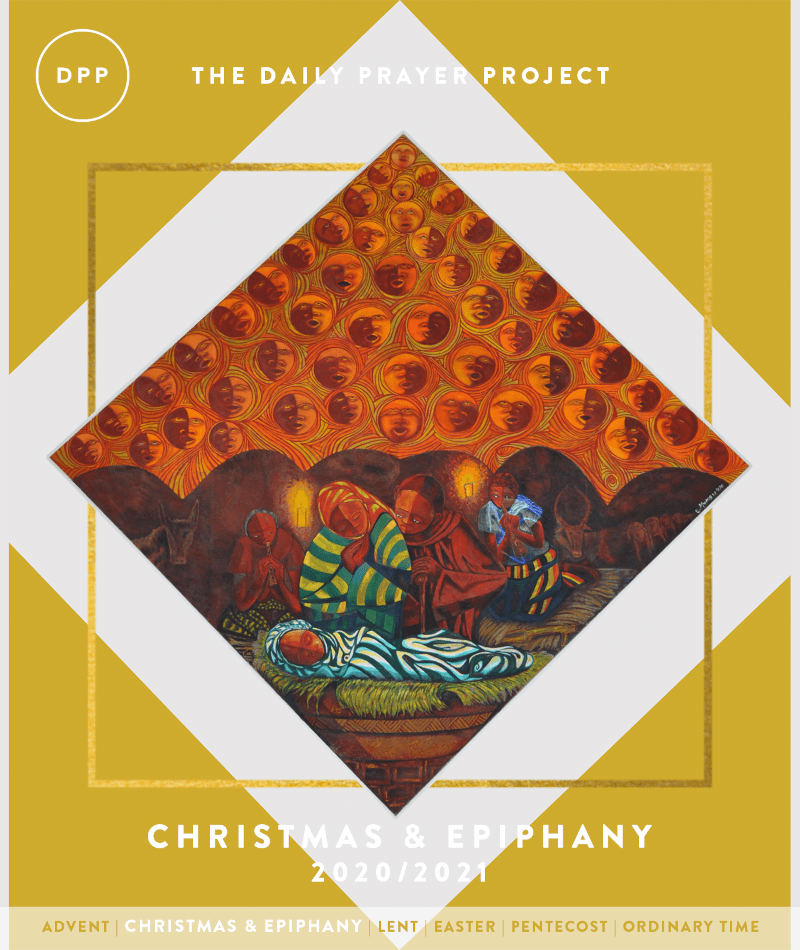
The Christmas–Epiphany 2020/21 edition of the Daily Prayer Project [previously], a publication I work for part-time, released this week! The cover image is from the sanctuary mural at Holy Angels Catholic Church in Chicago, by Cameroonian artist-priest Engelbert Mveng. (See the full mural here.) Also in this edition are images of Grace Carol Bomer’s From Strength to Strength, showing Light stepping into darkness, and the Piper-Reyntiens stained glass window in Coventry Cathedral, with its yellow sunburst amid an abstract pattern of reds, blues, and greens. We include visual art as a supplement to the prayers, scripture readings, and songs with the understanding that it, too, can promote spiritual development and a deeper communion with God.

You can purchase a digital copy (PDF) of the Christmas–Epiphany edition (December 24–February 16) through the website, and if in the future you’d like to receive hard copies, starting with Lent 2021, you can become a monthly subscriber. Part of the money goes to supporting artists.

+++

Whenever I see a Helena Sorensen [previously] byline, I perk up, because I always find myself connecting so much with her writing. She’s a regular contributor to the Rabbit Room blog. Her two most recent posts are “Things Fall Apart” and “Advent, Week One: Hope.” They’re both great.

+++

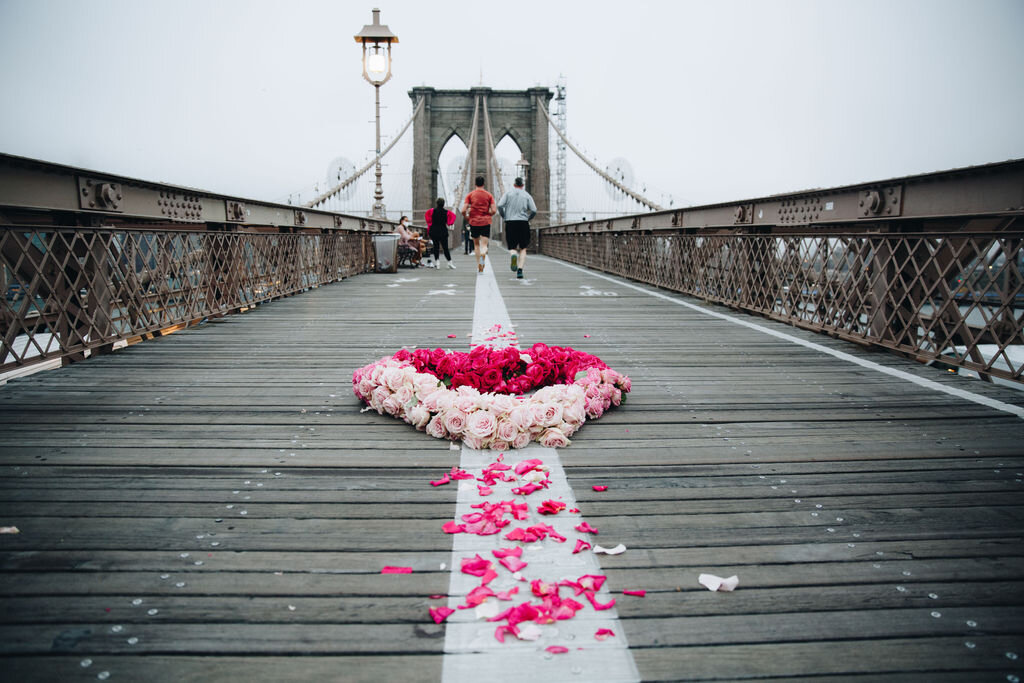
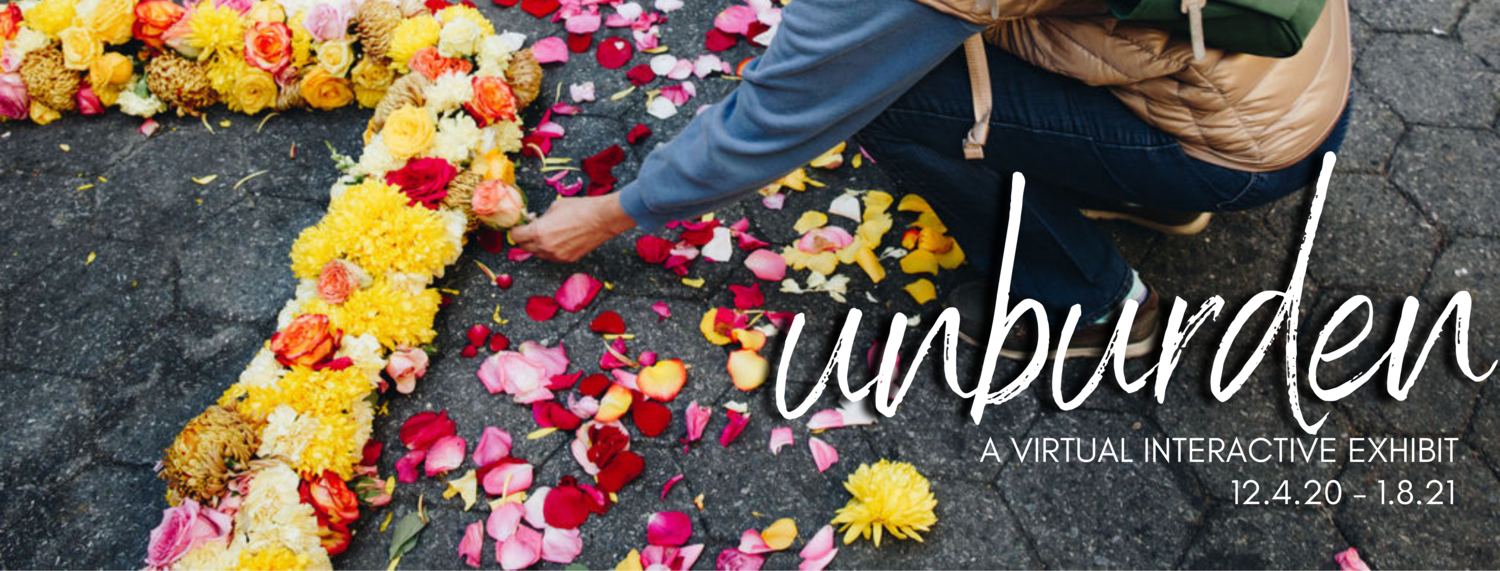
Unburden: A Virtual Interactive Exhibit, December 4, 2020–January 8, 2021: The Gallery at W83 is part of a 45,000-square-foot cultural center built by Redeemer Presbyterian Church in Manhattan’s Upper West Side as a service to the city’s artists and larger community. W83 Events and Programming Director Eva Ting has curated a virtual exhibition of photographs and stories from Kristina Libby’s Floral Heart Project, a series of living memorials to those lost to or suffering from COVID-19. Libby initiated the project in New York City in May, partnering with 1800Flowers.com to place floral heart garlands all around the city to create space for ceremony and to invite the community to process and mourn. The project has since grown nationwide.

“Many of us are carrying burdens of loss, anxiety, and uncertainty as we move towards the end of 2020,” Ting writes. “We have all been impacted in some way by the events of this year, and we bear fatigue weighed heavier by the inability to gather as a community to collectively grieve. In this interactive virtual exhibit Unburden, the Gallery at W83 invites you to participate in an unburdening of the load we carry.”

The exhibition webpage invites you to release personal burdens by writing down any grief, fears, loss, or anxiety you wish to let go of (can be submitted anonymously if desired). These words will be incorporated into a new floral heart laying on December 20 at Fort Tryon Park, an event that will be livestreamed. You can also ask for prayer, and members of the W83 team will pray for your requests. “Through these individual and collective acts of unburdening, may we imagine what it would look like to truly let go of these burdens.”

Floral Heart Project (Brooklyn Bridge)
Photo by Erica Reade

+++

I enjoyed attending the virtual “Songs of Hope: A TGC Advent Concert,” featuring music and spoken-word performances from a variety of artists (see YouTube description), interspersed with Advent readings. It was a truly meaningful worship experience.

I’m sure there are many more virtual Advent/Christmas concerts and other online events coming up. What ones are you most looking forward to?

One that I’ll probably be tuning in to is “We Three Queens Holiday Show” by Pegasis, a sister trio, on December 17, 8:30 p.m. EST (7:30 p.m. CST). It will be live on Facebook and and Instagram. (Update, 12/17/20: View the performance here. My favorite two songs are probably “Poncho Andino” at 19:04 and “Mary Had a Baby” at 45:24—such a unique arrangement!)

There’s also “A Candlelit (Virtual) Room: The Advent Christmas Music of Ben Thomas” on December 11 and 12 (10 p.m. EST and 8 p.m. EST, respectively), two private Zoom concerts open to the first twenty-five registrants each. He’ll be performing original songs from his albums The Bewildering Light, The Wilderness Voice, and Peace Here, all of which I recommend. My favorite tracks: “Justice Will Sprout from the Ground,” “Zechariah and the Least Expected Places,” and “Shepherds and Angels.” (The latter two were recorded under the name So Elated.)

+++

POEM: “Harlem” by Langston Hughes: This is a brilliant poem—its sensory images, its rhythm, its rhyme, its multivalence (especially the last line). I loved it so much when I first read it in ninth grade that I memorized it unbidden. When writer and podcaster Joy Clarkson posted a reflection on the poem for her Patreon community in October, resulting in a lively conversation thread in the comments section, it reignited my enthusiasm for and got me thinking more deeply about “Harlem.” She opened by quoting Proverbs 13:12: “Hope deferred makes the heart sick, / But desire fulfilled is a tree of life.”

“What happens to a dream deferred? // Does it dry up / like a raisin in the sun?” Written in 1951 as part of a sequence of poems exploring black life in Harlem, “Harlem” is inextricably tied to the civic discourse of the contemporary American moment, writes Scott Challener in Poetry Foundation’s guide to the poem. The “dream” he refers to is the so-called American Dream, unattainable for so many due to racial inequalities and oppression. (Also assigned in the ninth-grade English curriculum is Lorraine Hansberry’s A Raisin in the Sun, which takes its title from and addresses the questions of “Harlem.”)

While not wishing to strip the poem of its specific context, I have been thinking about all the dreams that have been deferred this year—put on hold, or even irretrievably lost, because of COVID-19. Hughes posits a string of descriptive similes for a deferred dream: a dried-up raisin, a festering sore, rotting meat, a crusted-over sweet, a sagging load. One commenter on Joy’s Patreon observed how a raisin can’t turn back into a grape, rotten meat can’t be made fresh again, and an overcooked dessert can’t be cooked back down (though perhaps the burnt bits could be scraped off), but a sore can heal and a load can be lifted.

The final suggestion—“or does it explode?”—can be read in myriad ways. In one respect it could refer to the explosion of cultural output, of creativity, that results from deferred dreams—i.e., the Harlem Renaissance. I’ve definitely seen this happen this year, as people, in the face of crushing personal and professional disappointments, have found unique ways to come together and produce and share works of beauty within the restrictiveness of health and safety protocols. One example—speaking of Harlem—is the Dance Theatre of Harlem, a groundbreaking neoclassical ballet company founded at the height of the civil rights movement in 1969 and still active today. Bans on gatherings of certain numbers have meant that dancers and other performers have had to find alternative ways of reaching their audiences, so DTH artists Derek Brockington and Alexandra Hutchinson created “Dancing Through Harlem,” taking choreography from Robert Garland’s “New Bach” out into the streets and capturing it on video for people to enjoy from home. To help support the DTH during this time, you can donate easily through the fundraising sidebar on the video’s YouTube page or through the company’s website.

+++

SONG: “400 Years” by Sarah Sparks: This original song, sung with Kate Lab, appears on Sarah Sparks’s new album, Advent, Pt. One. It’s about how the centuries-long silence of God between the ministry of Malachi (ca. 420 BCE) and the appearance of John the Baptist in the early first century CE was broken with the birth of Jesus—the Word made flesh. Its refrain, “For the first time, not a silent night,” cleverly turns on its head the sweet, familiar carol “Silent Night.” Through the incarnation, God spoke to all who would listen.

Wade in the Water (Artful Devotion)

Hambling, Maggi_Wall of Water II
Maggi Hambling (British, 1945–), Wall of Water II, 2011. Oil on canvas, 78 × 89 in. (198.1 × 226.1 cm). Photo: Douglas Atfield.

Then the angel of God who was going before the host of Israel moved and went behind them, and the pillar of cloud moved from before them and stood behind them, coming between the host of Egypt and the host of Israel. And there was the cloud and the darkness. And it lit up the night without one coming near the other all night.

Then Moses stretched out his hand over the sea, and the LORD drove the sea back by a strong east wind all night and made the sea dry land, and the waters were divided. And the people of Israel went into the midst of the sea on dry ground, the waters being a wall to them on their right hand and on their left. The Egyptians pursued and went in after them into the midst of the sea, all Pharaoh’s horses, his chariots, and his horsemen. And in the morning watch the LORD in the pillar of fire and of cloud looked down on the Egyptian forces and threw the Egyptian forces into a panic, clogging their chariot wheels so that they drove heavily. And the Egyptians said, “Let us flee from before Israel, for the LORD fights for them against the Egyptians.”

Then the LORD said to Moses, “Stretch out your hand over the sea, that the water may come back upon the Egyptians, upon their chariots, and upon their horsemen.” So Moses stretched out his hand over the sea, and the sea returned to its normal course when the morning appeared. And as the Egyptians fled into it, the LORD threw the Egyptians into the midst of the sea. The waters returned and covered the chariots and the horsemen; of all the host of Pharaoh that had followed them into the sea, not one of them remained. But the people of Israel walked on dry ground through the sea, the waters being a wall to them on their right hand and on their left.

Thus the LORD saved Israel that day from the hand of the Egyptians, and Israel saw the Egyptians dead on the seashore. Israel saw the great power that the LORD used against the Egyptians, so the people feared the LORD, and they believed in the LORD and in his servant Moses.

—Exodus 14:19–31

+++

SONG: “Wade in the Water,” African American spiritual

There have been many, many performances of this song over the years. For a nice, concise history of recordings, from gospel and doowop and choral to modern jazz, R&B, heavy rock, and northern soul, see this article by Mike Hobart. Below is a handful I’ve found and enjoy.

A gospel version by Brother John Sellers from 1959, driven by piano:

A choral arrangement by Paul T. Kwami, performed by the Fisk Jubilee Singers in 2019 (the soloist isn’t credited, but she’s amazing!):

Pegasis is a vocal trio of sisters from the Dominican Republic, formerly performing under the name The Peguero Sisters. Here they’re accompanied by guitar and shaker (this is the YouTube version, but the harmonies are cleaner on their 2016 album recording):

The Petersens apply their signature bluegrass stylings in their rendition, performed a few weeks ago in this video but also on their 2019 album Homesick for a Country:

According to oral lore, Harriet Tubman used the song “Wade in the Water” to communicate strategy to slaves traveling the Underground Railroad: its coded language alerted freedom seekers that bounty hunters were on their trail with bloodhounds and that they should jump into the river so that the dogs couldn’t track their scent. This popular myth about the song has not been confirmed, and the National Park Service, which preserves historical sites associated with the Underground Railroad and promotes research on the topic, suggests that it’s probably not true.

It is known, however, that it was sung at river baptisms, and still is, as the Exodus is seen as an archetype of baptism, of redemption through water. Not only that, but the song also draws on the pool of Bethesda passage in John 5, where people gathered to be healed: “For an angel went down at a certain season into the pool, and troubled the water: whosoever then first after the troubling of the water stepped in was made whole of whatsoever disease he had” (v. 4). (This verse is found in some early New Testament manuscripts but not the earliest and is therefore omitted from several modern translations.)

In the documentary God’s Greatest Hits, pastor and gospel recording artist Wintley Phipps says, “‘Wade in the Water,’ to me, . . . means people who are afraid of moving forward, progressing, taking a step, and facing uncertainty—go ahead, wade in the water. Take that step. As terrifying as it may seem at that very moment, it’s gonna be alright, and the miracle we seek is gonna happen.”

There’s the famous song “Bridge Over Troubled Water.” Well, in Exodus, God carves out a bridge through troubled water! Imagine walls of water standing multiple stories high on either side of you, filled with tiger sharks and other marine life. And you have to cross the sandy bottom in faith that those walls will hold up until you reach the other side.

“Wade in the Water” affirms that God is going to stir things up; he’s going to do something big. Just like he did when he brought Israel up out of Egypt.

For other songs based on the this week’s lectionary reading from Exodus, see my coverage of “Carol of the Exodus” and “Oh Mary, Don’t You Weep.”

+++

Maggi Hambling is one of Britain’s most significant painters and sculptors. Her nine “Walls of Water” paintings were made in 2010–11 and were first exhibited in 2014 at the National Gallery in London. Vast, intense, and energetic, they were inspired by her experience of giant waves crashing onto the seawall at Southwold, Suffolk, where she lives. “Through turbulence and exuberant colour, Hambling continues to affirm painting’s immediacy, saying, ‘The crucial thing that only painting can do is to make you feel as if you’re there while it’s being created – as if it’s happening in front of you’” (source).

Maggi Hambling (British, 1945–), Wall of Water V, 2011. Oil on canvas, 78 × 89 in. (198.1 × 226.1 cm). Photo: Douglas Atfield.

View other paintings from the series at Artsy.net.


This post belongs to the weekly series Artful Devotion. If you can’t view the music player in your email or RSS reader, try opening the post in your browser.

To view all the Revised Common Lectionary scripture readings for Proper 19, cycle A, click here.