Roundup: Sister Wendy on the art of Holy Week, Fernando Botero’s “Via Crucis,” and more

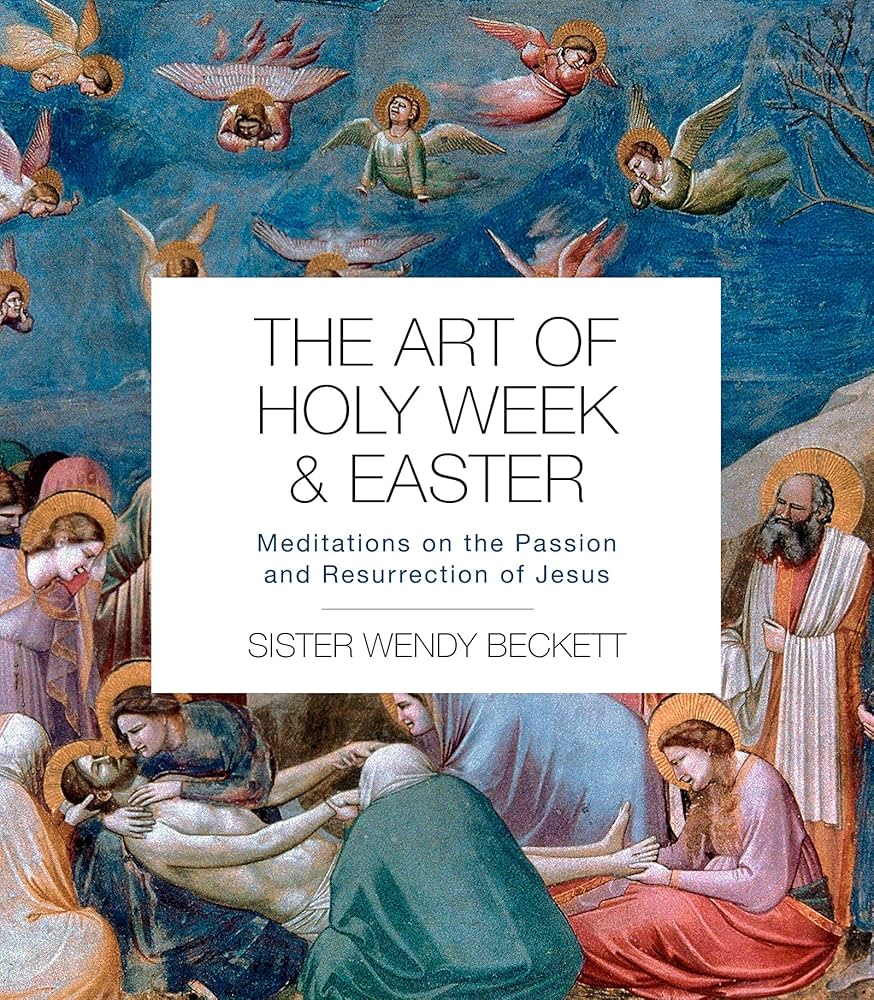
BOOK: The Art of Holy Week and Easter: Meditations on the Passion and Resurrection of Jesus by Sister Wendy Beckett (2021): Sister Wendy Beckett, a British Catholic nun and art enthusiast who died in 2018, is the one who first got me interested in art history. We watched clips from her BBC series Sister Wendy’s Story of Painting in my studio art class in high school, and I was so drawn to the way she looked at art and talked about it. Enthusiastic, warm, inquisitive, spiritually sensitive and theologically astute, and interested not just in the technical qualities of a work but also in its content—though I know I lack the same flair, my own voice and approach when it comes to art are indebted to hers.

So I was delighted to see that SPCK (and IVP in North America) has published two church calendar–based art devotionals by Sister Wendy: one for Lent, and one for Holy Week and Easter. I was disappointed with The Art of Lent: It has an admirable diversity of art selections, but Sister Wendy’s reflections are short and basic, and most don’t shine in the way I’ve come to expect from her; there were only two standouts for me. I also found it thematically confusing (for example, a section on “Confidence”?), unfocused, and redundant (especially in the “Silence” and “Contemplation” sections). I will grant that Lent is a more difficult season to structure for a project like this than Advent is, as I found the one year I published a daily Lent series; it can mean many things to many people.
The Art of Holy Week and Easter

Sister Wendy’s The Art of Holy Week and Easter, on the other hand, I did enjoy and recommend. I wish it had the same variety as the Lent book. (There’s only one modern/contemporary painting.) I care for only about half the featured artworks—two favorites are below—but even for the ones I was disinclined toward, her commentary helped me appreciate them.
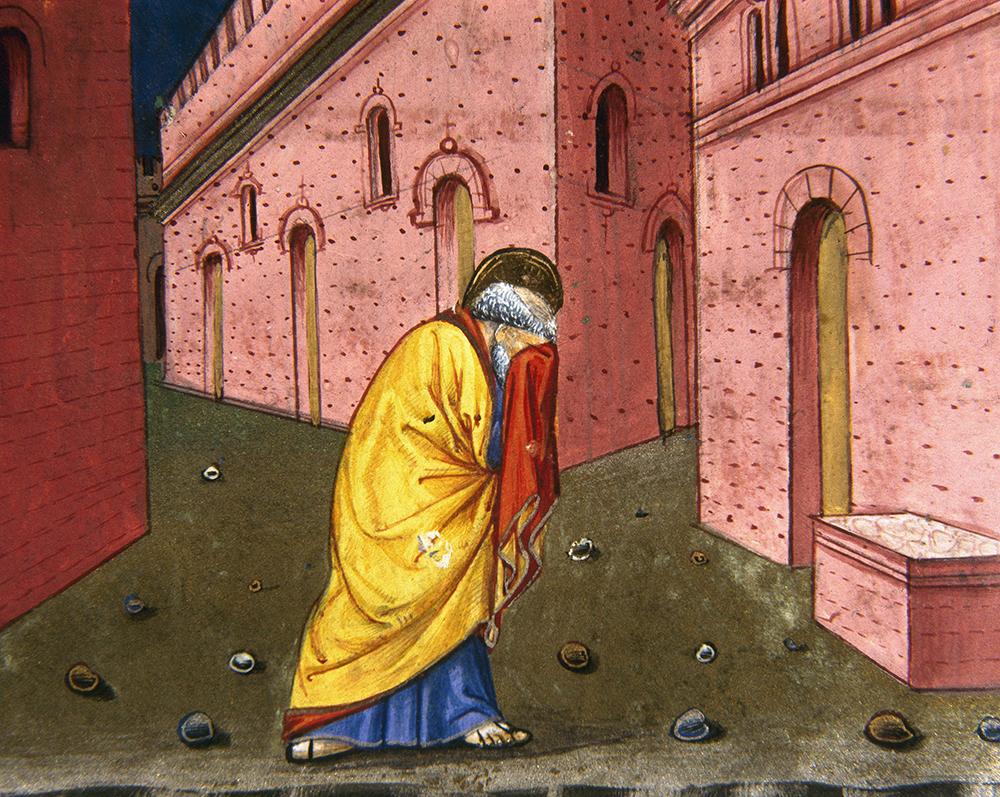
Peter's Repentance
Cristoforo de Predis (Italian, 1440–1486), “Saint Peter realizing he has thrice betrayed Jesus,” from the Leggendario Sforza-Savoia, 1476. Codice Varia 124, Biblioteca Reale (Royal Library), Turin, Italy.

About a medieval manuscript illumination of Peter weeping by Cristoforo de Predis, Sister Wendy writes:

This magical little picture presents an unforgettable image of grief. It is that most painful kind of grief, lamenting of our own folly. Here we see Peter with his shamed face covered, stumbling blindly forward from one closed door to the next. There are ways out behind him, but Peter is too lost in misery to look for them. This claustrophobic despair, this helpless anguish, this incapacitating sense of shame: these are the result of a sudden overturn of our own self-image.

Peter had honestly seen himself as one who loved and followed Jesus, priding himself, moreover, on how true his loyalty was in comparison with that of others. ‘Even if all should betray you, I will never betray you’ – it was a boast, but he had meant it. Now he sees, piercingly, that he is fraudulent. He has been unmasked to himself, he has lost his self-worth.

The crucial question is: What next? Will he hide his face forever, destroyed by self-pity? Will he lose all heart, perhaps even kill himself, as Judas did? But while Judas felt only remorse, Peter feels contrition, a healing sorrow that will lead to repentance and a change of heart. Now that he knows his true weakness, he will cling to Jesus as never before. He will cling in desperate need and not in false strength, and will in the end become truly Peter, the ‘rock’, on which the Church, likewise dependent on Christ, will be built. (26)

El Greco_Christ crucified with Toledo in the Background
El Greco (Greek Spanish, 1541–1614), Christ Crucified with Toledo in the Background, 1604–14. Oil on canvas, 111 × 69 cm. Fundación Banco Santander, Madrid.

About El Greco’s Christ Crucified, she mentions how “Jesus . . . dies looking upwards, his determination set upon his Father’s will and its consummation. . . . His body spirals upwards like a white flame, radiating out as he spreads his arms to share the light with the defeated shadows” (38).

+++

HYMNS:

>> “O Love, How Deep, How Broad, How High”: I’ve enjoyed learning a few new-to-me hymns from the YouTube channel of Josh Bales. Attributed to the fifteenth-century German-Dutch Catholic mystic Thomas à Kempis, this hymn text was translated from Latin into English by Benjamin Webb in 1871. It appears in the Episcopal hymnal with the tune EISENACH by Bartholomäus Gesius, as adapted by Johann Hermann Schein in 1628, which is what Bales sings. It’s rare among hymns for emphasizing that our salvation was won not just by Christ’s death but also by his life—his faithful obedience to the Father.

>> “I Stand Amazed (How Marvelous)”: A favorite from my childhood, this 1905 gospel hymn by Charles H. Gabriel is performed here by the Imani Milele Choir, made up of orphaned and/or vulnerable children and youth from Uganda.

>> “Come Let Me Love”: I recently learned of this shape-note hymn from a book I’m reading by J. R. Watson. Written by the late great Isaac Watts, the text was first published in the 1706 edition of Watts’s Horæ lyricæ with the title “Christ’s Amazing Love and My Amazing Coldness.” I especially love verses 4 and 5, reproduced below. The tune in the following video, LAVY, is actually a new one (from 1993) that sounds old, by John Bayer Jr.

Infinite grace! Almighty charms!
Stand in amaze, ye rolling skies!
Jesus, the God with naked arms,
Hangs on a cross of love and dies.

Did pity ever stoop so low,
Dress’d in divinity and blood?
Was ever rebel courted so,
In groans of an expiring God?

+++

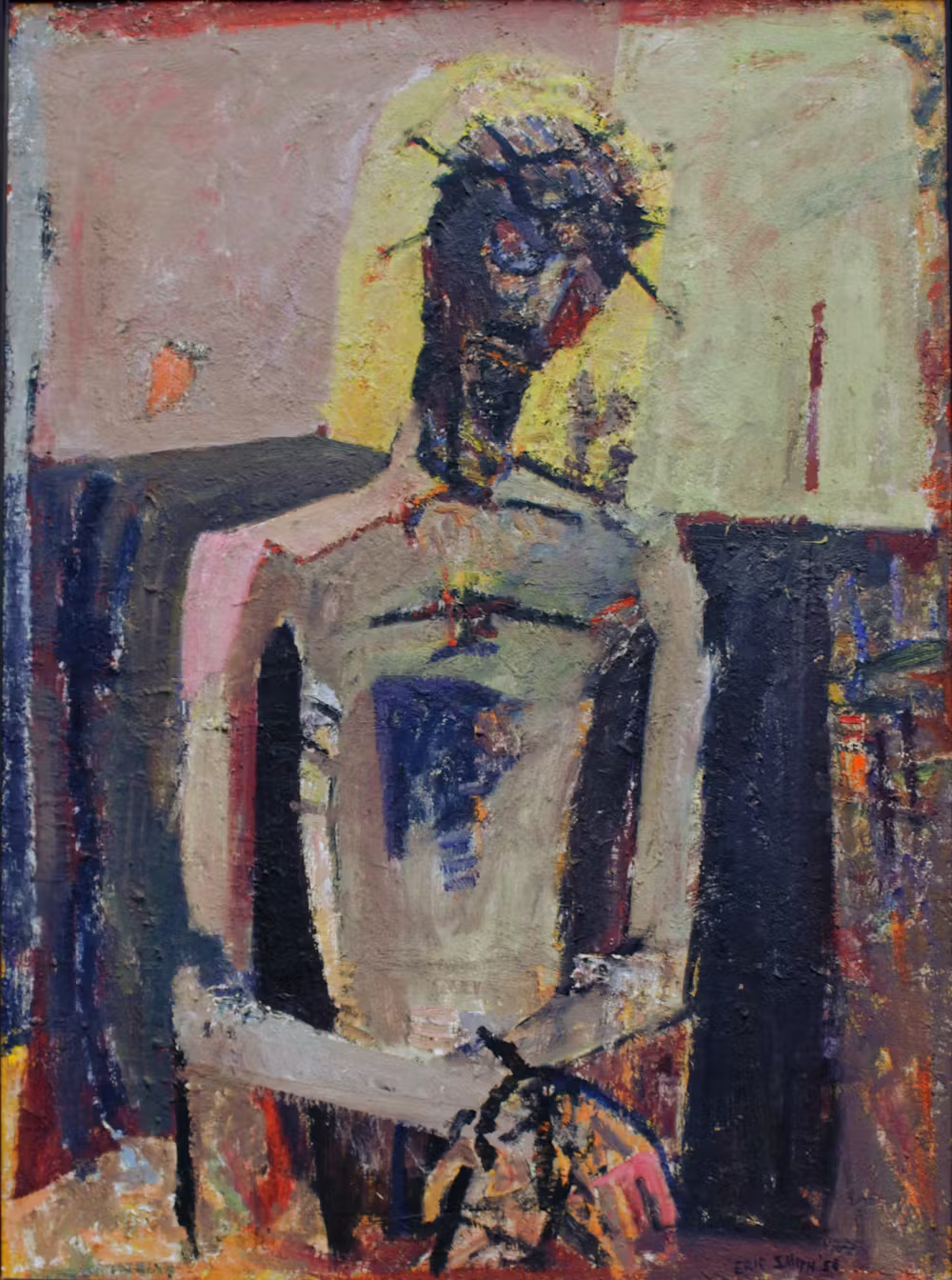
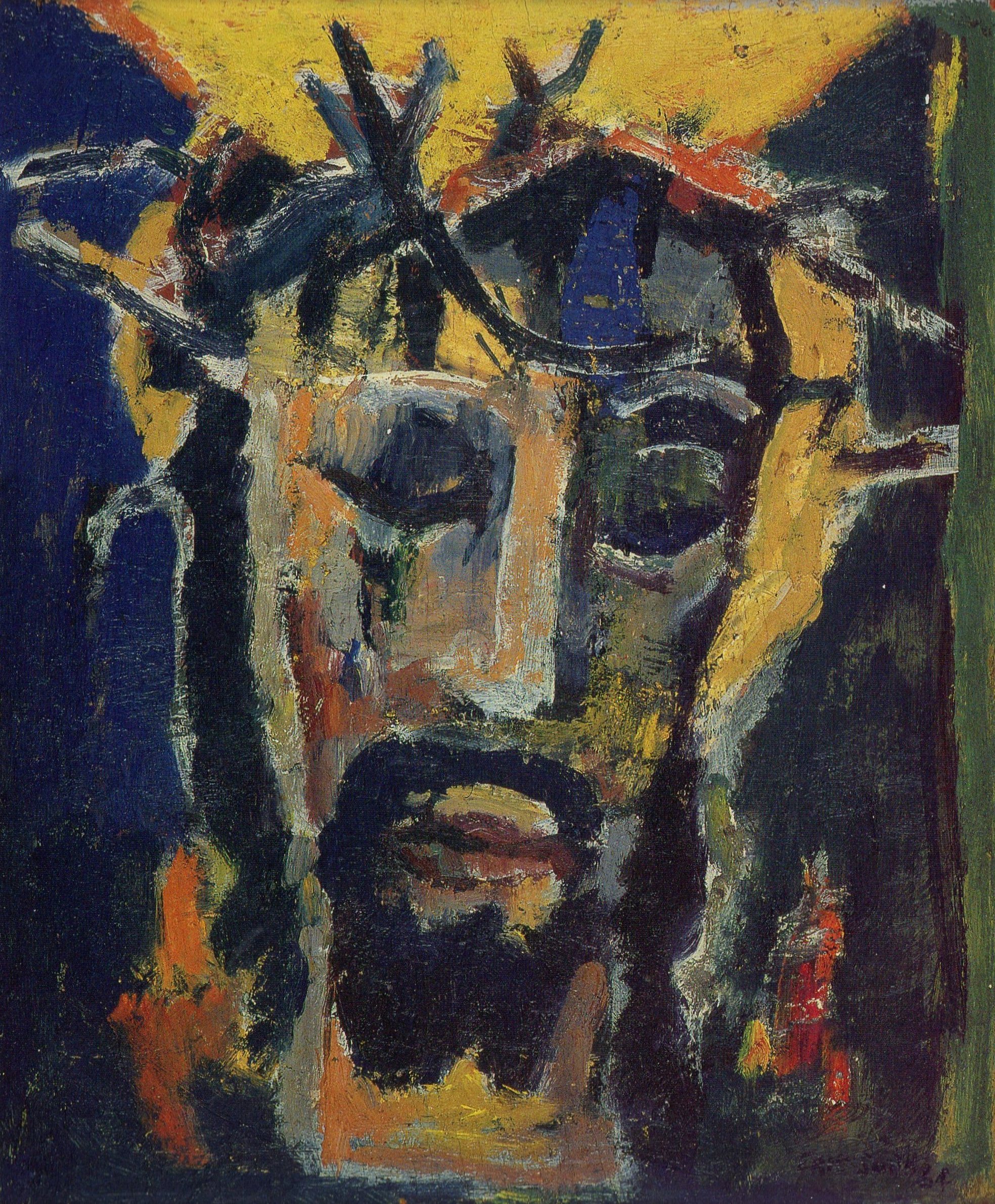
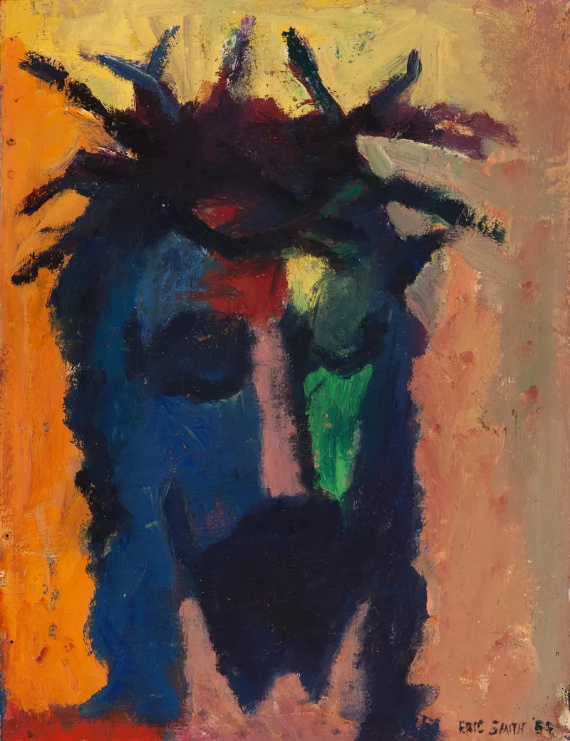
VIDEO: Christ by Eric Smith”: This is the first video in the (Catholic) Archdiocese of Brisbane’s four-part Art Aficionados series from 2022. In it, Archbishop Emeritus Mark Coleridge, theology professor Maeve Heaney, and Rev. Dr. Tom Elich of Liturgy Brisbane discuss the semiabstract Ecce homo painting Christ by the modern Australian artist Eric Smith—its pathos, calm, and double irony. This Christ is crushed yet composed, Coleridge says. Smith won the prestigious Blake Prize for Religious Art six times, including, in 1956, for a painting similar to this one (see second image in slideshow below). I’d love to see more dioceses releasing videos like this!—close looking at art.

The other videos in the Art Aficionados series are on The Stories That Weren’t Told by Lee Paje, The Good Samaritan by Olga Bakhtina, and The Visitation by Jacob Epstein.
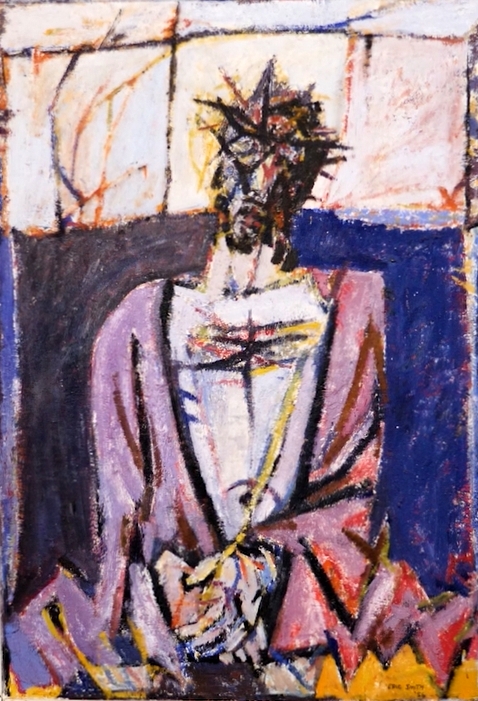
  • Smith, Eric_Christ
  • Smith, Eric_The Scourged Christ
  • Smith, Eric_Head of Christ
  • Smith, Eric_Head of Christ

+++

ART SERIES: Via Crucis: La pasión de Cristo (Way of the Cross: The Passion of Christ) by Fernando Botero: Executed in 2010–11, Via Crucis is a series of twenty-seven oil paintings and thirty-four mixed-media drawings by Colombia’s most famous artist, Fernando Botero (1932–2023) [previously]. Botero said he turned to the subject of Christ’s passion not because he’s religious, but out of admiration for the great works of art on the subject; he approached it with “a spirit of great respect,” aiming to portray God as a tortured man. The artist donated the series to the Museo de Antioquia in Medellín for his eightieth birthday. I can’t find a compilation of the whole series (the museum has digital records of the Boteros in its collection, but not all the images are showing up for me)—but you can view fourteen of the paintings in this article, and here’s a quick little Facebook reel.

Marlborough Gallery in New York offers a catalog of the series for $75, and Artika offers a much more expensive one (a gorgeous product, but $9,500!):

Here’s a news segment, in English, about the series’ exhibition at Lisbon’s Palacio de Ajuda in November 2012 (unfortunately, the video quality is low):
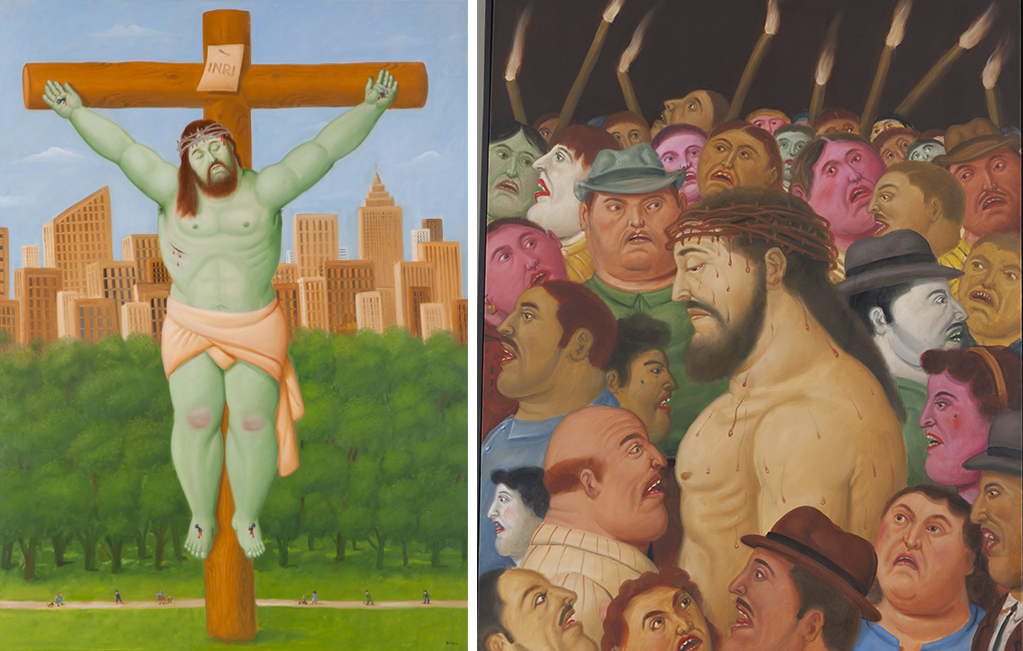
Botero, Fernando_Via Crucis
Fernando Botero (Colombian, 1932–2023), Crucifixión (Crucifixion), 2011, and Jesús y la multitud (Jesus and the Crowd), 2010. Oil on canvas. Museo de Antioquia, Medellín, Colombia.

+++

I have thematic playlists on Spotify for Lent and Holy Week—for the latter, don’t miss “From the Garden to the Tomb” by The Soil and The Seed Project, one of several recent additions.

But, by popular request, I also have a brand-new March 2026 playlist, a somewhat random assortment of songs I’ve been enjoying—some new releases, some not.

Lenten Art Videos from Loyola Press

Lent begins on Wednesday, February 22. I won’t be doing daily Lenten posts like I did last year, though I will be sharing seasonal content once or twice a week. If you want a set of new daily art-driven devotions that are freely accessible online, I’d encourage you to follow The Lent Project, run by the Center for Christianity, Culture, and the Arts at Biola University; each day features a scripture passage, a poem, a visual artwork, a piece of music, and a written reflection. I’d also direct you to my Lent Playlist (new additions at bottom) and Holy Week Playlist on Spotify.

Spitzweg, Carl_Ash Wednesday
Carl Spitzweg (German, 1808–1885), Ash Wednesday, 1860. Oil on canvas, 21 × 14 cm. Staatsgalerie Stuttgart, Stuttgart, Germany.

Another spiritual formation resource for Lent is the following series of Arts & Faith videos from Loyola Press, made in 2014–16. Each video features a three-minute commentary by Dr. Daniella Zsupan-Jerome on a historical artwork, chosen based on one of that day’s/week’s scripture readings from the Roman Catholic Mass Lectionary, which is currently in year A. Zsupan-Jerome is the director of ministry formation and field education at Saint John’s School of Theology and Seminary in Collegeville, Minnesota. Here she has crafted a “visual prayer experience” inspired by the Ignatian imagination. In his Spiritual Exercises, Saint Ignatius of Loyola, the founder of the Society of Jesus (the Jesuits), encourages Christians to apply the senses of sight, hearing, smell, touch, and taste to our reading of and meditation on the New Testament, imagining ourselves as present in the Gospel scenes.

Go to the “Arts & Faith: Lent” homepage, or see below, where the link on each artwork title will take you to a new tab where the corresponding video commentary is hosted on the Loyola website. I’ve included sample embeds of a few of the videos below.  

Arts & Faith: Lent, Cycle A

> ASH WEDNESDAY: Pieter Brueghel the Elder, The Fight Between Carnival and Lent, 1559

> WEEK 1: Ivan Kramskoi, Christ in the Desert, 1872

> WEEK 2: Raphael, Transfiguration, 1518–20

> WEEK 3: St. Photini (The Woman at the Well) (Orthodox icon)

> WEEK 4: El Greco, Christ Healing the Blind, ca. 1567

> WEEK 5: János Vaszary, Resuscitation of Lazarus, 1912

> PALM SUNDAY: Giotto di Bondone, Entry into Jerusalem, ca. 1305

> HOLY THURSDAY: Bernhard Strigel, Christ Washing the Disciples’ Feet, ca. 1520

> GOOD FRIDAY: Titian, Christ and the Good Thief, ca. 1566

> HOLY SATURDAY: Triumph of the Cross, 12th century, apse mosaic from the Basilica of San Clemente, Rome

> EASTER SUNDAY: Piero della Francesca, The Resurrection of Jesus Christ, 1463

Arts & Faith: Lent, Cycle B

> ASH WEDNESDAY: Carl Spitzweg, Ash Wednesday, 1860

> WEEK 1: The Temptation of Christ, 12th century, Basilica of St. Mark, Venice

> WEEK 2: Francesco Zuccarelli, Landscape with the Transfiguration of Christ, 1788

> WEEK 3: Quentin Matsys, Jesus Chasing the Merchants from the Temple, 16th century

> WEEK 4: James Tissot, Interview between Jesus and Nicodemus, 1886–94

> WEEK 5: Vincent van Gogh, The Sower, 1888

> PALM SUNDAY: Caravaggio, The Denial of Saint Peter, 1610

> HOLY THURSDAY: Tintoretto, Christ Washing the Disciples’ Feet, 1548–49

> GOOD FRIDAY: Master of the Karlsruhe Passion, The Capture of Christ, ca. 1450

> HOLY SATURDAY: Jacopo di Cione, The Three Marys at the Sepulchre, detail from the San Pier Maggiore Altarpiece, 1370–71

> EASTER SUNDAY: Eugène Burnand, The Disciples Peter and John Running to the Sepulchre on the Morning of the Resurrection, 1898

Arts & Faith: Lent, Cycle C

> ASH WEDNESDAY: John Berney Crome, Great Gale at Yarmouth on Ash Wednesday, 1836

> WEEK 1: Limbourg Brothers, The Temptation of Christ, 1411–16

> WEEK 2: Lorenzo Lotto, The Transfiguration of Christ, ca. 1511

> WEEK 3: Alexey Pismenny, Parable of the Fruitless Fig Tree, 2008

> WEEK 4: Rembrandt van Rijn, The Return of the Prodigal Son, ca. 1668

> WEEK 5: Palma il Vecchio, Christ and the Adulteress, ca. 1525–28

> PALM SUNDAY: Wilhelm Morgner, Entry of Christ into Jerusalem, 1912

> HOLY THURSDAY: Christ Washing the Feet of His Disciples, ca. 1210, Basilica of St. Mark, Venice

> GOOD FRIDAY: Andrea Mantegna, The Dead Christ (Lamentation of Christ), 1475–78

> HOLY SATURDAY: The Women at the Tomb; The Descent into Limbo, Armenia, 1386

> EASTER SUNDAY: Redemption Window (detail), Corona Chapel, Canterbury Cathedral, ca. 1200–1207

Holy Week Playlist

There are hundreds of thousands of musical works, from a range of genres, inspired by Christ’s passion, especially his death on the cross, which, along with the resurrection, is the centerpiece of the Christian faith. I’ve curated just a sampling of these on Spotify, from across time periods and countries, to serve as an aural guide through the final week of Jesus’s life. The drama begins with Christ’s triumphal entry into Jerusalem on a donkey, where he’s hailed with hosannas, and then continues with a last supper shared with his disciples, an agonized prayer in Gethsemane followed by betrayal and arrest, then, all in one day, multiple trials (religious and civil), conviction by mob, a public execution, and burial. Many of the playlist selections are narrative in character, while some have a more theological bent. My hope is that these pieces aid you in observing this most holy of weeks, walking with Christ through the shadows, taking in how “he himself bore our sins in his body on the tree, that we might die to sin and live to righteousness. By his wounds [we] have been healed” (1 Pet. 2:24).

To add the playlist to your account, open the Art & Theology Holy Week Playlist link, then click on the More (…) icon and select “Save to Library.”

Art & Theology Holy Week playlist (art by Odilon Redon)

[Playlist cover art: Odilon Redon, Christ, ca. 1895, charcoal, chalk, pastel, and pencil on paper, Museum of Modern Art, New York]

The playlist is a mixture of classical and popular (indie-folk, gospel) music. In this post I want to provide a little context for some of the pieces, by which I mainly mean translations of all the non-English lyrics. Because of what you see here, you might get the wrong impression that the list is almost entirely classical; actually, it’s only about half.

The opening track, “Herr, unser Herrscher” (Lord, Our Ruler), is a unique arrangement of the opening chorus from Johann Sebastian Bach’s St. John Passion, a Good Friday oratorio in German.

Herr, unser Herrscher, dessen Ruhm
In allen Landen herrlich ist!
  Zeig uns durch deine Passion,
  Daß du, der wahre Gottessohn,
  Zu aller Zeit,
  Auch in der größten Niedrigkeit,
  Verherrlicht worden bist!
Lord, our ruler, whose fame
In every land is glorious!
  Show us, through your passion,
  That you, the true Son of God,
  Through all time,
  Even in the greatest humiliation,
  Have become transfigured! [source]

Unique, because the Baroque choir and orchestra are accompanied by an ensemble of Gabonese musicians who contribute their own rhythmic profile, along with solo percussionists Sami Ateba from Cameroon and Naná Vasconcelos from Brazil. The recording, rereleased on the compilation album Babel (2008), is originally from Lambarena: Bach to Africa (1995), a collaboration between French composer and producer Hughes de Courson and Gabonese composer and guitarist Pierre Akendengué, synthesizing two disparate sound worlds. (“Bombé / Ruht wohl, ruht wohl, ihr heiligen Gebeine” is another highlight from the album. For weeks I debated whether to include it on this playlist—adding it, taking it off, adding it back again—ultimately deciding to leave it off, the reason being that it overlays Bach’s choral rondo with music and invocations to the dead from a Bwiti religious ritual. Though sonically compelling and worth listening to, I felt that it might impede some Christians’ ability to engage this list in a devotional way; so I opted for a traditional Western classical recording instead.)

Other selections from Bach’s St. John Passion are:

>> “Christus, der uns selig macht”

Christus, der uns selig macht,
Kein Bös’ hat begangen,
Der ward für uns in der Nacht
Als ein Dieb gefangen,
Geführt für gottlose Leut
Und fälschlich verklaget,
Verlacht, verhöhnt und verspeit,
Wie denn die Schrift saget.
Christ, who makes us blessed,
committed no evil deed,
for us he was taken in the night
like a thief,
led before godless people
and falsely accused,
scorned, shamed, and spat upon,
as the scripture says. [source]

>> “Petrus, der nicht denkt zurück”

Petrus, der nicht denkt zurück,
Seinen Gott verneinet,
Der doch auf ein' ernsten Blick
Bitterlichen weinet.
Jesu, blicke mich auch an,
Wenn ich nicht will büßen;
Wenn ich Böses hab getan,
Rühre mein Gewissen!
Peter, who did not recollect,
denied his God,
who yet after a serious glance
wept bitterly.
Jesus, look upon me also,
when I will not repent;
when I have done evil,
stir my conscience! [source]

>> “O große Lieb”

O große Lieb, O Lieb ohn alle Maße,
Die dich gebracht auf diese Marterstraße!
Ich lebte mit der Welt in Lust und Freuden,
Und du mußt leiden.
O great love, O love beyond measure,
that brought you to this path of martyrdom!
I lived with the world in delight and joy,
and you had to suffer. [source]

>> “Ruht wohl, ihr heiligen Gebeine”

Ruht wohl, ihr heiligen Gebeine,
Die ich nun weiter nicht beweine,
Ruht wohl und bringt auch mich zur Ruh!
Das Grab, so euch bestimmet ist
Und ferner keine Not umschließt,
Macht mir den Himmel auf und schließt die Hölle zu.
Rest well, you blessed limbs;
now I will no longer mourn you.
Rest well and bring me also to peace!
The grave that is allotted to you
and encloses no further suffering
opens heaven for me and closes off hell. [source]

For Bach’s St. Matthew Passion—one of the most celebrated works of classical sacred music ever written, right up there with Handel’s Messiah—I’ve drawn from the abridged English version (rather than the original German), translated by the Rev. Dr. John Troutbeck and performed in 1962 by the New York Philharmonic and Collegiate Chorale under the direction of Leonard Bernstein. I chose just a few pieces from it, not wishing to replicate the whole thing; as you can see, I tend to favor chorales over arias.

Continue reading “Holy Week Playlist”