“See, I am sending my messenger ahead of you, who will prepare your way, the voice of one crying out in the wilderness: ‘Prepare the way of the Lord; make his paths straight,’”
so John the baptizer appeared in the wilderness, proclaiming a baptism of repentance for the forgiveness of sins. And the whole Judean region and all the people of Jerusalem were going out to him and were baptized by him in the River Jordan, confessing their sins. Now John was clothed with camel’s hair, with a leather belt around his waist, and he ate locusts and wild honey. He proclaimed, “The one who is more powerful than I is coming after me; I am not worthy to stoop down and untie the strap of his sandals.I have baptized you with water, but he will baptize you with the Holy Spirit.”
—Mark 1:1–8
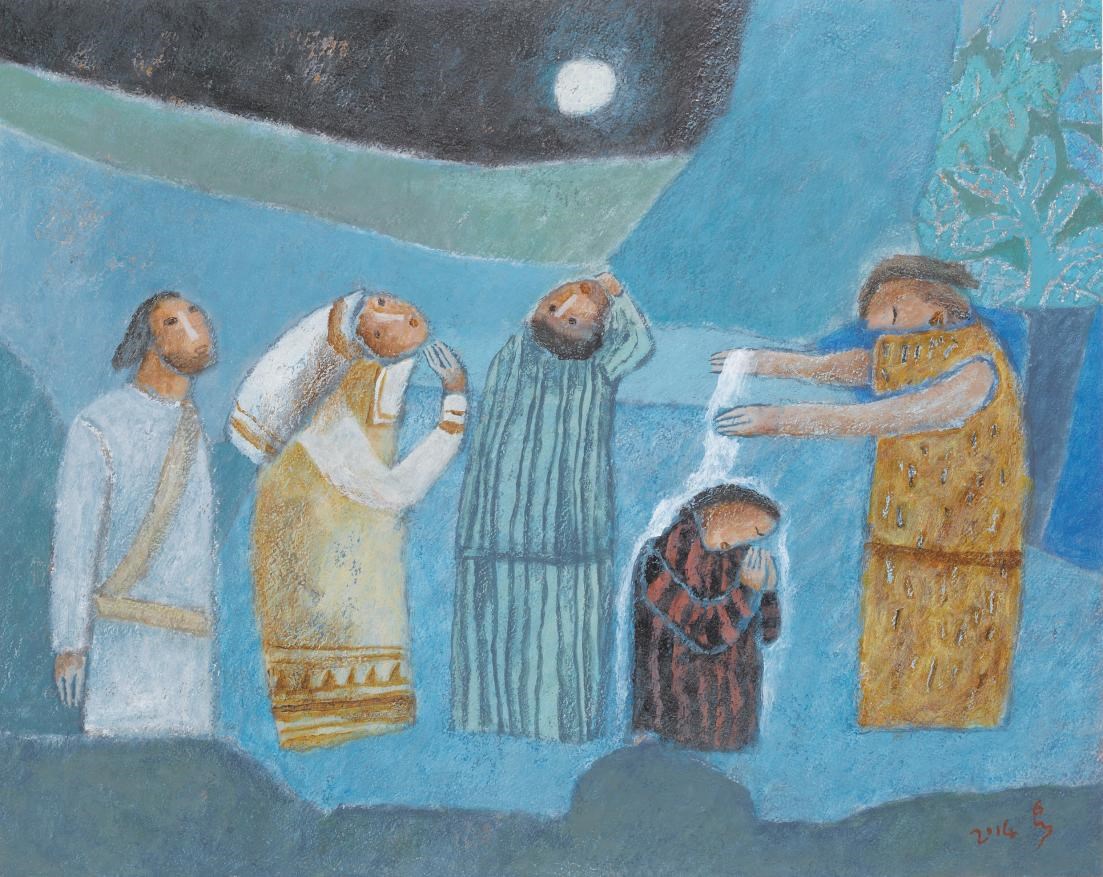
LOOK: Waiting for the Messiah by Sister Kim Ok-soon
LISTEN:“Hallelujah Sang the People” by Bruce Spelman, on You Don’t Know What You’re Paddling In (1972); reissued on the anthology album All God’s Children: Songs from the British Jesus Rock Revolution, 1967–1974 (2023)
John the Baptist came onto the earth He came by natural birth Though his parents, they were old and they were gray John the Baptist called unto the crowds: “There’s gonna come a day When Christ the Savior comes down from the clouds!”
John the Baptist went down to the stream His thoughts were like a dream Yet he was sure that Christ was soon to come The people gathered round at Jordan’s side Where they could be baptized And no one who came there would be denied
Refrain: “Hallelujah!” sang the people God the Son is coming down “Hallelujah!” sang the people Our Savior’s coming down
Jesus Christ will come down to the earth A lowly man by birth And yet he truly is the Son of God He will come to earth to set us free From sin and misery Oh, and still his life will end in tragedy
But his message will be heard abroad The teaching of the Lord And the people will believe the words he speaks He must surely be the holy Son The prophet said he’d come The Father, Son, and Spirit, all are one [Refrain ×2]
ADVENT SERIES: Restful Advent by Tamara Hill Murphy:Tamara Hill Murphy [previously] is one of my favorite spiritual writers, her thoughtful words and curation of resources having served as a well of inspiration for me over the years. Each year, similar to Art & Theology but with the sensibilities and expertise of an Anglican spiritual director, she publishes a new daily Advent and Christmastide guide through her Substack, Restful, running this year from November 30 to January 5. Each post in the series includes lectionary readings, art, music, a prayer, and a simple practice to help us notice God’s presence during these waiting days. This time around, the Daybook will feature excerpts from Claude Atcho’s new book Rhythms of Faith along with ideas from The Liturgical Home by Ashley Tumlin Wallace and some of my own formerly published art commentaries.
“The Daybook is a way to pay attention to Christ’s three arrivals—then, now, and still to come—and to walk through December with a quieter heart and a stronger hope,” Murphy writes.
Murphy is offering Art & Theology readers a 50% discount to Restful using this link, which brings the subscription cost down to $4/month (let it run for two months if you want to receive the full Christmastide Daybook) or $32/year, which will give you access to her year-round content. The offer expires January 5, 2026.
+++
BLOG POST: “The Sacred Journey of Advent” by Ashley Tumlin Wallace, The Liturgical Home: “Advent,” writes Wallace, “is a season of preparation, for the coming of Christ at Christmas, and also for His return in glory at the end of time.” This is a great introduction to the season that kicks off the new church year.
+++
SONGS:
One of the scripture texts of Advent is Isaiah 40:3–5:
A voice cries out: “In the wilderness prepare the way of the LORD; make straight in the desert a highway for our God. Every valley shall be lifted up, and every mountain and hill be made low; the uneven ground shall become level, and the rough places a plain. Then the glory of the LORD shall be revealed, and all flesh shall see it together, for the mouth of the LORD has spoken.”
The Gospel-writers Matthew (3:3), Mark (1:3), and Luke (3:4) all see this exclamatory figure as John the Baptist, who told people to prepare for God’s coming by repenting of sin, since holding on tightly to ways of unlove erects barriers to God’s entry into one’s life. Here are two songs based on this Advent passage.
>> “Prepare the Way” by Maverick City Music and Tribl, feat. Chandler Moore and Siri Worku, on Tribl I (2021): This song repeats, again and again, the Advent mantra “Prepare the way,” embedding John the Baptist’s invitation deeply into hearts and minds. Its tag beseeches Christ to come with the fire of purging, the rain of refreshment, and the oil of blessing. To welcome this coming, this transformation and growth, we need to decenter ourselves, ceding to God the place of primacy, from which he works our good and his glory.
>> “Prepare the Way” by Christopher Walker, on Rise Up and Sing, 3rd ed., vol. 3 (2009): This 1991 song is by Christopher Walker, a church music composer, lecturer, and choral conductor originally from the UK but now living in Santa Monica, California. Published by OCP (Oregon Catholic Press), it would make a great song for a children’s Advent choir.
+++
2018 SERIES: Advent Caravan: Walking with the Holy Family by Sarah Quezada: I learned about Sarah Quezada’s work at the intersection of faith, justice, and culture through Tamara Hill Murphy (see first roundup item) in 2018, when Quezada published a five-part series reflecting on the likelihood that Mary and Joseph traveled to Bethlehem for the census not alone but in a caravan. Interweaving personal story, biblical interpretation, and current events, Quezada considers how the holy couple’s experience in the final months of Mary’s pregnancy connects to the reality of people on the move seeking hope, peace, joy, and love today.
While the series is not hosted online, I received permission from Quezada to reproduce it here.
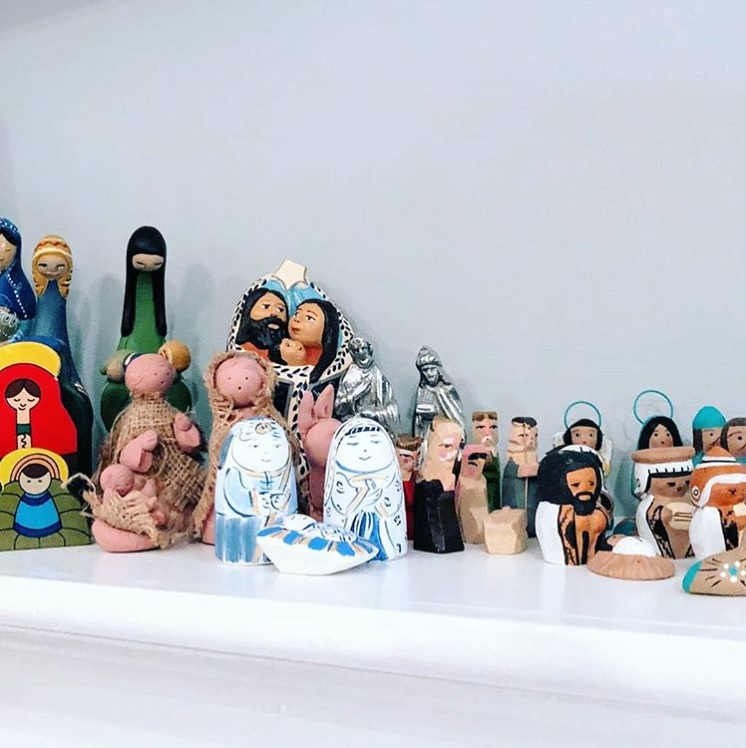
On Instagram, Quezada also shared a photo of her friend’s Advent mantel, where she combined figurines from her various nativity sets to form a “caravan” of travelers.
Photo via @sarahquezada
+++
YOUTUBE PLAYLIST: Jouluradion Hoosianna: Jouluradio is a Finnish radio station that broadcasts annually from November 1 to January 6, playing all Advent and Christmas music. Since 2012, every year they premiere a new arrangement and video performance of the popular Scandinavian Advent hymn “Hoosianna” (Hosanna, an Aramaic expression meaning “Save now!”), which Lutheran and Catholic churches in Finland sing on the first Sunday of the season. Based on Matthew 21:9, its lyrics greet the approaching Christ, affirming his identity and craving the deliverance only he can bring:
Hoosianna, Daavidin Poika,
kiitetty olkoon hän!
Kiitetty Daavidin Poika,
joka tulee Herran nimeen.
Hoosianna, hoosianna,
hoosianna, hoosianna!
Kiitetty Daavidin Poika,
joka tulee Herran nimeen.
Hosanna, Son of David,
Most blessed Holy One,
Hosanna, Son of David,
Who comes in the name of the Lord!
Hosanna, hosanna, hosanna
In the highest!
Hosanna, Son of David,
Who comes in the name of the Lord!
This hymn was written by the German composer, educator, and piano and organ virtuoso Georg Joseph Vogler in 1795 while working in Sweden as court conductor as well as tutor to the crown prince Gustav IV Adolf.
The Jouluradio commissions, which the station has compiled in a YouTube playlist, encompass a range of genres, including jazz, hip-hop, choral, pop, and electronic. Below is a list of previous years’, of which I’ve embedded the two asterisked ones on this page. Jouluradio typically releases their annual “Hoosianna” the day before Advent, so 2025’s will likely be posted this Saturday. [HT: Gracia Grindal]
*2015: Sointi Jazz Orchestra, arr. Jukka Perko (I don’t really understand the narrative in the video. I think the man is remembering a time in his childhood when he got lost in the woods, and then was found by his mother?)
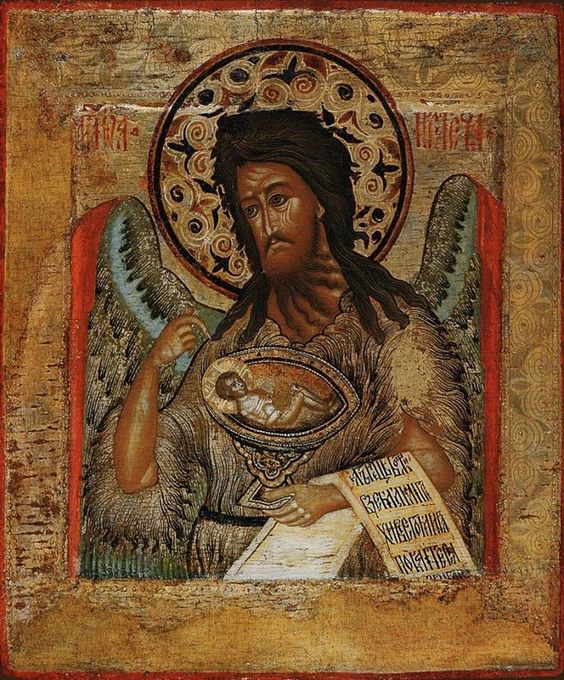
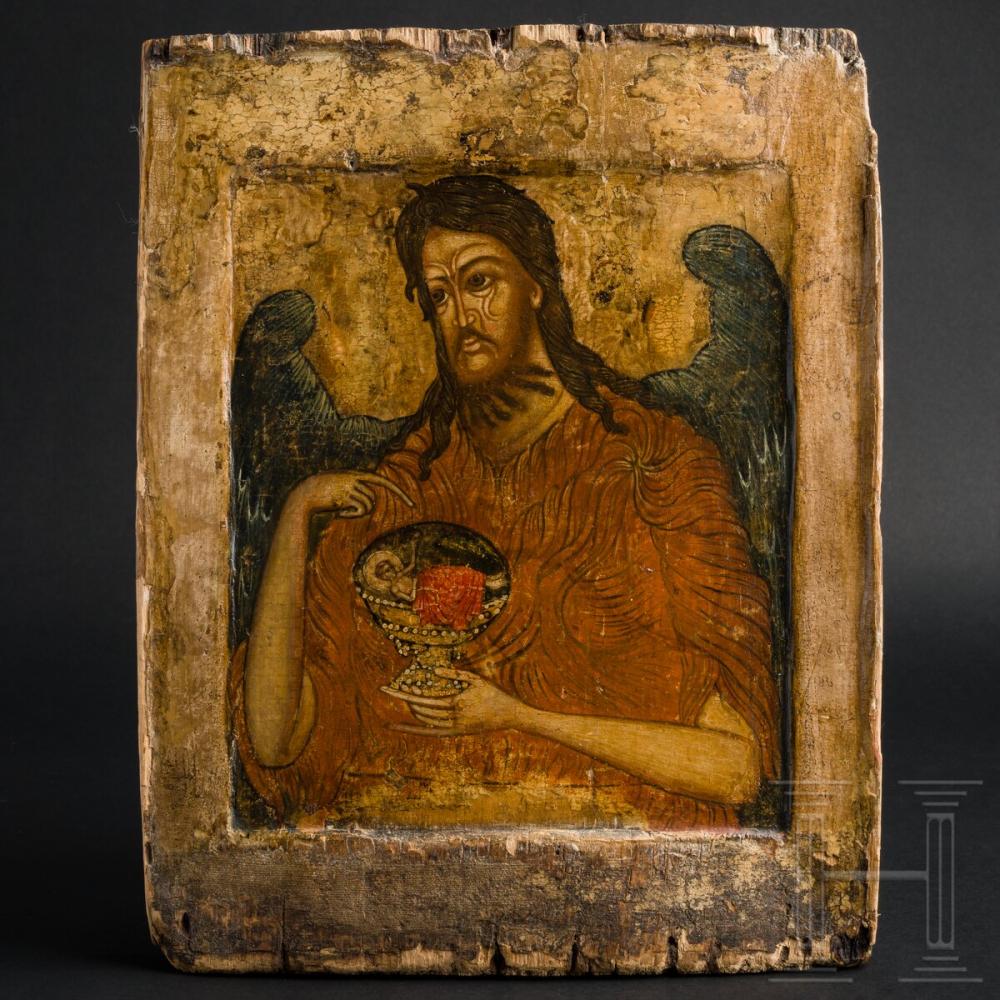
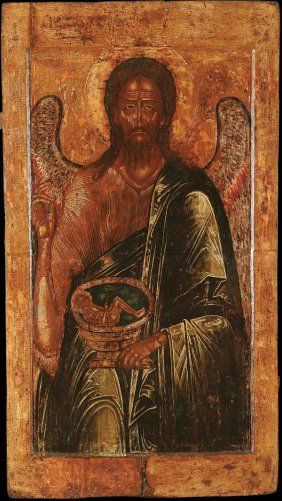
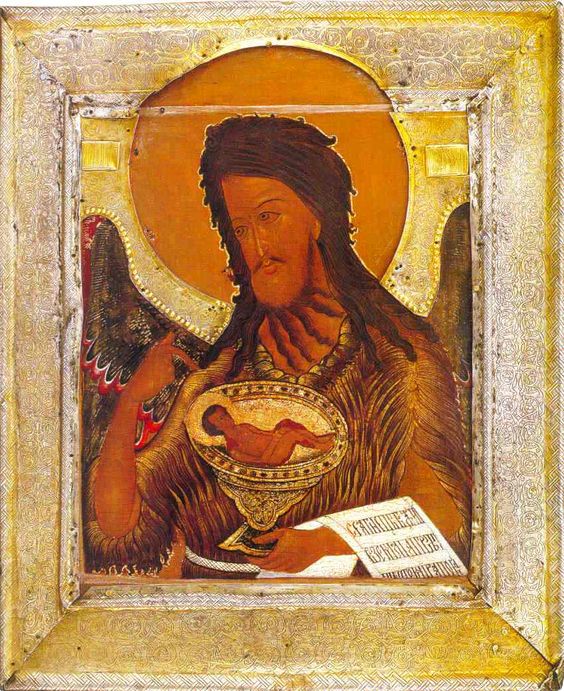
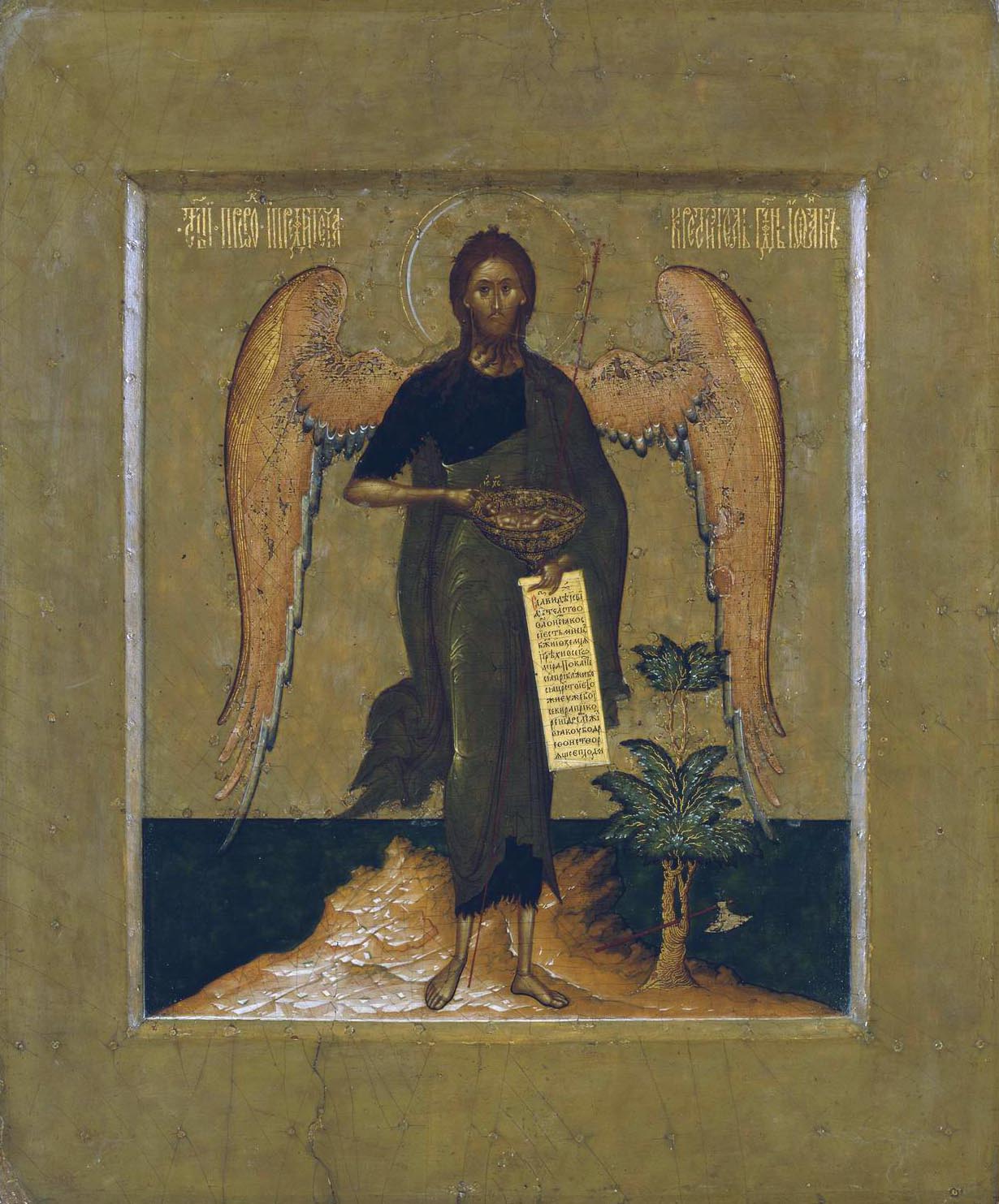
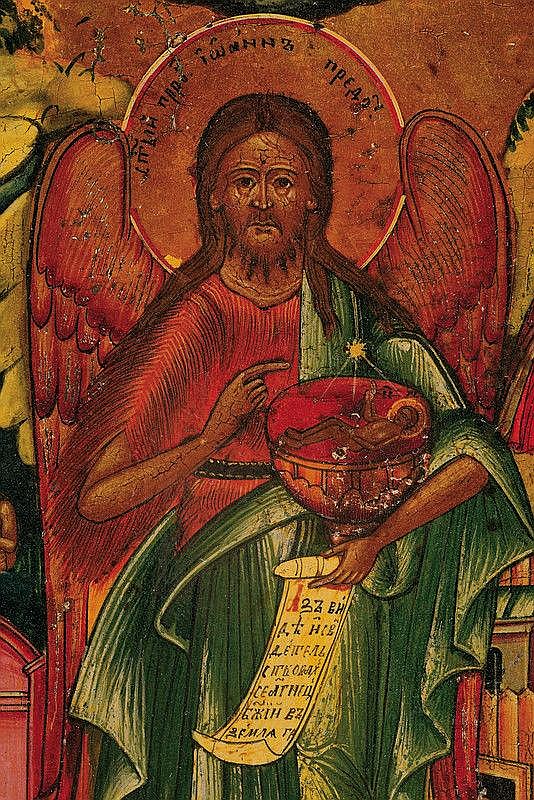
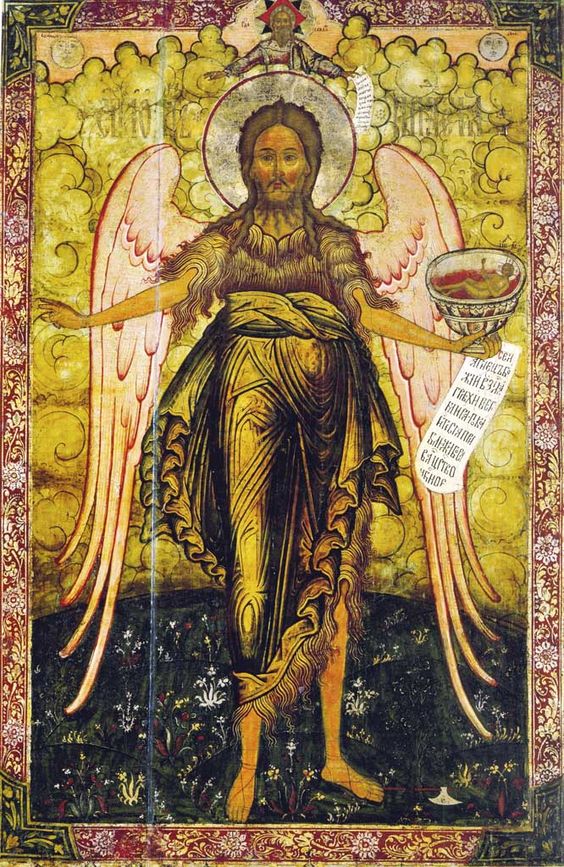
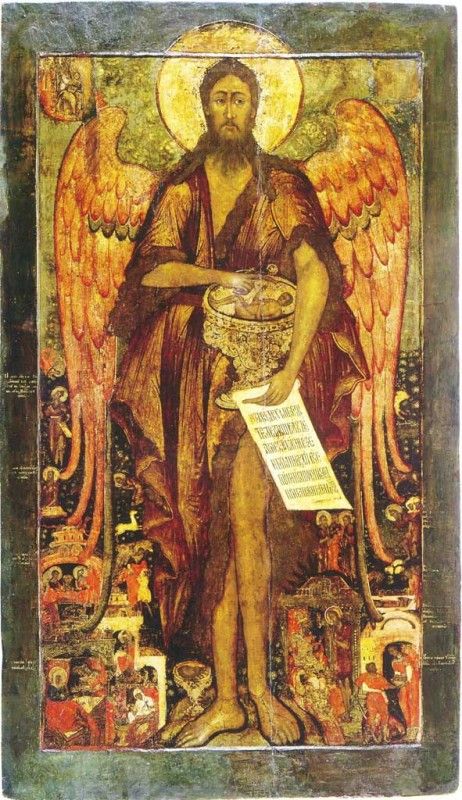
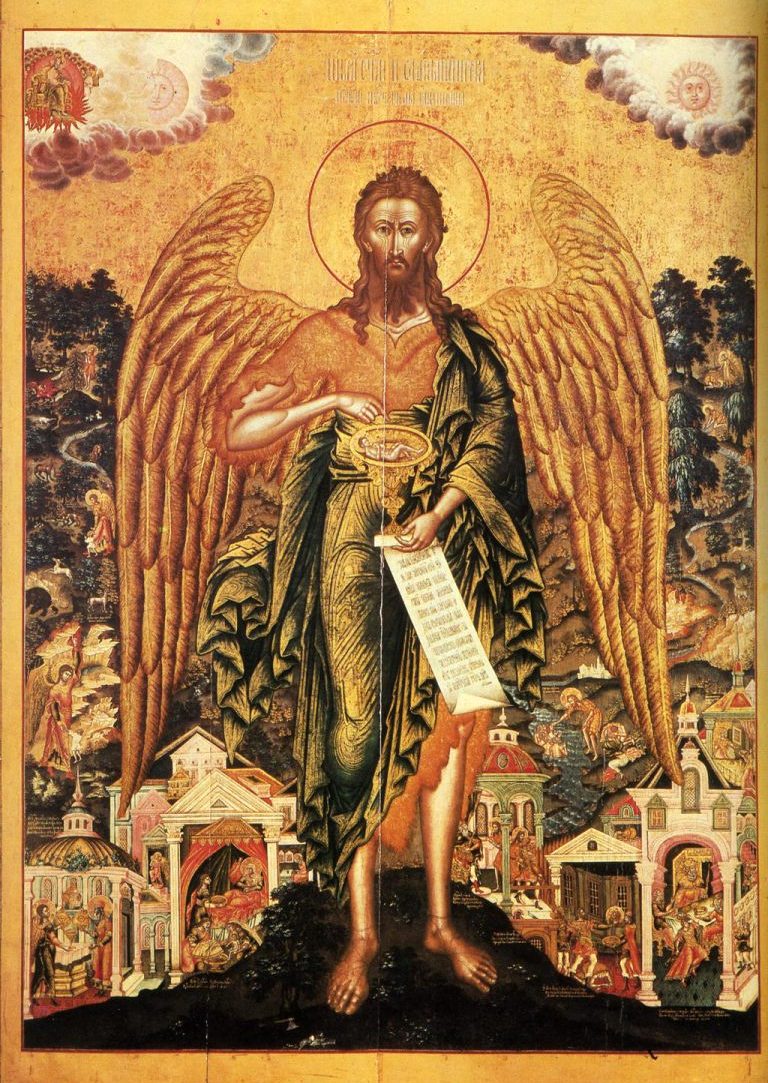
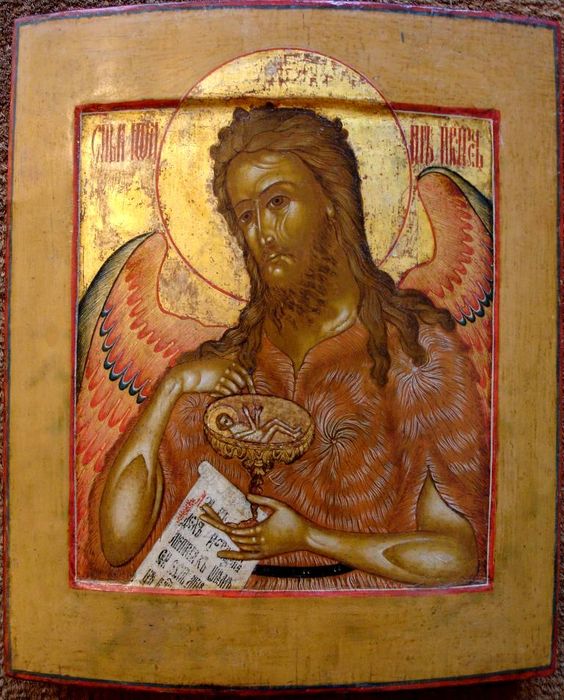
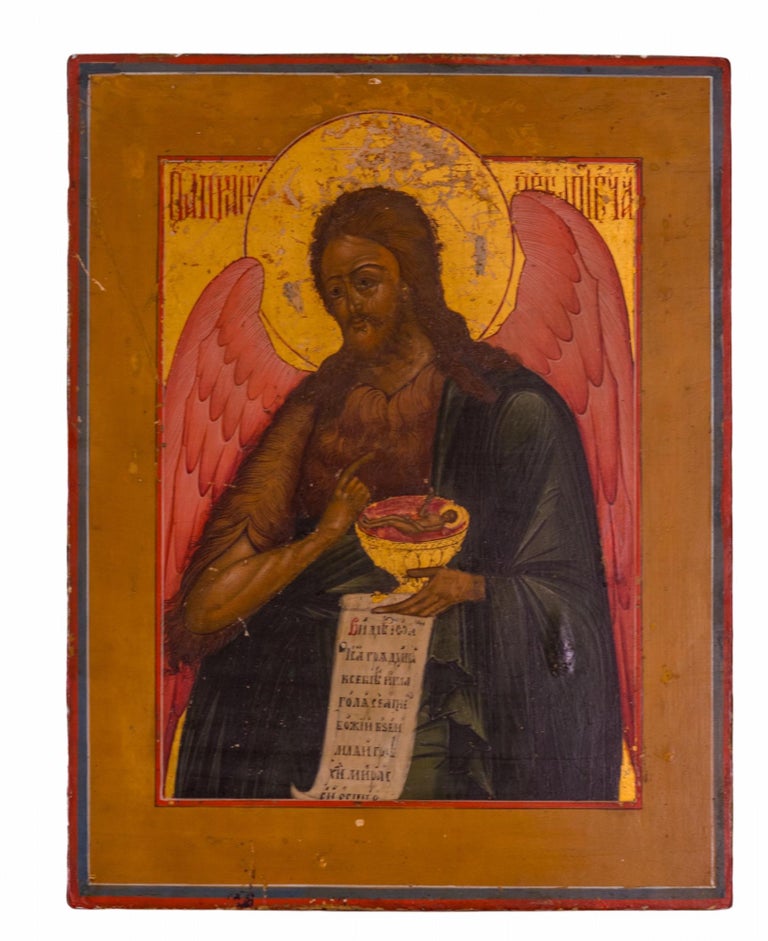
John the Baptist, Angel of the Desert, Russia, 17th or 18th century
John the Baptist served as a bridge between the old and new covenants, calling on people to repent of their sins and produce good fruit in preparation for the arrival of the Messiah. “The kingdom of heaven is at hand!” he vigorously proclaimed on the banks of the river Jordan. “Get ready.”
Eastern Orthodox icons sometimes portray John the Baptist with wings, as the word “angel” means “messenger.” God had announced through his prophet Malachi, “See, I am sending my messenger [mal’āḵ] to prepare the way before me, and the Lord whom you seek will suddenly come to his temple. The messenger of the covenant in whom you delight—indeed, he is coming, says the LORD of hosts” (Mal. 3:1). The Hebrew word, mal’āḵ, that is translated as “messenger” in this passage is translated elsewhere in the Old Testament as “angel.” Christian commentators see this prophecy as fulfilled in John the Baptist.
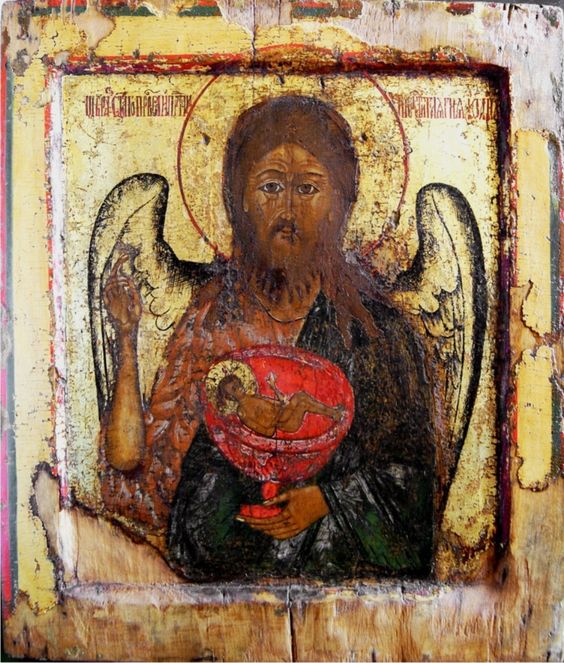
The iconography of John the Baptist as Angel of the Desert/Wilderness first started appearing in the sixteenth century and is present only in the East. In addition to having two wings, he wears camel skins, an allusion to his asceticism (Matt. 3:4). He usually holds an unfolded scroll bearing his words from Matthew 3:2—“Repent, for the kingdom of heaven has come near”—as well as a poteiron (liturgical chalice) in which lies a naked Christ Emmanuel, evoking the Eucharist. John points to Christ, the source of our salvation.
Sometimes it is John’s own severed head that lies in the chalice instead. This variation references his martyrdom, commemorated each year on August 29.
I’ve compiled a range of John the Baptist, Angel of the Desert icons that include the Christ child in a eucharistic cup. They are all from seventeenth-, eighteenth-, or nineteenth-century Russia; many are in private collections, and a few are in the State Tretyakov Gallery in Moscow.
What is the crying at Jordan? Who hears, O God, the prophecy? Dark is the season, dark our hearts, and shut to mystery.
Who, then, shall stir in this darkness, prepare for joy in the winter night? Mortal, in darkness we lie down, blindhearted, seeing no light.
Lord, give us grace to awake us, to see the branch that begins to bloom; in great humility is hid all heaven in a little room.
Now comes the day of salvation; in joy and terror the Word is born! God comes as gift into our lives; oh let salvation dawn!
The “crying at Jordan” in the first line of this modern hymn refers not to weeping but to a loud uttering—that of John the Baptist preparing the way for the Messiah through the preaching of repentance. When, in response to John’s ministry, the priests and Levites asked him who he was, he declared, “I am the voice of one crying out in the wilderness, ‘Make straight the way of the Lord,’ as the prophet Isaiah said” (John 1:23; cf. Isa. 40:3; Matt. 3:3).
The third stanza refers to Mary’s pregnancy, echoing the closing couplet of the poet John Donne’s “Annunciation” sonnet: “Thou hast light in dark, and shutst in little room, / Immensity cloistered in thy dear womb.” This is an idea that many Christians, both before and after Donne, have mused on and marveled at.
Thank you to my friend Peggy, who introduced me to this remarkable Advent hymn!
The third Sunday of Advent is known as Gaudete Sunday, gaudete (pronounced GOW-deh-tay) (Latin for “rejoice”) being the first word of the introit of the day’s Mass, taken from Philippians 4:4–6 and Psalm 85:1:
Gaudete in Domino semper íterum díco, gaudéte: modéstia véstra nóta sit ómnibus homínibus: Dóminus prope est. Nihil sollíciti sítis: sed in ómni oratióne petitiónes véstrae innotéscant apud Déum. Benedixísti, Dómine, térram túam: avertísti captivitátem Jácob.
Rejoice in the Lord always; again I say, rejoice. Let your forbearance be known to all men. The Lord is at hand. Do not be anxious over anything; but in all manner of prayer, let your requests be made known unto God. Lord, you have blessed your land; you have put an end to Jacob’s captivity.
It is customary for priests to swap out their purple vestments for pink today, and for those who use an Advent wreath to light not a purple candle but a pink one. Some churches favor a spare aesthetic in their sanctuaries for the first two weeks of Advent but break out the flowers for this the third. The approximate halfway point of the penitential Advent season, Gaudete Sunday is a special time to rejoice in the nearness of God’s coming as well as God’s presence with us here even now in the waiting, and to receive a foretaste of the bigger celebration to come on Christmas Day.
Here are ten songs for you to enjoy this Gaudete Sunday. If you’d rather listen to them as a YouTube playlist, click here.
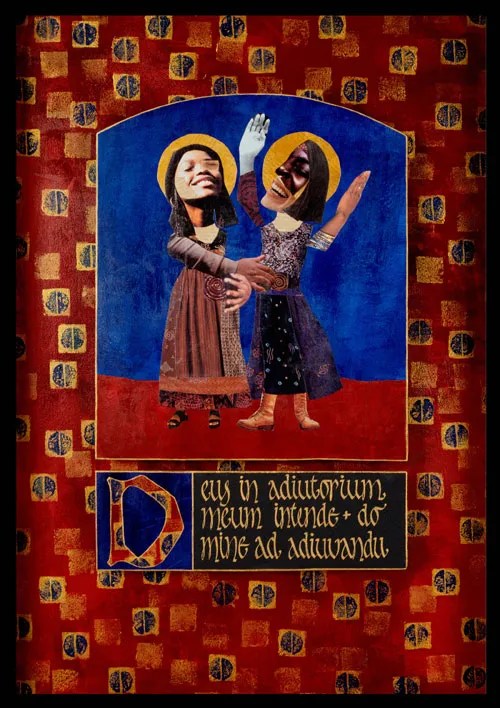
The Hour of Lauds: Visitation by Jan Richardson [for sale]
1. “Songs of Joy” by Garrison Doles, written late 1990s, on A Songmaker’s Christmas, 2012: “Songs of joy we hopefully sing, expanding our spirits, the season to know . . .” So opens this song by the late singer-songwriter Garrison Doles (d. 2013) [previously]. In 2009 his wife, the artist Jan Richardson, created a video combining the song with five of the seven collages from her Advent Hours cycle (which can be purchased as reproductions). Read the lyrics and songwriter’s statement here.
2. “My Soul Doth Magnify the Lord” by O’Landa Draper and the Associates, on Live…A Celebration of Praise, 1994: A trailblazing gospel choir director, O’Landa Draper was one of the top gospel artists of the nineties. This song of his is based on the Magnificat, the praise song Mary sings in the company of her cousin Elizabeth following the conception of Christ (see Luke 1).
3. “El burrito de Belén” (The Little Donkey of Bethlehem) by Hugo Cesar Blanco, 1972, performed by the band Matute, 2020: This is a Venezuelan carol about a person riding their donkey, with hurried excitement, from the sabanero (savanna) to Bethlehem to see the newborn Christ. Read the lyrics and translation here.
4. “Ecce mundi gaudium” (Behold the Joy of the World), England, 13th century, arranged and performed by the Mediæval Bæbes on Worldes Blysse, 1998: Written in Latin, this thirteenth-century carol is about the Virgin giving birth to the Son, our joy—announced to the shepherds by an angel and to the magi by a star. Despite the upbeat tempo throughout, the last two verses are about Herod’s raging and the Massacre of the Innocents. The soloist is Katharine Blake, the founder and musical director of Mediæval Bæbes. Read the original lyrics here, clicking on individual lines for the English translation.
6. “Repeat the Sounding Joy,”a fragment from “Joy to the World” arranged by Craig Courtney, performed by the Capital University Chapel Choir, 2019: A super-fun, one-minute choral work.
7. “Now Let Us Sing,” traditional, adapt. John L. Bell, 1995, performed by Katarina Ridderstedt, 2015: Katarina Ridderstedt (née Lundberg) is a rhythm teacher, musician, cantor, and choir director from Gotland, Sweden, who records music under the name Musikat. This video of hers introduced me to a charming little quatrain whose origins I don’t know (it’s credited as “Traditional”), but this version comes from Scotland’s Iona Community [previously]: “Now let us sing with joy and mirth, / praising the one who gave us birth. / Let every voice rise and attend / to God whose love shall never end.”
(Update, 1/6/25: “Now let us sing” is of Scottish origin, first appearing during the Protestant Reformation in the congregational song collection The Gude and Godlie Ballatis; the earliest extant edition of this book is from 1567, but it is thought to have been originally published in 1540. The tune was originally a drinking tune. For his rendition, published in Come All You People: Shorter Songs for Worship, John L. Bell essentially rewrote the first stanza, retaining only the first line of the original.)
8. “Brother” by Jorge Ben Jor, on A Tábua de Esmeralda, 1974: Known by the stage name Jorge Ben or (since the 1980s) Jorge Ben Jor, Jorge Duílio Lima Menezes (b. 1939) is a Brazilian singer-songwriter and musician whose characteristic style fuses elements of samba, funk, rock, and bossa nova. In this song he enjoins us to prepare a joyful path for the coming Christ—who is both Lord and friend—with love, flowers, and music.
9. “Alleluia, He Is Coming (I Looked Up)” by Martha E. Butler, 1979: This song is sometimes used in church services for Palm Sunday or Easter, but I think it makes a fitting Advent song as well—especially with the newer last verse that is sometimes used, as in the first video below. “Alleluia, he [Christ] is coming! Alleluia, he is here,” the refrain proclaims. Read about the inspiration behind the song, in the words of the songwriter, here. Allow me to sneak in two different performances. The first is by Donna Rutledge, Becky Buller, and Todd Green of First Baptist Church of Manchester, Tennessee, from 2020; theirs is a lovely rendition with strong vocals and a poignant violin part, but I do prefer a brisker pace (listening to the video at a playback speed of 1.25 is perfect, in my estimation):
The second is by the South African group Worship House, from their 2016 album Project 5 (Live in Johannesburg):
10. “Joy Will Come” by Paul Zach: The refrain of this song by Paul Zach of Virginia is based on Psalm 30:5b: “Weeping may linger for the night, but joy comes with the morning.” I also hear echoes of Psalms 18 and 121 throughout. The song is a reminder that through the dark nights we experience, we have hope; we have a Savior who will not abandon us.
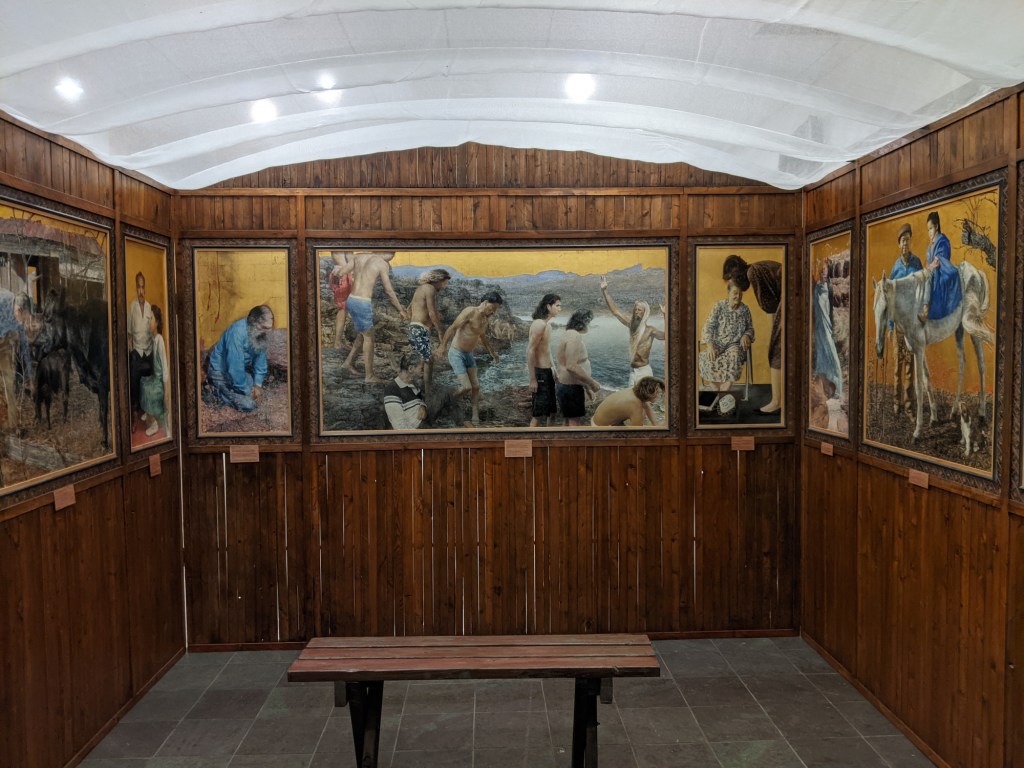
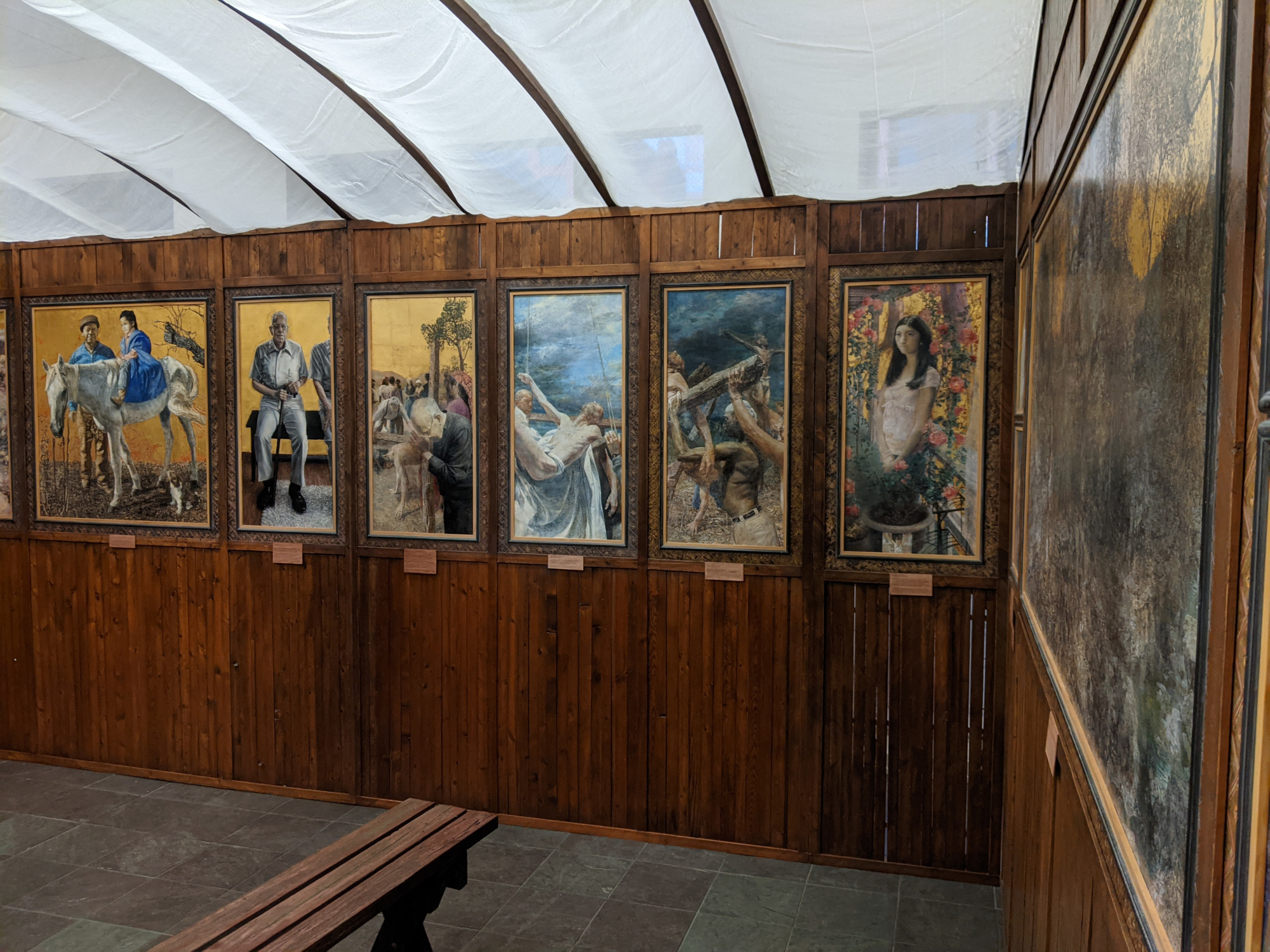
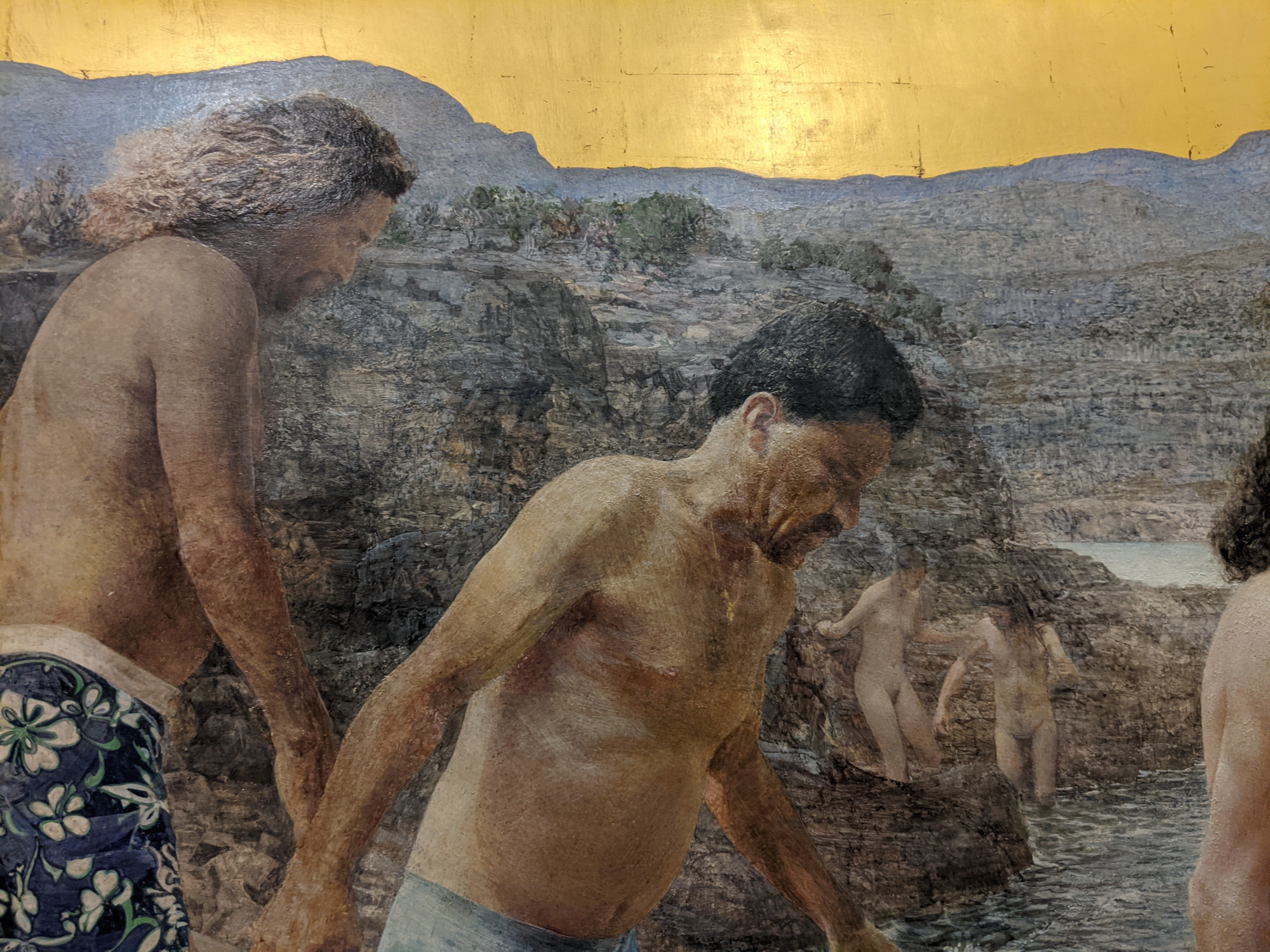
At the 2021 Christians in the Visual Arts (CIVA) conference in Austin, Texas, I got to experience local artist John Patrick Cobb’s Ikon Chapel, a traveling, custom-built wooden structure housing twenty of Cobb’s egg tempera paintings depicting his friends, family, and neighbors as saints and prophets in our modern world. The young and the elderly, farmers, water well drillers, artists, teachers, nurses, Holy Cross brothers, custodians, the unhoused, people with disability or mental illness—these are among those he honors in paint and gold leaf.
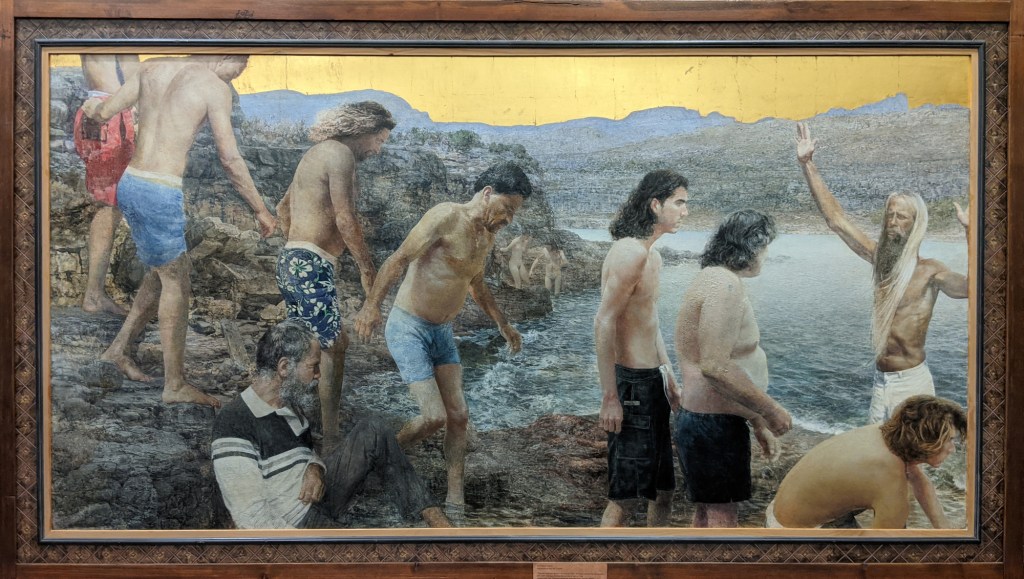
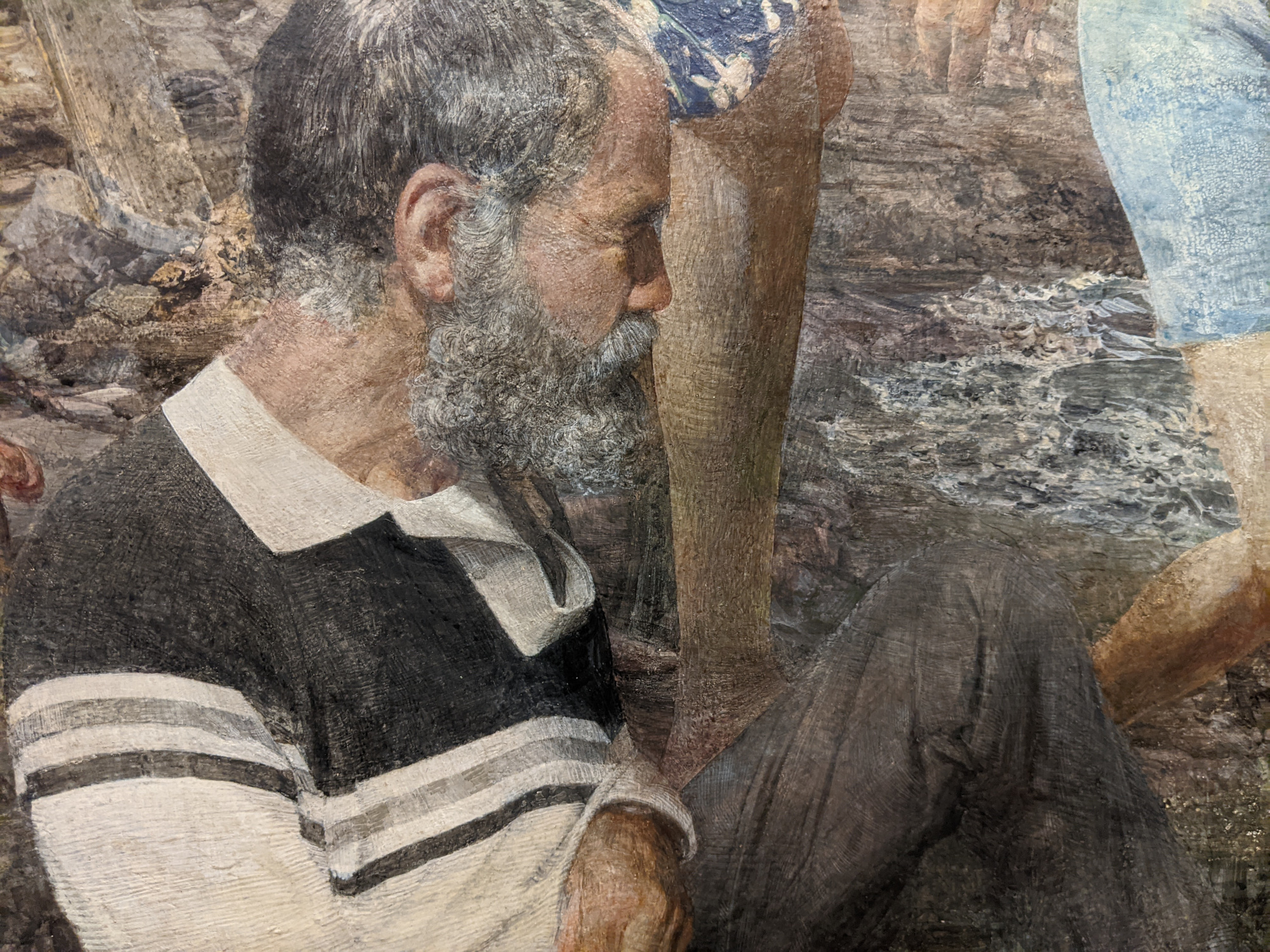
Ikon Chapel (detail) by John Patrick Cobb, as installed at the “Transcend” CIVA biennial conference, November 4–6, 2021, St. David’s Episcopal Church, Austin, Texas. Photo: Victoria Emily Jones.John Patrick Cobb (American, 1954–), Baptism by Water, 1999. Egg tempera and gold leaf on panel, 36 × 77 in. Photo: Victoria Emily Jones.
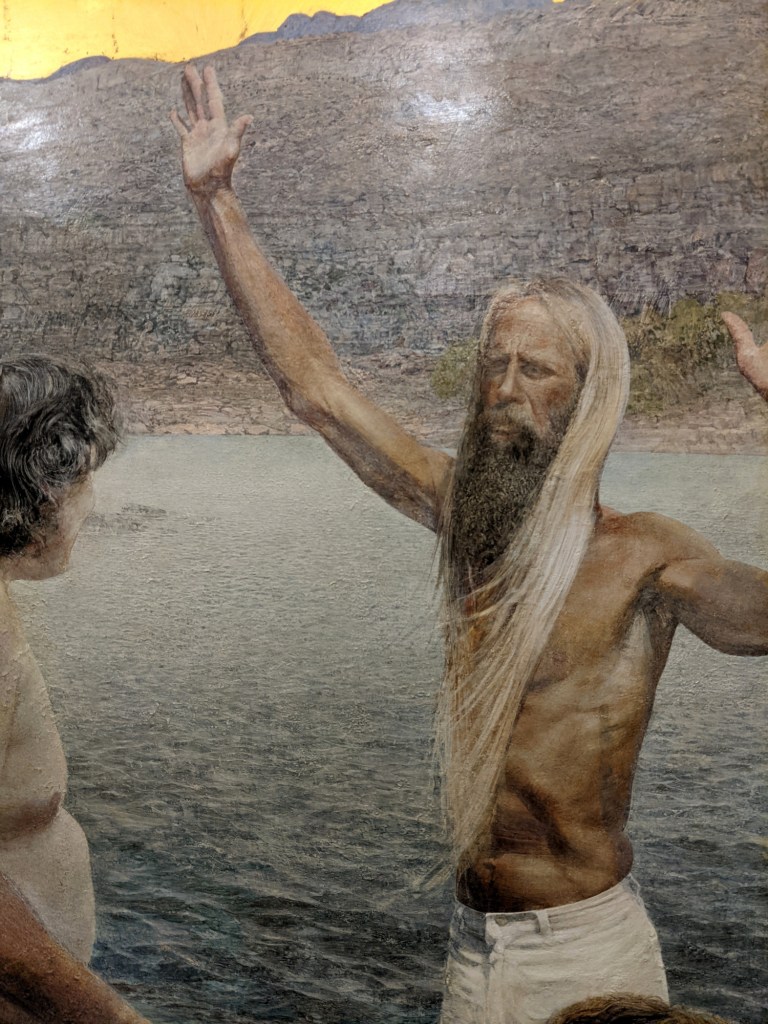
Baptism by Water is, along with its companion piece, Baptism by Fire, the largest painting in the series, at over six feet long. It is a lakeside scene portraying John the Baptist—the long-haired, bleach-blonde guy at the far right—calling folks to repentance. Several men climb down the rocky shoreline to enter the cleansing waters and be raised to new life. The models are all associated in real life with water—surfers, plumbers, fishermen. And this is a local setting: Hippie Hollow on Lake Travis in Central Texas, a famous nude swimming hole.
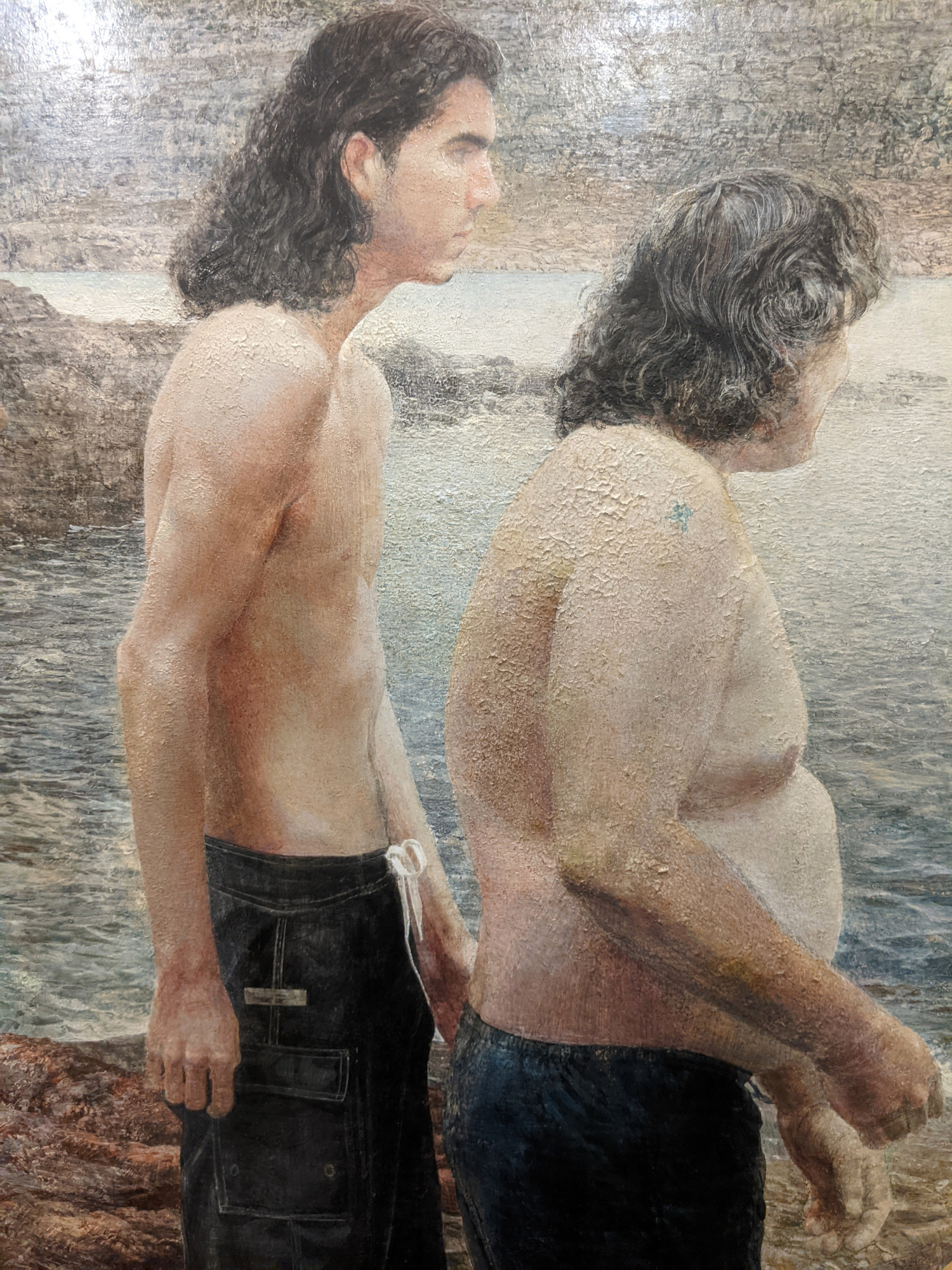
Jesus, says Cobb, is the young man with the black hair and black trunks. Cobb deliberately made him indistinguishable from the others to emphasize his full humanity. He looks beyond John the Baptist, perhaps mentally preparing for the solitary forty-day fast in the desert he’s about to embark on.
In the wall text in the Ikon Chapel, Cobb describes the seated, shirted man in the foreground as reminiscent of the Gerasene demoniac (Mark 5:1–20):
The figure in the near ground, clothed, was a man who lived in the nook of the sea wall in Galveston and slept in the nearby graveyard at 61st Street. On the worst winter days I would bring him a coffee, and finally asked him one day if I could include him in my painting. He would sometimes drink himself into a frenzy and yell and scream at the cars in horrific anger. His leg had been broken and had healed in a precarious angle. I felt as though if there were anyone who deserved the peace and the Holy Spirit, it would be him.
At the bottom right, one of the figures twists away, rejecting John’s call. The model’s name is Jonah, so Cobb wanted to use him as a Jonah figure, resisting (at least initially) the divine plan.
In the background Adam and Eve are skinny-dipping.
Detail, John the BaptistDetail, Jesus (left)Detail with Eve and Adam in backgroundDetail of a local unhoused man with a leg impairment and alcoholism, for whom the artist wishes God’s peace
I was fortunate enough to get to know Cobb a bit over lunch one day while I was in Austin, and then later at an outdoor gathering he and his wife, Tina, hosted on their property. At the time, he was preparing for an extended trip to Italy to restore some Renaissance frescoes in a village chapel.
To learn more about this remarkable body of work, see the book Chapel Ikons: Biblical Meditations on Living the Spiritual Life in the Modern World (Treaty Oak, 2020), which reproduces all twenty-five paintings in full color with detailed commentaries by William Y. Penn Jr. The postscript says that Cobb and Penn are looking for a permanent institutional home with resources to preserve the chapel ikons for public viewing and study and that if interested, you should contact wpenn@me.com.
Refrain: A voice cries out in the desert Come prepare the way of the Lord God is coming, make straight for him a highway Come prepare the way of the Lord
Every valley shall be exalted Every mountain shall be made low Then shall the Word of God be known All the earth shall proclaim The glory of the Lord [Refrain]
Go upon the highest mountain Zion, herald of good news Lift your voice, cry out with all your soul Jerusalem, proclaim Glad tidings in the Lord [Refrain]
Have no fear, O cities of Judah Here is your God See, the Lord is coming now with power Our God is here The mighty and the strong [Refrain]
Like a shepherd, he feeds his flock He gathers the lambs See, he carries them gently in his arms So tenderly With a mother’s love [Refrain]
This post is part of a daily Advent series from December 2 to 24, 2023 (with Christmas to follow through January 6, 2024). View all the posts here, and the accompanying Spotify playlist here. “A Voice Cries Out” is not on Spotify.

 Art & Theology