Roundup: Ellsworth Kelly’s “Austin,” new book by Jonathan Anderson, religion in pop art, and more

PRINT INTERVIEWS:

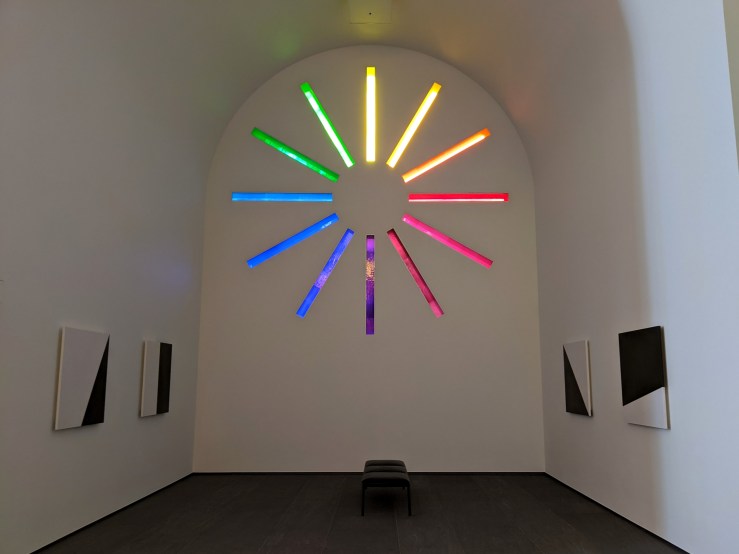
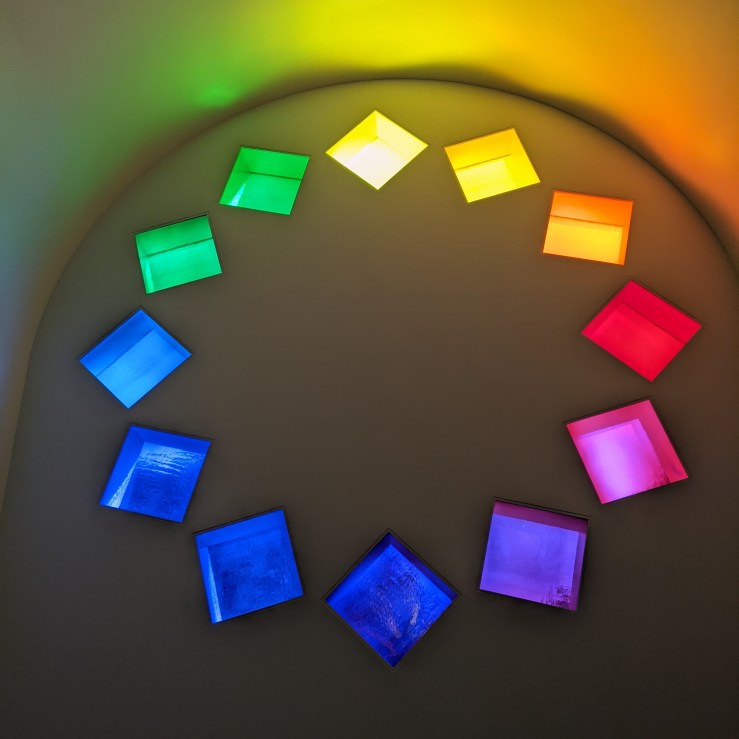
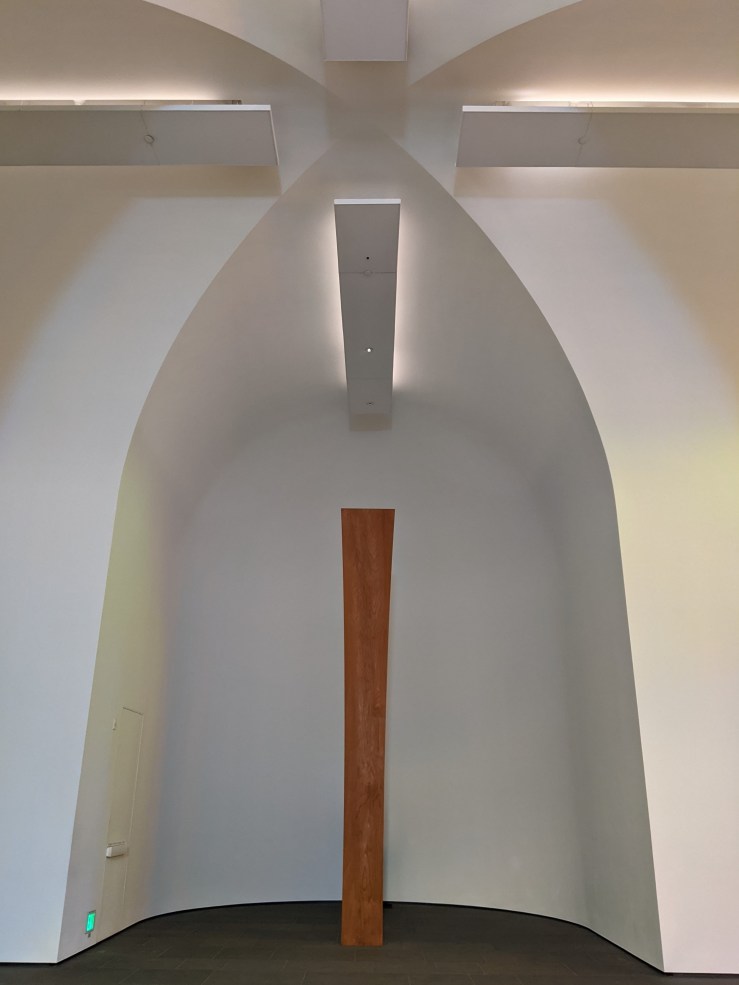
>> “What Remains: The Making of Ellsworth Kelly’s Last Work,” Image interview with Rick Archer: I got to experience Ellsworth Kelly’s Austin—a modernist “chapel” containing three stained glass windows, fourteen black-and-white marble panels (Stations of the Cross), and a redwood totem—while in Texas for a CIVA conference in 2021; see some of my photos below. Kelly was an atheist inspired by Romanesque church architecture, and the architect he chose to collaborate with on Austin, Rick Archer, is a Christian. In this wonderful new interview by Bruce Buescher, Archer discusses his working relationship with Kelly, Kelly’s desire for randomization and form over meaning, the technical and architectural challenges of bringing Kelly’s vision to life, religious references, and the artist’s objective for the space. “I hope when people go in here, they will experience joy,” Archer remembers Kelly saying.
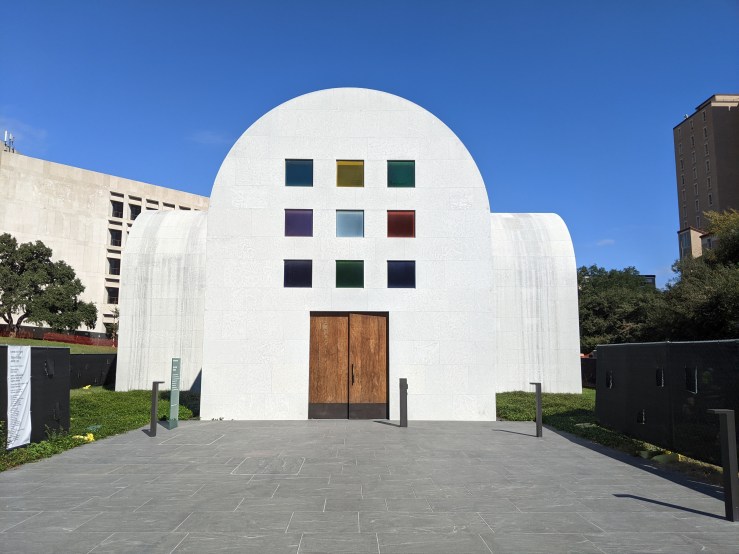
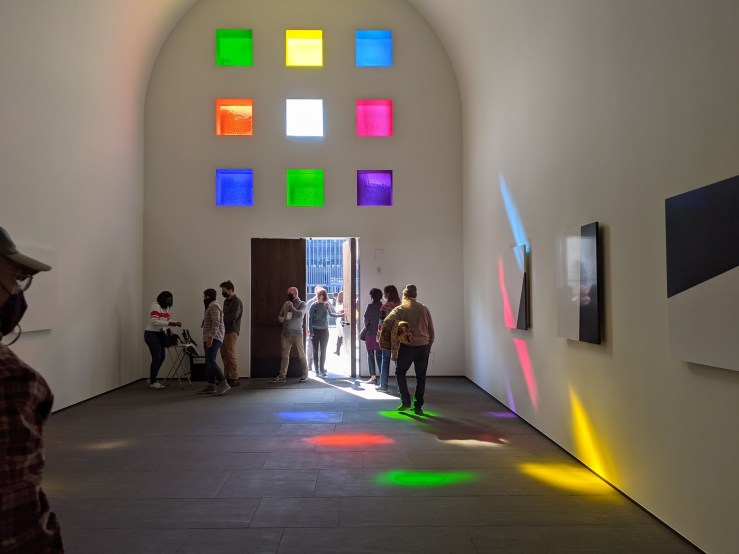
  • Austin by Ellsworth Kelly
  • Austin by Ellsworth Kelly
  • Austin by Ellsworth Kelly
  • Austin by Ellsworth Kelly
  • Austin by Ellsworth Kelly

>> “The Invisibility of Religion in Contemporary Art: An interview with Jonathan A. Anderson” by Matthew J. Milliner: Jonathan Anderson [previously] is one of the most important people working across the disciplines of art and theology, and I’m thrilled that his book The Invisibility of Religion in Contemporary Art is now available from the University of Notre Dame Press!
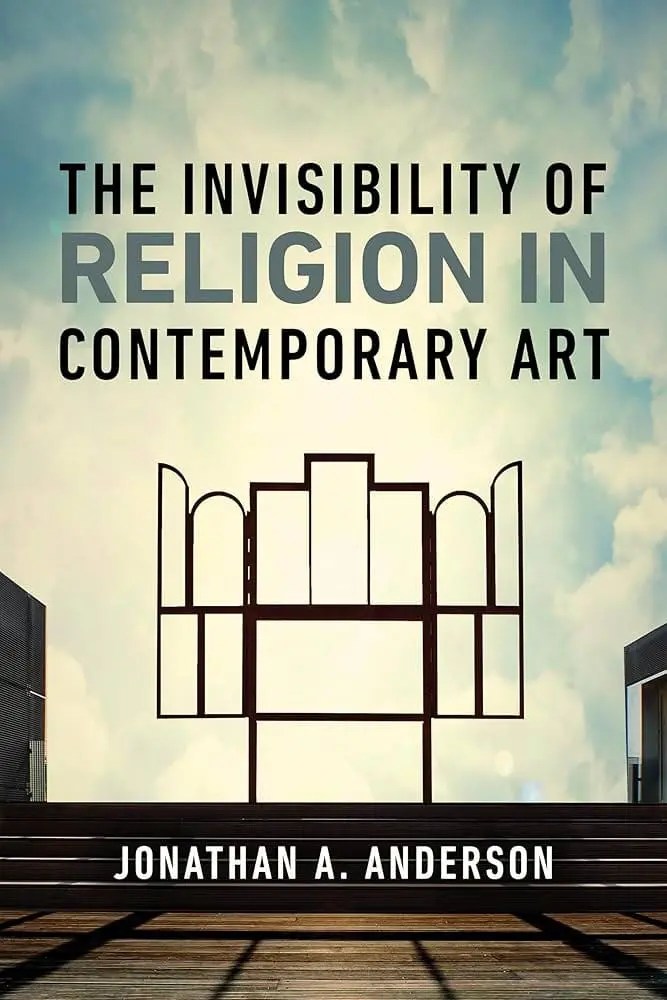
Invisibility of Religion in Contemporary Art

In this recent interview for Comment magazine, Anderson explains his purpose in writing the book:

I have become increasingly convinced that so many pivotal artists and artworks over the past century are deeply shaped by religious traditions and seriously engaged in theological questioning, but this remains severely under-interpreted or misinterpreted in the scholarship about these artists. One might see these threads running through an artist’s artworks and personal writings and even discuss these topics with the artist in their studio, but when one moves to the scholarly writing and teaching about that same artist, that language consistently disappears or is transposed into another register—usually politics, occasionally a highly esoteric spirituality. I wanted to understand, at a non-superficial level, why this was the case, and I wanted to see how other ways of speaking and writing about this topic might be possible.

Don’t miss, at the end of the article, his three hopes for the field of “art and theology,” which I very much share!

+++

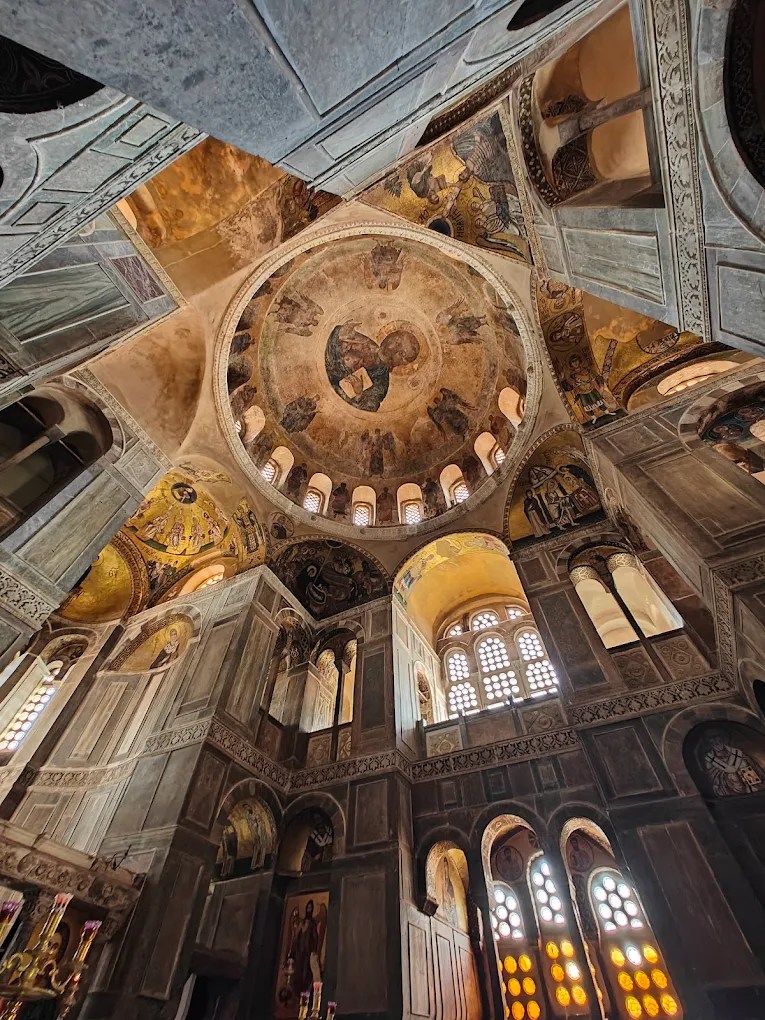
LECTURE: “The Problems and Possibilities of Visual Theology: The Ascension as a Case Study” by Jonathan A. Anderson: With Ascension Day coming up on May 29, it’s timely to share this talk given by Jonathan Anderson (see previous roundup item) a few years ago at Duke Divinity School, where he worked as a postdoctoral associate of theology and the visual arts from 2020 to 2023. Anderson explores a handful of images depicting the Ascension of Christ, a particularly challenging subject because of the spatial ambiguity. The scriptural accounts of the event (Luke 24:50–53 and Acts 1:6–11) beg the question, “What does ‘lifted up’ mean? Where is Jesus?” Attempting to work out these spatial difficulties visually can be theologically and exegetically productive, Anderson claims—even if it sometimes leads to unsatisfying results, as, Anderson says, it often does in Western art from the Renaissance onward. By contrast, when artists foster intertextual readings across the biblical canon and focus not so much on what the Ascension looks like as a historical event but rather on what it means, they are generally more successful.

Here are some time stamps, with links to the artworks discussed:

Hosios Loukas
Katholikon of Hosios Loukas monastery, Boeotia, Greece, 1011–12

+++

INSTRUMENTAL JAZZ: “Prayer” by Cory Wong: This video shows a live performance of Cory Wong’s “Prayer” on July 4, 2023, at Gesù music hall in Montreal. Wong, on guitar at far left, is joined by Ariel Posen on guitar, Victor Wooten on bass, and Nate Smith on drums. I learned about Wong through his collaborative album with Jon Batiste, Meditations (2020), which includes a version of this piece featuring Batiste’s piano playing.

+++

EXHIBITION: OMG! Reli Popart, Museum Krona, Uden, Netherlands, April 5–September 7, 2025: This exhibition at Museum Krona (housed in the complex of the still-active Birgittine Abbey of Maria Refugie in Uden, Netherlands) explores the connection between the pop art movement and Christianity through works by artists such as Andy Warhol, Corita Kent, Niki de Saint Phalle, and especially Dutch artists, including Woody van Amen and Wim Delvoye. Pop art is characterized by the use of imagery from popular culture, sourced from television, magazines, comic books, ads—and sometimes from the trash bin.

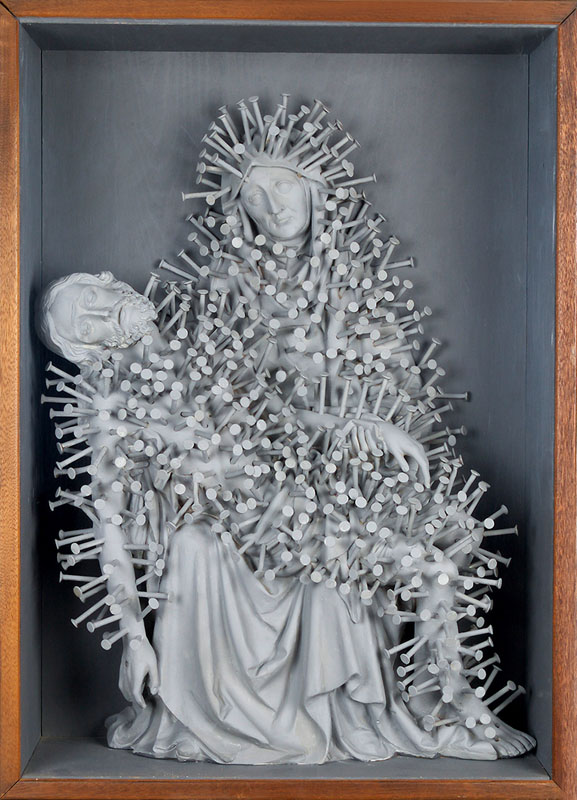
Jacques Frenken [previously], for example, built a body of work by salvaging discarded plaster sculptures of Christ and the saints—mass-produced for Catholic devotional use—and reconstructing them into assemblages. For his Spijkerpiëta, he “brought the Pietà back into our midst and accentuated the pain it radiates with nails,” the artist said.
Frenken, Jacques_Spijkerpieta
Jacques Frenken (Dutch, 1929–2022), Spijkerpiëta (Nail Pietà), 1967. Plaster, paint, iron, wood. Museum Krona, Uden, Netherlands.

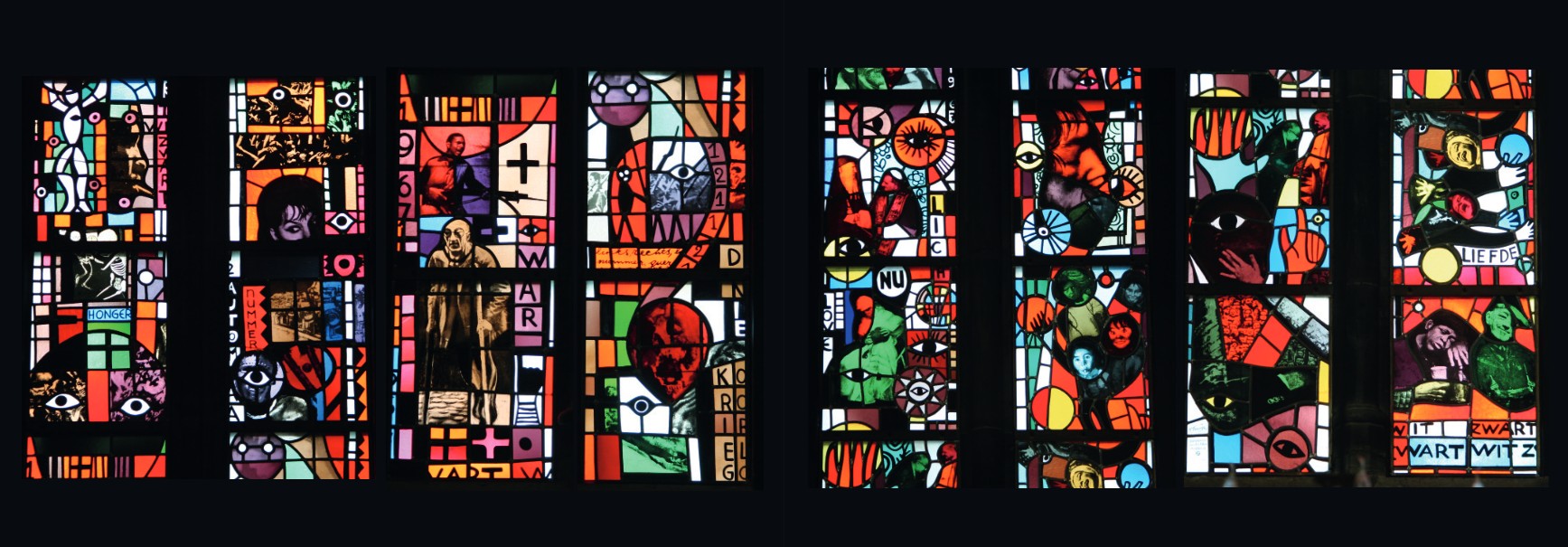
Another artist represented in the exhibition is Hans Truijen, who was commissioned in the 1960s by St. Martin’s Church in Maastricht to design eight stained glass windows for their worship space. The four along the left aisle of the nave depict human and divine suffering, whereas those on the right express hope, love, freedom, and happiness. He chose photographic images from various periodicals, including ones of the Vietnam War, and transferred them to glass using a special screen-printing process.
Truijen, Hans_Stained glass
Hans Truijen (Dutch, 1928–2005), Studies for the eight stained glass windows commissioned by St. Martinuskerk, Wyck-Maastricht, Netherlands, 1966–68. Courtesy of the artist’s son, Marc Truijen.

Roundup: Paradise-themed contemporary art, Rogationtide hymn, Gija Ascension painting, and more

EXHIBITION: Here After, Bridge Projects, Los Angeles, May 7–July 30, 2022: This latest offering from the spirituality-forward art gallery Bridge Projects looks amazing! I appreciate their commitment to featuring religiously and ethnically diverse artists, as well as a range of styles and media.

Here After exhibition
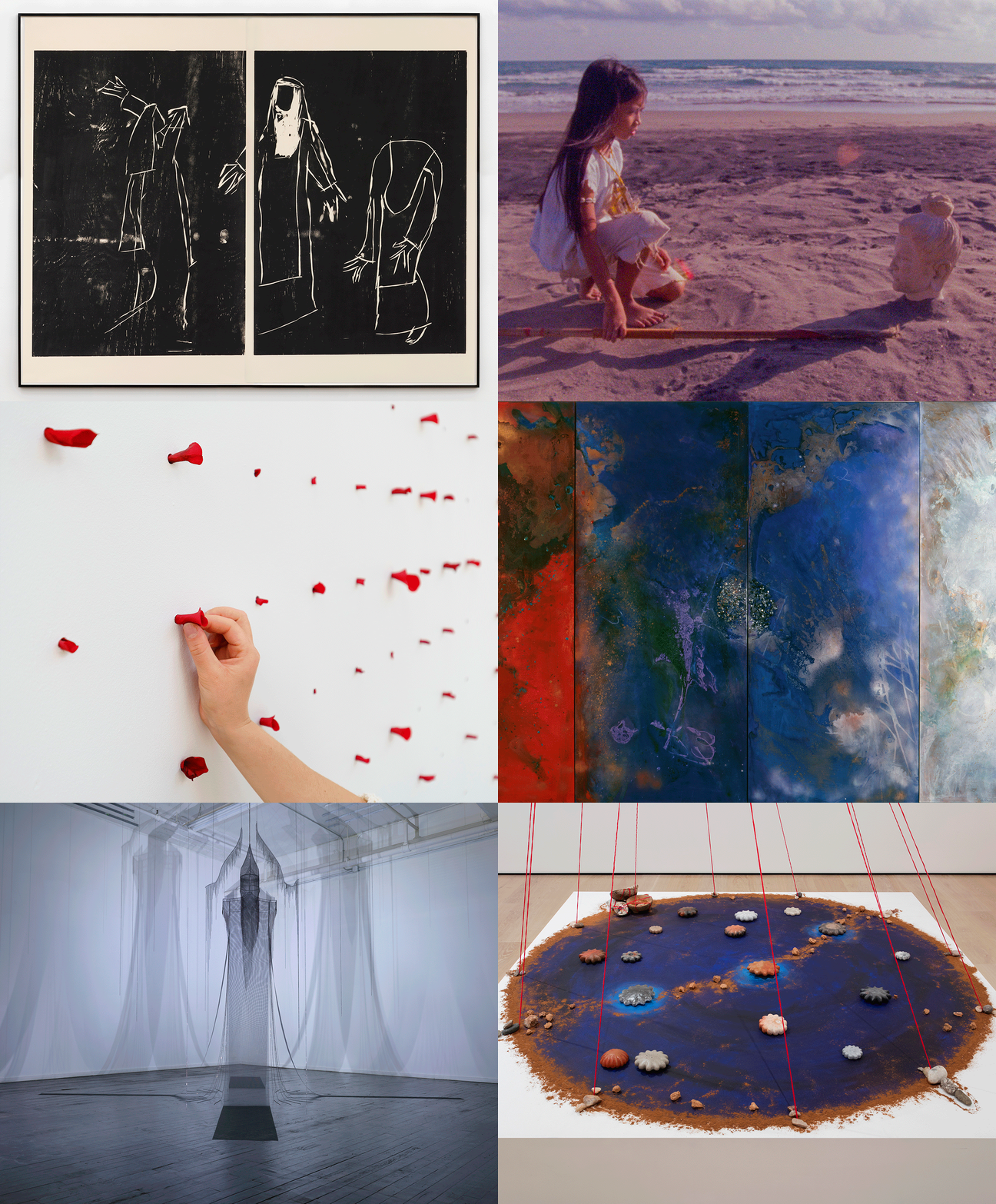
Andrea Büttner, Dancing Nuns, 2007; Tuan Andrew Nguyen, video still from The Boat People, 2020; Belu-Simion Fainaru, Monument for Nothingness, 2012–22; Bonita Helmer, The Four Worlds (Tiferet), 2002–5; Afruz Amighi, Guardian, 2021; Mercedes Dorame, Orion’s Belt—Paahe’ Sheshiiyot—a map for moving between worlds, 2018

The group exhibition features thirty-seven artists who explore the idea of paradise—both how it has been pursued on earth across history, and how it is imagined after life. From Pure Land Buddhism’s chant “Namu Amida Butsu” (“I take refuge in Amida Buddha”) to Christianity’s prayer for the Kingdom to be “on earth as it is in heaven,” the concepts of paradise are as diverse as those who hope for it.

In Here After, works like William Kurelek’s Farm Boy’s Dream of Heaven (1963) envision an eschatological beyond in figurative form, while works by Bonita Helmer and Zarah Hussain do so in more abstract terms. Andrea Büttner and Claire Curneen’s works point to a vulnerable, sensual bodiliness, embedded in the surface of the world where all things come to pass. There is a land beyond the river by Gyun Hur and Tuan Andrew Nguyen’s The Boat People make space for remembrance of those who have passed, while Afruz Amighi, Mercedes Dorame, and Charwei Tsai position the viewer between worlds, feet firmly planted on the ground yet gazing at the glory and wonder of the beyond. In his installation Skywall, David Wallace Haskins plunges into the boundless sky and its immaterial light, letting all the expansive beauty grip the viewer. Kate Ingold intones the rhythmic mantras of what the divine is not with minute stitches, employing almost impossible patience to painstakingly outline absence. Kris Martin lodges small contradictions in the mind, which, in time, grow to be distracting puzzles—the candle in a sealed box, whose existence cannot be proven with the senses. And Tatsuo Miyajima uses digital counters to display the uncountable, unending dimension of existence.

+++

SONGS:

>> “O Jesus, Crowned with All Renown,” performed by Jon and Amanda McGill: The Monday to Wednesday preceding Ascension Day is known as Rogationtide, a short liturgical period (observed by most Anglicans, Episcopalians, Catholics, and others) in which we pray that God blesses the crops so that they yield a good harvest. It falls on May 23–25 this year. The hymn “O Jesus, Crowned with All Renown” is especially associated with the Rogation Days. It was written in 1860 by Edward White Benson, archbishop of Canterbury, and is typically paired with the tune KINGSFOLD.

O Jesus, crowned with all renown,
Since thou the earth hast trod,
Thou reignest, and by thee come down
Henceforth the gifts of God.
Thine is the health and thine the wealth
That in our halls abound,
And thine the beauty and the joy
With which the years are crowned.

Lord, in their change, let frost and heat
And winds and dews be giv’n;
All fostering power, all influence sweet,
Breathe from the bounteous heav’n.
Attemper fair with gentle air
The sunshine and the rain,
That kindly earth with timely birth
May yield her fruits again.

That we may feed the poor aright,
And gathering round thy throne,
Here, in the holy angels’ sight,
Repay thee of thine own:
That we may praise thee all our days,
And with the Father’s name,
And with the Holy Spirit’s gifts,
The Savior’s love proclaim.

Spiritual director and writer Tamara Hill Murphy explains the meaning of Rogationtide:

“Rogation” is derived from the Latin verb rogare, which means “to ask.” In the liturgies of Rogation Days, we ask the Lord to bless the fields, the crops, and the hands of farmers who produce our food. Worship on Rogation Days teaches us that we depend upon God’s favor over his land. We ask him for goodness over not just an abstract idea of our “land” but the very real earth beneath our feet in our backyards, our neighborhoods, and whatever part of the earth our feet hit the ground. As we’ve become a post-industrial society, the prayers for Rogation Days have expanded to include not only prayers for farmers and fishermen, but also for commerce and industry, and for all of us as stewards of creation.

>> “The Twelve: An Anthem for the Feast of Any Apostle,” words by W. H. Auden and music by William Walton: In 1965 the dean of the choir school at Christ Church, Oxford—Dr. Cuthbert Simpson—approached poet W. H. Auden and composer William Walton to write a choral anthem for use on apostolic feast days. “The Twelve” is the result. In this video filmed at Keble College, Oxford, in July 2021, it is performed by the vocal ensembles VOCES8 and Apollo5 (both directed by Barnaby Smith), with Peter Holder on organ. Learn more about the background and structure of the anthem here.

This performance appears on Renewal?, a concept album released February 25 that combines new works by Paul Smith (cofounder of VOCES8) and Donna McKevitt with works by three influential modern composers: William Walton, John Cage, and William Henry Harris. “Multifaceted texts by Lal Ded, Edmund Spenser, W. H. Auden, Lord Byron, Pablo Neruda, Maya Angelou, and Edna St. Vincent Millay offer space to consider our world, past and present, and meditate on a response to build a better future.”

You can read the full text of “The Twelve” in the YouTube video description. It begins,

Without arms or charm of culture,
Persons of no importance
From an unimportant Province,
They did as the Spirit bid,
Went forth into a joyless world
Of swords and rhetoric
To bring it joy.

+++

VISUAL MEDITATIONS:

Ascension Day occurs every year on the Thursday that falls forty days after Easter (see Acts 1:1–3). This year it is May 26. Here are two Ascension-themed visual meditations from ArtWay.eu.

>> On the Reidersche Tafel, by Nigel Halliday: This ivory bas-relief, which was probably originally embedded in a book cover, is the earliest known representation of the Ascension. It shows Jesus striding up a mountain, being pulled up into heaven by the hand of God the Father. (Mark and Luke use the passive voice to describe the Ascension: “he was taken up into heaven.”) He is dressed in a toga and holding a scroll. Learn more from Nigel Halliday at the above link, or visit this Instagram post I made two years ago.

Ascension (Reidersche Tafel)
The Women at Christ’s Tomb and the Ascension, Milan or Rome, ca. 400. Ivory plaque, 18.7 × 11.5 cm. Bayerisches Nationalmuseum (Bavarian National Museum), Munich, Germany.

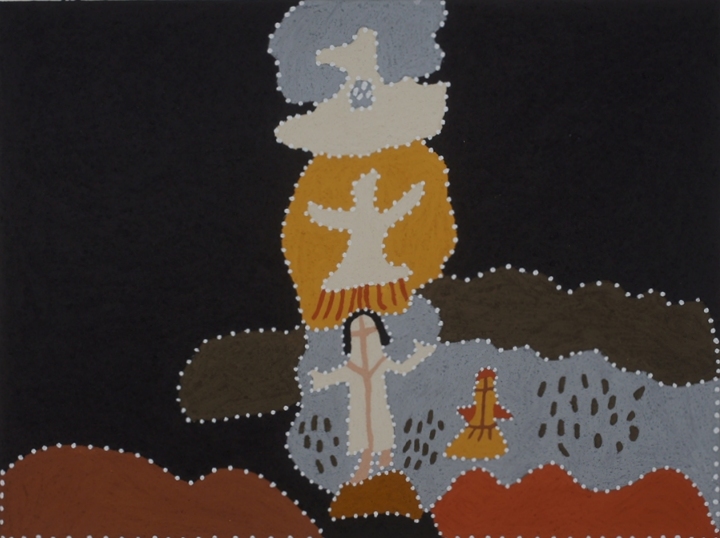
>> On Ngambuny Ascends by Shirley Purdie, by Rod Pattenden: Ngambuny is the Gija name for Jesus. Aboriginal Australian artist Shirley Purdie sets his ascension within the indigenous landscape of the Bungle Bungle Range, using her characteristic style of dotted outlines. “Purdie draws on her cultural tradition to locate the presence of God within the skin of her land,” writes the Rev. Dr. Rod Pattenden. “Her work is literally painted with the earth, as she collects ochres from the land she is responsible for and mixes it with glue to attach to her warm hued canvases.” Pattenden offers a fascinating reading of Purdie’s Ngambuny Ascends, discussing the use of black ocher, God as Creator Spirit alive in the earth, and more.

Purdie, Shirley_Ngambuny Ascends
Shirley Purdie (Gija, 1948–), Ngambuny Ascends, 2013. Natural ocher on canvas, 60 × 80 cm. Private collection. The artist is represented by the Warmun Art Centre in Warmum, WA, Australia.