Roundup: Art & Theology on Twitter, Van Gogh earthwork, flowers overhead, God in pop culture, Raised documentary

After years of hesitance, I’ve finally decided to try out this whole Twitter thing. My handle is @artandtheology. I will be sharing posts from the blog as well as retweeting others in the field. Feel free to engage with me there.

+++

Van Gogh’s Olive Trees reinterpreted as earthscape for aerial viewing: Last year the Minneapolis Institute of Art commissioned earthworks artist Stan Herd to recreate Vincent Van Gogh’s Olive Trees, an important painting in its collection, on a 1.2-acre plot of land so that people flying into the Minneapolis–Saint Paul Airport could look down from their windows and be welcomed to the city (and invited to the museum!). Watch Herd at work on the project in the video below.

+++

Deconstructed flower garden suspended in air: To herald the start of spring, London-based installation artist Rebecca Louise Law has suspended 30,000 live flowers from copper wire in the atrium of the concept shopping mall Bikini Berlin in Germany, giving shoppers a perhaps unexpected taste of natural beauty. Natural materials, especially flora, are Law’s specialty. Visit her website to view more of her stunning works (The Yellow Flower from Sasebo, Japan, is probably my favorite), or stop by Bikini Berlin anytime through May 1 to experience Garten.

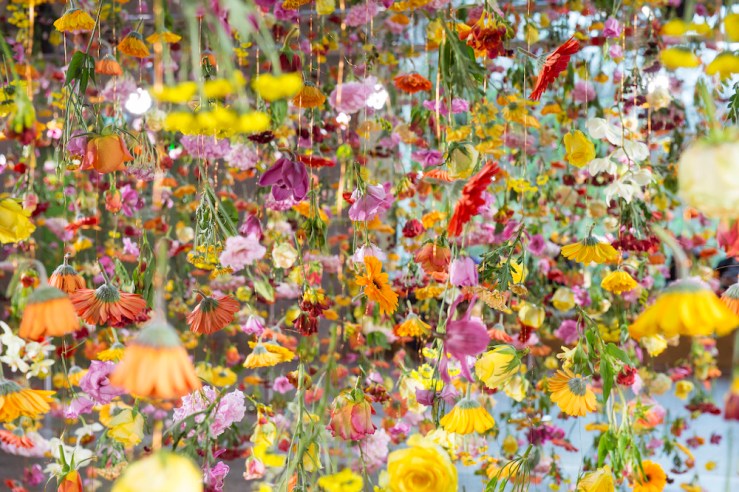
Garten by Rebecca Louise Law

Garten by Rebecca Louise Law

+++

10 best representations of God in culture: My friend Paul Neeley alerted me to this recent list published in The Guardian. Culled from film, theatre, and visual art, several of these are new to me!

+++

Book and documentary collaboration on the Resurrection: In 2014 Zondervan published Raised? Finding Jesus by Doubting the Resurrection by Jonathan K. Dodson and Brad Watson to demonstrate why the bodily resurrection of Jesus is believable and the possibilities it offers for a life of hope. As a tie-in to the book, Moving Works created a four-part documentary in which Benjamin and Jessica Roberts tell the story of how Christ’s resurrection has personally impacted them. Watch the documentary below, and click here to access related materials for small group study.

Roundup: The art of celebration, cross-cultural exchanges in illuminated manuscripts, the history of color, and insect-wing blooms

The Art of Celebration (album): Rend Collective is a folksy worship band from the small coastal town of Bangor in Northern Ireland that is internationally known for its high-spirited, experimental songs of joy. The Art of Celebration is their fourth of five albums, the story of which is told in the video below. “This record is an attempt to reflect something of the irrepressible laughter in the heart of God,” says bandleader Gareth Gilkeson. “It’s a call to the cynical to once again choose celebration over condemnation and a reminder to the broken that ‘the joy of the Lord is our strength.’” You can preview songs from the album here and purchase it here, or catch the band on tour (they’re currently in the US). I’ve embedded one of my favorite songs from the album below: “My Lighthouse.”

+++

“Traversing the Globe through Illuminated Manuscripts” (exhibition): Through June 26, the J. Paul Getty Museum in Los Angeles is running an exhibition of illuminated manuscripts and painted book arts from the ninth through seventeenth centuries. From the website: “These highly prized objects allow us to glimpse, admire, and study a world gone by, as well as its peoples, different belief systems, and an interconnected global history of human thought and ideas about art.” Check out the Q&A with curator Bryan Keene—so fascinating. Also click the link above to find out about related events. Next up is a lecture on April 19 titled “A Medieval Picture Book and Its Judeo-Persian Lives: The Shah Abbas Bible in 17th-Century Safavid Iran.”

Virgin and Child (Ethiopian)
The Virgin and Child with the Archangels Michael and Gabriel, from a Gospel book, ca. 1480-1520, Gunda Gunde Monastery, Ethiopia. J. Paul Getty Museum, Los Angeles.
Northumberland Bestiary
Pen-and-ink wash-tinted drawing of a dragon riding an elephant, England, ca. 1250–1260. Northumberland Bestiary (Ms. 100), fol. 54, J. Paul Getty Museum, Los Angeles.

+++

The Brilliant History of Color in Art (book): Victoria Finlay’s latest book from Getty Publications, full of fun facts about the origins and science of color. The trailer below tells how Prussian blue, Indian yellow, lead white, and Tyrian purple came to be. Lapham’s Quarterly has a nifty infographic on the same topic.

+++

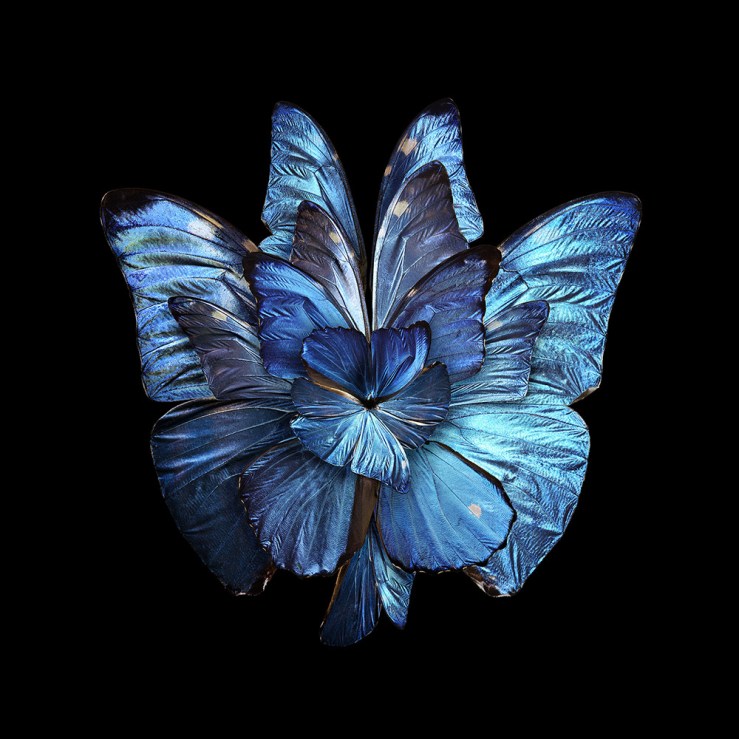
Mimesis (photomontage series): From 2012 to 2014 Paris-based artist Seb Janiak executed a series of twenty-two photographs that show insect wings pieced together in flower-like forms. Janiak says he believes that a spiritual reality undergirds the physical. “Using art to reveal what is behind the veil of matter is fascinating and full of discoveries,” he writes. See more Mimesis photos at the link above.

Mimesis by Seb Janiak
Seb Janiak (French, 1966–), Mimesis—Lacus Luxuriae, 2013. Chromogenic print, 180 × 180 cm.

Roundup: Church engagement with the arts

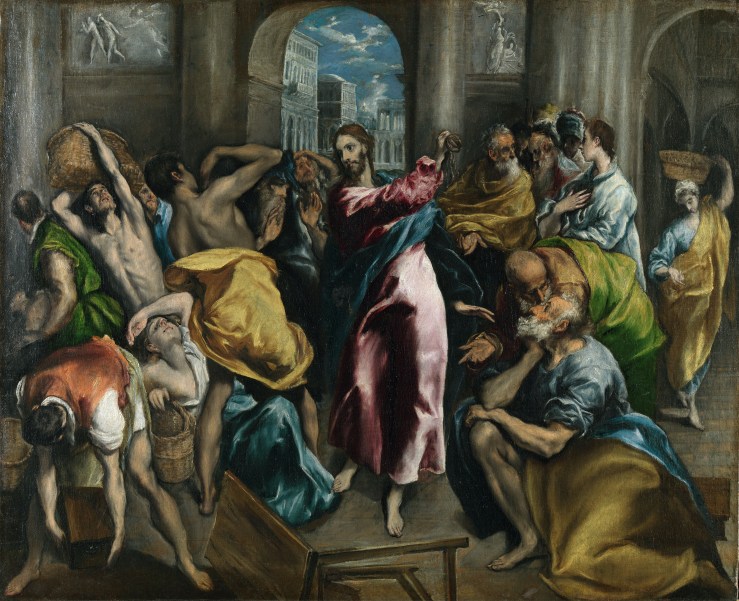
“Inspired to Follow: Art and the Bible Story,” St.-Martin-in-the-Fields, London: This program comprises a series of weekly noontime gatherings that use famous local paintings as a springboard into discussion of the biblical narrative and its implications for us today. I’ve enjoyed reading the few presentations given by associate vicar Jonathan Evens, posted on his blog: first, on J. M. W. Turner’s two paintings of Noah’s flood, and more recently, on El Greco’s Christ Driving the Money Changers from the Temple.

El Greco_Christ Driving the Money Changers from the Temple
El Greco (Greek, active Spain, 1541–1614), Christ Driving the Money Changers from the Temple, 1600. Oil on canvas, 106 × 130 cm (42 × 51 in.). National Gallery, London.

+++

VIBRANT music and arts festival, Cahaba Park Church, Birmingham, Alabama: On November 1, 2015, Cahaba Park Church held a Psalms-inspired music and arts festival. Eight visual artists from the church were selected to display their paintings, which were auctioned off to raise money for four nonprofits. The Corner Room performed songs from their new album, Psalm Songs, Volume 1; “Psalm 23” (music by Adam Wright) is the soundtrack for the recap video above. This next VIBRANT festival will be held on July 22.

+++

“Art and Spirit” exhibition, First Congregational Church, Los Angeles: Through April 24, the works of over fifty artists will be on display in the Neo-Gothic Shatto Chapel of the First Congregational Church of Los Angeles. Most of the works are by emerging LA artists from Art Division, an organization that provides art training to young adults who lack the resources to attend university but who want to pursue a career in the visual arts; they were asked to respond to the theme “art and spirit.” A few of the works in the exhibition are by well-known artists such as Rembrandt, Albrecht Dürer, Corita Kent, and Ed Ruscha.

+++

Portraits of Resurrection, 2015 Easter initiative, Saddleback Church, Lake Forest, California: Ex Creatis, the arts ministry at Saddleback, is always coming up with unique ways to incorporate art into the life of its church. Last Easter twenty-three volunteer artists sketched portraits of church attendees onto one of three floral prints (of the sitter’s choosing) made by three different artists in the church. These personalized works of art were meant to remind those who took them home of the new life they have in Christ.

Roundup: Fiction for Lent, art as commodity, major Bosch retrospective, Easter art retreat

Sarah Arthur is the editor of the just-published Between Midnight and Dawn: A Literary Guide to Prayer for Lent, Holy Week, and Eastertide. She has written an article for Christianity Today, “The Best Books to Read for Lent (That You Won’t Find in a Christian Bookstore).”

+++

Writing for the New Yorker, Ken Kalfus reviews the new novel Laurus by Russian medievalist Eugene Vodolazkin: “Medieval Russia was a land trembling with religious fervor. Mystics, pilgrims, prophets, and holy fools wandered the countryside. . . . [Laurus] recreates this fervent landscape and suggests why the era, its holy men, and the forests and fields of Muscovy retain such a grip on the Russian imagination.”

+++

In “Art as a Commodity: Does Time Equal Value in Art?” artist Scott Laumann discusses one of the most annoying questions he is asked at gallery shows: “How long did that take you?”

+++

Garden of Earthly Delights
Hieronymus Bosch (Dutch, ca. 1450–1516), The Garden of Earthly Delights. Oil on oak panels, 220 × 389 cm. Museo del Prado, Madrid.

This year marks the five hundredth anniversary of the death of Dutch artist Hieronymus Bosch, known for his grotesque depictions of human depravity. To commemorate his life and work, the Noordbrabants Museum in ’s-Hertogenbosch, the city of Bosch’s birth, has brought together his panels and drawings from all over the world in what is the largest Bosch exhibition of all time. Bosch invented an entirely new religious iconography: landscapes filled with bizarre, nightmarish creatures doing freakish things to or with humans—meant not as a prediction of what will one day happen to the damned but as a lament for what is already happening. Jonathan Jones, reviewer for The Guardian, gives the retrospective five stars.

+++

Lumen Christi: In the Light of the Risen Christ—Easter Encounters with Art”: The monastic ecumenical Community of Jesus on Cape Cod will be hosting a five-day art retreat from April 5 to 9, led by art historian Timothy Verdon and artist Gabriele Wilpers. Focused on the theme of resurrection, the retreat will feature lectures and discussion, group workshops, studio mentoring, and daily worship services. For more information, follow the link above.