VIDEO: “The Lord is Risen! Proclaimed by people from 29 countries”: This video was put out in 2020 by ICF Rotterdam, an intercultural church in the Netherlands whose congregation consists of members from over forty nations! They asked a handful of them to recite the Paschal greeting in their native tongue, so represented here are Indonesian, Chinese, Zulu, Igbo, Urdu, Nepali, Kurdish, Romanian, and more. [HT: Global Christian Worship]
Wycliffe Bibliafordítók (Wycliffe Bible Translators) in Hungary produced a similar video last year:
+++
SERMON: “Let Beauty Awake” by N. T. Wright: One of the things I love about the Anglican cleric N. T. Wright’s preaching and teaching is the importance he places on beauty. (I actually met Wright once—and it was at an arts conference.) In this sermon, which he preached at Durham Cathedral on Easter Sunday 2009, he takes as his text what I’ve heard him say is his favorite chapter in the Bible, John 20, and discusses how in Jesus’s rising, the glory of God was let loose in all the world.
“Easter carries with it a strange and powerful beauty,” he says. “I hope that, by exploring the biblical roots of why this is so, I may have surprised some of you at least into asking, afresh, What can we do to celebrate, more consciously and deliberately, the reawakening of beauty which comes with the light of Easter Day? How can we take this forward, as an explicit project, so that a world so full of ugliness and functionality, and in consequence so full of unbelief or false belief, can once again be wooed into belief and love?”
He opens the sermon by quoting a stanza from a poem by Robert Louis Stevenson, and near the close, he reprises it in his own words, which were developed into a song by Steve Bell:
Let Beauty awake in the morn from the cool of the grave, Beauty awake from death; Let Beauty awake, For Jesus’ sake, In the hour when the angels their silence break And the garden is bright with His Breath.
+++
RECIPE: “Tsoureki: The Symbolic Greek Easter Bread”: On her blog The Liturgical Home (and on Instagram), Ashley Tumlin Wallace shares a recipe for tsoureki, a brioche-like sweet bread made by many Greek Christians on Easter. It is soft and fluffy, flavored with citrus, and decorated with red-dyed eggs!
SPOKEN WORD + SONG: “Because He Lives” by Sharon Irving: Singer-songwriter, worship leader, and spoken word artist Sharon Irving [previously] recorded this video for City First Church Spring Creek’s virtual worship service for Easter 2020. It begins with an original spoken word piece, and then is followed by her singing the Gaither classic “Because He Lives.”
+++
SONG: “Sbab Dia Hidup” (Because He Lives) by Prison Akustik: The song “Because He Lives,” written in 1971 by Bill and Gloria Gaither, has made its way all around the world and has been translated into many languages. Here is the group Prison Akustik [previously] singing it in Indonesian.
+++
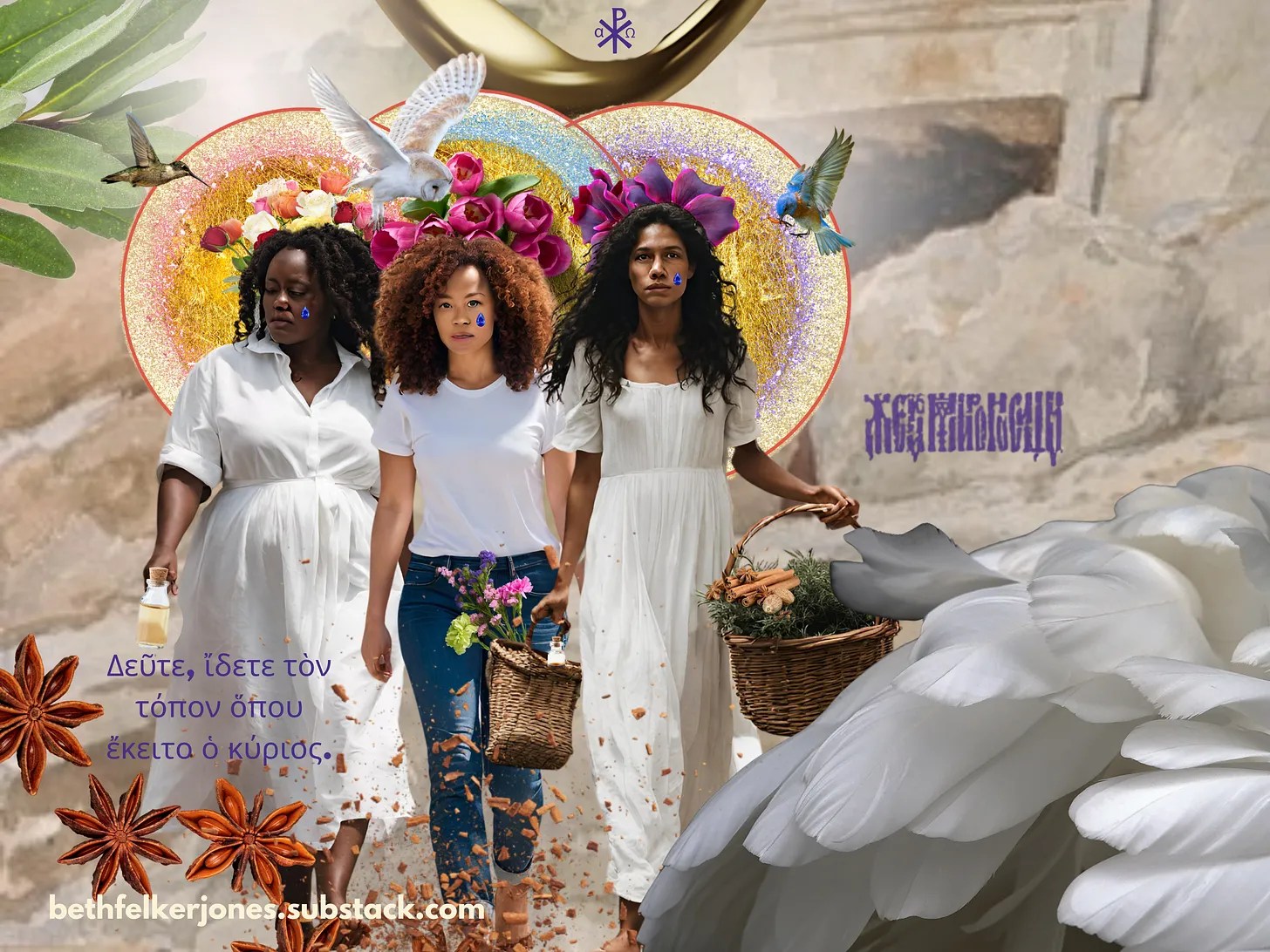
SUBSTACK POST: “Myrrhbearers & Magi” by Beth Felker Jones: In her Church Blogmatics post from last week, theologian Beth Felker Jones [previously] shares three new digital collages she made: one of the three myrrh-bearing women who discovered Jesus’s empty tomb, one of the three magi who brought gifts to the newborn Christ, and one that combines both groups of devoted witnesses. She provides descriptions of each and two original prayers, including the one below.
Digital collage (with AI-generated elements) by Beth Felker Jones, 2025
Holy Father, who accompanied your daughters on their way to the tomb, and in the power of your Spirit, turned their sorrow into joy, bring us too into the joy of those who found the tomb empty, and incorporate us, with them, into your resurrection life. With our sisters at the tomb that day, help us to say, “I have seen the Lord!” Amen.
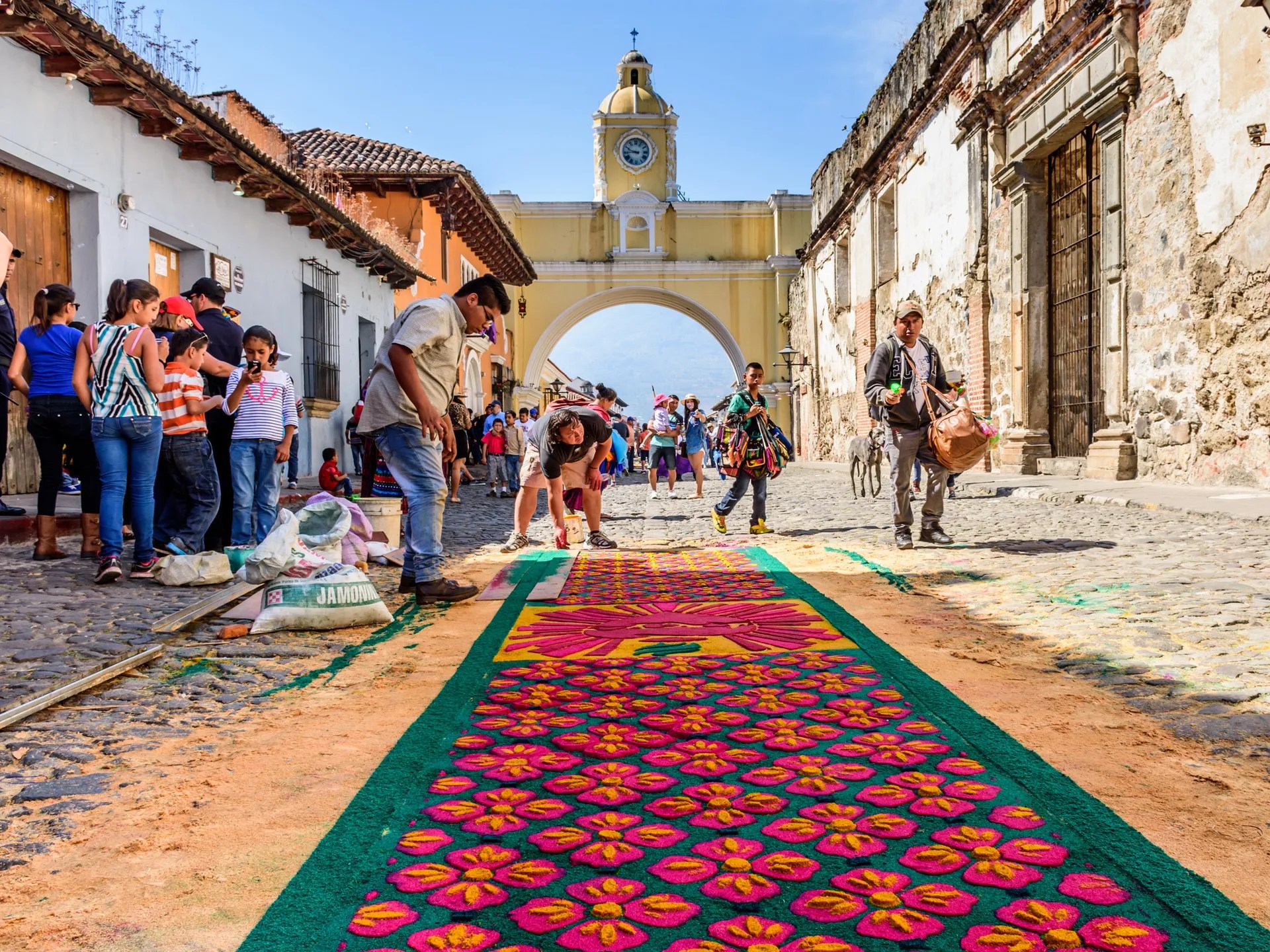
HOLY WEEK TRADITION: Antigua, Guatemala, is renowned for its annual Good Friday observance, which involves the laying out of alfombras (carpets) of multicolored sawdust through the city’s cobblestone streets, hundreds of feet long. On Maundy Thursday, the city closes so that families and businesses can spend the day constructing the carpets, applying the sawdust to planned designs using stencils and strainers and adding pine needles, flowers, fruits, and other natural materials as well.
People watch while locals make an alfombra (carpet) of dyed sawdust for Antigua’s Good Friday processions, the most famous in Latin America. Photo: Lucy Brown, 2016.
At 4 a.m. on Good Friday, the processions begin, with people carrying floats that bear statues of Christ carrying his cross, followed by marching bands playing solemn music. (This is a remembrance of Jesus’s walk to Calvary.) As their feet pass over the alfombras, the dust scatters. Locals and visitors gather along the streets dressed in black for mourning, and at 11 p.m. a figure of Jesus is laid to rest in the church.
Here are two resources for exploring this tradition further:
>> VIDEO: “Alfombras de Semana Santa en Guatemala,” dir.Federica Dominguez: This short film (in Spanish, with English subtitles) interviews Rolando Ortiz, an alfombrero who is also a shoemaker. He explains that the carpets hark back to Jesus’s triumphal entry into Jerusalem, when the crowds strewed his path with palm branches (giving him the red carpet treatment, so to speak). Even though the alfombras last only a brief time, locals spare no expense in bringing them to fruition each year—“for Jesus,” Ortiz says. “It is an act of gratitude above all.” An offering of beauty and praise.
+++
NEW ALBUM: As Foretold, Part 3 by Poor Bishop Hooper: Released today, this is the final album in a trilogy based on the prophetic fulfillment passages in the Gospel of Matthew. It centers on Jesus’s passion and concludes with a resurrection epilogue. As with all their music, the duo graciously offers it for free download from their website.
+++
SONGS performed by Emorja Roberson: Emorja Roberson [previously] is a singer, gospel choir conductor, and assistant professor of music and African American studies at Oxford College of Emory University in Georgia. I enjoy following his YouTube channel. Here are two songs that are especially fitting for Holy Week.
>> “I Know It Was the Blood”: Roberson sings three verses of this beloved African American spiritual: the title verse, “They whipped him all night long,” and “He never said a mumblin’ word.” The song is more typically sung in a major key, and its full lyrics span Christ’s passion, resurrection, ascension, and second coming. But Roberson slows down the tempo and sings in a minor key, homing in on the sorrow of Good Friday.
>> “He Decided to Die” by Margaret Pleasant Douroux: Roberson, on keys, sings a gospel classic with friends Marcus Morton and Cameron Scott, a song that emphasizes Christ’s resoluteness on the cross, his endurance for love.
+++
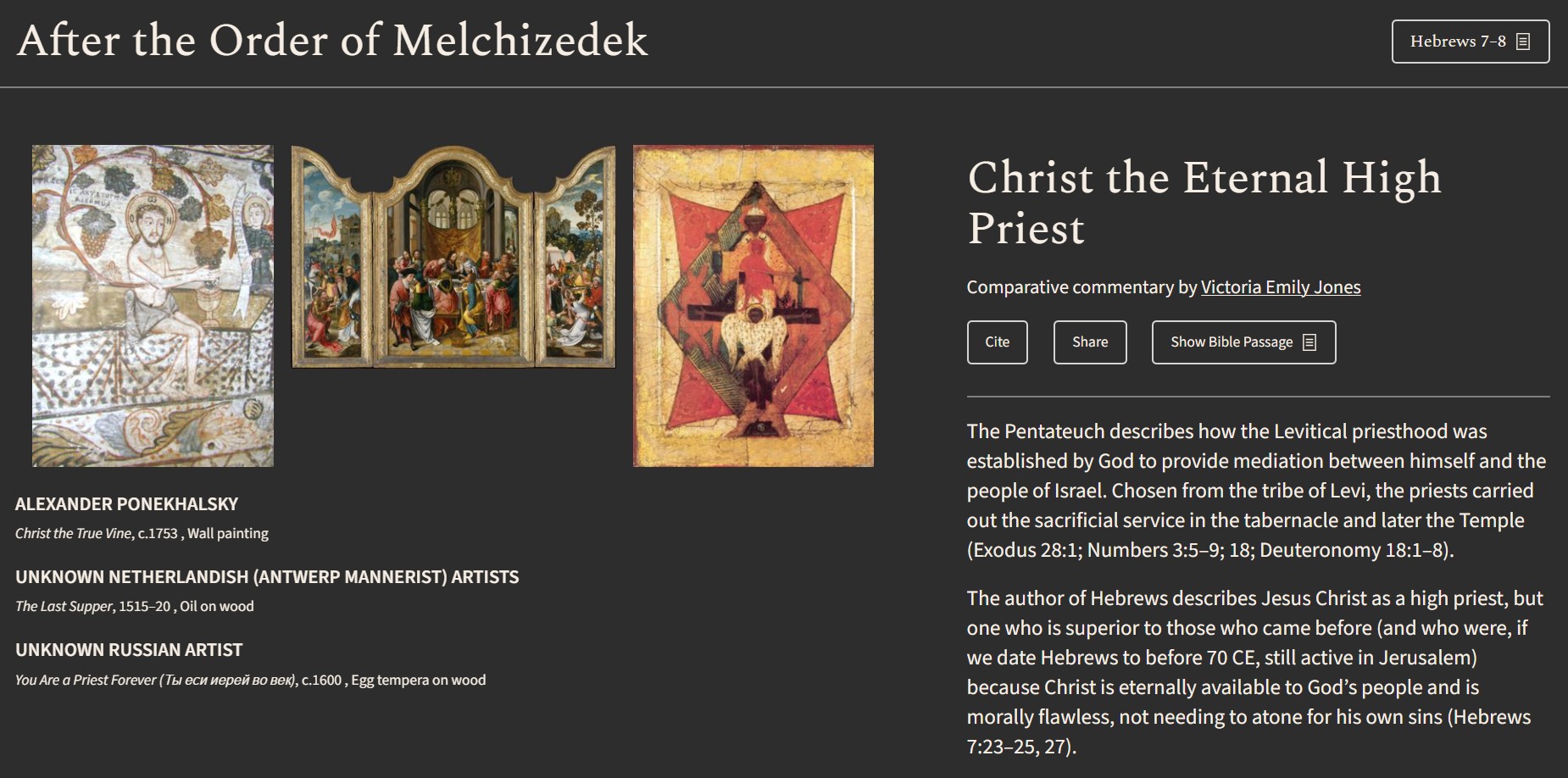
VISUAL COMMENTARIES: “After the Order of Melchizedek” by Victoria Emily Jones: My latest contribution to the Visual Commentary on Scripture, a project based out of King’s College London, was published earlier this month. Tasked with choosing and commenting on three artworks that dialogue with Hebrews 7–8, I landed on a “You Are a Priest Forever” icon from Russia (very strange!), an Antwerp Mannerist triptych that centers the Last Supper, and (my favorite) a wall painting of Christ the Grapevine from a Romanian church. I was interested to explore the idea of how Jesus, in giving his body and blood, is both the offerer and the offered, both priest and sacrifice.
+++
POEM: “The Death of Christ” by Emperor Kangxi: Emperor Kangxi (1654–1722) ruled in China for sixty-one years during the Qing Dynasty. In 1692 he issued the Edict of Toleration, which barred attacks on churches and legalized the practice of Christianity among Chinese people. Curious about and respectful of other faiths, he penned this short poem on the Crucifixion using the classical qi-yen-she form.
+++
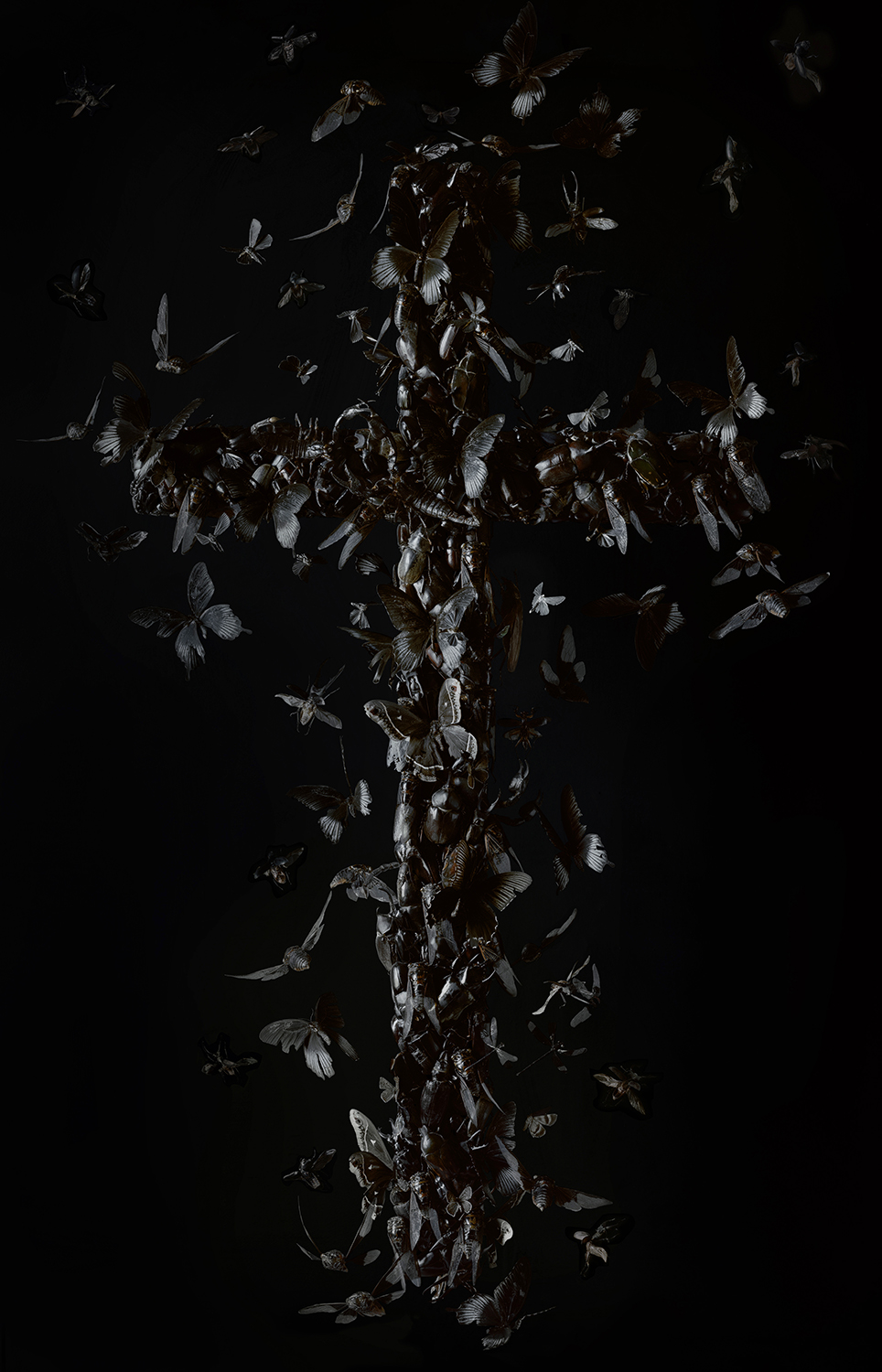
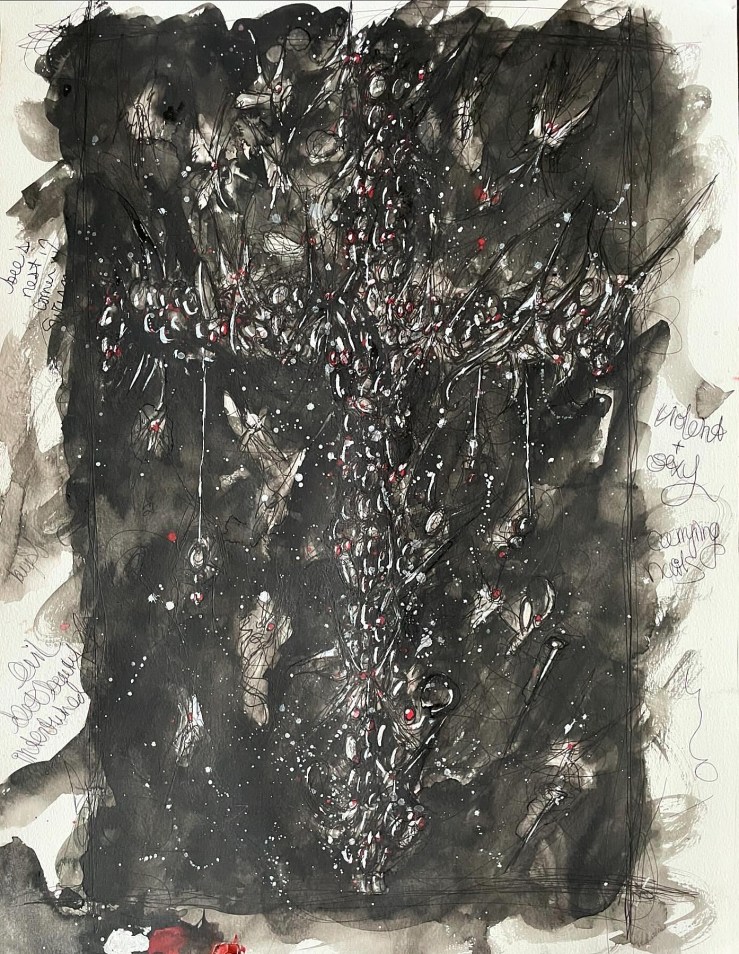
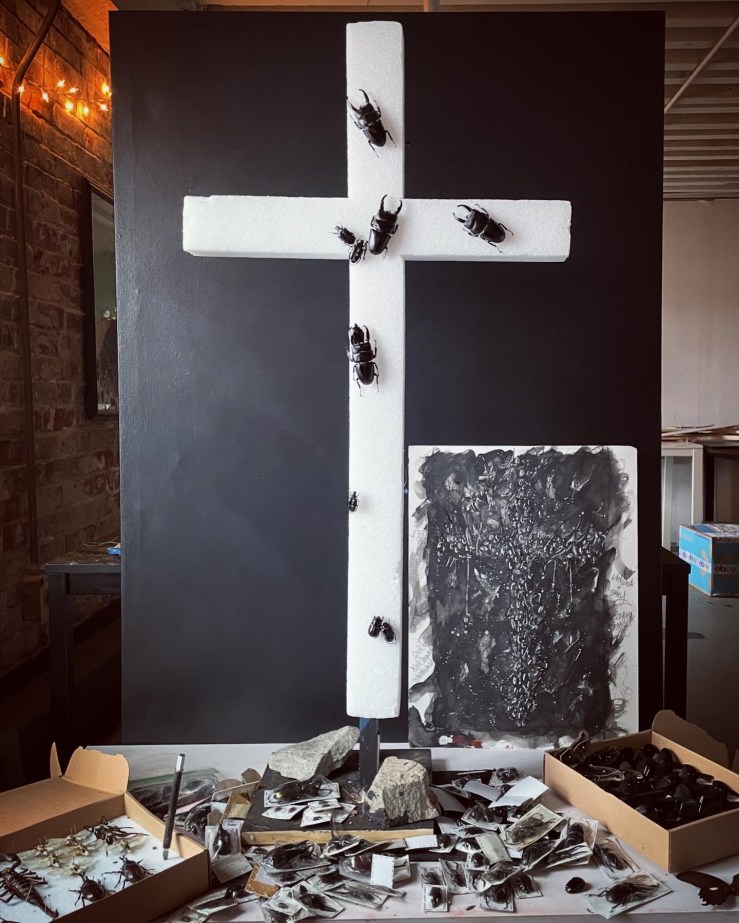
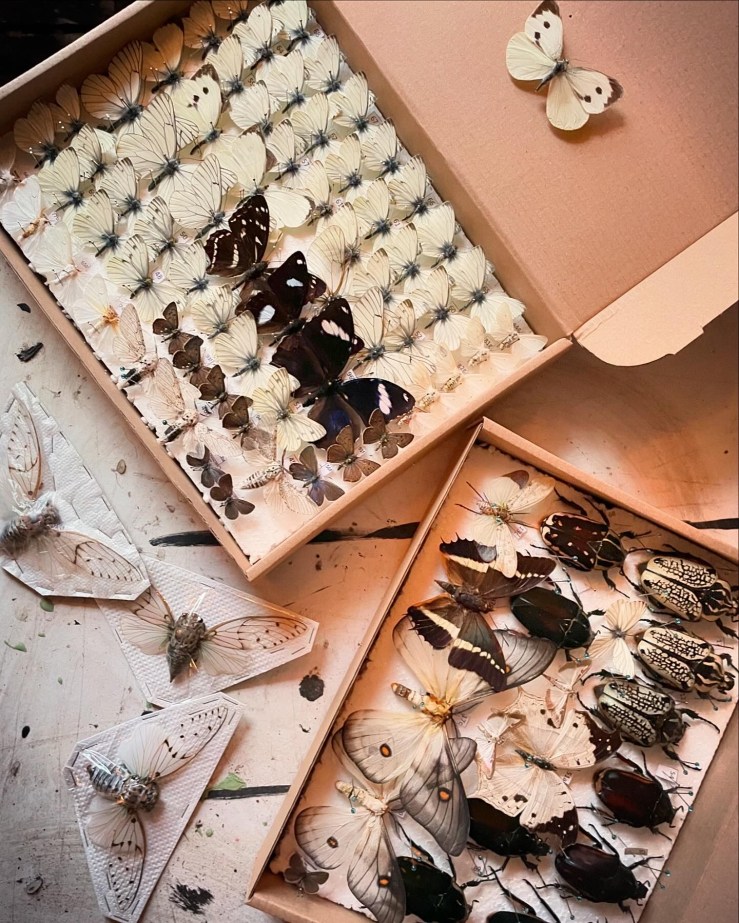
EXHIBITION: Tara Sellios: Ask Now the Beasts, Fitchburg Art Museum, January 18, 2025–January 18, 2026:Tara Sellios is a multidisciplinary artist from South Boston working mainly in large-format photography. Delighting in detail and complex symbolism, she often uses insects, dried fauna, bone, and other organic matter to create elaborate still lifes that she then photographs under dramatic lighting. She is inspired by art historical representations of the end of the world, especially the bizarre paintings of Hieronymus Bosch and Albrecht Dürer’s Apocalypse woodcuts, and by seventeenth-century Dutch vanitas paintings.
The photographs in her current solo show, Ask Now the Beasts at Fitchburg Art Museum in Massachusetts, are “contemporary allegories of suffering and transcendence.” The exhibition’s title comes from Job 12:7.
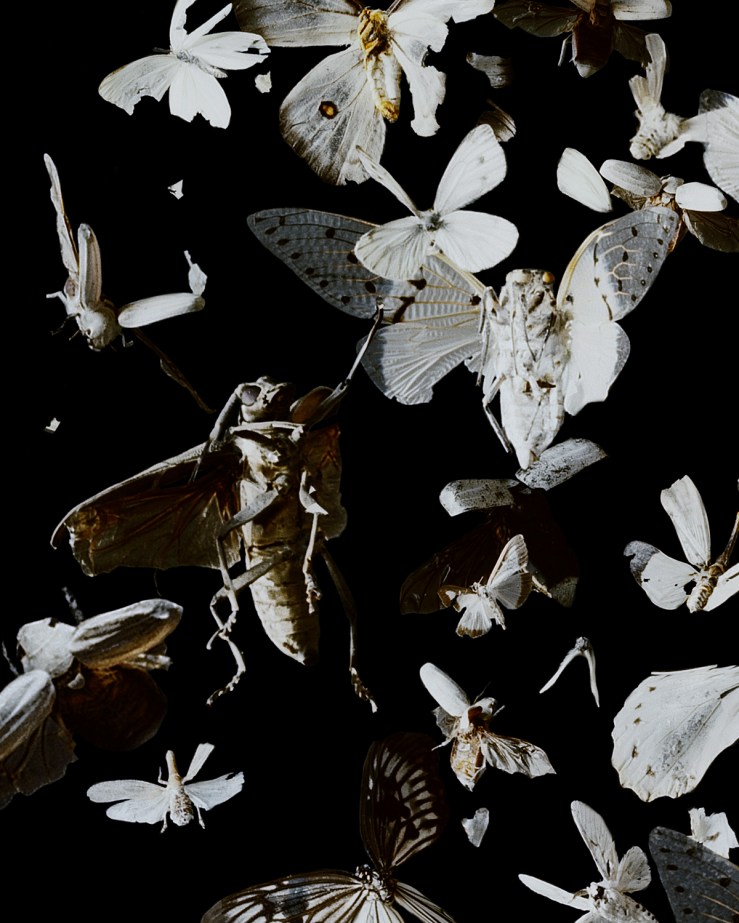
Two of the works on display are a pair of crosses: Umbra (Latin for “darkness” or “shadow”) and Dilucesco (“to begin to grow light, to dawn”), which together suggest a movement from death to resurrection. Constructed with a throng of black beetles and other black insects, the Umbra cross evokes the detail from the Synoptic Gospels’ Crucifixion accounts that at noon, “darkness came over the whole land until three in the afternoon, while the sun’s light failed” (Luke 23:44–45; cf. Matt. 27:45; Mark 15:33). Dilucesco, on the other hand, shows the cross seemingly exploding into light, as white moths and other winged insects break out of their cruciform shape. View these two photographic artworks, plus a few process photos and sketches the artist sent me, below. See, too, www.tarasellios.com.
Tara Sellios (American, 1987–), Umbra, 2024, from the series Ask Now the Beasts. Inkjet print from 8 × 10 negative, 55 × 35 in. Courtesy of the artist.Tara Sellios (American, 1987–), Dilucesco, 2024, from the series Ask Now the Beasts. Inkjet print from 8 × 10 negative, 55 × 35 in. Courtesy of the artist.
VISUAL COMMENTARY: “Repentance (Transforming Tears)” by Clemena Antonova: One of the three works that art historian Clemena Antonova curated for the Visual Commentary on Scripture exhibition on Peter’s denial of Christ (Matt. 26:69–75; Mark 14:66–72; Luke 22:54–62; John 18:15–18, 25–27) is the installation Lágrimas de São Pedro (Tears of Saint Peter) by contemporary Brazilian artist Vinícius Silva de Almeida. The artist used hundreds of light bulbs, filled with water and suspended on near-invisible nylon threads, to create an environment in which visitors move between “tears” falling like raindrops from above. In the Christian tradition, Peter is regarded as a paradigm of penitence, as scripture says he “wept bitterly” when he realized his sin, and soon after he was restored to Christ. As Antonova interprets, Tears of Saint Peter invites folks to reflect on the interconnection of sorrow and healing in Peter’s story and in their own.
Vinícius Silva de Almeida (Vinícius S.A.) (Brazilian, 1983–), Lágrimas de São Pedro (Tears of Saint Peter), 2005–21. 6,000 light bulbs filled with water (various numbers in different locations). Photo: Erivan Morais.
>> “Peter” by Montell Fish: Montell Fish (the stage name of Montell Frazier) is a singer-songwriter from Pittsburgh whose music combines elements of lo-fi and classic R&B. In his song “Peter” from the album Camp Lukewarm (2020), he compares himself, in confessional mode, to the titular apostle, who denied Christ three times. “Sometimes I feel like Peter / Denied you and I cannot deny that I did / Can I rest my head on your shoulders again?” In the bridge, Christ answers in the affirmative: Yes, come rest.
>> “O How He Loves You and Me / Your Love Divine”: The first song in this medley was written by CCM (contemporary Christian music) pioneer Kurt Kaiser in 1975; the second, by the legendary gospel artist Richard Smallwood. Recorded live at Jericho City of Praise in Landover, Maryland, it’s performed here by Smallwood (at piano) and his vocal and instrumental ensemble Vision, featuring soloist Vanessa Williams. The recording appears as two separate tracks on Persuaded: Live in D.C. (2001).
Here are the lyrics to the second song, starting at 3:06:
Refrain: Lord, you know the pain, pain we bear And Lord, you know the toils, toils and cares Send your direction Send your protection Send your compassion And your love divine
Verse: Help us love those who would do us wrong Send your cleansing power from above Unite our hearts as one Make us vessels for the flow-through of your love
[Refrain]
Vamp: Your love divine Your love divine
+++
BOOK CHAPTER: “Maundy Thursday—The Mission,” chap. 16 from Films for All Seasons by Abby Olcese:Abby Olcese is a writer on film, faith, and popular culture, living in Kansas City. Last year her book Films for All Seasons: Experiencing the Church Year at the Movies was published by InterVarsity Press, spotlighting twenty-six films as lenses through which to reflect on the great themes of the church calendar. I was preparing to write something on The Mission, the 1986 film directed by Roland Joffé, for Lent this year when I encountered this book, and because Olcese covers the movie so well, I secured permission from IVP to provide a free PDF download of the chapter to Art & Theology readers. Olcese situates The Mission as a film that’s especially appropriate for Maundy Thursday, a day when the church reflects on the call to servant-love and commemorates, among other things, Jesus’s arrest in the garden of Gethsemane, during which he and his disciples “face the forces of human empire, a dramatic moment of conflict ending in what, for the moment, feels like defeat.”
The Mission addresses themes of Christian ministry, the kingdom of God, repentance, forgiveness, love, respect, and the nonviolent ethic of Christ. Based on actual events, it follows an eighteenth-century Spanish Jesuit priest, Father Gabriel (Jeremy Irons), as he establishes a mission among the Guaraní people in the borderlands of present-day Argentina, Paraguay, and Brazil and seeks to protect the Guaraní from the encroachment of Spanish and Portuguese enslavers. He is later joined by the penitent Rodrigo Mendoza (Robert De Niro), a recent convert and former slave dealer and mercenary soldier. But the two clash over how best and most faithfully to protect the people they live among and serve.
ORATORIO: Water Passion After St. Matthew by Tan Dun: Commissioned for the 250th anniversary of Bach’s death in 2000, this eclectic, Asian-influenced Passion oratorio by the Chinese American composer Tan Dun follows Jesus from his baptism to his resurrection. As the title suggests, water plays an important role in the work. When performed, seventeen large transparent water bowls, dramatically lit from below, form a cross on the stage and are used by percussionists throughout the piece’s ninety-minute duration, creating various timbres. (“The three percussionists make water drip, flow, burble, crash and hiss. They lift handfuls of water, then fling it back down. They stir it, strike it with pairs of plastic cups, float soup bowls upside down in it and play them,” Justin Davidson described in his review of the world premiere.) For Tan, water is “a symbol of baptism, renewal, re-creation, and resurrection.”
Composer Tan Dun plays a “water drum” in Hangzhou, Zhejiang Province. Photo courtesy of Visual China Group (VCG).
In addition to the water percussion, the work calls for an SATB chorus that doubles on stones and tingsha (Tibetan finger cymbals); soprano and bass soloists who double on the xun (Chinese ocarina, or globular vessel flute) and who are required to do some Mongolian overtone singing; one violin; one cello; and one sampler player (Yamaha A-3000).
Water Passion premiered in Stuttgart, Germany, on September 8, 2000, conducted by Tan—you can listen to the full live recording on Spotify—and it has since been performed a handful of other times across the globe. I recommend the following hour-long video from Symphony Tacoma in Washington, which features excerpts from their March 30, 2016, performance augmented by interviews with some of the key players:
+++
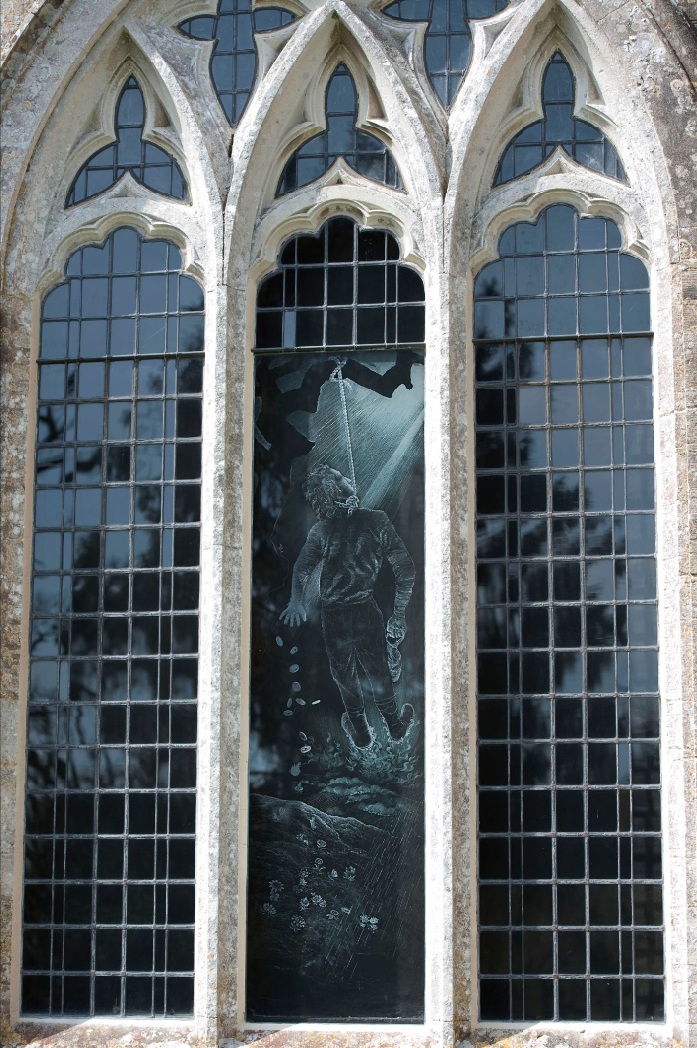
ARTWORK: The Judas Window by Laurence Whistler: In 1940, St Nicholas Moreton in Dorset was hit by a German bomb, destroying much of the church building, including its nineteenth-century stained glass windows. After rebuilding, the church commissioned the renowned glass engraver Laurence Whistler in 1955 to make twelve new windows, replacing the ruined ones, a project he worked on for the next three decades; they depict butterflies, birds, rabbits, wildflowers, candles, stars and planets, and local scenes. (See a few photos at The Dorset Rambler or Chris Belsten’s Flickr album.) In 1987 he offered to donate a thirteenth window on the theme of forgiveness, featuring the death of Judas, which would be visible, by design, from the outside only (the proposed space was blocked on the inside by a memorial tablet). The idea was entertained but, after consultation between the rector, parish council, and local diocese, was ultimately rejected due to its controversial nature—too many felt that it just wasn’t a fitting subject for a church window. Eager to pursue his vision, Whistler made the window anyway and loaned it to the county museum in Dorchester but insisted that if the church ever changed its mind, it should be given to them.
Laurence Whistler (British, 1912–2000), The Death of Judas (aka the Forgiveness Window), made 1993, installed 2013. Engraved glass, St Nicholas’ Church, Moreton, Dorset, England. Photo: Phil Yeomans / Bournemouth News and Picture Service.
In 2012, Rev. Jacqueline Birdseye, the new rector, encouraged the parish to revisit the issue, and this time around, there was unanimous approval to install the window, startling though it is. Again, it’s a blind window—behind it is black wooden boarding—which was the artist’s intent, as he wanted Judas to be a “shadowy” figure (so he couldn’t be front-lit and backlit) and on the outside, near the graveyard. But, unlike traditional portrayals of Judas’s suicide, which are bleak and punishing, Whistler’s portrayal is one of subtle hope, redemption, and new life. The uniting theme of the twelve interior windows is “light,” and here a bright shaft falls from the heavens on Judas’s upturned face. Hanging from his noose, he relinquishes the thirty coins for which he sold his Savior, and when they hit the ground they transform into flowers; the “field of blood” (Acts 1:18–19) becomes a spring meadow.
Scripture tells us that after realizing his enormous error, Judas “repented” (Matt. 27:3 KJV), “was filled with remorse” (NLT), and returned the blood money. Though Christians have historically counted Judas as eternally damned, other Christians have suggested the possibility of forgiveness beyond the grave for the traitorous disciple who was desperately grieved by his sin. “There’s a wideness in God’s mercy.” “A broken and contrite heart, O God, you will not despise” (Ps. 51:17).
>> The Divine Dark, vol. 1: This three-song EP was released December 15, 2024, on Re-Echo Records, a new label for music created by artists from Resurrection Philadelphia church. “The Divine Dark is an ongoing series of original arrangements and compositions for devotion, contemplation, and edification. The series takes its name from a phrase that emerged in the fifth century among Christian mystics to describe the ineffable unknowableness of God . . . in all his kindness, grace, and mystery.”
The first volume features new arrangements by Joshua Stamper [previously] of two seventeenth-century German hymns (both translated into English by Catherine Winkworth, and sung here by Sarah Long), plus one new hymn that Stamper wrote with his wife, Kory Stamper, whose refrain is taken from Psalm 127:4. The songs quietly explore the mysteries of salvation, the Eucharist, and God’s sovereignty as well as some of the paradoxes of God’s character, such as his being both storm and shelter (wild and thundering, but also safe and enfolding).
Volume 2 of The Divine Dark is likely to release later this year.
>> It Is Good to Be Here with You by Nick Chambers: Out today, the first full-length album by singer-songwriter Nick Chambers. These songs of spiritual seeking touch on sobriety, divine nearness, ambiguity and wonder, the pursuit of understanding or insight, the longing to be held and loved, and more. Chambers deftly weaves voices from scripture—the blind beggar Bartimaeus, who cried out to Christ for mercy; the sons of Korah, who thirsted for God like a deer thirsts for water; the apostle Paul, who experienced a frustrating tension between desire and action—with his own poetic voice, finding companionship with those ancient seekers who were transformed by their encounters God. There’s reference to the wrestling patriarch Jacob, the blazing bush-vision of Moses, Elijah in a wilderness cave, the mount of Transfiguration, the eighth day of creation. Besides biblical texts, the songs bear influences from writers Rainer Maria Rilke, Madeleine L’Engle, Gregory of Nyssa, and Esther de Waal.
The album features some co-writing contributions by Jon Guerra (“Hold Me”), Paul Zach (“A Sweeter Word,” “Always Already”), and Tyson Matthews (“It Is Good to Be Here with You”).
My favorite tracks: “To an Unknown God,” “Hear,” “Thanks Be to God.”
+++
NEW ART COMMISSION: Memorial to Enslaved Persons by Harmonia Rosales, King’s Chapel, Boston:Harmonia Rosales, an Afro-Cuban artist born and raised in Chicago and living in Los Angeles, is at work on a three-part commission for the historic King’s Chapel at 58 Tremont Street in Boston, a church originally built in wood in 1686 and then rebuilt in stone in the 1750s. One of the oldest churches in the United States, it (and its adjacent burying ground) is one of the stops along the Freedom Trail, and it still has an active congregation.
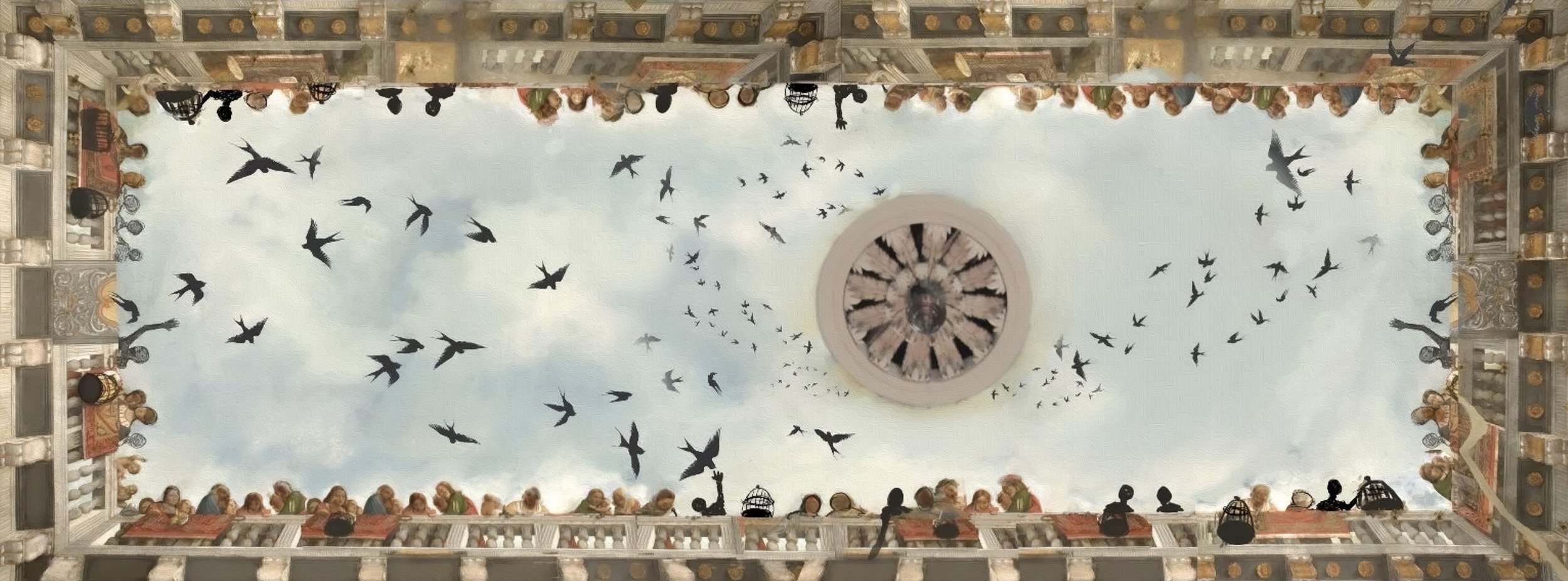
Conceptual image of the mural by Harmonia Rosales that’s being installed this year on the ceiling of King’s Chapel in Boston, Massachusetts
Despite being in the North, King’s Chapel has links to the slave trade. Historical documents reveal that at least 219 persons, most of them of African descent but at least two of them Native American, were enslaved by ministers and members of the church throughout its history, and that even after slavery was abolished in Massachusetts in 1783, donations to the church continued to flow in from people whose wealth depended on Southern slave labor, such as textile magnates. You can read more details in Slavery and King’s Chapel, the thirty-two-page report published by King’s Chapel’s Ad Hoc Committee on Slavery in 2018.
Until at least the mid-nineteenth century, people of color, both enslaved and free, who attended King’s Chapel were relegated to the balcony seats. We know the names of 182 enslaved attendees from the church’s baptismal, marriage, and burial registers. “As a community of faith,” the church writes on its website, “we are working to recover, honor, and remember these long-overlooked members of our community. We hope to make their lives and their presence in early Boston visible in new and powerful ways as we tell a more complete version of our history for our congregation, our city, and the 4 million people who walk the Freedom Trail each year.”
In addition to setting up a “living fund” to “provide monetary support for programs and engagement centered around reparative justice and reconciliation in the community,” the church has hired artist Harmonia Rosales, in partnership with the MASS Design Group, to create a physical commemoration of this history, which has three components: a figurative sculpture in the church’s courtyard, a collection of bronze birds perched throughout the church’s exterior and grounds, and a trompe l’oeil ceiling mural in the sanctuary. The memorial will be unveiled later this year. Here are two videos about it:
>> “How a Freedom Trail landmark is reckoning with its ties to slavery,” GBH News, July 19, 2023: This news segment features interview clips of Cassandra Dumay and Jessie Sage O’Leary, Boston University journalism students who are inquiring further into King’s Chapel’s links to the colonial slave trade; Rev. Joy Fallon, senior minister at King’s Chapel; Marissa Cheifetz, director of the King’s Chapel History Program; and memorial committee member David Waters.
>> “VCS Creative Conversations: Ben Quash with Harmonia Rosales,”Visual Commentary on Scripture,February 27, 2025: Theologian and VCS director Ben Quash sits down with artist Harmonia Rosales inside King’s Chapel to discuss her latest commission for that space, plus her paintings Birth of Oshun, The Creation of God, Strangler Fig, and more. Raised in the Santería religious tradition, in her art Rosales draws Yoruba deities (the orishas) into play with Christian ones and centers Black women. Speaking of the VCS’s commitment to showcasing biblical engagement from diverse vantage points, Quash tells Rosales, “We’ve always said that these conversations should not just be about the Bible’s importance to Christians or Jews, but the Bible’s importance to those of other traditions, as something to bounce off, to use, sometimes to object to. And you are a wonderful example of how to do that in a way that’s constantly creative and generous.”
+++
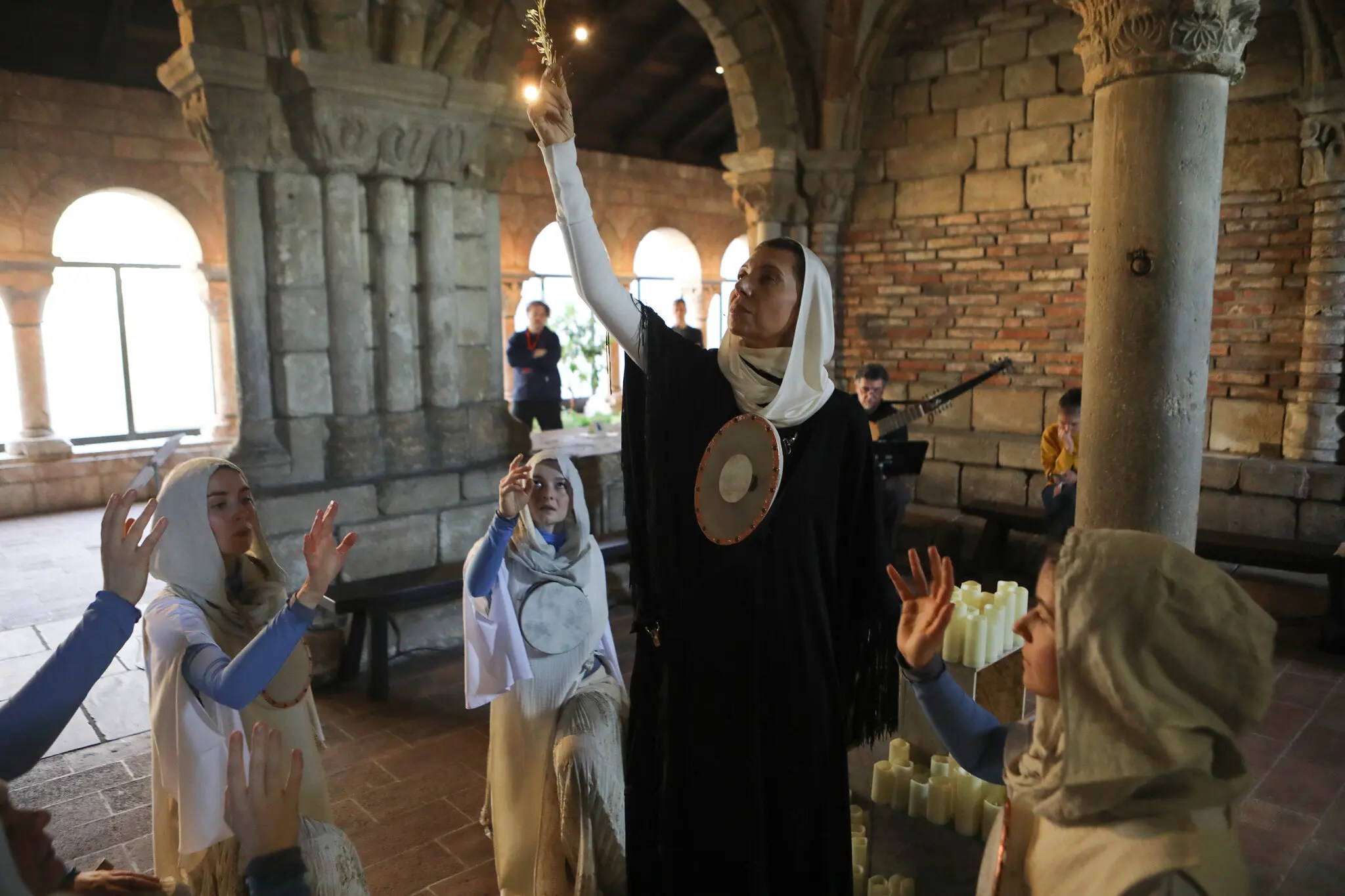
ARTICLE: “At the Cloisters, Sor Juana’s Words Ring Out in Song” by Elisabeth Vincentelli, The New York Times:Primero Sueño (First Dream) is a new opera by Magos Herrera and Paola Prestini that adapts to music the seventeenth-century mystical poem of the same title by the Mexican Catholic nun Sor Juana Inés de la Cruz, one of the greatest literary works of the Hispanic Baroque. Commissioned by the Metropolitan Museum of Art’s Department of Live Arts (MetLiveArts) and VisionIntoArt, it was conceived as a processional opera that meanders throughout the Met Cloisters, audience in tow—an appropriate choice, as the poem is about the soul’s journey. It premiered January 23, with Herrera playing Sor Juana, the nun in black, “sing[ing] in an earthy mezzo that complements the heavenly harmonies of the six nuns in white, performed by the German vocal ensemble Sjaella.” Accompaniment was provided by harps, hand percussion, theorbo, and Spanish guitar. Here’s a trailer (not filmed on location):
Magos Herrera, center, as Sor Juana in a rehearsal of the opera Primero Sueño at the Met Cloisters. Photo: Earl Wilson / The New York Times.
The Cloisters—a building designed to evoke a medieval European monastery and housing a sizeable portion of the Met’s medieval art collection—is one of my favorite spaces in all of New York. What a delight that Herrara, Prestini, and team utilized its halls and rooms as staging ground for this dramatic, musical reimagining of a historic sacred poem by a pioneering female Christian writer.
+++
INTERFAITH ART EXHIBITION: Cloud of Witnesses: Images of Faith and Divinity Today, St John’s Waterloo, London, March 4–April 27, 2025: A juried exhibition featuring the work of twenty-six artists from the UK, funded and supported by Art + Christianity; The God Who Speaks; St John’s Church, Waterloo; the Catholic Bishops’ Conference of England and Wales; Culham St Gabriel Trust; and Bible Society. Click here to view the exhibition catalog.
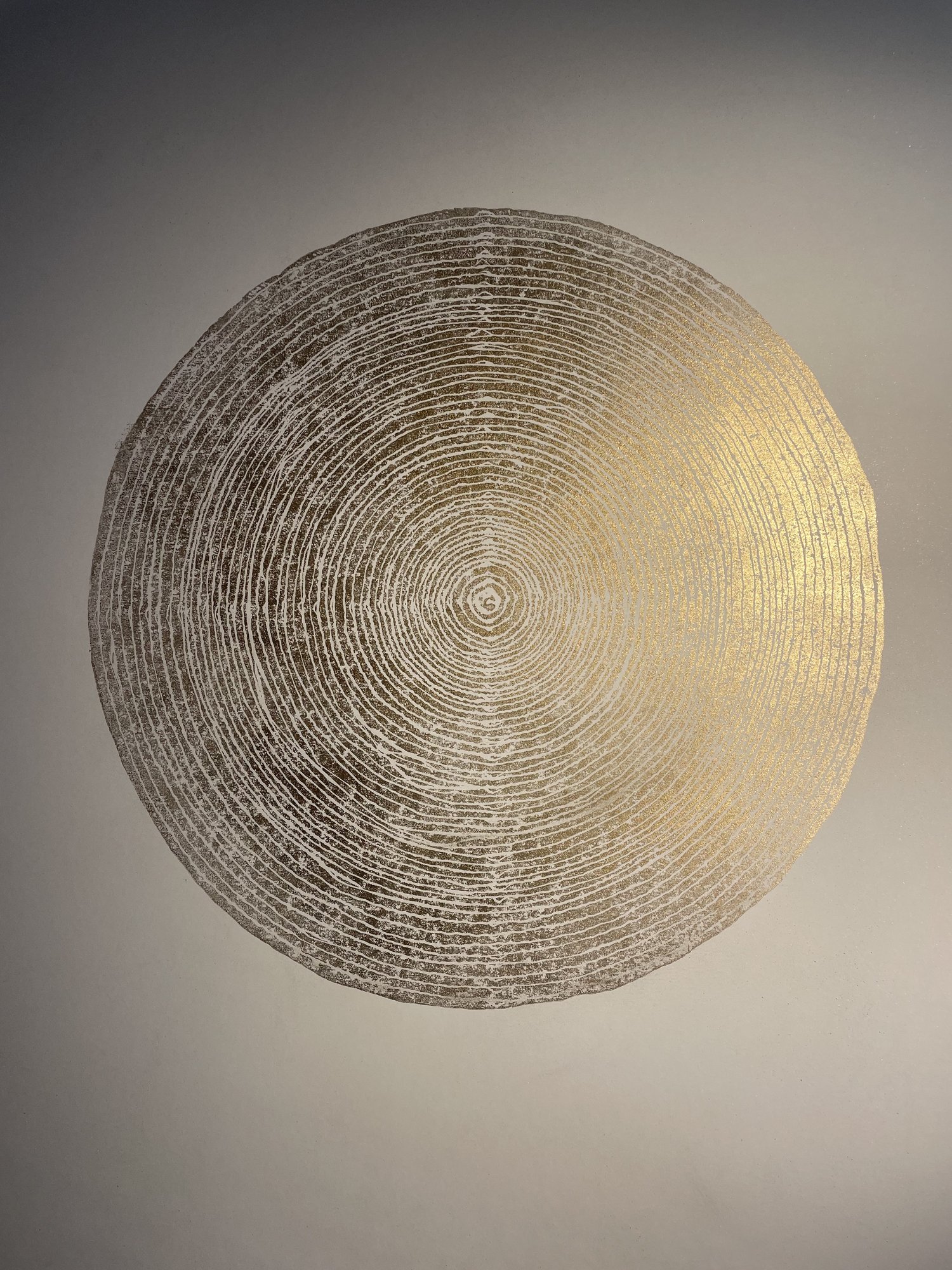
The image used for the cover of the exhibition catalog is Life 1, a linocut by Svetlana Atlavina consisting of fifty golden concentric circles that she said represent the vibrations of the heart—the sounds constantly being emitted from our cardiac valves, which mean we’re alive.
Svetlana Atlavina, Life 1, 2024. Handmade linocut with gold ink on 300g white Somerset paper, 70 x 50 cm.
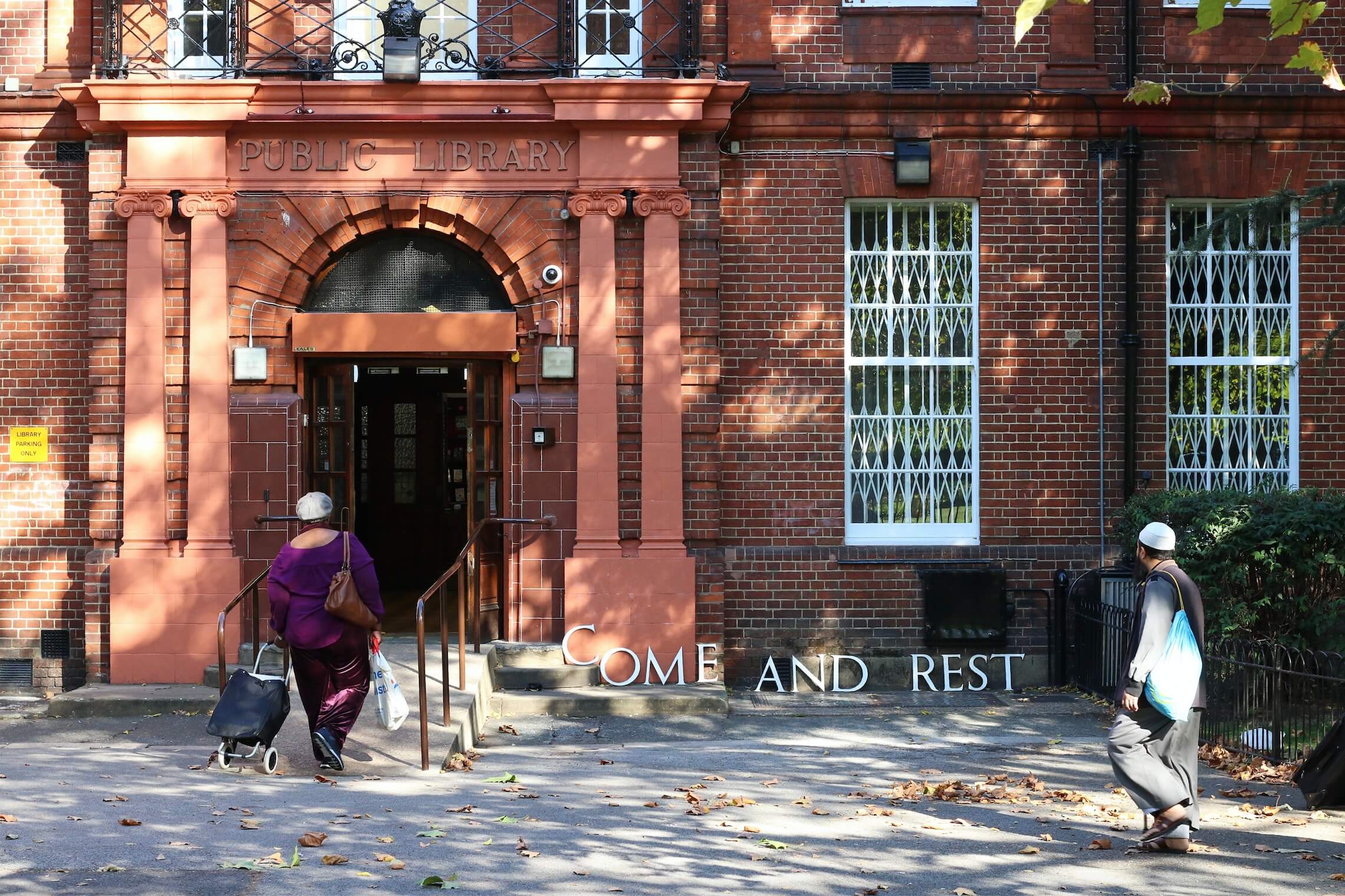
The work that I find most compelling is the eight-piece series of COME AND REST photographs by Kirsty Kerr.
Kirsty Kerr, COME AND REST: Bethnal Green Library, 2018. Photograph of a public intervention, from a series, 30.5 × 44 cm. Documentation by Will Alcock.
COME AND REST documents a series of public interventions informed by the demolition and rebuilding of Bethnal Green Mission Church. Taking letters from a scripture text that had hung on the old building (Jesus’ words: ‘Come to me and I will give you rest’), Kirsty spelt the phrase in Bethnal Green locations, recording the process with local filmmaker Will Alcock. The words were a gentle yet radical proclamation: of welcome, refuge, and quiet protest against loneliness and exhaustion often synonymous with city life. The act of spelling them out became a performed prayer, symbolic of the church’s continued presence and God’s enduring invitation.
Against the backdrop of this racially and religiously diverse neighbourhood, the words were both witnessed to and overlooked by passers-by of all faiths and none.
Kerr displayed Christ’s invitation in fields and basketball courts, on street corners and scaffolding and bandstand steps, outside subway stops and housing estates and libraries. View the full series here, using the right scroll arrow. I also enjoyed exploring the artist’s other projects on her website.
+++
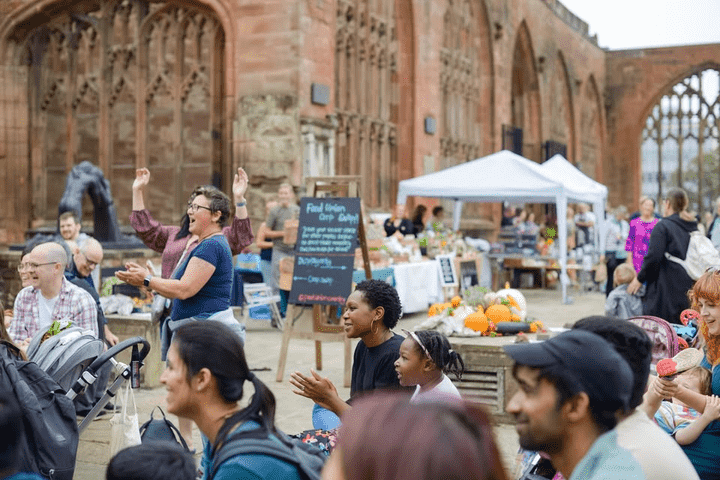
EVENT: Taste of Heaven Intercultural Worship Festival, Coventry Cathedral, May 24, 2025: Organized by Intercultural Churches UK. “The Taste of Heaven Festival will be an exciting opportunity to celebrate the rich cultural diversity and creativity of the UK church through live performances, workshops, food and worship. The festival will take place in the iconic venue of Coventry Cathedral and its beautiful surrounding ruins. The day will trace our history of increasing diversity, by highlighting different cultural worship expressions from Celtic to Choral, South Asian and Caribbean, to more recent immigrant communities including Middle Eastern, African, and Hong Kong. It will culminate in a celebration of Intercultural Worship, demonstrating how churches can draw from different cultural streams in their corporate worship.” Tickets range from £10 to £25. Register here. [HT: Global Christian Worship]
+++
SPOTIFY PLAYLIST: April 2025 (Art & Theology): The song selections on my short monthly playlists are somewhat random—a smorgasbord of what I’ve been listening to, a mix of brand-new releases and older faves—but for thematic playlists keyed to where we are in the liturgical calendar during April, see my Lent Playlist, Holy Week Playlist (I’m especially proud of this one!), and Eastertide Playlist.
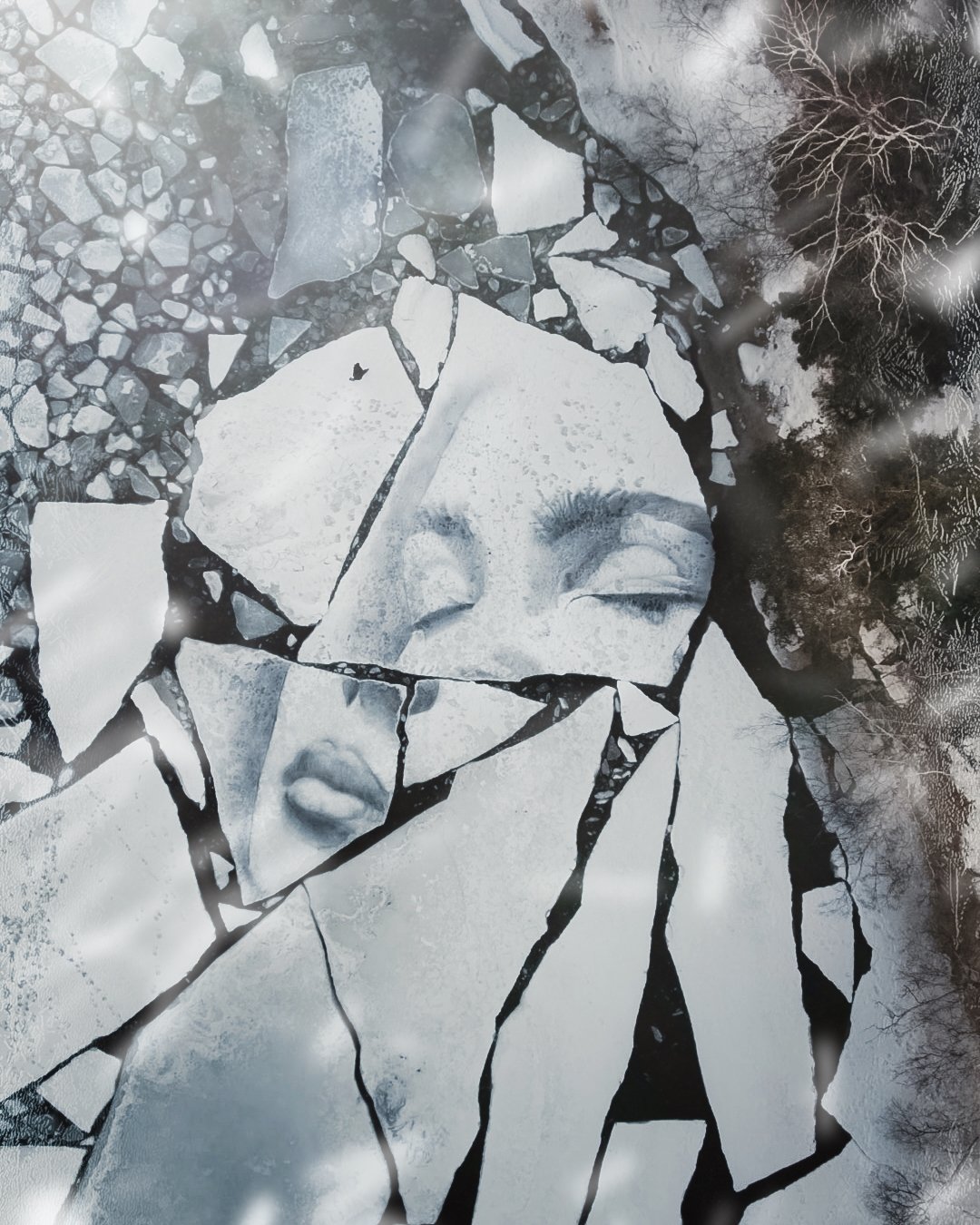
ART PROJECT: Fractured by David Popa: “Fractured is a project located on various ice floes in southern Finland. By use of only earth, charcoal and the source water, a series of portraits were created on fractured ice floes that remained for only a brief time. The pieces were documented via aerial drone video, photography and photogrammetry and hold a tactile form as limited-edition prints as well as in digital form through 1/1 NFTs. The project evolved as a response to the ongoing conflict in Ukraine, which has only further highlighted the fractured state of the world in which we live. During the project, the ice fractured completely unexpectedly at unpredictable times, leaving the artist at odds as to whether continuing the work was even worthwhile. From the ground, one would never be able to decipher any silver linings within the chaos; however, from above, the fragments hold a harmony and beauty that is imperceptible from any other perspective. The work offers a means to point the viewer not to despair and chaos, but rather questions where we must look to mend the broken fragments of our lived reality and perhaps how the fragments can be used to create an entirely new mosaic from the scattered vestiges.”
David Popa (American, 1997–), from the Fractured series, 2023. Iron oxide black earth pigment and charcoal on floating ice.
Explore more of the artist’s work at www.davidpopaart.com. For a printed interview with Popa (featuring many of his amazing photos of his amazing land art), see www.yatzer.com/david-popa.
+++
POEMS: Seven Reimagined Psalms from the Darkling Psalter by Andy Patton:The Darkling Psalter is a project by Andy Patton (MA, Trinity Evangelical Divinity School) to write new creative renditions of the Bible’s 150 psalms. The Rabbit Room recently featured seven of these: Psalms 5, 10, 12, 14, 25, 27, 30.
+++
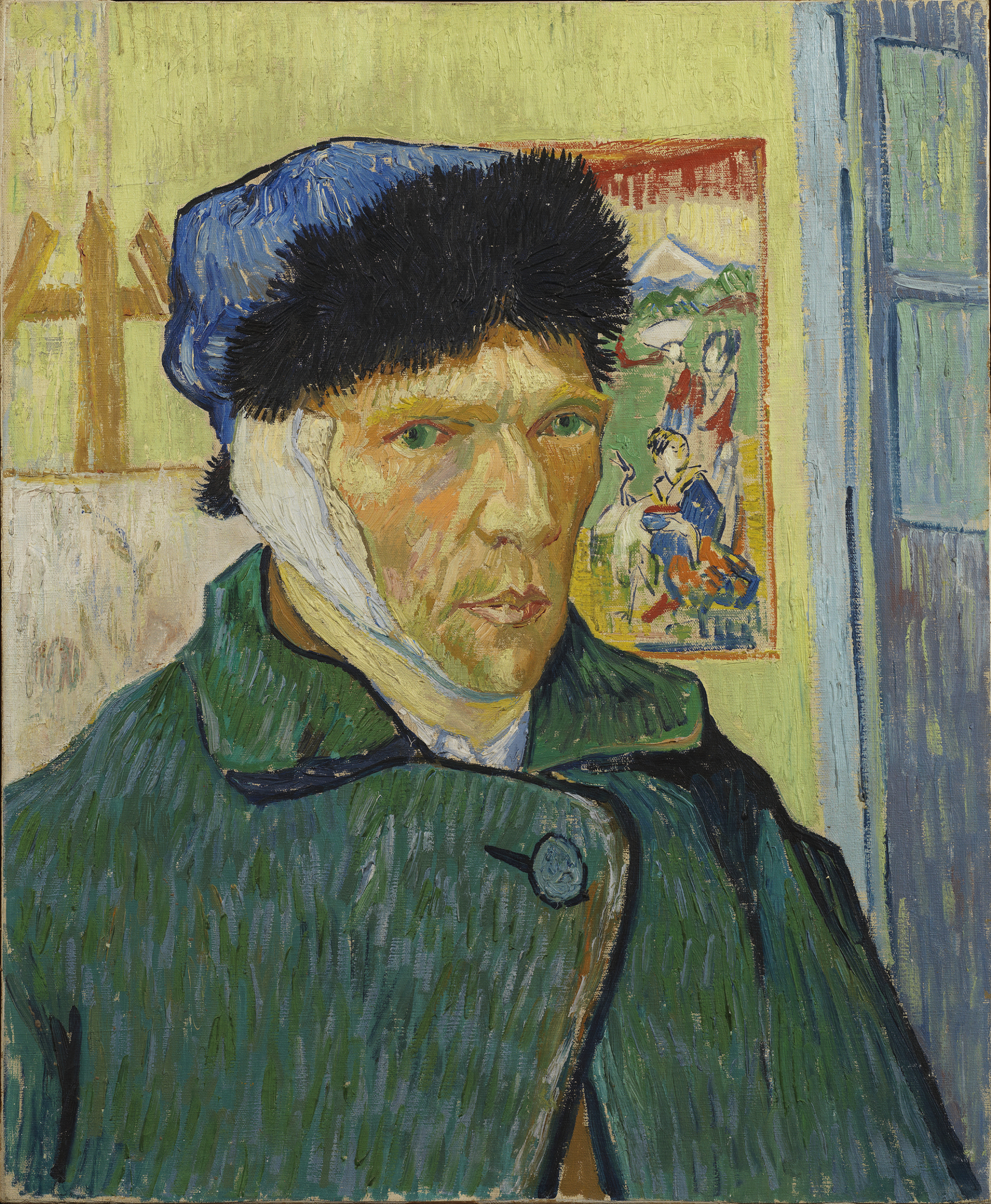
PODCAST INTERVIEW: “Van Gogh Has a Broken Heart, with Russ Ramsey,”Makers & Mystics: I appreciated this recent conversation in which pastor, writer, and arts enthusiast Russ Ramsey discusses his latest book, exploring the struggles and sorrows of a handful of historical artists and how they are reflected in their art.
Vincent van Gogh (Dutch, 1853–1890), Self-Portrait with Bandaged Ear, 1889. Oil on canvas, 60 × 49 cm. Courtauld Gallery, London.
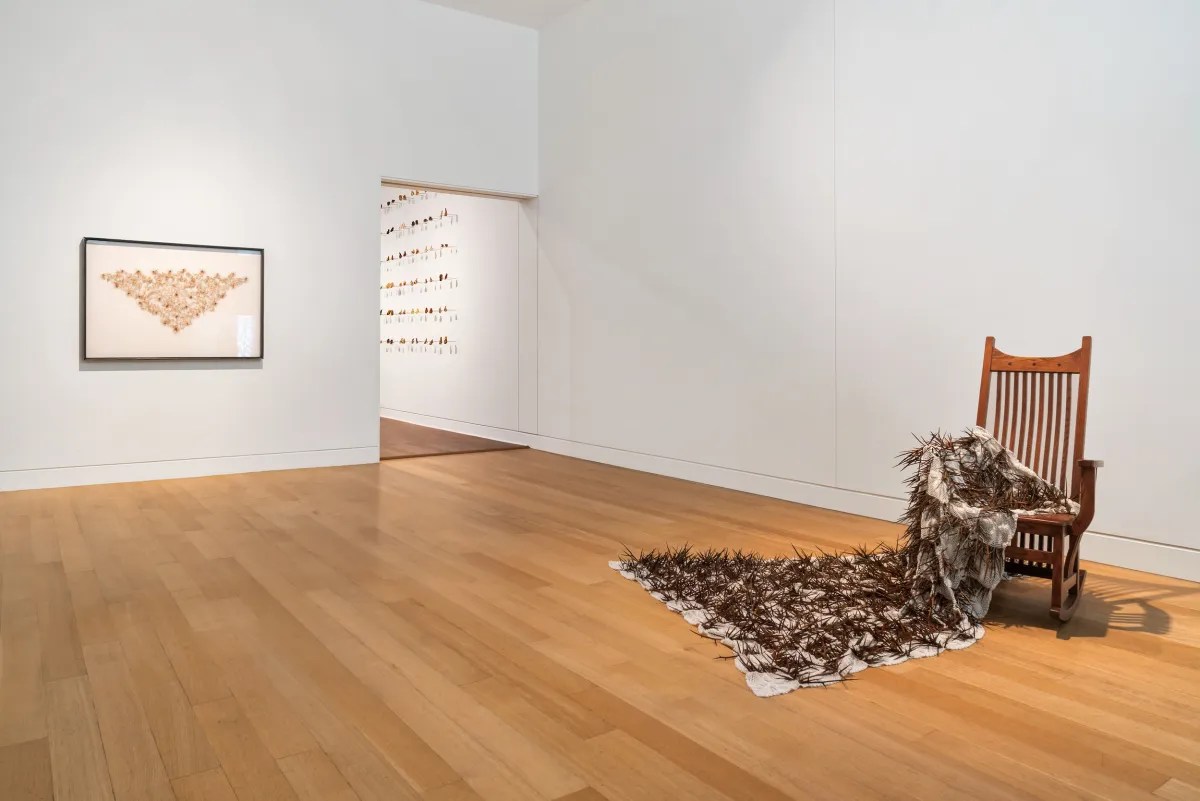
EXHIBITION REVIEW: “Selva Aparicio’s Memorials to Loss and Renewal” by Lori Waxman, Hyperallergic: Mounted last year by the DePaul Art Museum in Chicago, the first solo show of the Barcelona-born artist Selva Aparicio featured works that “offer a merciful focal point for grief.” Aparicio, Waxman writes, “treats unwanted things with extreme sensitivity, personally gathering and storing them over many years, eventually renewing them with remarkable vision.” She reproduced the twice-destroyed rose window of the Basilica de Santa Maria del Pi using lettuce leaves discarded by her neighborhood market; she filled the interior of an upright piano with wasp nests; she constructed over two dozen pairs of decorative ears out of moss, shells, seed pods, animal hair, and other materials for her late cat, Momo, whose ears were removed due to illness; using strands of hair from herself, her mother, and her niece, she sewed a mourning veil, the kind traditionally worn by widows, out of 1,365 cicada wings.
Exhibition view: Selva Aparicio: In Memory Of, DePaul Art Museum, Chicago, 2024. Left: Velo de luto (Mourning Veil) (2020), formed from 1,365 Magicicada wings; right: Solace (2023–24), crochet cotton blanket woven through with honey locust thorns.
I didn’t get to see this exhibition in person, but I’m compelled by what I saw and read of it online—how it deals so tenderly with suffering, death, remembrance, and hope.
+++
SONGS:
>> “Parce mihi Domine” (Spare Me, O Lord): A musical setting of the Latin translation of Job 7:16b–21, this motet by the Spanish Renaissance composer Cristòbal de Morales “captures the sense of desolation and abandonment that is expressed by Job, a dark condition akin to the forsakenness that our Lord experienced on the cross,” writes church music director Ken Myers. In 1994 the Hilliard Ensemble recorded the piece in collaboration with the Norwegian saxophonist Jan Garbarek for their album Officium, a jazz-classical fusion that became one of ECM’s most successful releases, selling over 1.5 million copies.
The video below features a different set of musicians paying tribute to this “unexpected . . . alliance of austere vocal music and wandering saxophone” (Elodie Olson-Coons). Filmed December 18, 2015, at the Chiesa di Sant’Anna (Church of St. Anne) in Cagliari, Italy, the performance is by the vocal ensemble Cantar Lontano (under the direction of Marco Mencoboni) and saxophonist Gavino Murgia. [HT: Global Christian Worship]
After losing his health, wealth, and children, the Old Testament character Job laments openly before God. “I will not restrain my mouth,” he says. “I will speak in the anguish of my spirit; I will complain in the bitterness of my soul” (Job 7:11). He views God as his tormentor and begs God to leave him alone (“spare me”). Adopting Job’s voice, the four singers of the Morales piece sing the following biblical passage:
Parce mihi Domine, nihil enim sunt dies mei. Quid est homo, quia magnificas eum? Aut quid apponis erga eum cor tuum? Visitas cum diluculo, et subito probas illum. Usquequo non parcis michi, nec dimittas me, ut glutiam salivam meam? Peccavi. Quid faciam tibi, o custos hominum? Quare posuisti me contrarium tibi, et factus sum michimet ipsi gravis? Cur non tollis peccatum meum, et quare non aufers iniquitatem meam? Ecce nunc in pulvere dormio; et si mane me quesieris, non subsistam.
English translation (NRSVUE):
Let me alone, for my days are a breath. What are humans, that you make so much of them, that you set your mind on them, visit them every morning, test them every moment? Will you not look away from me for a while, let me alone until I swallow my spittle? If I sin, what do I do to you, you watcher of humanity? Why have you made me your target? Why have I become a burden to you? Why do you not pardon my transgression and take away my iniquity? For now I shall lie in the earth; you will seek me, but I shall not be.
>> “Lamb of God” by The Many: From the EP Have Mercy (2021) by The Many [previously], “an uncommon, intentionally diverse collective making music for people to sing together about peace and justice and a world where all belong.” This song is an adaptation of the ancient Christian liturgical prayer known as the Agnus Dei. The music is by Gary Rand, and the lyrics are by Gary Rand and his daughter, Lenora Rand. Click here to purchase an individual MP3 recording or sheet music, or visit the group’s Bandcamp page.
Lamb of God, with love poured out you suffer with the world. Have mercy. Have mercy. Lamb of God who suffers with the world, grant us peace, grant us peace.
POEM: “Lost Sheep” by Margaret DeRitter: DeRitter writes about a lost Merino sheep in Australia who, because left unsheared for so long, was carrying over seventy-five pounds of wool on his back. He was found in 2021 and rescued by Edgar’s Mission Farm Sanctuary in Lancefield.
+++
SONGS:
>> “What Have We Become” by the Sweeplings:The Sweeplings are Cami Bradley and Whitney Dean, a singing-songwriting folk pop duo. From their album Rise and Fall (2015), “What Have We Become” laments how sin encroaches on our lives—we may welcome it in at first, but then it takes over, makes of our house a wasteland. This theme is embodied by a shadowy, thorny-veiled dancer in the music video.
>> “It Knows Me” by Avi Kaplan: Living outside Nashville, Tennessee, Avi Kaplan is best known for being the original vocal bass of the a cappella group Pentatonix, from 2011 to 2017. This song of self-probing is from his second solo EP, I’ll Get By (2020). It’s about the freedom that comes from reckoning with one’s inner darkness and accepting grace. The animation in the video is by Mertcan Mertbilek.
“It Knows Me” is an extremely personal song to me. I believe that everyone has a darker side of them, and that you can choose to play into that, or you can choose to not. This song is about that battle between those two forces, and having a little grace for yourself when you do falter on your path.
>> “Not the Devil Song” by Marcus & Marketo:Marcus & Marketo (Marcus Clingaman and Marketo Michel) are a worship music duo from South Bend, Indiana, fusing the styles of gospel, classical, country, and soul. “Not the Devil Song,” which they wrote in 2019, is about the power Christians are given to tell Satan to back off! When he dangles temptations in front of you, whispers lies in your ear, sows seeds of doubt or fear or hopelessness, you can confidently retort, “Devil, no, you gotta let go; Jesus died to save my soul.”
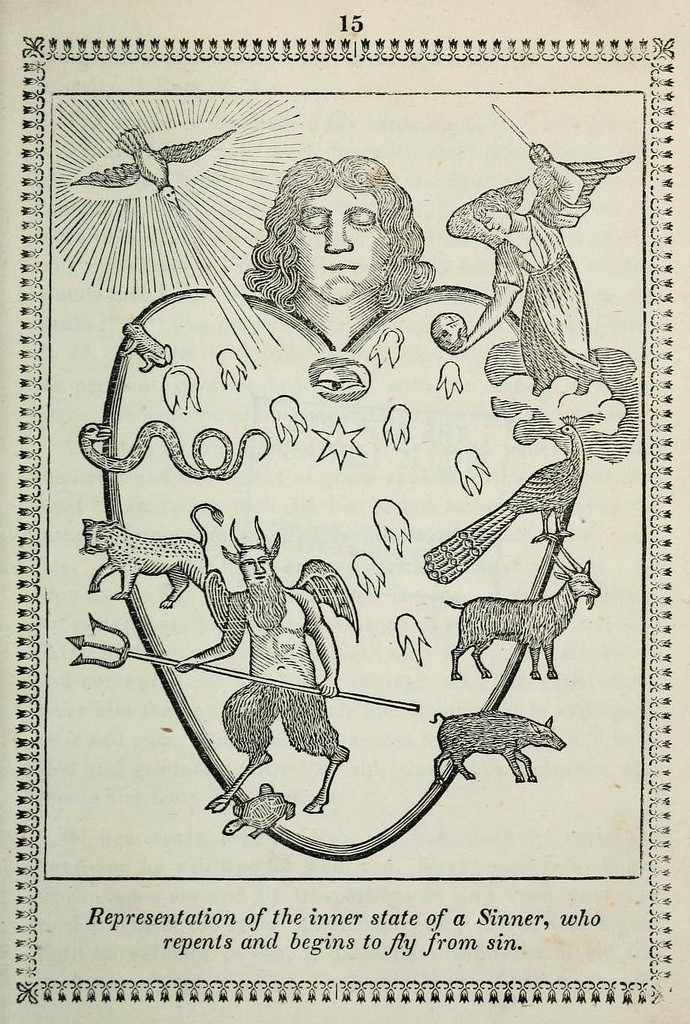
In his book The Forge of Vision (2015), visual studies scholar David Morgan contrasts this emblematic series with the related Cor Jesu amanti sacrum by Anton Wierix (which I wrote about here). Whereas the Wierix engravings from Antwerp are marked by sweetness, with the Christ child gently cleaning and setting up house in the human heart, the anonymous illustrations Gossner uses portray more of a psychomachia (battle for the soul), with armed angels seeking to oust Satan and his minions.
+++
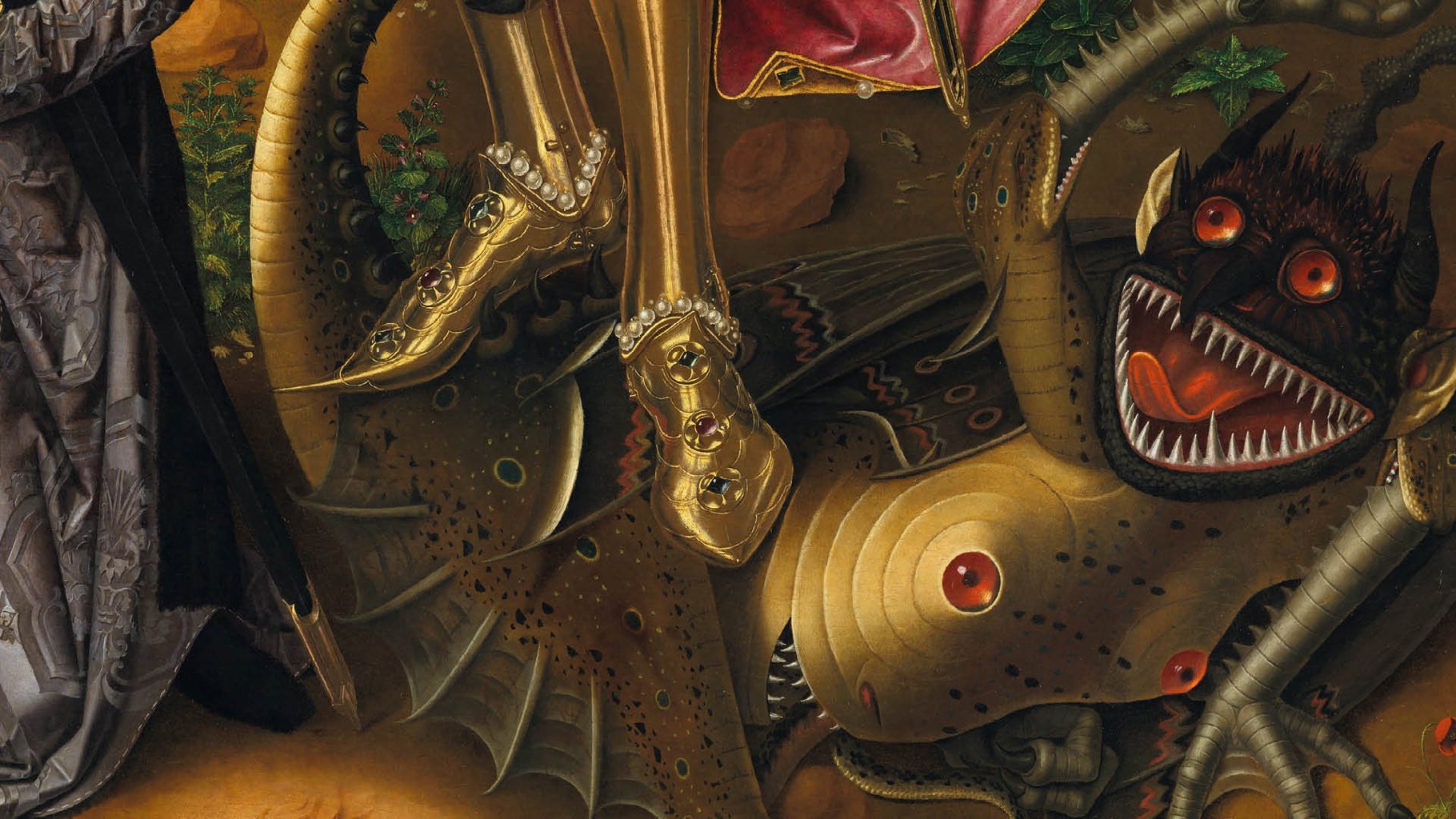
VIDEO: “How Bermejo paints good and evil in Saint Michael Triumphs over the Devil”: In this nine-minute video, Daniel Sobrino Ralston, associate curator for Spanish paintings at the National Gallery in London, examines a late Gothic painting in the museum’s collection by the Spanish artist Bartolomé Bermejo, showing the archangel Michael slaying Satan. Based on Revelation 12:7–9, this subject gave artists the chance to flex their imaginations in portraying evil incarnate and its vanquishment. Possessing an impressive capacity for fantastical invention, Bermejo gives the devil snakes for arms, eyes for nipples, bird claws, moth-like wings, a spiky tail, and a cactus growing out of its head!
Bartolomé Bermejo (Spanish, ca. 1440–after 1495), Saint Michael Triumphs over the Devil (detail), 1468. Oil and gold on wood, 179.7 × 81.9 cm. National Gallery, London.
If this visual subject interests you, I recommend the book Angels and Demons in Art by Rosa Giorgi, from the J. Paul Getty Museum’s Guide to Imagery series.
BibleProject is a nonprofit in Portland, Oregon, that offers free videos, podcasts, articles, and classes to help people experience the Bible in a way that is approachable and transformative.
The following two songs are from the music ministry of the Cathedral Church of the Advent in downtown Birmingham, Alabama. The ministry flourished under the leadership of Rev. Dr. Zac Hicks, who served as the church’s canon for worship and liturgy from 2016 to 2021. (He is now pastor of Church of the Cross, also in Birmingham.)
The music videos used to be available on YouTube, but it appears that the church has undergone some restructuring, and they have been removed. For now, though, they are still available through Facebook, and the audio releases are available through streaming services.
>> “Lord, Who Throughout These Forty Days”: This 1873 hymn by Claudia Frances Hernaman recounts the forty days Jesus spent in fasting and prayer in the Judean wilderness at the outset of his ministry and beseeches God to give us strength, like Jesus, to fight temptation, to die to self, and to live by his word and with a keen sense of his abiding presence. It’s set to an American folk tune from the Sacred Harp tradition, known as LAND OF REST, which has roots in the ballads of northern England and Scotland. The hymn is sung by Madison Craig (née Hablas), with Emma Lawton (née Dry) and Annie Lee on background vocals, Joey Seales on pump organ, Charley Rowe on cajon, and Zac Hicks on acoustic guitar.
>> “Spring Up, O Well”: This is an original song by Zac Hicks, sung by Jordan Brown. It draws especially on the narrative in John 4, where Jesus tells a Samaritan woman at a well, “Everyone who drinks of this water will be thirsty again, but those who drink of the water that I will give them will never be thirsty. The water that I will give will become in them a spring of water gushing up to eternal life” (vv. 13–14). The exclamation “Spring up, O well!” in the song’s refrain comes from Numbers 21:17, where the Israelites praise God for providing them water in the desert, and that musical phrase is adapted from the old children’s church song “I’ve Got a River of Life.”
+++
SHORT FILM: “Silences,” dir. Nathan Clarke: Shot in 2016 at Box Canyon near Laity Lodge in the Texas Hill Country, this contemplative short film features cellist Steuart Pincombe playing a short improvisation that interacts with the natural space. The impromptu music making was for him an exercise in prayer.
Three years earlier, also while on retreat at Laity Lodge, Pincombe’s wife shot him doing the same inside the newly constructed Threshold, an interactive, site-specific, permanent outdoor installation by Roger Feldman consisting of three curved walls:
The Threshold improvisation, Pincombe writes, “stemmed from a particular note (and its harmonic overtones) that naturally resonated in the space—the cello’s lowest strings were tuned to match this strongest resonation. Playing with the confusion of resonances (or pitches) was an important part of this short musical and spatial exploration—pitches are bent or adjusted in a way that create audible pulses in the sound and play on the conflicts of resonation within the space.”
+++
ESSAY: “Silence in an Age of Mass Media: John Cage and the Art of Living” by Dr. Jonathan A. Anderson, ARTS (Spring 2017): Many twentieth- and twenty-first-century artists have explored the necessities and possibilities for aesthetic stillness and silence, Anderson writes. In this essay he considers the composer John Cage (1912–1992), best known—and most excoriated—for his modernist piano composition 4′33″ (1952), in which the pianist sits at the bench for four minutes and thirty-three seconds, playing no notes. The point was to attune the audience to the ambient sounds of the concert hall (coughing, rustling, creaking, mechanical humming, outside traffic, etc.), testing the distinction between “music” and “noise.” Cage found the fundamental difference between the two to be not in the qualities of sound but in the attentiveness of the listener.
I was pleasantly surprised to learn from Anderson’s article that even after Cage left Christianity (in which he was raised) and turned to Zen Buddhism, he continued to link his love for the givenness of environmental sounds to Jesus’s admonition to “consider the lilies” (Luke 12:27). “Cage sought to quiet his own aesthetic ‘worry’ for musical meaning,” Anderson writes, “and to instead receive the given sounds of the world as richly meaningful in themselves.”
+++
VIDEO: Lenten Jazz Vespers, Duke University Chapel, March 23, 2023: This Jazz Vespers service combines the liturgical traditions of Vespers with the musical improvisation of jazz. Exploring the theme of hope, the service is presided over by Rev. Racquel C. N. Gill, minister for intercultural engagement at Duke University Chapel. Musical leadership is provided by the John Brown Little Big Band.
Here are the time stamps:
0:01: Song: “I Came to Tell You” by Trinity Inspirational Choir
5:40: Welcome and Prayer
8:33: Song: “Miracle (It’s Time for Your Miracle)” by Marvin Sapp
14:38: Poetry reading: “Dark Testament (8)” by Pauli Murray
LENT SERIES: “Let go of unlove this Lent: Let’s practice love together—a new and improved Lenten reflection series starting March 5th” by Tamara Hill Murphy: I’ve been nurtured for years by Murphy’s gentle spiritual writing and curated beauty and wisdom, and I especially appreciate her annual Advent and Lent Daybook series. This Lent, she’ll be exploring four postures of cruciform love given to us in 1 Corinthians 13, providing daily scripture readings, prayers, and art, along with weekly practices. You can gain access for just $16. (She uses the Substack platform.)
Forgive Thy Other by Scott Erickson
I like how Murphy frames the season: “Lent is a significant time for us to seek a deeper understanding of God’s heart and recognize the gaps in our experiences of His love. Through its beautiful stories, prayers, and practices, Lent also invites us to reflect on our own expressions of love and unlove. The Book of Common Prayer encourages us to let go of our unloving ways so we can love what (and who) God loves. Let’s joyfully embrace this transformative season together, reflecting God’s love with compassion and understanding.”
+++
NEW PLAYLIST: God’s Love (Art & Theology): Related to Tamara Hill Murphy’s 2025 Lent Daybook theme: here’s a new playlist I put together of songs about the abounding, ever-present love of God the Father, Son, and Holy Spirit, a love that seeks, heals, and transforms.
The cover photo is of an early twentieth-century relief sculpture from the exterior of Holy Trinity Church in the town of St Andrews, Scotland, taken by Joy Marie Clarkson; it shows a pelican pecking her breast to feed her young with her own blood, a medieval symbol of Christ’s self-giving love.
There’s some overlap between this playlist and my dedicated Lent Playlist. I hope it uplifts you in the knowledge of the depths and riches of God’s love for you.
+++
SONGS:
>> “And Am I Born to Die?”: Lent opens with a call to “remember you are dust, and to dust you shall return.” A reflection on human mortality, this somber hymn was written by the great English Methodist hymnist Charles Wesley (1707–1788) and set to music—a shape-note tune—by Ananias Davisson (1780–1857), a Presbyterian elder from Virginia. In this video from January 2023, it’s performed by the Appalachian folk musician Nora Brown, with Stephanie Coleman on fiddle and James Shipp on harmonium.
And am I born to die? To lay this body down? And must my trembling spirit fly Into a world unknown?
Awaked by trumpet sounds, I from my grave shall rise, And see the Judge, with glory crowned, And see the flaming skies.
Soon as from earth I go, What will become of me? Eternal happiness or woe Must then my portion be.
>> “Nunc tempus acceptabile” (Now Is the Accepted Time): Second Corinthians 5:20b–6:10 is traditionally read on Ash Wednesday, a passage that includes the adjuration, “Behold, now is the acceptable time; behold, now is the day of salvation!” (2 Cor. 6:2). There’s a beautiful tenth-century Latin hymn for Lent, from the Liber Hymnarius, that opens with this line. In 2013, the Chicago-based composer and conductor Paul M. French set it to music for SSA a cappella choir, its unison opening unfolding into an increasingly expressive three-part harmony. It’s performed here by the Notre Dame Magnificat Choir under the direction of Daniel Bayless.
Nunc tempus acceptabile
Fulget datum divinitus,
Ut sanet orbem languidum
Medela parsimoniae.

Christi decoro lumine
Dies salutis emicat,
Dum corda culpis saucia
Reformat abstinentia.

Hanc mente nos et corpore,
Deus, tenere perfice,
Ut appetamus prospero
Perenne pascha transitu.

Te rerum universitas,
Clemens, adoret, Trinitas,
Et nos novi per veniam
Novum canamus canticum.

Amen.
Today is the accepted time. Christ’s healing light, the gift divine, shines forth to save the penitent, to wake the world by means of Lent.
The light of Christ will show the way that leads to God’s salvation day. The rigor of this fasting mends the hearts that hateful sinning rends.
Keep all our minds and bodies true in sacrifice, O God, to you, that we may join, when Lents have ceased, the everlasting Paschal feast.
Let all creation join to raise, most gracious Trinity, your praise. And when your love has made us new, may we sing new songs, Lord, to you.
LECTURE: “Embracing the Ephemeral: How Art Honors Creaturehood” by James K. A. Smith, Duke Divinity School, February 17, 2022: Mortality means something more than being a creature who will someday die, says philosopher James K. A. Smith; it is a way of being, not defined solely by its terminus. “To be created is to be ephemeral, fugitive, contingent. To be a creature is to be a mortal, subject to the vicissitudes of time.” Part of the Duke Initiatives in Theology and the Arts Distinguished Lecture Series, this talk about developing a Christian temporal awareness is based on chapter 4 of Smith’s then-forthcoming, award-winning book How to Inhabit Time (Brazos, 2022), titled “Embrace the Ephemeral: How to Love What You’ll Lose.”
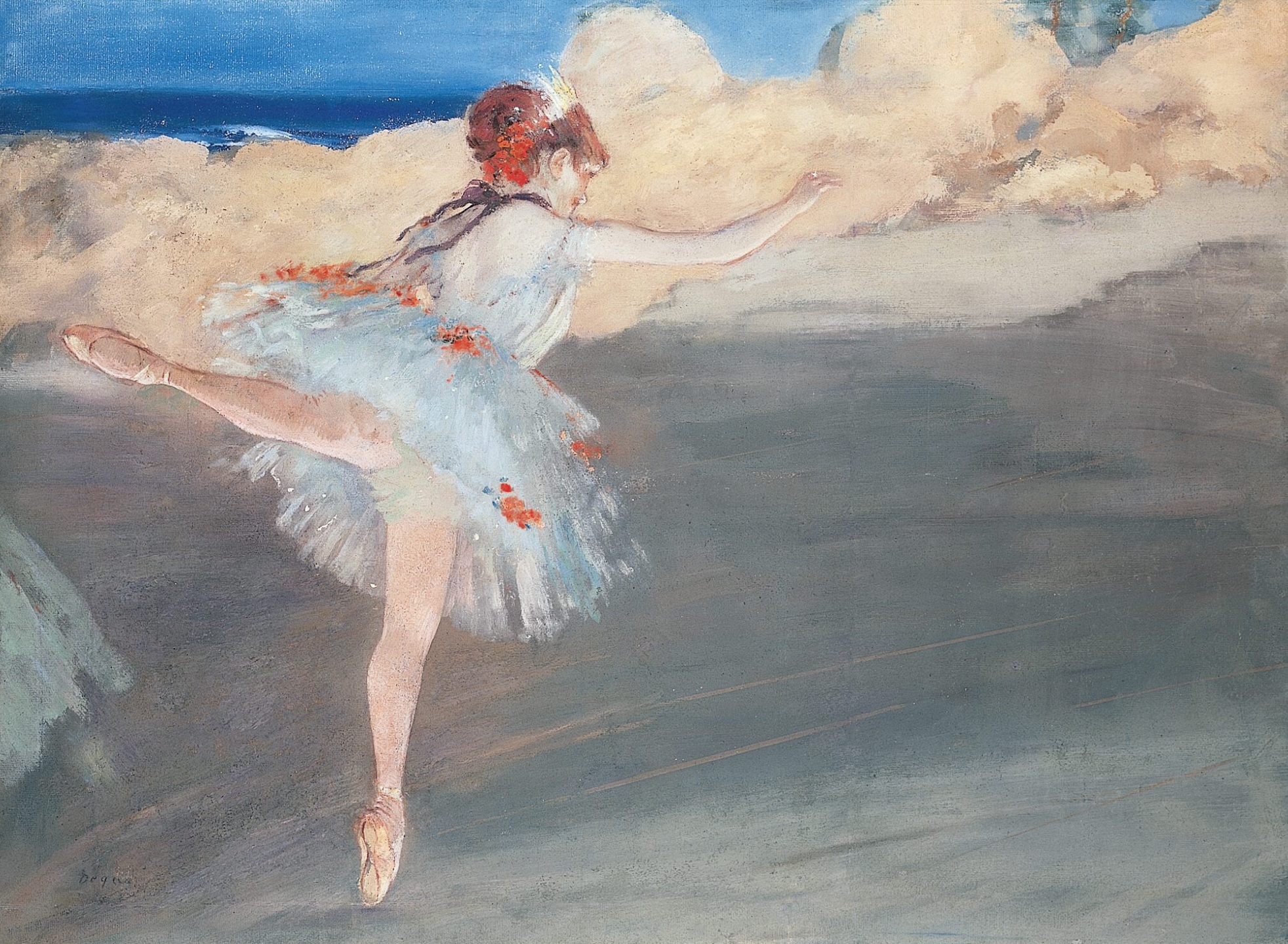
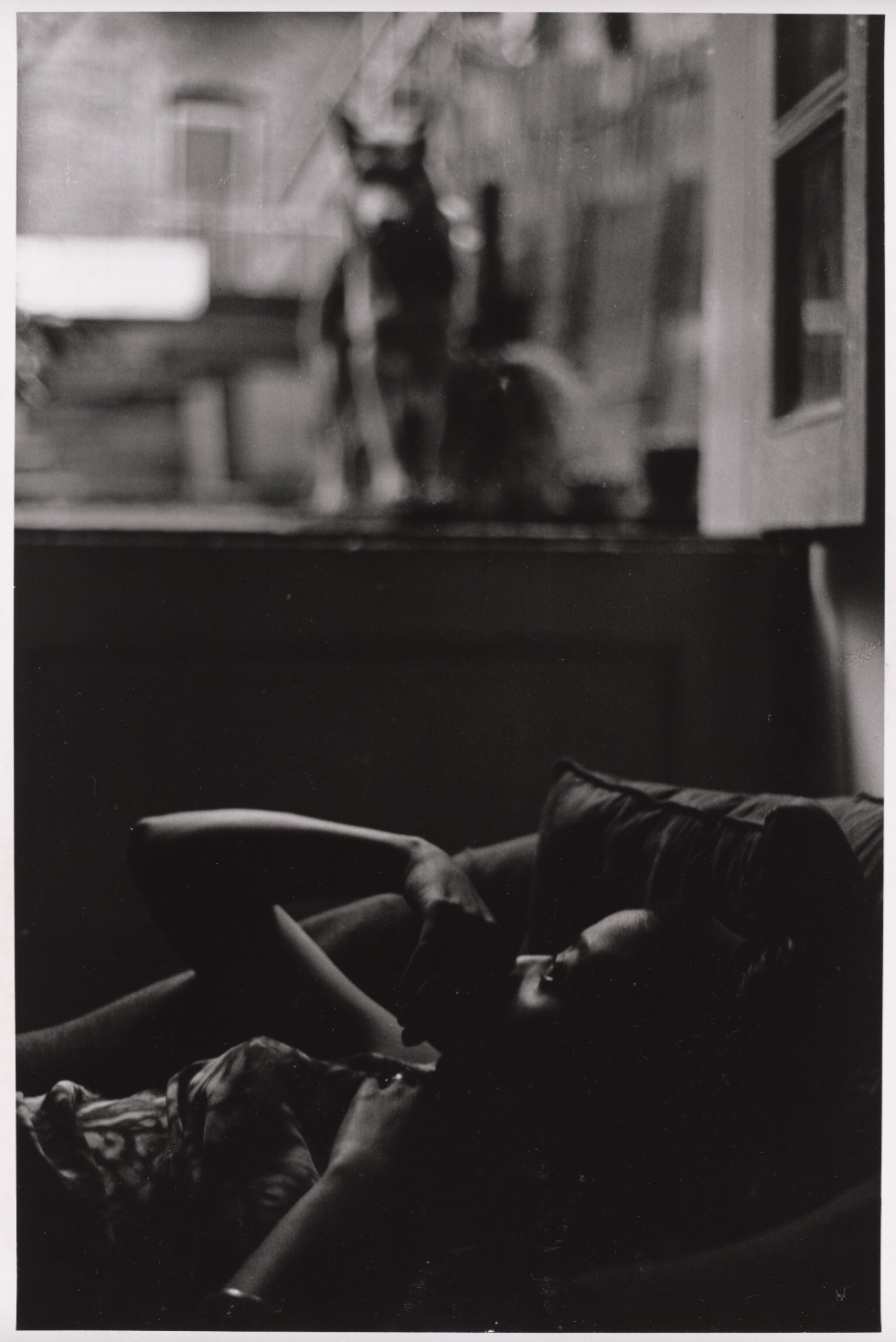
Edgar Degas (French, 1834–1917), The Star: Dancer on Pointe, ca. 1878–80. Gouache and pastel on paper, mounted on board, 22 1/4 × 29 3/4 in. (56.5 × 75.6 cm). Norton Simon Museum, Pasadena, California.Herbert Randall (American, 1936–), Untitled (Lower East Side, New York), 1960s. Gelatin silver print, 13 7/16 × 8 7/8 in. (34.2 × 22.5 cm). J. Paul Getty Museum, Los Angeles.
Some notes I took:
“We need not only memento mori, but also memento tempore—reminders of our temporality, not just our mortality.”
“Imagine embracing the ephemeral as a discipline of not only conceding our mortality as a condition but also receiving our mortality as a gift.”
“Our finitude is not a fruit of the fall, even if it is affected by the fall. Contingency is not a curse. . . . Aging is not a curse. Autumn is not a punishment. Not all that is fleeting should be counted as loss. The coming to be and passing away that characterize our mortal life are simply the rhythms of creaturehood.”
Resting in our mortality instead of resenting it
Theologian Peter Leithart says hebel means not “emptiness,” “vanity,” or “meaninglessness” but, literally, “mist” or “vapor.” The Teacher in Ecclesiastes uses that word repeatedly to describe human life: it’s vaporous, elusive, escapes our efforts to hold on to it, to manage it.
How to sift tragedy from good creaturely rhythms in which good things fade?
“To dwell faithfully mortally is to achieve a way of being in the world for which not all change is loss and not all loss is tragic, while at the same time naming and lamenting those losses that ought not to be. . . . To be faithfully mortal is a feat of receiving and letting go, celebrating and lamenting. Being mortal is the art of living with loss, knowing when to say thank you and knowing when to curse the darkness.”
“One Art” by Elizabeth Bishop: “The art of losing isn’t hard to master . . .”
A Q&A takes place from 39:00 onward. The first question, asked by theologian Jeremy Begbie, is the one I had, and it recurs with different phrasing at 58:17.
Mortality is one of the main themes in Silver’s poetry, including the physicalities of being human, as reflected in “Ash Wednesday,” in which she, the speaker, muses on the shared Christian ritual of the imposition of ashes at the beginning of Lent. Silver, who died of breast cancer eight years after writing this poem, was used to practicing memento mori (“remember you must die”): her mastectomy scar and silicone breast prosthesis are constant reminders of the fact, she writes. She wants to touch the body of God, wants to wrap her fingers around some tangible promise of healing, but both remain elusive. Instead she resolves to embrace the finiteness of her present form, taking the burnt remains of those Hosanna palms from last year and wearing them with repentance and praise, knowing that what is sown in perishability will be raised in imperishability (1 Cor. 15:42).
I’m compelled by how Silver both laments her fragility and owns it. There’s a defiant quality to the tone, the ash-and-oil mixture that’s thumbed into her forehead in the shape of a cross evoking a football player applying eye black in front of a locker room mirror before the big game. Wearing the mark of Christ, she’s ready for the face-off between herself and death.
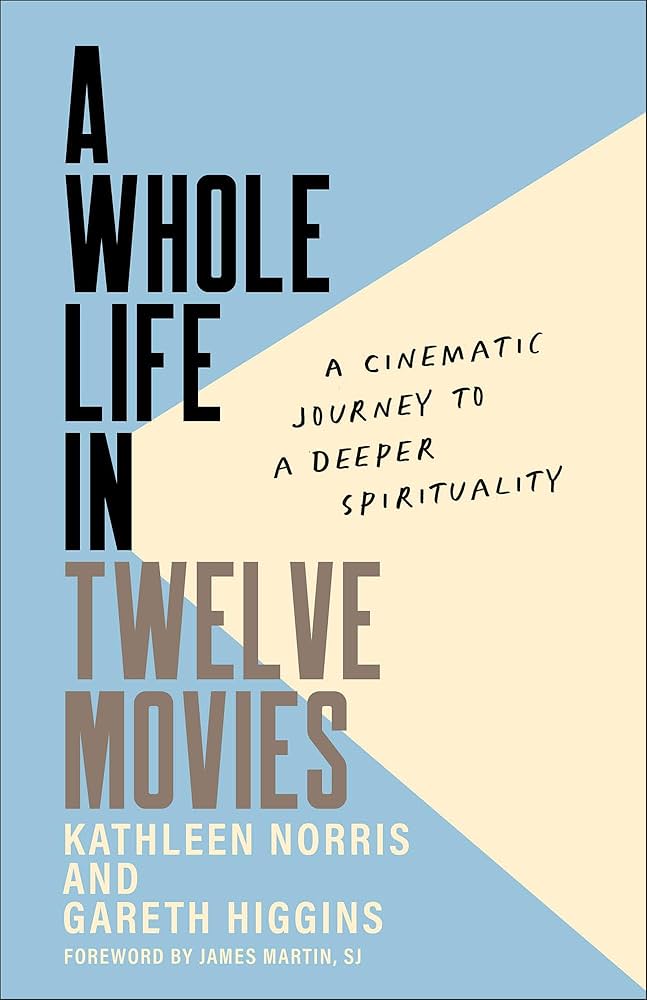
NEW BOOK: A Whole Life in Twelve Movies: A Cinematic Journey to a Deeper Spirituality by Kathleen Norris and Gareth Higgins: Published last October by Brazos Press, this excellent book comprises twelve chapters reflecting on fourteen movies (two chapters feature a complementary pair), drawing out story, insights, and meaning. It’s authored by the award-winning American spiritual memoirist and poet Kathleen Norris (Acedia and Me; The Cloister Walk; Dakota: A Spiritual Geography) and the Irish writer, peace activist, retreat leader, and festival organizer Gareth Higgins. Each chapter contains two mini-essays—one by each author, the second responding to the first, sometimes disagreeing on points—and a section of “Questions and Conversation,” which make the book especially fitting for a film/reading club. There’s also a “For Further Viewing” section in the back, with many more recommendations, several of which are new to me and which I’ve been watching (e.g., Le Havre, Love Is Strange, Patti Cake$) and really enjoying!
I so appreciate the variety of films featured in the book—which come from different eras, cultures, and genres and address different themes—and I like that the writers don’t overdetermine the films’ meanings to try to make them fit a Christian agenda, which is sometimes a trap that people writing on Christianity and film fall into (influenced partly, I’m sure, by publishers’ demands, to make the marketing easier). Norris and Higgins are simply two Christians writing about their shared love of cinema, and I had so much fun listening in on their conversations.
You may also want to check out the Substack that Norris and Higgins write together, Soul Telegram: Movies & Meaning, whose purpose is “to help people find the most life-giving movies, and to write about them as a way of reflecting on the meaning of our lives.” See also the recent Habit podcast episode “Kathleen Norris watches movies,” where Norris discusses Paterson, Babette’s Feast, After Life, and more.
>> “Sawubona”(I See You) by Jane Ramseyer Miller, 2012: The most common greeting used by Zulu people is “Sawubona,” literally meaning “I see you,” with the implication of “My whole attention is with you. I value you.” The word conveys a deep witnessing and presence, acknowledgment and connection. A standard reply is “Ngikhona,” “I am here.” This humanity-honoring exchange that occurs regularly in South Africa was set to music by the American choral director Jane Ramseyer Miller and is performed in the video below by the Justice Choir, a grassroots movement that encourages more community singing for social and environmental justice.
The song is authorized for free noncommercial use, and sheet music is available from the Justice Choir Songbook.
In this recent podcast interview, he talks about his most amazing teaching experience to date; helping Protestants like himself recover a sacramental ontology of the world; asking questions verbally versus aesthetically; death and mortality; what conceptual art is, and why it’s “real art”; what the esteemed Roger Scruton got wrong in his documentary Why Beauty Matters; the “Art of Attention” study he conducted with a psychophysiology colleague in the modern wing of the Art Institute of Chicago (which I participated in! here’s one of the three pieces I was tasked with looking at for five straight minutes while hooked up to a heart-rate monitor); and why artists inspire him.
VIDEO INTERVIEW: “VCS Creative Conversations: Ben Quash with Steve Reich”: “This film continues our series of ‘Creative Conversations’. In these conversations, living artists working in a variety of different artistic media discuss how the Bible and its legacies of visual and theological interpretation operate as a vital resource for their own creativity. In this film, VCS [Visual Commentary on Scripture] Director Ben Quash interviews the legendary American contemporary composer Steve Reich. They discuss the profound role of the Bible in transforming both the subject matter and the style of Reich’s music, reflecting especially on his settings of the Abraham story, the episode of Jacob’s ladder, and texts from the Psalms.”
SUBSTACK POST: “Read something medieval this year” by Grace Hamman: One of the most frequently asked questions that medievalist Grace Hamman receives is: “What books should I read from the past?” She gives recommendations for the following six scenarios (including specific translations/editions!).
I have never read anything medieval before! Where do I start?
I have not read any medieval literature, but I did read Confessions in college. How about something a little later, a little more “medieval”?
I want to read some medieval theology.
I’ve read Bernard. Give me a theology deep cut!
No thanks on the monastic theology. Give me poetry! Give me drama and beauty and weirdness!
I’m a stubborn cuss / good millennial hipster / professional troublemaker. I want to read what no one else is reading casually. Make it super hard and dialectical and confusing (but awesome).
+++
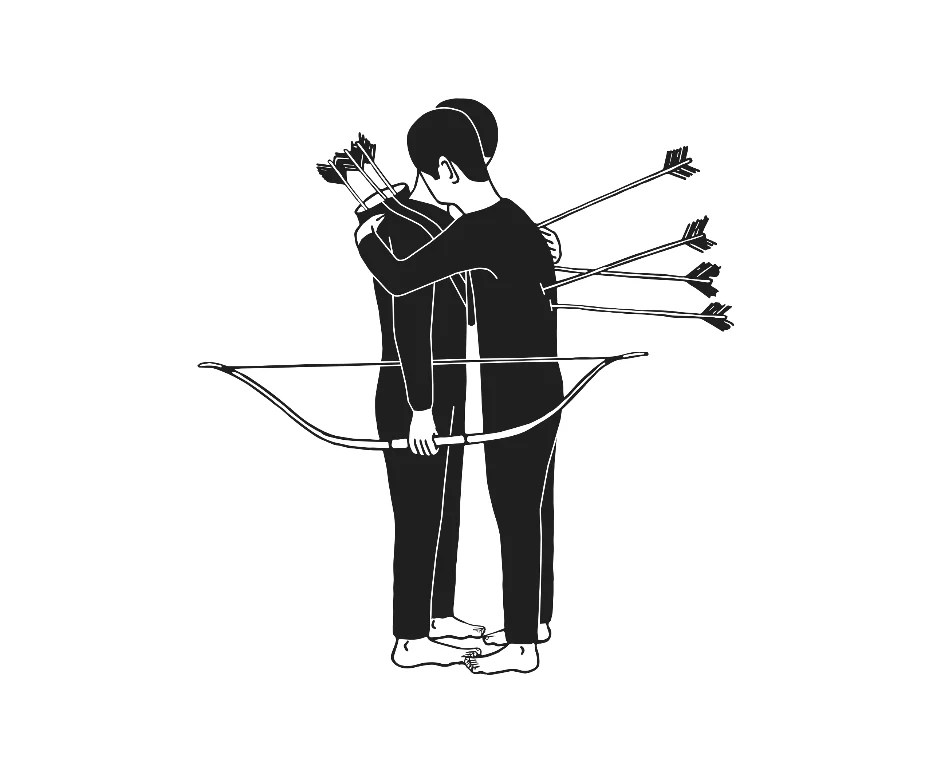
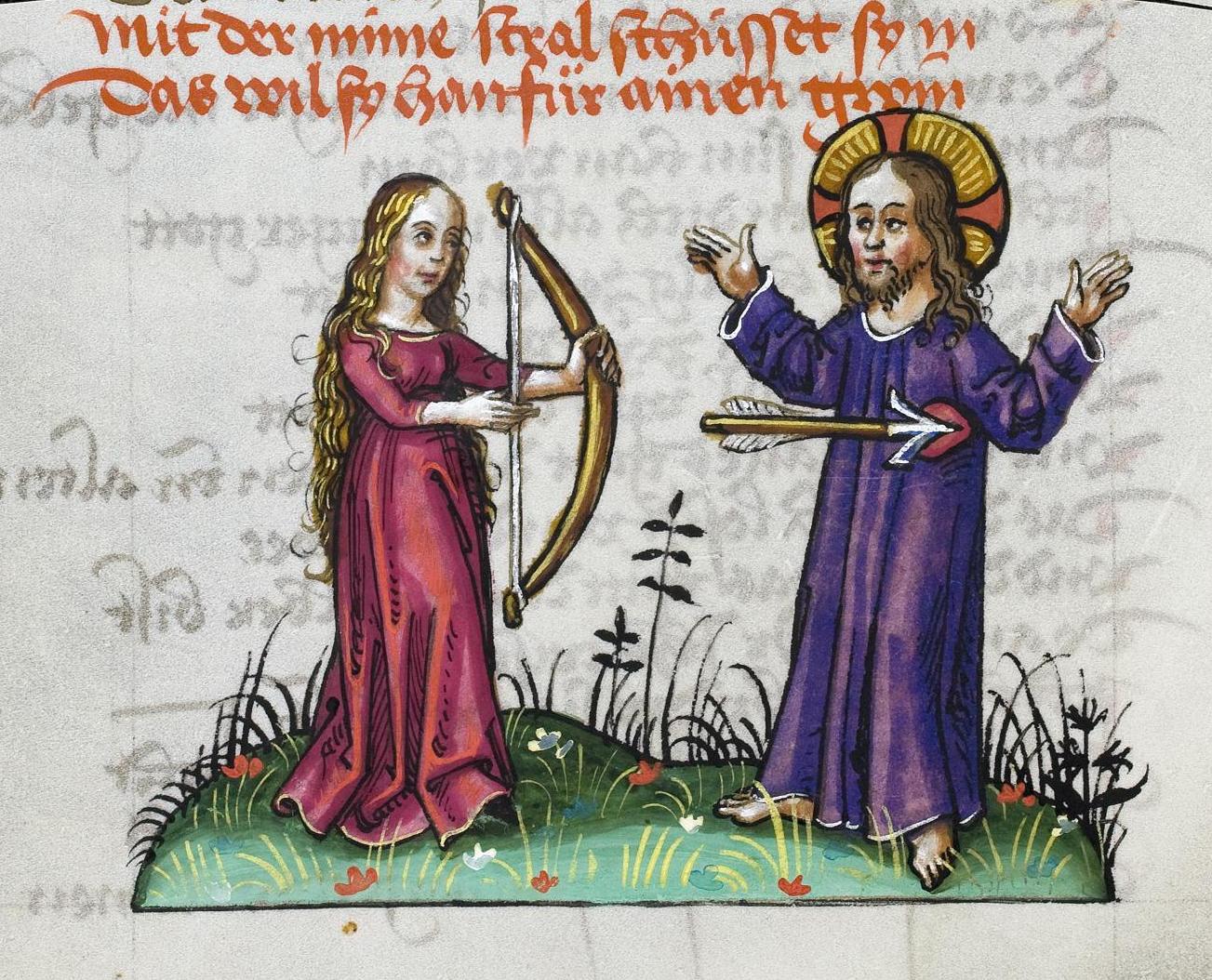
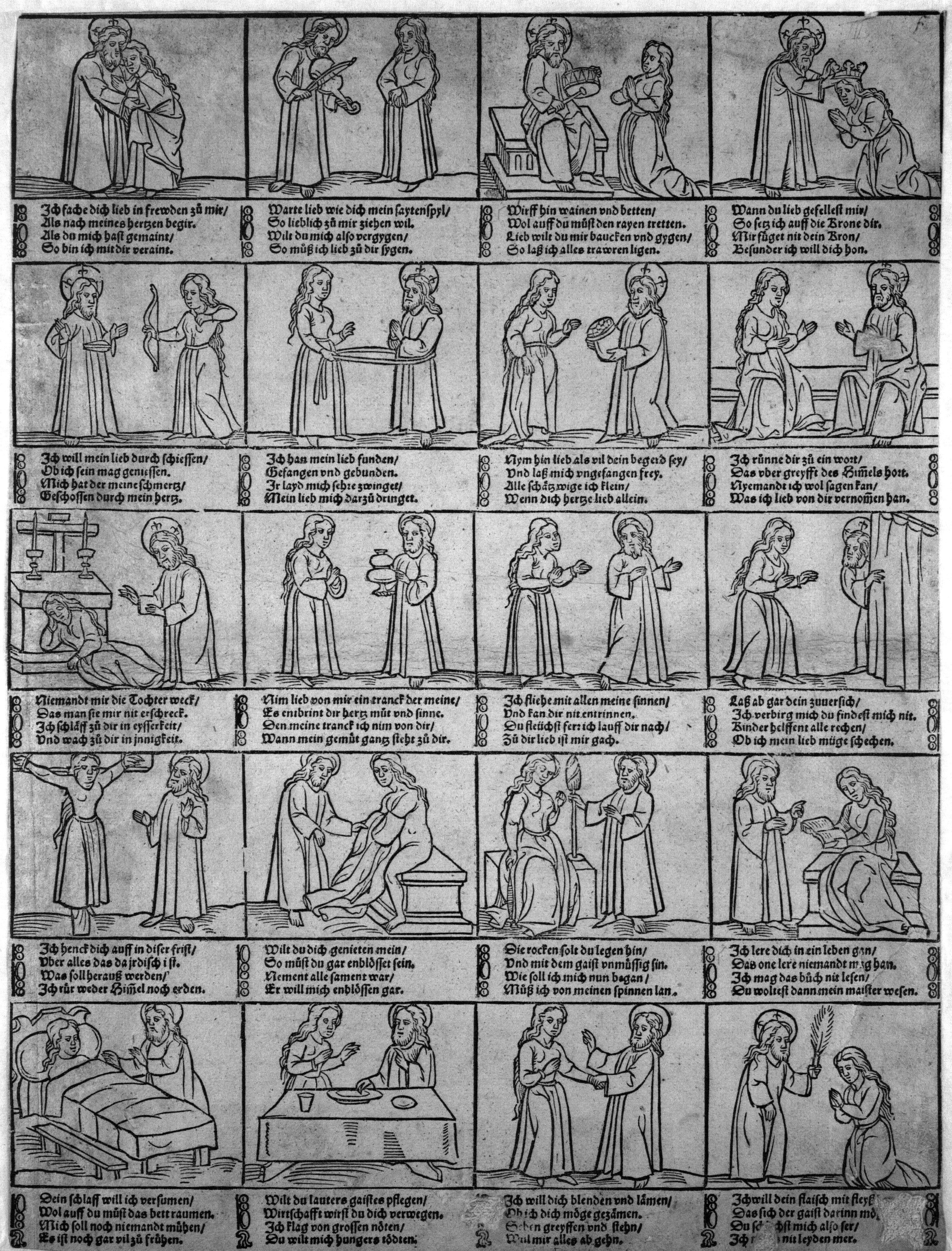
LECTURE: “Christ Our Lover: Medieval Art and Poetry of Jesus the Bridegroom” by Grace Hamman: Last fall I had the pleasure of inviting Dr. Grace Hamman (see previous roundup item) to my neck of the woods to speak for the Eliot Society, a Maryland nonprofit I serve on the board of. She gave this wonderful lecture on one of the popular medieval metaphors for Christ in theology and the arts, which was Jesus as bridegroom, or lover. For medieval people, “the union between God and the human soul was . . . a marriage made in mutual desire, joy, and even mutual submission,” she says. Hamman explores a few different pieces belonging to this tradition, including the fourteenth-century poem “Quia Amore Langueo” (Because I Languish for Love) and the fascinating fifteenth-century verse and image sequence Christus und die minnende Seele (Christ and the Loving Soul).
Illustration by Rudolf Stahel (ca. 1448–1528) from a copy of Christus und die minnende Seele, Constance, Germany, ca. 1495. Karlsruhe, Badische Landesbibliothek, Cod. Donaueschingen 106, fol. 26v. Amber L. Griffioen provides this caption: “The Soul takes up her bow, draws her minne stral (or ‘arrow of love’), and goes on the hunt. She shoots and wounds Christ in the side, capturing him as her prize in order to ‘enjoy him’ forever.”Christus und die minnende Seele, from the printing house of Matthäus Franck in Augsburg, Germany, 1559–68. Woodcut, 35.5 × 27 cm. Munich, Bayerische Staatsbibliothek, Einblatt III, 52f.
+++
SONGS:
Inspired by Hamman’s talk, I’d like to turn your attention to the following two songs: one Jewish, the other Christian.
>> “Et Dodim Kala (Time for Lovers)”: The Hebrew text of this song, drawn from the biblical book the Song of Songs, is traditional Jewish (the video attributes it to Rabbi Haim Ben Sahl of the tenth century), and the music is a traditional gnawa melody (gnawa is a genre of Moroccan religious music marked by repetition). The performance is led by Lala Tamar on vocals and guembri (three-stringed bass plucked lute), and she’s joined by Ella Greenbaum and Imanouelle Harel on background vocals and krakebs (hand cymbals) and Tal Avraham on trumpet.
Tamar is an Israeli musician of Moroccan and Brazilian descent who performs Moroccan Jewish liturgical poems as well as contemporary music in Moroccan Arabic and Ladino.
Turn on closed captioning (CC) in the above video for the lyrics and their English translation, which is basically, “A time for lovers, my bride: / The vine has blossomed, / The pomegranates have budded.” The song is also available on Spotify.
>> “The Heavenly Courtier”: The anonymous words of this hymn were first published in 1694, and the tune is from The Christian Harmony (1805), a shape-note hymnal compiled by Jeremiah Ingalls. The song speaks of “Christ the glorious lover” who comes to earth “to woo himself a bride, resolving for to win her.” At first she’s resistant to his romantic entreaties, preferring instead the company of other lovers. But when she sees him for who he truly is—receives “one glimpse of [his] love and power”—she is overcome with ecstasy and accepts his proposal. The song ends with a wedding feast and mutual embrace. Read the full lyrics here, and listen to the Boston Camerata, directed by Joel Cohen, perform the piece on their album An American Christmas (1993); the vocalist is Joel Frederiksen.
I wouldn’t commend this hymn for a worship service, at least not without adaptation: while I’m on board with most of it, its Christ is in parts coercive, threatening violence, and there’s an overemphasis on the bride’s wretchedness and shame, with Christ the wooer breaking her down by revealing how “filthy” and unworthy she is. The Boston Camerata removes two of the more problematic verses, but I still think further tweaking needs to be done, more nuancing around the doctrines of sin and salvation (literarily, of course, preserving the extended metaphor!), to faithfully communicate the gospel through this song.
Regardless, I find it interesting as an artifact of early American Christian worship (it was sung congregationally in New England) and as an elaboration of the biblical picture of Christ the Bridegroom, not to mention poetically and musically charming. As I gathered from Grace Hamman’s lecture posted above, we can still appreciate creative works from the past and be moved or instructed by aspects of them without embracing them wholesale. It’s important for us Christians to be able to step outside our own cultural, historical, and denominational contexts with humble curiosity.
+++
2025 CALVIN SYMPOSIUM ON WORSHIP:
Calvin University’s annual Symposium on Worship was held last week. I wasn’t able to go this year, but I enjoyed tuning in virtually to the services that were livestreamed, now archived on the “Live” tab of the Calvin Institute of Christian Worship YouTube page. Here are two examples.
>> “Vesper: I Will Lift Mine Eyes,” led by Kate Williams and Tony Alonso: “Inspired by ancient and modern contemplative texts, this Vespers service is an invitation to come into the quiet and discover the eternal beauty of God’s consoling presence.” View the song credits in the YouTube video description.
>> “Worship Service: The Rich Man and Lazarus”: The Calvin University Gospel Choir, under the direction of Nate Glasper and with some songs guest-conducted by Raymond Wise, leads the musical portion of this service, and Rev. Dr. Dennis R. Edwards preaches on Luke 16:19–31, Jesus’s parable of the rich man and Lazarus. I especially enjoyed Wise’s original gospel song “Make a Joyful Noise” at 16:30, based on Psalm 100:1, and, also new to me, “Poor Man Lazarus” at 36:46, a traditional African American spiritual arranged by Jester Hairston. See additional song credits in the YouTube video description.






 Art & Theology