Pentecost roundup: “All Flesh” by Steve Thorngate, animated fabrics, and more

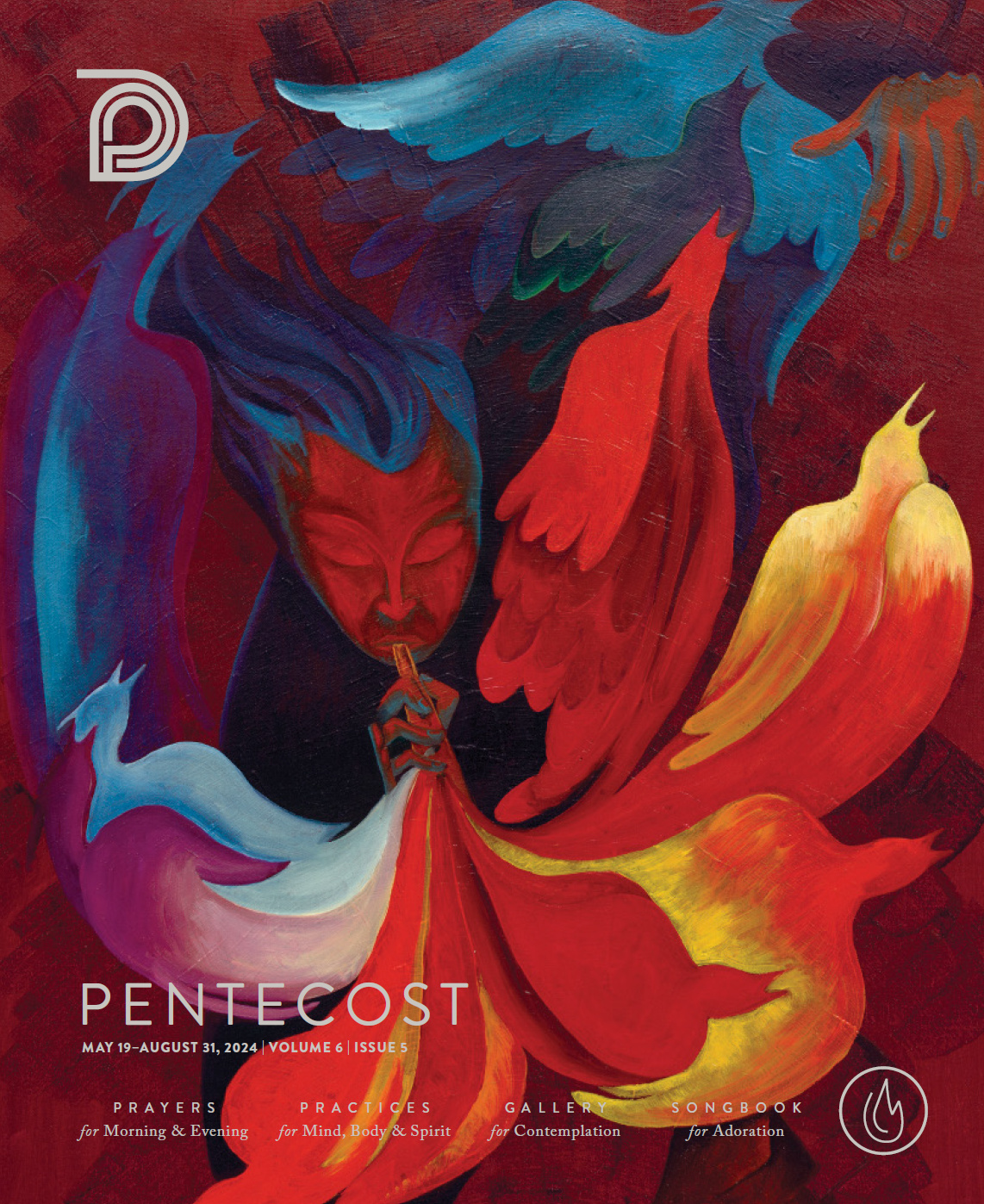
LIVING PRAYER PERIODICAL: Pentecost 2024: The latest edition of the Daily Prayer Project’s Living Prayer Periodical is available for purchase! Pentecost is this Sunday, May 19, so grab your copy soon. The booklet provides a distinct liturgy of scripture and prayer for each day of the week, through August 31, as well as art with accompanying reflections, songs, spiritual practice essays, and, new this issue, a poem! I curate the art and poetry for the DPP. The cover image is cropped from a painting by the Guatemalan artist Juan Francisco Guzmán (it’s reproduced in full in the interior). And the poem we feature, which I wrote a short commentary for to help readers engage it more meaningfully, is “Not Like a Dove” by Mary F.C. Pratt; I’m grateful to the directors for taking a risk with this unusual, even difficult, poem, which rewards those willing to sit with its imagery over time.
Pentecost LPP 2024

+++

SERMON (text only): “When the Spirit Comes” by N. T. Wright: Preached May 23, 2010, at Durham Cathedral, where he was bishop at the time, this Pentecost sermon by the esteemed N. T. Wright is a rousing call to stand, like Jesus, at the place where heaven and earth collide: in the Spirit. Here are two excerpts:

  • “The point about Pentecost is that it’s the point at which two worlds collide and look like they are now going to be together for keeps. The two worlds are of course heaven and earth. . . .
              The whole point of heaven and earth in Jewish thought is that they are meant to meet and merge. And the point of the gospel story as Luke has told it in his first volume is that Jesus had come to bring the life of heaven and earth together. That is the meaning of the ‘kingdom of God’. Thy kingdom come, he taught us to pray, on earth as in heaven. The disciples, we may presume, had been praying that prayer, among others, in the fifty days since Easter. And now the prayer is answered.”
  • “When the Spirit comes, the Spirit will prove the world wrong [in how things are run] . . . which is not a comfortable message, and it’s not meant to be. But if we can at least recognise that discomfort, and see it as the thing you should expect when the two worlds collide, we can put our shoulders back, take a deep breath – in other words, breathe in God’s breath – and get on with the task to which the New Testament commits us but in which . . . we feel a strange reluctance.
              Of course we can get it wrong, and of course we will find it awkward. But how much more wrong would it be not to try! How much more awkward, when God finally brings heaven and earth fully together, will it be to discover that we had continued to live in the split-level world when we were invited, by Ascension and Pentecost together, to dare and to risk the possibility of bringing them together in our own lives and in our own witness! Because of course none of this is in the last analysis ‘about’ us. If we are embarrassed at the heaven-and-earth conjunction, we are forgetting that we are not, after all, the centre of attention in all this. Jesus went on to say that the Spirit would glorify him, not us: he will take what belongs to Jesus and declare it to us and through us to the world.”

+++

MUSIC:

>> “All Flesh” by Steve Thorngate: This playfully serious song is rooted in Joel 2:28–29, which Peter quotes in his sermon at Pentecost: “I will pour out my spirit on all flesh; your sons and your daughters shall prophesy, your old men shall dream dreams, and your young men shall see visions. Even on the male and female slaves, in those days I will pour out my spirit.” Thorngate wrote it several years ago, but this recording, new this year, is the first he’s released, and it’s available only on Bandcamp for now.

>> “Ruach” by Delvyn Case, performed by the Mivos Quartet: Inspired by the story of Pentecost in Acts 2, this sacred concert work for string quartet, writes composer Delvyn Case, “bring[s] to our awareness many different ways ‘breath’ and ‘spirit’ can become sonically and dramatic present. Throughout the piece the performers are asked to make various kinds of breath sounds with their instruments and their own voices, blurring the line between music and sound. Overall, the piece emphasizes idea of the spirit as a powerful force that is surprising, shocking, and fundamentally resistant to control.”

>> “Sweet, Sweet Spirit” by Doris Akers, performed by Ruah Worship: Consisting of siblings Joshua Mine, Julia Mine, Erika Grace Izawa, and Marian Mine, Ruah Worship from Japan performs original worship songs as well as covers. I especially love their a cappella arrangements of Black gospel songs. Here they sing a song by Gospel Music Hall of Famer Doris Akers (1923–1995), about the sweetness of the Holy Spirit, who revives communities and fills them with love.

+++

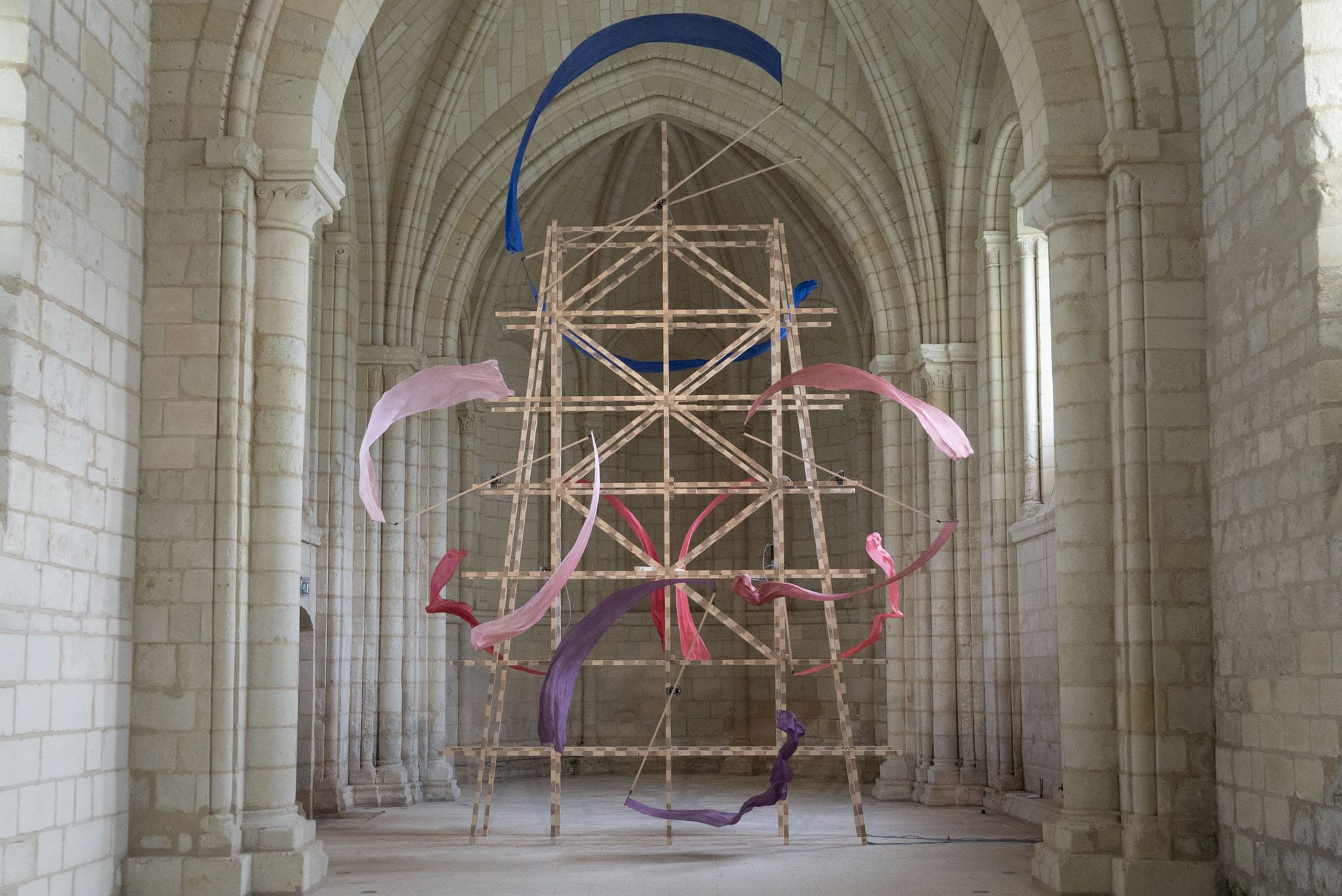
ART INSTALLATION: Fanions et Carillons by Pinaffo & Pluvinage: I learned of this kinetic sculpture by the French artist duo Marion Pinaffo (b. 1987) and Raphaël Pluvinage (b. 1986) in a Colossal article in February and thought of the movement of the Holy Spirit. Fanions et Carillons, French for “Pennants and Chimes,” was commissioned by Fontevraud Abbey and was on display earlier this year in one of the abbey’s twelfth-century chapels. Inspired by the historical striking clocks of churches, the automaton comes to life every half hour, sending fourteen pennants of blue, red, pink, and purple swinging and swirling.
Fanions et Carillons
Marion Pinaffo and Raphaël Pluvinage (aka Pinaffo & Pluvinage), Fanions et Carillons, 2023. Painted wood, motor, silk, electronic, 4 × 2 × 7 m. Temporary installation at the Chapelle St-Benoît, Abbaye Royale de Fontevraud, Anjou, Maine-et-Loire, France.

On their website, Pinaffo & Pluvinage write of the piece, “Although its mechanics are simple and rudimentary, using rotational or pendulum movements, it doesn’t produce the sound of bells, but rather animates fabrics. A set of 14 inert pennants awaken in turn to create ephemeral forms that mutate, respond and compose. Like a harmony of chimes creating a melody, this ensemble creates a choreography lasting a few minutes at regular intervals.” Whereas one might associate a certain rigidness and predictability with clocks, in this piece there’s a freedom, with the pennants moving at different rates and occasionally reversing direction.

+++

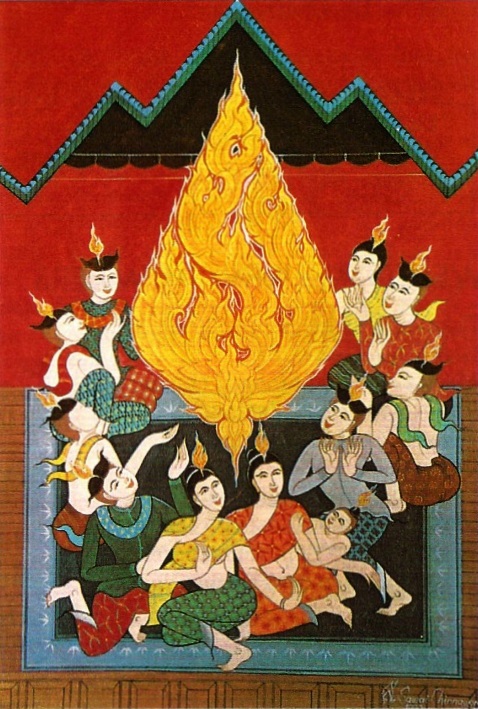
ARTICLE: “Painting Pentecost: Painter Sawai Chinnawong saturates the outpouring of the Spirit with the colors Thai art traditionally associates with the holy” by Amos Yong and Jonathan A. Anderson, Christian Century: Adapted from the book Renewing Christian Theology: Systematics for a Global Christianity (Baylor University Press, 2014), this article explores one of the Pentecost paintings of Thai Christian artist Sawai Chinnawong, who adopts and adapts a Thai Buddhist visual vernacular in terms of color choices, design elements, and the gestures and postures of figures. I’m appreciative of how the painting shows both men and women, and even a child, present at Pentecost and being recipients of the gift of the Spirit, as they surely were.
Chinnawong, Sawai_Pentecost
Sawai Chinnawong (Thai, 1959–), Pentecost, 1997. Acrylic on canvas.

(Related post: “Pentecost art from Asia”)

Some Christians are uncomfortable with art that transposes biblical events into other cultural contexts. But I think it’s a beautiful picture of the global character of the gospel, which has taken root in countries all over the world. As the authors write, in addition to celebrating a historic event, Chinnawong’s Pentecost “prompts us to see this as another event altogether: the outpouring of the Spirit in a room in 21st-century Bangkok rather than first-century Jerusalem. Chinnawong sets the scene here not out of disregard for the historical particularity of the original event but as a means of imagining and visually praying for the Spirit’s presence in his own historical moment. For Chinnawong, the Holy Spirit’s filling is not isolated to a single event, a particular moment, or one place but may be repeated at any time and place and for any people. Thus the circle of believers being filled with the Spirit is repeatedly repopulated and renewed.”

Roundup: Jesus’s surprising path to kingship, Isenheim Altarpiece video, “Varsha,” and more

Heads up: For each day of Holy Week (March 24–30) and the Easter Octave (March 31–April 7), I will be publishing a short post that pairs a visual artwork with a piece of music as a way of inviting you into the narrative. Here are examples from previous years:

Holy Week Series 2023 | Easter Series 2023
Holy Week Series 2022 | Easter Series 2022
Holy Week Series 2021 | Easter Sunday 2021
Holy Week Series 2020 | Easter Sunday 2020

+++

VIDEO: “How Jesus Became the King of the World (That He Always Was)” by BibleProject: Written and directed by Jon Collins and Tim Mackie with art direction by Robert Perez, this six-minute animated video explores how Jesus brought God’s kingdom to earth and how we can live under God’s reign today.

+++

SONGS:

>> “Lead On, O King Eternal” (second verse), retuned by John Hatfield: This Palm Sunday hymn was originally written by Ernest W. Shurtleff in 1887 and paired with an older tune by Henry T. Smart. It has largely fallen out of favor due to its cringey first verse, with its militant language of battle and conquest. However, John Hatfield, a singer-songwriter from Houston, calls our attention to the second verse, which reframes what comes before, turning the martial imagery on its head. Our battle, Shurtleff writes in verse 2, is waged not with weapons but with holiness, peace, and deeds of love and mercy. “Let’s be about that, my friends,” Hatfield urges. In this Instagram video he sings “the better verse” of “Lead On, O King Eternal” to a new tune he wrote for it, self-accompanied on ukulele:

>> “Anointed One of God” by Tom Fisher: Written around 2004, Tom Fisher revisited this hymn of his in 2022, updating some of the lyrics. Where he hums, he originally had the word “Hallelujah,” but he wanted to experiment with something more subdued and to honor the tradition, observed in Roman Catholicism, Episcopalianism, and other denominations, of removing the “Alleluias” from worship services during Lent in recognition of the solemnity of the season. The song exalts Jesus as the Christ, literally “Anointed One” (messiah in Hebrew), who, contrary to expectations, fulfilled this identity by being crucified. According to Matthew’s and Mark’s Gospel accounts, an unnamed woman recognized Jesus’s messiahship at a house in Bethany two days before his death, pouring oil on his head—a prophetic act that named him king. The scent probably lingered in his hair and on his body as he went to the cross. [HT: Liturgy Fellowship]

>> “傷跡 (Scars)” by Takafumi Nagasawa, performed by Ruah Worship: A sibling group from Japan covers this contemporary worship song about Jesus taking up his cross and with it the weight of humanity’s sin. “The scars on your hands are the sign of your love for me,” goes the refrain. Turn on Closed Captioning for English subtitles.

+++

VIDEO: “The mystical brilliance of Grünewald’s Isenheim Altarpiece” by Smarthistory: This is one of my all-time favorite artworks—I’ve given talks on it, with a focus on its matchless Crucifixion panel—though I admit I’ve only seen it in books and on screens; it’s on my list of things to see before I die (it’s at the Unterlinden Museum in Colmar, France). Drs. Beth Harris and Steven Zucker have created this excellent video introduction to it, featuring wonderful photography and commentary and an animation that shows the altarpiece’s multiple configurations.

Isenheim Altarpiece (detail)
Matthias Grünewald (German, ca. 1470–1528), Crucifixion (detail) from the Isenheim Altarpiece, 1515

+++

INSTRUMENTAL INTERLUDE: “Varsha” by Reena Esmail, for cello or viola, from The Seven Last Words Project: Commissioned by Juilliard Historical Performance to compose an interlude between the “I Thirst” and “It Is Finished” movements of Haydn’s Seven Last Words of Christ, Reena Esmail wrote “Varsha” for cello, drawing on Hindustani raags that evoke rain. (She is one of seven composers who worked on the project, each contributing their own interlude.) In this video it’s performed by Madeleine Bouissou, who premiered it April 16, 2019, at the Cathedral of Saint John the Divine in New York City as part of The Seven Last Words Project.

Describing her artistic vision, Esmail writes, “Christ thirsts. Rain comes from the distance (Megh Malhaar). There is a downpour around him (Miyan ki Malhaar), but he grows slowly weaker. His next words make clear that even the rain is not enough: his thirst is of another sort, which cannot be quenched by water. And so, it is finished.”

Esmail is an Indian American composer living in Los Angeles, known for combining the worlds of Indian and Western classical music in her work.

Roundup: “Jesus Is Alive” (Japanese version), art competition, and more

SONGS:

>> “Jesus Is Alive” by Ron Kenoly, performed in Japanese by Ruah Worship: Ruah Worship is a vocal ensemble made up of four siblings from Japan: (from left to right in video) Joshua Mine, Julia Mine, Erika Grace Izawa (née Mine), and Marian Mine. Here they sing an a cappella arrangement of a Ron Kenoly song, translated into Japanese by Hiromi Yamamoto and Kazuo Sano. Click on the “CC” (closed captioning) button for English subtitles. [HT: Global Christian Worship]

Their harmonies are wonderful! And they have lots of great videos on their YouTube channel, a mix of original songs and songs translated from other languages or written in Japanese. For another Easter-themed song they’ve recorded, see “Because He Lives.”

>> “I Went to the Garden” by Sam Hargreaves: Written in a bluegrass style from Mary Magdalene’s perspective, this song was released this year as part of the Resurrection People resource from the UK organization Engage Worship, where you can find downloadable videos (songs, webinars), sheet music, and church service outlines that include prayers, all-age ideas, readings, poems, sermon outlines, responses, and more. Sam Hargreaves is on lead vocals and acoustic guitar, Timo Scharnowski is on backing vocals and percussion, and David Hyde is on banjo and slide guitar.

Another song from the Resurrection People pack—one that made me laugh!—is “Peter’s Slowcoach Blues.”

+++

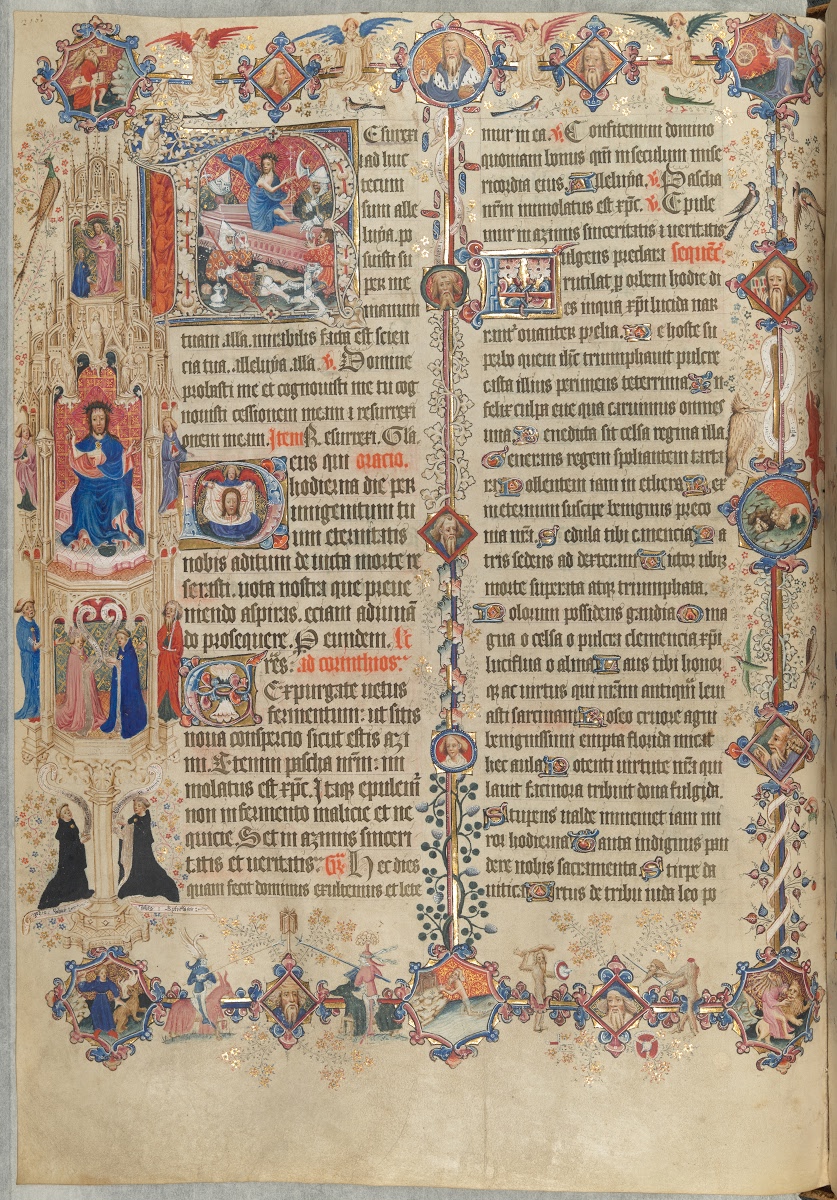
ART COMMENTARY: The Sherborne Missal: On this episode of the BBC Radio 4 program Moving Pictures, host Cathy Fitzgerald talks with art historians Alixe Bovey, Kathleen Doyle, Eleanor Jackson, and Paul Binski and scribe and illuminator Patricia Lovett about a page from the medieval illuminated Sherborne Missal that introduces the Mass for Easter Sunday. Made for the Benedictine abbey of St. Mary’s in Sherborne, Dorset, around 1400, this Christian service book amazingly survived the pillaging of the English Reformation intact.

Sherborne Missal (Easter Mass)
Illuminated folio introducing the Mass for Easter Sunday, from the Sherborne Missal, Dorset, England, ca. 1399–1407. British Library, London, Add Ms 74236, page 216. Click on image to zoom in.

At the top is the historiated initial “R” for Ressurexit, with Christ emerging from his tomb. An elaborate border around the page contains scenes from the Old Testament, portraits of prophets, a bestiary-inspired scene, angels, birds, plants, fantastical knights, and two wodewoses (wild men) engaging in a bizarre confrontation. Such imagination! Learn why a daddy lion breathing on his cubs signified resurrection to the medieval mind, and in what sense Samson and Jonah are “types” of Christ.

“The thing to grasp about medieval art,” Binski says, “is that they don’t have the same categories and boundaries that we do. We have quite defined boundaries around what’s comic and what’s tragic, and what’s serious and what’s lightweight. In the Middle Ages, serious things and playful things accompanied one another; they were all part of the same thing.”

+++

CALL FOR ENTRIES: Chaiya Art Awards 2022/23: Submissions are now open—UK residents only—for this biannual competition on spiritually inflected visual art, this time on the theme of “Awe and Wonder.” In addition to the usual exhibition space for the longlisted finalists at London’s gallery@oxo, Chaiya has secured a second venue, the Bargehouse, which will allow for larger-scale artworks and installations. The top prize is ₤10,000. Deadline: August 31, 2022.

+++

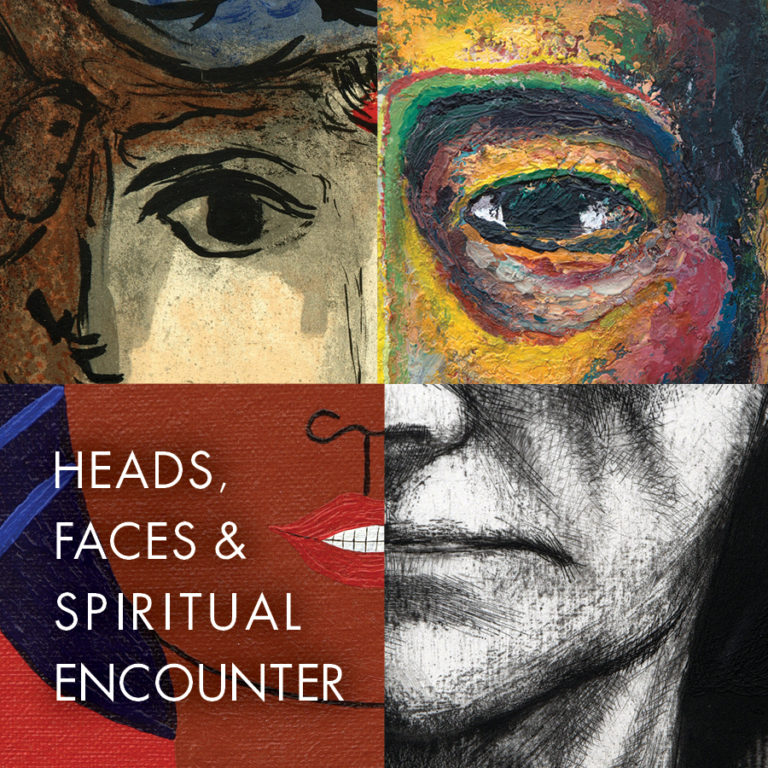
CIVA TRAVELING EXHIBITION: Heads, Faces, and Spiritual Encounter: Drawn from the collection of Edward and Diane Knippers and available for rental, this exhibition comprises forty-some artworks that all focus on the human face. There are works by modern heavyweights like Henri Matisse, Marc Chagall, David Alfaro Siqueiros, Georges Rouault, and Eric Gill, along with a few seventeenth-century portraits, African masks, and works by contemporary artists of faith. I saw the exhibition in Austin, Texas, in November and was really moved. Click on the link to browse the art and to inquire about rental.

Heads, Faces, and Spiritual Encounter