
Roundup: Advent songs, “Medicinal Flowers of Lebanon,” and more

ONLINE EVENT: “Every Breath a Birth: Meditations for Advent and Christmastide,” Wednesday, December 13, 5–6 p.m. ET: RSVP for Image journal’s third annual Advent Art Salon [previously], featuring a musical performance by Page CXVI, seasonal recipes by Ashley Rodriguez and Mark Sprinkle, poetry readings by Thomas Lynch and Suphil Lee Park, a homily by Bobby Gross, and a blessing by James K. A. Smith.

Image has also published a new chapbook this month, Every Breath a Birth, featuring twenty-three distinct creative works (poems, short stories, literary essays, visual art) that draw from its thirty-five-year archival history to celebrate the seasons of Advent and Christmas. Before December 3, it’s $17—or you can purchase it along with an annual subscription to the quarterly Image for just $30!
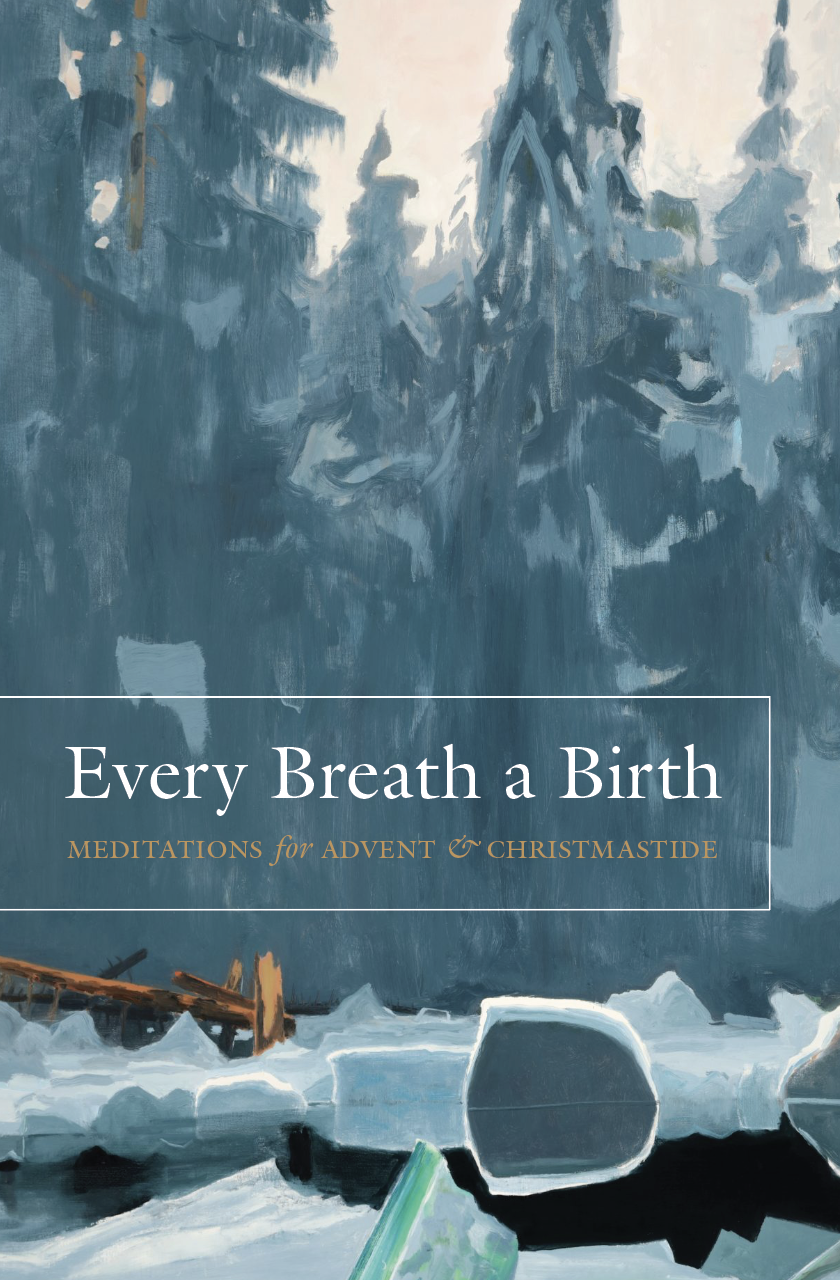
Every Breath a Birth

(The cover art is the painting Ice Out (Allagash) by Eric Aho, from the “In the Studio” feature in Image no. 110.)

+++

SONGS:

Advent is a season of waiting with deep longing and hope for that long-looked-for day when fear and pain will be no more because Christ will reign and set this world free. These songs tap into that.

>> “It Will Go One Day” by Mac Meador (2015):

>> “Redemption Draweth Nigh” by Gordon Jensen (1970), performed by Rumbi Lee (2018): The title and refrain of this contemporary hymn are drawn from Luke 21:28: “And when these things begin to come to pass, then look up, and lift up your heads; for your redemption draweth nigh” (KJV).

+++

STREET ART SERIES: Medicinal Flowers of Lebanon by Faith XLVII: In September 2021, South African artist Faith XLVII (Liberty Du) traveled to Beirut to paint curative flowers across the rubble of the Lebanese city in the wake of the August 4, 2020, port explosion that caused at least 218 deaths, 7,000 injuries, and $15 billion in property damage, as well as leaving an estimated 300,000 people homeless. Rosehips, horned poppies, chicory, African carline thistle—all these botanicals are used in remedies for common ailments. “Each flower urges us, in a sense, towards healing as they grow out of the concrete,” the artist said.

Faith47_Medicinal Flowers of Lebanon
Faith XLVII (South African, 1979–), Glaucium flavum, from the Medicinal Flowers of Lebanon series, Beirut, Lebanon, 2021. Photo courtesy of the artist.

+++

NEW ALBUMS:

>> The Soil and The Seed Project, vol. 8: Advent-Christmas-Epiphany: For the Advent-Christmas-Epiphany triad of the church year comes this new album from The Soil and The Seed Project, a ministry of Virginia Mennonite Missions—and recently Lilly-Endowed! All their music is free—for download, and even as physical CDs while supplies last. Below are two of my favorite tracks, both written by new contributors to the project. The first verse of Philip Fisher Rhodes’s “Bethlehem One” is in the voice of the in utero Christ; the second, the shepherds; the third, the wise men. The song is sung by Ben Luna. And “Peace Prayer” by Susan Gascho-Cooke is a plea that God would hold his arms around “this tilting planet,” the world’s wounds, and all people.

Each TSATP album is part of a larger project that also includes “Little Liturgies” booklets perfect for families with small kids (but that can also be used by individuals and small groups). Each booklet includes litanies, prayers, reflection questions, suggested activities, and visual art—and again, they’re free! Request a digital or physical copy here.

>> Kindness Is Solid Stone, Violence Is a Heavy Loan to Pay by David Benjamin Blower: Released November 3 and available on Bandcamp only, this album features nine original songs by writer, poet, theologian, and podcaster David Benjamin Blower of Birmingham, UK. I appreciate the minimalist sound and the stark lyricism. My favorite track is probably “Meet Me Where I Sing and Stamp My Feet”:

“Jesus, Savior, Pilot Me”: Three tunes and multiple stylings

Jesus, Savior, pilot me,
Over life’s tempestuous sea;
Unknown waves before me roll,
Hiding rock and treach’rous shoal;
Chart and compass come from Thee:
Jesus, Savior, pilot me!

As a mother stills her child,
Thou canst hush the ocean wild;
Boist’rous waves obey Thy will
When Thou say’st to them, “Be still!”
Wondrous Sov’reign of the sea,
Jesus, Savior, pilot me!

When at last I near the shore,
And the fearful breakers roar
’Twixt me and the peaceful rest,
Then, while leaning on Thy breast,
May I hear Thee say to me,
“Fear not, I will pilot thee!”

The hymn text “Jesus, Savior, Pilot Me” was written in 1871 by Edward Hopper (1818–1888), pastor of the Church of Sea and Land in New York Harbor. Hopper ministered to sailors coming and going, many of whom became lost at sea; his was thus a transient congregation, and one well acquainted with grief and uncertainty.

This is the only hymn of Hopper’s to have survived. It uses nautical imagery to speak of how Christ guides us through life’s stormy waters, all the way safe to the other shore, heaven. It is a petitionary hymn that beseeches Jesus to be present and active, but it is also a hymn of consolation.

Though it has been published in a number of hymnals, I first encountered “Jesus, Savior, Pilot Me” through the Bifrost Arts retune released on the collective’s first album in 2008. In fact, several artists have composed new melodies for the hymn or revamped it since it was first set to music by John E. Gould a few months after the publication of Hopper’s text, and it continues to live on even in nonmaritime contexts.

I’m really interested in how hymns evolve. How one text can inspire a variety of musical settings and arrangements—and how they move around the globe into different languages and cultural contexts! The original tune of “Jesus, Savior” doesn’t particularly resonate with me, but the creative arrangements of it, and some of the modern retunes, do.  

1. Music by John E. Gould, 1871

I found a straightforward choral rendition of Gould that was performed in 2012 by a choir from Salt Lake University, but it’s very bland.

So for an introduction to the hymn’s original tune, as reproduced in hymnals, I actually recommend this video by Siviwe Mhlomi and friends, who sing the hymn a cappella in four-part harmony in the Bantu language of Xhosa:

The Xhosa title is “Yesu Nkosi Ndiqhube,” and it’s widely popular in South Africa.

Xhosa uses the Roman alphabet, but the letters c, x, and q are pronounced with clicks that linguists call dental, lateral, and alveolar, respectively—so that’s why you hear some clicking speech sounds in the song.

>> Gospel

Mahalia Jackson recorded a slower, gospelized rendition with lush orchestral accompaniment in 1960:

The original tune is more difficult to recognize in the heavily stylized arrangement by the Roberta Martin Singers from 1968, which features Delois Barrett-Campbell on lead—but Gould was still used as the basis:

>> Country/Bluegrass

The hymn has been performed in a bluegrass idiom since at least the fifties. I don’t know who first arranged it in this style, but Lester Flatt and Earl Scruggs recorded it with their band the Foggy Mountain Boys in 1951 (see them perform the song at the Grand Ole Opry in Nashville in 1961 in the video below). In addition to using bluegrass instrumentation, their arrangement changes the traditional 3/4 meter (with dotted eighth notes) to 4/4 and adds more space between phrases. The Stanley Brothers recording from Hymns of the Cross (1964) follows this arrangement pretty closely—and Ralph Stanley later revisited the song with the Clinch Mountain Boys in 1977.

I first encountered the bluegrass version through the album A Hymn Revival, volume 1 by the sacred music collective The Lower Lights. They perform the song live in the following video, with Sarah Sample and Ryan Tanner on vocals (their singing style is more “indie folk” than bluegrass):

Other artists have sung “Jesus, Savior” with the 4/4 time signature popularized by Flatt & Scruggs, including Rumbi Lee, self-accompanied on ukulele:

(Lee puts out lots of hymn-sing videos on her YouTube channel.)

2. Music by Robbie Seay, 2004

Here’s CCM artist Robbie Seay in 2020 performing his retuned version of the hymn, which churches can license through CCLI:

It does a good job drawing out the emotion of the lyrics, especially the aspect of mournful yearning.

For an album recording, see Aaron Hale’s Lenten Hymns, volume 1 (2011)—or watch Hale lead the song from his living room for a virtual worship service in 2020.

3. Music by Isaac Wardell and Joseph Pensak, 2008

Like I said, although I grew up in church, I never heard of “Jesus, Savior, Pilot Me” until Bifrost Arts released it with a fresh tune in 2008. It was written by the cofounders of the collective, Isaac Wardell (a worship leader who now heads up The Porter’s Gate) and Joseph Pensak (a pastor from Vermont who ran a community art gallery for eight years and whose latest musical album, from 2019, is Hallowell). Laura Gibson is the vocalist on the recording, and Matthew Kay created this charming little stop-motion animation video for it:

Since its premiere, this tune has also been recorded by Pacific Gold (formerly Wayfarer) (2012) and Door of Hope (2012), among others.